Hiring the wrong roofing contractor in California can cost thousands. This 2026 checklist walks you through every step, from verifying a CSLB license to reading a contract, so you hire with confidence.
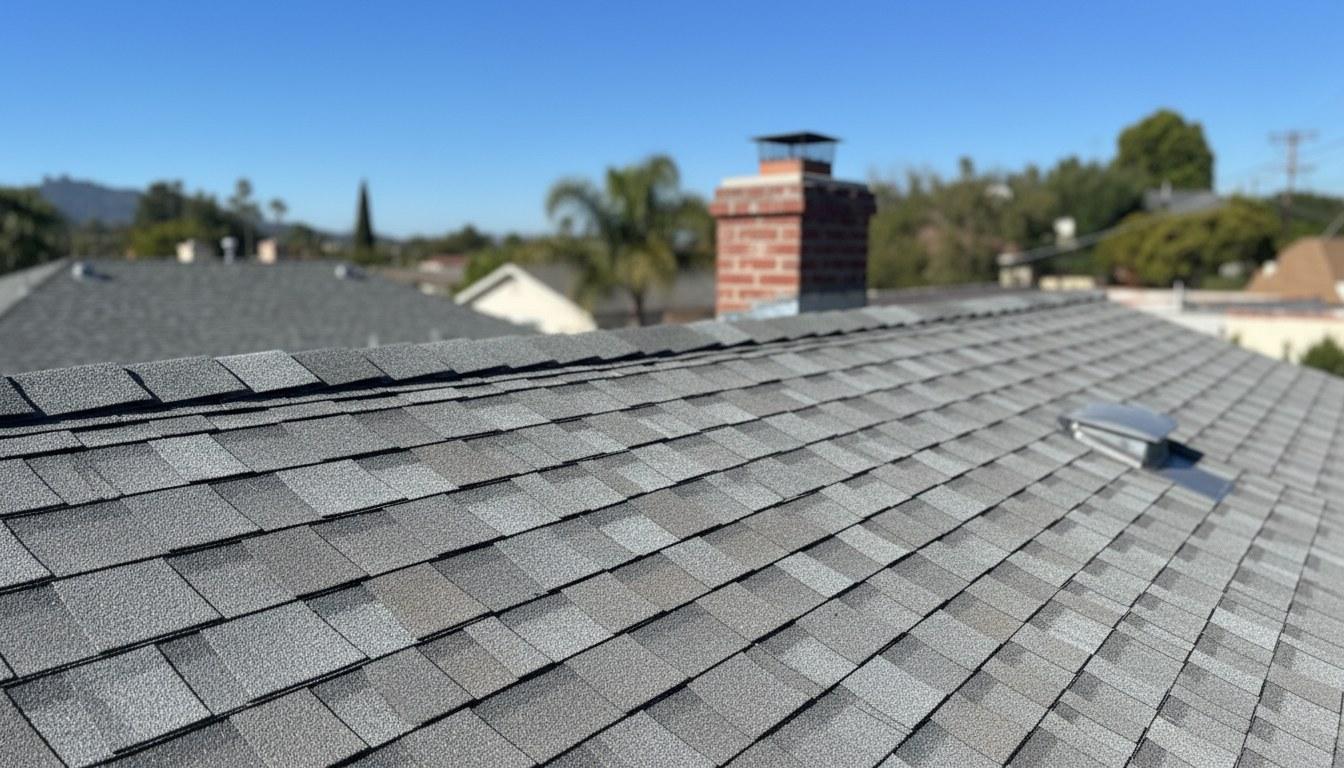
Why Does a Roofing Contractor’s License Matter in California?
In California, any roofing job over $500 in combined labor and materials legally requires a contractor licensed by the California Contractors State License Board (CSLB). Hiring an unlicensed roofer puts you at risk for shoddy work, denied insurance claims, and personal liability if a worker is injured on your property.
California roofing contractors typically hold a Class C-39 Roofing license. This classification covers the installation, repair, and replacement of all types of roofing systems — from asphalt shingles to tile, metal, and low-slope membranes. The C-39 requires passing a trade exam, a law and business exam, and proving at least four years of journey-level experience.
Beyond the license itself, a legitimate residential roofing contractor must carry two types of insurance: general liability (to cover property damage) and workers’ compensation (to cover job-site injuries). If a contractor cannot show proof of both, walk away — you could be held responsible for any accident on your roof.
This licensed roofing contractor california guide is built around the questions California homeowners ask most often before signing a contract. Use it as a step-by-step checklist every time you get a bid.
How Do You Verify a Roofing Contractor’s CSLB License?
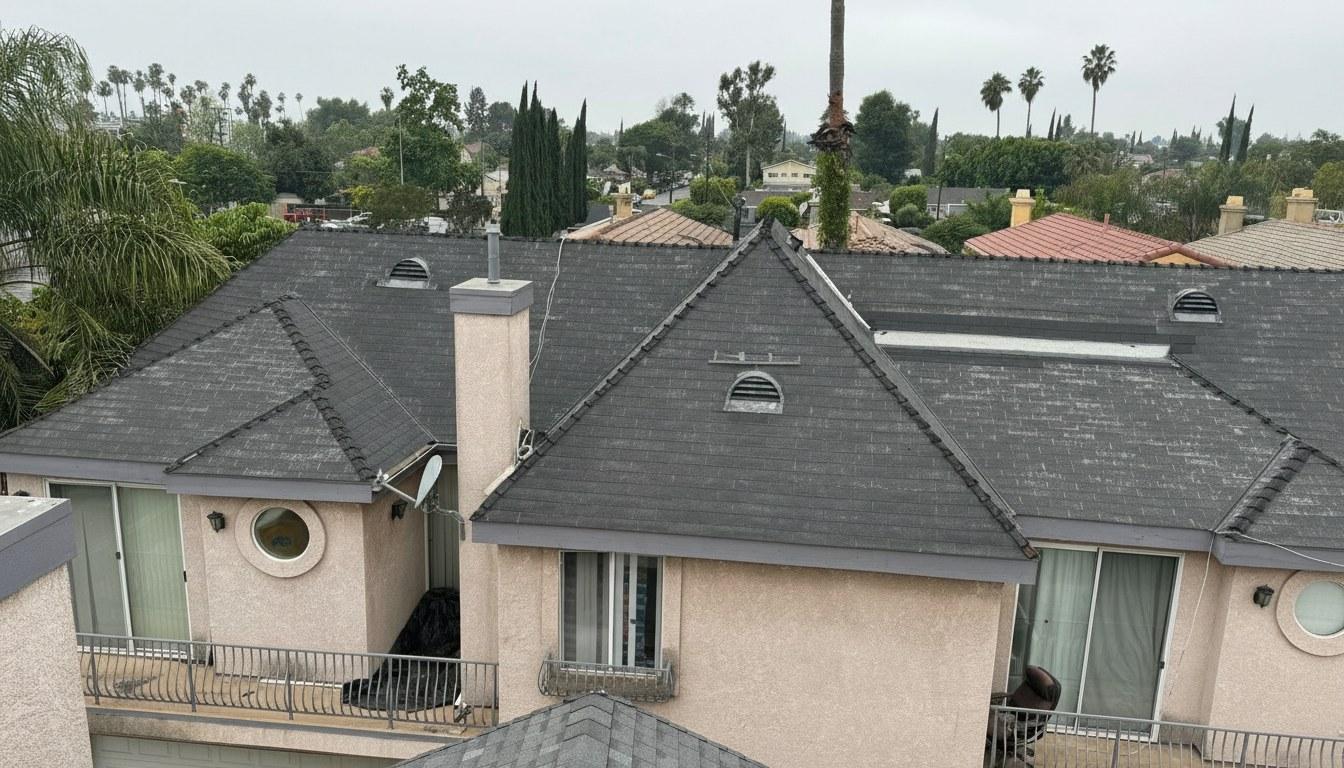
Go directly to the CSLB’s online license lookup at cslb.ca.gov and search by the contractor’s name, business name, or license number. The result will show the license classification, expiration date, bond status, and any disciplinary actions.
Here is exactly what to check on that page:
- License classification: It should show C-39 (Roofing) or B (General Building contractor with documented roofing experience).
- License status: Must read “Active” — not “Suspended”, “Expired”, or “Revoked”.
- Bond: California requires contractors to carry a $25,000 contractor’s bond as of 2024.
- Workers’ comp: Confirm the policy is listed and current, or that a valid exemption applies only to a sole-owner with no employees.
- Disciplinary history: Any citations, complaints, or license suspensions will appear here. One old minor complaint may be fine; a pattern of complaints is a serious warning sign.
Also ask the contractor for their license number before the first visit and cross-reference it yourself. A trustworthy roofing company will give you that number without hesitation.
What Should You Look for in a Roofing Bid or Estimate?
A complete roofing estimate should be written, itemized, and specific — listing materials by brand and grade, labor costs, permit fees, tear-off and disposal charges, and a project timeline. Any bid that arrives as a single lump-sum number without line items is a red flag.
When comparing bids from multiple roofing companies, use this checklist to evaluate each one:
- Scope of work: Does it specify the exact roof area in squares (1 square = 100 sq ft) being replaced or repaired?
- Material specifications: Shingle weight, Class A fire rating, impact resistance rating (Class 3 or 4 for hail-prone areas), and manufacturer warranty terms.
- Underlayment and flashing: Are ice-and-water shield, synthetic underlayment, and metal flashing at valleys, chimneys, and skylights included?
- Permit responsibility: Does the contractor agree to pull the permit, or are they asking you to do it? A licensed contractor should handle permitting.
- Cleanup and disposal: Is old roofing material haul-away included in the price?
- Payment schedule: California law limits a contractor’s deposit to 10% of the total contract price or $1,000, whichever is less, for home improvement contracts.
- Warranty terms: Separate the manufacturer’s material warranty (often 25 to 50 years for premium shingles) from the contractor’s workmanship warranty (typically 2 to 10 years).
Our team reviews bids alongside homeowners across Southern California and finds that roughly 6 out of 10 low-ball estimates are missing either the underlayment line item or the permit fee — two costs that routinely add $800 to $2,500 to the final bill when they surface later.
How Much Does a Licensed Roof Replacement or Repair Cost in California?
In the California market, a full residential roof replacement typically ranges from $8,000 to $25,000 for an average single-family home, depending on roof size, pitch, material choice, and regional labor rates. Targeted repairs — fixing a leak, replacing damaged sections, or patching flashing — generally range from $400 to $3,500.
The table below breaks down the main cost factors so you can gauge where your project falls:
| Cost Factor | Lower End | Higher End | What Moves the Price |
|---|---|---|---|
| Roof size | 1,000 sq ft | 3,500+ sq ft | More squares = more material and labor hours |
| Roof pitch | Low slope (under 4:12) | Steep slope (7:12 and above) | Steep roofs require safety equipment and slower installation |
| Material type | 3-tab asphalt shingle | Concrete tile, metal, or slate | Premium materials cost 2x to 4x more per square than entry-level shingles |
| Layers to remove | 1 existing layer | 2+ layers (full tear-off required) | California code limits most roofs to 2 layers; a full tear-off adds $1,000 to $3,000 |
| Decking condition | Solid, no replacement needed | Rotted or damaged sections | Decking repair adds $75 to $150 per sheet of plywood replaced |
| Permits and inspections | Minor repair (may not require permit) | Full replacement (permit required) | Permit fees vary by county; typically $150 to $600 in Southern California |
Some homeowners in California may qualify for the Inflation Reduction Act federal tax credit if they install qualifying cool-roof or energy-efficient materials. As of 2026, the credit can cover up to 30% of the cost of certain energy-efficient improvements. Ask your contractor whether the materials they propose qualify under current IRS rules.
Always request a custom written quote rather than relying on per-square averages. Roof geometry, access difficulty, and local permit fees shift the number significantly. Call (213) 364-3979 to get a no-obligation estimate from Roof Replacement Inc.
What Are the Biggest Red Flags When Hiring a Roofing Company?
The most common warning signs of a problematic roofing contractor are an unusually low bid, a request for a large upfront deposit, pressure to sign the same day, and an inability or unwillingness to show a CSLB license number.
Storm-chasing contractors — companies that flood a neighborhood after heavy rain or wind events — are a persistent problem across California communities. They often operate without a California license, collect a deposit, do substandard work or no work at all, and move on before homeowners realize what happened.
Watch for these specific red flags before signing anything:
- No physical address: Legitimate roofing companies have a verifiable business address, not just a P.O. box or a phone number.
- Cash-only payment: Reputable contractors accept checks or financing. Cash-only arrangements leave you with no payment record.
- Deposit over 10%: California’s Home Improvement Contract law caps the initial deposit at 10% of the contract price or $1,000, whichever is less. Demanding more is illegal.
- No written contract: Any job over $500 requires a written contract in California. Verbal agreements offer you almost no protection.
- Pressure tactics: “This price is only good today” is a sales tactic, not a reflection of real material costs. A trustworthy roofer will give you time to compare bids.
- Subcontracting without disclosure: Ask whether the crew doing the work is the contractor’s own employees or a subcontractor. If subcontracted, confirm the sub is also licensed and insured.
- Offering to waive your insurance deductible: This is insurance fraud in California. Walk away from any contractor who suggests it.
How Do California Building Codes and Permits Affect Your Roof Project?
In California, a permit is required for any full roof replacement and for most structural repairs. Work done without a permit can result in fines, forced removal of the new roof, and complications when you sell the home. California’s building code is based on the California Building Standards Code (Title 24), which includes fire-resistance requirements that are stricter than most other states.
California’s Title 24 building energy standards also affect roofing choices. In many climate zones, cool-roof products with a minimum Solar Reflectance Index (SRI) are required for low-slope roofs on new construction and major re-roofing. Your contractor should know which requirements apply to your climate zone — California has 16 of them.
Fire-hazard severity zones (FHSZ) add another layer of requirements. Homes in State Responsibility Areas — a category that covers millions of parcels across California — must use Class A fire-rated roofing assemblies. After the devastating wildfire seasons of 2017 through 2023, local jurisdictions in many counties have tightened these requirements further. A licensed contractor will know the specific rules for your county and pull the correct permits before work begins.
Roof certifications are sometimes required by lenders or buyers during a real estate transaction. A roof certification is a written inspection report, typically valid for 2 to 5 years, that attests to the roof’s current condition and estimated remaining life. This is separate from a permit — it is issued by a licensed roofing inspector or contractor after a thorough inspection.
A roof certification is a written inspection report, typically valid for 2 to 5 years, that attests to the roof's current condition and estimated remaining life.
We see roughly 3 to 4 unpermitted roof replacements per month during our inspections across Los Angeles County — work done by unlicensed crews that leaves homeowners facing code-compliance issues when they try to refinance or sell. Always confirm your contractor pulls the permit in their own name before work starts.
For the most current permit requirements in your area, check with your county or city building department directly. The California Department of Housing and Community Development also maintains guidance on residential building standards statewide.
Get a Free Estimate from a Licensed Roofing Contractor
Use this licensed roofing contractor california guide as your checklist every time you evaluate a bid. Verify the CSLB license, confirm insurance, get everything in writing, and never pay more than 10% upfront.
When you are ready to move forward, schedule your free roof inspection and written estimate with Roof Replacement Inc — serving homeowners across Southern California. Call (213) 364-3979 today. Same-week appointments are available, and every estimate comes with a full line-item breakdown so you can compare it confidently against any other bid you receive.
Explore our full range of roofing services across Southern California.
Frequently Asked Questions
How do I know if my roofer is actually licensed in California?
Go to the CSLB license lookup at cslb.ca.gov and search by the contractor's name or license number. The result will show whether the license is active, what classification it carries, and whether any complaints have been filed. Always do this before signing anything — never take the contractor's word alone.
How do I repair a leaky roof from inside my house?
From inside, you can temporarily slow a leak by placing a bucket to catch dripping water and tracing the water stain back toward the peak of the roof to locate the entry point. Applying roofing tape or a tarp over the exterior source area can limit damage until a licensed contractor arrives. Interior patching is a temporary measure only — a proper repair requires inspecting and sealing the exterior roofing surface, flashing, or underlayment where the leak originates.
How much does roof repair usually cost in California?
In the California market, targeted roof repairs typically range from $400 to $3,500 depending on the size of the damaged area, the roofing material involved, and whether flashing or decking also needs attention. A full roof replacement on an average single-family home generally ranges from $8,000 to $25,000. Contact Roof Replacement Inc at (213) 364-3979 for a written estimate specific to your roof.
Do I need a permit to repair or replace my roof in California?
Yes, a permit is required for any full roof replacement in California and for most structural repairs. Minor maintenance — like replacing a few broken shingles — may not require a permit, but your licensed contractor should confirm this with your local building department. Work done without a required permit can result in fines and complications when you sell the home.
What is a roof certification and when do I need one?
A roof certification is a written inspection report issued by a licensed roofing contractor that states the roof's current condition and estimated remaining life, typically valid for 2 to 5 years. Lenders, buyers, and real estate agents often require one during a home sale or refinance. It is not the same as a building permit — it is a condition assessment, not approval for new work.
Related Articles




What Our Clients Say











Roof Replacement Inc. offers professional, high-quality work, guaranteed (call for details); ensuring all clients projects meet all code and design requirements. We are dedicated to exceptional customer service and will strive to ensure you with the highest quality roofing services. Roof Replacement Inc. offers lifetime warranty (call for details) on all of our workmanship to ensure the quality of our work. With over 40 years of combined experience within the roofing and construction industry, Roof Replacement Inc. has grown and developed in all areas of roofing construction, including roof inspections. As a leading residential and commercial roofing company in LA, we have hundreds of references from previous clients, so rest assured, that your roofing job will be done right the first time. Replacing an old roof can help add curb appeal and will increase the perceived value of your home. First impressions are vital when selling your home, especially when your roof takes up more than half of the exterior of your residence or business. Not only is the return of investment on a new roof attractive for potential buyers, but can be as beneficial as remodeling the kitchen or bathrooms within your residence.

