Hiring the wrong roofer in California can cost you thousands in faulty work or unpaid subcontractor liens. This guide walks you through every step of verifying a contractor's license, spotting warning signs, and writing a contract that protects you.
Why Does a Roofing License Matter in California?
A roofing license in California is not just a piece of paper. It is proof that a contractor has passed a state trade exam, carries workers’ compensation coverage, and is bonded so you have financial recourse if something goes wrong. Hiring an unlicensed roofer puts you at serious legal and financial risk.
California law requires any roofing contractor doing work valued at $500 or more in labor and materials to hold an active license issued by the California Contractors State License Board (CSLB). That threshold is low by design. Almost any roof repair or replacement will exceed it, which means nearly every roofing job in the state requires a licensed professional.
When a contractor is unlicensed, your homeowner’s insurance may deny a claim tied to that work. You could also be held liable for injuries to workers on your property, since an unlicensed contractor typically carries no workers’ compensation insurance. The CSLB estimates that unlicensed contractor fraud costs California consumers more than $300 million each year.
How Do You Verify a Roofing Contractor License in California?
The fastest way to use this verify roofing contractor license california guide is to run a free search on the CSLB’s online license check tool at cslb.ca.gov. You will need the contractor’s name, business name, or license number. The search returns the license status, classification, expiration date, bond information, and any disciplinary history within seconds.
Here is a step-by-step process to confirm a roofer’s credentials before you sign anything:
- Get the license number in writing. Ask the contractor for their CSLB license number before any conversation about price. A legitimate roofer will provide it without hesitation.
- Search cslb.ca.gov. Go to the CSLB’s official license check page and enter the number. Confirm the status reads “Active” and not “Suspended”, “Expired”, or “Revoked”.
- Check the classification. Roofing contractors should hold a C-39 Roofing classification. A general contractor (B license) may perform roofing as part of a larger project, but a dedicated roofing company should carry the C-39.
- Verify the bond amount. As of 2024, California requires contractors to carry a minimum contractor’s bond of $25,000. Confirm the bond is current.
- Confirm workers’ compensation coverage. The CSLB record will show whether the contractor has active workers’ comp or has filed a valid exemption. If they have employees, they must carry coverage.
- Review any complaints or disciplinary actions. The CSLB record lists formal complaints and any license suspensions. More than one unresolved complaint is a meaningful warning sign.
- Ask for a certificate of insurance. Request a certificate naming you as an additional insured on their general liability policy. Call the insurer directly to confirm the policy is active.
Our team reviews CSLB records on roughly 3 out of every 4 calls we receive from homeowners who were already burned by an unlicensed roofer. The pattern is almost always the same: a low bid, a missing license number, and a deposit paid before any paperwork was signed.
What Are the Red Flags to Watch for When Hiring a Roofer?
The most common warning signs that a roofing contractor is unlicensed, underinsured, or operating in bad faith can be spotted before a single nail is driven. Knowing what to look for saves you from costly mistakes.
Watch for these red flags when evaluating any roofing contractor:
- Pressure to decide immediately: A contractor who says the deal expires today or pushes you to sign before you can get other bids is using a high-pressure sales tactic common among unlicensed operators.
- Cash-only payment demands: Legitimate roofing companies accept checks or credit cards and provide receipts. A cash-only requirement makes disputes nearly impossible to resolve.
- No physical address or local presence: Storm-chasing contractors often appear after heavy rain or wind events. They may have no local office, no verifiable address, and no accountability once the job is done.
- Unusually low bids: A bid that is 40% or more below competing quotes usually means the contractor is cutting corners on materials, skipping permits, or planning to use unlicensed labor.
- Refusal to pull permits: Most roofing replacements in California require a building permit. A contractor who says permits are unnecessary or offers to skip them to save you money is putting you at legal risk.
- Large upfront deposit requests: California law limits a contractor’s initial deposit to 10% of the total contract price or $1,000, whichever is less. Any demand above that limit is illegal.
- Vague or verbal-only estimates: A professional contractor provides a written, itemized estimate. Verbal agreements are nearly impossible to enforce if a dispute arises.
- No license number on the estimate or vehicle: California law requires contractors to display their CSLB license number on all contracts, bids, and advertisements. Its absence is a red flag.
What Should a Roofing Contract Include?
A written roofing contract is your primary protection if a dispute arises over workmanship, materials, or payment. California law requires home improvement contracts over $500 to be in writing and include specific elements. Do not let any work begin without a signed copy in hand.
A complete roofing contract should contain all of the following:
- Contractor’s full legal name, address, and CSLB license number
- Start date and estimated completion date
- Detailed scope of work, including tear-off of existing layers, underlayment type, decking repairs, flashing replacement, and ridge vent installation
- Specific materials, including manufacturer name, product line, color, and weight or thickness (for shingles, the class rating matters for fire resistance)
- Total price and payment schedule, with the initial deposit capped at $1,000 or 10% of the contract value
- Permit responsibility, stating which party will pull the required building permit
- Cleanup and debris disposal plan
- Lien waiver provision, requiring the contractor to provide a conditional lien waiver upon final payment to protect you from subcontractor claims
- Dispute resolution process, such as mediation or arbitration
- Notice of the three-day right to cancel, which California law grants on home improvement contracts signed at your residence
| Contract Element | Why It Matters | Risk If Missing |
|---|---|---|
| CSLB license number | Confirms legal authority to do the work | No recourse through CSLB if work fails |
| Itemized materials list | Prevents substitution of cheaper products | Contractor may downgrade without telling you |
| Permit responsibility clause | Ensures inspections happen | Unpermitted work can block a future home sale |
| Payment schedule | Ties payments to completed milestones | Contractor may disappear after deposit |
| Lien waiver requirement | Protects you from subcontractor liens | You could pay twice for the same labor |
| Three-day cancellation notice | Required by California law | Contract may be unenforceable without it |
How Do California’s Roofing Codes and Standards Affect Your Project?
California enforces some of the strictest building and energy codes in the country, and roofing projects must comply with both local building codes and California’s Title 24 building energy standards. A licensed contractor will know which requirements apply to your home and will pull the correct permits to ensure inspections happen.
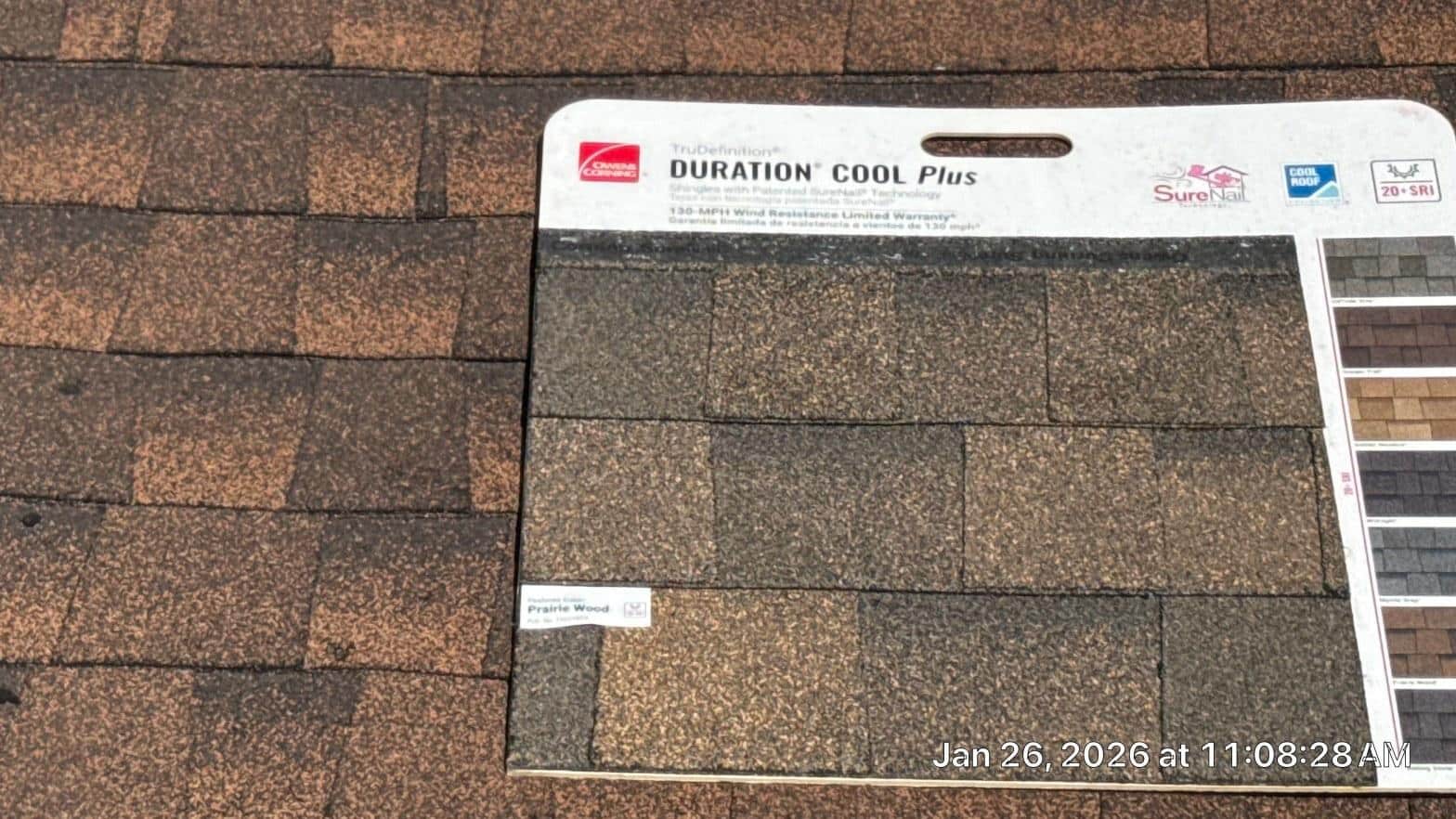
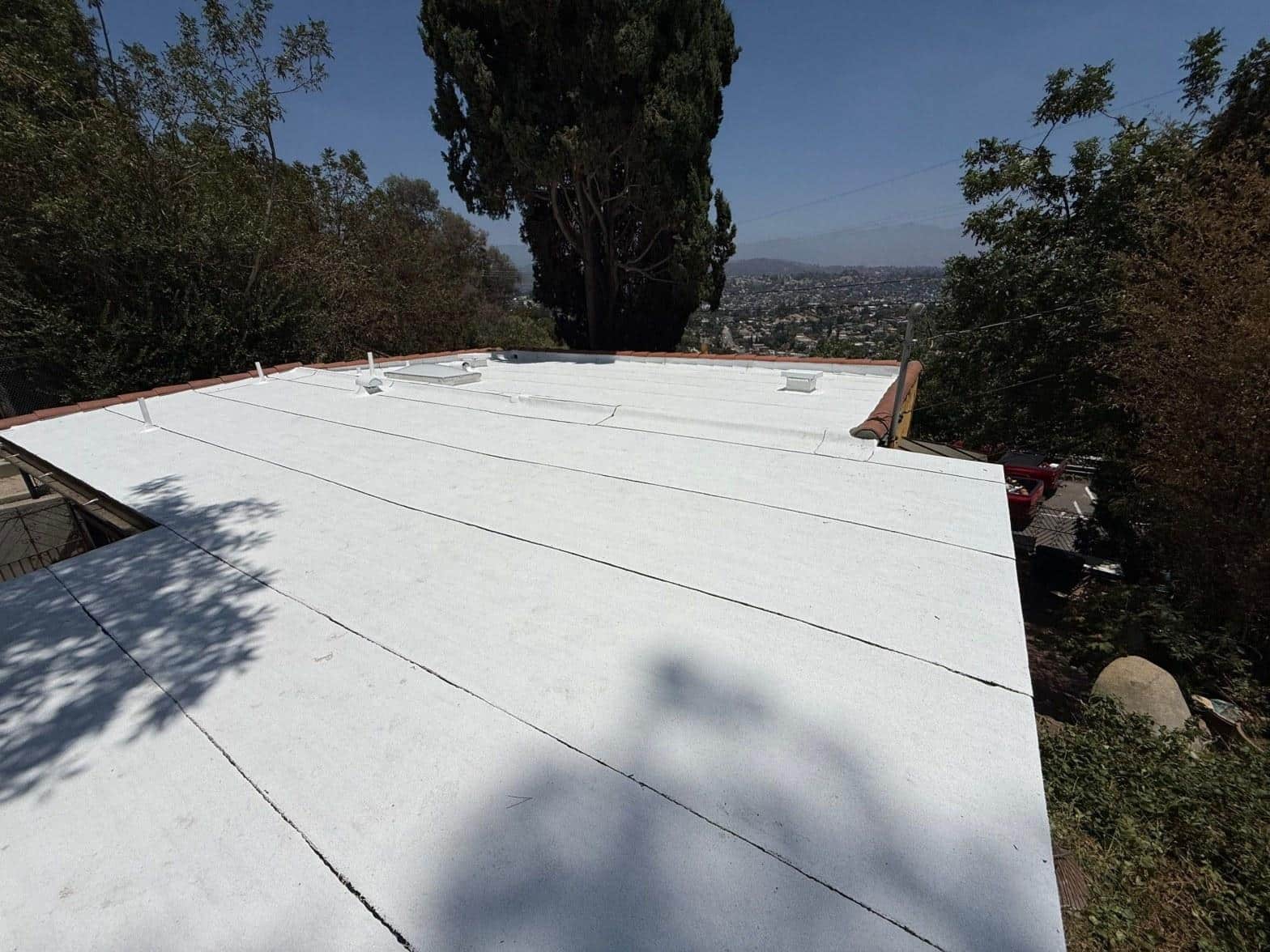
California’s Title 24 building energy standards, updated most recently in 2022, require that many roof replacements on residential buildings meet minimum solar reflectance values, commonly called cool roof requirements. If your project triggers a Title 24 cool roof requirement, the materials must carry an approved rating from the California Energy Commission.
Fire resistance is equally important across much of the state. Homes in State Responsibility Areas and High Fire Hazard Severity Zones must use Class A fire-rated roofing assemblies. That classification covers most asphalt shingle systems with the right underlayment, as well as concrete and clay tile. An unlicensed contractor who skips the permit process may install non-compliant materials that fail inspection and must be torn off at your expense.
Homeowners who install an ENERGY STAR-rated cool roof or make qualifying energy improvements may also be eligible for the Inflation Reduction Act federal tax credit, which covers up to 30% of the cost of certain energy-efficient upgrades. A licensed contractor can provide the product documentation you need to claim that credit.
Across our service calls in Southern California, we see roughly 1 in 5 re-roofing jobs that were done without a permit end up requiring a full tear-off and reinstallation once the homeowner tries to sell or refinance the property.
Ready to Hire a Trusted Roofing Contractor in Southern California?
Verifying a roofing contractor’s license is the single most important step you can take before any work begins on your home. Use this verify roofing contractor license california guide as your checklist every time you evaluate a bid.
Roof Replacement Inc is Licensed by the California Contractors State License Board (CSLB) and serves homeowners across Southern California. Whether you need a full roof replacement, a targeted repair, a cool roof installation, or a professional roof inspection, the team at Roof Replacement Inc brings the credentials, insurance, and written contracts that protect you from start to finish.
Projects in the Southern California market typically range from $8,000 to $25,000 for a full residential roof replacement, depending on roof size, pitch, material choice, and whether decking repairs are needed. Roof repairs and partial replacements generally fall between $500 and $4,000. Every job is different, so the best way to get an accurate number is to request a written, itemized quote.
Call Roof Replacement Inc at (213) 364-3979 to schedule your roof inspection and get a written estimate. Do not let an unlicensed contractor put your home and your investment at risk.
Explore our full range of roofing services across Southern California.
Frequently Asked Questions
How do I check if a roofing contractor is licensed in California?
Go to cslb.ca.gov and use the free license search tool. Enter the contractor's name, business name, or license number to see their active status, classification, bond amount, and any complaints. A roofing contractor should hold an active C-39 Roofing classification. Always confirm before signing a contract or paying any deposit.
How much does it usually cost to replace a roof in Southern California?
In the Southern California market, a full residential roof replacement typically ranges from $8,000 to $25,000 depending on the size of the roof, the pitch, the materials chosen, and whether damaged decking needs to be repaired. Partial replacements and repairs generally fall between $500 and $4,000. Request a written, itemized quote from a licensed contractor to get an accurate number for your specific home.
How often does a roof need to be replaced?
Most asphalt shingle roofs last 20 to 30 years under normal conditions. Concrete and clay tile roofs can last 40 to 50 years or more with proper maintenance. California's heat, UV exposure, and occasional high winds can shorten that lifespan, so a professional roof inspection every 3 to 5 years helps catch problems before they become full replacements.
What happens if I hire an unlicensed roofer in California?
If you hire an unlicensed roofer, your homeowner's insurance may deny any claim tied to that work. You could also be held personally liable for injuries to workers on your property since unlicensed contractors typically carry no workers' compensation insurance. Unpermitted work done by an unlicensed contractor can also block a future home sale or refinance.
What is the maximum deposit a roofing contractor can legally charge in California?
California law caps the initial deposit a contractor can collect at 10% of the total contract price or $1,000, whichever is less. Any contractor who demands a larger upfront payment is violating state law. If you encounter this, it is a strong signal to stop, verify the contractor's license on cslb.ca.gov, and consider choosing a different company.
Related Articles





What Our Clients Say











Roof Replacement Inc. offers professional, high-quality work, guaranteed (call for details); ensuring all clients projects meet all code and design requirements. We are dedicated to exceptional customer service and will strive to ensure you with the highest quality roofing services. Roof Replacement Inc. offers lifetime warranty (call for details) on all of our workmanship to ensure the quality of our work. With over 40 years of combined experience within the roofing and construction industry, Roof Replacement Inc. has grown and developed in all areas of roofing construction, including roof inspections. As a leading residential and commercial roofing company in LA, we have hundreds of references from previous clients, so rest assured, that your roofing job will be done right the first time. Replacing an old roof can help add curb appeal and will increase the perceived value of your home. First impressions are vital when selling your home, especially when your roof takes up more than half of the exterior of your residence or business. Not only is the return of investment on a new roof attractive for potential buyers, but can be as beneficial as remodeling the kitchen or bathrooms within your residence.

