

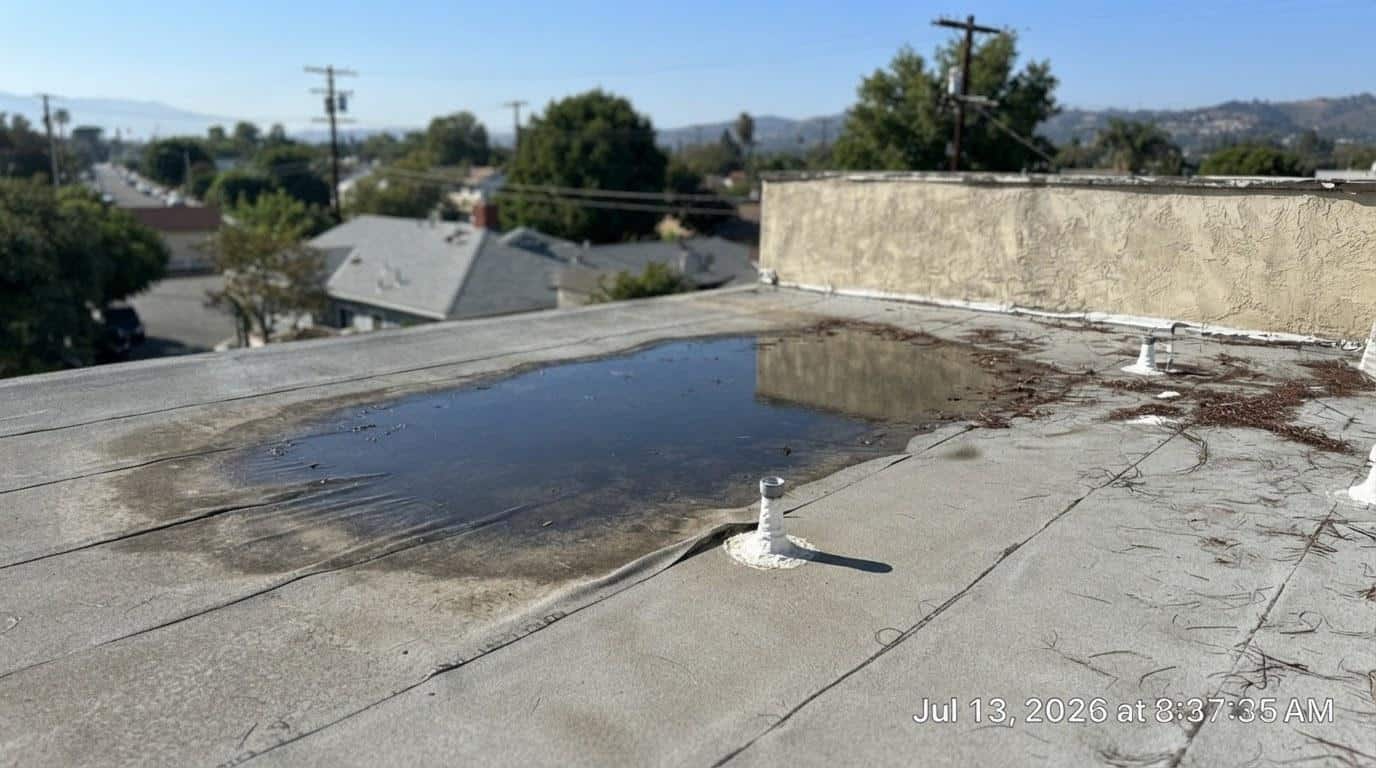
Standing water on a flat roof is not just an eyesore; it is one of the fastest ways to shorten a roof's life. This guide walks you through the warning signs of flat roof drainage problems, what causes them, and how to decide when a professional needs to step in.
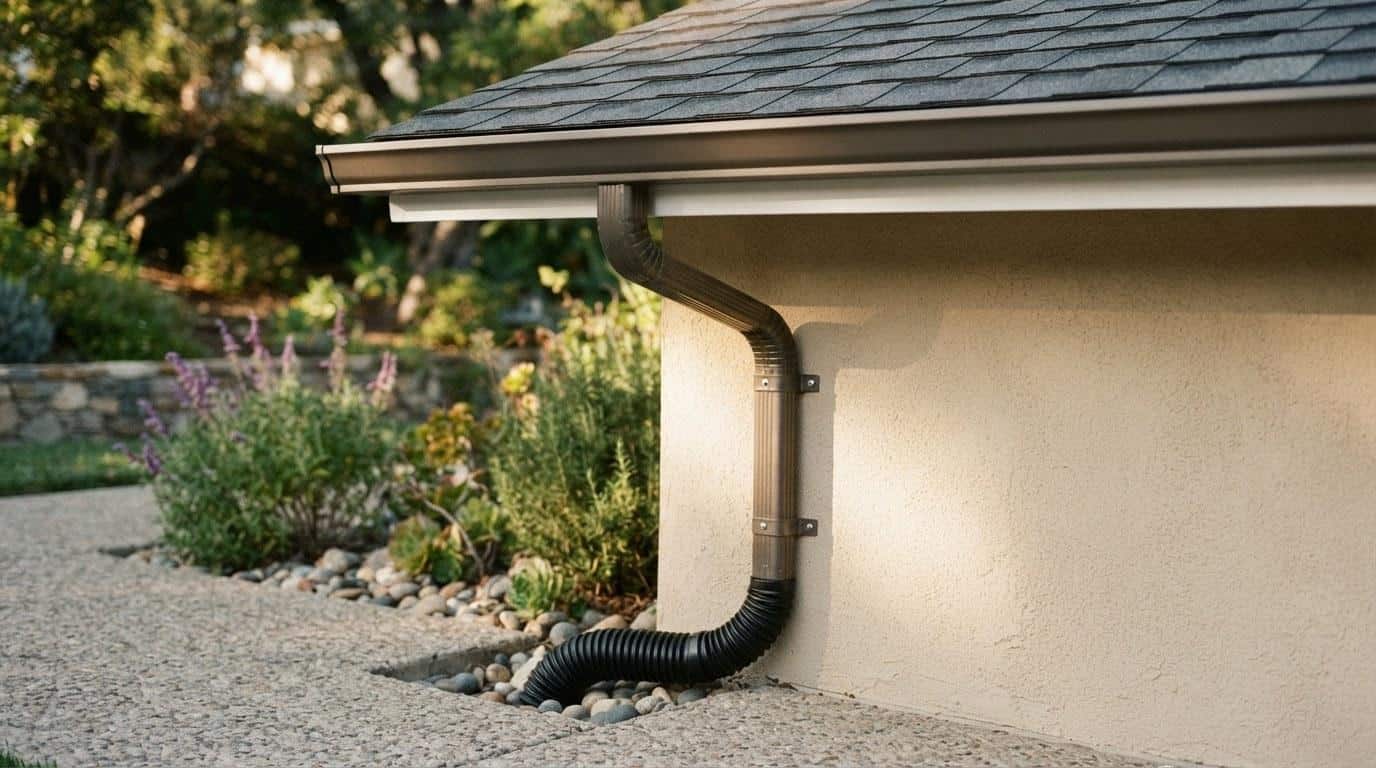
Why Do Flat Roofs Have Drainage Problems in the First Place?
Flat roofs are not truly flat. They rely on a slight built-in slope, typically between 1/4 inch and 1/2 inch of drop per foot, to move water toward drains, scuppers, or gutters. When that slope is blocked, damaged, or was never installed correctly, water pools and drainage problems follow.
In Southern California, flat roofs are common on commercial buildings, mid-century homes, and modern additions. The region’s intense UV exposure causes roofing membranes to crack and blister over time, which breaks the watertight seal that channels water away. Even though rain events are less frequent here than in other states, when storms do arrive, a drainage system that has been quietly failing all year can cause serious damage in a single afternoon.
According to NOAA, Southern California receives most of its annual rainfall in concentrated winter storm events, meaning flat roofs face sudden high-volume water loads after months of dry heat that has already stressed the membrane. That combination makes drainage maintenance especially important in this region.
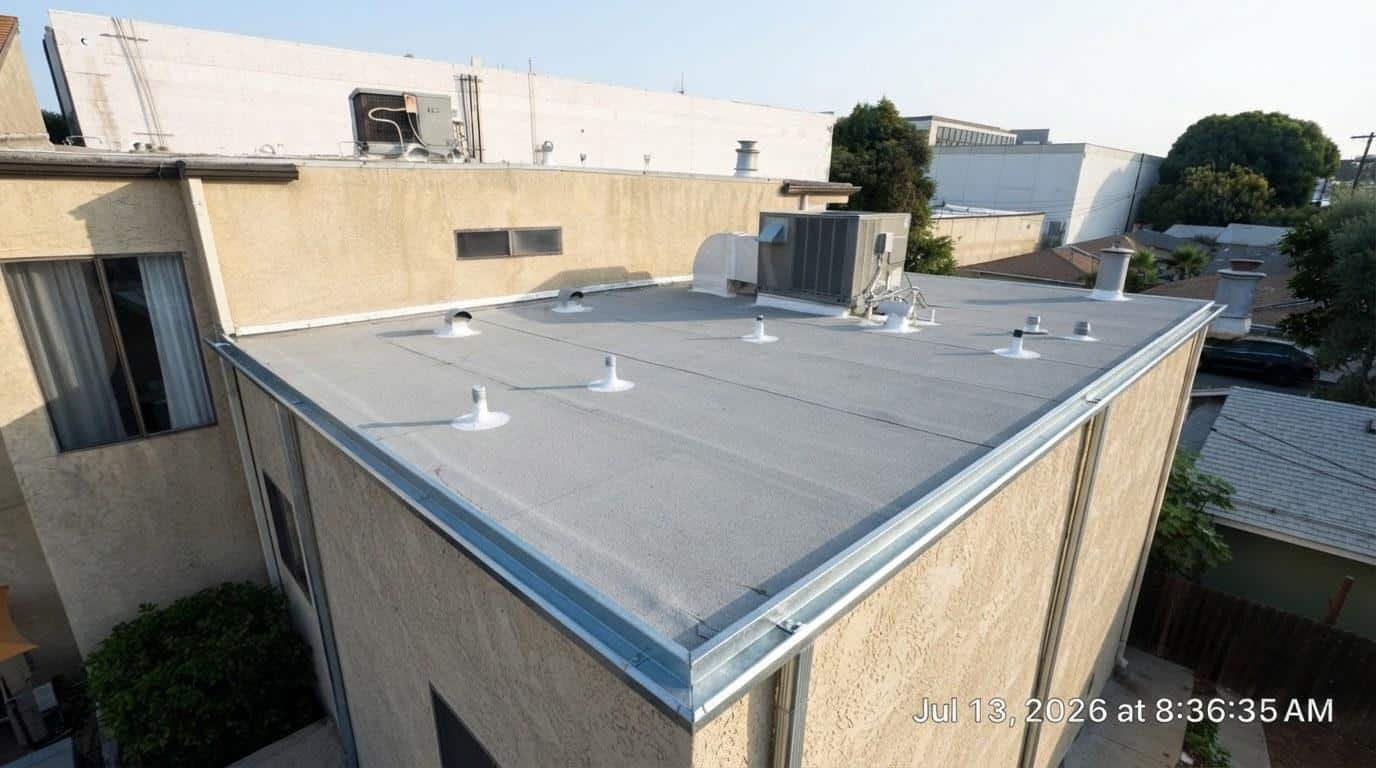
What Are the Flat Roof Drainage Problems Signs You Should Never Ignore?
The clearest flat roof drainage problems signs are standing water that remains on the roof surface more than 48 hours after rain, visible sagging or deflection in the membrane, and water stains or drips appearing on interior ceilings directly below the roof deck. Catching these early is the difference between a minor repair and a full roof replacement.
Our crew sees drainage calls spike sharply after the first major rain of the season, when small blockages that built up over the dry summer months suddenly become full failures. Across service calls in the region, roughly 6 in 10 flat roof drainage complaints involve a clogged interior drain or blocked scupper that could have been cleared before the storm season.
Roughly 6 in 10 flat roof drainage complaints involve a clogged interior drain or blocked scupper that could have been cleared before the storm season.
- Standing water (ponding): Water that sits on the roof surface longer than 48 hours after rain stops. This adds significant weight and accelerates membrane breakdown.
- Sagging or soft spots: Areas of the membrane or decking that feel spongy underfoot or visibly dip. This often means the roof deck below has absorbed moisture.
- Interior water stains: Brown or yellow rings on ceilings, bubbling paint, or damp drywall directly below the roof signal that water has already breached the membrane.
- Clogged or overflowing scuppers: Scuppers are the openings cut into the parapet wall to let water escape. Debris-blocked scuppers cause water to back up and pond rapidly.
- Slow or gurgling interior drains: A flat roof with interior drains connected to the building’s plumbing will gurgle or drain slowly when the drain body or standpipe is partially blocked.
- Visible membrane cracks or blisters near drains: Cracks, bubbles, or lifted seams within 12 inches of a drain collar are a sign the flashing seal has failed and water is seeping under the membrane.
- Rust or mineral stains on exterior walls: White or rust-colored streaks running down a parapet or exterior wall below a scupper indicate long-term overflow that is also damaging the wall assembly.
- Mold or mildew smell indoors: A musty odor in the top floor of a building without an obvious source often traces back to a slow roof leak feeding moisture into the ceiling cavity.
What Is the Most Likely Cause Behind Each Symptom?
Each drainage symptom points to a specific failure point. Matching the sign to its most likely cause helps you explain the problem clearly when you call a roofer and gives you a head start on understanding the repair scope.
| Symptom | Most Likely Cause | DIY or Pro? |
|---|---|---|
| Standing water after 48 hours | Blocked drain or scupper; insufficient roof slope; settled or sagging deck | Clear debris yourself; slope or deck issues need a pro |
| Sagging or soft spots in membrane | Saturated insulation or decking beneath the membrane | Pro required, structural assessment needed |
| Interior ceiling stains or drips | Failed membrane seam, cracked flashing, or drain collar leak | Pro required, source must be located and sealed |
| Overflowing or blocked scuppers | Debris accumulation (leaves, dirt, bird nests); crushed scupper opening | Debris removal is DIY; crushed or misaligned scupper needs a pro |
| Slow or gurgling interior drain | Blocked drain body, clogged standpipe, or root intrusion | Surface debris is DIY; deep blockage or root intrusion needs a pro |
| Cracks or blisters near drain collar | Failed drain flashing; UV degradation of membrane; thermal cycling | Pro required, reflashing and possible membrane patch needed |
| Rust or mineral stains on parapet | Chronic scupper overflow; failed coping cap seal | Cleaning is DIY; resealing coping or rebuilding scupper needs a pro |
| Mold or mildew smell indoors | Long-term slow leak feeding ceiling cavity moisture | Pro required, leak source and mold extent must be assessed |
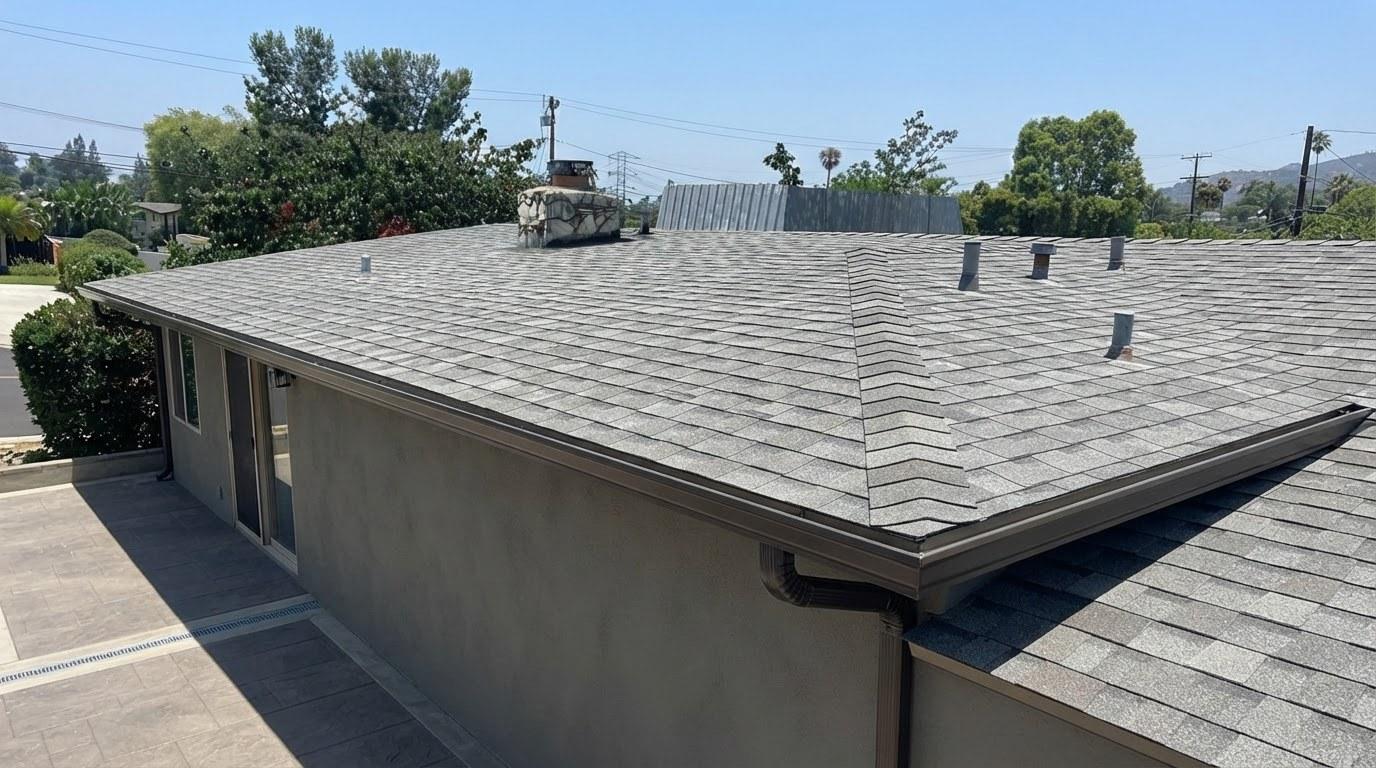
What Can You Check Yourself Before Calling a Roofer?
A homeowner or building manager can safely do a surface inspection and basic drain clearing without specialized tools. These steps take about 30 minutes and can resolve minor blockages before they become bigger problems.
Always inspect the roof after rain has stopped and the surface has had time to dry at the edges. Never walk on a flat roof that shows visible sagging or soft spots, and wear rubber-soled shoes to avoid slipping on a wet membrane.
- Check all scuppers and gutters for debris. Walk the perimeter of the roof and look at every scupper opening. Remove leaves, dirt, and any accumulated debris by hand or with a stiff brush. Check that the opening is fully clear all the way through to the outside wall.
- Locate and inspect interior roof drains. Interior drains have a dome-shaped strainer on top. Remove the strainer and clear any debris packed around or under it. Run water from a hose into the drain and watch whether it flows freely or backs up.
- Look for standing water zones. After a rain, note any areas where water ponds. Mark them with chalk or tape so you can describe the location to a roofer. Ponding in the same spot after every rain means the slope at that point is inadequate.
- Inspect visible membrane seams and flashing. Look for lifted seams, open laps, or cracked flashing within 12 inches of drains, at the base of the parapet wall, and around any roof penetrations like HVAC curbs or vents. Do not attempt to seal these yourself with tape or caulk as a permanent fix; it masks the problem without solving it.
- Check the interior ceiling below the roof. After any rain event, walk through the top floor and look for new water stains, soft drywall, or paint bubbling. Photograph anything that looks new or worsening. This documentation is useful when scheduling a professional inspection.
- Clear gutters and downspouts connected to the roof. If your flat roof drains into a gutter system, a clogged downspout can cause water to back up onto the roof surface. Flush downspouts with a hose to confirm they are clear all the way to the ground.
When Should You Call a Professional Roofer?
Call a licensed roofer when standing water persists after you have cleared all visible blockages, when you find soft spots or sagging in the roof deck, or when interior water stains appear or grow after a rain event. These symptoms mean the problem is structural or involves a membrane failure that cannot be fixed from the surface.
California requires roofing contractors to hold a valid license issued by the California Contractors State License Board (CSLB). Before any roofer starts work on your property, ask for their CSLB license number and verify it on the CSLB website. Licensed contractors carry insurance that protects you if something goes wrong during the repair.
A professional roofer will do more than clear a drain. They will perform a full drainage inspection that includes checking the roof’s slope with a level, probing the membrane for moisture intrusion using a moisture meter, and inspecting every drain collar, scupper, and flashing detail. This level of assessment is the only way to find slow leaks that have not yet caused visible interior damage.
You should call a pro immediately if any of the following apply:
- Water is actively dripping or streaming into the building during or after rain.
- You find soft, spongy, or crumbling areas when walking the roof surface.
- The roof is more than 15 years old and has never had a formal inspection.
- You notice the roof deck visibly deflecting under your weight in areas away from drains.
- Interior mold is present, which can indicate a leak that has been feeding moisture into the structure for months.
- A scupper or parapet wall shows visible cracking, separation, or displacement.
Many roofing contractors in Los Angeles County and across Southern California also offer roof certifications, which are written assessments of a roof’s condition often required by buyers, lenders, or insurers. If you are buying or selling a property with a flat roof, a roof certification from a qualified roofing contractor gives all parties a documented baseline of the drainage system’s condition.
How Much Does It Cost to Fix Flat Roof Drainage Issues?
Flat roof drainage repairs in the Southern California market typically range from a few hundred dollars for a drain cleaning or scupper clearing to several thousand dollars for re-sloping, full membrane replacement, or structural deck repair. The scope of the problem is the biggest cost driver.
According to the California Energy Commission, cool roof coatings that meet California’s Title 24 building energy standards are increasingly applied during flat roof repairs, which can add modest cost but also qualify for energy efficiency incentives. If your flat roof needs a membrane repair or replacement anyway, combining it with a cool roof coating can be a smart investment.
The table below shows typical cost ranges for common drainage-related repairs in this regional market. These are market context figures only; actual quotes depend on roof size, access, material choice, and the extent of hidden damage found during inspection.
| Repair Type | Typical Market Range (CA) | Key Cost Factors |
|---|---|---|
| Drain cleaning and strainer replacement | $150 to $400 per drain | Number of drains, access difficulty, debris volume |
| Scupper repair or enlargement | $300 to $900 per scupper | Parapet wall material, flashing condition, size of opening needed |
| Drain collar reflashing | $400 to $1,200 per drain | Membrane type, drain body condition, number of penetrations |
| Membrane patch (localized) | $500 to $2,500 per area | Patch size, membrane compatibility, deck condition underneath |
| Re-sloping with tapered insulation | $3,000 to $10,000+ | Roof area, thickness of taper needed, existing insulation removal |
| Full flat roof replacement | $8,000 to $25,000+ | Square footage, membrane type (TPO, EPDM, torch-down), deck repairs |
| Cool roof coating application | $1,500 to $5,000 | Roof area, coating type, surface preparation required |
Costs move higher when a drainage problem has been left unaddressed for a long time. Water that has saturated the insulation layer beneath the membrane requires that layer to be torn out and replaced, which can double the cost of a repair that would have been straightforward if caught earlier. Getting a custom quote based on an actual inspection is the only reliable way to know what your specific roof will cost to fix.
Get a Professional Drainage Inspection for Your Flat Roof
Do not wait for a ceiling stain to appear before addressing flat roof drainage problems signs. A professional inspection catches failing drain collars, slow-draining scuppers, and early membrane damage before they turn into costly structural repairs.
Roof Replacement Inc provides flat roof inspections, drain cleaning, scupper repair, membrane patching, cool roof coatings, and full flat roof replacement for homeowners and building owners across Southern California. Whether you have noticed standing water after the last storm or want a roof certification before a property transaction, the team is ready to assess your drainage system and give you a clear, written picture of what needs attention.
Call (213) 364-3979 to schedule your inspection. Get a custom quote before any work begins so you know exactly what the repair involves and what it will cost.
Explore our full range of roofing services across Southern California.
Frequently Asked Questions
How long can water sit on a flat roof before it causes damage?
Water that sits on a flat roof for more than 48 hours after rain stops is considered ponding, and it starts causing damage quickly. The added weight stresses the roof deck, and prolonged moisture contact breaks down the membrane's UV-protective layer. Over repeated rain cycles, ponding water almost always leads to membrane failure and leaks.
What causes a flat roof to drain slowly after rain?
Slow drainage on a flat roof is most commonly caused by a clogged drain strainer or scupper packed with leaves, dirt, or debris. It can also result from an insufficient roof slope, a settled or sagging deck section, or a drain standpipe that is partially blocked deeper in the plumbing. Clearing surface debris is a good first step, but if the roof still drains slowly after that, a roofer needs to inspect the slope and drain body.
Can I patch a flat roof drain leak myself?
Clearing debris from a drain strainer is a safe DIY task. However, patching a cracked drain collar or failed flashing around a drain requires matching the patch material to the existing membrane type and properly bonding the seam, which is a job for a licensed roofer. A DIY patch that uses the wrong material or misses the actual failure point can trap moisture and make the damage worse.
How often should a flat roof drainage system be inspected?
Most roofing professionals recommend a drainage inspection at least twice a year: once before the rainy season and once after. In Southern California, that means inspecting in late fall before winter storms and again in spring to assess any damage the season caused. Buildings with heavy tree coverage nearby may need drain clearing more frequently.
What is a roof certification and do I need one for a flat roof?
A roof certification is a written report from a licensed roofing contractor stating the current condition of the roof and its expected remaining service life, typically covering a two-to-five-year period. Lenders, buyers, and insurers often require one before a real estate transaction closes. For flat roofs with any history of drainage problems, a certification documents whether existing issues have been repaired and gives all parties confidence in the roof's condition.
Related Articles




What Our Clients Say








Roof Replacement Inc. offers professional, high-quality work, guaranteed (call for details); ensuring all clients projects meet all code and design requirements. We are dedicated to exceptional customer service and will strive to ensure you with the highest quality roofing services. Roof Replacement Inc. offers lifetime warranty (call for details) on all of our workmanship to ensure the quality of our work. With over 40 years of combined experience within the roofing and construction industry, Roof Replacement Inc. has grown and developed in all areas of roofing construction, including roof inspections. As a leading residential and commercial roofing company in LA, we have hundreds of references from previous clients, so rest assured, that your roofing job will be done right the first time. Replacing an old roof can help add curb appeal and will increase the perceived value of your home. First impressions are vital when selling your home, especially when your roof takes up more than half of the exterior of your residence or business. Not only is the return of investment on a new roof attractive for potential buyers, but can be as beneficial as remodeling the kitchen or bathrooms within your residence.

