Southern California summers push roof materials to their limits. This guide explains exactly how heat and UV rays degrade your roof, and what to do before small damage becomes a costly replacement.
Why Does Southern California Summer Heat Damage Roofs So Fast?
Southern California rooftops regularly reach surface temperatures of 150°F to 180°F on clear summer days, even when the air temperature is only in the 90s. That extreme heat causes roofing materials to expand, contract, and degrade far faster than in cooler regions. The National Oceanic and Atmospheric Administration (NOAA) tracks Southern California as one of the sunniest regions in the continental United States, averaging more than 280 sunny days per year in many inland valleys.
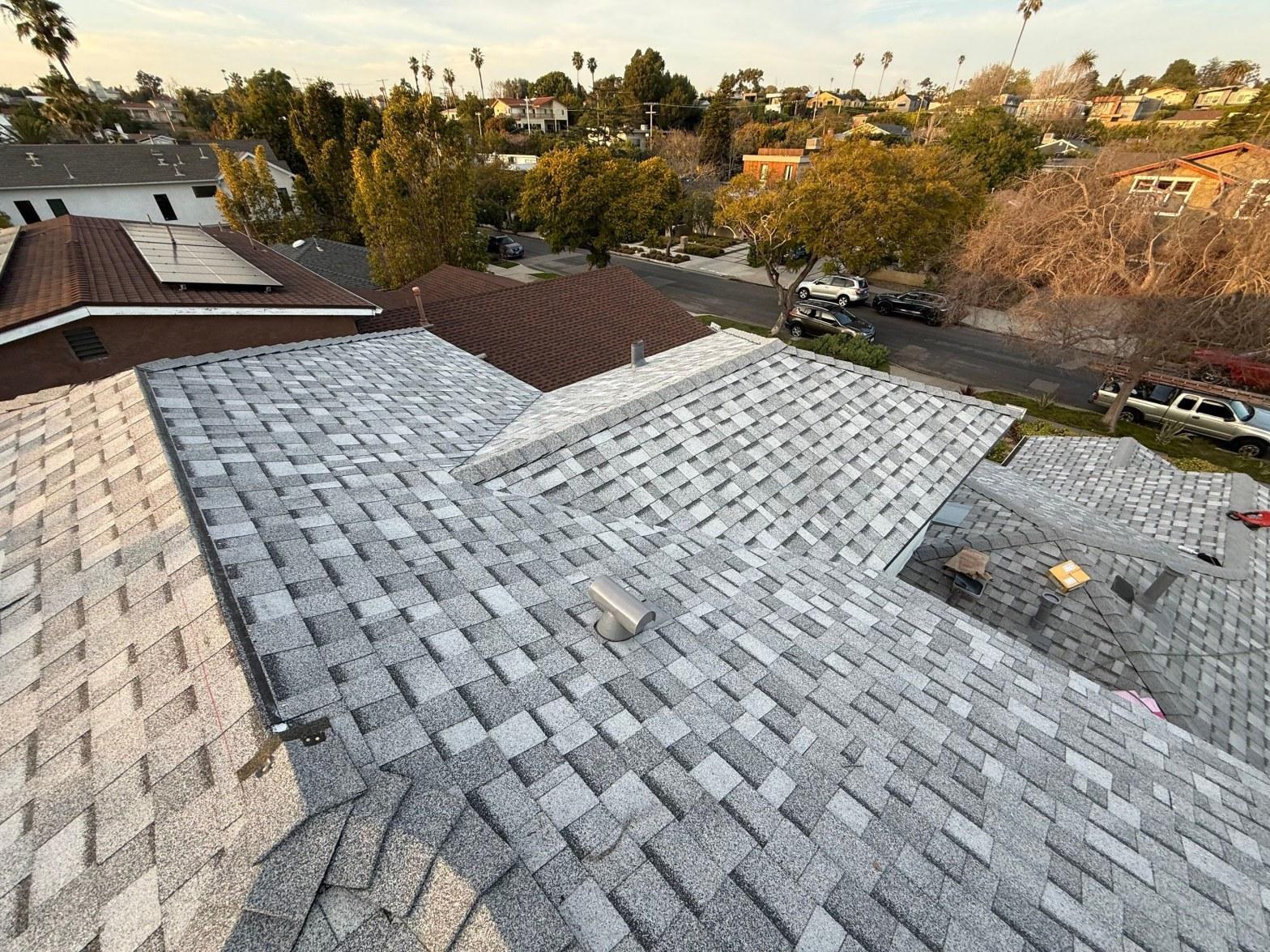
Southern California rooftops regularly reach surface temperatures of 150°F to 180°F on clear summer days, even when the air temperature is only in the 90s.
The real culprit is not just peak heat — it is the daily thermal cycle. Roofs heat up sharply each morning and cool down each night. Over a single summer, a roof can go through 90 or more of these expansion-and-contraction cycles. That mechanical stress cracks sealants, loosens fasteners, and splits shingles at their edges.
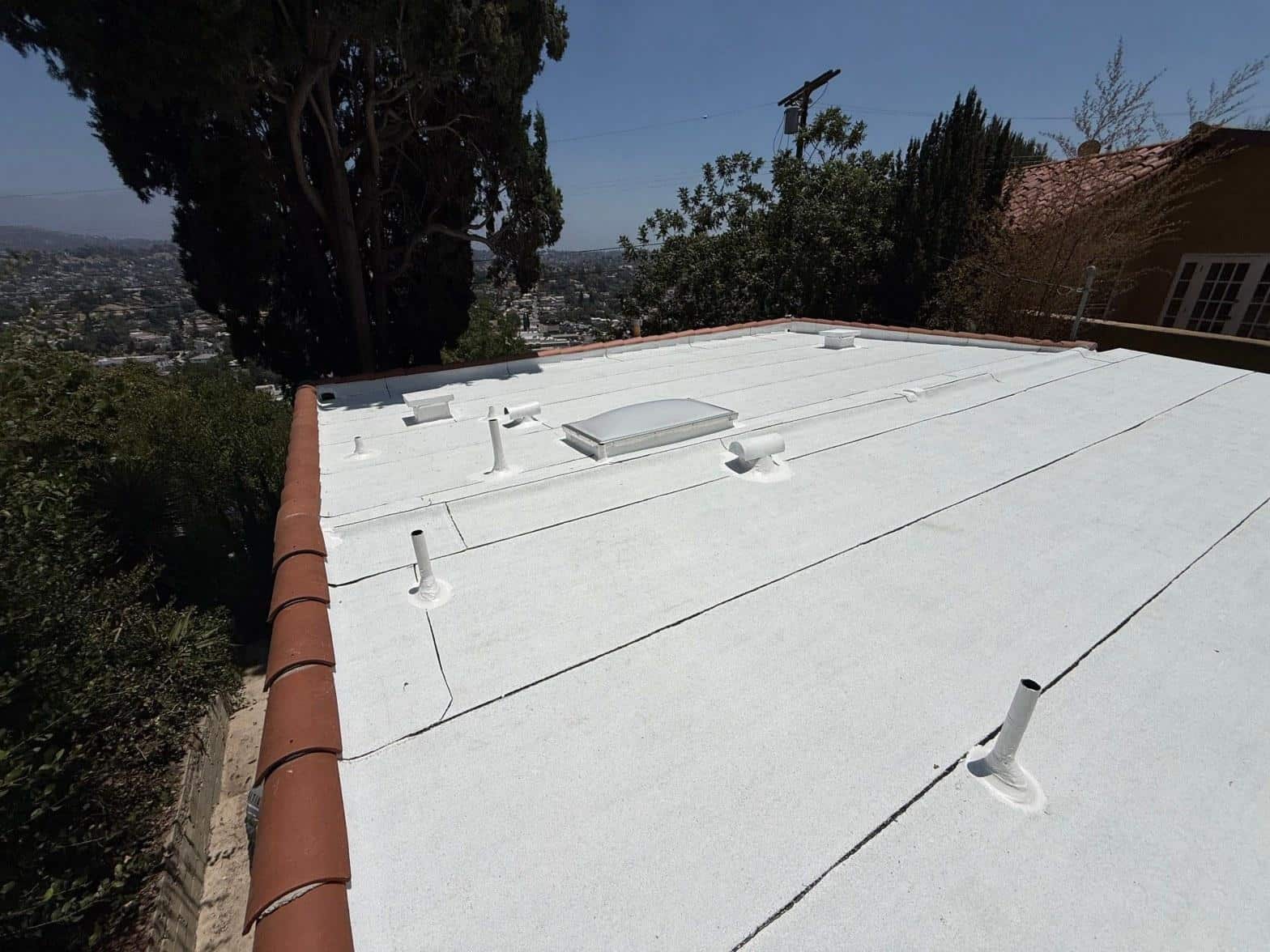
Flat and low-slope roofs common on California ranch-style homes and commercial buildings absorb even more heat than pitched roofs. Without adequate ventilation below the deck, that heat bakes the underlayment and decking from underneath as well, compounding the damage.
What Does UV Radiation Actually Do to Roofing Materials?
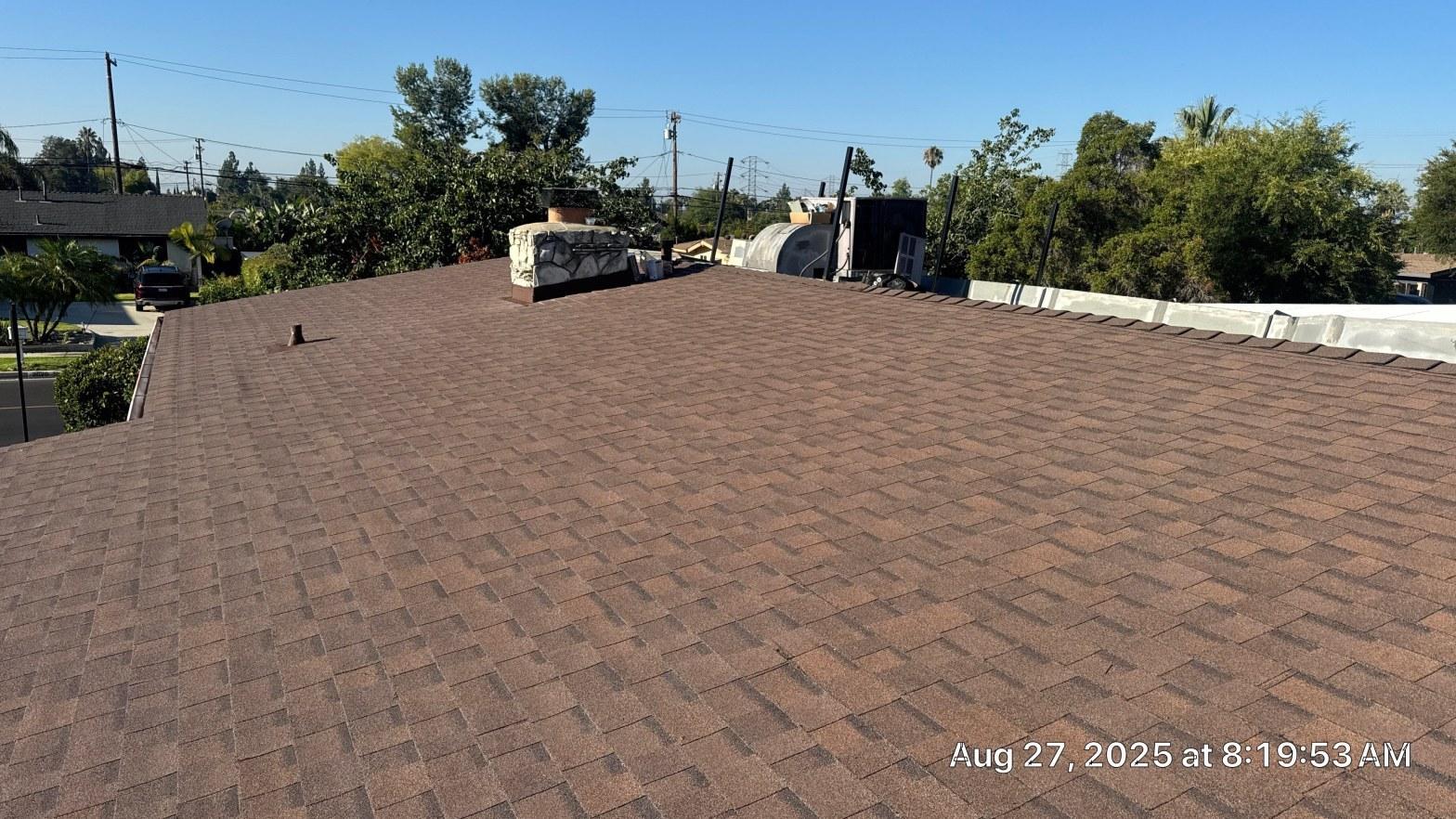
UV rays break down the chemical bonds in asphalt, rubber, and polymer-based roofing materials, causing them to become brittle, fade, and crack within just a few seasons of heavy sun exposure. This process is called photo-oxidation, and it happens whether temperatures are high or not — UV damage accumulates on overcast days too.
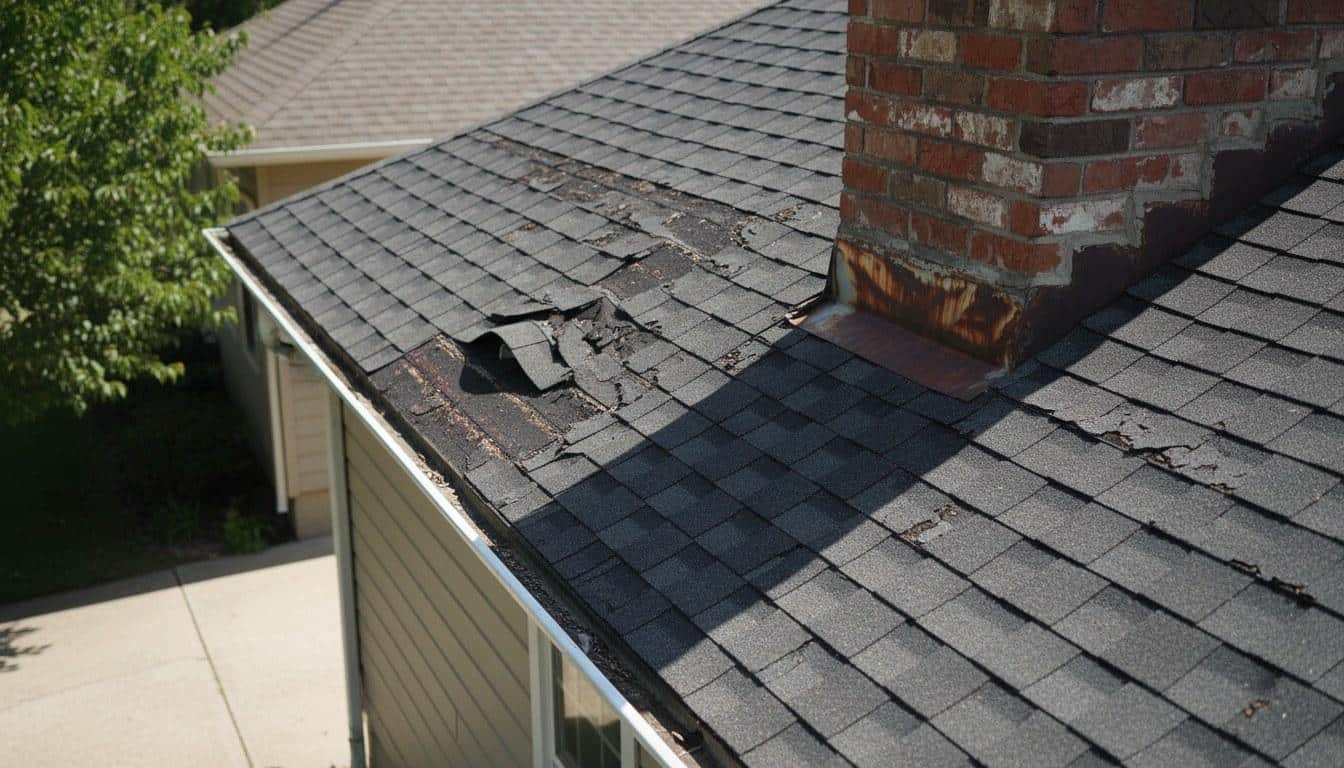
For asphalt shingles, UV exposure causes the oils in the asphalt to evaporate. Once those oils are gone, the shingle loses flexibility and begins to curl, crack, and shed the protective granules bonded to its surface. Those granules are not just decorative — they are the shingle’s primary UV shield. Once granule loss begins, UV degradation accelerates sharply.
Modified bitumen and TPO membranes used on flat roofs also suffer from UV exposure. TPO membranes can chalk and harden within 8 to 12 years in high-UV environments without a reflective coating. Modified bitumen without a cap sheet or aluminum coating can blister and delaminate within 5 to 7 years in Southern California conditions.
Our crews see granule loss concentrated on south- and west-facing roof planes in roughly 70% of the residential inspections we conduct during summer months — those faces take the most direct afternoon sun and degrade the fastest.
Summer Roof Damage Southern California Guide: Warning Signs to Watch For
The most important part of any summer roof damage Southern California guide is knowing what to look for before a small problem becomes a full leak or structural failure. Many warning signs are visible from the ground with binoculars or from a second-floor window.
- Granule loss: Dark, bare patches on asphalt shingles or a buildup of sand-like granules in your gutters after dry weather (not just after rain) signal UV degradation is underway.
- Curling or cupping shingles: Shingle edges that curl upward (cupping) or centers that buckle upward (clawing) indicate the asphalt layer has dried out and lost flexibility.
- Blistering: Raised bubbles on shingle surfaces or flat-roof membranes form when trapped moisture or volatile gases expand under heat. Blisters that pop leave the underlayer exposed.
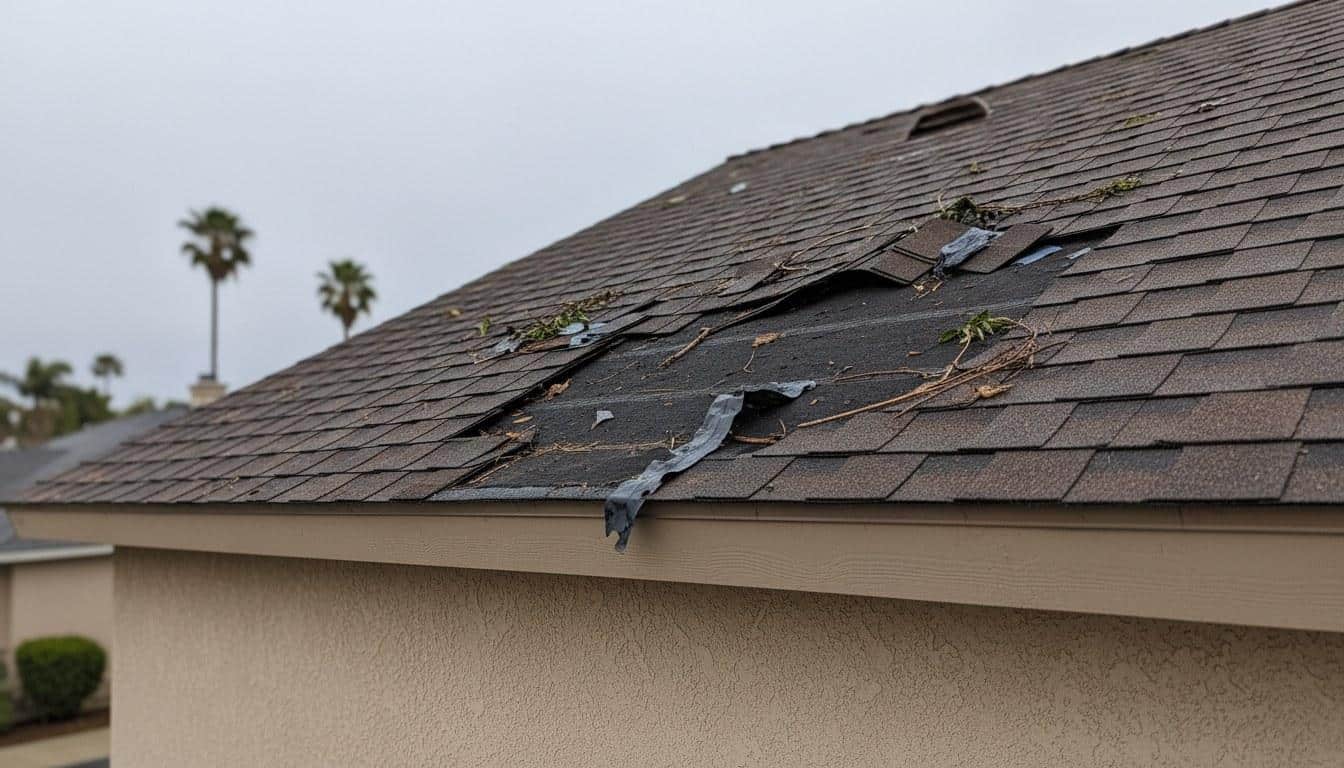
- Cracking sealant: The self-sealing strip along shingle edges and the sealant around pipe boots, skylights, and vents dries and cracks in sustained heat, creating direct leak pathways.
- Sagging deck sections: Soft or spongy areas when walking the roof indicate that heat and moisture cycling have compromised the plywood or OSB decking beneath the surface layer.
- Interior water stains: Brown ceiling rings or attic insulation that is wet or discolored after a summer thunderstorm point to a breach that heat damage likely opened up.
- Increased attic temperatures: An attic that feels dramatically hotter than the outdoor air temperature — more than 20°F above ambient — suggests the roof system is absorbing and trapping heat rather than reflecting it.
Walk the perimeter of your home and check gutters closely every July. Catching granule loss or sealant cracking at this stage typically means a targeted repair rather than a full residential roofing replacement.
Which Roofing Materials Hold Up Best in SoCal Heat?
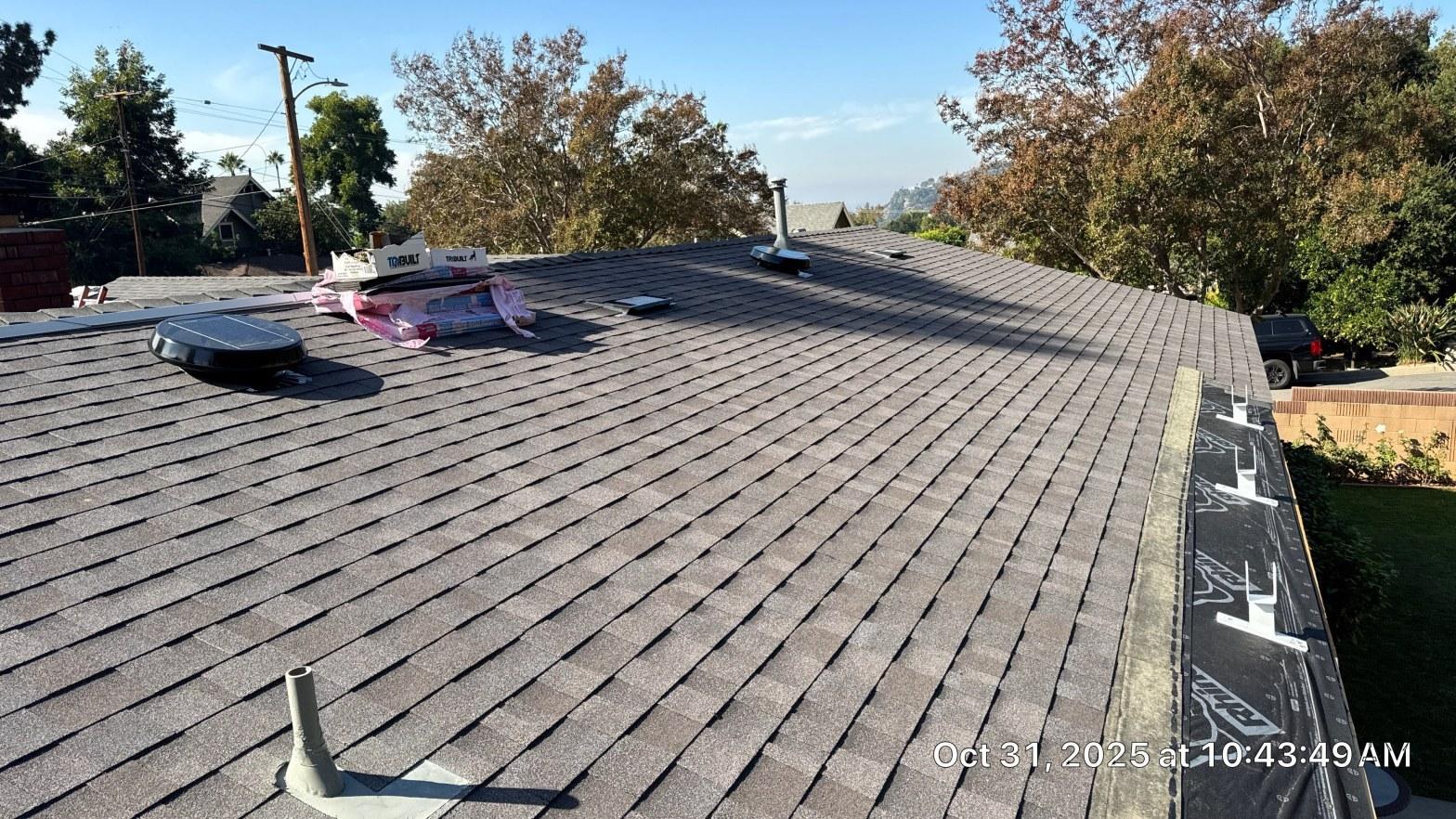
Concrete tile, clay tile, and metal roofing consistently outperform asphalt shingles in Southern California’s heat and UV environment, lasting 40 to 75 years compared to asphalt’s typical 15 to 25 years in this climate. The right choice depends on your roof’s pitch, your home’s structure, and your budget.
| Material | Typical Lifespan in SoCal | UV Resistance | Heat Reflectivity | ENERGY STAR Rated Options? |
|---|---|---|---|---|
| Asphalt Shingles (standard) | 15–22 years | Moderate | Low | Yes (cool-roof shingles) |
| Asphalt Shingles (cool-roof) | 18–25 years | Moderate–High | Moderate | Yes |
| Concrete Tile | 40–50 years | High | Moderate–High | Yes |
| Clay Tile | 50–75 years | Very High | High | Yes |
| Metal (standing seam or coated) | 40–70 years | Very High | High | Yes |
| TPO / Modified Bitumen (flat) | 15–25 years (with coating) | Moderate (coated) | High (white TPO) | Yes |
ENERGY STAR-rated roofing products are required under California’s Title 24 building energy standards for many re-roofing projects on low-slope roofs. Cool-roof rated materials reflect more solar energy, reducing attic temperatures by up to 30°F and lowering cooling costs noticeably during peak summer months.
Cool-roof rated materials reflect more solar energy, reducing attic temperatures by up to 30°F and lowering cooling costs noticeably during peak summer months.
If your home currently has standard three-tab asphalt shingles installed before 2005, it was almost certainly not built to today’s cool-roof standards. Upgrading to a Title 24-compliant product during your next roof replacement in Los Angeles or elsewhere in Southern California delivers both durability and energy savings.
How Much Does Summer Roof Repair Cost in California?
Targeted heat and UV repairs — patching cracked sealant, replacing a section of damaged shingles, or re-coating a flat roof membrane — typically range from $300 to $1,500 in the Southern California market, depending on scope and access. Full residential roofing replacements on a standard single-story home generally range from $8,000 to $25,000 or more, with tile and metal systems at the higher end.
Several factors move the final number significantly:
- Roof size and pitch: Steeper pitches require more labor time and safety equipment, adding 10% to 20% to base costs.
- Material choice: Clay tile costs roughly 2 to 3 times more per square than standard asphalt, but lasts 3 times as long in SoCal conditions.
- Deck damage: If heat cycling has compromised the plywood decking, replacement adds $2 to $5 per square foot on top of surface material costs.
- Number of layers: California building code generally limits roofs to two layers of asphalt shingles. Tear-off of existing layers adds labor cost but is often required.
- Permitting: Full replacements require a permit in most California jurisdictions. Permit fees vary by county but typically run $150 to $600.
The Inflation Reduction Act federal tax credit offers up to 30% back (capped at $1,200 per year for roofing) on ENERGY STAR-certified cool-roof products installed on your primary residence, as of 2026. That credit can meaningfully offset the cost of upgrading to a higher-performing material when you do need a full replacement.
Always request a written, itemized quote before any work begins. Prices in this market shift with material costs, so a quote from six months ago may not reflect current pricing. Call (213) 364-3979 or contact Roof Replacement Inc for a current, no-obligation estimate.
How Do You Repair a Roof Damaged by Heat or UV Rays?
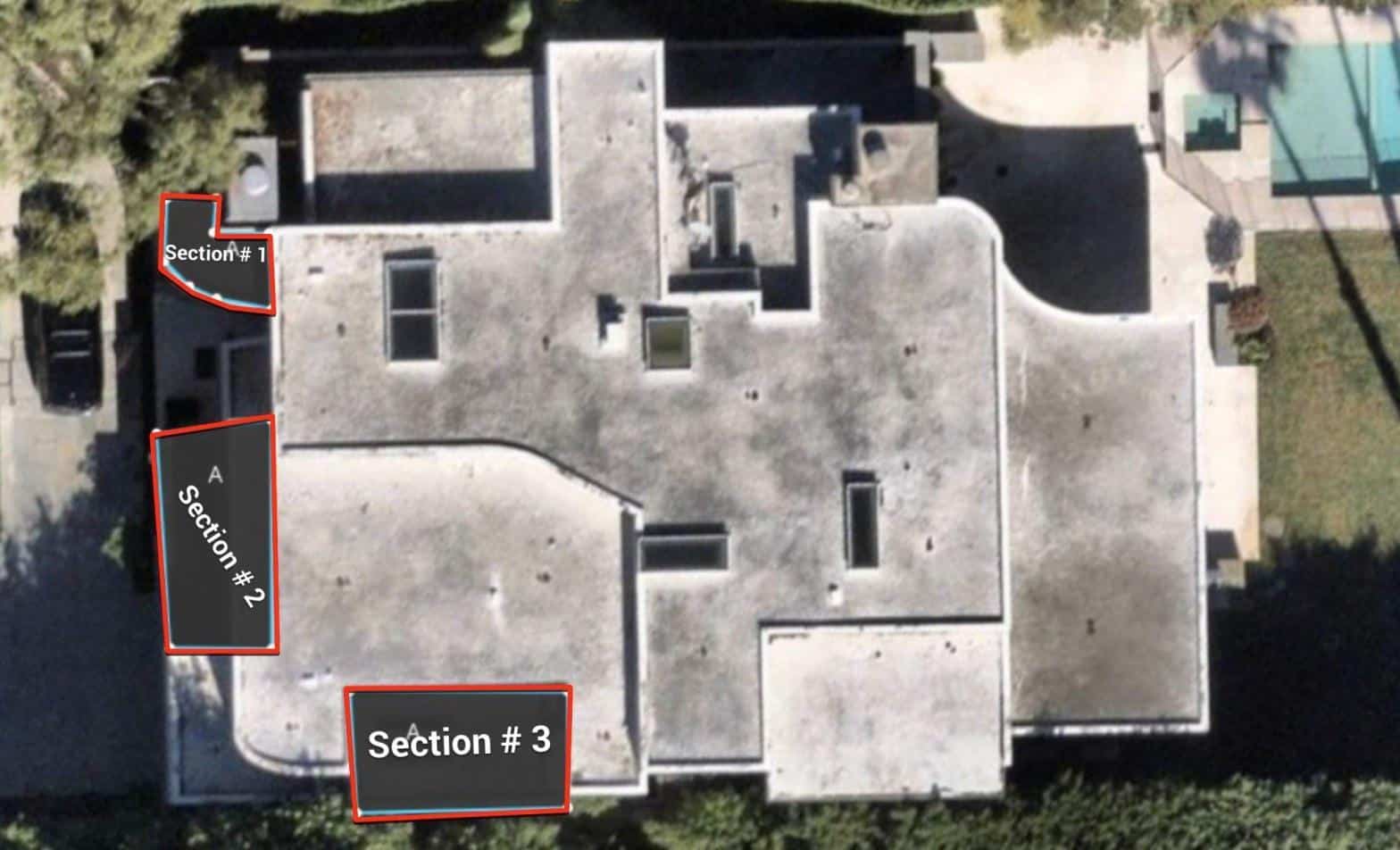
Repairing a heat- or UV-damaged roof starts with a thorough inspection to map every failure point before any material is touched — skipping the inspection and patching only what is visible is the most common mistake homeowners and inexperienced contractors make. Here is how a proper repair process works, step by step.
- Full roof inspection: Walk every plane of the roof and inspect flashings, valleys, pipe boots, ridge caps, and field shingles. Check the attic interior for daylight, moisture staining, or insulation damage. Document every defect with photos.
- Identify repair vs. replace threshold: If more than 30% of the shingle surface shows granule loss, curling, or cracking, a full replacement is almost always more cost-effective than patching. Targeted repairs make sense when damage is isolated to one or two sections.
- Replace damaged shingles: Remove cracked or curled shingles by carefully lifting the tabs above, removing nails, sliding out the damaged piece, and nailing in a matching replacement shingle. Seal all nail heads with roofing cement.
- Re-seal all penetrations: Apply fresh roofing caulk or butyl tape around every pipe boot, skylight curb, and vent collar. Heat-cracked sealant at these points is the number-one source of summer leak calls.
- Re-coat flat roof membranes: On TPO, modified bitumen, or built-up roofs, apply a reflective elastomeric or acrylic coating rated for the membrane type. This restores UV protection and can add 5 to 10 years of service life at a fraction of replacement cost.
- Improve attic ventilation: Install or clear ridge vents and soffit vents to reduce under-deck temperatures. Proper ventilation can lower roof surface temperatures by 10°F to 15°F and dramatically slow future heat degradation.
- Final inspection and documentation: Re-walk the entire roof after repairs and photograph the completed work. A licensed contractor should provide written documentation of all work performed — required if you ever file an insurance claim or sell the home.
Contractors licensed by the California Contractors State License Board (CSLB) are required for any roofing job over $500 in California. Always verify a contractor’s CSLB license number before signing a contract — the CSLB lookup tool is free and takes under a minute.
We find that roughly 40% of the summer repair calls we respond to across Southern California involve sealant failures at penetrations that could have been caught and fixed for under $400 if identified during a spring inspection — by the time a homeowner notices a ceiling stain, water has often been entering for weeks.
Ready to Protect Your Roof Before Summer Gets Worse?
The best time to address summer roof damage is before the next heat wave or monsoon-season storm creates an active leak. A professional inspection now can identify UV and heat damage while repair options are still affordable and straightforward.
Roof Replacement Inc serves homeowners and property owners across Southern California with inspections, targeted repairs, and full residential roofing replacements. Whether you need a quick sealant repair or a complete system upgrade to a Title 24-compliant cool-roof product, the team is ready to help.
Schedule your inspection or request a written quote today. Call (213) 364-3979 — same-week appointments available across the region.
Explore our full range of roofing services across Southern California.
Frequently Asked Questions
How do I know if my roof has heat damage from a Southern California summer?
The clearest signs are curling or cupping shingles, dark bare patches where granules have worn away, and blistering on flat roof membranes. Check your gutters after dry weather — a buildup of sandy granules is a strong indicator that UV degradation is already underway. An in-person inspection by a licensed roofing contractor will confirm the extent of the damage.
How do you repair a roof that has been damaged by heat and UV rays?
Start with a full inspection to map every failure point, then replace cracked or curled shingles, re-seal all penetrations like pipe boots and skylights, and re-coat any flat roof membranes with a reflective elastomeric coating. Improving attic ventilation is also critical — it lowers under-deck temperatures and slows future degradation. For damage covering more than 30% of the roof surface, a full replacement is usually more cost-effective than patching.
How long does an asphalt shingle roof last in Southern California compared to other states?
In Southern California's high-UV, high-heat environment, standard asphalt shingles typically last 15 to 22 years — roughly 5 to 10 years less than the same product in a cooler, cloudier climate. Cool-roof rated shingles and proper attic ventilation can extend that range to 18 to 25 years. Tile and metal roofing systems last 40 to 75 years in the same conditions.
Is there a tax credit available when I replace my roof with a cool-roof product in California?
Yes. As of 2026, the Inflation Reduction Act federal tax credit covers up to 30% of the cost of ENERGY STAR-certified cool-roof products on a primary residence, capped at $1,200 per year for roofing materials. California's Title 24 building energy standards also require cool-roof rated products on many low-slope re-roofing projects, so upgrading often satisfies both a code requirement and a tax incentive at the same time.
How much does it cost to repair summer roof damage in Southern California?
Targeted repairs — patching cracked sealant, replacing a section of damaged shingles, or re-coating a flat roof membrane — typically range from $300 to $1,500 in the Southern California market depending on the scope and roof access. Full residential roof replacements generally range from $8,000 to $25,000 or more. Getting a written, itemized quote from a CSLB-licensed contractor is the best way to get an accurate number for your specific roof.
Related Articles




What Our Clients Say








Roof Replacement Inc. offers professional, high-quality work, guaranteed (call for details); ensuring all clients projects meet all code and design requirements. We are dedicated to exceptional customer service and will strive to ensure you with the highest quality roofing services. Roof Replacement Inc. offers lifetime warranty (call for details) on all of our workmanship to ensure the quality of our work. With over 40 years of combined experience within the roofing and construction industry, Roof Replacement Inc. has grown and developed in all areas of roofing construction, including roof inspections. As a leading residential and commercial roofing company in LA, we have hundreds of references from previous clients, so rest assured, that your roofing job will be done right the first time. Replacing an old roof can help add curb appeal and will increase the perceived value of your home. First impressions are vital when selling your home, especially when your roof takes up more than half of the exterior of your residence or business. Not only is the return of investment on a new roof attractive for potential buyers, but can be as beneficial as remodeling the kitchen or bathrooms within your residence.

