Catching residential roofing problems early can save homeowners thousands of dollars. This guide walks through the warning signs, common causes, repair costs, and how to decide when to call a professional.
What Are the Most Common Residential Roofing Problems Homeowners Face?
The most common residential roofing problems homeowners deal with are leaks, damaged or missing shingles, failed flashing, and poor attic ventilation. Most of these problems start small and become expensive only when they go undetected for weeks or months. Understanding what causes each one helps you catch them early and avoid a full replacement.
California’s climate adds extra pressure on roofs. Hot summers push attic temperatures above 150 degrees Fahrenheit, which dries out shingles and cracks sealants faster than in cooler states. Winter rain seasons then send water straight through those cracks. According to NOAA, Southern California averages 15 inches of rain per year, but much of it falls in concentrated storms that overwhelm aging roof systems.
Here are the six problems that show up most often on California homes:
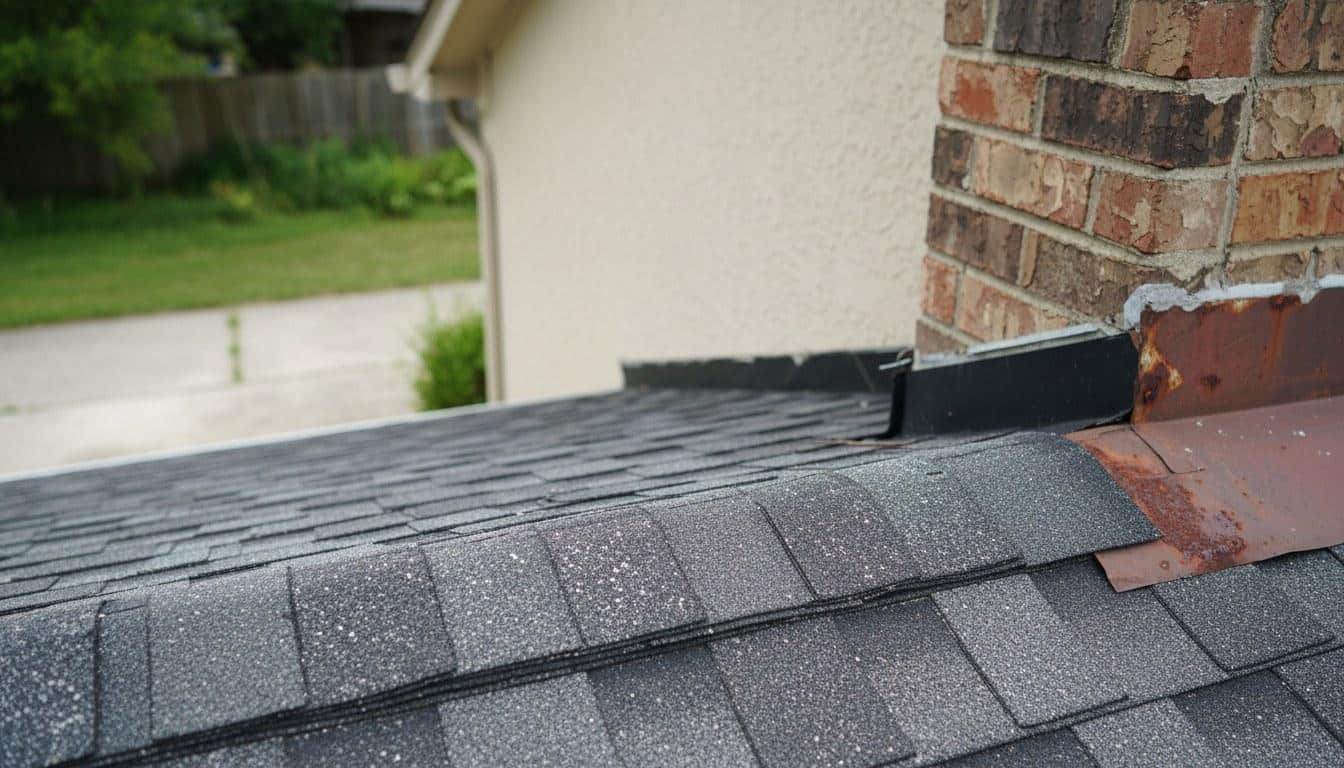
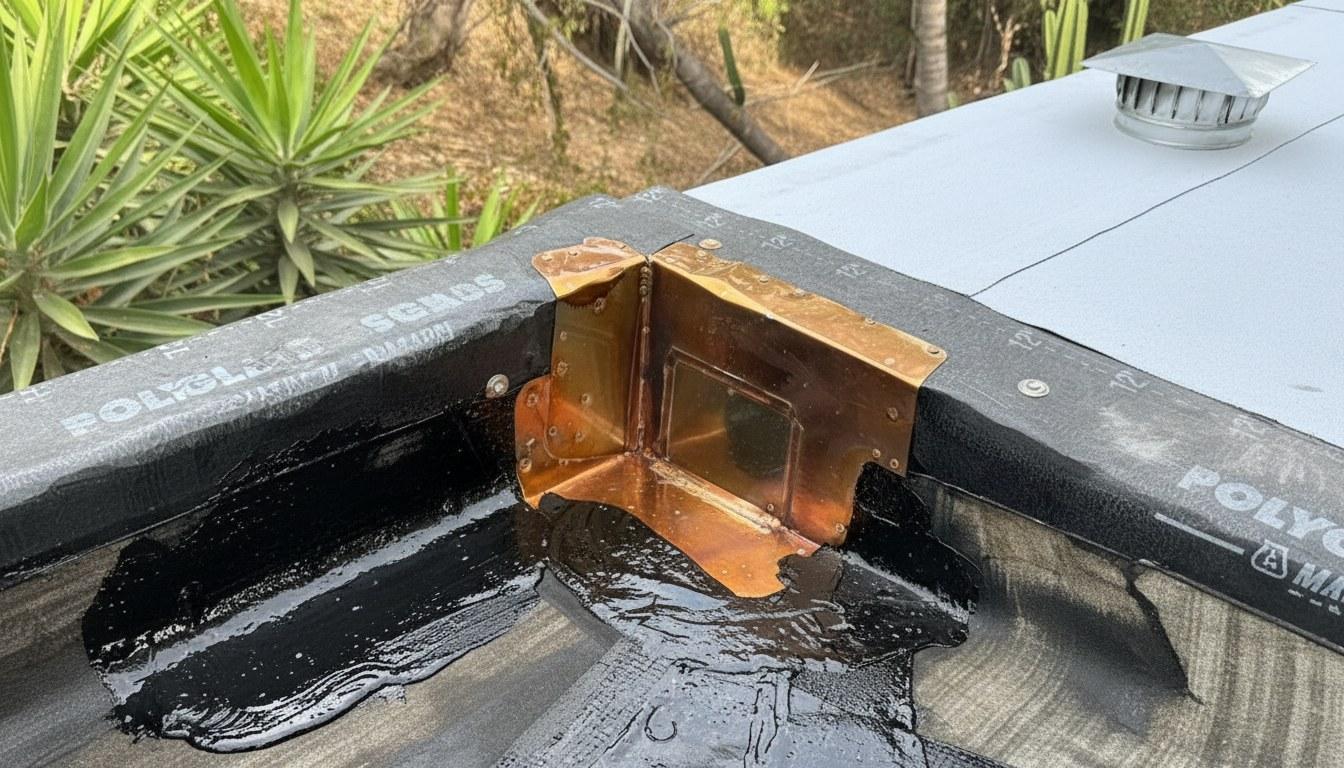
- Leaking around flashing: Metal flashing seals the joints around chimneys, skylights, and vents. When it lifts, corrodes, or was installed incorrectly, water follows the gap straight into the attic.
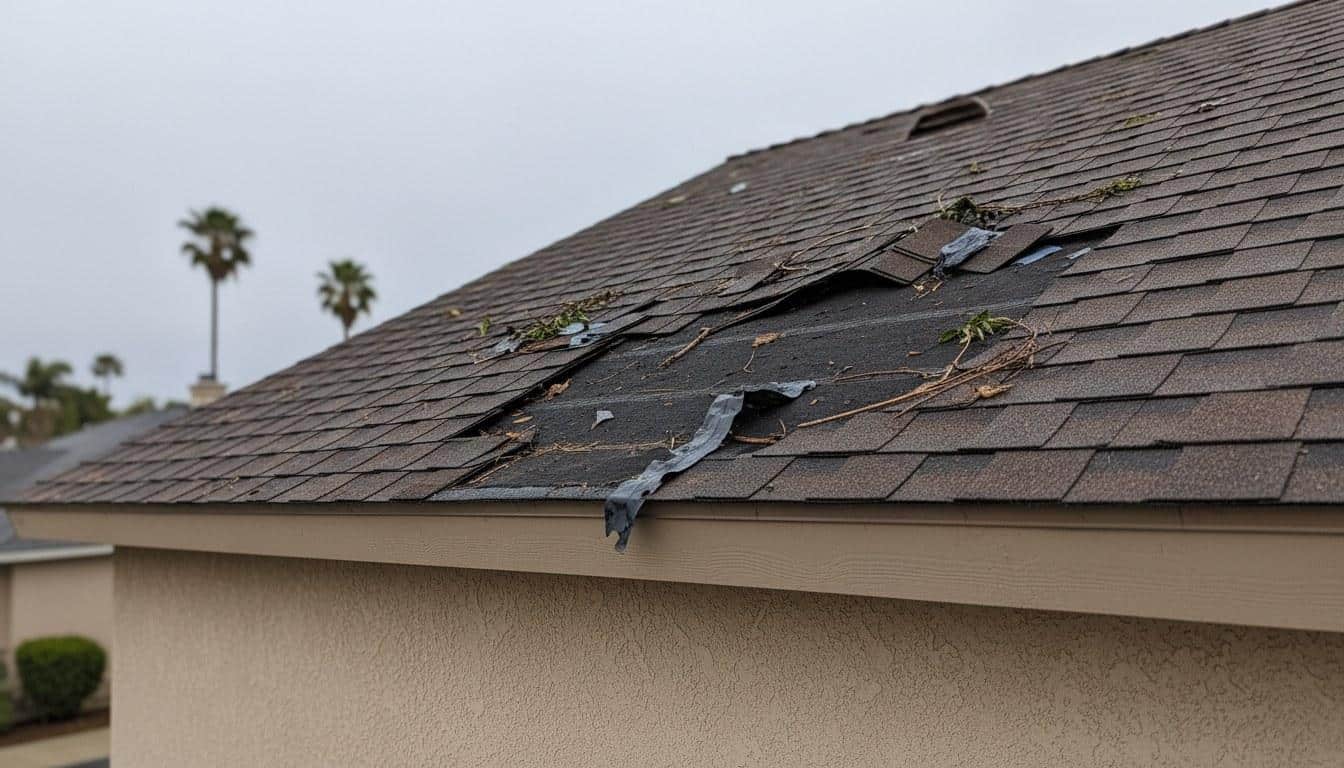
- Missing or cracked shingles: Wind, UV exposure, and age cause shingles to curl, crack, or blow off entirely. Even one missing shingle creates an entry point for water.
- Granule loss: Asphalt shingles shed protective granules as they age. Heavy granule loss in gutters signals that shingles have less than a few years of life left.
- Clogged or damaged gutters: Gutters that overflow push water back under the roofline, causing rot at the fascia board and eventually inside the wall cavity.
- Poor attic ventilation: Without proper airflow, heat and moisture build up in the attic, shortening shingle life by up to 25 percent and encouraging mold growth on the decking.
- Sagging roof sections: A roof deck that dips or sags indicates structural damage, usually from long-term moisture intrusion or compromised rafters. This is a serious issue that needs immediate attention.
What Do Early Warning Signs of Roof Damage Look Like?
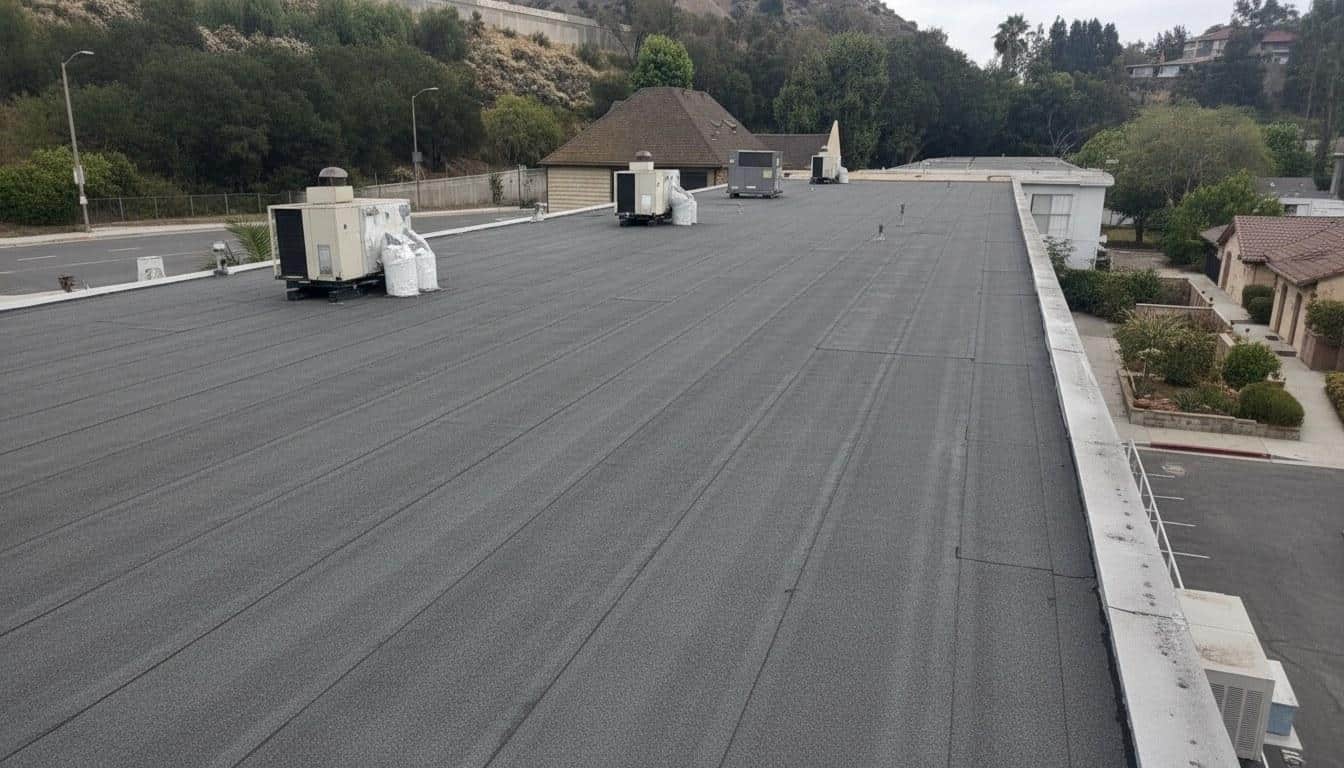
Early roof damage often shows up inside the home before it is visible from the street. Water stains on ceilings, peeling paint near exterior walls, and musty smells in the attic are the first clues that something is wrong overhead. By the time you see daylight through the roof boards or active dripping, the damage has usually been building for 6 to 18 months.
Our team sees this pattern consistently: on homes where the attic has not been inspected in over three years, roughly 60 percent show at least one area of moisture damage that the homeowner had no idea existed. The leak was there, but the ceiling below had not yet stained visibly.
On homes where the attic has not been inspected in over three years, roughly 60 percent show at least one area of moisture damage that the homeowner had no idea existed.
From the exterior, look for these specific signals:
- Curling shingle edges: Shingles curl upward at the corners (cupping) or downward at the center (clawing). Either shape means the shingle is no longer lying flat and water can get underneath.
- Dark streaks or algae stains: Black streaks running down the roof surface are usually algae, which holds moisture against the shingle and accelerates deterioration.
- Daylight in the attic: On a sunny day, turn off attic lights and look up. Any pinhole of light means a gap that rain will find.
- Rust stains near metal components: Rust running from a vent pipe or chimney base signals that flashing or fasteners are failing.
- Granules in downspouts: Check your downspout discharge after rain. A heavy load of granules means shingles are shedding their protective coating.
Inside the home, watch for these warning signs:
- Brown or yellow rings on ceiling drywall
- Bubbling or peeling paint on interior walls near the roofline
- A musty or earthy smell in upstairs rooms or closets
- Higher-than-normal energy bills, which can indicate that attic insulation has been soaked and compressed
How Much Does Roof Repair Cost in California?
In the California market, minor roof repairs typically range from $300 to $1,500 depending on the scope. Mid-range repairs involving flashing replacement or a section of damaged decking generally run $1,500 to $4,000. Extensive structural or water-damage repairs can exceed $8,000 before a full replacement is even considered. The factors that move the number most are the size of the damaged area, the roofing material, roof pitch, and how long the damage has been active.
The table below breaks down typical repair categories and the factors that drive cost:
| Repair Type | Typical CA Market Range | Key Cost Drivers |
|---|---|---|
| Shingle patch (1-10 sq ft) | $300 to $700 | Material match, roof pitch, access |
| Flashing replacement | $500 to $1,500 | Number of penetrations, chimney vs. vent |
| Gutter repair or replacement | $400 to $2,000 | Linear footage, material, fascia condition |
| Decking repair (rot or moisture damage) | $1,000 to $4,000 | Square footage affected, structural depth |
| Full leak diagnosis and patch | $500 to $2,500 | Leak source complexity, interior damage |
| Structural repair (sagging section) | $2,500 to $8,000+ | Rafter or truss involvement, scope of rot |
California’s Title 24 building energy standards can also affect repair costs if a permit is required. Permitted work may require insulation upgrades or ventilation improvements that add to the total. Always ask your contractor whether a permit is needed for your specific repair before work begins.
For an accurate number on your home, request a custom quote. Contact Roof Replacement Inc at (213) 364-3979 for a written estimate based on your actual roof condition.
Roof Repair vs. Roof Replacement: How Do You Decide?
If your roof is under 15 years old and the damaged area covers less than 30 percent of the total surface, repair is almost always the smarter financial choice. If the roof is over 20 years old, has multiple problem areas, or has suffered repeated leaks, a full replacement typically costs less over the next decade than stacking repairs on a failing system.
Asphalt shingles, the most common residential roofing material in California, carry a manufacturer lifespan of 20 to 30 years. Tile and metal roofs can last 40 to 50 years with proper maintenance. Age alone does not determine the answer, but it is a critical input.
Use this decision framework:
- Repair if: The roof is less than 15 years old, damage is isolated to one area, and the decking underneath is dry and structurally sound.
- Repair if: You are planning to sell within 2 to 3 years and a roof certification (a written statement that the roof has useful life remaining) will satisfy the buyer’s lender.
- Replace if: The roof is over 20 years old and has had two or more leaks in the past five years.
- Replace if: More than 30 percent of the shingles show granule loss, cracking, or curling.
- Replace if: The decking has widespread moisture damage or soft spots in multiple locations.
- Replace if: Your energy bills have climbed steadily and attic insulation has been compromised by moisture.
A roof certification from a licensed contractor is often required during a real estate transaction in California. The certification confirms the roof has a minimum number of years of remaining life, typically 2 to 5 years, and gives buyers and lenders confidence. If you are buying or selling a home, this inspection is worth scheduling before escrow opens.
What Does a Professional Roofing Inspection Actually Cover?
A thorough professional roof inspection examines the shingles, flashing, gutters, fascia, soffit, attic ventilation, and decking. It takes 45 to 90 minutes on a typical single-story home and produces a written report with photos of every problem found. A visual-only inspection from the ground is not sufficient to catch flashing failures, early deck rot, or ventilation deficiencies.
Here is what a qualified inspector checks on every visit:
- Shingle condition: Cupping, cracking, granule loss, missing tabs, and age-related brittleness are documented by zone across the roof surface.
- Flashing integrity: Every penetration point, including chimneys, skylights, pipe boots, and wall transitions, is physically tested for lift and seal failure.
- Gutter attachment and drainage: Gutters are checked for proper slope, secure attachment, and blockage that could back water under the drip edge.
- Fascia and soffit: The inspector looks for rot, pest damage, and paint failure that signal moisture has already reached the roofline structure.
- Attic ventilation and insulation: Ridge vents, soffit vents, and baffles are checked for blockage. Wet or compressed insulation is flagged.
- Roof decking: Where accessible, the inspector presses on the decking to identify soft spots caused by moisture intrusion.
A contractor who is licensed by the California Contractors State License Board (CSLB) is required to carry liability insurance and meet state competency standards. Always verify a contractor’s CSLB license number before allowing anyone on your roof. You can check license status directly on the CSLB website at no cost.
Across our inspection calls on homes built before 1990, we find active flashing failures in roughly 7 out of 10 cases, even when the homeowner reports no visible leaks. The water is moving, but it has not yet reached the ceiling below.
How Can Homeowners Prevent Roofing Problems Before They Start?
Most residential roofing problems homeowners call about are preventable with twice-yearly maintenance and prompt attention to minor repairs. The best times to inspect are in late fall before the rainy season begins and in late spring after winter weather has passed. A 30-minute visual check from the ground and a gutter cleaning can extend the useful life of a roof by several years.
Follow this annual maintenance checklist:
- Clean gutters twice a year: Remove leaves, debris, and granule buildup every fall and spring. Clogged gutters are a leading cause of fascia rot and interior water damage.
- Trim overhanging branches: Branches within 6 feet of the roof surface scrape shingles in wind and deposit debris that holds moisture. Trim them back before storm season.
- Check attic ventilation annually: Make sure soffit vents are not blocked by insulation and that ridge vents are clear. Proper airflow keeps attic temperatures below 130 degrees Fahrenheit in summer and prevents ice-dam-style moisture buildup in winter.
- Reseal exposed fasteners and pipe boots: Rubber pipe boots around plumbing vents crack within 10 to 15 years. A tube of roofing sealant applied before a crack opens fully costs under $20 and prevents a $500 to $1,500 leak repair.
- Schedule a professional inspection every 3 to 5 years: Even a roof that looks fine from the street can have developing problems at flashing joints or in the attic. A professional inspection every few years catches these before they compound.
- Act on small repairs immediately: The U.S. Department of Energy notes that air and water infiltration through small gaps are among the leading causes of accelerated building-envelope deterioration. A $400 repair ignored for one season can become a $4,000 repair the following year.
California homeowners in wildfire-adjacent areas should also ask about Class A fire-rated roofing materials when replacing or upgrading. Class A is the highest fire-resistance rating available and is required in many high-fire-hazard severity zones (HFHSZ) designated by the California Department of Forestry and Fire Protection.
Get a Professional Roof Inspection Before Small Problems Get Bigger
Residential roofing problems homeowners catch early are almost always cheaper and faster to fix than problems that have been developing for a year or more. A cracked pipe boot repaired today costs a fraction of the drywall, insulation, and mold remediation that follow a slow leak left alone through two rainy seasons.
Schedule your roof inspection with Roof Replacement Inc, serving homeowners across Southern California. Whether you need a routine maintenance check, a roof certification for a real estate transaction, or a full damage assessment after a storm, our team provides written reports with photos so you know exactly what you are dealing with.
Call (213) 364-3979 to book your inspection or request a written repair estimate. Same-week appointments are available across the region.
Explore our full range of roofing services across Southern California.
Frequently Asked Questions
How do I know if my roof is leaking even if I don't see water dripping inside?
A roof can be leaking for months before water drips visibly indoors. Look for brown or yellow rings on ceiling drywall, peeling paint near the roofline, a musty smell in upstairs rooms, or soft spots in attic insulation. If any of these appear, schedule a professional inspection right away rather than waiting for visible dripping.
How often should I have my roof inspected?
Most roofing professionals recommend a full inspection every 3 to 5 years on a roof in good condition, and annually on any roof over 15 years old. You should also schedule an inspection after any major storm, after a nearby wildfire, or before buying or selling a home. Catching problems early almost always costs less than repairing damage that has spread.
What is a roof certification and do I need one when selling my home in California?
A roof certification is a written statement from a licensed roofing contractor confirming that the roof has a minimum number of years of remaining useful life, typically 2 to 5 years. Many mortgage lenders and buyers require one during escrow. A licensed contractor inspects the roof and issues the certificate if the roof meets the threshold; if it does not, the contractor will outline what repairs are needed first.
Can I repair just part of my roof or do I have to replace the whole thing?
Partial repairs are absolutely possible and are the right choice when damage is limited to a specific area and the rest of the roof is structurally sound. A contractor will assess how much of the surface is affected and whether the decking underneath is dry. If damage covers more than 30 percent of the roof or the roof is over 20 years old with multiple problem areas, a full replacement usually makes more financial sense over the long term.
How long does a typical roof repair take to complete?
Most minor to mid-range roof repairs, such as shingle patches, flashing replacement, or gutter repairs, are completed in one to four hours. Larger repairs involving decking replacement or structural work can take one to two full days. The timeline depends on the size of the damaged area, material availability, and whether a permit is required for the scope of work.
Related Articles




What Our Clients Say








Roof Replacement Inc. offers professional, high-quality work, guaranteed (call for details); ensuring all clients projects meet all code and design requirements. We are dedicated to exceptional customer service and will strive to ensure you with the highest quality roofing services. Roof Replacement Inc. offers lifetime warranty (call for details) on all of our workmanship to ensure the quality of our work. With over 40 years of combined experience within the roofing and construction industry, Roof Replacement Inc. has grown and developed in all areas of roofing construction, including roof inspections. As a leading residential and commercial roofing company in LA, we have hundreds of references from previous clients, so rest assured, that your roofing job will be done right the first time. Replacing an old roof can help add curb appeal and will increase the perceived value of your home. First impressions are vital when selling your home, especially when your roof takes up more than half of the exterior of your residence or business. Not only is the return of investment on a new roof attractive for potential buyers, but can be as beneficial as remodeling the kitchen or bathrooms within your residence.

