

Choosing between asphalt shingles and tile roofing is one of the biggest decisions Southern California homeowners face. This guide breaks down cost, lifespan, fire resistance, and climate fit so you can choose with confidence.
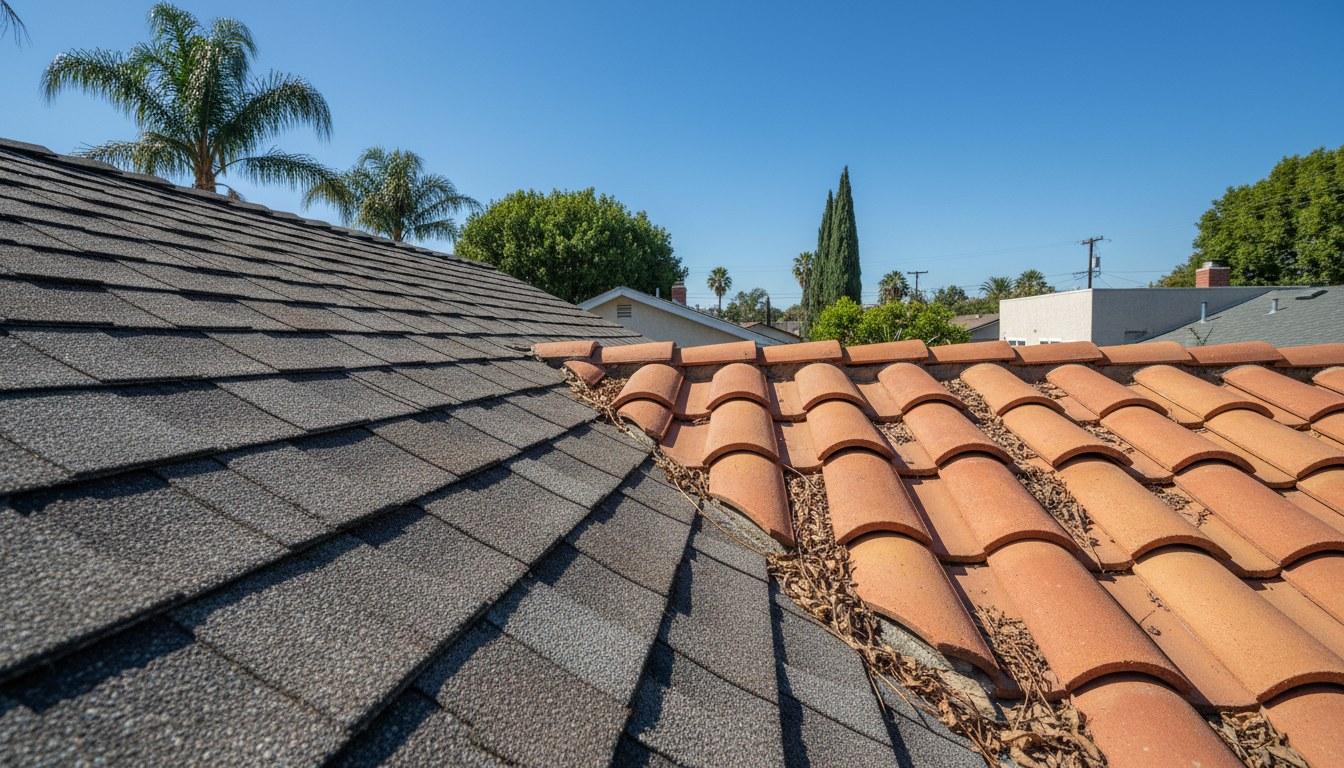
Asphalt Shingles vs. Tile Roofing in Southern California: The Core Differences
When weighing asphalt shingles vs tile roofing in Southern California, the two materials differ most in cost, weight, lifespan, and heat performance. Asphalt shingles are lighter and more affordable; tile is heavier, longer-lasting, and better suited to the region’s intense UV exposure. Both are widely used across Los Angeles County, Orange County, and the Inland Empire, so neither is a wrong choice — but one may fit your home and budget better than the other.
Southern California’s climate is tough on roofing materials. Summers bring sustained heat above 90°F in many inland areas, while coastal zones face marine-layer moisture and salt air. Understanding how each material responds to those conditions is the first step toward a smart decision.
How Do the Costs Compare?
Asphalt shingles typically cost between $4 and $8 per square foot installed in the Southern California market, while concrete or clay tile roofing generally runs $10 to $20 per square foot installed, depending on tile type and roof complexity. On a 2,000-square-foot roof, that gap can translate to a difference of $12,000 to $24,000 or more between the two materials.
Several factors move those numbers up or down. Steep pitches, complex hip-and-valley layouts, and tear-off of an existing tile roof all add labor cost. Clay tile tends to sit at the higher end of the tile range; concrete tile is usually more affordable while still delivering strong performance.
| Cost Factor | Asphalt Shingles | Tile Roofing |
|---|---|---|
| Typical installed cost (per sq ft) | $4 – $8 | $10 – $20 |
| Average lifespan | 20 – 30 years | 40 – 75+ years |
| Long-term cost per year of service | Moderate | Lower over full lifespan |
| Repair cost when damaged | Lower — individual shingles replaced easily | Moderate — broken tiles are pricey but isolated |
| Structural reinforcement needed | Rarely required | Often required for older homes |
| Energy rebate eligibility | Cool-roof shingles qualify | Many tile profiles qualify |
Because tile lasts two to three times longer than asphalt in Southern California conditions, the lifetime cost per year can actually favor tile on homes where owners plan to stay 20 or more years. For homeowners planning to sell within 10 years, asphalt shingles often make more financial sense. For the year-by-year numbers, including the second roof an asphalt home usually needs, see our 20-year cost analysis of tile vs asphalt shingle roofs.
Federal incentives can reduce out-of-pocket costs for either material. The Inflation Reduction Act federal tax credit covers certain energy-efficient roofing upgrades, including ENERGY STAR-rated cool-roof products in both shingle and tile categories. Always request a custom quote from a licensed contractor before budgeting — regional labor rates and your roof’s specific layout affect the final number more than material price alone.
Which Material Handles Southern California’s Climate Better?
Tile roofing handles Southern California’s heat, UV intensity, and fire risk better than standard asphalt shingles, but high-performance architectural shingles have closed that gap significantly in recent years. The region’s long dry seasons, intense sun, and periodic Santa Ana wind events stress every roofing material differently.
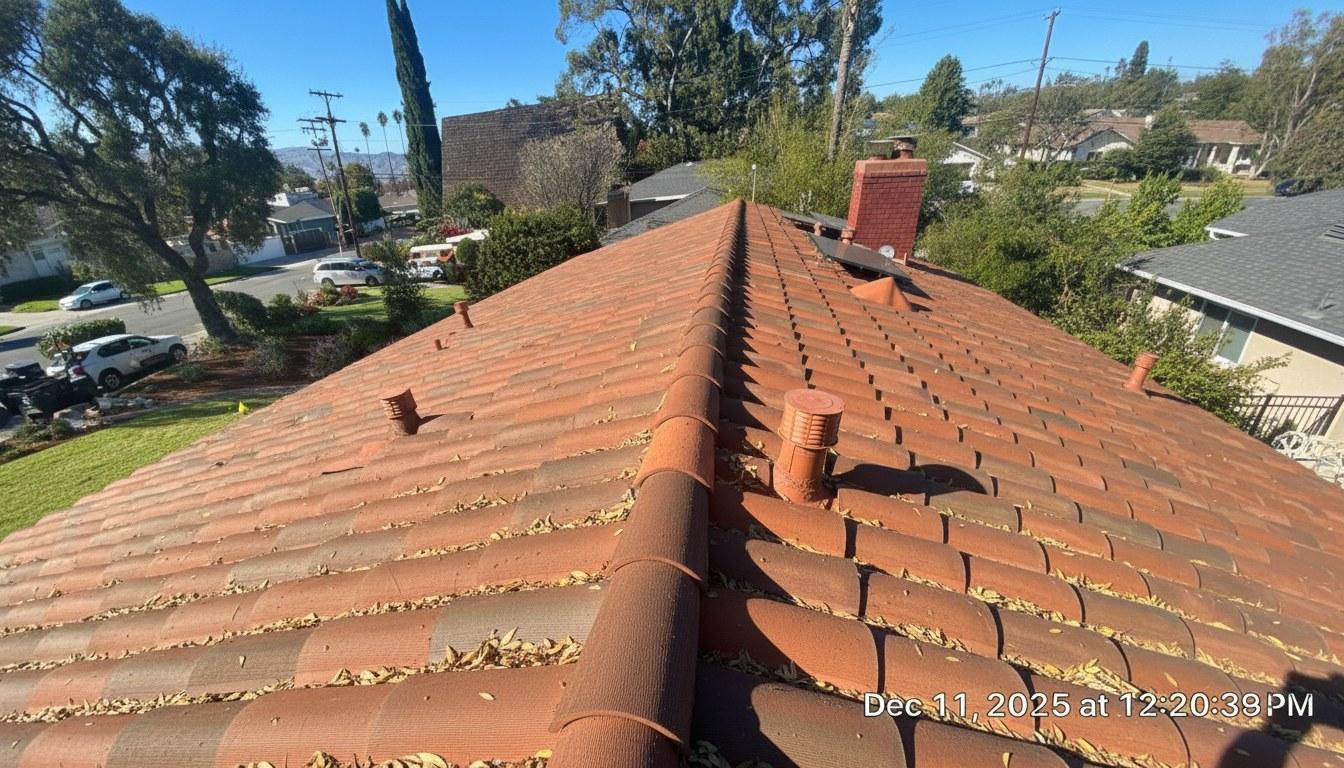
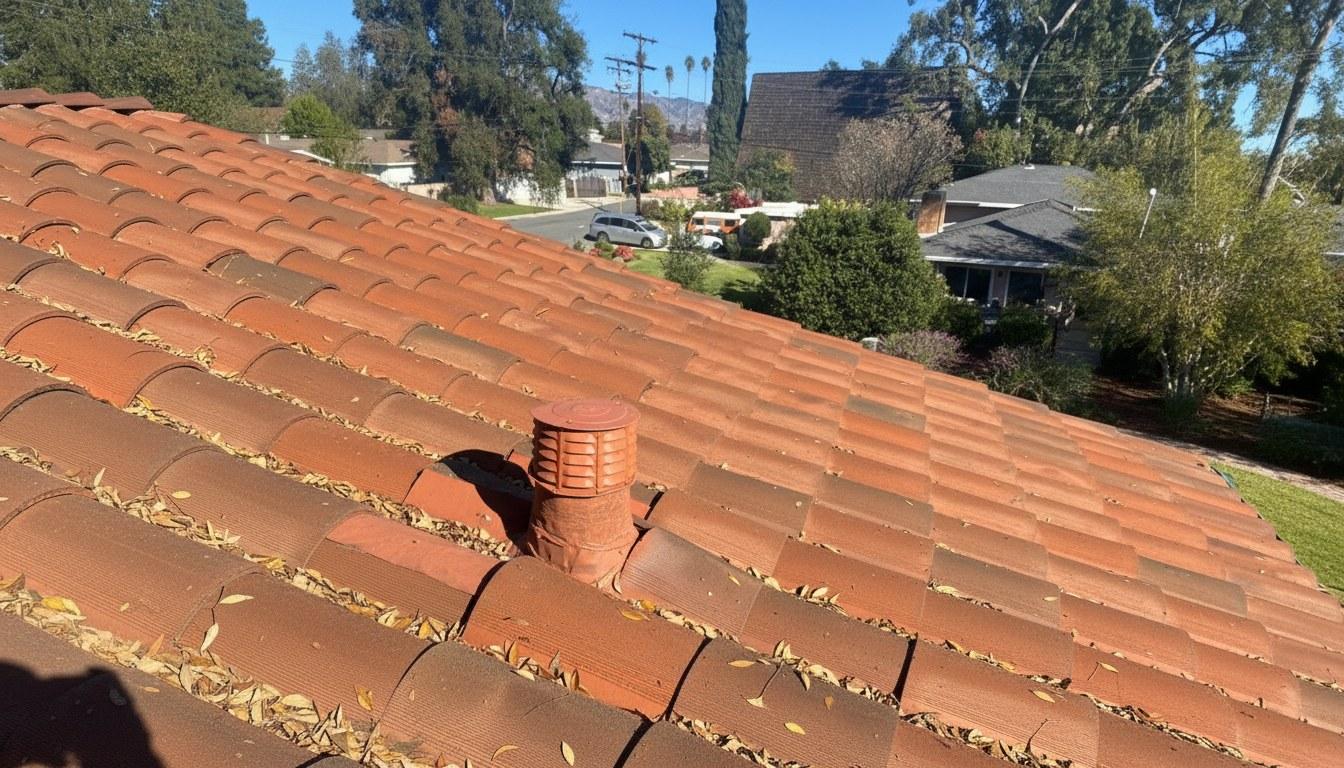
Clay and concrete tile naturally ventilate underneath each piece because of their curved or S-profile shape. That air gap reduces heat transfer into the attic, which can lower cooling loads during Southern California’s long summers. In coastal areas, tile’s density also resists the salt-air corrosion that shortens the life of metal fasteners and degrades asphalt granules over time.
Asphalt shingles absorb more heat than tile, which can accelerate granule loss in areas where summer temperatures regularly exceed 95°F. However, ENERGY STAR-rated cool-roof shingles reflect more solar energy and perform meaningfully better in hot climates than standard three-tab or even standard architectural shingles. Our crews have replaced asphalt roofs across the region where sun-facing slopes showed granule loss 8 to 10 years ahead of the shaded slopes — a pattern almost entirely absent on tile roofs of the same age.
Wind resistance is another key factor. Quality architectural shingles are rated to withstand winds of 110 to 130 mph when properly nailed. Tile roofs installed with correct fastening patterns can match or exceed that rating. During Santa Ana events, both materials perform well when the installation follows current code — loose or improperly nailed shingles are the real risk, not the material itself.
How Long Does Each Roof Type Last?
Asphalt shingles in Southern California typically last 20 to 30 years; concrete tile roofs commonly last 40 to 50 years; and quality clay tile can last 75 years or more with proper maintenance. That lifespan difference is one of the strongest arguments for tile on a home you plan to keep long-term.
Lifespan in this region is shortened by a few specific factors. Asphalt shingles degrade faster when attic ventilation is poor, because trapped heat from below accelerates the breakdown of the asphalt binder. Tile can crack under foot traffic if walked incorrectly during maintenance or after a storm, but the underlying roof deck and underlayment — not the tile itself — are usually what fails first on older tile roofs.
- Standard 3-tab asphalt shingles: 15 to 20 years in Southern California’s UV-intense climate.
- Architectural (dimensional) asphalt shingles: 25 to 30 years with good ventilation.
- Concrete tile: 40 to 50 years; underlayment typically needs replacement at the 20- to 25-year mark.
- Clay tile: 50 to 75+ years; the tile itself often outlasts the home’s original structure.
- Underlayment (both systems): Needs inspection every 15 to 20 years regardless of the surface material.
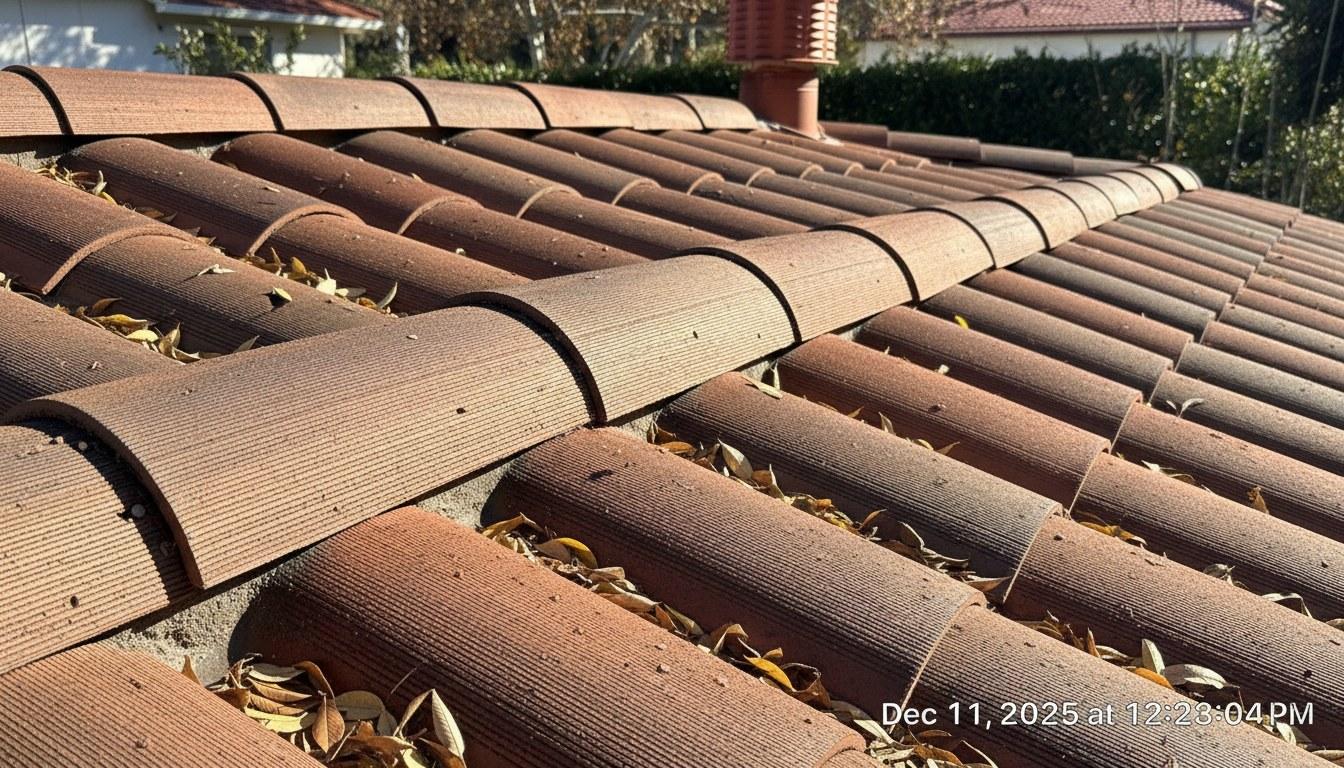
One often-overlooked maintenance point: tile roofs still need periodic inspection for cracked or slipped tiles, clogged valleys, and deteriorating flashing. A tile roof that looks fine from the street can have underlayment failures that allow water intrusion. Scheduling a roof certification every few years helps catch those issues before they become full replacements.
What Are the Fire, Weight, and Code Considerations?
Both clay tile and concrete tile carry a Class A fire rating — the highest available — while asphalt shingles range from Class A to Class C depending on the product; always verify the fire rating before purchasing shingles in a California fire-hazard zone. In designated Fire Hazard Severity Zones (FHSZs) across Southern California, Class A is required by code.
Weight is a critical structural consideration that many homeowners overlook. Concrete tile weighs roughly 9 to 12 pounds per square foot; clay tile runs 6 to 8 pounds per square foot. Standard asphalt shingles weigh only 2 to 4 pounds per square foot. Older homes — particularly those built before 1980 — may need structural reinforcement before a tile roof can be safely installed, adding cost to the project.
- Fire rating check: Confirm the product’s Class A rating before purchase, especially in FHSZ-designated areas.
- Structural inspection: A licensed contractor should assess your roof deck and framing before switching from shingles to tile.
- California’s Title 24 building energy standards: New roof installations must meet reflectivity and emittance requirements — both cool-roof shingles and many tile profiles qualify.
- Permit requirements: Full roof replacements in California generally require a permit; verify with your local building department.
- CSLB licensing: Always hire a contractor licensed by the California Contractors State License Board (CSLB) — verify at cslb.ca.gov before signing any contract.
Roof pitch also matters. Tile roofing generally requires a minimum pitch of 3:12, and many tile manufacturers recommend 4:12 or steeper for proper drainage. Low-slope roofs common on mid-century modern homes across Southern California are typically not candidates for tile without significant structural modification.
How Do You Choose the Right Roofing Material for Your Home?
The best roofing material for a Southern California home depends on five factors: your budget, how long you plan to stay, your home’s structural capacity, your roof’s pitch, and your neighborhood’s fire zone designation. No single answer fits every home, but working through these five points will narrow the decision quickly.
We see roughly 60% of our replacement consultations in Los Angeles County involve homeowners who initially assumed tile was out of their budget — but after calculating the cost per year of service over a 40-year tile lifespan, many find the numbers closer than expected.
Use this decision framework to guide your choice:
- Check your fire zone: If your home is in a designated FHSZ, Class A is mandatory. Confirm which products qualify before comparing prices.
- Get a structural assessment: Before committing to tile, have a licensed roofing contractor inspect your attic framing. Adding tile to an under-built structure is a costly mistake.
- Calculate your time horizon: Staying fewer than 15 years? Asphalt shingles likely offer the better return. Staying 20-plus years or selling to a buyer who values longevity? Tile often wins.
- Verify your roof pitch: Below 3:12 slope? Tile is generally not an option without major work. Asphalt or modified roofing systems are better fits for low-slope applications.
- Compare energy performance: Ask for ENERGY STAR-rated options in both categories. Cool-roof products in both shingle and tile form can meaningfully reduce cooling costs in Southern California’s climate.
- Request itemized quotes: Get at least two written quotes that break out material, labor, tear-off, underlayment, and permit costs separately so you can compare apples to apples.
For residential roofing decisions in communities across Southern California, local building departments and your roofing contractor are the best sources for current code requirements. The U.S. Department of Energy also publishes guidance on cool-roof materials and their energy impact that is worth reviewing before you finalize a material choice.
Ready to Replace or Repair Your Roof in Southern California?
Whether you are leaning toward asphalt shingles or tile, the next step is a professional inspection that accounts for your home’s structure, pitch, fire zone, and budget. A written, itemized quote from a licensed contractor gives you the real numbers — not ballpark estimates — so you can make a confident decision.
Roof Replacement Inc serves homeowners across Southern California with full roof replacements, repairs, and roof certifications for both asphalt shingle and tile systems. Call (213) 364-3979 to schedule your inspection and get a no-obligation written quote. Our team is licensed by the California Contractors State License Board (CSLB) and can walk you through every option that fits your home’s specific needs.
Frequently Asked Questions
How do I know if my tile roof needs repair or a full replacement?
If fewer than 20% of your tiles are cracked or broken but the underlayment is still sound, spot repairs are usually enough. When the underlayment — the waterproof layer beneath the tiles — is older than 20 to 25 years or shows widespread moisture damage, a full replacement is almost always the smarter investment. A licensed roofing contractor can inspect the underlayment without removing the entire roof to give you a clear picture.
Can I put tile roofing on my older Southern California home?
Many older homes in Southern California were built with framing designed for lightweight asphalt shingles, not the 9 to 12 pounds per square foot that concrete tile adds. A structural inspection of the attic framing is required before switching to tile. If reinforcement is needed, it adds cost — but it is a one-time upgrade that supports the tile roof for 40 to 50 years or more.
How do I repair a leaking asphalt shingle roof from inside the house?
A temporary fix from inside — such as applying roofing cement or a patch to the underside of the deck — can slow active water intrusion during a rainstorm, but it is not a permanent repair. The actual damaged or missing shingles on the exterior must be replaced to stop the leak at its source. For any leak that has been present more than a few days, also check the insulation and decking for moisture damage before closing up the repair.
Are asphalt shingles a good choice for a home in a California fire hazard zone?
Yes, as long as you choose a product with a Class A fire rating — the highest level available. Not all asphalt shingles carry a Class A rating, so verify the product's fire classification before purchasing. In California's designated Fire Hazard Severity Zones, Class A is required by code, and your building permit inspection will confirm compliance.
How much does a full roof replacement typically cost in Southern California?
In the Southern California market, asphalt shingle roof replacements typically range from $8,000 to $20,000 for an average-sized home, while tile roof replacements generally run $20,000 to $50,000 or more depending on tile type, roof complexity, and whether structural reinforcement is needed. The best way to get an accurate number is to request a written, itemized quote from a contractor licensed by the California Contractors State License Board (CSLB).
Related Articles




What Our Clients Say











Roof Replacement Inc. offers professional, high-quality work, guaranteed (call for details); ensuring all clients projects meet all code and design requirements. We are dedicated to exceptional customer service and will strive to ensure you with the highest quality roofing services. Roof Replacement Inc. offers lifetime warranty (call for details) on all of our workmanship to ensure the quality of our work. With over 40 years of combined experience within the roofing and construction industry, Roof Replacement Inc. has grown and developed in all areas of roofing construction, including roof inspections. As a leading residential and commercial roofing company in LA, we have hundreds of references from previous clients, so rest assured, that your roofing job will be done right the first time. Replacing an old roof can help add curb appeal and will increase the perceived value of your home. First impressions are vital when selling your home, especially when your roof takes up more than half of the exterior of your residence or business. Not only is the return of investment on a new roof attractive for potential buyers, but can be as beneficial as remodeling the kitchen or bathrooms within your residence.

