Hot Southern California summers put every roof to the test. This guide breaks down metal roofing vs asphalt shingles in California so you can choose the right material before your next replacement.
How Do Metal Roofing and Asphalt Shingles Actually Perform in California Heat?
Metal roofing reflects significantly more solar heat than standard asphalt shingles, keeping attic temperatures lower during Southern California’s long, intense summers. Asphalt shingles absorb heat, which can push attic temps well above 150°F on peak days.
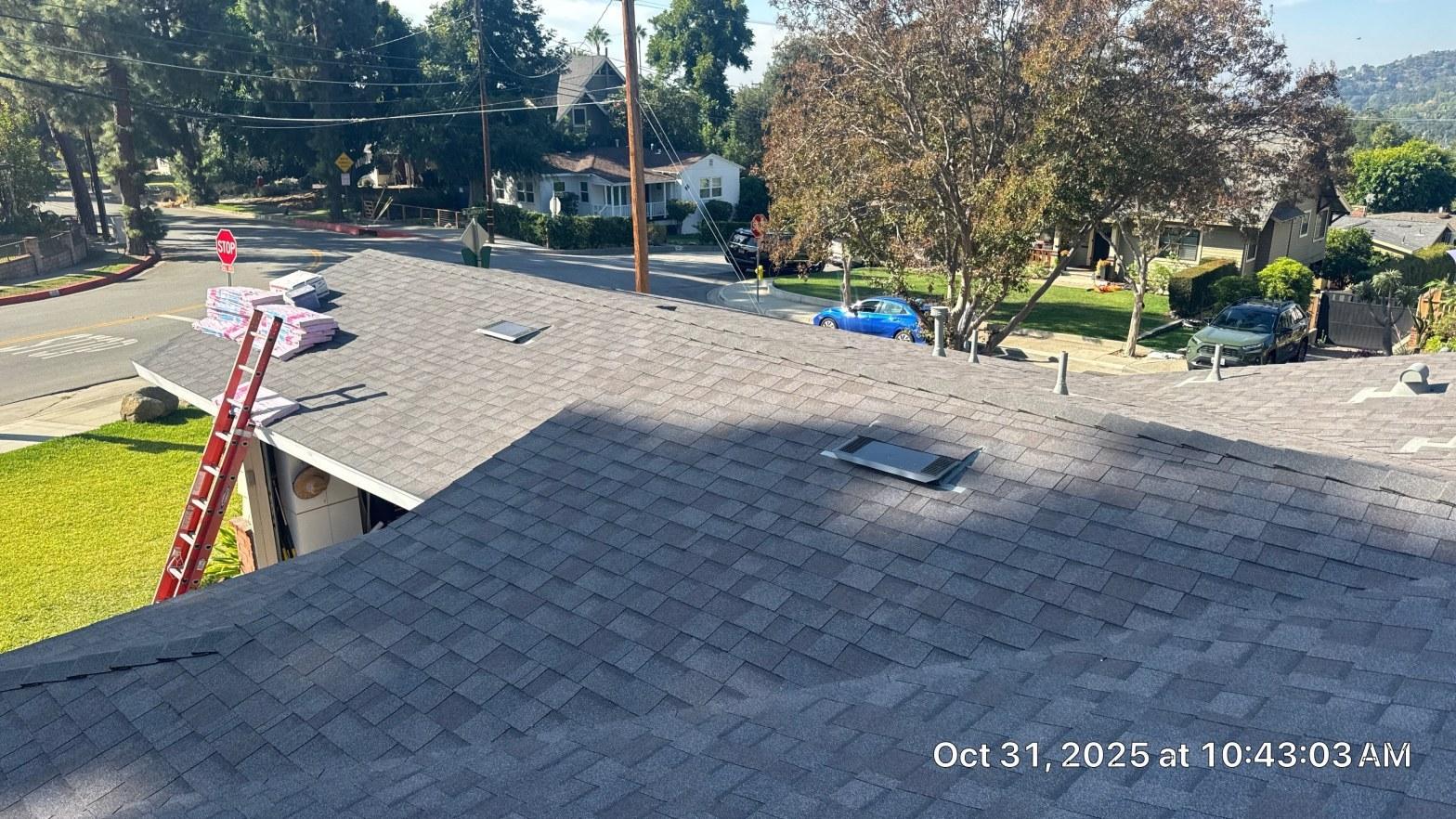
Southern California summers regularly bring temperatures above 100°F across inland communities and sustained heat waves that last weeks at a time. The roof is the first surface hit by direct sun, and the material it’s made of determines how much of that heat enters your home.
Standard dark asphalt shingles have a solar reflectance index (SRI) that often falls below 20. That means they absorb most of the sun’s energy and radiate it downward into the attic. Metal panels and metal shingles, by contrast, can reach an SRI of 60 to 80 or higher when finished with a cool-roof coating. That difference can reduce cooling loads by 10 to 25 percent, according to U.S. Department of Energy guidance on cool roofs.
Asphalt shingles have improved in recent years. ENERGY STAR-rated reflective asphalt shingles are now available and perform meaningfully better than standard shingles. Still, even the best reflective asphalt shingle typically falls short of a standing-seam metal roof in raw heat-rejection performance.
Our crews replace roofing across Southern California year-round, and we see attic temperature readings 20 to 35°F lower on homes with metal roofing compared to homes with aging dark asphalt shingles of the same vintage — a pattern that holds most consistently on south- and west-facing roof planes that take the hardest afternoon sun.
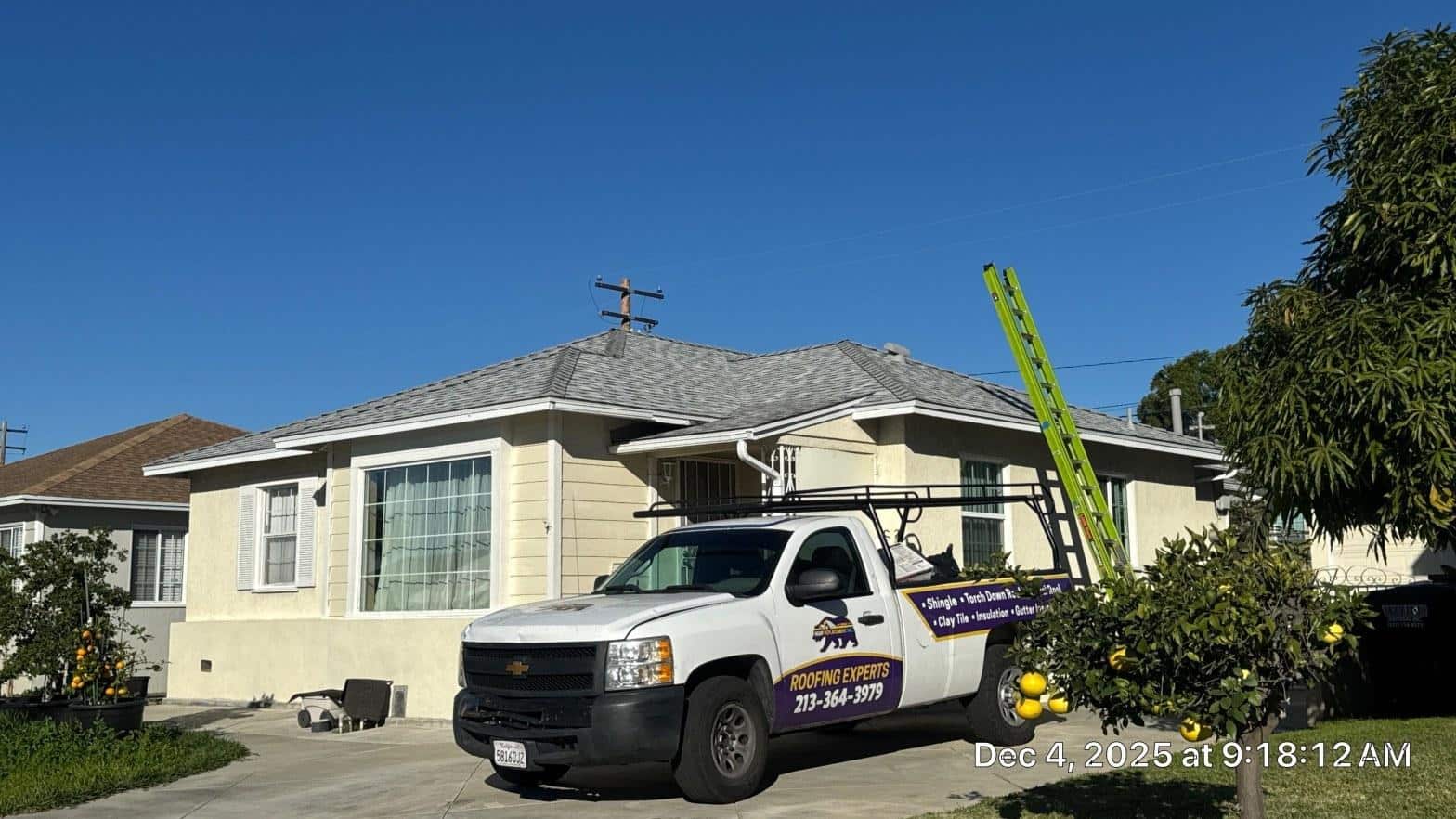
What Does Each Roof Type Cost in the Southern California Market?
In the Southern California regional market, asphalt shingle replacement typically ranges from $8,000 to $18,000 for an average-sized home, while metal roofing generally runs $18,000 to $45,000 or more depending on the system chosen. Scope, roof complexity, and material grade all move those numbers.
Several factors drive cost for either material:
- Roof size and pitch: Steeper slopes require more labor and safety equipment, adding to the total.
- Tear-off layers: California building codes typically allow no more than two layers of roofing before a full tear-off is required. Removing existing layers adds cost.
- Material grade: Entry-level 3-tab asphalt shingles cost less than architectural or impact-resistant shingles. Standing-seam metal costs more than exposed-fastener metal panels.
- Underlayment and decking: If the plywood decking beneath the shingles is damaged or rotted, replacement adds to the project cost for either material.
- Accessories: Flashing, ridge caps, ventilation upgrades, and gutters can each add several hundred to several thousand dollars.
The upfront cost gap between metal and asphalt is real, but the lifetime cost picture is different. A metal roof installed today may last 40 to 70 years with minimal maintenance, while a standard asphalt shingle roof typically needs full replacement every 20 to 30 years. Over a 50-year period, the total spend on two or three asphalt replacements can exceed the cost of one metal roof installation.
Over a 50-year period, the total spend on two or three asphalt replacements can exceed the cost of one metal roof installation.
Always request a written, itemized quote before any work begins. Contact Roof Replacement Inc at (213) 364-3979 for a custom estimate based on your home’s actual measurements and condition.
Metal Roofing vs Asphalt Shingles California: A Side-by-Side Comparison
When comparing metal roofing vs asphalt shingles in California, metal wins on lifespan, heat performance, and long-term value, while asphalt wins on upfront cost and ease of repair. The table below summarizes the key differences for Southern California homeowners.
| Factor | Metal Roofing | Asphalt Shingles |
|---|---|---|
| Typical lifespan in CA | 40 to 70 years | 20 to 30 years |
| Heat reflectance (SRI) | 60 to 80+ with cool-roof coating | Up to 40 (ENERGY STAR reflective); under 20 (standard) |
| Upfront cost (typical CA range) | $18,000 to $45,000+ | $8,000 to $18,000 |
| Weight per square (100 sq ft) | 50 to 150 lbs depending on system | 200 to 350 lbs for architectural shingles |
| Fire resistance | Class A (non-combustible) | Class A (with fiberglass mat) |
| Wind resistance | Up to 140 mph (standing seam) | Up to 130 mph (impact-resistant grade) |
| Repair difficulty | Requires specialty contractor | Widely repairable by most roofers |
| Cool-roof compliance (CA Title 24) | Easily meets standards | Meets standards with rated reflective products |
| Noise during rain | Moderate (reduced with solid decking) | Minimal |
| Recyclability at end of life | 100% recyclable | Partially recyclable; most goes to landfill |
Both materials are available in a wide range of colors and profiles. Metal roofing has evolved well beyond the corrugated barn-roof look — standing-seam panels, metal shingles, and stone-coated steel tiles are common choices for residential roofing across Southern California neighborhoods.
How Long Will Each Roof Last in a Southern California Climate?
A properly installed metal roof in Southern California can last 40 to 70 years. A quality asphalt shingle roof typically lasts 20 to 30 years — though UV exposure and heat cycling in CA can push some products toward the lower end of that range.
Southern California’s climate is tough on roofing in a specific way. There is relatively little rain to wash away debris, but there is intense UV radiation year-round, dramatic temperature swings between day and night (sometimes 40°F or more within 24 hours), and seasonal Santa Ana wind events that can exceed 60 mph. Each of these stresses materials differently.
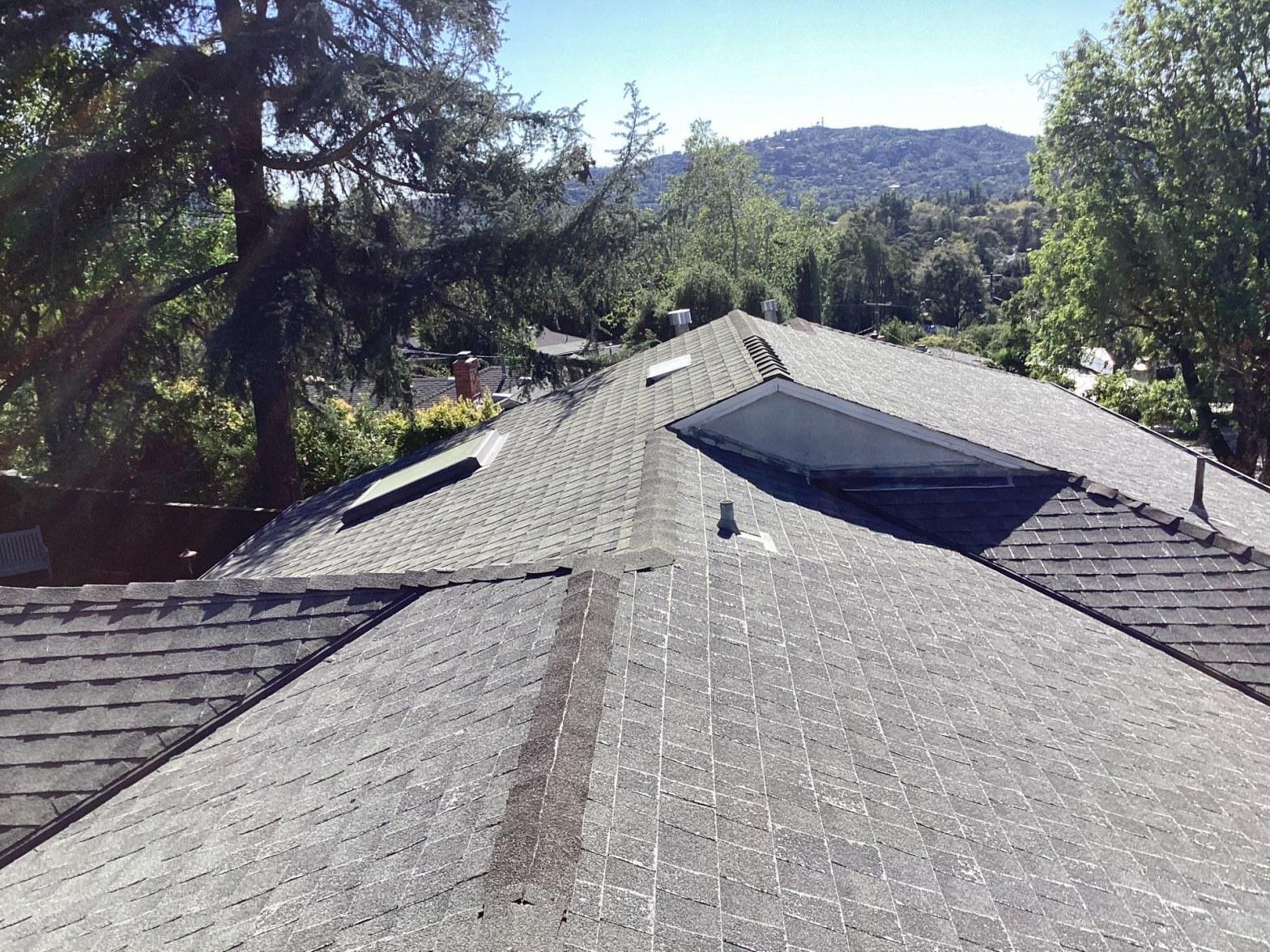
Asphalt shingles rely on granules embedded in the surface to block UV rays. Over time, those granules loosen and wash into gutters — a process that accelerates in high-UV environments like Southern California. Once granule loss reaches a certain point, the shingle mat beneath degrades quickly. Homeowners should inspect gutters for granule buildup every year, especially after the first summer following installation.
Metal roofing does not have granules to lose. Its finish can fade over decades, but the structural integrity of the metal panel itself is not affected by UV the way asphalt is. Galvalume steel and aluminum — the two most common metals used in residential roofing — are both highly resistant to the dry heat and UV environment found across Southern California.
Across our service calls on homes built in the 1990s and early 2000s, we consistently find asphalt shingle roofs in Southern California showing significant granule loss and cracking by year 18 to 22 — often 5 to 8 years earlier than the product’s rated lifespan would suggest, driven by the region’s UV intensity.
Are There Energy Savings or Rebates for Choosing a Cool Roof in California?
Yes. California’s Title 24 building energy standards require cool-roof compliance on most residential re-roofing projects, and both metal and qualifying asphalt products can meet that bar. Federal incentives under the Inflation Reduction Act may also apply.
California’s Title 24 building energy standards set minimum solar reflectance and thermal emittance values for roofing products used on residential projects. These rules apply when you replace more than 50 percent of a roof’s surface. Metal roofing products with factory-applied cool-roof coatings almost always meet or exceed Title 24 thresholds. Asphalt shingles must carry a specific cool-roof rating to qualify.
On the federal side, the Inflation Reduction Act federal tax credit (IRS Section 25C) offers homeowners a credit of up to 30 percent of the cost of qualifying energy-efficient home improvements, which can include certain roofing products that meet ENERGY STAR requirements. The credit is capped at $1,200 per year for roofing as of 2026. Consult a tax professional to confirm eligibility for your specific project.
Some California utility programs and regional initiatives also offer rebates for cool-roof installations. Check with your utility provider and the California Energy Commission for current program availability, as these programs change periodically.
Here is a quick summary of potential financial benefits:
- Lower cooling bills: A qualifying cool roof can reduce air conditioning energy use by 10 to 25 percent in hot climates.
- IRS Section 25C tax credit: Up to 30% of qualifying product costs, capped at $1,200 per year for roofing (as of 2026).
- California Title 24 compliance: Required for most re-roofing projects — using a qualifying product avoids permit complications.
- Utility rebates: Some Southern California utilities offer rebates for ENERGY STAR-rated roofing products; availability varies by provider.
- Longer replacement cycle: Metal roofing’s 40-to-70-year lifespan means fewer replacements and lower lifetime cost.
Which Roof Material Is Right for Your Home?
Choose metal roofing if you plan to stay in the home long-term, want the lowest lifetime cost, and prioritize heat performance. Choose asphalt shingles if upfront budget is the primary constraint or if your roof has complex geometry that makes metal installation difficult.
Neither material is universally better for every homeowner. The right answer depends on several real factors:
- How long you plan to stay: If you expect to sell within 10 years, the premium for metal roofing may not pay back in that window. If you plan to stay 20 or more years, metal’s longer lifespan and lower maintenance typically justify the higher upfront cost.
- Your roof’s pitch and complexity: Metal roofing is well-suited to simple gable and hip roofs. Roofs with many valleys, dormers, or skylights require more custom metalwork and drive up installation cost significantly.
- Your home’s structure: Metal roofing is lighter than asphalt, which matters on older homes or homes with modified structures. A structural assessment can confirm whether the existing framing supports either option without modification.
- HOA restrictions: Some homeowners associations in Southern California restrict roofing materials or colors. Confirm what your HOA allows before selecting a product.
- Local fire risk: Both Class A metal and Class A fiberglass asphalt shingles offer the highest fire resistance rating. In high fire-hazard severity zones, either can meet California’s requirements — but confirm with your local building department.
- Contractor availability: Metal roofing requires contractors with specific training and experience. Ensure any contractor you hire is Licensed by the California Contractors State License Board (CSLB) and has documented experience with the specific metal system you choose.
For most Southern California homeowners planning a full roof replacement and staying in the home long-term, metal roofing delivers a stronger return. For homeowners working within a tighter budget or replacing a roof on a complex structure, a high-quality architectural or impact-resistant asphalt shingle — especially one carrying an ENERGY STAR rating — remains a solid, proven choice for residential roofing in this region.
Get a Professional Roof Replacement Quote
Replacing a roof is one of the largest single investments a homeowner makes. Getting the material choice right — and having it installed correctly — determines whether that investment holds up for decades or creates problems within a few years.
Roof Replacement Inc serves homeowners across Southern California with full roof replacement services for both metal roofing and asphalt shingle systems. Every project starts with an honest assessment of your existing roof, your home’s structure, and your goals — so you get a recommendation that fits your situation, not just the most expensive option.
Schedule your inspection and written quote today. Call (213) 364-3979 or reach out online. Get the information you need before any work begins — no pressure, no obligation.
Explore our full range of roofing services across Southern California.
Frequently Asked Questions
How do I know if my roof needs replacing or just repairs?
If your roof is under 15 years old and the damage is limited to a small area — a few missing shingles or a single flashing failure — a targeted repair is usually the right call. If the roof is 20 or more years old, has widespread granule loss, multiple leak points, or visible sagging, a full replacement is typically more cost-effective than repeated repairs. A licensed roofing contractor can inspect the decking beneath the surface to confirm whether the structure is sound enough for a repair or needs a full tear-off.
How do you repair a leaky roof from the inside while waiting for a contractor?
A temporary interior fix can slow water damage until a professional arrives, but it does not replace a proper exterior repair. In the attic, locate where water is entering by tracing stain marks or wet insulation back toward the roof deck. Place a bucket to catch drips and use a piece of plywood or a tarp stapled or weighted against the underside of the deck to redirect water away from living spaces. Never attempt to walk on a wet or damaged roof — call a licensed contractor as soon as possible for a permanent fix.
How much does roof replacement in Los Angeles typically cost?
Roof replacement in Los Angeles and surrounding Southern California communities generally ranges from $8,000 to $18,000 for asphalt shingles and $18,000 to $45,000 or more for metal roofing, depending on roof size, pitch, number of existing layers, and material grade. Tear-off of old layers, decking repairs, and upgraded underlayment all add to the total. Always get a written, itemized quote from a CSLB-licensed contractor before committing to any project.
Does metal roofing make a lot of noise when it rains in California?
On homes with solid plywood decking beneath the metal panels, rain noise is minimal — comparable to asphalt shingles. The loud rain noise associated with metal roofing typically comes from older agricultural or commercial buildings where metal panels are installed over open framing with no solid substrate. Residential standing-seam metal roofing installed over solid decking with proper underlayment is not significantly louder than other roofing materials during Southern California's infrequent rain events.
Can I get a tax credit for replacing my roof with a cool roof in California?
Possibly. The Inflation Reduction Act federal tax credit (IRS Section 25C) offers up to 30 percent of the cost of qualifying energy-efficient improvements, including certain ENERGY STAR-rated roofing products, capped at $1,200 per year for roofing as of 2026. Not every roofing product qualifies — the product must meet specific solar reflectance and thermal emittance thresholds. Consult a tax professional and confirm the product's ENERGY STAR certification before filing.
Related Articles




What Our Clients Say








Roof Replacement Inc. offers professional, high-quality work, guaranteed (call for details); ensuring all clients projects meet all code and design requirements. We are dedicated to exceptional customer service and will strive to ensure you with the highest quality roofing services. Roof Replacement Inc. offers lifetime warranty (call for details) on all of our workmanship to ensure the quality of our work. With over 40 years of combined experience within the roofing and construction industry, Roof Replacement Inc. has grown and developed in all areas of roofing construction, including roof inspections. As a leading residential and commercial roofing company in LA, we have hundreds of references from previous clients, so rest assured, that your roofing job will be done right the first time. Replacing an old roof can help add curb appeal and will increase the perceived value of your home. First impressions are vital when selling your home, especially when your roof takes up more than half of the exterior of your residence or business. Not only is the return of investment on a new roof attractive for potential buyers, but can be as beneficial as remodeling the kitchen or bathrooms within your residence.

