Spot the warning signs you need roof repair early and avoid costly structural damage. This guide walks California homeowners through symptoms, causes, DIY checks, and when to call a pro.
Why Do Southern California Roofs Fail Faster Than You’d Expect?
Southern California’s climate puts roofs under stress that most homeowners underestimate. UV radiation, Santa Ana winds, and sudden rain events after long dry spells all accelerate wear.
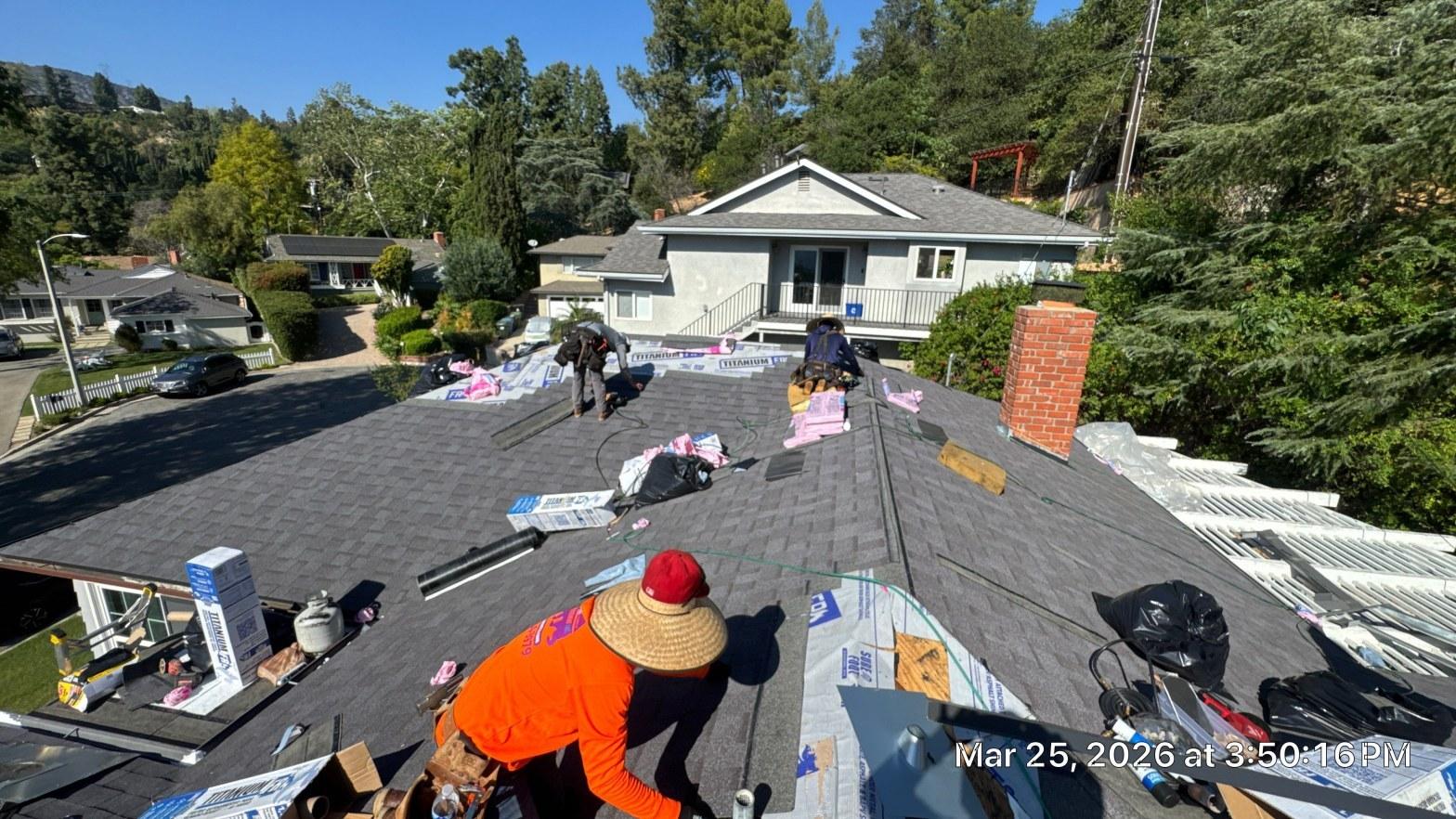
Asphalt shingles are rated for surface temperatures up to around 150°F, but rooftop temperatures in inland valleys and the Los Angeles Basin regularly exceed that during summer. According to NOAA weather data, many Southern California communities record over 280 sunny days per year, meaning roofing materials bake nearly year-round without a break.
Homes built before 1990 are especially vulnerable. Older shingles were manufactured to lower standards than today’s products, and decades of thermal cycling — expanding in the heat, contracting at night — causes seams to open and fasteners to back out. A roof that looks intact from the street can already be failing at the flashing, ridge, or valley.
Santa Ana wind events, which can gust above 60 mph across Southern California and surrounding regions, lift shingle edges and tear flashing loose. Then, when rain finally arrives after a dry stretch, water finds every gap the wind created. Our team responds to roughly 3 times more emergency leak calls in the two weeks following the first significant rain of the season than at any other point in the year — almost every one of those calls involves a roof that showed ignored warning signs months earlier.
What Are the Warning Signs You Need Roof Repair?
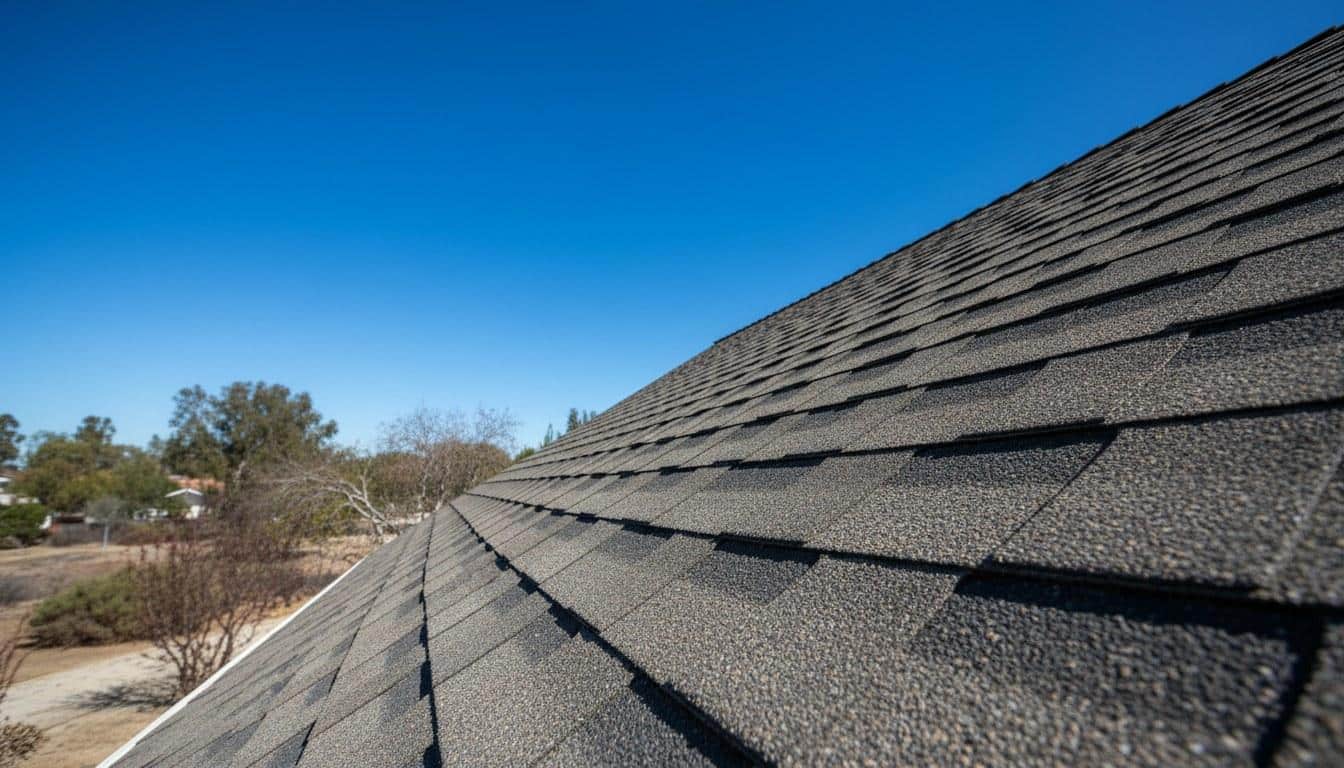
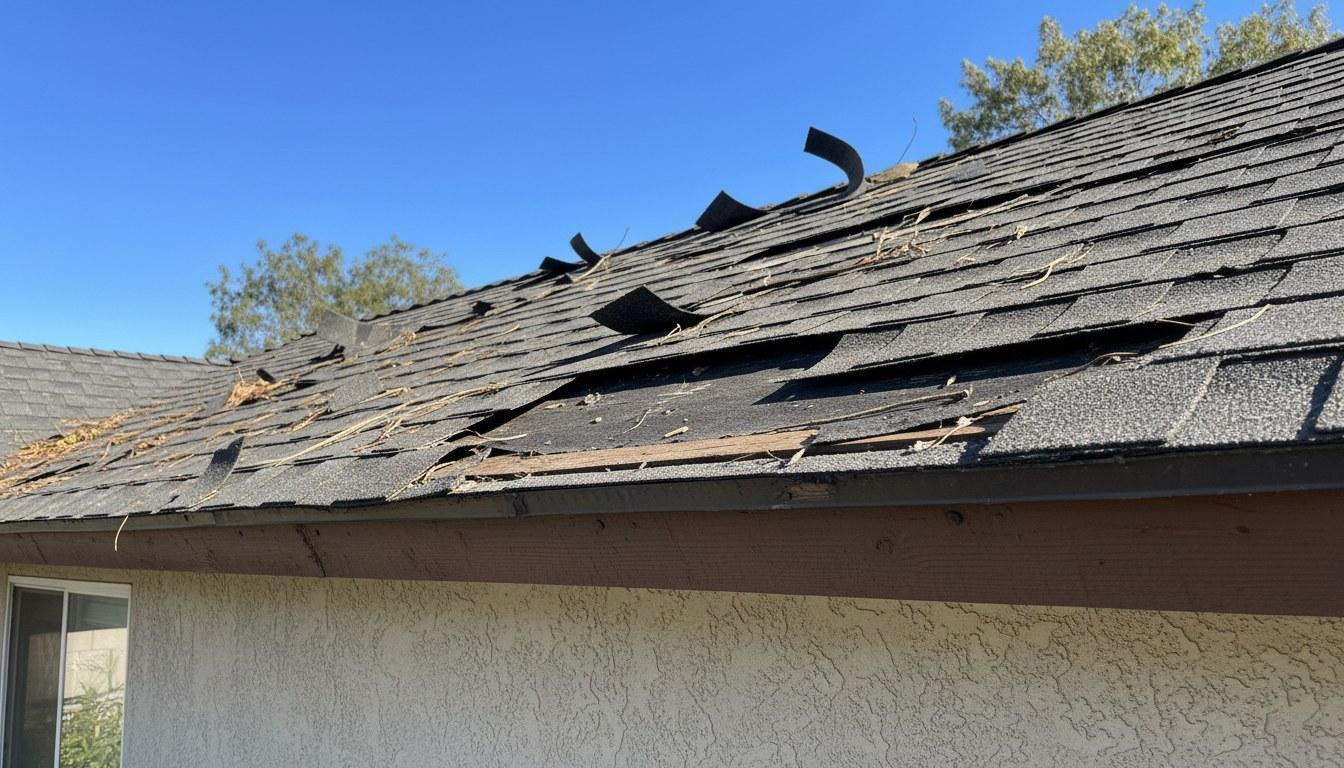
The most reliable signs you need roof repair include visible shingle damage, water intrusion inside the home, granule loss, sagging areas, and damaged flashing. Catching even one of these symptoms early typically reduces repair costs by 40–60% compared to waiting until a leak develops into structural rot.
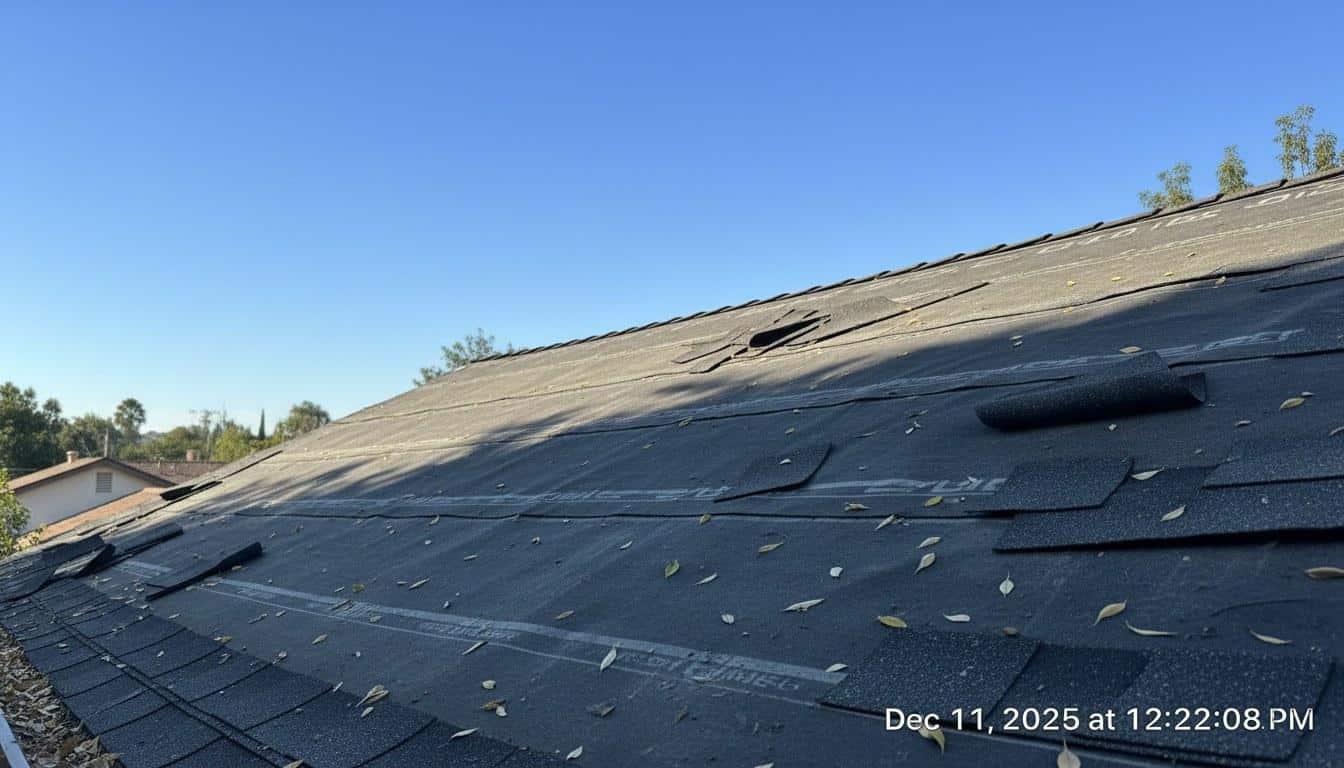
- Missing or displaced shingles: Wind or age has lifted shingles off the deck, leaving bare felt or wood exposed to rain and UV.
- Curling or cupping shingles: Edges that curl upward (cupping) or tips that curl away from the deck (clawing) signal moisture imbalance or heat damage and typically appear on roofs 15–20 years old.
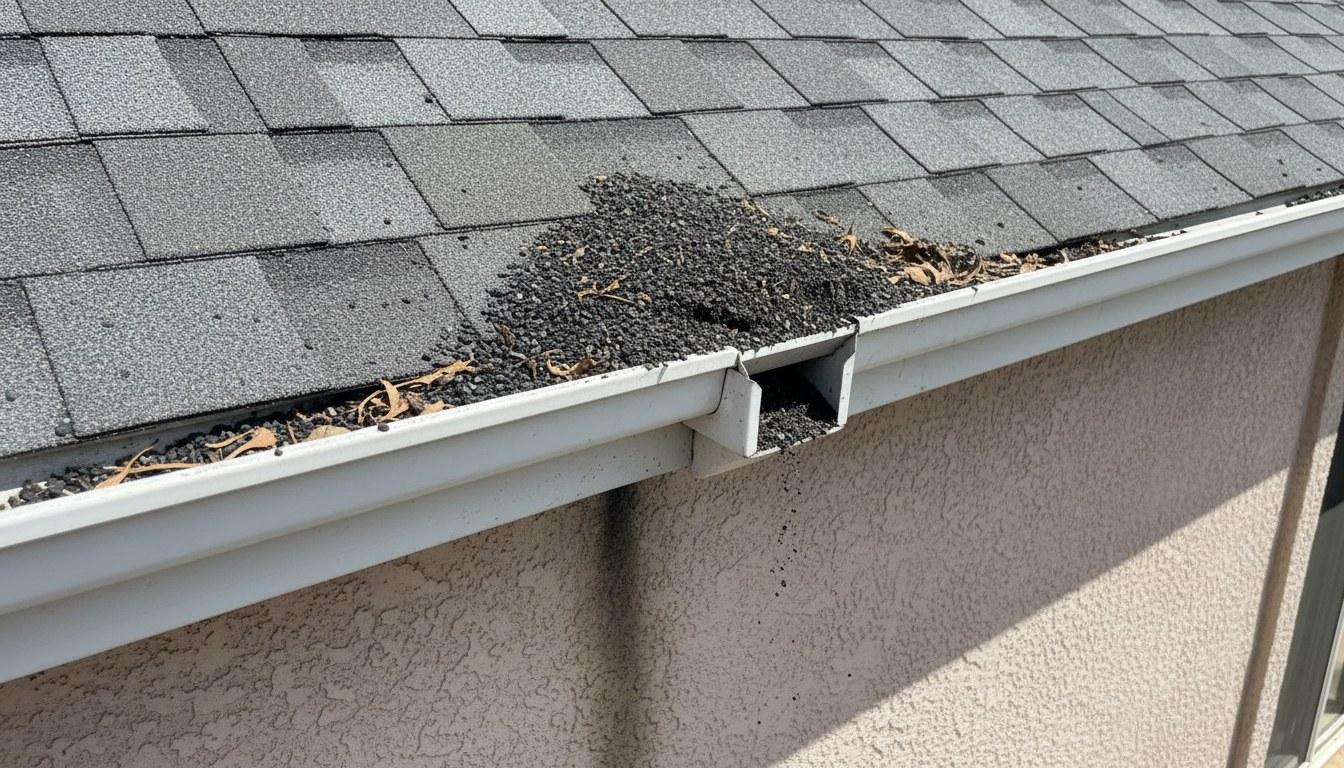
- Granule loss in gutters: Asphalt shingles shed their protective mineral granules as they age. A heavy concentration of granules in downspout runoff or at gutter outlets means the shingles are near the end of their useful life.
- Water stains on ceilings or walls: Brown or yellow rings on interior drywall indicate active or past water intrusion. Even a stain that feels dry may point to an intermittent leak that worsens with every rain.
- Daylight visible in the attic: Any pinhole of light entering through the roof deck means there is a gap large enough for water to follow.
- Sagging or soft spots: A roofline that dips between rafters or a deck that feels spongy underfoot points to rot or structural damage that needs immediate attention.
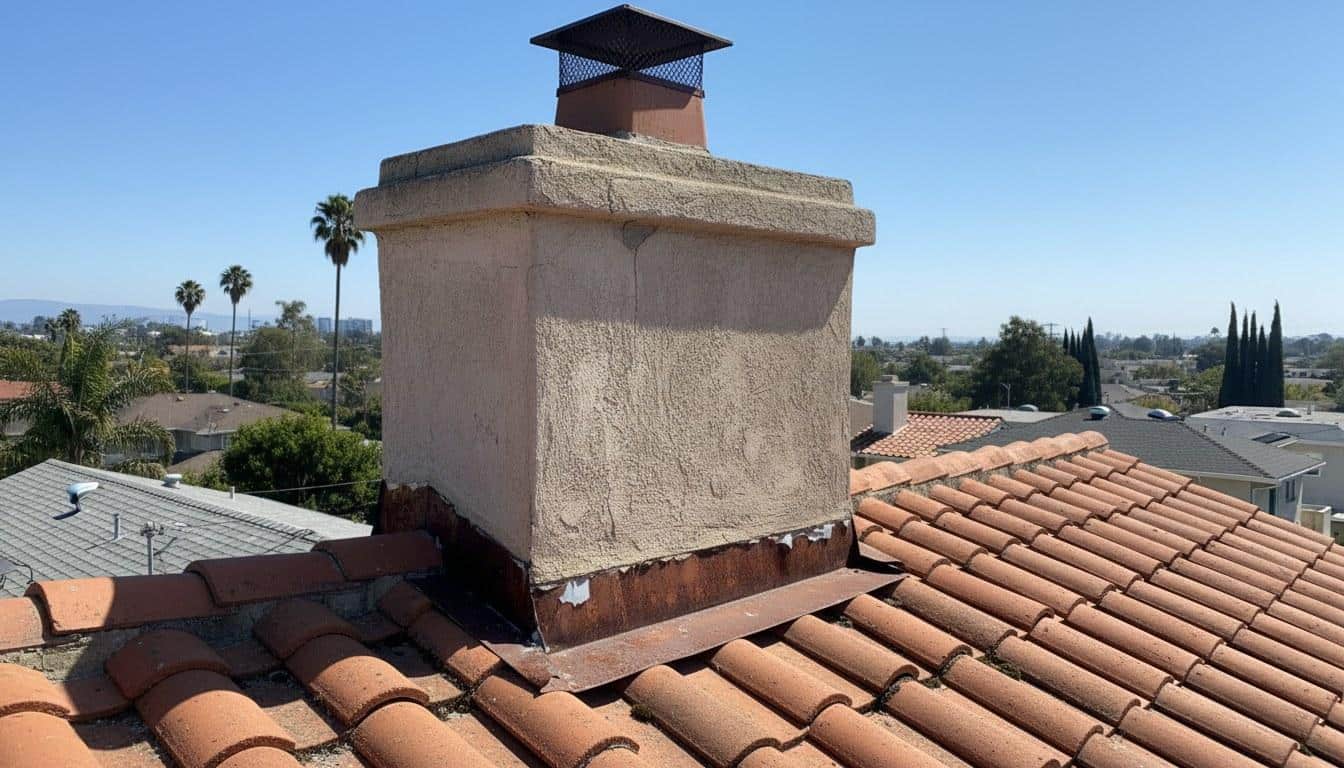
- Damaged or missing flashing: The metal strips sealing valleys, chimneys, skylights, and vents are the most common entry point for leaks. Rust, gaps, or lifted edges are serious warning signs.
- Moss, algae, or dark streaking: In coastal and valley communities, biological growth holds moisture against shingles and accelerates decay. Dark streaks are usually algae colonies feeding on the limestone filler in asphalt shingles.
Symptom Diagnosis Table: What Each Problem Likely Means
Use this table to match what you see to its most likely cause and decide whether it is a safe DIY check or a job for a licensed contractor.
| Symptom | Likely Cause | DIY or Pro? |
|---|---|---|
| Missing shingles after wind event | Wind uplift; fastener failure on aged shingles | Pro — requires safe roof access and matching materials |
| Curling or clawing shingle edges | Thermal cycling, moisture imbalance, age over 15 years | Pro — widespread curling usually means full-section replacement |
| Granules in gutters or downspouts | Shingle surface degradation; approaching end of service life | DIY check (inspect gutters); Pro for shingle assessment |
| Water stain on ceiling | Active leak at flashing, valley, or penetration | Pro — source tracing requires attic inspection and water testing |
| Daylight in attic | Gap in deck, failed shingle, or open penetration | Pro — any opening large enough for light admits water and pests |
| Sagging deck or soft spots | Rot in sheathing or rafter damage from chronic moisture | Pro (urgent) — structural damage; do not walk the area |
| Rust or lifted flashing | Age, improper installation, thermal movement | Pro — flashing resealing requires roofing sealant and proper lapping |
| Moss or algae growth | Shade, moisture retention, coastal humidity | DIY treatment possible; Pro if growth is extensive or shingles are soft |
| Spike in energy bills | Compromised attic ventilation or insulation from roof damage | Pro — requires attic inspection to confirm cause |
What Can You Safely Check Yourself?
Homeowners can safely inspect from the ground, from a ladder at eave level, and from inside the attic — no walking on the roof required. These three zones give you enough information to know whether to call a roofing contractor.
Ground-Level Visual Inspection
Stand back far enough to see the full roofline. Use binoculars if needed. Look for shingles that are visibly missing, lifted, or a different color from their neighbors (a sign of a past patch). Check that the ridge line is straight — a dip or bow in the ridge often signals rafter damage below.
- Walk the perimeter and look at each roof plane from multiple angles.
- Check all visible flashing points: chimney base, any skylights, plumbing vents, and the valley where two roof planes meet.
- Look at the gutters and downspout outlets for granule buildup. A tablespoon or two after a rain is normal; a cup or more per event is a warning sign.
- Note any areas where the roofline sags between rafters — this is visible as a gentle wave in the plane rather than a straight line.
Attic Inspection
On a sunny day, enter the attic and turn off any lights. Let your eyes adjust for 60 seconds. Any pinpoints of daylight coming through the deck are gaps. Also look for:
- Dark staining or wet spots on the underside of the roof deck
- Mold or mildew smell, which points to chronic moisture
- Insulation that is wet, compressed, or discolored
- Rafters that show cracks, splits, or soft wood
Gutter and Downspout Check
Clean gutters are important for accurate diagnosis. After clearing debris, run water from a hose at the peak and watch how it flows. Slow drainage or pooling near the fascia can signal a sagging gutter that is holding water against the roof edge, accelerating rot. Check that all downspouts are directed at least 6 feet away from the foundation.
When Should You Call a Professional Roofer?
Call a licensed roofing contractor immediately if you see active water intrusion, a sagging deck, daylight in the attic, or any damage following a wind or storm event. These conditions worsen with every weather cycle and do not stabilize on their own.
California law requires roofing contractors to be Licensed by the California Contractors State License Board (CSLB) under license classification C-39. Always verify a contractor’s license number on the CSLB website before signing any contract. An unlicensed roofer leaves you with no consumer protection if work fails.
Beyond emergencies, schedule a professional inspection if your roof is over 15 years old, if you have not had an inspection in the past 3 years, or if you are buying or selling a home. The U.S. Department of Energy recommends that homeowners inspect roofs and attic insulation together, since a compromised roof often means degraded insulation and higher energy costs.
Our team sees consistent patterns across residential roofing inspections in Southern California: approximately 7 out of 10 roofs on homes built before 1995 show at least one area of failed flashing, even when the shingles themselves still look acceptable from the street. Flashing failures are the leading source of interior water damage in this region.
Approximately 7 out of 10 roofs on homes built before 1995 show at least one area of failed flashing, even when the shingles look acceptable from the street.
How Much Does Roof Repair Cost in California?
Roof repair costs in the Southern California market typically range from $350 to $1,500 for localized fixes like patching a small leak, replacing a section of flashing, or swapping out a handful of shingles. More extensive repairs — addressing a full roof section, replacing valley flashing, or repairing rot in the sheathing — generally fall in the $1,500 to $5,000 range depending on scope and materials.
Several factors move the price within those ranges:
- Roof pitch and accessibility: Steeper roofs require more safety equipment and take longer to work on safely.
- Material type: Asphalt shingle repairs are generally the least expensive. Tile roofing (common across Southern California) requires matching tiles and specialized labor, which increases cost.
- Extent of deck damage: If water has rotted the plywood sheathing beneath the shingles, the repair scope expands significantly.
- Permit requirements: Under California’s Title 24 building energy standards, re-roofing projects above a certain scope may trigger permit and cool-roof compliance requirements, which affect total project cost.
- Urgency and access: Emergency repairs after storm events or when interior damage is ongoing may carry additional mobilization costs.
If a contractor’s inspection reveals that more than 25–30% of the roof surface needs repair, replacement is often more cost-effective than patching. A full roof replacement in the Southern California market typically ranges from $8,000 to $20,000 or more for a standard single-family home, depending on size, pitch, and material. Always request a written, itemized quote before authorizing any work.
Homeowners investing in energy-efficient roofing materials may also be eligible for the Inflation Reduction Act federal tax credit, which as of 2025 covers up to 30% of the cost of qualifying ENERGY STAR-rated roofing products installed on a primary residence. Consult a tax professional to confirm eligibility for your specific project.
Get a Professional Roof Inspection
If you spotted any of the signs you need roof repair in this guide — curling shingles, water stains, granule loss, or damaged flashing — do not wait for the next rain to confirm the problem. Early action is almost always less expensive than emergency repair after water has reached the structure.
Roof Replacement Inc provides thorough roof inspections and repairs for homeowners across Southern California. Whether you have a specific concern or just want a professional set of eyes before the next storm season, the team is ready to help. Call (213) 364-3979 to schedule your inspection or request a written quote. Serving communities throughout Southern California and the surrounding region.
Explore our full range of roofing services across Southern California.
Frequently Asked Questions
How do I know if my roof needs repair or a full replacement?
If damage is limited to one or two areas and covers less than 25% of the total roof surface, repair is usually the right call. When curling, granule loss, or leaks affect a large portion of the roof, or when the roof is over 20 years old, replacement is often more cost-effective. A licensed roofing contractor can give you a clear recommendation after a physical inspection.
How do I repair a leaky roof from the inside temporarily?
From inside the attic, you can use roofing tape or a piece of plywood to cover a small hole or gap as a short-term measure to stop active water intrusion. This is not a permanent fix — it slows damage until a contractor can make a proper exterior repair. Never attempt to walk on a wet or damaged roof yourself.
What causes roof leaks in Southern California homes specifically?
The most common causes are failed or lifted flashing around chimneys, vents, and valleys, shingles damaged by Santa Ana wind events, and cracked tile from thermal expansion. Long dry spells also cause roofing sealants to dry out and crack, so the first rain of the season often reveals leaks that developed over the summer.
How often should I have my roof inspected in California?
Most roofing professionals recommend a full inspection every 3 years for roofs under 15 years old, and every 1 to 2 years for older roofs. You should also schedule an inspection after any major wind event, hailstorm, or if you notice any of the warning signs described in this guide.
Does homeowner's insurance cover roof repair in California?
Most standard homeowner's insurance policies cover sudden and accidental damage, such as wind or storm damage, but not wear and aging. You will typically need to show that the damage was caused by a specific event rather than gradual deterioration. Document damage with photos immediately after a storm and contact your insurer before authorizing repairs.
Related Articles




What Our Clients Say








Roof Replacement Inc. offers professional, high-quality work, guaranteed (call for details); ensuring all clients projects meet all code and design requirements. We are dedicated to exceptional customer service and will strive to ensure you with the highest quality roofing services. Roof Replacement Inc. offers lifetime warranty (call for details) on all of our workmanship to ensure the quality of our work. With over 40 years of combined experience within the roofing and construction industry, Roof Replacement Inc. has grown and developed in all areas of roofing construction, including roof inspections. As a leading residential and commercial roofing company in LA, we have hundreds of references from previous clients, so rest assured, that your roofing job will be done right the first time. Replacing an old roof can help add curb appeal and will increase the perceived value of your home. First impressions are vital when selling your home, especially when your roof takes up more than half of the exterior of your residence or business. Not only is the return of investment on a new roof attractive for potential buyers, but can be as beneficial as remodeling the kitchen or bathrooms within your residence.

