A well-maintained torch down flat roof can last 15 to 20 years in Southern California's climate. This guide covers every maintenance task, seasonal checklist, and warning sign you need to protect your investment.
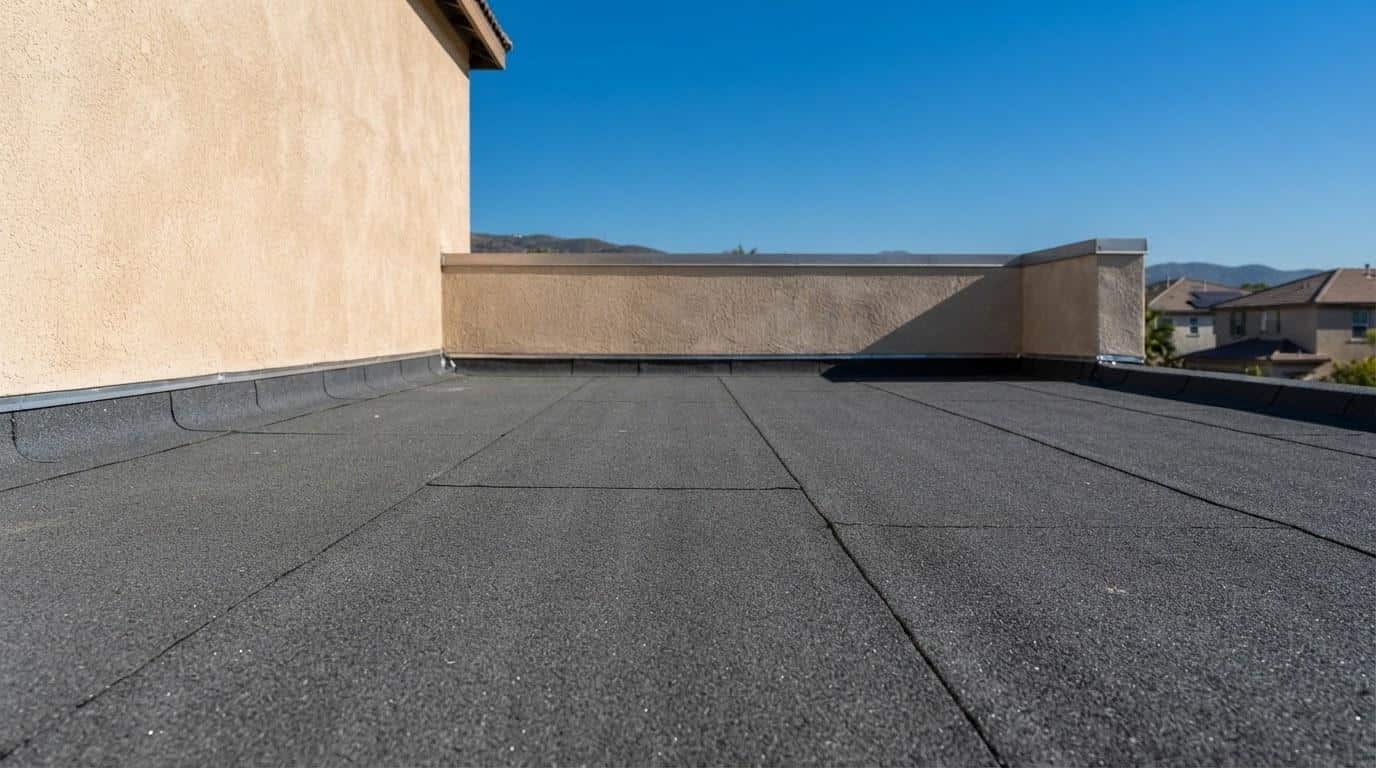
Why Does Torch Down Roof Maintenance Matter in Southern California?
A torch down flat roof exposed to Southern California’s climate faces UV radiation levels that can degrade an unprotected membrane up to 40% faster than in cooler, cloudier regions. Regular maintenance is the single most effective way to keep that membrane sealed, flexible, and watertight for its full 15 to 20 year lifespan.
Torch down roofing, also called modified bitumen roofing, is installed by heat-welding layers of polymer-modified asphalt onto a flat or low-slope deck. The result is a tough, seamless surface. But heat, UV rays, and the occasional intense Pacific storm all work against it over time.
California’s Title 24 building energy standards encourage cool roof surfaces that reflect solar heat. Many torch down systems include a reflective granule cap sheet or a white elastomeric coating for exactly this reason. Keeping that reflective layer clean and intact is part of good maintenance, not just aesthetics.
Skipping maintenance does not just shorten the roof’s life. It can void manufacturer warranties, complicate roof certification when you sell the property, and turn a small repair into a full replacement costing several times more.
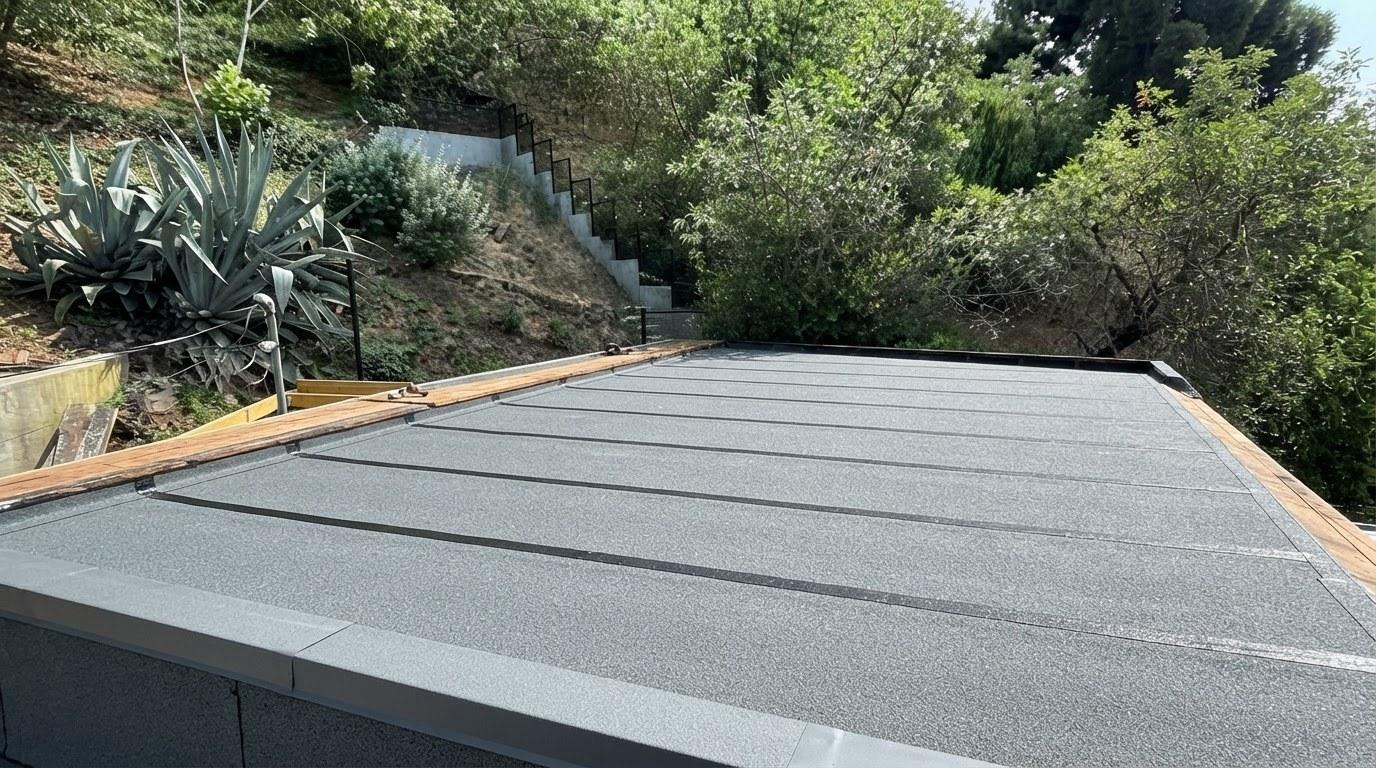
What Are the Best Torch Down Roof Maintenance Tips for Each Season?
The most effective torch down roof maintenance tips follow a seasonal rhythm: clear debris and check drainage in fall, inspect for storm damage in winter, address UV-related wear in spring, and protect the membrane from peak heat in summer. Each season in Southern California brings a different threat to your flat roof.
Fall (October through November)
- Clear all roof drains and scuppers: Leaf litter and debris accumulate fast before the rainy season. A blocked drain can cause ponding water, which adds 5 pounds or more per square foot of standing load.
- Trim overhanging branches: Branches within 3 feet of the roof surface abrade the membrane and deposit debris directly onto the cap sheet.
- Inspect flashings at parapets and penetrations: Fall is the right time to reseal any flashing that has lifted or cracked before winter rain arrives.
- Check the granule surface: If bare black patches are visible where granules have worn away, apply a compatible roof coating before UV damage deepens.
Winter (December through February)
- Inspect after every significant rain: Walk the roof within 24 hours of a storm to check for ponding. Water standing longer than 48 hours signals a drainage problem.
- Look for new blisters or bubbles: Cold rain hitting a warm membrane can reveal delamination that was invisible in dry conditions.
- Clear debris from drains again: Storm runoff carries leaves, dirt, and sediment onto the roof surface and into drains.
Spring (March through May)
- Schedule your annual professional inspection: Spring gives a contractor a full view of any winter damage before summer heat stresses the membrane further.
- Apply or refresh elastomeric roof coating: A fresh coat of white elastomeric coating reflects UV and can lower surface temperatures by up to 50 degrees Fahrenheit on a hot day, according to the U.S. Department of Energy.
- Test roof penetrations: HVAC curbs, vent pipes, and skylights are the most common leak points. Press gently around base flashings and look for soft spots or lifted edges.
Summer (June through September)
- Limit foot traffic: Surface temperatures on a dark torch down membrane can reach 170 degrees Fahrenheit or higher in direct sun. Walking on an overheated membrane damages the granule surface and can cause indentations.
- Keep drains clear of windblown debris: Santa Ana wind events deposit dust and plant matter quickly.
- Check for coating peeling or chalking: UV breakdown causes elastomeric coatings to chalk after 3 to 5 years. Recoating before the coating fails completely protects the underlying membrane.
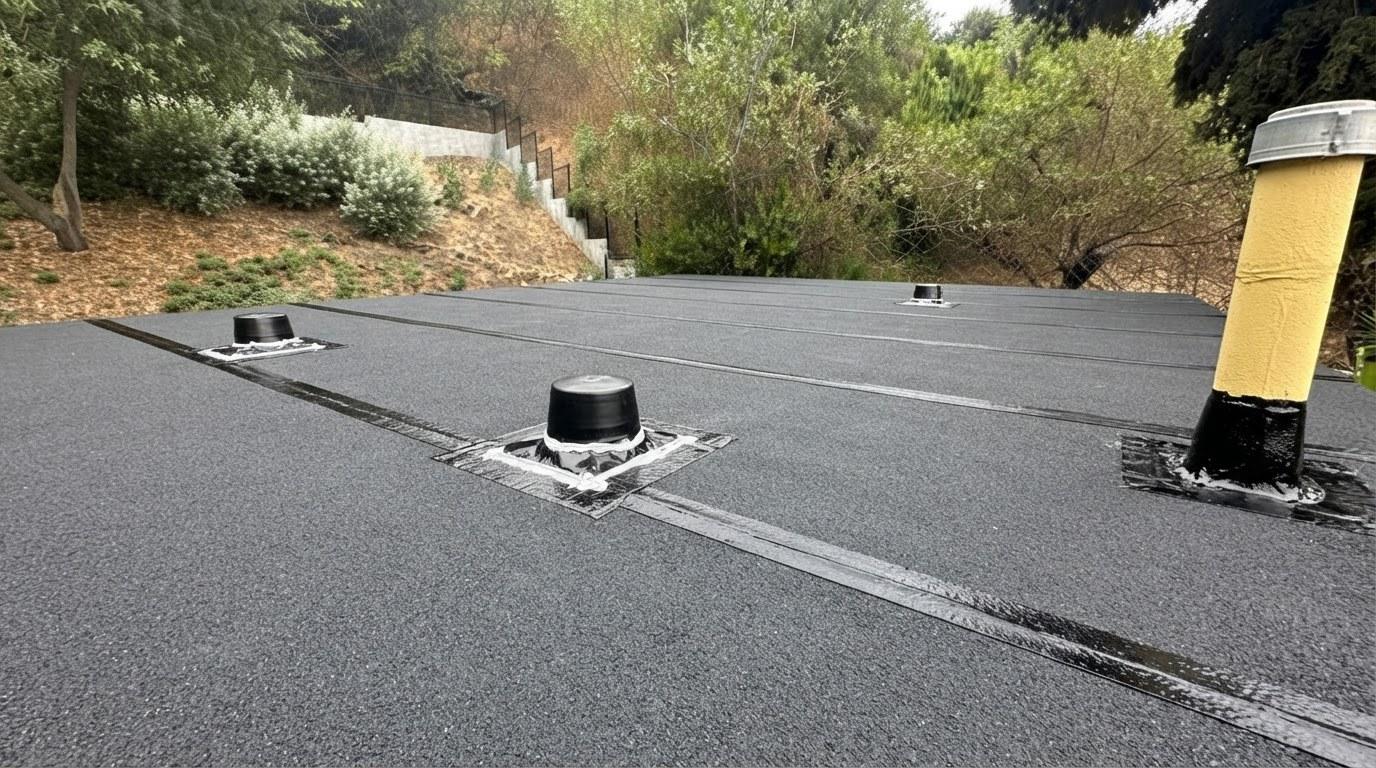
What Does a Torch Down Roof Maintenance Task Schedule Look Like?
A simple maintenance schedule prevents the most common torch down failures by distributing small tasks across the year rather than letting problems compound. The table below covers the 8 most important tasks, how often to do them, and whether a homeowner or a licensed roofing contractor should handle each one.
| Maintenance Task | Frequency | DIY or Pro? |
|---|---|---|
| Clear roof drains and scuppers | After every major storm; at minimum twice a year | DIY (use gloves and a drain snake) |
| Visual surface inspection for blisters, cracks, or granule loss | Twice a year (spring and fall) | DIY (walk perimeter carefully; avoid midday heat) |
| Flashing inspection and resealing | Annually or after any storm | Pro recommended for resealing |
| Elastomeric or reflective coating application | Every 3 to 5 years | Pro (requires surface prep and compatible product) |
| Full professional roof inspection | Annually | Pro (required for roof certification) |
| Seam and lap joint inspection | Annually | Pro (seam repairs require heat welding) |
| HVAC curb and penetration flashing check | Twice a year | Pro for repairs; DIY for visual check |
| Debris and vegetation removal | Monthly in fall and winter; quarterly otherwise | DIY |
Our team inspects an average of 3 to 4 seam separations per torch down roof on properties where the last professional visit was more than 2 years prior. On roofs inspected annually, that number drops to less than 1 per visit on average.
What Does an Annual Professional Torch Down Roof Inspection Include?
A thorough annual inspection of a torch down flat roof typically takes 60 to 90 minutes and covers the membrane surface, all flashings, drainage components, and any roof penetrations. It is the most important single maintenance event you can schedule.
A licensed roofing contractor will check the following during a professional inspection:
- Membrane surface condition: The inspector looks for blisters, alligatoring (a network of surface cracks), granule loss, and areas where the cap sheet has lifted or separated from the base sheet.
- Seam and lap joint integrity: Torch down roofing is installed in overlapping layers. Any seam that has opened even 1/8 of an inch can admit water and must be re-welded.
- Flashing at all penetrations: Every pipe, vent, HVAC curb, and parapet wall termination is a potential leak point. The inspector checks for lifted edges, cracking, and inadequate overlap.
- Drainage performance: The contractor checks that drains are properly set below the membrane surface and that no low spots have developed that hold water.
- Deck condition underneath: Where soft spots are felt underfoot, the inspector notes areas of potential deck rot or delamination that may require core sampling.
- Coating and reflective surface: If a cool roof coating is present, the inspector assesses its thickness and adhesion, consistent with ENERGY STAR roof product criteria for reflective surfaces.
After the inspection, a reputable contractor provides a written report noting every finding, recommended repairs, and an estimated service life for the current membrane. This report is also the basis for a roof certification, which many lenders and buyers require during a property sale.
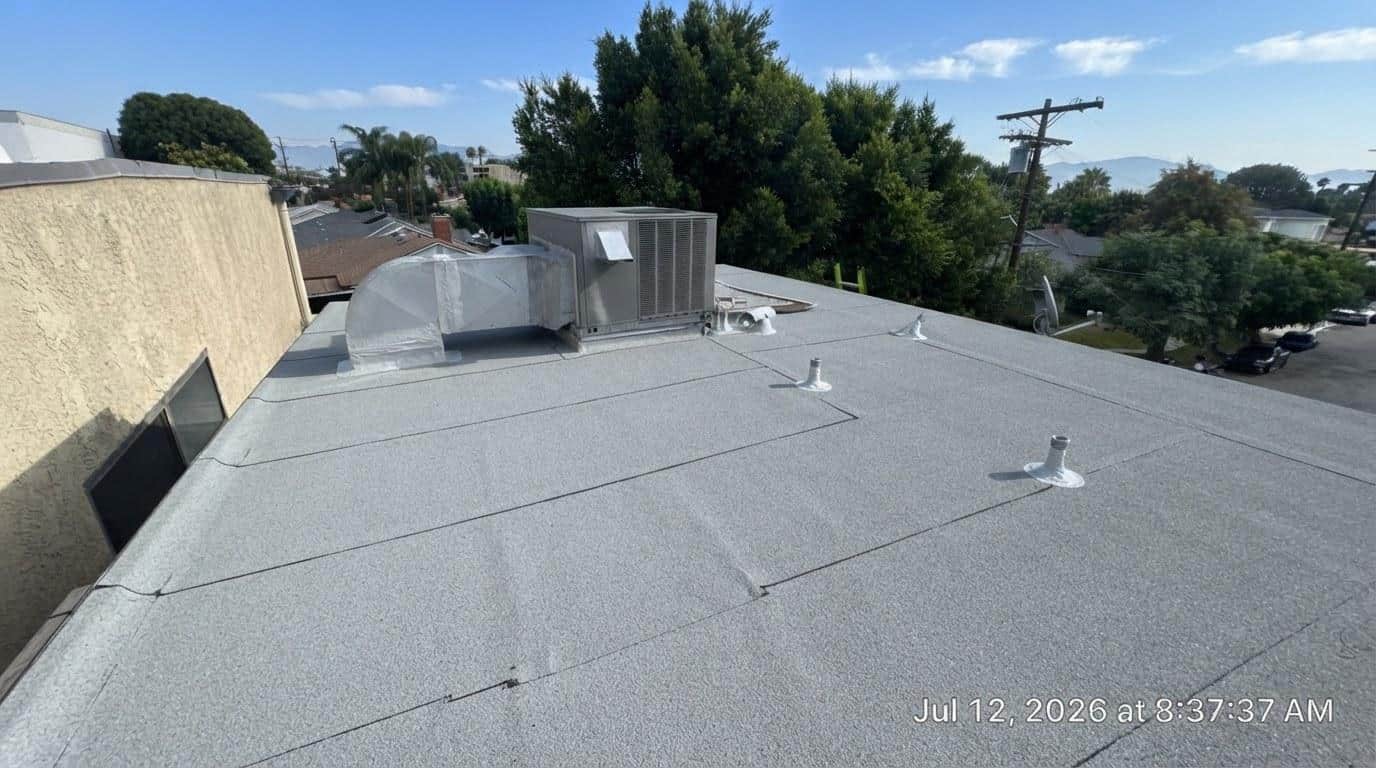
What Warning Signs Should You Watch for Between Inspections?
Between scheduled maintenance visits, five warning signs indicate that your torch down roof needs attention before the next planned inspection. Catching these early keeps repair costs in the range of a few hundred dollars rather than several thousand.
- Ponding water after 48 hours: Water that stands on the roof surface longer than 2 days adds structural load and accelerates membrane breakdown. It signals a drainage problem or a low spot in the deck.
- Blisters or bubbles in the membrane: Blisters form when moisture or air is trapped between layers. A blister larger than 6 inches in diameter should be evaluated by a pro, as it can rupture under foot traffic or thermal expansion.
- Visible cracks or alligatoring: A network of surface cracks means the bitumen has lost its flexibility. This is common on membranes older than 10 years that have not been coated.
- Interior water stains on ceilings: Any new brown stain on an interior ceiling below a flat roof is a direct signal of an active or recent leak. Do not wait for the next inspection.
- Lifted or separated flashings: If you can see a gap between a flashing and the membrane or parapet wall, water is entering that gap during every rain event.
- Granule accumulation in drains: Finding a heavy buildup of dark granules in your roof drain means the cap sheet is shedding its protective layer. This is normal near end of life but signals that a coating or replacement assessment is overdue.
What Common Maintenance Mistakes Shorten a Torch Down Roof’s Life?
The most damaging maintenance mistakes are not acts of neglect alone. Several well-intentioned actions by property owners actually accelerate torch down membrane failure. Knowing what to avoid is just as important as knowing what to do.
- Using a pressure washer on the membrane: High-pressure water strips granules from the cap sheet and forces water under seams. Use a low-pressure garden hose to rinse debris only.
- Applying an incompatible coating product: Not all elastomeric coatings bond correctly to modified bitumen. Using an acrylic product on a surface that needs a bitumen-compatible or silicone-based coating can cause peeling within one season.
- Walking the roof in midday summer heat: As noted above, surface temperatures can exceed 160 degrees Fahrenheit on a dark membrane in July or August. Walking on an overheated surface leaves permanent impressions and breaks the granule bond.
- Ignoring small blisters: A blister that is 2 inches across today can grow to 12 inches within a single summer season as thermal cycling forces air and moisture in and out of the delaminated pocket.
- DIY seam repairs with tape or caulk: Torch down seams are heat-welded. Applying standard roofing caulk or self-adhesive tape to a separated seam is a temporary fix that typically fails within 6 to 12 months and can trap moisture underneath.
- Skipping the annual professional inspection: Many manufacturer warranties require documented annual inspections. Skipping even one year can void coverage and complicate a roof certification if you refinance or sell the property.
Across our service calls on torch down roofs in Southern California, we find that roughly 60% of premature membrane failures trace back to one of two causes: blocked drainage that was never cleared, or DIY seam repairs that sealed moisture inside the assembly rather than keeping it out.
Schedule Your Torch Down Roof Maintenance Today
A torch down flat roof is one of the most durable low-slope roofing systems available, but it reaches its full 15 to 20 year lifespan only with consistent care. Twice-yearly DIY inspections, prompt drainage clearing, and an annual professional inspection are the three habits that separate a roof that lasts from one that fails early.
Roof Replacement Inc serves property owners across Southern California with licensed torch down roof inspections, maintenance, coatings, and repairs. Our team is licensed by the California Contractors State License Board (CSLB) and can provide the written inspection report you need for roof certification, insurance, or peace of mind.
Call (213) 364-3979 to schedule your annual torch down roof inspection or to get a custom quote on a coating or repair. Do not wait for a ceiling stain to tell you there is a problem.
Explore our full range of roofing services across Southern California.
Frequently Asked Questions
How often should I have my torch down flat roof inspected?
A torch down flat roof should receive a professional inspection at least once a year, ideally in spring after the rainy season. You should also do a visual check yourself twice a year and after any significant storm. Annual inspections are often required to keep manufacturer warranties valid and to qualify for a roof certification.
How long does a torch down roof last with proper maintenance?
A well-maintained torch down roof typically lasts 15 to 20 years in Southern California's climate. Roofs that receive annual professional inspections, regular drain clearing, and a fresh reflective coating every 3 to 5 years consistently reach the higher end of that range. Skipping maintenance can cut that lifespan to 10 years or less.
Can I walk on my torch down flat roof to inspect it myself?
Yes, but only during cooler parts of the day, ideally in the morning before 10 a.m. Surface temperatures on a dark torch down membrane can exceed 160 degrees Fahrenheit in summer midday heat, which damages the granule surface under foot traffic. Wear soft-soled shoes and avoid walking on any visible blisters.
What causes blisters on a torch down roof and how serious are they?
Blisters form when moisture or trapped air between membrane layers expands from heat. They are common on roofs older than 8 to 10 years or where a seam was improperly welded during installation. Blisters smaller than 3 inches can sometimes be monitored, but anything larger should be evaluated by a licensed roofing contractor, as rupture can lead to active leaks.
How much does torch down roof maintenance or repair typically cost in Southern California?
In the Southern California market, a professional annual inspection generally ranges from $150 to $400 depending on roof size and accessibility. Small repairs such as reflashing a penetration or re-welding a seam typically range from $300 to $800. A full elastomeric coating application on a 1,000 square foot roof generally falls between $800 and $2,500 depending on surface condition and product used. Contact Roof Replacement Inc at (213) 364-3979 for a custom quote on your specific roof.
Related Articles




What Our Clients Say











Roof Replacement Inc. offers professional, high-quality work, guaranteed (call for details); ensuring all clients projects meet all code and design requirements. We are dedicated to exceptional customer service and will strive to ensure you with the highest quality roofing services. Roof Replacement Inc. offers lifetime warranty (call for details) on all of our workmanship to ensure the quality of our work. With over 40 years of combined experience within the roofing and construction industry, Roof Replacement Inc. has grown and developed in all areas of roofing construction, including roof inspections. As a leading residential and commercial roofing company in LA, we have hundreds of references from previous clients, so rest assured, that your roofing job will be done right the first time. Replacing an old roof can help add curb appeal and will increase the perceived value of your home. First impressions are vital when selling your home, especially when your roof takes up more than half of the exterior of your residence or business. Not only is the return of investment on a new roof attractive for potential buyers, but can be as beneficial as remodeling the kitchen or bathrooms within your residence.

