

Southern California's heat, wildfire risk, and coastal salt air demand roofing materials built for those conditions. This guide breaks down which options perform best and why.
What Makes Southern California’s Climate So Hard on Roofs?
Southern California roofs face a combination of intense UV exposure, prolonged heat, seasonal Santa Ana winds, wildfire embers, and coastal salt air that few other regions match. No single climate stress dominates every neighborhood. A roof in the Inland Empire endures summer temperatures that regularly exceed 100°F, while a home near the coast deals with salt-laden marine air that corrodes metal fasteners and degrades certain coatings faster than expected.
NOAA climate data shows that Southern California averages more than 280 sunny days per year in most inland areas. That sustained UV load breaks down asphalt binders and causes thermal expansion cycles that loosen flashing and crack brittle materials over time.
Santa Ana wind events can push gusts past 60 mph, lifting poorly fastened shingles and driving airborne embers onto rooftop surfaces. Homeowners in fire-hazard severity zones face an additional layer of risk that directly shapes which materials local building departments will approve for a new roof installation.
Which Roofing Material Is Best for Southern California’s Climate?
Concrete tile, clay tile, and metal roofing are the top performers for the best roofing material for Southern California’s climate, with Class A-rated asphalt shingles serving as a cost-effective alternative. Each material handles the region’s heat, UV, and fire demands differently, and the right pick depends on your home’s structure, budget, and location.
The table below compares the five most common options across the factors that matter most in this region.
| Material | Typical Lifespan | Fire Rating | Heat Performance | Best Zone |
|---|---|---|---|---|
| Clay Tile | 50+ years | Class A | Excellent (air gap insulates) | Inland, coastal, fire zones |
| Concrete Tile | 40-50 years | Class A | Excellent | Inland, fire zones |
| Metal (Standing Seam) | 40-70 years | Class A | Very Good (reflective coatings) | Coastal, fire zones, all zones |
| Class A Asphalt Shingles | 25-30 years | Class A | Good (cool-roof options available) | All zones, budget-conscious |
| Wood Shake | 20-30 years (treated) | Class B or C (untreated) | Moderate | Limited; restricted in many CA fire zones |
Clay and Concrete Tile
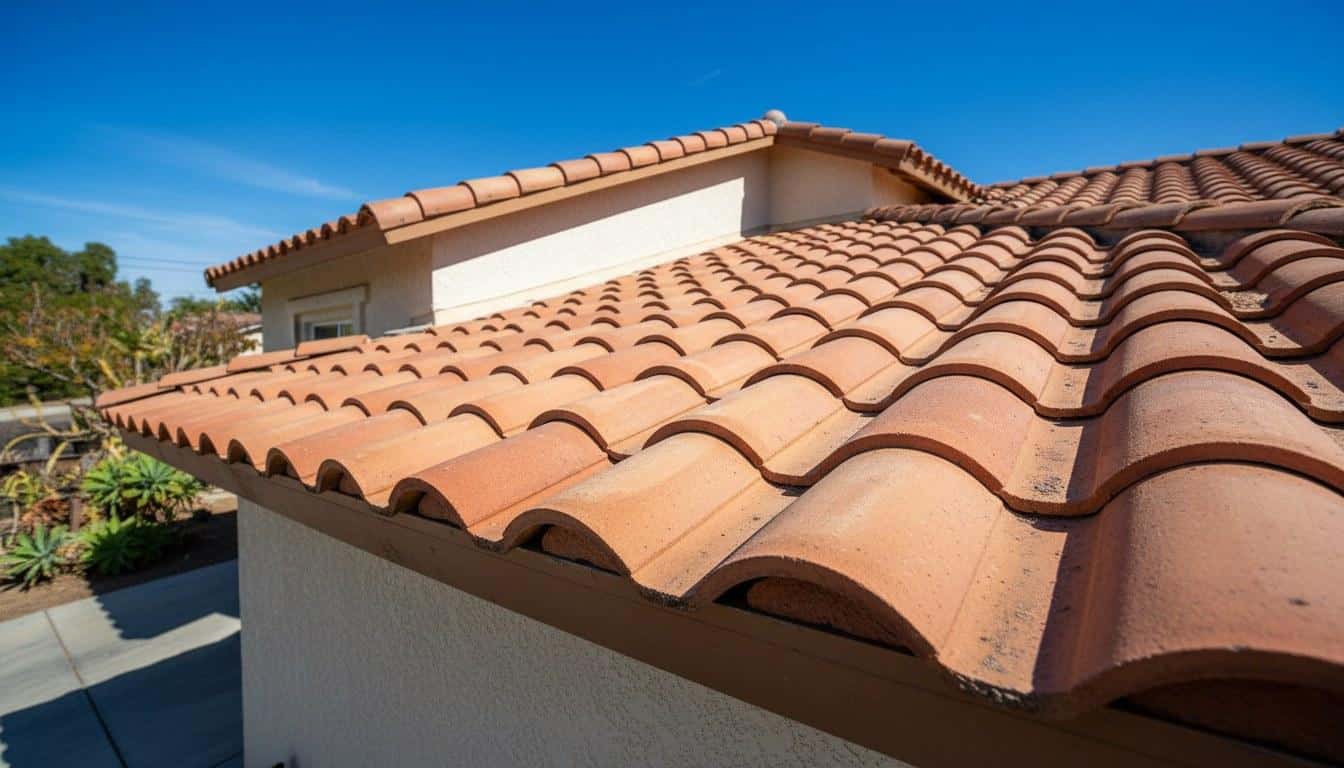
Tile roofing has been the dominant choice across Southern California for more than a century, and for good reason. The barrel-profile design creates a natural air gap between the tile and the roof deck, which slows heat transfer into the attic by a meaningful margin. Both clay and concrete tile earn a Class A fire rating without additional treatment, which matters in communities governed by California’s fire-hazard severity zone maps.
The main drawback is weight. Clay tile can run 9 to 12 pounds per square foot, and concrete tile is similar. Older homes may need structural reinforcement before a tile roof installation is possible, which adds to the project cost and timeline.
Metal Roofing
Standing-seam metal roofs have grown significantly in popularity across Southern California over the past decade. A properly coated metal roof reflects a large share of solar radiation, helping reduce cooling loads in line with California’s Title 24 building energy standards. Metal also sheds embers without igniting, making it a strong pick in wildfire-adjacent neighborhoods.
Coastal homeowners should specify a Galvalume or aluminum alloy panel rather than bare steel, since salt air accelerates rust on unprotected ferrous metals. A quality coastal-grade metal roof can last 50 to 70 years with minimal maintenance.
A quality coastal-grade metal roof can last 50 to 70 years with minimal maintenance.
Class A Asphalt Shingles
Modern architectural shingles rated Class A are a practical choice for homeowners who need a roof installed quickly and within a tighter budget. Look for products carrying an ENERGY STAR rating, which indicates the shingle meets minimum solar reflectance thresholds. These cool-roof shingles can lower attic temperatures noticeably compared to standard dark shingles, which matters during Southern California’s long summer heat season.
The tradeoff is lifespan. Even premium asphalt shingles typically last 25 to 30 years in this climate, compared to 40-plus years for tile or metal. If you plan to stay in your home long term, the lower upfront cost may be offset by an earlier replacement cycle.
How Do Fire Ratings Affect Your Roofing Choice in California?
California law requires that roofing materials in designated fire-hazard severity zones carry a minimum Class A fire rating, and many local jurisdictions extend that requirement to all new roof installations regardless of zone. A Class A rating means the material resists severe fire exposure, including direct flame and burning ember accumulation for at least 2 hours under standardized test conditions.
The California Department of Forestry and Fire Protection (CAL FIRE) maintains fire-hazard severity zone maps that determine which rules apply to your address. If your home sits in a Very High Fire Hazard Severity Zone, a roofing contractor must install only approved Class A materials, and the local building department will verify this during the permit inspection.
Wood shake roofing is effectively off the table for most Southern California homeowners unless it carries a Class A fire-retardant treatment and the local authority having jurisdiction specifically allows it. Many counties across the region have banned untreated wood shake entirely on new installations and re-roofing projects. Always confirm local rules before selecting a material.
Our team sees roughly 3 out of every 10 homeowners who call us for a quote surprised to learn their preferred material is not permitted in their fire zone. Verifying the fire-hazard designation early saves significant time and avoids ordering materials that cannot be used.
What Does a New Roof Installation Cost in This Region?
In the Southern California market, new roof installation projects typically range from about $8,000 to $30,000 or more, depending on the material chosen, roof size and complexity, and any structural work required. These are market ranges, not quotes; actual costs vary by scope and site conditions.
Several factors move the final number significantly:
- Material choice: Concrete and clay tile installations generally cost more per square than asphalt shingles because of material weight, specialized labor, and longer installation time.
- Roof size and pitch: A steeply pitched roof requires more safety equipment and takes longer to complete, raising labor costs. Roof size is measured in squares (one square equals 100 square feet).
- Deck condition: If the existing roof deck has rot, moisture damage, or structural issues, those must be repaired before new materials go down. This is common on homes where the previous roof was left too long.
- Permit and inspection fees: California requires permits for most re-roofing projects. Permit fees vary by county and project value.
- Tear-off and disposal: Removing and hauling away the old roof adds to the total. Some projects involve multiple layers of old material, which increases labor and disposal costs.
- Underlayment and flashing upgrades: California’s Title 24 standards may require specific underlayment products, particularly in fire zones or on low-slope applications.
Homeowners who installed a new roof after January 1, 2023 may be eligible for the Inflation Reduction Act federal tax credit if the materials meet energy-efficiency thresholds. Cool-roof products that qualify under ENERGY STAR guidelines are worth discussing with a tax professional to see if the credit applies to your project.
To get an accurate number for your specific home, request a custom quote from a licensed roofing contractor who can measure the roof, assess the deck, and confirm local code requirements before providing a written estimate.
How Long Does It Take to Install a New Roof?
Most new roof installations on a standard single-family home in Southern California take two to five days from tear-off to final inspection. Larger homes, complex roof shapes, or tile installations that require mortar and a multi-stage drying process can extend the timeline to one to two weeks.
Here is a general sequence for a typical re-roofing project:
- Permit pulled: The contractor submits plans and pulls the building permit before any work begins. This can take one to five business days depending on the local building department’s workload.
- Tear-off: The old roofing material is removed and the deck is inspected. Damaged decking is replaced at this stage.
- Underlayment installation: A code-compliant underlayment is installed across the entire deck, providing a water barrier while the finish material goes on.
- Finish material installation: Shingles, tile, or metal panels are installed per the manufacturer’s specifications and local code requirements.
- Flashing and trim: All valleys, penetrations, ridges, and edges are flashed and sealed to prevent water intrusion.
- Inspection: The local building department inspects the completed installation. A passed inspection is required to close the permit.
- Roof certification (if applicable): Some lenders and insurance companies require a roof certification from a licensed contractor confirming the roof’s condition and expected remaining life after installation.
Weather rarely delays Southern California roofing projects the way it does in wetter climates, but Santa Ana wind events can pause work for safety reasons. Most experienced contractors schedule around forecast wind events when possible.
What Are the Most Common Mistakes When Replacing a Roof in Southern California?
The most common and costly mistake is choosing a material based on upfront price alone, without accounting for the local fire rating requirements, structural load limits, or long-term maintenance costs specific to this region. A second frequent error is hiring a contractor who is not licensed by the California Contractors State License Board (CSLB), which leaves homeowners without legal recourse if the work fails.
Here are the mistakes that come up most often on Southern California re-roofing projects:
- Skipping the permit: Unpermitted roofing work can create problems when selling the home, void manufacturer warranties, and leave the homeowner liable if the roof fails. Always verify that your contractor pulls a permit.
- Installing over existing layers: California building codes generally limit the number of roofing layers allowed. Installing a new roof over old material without inspecting the deck hides damage and can void the new roof’s warranty.
- Ignoring attic ventilation: A new roof installed over an under-ventilated attic will degrade faster. Heat buildup shortens shingle life and can warp roof decking. Proper ventilation should be assessed and corrected as part of any roof installation.
- Choosing the wrong underlayment for the climate: Standard felt underlayment can deteriorate faster under Southern California’s UV exposure during the installation window. Synthetic underlayments are generally more durable and are preferred by most experienced regional contractors.
- Not verifying fire-zone compliance: As noted above, selecting a material that is not approved for your fire-hazard severity zone can result in a failed inspection and a costly tear-off of the new roof.
- Hiring based on door-to-door solicitation after a storm: Storm-chasing contractors who appear after wind events often lack proper CSLB licensing. Verify the license number at cslb.ca.gov before signing any contract.
Across our service calls in Southern California, we find that roughly 1 in 5 homeowners who contact us after a failed inspection had hired an unlicensed contractor for the original installation. Verifying a contractor’s CSLB license number before work begins takes less than two minutes and prevents significant financial exposure.
Roughly 1 in 5 homeowners who contact us after a failed inspection had hired an unlicensed contractor for the original installation.
The best roofing material for Southern California’s climate is only as good as the installation behind it. Material quality and contractor quality are equally important parts of a roof that performs for decades.
Ready to Replace Your Roof? Get Expert Help Now
Choosing the right material, confirming fire-zone compliance, pulling the proper permits, and finding a contractor you can trust are all steps that go faster with an experienced team behind you. Roof Replacement Inc serves homeowners across Southern California, helping them navigate material choices, local codes, and the full installation process from permit to final inspection.
Schedule your inspection or request a written quote today. Call (213) 364-3979 to speak directly with a licensed roofing professional who can assess your home’s specific needs and walk you through your options without pressure.
Explore our full range of roofing services across Southern California.
Frequently Asked Questions
How long does it take to install a new roof on a typical Southern California home?
Most new roof installations on a standard single-family home take two to five days from tear-off to final inspection. Tile roofs or homes with complex shapes can take up to one to two weeks. Permit processing time adds one to five business days before physical work begins.
How much does it cost to install a new roof in Southern California?
New roof installation projects in the Southern California market typically range from about $8,000 to $30,000 or more, depending on the material, roof size, deck condition, and any structural repairs needed. Clay and concrete tile installations generally cost more than asphalt shingle projects due to material weight and specialized labor. Request a custom quote for an accurate number based on your specific home.
What is the best roofing material for a home in a California fire zone?
Clay tile, concrete tile, and standing-seam metal roofing are the strongest choices for homes in California fire-hazard severity zones because all three carry a Class A fire rating without additional treatment. Wood shake is restricted or banned in most Southern California fire zones. Always confirm your specific zone designation with CAL FIRE or your local building department before selecting a material.
Do I need a permit to replace my roof in California?
Yes. California requires a building permit for most re-roofing projects, and the completed work must pass a local building department inspection before the permit is closed. Unpermitted roofing work can create problems when selling the home and may void the manufacturer's warranty. A licensed contractor should pull the permit on your behalf before any work begins.
How do I know if a roofing contractor is licensed in California?
You can verify any contractor's license status in seconds at cslb.ca.gov, the official website of the California Contractors State License Board (CSLB). Enter the contractor's name or license number to confirm it is active and in good standing. Always verify before signing a contract, especially after storm events when unlicensed contractors sometimes solicit work door to door.
Related Articles




What Our Clients Say








Roof Replacement Inc. offers professional, high-quality work, guaranteed (call for details); ensuring all clients projects meet all code and design requirements. We are dedicated to exceptional customer service and will strive to ensure you with the highest quality roofing services. Roof Replacement Inc. offers lifetime warranty (call for details) on all of our workmanship to ensure the quality of our work. With over 40 years of combined experience within the roofing and construction industry, Roof Replacement Inc. has grown and developed in all areas of roofing construction, including roof inspections. As a leading residential and commercial roofing company in LA, we have hundreds of references from previous clients, so rest assured, that your roofing job will be done right the first time. Replacing an old roof can help add curb appeal and will increase the perceived value of your home. First impressions are vital when selling your home, especially when your roof takes up more than half of the exterior of your residence or business. Not only is the return of investment on a new roof attractive for potential buyers, but can be as beneficial as remodeling the kitchen or bathrooms within your residence.

