Everything California homeowners need to know about residential roofing in 2026, materials, costs, repair steps, and how to hire a licensed contractor.
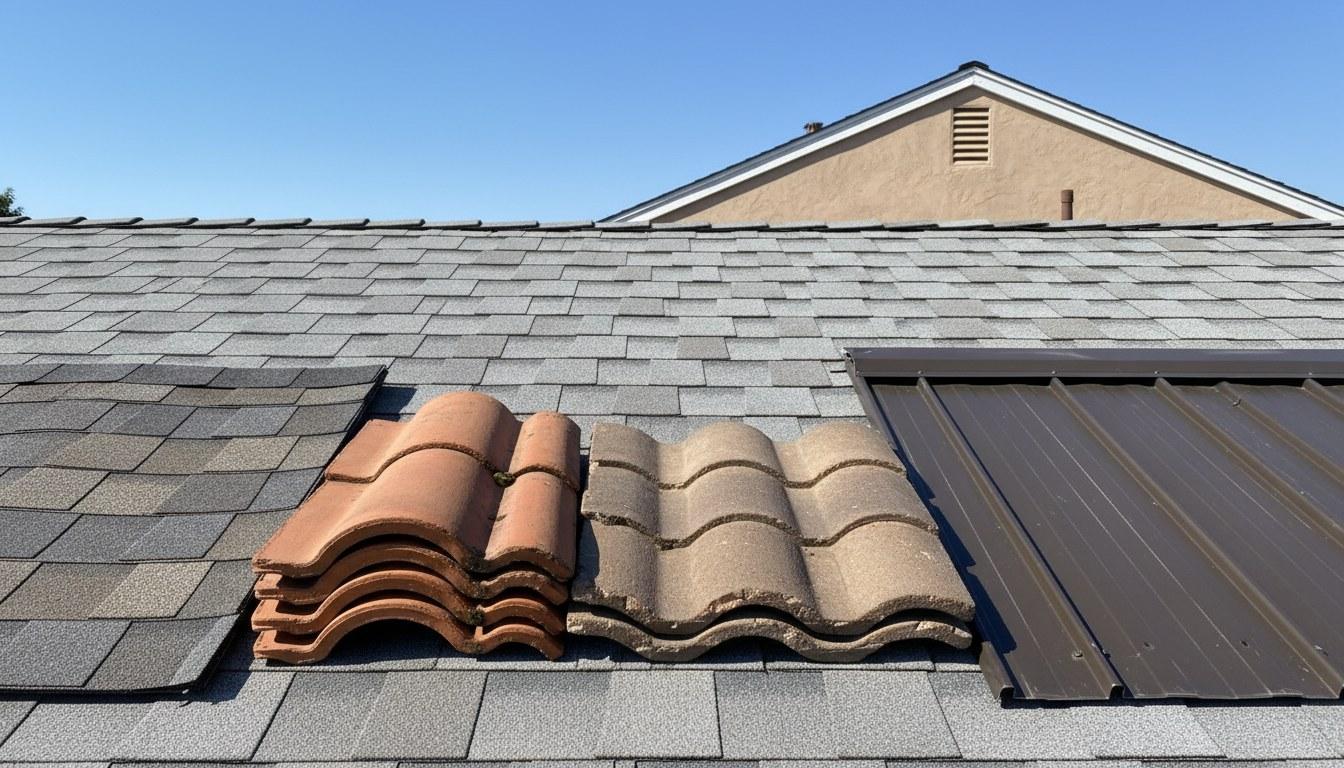
This residential roofing guide california homeowners can rely on covers every major decision you will face — from spotting early damage to picking the right shingle and hiring a trustworthy contractor. California’s mix of heat, wildfires, coastal salt air, and seismic activity makes roofing choices here more complex than in most states. Getting them right protects your home, your energy bills, and your insurance coverage.
What Are the Main Types of Residential Roofing Materials?
The five most common residential roofing materials in California are asphalt shingles, concrete tile, clay tile, metal roofing, and flat or low-slope membranes. Each performs differently depending on your climate zone, HOA rules, and fire-hazard designation. Choosing the wrong material can shorten roof life by 10 to 20 years or trigger a failed inspection.
| Material | Typical Lifespan | Best Climate Fit | Fire Rating | Relative Cost |
|---|---|---|---|---|
| Asphalt Shingles (Class A) | 20–30 years | Inland valleys, mild coastal | Class A | Lowest |
| Concrete Tile | 40–50 years | Hot, dry climates | Class A | Mid |
| Clay Tile | 50–100 years | Coastal, Mediterranean | Class A | Mid-High |
| Metal (Standing Seam / Panels) | 40–70 years | All zones, especially fire-prone | Class A | High |
| TPO / Modified Bitumen (Flat) | 15–25 years | Low-slope roofs statewide | Class A (most) | Mid |
Asphalt shingles dominate the California market because they are affordable and widely available, but homes in State Responsibility Areas (SRAs) — designated by CAL FIRE — must use materials rated Class A for fire resistance. Metal roofing has grown quickly in fire-prone communities because it carries Class A ratings and can last 40 to 70 years with minimal maintenance.
Cool-roof products — those with high solar reflectance — are increasingly required under California’s Title 24 building energy standards for new construction and some re-roofing projects. Products that meet the cool-roof threshold carry an ENERGY STAR label and can meaningfully reduce attic temperatures during summer.
How Do You Know When Your Roof Needs Repair or Replacement?
Most roofs show clear warning signs 2 to 5 years before a full failure. Catching them early almost always costs less than waiting for a leak to cause interior damage. The key is knowing which signs call for a simple repair and which mean the whole system needs replacing.
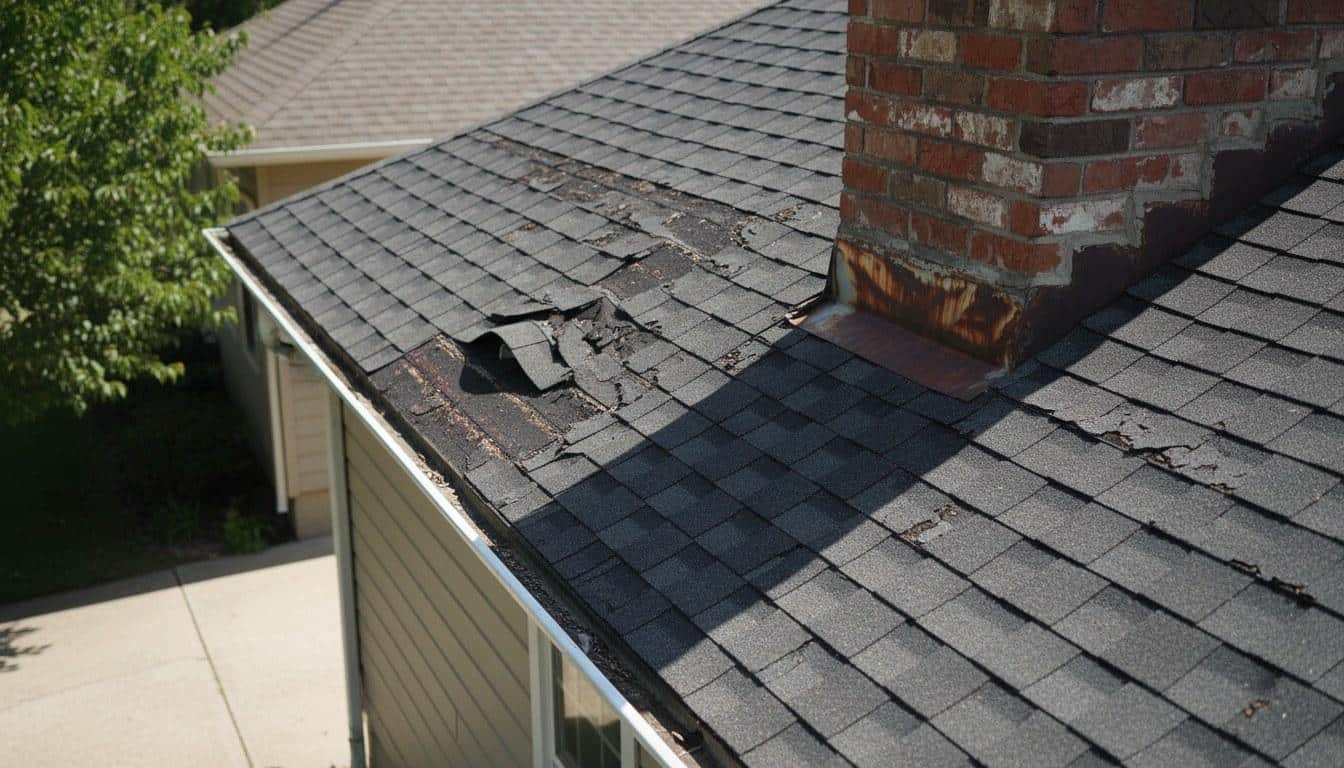
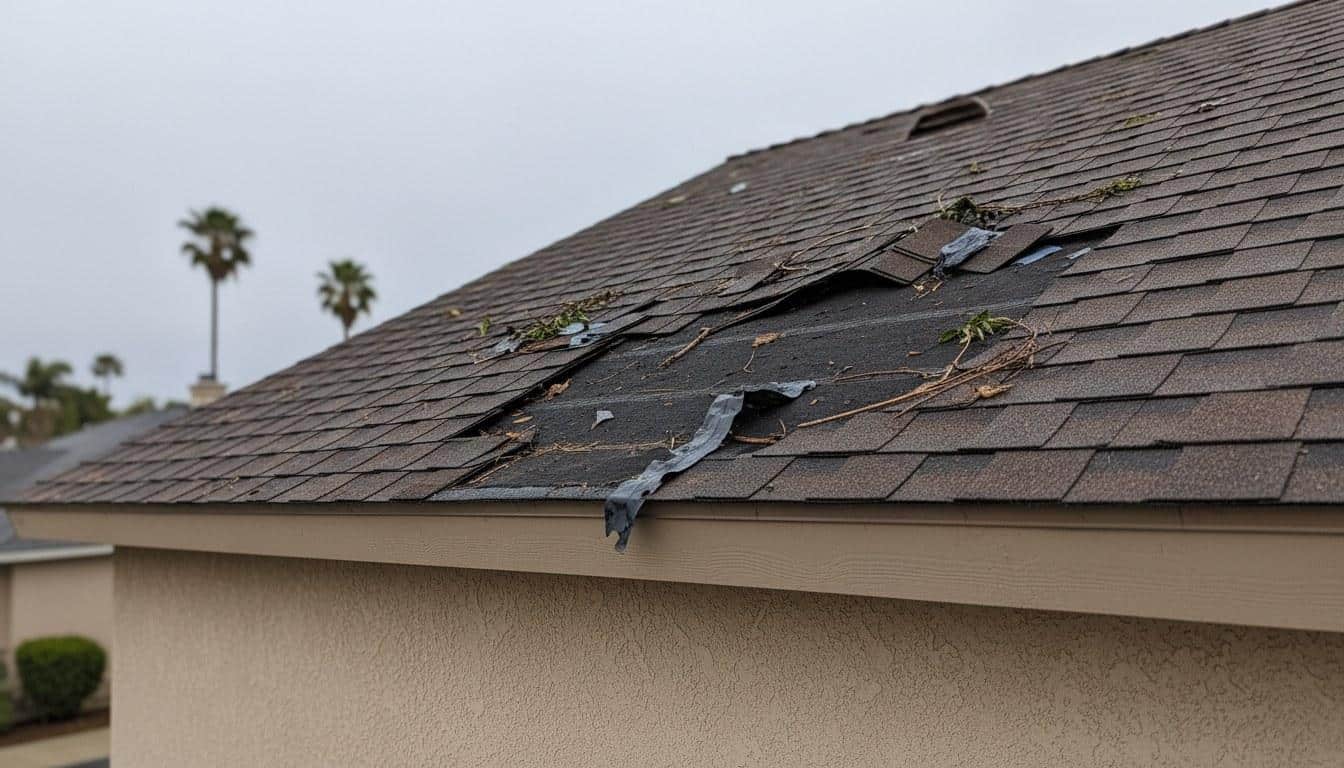
- Missing or curling shingles: Wind or heat has broken the seal. A few missing shingles can be patched; widespread curling across 30% or more of the surface usually signals end-of-life.
- Granule loss in gutters: Asphalt shingles shed granules as they age. Heavy granule buildup in gutters after a storm means the protective layer is nearly gone.
- Daylight in the attic: Any visible light coming through the roof deck means the sheathing or underlayment has failed and water is not far behind.
- Sagging deck sections: A soft or visibly dipped roof deck indicates moisture damage to the structural sheathing and needs immediate professional attention.
- Interior water stains: Brown ceiling stains or peeling paint near the top of walls often trace back to a roof penetration — flashing around chimneys, vents, or skylights is the most common culprit.
- Roof age over 20 years: An asphalt shingle roof older than 20 years in a hot inland climate may be near the end of its rated life even if it looks acceptable from the ground.
- Failed roof certification: Lenders and buyers often require a roof certification. If an inspector cannot certify 2 or more years of remaining life, repair or replacement is typically needed before closing.
Our crews respond to roughly 3 times more emergency leak calls in the 6-week window following the first major fall rainstorm than during any other period — nearly all of them on roofs that showed granule loss or cracked flashing the previous spring that went unaddressed.
How Much Does Residential Roofing Cost in California?
In the California market, residential roof repairs typically range from $300 to $1,500 for minor patching or flashing work, while a full replacement generally runs $8,000 to $30,000 or more depending on roof size, pitch, and material. Labor costs in Southern California and the Bay Area tend to run 15 to 25 percent higher than the national average due to licensing requirements, disposal fees, and local permit costs.
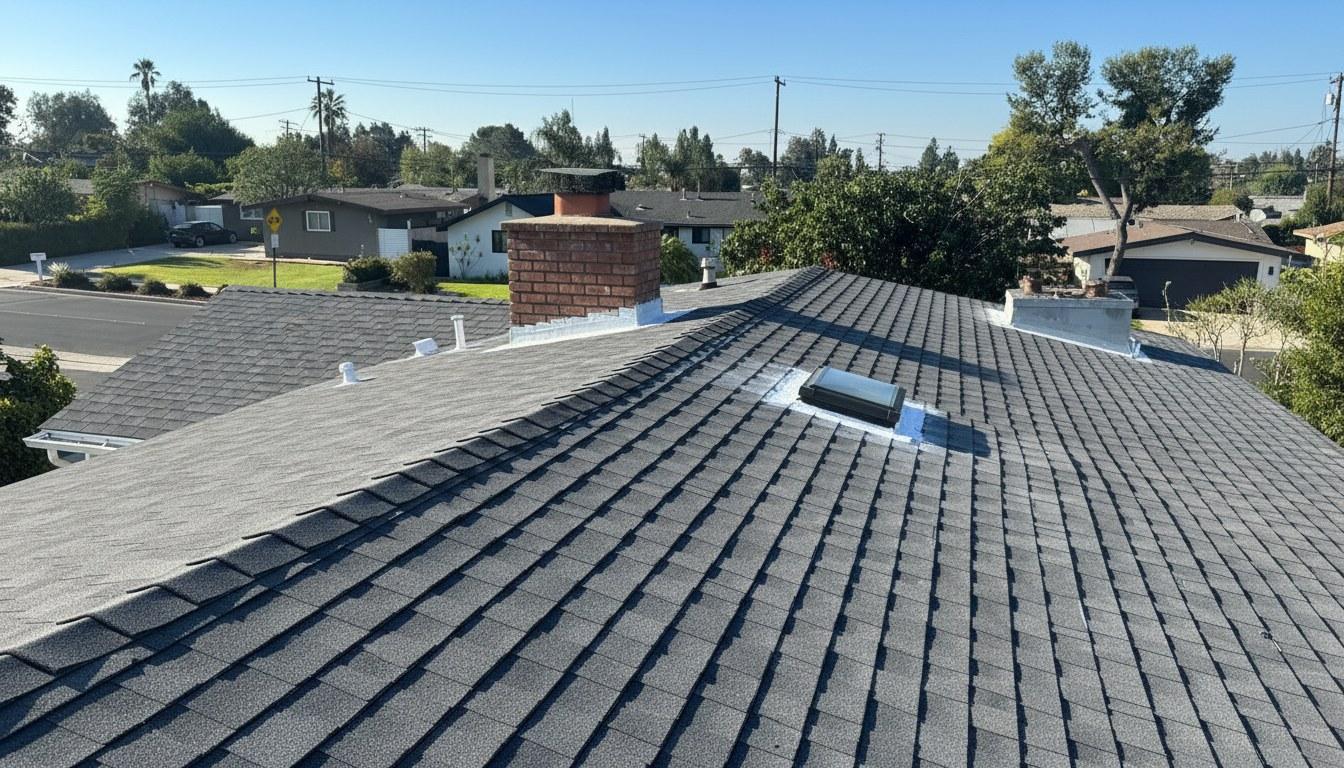
The factors that move a project toward the high end of the range include:
- Roof pitch: Steep roofs (above a 6:12 pitch) require safety equipment and take longer to work on, adding to labor costs.
- Layers to remove: California code generally allows no more than 2 layers of roofing material. Tearing off an existing layer adds $1 to $2 per square foot in most markets.
- Deck damage: Rotted or delaminated sheathing must be replaced before new material goes down. Sheathing repairs typically run $60 to $90 per sheet installed.
- Material choice: Upgrading from asphalt shingles to concrete tile or metal can double or triple material costs but may extend roof life by 20 to 40 years.
- Permit fees: Most California cities and counties require a permit for full replacements. Fees vary by jurisdiction but commonly range from $150 to $600.
- Accessibility: Homes with limited driveway space, landscaping close to the structure, or multiple stories require additional setup time.
As of 2026, the Inflation Reduction Act federal tax credit allows homeowners to claim up to 30 percent of the cost of certain energy-efficient roofing upgrades — including qualifying metal roofs and cool-roof asphalt products — as a federal tax credit. Check the current rules at ENERGY STAR’s tax credit page or consult a tax professional to confirm eligibility for your project. For an accurate number on your specific home, request a custom quote from a licensed contractor.
How Do You Repair a Roof Step by Step?
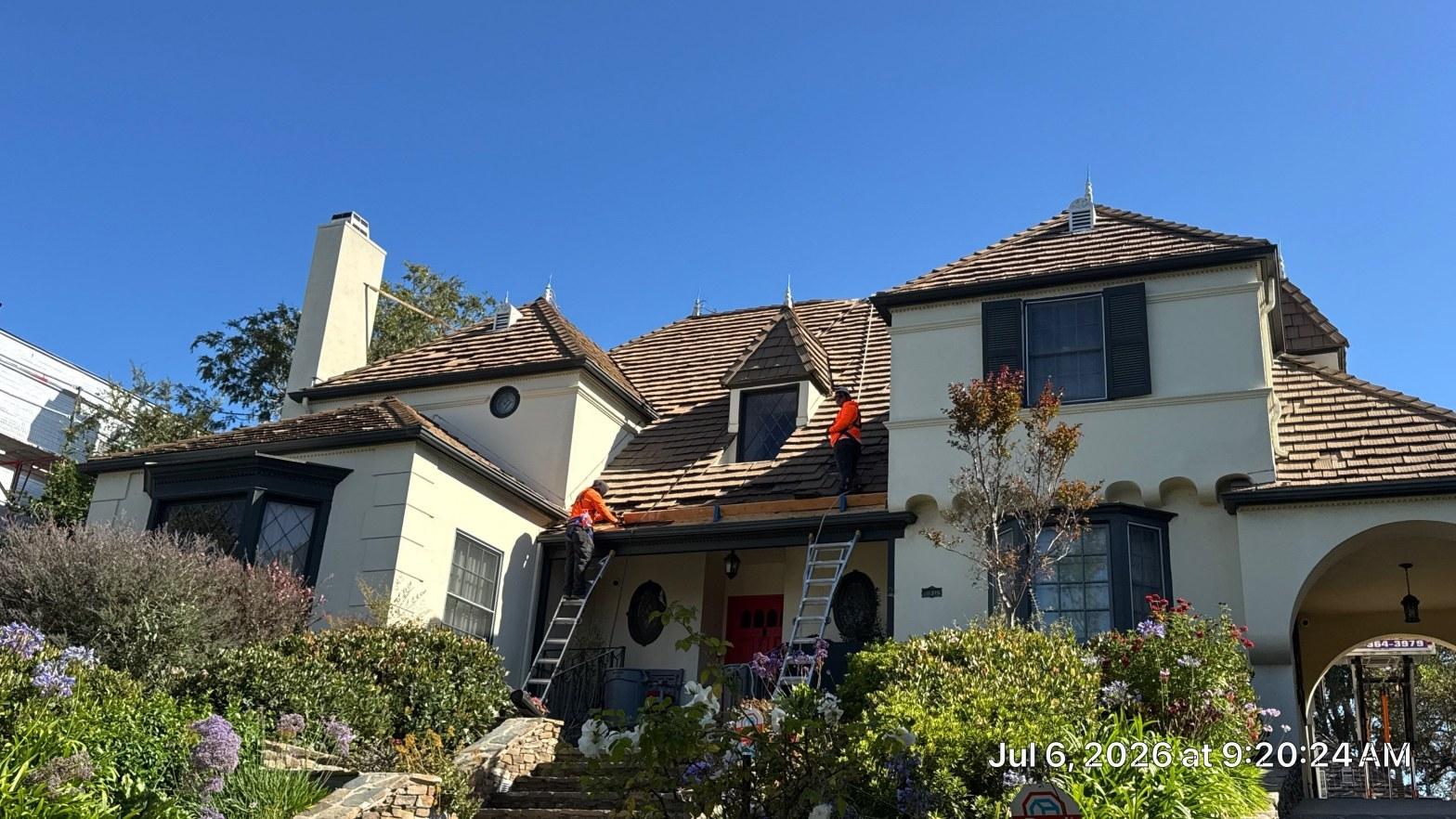
Most residential roof repairs follow the same core sequence: locate the source of the problem, secure the area against further water entry, remove damaged material, repair or replace the substrate if needed, and install new material with proper flashing and sealant. DIY repairs are possible for very minor issues, but working on a pitched roof carries real fall-risk and most California jurisdictions require a permit for anything beyond spot patching.
- Inspect from the attic first. Before going on the roof, check the attic with a flashlight for water stains, mold, or daylight. The entry point on the roof is often 2 to 4 feet uphill from where the stain appears on the ceiling.
- Mark the damage zone. On the roof surface, identify all cracked, missing, or lifted shingles and any flashing that has separated. Mark a boundary at least 6 inches beyond the visible damage.
- Remove damaged shingles. Use a flat bar to lift the tabs of surrounding shingles and pull the nails from the damaged piece. Work carefully to avoid cracking adjacent shingles.
- Inspect and repair the underlayment and deck. If the felt or synthetic underlayment is torn, patch it with a compatible self-adhering membrane. Replace any soft or delaminated sheathing before proceeding.
- Install new shingles or material. Slide the replacement shingle into position, nail it at the manufacturer-specified pattern (typically 4 nails per shingle for standard wind zones, 6 nails in high-wind areas), and seal the nail heads with roofing cement.
- Reseal or replace flashing. Most leaks originate at flashing — around chimneys, pipes, valleys, and skylights. Replace any flashing that has cracked, lifted, or corroded rather than simply recaulking over old sealant.
- Test with a controlled water source. Have a helper run a hose over the repaired area while you watch from the attic. Confirm no new water entry before closing up.
We see flashing failures account for more than half of the leak calls we receive — far more than shingle failures alone. On homes with clay or concrete tile, the mortar bedding at ridge caps and hip ends is the single most common failure point, typically after 15 to 20 years of thermal cycling.
Flashing failures account for more than half of the leak calls we receive — far more than shingle failures alone.
What California Codes and Standards Apply to Residential Roofing?
California residential roofing projects are governed by the California Building Code (CBC), California’s Title 24 building energy standards, local fire codes, and — in fire-hazard zones — CAL FIRE’s fire-rated material requirements. Failing to meet these standards can result in failed inspections, voided homeowner’s insurance, or required tear-off and redo at the homeowner’s expense.
Key code points every California homeowner should understand:
- Fire-rated materials in SRAs and VHFHSZs: Homes in Very High Fire Hazard Severity Zones must use Class A roofing assemblies. This rules out standard wood shakes without a fire-retardant treatment.
- Cool-roof requirements under Title 24: Since California’s 2024 Title 24 update, re-roofing projects on low-slope roofs in climate zones 2 through 15 must meet minimum solar reflectance and thermal emittance values. Steep-slope products in many zones must also meet a minimum aged solar reflectance.
- Two-layer maximum: The CBC limits most residential roofs to two layers of asphalt shingles. A third layer is not permitted — full tear-off is required.
- Permits and inspections: Full replacements require a building permit in virtually every California jurisdiction. The permit triggers a final inspection that confirms proper underlayment, ventilation, and flashing installation.
- Ventilation ratios: The CBC requires a minimum of 1 square foot of net free ventilation area for every 150 square feet of attic space (or 1:300 with a vapor barrier). Inadequate ventilation accelerates shingle aging and can void manufacturer warranties.
How Do You Choose a Qualified Roofing Contractor in California?
Any contractor performing roofing work in California for a project valued over $500 must hold an active license from the California Contractors State License Board (CSLB) — typically a Class C-39 Roofing license. Hiring an unlicensed contractor voids most manufacturer warranties and leaves you with no legal recourse if work fails.
Beyond the license, here is what to verify before signing a contract:
- CSLB license check: Verify the contractor’s license number is active and in good standing at cslb.ca.gov. Confirm the license class is C-39 (Roofing) or B (General Building) with documented roofing experience.
- Workers’ compensation and general liability insurance: Ask for certificates of insurance naming your address. Roofing is a high-risk trade — an uninsured worker injured on your roof can become your financial liability.
- Written contract with scope and materials: The contract should specify the exact product (manufacturer, line, color), the number of layers being removed, the underlayment type, flashing materials, and the warranty terms — both the manufacturer’s material warranty and the contractor’s workmanship warranty.
- Permit pulled by the contractor: A reputable roofing company pulls the permit in its own name. If a contractor asks you to pull your own permit, that is a red flag.
- No large upfront deposits: California law limits contractor deposits to 10 percent of the contract price or $1,000, whichever is less, for home improvement projects. Any demand for 50 percent or more upfront before work begins is a warning sign.
- References and photos of completed work: Ask for 2 to 3 recent references in your area and verify them. Photos of completed projects on similar home styles are a reasonable request.
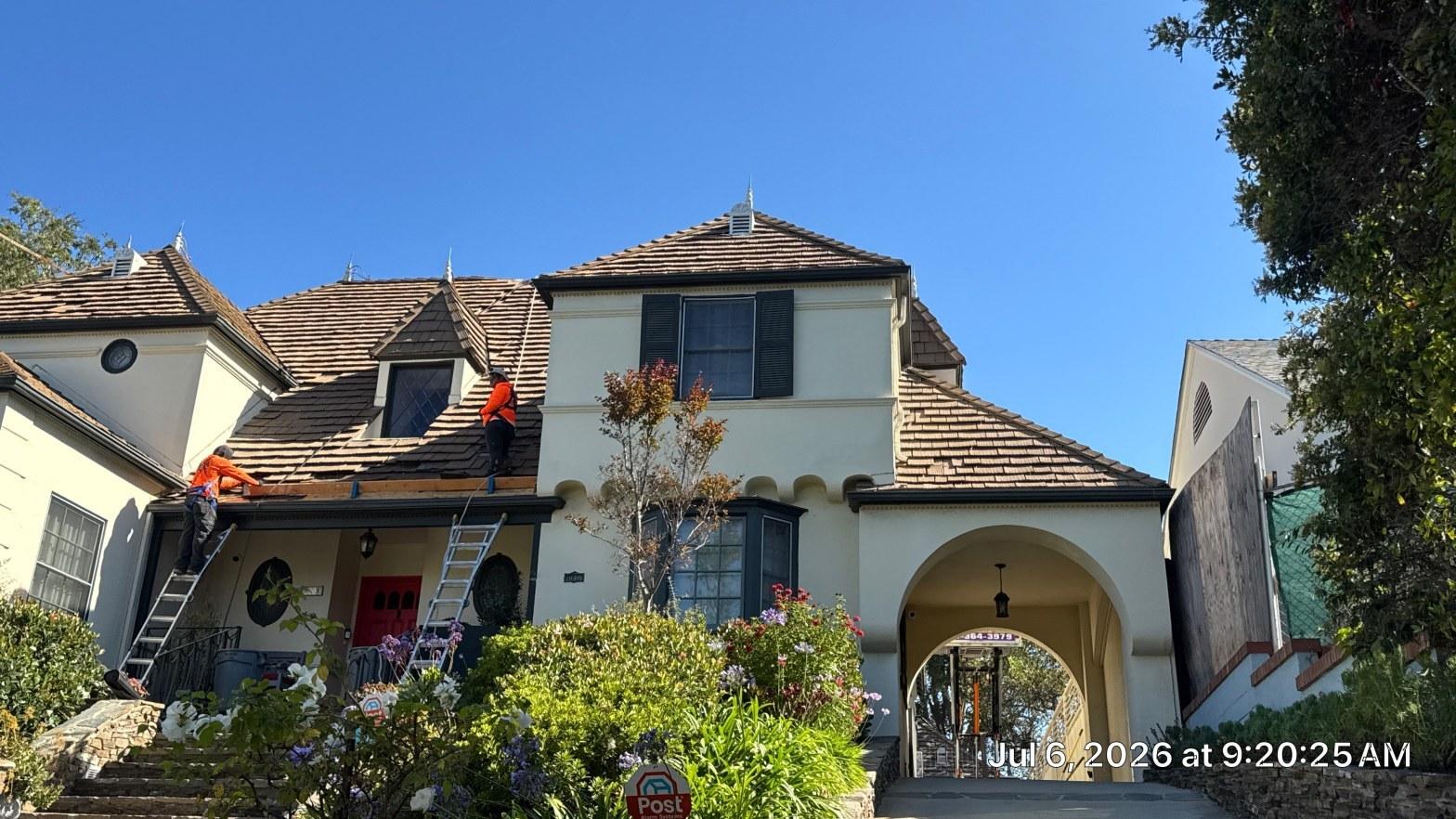
When comparing bids, the lowest price is rarely the safest choice. A bid that skips the tear-off, uses a lighter underlayment, or omits ice-and-water shield at penetrations will cost less upfront and significantly more within 5 to 10 years. Compare bids line by line on materials and scope, not just on the bottom-line number.
Get Professional Help With Your Roof
A roof is one of the highest-stakes systems in your home. Delays on repairs, unlicensed work, and wrong material choices all compound into expensive problems. If you are researching residential roofing and want a straight answer on what your home actually needs, Roof Replacement Inc is ready to help.
Roof Replacement Inc serves homeowners across Southern California and is licensed by the California Contractors State License Board (CSLB). Whether you need a repair, a full replacement, or a roof certification for a real estate transaction, the team can assess your roof, explain your options clearly, and provide a written quote with no pressure.
Schedule your inspection or request a custom quote today. Call (213) 364-3979 — same-day appointments are often available for urgent leak situations across the region.
Frequently Asked Questions
How do I know if my roof needs repair or a full replacement?
If damage is limited to a small area — a few missing shingles or a single flashing failure — a repair is usually sufficient. When more than 25 to 30 percent of the surface shows granule loss, cracking, or lifting, or the roof is older than 20 years, a full replacement typically costs less over the next decade than repeated patching. A licensed inspector can give you a clear answer after a physical inspection.
How do I repair a leaky roof from inside my house?
From inside, you can slow an active leak by placing a bucket and using roofing cement or a self-adhering waterproof patch on the underside of the deck where water is entering. This is a temporary measure only — the permanent fix always requires accessing the exterior roof surface to replace damaged shingles, underlayment, or flashing. Interior patching that is not followed by exterior repair will fail within one to two rain seasons.
How much does a roof repair usually cost in California?
Minor repairs — patching a few shingles or resealing flashing — typically run $300 to $1,500 in the California market. More involved repairs involving deck damage, valley flashing replacement, or chimney work can reach $2,500 to $5,000 depending on scope and access. A full replacement on an average-sized home generally ranges from $8,000 to $30,000 or more depending on material choice and roof complexity. Request a custom quote for an accurate number on your specific home.
Do I need a permit to replace my roof in California?
Yes, virtually every California jurisdiction requires a building permit for a full roof replacement. The permit triggers a final inspection that confirms proper underlayment, ventilation, and flashing — all of which affect your homeowner's insurance coverage and the manufacturer's warranty. Minor spot repairs of less than a certain square footage threshold may be exempt, but your local building department is the authoritative source for your specific city or county rules.
How do I find a trustworthy roofing contractor near me in California?
Start by verifying any contractor's C-39 Roofing license on the California Contractors State License Board website at cslb.ca.gov. Confirm they carry workers' compensation and general liability insurance, pull permits in their own name, and provide a written contract that specifies materials, scope, and warranty terms. Avoid any contractor who demands more than 10 percent of the contract price as a deposit before work begins — that limit is set by California law for home improvement projects.
Related Articles




What Our Clients Say











Roof Replacement Inc. offers professional, high-quality work, guaranteed (call for details); ensuring all clients projects meet all code and design requirements. We are dedicated to exceptional customer service and will strive to ensure you with the highest quality roofing services. Roof Replacement Inc. offers lifetime warranty (call for details) on all of our workmanship to ensure the quality of our work. With over 40 years of combined experience within the roofing and construction industry, Roof Replacement Inc. has grown and developed in all areas of roofing construction, including roof inspections. As a leading residential and commercial roofing company in LA, we have hundreds of references from previous clients, so rest assured, that your roofing job will be done right the first time. Replacing an old roof can help add curb appeal and will increase the perceived value of your home. First impressions are vital when selling your home, especially when your roof takes up more than half of the exterior of your residence or business. Not only is the return of investment on a new roof attractive for potential buyers, but can be as beneficial as remodeling the kitchen or bathrooms within your residence.

