Older California homes face unique roofing challenges, from aging materials to modern code requirements. This guide walks you through everything you need to know before replacing your roof.
Why Do Older California Homes Need Special Attention During Roof Replacement?
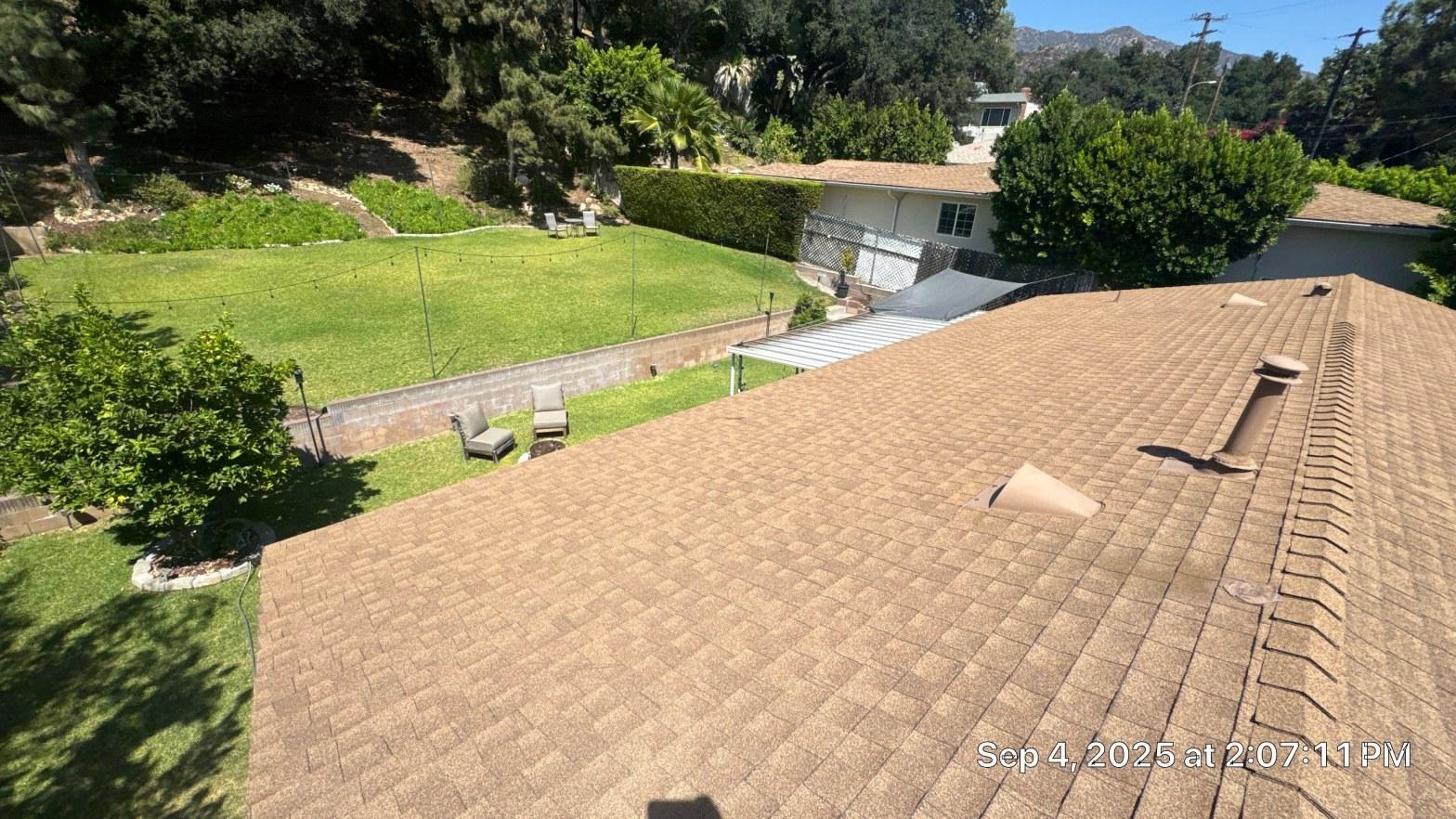
Roof replacement for older homes in California is more involved than a standard job because aging structures often hide damage that only becomes visible once the old roofing is removed. Homes built before 1980 may also have materials that are no longer code-compliant or that create safety risks during removal.
California’s climate adds another layer of complexity. Coastal areas deal with salt-air corrosion. Inland valleys face extreme heat cycles that can reach over 110°F in summer, accelerating material breakdown. Hillside communities contend with fire exposure zones that require specific roofing materials under current state law.
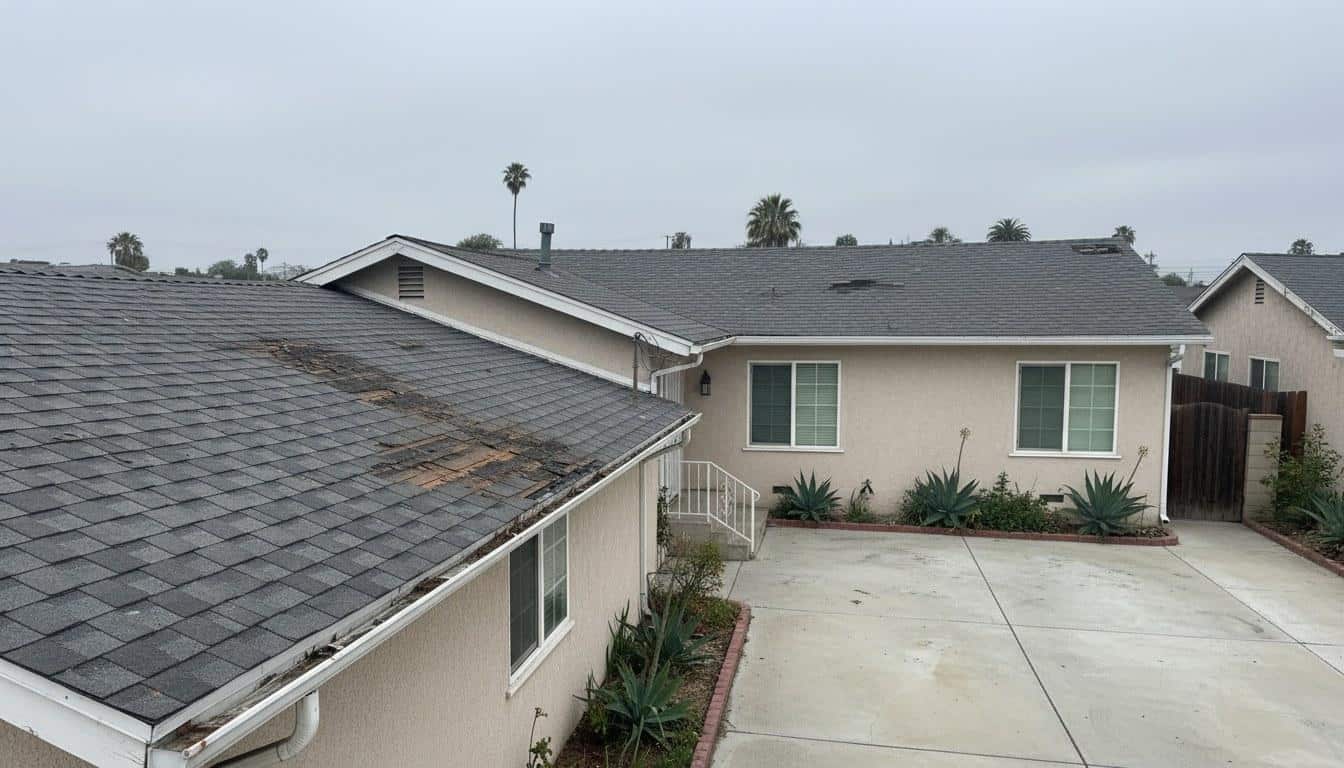
Our crews replace roofing on older California homes regularly and find that roughly 60 percent of pre-1970 homes have at least one layer of deteriorated sheathing beneath the original roofing. That discovery changes the scope and cost of the project, so a thorough inspection before work begins is not optional.
Roughly 60 percent of pre-1970 homes have at least one layer of deteriorated sheathing beneath the original roofing, a discovery that changes the scope and cost of the project.
Older homes also frequently have lower roof pitches, non-standard rafter spacing, or handmade framing that does not match modern lumber dimensions. All of these factors affect how new materials are installed and how long the finished roof will last.
How Do You Know When It Is Time to Replace the Roof on an Older Home?
Most roofing materials have a lifespan of 20 to 30 years, so any California home with an original roof older than 25 years is likely a candidate for full replacement rather than repair. The signs below are the clearest indicators that patching is no longer enough.
- Granule loss on shingles: Asphalt shingles shed granules as they age. Heavy granule buildup in gutters means the protective coating is nearly gone.
- Curling or cupping edges: Shingles that curl upward at the edges or cup in the center have lost flexibility and will not seal properly against rain.
- Sagging deck sections: Soft spots or visible dips in the roof plane point to rotted sheathing or weakened rafters underneath.
- Daylight visible in the attic: Light coming through the roof boards means gaps exist that allow water and pests to enter.
- Persistent leaks after repair: If a roof has been patched two or more times in five years and leaks continue, the underlying structure is likely compromised.
- Moss or algae growth: Sustained moisture retention caused by organic growth accelerates sheathing rot, especially in shaded areas of Southern California hillside homes.
- Failed roof certification: Many lenders and insurers require a current roof certification. A roof that cannot pass inspection is a strong signal that replacement is needed.
A professional inspection will confirm whether repair or full replacement makes more financial sense. In most cases, replacing a roof that is older than 20 years costs less over a 10-year horizon than repeated repairs on deteriorating materials.
What Materials Work Best for Roof Replacement on Older Homes in California?
The best roofing material for an older California home depends on the roof pitch, the local fire zone classification, and the home’s structural load capacity. Asphalt shingles, concrete tile, and cool roof coatings are the most common choices across the state.
Here is a comparison of the most widely used options for older California homes:
| Material | Typical Lifespan | Fire Rating | Weight (per sq ft) | Best For |
|---|---|---|---|---|
| Architectural Asphalt Shingles | 25-30 years | Class A | 2-4 lbs | Most older homes with standard framing |
| Concrete Tile | 40-50 years | Class A | 9-12 lbs | Homes with reinforced framing verified by inspection |
| Metal Roofing (standing seam) | 40-70 years | Class A | 1-3 lbs | Older homes needing lightweight, long-lasting options |
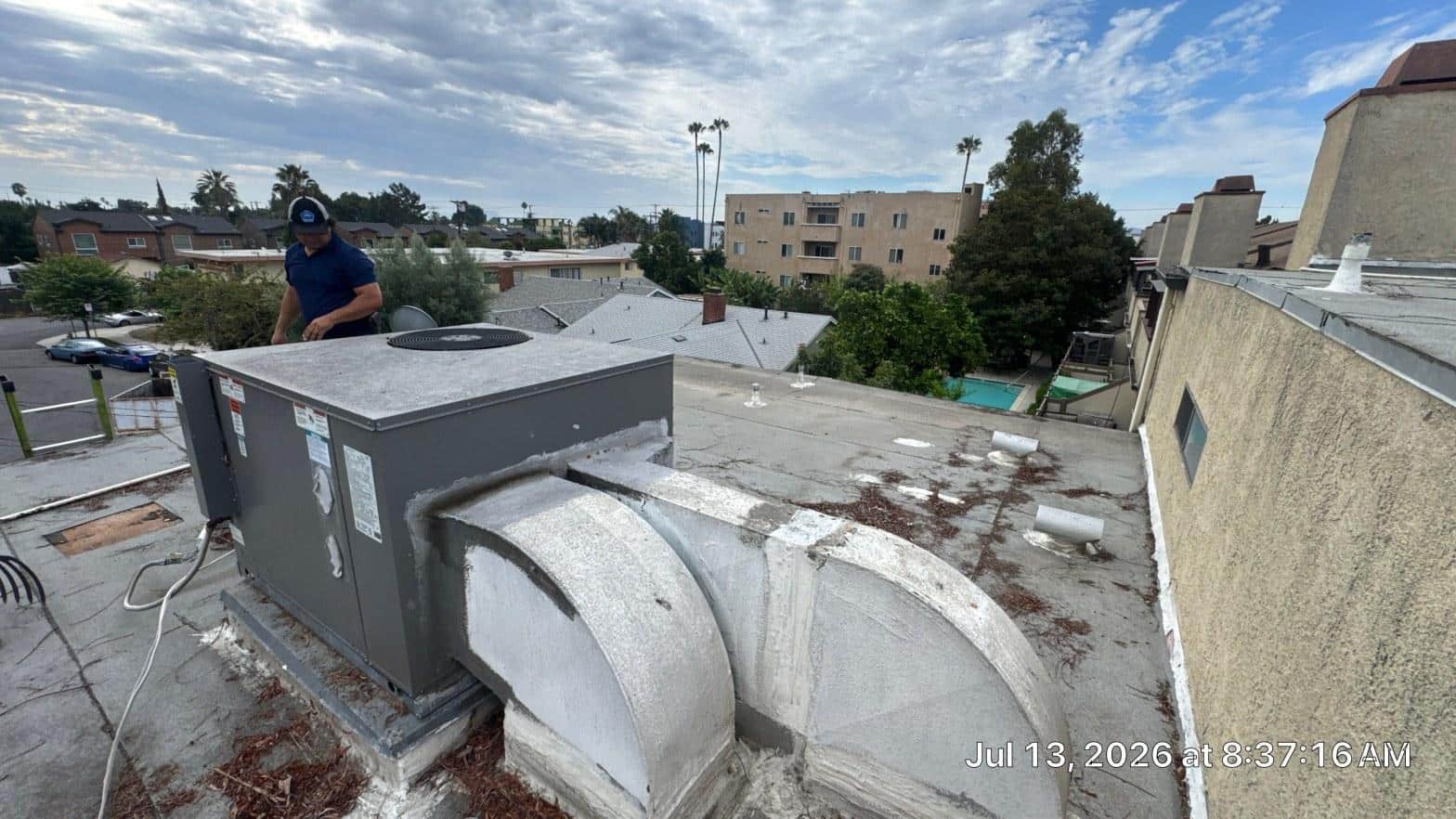
| Cool Roof Coating (flat/low-slope) | 10-20 years per coat | Class A (most products) | Negligible | Mid-century flat-roof homes, garages, additions |
| Torch Down (modified bitumen) | 15-20 years | Class A with cap sheet | 1.5-2 lbs | Flat or low-slope roofs common in 1950s-1970s homes |
Weight is a critical factor for older homes. A pre-1960 home with original framing may not support the load of concrete or clay tile without structural reinforcement. A roofing contractor should assess the existing framing before recommending a heavy material.
California’s Title 24 building energy standards also require that replacement roofing on conditioned spaces meet minimum solar reflectance values in many climate zones. Cool roof products and light-colored shingles rated by the ENERGY STAR program often satisfy these requirements and can reduce attic temperatures by 20 to 30 degrees Fahrenheit during peak summer heat.
How Much Does Roof Replacement for Older Homes in California Cost?
In the California market, roof replacement on an older single-family home typically ranges from $9,000 to $25,000 or more, depending on the size of the home, the material chosen, and the condition of the existing structure. Older homes often push toward the higher end of that range because of the additional work involved.
Several factors move the price up or down on an older home specifically:
- Number of existing layers: California building codes generally limit roofs to two layers of asphalt shingles. If a second layer already exists, a full tear-off is required before new material goes on, adding labor cost.
- Sheathing replacement: Rotted or undersized decking must be replaced. Sheathing replacement typically adds $1 to $3 per square foot to the project.
- Structural repairs: Damaged rafters, ridge boards, or fascia boards discovered during tear-off add cost that is difficult to predict before work begins.
- Steep pitch or complex roofline: Many older California bungalows and craftsman-style homes have steep pitches, multiple valleys, and dormers that increase labor time significantly.
- Permit fees: County permit fees in California commonly range from $200 to $800 for a residential roof replacement, depending on jurisdiction.
- Disposal fees: Hauling away old roofing material adds $300 to $700 in most California markets.
Homeowners who choose ENERGY STAR-rated cool roofing may also qualify for the Inflation Reduction Act federal tax credit, which covers up to 30 percent of the cost of qualifying energy-efficient improvements through 2032. Consult a tax professional to confirm eligibility for your specific project.
Because the condition of the hidden structure is unknown until tear-off begins, the most accurate pricing comes from an on-site inspection. Contact Roof Replacement Inc at (213) 364-3979 to request a custom quote based on your home’s actual condition.
What California Codes and Permits Apply to Older Home Roof Replacements?
Any full roof replacement in California requires a building permit, and older homes must meet current code at the time of replacement, not the code that was in effect when the home was built. This is one of the most important things older home owners need to understand before starting a project.
Key code requirements that commonly affect older California homes include:
- Fire resistance ratings: Homes in State Responsibility Areas (SRAs) and High Fire Hazard Severity Zones must use Class A fire-rated roofing materials. The California Office of the State Fire Marshal publishes updated zone maps. Many older homes in foothill and canyon communities fall into these zones.
- Underlayment standards: Current California Residential Code requires specific underlayment types and installation methods that older homes were not built with. These must be installed during replacement.
- Ventilation requirements: Attic ventilation must meet a minimum ratio of 1 square foot of net free area per 150 square feet of attic floor space. Many older homes are under-ventilated, and a roof replacement is the right time to correct this.
- Sheathing thickness: If the existing sheathing is replaced, it must meet current minimum thickness requirements, typically 7/16 inch or 15/32 inch OSB or plywood.
- Energy code compliance: California’s Title 24 building energy standards require cool roof products in many climate zones for replacement roofs over conditioned space.
A licensed roofing contractor will pull the required permit and schedule the required inspection. Working without a permit on a roof replacement in California can create problems when you sell the home, as unpermitted work often surfaces during escrow.
Contractors performing this work in California must hold a valid license issued by the California Contractors State License Board (CSLB). Always verify a contractor’s license number before signing a contract.
What Should You Expect During the Roof Replacement Process?
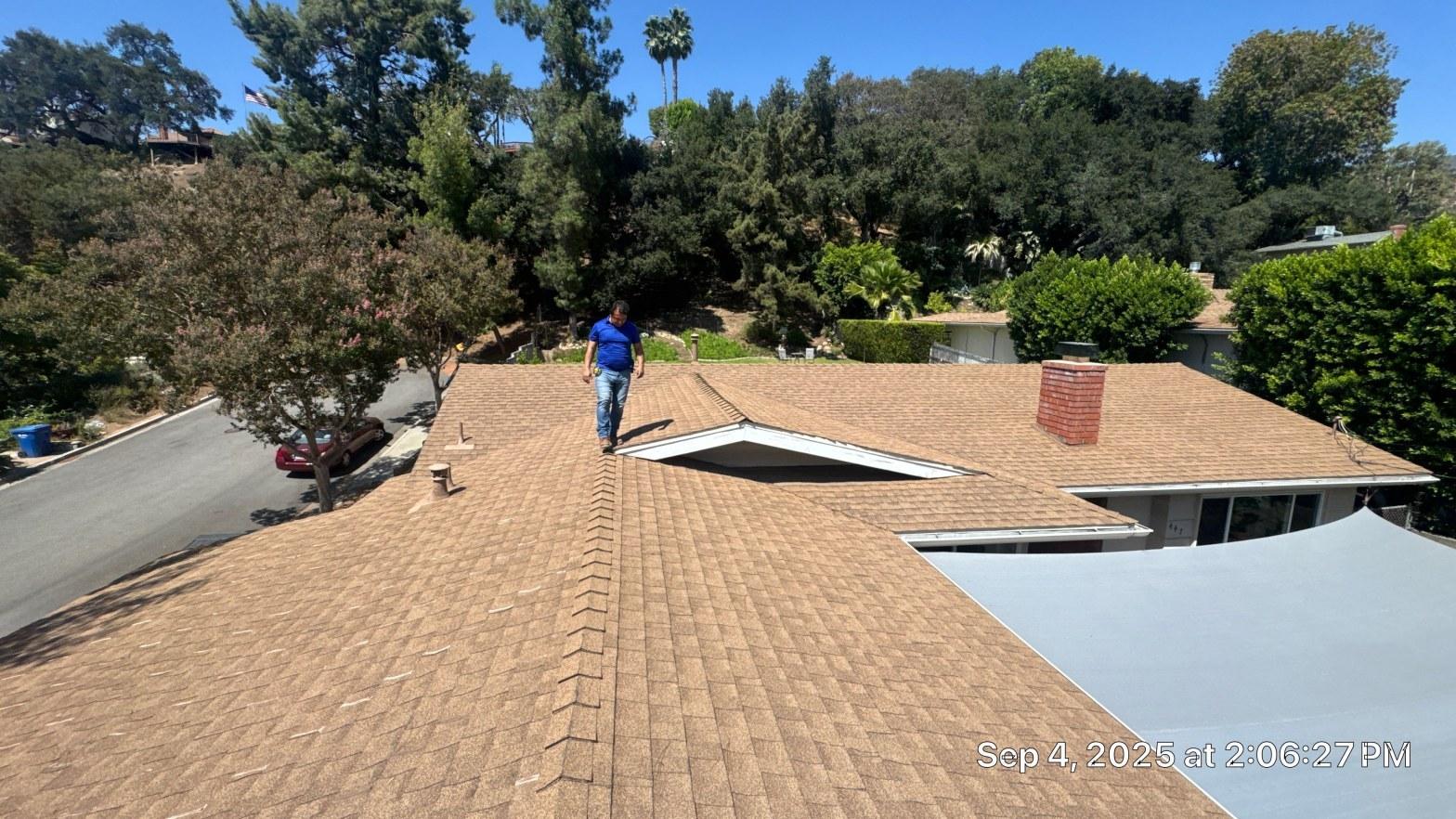
A full roof replacement on an older California home typically takes two to five days for a standard-size residence, though structural repairs or large square footage can extend the timeline. Here is what the process looks like from start to finish.
- Inspection and estimate: A roofing contractor inspects the existing roof, attic, and visible framing. The estimate should detail material costs, labor, disposal, and any known structural concerns.
- Permit application: The contractor submits a permit application to the local building department. Approval times vary by county, from a few days to several weeks.
- Material delivery: Roofing materials are delivered to the site, typically one to two days before work begins. For older homes, extra sheathing panels are often staged on-site in anticipation of deck repairs.
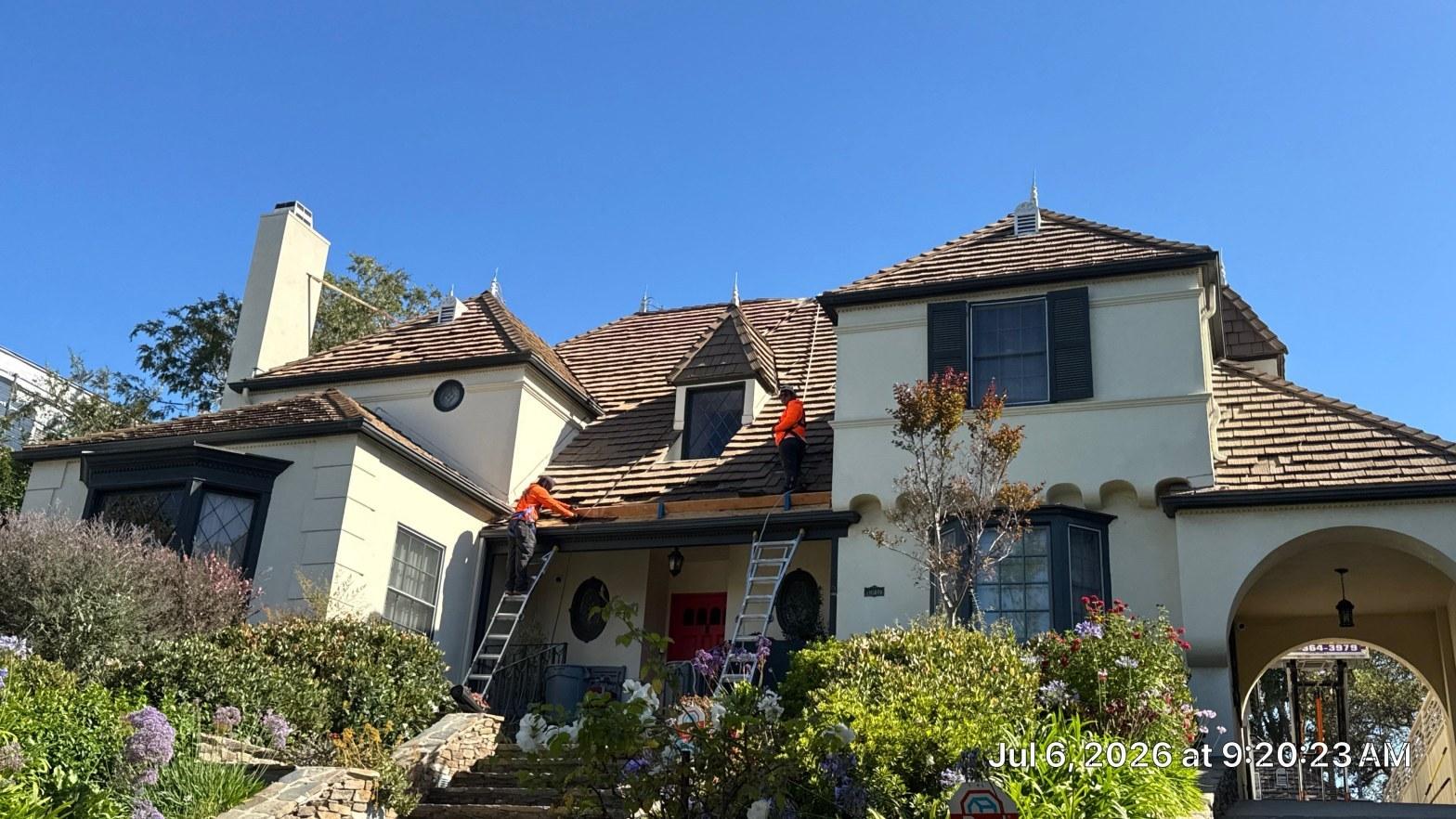
- Tear-off: The existing roofing is removed down to the deck. This is when hidden damage becomes visible. A reputable contractor will document any additional findings and discuss options before proceeding.
- Deck repair: Damaged or rotted sheathing is replaced. Rafter repairs, if needed, are made at this stage.
- Underlayment installation: Code-required underlayment is installed across the entire deck before any finish material goes on.
- New roofing installation: The chosen material is installed according to the manufacturer’s specifications and local code requirements.
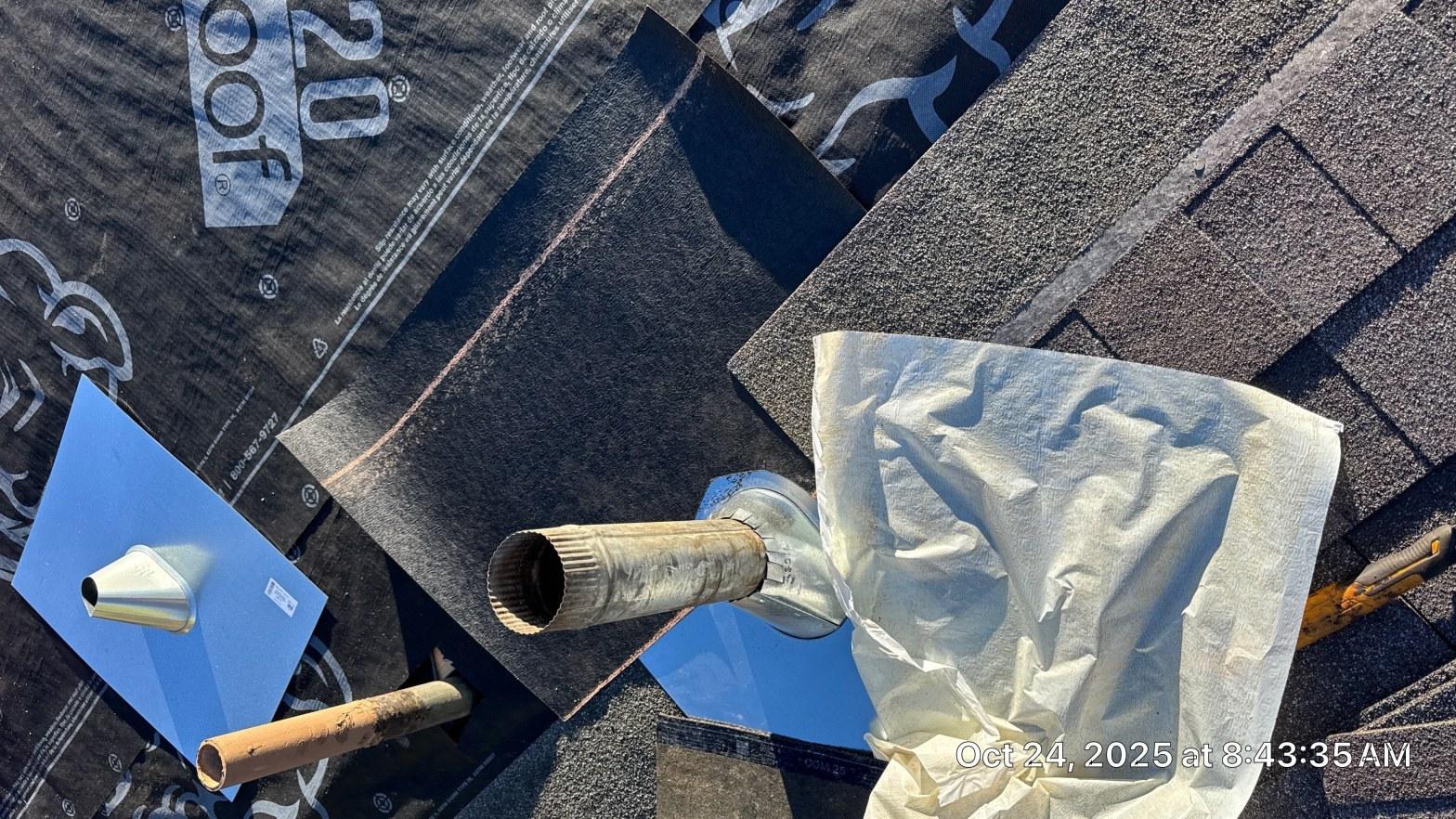
- Flashing and detail work: Valleys, ridges, penetrations, and eaves are flashed and sealed. This step is especially important on older homes where chimneys, skylights, and plumbing vents may have deteriorated flashing.
- Final inspection: The building department inspector reviews the completed work. A passed inspection closes the permit and documents the work in the public record.
- Cleanup and walkthrough: The crew removes debris, performs a magnetic sweep for nails, and walks the homeowner through the completed project.
We see that homeowners are most caught off guard by the deck repair phase. On projects involving homes built before 1960, our crews find sheathing damage that requires board replacement on about 40 percent of jobs, so it is smart to budget a contingency of 10 to 15 percent above the initial estimate.
Get Expert Help with Your Older Home Roof Replacement
Replacing the roof on an aging California home is one of the most significant investments you can make in the property. Getting it right means choosing the correct materials for your climate zone and fire hazard classification, meeting current code requirements, and uncovering any hidden structural issues before they become bigger problems.
Roof Replacement Inc works with homeowners across Southern California on exactly these kinds of projects. Whether your home needs a full tear-off and sheathing replacement, a cool roof coating on a flat mid-century addition, or a torch-down flat roof on an older garage, the team is equipped to handle the full scope of work.
Schedule your inspection and get a written estimate before any work begins. Call Roof Replacement Inc at (213) 364-3979 to book your appointment. A thorough on-site evaluation is the only way to get an accurate picture of what your older home’s roof actually needs.
Explore our full range of roofing services across Southern California.
Frequently Asked Questions
How often do roofs on older California homes need to be replaced?
Most roofing materials last 20 to 30 years under normal conditions, but California's heat cycles, coastal salt air, and wildfire smoke can shorten that lifespan. A home with an original roof older than 25 years should be inspected every one to two years. If the roof has already been repaired multiple times, replacement is usually the more cost-effective path.
How much does it cost to replace the roof on an older home in California?
In the California market, roof replacement on an older single-family home generally ranges from $9,000 to $25,000 or more. Older homes tend to cost more because tear-off, sheathing replacement, and structural repairs are more commonly needed. The only way to get an accurate number is an on-site inspection, since hidden damage is not visible until the old roofing comes off.
Do I need a permit to replace the roof on my older California home?
Yes. A building permit is required for a full roof replacement in California, and the work must meet current building codes even if the home was built decades ago. Your roofing contractor should pull the permit before work begins. Unpermitted roof work can create problems during a future home sale.
Can I put new shingles over the existing roof on my older home?
California building codes generally allow up to two layers of asphalt shingles. If your older home already has two layers, a full tear-off is required before new material can be installed. Even when a second layer is technically allowed, a tear-off is often recommended on older homes so the deck can be inspected and repaired before new roofing goes on.
What fire-rated roofing do I need if my older California home is in a fire hazard zone?
Homes in High Fire Hazard Severity Zones or State Responsibility Areas in California must use Class A fire-rated roofing materials. This includes most architectural asphalt shingles, concrete tile, metal roofing, and many cool roof products. Your roofing contractor can confirm your property's fire zone classification and recommend compliant materials before the project begins.
Related Articles





What Our Clients Say











Roof Replacement Inc. offers professional, high-quality work, guaranteed (call for details); ensuring all clients projects meet all code and design requirements. We are dedicated to exceptional customer service and will strive to ensure you with the highest quality roofing services. Roof Replacement Inc. offers lifetime warranty (call for details) on all of our workmanship to ensure the quality of our work. With over 40 years of combined experience within the roofing and construction industry, Roof Replacement Inc. has grown and developed in all areas of roofing construction, including roof inspections. As a leading residential and commercial roofing company in LA, we have hundreds of references from previous clients, so rest assured, that your roofing job will be done right the first time. Replacing an old roof can help add curb appeal and will increase the perceived value of your home. First impressions are vital when selling your home, especially when your roof takes up more than half of the exterior of your residence or business. Not only is the return of investment on a new roof attractive for potential buyers, but can be as beneficial as remodeling the kitchen or bathrooms within your residence.

