Most California homeowners don't realize a roofing permit is required for full replacements and some repairs until they're already mid-project. This guide breaks down exactly when you need one, what it costs, and how to stay on the right side of state and local codes in 2026.
Do You Need a Roofing Permit in California?
In California, a permit is required for any full roof replacement and for most structural or deck-level repairs. Simple like-for-like shingle patching on a small area may be exempt, but the threshold varies by county and city. The California Building Code sets the baseline, and local jurisdictions layer their own rules on top of it.
The short answer for most homeowners: if more than a handful of shingles or a small section of material is being replaced, assume a permit is needed and confirm with your local building department. Getting that confirmation takes a single phone call or an online lookup, and it can save you thousands of dollars in penalties later.
California’s building code framework is updated on a roughly three-year cycle. The California Building Standards Commission adopted the 2022 California Building Code, which remained the enforced standard heading into 2026. Under that code, roofing work that alters the roof deck, structural sheathing, or drainage path is classified as a building alteration and triggers the permit requirement.
What Does This Roofing Permit California Guide Cover?
This roofing permit California guide walks through the specific work types that require permits, the cost ranges you can expect, the step-by-step inspection process, and the real consequences of skipping a permit. It also explains how a qualified roofing contractor manages the permit process so you don’t have to navigate the building department alone.
Understanding permit rules before you hire a roof replacement company protects you legally and financially. It also helps you ask the right questions when comparing roofing contractors.
Which Roofing Projects Typically Require a Permit?
- Full roof replacement: Removing and replacing all existing roofing material down to the deck almost always requires a permit in every California county.
- Structural deck repair: Replacing rotted or damaged sheathing, rafters, or trusses is structural work and always needs a permit.
- Cool roof installation: Installing a Title 24-compliant cool roof on a conditioned space triggers both a building permit and a Title 24 energy compliance review.
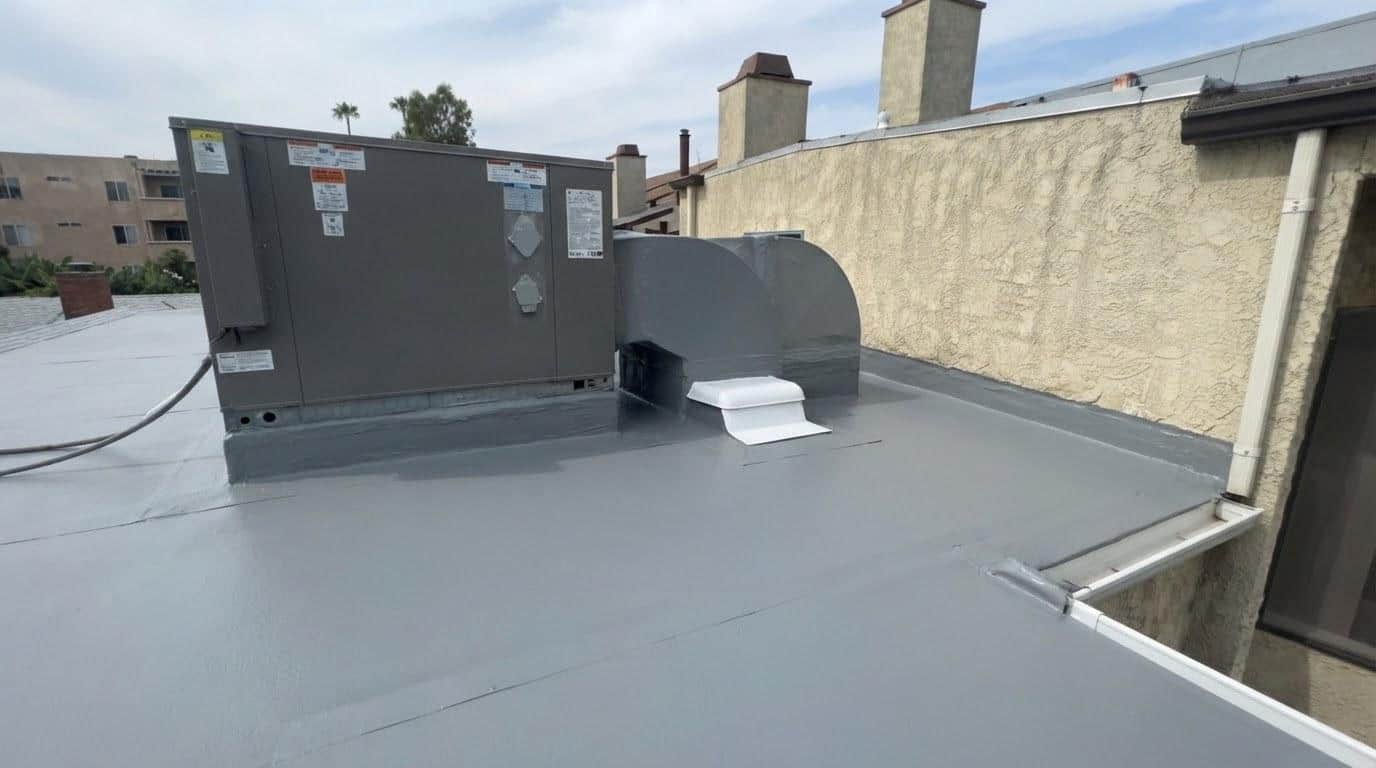
- Torch-down or modified bitumen flat roofing: Open-flame application methods require a permit and often a fire-safety inspection.
- Adding a new drainage system: Rerouting gutters or adding roof drains connected to the building’s plumbing may require a separate plumbing permit.
- Solar-ready roofing prep: Structural reinforcement for future solar panels is a permitted alteration under California law.
What Usually Does NOT Require a Permit?
- Replacing fewer than a set number of shingles (the threshold is typically 10 to 25 square feet, but confirm locally).
- Applying roof coating over an existing intact surface without altering the deck or drainage.
- Minor flashing repairs that do not affect the structural assembly.
- Gutter cleaning, gutter guard installation, or downspout repositioning that does not alter the roofline.
How Much Does a Roofing Permit Cost in California?
Roofing permit fees in California typically range from $150 to $600 for a standard residential replacement, though complex projects or large homes in higher-cost jurisdictions can push fees above $1,000. Fees are set by each local building department and are usually calculated as a percentage of the project’s valuation or as a flat fee per square of roofing.
Roofing permit fees in California typically range from $150 to $600 for a standard residential replacement, though complex projects can push fees above $1,000.
Our crews pull permits across Southern California and see permit fees land most often in the $200 to $450 range for a standard single-family replacement, with the higher end coming from jurisdictions that charge plan-check fees on top of the base permit fee.
Several factors move the final permit cost:
- Project valuation: Larger or more expensive roofs carry higher permit fees because many jurisdictions base the fee on total project value.
- Plan check fees: Some cities require a structural plan review for roofs over a certain pitch or span, adding $75 to $300 to the base fee.
- Energy compliance documentation: California’s Title 24 building energy standards require a CF1R or CF2R form for cool roof installations, which some jurisdictions charge separately to review.
- Re-inspection fees: If work fails an inspection, most departments charge $50 to $150 per re-inspection visit.
- Expedited processing: Some counties offer same-week or next-day permit processing for an additional fee, typically $100 to $250.
| Project Type | Permit Typically Required? | Typical Fee Range (CA) | Inspection Required? |
|---|---|---|---|
| Full shingle replacement | Yes | $150 to $500 | Yes, final inspection |
| Flat/torch-down roof replacement | Yes | $200 to $600 | Yes, mid and final |
| Structural deck repair | Yes | $200 to $700 | Yes, framing and final |
| Cool roof installation (Title 24) | Yes | $250 to $800 | Yes, energy compliance |
| Minor shingle patch (small area) | Usually No | N/A | No |
| Roof coating only | Usually No | N/A | No |
Always request a custom quote that itemizes the permit fee separately from labor and materials. Call (213) 364-3979 to get an itemized estimate for your project.
What Is the Permit and Inspection Process Step by Step?
The California roofing permit process moves through five main stages: application, plan review, permit issuance, inspections during construction, and final sign-off. Most residential roofing permits in California are issued within 1 to 10 business days for straightforward projects, though complex or high-fire-hazard-zone projects can take 2 to 4 weeks.
- Application submission: Your contractor submits a permit application to the local building department, listing the scope of work, materials, and project valuation. Many California counties now accept online submissions, cutting processing time by 2 to 3 days.
- Plan review: For structural or energy-compliance work, a plan checker reviews the submitted documents. Simple re-roofing projects often qualify for over-the-counter approval on the same day.
- Permit issuance: Once approved, the permit card must be kept on-site and visible during all work. California law requires the permit to be posted before any work begins.
- Mid-construction inspection (if required): For structural deck work or torch-down applications, an inspector visits while the deck is exposed or before the final layer goes down. This inspection must be scheduled at least 24 to 48 hours in advance in most jurisdictions.
- Final inspection: After the roofing is complete, an inspector verifies that the finished work matches the permit scope, meets code, and passes any energy compliance requirements under California’s Title 24 building energy standards.
- Certificate of completion: The building department issues a final sign-off, which becomes part of your property’s permanent record. This document is often requested by buyers, lenders, and insurance companies.
In high-fire-hazard severity zones, which cover large portions of Southern California, the California Department of Forestry and Fire Protection (CAL FIRE) may require that roofing materials meet a Class A fire rating. The California Office of the State Fire Marshal maintains the list of approved roofing materials for these zones. Choosing a non-listed material can result in a failed inspection and mandatory tear-off.
What Happens If You Skip the Permit?
Skipping a required roofing permit in California can result in stop-work orders, fines of $500 to several thousand dollars, mandatory demolition of completed work, and serious complications when you sell or refinance your home. The risk is not theoretical. California building departments conduct aerial and satellite audits of residential properties in many counties, and unpermitted roofing work is one of the most commonly flagged violations.
Skipping a required roofing permit in California can result in fines of $500 to several thousand dollars and mandatory demolition of completed work.
Here are the most common consequences homeowners face:
- Stop-work orders: An inspector can halt your project mid-installation, leaving your home exposed to weather until the permit is resolved.
- Double permit fees: Most California jurisdictions charge double the standard permit fee when a permit is pulled after work has already begun, as of the 2022 code cycle.
- Retroactive inspections: Inspectors may require portions of the finished roof to be opened up so they can verify what is underneath, adding significant labor cost.
- Home sale complications: Title companies and lenders routinely check for open or unpermitted work. An unpermitted roof can delay or kill a sale, or require the seller to escrow funds to cover remediation.
- Insurance claim denials: Some homeowners insurance policies exclude damage related to unpermitted construction. A roof installed without a permit could be grounds for a denied claim after a storm or fire.
- Liability exposure: If an unpermitted roof contributes to a water intrusion or structural failure, the homeowner may bear full liability because the work was never inspected or approved.
Across our service calls in Southern California, we see roughly 1 in 5 homeowners who contact us after a previous contractor did the work without pulling a permit. Resolving those situations typically costs 30 to 60 percent more than doing it correctly the first time, because the remediation process involves retroactive permitting, partial demolition, and re-inspection fees on top of any new work.
How Do Roofing Contractors Handle the Permit Process?
A licensed roofing contractor pulls the permit on your behalf, coordinates all inspections, and is legally responsible for ensuring the work passes final sign-off. In California, a contractor must hold a valid C-39 Roofing license issued by the California Contractors State License Board (CSLB) to legally perform roofing work and pull roofing permits.
When you hire a qualified roof replacement company, the permit process should be nearly invisible to you as a homeowner. Here is what a professional contractor handles:
- Determining the correct permit type and scope for your specific project.
- Completing and submitting all application paperwork, including energy compliance forms for Title 24 projects.
- Paying the permit fee upfront (typically reimbursed through the project invoice).
- Scheduling and being present for all required inspections.
- Correcting any deficiencies noted by the inspector before final sign-off.
- Providing you with the final permit card or certificate of completion for your records.
Before hiring any roofing contractor, verify their CSLB license number at cslb.ca.gov. A valid C-39 license confirms the contractor is licensed by the California Contractors State License Board (CSLB), bonded, and authorized to pull permits in your jurisdiction. Any contractor who suggests skipping the permit to save money or speed up the timeline is a red flag. That shortcut transfers all legal and financial risk to you as the property owner.
Questions to Ask Before Signing a Roofing Contract
- Will you pull the permit, and is the permit fee included in this estimate?
- What is your CSLB license number, and can I verify it?
- How many inspections are required for this project, and who schedules them?
- Will the finished work comply with California’s Title 24 building energy standards?
- If the project is in a high-fire-hazard zone, are the specified materials on the state fire marshal’s approved list?
- What happens if the inspector requests corrections?
Ready to Start Your Roofing Project the Right Way?
Pulling the right permit before work begins is the single most important step in protecting your investment and staying compliant with California law. Every project Roof Replacement Inc handles includes proper permit management from application through final inspection, so you never have to worry about unpermitted work showing up during a sale or insurance claim.
Schedule your inspection or request a detailed written estimate by calling (213) 364-3979. Roof Replacement Inc serves homeowners across Southern California and handles the full permit process as part of every roofing project. Get your quote today and start your project with confidence.
Explore our full range of roofing services across Southern California.
Frequently Asked Questions
Do I need a permit to replace my roof in California?
Yes, a permit is required for most full roof replacements in California under the California Building Code. The permit is pulled by your licensed C-39 roofing contractor before work begins. Minor patch repairs covering a very small area may be exempt, but you should confirm the threshold with your local building department before assuming no permit is needed.
How long does it take to get a roofing permit in California?
Most straightforward residential roofing permits are issued within 1 to 10 business days in California. Simple re-roofing projects often qualify for same-day or over-the-counter approval at the building department counter. Projects in high-fire-hazard zones or those requiring structural plan review can take 2 to 4 weeks to receive approval.
What happens if a roof is replaced without a permit in California?
Skipping a required permit can result in stop-work orders, fines of $500 or more, mandatory tear-out of completed work, and complications when selling or refinancing your home. Some homeowners insurance policies can deny claims related to unpermitted construction. It is always cheaper and safer to pull the permit before work begins.
Who is responsible for pulling the roofing permit, me or my contractor?
In California, the licensed roofing contractor typically pulls the permit on the homeowner's behalf. A contractor holding a valid C-39 license from the California Contractors State License Board (CSLB) is authorized to apply for and manage roofing permits. You should confirm that permit management is included in your contract before work starts.
Does a new roof in California have to meet Title 24 energy standards?
Yes, cool roof installations and certain full replacements on conditioned living spaces must comply with California's Title 24 building energy standards. This typically means the roofing material must meet a minimum solar reflectance and thermal emittance rating. Your contractor is responsible for submitting the required compliance documentation to the building department as part of the permit application.
Related Articles




What Our Clients Say








Roof Replacement Inc. offers professional, high-quality work, guaranteed (call for details); ensuring all clients projects meet all code and design requirements. We are dedicated to exceptional customer service and will strive to ensure you with the highest quality roofing services. Roof Replacement Inc. offers lifetime warranty (call for details) on all of our workmanship to ensure the quality of our work. With over 40 years of combined experience within the roofing and construction industry, Roof Replacement Inc. has grown and developed in all areas of roofing construction, including roof inspections. As a leading residential and commercial roofing company in LA, we have hundreds of references from previous clients, so rest assured, that your roofing job will be done right the first time. Replacing an old roof can help add curb appeal and will increase the perceived value of your home. First impressions are vital when selling your home, especially when your roof takes up more than half of the exterior of your residence or business. Not only is the return of investment on a new roof attractive for potential buyers, but can be as beneficial as remodeling the kitchen or bathrooms within your residence.

