Torch-down roofing is a durable, heat-welded flat roof system used on low-slope homes and commercial buildings. This guide covers how it works, typical costs, lifespan, and when replacement makes more sense than repair.
What Is Torch-Down Roofing and How Does It Work?
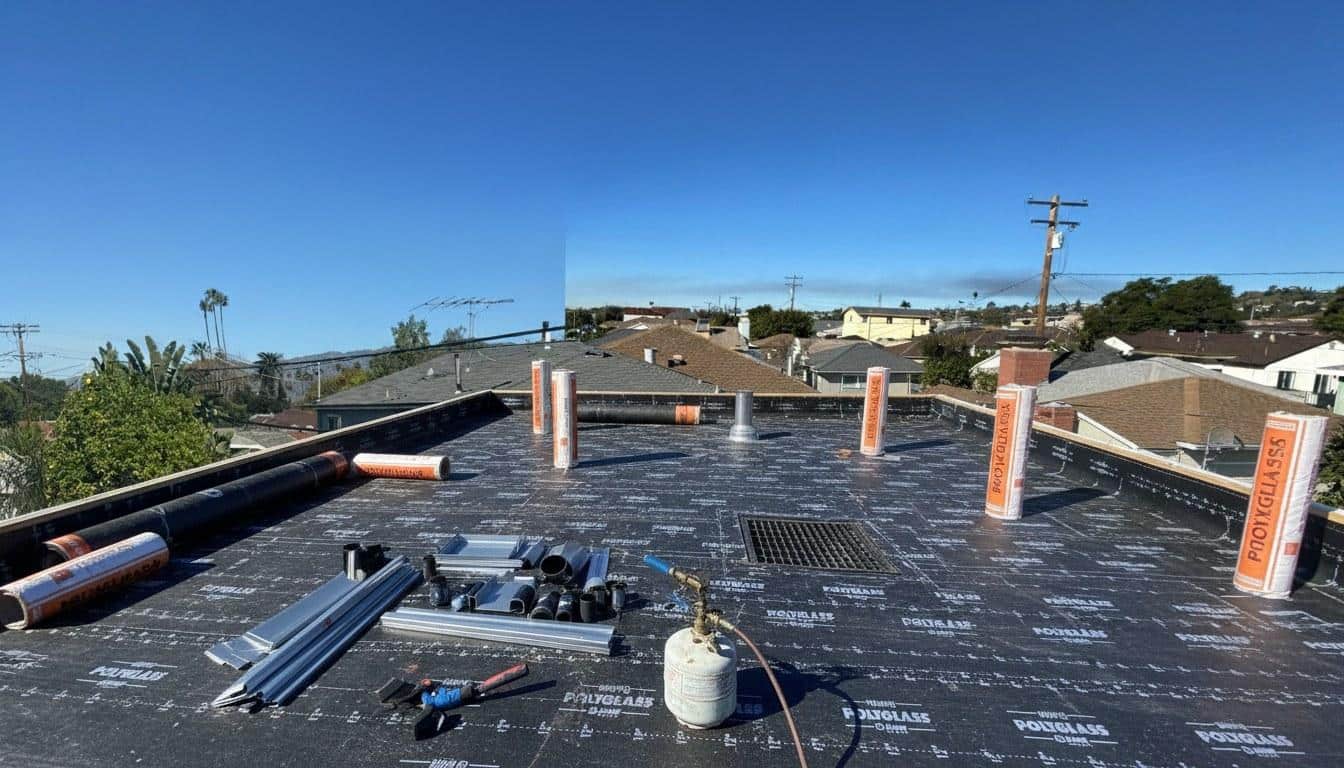
Torch-down roofing is a modified bitumen (mod-bit) system where sheets of asphalt-based membrane are heat-welded to the roof deck using a propane torch. The heat melts the underside of each sheet, bonding it tightly to the layer below without adhesives or mechanical fasteners. This creates a seamless, waterproof surface well suited to flat and low-slope roofs that collect water rather than shedding it like a pitched roof would.
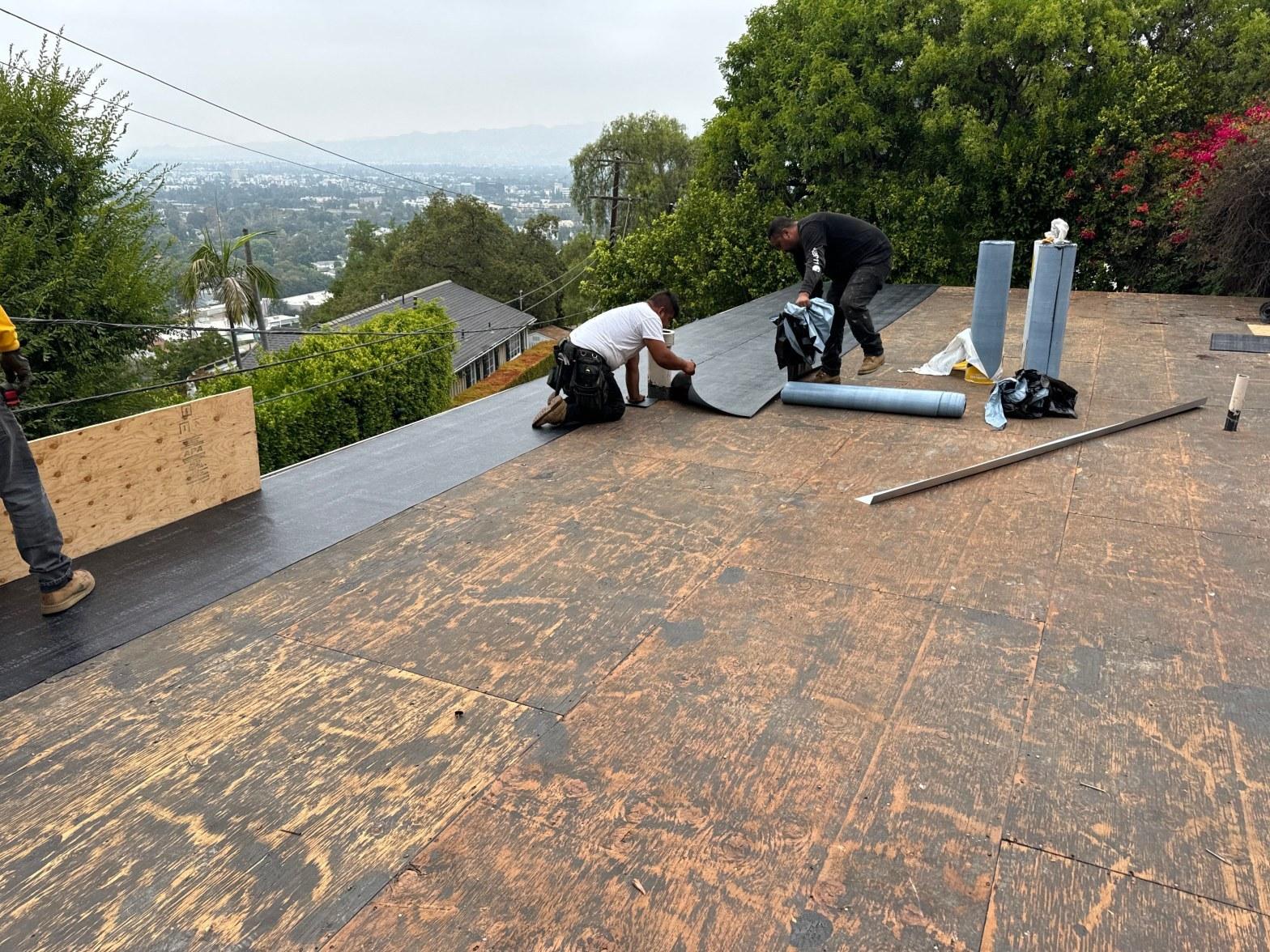
The system gets its name from the installation method. A trained roofer slowly moves a torch across the membrane as it unrolls, fusing each seam and overlap. When done correctly, the result is a continuous, monolithic barrier with no gaps for water to penetrate.
Torch-down is one of the most common flat roof systems used in residential roofing across Southern California and the broader state. It works especially well on low-slope roofs — those with a pitch between 1/4:12 and 2:12 — where traditional asphalt shingles cannot perform reliably.
What Are the Layers in a Torch-Down Roof System?
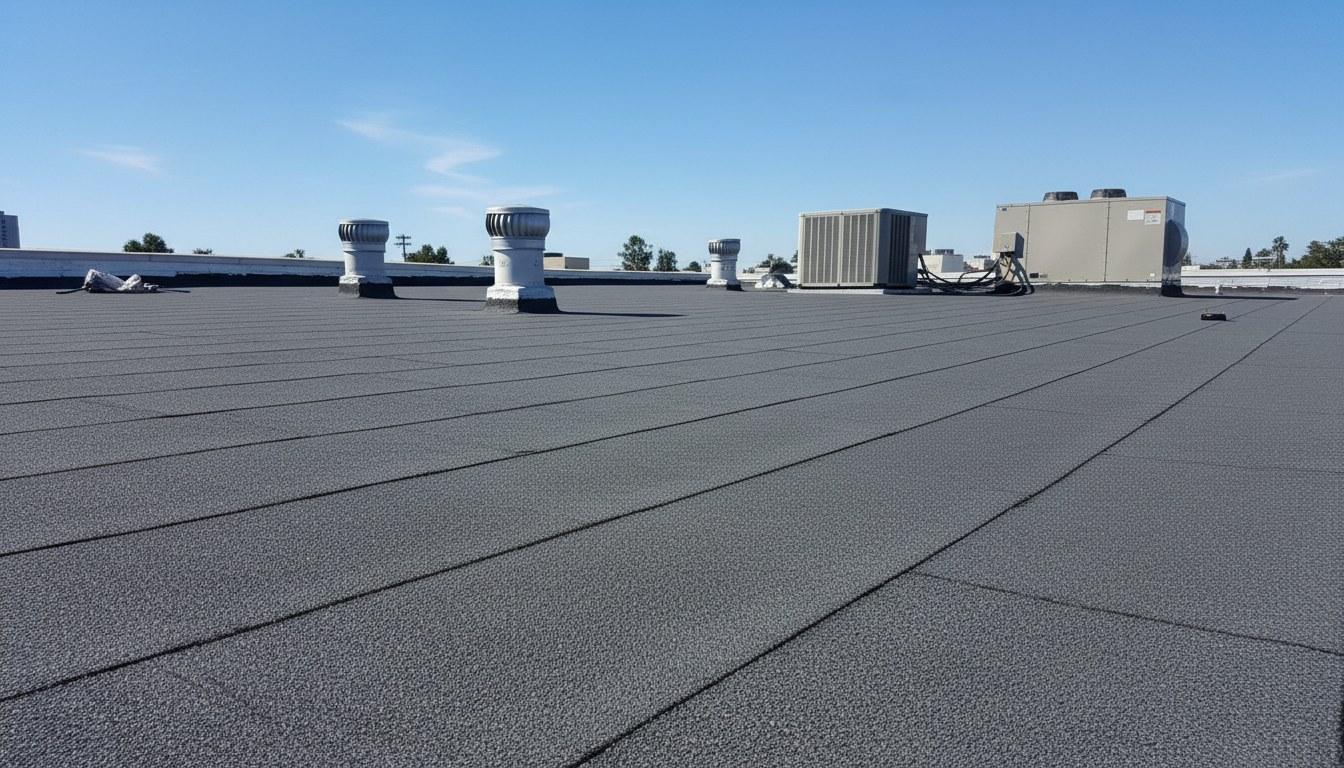
A standard torch-down system consists of two or three layers: a base sheet, sometimes an intermediate ply, and a cap sheet with a granulated or smooth surface finish. Each layer adds thickness, strength, and redundancy to the waterproofing system.
Here is how each layer functions:
- Base sheet: The first layer is mechanically fastened or adhered directly to the roof deck. It provides the foundation for the system and acts as the first line of moisture defense.
- Intermediate ply (optional): On roofs that face heavy UV exposure or foot traffic, a second mid-layer adds thickness and puncture resistance. This is common on commercial roofing projects in California.
- Cap sheet: The top layer is torch-welded and finished with either mineral granules (which reflect UV rays and add traction) or a smooth surface coated with reflective paint. Granulated cap sheets are the most common choice for residential roofing.
- Flashings: Metal or membrane flashings seal all penetrations — pipes, vents, HVAC curbs, and parapet walls. Flashing failure is the leading cause of leaks in an otherwise sound torch-down system.
The total installed thickness of a two-layer system typically runs between 3 and 5 millimeters. A three-layer system can reach 6 to 8 millimeters, providing noticeably better impact and puncture resistance.
Modified bitumen membranes are reinforced with either fiberglass or polyester mats. Polyester-reinforced sheets handle building movement better — an important quality in California, where seismic activity can stress roof decks and cause cracking in more rigid systems.
Polyester-reinforced sheets handle building movement better — an important quality in California, where seismic activity can stress roof decks and cause cracking in more rigid systems.
How Much Does Torch-Down Roofing Cost in California?
In the California market, torch-down roofing projects typically range from $4 to $8 per square foot for a standard two-layer installation, with total project costs commonly falling between $6,000 and $18,000 depending on roof size and complexity. A three-layer system or a roof with many penetrations and custom flashings will land at the higher end of that range.
Our crews handle torch-down jobs across the region year-round. On roofs with four or more penetrations — skylights, HVAC curbs, plumbing vents — we typically spend 30 to 40 percent more labor time on flashing work alone compared to a clean, open deck.
Several factors move the final price:
- Roof size: Priced per square (100 sq ft), larger roofs lower the per-square cost slightly due to setup efficiency.
- Number of layers to remove: California building codes generally allow no more than two roofing layers on a structure. If a tear-off is required, expect to add $1 to $2 per square foot.
- Deck condition: Rotted or soft decking must be replaced before new membrane goes down. Plywood sheathing repair typically costs $60 to $100 per sheet.
- Flashing complexity: Parapet walls, skylights, and multiple HVAC curbs each add labor and material cost.
- Reflective coating or cool-roof finish: California’s Title 24 building energy standards require certain low-slope roofs to meet minimum solar reflectance values. A qualifying cool-roof cap sheet or coating adds cost but may qualify for rebates through programs like TECH Clean California.
Always request a written, itemized quote before any work begins. Prices vary by contractor, material grade, and current supply costs. Contact Roof Replacement Inc for a custom quote specific to your roof’s size and condition.
How Long Does a Torch-Down Roof Last?
A well-installed two-layer torch-down system typically lasts 15 to 20 years in California’s climate. A three-layer system with a granulated cap sheet and proper maintenance can reach 20 to 25 years. The key variables are installation quality, UV exposure, foot traffic, and how consistently the roof is inspected and maintained.
Southern California’s climate is both an advantage and a challenge for flat roofs. The low annual rainfall reduces moisture stress, but intense UV radiation — especially in inland areas — degrades bitumen faster than in cooler states. Roofs that face south or southwest with no shade cover tend to age faster than north-facing or shaded surfaces.
Maintenance practices that extend service life include:
- Annual inspections, ideally in spring before the hot season and in fall before any rain
- Clearing drains and scuppers of debris to prevent ponding water
- Recoating smooth-surface cap sheets with a reflective elastomeric coating every 5 to 7 years
- Resealing flashings at penetrations as soon as cracking or separation is visible
- Keeping HVAC technicians from dragging equipment across the membrane without protection boards
The ENERGY STAR program certifies certain reflective roofing products that can reduce rooftop temperatures by up to 50°F compared to standard dark surfaces, which directly reduces thermal cycling stress on the membrane and can extend its useful life.
What Are the Warning Signs That You Need a Replacement?
You likely need a replacement — not just a repair — when your torch-down roof shows widespread blistering, multiple active leaks in different areas, or standing water that does not drain within 48 hours after rain. Isolated problems can often be patched, but systemic failure means the membrane has reached the end of its useful life.
Watch for these specific warning signs:
- Blistering or bubbling: Raised bubbles in the membrane indicate trapped moisture or air between layers. Small blisters can be cut and patched; widespread blistering signals delamination across the system.
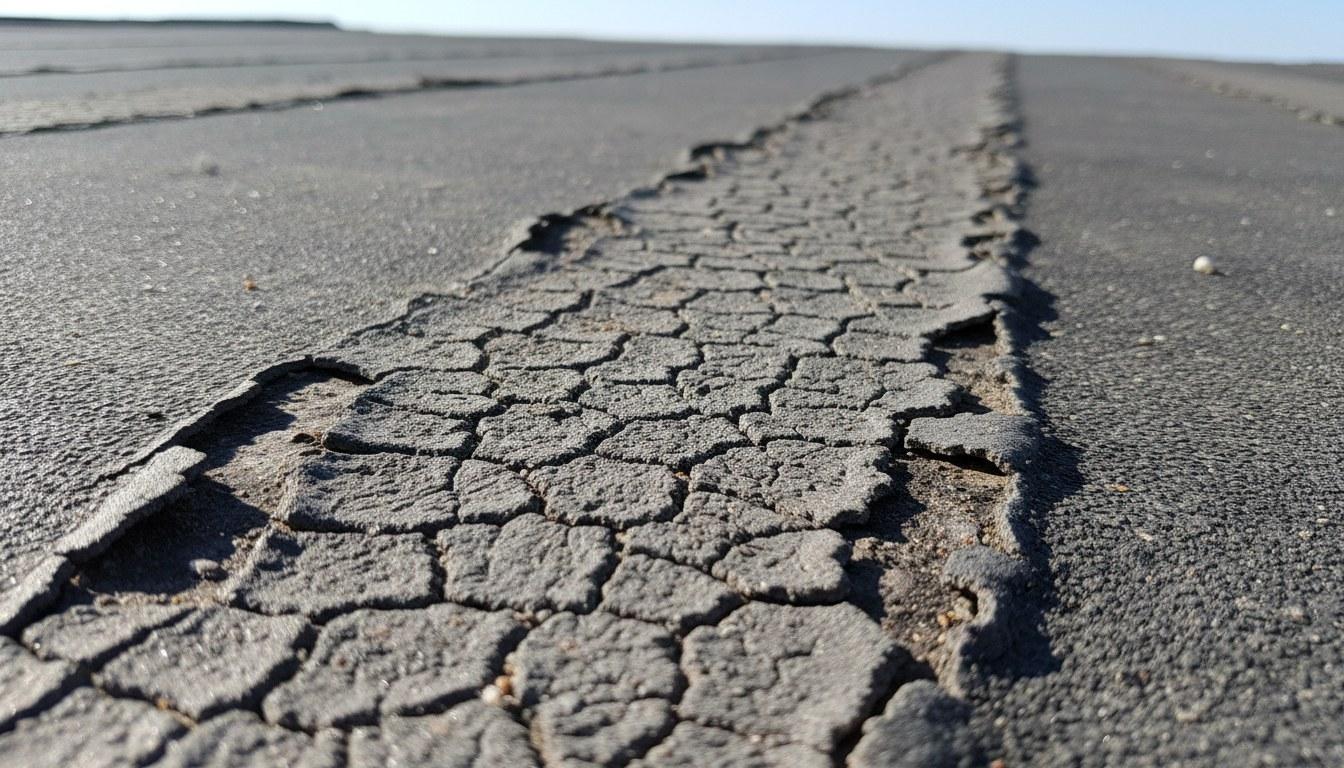
- Alligatoring: A cracked, scaly surface pattern means the bitumen has dried out and lost flexibility. This is a sign of advanced UV degradation and is not repairable by coating alone.
- Ponding water: Water that sits for more than 48 hours accelerates membrane breakdown and can cause structural deck damage. Persistent ponding often means the roof deck has sagged or drains are inadequate.
- Multiple active leaks: One leak in a flashing is a repair. Leaks appearing in three or more separate locations after a single rain event suggest the membrane itself is failing.
- Exposed base sheet: If the granulated cap sheet has worn away in large patches, the system has lost its UV protection and water resistance.
- Roof age over 18 years: Even a roof that looks acceptable from the ground is approaching the end of its statistical service life and should be evaluated by a professional before problems appear inside the building.
Repairs on a roof older than 15 years often cost nearly as much per square foot as a full replacement, without the warranty or long-term protection a new system provides. A licensed roofing contractor can tell you whether the existing membrane has enough life left to justify patching.
Repairs on a roof older than 15 years often cost nearly as much per square foot as a full replacement, without the warranty or long-term protection a new system provides.
Torch-Down vs. Other Flat Roof Options: Which Is Right for You?
Torch-down modified bitumen is one of three main flat roofing systems used in California residential and light commercial construction. The others are TPO (thermoplastic polyolefin) and EPDM (ethylene propylene diene monomer rubber). Each has real strengths, and the right choice depends on your roof’s slope, foot traffic, sun exposure, and budget.
Here is how the three systems compare across the factors that matter most to California property owners:
| Factor | Torch-Down (Mod-Bit) | TPO | EPDM |
|---|---|---|---|
| Typical lifespan | 15–25 years | 15–20 years | 20–25 years |
| Installed cost (CA market) | $4–$8 per sq ft | $5–$9 per sq ft | $4–$7 per sq ft |
| UV and heat resistance | Good (granulated cap sheet) | Excellent (white reflective surface) | Moderate (requires coating) |
| Foot traffic tolerance | Good | Moderate | Low to moderate |
| Title 24 cool-roof compliance | Yes, with qualifying cap sheet | Yes, standard white membrane | Requires reflective coating |
| Repairability | Excellent — patches bond well | Good — heat-welded patches | Good — adhesive patches |
| Open-flame installation risk | Requires fire precautions | None (heat-welded seams) | None (adhesive or ballasted) |
Torch-down is often the preferred choice for residential roofing on buildings where foot traffic is a factor — mechanical equipment access, rooftop decks, or multi-unit properties where maintenance crews walk the roof regularly. Its granulated surface provides traction and puncture resistance that smooth-surface single-ply membranes cannot match.
For roofs that must meet California’s Title 24 cool-roof requirements — which apply to most low-slope re-roofing projects on conditioned spaces as of the 2022 Title 24 update — a white or light-colored granulated cap sheet or a field-applied reflective coating can bring a torch-down system into compliance without switching to a different membrane type.
Roof Replacement Inc installs all three systems and can help you evaluate which one fits your building’s specific slope, exposure, and code requirements. We see roughly equal demand for torch-down and TPO across the Southern California market, with torch-down still dominating on older residential stock built before 2000.
Ready to Replace or Install a Torch-Down Roof?
Schedule your roof evaluation before a small problem becomes a structural one. Torch-down systems are reliable and cost-effective, but they do have a defined service life — and waiting until active leaks appear inside the building always costs more than a planned replacement.
When choosing a roofing company, verify that the contractor is licensed by the California Contractors State License Board (CSLB) and carries both general liability and workers’ compensation insurance. A licensed contractor will pull the required permit for your re-roofing project, ensuring the work is inspected and code-compliant under California’s Title 24 building energy standards.
Roof Replacement Inc serves homeowners and property owners across Southern California, providing full flat roof installations, tear-offs, and repairs on torch-down, TPO, and EPDM systems. Get a written, itemized quote before any work begins.
Call (213) 364-3979 to schedule your inspection or request a free estimate. Same-week appointments are available across the region for both repair assessments and full replacement consultations.
Explore our full range of roofing services across Southern California.
Frequently Asked Questions
How long does a torch-down roof usually last in Southern California?
A two-layer torch-down system typically lasts 15 to 20 years in Southern California's climate. A three-layer system with a granulated cap sheet and regular maintenance can reach 20 to 25 years. Intense UV exposure in inland areas and heavy foot traffic from rooftop HVAC access can shorten that lifespan if the roof is not maintained annually.
Is torch-down roofing good for a flat roof in California?
Yes, torch-down modified bitumen is one of the most widely used flat roofing systems in California for residential and light commercial buildings. It performs well in hot, dry climates, tolerates foot traffic better than single-ply membranes, and can be installed with a granulated or reflective cap sheet to meet California's Title 24 cool-roof requirements.
How much does it cost to replace a flat torch-down roof?
In the California market, torch-down roof replacement typically ranges from $4 to $8 per square foot for a standard two-layer installation, with most residential projects totaling between $6,000 and $18,000. The final cost depends on roof size, the number of layers being removed, deck condition, and the complexity of flashings around vents and HVAC equipment. Contact Roof Replacement Inc at (213) 364-3979 for a custom quote.
Can a torch-down roof be repaired, or does it always need full replacement?
Isolated problems like a single failed flashing or a small blister can almost always be repaired without replacing the entire roof. Full replacement makes more sense when the roof is older than 15 to 18 years, when blistering or alligatoring is widespread across multiple sections, or when leaks appear in three or more separate locations after a single rain event.
Does a torch-down roof meet California's Title 24 energy requirements?
Torch-down roofing can meet California's Title 24 cool-roof requirements when installed with a qualifying light-colored granulated cap sheet or a field-applied reflective elastomeric coating. The 2022 Title 24 update requires most low-slope re-roofing projects on conditioned spaces to meet minimum solar reflectance values. A licensed roofing contractor can confirm which cap sheet or coating product meets the current standard for your project.
Related Articles




What Our Clients Say











Roof Replacement Inc. offers professional, high-quality work, guaranteed (call for details); ensuring all clients projects meet all code and design requirements. We are dedicated to exceptional customer service and will strive to ensure you with the highest quality roofing services. Roof Replacement Inc. offers lifetime warranty (call for details) on all of our workmanship to ensure the quality of our work. With over 40 years of combined experience within the roofing and construction industry, Roof Replacement Inc. has grown and developed in all areas of roofing construction, including roof inspections. As a leading residential and commercial roofing company in LA, we have hundreds of references from previous clients, so rest assured, that your roofing job will be done right the first time. Replacing an old roof can help add curb appeal and will increase the perceived value of your home. First impressions are vital when selling your home, especially when your roof takes up more than half of the exterior of your residence or business. Not only is the return of investment on a new roof attractive for potential buyers, but can be as beneficial as remodeling the kitchen or bathrooms within your residence.

