

Roof removal is more involved than most homeowners expect. This step-by-step guide walks through every phase so you know exactly what happens before a new roof goes on.
What Is a Full Roof Removal and Why Does It Matter?
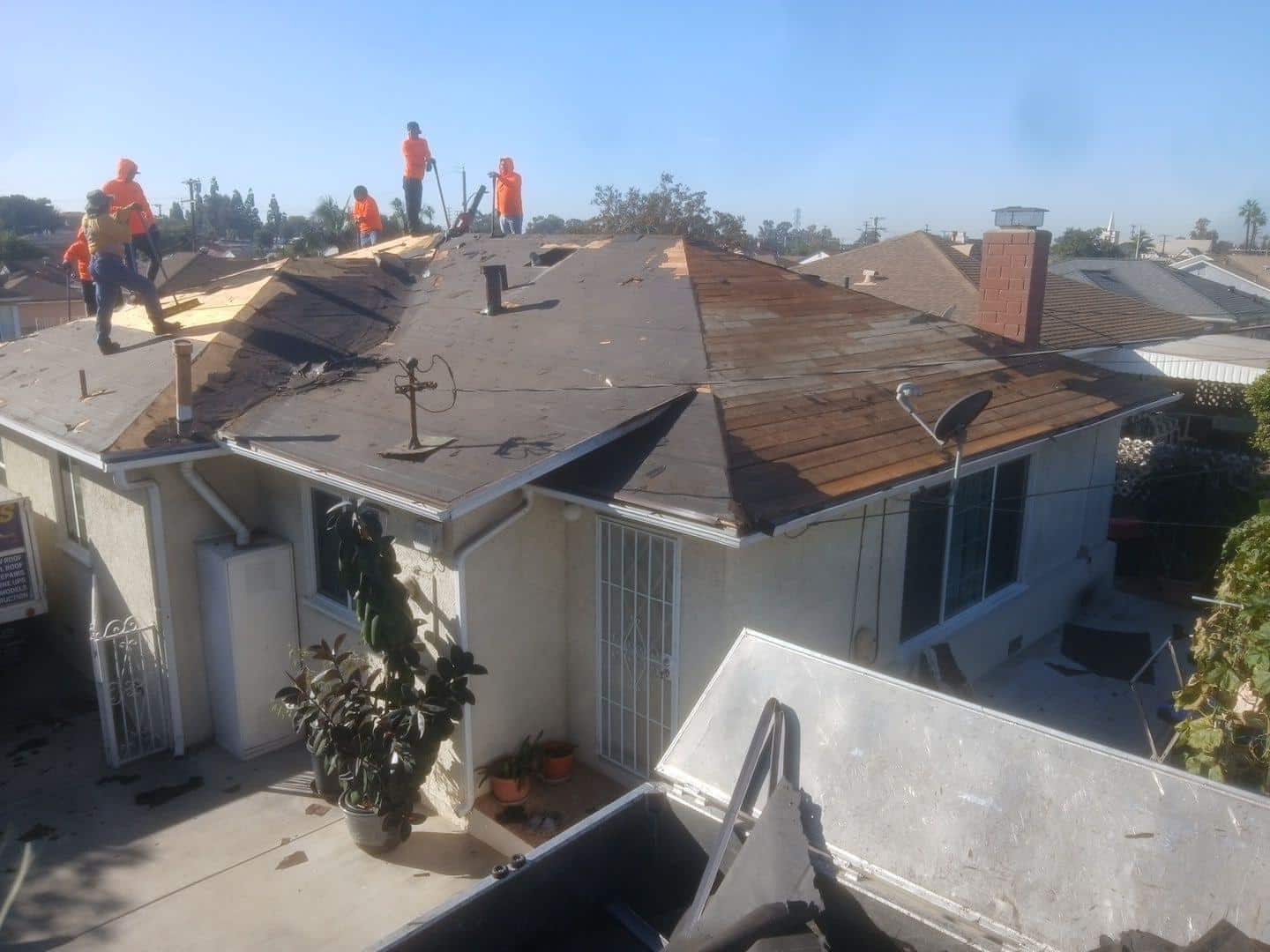
A full roof removal — also called a tear-off — strips every layer of existing roofing material down to the bare deck so the new roof starts on a clean, solid surface. This is different from a roof overlay, where new shingles go over old ones. California’s California Building Code generally limits residential roofs to two layers of shingles, so once a second layer is already in place, a full tear-off is required before any new roof replacements can happen.
Removing the old material also lets the crew inspect the decking underneath. Moisture damage, rot, and mold are common findings that would otherwise get sealed under a new roof and cause far bigger problems within a few years.
For most homeowners researching residential roofing options, understanding what a tear-off involves helps set realistic expectations about time, cost, and what contractors should be doing on your property.
What Does the Roof Removal Process Steps Guide Actually Cover?
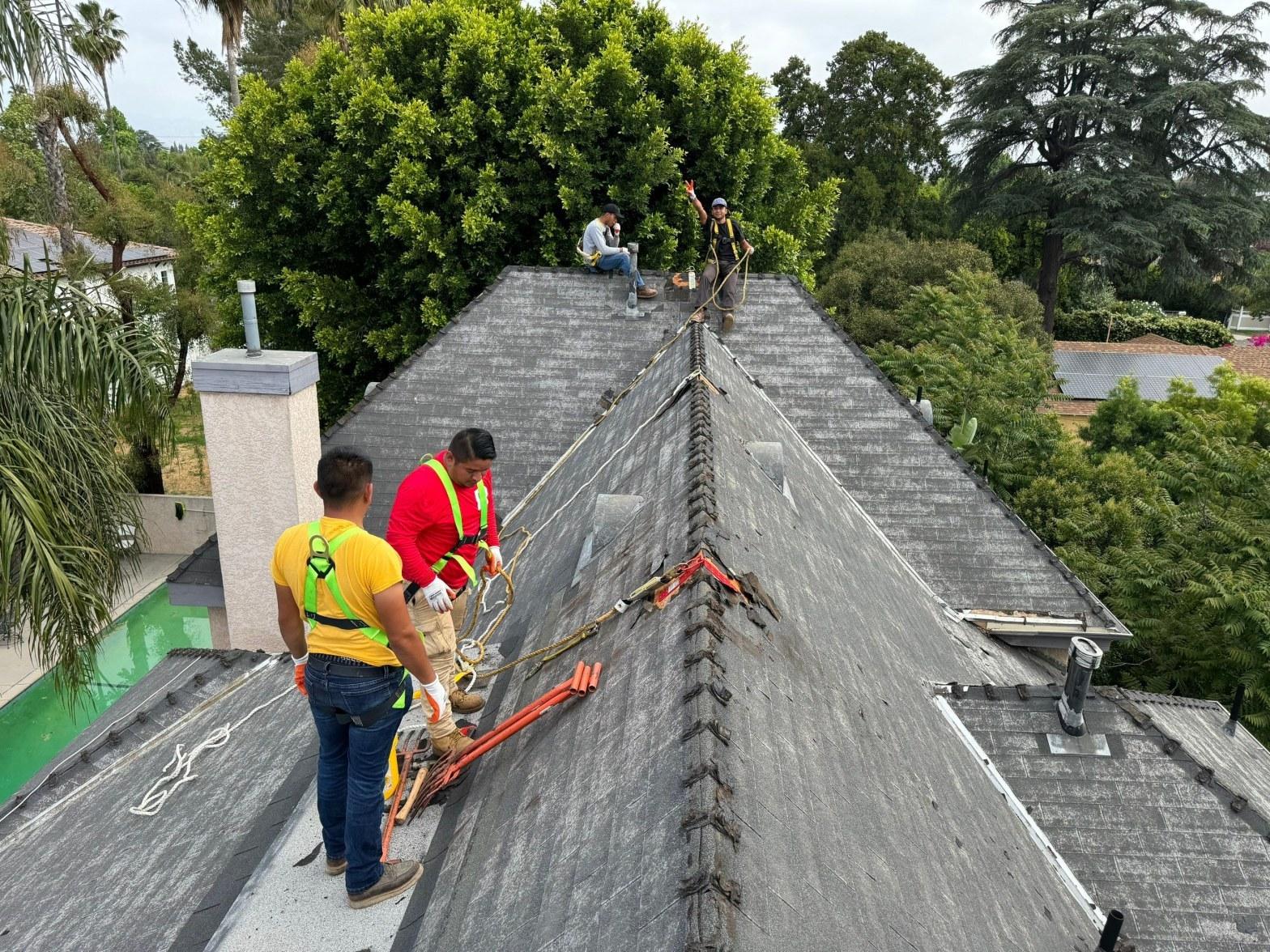
The roof removal process steps guide breaks the job into six distinct phases: site protection, material stripping, decking inspection, structural repairs, surface preparation, and final cleanup. Each phase has a clear purpose, and skipping one creates problems that show up months or years later.
Here is what each phase involves:
- Site protection: The crew lays tarps over landscaping, driveways, and air conditioning units to catch falling debris. They also place dumpsters or debris trailers directly below the work zone. Protecting the property before any material comes off is a sign of a professional roofing company.
- Chimney and flashing removal: Metal flashing around chimneys, vents, and skylights is removed first. Old flashing is rarely reused because it degrades over time and is a leading cause of leaks.
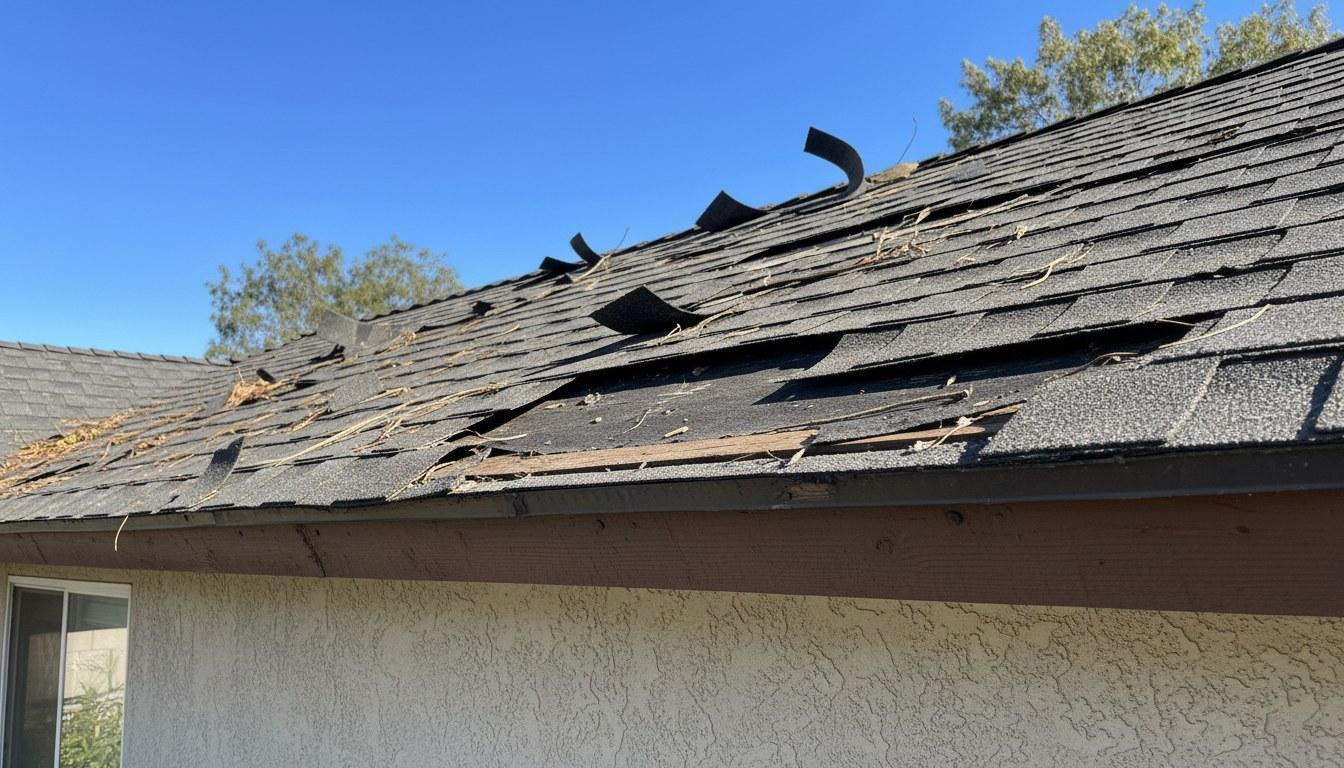
- Shingle stripping: Workers use roofing shovels and pry bars to lift shingles in sections, starting at the ridge and working down to the eaves. A typical 2,000-square-foot roof has roughly 20 to 25 squares of material (one square equals 100 square feet) to remove.
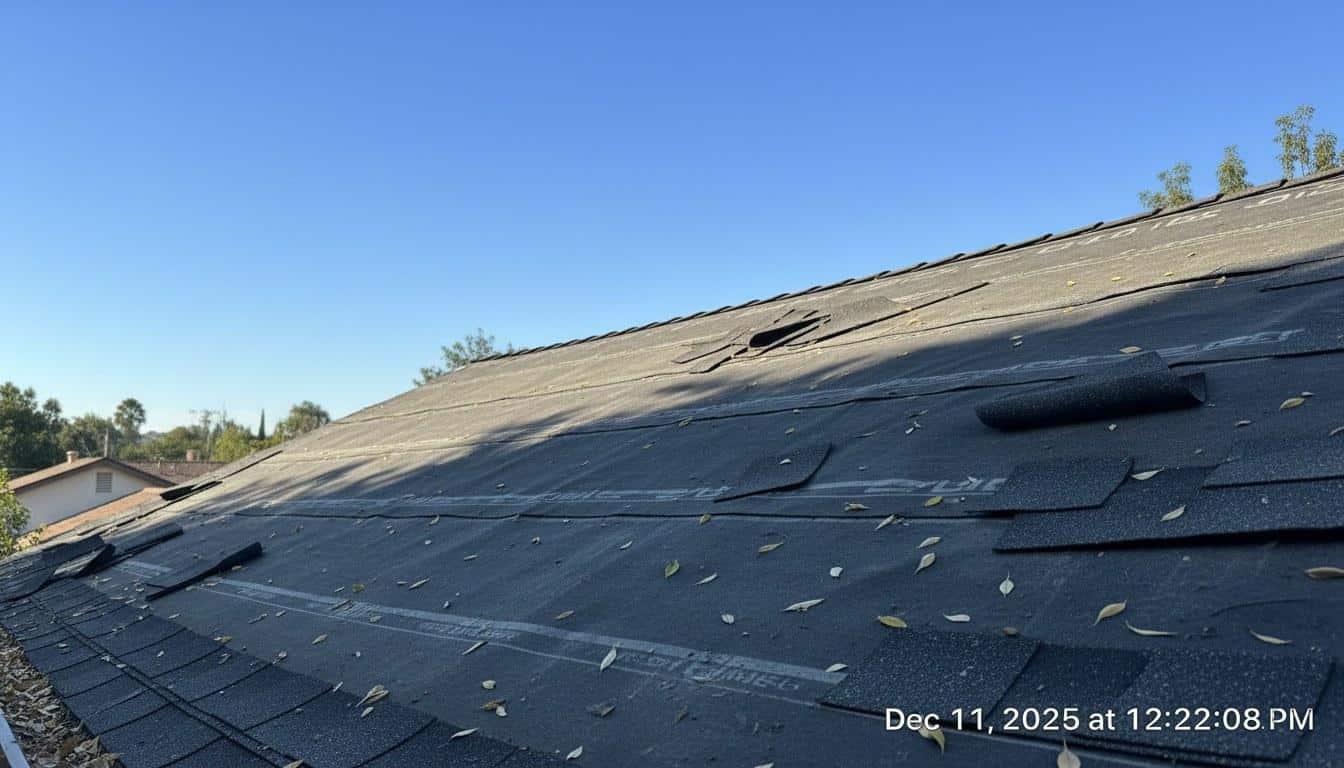
- Underlayment removal: The felt or synthetic underlayment beneath the shingles is pulled up and discarded. This layer traps moisture if it is damaged, so it always comes off in a full tear-off.
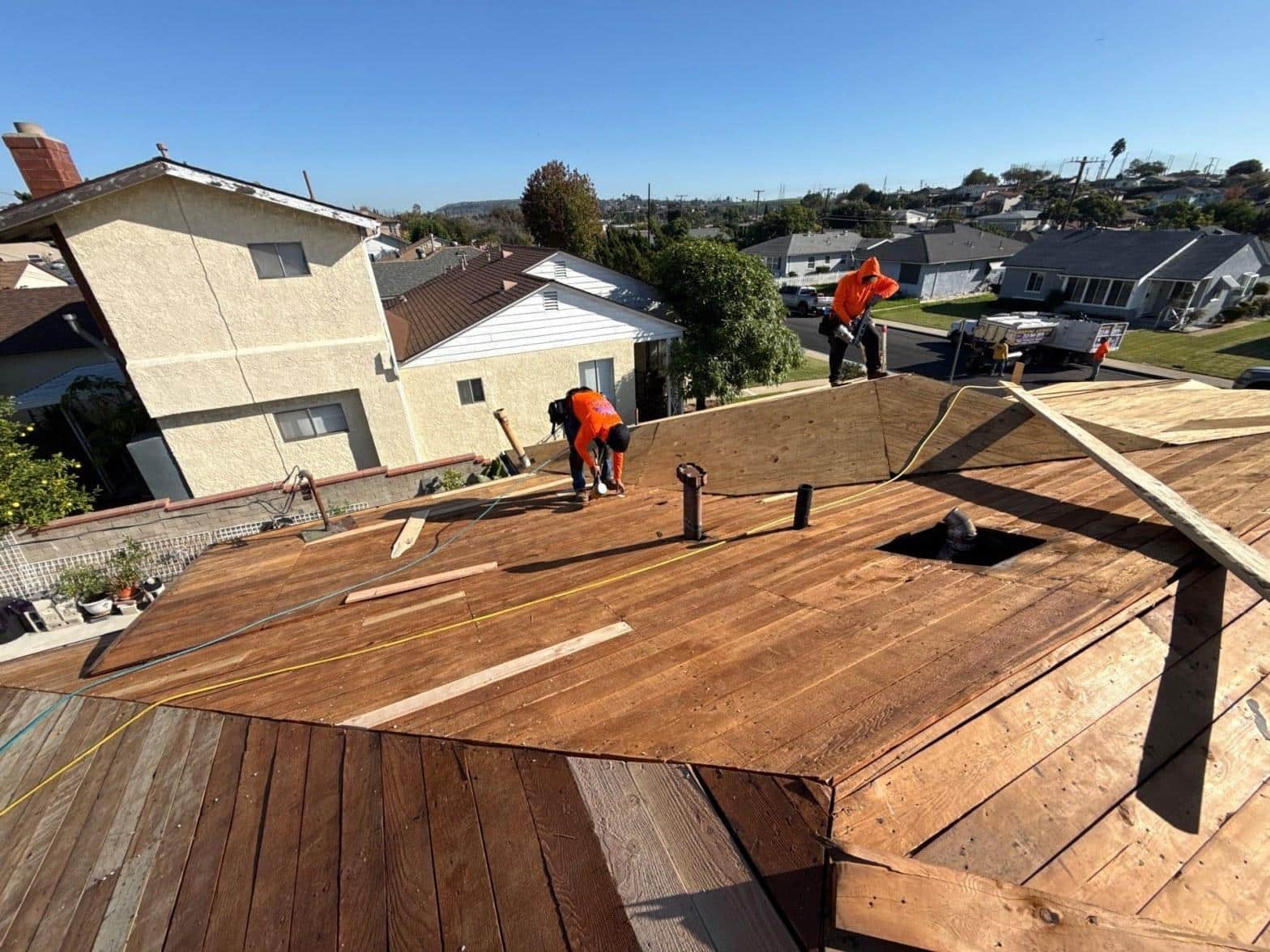
- Nail removal and deck inspection: Every exposed nail is either pulled or hammered flat. The decking — usually oriented strand board (OSB) or plywood — is then inspected for soft spots, rot, delamination, and water staining. Our crews find that roughly 1 in 4 Southern California homes has at least one section of decking that needs replacement, most often around valleys, chimneys, or low-slope areas where water pools.
- Deck repairs and surface prep: Damaged deck sections are cut out and replaced with matching material before anything new goes on. The repaired deck is then swept, blown clean, and checked for any remaining fasteners.
- Final debris removal: All stripped material, nails, and packaging go into the dumpster. Magnetic rollers are run across driveways and lawn areas to pick up stray nails — a step that matters for tires and bare feet alike.
Following this sequence is what separates a lasting roof from one that fails prematurely. The U.S. Department of Energy notes that proper deck preparation directly affects a new roof’s energy performance and lifespan.
How Long Does Roof Removal Take and What Affects the Timeline?
Most residential roof removals in California take one to two days for an average home between 1,500 and 2,500 square feet. Larger homes, steeper pitches, or multiple layers of old material can push the timeline to three days or more.
The factors that most affect how long a tear-off takes include:
- Roof size: Every additional 500 square feet adds roughly two to four hours of stripping time for a standard crew.
- Pitch (slope): Roofs steeper than a 6:12 pitch require harness systems and slower movement, which adds time and labor.
- Number of layers: A two-layer roof takes about 40 percent longer to strip than a single-layer roof because the second layer bonds to the first over time.
- Deck condition: If significant decking replacement is needed, repairs can add half a day or more to the schedule.
- Roof complexity: Multiple valleys, hips, dormers, skylights, and chimneys each require careful hand work around the penetrations.
- Weather: California’s dry climate is generally favorable, but if temperatures exceed 100°F — common in inland regions during summer — crews may start earlier in the morning and stop by early afternoon for safety.
A good roofing contractor will give you a written timeline estimate before work begins so you can plan around it.
What Does Roof Removal Cost in California?
In the California regional market, tear-off labor alone typically ranges from $1 to $2 per square foot, meaning a 2,000-square-foot home might see removal costs between $2,000 and $4,000 depending on scope and complexity. These figures are market ranges only and do not include new material installation or deck repairs.
The table below shows the main cost factors and how each one moves the price:
| Cost Factor | Lower End | Higher End |
|---|---|---|
| Roof size | Under 1,500 sq ft | Over 3,000 sq ft |
| Number of shingle layers | Single layer | Two layers (code maximum) |
| Roof pitch | Low slope (under 4:12) | Steep slope (over 7:12) |
| Decking repairs needed | None or minimal | Large sections replaced |
| Debris disposal | Included in contract | Separate dumpster rental fee |
| Roof complexity | Simple gable roof | Multiple hips, dormers, skylights |
Always get a written, itemized quote before signing anything. A legitimate roofing company will separate tear-off labor, decking repair, and disposal costs so you can see exactly where the money goes. To get an accurate number for your specific home, contact Roof Replacement Inc for a custom quote.
California homeowners replacing an older roof may also qualify for energy-efficiency incentives. The Inflation Reduction Act federal tax credit covers up to 30 percent of the cost of qualifying energy-efficient roofing materials installed through 2032, though the tear-off labor itself is not directly credited. Check with a tax professional for your specific situation.
What Are the Most Common Problems Found During a Tear-Off?
The most common issues discovered once old shingles come off are rotted decking, failed flashing, and inadequate attic ventilation — problems that are invisible from the ground and often missed on a surface-level inspection. Finding them during removal is actually the best-case scenario because they can be fixed before the new roof goes on.
Here are the problems crews encounter most often:
- Rotted or delaminated decking: Water that seeps under shingles over years saturates OSB or plywood until it loses structural strength. Soft spots are found by walking the deck and pressing on suspicious areas.
- Improper previous installation: Nails driven at wrong angles, misaligned shingle courses, and missing starter strips all show up once the layers come off. These mistakes compound over time.
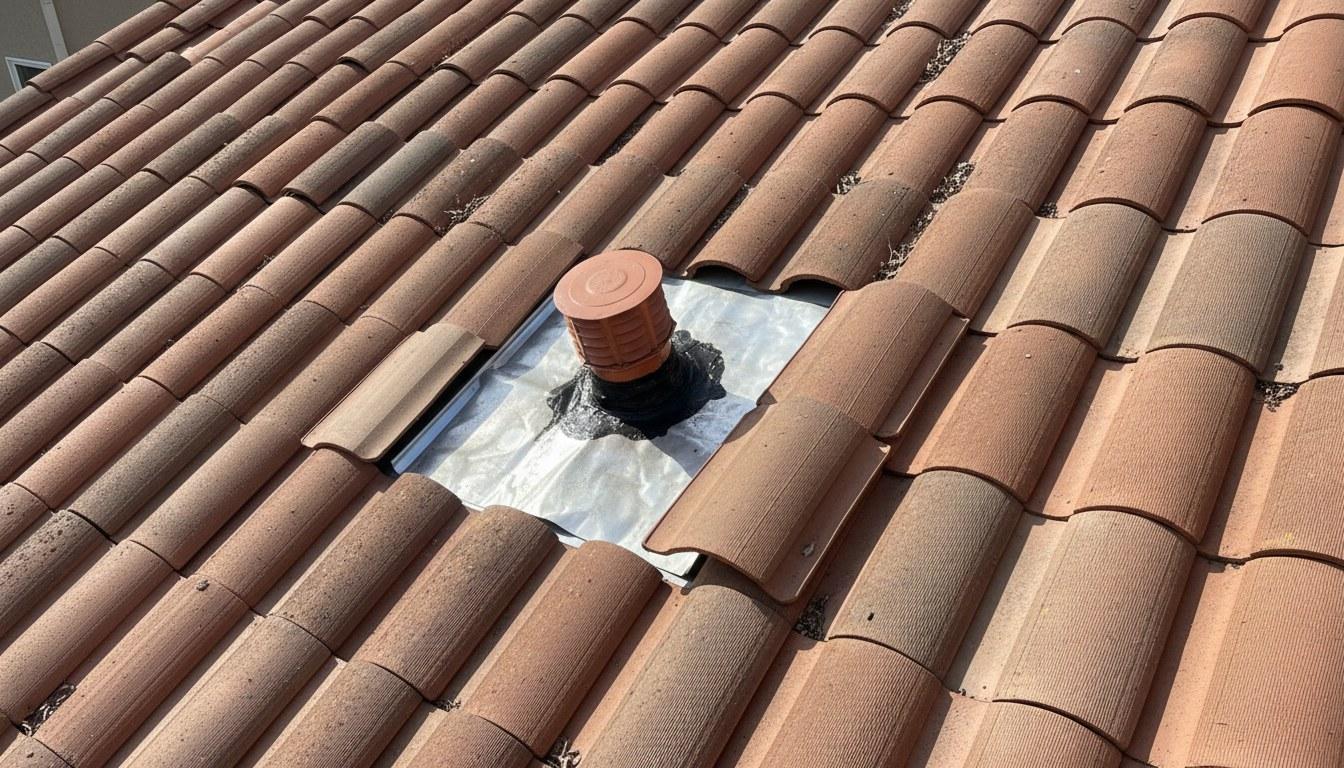
- Inadequate flashing at penetrations: Chimneys, plumbing vents, and skylights are the most common leak sources. Step flashing that was not properly overlapped or sealed is a frequent finding.
- Blocked or missing ridge vents: California’s Title 24 building energy standards require balanced attic ventilation to manage heat and moisture. Blocked vents found during tear-off must be corrected before the new roof is installed.
- Mold or mildew on the deck surface: Even surface-level mold needs to be treated and dried before new underlayment goes down, or it will continue to grow underneath the new roof.
We see deck rot in roughly 1 in 3 tear-off projects on homes built before 1990 across Southern California, most often concentrated in the first 12 to 18 inches along the eaves where gutters overflow or back up during heavy rain events.
How Do You Choose the Right Roofing Contractor for the Job?
The most important check is confirming the contractor holds an active license issued by the California Contractors State License Board (CSLB) — specifically a Class C-39 Roofing license. You can verify any license in seconds at the CSLB’s online lookup at cslb.ca.gov. Working with an unlicensed contractor voids most manufacturer warranties and leaves you with no legal recourse if work is done incorrectly.
Beyond the license check, here is what to look for when evaluating roofing contractors:
- Written, itemized estimate: Every line item — tear-off, decking inspection, disposal, new materials, labor — should be spelled out separately.
- Proof of insurance: General liability and workers’ compensation are both required. Ask for certificates, not just verbal assurances.
- Permit handling: Most California jurisdictions require a permit for a full roof replacement. A reputable roofing company pulls the permit on your behalf and schedules the required inspection.
- Manufacturer certification: Contractors certified by shingle manufacturers (such as GAF Master Elite or CertainTeed SELECT ShingleMaster) can offer extended system warranties that uncertified contractors cannot.
- Clear debris removal plan: Confirm in writing that all old material, nails, and packaging will be removed from the property before the crew leaves.
- No large upfront deposits: California law limits contractor deposits to 10 percent of the contract price or $1,000, whichever is less. Any contractor asking for more than that upfront is a red flag.
Getting at least two or three written quotes also gives you a realistic sense of current regional market pricing and lets you compare scope, not just the bottom-line number. If you are searching for roof repair near me or trying to find qualified roofing contractors in Los Angeles County or anywhere across California, verifying the CSLB license is always step one.
Ready to Schedule Your Roof Removal?
A proper tear-off sets the foundation for a roof that lasts 25 to 50 years depending on the material chosen. Cutting corners on any phase of this roof removal process steps guide — from site protection to final nail pickup — shortens that lifespan and creates liability for the homeowner.
Roof Replacement Inc handles full tear-offs, decking repairs, and complete roof replacements for homeowners across Southern California. Every project is backed by a licensed crew, a written scope of work, and a clear debris removal plan so your property is clean when the job is done.
Call (213) 364-3979 to schedule a no-obligation inspection and written quote. Same-week appointments are available for homeowners across the region who need an honest assessment before committing to a full replacement.
Explore our full range of roofing services across Southern California.
Frequently Asked Questions
How do I know if my roof needs a full removal or just a repair?
If your roof has two existing layers of shingles, California building code requires a full tear-off before new materials can be installed. Even with one layer, widespread damage, rot, or a roof older than 20 to 25 years usually means a full removal is the smarter long-term choice. A licensed roofing contractor can inspect the deck and give you a clear recommendation in writing.
How long does a roof removal take on a typical house?
Most single-family homes between 1,500 and 2,500 square feet take one to two days to strip completely. Steeper pitches, two-layer roofs, or extensive deck damage can push the timeline to three days. Your contractor should give you a written schedule estimate before work begins.
Will roof removal damage my gutters or landscaping?
A professional crew places tarps over landscaping, shrubs, and driveways before stripping begins to catch falling debris. Gutters are inspected during the process and should not be damaged if the crew works carefully. Always confirm in your contract that site protection and cleanup are included.
Do I need a permit for roof removal in California?
Yes, most California jurisdictions require a permit for a full roof tear-off and replacement. A reputable roofing company will pull the permit on your behalf and schedule the required inspection. Working without a permit can create problems when you sell the home or make an insurance claim.
What happens if rotted decking is found during the tear-off?
Damaged sections of OSB or plywood are cut out and replaced with matching material before new underlayment or shingles go on. This is a normal part of many tear-off projects, especially on homes built before 1990. Your contractor should document any deck repairs with photos and add the cost to the written estimate before proceeding.
Related Articles




What Our Clients Say











Roof Replacement Inc. offers professional, high-quality work, guaranteed (call for details); ensuring all clients projects meet all code and design requirements. We are dedicated to exceptional customer service and will strive to ensure you with the highest quality roofing services. Roof Replacement Inc. offers lifetime warranty (call for details) on all of our workmanship to ensure the quality of our work. With over 40 years of combined experience within the roofing and construction industry, Roof Replacement Inc. has grown and developed in all areas of roofing construction, including roof inspections. As a leading residential and commercial roofing company in LA, we have hundreds of references from previous clients, so rest assured, that your roofing job will be done right the first time. Replacing an old roof can help add curb appeal and will increase the perceived value of your home. First impressions are vital when selling your home, especially when your roof takes up more than half of the exterior of your residence or business. Not only is the return of investment on a new roof attractive for potential buyers, but can be as beneficial as remodeling the kitchen or bathrooms within your residence.

