

Tile roof replacement in Southern California typically costs between $12,000 and $35,000 depending on roof size, tile type, and structural needs. This guide breaks down every cost factor so you can budget accurately.
What Does Tile Roof Replacement Cost in Southern California?
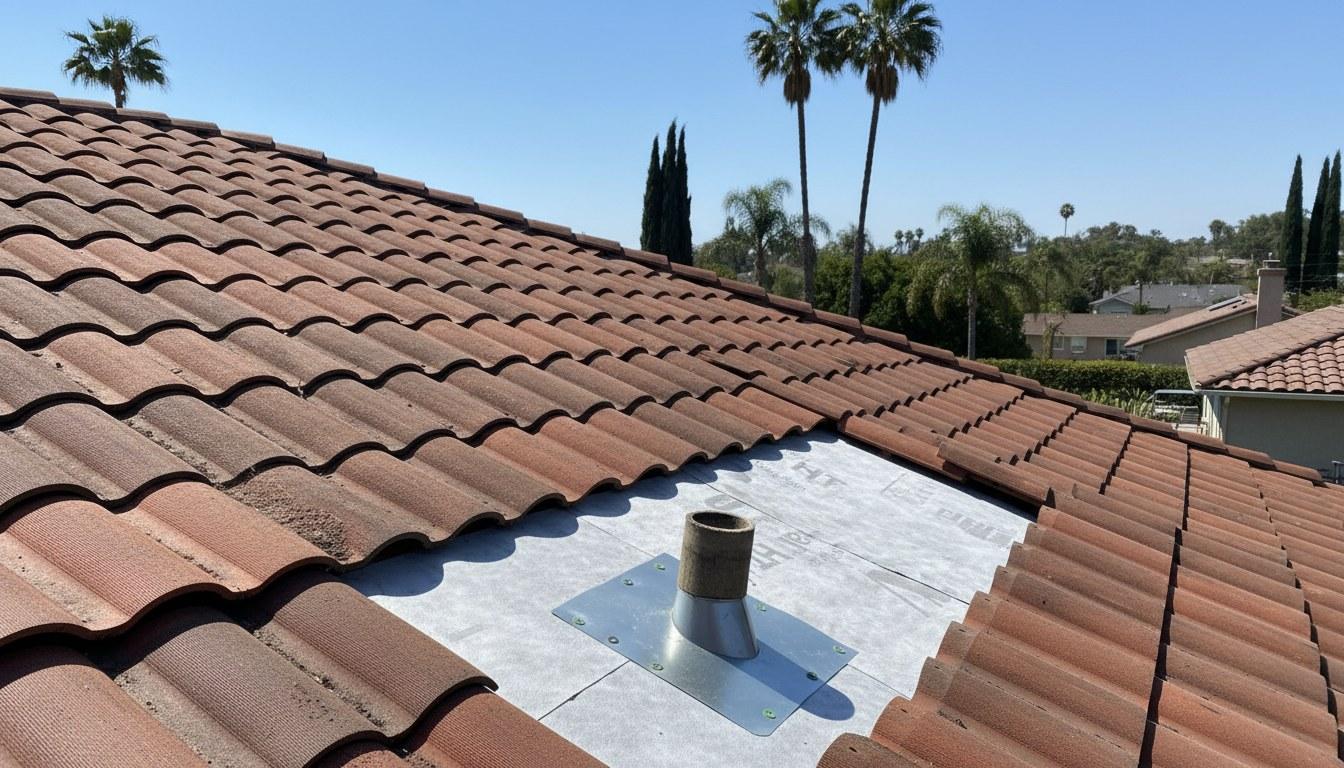
Tile roof replacement cost in Southern California typically falls between $12,000 and $35,000 for an average single-family home. Larger homes, premium tile materials, or significant structural repairs can push totals above $50,000. The wide range exists because tile roofing is one of the most variable categories in residential roofing — material choices alone can triple the per-square cost.
In the regional market, most homeowners pay somewhere between $9 and $22 per square foot installed, depending on the tile type and the complexity of the roof. A straightforward 2,000-square-foot concrete tile replacement on a low-slope roof sits at the lower end. A steep, multi-gabled clay tile job with full decking replacement sits at the top.
In the regional market, most homeowners pay somewhere between $9 and $22 per square foot installed, depending on the tile type and the complexity of the roof.
These are market context figures, not quotes. Your actual project cost depends on a site assessment. Scroll down for a breakdown of every factor that moves the number.
What Factors Drive the Price of a Tile Roof Replacement?
Six factors consistently account for most of the price variation in tile roof replacement projects across Southern California. Understanding them helps you evaluate competing bids and avoid surprise costs.
- Roof size and pitch: Cost is calculated per roofing square (100 square feet). A steeper pitch — anything above a 6:12 slope — requires additional safety equipment and slower installation, adding 15% to 25% to labor costs.
- Tile material: Concrete tile is the most affordable, typically ranging from $4 to $7 per square foot for materials alone. Clay tile runs $7 to $15 per square foot. Genuine slate or premium designer tiles can exceed $20 per square foot before installation.
- Underlayment condition: California’s Title 24 building energy standards and local building codes require a quality underlayment beneath tile. If the existing underlayment has failed — common on roofs older than 20 years — full replacement adds $1,500 to $4,000 or more to the project.
- Decking (sheathing) damage: Rot, delamination, or pest damage to the plywood or OSB decking underneath must be repaired before new tile goes down. Replacing even a portion of the decking adds cost per sheet of plywood replaced.
- Removal and disposal: Old tile is heavy — concrete tile weighs 9 to 12 pounds per square foot. Disposal fees for a full tear-off on a 2,000-square-foot roof can range from $800 to $2,500 depending on haul-away logistics and local dump fees.
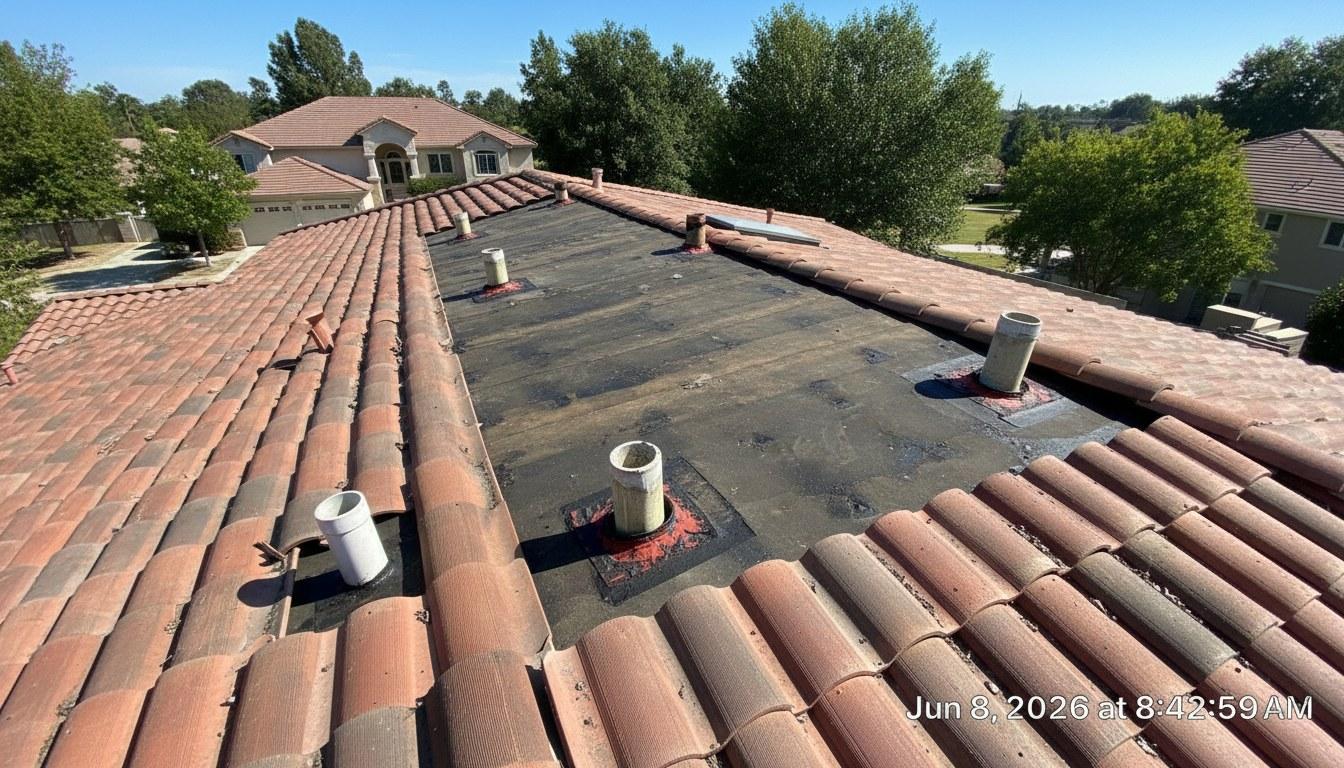
- Flashing, valleys, and penetrations: Any chimney, skylight, vent, or roof valley needs new metal flashing during a replacement. Complex roof geometry with multiple valleys or penetrations adds both materials and labor time.
How Do Different Tile Types Compare on Price and Performance?
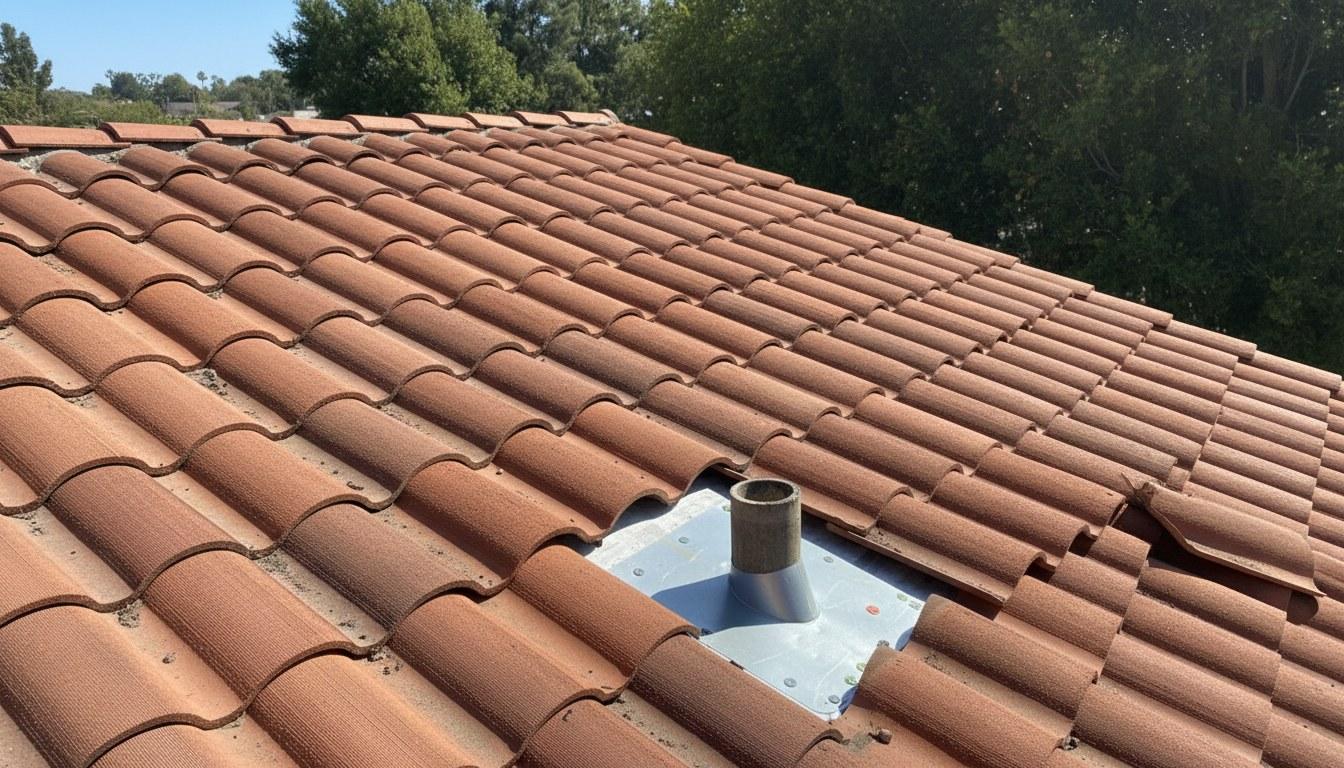
Concrete, clay, and composite tiles each hit a different price point and carry different weight, lifespan, and maintenance profiles. Choosing the right tile for your home’s structure and your budget is one of the most important decisions in a tile roof replacement project.
| Tile Type | Typical Material Cost (per sq ft) | Estimated Lifespan | Key Consideration |
|---|---|---|---|
| Concrete Tile | $4 – $7 | 30 – 50 years | Most affordable; heavier than clay; may need structural check on older homes |
| Clay Tile | $7 – $15 | 50 – 100 years | Excellent durability in Southern CA heat; lighter than concrete per unit; premium look |
| Composite / Synthetic Tile | $5 – $12 | 30 – 50 years | Lightweight; can mimic clay or slate; good option where structural load is a concern |
| Natural Slate | $15 – $25+ | 75 – 150 years | Longest lifespan; heaviest material; requires structural engineering review in most cases |
Our crews replace concrete tile most frequently across Los Angeles County and surrounding communities — in our experience, roughly 6 out of every 10 tile replacement jobs we complete involve concrete tile, largely because it balances cost and longevity well for the Southern California climate.
Weight is a structural concern that many homeowners overlook. Clay and concrete tile can weigh 10 to 15 pounds per square foot. Homes built before 1980 sometimes need a structural engineer to confirm the roof framing can handle the load before new tile is installed. Composite tile, which typically weighs 5 to 7 pounds per square foot, is often the right answer for those situations.
What Does a Tile Roof Replacement Project Actually Include?
A complete tile roof replacement is a multi-step process that goes well beyond simply swapping out old tiles for new ones. Understanding the full scope helps you compare quotes accurately — a lower bid that skips critical steps is not a savings.
- Inspection and scope confirmation: A licensed contractor walks the roof, checks decking, measures square footage, and documents any structural or moisture damage before pricing the job.
- Permit pulling: Most California counties require a building permit for a full roof replacement. The contractor should pull this permit — work done without permits can create problems at resale and may void manufacturer warranties.
- Tear-off: Existing tile, battens, and underlayment are removed and hauled away. This is when hidden decking damage becomes visible.
- Decking repair: Any damaged sheathing panels are replaced. This is billed as a separate line item in most contracts.
- Underlayment installation: A new high-temp or cool-roof underlayment is installed. Southern California’s heat makes underlayment quality especially important — poor underlayment fails faster in high-UV, high-temperature environments.
- Batten installation: Wood or composite battens are fastened to the decking to provide the mounting surface for tile.
- Tile installation and flashing: New tile is set, ridge caps are installed, and all flashings around penetrations and valleys are replaced with new metal.
- Inspection and cleanup: The finished roof is inspected, the building inspector signs off on the permit, and the job site is cleaned.
Roofing contractors in Los Angeles and across Southern California are required to be licensed by the California Contractors State License Board (CSLB). Always verify a contractor’s license number on the CSLB website before signing a contract. An unlicensed roofer cannot legally pull permits, and work done without permits can create title and insurance complications.
What Is NOT Included in a Standard Tile Roof Replacement Quote?
Several common costs catch homeowners off guard because they fall outside the base replacement scope. Ask your contractor about each of these before signing.
- Decking replacement: Most quotes include inspection but bill decking repairs separately, per sheet. A roof with significant rot can add $1,000 to $5,000 in decking costs alone.
- Chimney rebuilding or repointing: If the chimney crown or mortar joints are deteriorated, that work is typically a separate masonry line item.
- Gutter replacement: New tile and new gutters are separate scopes. If your gutters are sagging or corroded, budget for that separately.
- Solar panel removal and reinstallation: If you have rooftop solar, panels must be removed before tear-off and reinstalled after. This is almost always subcontracted to the solar installer and billed separately — typically $500 to $2,000 depending on system size.
- Skylight replacement: Flashings around skylights are included, but if the skylight unit itself is cracked or fogged, replacing the unit is a separate cost.
- Structural engineering: If your home needs a load analysis before heavy tile is approved, that engineer fee is not part of the roofing contract.
How Often Does a Tile Roof Need to Be Replaced?
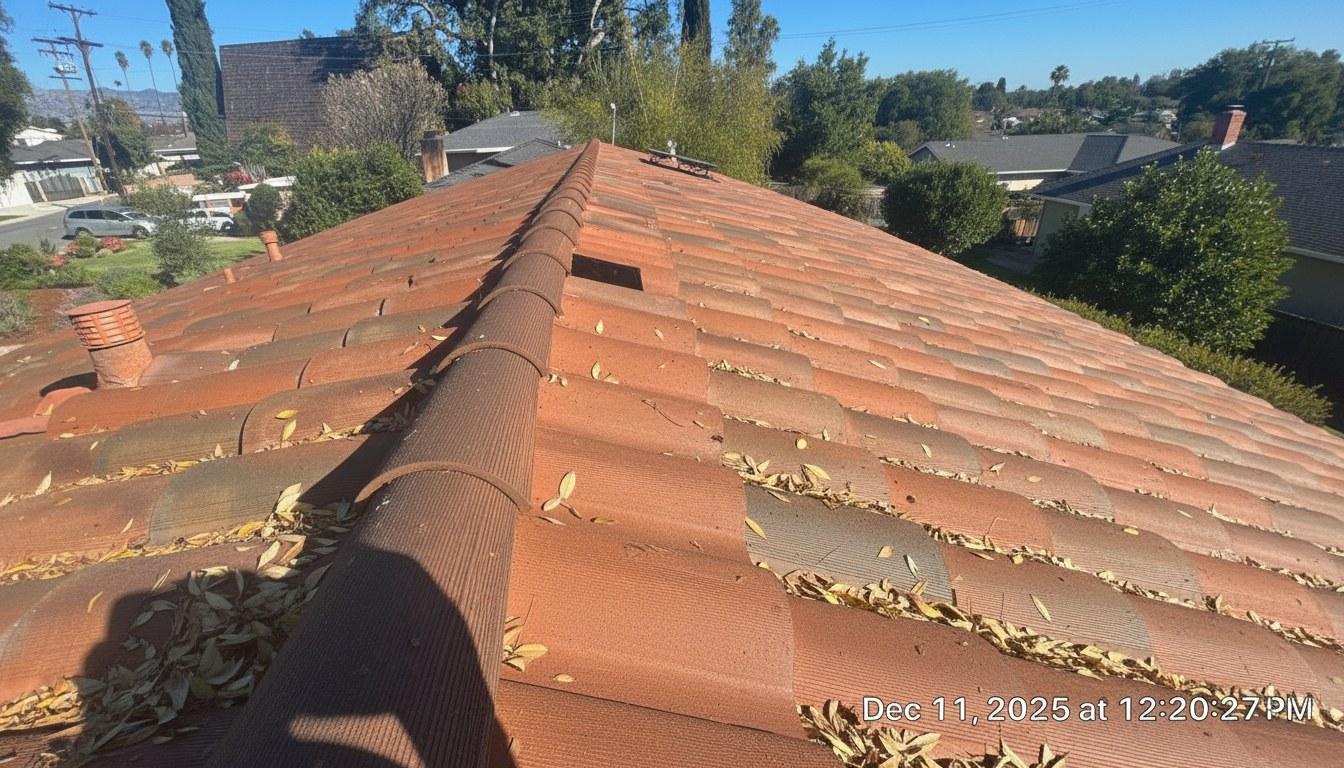
A well-maintained concrete tile roof typically lasts 30 to 50 years in Southern California’s climate. Clay tile can last 50 to 100 years or longer. The underlayment beneath the tile usually fails first — often between 20 and 30 years — which means many tile roofs need an underlayment replacement before the tiles themselves wear out.
The underlayment beneath the tile usually fails first — often between 20 and 30 years — which means many tile roofs need an underlayment replacement before the tiles themselves wear out.
Southern California’s climate is actually favorable for tile longevity. Low rainfall, minimal freeze-thaw cycling, and the absence of heavy snow loads mean tile roofs here often outlast the same products in harsher climates. The main enemies are UV degradation of underlayment, seismic movement cracking individual tiles, and deferred maintenance on flashings.
Signs that replacement — rather than repair — is the right call include:
- More than 20% of tiles are cracked, broken, or missing
- The underlayment is 25 or more years old and showing moisture intrusion
- Multiple areas of active leaking after a rain event
- Widespread granule loss or surface spalling on concrete tiles
- A roof certification inspection reveals the remaining useful life is under 5 years
Across our service calls in Los Angeles County and surrounding communities, we find that homeowners who schedule a professional inspection every 3 to 5 years catch underlayment issues before they become full interior water damage — typically saving $3,000 to $8,000 in drywall and insulation repairs that follow an undetected leak.
Homeowners who schedule a professional inspection every 3 to 5 years catch underlayment issues before they become full interior water damage — typically saving $3,000 to $8,000 in drywall and insulation repairs.
How to Get an Accurate Tile Roof Replacement Quote in Southern California
An accurate quote requires a physical inspection — no reputable contractor can give you a reliable number from a satellite image or a phone call alone. Here is what to prepare before you reach out.
- Know your approximate square footage: Your home’s total living area is not the same as your roof area. A 2,000-square-foot home can have 2,400 to 3,200 square feet of actual roof surface depending on pitch and overhangs.
- Know your current tile type: If you are re-tiling with the same product, matching existing tile is easier and sometimes cheaper. If you are switching materials, the contractor needs to assess structural load capacity.
- Pull your permit history: Your county building department can tell you when the last roof permit was pulled, which helps establish the age of the current underlayment.
- Document visible damage: Photos of cracked tiles, stained ceilings, or sagging sections help the contractor prioritize the inspection and scope the job accurately.
- Ask about the Inflation Reduction Act federal tax credit: The Inflation Reduction Act federal tax credit may apply to qualifying cool-roof materials installed as part of a replacement. Ask your contractor and tax advisor whether your specific tile selection qualifies for the 30% energy efficiency home improvement credit (up to $1,200 per year).
Get at least two written quotes that itemize labor, materials, underlayment, decking allowance, permit fees, and disposal separately. A single lump-sum number makes it impossible to compare bids or understand what you are actually paying for.
Request a Custom Tile Roof Replacement Quote in Southern California
The market ranges in this guide give you a solid baseline, but your actual project cost depends on your specific roof — its size, pitch, current condition, tile selection, and any structural factors unique to your home. The only way to get a number you can rely on is a written, itemized quote from a licensed contractor who has physically inspected the roof.
Roof Replacement Inc serves homeowners across Southern California with full tile roof replacement services, from concrete and clay tile to composite and natural slate. Every quote is written, itemized, and based on a real inspection — no satellite estimates, no vague lump sums.
Call (213) 364-3979 to schedule your inspection and get a detailed written quote. Same-week appointments are typically available across Los Angeles County and surrounding communities.
Explore our full range of roofing services across Southern California.
Frequently Asked Questions
How much does it cost to replace a tile roof in Southern California?
Tile roof replacement in Southern California typically ranges from $12,000 to $35,000 for an average single-family home, with larger or more complex projects exceeding $50,000. The biggest cost drivers are roof size, tile material, and whether the decking or underlayment needs replacement. Getting a written, itemized quote after a physical inspection is the only reliable way to know your specific cost. Call Roof Replacement Inc at (213) 364-3979 to schedule an inspection.
How often does a tile roof need to be replaced?
Concrete tile roofs typically last 30 to 50 years, while clay tile can last 50 to 100 years or more in Southern California's mild climate. However, the underlayment beneath the tile often fails after 20 to 30 years and may need replacement before the tiles themselves wear out. A professional inspection every 3 to 5 years is the best way to catch problems early and extend the life of your roof.
What is the average cost per square foot to replace a tile roof?
In the Southern California regional market, tile roof replacement generally runs between $9 and $22 per square foot installed, depending on tile type and roof complexity. Concrete tile sits at the lower end of that range, while premium clay or natural slate pushes toward the top. These are market context figures — your actual cost depends on a site inspection.
Is clay tile or concrete tile better for a Southern California home?
Both perform well in Southern California's hot, dry climate. Clay tile lasts longer — often 50 to 100 years — and is slightly lighter per unit, but costs roughly twice as much as concrete tile upfront. Concrete tile is the more budget-friendly option with a 30 to 50 year lifespan. The right choice depends on your budget, your home's structural load capacity, and the look you want.
Do I need a permit to replace my tile roof in Southern California?
Yes, most California counties require a building permit for a full tile roof replacement. A licensed contractor should pull this permit on your behalf — work done without permits can cause problems when you sell the home and may void manufacturer warranties on the new tile. Always confirm your contractor is licensed by the California Contractors State License Board (CSLB) before work begins.
Related Articles




What Our Clients Say











Roof Replacement Inc. offers professional, high-quality work, guaranteed (call for details); ensuring all clients projects meet all code and design requirements. We are dedicated to exceptional customer service and will strive to ensure you with the highest quality roofing services. Roof Replacement Inc. offers lifetime warranty (call for details) on all of our workmanship to ensure the quality of our work. With over 40 years of combined experience within the roofing and construction industry, Roof Replacement Inc. has grown and developed in all areas of roofing construction, including roof inspections. As a leading residential and commercial roofing company in LA, we have hundreds of references from previous clients, so rest assured, that your roofing job will be done right the first time. Replacing an old roof can help add curb appeal and will increase the perceived value of your home. First impressions are vital when selling your home, especially when your roof takes up more than half of the exterior of your residence or business. Not only is the return of investment on a new roof attractive for potential buyers, but can be as beneficial as remodeling the kitchen or bathrooms within your residence.

