California summers push roofs past 150°F. This guide covers the best coating types, application steps, costs, and when to call a pro.
What Is Roof Coating and How Does It Protect Against Summer Heat?
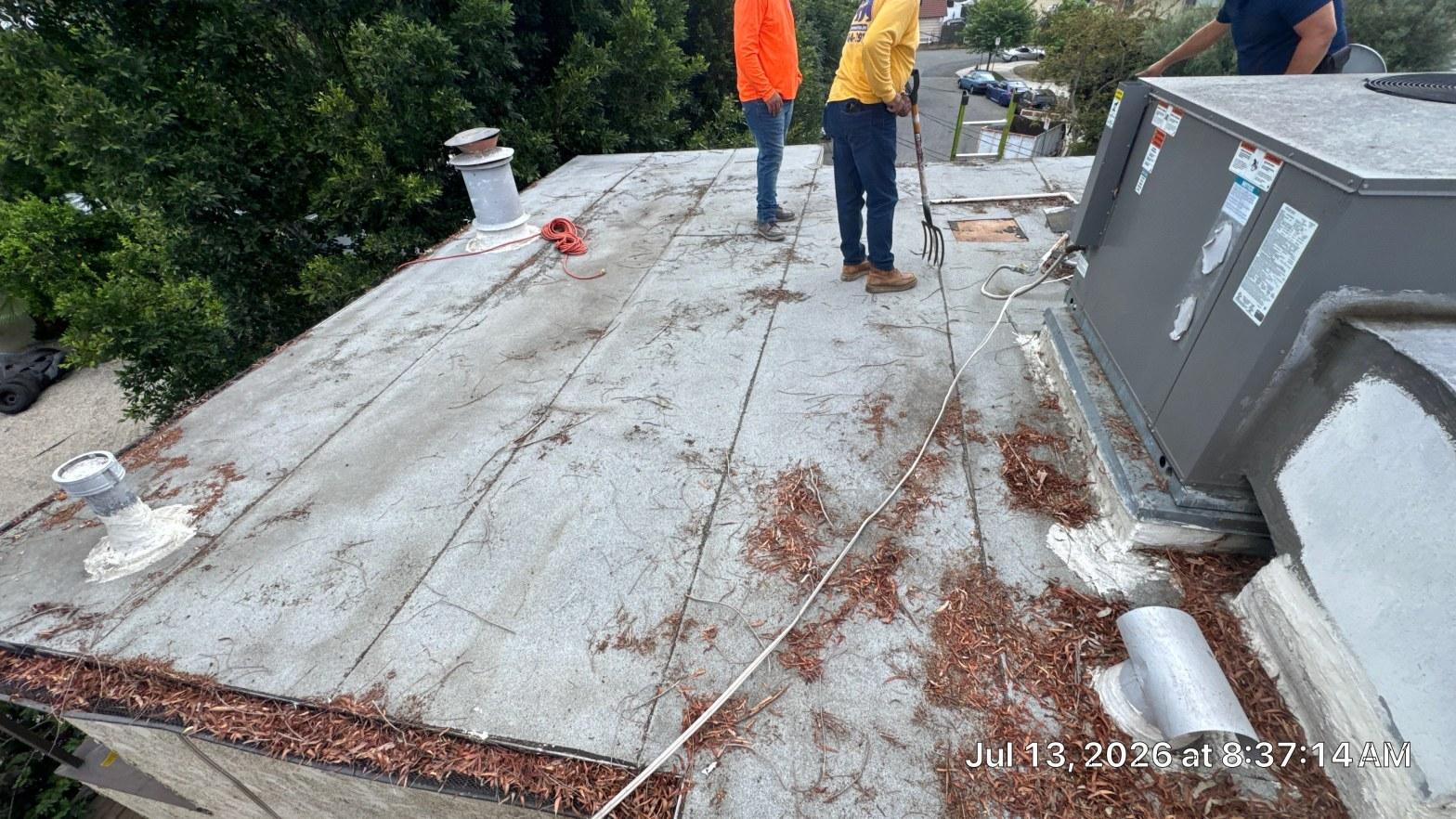
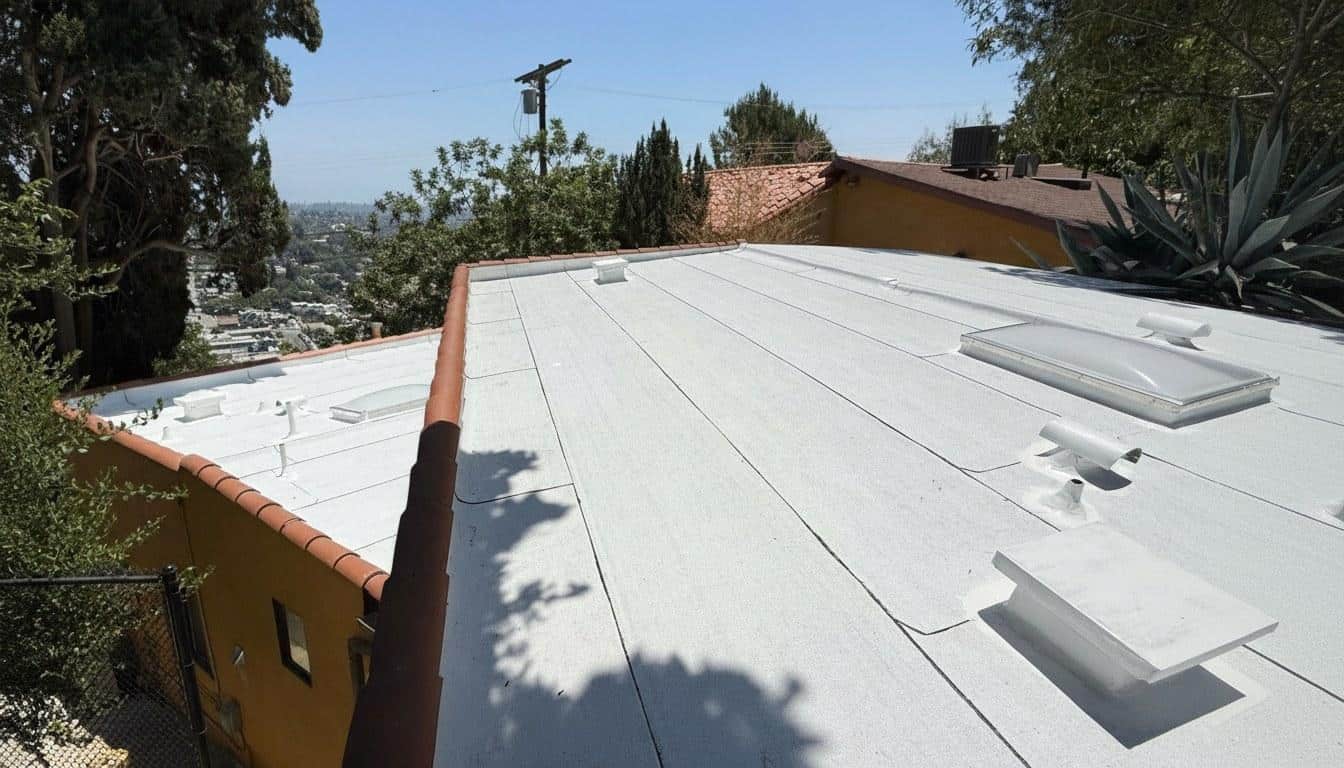
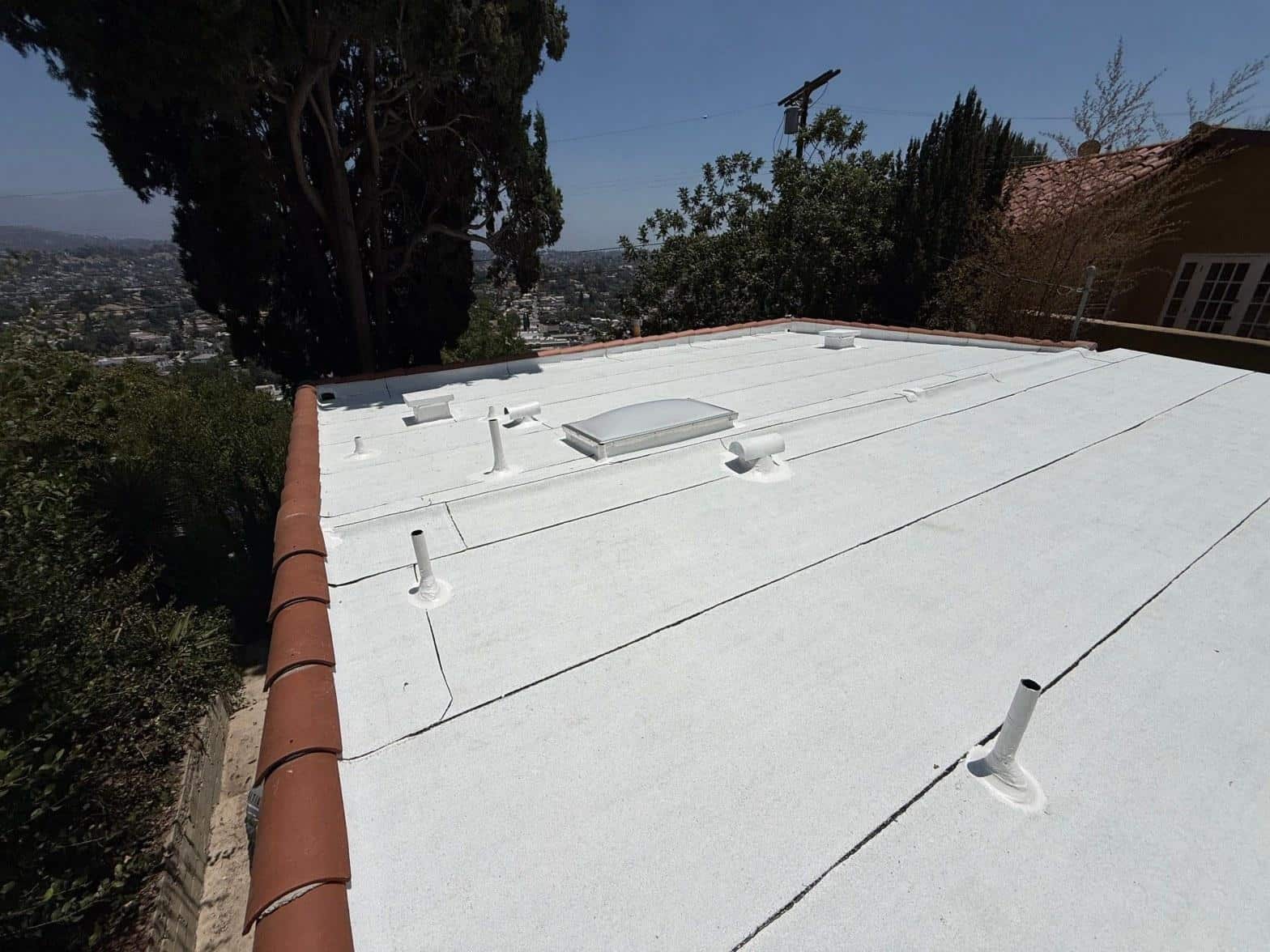
Roof coating is a liquid membrane applied directly over an existing roof surface to seal, waterproof, and reflect solar energy. On a typical California summer day, an uncoated dark roof can reach 165°F to 185°F, while a white reflective coating keeps the same surface below 120°F. That 50-plus degree difference matters because heat is the single biggest driver of premature roofing material failure in the state.
On a typical California summer day, an uncoated dark roof can reach 165°F to 185°F, while a white reflective coating keeps the same surface below 120°F.
Coatings work by bouncing sunlight away before it converts to heat. Most reflective products carry a solar reflectance index (SRI) rating; anything above 78 qualifies as a “cool roof” under California’s Title 24 building energy standards. A cool roof surface radiates absorbed heat back into the sky rather than conducting it into the building below.
Beyond temperature control, coatings fill hairline cracks, stop ponding-water leaks, and add a seamless waterproof layer that extends the life of the underlying roof by 10 to 15 years when applied correctly. They are one of the most cost-effective maintenance moves a California property owner can make before July arrives.
Which Roof Coating Works Best for California’s Summer Climate?
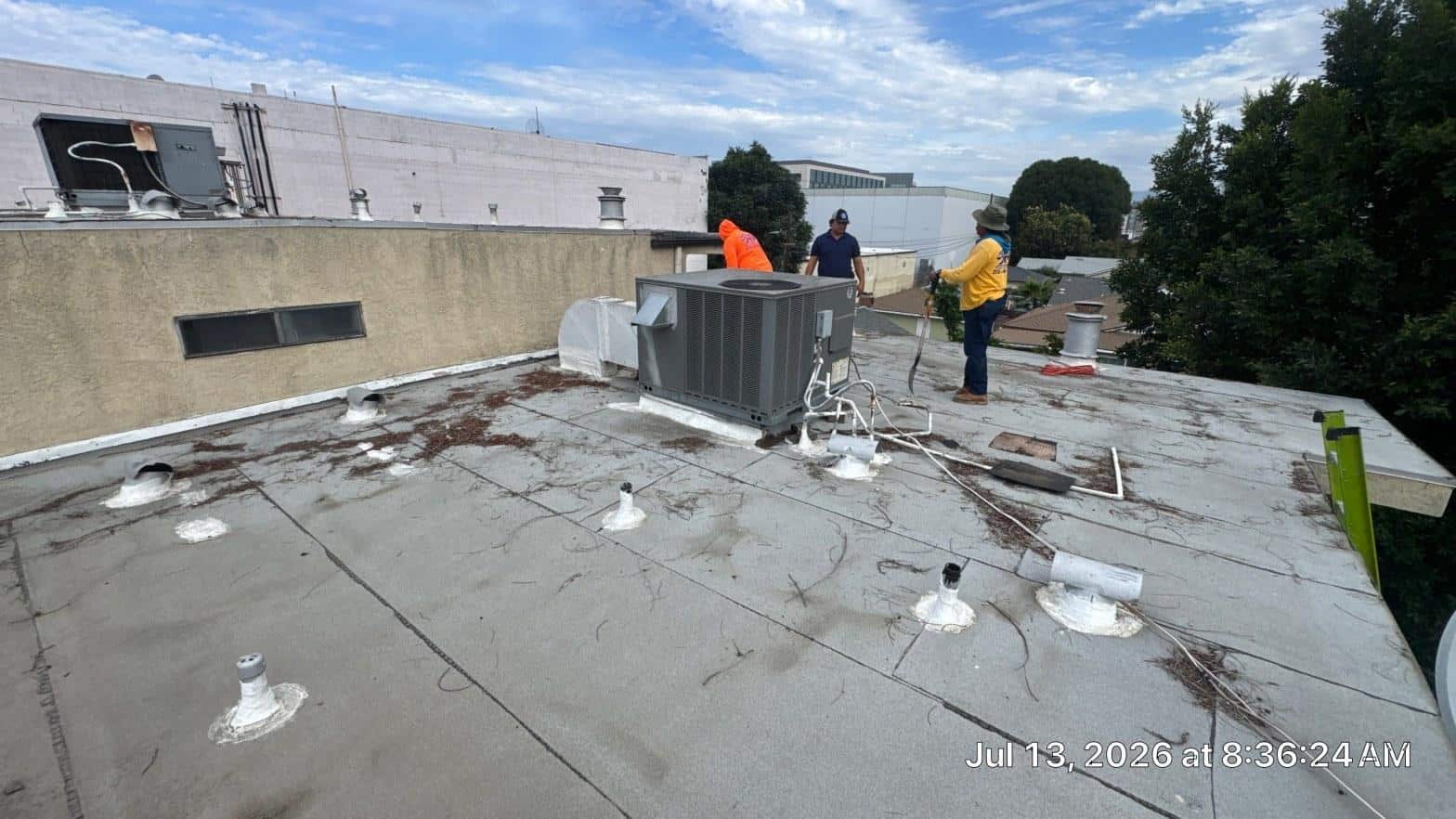
Elastomeric acrylic coatings and silicone coatings are the two most widely used options for California heat protection, with silicone pulling ahead on flat or low-slope roofs that collect standing water. The right choice depends on your roof’s pitch, existing material, and how much UV exposure your region receives.
Our team sees the highest failure rates on roofs where the wrong coating type was chosen for the substrate. On flat commercial roofs, we replace failed acrylic coatings roughly twice as often as failed silicone coatings, almost always because the acrylic was applied to a surface that stays wet for more than 48 hours after rain.
The table below compares the four main coating types commonly used across California:
| Coating Type | Best Roof Surface | Heat Reflectance | Ponding Water Resistance | Typical Lifespan |
|---|---|---|---|---|
| Elastomeric Acrylic | Sloped shingle, metal, modified bitumen | High (SRI 80-100) | Moderate | 10-15 years |
| Silicone | Flat/low-slope, TPO, foam | High (SRI 85-110) | Excellent | 15-20 years |
| Polyurethane | High-traffic flat roofs, concrete | Moderate (SRI 60-80) | Very Good | 10-15 years |
| Asphalt/Aluminum | Built-up roofs, metal | Moderate (SRI 50-70) | Good | 5-10 years |
For steep-slope residential roofs with asphalt shingles, an elastomeric acrylic coating applied at 1.5 to 2 gallons per 100 square feet delivers reliable UV protection. For flat commercial roofs or spray-foam roofs common across Southern California, silicone is the industry standard recommended by the U.S. Department of Energy for its ability to handle standing water without softening or delaminating.
Metal roofs benefit from either acrylic elastomeric or specialized metal-roof coatings that include a rust-inhibiting primer layer. RV roofs, which face intense UV exposure on the road, typically use EPDM-compatible acrylic or TPO-specific coatings rated for flexible substrates.
How Much Does Roof Coating Cost in California?
In the California market, professionally applied roof coating typically ranges from $1.50 to $4.50 per square foot, meaning a 2,000-square-foot flat roof generally runs between $3,000 and $9,000 depending on coating type, roof condition, and prep work required. DIY materials alone cost $0.20 to $0.80 per square foot, but skipping professional prep is the leading cause of early coating failure.
Several factors push the price toward the higher end of the range:
- Roof condition: Surfaces with significant cracking, blistering, or existing coating buildup require more prep time and sometimes a primer coat, adding $0.50 to $1.00 per square foot.
- Coating type: Silicone costs more per gallon than acrylic but typically requires fewer coats, so the installed price difference narrows to 10-20% in most bids.
- Roof pitch and access: Steep-slope roofs above a 4:12 pitch require safety equipment and slower application, raising labor costs by 15-30%.
- Number of coats: Most manufacturers require two coats for warranty coverage; single-coat applications may void the product warranty.
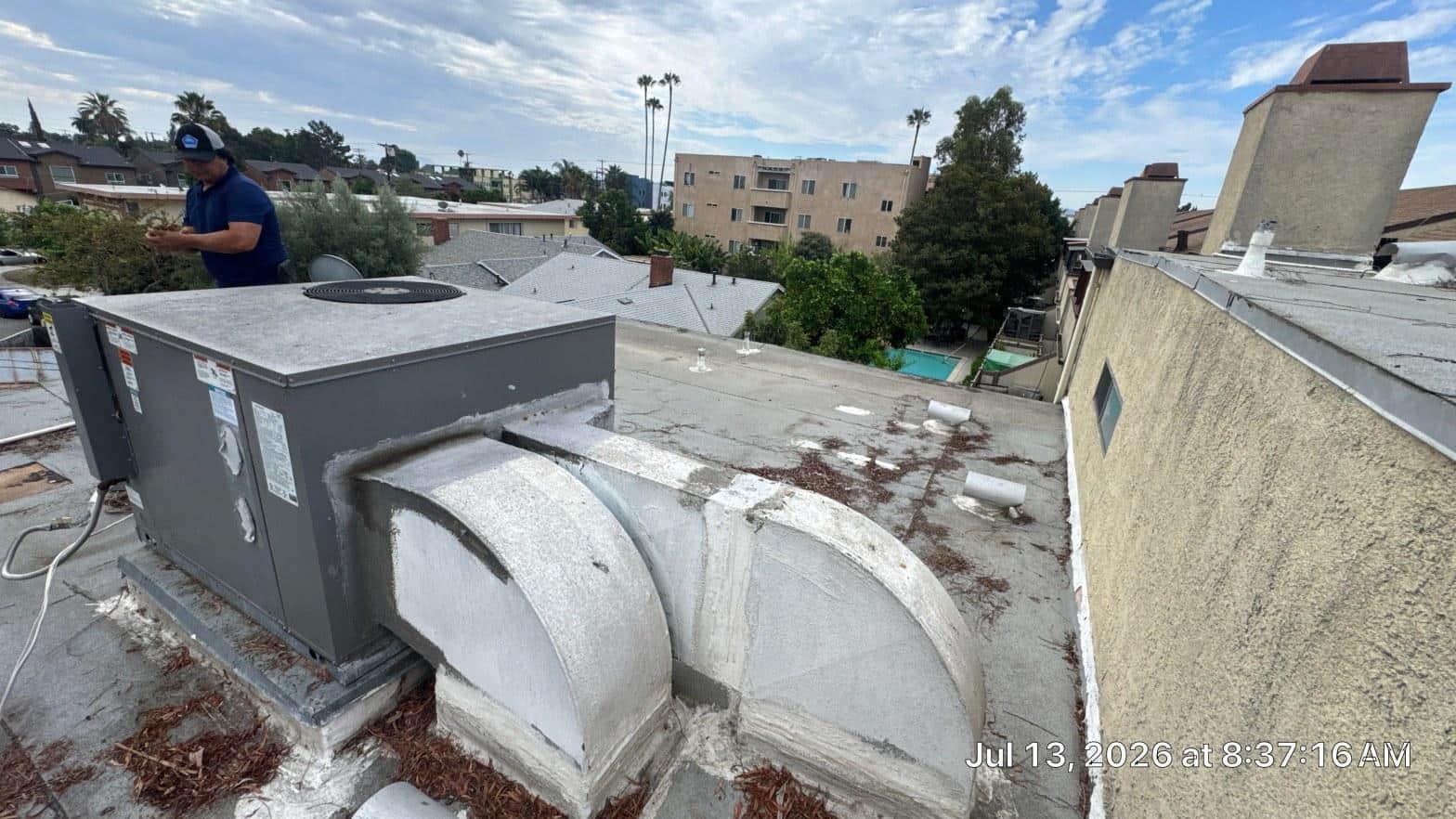
- Roof size and complexity: Penetrations like HVAC curbs, skylights, and drains each need hand-flashed detail work that adds time.
Always request a written, itemized quote before any work begins. A reputable contractor licensed by the California Contractors State License Board (CSLB) will specify the product name, coverage rate, number of coats, and warranty terms in writing. Call (213) 364-3979 to request a custom quote from Roof Replacement Inc.
How Do You Apply Elastomeric or Silicone Roof Coating Correctly?
Correct roof coating application follows a five-step sequence: inspect, clean, repair, prime if needed, and coat in two passes at the manufacturer’s specified coverage rate. Skipping or rushing any step shortens the coating’s life from 15 years to as few as 3 to 5 years.
- Full inspection: Walk the entire roof and mark all cracks wider than 1/16 inch, blistered areas, open seams, and any ponding zones. Document with photos before any cleaning begins.
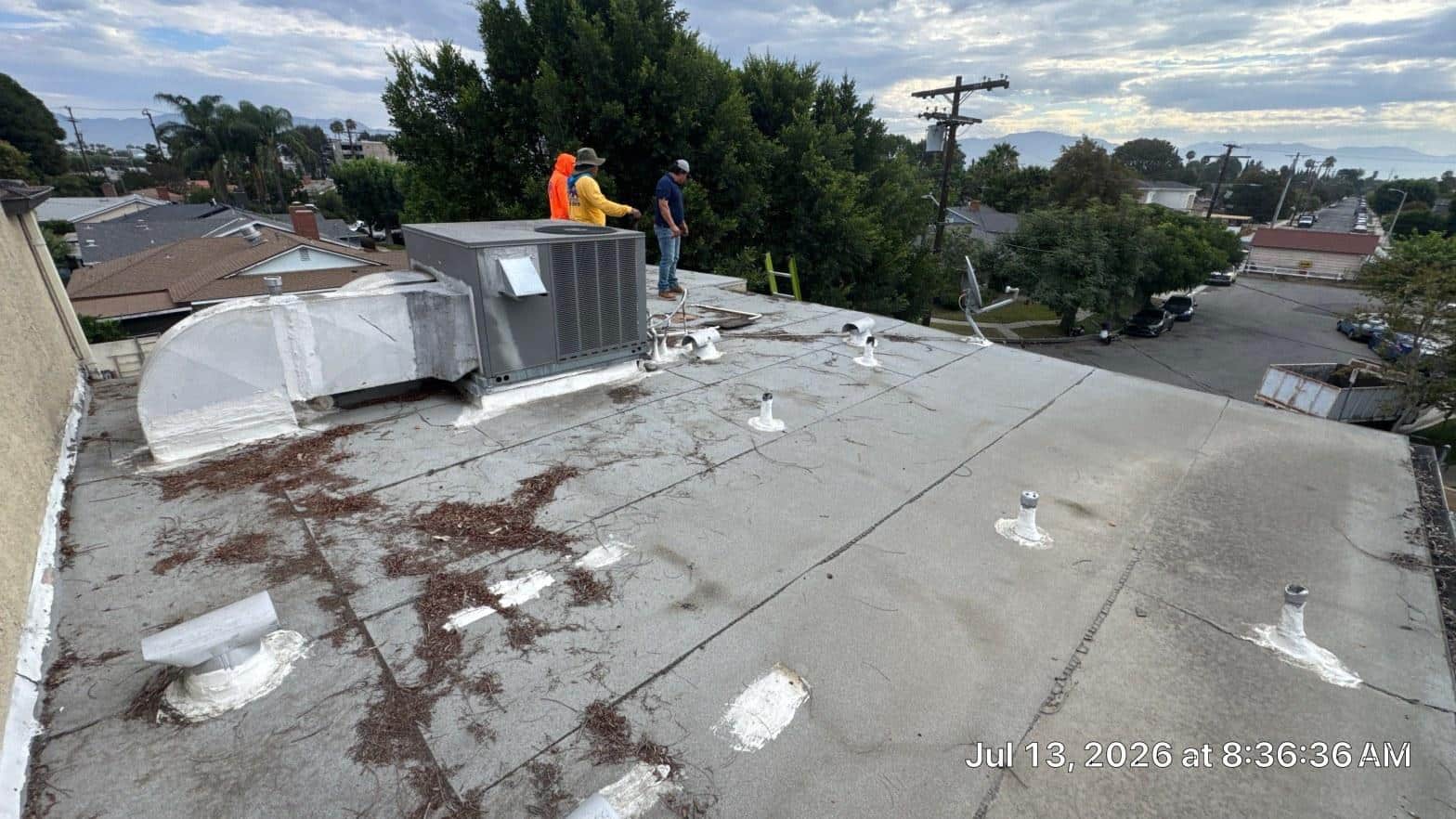
- Pressure washing: Clean the surface at 2,000 to 3,000 PSI to remove dirt, algae, and chalking. Allow the roof to dry completely, at least 24 to 48 hours in summer conditions, before applying any coating. Moisture trapped under coating is the top cause of blistering.
- Crack and seam repair: Fill cracks with compatible caulk or reinforcing fabric tape embedded in a base coat of the coating material. Open seams on flat roofs should be re-adhered and sealed before the full coating goes down.
- Primer application (when required): Metal roofs, concrete roofs, and roofs switching from asphalt-based to silicone products almost always need a bonding primer. Skipping primer on metal can cause delamination within one season.
- Two-coat application: Apply the first coat at the manufacturer’s specified rate, typically 1.0 to 1.5 gallons per 100 square feet. Allow it to cure for 4 to 8 hours before applying the second coat perpendicular to the first. Total dry film thickness should reach 20 to 30 mils for most products to qualify for a 10-year or longer warranty.
Temperature and humidity matter during application. Most coatings require air temperatures above 50°F and below 95°F, with no rain in the forecast for 24 hours. In California’s interior valleys, where July afternoons regularly exceed 100°F, early-morning application between 6 a.m. and 11 a.m. produces the best adhesion.
What Are the Most Common Roof Coating Mistakes to Avoid?
The three most damaging mistakes are applying coating over a wet or dirty surface, using the wrong product for the roof substrate, and applying too thin a coat to save material costs. Any one of these errors can cause the coating to peel within 12 to 24 months.
Across our service calls in Southern California, we find that roughly 40% of coating failures we’re asked to remediate trace back to inadequate surface prep, most often insufficient drying time after pressure washing or skipping crack repair entirely.
Across our service calls in Southern California, we find that roughly 40% of coating failures we're asked to remediate trace back to inadequate surface prep.
- Applying over moisture: Even a slightly damp surface traps water vapor under the membrane, causing bubbles and delamination within one to two summers.
- Wrong coating for the substrate: Using a standard acrylic coating on a flat roof with chronic ponding water causes the acrylic to re-emulsify and wash away within a year.
- Under-applying coverage: Thin coats fall short of the minimum dry film thickness needed for UV resistance and waterproofing. Always verify coverage with a wet film thickness gauge during application.
- Skipping seam and flashing detail work: Coating over open seams without mechanical repair just encapsulates the problem; water eventually finds its way through.
- Ignoring manufacturer cure times: Walking on or exposing the coating to rain before it fully cures damages the film. Most products need 24 to 72 hours of cure time before foot traffic.
- No roof certification before coating: Applying a coating to a structurally compromised roof can void both the coating warranty and your property insurance claim rights. A roof certification inspection confirms the deck is sound before money is spent on coating materials.
Does Roof Coating Qualify for Any California Rebates or Tax Credits?
Yes. Cool roof coatings that meet ENERGY STAR reflectance requirements may qualify for the Inflation Reduction Act federal tax credit of up to 30% of material costs under the energy-efficient home improvement credit (IRS Form 5695), as well as utility rebates through programs like SoCalREN across Southern California. The exact amount depends on the product’s SRI rating and the property type.
To qualify for the federal credit, the coating must meet the ENERGY STAR roof product criteria, which currently requires a minimum initial solar reflectance of 0.65 for steep-slope roofs and 0.75 for low-slope roofs. Products that carry the ENERGY STAR label will list their reflectance values on the data sheet.
California utility customers should check with their utility provider for cool-roof rebate programs. SoCalREN and local utility programs have offered rebates ranging from $0.10 to $0.25 per square foot on qualifying commercial cool-roof installations. These programs change annually, so confirm current availability when you request your quote.
Roofing contractors who are Licensed by the California Contractors State License Board (CSLB) can provide the documentation needed to claim these incentives, including product data sheets, SRI values, and installation receipts. Ask for all of this before the job closes.
Get Professional Roof Coating Help Before Summer Peaks
California’s hottest months run from June through September, and coating adhesion is best when applied in mild morning temperatures before the season’s peak. Scheduling a professional inspection and coating application in late spring or early summer gives the membrane time to fully cure before sustained 100°F days arrive.
This roof coating summer heat California guide covers the core decisions, but every roof has its own substrate, condition, and drainage profile. A qualified contractor will assess all of those factors before recommending a product and coverage rate.
Roof Replacement Inc serves homeowners and commercial property owners across Southern California. Schedule your roof coating inspection or request a written quote by calling (213) 364-3979. Get a written scope of work, product specification, and warranty terms before any application begins.
Explore our full range of roofing services across Southern California.
Frequently Asked Questions
What is elastomeric roof coating and how does it work?
Elastomeric roof coating is a thick, flexible liquid membrane made from acrylic or rubber-based polymers that stretches and contracts with the roof as temperatures change. It is applied in one or two coats and dries to a seamless, waterproof film that reflects UV rays and seals minor cracks. On California roofs, it can lower surface temperatures by 40 to 60 degrees Fahrenheit compared to an uncoated dark surface. It works on sloped shingle roofs, metal roofs, and modified bitumen surfaces.
What is the best roof coating for a flat roof in hot California weather?
Silicone roof coating is generally the best choice for flat or low-slope roofs in California because it resists ponding water without softening or re-emulsifying the way acrylic coatings can. It carries a high solar reflectance index, typically 85 to 110, which qualifies it as a cool roof under California's Title 24 building energy standards. Silicone coatings typically last 15 to 20 years with proper application at the correct dry film thickness of 20 to 30 mils. Always confirm the product meets ENERGY STAR reflectance criteria if you plan to claim a federal tax credit.
How do you apply silicone roof coating step by step?
Start by pressure-washing the roof at 2,000 to 3,000 PSI and letting it dry completely for at least 24 hours. Repair all cracks, open seams, and flashing gaps with compatible caulk or reinforcing fabric before any coating goes down. Apply a bonding primer if switching from an asphalt-based product or coating a metal surface. Then roll or spray two coats of silicone at the manufacturer's specified rate, letting the first coat cure for 4 to 8 hours before applying the second coat perpendicular to the first.
How long does a roof coating last on a California home?
A properly applied silicone coating lasts 15 to 20 years on a flat roof, while elastomeric acrylic coatings on sloped roofs typically last 10 to 15 years. The biggest factors affecting lifespan are surface prep quality, the number of coats applied, and whether the dry film thickness reaches the manufacturer's minimum, usually 20 to 30 mils. California's intense UV exposure can shorten coating life by 2 to 3 years if the product's SRI rating is below 78. Annual inspections help catch any cracking or delamination early before leaks develop.
Does roof coating stop heat from getting into my house?
Yes, a reflective roof coating significantly reduces the amount of heat transferred into a building by bouncing solar energy away before it converts to heat at the roof surface. A white elastomeric or silicone coating with a high solar reflectance index can lower attic temperatures by 20 to 30 degrees Fahrenheit on a peak summer day, which in turn reduces air conditioning load and cooling energy costs. The U.S. Department of Energy recognizes cool roofs as one of the most cost-effective building upgrades in hot climates like California's. The exact savings depend on insulation levels, roof size, and local utility rates.
Related Articles




What Our Clients Say








Roof Replacement Inc. offers professional, high-quality work, guaranteed (call for details); ensuring all clients projects meet all code and design requirements. We are dedicated to exceptional customer service and will strive to ensure you with the highest quality roofing services. Roof Replacement Inc. offers lifetime warranty (call for details) on all of our workmanship to ensure the quality of our work. With over 40 years of combined experience within the roofing and construction industry, Roof Replacement Inc. has grown and developed in all areas of roofing construction, including roof inspections. As a leading residential and commercial roofing company in LA, we have hundreds of references from previous clients, so rest assured, that your roofing job will be done right the first time. Replacing an old roof can help add curb appeal and will increase the perceived value of your home. First impressions are vital when selling your home, especially when your roof takes up more than half of the exterior of your residence or business. Not only is the return of investment on a new roof attractive for potential buyers, but can be as beneficial as remodeling the kitchen or bathrooms within your residence.

