A quality roof coating can lower attic temperatures by 40 to 60 degrees Fahrenheit on a hot California day, directly reducing how hard your air conditioner works. This guide breaks down how coatings save energy, which types work best, and what the process costs.
What Is a Roof Coating and How Does It Save Energy?
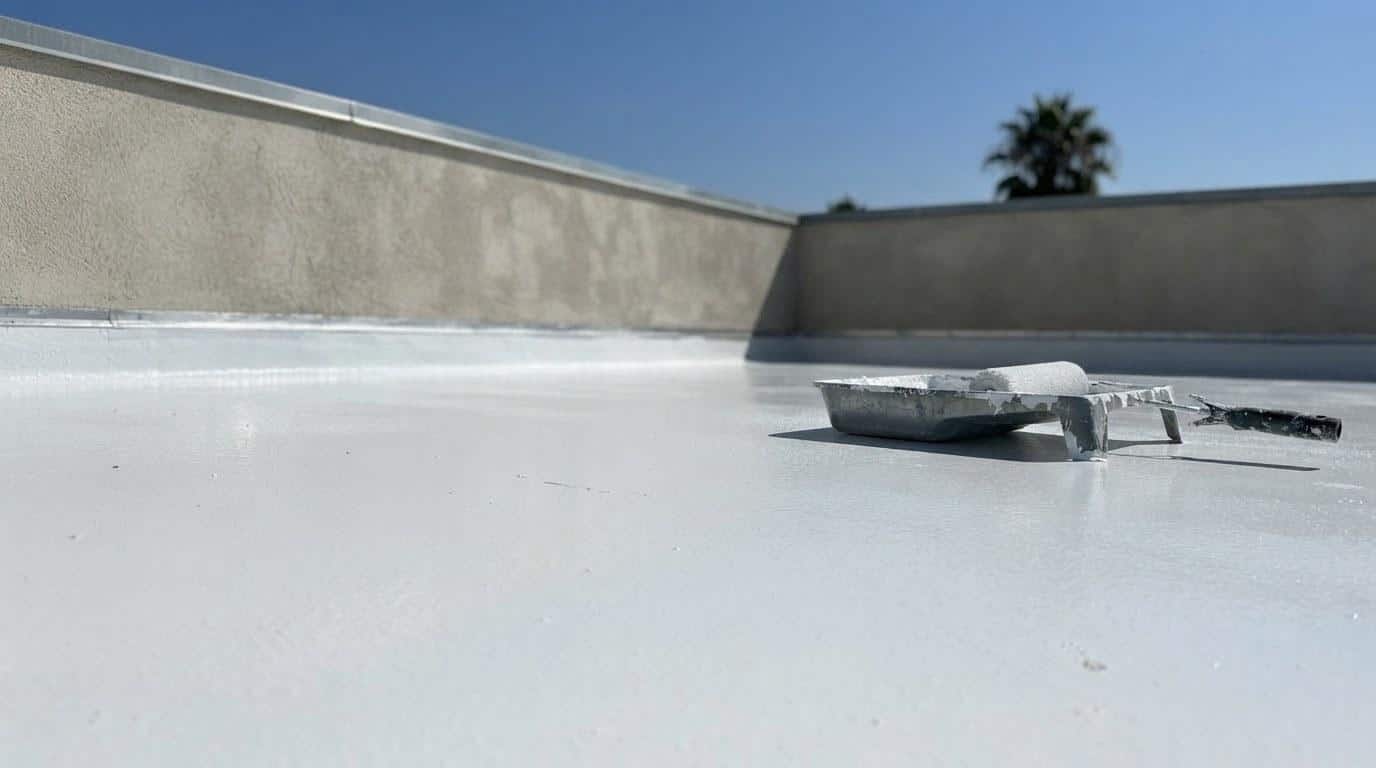
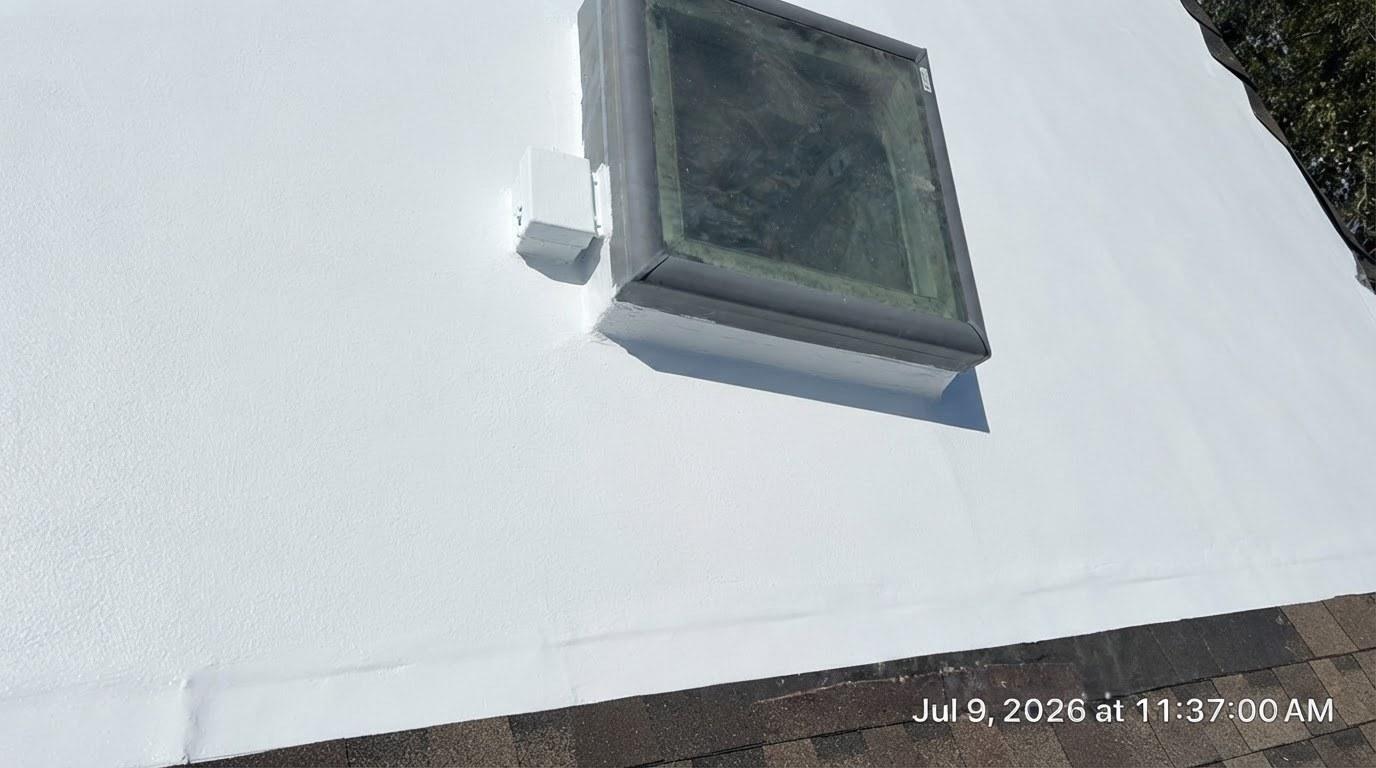
A roof coating is a thick, fluid-applied membrane that bonds directly to your existing roof surface and reflects solar radiation instead of absorbing it. This single layer can lower roof surface temperatures by 40 to 60 degrees Fahrenheit on a hot California afternoon, cutting the heat that bleeds into your attic and living spaces.
Standard dark roofing materials absorb up to 90 percent of incoming solar energy and convert it to heat. A high-reflectivity coating flips that equation, bouncing most of that energy back into the sky. The result is a cooler attic, less strain on your air conditioner, and a measurable drop in your monthly utility bill. This is the core idea behind every roof coating energy savings california guide you will find, and it holds up across nearly every roof type and California climate zone.
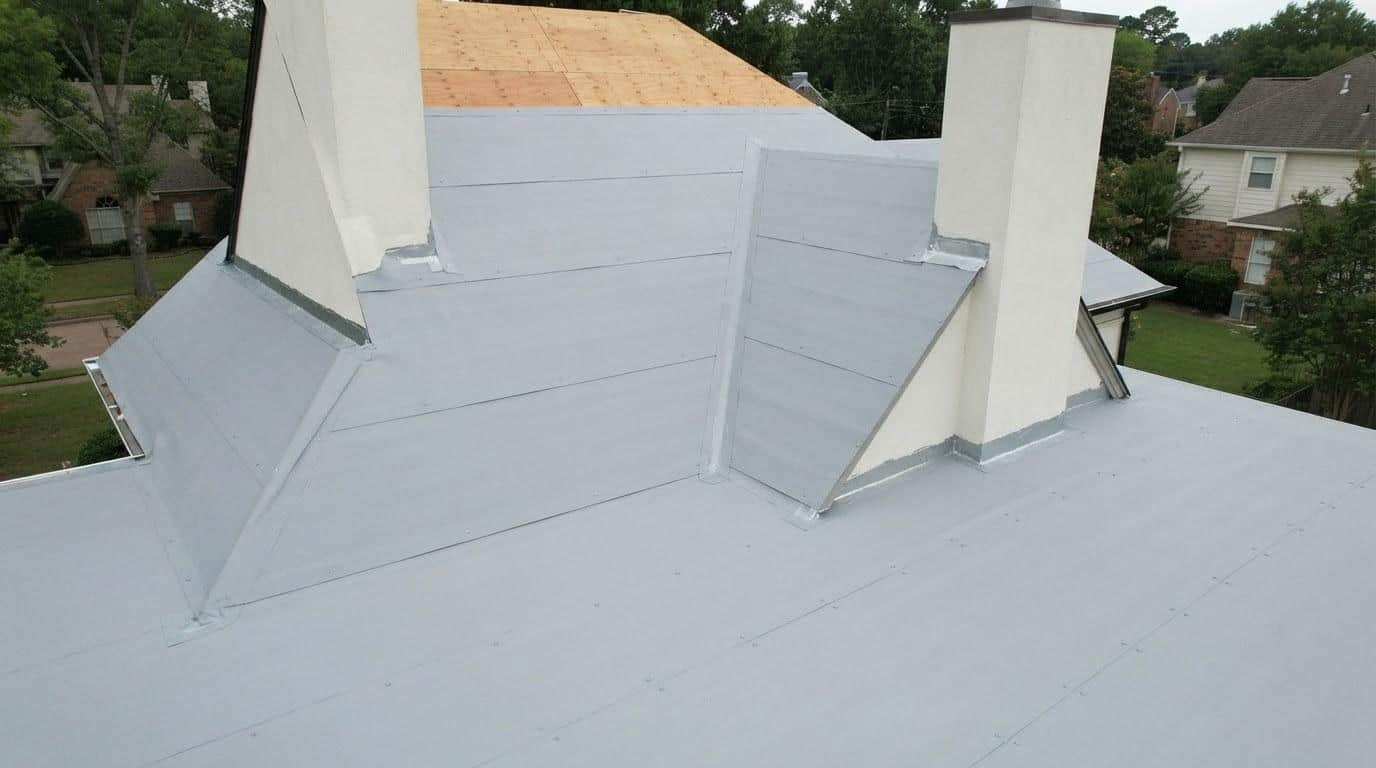
Coatings are not the same as a full roof replacement. They are applied over an existing, structurally sound roof and add a protective, reflective layer without the weight, cost, or disruption of tearing off and replacing shingles or tiles. For roofs in reasonable condition, they are one of the most cost-effective upgrades a California homeowner or building owner can make before summer arrives.
Which Type of Roof Coating Works Best for California Summers?
Elastomeric and silicone coatings are the two most widely used options for California’s hot, dry summers, and both perform well on flat or low-slope roofs. For steep-slope applications over tile or asphalt shingles, acrylic coatings are often the practical choice.
Each coating type has a distinct chemistry and a different performance profile. The table below compares the four main options so you can match the right product to your roof.
| Coating Type | Best Roof Surface | Solar Reflectance | Durability | Water Resistance |
|---|---|---|---|---|
| Elastomeric (acrylic-based) | Flat, metal, concrete | Up to 85% | 10 to 20 years with recoat | Good; not ideal for ponding water |
| Silicone | Flat, TPO, modified bitumen | Up to 90% | 15 to 25 years | Excellent; handles ponding water |
| Acrylic | Steep-slope, tile, shingles | Up to 80% | 8 to 15 years | Moderate; not for flat roofs |
| Polyurethane (foam-based) | Flat, irregular shapes | Up to 85% | 15 to 20 years with topcoat | Very good with protective topcoat |
Elastomeric coatings are the workhorse of the industry. They stretch and contract with temperature swings, which is critical in California where rooftop temperatures can swing 80 degrees Fahrenheit between a summer afternoon and a winter night. Silicone coatings outperform on flat roofs where water can pool after winter rains, because silicone does not degrade when submerged. Our crew replaces or recoats roughly 3 in every 10 flat commercial roofs in the region after failed acrylic applications that were used on surfaces with poor drainage, so matching the product to the roof geometry matters as much as picking a brand.
For homeowners with a tile roof, a breathable acrylic coating applied over the tile surface can improve reflectivity without trapping moisture under the tiles. This is a less common application but it is growing in popularity across Southern California as utility rates climb.
How Much Can a Roof Coating Actually Lower Your Energy Bills?
A properly applied cool-roof coating can reduce cooling energy use by 10 to 30 percent during peak summer months, according to data published by the U.S. Department of Energy. In California’s hottest inland climate zones, where air conditioners run for 5 to 6 months a year, those savings add up quickly.
A properly applied cool-roof coating can reduce cooling energy use by 10 to 30 percent during peak summer months, according to U.S. Department of Energy data.
The actual dollar figure depends on your roof size, your current roofing material, your local utility rate, and how well your attic is insulated. A 2,000-square-foot home with a dark flat roof in an inland valley can see monthly cooling bill reductions of $40 to $120 during July and August alone. Over a full summer season, that often totals $200 to $500 in avoided utility costs.
Beyond the direct energy savings, coatings extend roof life by shielding the substrate from ultraviolet degradation. UV exposure is the primary reason roofing membranes crack and blister, and California’s intense solar radiation accelerates that process faster than in most other states. A coating that adds 10 years to a roof that would otherwise need replacement in 5 years is itself worth thousands of dollars in deferred capital cost.
This roof coating energy savings california guide would be incomplete without noting the thermal mass effect. Coatings lower the peak temperature your roof reaches, which means less heat is stored and released into your living space at night. That overnight heat dump is a major reason California homes stay uncomfortably warm even after the sun goes down, and reducing it improves comfort as much as it reduces bills.
What Does Roof Coating Cost in California, and What Moves the Price?
In the California market, roof coating projects typically range from $1.50 to $4.50 per square foot for materials and labor, depending on coating type, roof condition, and accessibility. A 2,000-square-foot flat roof generally falls between $3,000 and $9,000 installed.
Several factors push that number higher or lower:
- Roof condition: Surfaces with cracks, blisters, or ponding damage need prep work before coating. Cleaning, patching, and priming can add $0.50 to $1.50 per square foot to the base price.
- Coating type: Silicone costs more per gallon than acrylic but requires fewer coats and lasts longer, so the lifetime cost often balances out.
- Number of coats: Most manufacturers require a minimum of 2 coats, with a dry film thickness of at least 20 mils, to qualify for warranty coverage and ENERGY STAR certification.
- Roof slope and accessibility: Steep-slope roofs and multi-story buildings require more safety equipment and labor time, which raises cost.
- Square footage: Larger roofs benefit from economies of scale; the per-square-foot cost typically drops on projects over 5,000 square feet.
- Warranty terms: Manufacturer-backed warranties of 10 to 20 years usually require a certified contractor and a specific application thickness, both of which affect labor cost.
Always request a written, itemized quote before work begins. A reputable roofing contractor will inspect the roof, document its current condition with photos, and specify the exact product, number of coats, and dry film thickness in the proposal. That documentation also matters if you later apply for a rebate or need to prove compliance with California’s Title 24 building energy standards.
Are There Rebates or Tax Credits for Roof Coatings in California?
Yes. California homeowners and building owners can access several programs that offset the cost of a cool-roof coating, including utility rebates, the TECH Clean California program, and the Inflation Reduction Act federal tax credit for energy-efficient home improvements.
Here is a breakdown of the main programs as of 2026:
- TECH Clean California: This statewide program funds contractor training and consumer rebates tied to energy-efficient upgrades. Cool-roof projects that meet the program’s reflectance thresholds may qualify for incentives through participating utilities.
- Inflation Reduction Act federal tax credit: The IRA’s Energy Efficient Home Improvement Credit (Section 25C) covers certain energy property improvements. Consult a tax professional to confirm whether your specific coating product and application qualify, as eligibility depends on meeting IRS criteria.
- Utility rebate programs: Southern California Edison and other investor-owned utilities periodically offer rebates for cool-roof installations on commercial properties. Rebate amounts and eligibility windows change annually, so check directly with your utility before starting a project.
- Title 24 compliance: New construction and major re-roofing projects in California must meet the cool-roof requirements of California’s Title 24 building energy standards. Meeting these standards is a requirement, not a rebate, but it confirms your coating meets a state-recognized performance threshold.
To access most of these programs, the coating must meet minimum solar reflectance and thermal emittance values, typically an initial solar reflectance of at least 0.70 and a thermal emittance of at least 0.75 for low-slope roofs. ENERGY STAR-labeled products publish their tested values, making it straightforward to confirm eligibility before purchase.
How Is a Roof Coating Applied, and What Should You Expect?
A professional roof coating application follows a defined sequence: inspection and documentation, surface cleaning, crack and blister repair, primer application if required, and then two or more coats of the chosen coating product. The full process on a 2,000-square-foot roof typically takes 2 to 4 days, depending on drying time between coats.
Here is the standard sequence step by step:
- Roof inspection: The contractor evaluates the existing surface for structural issues, moisture intrusion, and adhesion problems. A roof with active leaks or saturated insulation needs those issues resolved before coating.
- Pressure washing: The surface is cleaned to remove dirt, algae, oils, and loose material. Coating adhesion fails on a contaminated surface, so this step is non-negotiable.
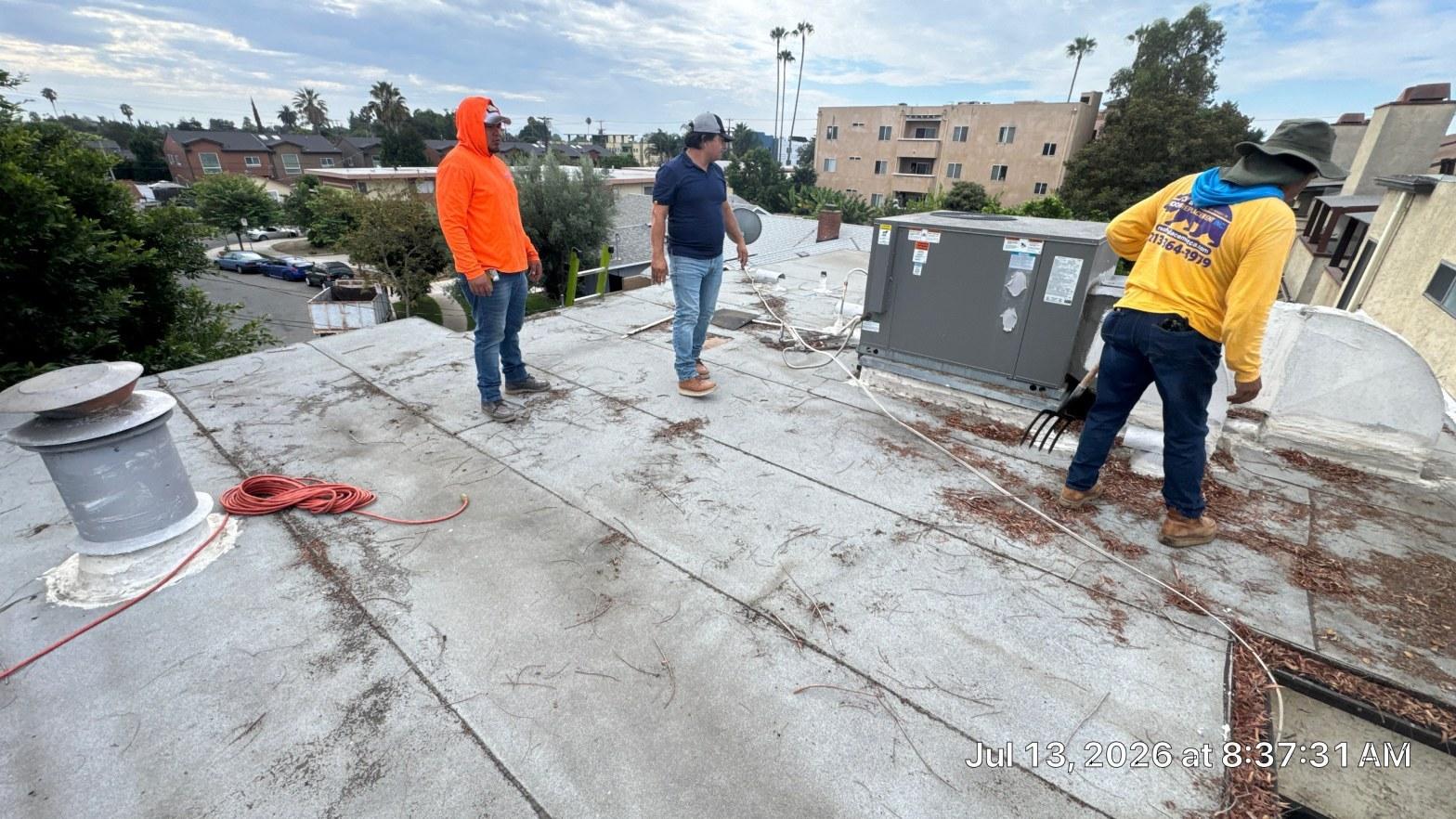
- Repairs: Cracks, blisters, open seams, and flashing gaps are patched with compatible sealants or fabric reinforcement. These repairs are typically visible in the final inspection photos.
- Primer: Some substrates, particularly metal and concrete, require a bonding primer to ensure the topcoat adheres properly.
- First coat: The coating is applied by roller, brush, or airless sprayer at the manufacturer’s specified coverage rate, usually 1 to 1.5 gallons per 100 square feet per coat.
- Drying time: Most coatings require 4 to 8 hours of dry time between coats, longer in high-humidity conditions. Rushing this step is one of the most common causes of premature coating failure.
- Second coat and inspection: The final coat brings the total dry film thickness to specification. The contractor measures thickness and documents the completed work for warranty and rebate purposes.
A contractor licensed by the California Contractors State License Board (CSLB) will carry the appropriate C-39 roofing license and general liability insurance. Always verify the license number at cslb.ca.gov before signing a contract. Across our service calls in Southern California, we find that roughly 1 in 4 coating failures we are asked to fix were applied by unlicensed operators who skipped the surface prep and primer steps, leaving the coating to peel within 12 to 18 months.
Roughly 1 in 4 coating failures we are asked to fix were applied by unlicensed operators who skipped the surface prep and primer steps, leaving the coating to peel within 12 to 18 months.
Ready to Start Saving? Get a Quote from Roof Replacement Inc
A roof coating is one of the highest-return upgrades a California property owner can make before summer heat peaks, and the right contractor makes the difference between a coating that lasts 20 years and one that peels in two.
Roof Replacement Inc serves homeowners and commercial property owners across Southern California. Whether you have a flat commercial roof, a low-slope membrane, or a residential tile roof, our team can assess your current surface, recommend the right coating product, and provide a written, itemized quote with no obligation.
Use this roof coating energy savings california guide as your starting point, then get the specifics your property needs. Call (213) 364-3979 to schedule your roof inspection and quote. Same-week appointments are available for most locations across the region.
Explore our full range of roofing services across Southern California.
Frequently Asked Questions
What is an elastomeric roof coating and how does it work?
An elastomeric roof coating is a thick, flexible membrane applied as a liquid that cures into a seamless, rubber-like layer over your existing roof. It works by reflecting solar radiation and expanding or contracting with temperature changes without cracking. Most elastomeric coatings achieve a solar reflectance of 75 to 85 percent, which directly reduces how much heat enters your attic. They are one of the most popular choices for California flat and low-slope roofs because of their durability and energy performance.
How do I know if my roof is a good candidate for a coating instead of a full replacement?
A roof is generally a good candidate for coating if it is structurally sound, free of active leaks, and does not have saturated insulation underneath the membrane. A professional inspection, including a moisture scan or core sample, can confirm whether the substrate is dry enough to coat. Roofs with widespread delamination, major structural damage, or more than 25 percent failed membrane area typically need replacement first. A roofing contractor licensed by the California Contractors State License Board (CSLB) can give you a clear recommendation after a physical inspection.
How long does a roof coating last on a California home?
Most professional-grade roof coatings last 10 to 20 years in California when applied at the correct thickness and maintained properly. Silicone coatings tend to last on the longer end of that range because they resist UV degradation and ponding water better than acrylic-based products. A recoat at the 10 to 15 year mark, which costs significantly less than the original application, can extend the life of the system another decade. Annual visual inspections help catch any areas that need spot repair before they become larger problems.
Can a roof coating help me meet California's Title 24 energy requirements?
Yes, in many cases a qualifying cool-roof coating can help a re-roofing project meet California's Title 24 building energy standards, which set minimum solar reflectance and thermal emittance values for roofing products. Low-slope roofs generally need an initial solar reflectance of at least 0.70 to comply. Products that carry an ENERGY STAR label or are listed in the Cool Roof Rating Council database have tested values that can be used to demonstrate Title 24 compliance. Your roofing contractor should be able to provide the product data sheet needed for a building department submittal.
How is a silicone roof coating different from an elastomeric coating?
Silicone coatings are made from a silicone polymer base that is inherently resistant to UV radiation and standing water, making them the preferred choice for flat roofs that experience ponding after rain. Elastomeric coatings are typically acrylic-based and perform very well on roofs with good drainage but can degrade faster when submerged for extended periods. Both types reflect solar heat effectively and can achieve similar energy savings. The right choice depends on your roof's slope, drainage design, and the climate zone your property sits in.
Related Articles




What Our Clients Say











Roof Replacement Inc. offers professional, high-quality work, guaranteed (call for details); ensuring all clients projects meet all code and design requirements. We are dedicated to exceptional customer service and will strive to ensure you with the highest quality roofing services. Roof Replacement Inc. offers lifetime warranty (call for details) on all of our workmanship to ensure the quality of our work. With over 40 years of combined experience within the roofing and construction industry, Roof Replacement Inc. has grown and developed in all areas of roofing construction, including roof inspections. As a leading residential and commercial roofing company in LA, we have hundreds of references from previous clients, so rest assured, that your roofing job will be done right the first time. Replacing an old roof can help add curb appeal and will increase the perceived value of your home. First impressions are vital when selling your home, especially when your roof takes up more than half of the exterior of your residence or business. Not only is the return of investment on a new roof attractive for potential buyers, but can be as beneficial as remodeling the kitchen or bathrooms within your residence.

