

Filing a roofing insurance claim in California involves documenting damage quickly, understanding your policy, and working with a licensed contractor. This guide walks you through every step.
What Does a Roofing Insurance Claim in California Actually Cover?
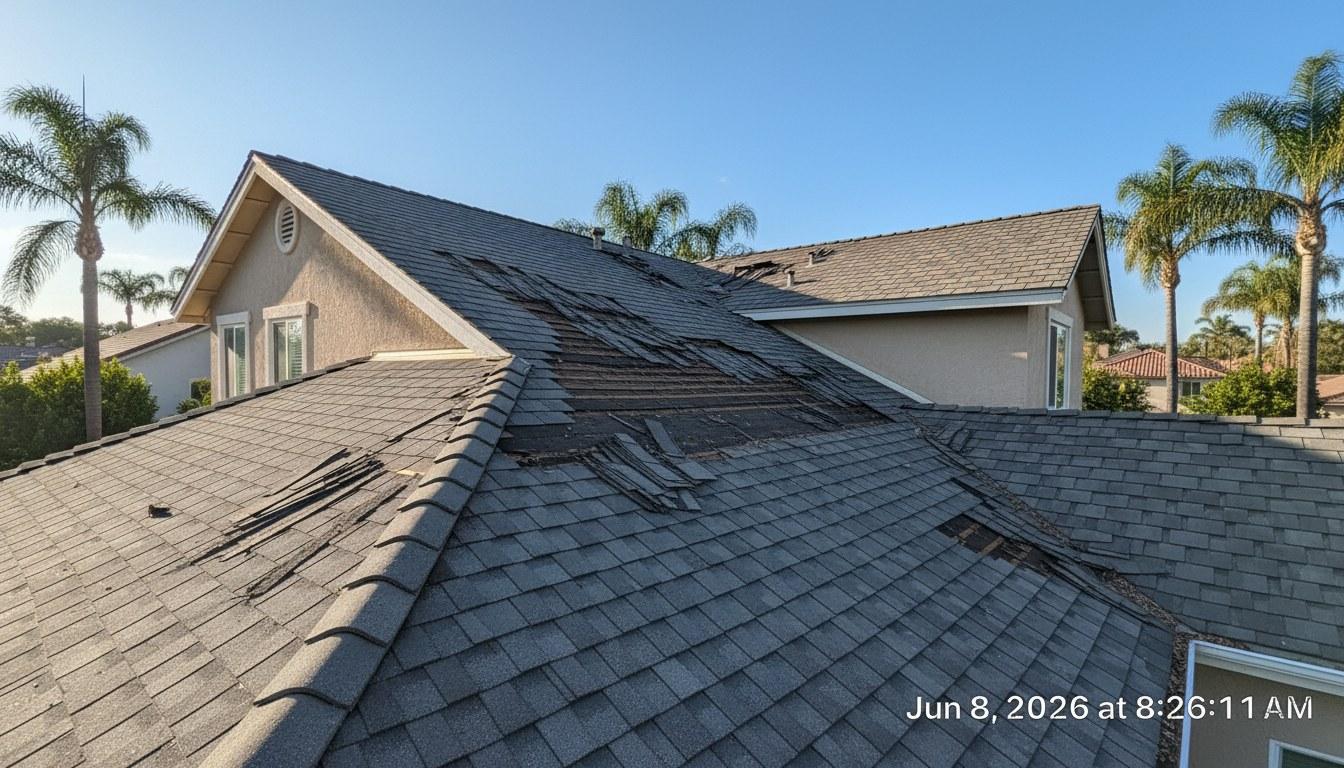
Most standard homeowners insurance policies in California cover sudden, accidental roof damage caused by wind, hail, fire, falling trees, and certain types of water intrusion. Damage from long-term wear, neglect, or lack of maintenance is typically excluded. Understanding exactly what your policy covers is the first step before you spend any time filing.
California’s wildfire exposure, Santa Ana wind events, and occasional severe rainstorms mean roof damage claims are filed across the state every year. Policies generally fall into two categories: Actual Cash Value (ACV), which pays the depreciated value of your roof, and Replacement Cost Value (RCV), which pays for a full replacement at today’s material prices. RCV policies cost more in premiums but pay out significantly more when you need them.
Here are the most common covered causes of roof damage in California:
- Wind damage: Gusts above 50 mph can lift shingles, crack tiles, and expose the underlayment. Santa Ana wind events regularly produce gusts over 70 mph in parts of Southern California.
- Fire and ember damage: Wildfire embers can ignite roofing materials from a distance, even if the main fire never reaches your property.
- Falling objects: Tree limbs, utility poles, and debris from neighboring structures are typically covered as sudden events.
- Hail impact: Less common in coastal areas but can cause significant granule loss and bruising on asphalt shingles.
- Weight of ice or snow: Relevant in mountain communities at elevations above 4,000 feet.
What is almost never covered: gradual leaks from aging materials, moss or algae deterioration, improper installation by a previous contractor, or damage that existed before your policy started. Insurers may also deny claims if they determine you failed to perform basic maintenance, so keeping records of past roof repairs matters.
How Do You Document Roof Damage Before Filing a Claim?
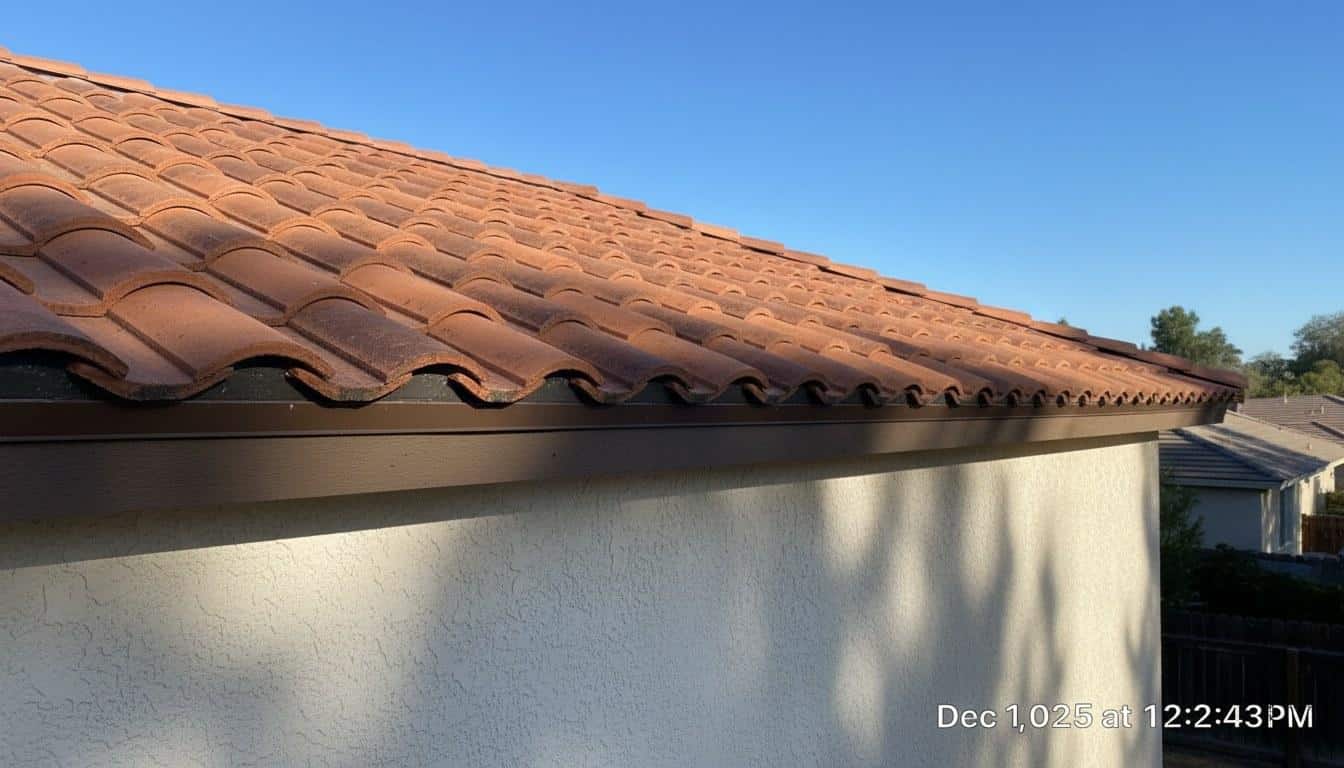
Thorough documentation within the first 24 to 48 hours after a storm or damage event is the single most important thing you can do to protect your claim. Photos, videos, and written notes taken immediately carry far more weight than evidence collected days later.
Start from the ground. Use a smartphone or camera to photograph the full exterior of your home, focusing on any visible damage to shingles, gutters, fascia, vents, and skylights. Then document interior signs of damage: water stains on ceilings, wet insulation in the attic, or daylight visible through the roof deck. Do not attempt to walk on a damaged roof yourself — a safe ground-level and attic inspection is enough for initial documentation.
Our team responds to storm-related calls across Southern California and we see roughly 60% of denied claims linked to insufficient early documentation — homeowners who waited more than a week to photograph damage often struggle to prove the event caused the loss rather than pre-existing wear.
Follow this documentation checklist before you call your insurer:
- Date and time stamps: Enable your phone’s location and timestamp feature so every photo is automatically tagged.
- Wide shots and close-ups: Capture the full roof plane in each wide shot, then move in for close-ups of cracked tiles, lifted shingles, or punctures.
- Interior water damage: Photograph any ceiling stains, wet drywall, or saturated attic insulation.
- Surrounding context: Show downed branches, debris on the roof, or damaged gutters that tie the damage to a specific weather event.
- Neighbor and weather records: Save screenshots of local weather alerts, and note whether neighbors experienced similar damage — this corroborates the event timeline.
- Temporary repairs log: If you place tarps or make emergency fixes to prevent further damage, photograph and document every step and save all receipts.
Temporary protective measures are almost always reimbursable under California policies, but you must keep itemized receipts. Spending a few hundred dollars on emergency tarping can prevent thousands of dollars in additional water damage that the insurer might otherwise argue was avoidable.
What Are the Steps to File a Roofing Insurance Claim in California?
Filing a roofing insurance claim in California follows a clear sequence: review your policy, notify your insurer, get a professional inspection, meet the adjuster, and negotiate the settlement before authorizing repairs. Skipping or rushing any step is where claims fall apart.
This roofing insurance claim California guide breaks the process into eight steps:
- Review your policy: Locate your declarations page and read the sections on covered perils, exclusions, deductibles, and claim filing deadlines. Most California policies require notice “as soon as practicable” after a loss.
- Complete your documentation: Follow the documentation steps in the previous section before making any calls.
- Contact your insurer: Call the claims line or file online through your insurer’s portal. You will receive a claim number — save it for every future communication.
- Get a licensed contractor inspection: Before the adjuster arrives, have a roofing contractor who is Licensed by the California Contractors State License Board (CSLB) inspect the damage and provide a written scope of work and estimate.
- Meet the insurance adjuster: Walk the adjuster through the damage with your contractor present if possible. Your contractor’s written estimate gives you a professional baseline to compare against the adjuster’s assessment.
- Review the claim settlement offer: The insurer will issue an Explanation of Benefits (EOB) detailing what they will pay. Compare it line by line against your contractor’s estimate.
- Negotiate or invoke appraisal: If the insurer’s offer is significantly lower than your contractor’s estimate, you can request a re-inspection, submit a supplemental claim, or invoke the appraisal process under California Insurance Code Section 2071.
- Authorize repairs: Once you reach an agreed settlement, authorize your roofing contractor to begin work. Do not sign any document that releases the insurer from future supplemental claims until all work is complete and inspected.
California’s Department of Insurance requires insurers to acknowledge claims within 15 days and accept or deny them within 40 days of receiving proof of loss. If your insurer misses these deadlines, you can file a complaint directly with the California Department of Insurance.
California's Department of Insurance requires insurers to acknowledge claims within 15 days and accept or deny them within 40 days of receiving proof of loss.
How Does the Insurance Adjuster Process Work for Roof Damage?
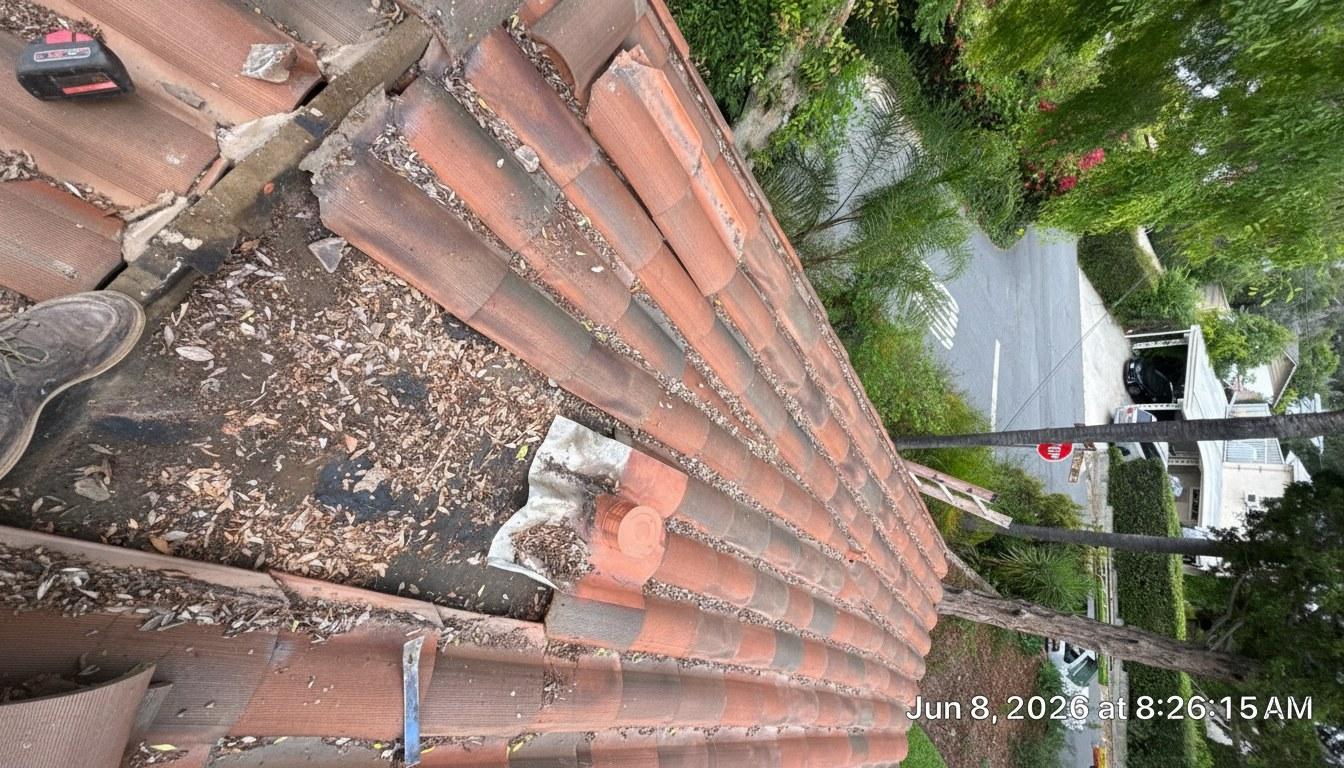
An insurance adjuster inspects your roof, measures the damaged area, and calculates a repair or replacement cost using proprietary estimating software — most commonly Xactimate. Their estimate is a starting point, not a final verdict.
Adjusters are either staff employees of the insurance company or independent contractors hired on a per-claim basis. Neither type is automatically adversarial, but their job is to apply the policy accurately — which sometimes means a lower initial offer than the actual repair cost. Having your own contractor’s written estimate in hand before the adjuster visit is the most effective way to ensure nothing is missed.
Common items adjusters undercount or miss on California roofs:
- Underlayment replacement: Adjusters sometimes price only shingle replacement when the felt or synthetic underlayment beneath is also damaged and must be replaced per California’s Title 24 building energy standards.
- Code upgrade costs: If your roof is older, current California building codes may require upgrades (such as fire-rated materials in high-hazard zones) that were not part of the original installation. These are often reimbursable as “code upgrade” or “ordinance and law” coverage if your policy includes it.
- Matching materials: California courts have generally supported the principle that insurers must replace damaged sections with materials that match the undamaged portions in color and appearance.
- Skylights, gutters, and flashing: These are frequently omitted from initial estimates even when wind or impact damage is visible.
- Interior water damage: Damage to attic insulation, sheathing, or interior ceilings caused by the roof breach is part of the same claim.
If the adjuster’s offer is lower than your contractor’s written estimate by more than 10-15%, request a line-by-line comparison and submit a formal supplement with supporting photos and material pricing. Most insurers will revise the estimate rather than dispute a well-documented supplement.
What Does Roof Repair or Replacement Cost After a Claim in California?
Roof repair costs in the California market typically range from $500 to $3,500 for localized repairs, while full roof replacements generally range from $9,000 to $25,000 or more depending on home size, pitch, and materials. Your out-of-pocket cost after a claim is primarily your deductible plus any depreciation holdback on an ACV policy.
The table below shows how key factors affect the final cost and how insurers typically treat each one:
| Cost Factor | Typical Impact on Total Cost | Insurer Coverage Consideration |
|---|---|---|
| Roof size (square footage) | Priced per roofing square (100 sq ft); larger roofs cost proportionally more | Covered in full under RCV; depreciated under ACV |
| Roofing material | Asphalt shingles: lower cost; concrete tile or metal: 2-3x higher | Insurer pays for like-kind material; upgrades are homeowner’s expense |
| Roof pitch and complexity | Steep or multi-faceted roofs add 20-40% in labor | Covered as part of the replacement cost calculation |
| Decking damage | Rotted or cracked sheathing adds $1,500-$4,000 to scope | Covered if caused by the insured event; excluded if pre-existing |
| Code upgrades | Fire-rated materials in WUI zones can add $2,000-$6,000 | Covered only if policy includes Ordinance and Law coverage |
| Deductible | Typically 1-2% of dwelling coverage for wind/hail in CA | Always homeowner’s responsibility; cannot be waived by contractor |
Across our service calls in Southern California, we see homeowners most surprised by the gap between an ACV payout and the actual replacement cost — on a 10-year-old composition shingle roof, depreciation can reduce the insurer’s initial check by 30 to 50 percent compared to the full replacement cost.
On a 10-year-old composition shingle roof, depreciation can reduce the insurer's initial check by 30 to 50 percent compared to the full replacement cost.
If your policy is ACV, you can recover the depreciation holdback (called the “recoverable depreciation”) once repairs are completed and you submit the final invoice to your insurer. This step is often skipped, leaving homeowners with thousands of dollars uncollected. Always request your recoverable depreciation payment after work is done.
For a precise estimate on your specific home, contact Roof Replacement Inc at (213) 364-3979 for a written scope and cost breakdown you can submit directly to your insurer.
What Mistakes Can Kill Your Roofing Insurance Claim?
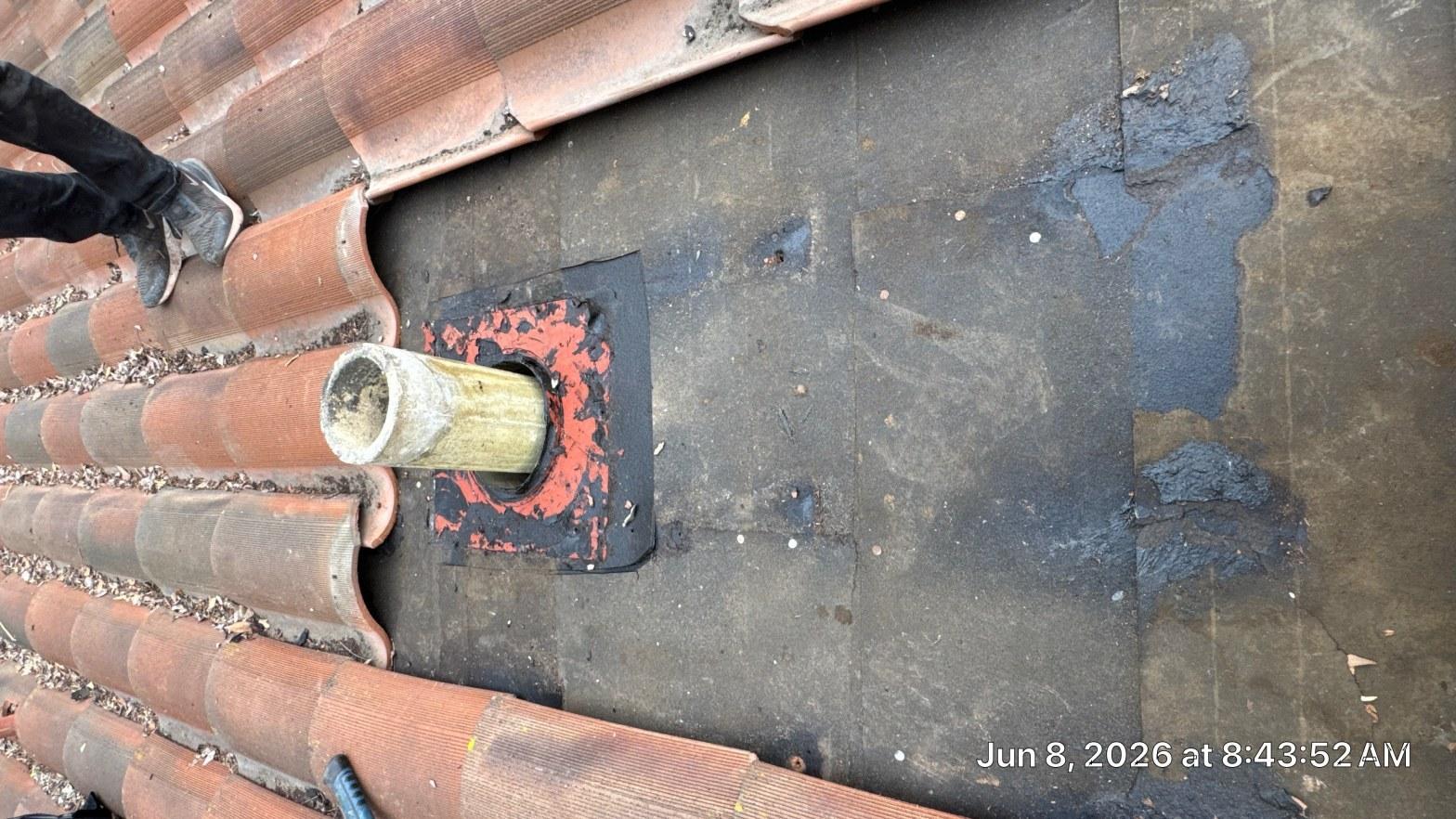
The most common reasons California roofing claims are denied or underpaid are late reporting, poor documentation, signing away rights too early, and working with unlicensed contractors. Each of these is avoidable with the right preparation.
Watch out for these claim-killing mistakes:
- Waiting too long to report: Most California policies require prompt notice. Waiting more than 30 days after a storm to file gives the insurer grounds to argue the damage was pre-existing or worsened by neglect.
- Accepting the first offer without review: Initial settlement offers are frequently lower than the actual cost of compliant repairs. Always compare the insurer’s estimate to a licensed contractor’s written scope before signing anything.
- Signing a full release too early: Some settlement documents release the insurer from all future claims related to the event. Do not sign a final release until all repairs are completed and inspected.
- Using an unlicensed contractor: In California, any roofing project over $500 requires a contractor licensed by the CSLB. Insurers can use unlicensed work as grounds to deny future related claims, and you have no legal recourse if the work fails.
- Letting a storm chaser waive your deductible: Contractors who offer to waive your deductible in exchange for signing over your claim rights are engaged in insurance fraud under California law. This can void your policy.
- Ignoring the appraisal clause: If you and your insurer cannot agree on the loss amount, California policies include an appraisal process that is faster and cheaper than litigation. Most homeowners never use it but should.
- Skipping the roof certification step: Some insurers require a roof certification — a formal inspection report — before issuing a new policy or after a claim. Having this document from a licensed contractor strengthens your position throughout the process.
One more critical point: the Inflation Reduction Act federal tax credit does not apply to standard insurance-funded repairs, but if you choose to upgrade to energy-efficient roofing materials (such as ENERGY STAR-rated cool roof products) while the roof is already being replaced, you may qualify for a separate federal tax credit of up to 30% on the upgrade cost above what insurance covers. Consult a tax professional for your specific situation.
Ready to Move Forward? Get Expert Help Now
Navigating a roofing insurance claim in California is faster and less stressful when you have a licensed roofing contractor in your corner from day one. A professional inspection report and written estimate give you the documentation your insurer needs and a baseline to negotiate from if the first offer falls short.
Roof Replacement Inc works with homeowners across Southern California on insurance-related roof repairs and full roof replacements. We provide detailed written scopes, photo documentation packages, and can meet your adjuster on-site to walk through the damage together.
Whether you need a quick repair after a wind event or a full residential roofing replacement following a major storm, call Roof Replacement Inc at (213) 364-3979 to schedule your inspection. Get a written estimate in hand before you accept any settlement offer — it costs nothing to know what your repair actually requires.
Explore our full range of roofing services across Southern California.
Frequently Asked Questions
How long do I have to file a roof damage insurance claim in California?
Most California homeowners insurance policies require you to report damage "as soon as practicable" after the event, and many include a one-year deadline from the date of loss to file a formal claim. Some policies allow up to two years, but waiting longer than 30 days after a storm significantly increases the risk of denial. Always check your specific policy's notice and filing requirements as soon as damage occurs.
Will my insurance cover a full roof replacement or just repairs?
Whether your insurer pays for full roof replacements or only repairs depends on the extent of the damage and your policy type. If more than 25-30% of the roof surface is damaged, most adjusters will approve a full replacement rather than a patchwork repair. Replacement Cost Value policies pay for a full new roof at current prices; Actual Cash Value policies subtract depreciation, which can be significant on roofs older than 10 years.
Can I repair my roof before the insurance adjuster comes out?
You should make temporary emergency repairs — like tarping exposed areas — to prevent further damage, and these costs are almost always reimbursable. However, do not perform permanent repairs or replace roofing materials before the adjuster inspects the damage, as this can make it impossible to document the original loss. Photograph all temporary repairs thoroughly and save every receipt.
What happens if my insurance company's estimate is lower than my contractor's estimate?
If the insurer's estimate is lower than your licensed contractor's written scope, you have several options. First, submit a formal supplement with itemized photos and current material pricing — most insurers will revise the estimate when presented with clear evidence. If you still cannot agree, California policies include an appraisal clause where each party selects an independent appraiser, and a neutral umpire resolves the difference. You can also file a complaint with the California Department of Insurance.
Do I need a licensed roofing contractor for an insurance claim repair in California?
Yes. Any roofing project over $500 in California legally requires a contractor licensed by the California Contractors State License Board (CSLB). Using an unlicensed contractor can void your warranty, expose you to liability if a worker is injured on your property, and give your insurer grounds to deny future related claims. Always verify a contractor's CSLB license number at cslb.ca.gov before signing any contract.
Related Articles




What Our Clients Say











Roof Replacement Inc. offers professional, high-quality work, guaranteed (call for details); ensuring all clients projects meet all code and design requirements. We are dedicated to exceptional customer service and will strive to ensure you with the highest quality roofing services. Roof Replacement Inc. offers lifetime warranty (call for details) on all of our workmanship to ensure the quality of our work. With over 40 years of combined experience within the roofing and construction industry, Roof Replacement Inc. has grown and developed in all areas of roofing construction, including roof inspections. As a leading residential and commercial roofing company in LA, we have hundreds of references from previous clients, so rest assured, that your roofing job will be done right the first time. Replacing an old roof can help add curb appeal and will increase the perceived value of your home. First impressions are vital when selling your home, especially when your roof takes up more than half of the exterior of your residence or business. Not only is the return of investment on a new roof attractive for potential buyers, but can be as beneficial as remodeling the kitchen or bathrooms within your residence.

