Southern California summers are brutal on roofs. This 2026 summer roof maintenance checklist walks you through every inspection, repair, and prevention task to keep your home protected all season.
Why Does Summer Heat Hit Southern California Roofs So Hard?
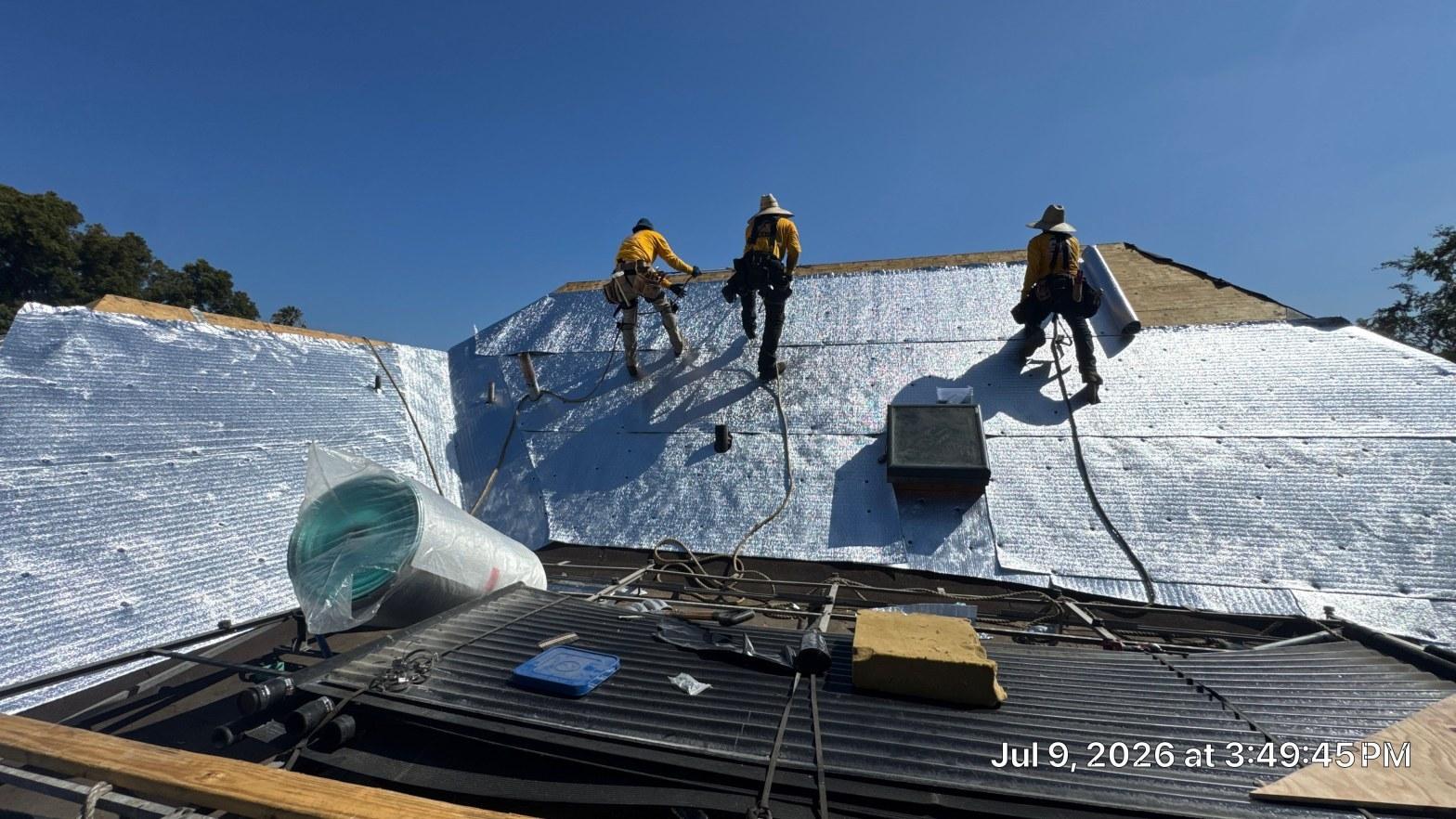
Southern California summers combine intense UV radiation, sustained heat above 95°F, and periodic monsoon moisture — a combination that degrades roofing materials faster than nearly any other climate in the contiguous U.S. The National Oceanic and Atmospheric Administration (NOAA) records average July high temperatures across inland Southern California consistently topping 100°F, with roof surface temperatures often running 50°F to 70°F hotter than the ambient air.
That means a shingle or tile surface can reach 160°F to 170°F on a clear July afternoon. At those temperatures, asphalt shingles lose granules more rapidly, sealant strips soften and shift, and flashing adhesives can separate from the substrate.
Our crew sees roughly 3 to 4 times more heat-blister calls in July and August than in any other two-month stretch of the year, and the majority trace back to roofs that skipped a pre-summer inspection. A checklist-driven approach catches those vulnerabilities before the heat cycle does its worst damage.
What Is Your Complete Summer Roof Maintenance Checklist?
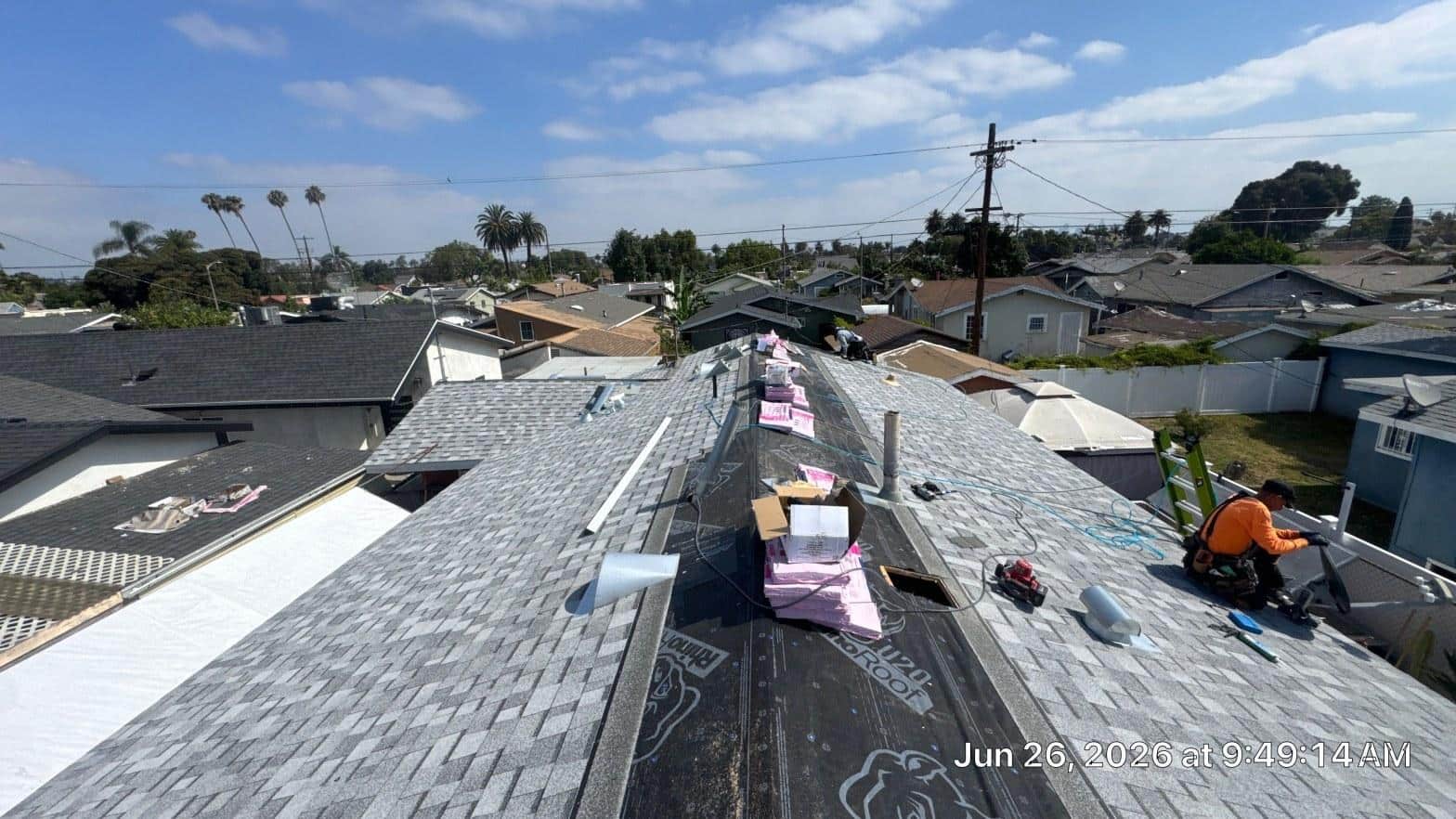
A thorough summer roof maintenance checklist covers eight core areas: shingles or tiles, flashing, gutters, soffits and fascia, attic ventilation, skylights, caulking and sealants, and interior ceilings. Work through each area methodically, ideally in the morning before surface temperatures climb.
Below is a task-by-task reference table covering frequency and whether each item is safe to handle yourself or requires a licensed professional.
| Task | Frequency | DIY or Pro? |
|---|---|---|
| Visual shingle / tile inspection from ground level | Monthly in summer | DIY |
| Close-up shingle granule check and cracking inspection | Once per season | Pro recommended |
| Flashing inspection at chimneys, vents, and valleys | Once per season | Pro |
| Gutter cleaning and downspout flush | Before and after monsoon season (July–Sept) | DIY or Pro |
| Attic ventilation check (intake and exhaust) | Once per season | DIY (visual) / Pro (airflow test) |
| Skylight seal and glazing inspection | Once per season | Pro |
| Caulk and sealant condition check | Once per season | DIY (visual) / Pro (application) |
| Interior ceiling and attic moisture scan | After any rain event | DIY (visual) / Pro (moisture meter) |
| Soffit and fascia rot or pest damage check | Once per season | DIY (visual) / Pro (repair) |
| Full professional roof certification inspection | Annually, ideally before June | Pro |
Completing all 10 tasks takes most homeowners about 2 to 3 hours for the DIY portions. Scheduling the professional items as a single visit keeps disruption minimal.
What Should You Inspect Season by Season?
In Southern California, the roofing calendar breaks into four distinct windows: pre-summer prep (April–May), peak heat management (June–August), monsoon response (July–September), and post-summer assessment (October–November). Each window has its own priorities.
Spring Prep (April – May)
- Clear winter debris: Remove leaves, branches, and dirt that collected over winter and can trap moisture against roofing materials.
- Inspect for winter storm damage: Look for lifted shingles, cracked tiles, or displaced ridge caps caused by seasonal winds.
- Check attic insulation levels: The U.S. Department of Energy recommends R-38 to R-60 attic insulation for most of Southern California’s climate zones — thin insulation forces your HVAC to work harder and accelerates sheathing degradation.
- Reapply flashing sealant: Cold nights and warm days cause expansion and contraction that can open small gaps at flashing joints over winter.
Peak Heat (June – August)
- Check granule loss in gutters: Excessive granules in gutters after a dry spell signal accelerated UV breakdown — typical shingles begin shedding granules heavily after 15 to 20 years in this climate.
- Test attic temperature: A well-ventilated attic should stay within 10°F to 15°F of the outdoor air temperature. Readings 30°F or more above outdoor air indicate a ventilation problem that shortens shingle life.
- Look for heat blistering on flat or low-slope sections: Blisters larger than a quarter need professional evaluation before they crack open.
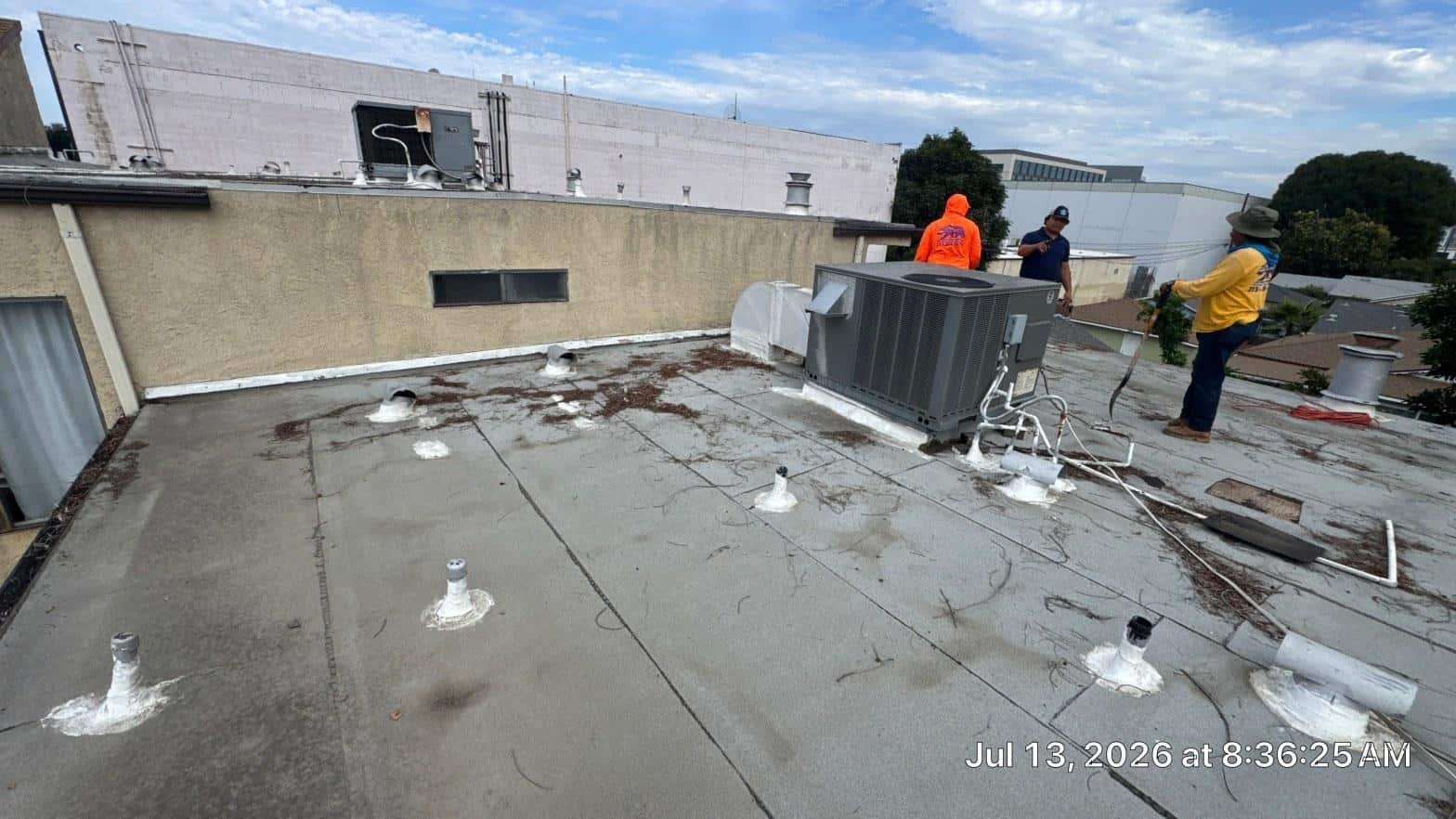
- Inspect HVAC penetrations: Rooftop HVAC units and their curb flashings are common leak points when sealants soften in extreme heat.
Monsoon Response (July – September)
- Clear gutters before each rain event: Southern California’s dry-season debris accumulates fast; a clogged gutter during a monsoon surge can back water under eaves within minutes.
- Walk the interior after rain: Check ceilings, attic decking, and top-floor walls for new staining within 24 hours of any rainfall.
- Document any new damage with photos: Timestamped photos support insurance claims and help a roofing contractor pinpoint the exact failure point.
Post-Summer Assessment (October – November)
- Full surface re-inspection: A season of UV and heat stress often reveals new cracking or curling that was not visible in spring.
- Schedule any deferred repairs: Roofing contractors across the region book out quickly in October; scheduling early avoids a winter backlog.
- Review roof certification status: Many California lenders and insurers require a current roof certification — typically valid for 2 to 5 years — before closing or renewing a policy.
How Do You Know When a Repair Is Not Enough?
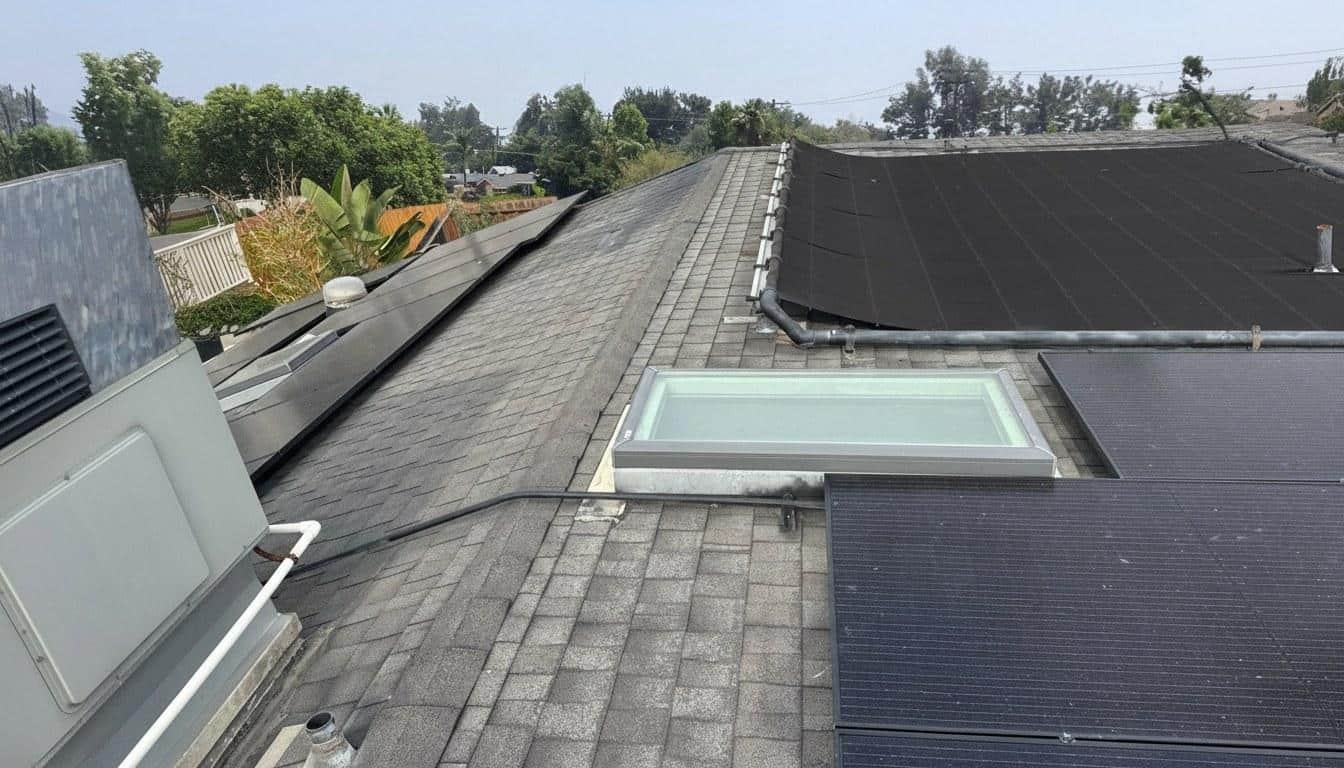
A roof repair makes sense when damage is limited to one or two isolated areas and the surrounding material still has 5 or more years of useful life remaining. When damage covers more than 30% of the surface, or the roof is already 20-plus years old, replacement typically delivers better long-term value than patching.
When damage covers more than 30% of the surface, or the roof is already 20-plus years old, replacement typically delivers better long-term value than patching.
In the regional market, targeted repairs on residential roofs typically range from $350 to $1,500 depending on the scope and material. Full residential roof replacement in Southern California generally runs from $8,000 to $25,000 or more, driven by roof size (measured in squares — one square equals 100 sq ft), pitch, material choice, and permit requirements under California’s Title 24 building energy standards.
Use this decision guide to frame the repair-versus-replace conversation with your contractor:
| Condition | Likely Action | Why |
|---|---|---|
| 1-2 cracked or missing shingles, roof under 15 years old | Spot repair | Surrounding material still structurally sound |
| Granule loss across multiple slopes, shingles curling | Evaluate for replacement | UV degradation is system-wide, not isolated |
| Active leak traced to failed flashing only | Flashing repair or replacement | Flashing fails independently of the field material |
| Roof over 20 years old with multiple leak points | Full replacement | Cumulative degradation makes patch repair uneconomical |
| Flat or low-slope membrane with ponding water and cracks | Membrane replacement | Patched membranes re-fail at adjacent seams within 1-3 seasons |
Always request a written scope of work and get at least two quotes before committing to a full replacement. Contractors who are Licensed by the California Contractors State License Board (CSLB) are required to provide a written contract for jobs over $500 — verify any contractor’s license at the CSLB website before signing.
What Does a Professional Roof Inspection Include?
A professional residential roof inspection typically takes 45 to 90 minutes and covers the full exterior surface, all penetrations, the attic deck, insulation, and ventilation system — producing a written condition report with photos. This is more thorough than a visual walk-around and uses tools like a moisture meter, infrared thermometer, and binoculars for steep-pitch areas.
Here is what a qualified inspector evaluates:
- Field material condition: Shingle granule coverage, tile integrity, membrane seam adhesion, and overall weathering grade.
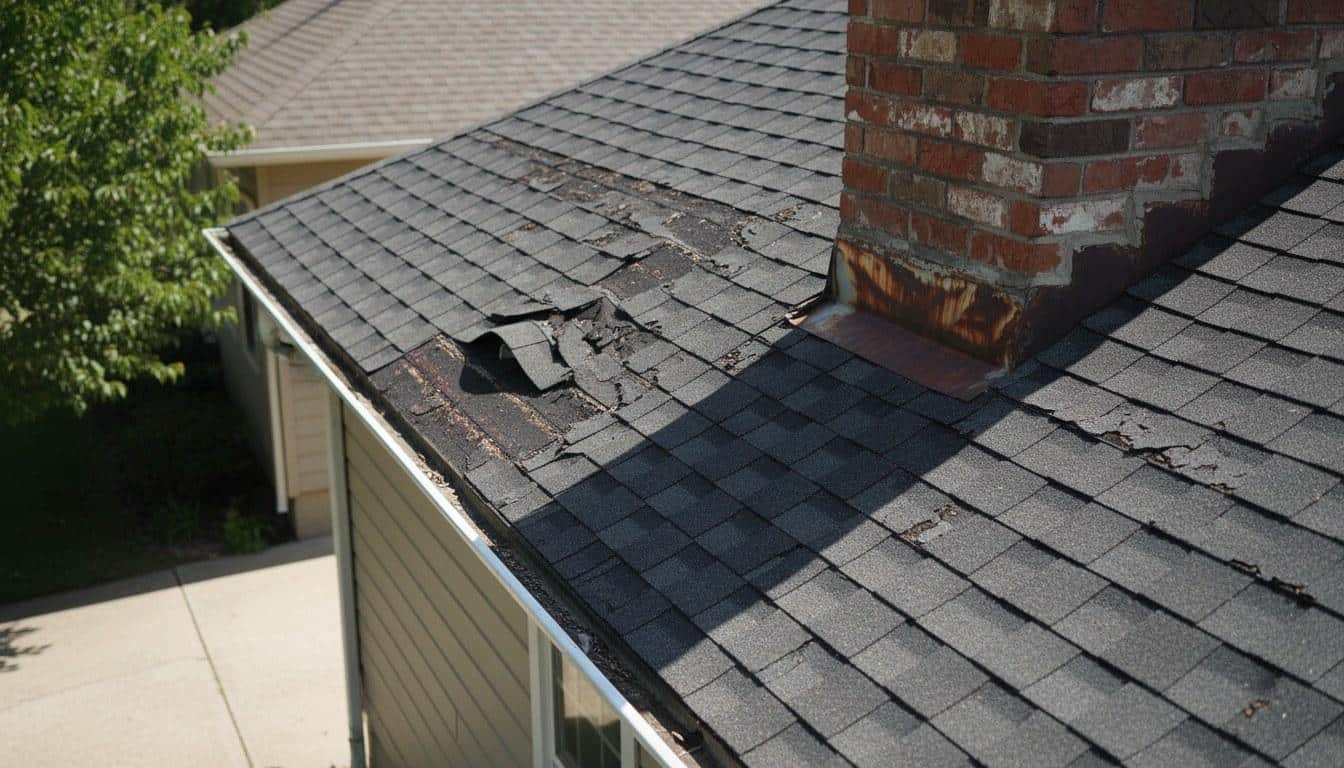
- Flashing at all penetrations: Chimneys, plumbing vents, HVAC curbs, skylights, and valley intersections — these are the most common leak origins.
- Deck sheathing: Soft spots, delamination, or rot in the plywood or OSB beneath the surface material.
- Attic ventilation balance: Intake area (soffits) versus exhaust area (ridge or power vents) — an imbalanced system traps heat and moisture that degrades sheathing from below.
- Gutter and drainage system: Slope, attachment, and downspout discharge away from the foundation.
- Roof certification eligibility: If the roof passes inspection, the contractor can issue a roof certification document, typically valid for 2 to 5 years, which many California insurers and lenders require.
Our inspectors find that roughly 60% of Southern California homes they visit have at least one flashing issue that the homeowner was unaware of — a statistic that underscores why visual DIY checks from the ground are a starting point, not a substitute for a professional assessment.
What Warning Signs Should You Watch for Between Inspections?
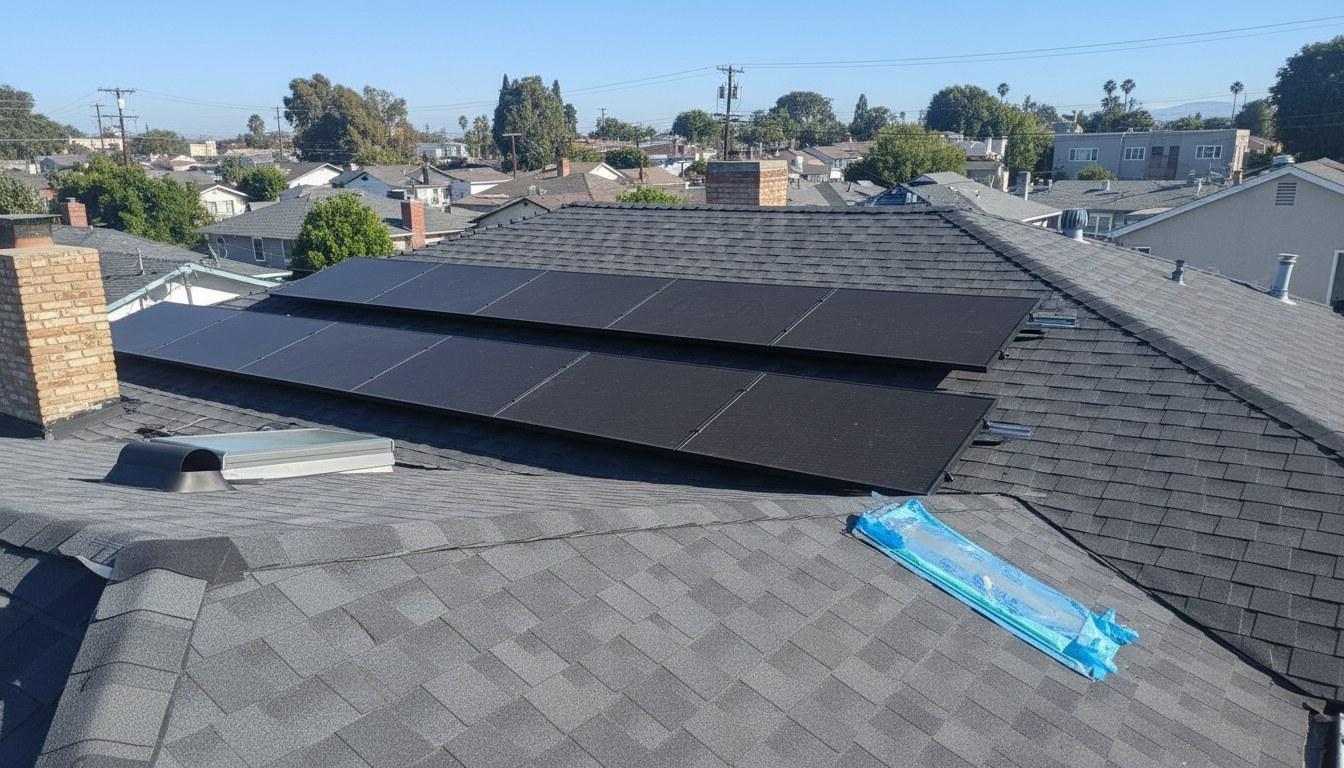
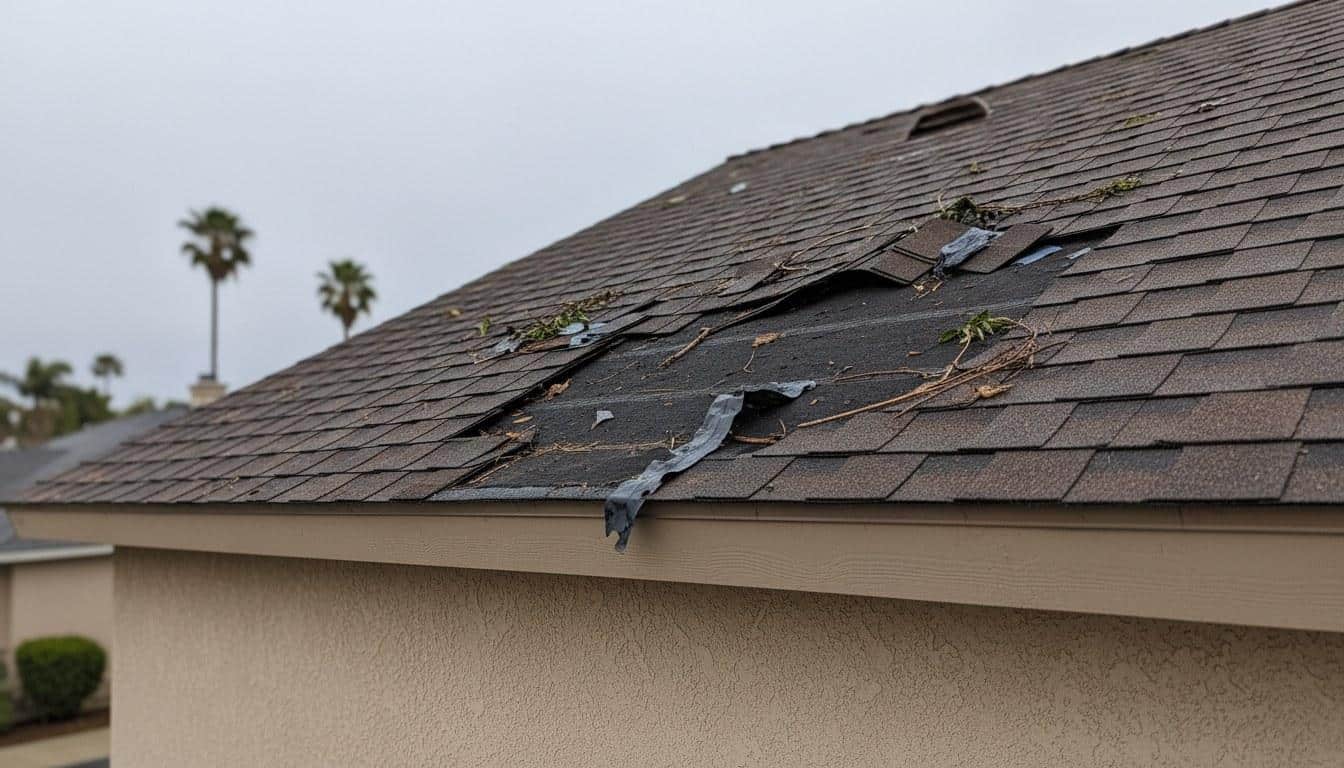
Between scheduled inspections, seven specific warning signs indicate you should call a roofing contractor promptly rather than waiting for your next annual service. Catching these early can mean the difference between a $400 repair and a $12,000 emergency replacement.
- Dark staining on interior ceilings: Even a small water stain the size of a dinner plate signals active moisture intrusion. The leak source is rarely directly above the stain.
- Granules collecting in gutters or at downspout outlets: A small amount is normal; a thick layer after a dry period means accelerated shingle breakdown.
- Shingles that are curling, cupping, or buckling: These shapes indicate the shingle has lost flexibility and is no longer lying flat against the deck, creating wind-lift vulnerability.
- Visible daylight in the attic: Any point where outdoor light enters the attic through the roof deck is an open water pathway.
- Sagging sections on the roof plane: A dip or wave in an otherwise flat slope suggests decking damage or rafter failure beneath the surface material.
- Spike in energy bills without a change in usage: When attic heat is not venting properly, air conditioning loads increase — an indirect but measurable sign of a ventilation or insulation problem.
- Moss or algae streaks: In coastal and foothill communities across Southern California, marine-layer moisture can sustain biological growth that retains water against shingles and accelerates granule loss.
If you spot any of these signs, avoid the temptation to search broadly for “roof repair near me” and book the first result. Instead, prioritize contractors who are licensed by the CSLB and who provide a written inspection report before quoting any work.
Schedule Your Summer Roof Service with Roof Replacement Inc
A complete summer roof maintenance checklist protects one of the largest investments you own. Acting before peak heat arrives — ideally before July — gives you the widest range of scheduling options and the lowest repair costs.
Roof Replacement Inc serves homeowners across Southern California and is ready to complete your full inspection, issue a roof certification if the roof qualifies, and handle any repairs or replacement work identified. All work is performed by contractors licensed by the California Contractors State License Board (CSLB).
Call (213) 364-3979 to schedule your summer inspection or request a written quote. Same-season appointments are available — do not wait until a monsoon event forces an emergency call.
Explore our full range of roofing services across Southern California.
Frequently Asked Questions
How do I know if my roof needs repair or full replacement this summer?
If damage is limited to one or two isolated spots and the rest of the roof is in good shape, a targeted repair usually makes sense. When shingles are curling or losing granules across multiple slopes, or the roof is 20 or more years old, replacement typically costs less over the next decade than repeated patching. A written inspection from a CSLB-licensed contractor will give you a clear answer based on your specific roof's condition.
How do I repair a leaky roof from the inside while I wait for a contractor?
You can slow an active interior leak temporarily by placing a bucket under the drip and tacking a plastic sheet to the attic rafters above the wet area to redirect water away from the ceiling drywall. Do not attempt to apply roofing cement or sealant from inside — it rarely reaches the actual leak point and can mask the source from the contractor. Call a roofing professional as soon as possible; interior moisture spreads to insulation and decking within 24 to 48 hours.
How often should I have my roof professionally inspected in Southern California?
Most roofing professionals and insurance carriers recommend a full professional inspection once a year, ideally in late spring before peak summer heat. Homes in areas with heavy tree cover or close to the coast — where salt air and biological growth accelerate material wear — benefit from inspections every 6 to 12 months. A roof certification, which many California lenders and insurers require, is typically issued after a passing inspection and is valid for 2 to 5 years.
What does a summer roof inspection usually cost in Southern California?
Basic professional roof inspections in the Southern California market typically range from $150 to $400, depending on roof size, pitch, and whether a written certification document is included. Some roofing companies offer free inspections when paired with a repair or replacement quote. Always confirm in writing what the inspection covers and whether a condition report with photos is included before scheduling.
Can I do roof maintenance myself, or do I need a licensed contractor?
Several checklist tasks — ground-level visual checks, gutter cleaning, and interior ceiling scans after rain — are safe for most homeowners to do themselves. Anything that requires walking on the roof surface, applying flashing sealant, or evaluating structural components should be handled by a licensed roofing contractor. California law requires a CSLB license for roofing work valued over $500, so verify any contractor's credentials before hiring.
Related Articles




What Our Clients Say











Roof Replacement Inc. offers professional, high-quality work, guaranteed (call for details); ensuring all clients projects meet all code and design requirements. We are dedicated to exceptional customer service and will strive to ensure you with the highest quality roofing services. Roof Replacement Inc. offers lifetime warranty (call for details) on all of our workmanship to ensure the quality of our work. With over 40 years of combined experience within the roofing and construction industry, Roof Replacement Inc. has grown and developed in all areas of roofing construction, including roof inspections. As a leading residential and commercial roofing company in LA, we have hundreds of references from previous clients, so rest assured, that your roofing job will be done right the first time. Replacing an old roof can help add curb appeal and will increase the perceived value of your home. First impressions are vital when selling your home, especially when your roof takes up more than half of the exterior of your residence or business. Not only is the return of investment on a new roof attractive for potential buyers, but can be as beneficial as remodeling the kitchen or bathrooms within your residence.

