

California's rainy season can turn a small roof problem into a costly leak within days. This guide walks you through every item on a fall roof inspection checklist so your home is ready before the first storm.
Why Does Fall Roof Maintenance Matter in California?
California’s rainy season typically runs from November through March, and most storm-related roof damage traces back to problems that were already present before the first rain. A fall inspection gives you a 6-to-8-week window to fix issues while the weather is still dry and contractors are available.
Many homeowners think of roof care as a summer task, but that timing misses the point. Summer heat can crack sealants, warp flashing, and dry out tile mortar. By September, those problems are sitting on your roof waiting for the first rainstorm to turn them into interior water damage.
Southern California averages only 15 inches of rain per year, but the National Weather Service Los Angeles office notes that precipitation often arrives in concentrated bursts rather than steady drizzle. A roof with a compromised flashing joint or a cracked tile can absorb gallons of water in a single overnight storm. Catching that crack in October costs a fraction of what a soaked attic or damaged drywall will.
What Is on a Complete Fall Roof Inspection Checklist for California?
A thorough fall roof inspection checklist for California covers eight main categories: roofing surface material, flashing and sealants, gutters and downspouts, fascia and soffit, skylights and roof penetrations, attic ventilation, interior moisture signs, and the chimney or any masonry elements. Working through all eight before November gives you a complete picture of your roof’s condition.
Roofing Surface
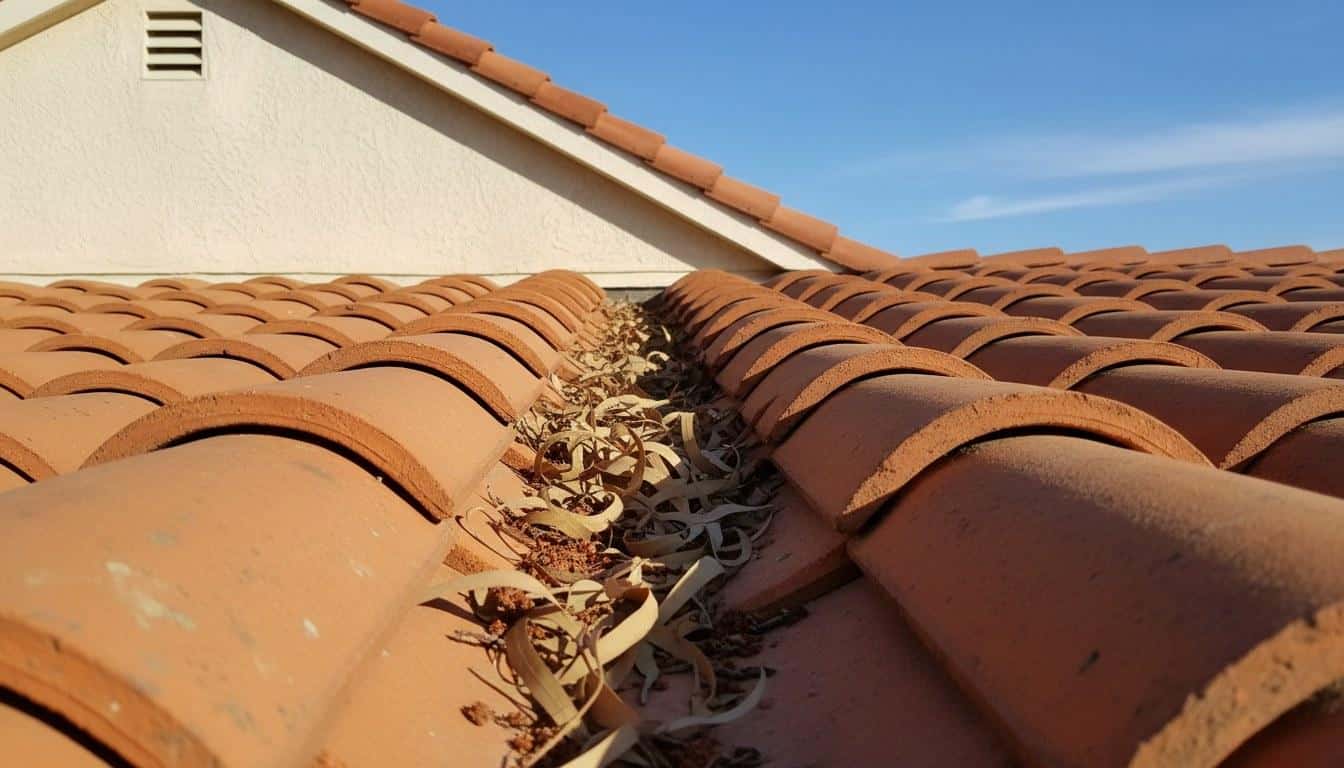
- Cracked or broken tiles: Clay and concrete tile are common across Southern California. Look for hairline cracks, chips along edges, or tiles that have shifted out of alignment. Even one broken tile can let water under the underlayment.
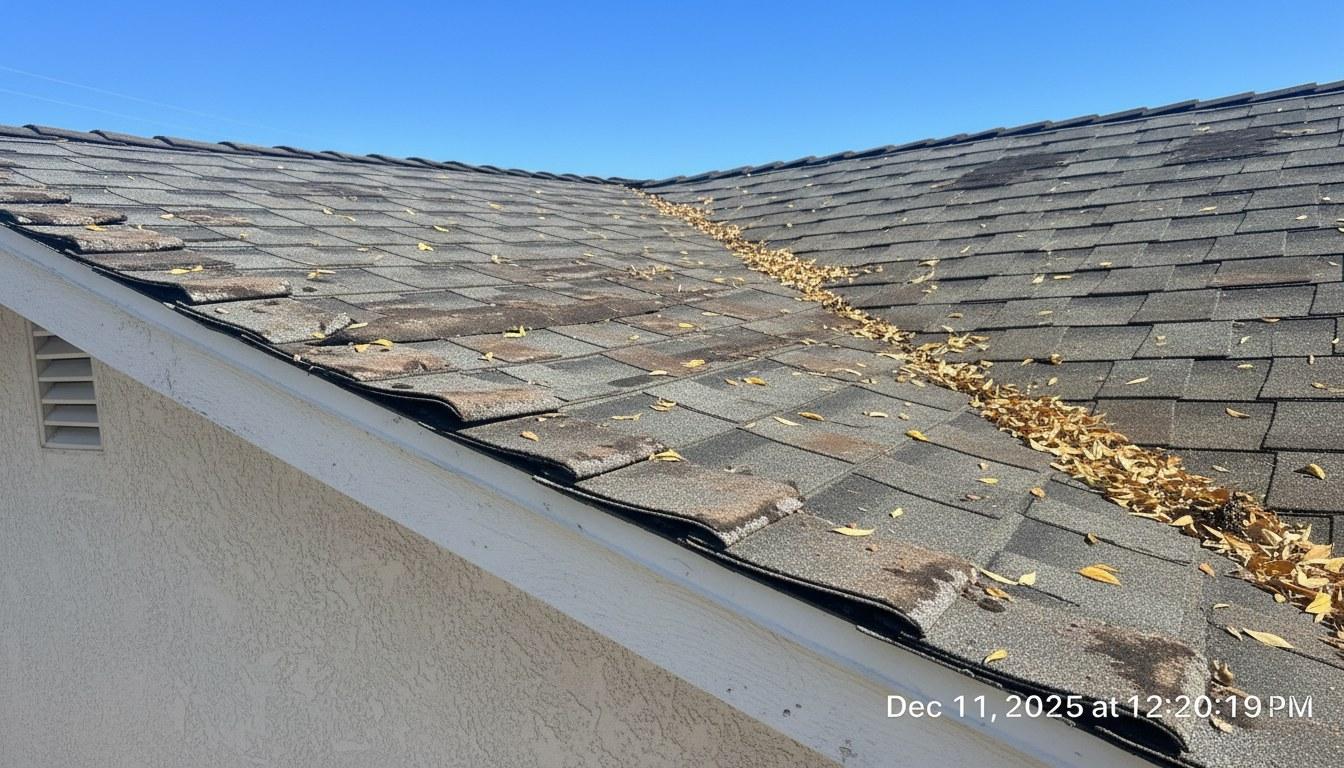
- Missing or curling shingles: Asphalt shingles that curl at the edges or are missing granules have lost their waterproofing layer and are near the end of their service life.
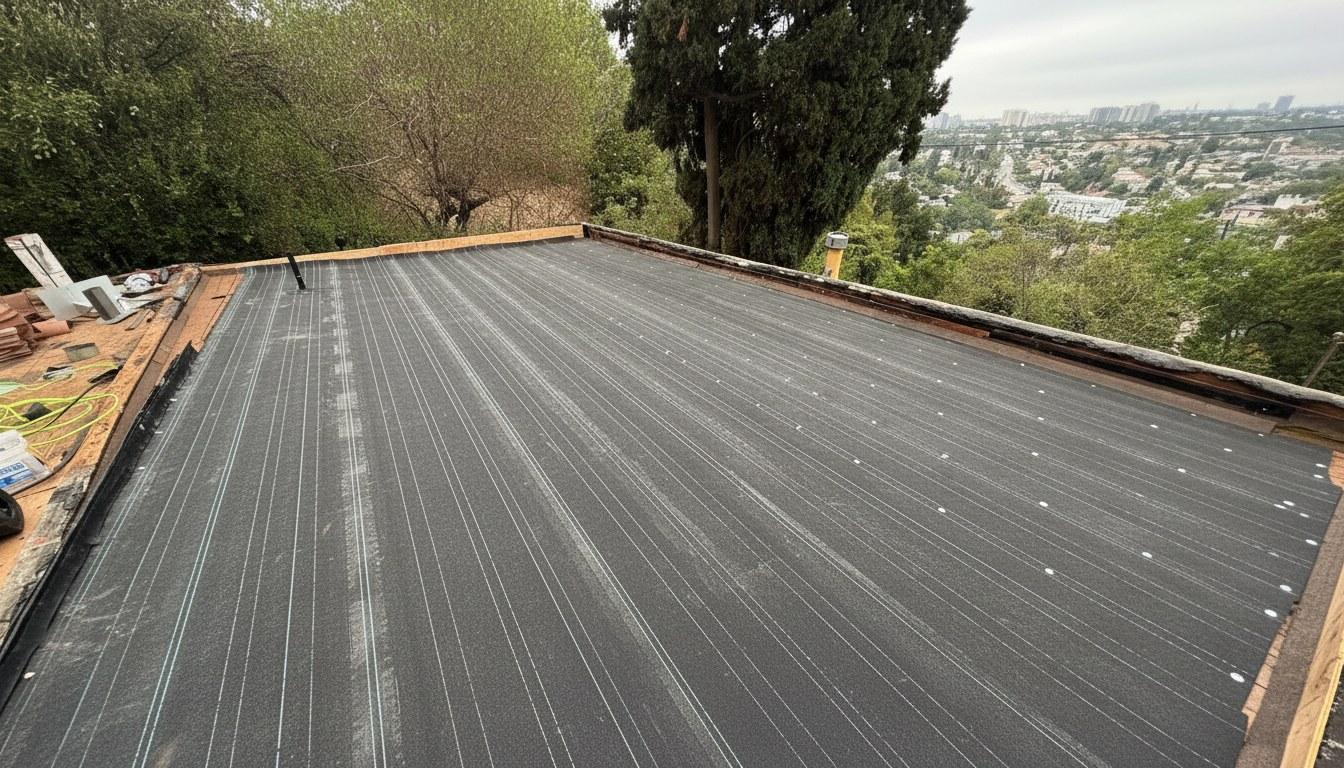
- Blistering or bubbling: On flat or low-slope roofs with modified bitumen or TPO membranes, blisters indicate trapped moisture or adhesion failure and should be addressed before rain adds hydrostatic pressure.
- Moss or algae growth: Organic growth holds moisture against the surface and accelerates deterioration. It is especially common on north-facing slopes that stay shaded through summer.
Flashing and Sealants
- Valley flashing: Metal valleys channel water off the roof. Check for rust, lifted edges, or gaps where two roof planes meet.
- Step and counter flashing: These seal the joint between the roof surface and any vertical wall, chimney, or parapet. Cracked caulk or separated metal at these joints is one of the most common sources of interior leaks.
- Pipe boot seals: Rubber or neoprene boots around plumbing vents degrade in UV exposure. Cracked boots are a top cause of attic leaks in homes built before 2010.
Gutters and Downspouts
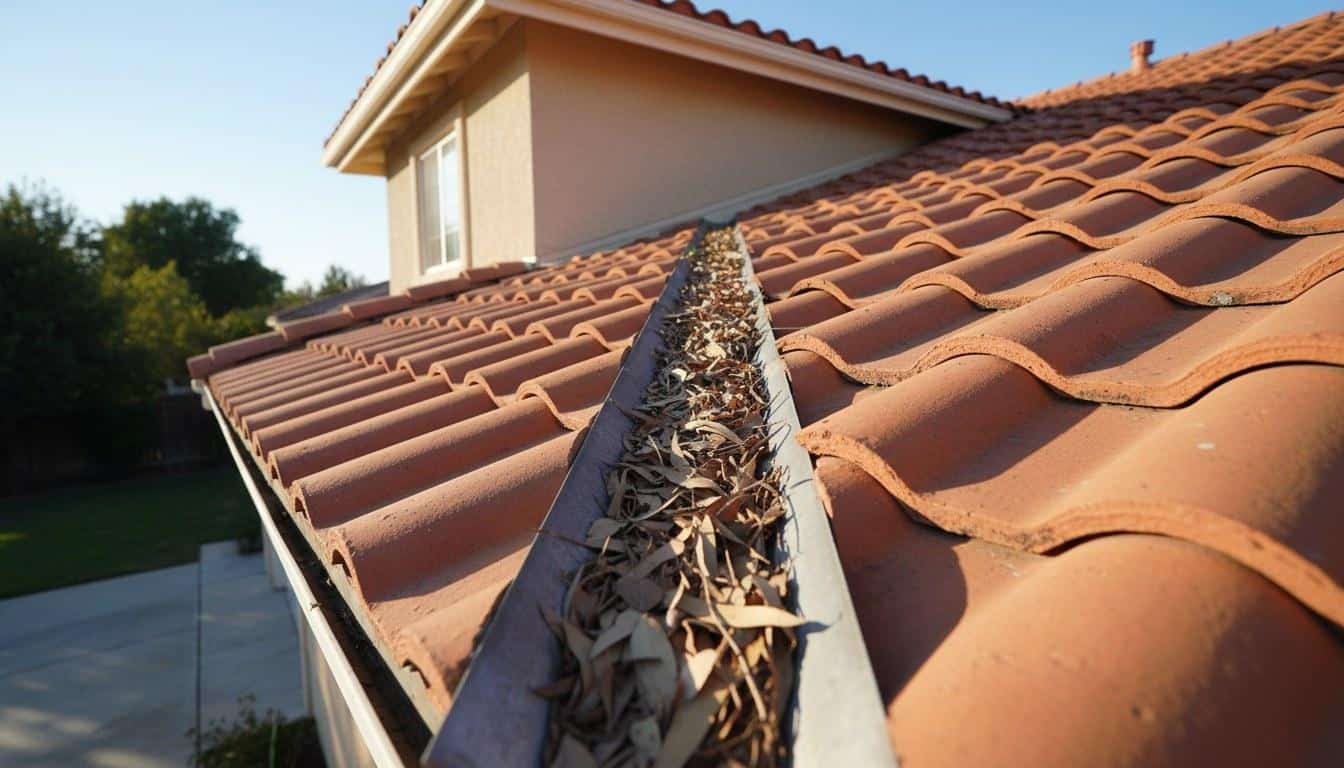
- Debris buildup: Eucalyptus leaves, pine needles, and palm fronds are common in California yards and pack into gutters quickly. A clogged gutter forces water over the edge and against the fascia board.
- Sagging or separated sections: Gutters that have pulled away from the fascia will dump water against the foundation instead of routing it to the downspout.
- Downspout extensions: Confirm that downspouts discharge at least 4 feet from the foundation to prevent soil saturation and potential foundation movement.
Fascia, Soffit, and Attic Ventilation
- Soft or discolored fascia boards: Wood rot here usually means gutters have been overflowing for at least one prior season.
- Blocked soffit vents: Insulation pushed against soffit vents cuts off the intake airflow that keeps the attic dry. The U.S. Department of Energy recommends at least 1 square foot of net free vent area per 150 square feet of attic floor when no vapor barrier is present.
- Attic moisture or staining: Dark staining on rafters or sheathing indicates past or ongoing leaks. Mold growth on wood surfaces in the attic is a sign that moisture has been present long enough to require remediation.
Skylights, Chimneys, and Penetrations
- Skylight curb flashing: The metal curb that raises a skylight above the roof deck is a frequent leak point. Check that the sealant bead is continuous and that the flashing overlaps the roofing material properly.
- Chimney crown and cap: A cracked chimney crown allows water into the masonry. A missing or damaged cap lets rain fall directly into the flue.
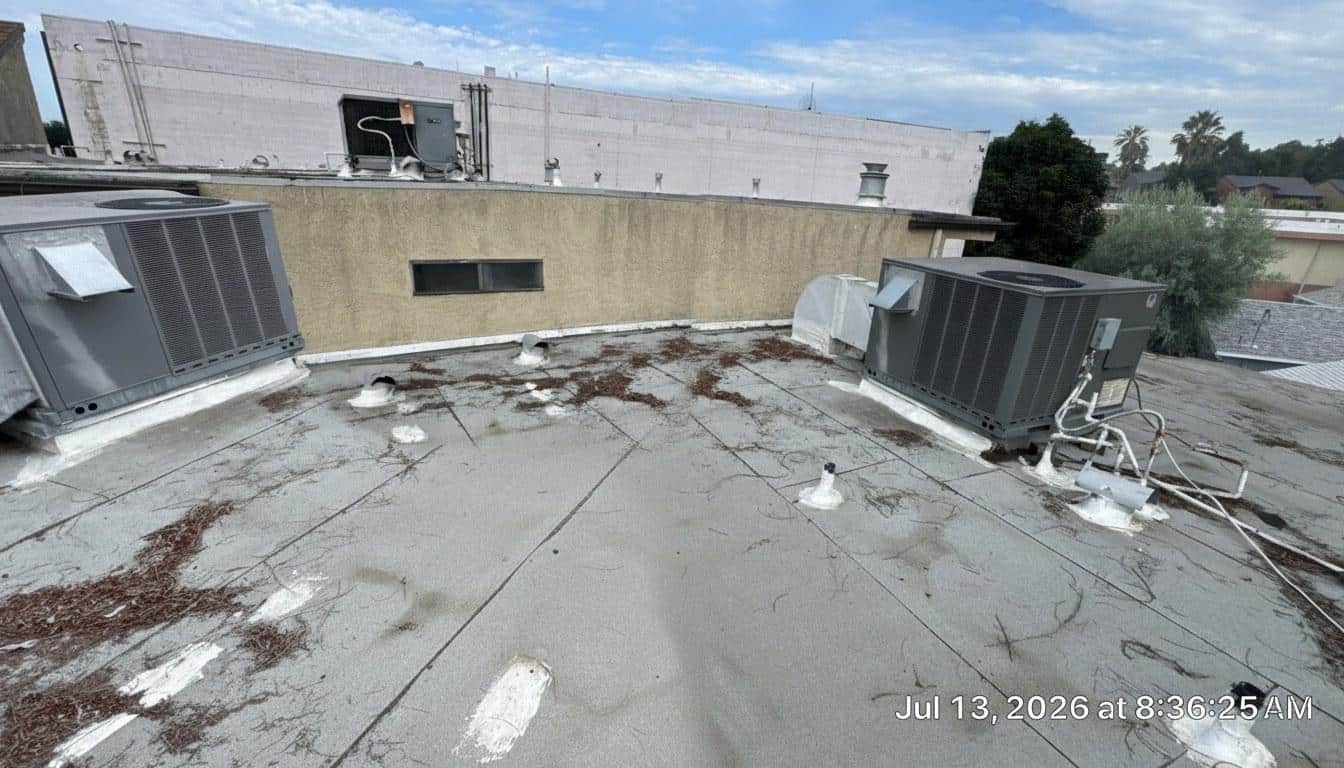
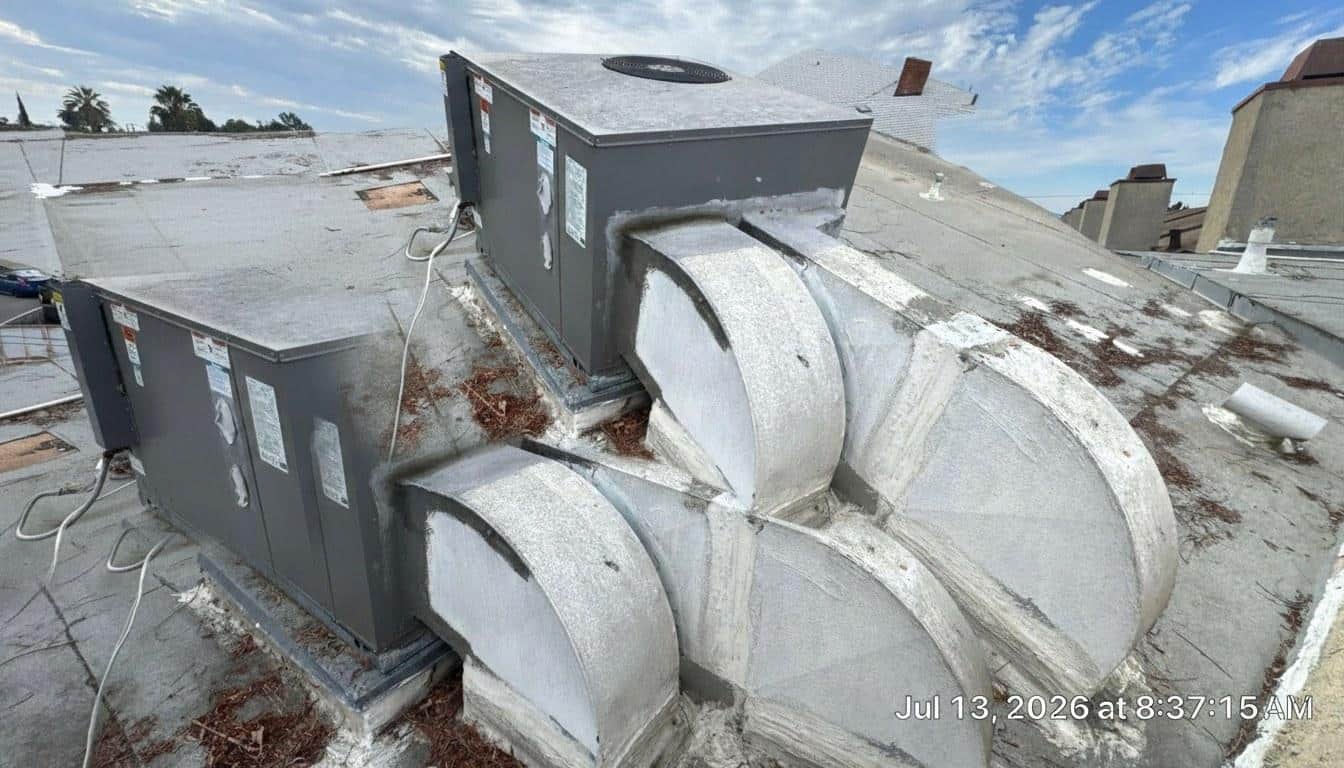
- HVAC curbs and vents: Flat-roof HVAC equipment sits on raised curbs. Inspect the curb flashing and any pitch pans filled with sealant compound.
Our crews see cracked pipe boot seals on roughly 4 out of every 10 homes we inspect in the fall, almost always on systems where the boots were installed more than 10 years ago and never replaced during re-roofing work.
How Do You Inspect Each Part of Your Roof Safely?
Most of a fall roof inspection can be done from the ground with binoculars or from a ladder at the eave line, without walking on the roof surface itself. Walking on clay or concrete tile without proper training can crack tiles and create new damage. Leave any inspection that requires getting on the roof surface to a licensed roofing contractor.
Ground-Level Checks
Stand at each corner of the house and scan the roof plane with binoculars. You can spot missing tiles, lifted shingles, debris accumulation in valleys, and obvious flashing separations from the ground. Walk the perimeter and look at the gutters from below for rust stains, sagging, or sections pulling away from the fascia.
Ladder Checks at the Eave
A stable ladder positioned at the eave gives you a close look at the first few rows of roofing material, the gutter interior, the fascia board, and the soffit. Never lean the ladder against the gutter itself. Use a standoff stabilizer to rest the ladder against the fascia or wall. Check that the gutter is clear, that the fascia shows no soft spots, and that the first course of tiles or shingles is seated correctly.
Interior Attic Check
On a bright day, turn off the attic light and look for pinpoints of daylight coming through the sheathing. Any light you see is a gap that water can use. Also look for water stains on the rafters, condensation on the underside of the roof deck, and any insulation that is matted or discolored. A matted insulation batt has usually been wet at some point.
What Does a Professional Roof Inspection Include?
A professional roof inspection typically takes one to two hours and covers every element of the fall roof inspection checklist for California, plus a written condition report with photos documenting each deficiency found. A licensed roof inspector will walk the surface safely, probe suspect areas, and check areas that are not visible from the ground or a ladder.
Here is what a thorough professional inspection covers compared to a typical DIY walk-around:
| Inspection Item | DIY (Ground + Ladder) | Professional Inspection |
|---|---|---|
| Surface tile or shingle condition | Visible areas only | Full surface including hips, ridges, and valleys |
| Flashing at walls and chimney | Partial view from ladder | Close inspection of all flashing laps and sealant |
| Underlayment condition | Not accessible | Probed at suspect areas and noted in report |
| Pipe boot seals | Visible from ground only | Hand-checked for cracking and separation |
| Attic sheathing and rafters | Interior check possible | Full attic walkthrough with moisture meter |
| Written condition report | No | Yes, with photos and repair priority list |
| Roof certification eligibility | No | Yes, if roof meets standards |
A roof certification is a formal document, often required by insurance carriers and home buyers, stating that the roof has a remaining useful life of at least 2 to 5 years. Only a licensed contractor can issue one. If you are planning to sell your home or refinance, scheduling a professional inspection in the fall gives you time to make any repairs needed before a certification is requested.
Contractors who are licensed by the California Contractors State License Board (CSLB) are required to carry insurance and meet state competency standards. Always verify a contractor’s CSLB license number before allowing anyone on your roof.
What Warning Signs Should You Watch for Between Inspections?
Between annual inspections, five warning signs indicate you need a roof repair specialist to look at your roof right away, before the next scheduled service. Do not wait for the next fall if any of these appear.
- Water stains on ceilings or walls: A brown ring or yellow discoloration on interior drywall almost always traces to a roof or flashing leak. The stain location does not always sit directly below the entry point because water travels along rafters before dripping.
- Granules in the gutters: A small amount of granule loss is normal on new asphalt shingles, but heavy granule accumulation in gutters after a dry period means the shingles are degrading and losing their UV protection.
- Daylight visible in the attic: Any gap in the sheathing is a water entry point. This is a same-season repair, not something to defer.
- Sagging roof deck: A visible dip or wave in a roof plane suggests the sheathing beneath has been saturated and has lost structural integrity. This is a priority repair.
- Sudden spike in energy bills: A compromised attic can lose conditioned air through gaps in the roof deck. If your cooling or heating costs jump without a weather explanation, check the attic for air leaks tied to roof damage.
- Lifted or open ridge cap: The ridge cap covers the peak of the roof. If sections are lifted, cracked, or missing, the most vulnerable point on the entire roof is exposed to rain.
How Much Does a Roof Inspection Cost in California?
In the California market, a standalone professional roof inspection typically ranges from $150 to $400, depending on roof size, complexity, slope, and whether a written certification report is included. Larger homes with multiple roof planes, tile surfaces, or flat sections on the same structure tend to fall toward the higher end of that range.
Several factors move the cost within that range:
- Roof size: A 1,500-square-foot single-story roof takes less time to inspect than a 3,000-square-foot two-story with multiple hips and valleys.
- Roof type: Tile roof inspection requires more care and time than asphalt shingle. Flat roofs with multiple penetrations also add inspection time.
- Certification requirement: If a formal roof certification document is needed for an insurance carrier or a real estate transaction, expect the fee to reflect the added liability the contractor assumes.
- Repair bundling: Many roofing companies in California waive or reduce the inspection fee when the homeowner proceeds with repair work identified during the inspection.
Homeowners who invest in a fall inspection and catch a minor flashing repair early typically spend $200 to $600 on the fix. The same leak left until it damages attic insulation, sheathing, and interior drywall can cost $3,000 to $10,000 or more in combined repairs. The math strongly favors a September or October inspection over a January emergency call.
As of 2024, some California homeowners may qualify for energy-efficiency incentives through programs like TECH Clean California when roof-related upgrades improve attic insulation and ventilation as part of a broader energy improvement project. Check with your contractor about current program eligibility when scheduling your inspection.
Schedule Your Fall Roof Inspection Before the Rains Arrive
September and October are the best months to complete your fall roof inspection checklist in California. Roofing contractors have more scheduling availability before the holiday season, repair materials are easier to source, and the dry weather means repairs can be completed and cured properly before the first storm.
Roof Replacement Inc serves homeowners across Southern California and performs thorough fall roof inspections that cover every item on this checklist, with a written report and photo documentation. Whether you have a tile roof, asphalt shingle, or a flat commercial-style surface, the team can assess its condition and prioritize any repairs before the rainy season begins.
Call (213) 364-3979 to schedule your inspection. Do not wait until the first storm of the season reveals a problem that could have been fixed for a fraction of the cost in October.
Frequently Asked Questions
How much does a roof inspection cost in California?
A professional roof inspection in the California market typically costs between $150 and $400 for a residential home. The price depends on roof size, the number of roof planes, the material type, and whether a formal roof certification document is included. Many roofing companies reduce or waive the inspection fee when repair work is scheduled at the same time.
How often should you have your roof inspected in California?
Most roofing professionals and the U.S. Department of Energy recommend a professional roof inspection at least once a year, with fall being the most important timing in California because it catches summer damage before the rainy season begins. Homes in areas with heavy tree coverage or near the coast may benefit from inspections twice a year.
How long does a roof inspection take?
A professional roof inspection on a typical single-family home takes one to two hours from start to finish. Larger homes, multi-level roofs, or properties with flat sections and multiple penetrations can take up to three hours. The inspector will also spend time preparing the written condition report and photos after the physical walkthrough.
Can I inspect my own roof, or do I need a professional?
Homeowners can safely perform a ground-level and ladder-at-the-eave inspection to spot obvious problems like missing tiles, clogged gutters, and visible staining. However, a professional roof inspector can access the full surface, probe suspect areas, use a moisture meter in the attic, and issue a formal roof certification if one is needed. For a complete fall assessment before California's rainy season, a professional inspection is the more reliable option.
What time of year should I schedule a roof inspection in California?
September and October are the ideal months for a fall roof inspection in California. That window gives you enough dry weather to complete any repairs before the rainy season typically begins in November. Scheduling early in fall also means better contractor availability before the holiday season tightens schedules.
Related Articles






What Our Clients Say











Roof Replacement Inc. offers professional, high-quality work, guaranteed (call for details); ensuring all clients projects meet all code and design requirements. We are dedicated to exceptional customer service and will strive to ensure you with the highest quality roofing services. Roof Replacement Inc. offers lifetime warranty (call for details) on all of our workmanship to ensure the quality of our work. With over 40 years of combined experience within the roofing and construction industry, Roof Replacement Inc. has grown and developed in all areas of roofing construction, including roof inspections. As a leading residential and commercial roofing company in LA, we have hundreds of references from previous clients, so rest assured, that your roofing job will be done right the first time. Replacing an old roof can help add curb appeal and will increase the perceived value of your home. First impressions are vital when selling your home, especially when your roof takes up more than half of the exterior of your residence or business. Not only is the return of investment on a new roof attractive for potential buyers, but can be as beneficial as remodeling the kitchen or bathrooms within your residence.

