

Heavy rain can expose hidden roof vulnerabilities fast. This guide walks California homeowners through spotting storm damage, deciding what's safe to DIY, and knowing when to call a licensed roofing contractor.
Why Does Heavy Rain Cause So Many Roof Problems in California?
California’s roofs face a unique stress cycle: long dry spells followed by intense atmospheric river storms that can dump 3 to 6 inches of rain in 24 hours. That cycle cracks sealants, warps decking, and overwhelms drainage systems that sat idle for months.
The state’s National Weather Service records show that Southern California regularly receives the bulk of its annual rainfall in just 10 to 15 storm events between November and March. Roofs that baked at 150°F on the surface all summer are suddenly asked to shed water for days at a time.
Older housing stock adds to the risk. A large share of California homes were built before 1980, when roofing underlayment standards were far less demanding than today’s California Title 24 building energy standards. Worn felt paper, dried-out flashing caulk, and brittle asphalt shingles are common across communities throughout the state.
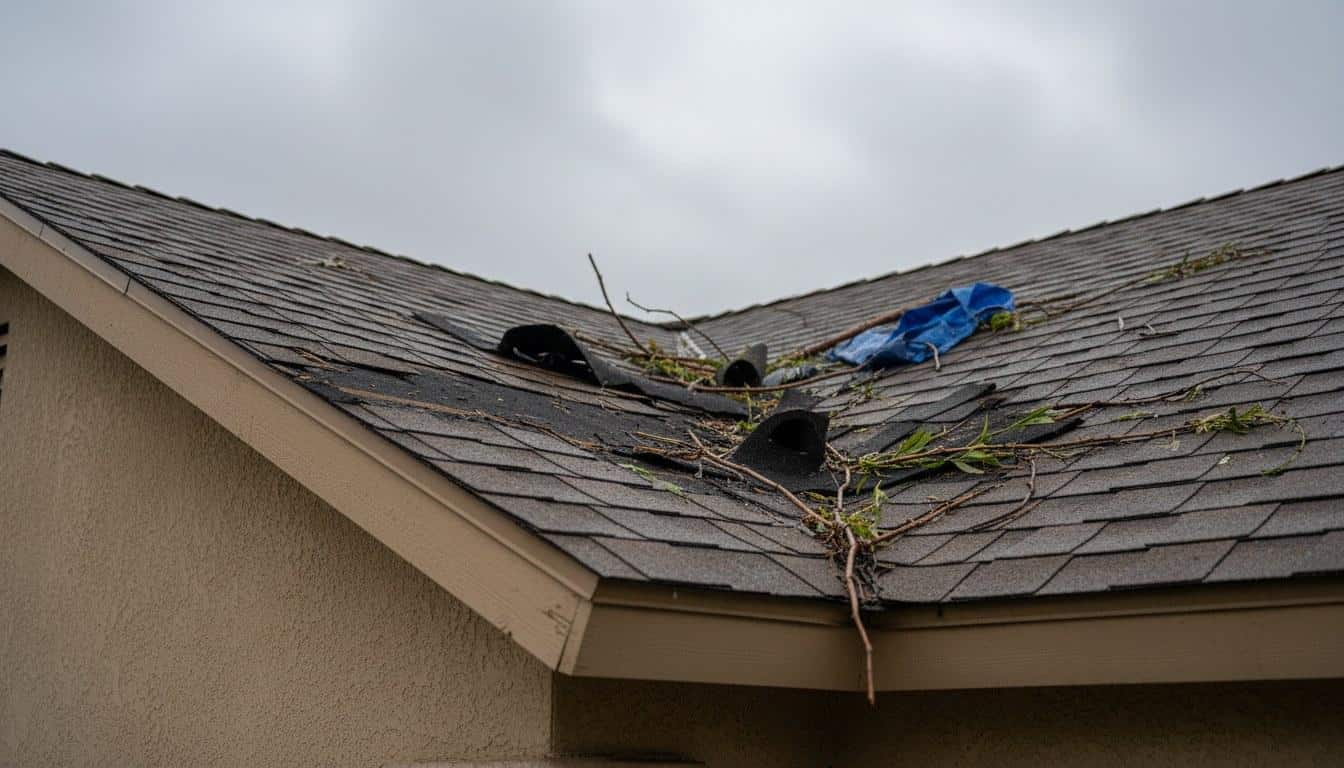
Wind is also a factor. Even a 40 mph gust — common during winter storm fronts — can lift shingle tabs that were already losing adhesion from UV exposure. Once a tab lifts, water has a direct path to the wood deck below.
What Are the Warning Signs Your Roof Was Damaged by a Storm?
The clearest warning signs appear within 24 to 72 hours after a storm ends. Some show up inside the home; others require a careful look at the exterior from the ground.
- Water stains on ceilings or walls: Brown or yellow rings that appear after rain are almost always a sign of active roof penetration, not old condensation.
- Missing or displaced shingles: Visible gaps or shingles lying in the yard mean the roof deck is exposed to the next rain event.
- Granule loss in gutters: A heavy deposit of asphalt granules in downspout runoff after a storm means shingles are deteriorating rapidly.
- Sagging ceiling or roof deck: Any visible bow or sag indicates water has soaked the structural decking and the problem is already serious.
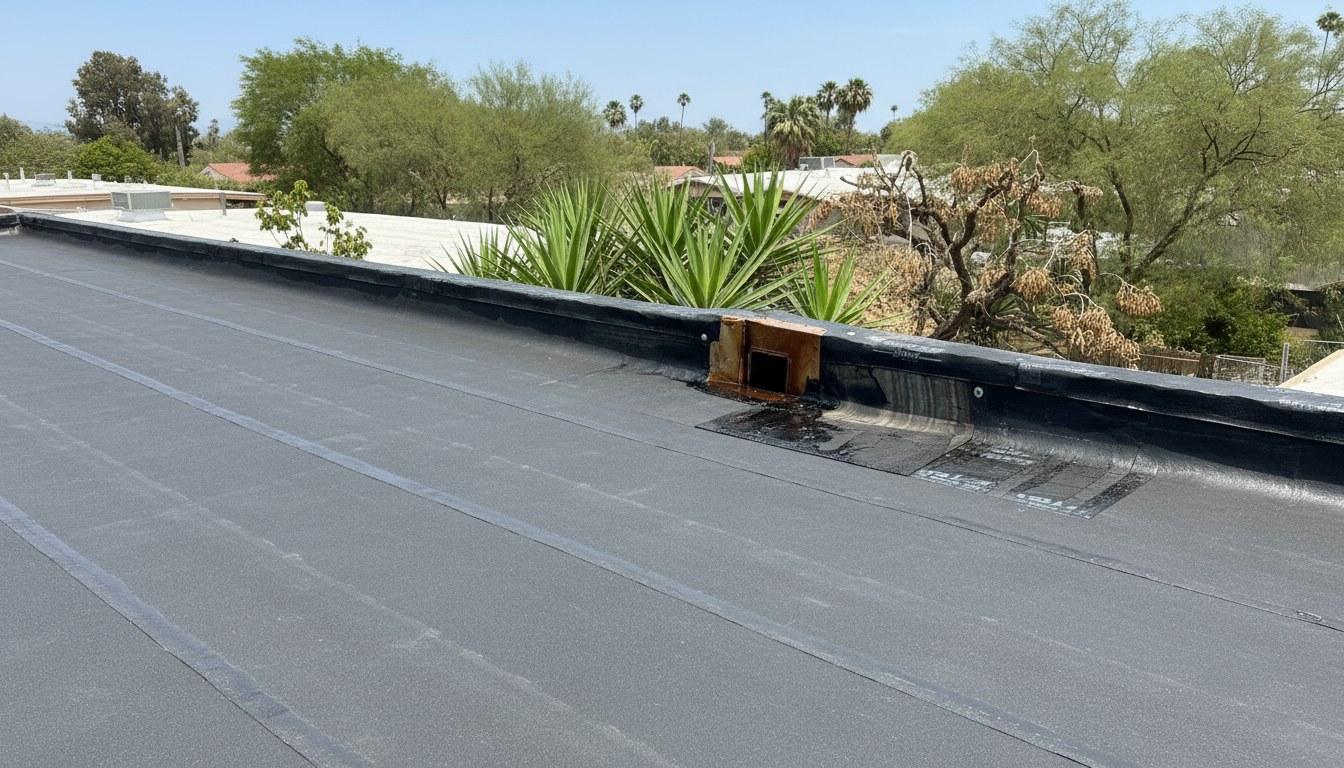
- Damaged or lifted flashing: Metal flashing around chimneys, skylights, and vents is the most common entry point for storm-driven water.
- Daylight visible in the attic: If you can see light through the roof boards during a daytime attic inspection, water can get through the same gap.
- Mold or musty odor in the attic: Mold colonies can establish within 48 to 72 hours of sustained moisture, so a musty smell after a storm is a red flag.
- Clogged or overflowing gutters: Debris-packed gutters force water back under the drip edge and into the fascia, causing rot that is often mistaken for a shingle problem.
Symptom, Likely Cause, and DIY or Pro? A Quick Reference
Use this table to match what you are seeing to its most likely cause and decide whether it is safe to address yourself or requires a licensed roof repair specialist.
| Symptom | Likely Cause | DIY or Pro? |
|---|---|---|
| Brown ceiling stain after rain | Penetrated underlayment or failed flashing | Pro — source must be traced before patching |
| 1-3 missing shingles, flat roof section | Wind uplift on aging adhesive tabs | DIY possible with matching shingles; Pro if pitch is steep |
| Granules filling gutters | Shingle surface erosion from storm impact | Pro — signals shingles are near end of life |
| Sagging roof deck or ceiling | Saturated OSB or plywood decking | Pro immediately — structural risk |
| Lifted or separated flashing | Wind or sealant failure at penetration points | Pro — improper resealing creates worse leaks |
| Daylight visible in attic | Cracked or missing decking or sheathing | Pro immediately |
| Overflowing gutters causing fascia rot | Clogged gutters forcing water under drip edge | DIY gutter cleaning; Pro for fascia and drip-edge repair |
| Musty attic odor after storm | Early mold growth from moisture intrusion | Pro — mold assessment needed before roofing repairs |
What Can You Safely Check Yourself After a Storm?
Homeowners can do a meaningful inspection from the ground and from inside the attic without ever stepping onto the roof. Limit yourself to these safe steps, especially on a wet or pitched surface.
- Walk the perimeter from the ground. Use binoculars or your phone’s camera zoom to scan the full roof surface. Look for missing shingles, lifted edges, debris impact marks, and displaced ridge caps. Note the locations so you can describe them precisely to a contractor.
- Check the gutters and downspouts. Look for an unusually heavy deposit of gray or black granules. A cup or more of granules after a single storm event is a strong sign the shingles are failing, not just shedding normally.
- Inspect the attic with a flashlight. Go up during daylight hours. Look for pinhole light, wet insulation, water trails on rafters, and any soft or discolored decking. A moisture meter (available at hardware stores for under $30) can confirm wet wood before visible staining appears.
- Check ceilings and upper walls throughout the house. New stains that were not there before the storm are active leaks until proven otherwise. Photograph and date every stain you find.
- Inspect flashing points from inside and outside. Chimneys, skylights, pipe boots, and HVAC penetrations are the most common storm leak sources. From the ground, look for gaps or lifted metal edges. From the attic, look for water trails originating at those same points.
- Document everything with photos and timestamps. Dated photos are essential for insurance claims. Most California homeowners insurance policies require damage to be reported within a reasonable time after the storm event, and documentation supports your claim.
Our technicians respond to roughly 3 times more emergency calls in January and February than in any other two-month window, almost all triggered by the first major atmospheric river of the season hitting roofs that had not been inspected since the previous winter.
What Are the Most Common Storm Damage Roof Repair California Problems?
Storm damage roof repair California problems fall into five recurring categories, and understanding each one helps homeowners ask the right questions and avoid being oversold on repairs they do not need.
1. Flashing Failures
Flashing is the metal barrier that seals the joints between your roof surface and vertical elements like chimneys, walls, and skylights. In California’s dry summers, the caulk and sealant that holds flashing in place dries out and cracks. The first heavy rain of the season then drives water directly through those cracks. Flashing repair is almost always a professional job because improperly re-bedded flashing creates a worse leak than the original failure.
2. Shingle Blow-Off and Tab Lifting
Asphalt shingles rely on a factory-applied adhesive strip to bond tabs together. After years of UV exposure, that strip loses its grip. Wind speeds above 45 mph — common during California’s Santa Ana wind events and winter storm fronts — can lift and remove shingles entirely. Replacing 1 to 5 shingles is a manageable repair. Replacing 20 or more often signals the adhesive has failed across the whole roof, and a full replacement conversation is appropriate.
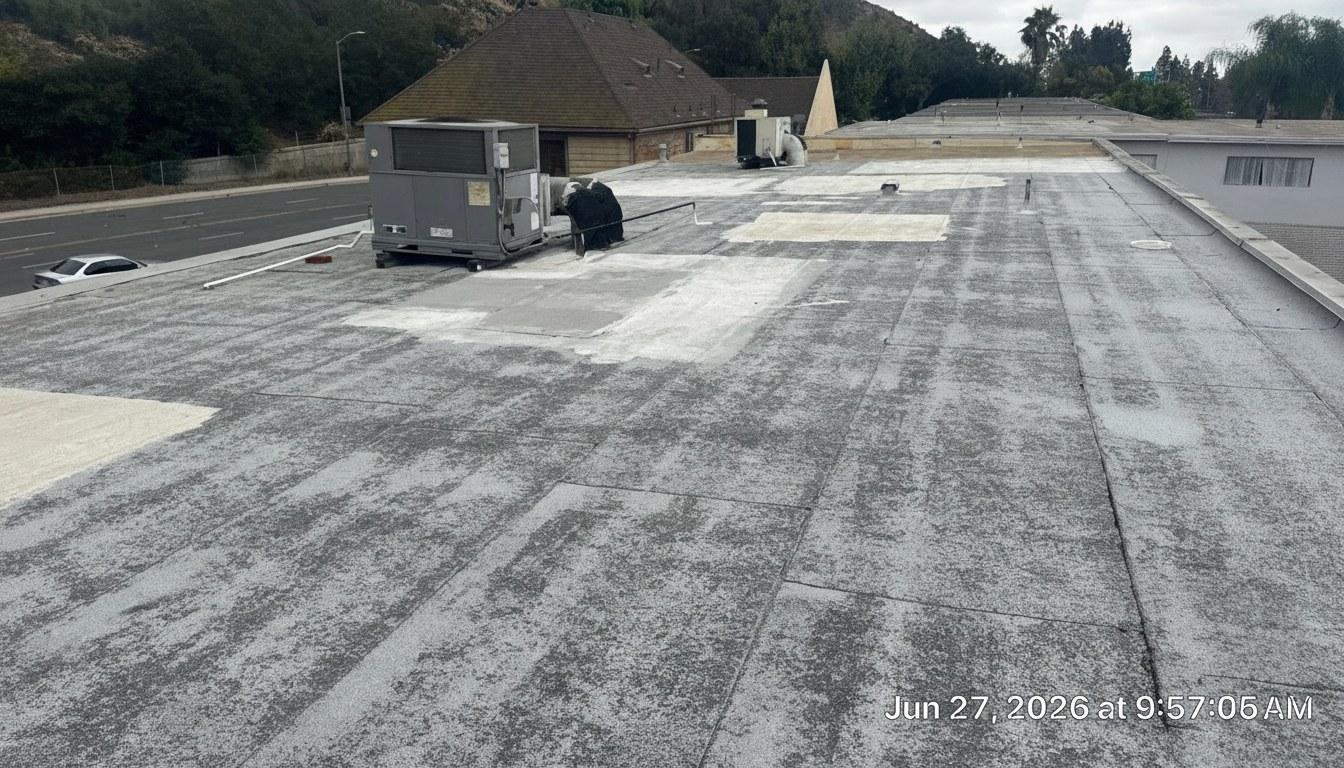
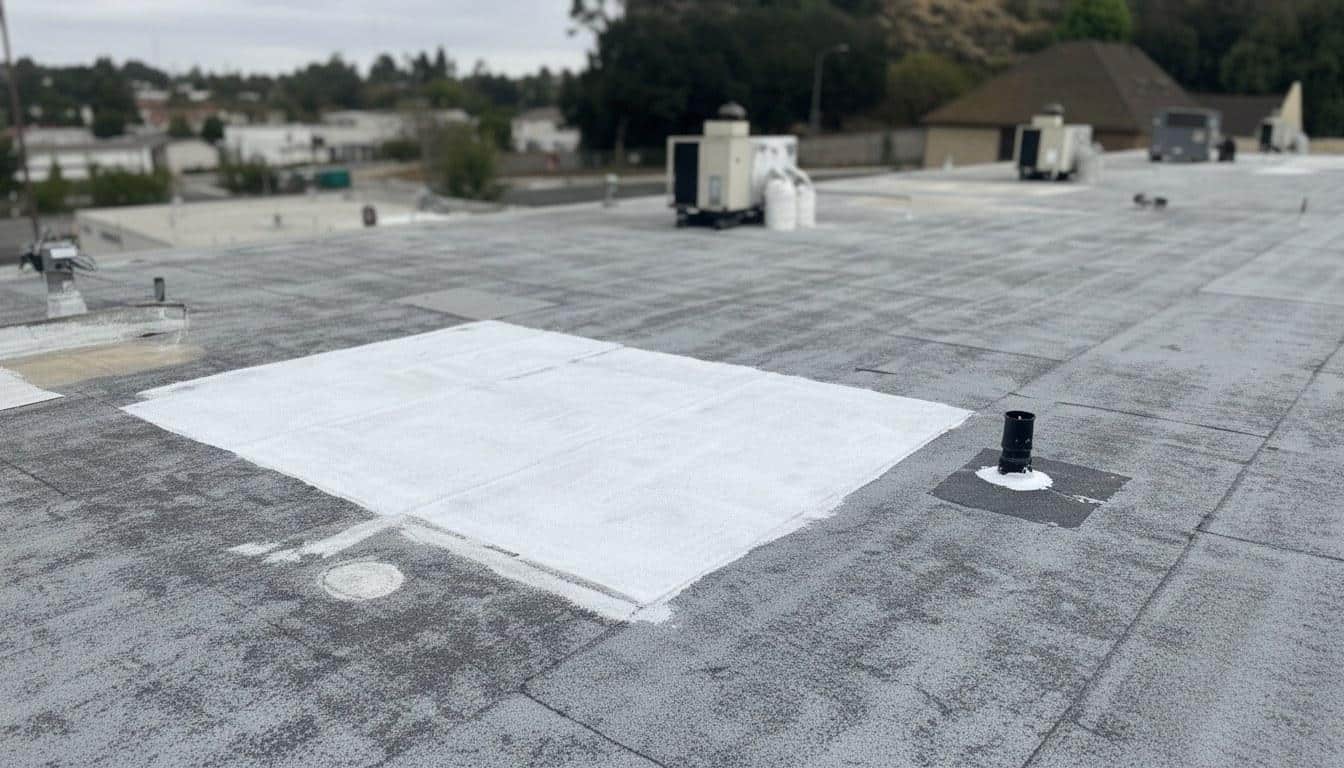
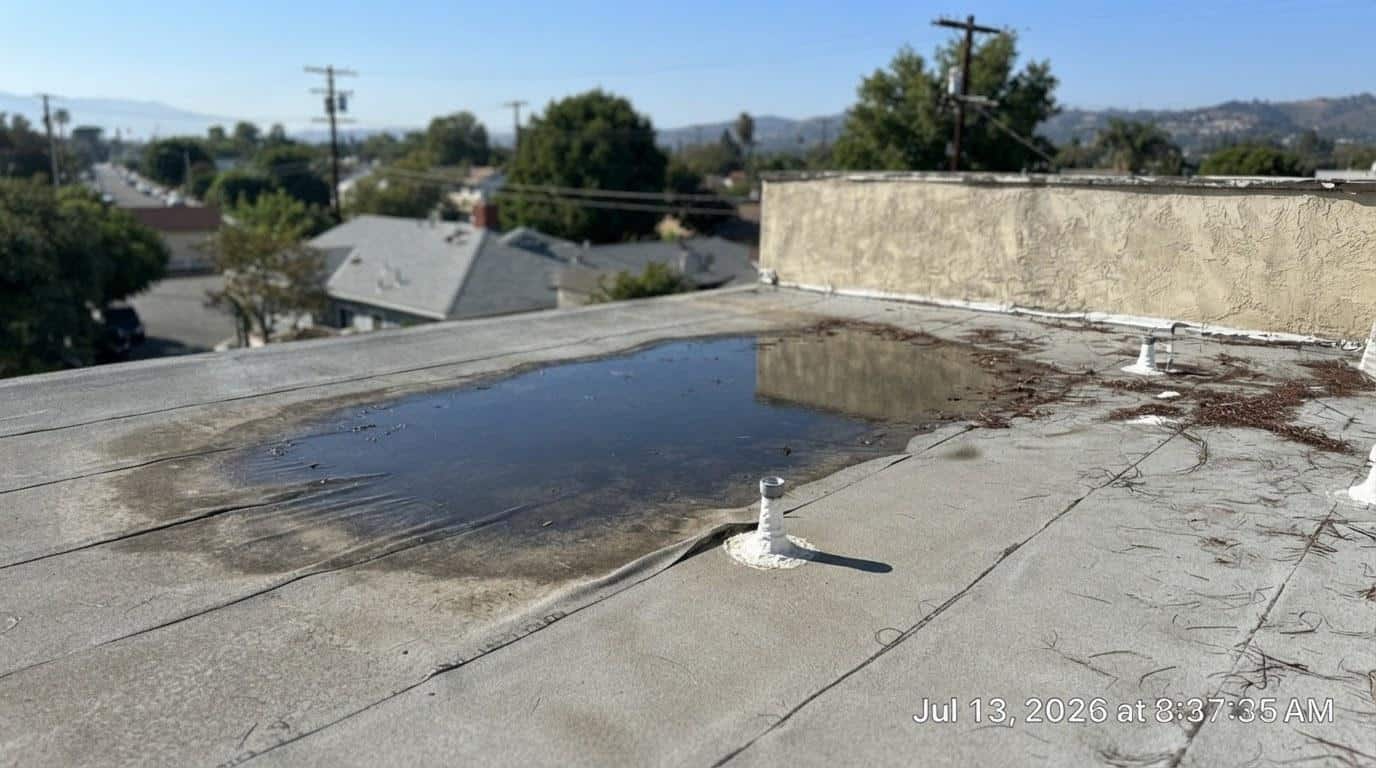
3. Flat Roof Ponding and Membrane Damage
Many California homes and commercial buildings use low-slope or flat roofing systems with TPO, modified bitumen, or built-up membranes. Heavy rain can overwhelm undersized drains, leaving standing water that stresses seams and accelerates membrane degradation. Ponding water that sits for more than 48 hours after a storm is a code concern under most California building standards and should be evaluated by a licensed roofing contractor.
Ponding water that sits for more than 48 hours after a storm is a code concern under most California building standards and should be evaluated by a licensed roofing contractor.
4. Deck Rot and Structural Damage
When a leak goes unaddressed for one or more seasons, the OSB or plywood decking beneath the shingles absorbs moisture and begins to rot. Rotted decking cannot hold fasteners, which means new shingles or membrane installed over it will fail quickly. Deck replacement adds meaningful cost to any roofing repair project. In the regional market, replacing rotted decking typically adds $2 to $5 per square foot to a repair scope, depending on the extent of damage and accessibility.
Replacing rotted decking typically adds $2 to $5 per square foot to a repair scope, depending on the extent of damage and accessibility.
5. Gutter and Drainage Failures
Gutters that are clogged with leaves, debris, or bird nests force water to back up under the drip edge. That water soaks the fascia board and can wick into the roof deck. Gutter cleaning is a DIY task for single-story homes, but fascia replacement and drip-edge repair require a professional. Keeping gutters clear before storm season — ideally by October each year — is one of the most cost-effective ways to prevent storm damage roof repair California problems from compounding.
What Do Roofing Repairs Typically Cost in California?
Repair costs vary widely based on the type of damage, roof pitch, material, and access. In the California regional market, minor storm repairs such as replacing a few shingles or resealing flashing typically range from $300 to $900. Mid-range repairs involving underlayment, multiple squares of shingles, or flat-roof seam work generally run $1,000 to $4,000. Structural deck repairs or large-scale damage can push costs significantly higher. These are market ranges only — contact Roof Replacement Inc for a written, itemized quote specific to your roof.
Homeowners with active insurance claims should also ask their contractor about the Inflation Reduction Act federal tax credit for qualifying energy-efficient roofing upgrades, which can offset a portion of costs when replacing storm-damaged sections with ENERGY STAR-rated materials.
When Should You Call a Licensed Roofing Contractor?
Call a licensed roofing contractor immediately if you see sagging, daylight through the attic, active water dripping into living spaces, or any sign of structural compromise. These conditions will not self-correct and worsen with each rain event.
California requires roofing contractors to hold an active C-39 license issued by the California Contractors State License Board (CSLB). Always verify a contractor’s license number on the CSLB website before signing any contract. An unlicensed roofer cannot pull a permit, and unpermitted roofing work can create problems when you sell the home or file an insurance claim.
Beyond structural emergencies, you should also call a pro when:
- Your roof is steeper than a 4:12 pitch — walking it without proper equipment is a fall hazard.
- The damage involves flashing, skylights, or HVAC penetrations, where improper sealing creates secondary leaks.
- You have a flat or low-slope membrane roof — seam repairs require heat-welding or specialized adhesives.
- The leak source is unclear after your interior and attic inspection — tracing an intermittent leak often requires experience with water migration patterns.
- You are filing an insurance claim — a licensed contractor can provide a scope-of-work document that meets your insurer’s requirements.
- The roof is more than 20 years old — at that age, isolated repairs often reveal adjacent failures, and a full roof certification or replacement assessment makes more financial sense.
Across our service calls following major storm events in Southern California, we find that roughly 60% of homeowners who attempt to self-diagnose a leak source identify the wrong entry point — most often because water travels several feet along rafters before dripping, making the stain appear far from the actual breach.
Roughly 60% of homeowners who attempt to self-diagnose a leak source identify the wrong entry point — most often because water travels several feet along rafters before dripping.
A roof certification from a licensed roofing company is also worth considering if you are buying or selling a home after a storm season. Many lenders require a roof certification confirming the roof has at least 2 to 5 years of remaining serviceable life before approving a loan.
Explore our full range of roofing services across Southern California.
Frequently Asked Questions
How do I know if my roof was actually damaged by a storm or if it was already failing?
Look for damage that correlates directly with the storm event: new ceiling stains that were not there before, shingles in the yard, or granules suddenly filling the gutters. Pre-existing damage tends to show gradual staining, widespread granule loss over time, and no clear connection to a single weather event. A licensed roofing contractor can distinguish between storm-related and wear-related damage, which matters significantly for insurance claims.
Is it safe to go on my roof after a storm to check for damage?
No — a wet roof is a serious fall hazard, and even a dry roof with hidden damage can give way underfoot. Homeowners should inspect from the ground using binoculars or a phone camera zoom, and inspect the attic from inside. Leave any on-roof assessment to a licensed roofing contractor with proper safety equipment.
How long do I have to file an insurance claim for storm roof damage in California?
Most California homeowners insurance policies require you to report storm damage within a reasonable time after the event, and many policies specify a window of one to two years. However, acting within days of the storm is strongly recommended because insurers may dispute claims where damage was not promptly documented. Take dated photos immediately and contact your insurer before authorizing any permanent repairs.
What does a roof repair typically cost after a storm in California?
In the California regional market, minor storm repairs like replacing a few shingles or resealing flashing typically range from $300 to $900. More involved repairs covering underlayment, multiple roof sections, or flat-roof membrane work generally run $1,000 to $4,000. Structural deck damage can push costs higher depending on scope and accessibility. Call Roof Replacement Inc at (213) 364-3979 for a written quote specific to your situation.
How do I find a trustworthy roofing company after a storm in California?
Verify that any roofing company you hire holds an active C-39 license through the California Contractors State License Board (CSLB) at cslb.ca.gov before signing anything. Be cautious of door-to-door contractors who appear immediately after a major storm — they are sometimes unlicensed. Ask for a written, itemized estimate and confirm the contractor carries general liability and workers' compensation insurance.
Related Articles




What Our Clients Say








Roof Replacement Inc. offers professional, high-quality work, guaranteed (call for details); ensuring all clients projects meet all code and design requirements. We are dedicated to exceptional customer service and will strive to ensure you with the highest quality roofing services. Roof Replacement Inc. offers lifetime warranty (call for details) on all of our workmanship to ensure the quality of our work. With over 40 years of combined experience within the roofing and construction industry, Roof Replacement Inc. has grown and developed in all areas of roofing construction, including roof inspections. As a leading residential and commercial roofing company in LA, we have hundreds of references from previous clients, so rest assured, that your roofing job will be done right the first time. Replacing an old roof can help add curb appeal and will increase the perceived value of your home. First impressions are vital when selling your home, especially when your roof takes up more than half of the exterior of your residence or business. Not only is the return of investment on a new roof attractive for potential buyers, but can be as beneficial as remodeling the kitchen or bathrooms within your residence.

