Roof coating projects in California typically range from $1,500 to $6,500 depending on roof size, coating type, and surface condition. This 2026 guide covers everything homeowners need to know before requesting a quote.
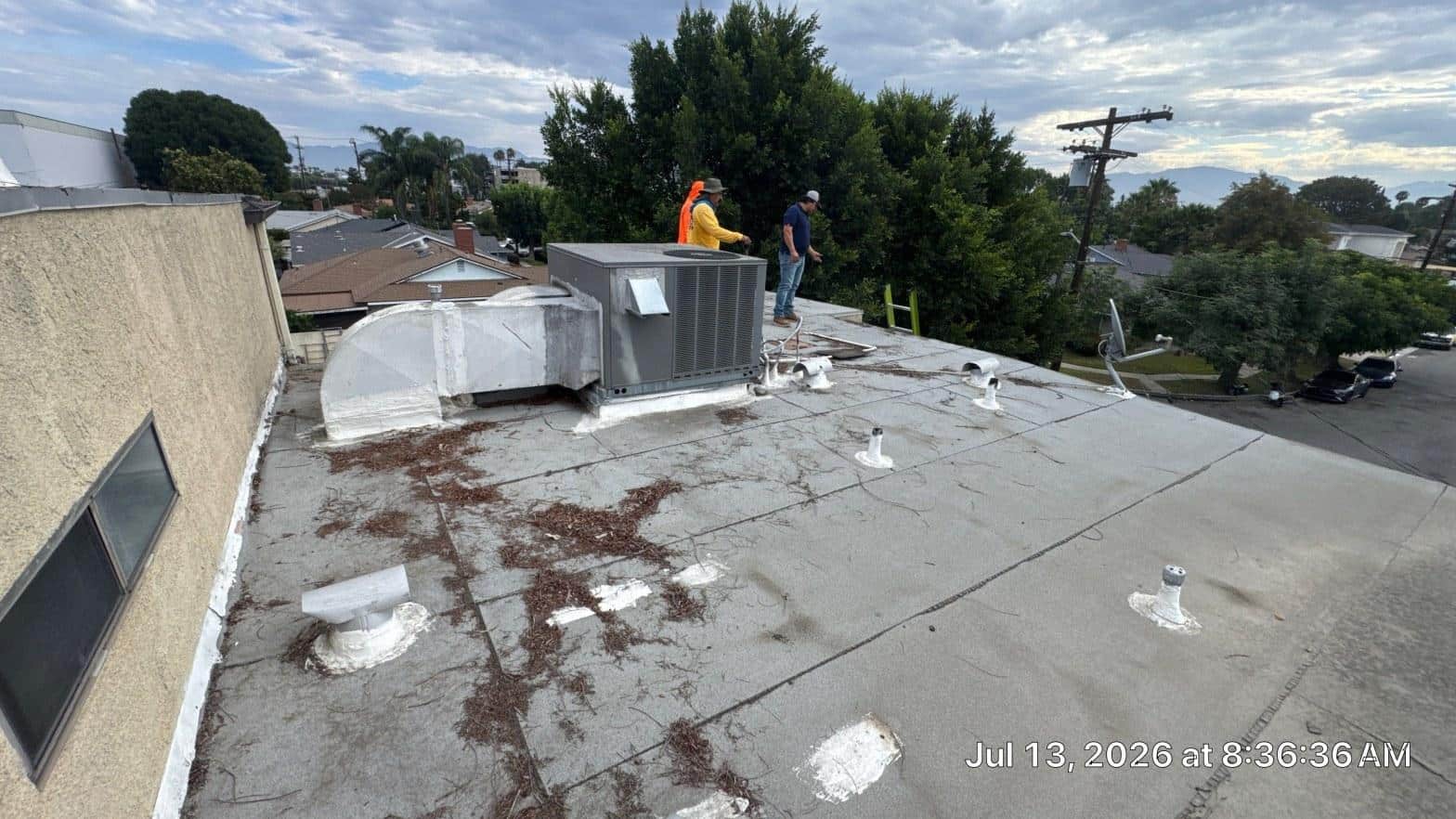
Roof coating cost in California for 2026 typically falls between $1,500 and $6,500 for a standard residential roof, with most projects landing around $2,000 to $4,000. The wide range reflects real differences in roof size, coating material, and how much preparation the surface needs before coating can begin. If you have been searching for a clear, California-specific pricing guide for roof coating, this is it — covering cost factors, coating types, common add-ons, and how to get a quote that actually reflects your roof.
What Is Roof Coating and What Does It Actually Do?
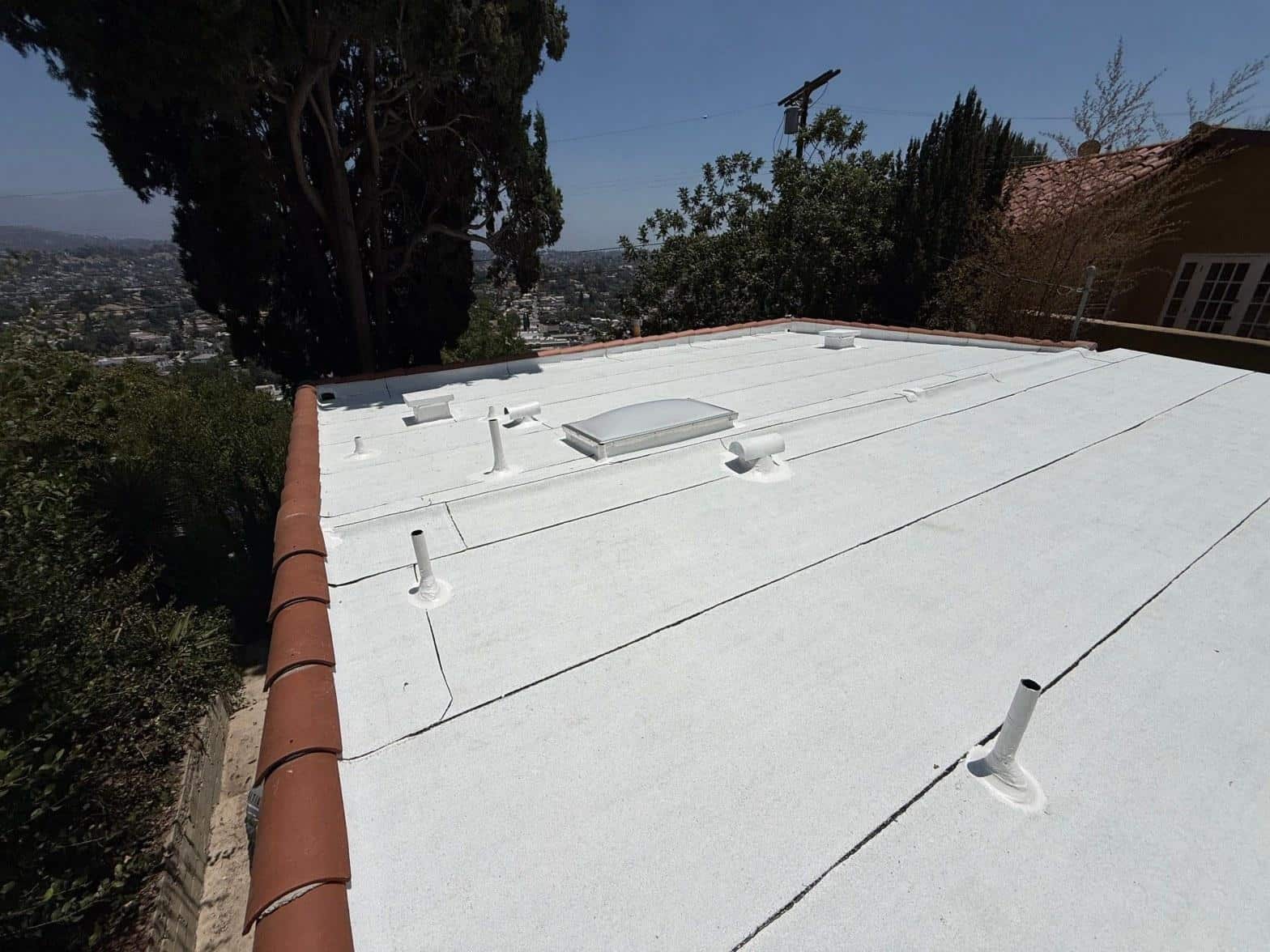
Roof coating is a liquid membrane applied directly over an existing roof surface to seal it, reflect UV rays, and extend the roof’s lifespan by 10 to 15 years in many cases. It bonds to the existing material rather than replacing it, which makes it significantly less disruptive and less expensive than a full tear-off.
In California’s climate, roof coatings serve a second major purpose: they reduce heat gain inside the home. California’s Title 24 building energy standards encourage cool-roof solutions for new and re-roofed structures, and reflective coatings are one of the most cost-effective ways to meet or exceed those standards on an existing roof.
Coatings work on flat roofs, low-slope roofs, metal roofs, and some pitched residential roofs. They are not a patch or a temporary fix — a properly applied coating creates a continuous, waterproof layer across the entire surface.
What Is the Roof Coating Cost in California for 2026?
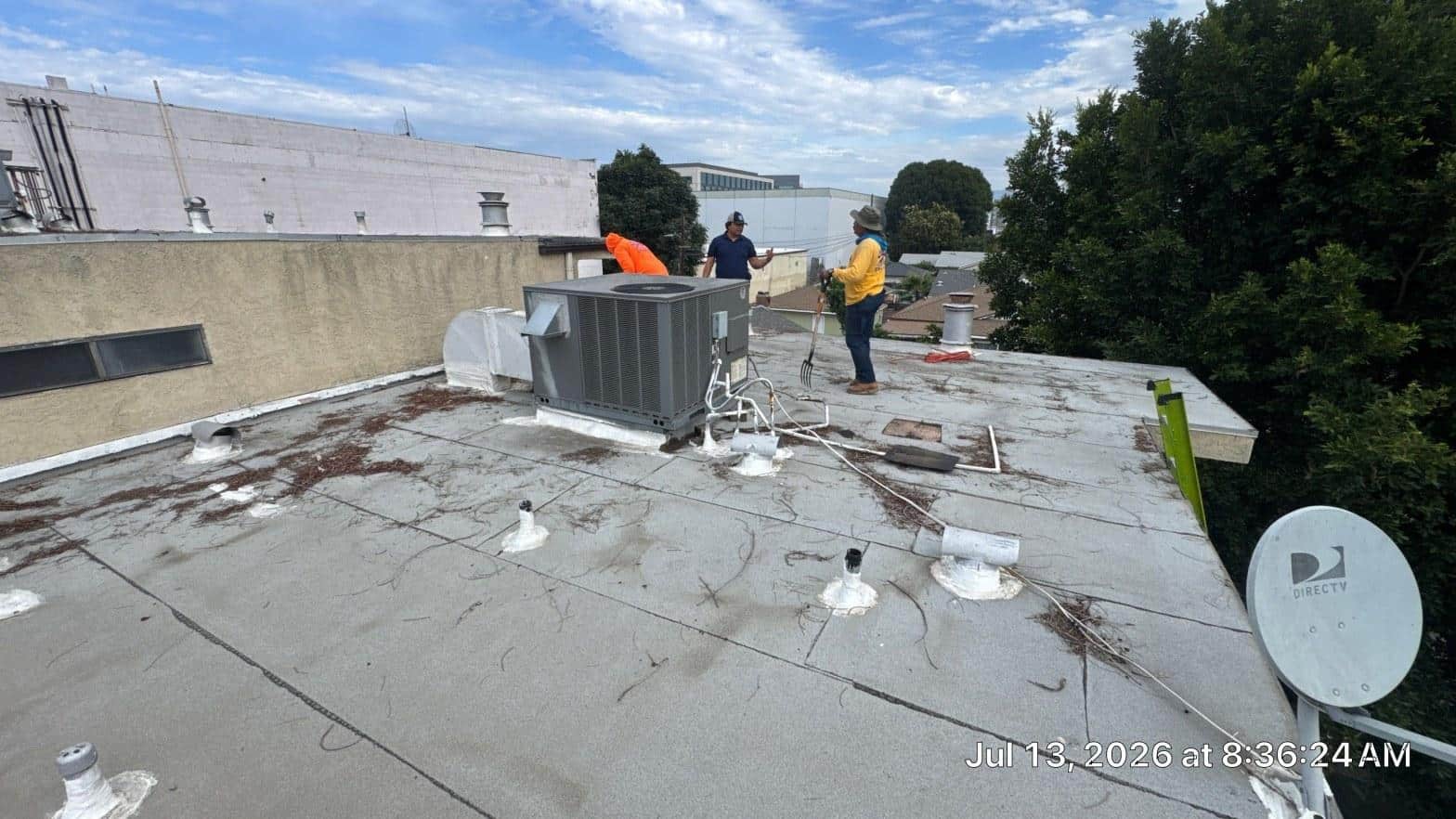
In the California regional market, roof coating projects in 2026 generally range from $1,500 to $6,500 for a single-family home, with commercial flat roofs running higher based on total square footage. The table below shows typical market ranges by project type — these are industry ranges, not the rates of any single contractor.
| Scenario | Typical Market Range (CA 2026) | What’s Usually Included |
|---|---|---|
| Small flat roof (under 1,000 sq ft) | $1,500 – $2,500 | Basic surface cleaning, one to two coats of elastomeric or acrylic coating |
| Mid-size residential flat or low-slope roof (1,000 – 2,000 sq ft) | $2,500 – $4,500 | Pressure wash, minor seam sealing, two coats of silicone or elastomeric coating |
| Large residential or small commercial roof (2,000 – 4,000 sq ft) | $4,000 – $7,000 | Full prep, seam and penetration sealing, two to three coats, warranty documentation |
| Metal roof coating (any size, per 1,000 sq ft) | $800 – $1,800 per 1,000 sq ft | Rust treatment, primer coat, elastomeric or silicone topcoat |
| Commercial flat roof (over 5,000 sq ft) | $1.50 – $4.00 per sq ft | Detailed inspection, full prep, multiple coats, manufacturer warranty |
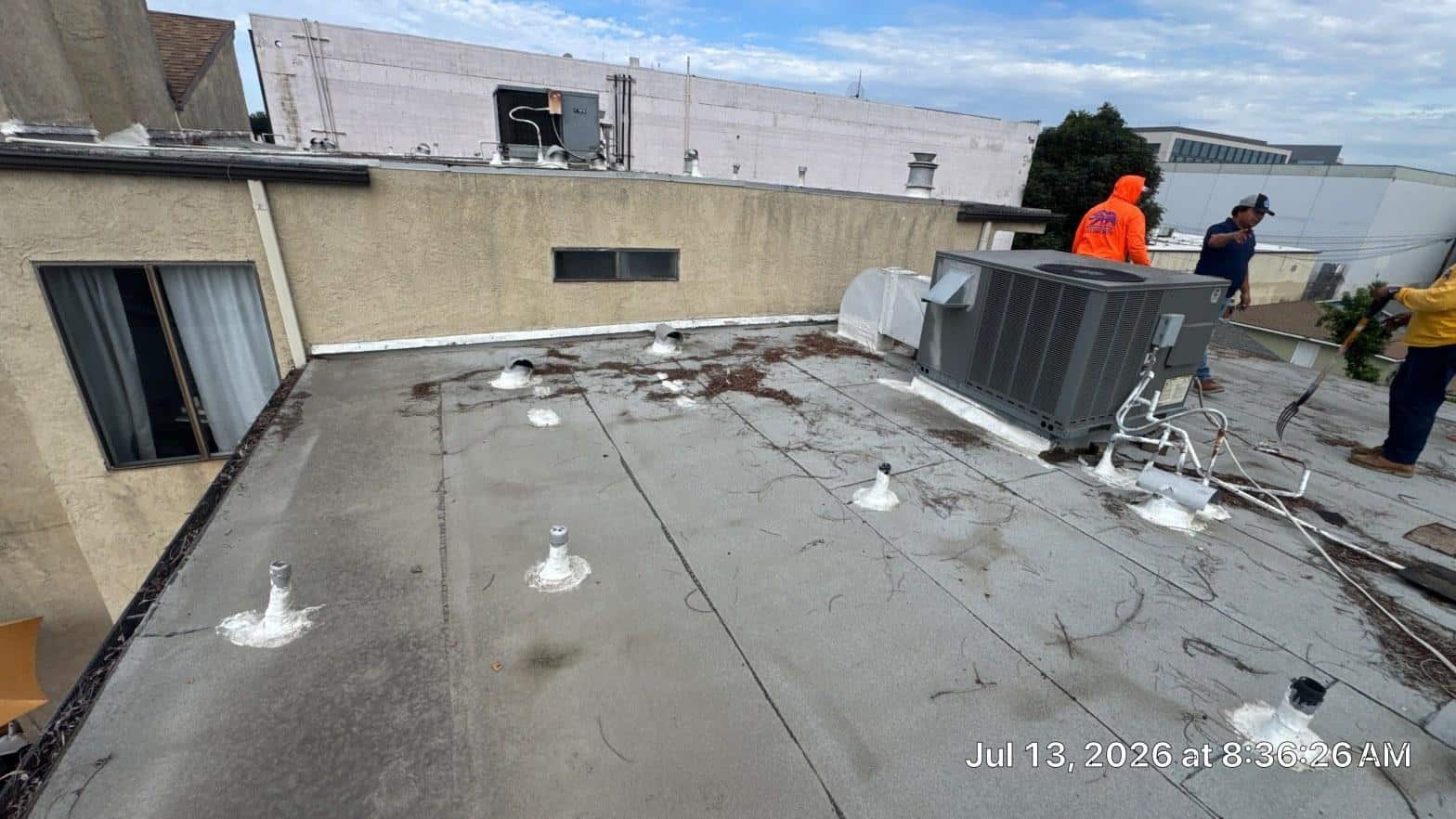
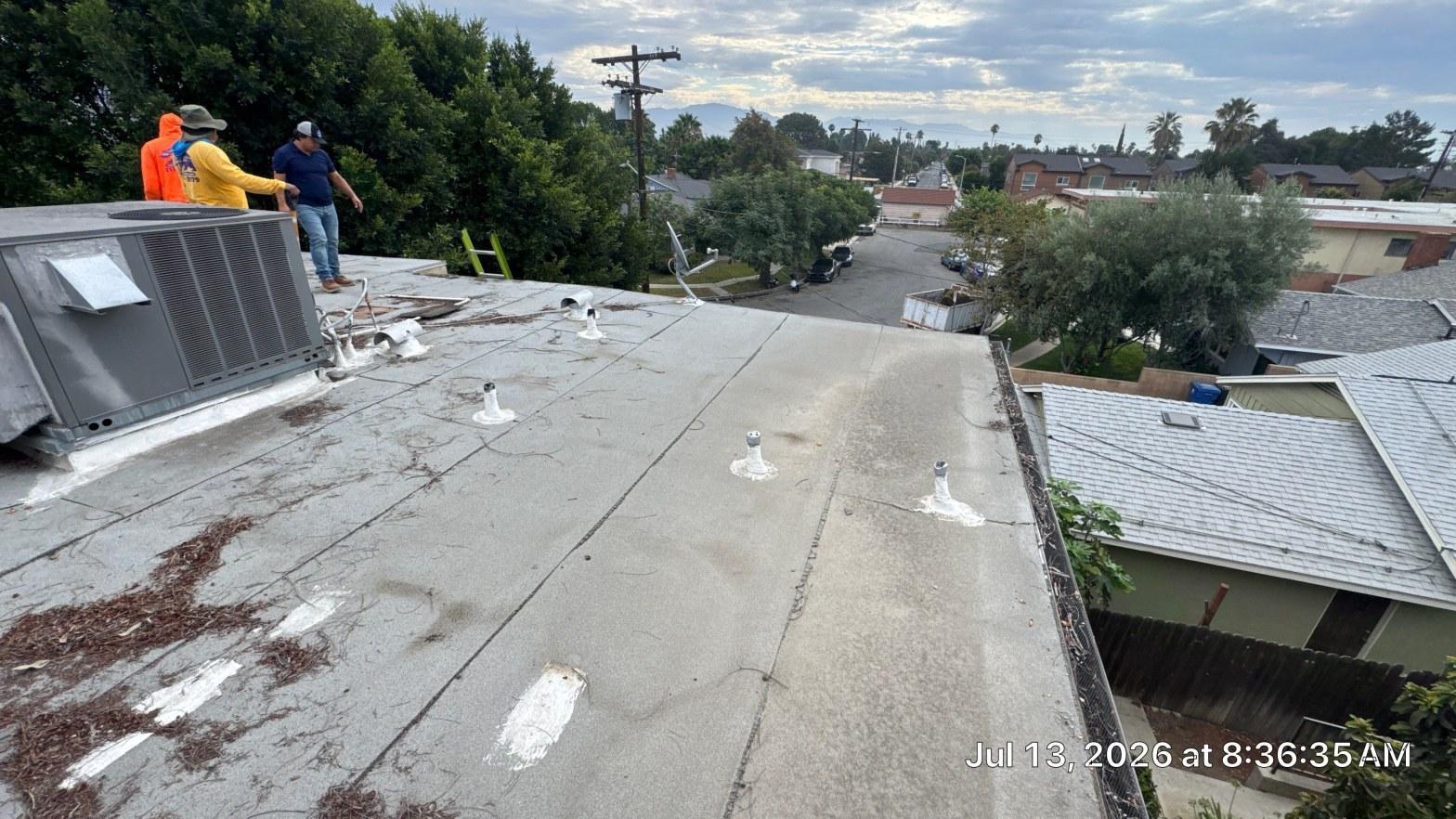
These ranges reflect labor and materials in the California market. Projects move toward the higher end when the roof needs significant prep, when a premium coating material is specified, or when the roof has multiple penetrations, skylights, or HVAC equipment that require extra detailing.
Our crews have applied elastomeric coatings on over 200 Southern California residential roofs in the past two years, and roughly 60% of those projects required at least one repair to existing seams or flashings before coating could begin — a cost that surprises many homeowners who expected a straightforward application.
What Factors Drive the Price Up or Down?
Six main variables determine where your project lands within the typical range. Understanding them helps you evaluate quotes and avoid surprises.
- Roof size: Coating is priced largely by square footage. A 1,200 sq ft roof costs significantly less in total than a 3,000 sq ft roof, even if the per-square-foot rate is similar.
- Coating type: Acrylic coatings are the most affordable, typically $0.15 to $0.35 per sq ft in materials alone. Silicone coatings run $0.50 to $1.00 per sq ft in materials and hold up better in standing water. Polyurethane coatings are the most durable and the most expensive, often 20% to 40% more than silicone.
- Surface condition and prep: A roof with cracks, blisters, active leaks, or deteriorating seams needs repairs before coating. Prep work — cleaning, patching, priming — can add $300 to $1,500 to the total depending on severity.
- Number of coats: Most quality applications require two coats at a minimum. Some manufacturer warranties require a third coat or a specific dry-film thickness, which increases both material and labor costs.
- Roof complexity: Penetrations (vents, pipes, skylights, HVAC curbs) each need to be hand-detailed. A roof with 10 or more penetrations takes significantly more labor than a clean, open surface.
- Access and safety requirements: Multi-story buildings or roofs that require scaffolding or fall-protection equipment add to the project cost. In California, Cal/OSHA fall-protection regulations apply to all commercial roofing work, and compliance costs are built into professional bids.
Which Type of Roof Coating Is Right for Your Roof?
The best coating for your roof depends on your roof material, slope, and how much standing water it typically sees. Here is a plain-language breakdown of the four most common types used in California.
Acrylic Roof Coating
Acrylic coatings are water-based, easy to apply, and highly reflective — making them a solid choice for California’s sunny climate. They perform well on low-slope roofs that drain quickly but are not ideal for roofs with chronic ponding water. ENERGY STAR-rated acrylic coatings can help a roof meet California’s cool-roof requirements under Title 24.
Elastomeric Roof Coating
Elastomeric coatings are thick, rubber-like membranes that stretch and contract with the roof as temperatures change. They are among the most popular choices for residential flat roofs in California because they handle the state’s wide daily temperature swings well. A quality elastomeric coating applied at the correct thickness — typically 20 to 30 mils dry-film — can add 10 or more years to a flat roof’s life.
Silicone Roof Coating
Silicone is the top choice when standing water is a recurring issue. It does not absorb water even after prolonged ponding, which makes it popular for commercial flat roofs with poor drainage. Silicone is more expensive than acrylic or standard elastomeric products but offers superior long-term waterproofing. One trade-off: silicone surfaces become slippery when wet and can attract dirt over time.
Polyurethane Roof Coating
Polyurethane coatings offer the highest impact resistance and are often used on roofs with foot traffic (such as rooftop HVAC access areas). They cost more than silicone in most California markets but provide exceptional durability. Aromatic polyurethane is typically used as a base coat, with aliphatic polyurethane on top for UV resistance.
| Coating Type | Best For | Ponding Water OK? | Relative Cost |
|---|---|---|---|
| Acrylic | Low-slope roofs with good drainage, hot sunny climates | No | $ (lowest) |
| Elastomeric | Residential flat roofs, wide temperature swings | Limited | $$ |
| Silicone | Flat roofs with drainage issues, commercial buildings | Yes | $$$ |
| Polyurethane | High-traffic roofs, maximum durability | Yes (with topcoat) | $$$$ (highest) |
As of 2026, California homeowners can also explore the Inflation Reduction Act federal tax credit for energy-efficient home improvements. Reflective roof coatings that meet ENERGY STAR criteria may qualify under the 25C energy-efficiency tax credit — worth up to 30% of the project cost. Confirm eligibility with a tax professional before filing.
What Is NOT Included in a Standard Roof Coating Quote?
Most baseline quotes cover labor, materials, and basic surface cleaning — but several common add-ons are billed separately and can add hundreds or even thousands of dollars to the final invoice. Knowing what to ask about upfront prevents sticker shock.
- Roof repairs: Cracks, blisters, open seams, and damaged flashings must be fixed before coating. These are almost always quoted as separate line items.
- Roof inspection or certification: Some lenders and insurance companies require a formal roof certification before or after coating. A roof certification from a licensed contractor typically costs $150 to $400 in the California market.
- Primer coats: Metal roofs and certain substrates need a rust-inhibiting or adhesion primer. This adds material and labor cost that may not appear in a base coating quote.
- Removal of existing failed coating: If there is an old coating that is peeling, bubbling, or incompatible with the new product, it must be removed first. This is labor-intensive and billed separately.
- Permits: Some California jurisdictions require a permit for roof coating work, especially on commercial buildings. Permit fees vary by county and city.
- Warranty upgrades: Manufacturer-backed warranties (often 10 to 20 years) may require a certified applicator, a specific coating thickness, and a third-party inspection — all of which add cost.
- Disposal fees: Removal of debris, old membrane material, or coating waste may carry a disposal charge under California environmental regulations.
How Do You Get an Accurate Roof Coating Quote?
An accurate quote requires an in-person inspection — no online calculator or phone estimate can account for your roof’s actual condition, drainage patterns, and existing repairs. Here is what to have ready and what to expect from a professional assessment.
- Know your roof size: Have your home’s square footage handy. Your roof area is typically 10% to 30% larger than your floor plan, depending on pitch and overhangs.
- Document existing problems: Take photos of any visible cracks, stains, blisters, or areas where water has pooled. Share these with the contractor before the visit.
- Know your roof material: Is it built-up (tar and gravel), modified bitumen, TPO, metal, or spray polyurethane foam? The coating product and prep process differ by substrate.
- Ask about coating thickness: Request the dry-film thickness the contractor plans to apply. A quality elastomeric application is typically 20 mils or more. Thinner applications cost less but may not qualify for manufacturer warranties.
- Request an itemized quote: Ask for separate line items for prep, materials, labor, and any repairs. This makes it easy to compare quotes from multiple roofing companies.
- Verify licensing: In California, roofing contractors must be licensed by the California Contractors State License Board (CSLB). Ask for the license number and verify it on the CSLB website before signing any contract.
- Ask about warranties: A reputable contractor will offer both a workmanship warranty (typically 2 to 5 years) and can help you access a manufacturer material warranty if the coating is applied to spec.
We see roughly 1 in 4 homeowners come to us after receiving a quote that did not include the cost of seam repairs or a primer coat — two items that are almost always necessary on roofs older than 10 years. Getting an itemized quote from the start avoids that gap between the estimate and the final invoice.
Get a Custom Roof Coating Quote in California
The typical ranges in this guide give you a solid baseline for budgeting, but your actual project cost depends entirely on your specific roof — its size, condition, material, and the coating system that fits it best. Market averages cannot replace an in-person look.
Roof Replacement Inc serves homeowners and property managers across California, handling residential and commercial roof coating projects of any size. Our team is licensed by the California Contractors State License Board (CSLB) and works with the full range of coating systems — acrylic, elastomeric, silicone, and polyurethane — so the recommendation you get is based on your roof, not on what we happen to stock.
Call (213) 364-3979 to schedule your on-site inspection and get a written, itemized quote. There is no obligation, and the inspection gives you a clear picture of your roof’s condition whether you move forward with us or not.
Explore our full range of roofing services across Southern California.
Frequently Asked Questions
How much does roof coating usually cost in California?
In California's 2026 market, residential roof coating projects typically range from $1,500 to $6,500 depending on roof size, coating type, and how much prep work the surface needs. Smaller flat roofs under 1,000 square feet tend to fall at the lower end, while larger or more complex roofs push toward the higher end. Getting an itemized, in-person quote from a licensed contractor is the only reliable way to get a number specific to your roof.
What is elastomeric roof coating and is it worth it?
Elastomeric roof coating is a thick, rubber-like liquid membrane that stretches and contracts with temperature changes, creating a seamless waterproof layer over an existing roof surface. It is one of the most popular choices for California flat roofs because it handles the state's wide daily temperature swings well and can extend a roof's life by 10 or more years when applied correctly. For most homeowners, it costs significantly less than a full roof replacement and is well worth considering if the underlying roof structure is still sound.
What is the best type of roof coating for a hot California climate?
For California's hot, sun-heavy climate, reflective acrylic and elastomeric coatings are the most popular choices because they reflect UV rays and reduce heat gain inside the home. ENERGY STAR-rated reflective coatings can also help meet California's Title 24 building energy standards. If your roof has drainage issues or regular standing water, a silicone coating is a better fit despite the higher cost.
How long does a roof coating last in California?
A properly applied roof coating in California typically lasts 10 to 15 years, depending on the coating type, application thickness, and how well the surface was prepared before coating. Silicone and polyurethane coatings tend to outlast acrylic products in harsh UV conditions. Many manufacturers offer 10- to 20-year material warranties when the coating is applied by a certified contractor to the specified dry-film thickness.
Do I need a permit to get my roof coated in California?
Permit requirements for roof coating in California vary by city and county — some jurisdictions require a permit for any roofing work, while others only require one for full replacements. Commercial properties are more likely to need a permit than single-family homes. A licensed roofing contractor familiar with your local building department can confirm what is required before work begins and pull the permit on your behalf if needed.
Related Articles




What Our Clients Say








Roof Replacement Inc. offers professional, high-quality work, guaranteed (call for details); ensuring all clients projects meet all code and design requirements. We are dedicated to exceptional customer service and will strive to ensure you with the highest quality roofing services. Roof Replacement Inc. offers lifetime warranty (call for details) on all of our workmanship to ensure the quality of our work. With over 40 years of combined experience within the roofing and construction industry, Roof Replacement Inc. has grown and developed in all areas of roofing construction, including roof inspections. As a leading residential and commercial roofing company in LA, we have hundreds of references from previous clients, so rest assured, that your roofing job will be done right the first time. Replacing an old roof can help add curb appeal and will increase the perceived value of your home. First impressions are vital when selling your home, especially when your roof takes up more than half of the exterior of your residence or business. Not only is the return of investment on a new roof attractive for potential buyers, but can be as beneficial as remodeling the kitchen or bathrooms within your residence.

