Choosing between a cool roof and a metal roof for Southern California's brutal summer heat? This guide breaks down how each works, what they cost, and which one delivers better energy savings for your home.
What Is a Cool Roof and How Does It Work?
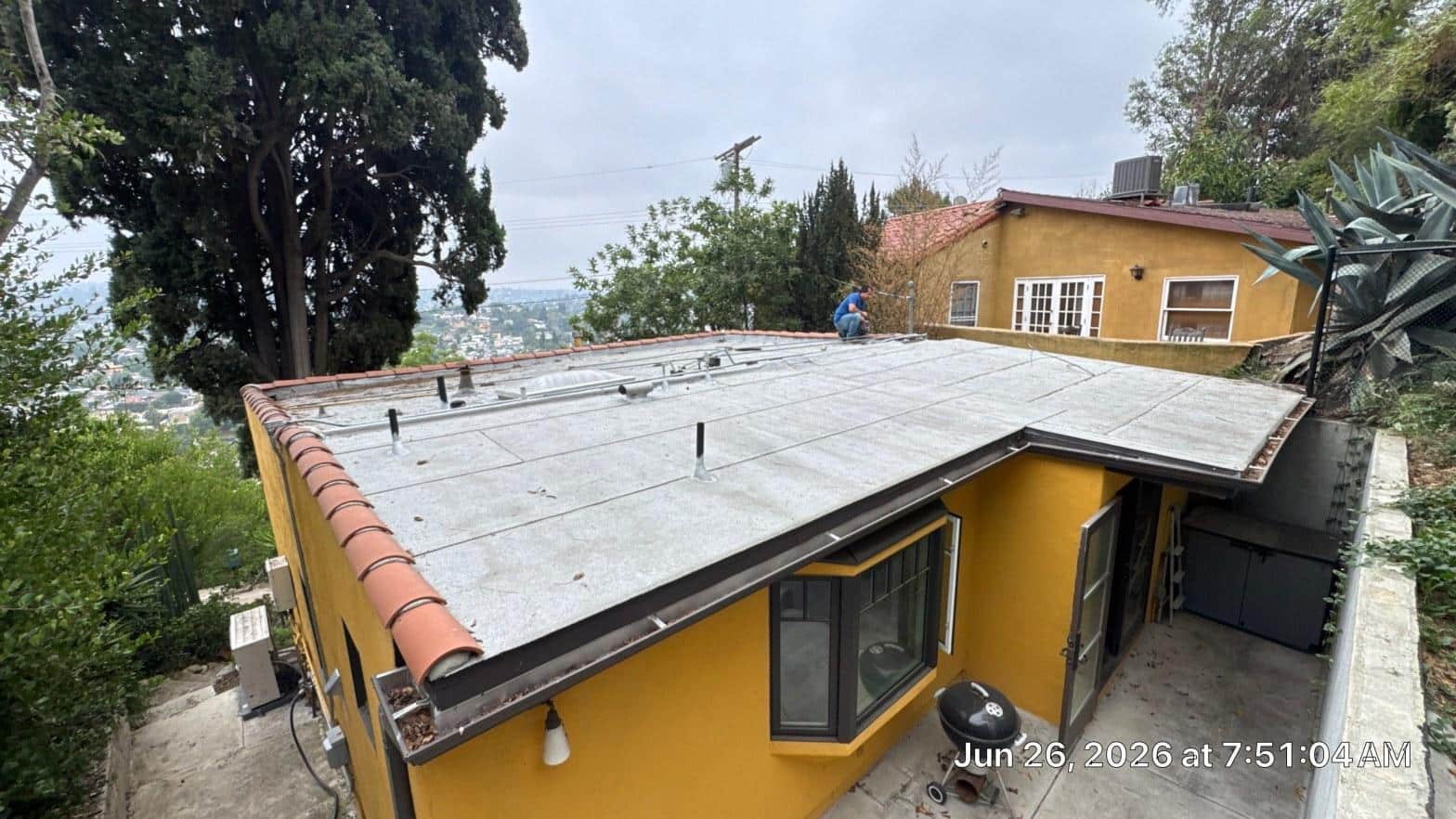
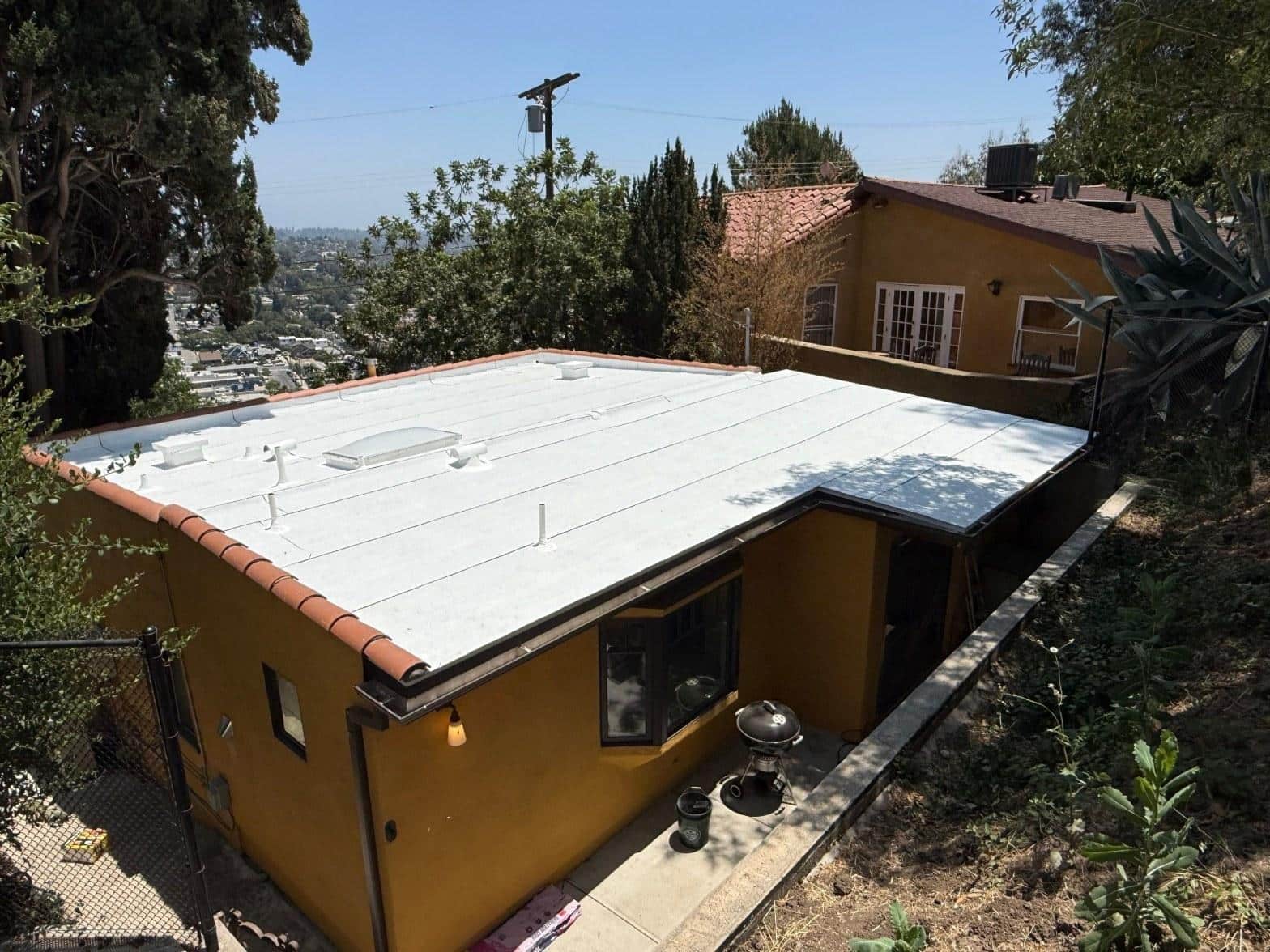
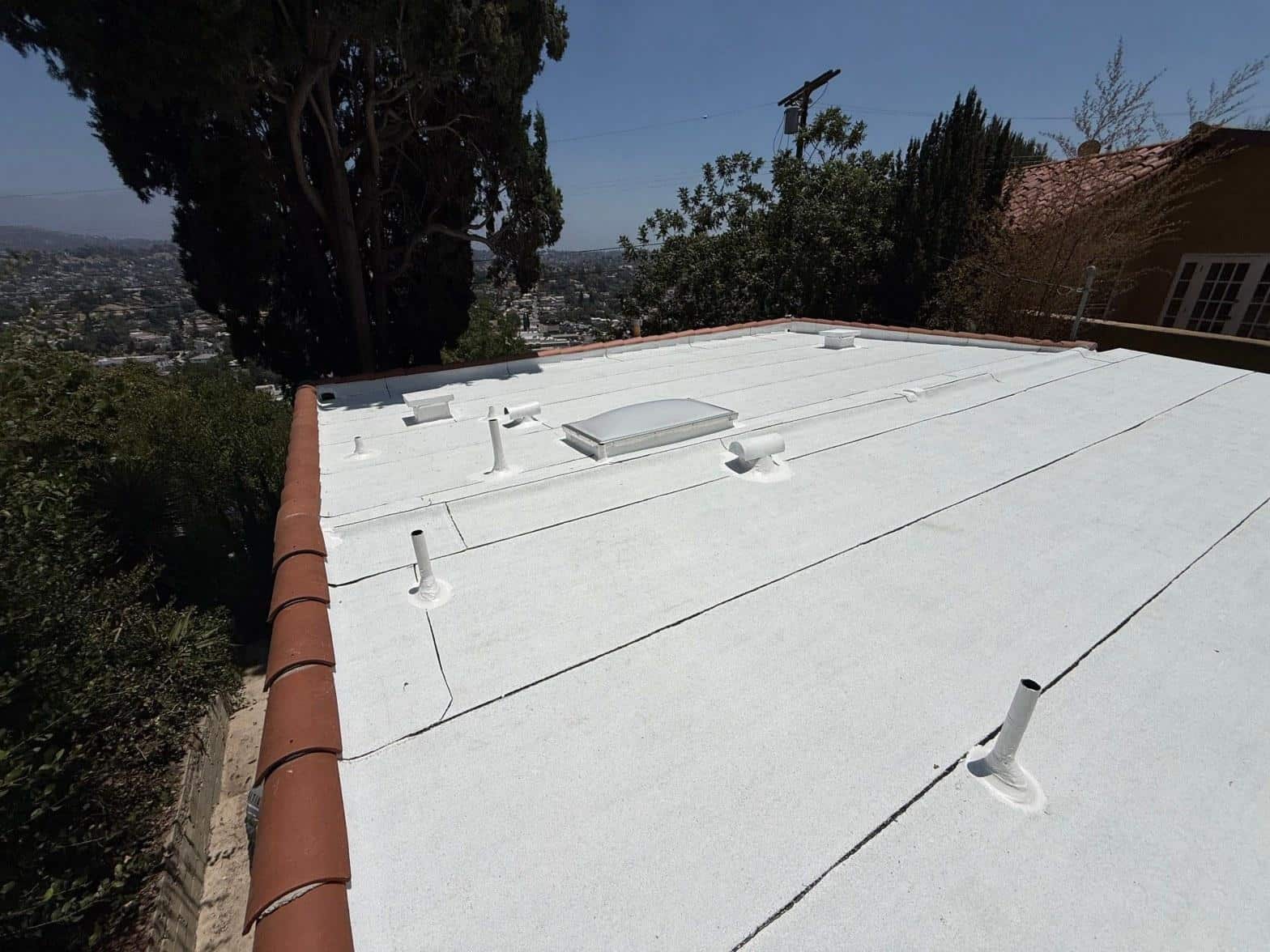
A cool roof is any roofing system designed to reflect more sunlight and absorb less heat than a standard roof. On a hot August day in Southern California, a conventional dark asphalt roof can reach surface temperatures above 150°F, while a cool roof surface can stay 50°F to 60°F cooler.
Cool roofs achieve this through two key properties: high solar reflectance (bouncing sunlight away) and high thermal emittance (releasing absorbed heat quickly). The U.S. Department of Energy defines a qualifying cool roof as one with a solar reflectance of at least 0.65 and thermal emittance of at least 0.90 for low-slope roofs.
Cool roofs come in several forms:
- Cool-roof coatings: White or reflective elastomeric coatings applied over an existing roof surface. These are common on flat or low-slope roofs.
- Cool asphalt shingles: Shingles embedded with specially granules that reflect near-infrared light. They look similar to standard shingles but perform better thermally.
- Single-ply membranes: TPO and PVC membranes used on flat commercial and residential roofs. They are inherently reflective and meet ENERGY STAR standards.
- Tile roofs with cool coatings: Concrete or clay tiles treated with reflective pigments, popular in Southern California neighborhoods.
The term “what is a cool roof” comes up constantly among homeowners researching energy upgrades. At its core, it is not a single product but a performance standard that multiple materials can meet.
What Is a Metal Roof and Why Does It Handle Heat Well?
A metal roof is a roofing system made from steel, aluminum, copper, or zinc panels or shingles. Metal handles summer heat well because it is naturally reflective and, when factory-coated with cool-roof pigments, can reflect 60% to 70% of solar energy.
Metal roofs come in two main profiles:
- Standing seam: Continuous vertical panels with raised seams. These are the most common on modern residential installs and allow for thermal expansion without cracking.
- Metal shingles or tiles: Panels stamped to look like wood shake, slate, or tile. They offer a traditional look with metal’s performance.
One reason metal performs so well in heat is its low thermal mass. Unlike concrete tile or asphalt, metal does not store heat for hours after the sun goes down. It heats up quickly and cools down quickly. Many metal panels are also installed over a ventilated air gap, which adds another layer of insulation between the panel and the roof deck.
Our team has seen that homes with a ventilated metal roof system run noticeably cooler attic temperatures — often 20°F to 30°F lower than comparable homes with unventilated asphalt shingles. That difference shows up directly on cooling bills in July and August.
Metal roofs that carry an ENERGY STAR rating meet the same reflectance and emittance thresholds as other cool-roof products, so a qualifying metal roof is also, by definition, a cool roof.
Cool Roof vs. Metal Roof Heat Summer: Head-to-Head Comparison
When comparing cool roof vs metal roof heat summer performance side by side, both outperform standard asphalt, but they differ in lifespan, upfront cost, and which roof shapes they suit best. The table below lays out the key differences.
| Factor | Cool Roof (Coating or Membrane) | Metal Roof |
|---|---|---|
| Solar Reflectance | 0.65 to 0.85 (white coating) | 0.60 to 0.70 (factory-coated panel) |
| Surface Temperature Reduction | Up to 60°F cooler than dark asphalt | Up to 50°F cooler than dark asphalt |
| Lifespan | 10 to 20 years (coating); 25 to 30 years (TPO/PVC) | 40 to 70 years |
| Best Roof Slope | Flat to low-slope (coatings); any slope (cool shingles) | Any slope, including steep residential roofs |
| Upfront Cost (market range) | Lower to moderate | Moderate to higher |
| Maintenance | Recoating every 10 to 15 years | Minimal; inspect fasteners every 5 to 10 years |
| ENERGY STAR Eligible | Yes (qualifying products) | Yes (qualifying products) |
| Noise in Rain | No change from existing roof | Slightly louder without solid decking |
| Wildfire Resistance (Class A) | Depends on product | Yes (most metal panels) |
| Long-Term Value | Good over 20-year horizon | Excellent over 40-70 year horizon |
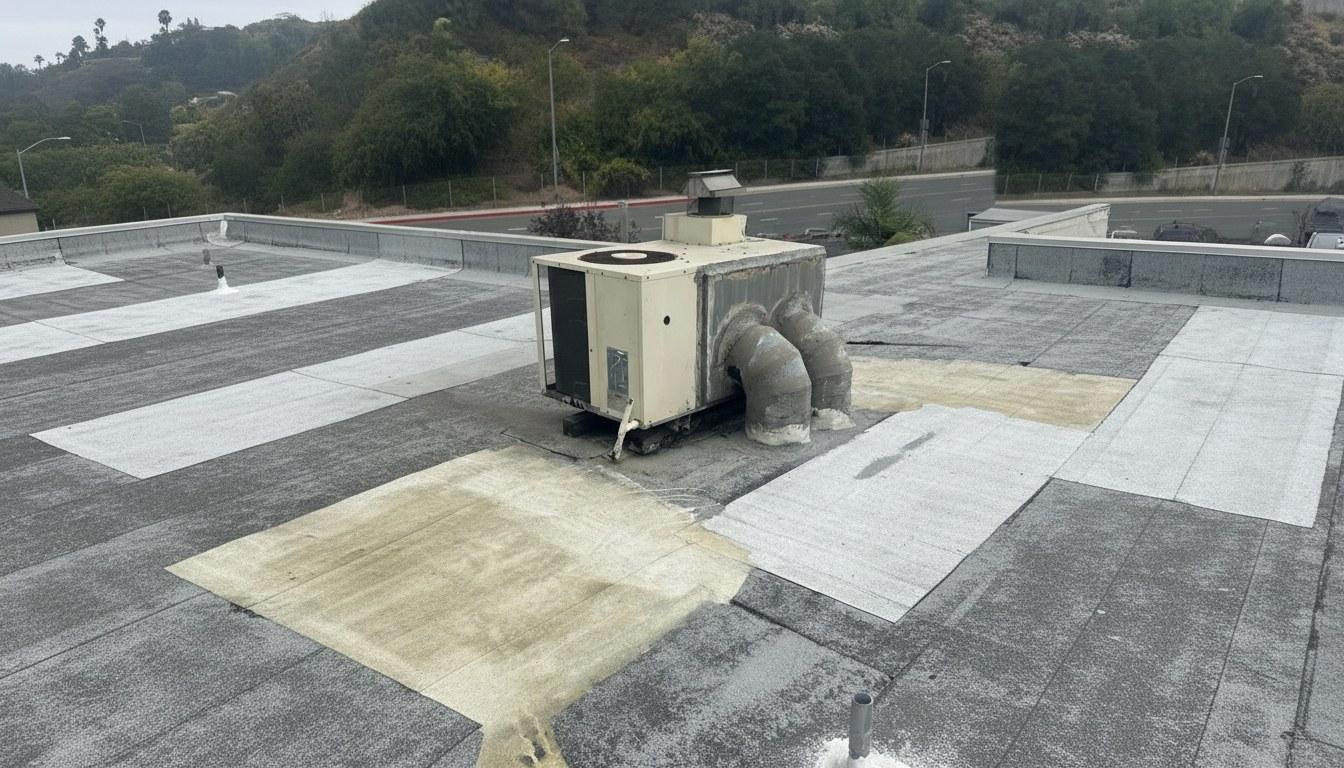
The cool roof vs metal roof heat summer debate often comes down to time horizon. If you plan to stay in your home for 30 or more years, a metal roof’s longer lifespan and lower maintenance schedule can offset its higher upfront price. If you need a cost-effective upgrade now — especially on a flat or low-slope roof — a cool-roof coating or TPO membrane delivers strong performance at a lower entry cost.
What Does Each Roof Type Cost in Southern California?
In the Southern California market, cool-roof coatings typically range from $1.50 to $4.00 per square foot installed, while TPO or PVC membranes run $5.00 to $10.00 per square foot. Standing-seam metal roofs generally range from $10.00 to $20.00 per square foot installed, depending on panel gauge, profile, and roof complexity.
Several factors move these numbers:
- Roof size and pitch: Steeper roofs require more labor time and safety equipment, raising the per-square-foot cost on both systems.
- Existing roof condition: A cool-roof coating applied over a sound surface costs less than one requiring tear-off and deck repair first.
- Panel or material grade: Galvalume steel panels cost less than aluminum or Kynar-coated premium panels.
- Ventilation upgrades: Adding a proper air gap under a metal roof improves performance but adds to the total project cost.
- Permit and inspection fees: Los Angeles County and surrounding counties require permits for full roof replacements, which add a few hundred to over a thousand dollars depending on scope.
Federal incentives can reduce the net cost. The Inflation Reduction Act federal tax credit (the Energy Efficient Home Improvement Credit, Section 25C) covers 30% of the cost of qualifying ENERGY STAR metal roofs and cool-roof products, up to applicable annual limits. Always confirm current eligibility with a tax professional before budgeting.
For a custom quote based on your specific roof, contact Roof Replacement Inc directly rather than relying on per-square-foot averages — scope and existing conditions vary widely across Southern California homes.
Which Roof Type Saves More on Energy Bills?
Studies from the Lawrence Berkeley National Laboratory show that cool roofs can cut cooling energy use by 10% to 30% in hot climates. Metal roofs with ENERGY STAR ratings produce similar savings, especially when installed with a ventilated air gap.
In Southern California, where air conditioning can account for 40% or more of a home’s summer electricity use, even a 15% reduction in cooling load translates to meaningful savings each month from June through September.
Across our service calls in Southern California, we consistently see attic temperatures drop 25°F to 35°F on homes that switch from dark asphalt to either a cool-roof membrane or a ventilated metal panel system — and homeowners frequently report lower utility bills within the first full summer season.
A few factors determine which system saves more for your specific home:
- Attic insulation level: A poorly insulated attic limits how much either roof type helps. Upgrading insulation alongside the roof multiplies the savings.
- Roof color choice: A white or light-colored cool-roof coating outreflects a dark metal panel, even if both are marketed as “cool roofs.” Lighter colors always perform better thermally.
- Ventilation design: A metal roof with a proper ventilated batten system outperforms one laid directly on solid decking because moving air carries heat away from the underside of the panel.
- Local microclimate: Coastal communities in Southern California experience marine-layer cooling that reduces the performance gap between options. Inland valley and desert-edge communities see the largest savings from either upgrade.
How Do California Building Codes Affect Your Choice?
California’s Title 24 building energy standards require new roofs and re-roofs on low-slope residential and commercial buildings to meet minimum solar reflectance and thermal emittance values. As of the 2022 Title 24 update, these requirements apply to a broader range of roof replacements than ever before.
California’s Title 24 building energy standards set the floor for what qualifies. For low-slope roofs (2:12 pitch or less), the minimum aged solar reflectance is 0.63. For steep-slope roofs, the minimum is lower, but cool-roof products and qualifying metal panels still exceed the threshold comfortably.
Key code considerations:
- Permit triggers: Replacing more than 50% of a roof surface in most California jurisdictions triggers a full permit and Title 24 compliance review.
- Cool-roof product listings: The California Energy Commission maintains a rated-products list. Both cool-roof membranes and ENERGY STAR metal panels appear on this list.
- Wildfire zones: Many communities across Southern California fall in State Responsibility Areas or Very High Fire Hazard Severity Zones. In these areas, Class A fire-rated roofing is required. Most metal roofs carry a Class A rating; cool-roof coatings must be applied over a Class A-rated assembly to qualify.
- Contractor licensing: Any roofing contractor performing this work in California must be licensed by the California Contractors State License Board (CSLB). Always verify a contractor’s license number at cslb.ca.gov before signing a contract.
A roof certification from a licensed contractor documents that your new roof meets Title 24 and local fire-rating requirements — which matters at resale and for insurance purposes.
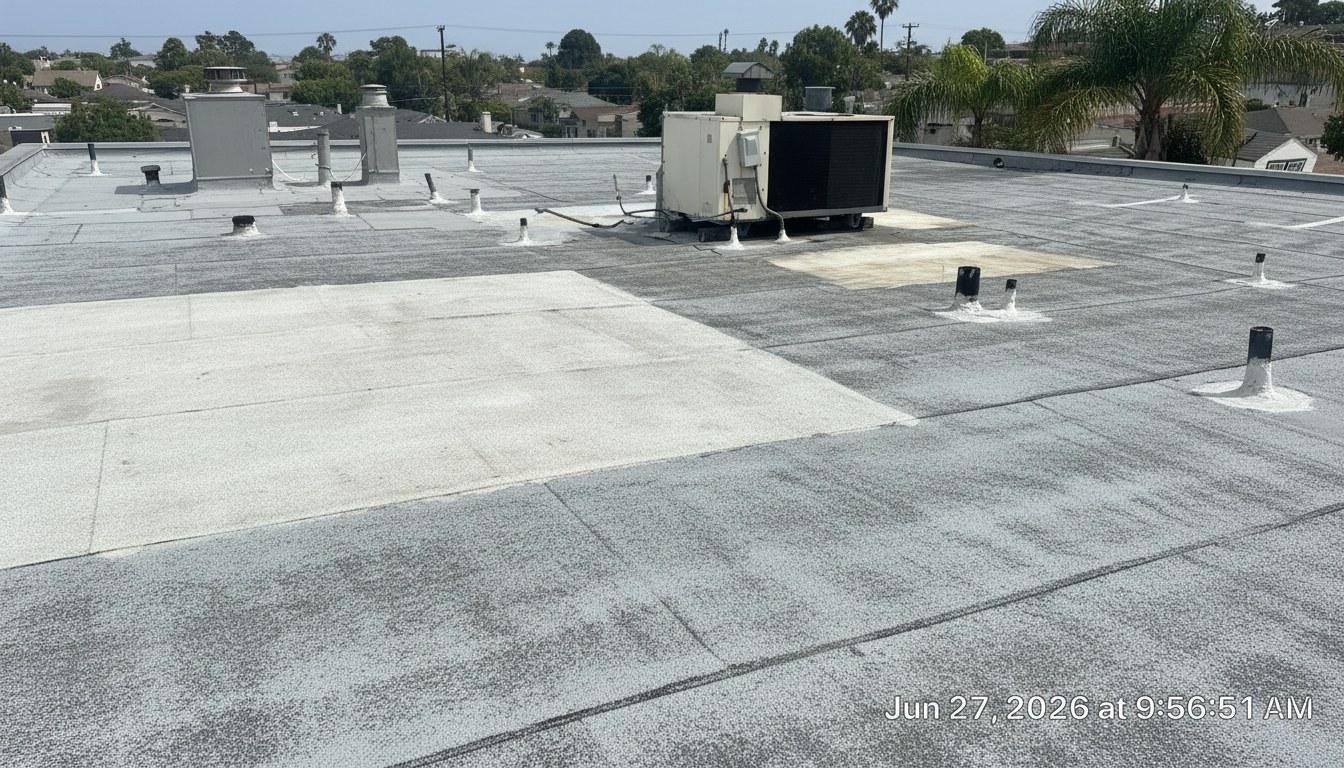
Ready to Choose? Get Expert Help from Roof Replacement Inc
Deciding between a cool roof and a metal roof is easier when you have a professional assess your specific home — its slope, existing deck condition, attic ventilation, and local fire-zone status all affect which system performs best and what it will cost.
Roof Replacement Inc works with homeowners across Southern California on both cool-roof installations and metal roof replacements. Whether you need a reflective coating on a flat commercial-style roof or a full standing-seam metal system on a steep residential home, the team can walk you through the options, pull the permits, and make sure the finished roof meets California’s Title 24 building energy standards and any local fire-rating requirements.
Schedule your inspection and get a written quote before any work begins. Call (213) 364-3979 to speak with a licensed roofing specialist serving homeowners across Southern California.
Explore our full range of roofing services across Southern California.
Frequently Asked Questions
Is a cool roof or a metal roof better for Southern California summers?
Both outperform standard asphalt shingles in summer heat, but they suit different situations. A cool-roof coating or membrane is a cost-effective upgrade for flat or low-slope roofs, while a metal roof offers longer lifespan — 40 to 70 years — and strong reflectivity for steep-slope homes. The best choice depends on your roof's pitch, your budget, and how long you plan to stay in the home.
How much cooler does a cool roof keep your house compared to a regular roof?
A qualifying cool roof can keep its surface 50°F to 60°F cooler than a dark asphalt roof on a hot August day. That surface temperature difference translates to a cooler attic and can reduce cooling energy use by 10% to 30%, according to U.S. Department of Energy research. Actual savings vary based on attic insulation, home size, and local climate.
Does a metal roof qualify as a cool roof in California?
Yes — a metal roof with an ENERGY STAR rating meets the same solar reflectance and thermal emittance thresholds as other cool-roof products and complies with California's Title 24 building energy standards. Factory-coated metal panels can reflect 60% to 70% of solar energy. Always confirm the specific product appears on the California Energy Commission's rated-products list before purchasing.
Can I get a tax credit for installing a cool roof or metal roof in California?
Yes. The Inflation Reduction Act federal tax credit (Section 25C) covers 30% of the cost of qualifying ENERGY STAR metal roofs and cool-roof products, subject to annual limits. California may also offer rebates through utility programs. Consult a tax professional to confirm your specific product and installation qualify before filing.
How long does a cool roof coating last compared to a metal roof?
A cool-roof elastomeric coating typically lasts 10 to 15 years before recoating is needed, while TPO or PVC membranes last 25 to 30 years. A metal roof, by contrast, can last 40 to 70 years with minimal maintenance. If you plan to stay in your home long term, a metal roof's longer lifespan can offset its higher upfront cost over time.
Related Articles




What Our Clients Say








Roof Replacement Inc. offers professional, high-quality work, guaranteed (call for details); ensuring all clients projects meet all code and design requirements. We are dedicated to exceptional customer service and will strive to ensure you with the highest quality roofing services. Roof Replacement Inc. offers lifetime warranty (call for details) on all of our workmanship to ensure the quality of our work. With over 40 years of combined experience within the roofing and construction industry, Roof Replacement Inc. has grown and developed in all areas of roofing construction, including roof inspections. As a leading residential and commercial roofing company in LA, we have hundreds of references from previous clients, so rest assured, that your roofing job will be done right the first time. Replacing an old roof can help add curb appeal and will increase the perceived value of your home. First impressions are vital when selling your home, especially when your roof takes up more than half of the exterior of your residence or business. Not only is the return of investment on a new roof attractive for potential buyers, but can be as beneficial as remodeling the kitchen or bathrooms within your residence.

