

What Did This Project Involve?
This job was a complete clay barrel tile roof replacement on a Spanish-style single-family home in the Los Angeles area. The homeowner’s goal was straightforward: stop active leaking, replace rotted fascia, and restore the roof to full weathertight condition while keeping the authentic terracotta look the home was built with.
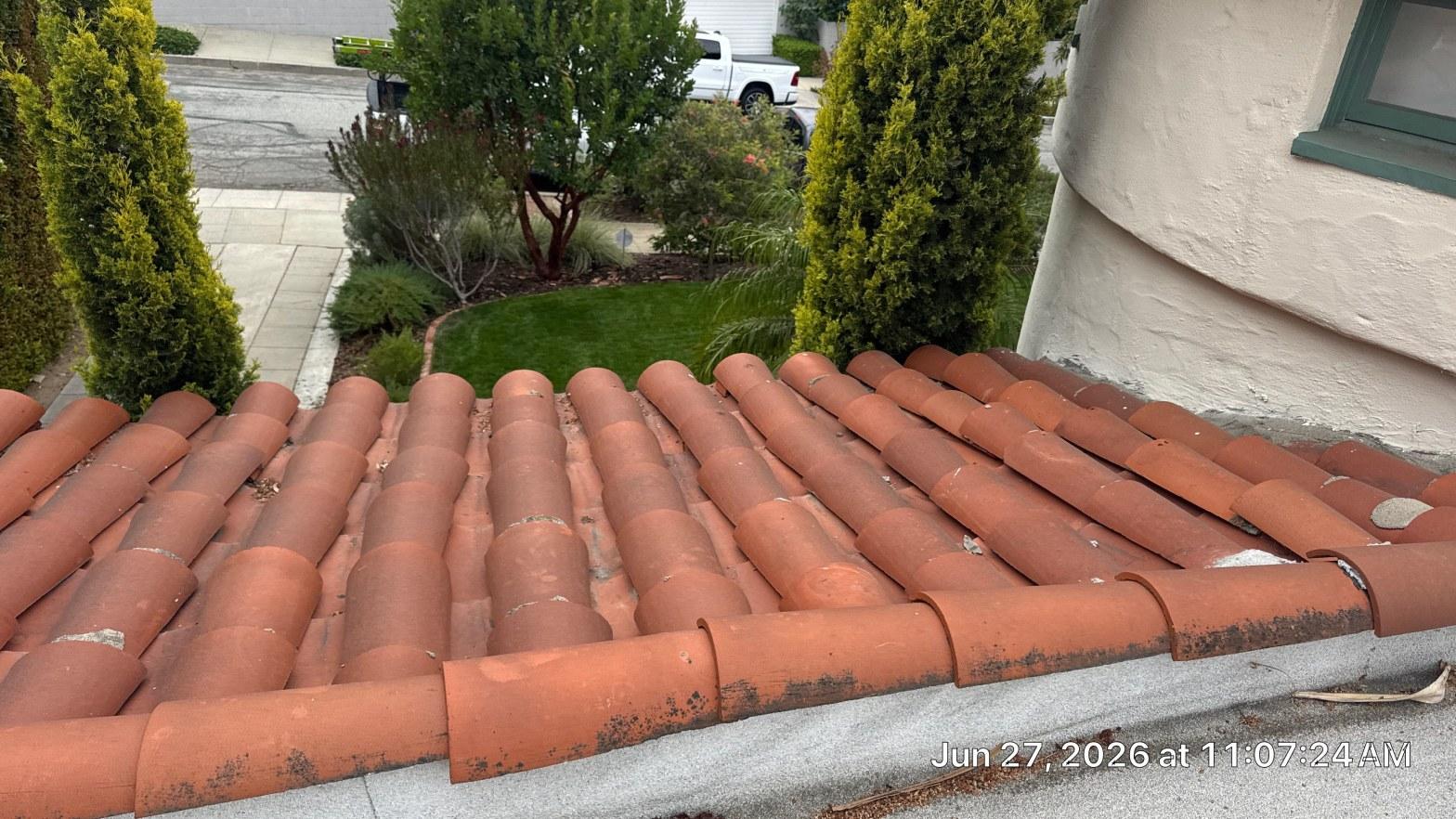
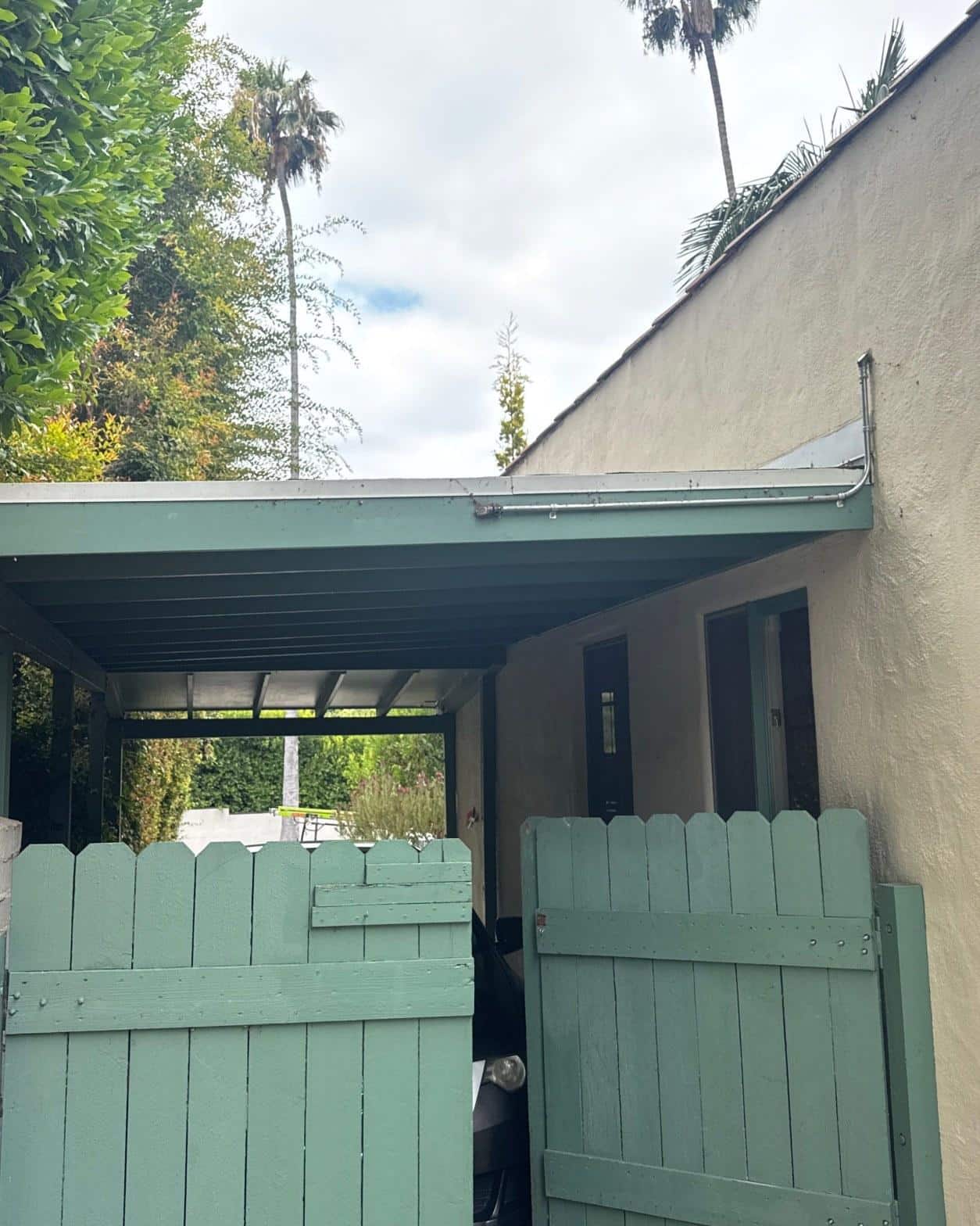
The property presented three distinct roofing challenges on a single structure. There were two standard pitched tile sections over the main living area, a circular tower roof that required tiles laid in a radial fan pattern, and a large adjacent flat roof section. Each required a different approach, and all three had to be sequenced without disrupting each other.
Project Gallery
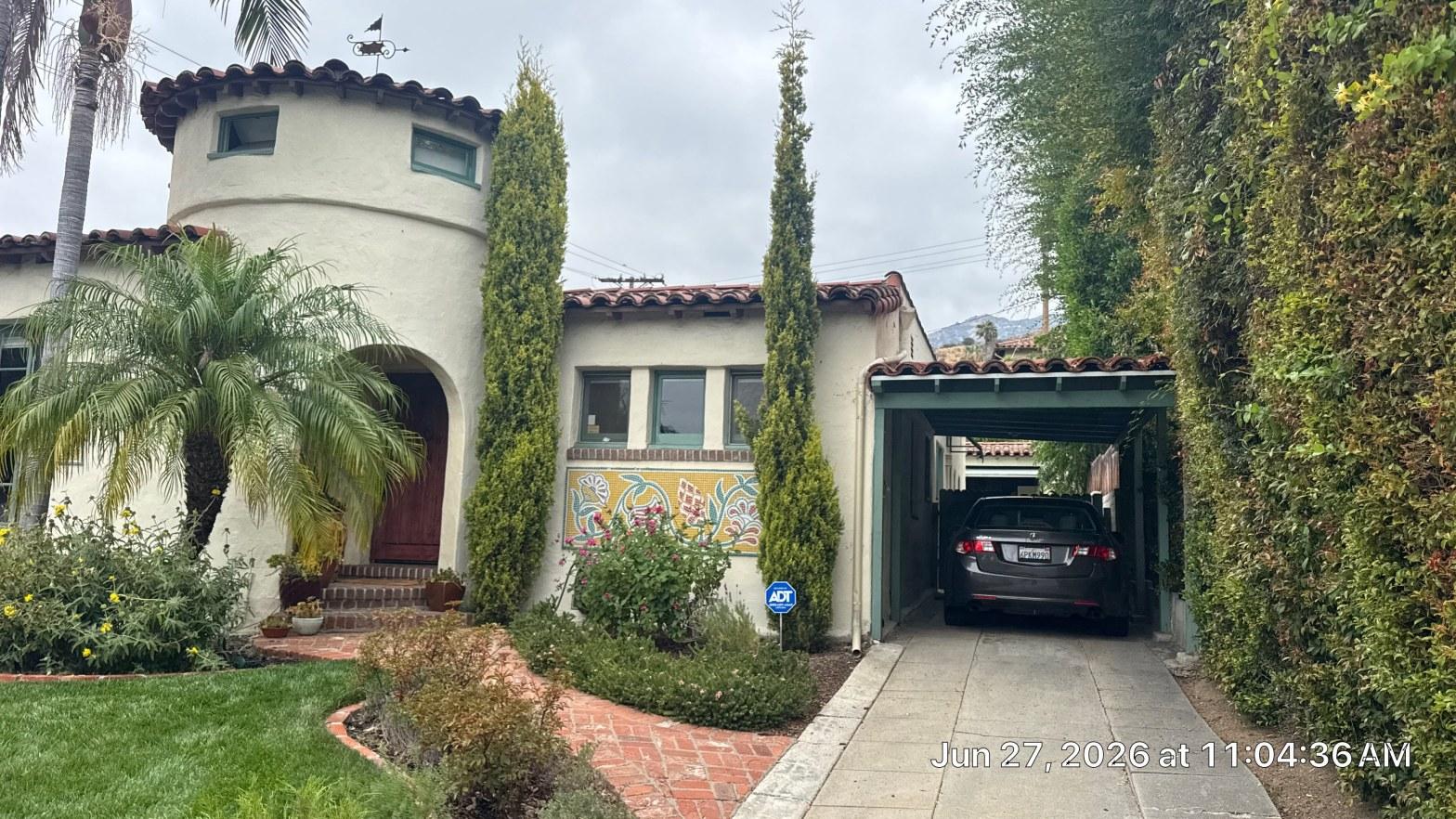
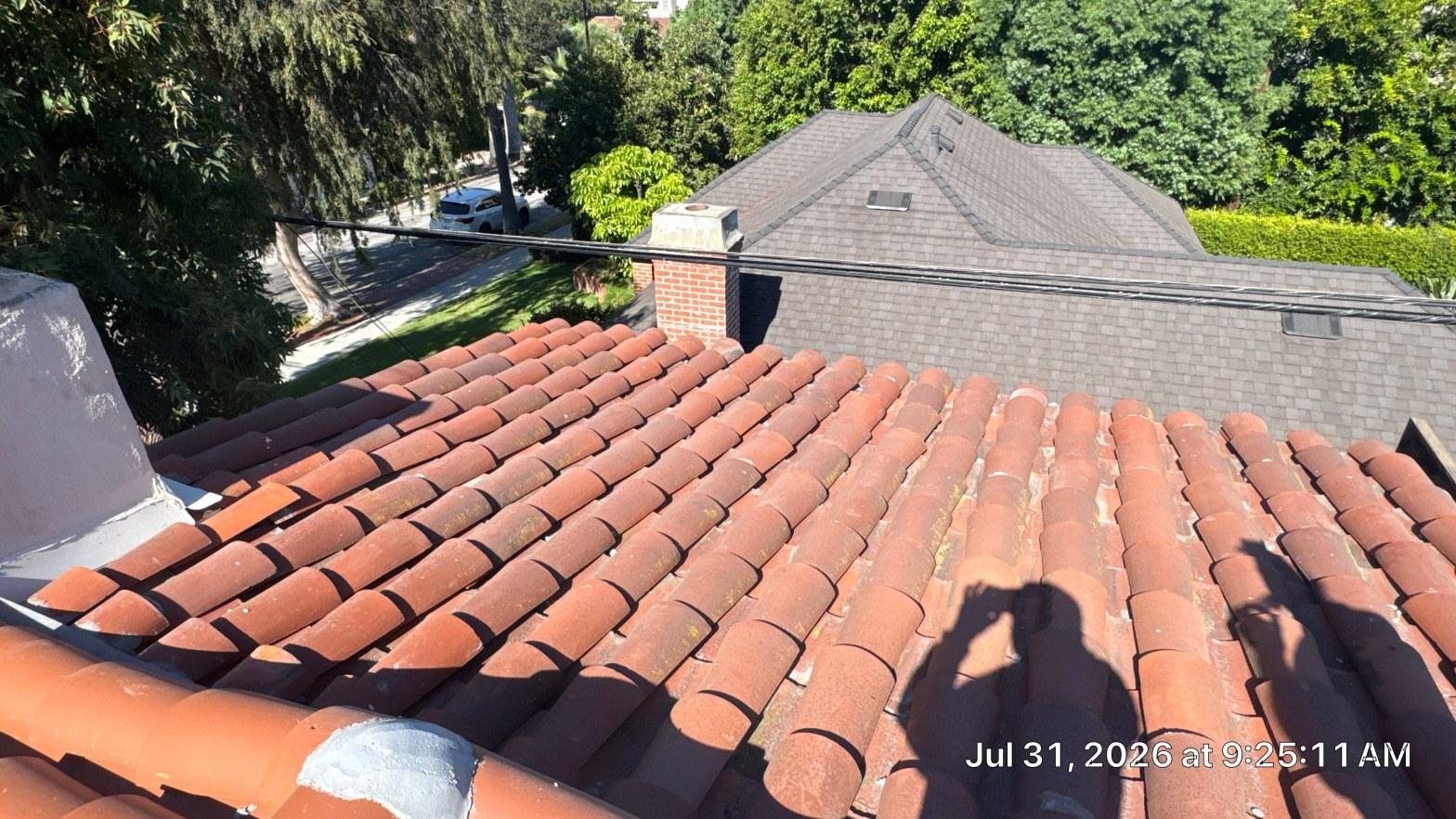
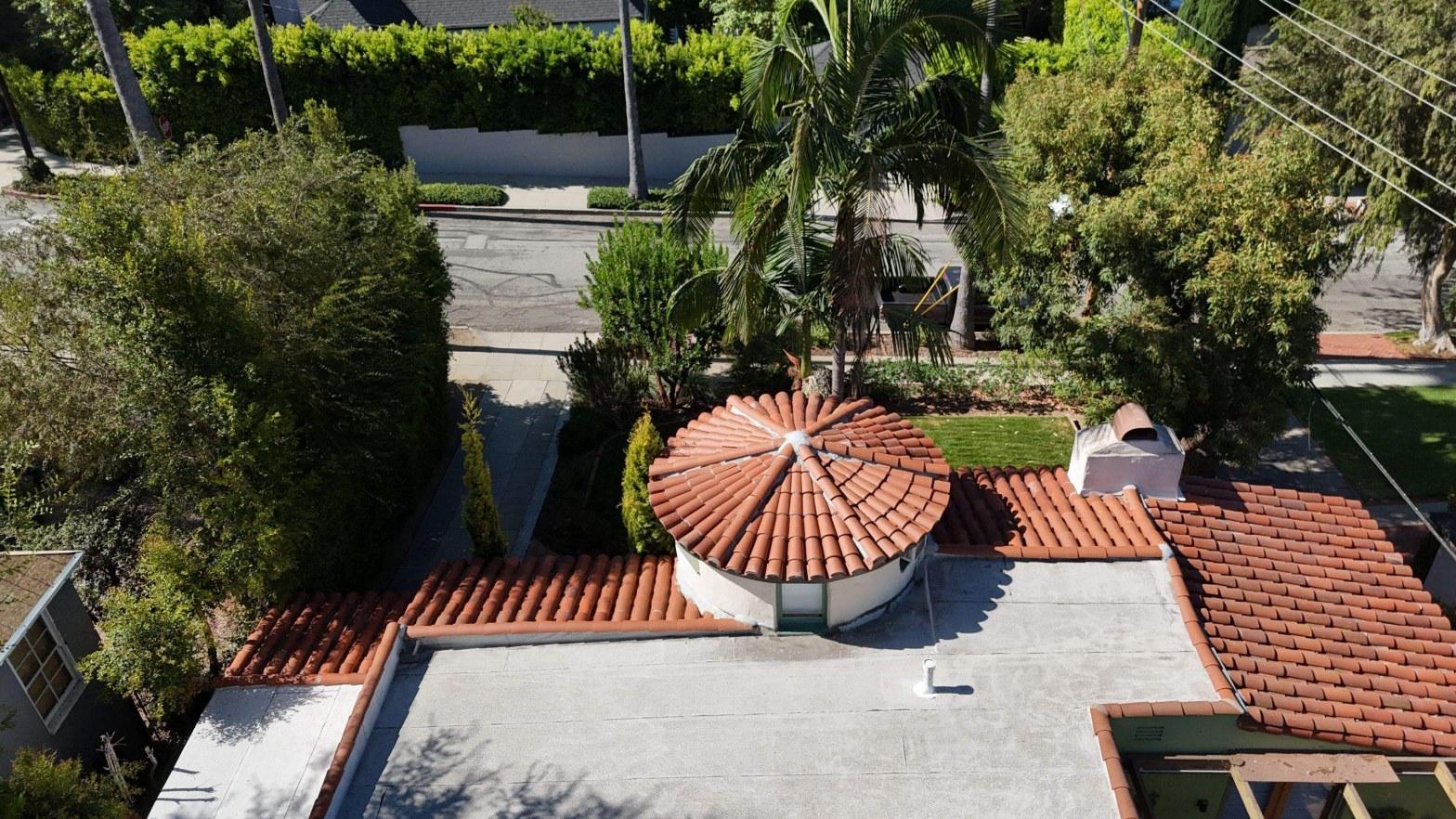
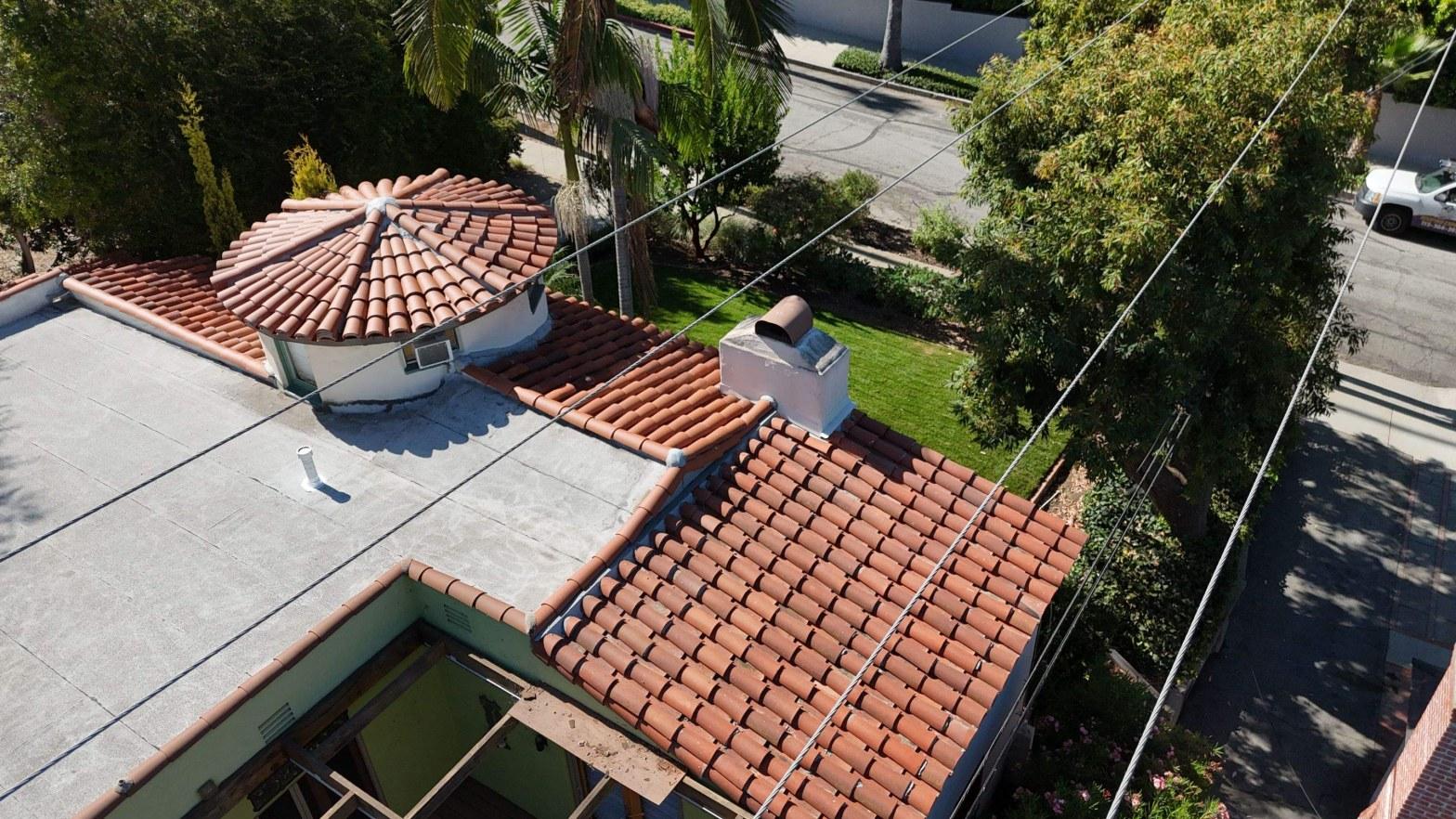
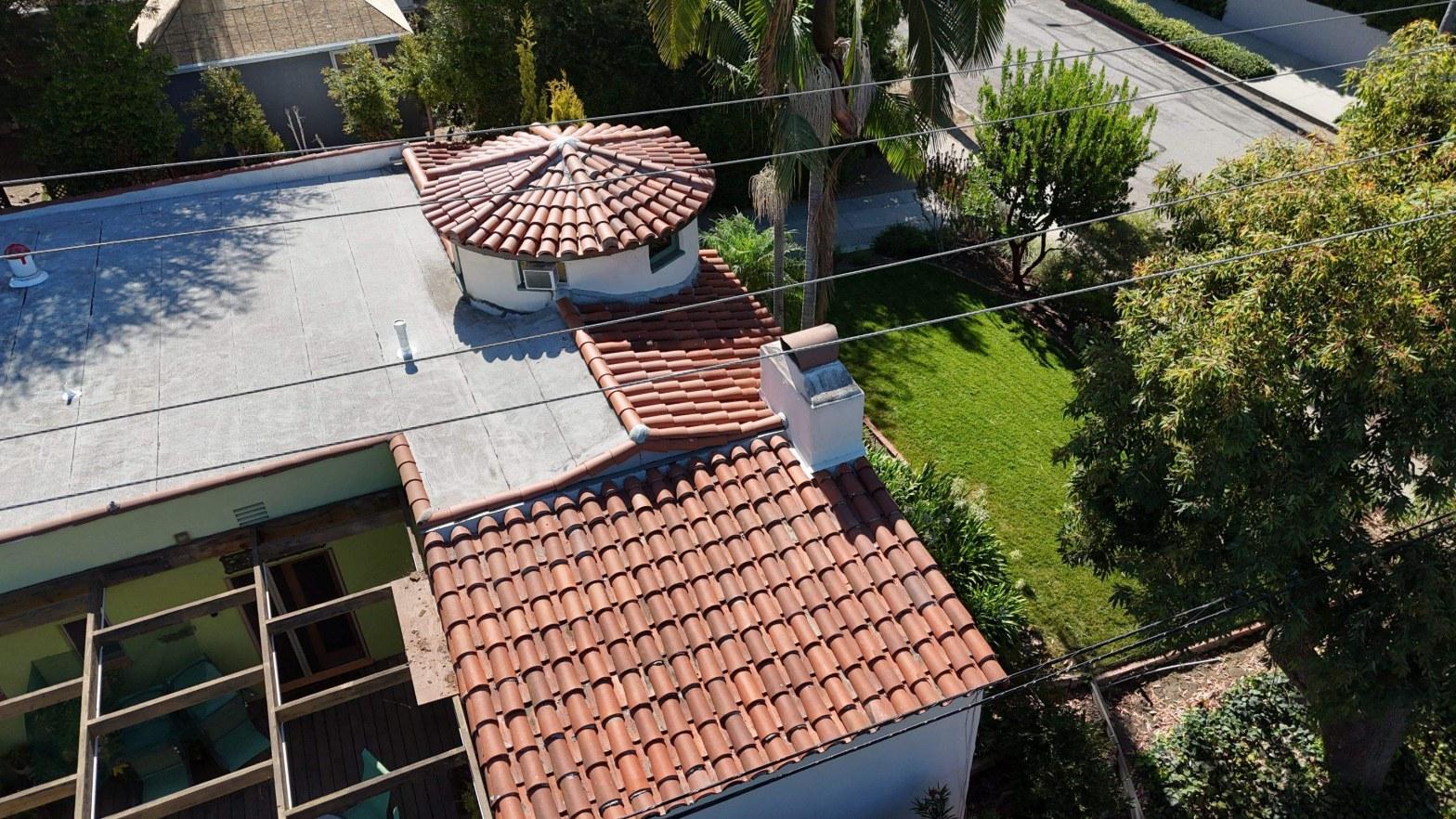
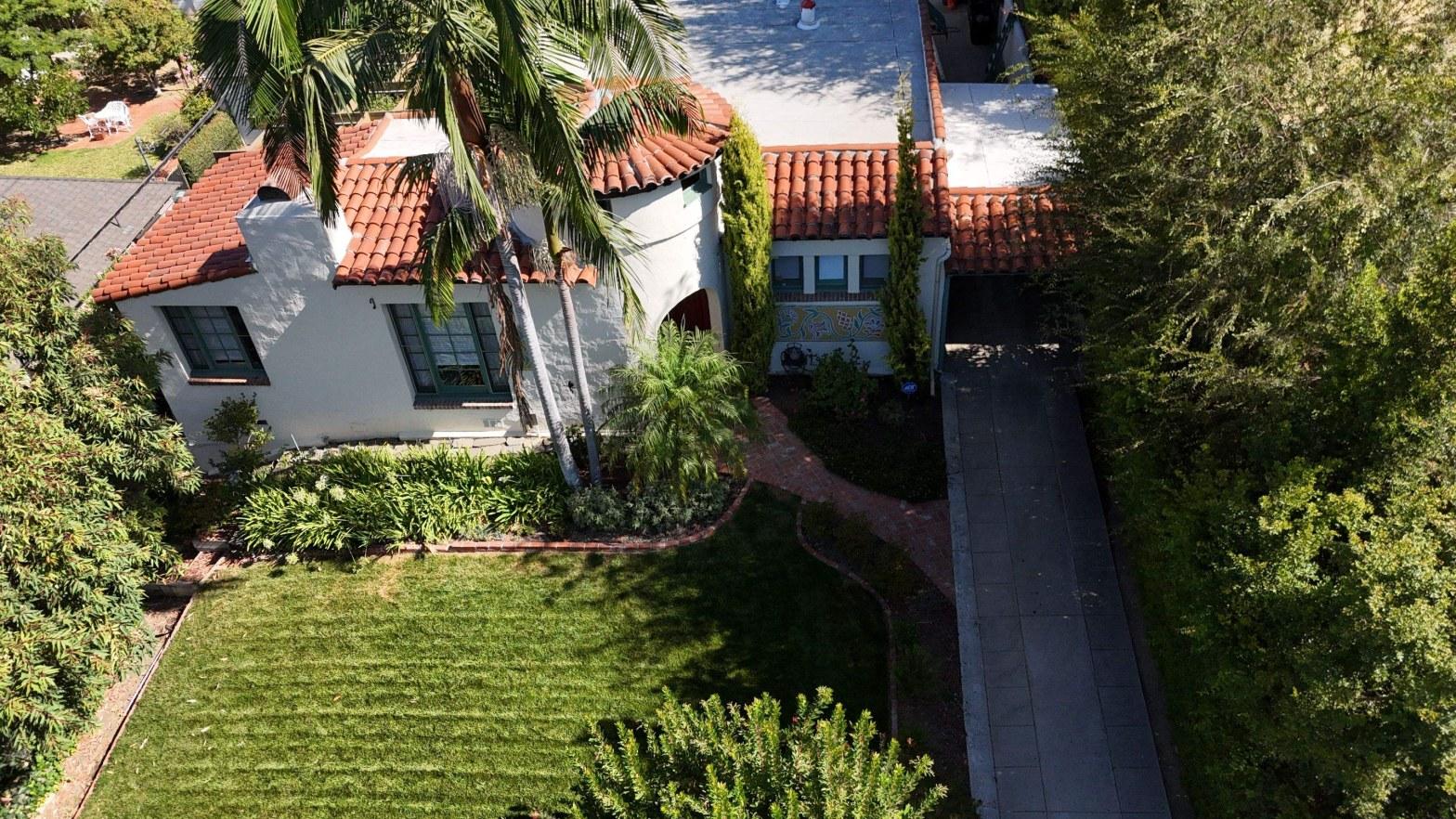
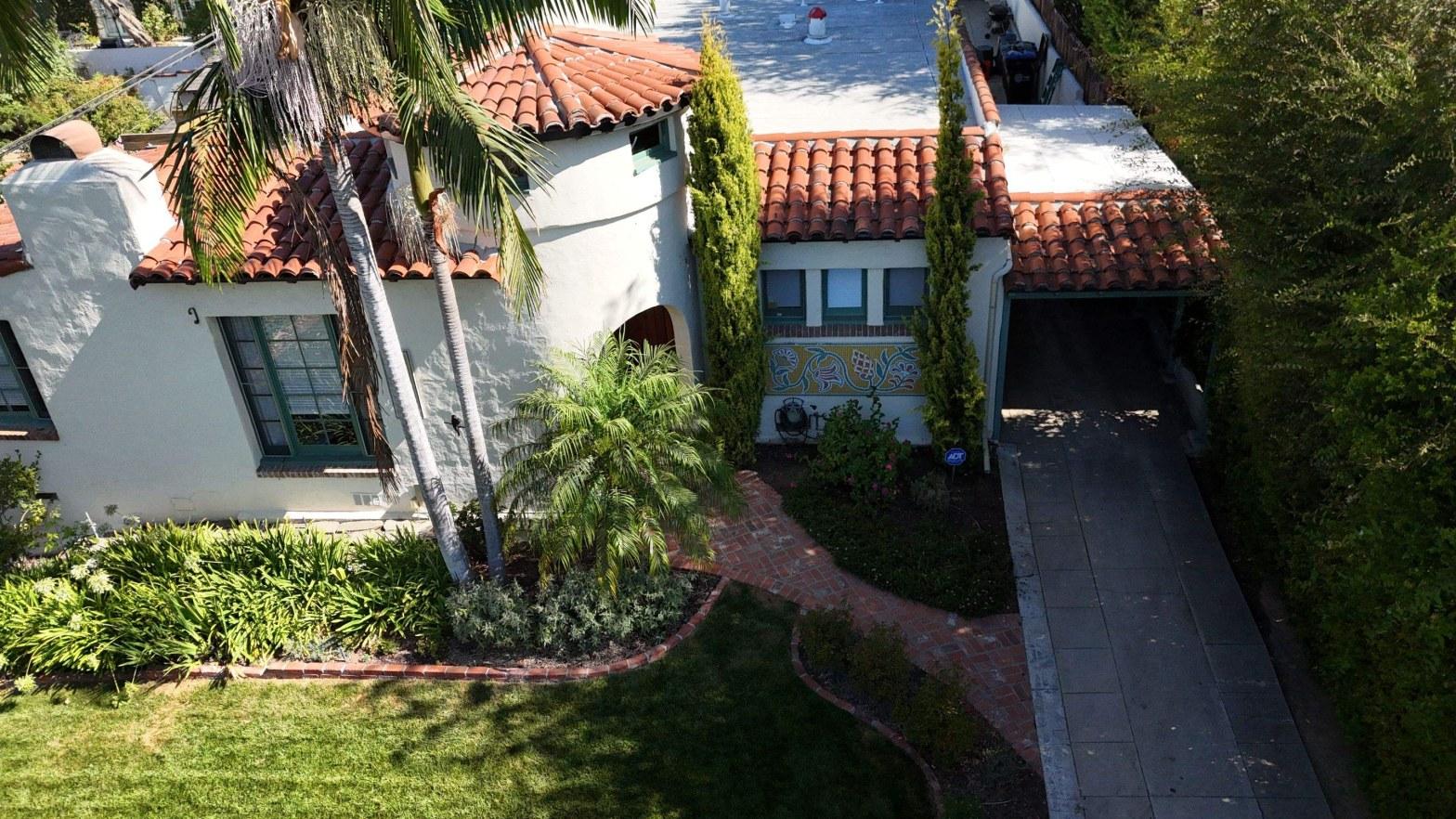
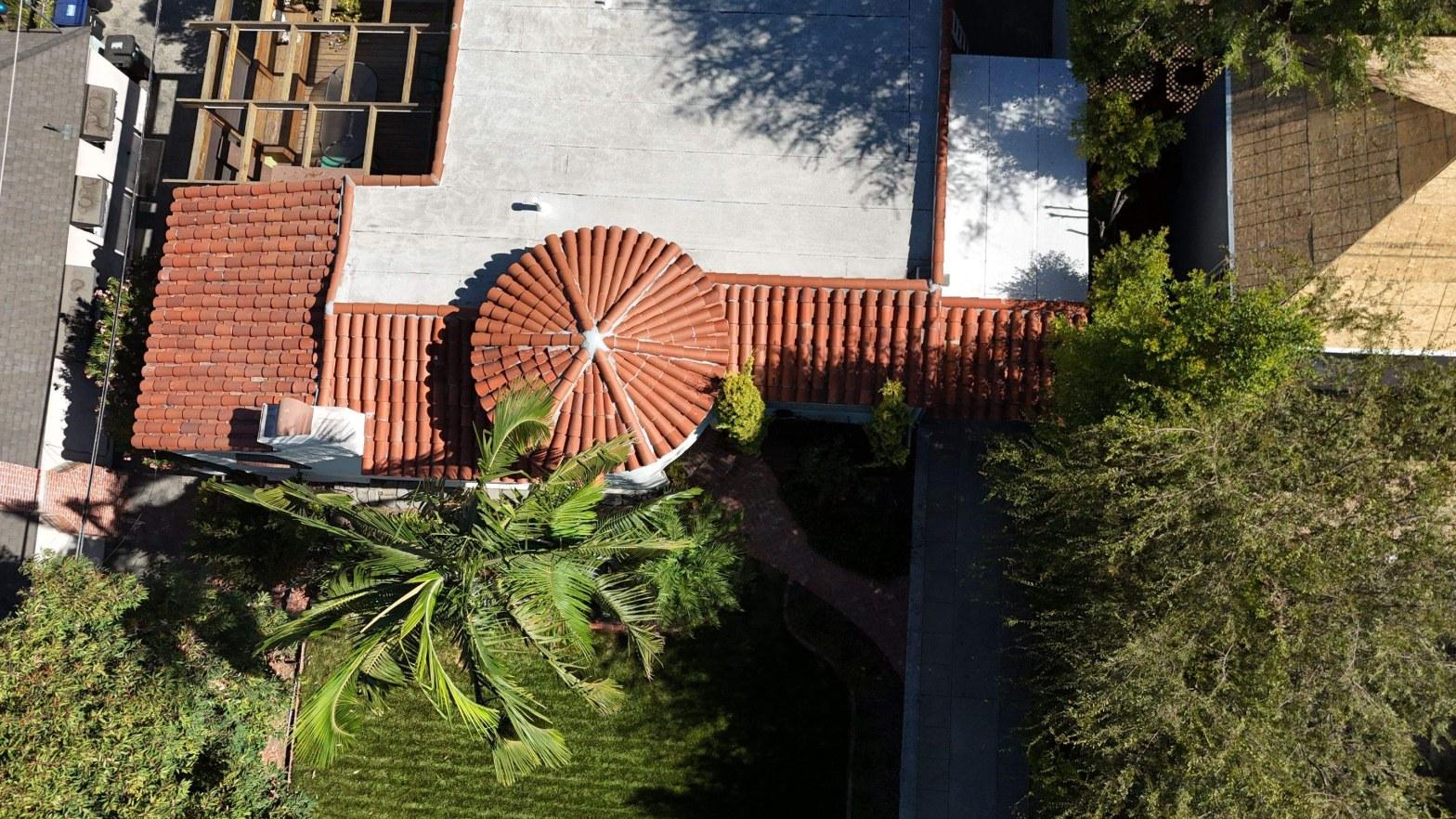
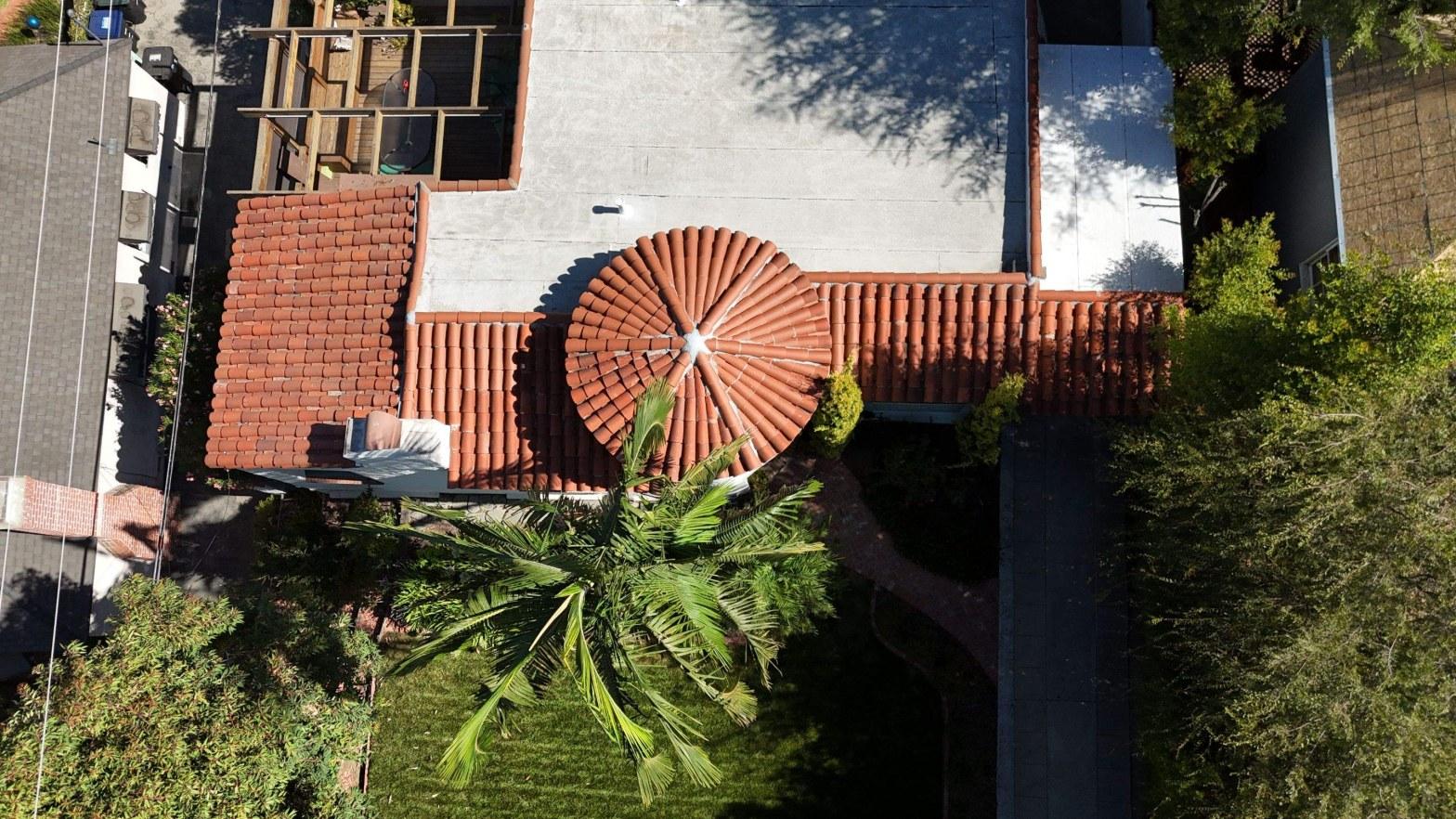
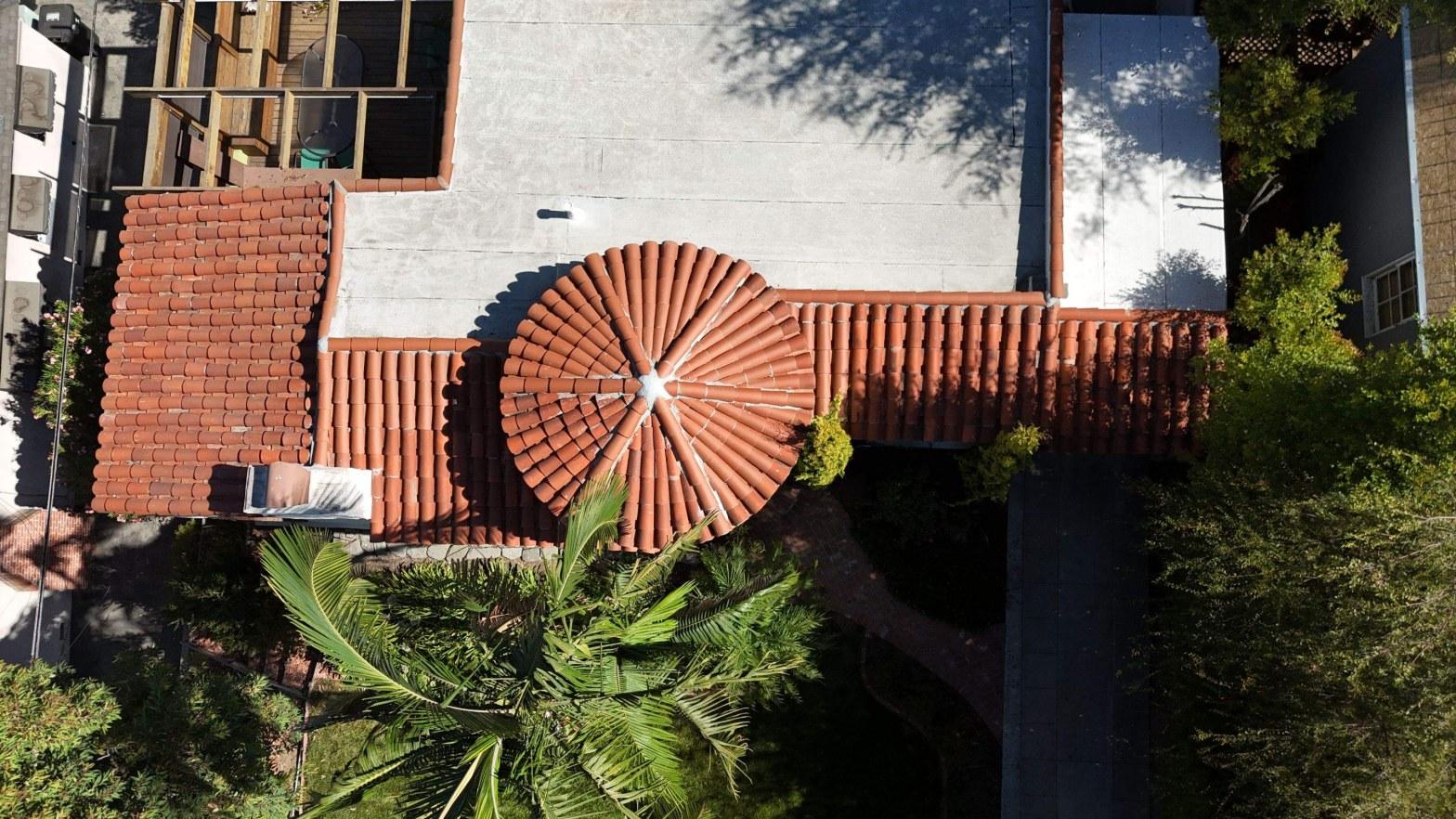
As visible from the drone photography, the tile color is a uniform terracotta red throughout, which is consistent with California’s Title 24 building energy standards that have, as of 2026, increasingly favored reflective or naturally light-colored roofing materials in Southern California’s climate zone, clay tile’s inherent thermal mass already performs well in this regard without a coating upgrade.
What Did We Find During the Tear-Off?
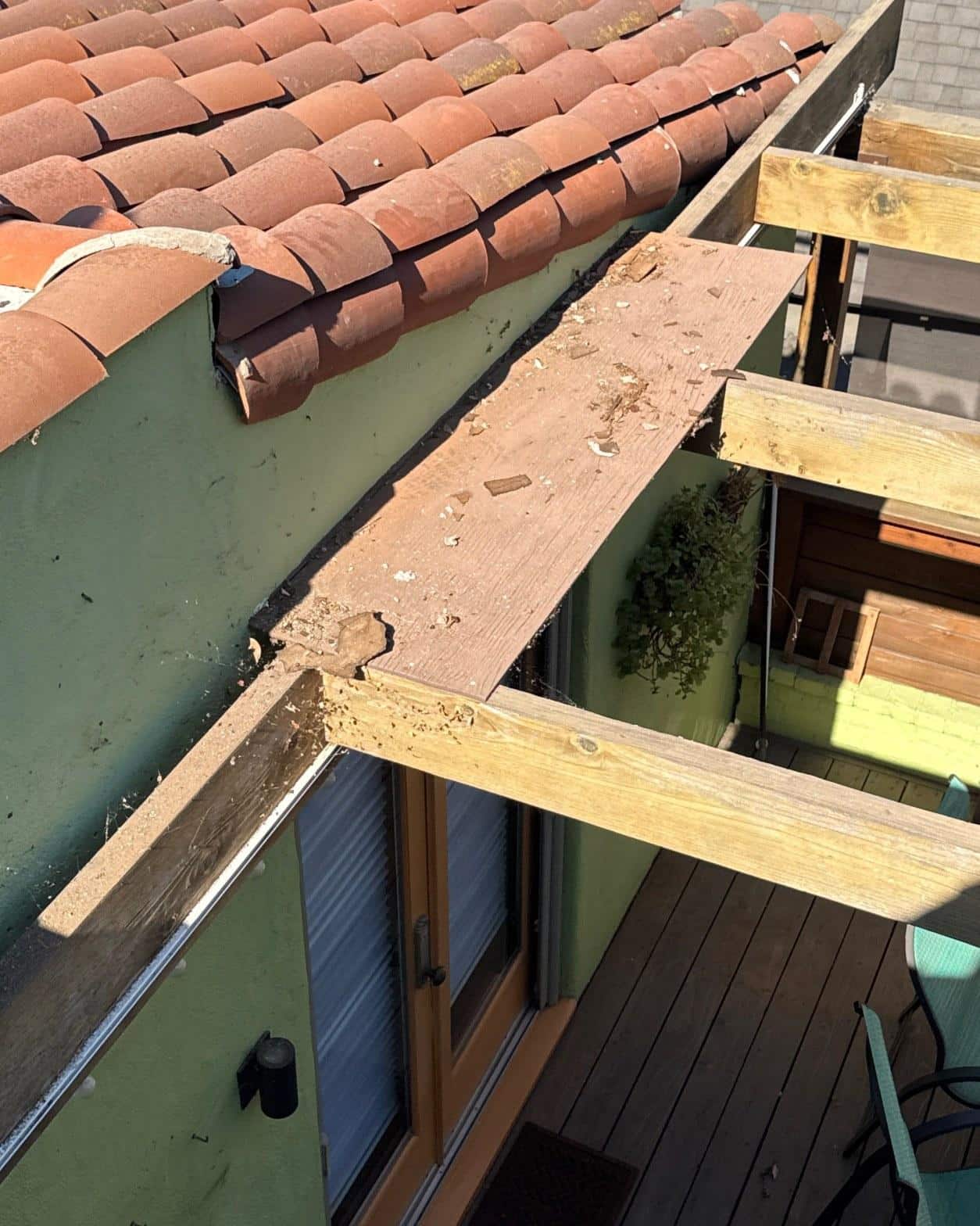
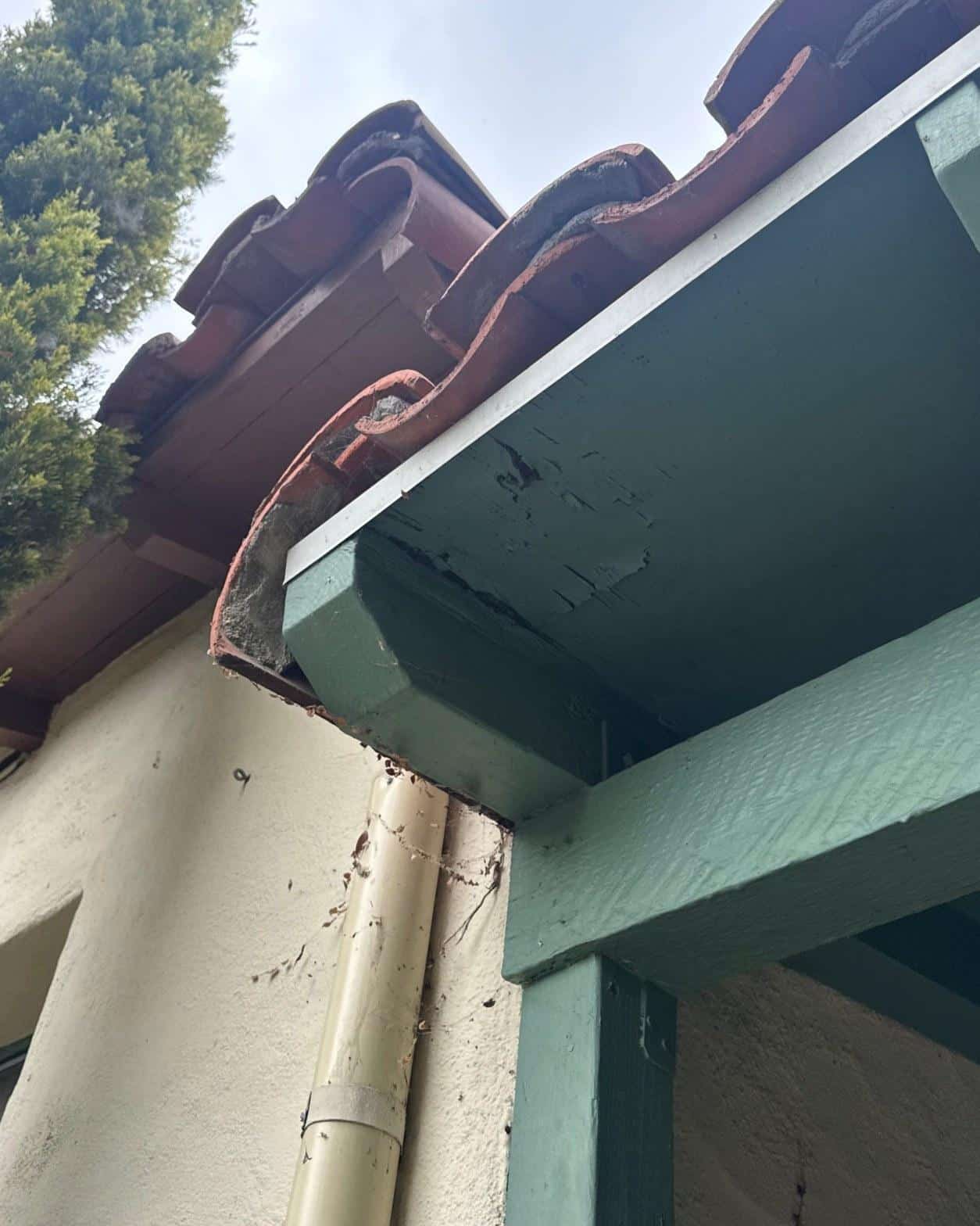
Beneath the old tile, we found deteriorated felt underlayment and at least one fascia board with significant wood rot along the deck edge adjacent to the pergola framing. This kind of hidden damage is common on tile roofs that are 25 to 40 years old, particularly where debris collects in the valley between a tile section and a flat roof.
The photo of the fascia board tells the story clearly: the wood had softened and crumbled at the corner where the tile overhang met the beam structure of the outdoor deck. Left in place, that rot would have worked back toward the rafters within another season or two. We replaced the affected board length before any new tile work began, which is the correct sequence; installing new tile over a compromised fascia only traps the problem.
Our crews replace rotted fascia on roughly 6 out of every 10 tile roof tear-offs we handle on homes of this era in the Los Angeles area, almost always in locations where debris has been sitting against the wood for years without a functional gutter diverting water away.
How Was the Circular Tower Roof Handled?
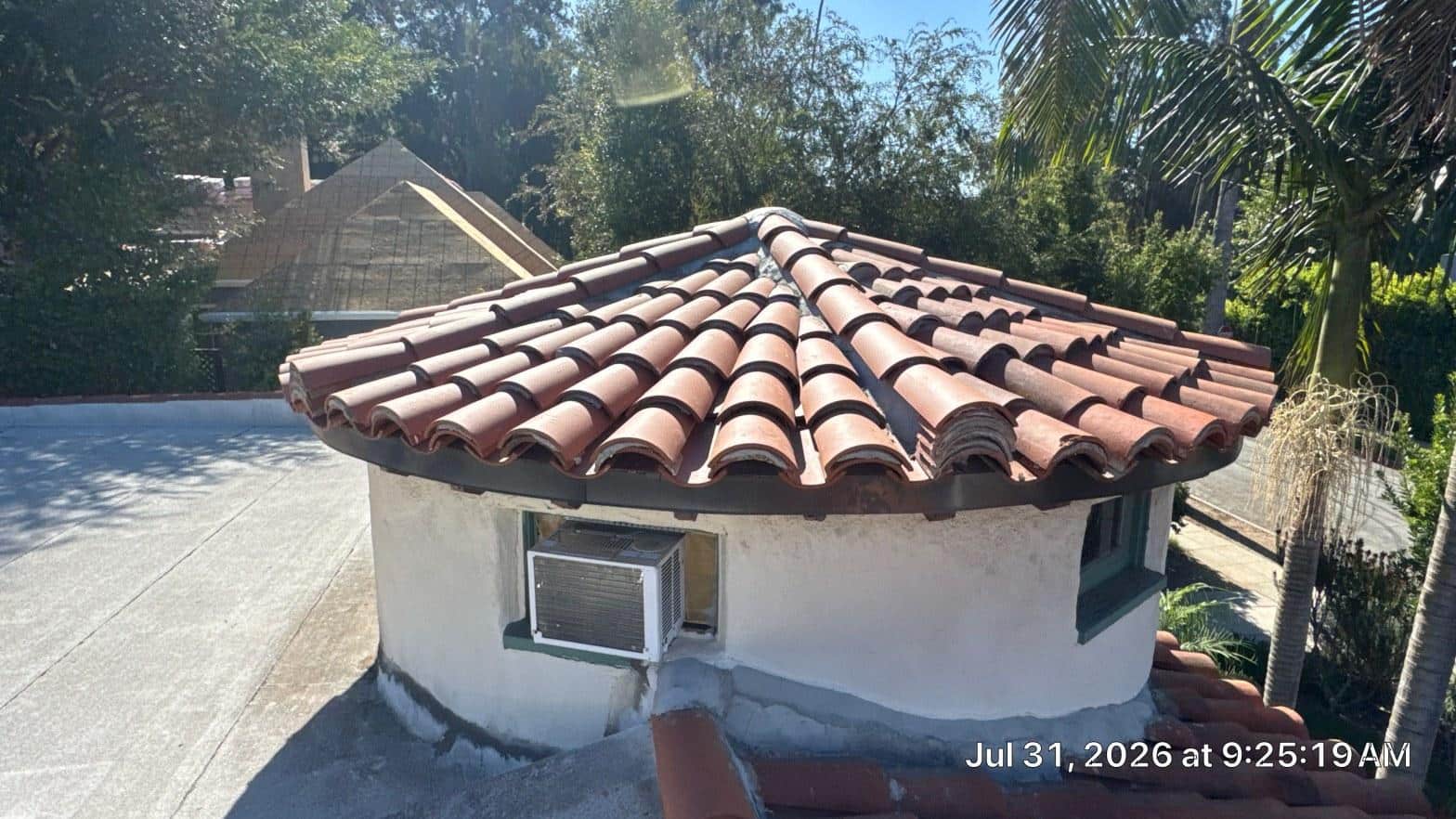
The circular tower section is the most labor-intensive part of this project. A round roof cannot be tiled in standard horizontal rows. Each tile course fans outward from the peak, requiring individual cuts and adjustments so the tiles lay tight without gaps at the narrow top end and without buckling at the wider lower edge.
Looking at the finished tower from ground level and from the drone, the radial pattern is clean from every angle, which reflects the time required to set each tile individually rather than working off a chalk line. This section also sits adjacent to the flat roof, creating a transition edge that had to be sealed and counter-flashed properly to prevent water from migrating under the tile at that joint. Los Angeles receives the bulk of its annual rainfall between November and March, so transitions between roof types are a primary failure point if not detailed correctly at installation.
Flat Roof and Vent Flashing Details
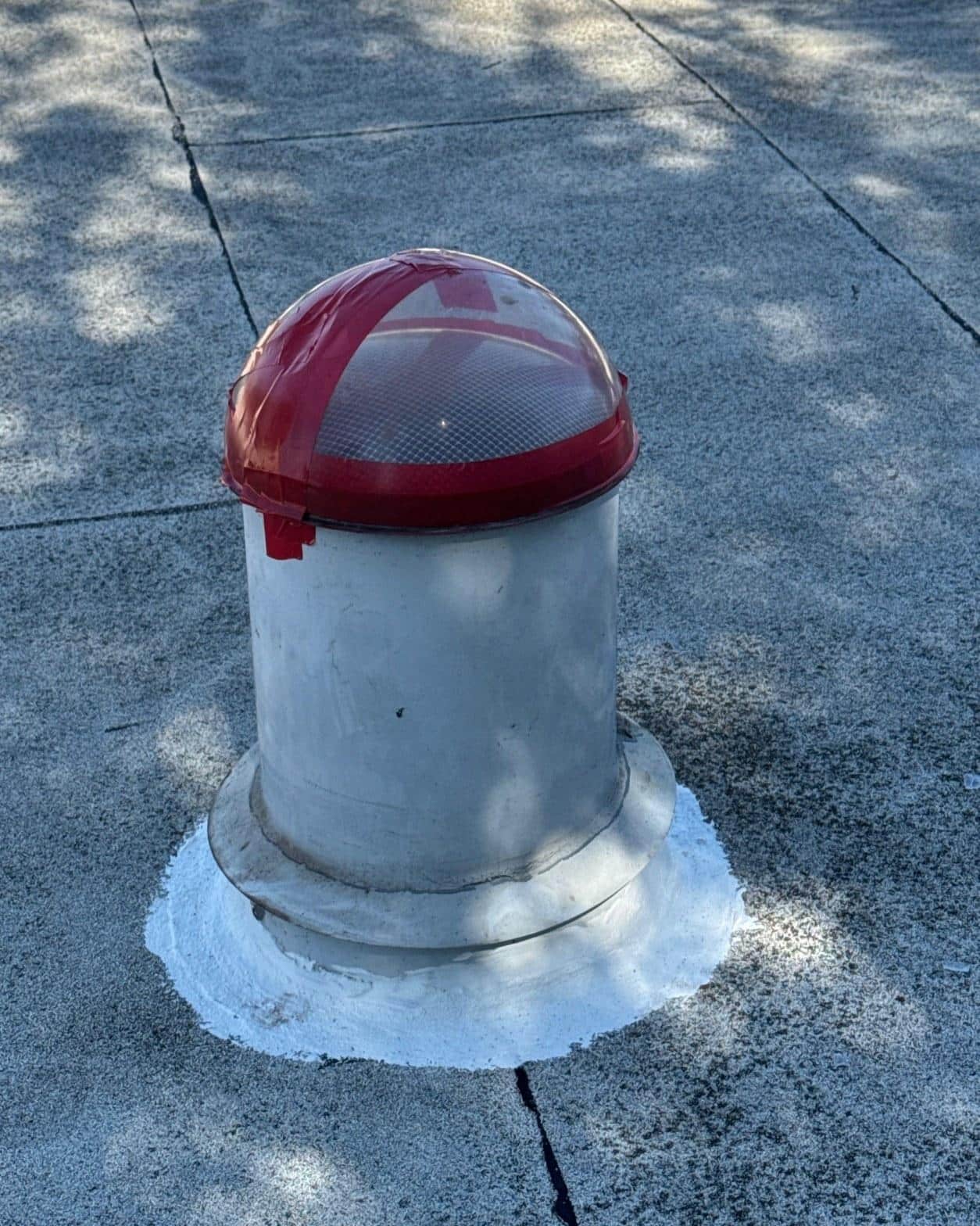
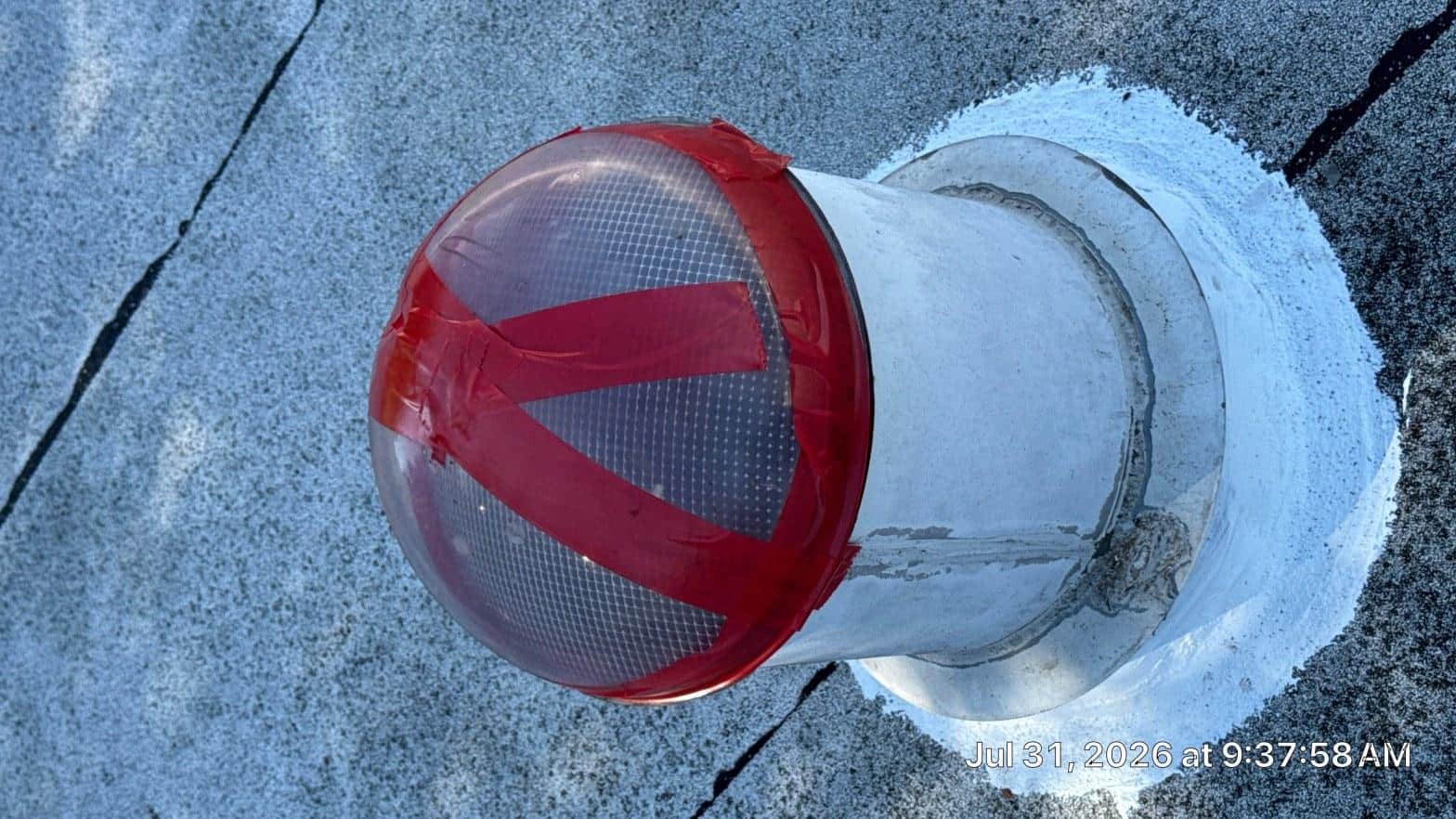
The flat roof section adjacent to the tile areas was already in serviceable condition, so the scope there was limited to re-flashing the vent pipe penetration to match the new tile work. The vent pipe received a new dome cap and a fresh elastomeric collar sealed to the flat roof membrane.
Proper vent flashing is a detail that is easy to neglect on a project focused on tile work, but a failed vent boot is one of the most common sources of interior water staining in Los Angeles-area homes with flat roof sections. The California Contractors State License Board (CSLB) requires that all roofing work, including penetration flashing, be performed by a contractor licensed in the C-39 Roofing classification. Roof Replacement Inc holds that license, and every penetration on this job was inspected and sealed before the crew left the site.
The Finished Roof
The completed project gives this home a roof that matches its original Spanish Colonial character. The three tile sections read as a unified terracotta field from the street, the flat area is clean and properly drained, and the fascia along the deck edge is solid again. The homeowner gets a roof that should perform reliably for 40 to 50 years given proper biennial inspection, which is a realistic lifespan for quality clay barrel tile in a Southern California climate.
If you own a Spanish-style or Mediterranean-style home and your tile roof is showing signs of cracked caps, water stains on interior ceilings, or deteriorating mortar at the ridge, call Roof Replacement Inc for a written assessment. We’ll walk the roof, document what we find, and give you a clear scope before any work begins.