

What Was Wrong With This Clay Tile Roof?
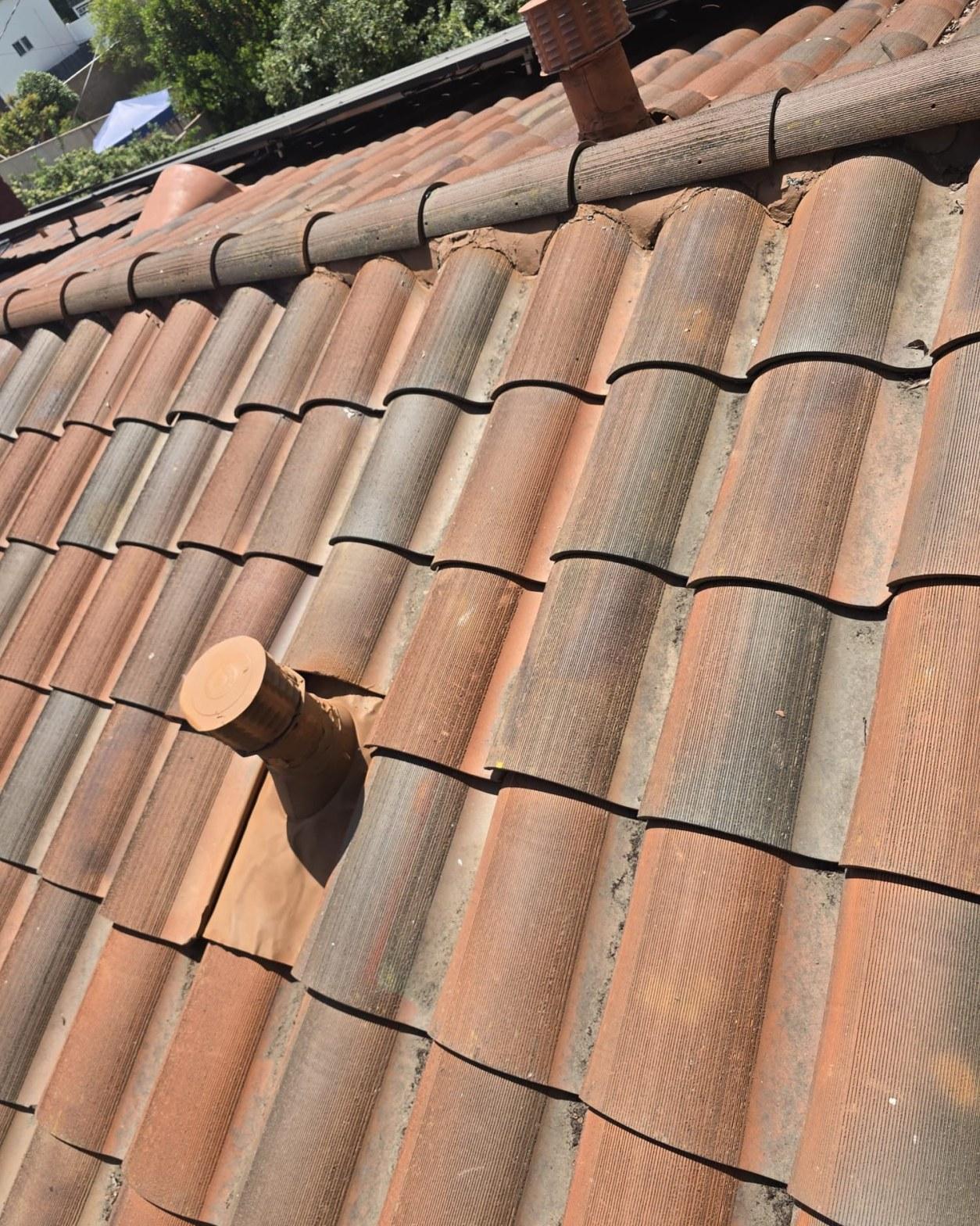
The tiles on this single-story Los Angeles County home looked acceptable from the ground, but the real problems were hidden underneath them. The homeowner reported interior water staining and called us for an inspection. What we found was a combination of three separate failure points that had been working against the roof for years: debris-packed valleys slowing drainage, a pipe boot flashing with no functional seal remaining, and original felt underlayment that had reached the end of its service life.
Clay tile itself is one of the most durable roofing materials available, routinely lasting 50 years or more. The tiles here were in serviceable condition. The underlayment beneath them, however, is the true waterproofing layer, and standard felt underlayment installed under tile typically lasts 20 to 30 years before it becomes brittle and prone to tearing. Replacing it correctly requires lifting and carefully stacking the existing tiles, replacing the felt, and resetting every tile, which is why this type of repair is often underestimated in both scope and importance.
Project Gallery
What Did the Debris Buildup Actually Do to the Roof?
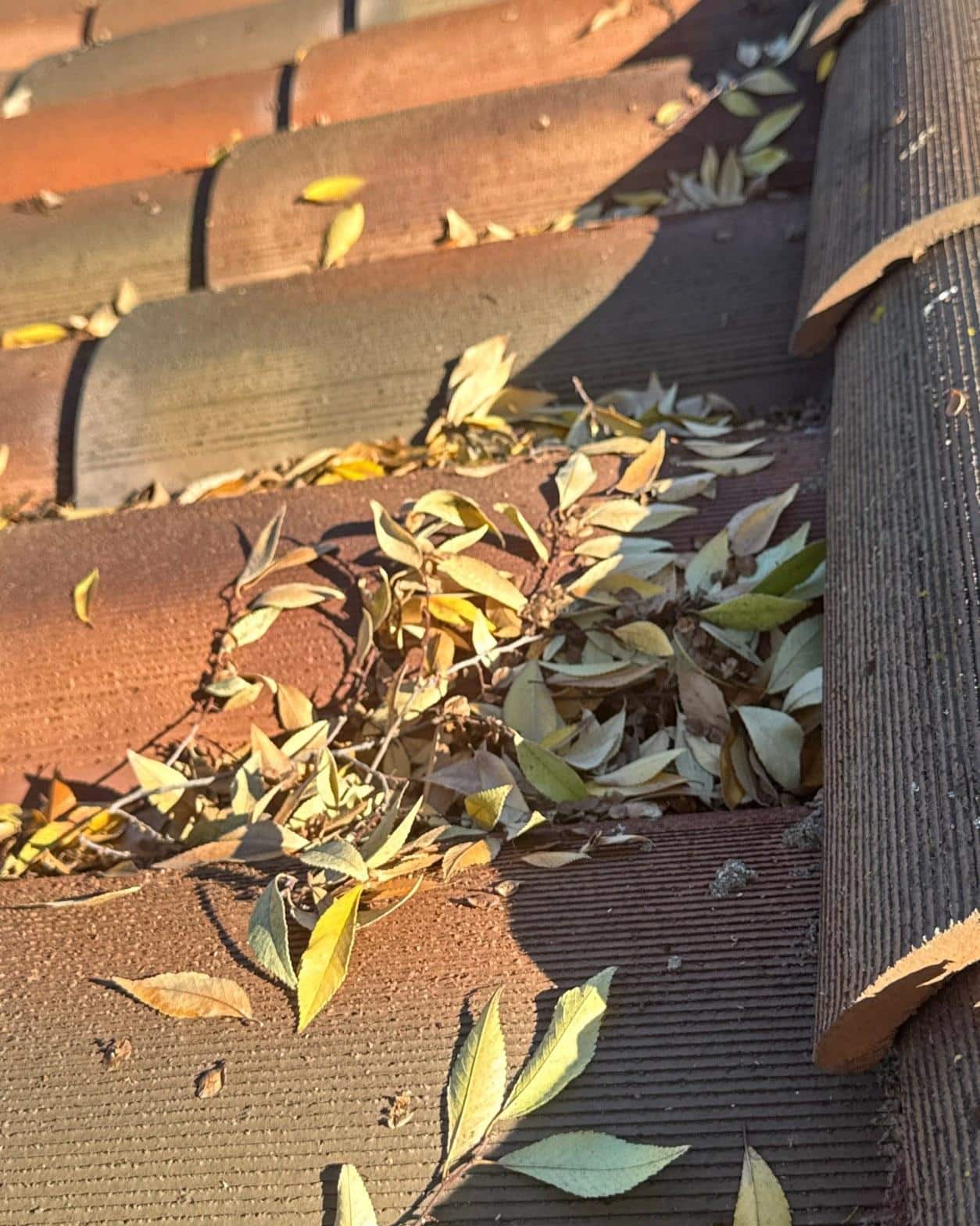
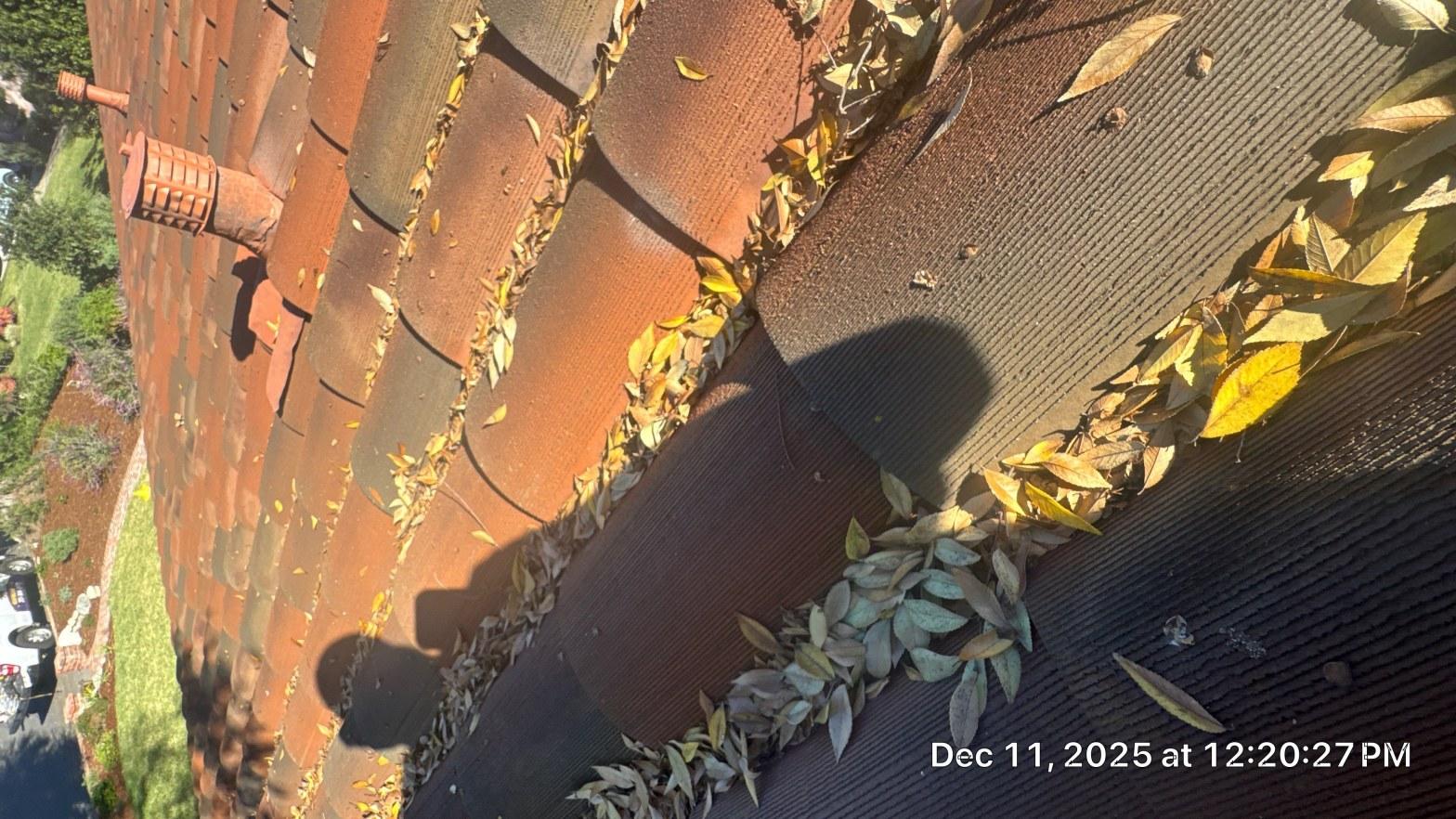
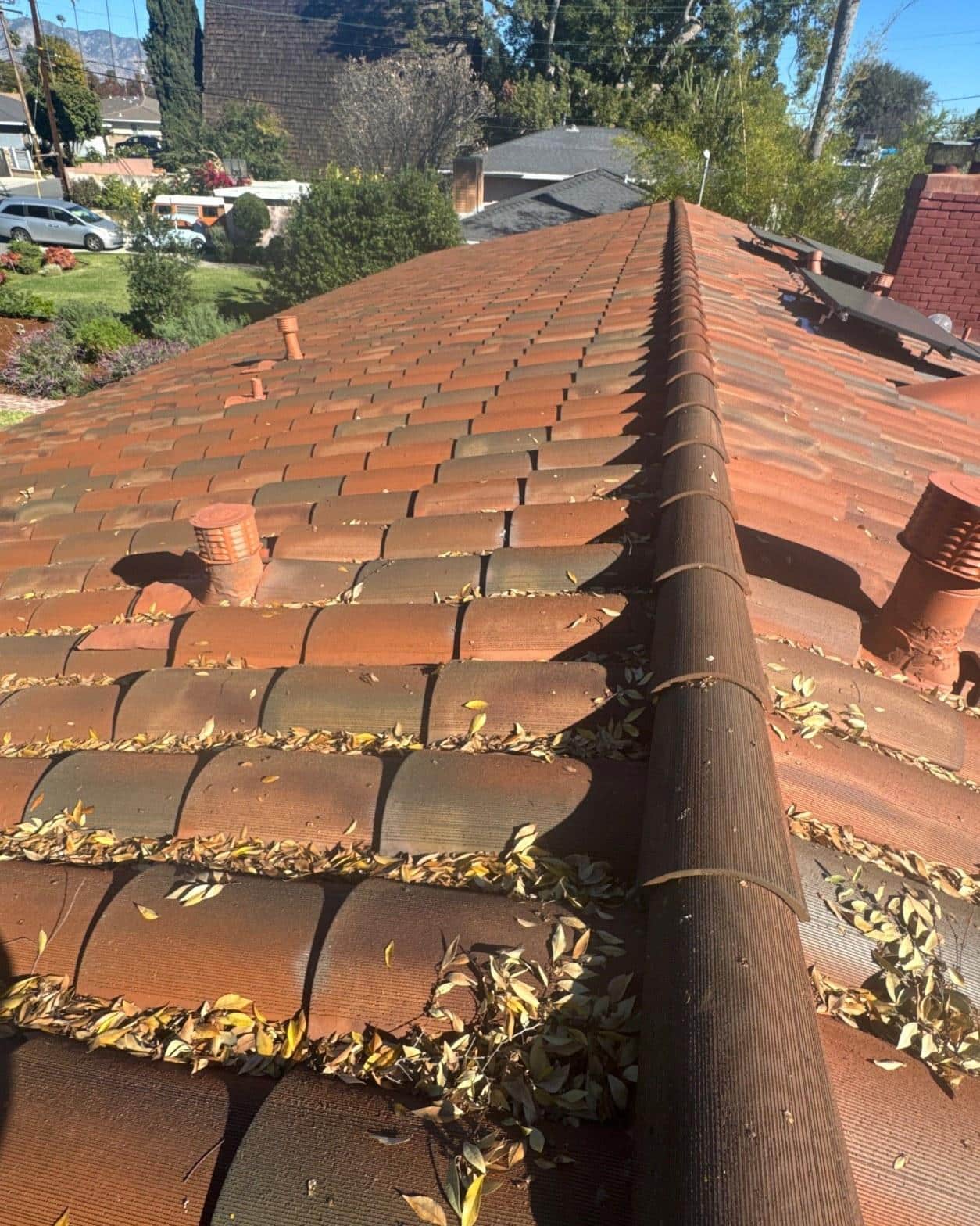
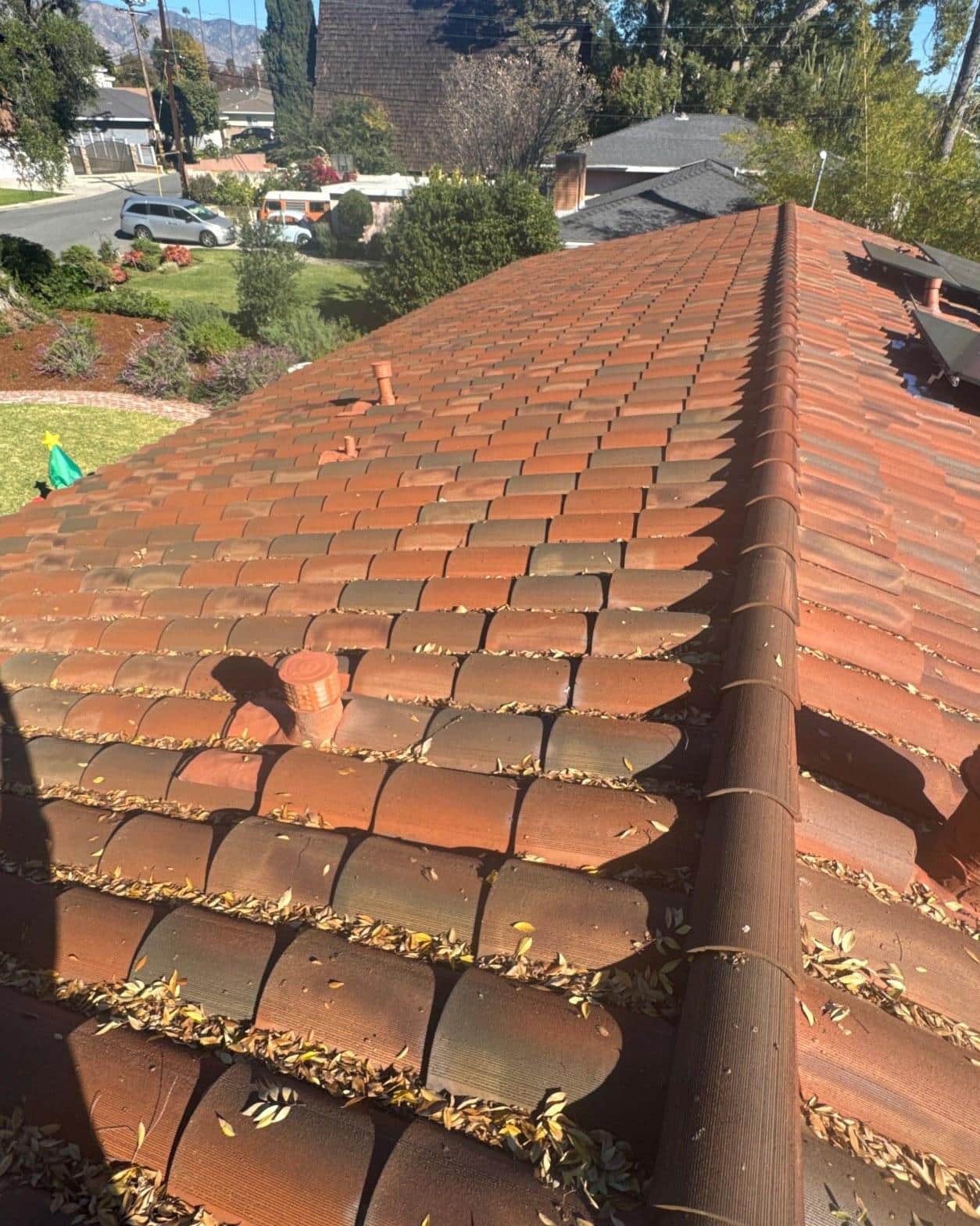
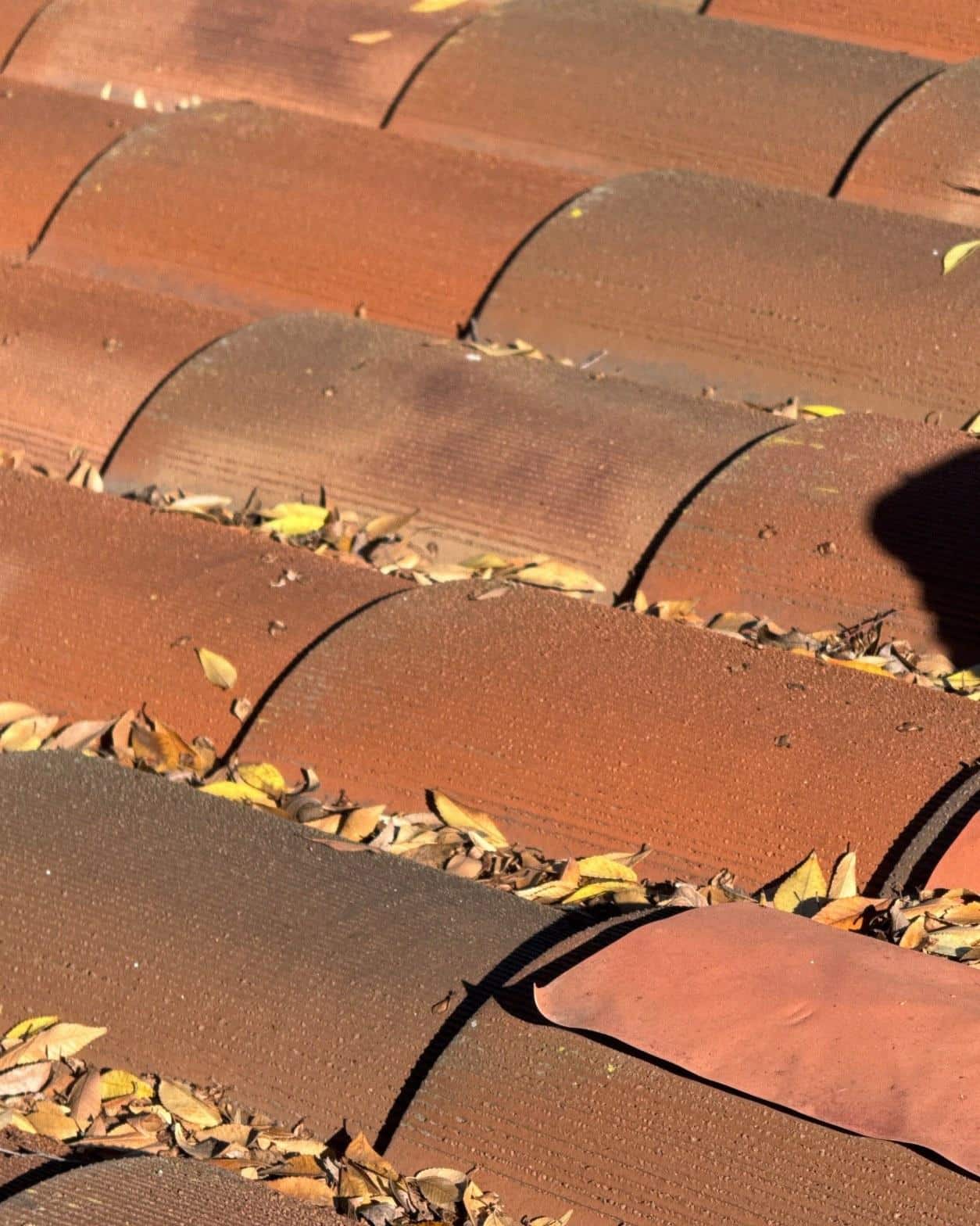
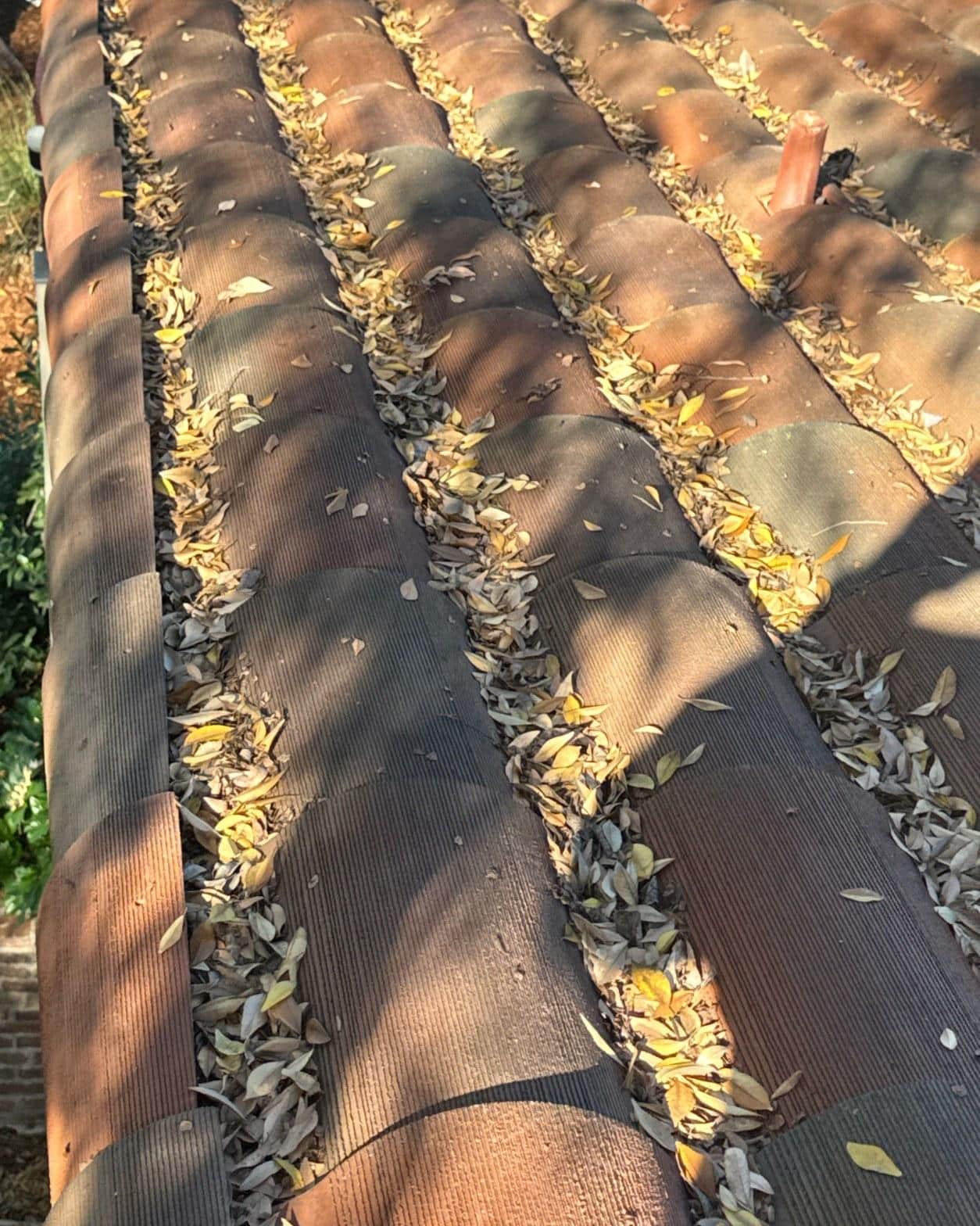
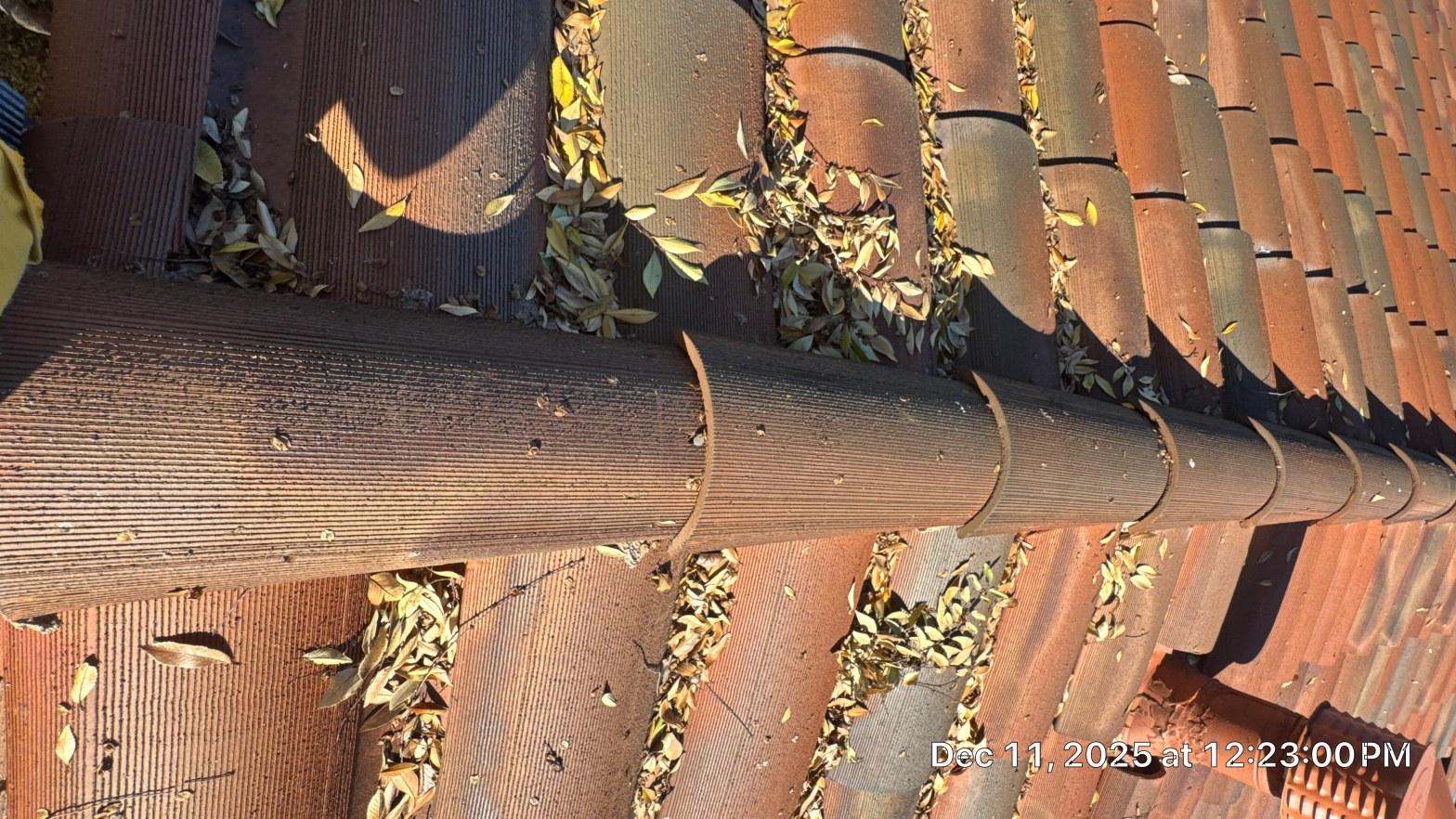
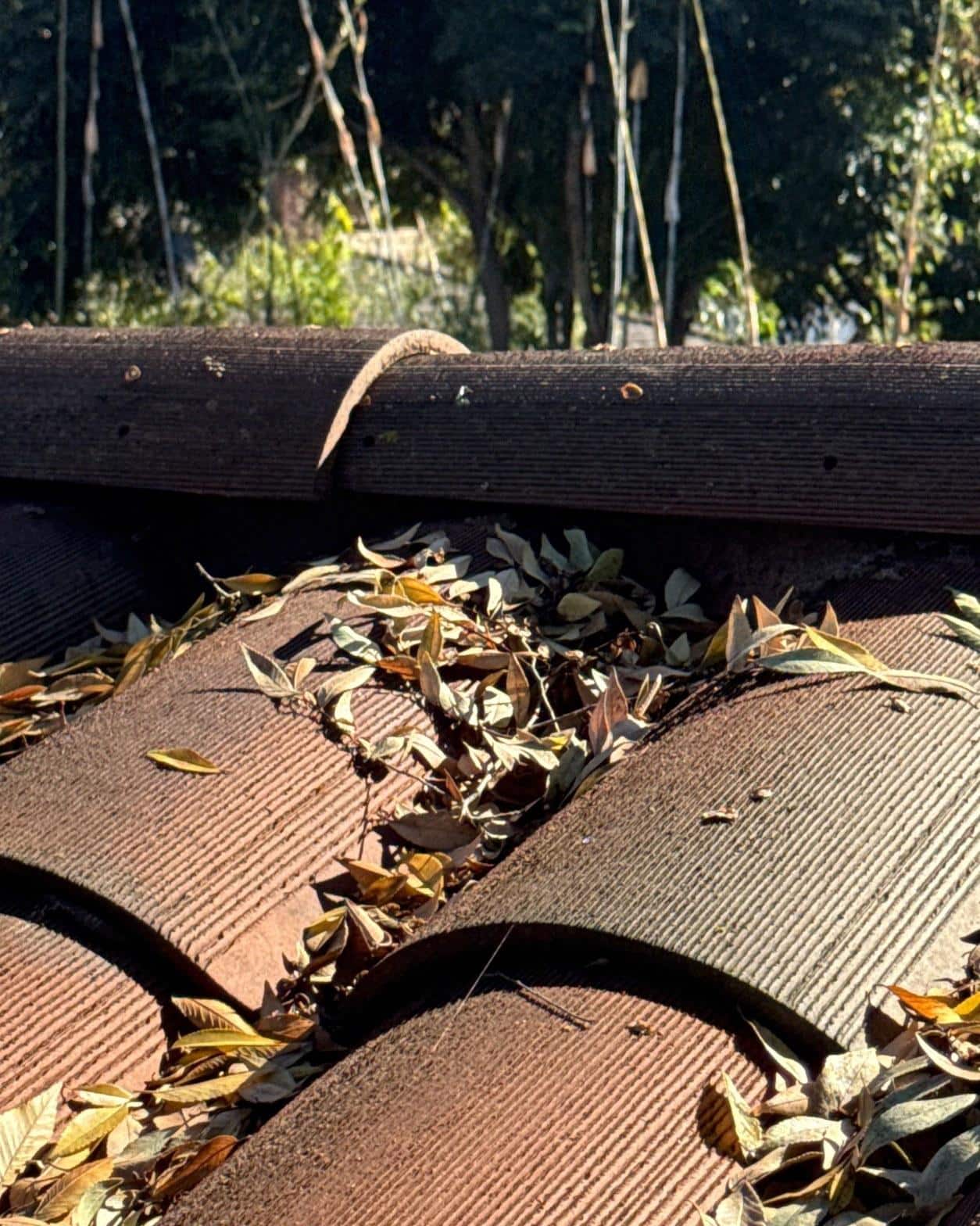
Leaves and vine debris packed into the tile valleys were holding moisture against the underlayment for weeks at a time after each rain, accelerating its breakdown at exactly the lowest drainage points on the roof. The valleys are where two roof planes meet and water volume is highest. Blocking them even partially changes a fast-draining surface into a temporary pond.
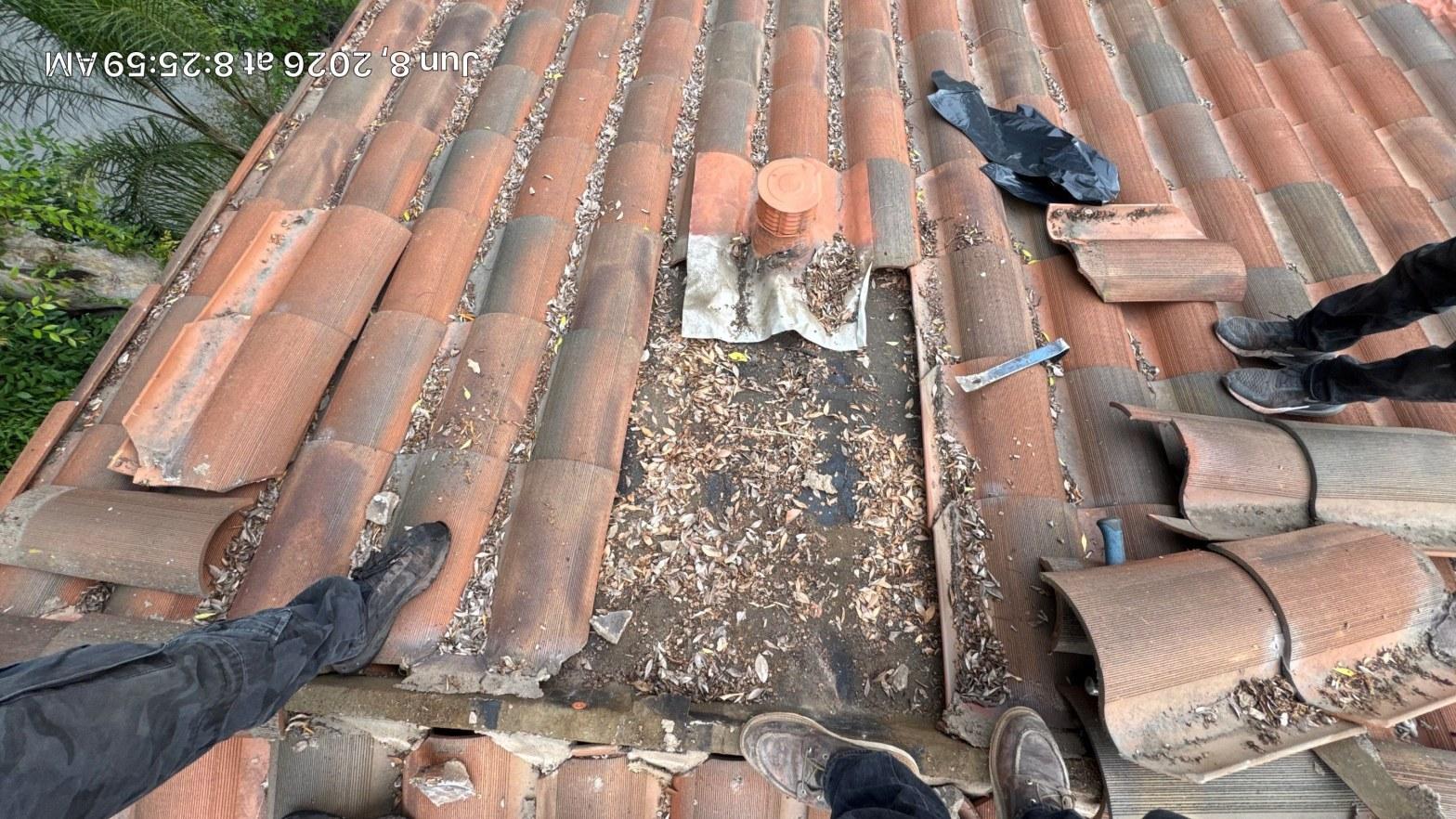
Our crew found debris accumulation several inches deep in the primary valley, with woody vine stems that had clearly been there through multiple rainy seasons. As of 2026, Los Angeles County averages roughly 15 inches of annual rainfall, most of it concentrated between November and March. Any obstruction that keeps that water sitting on the underlayment rather than moving off the edge dramatically shortens the membrane’s life. Valleys that stay packed with leaves hold moisture against the underlayment, so it tends to break down there first, well before the open parts of the roof.
What Did We Find Under the Tiles?
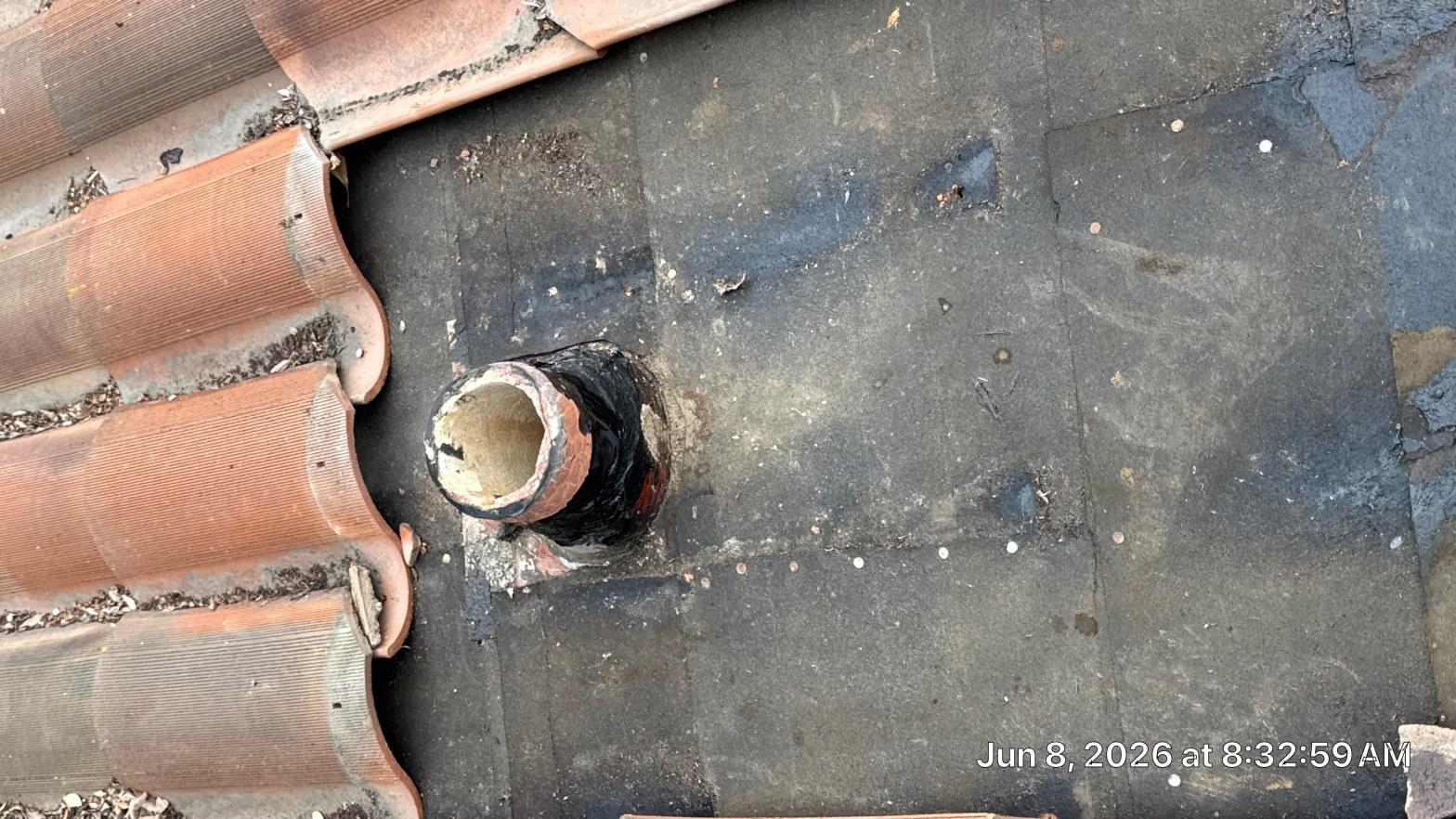
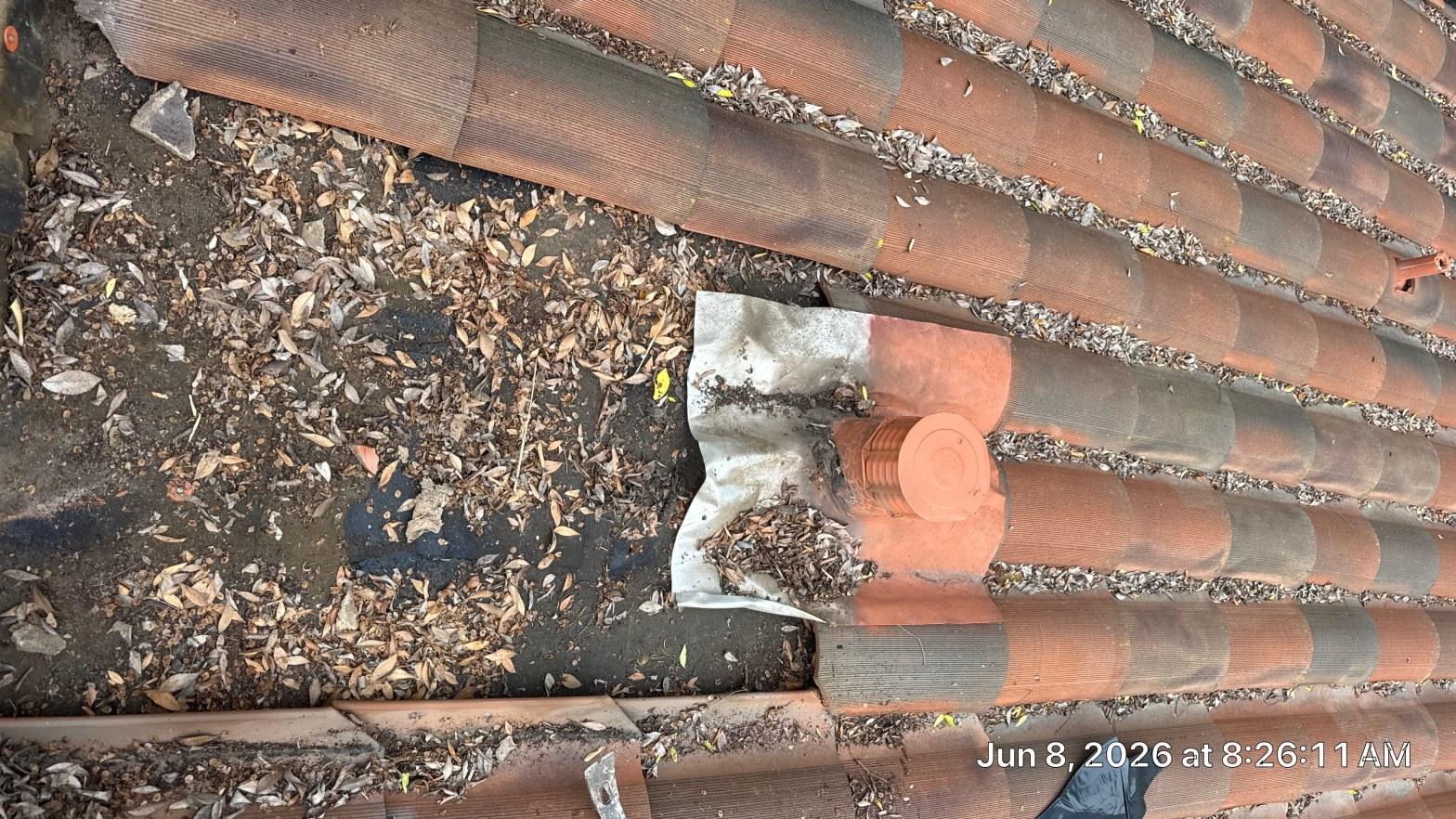
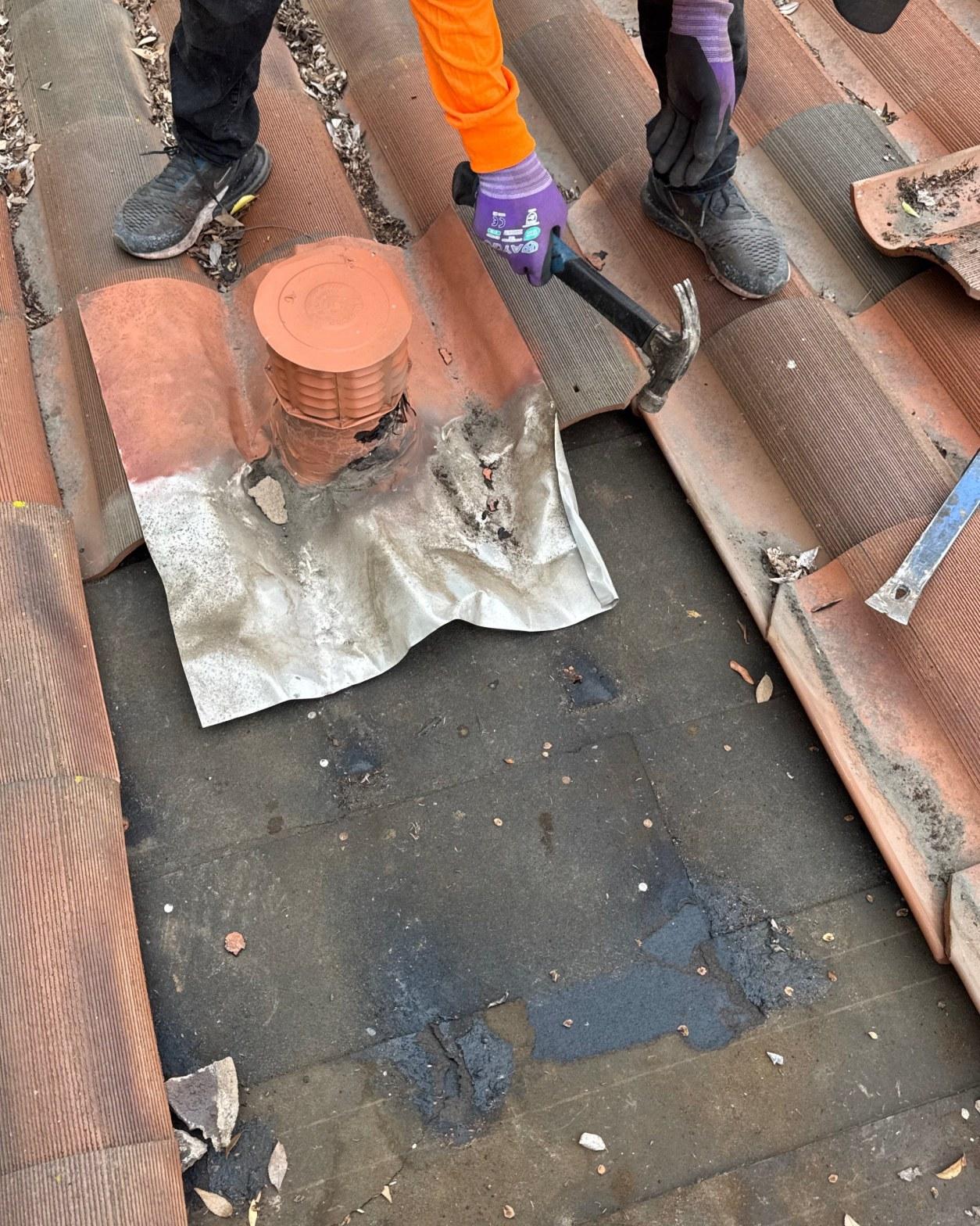
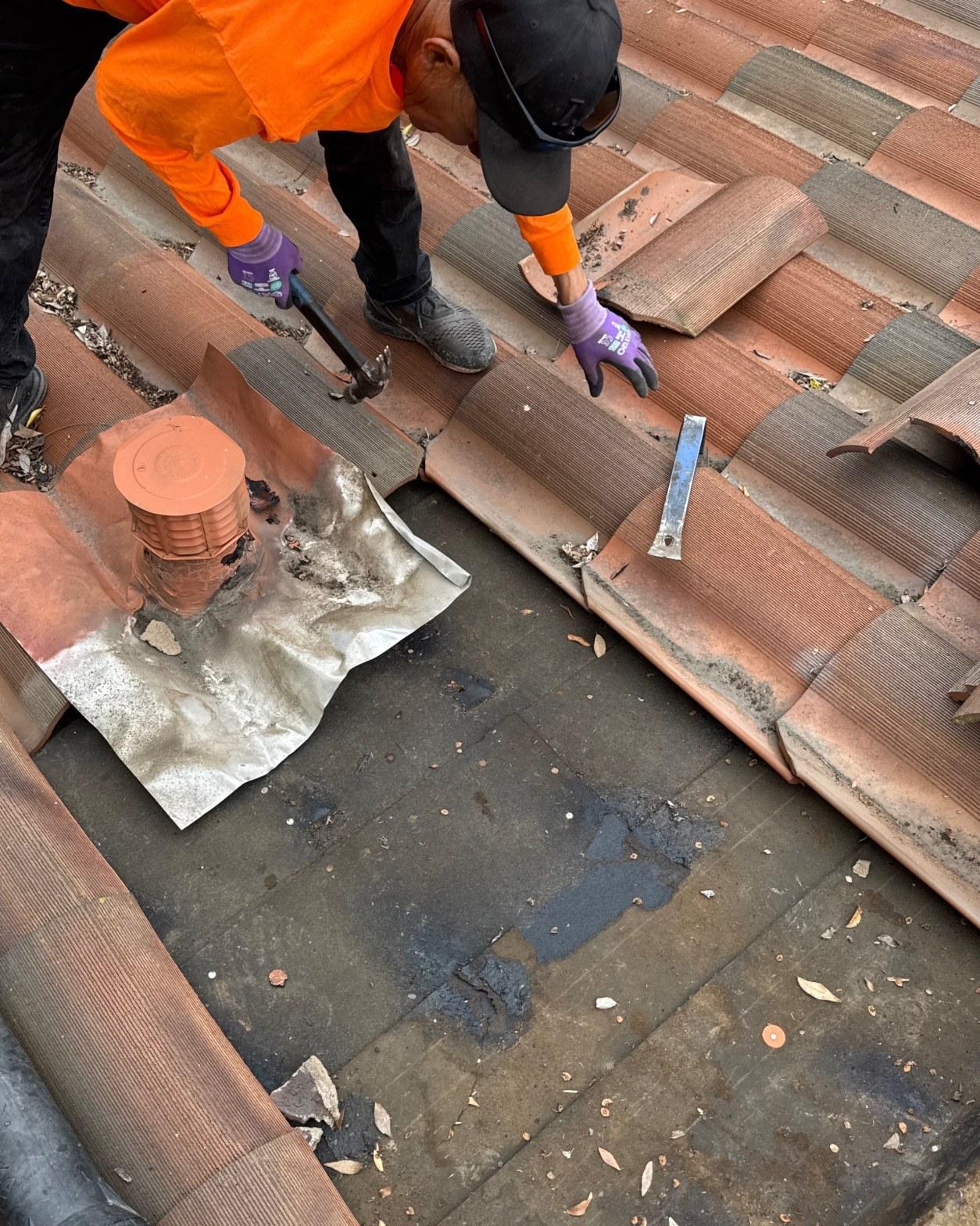
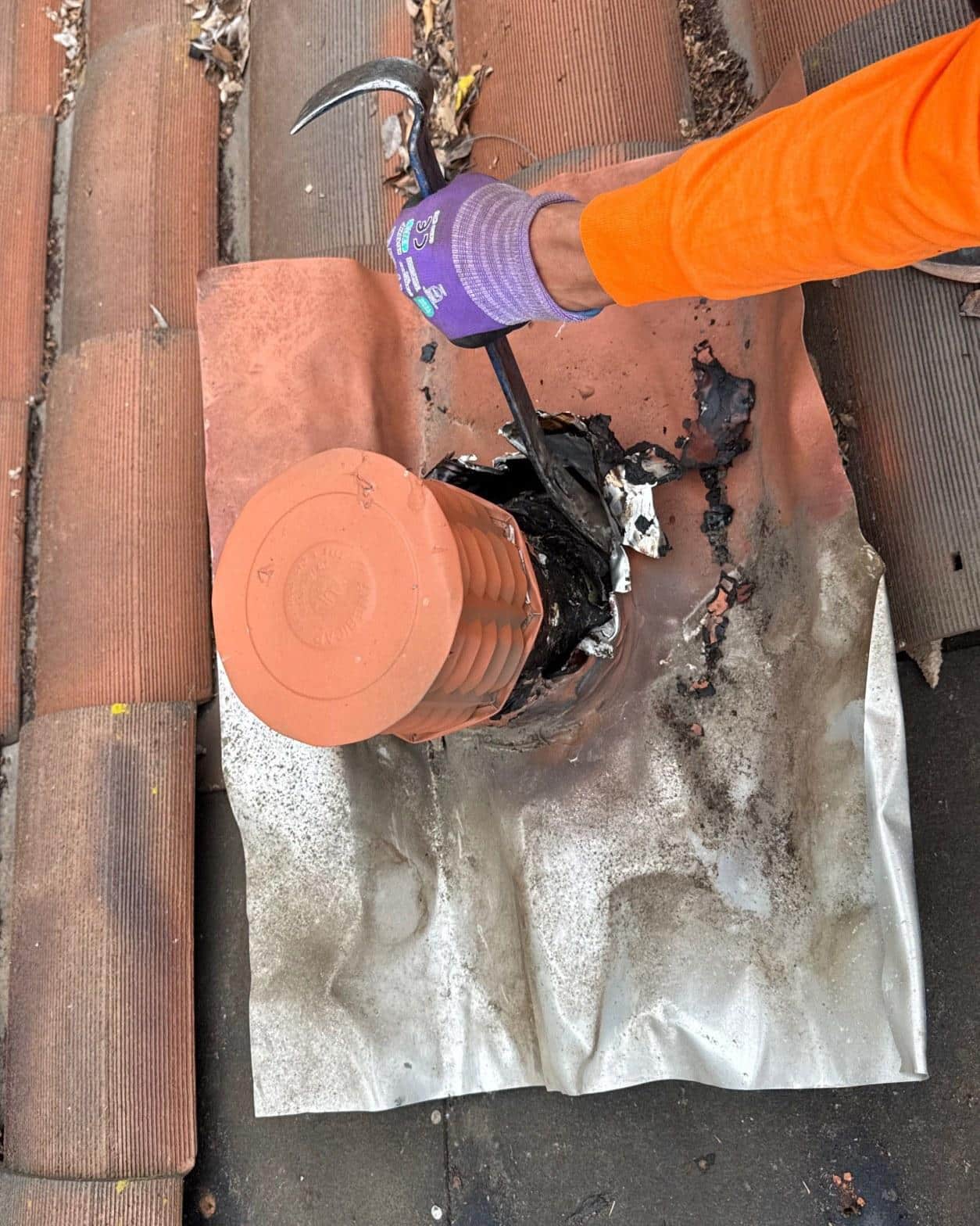
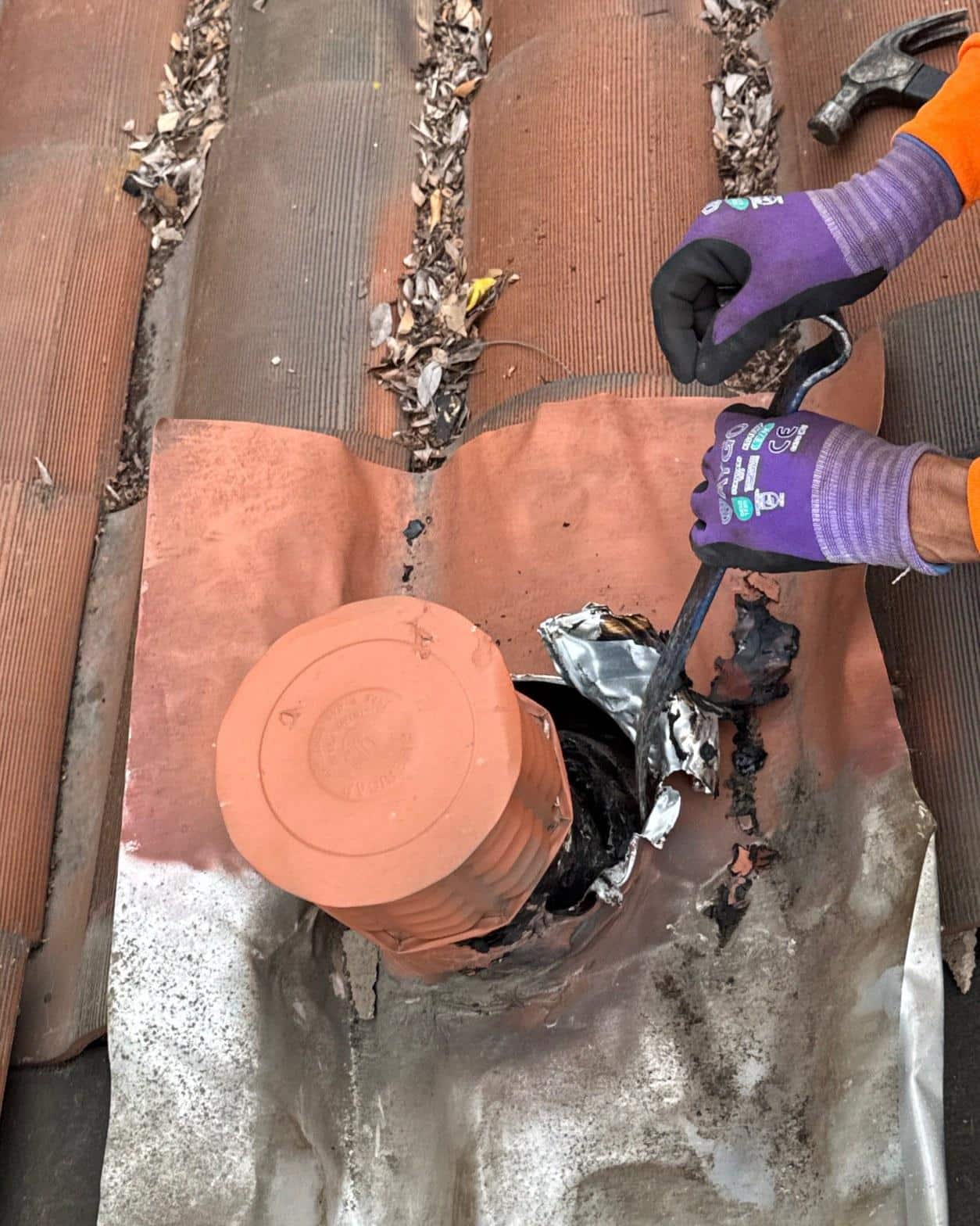
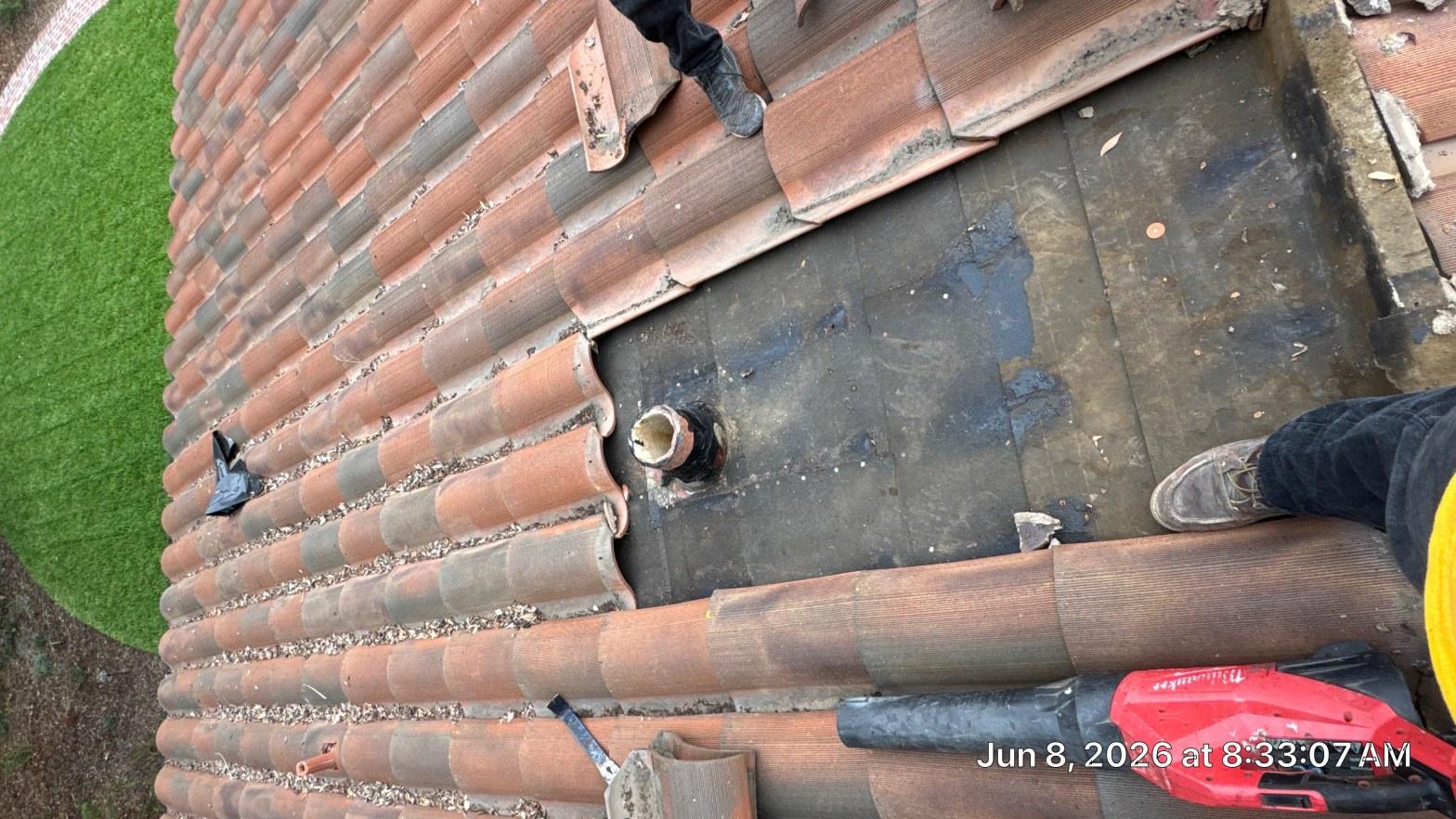
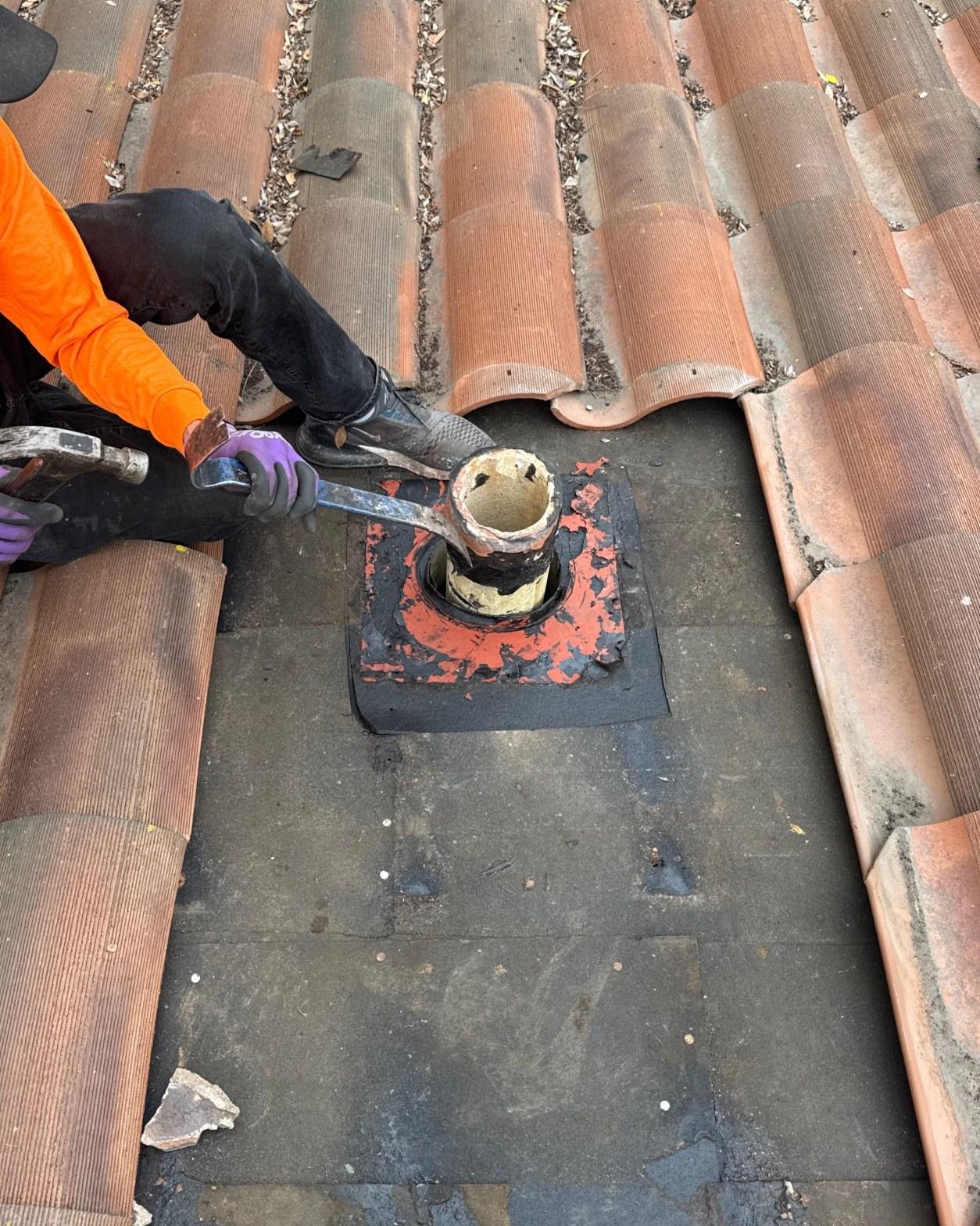
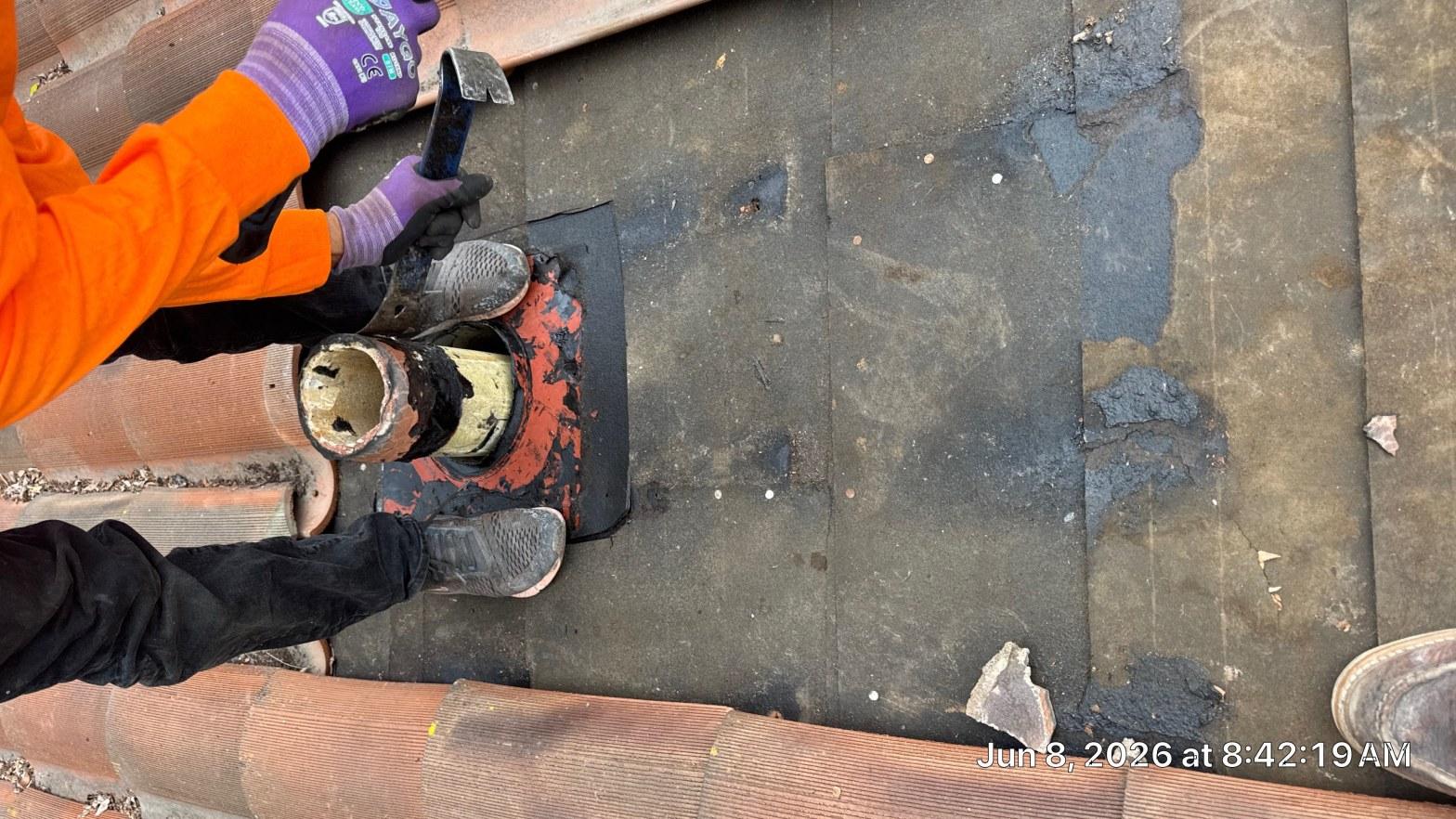
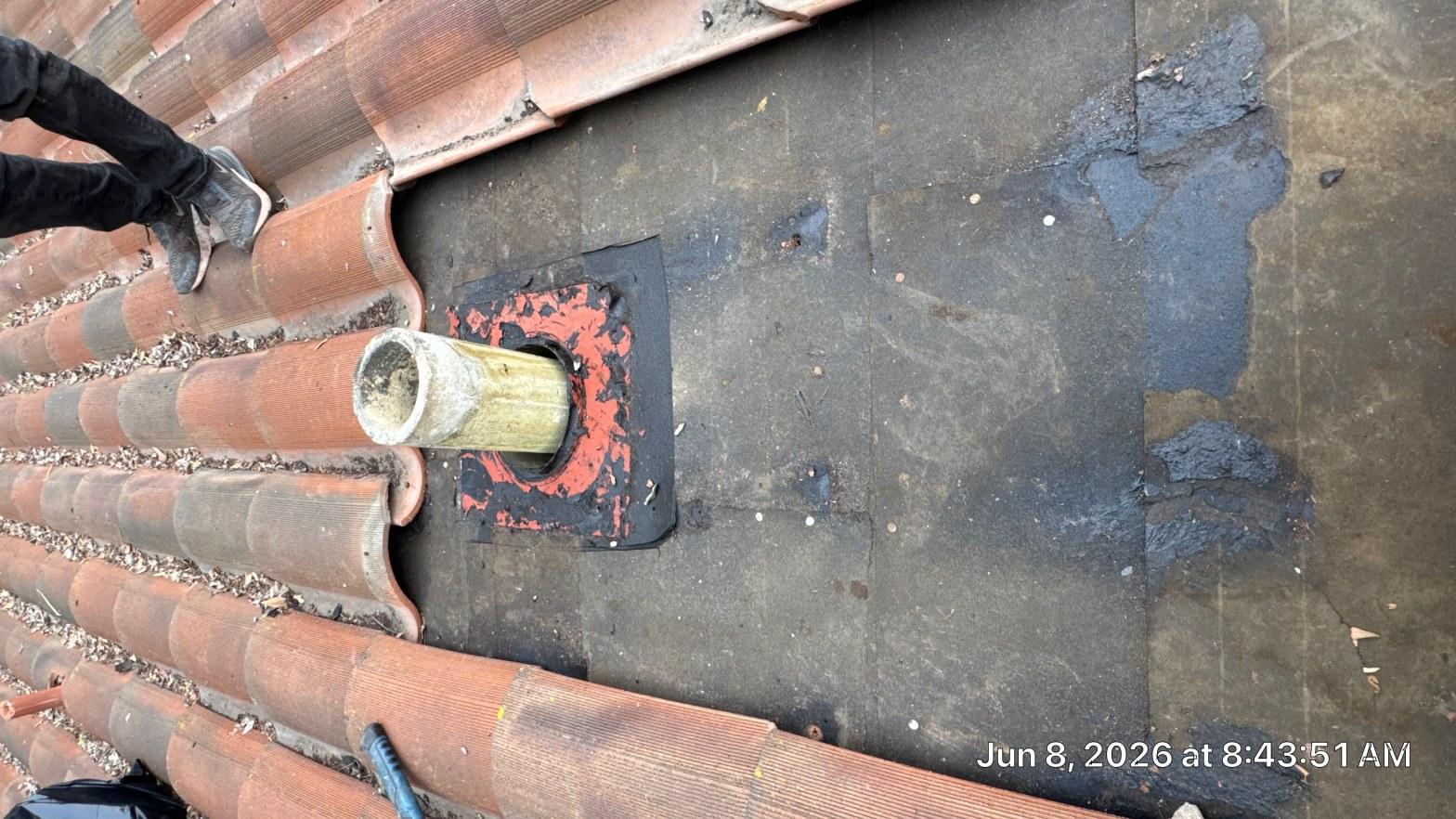
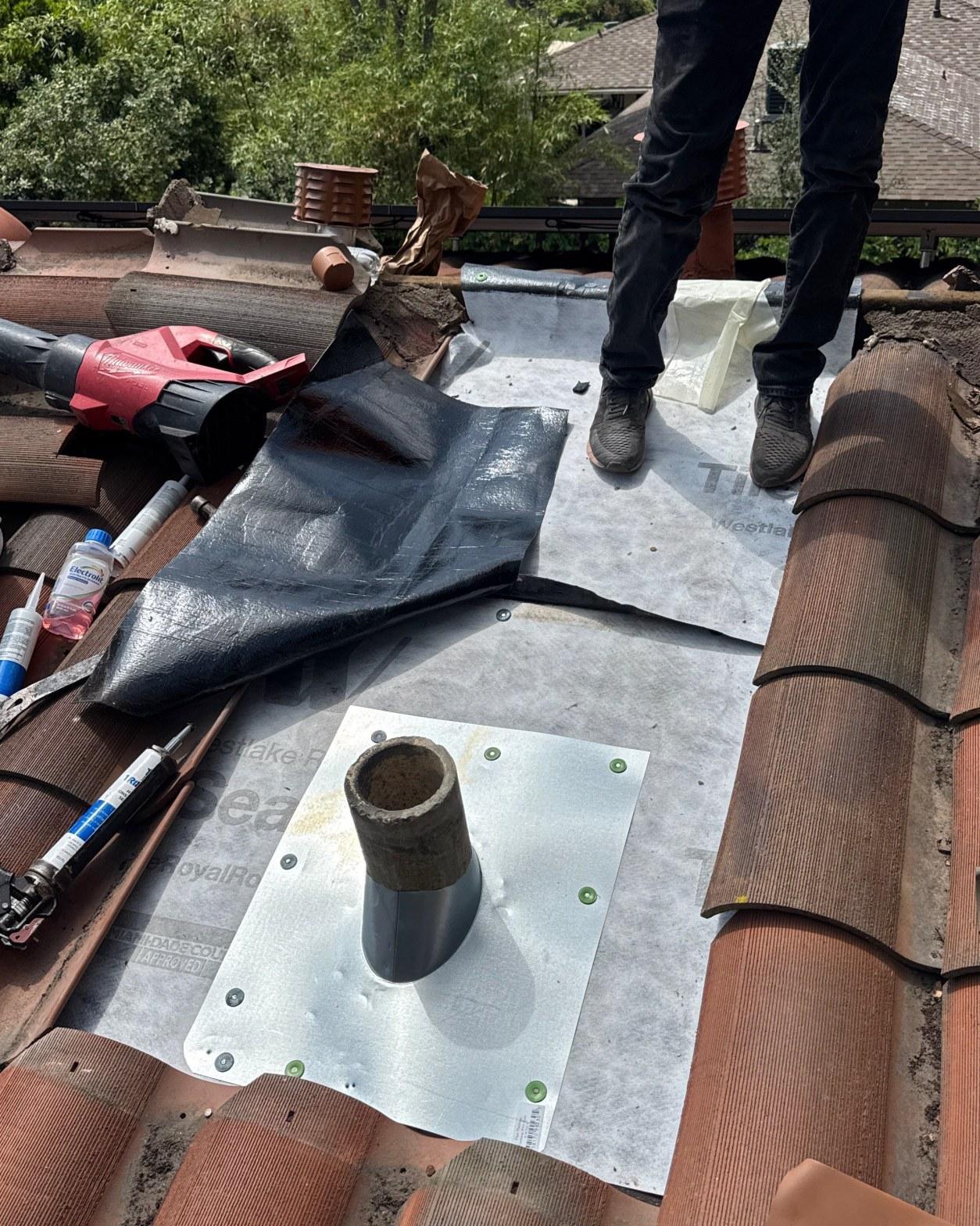
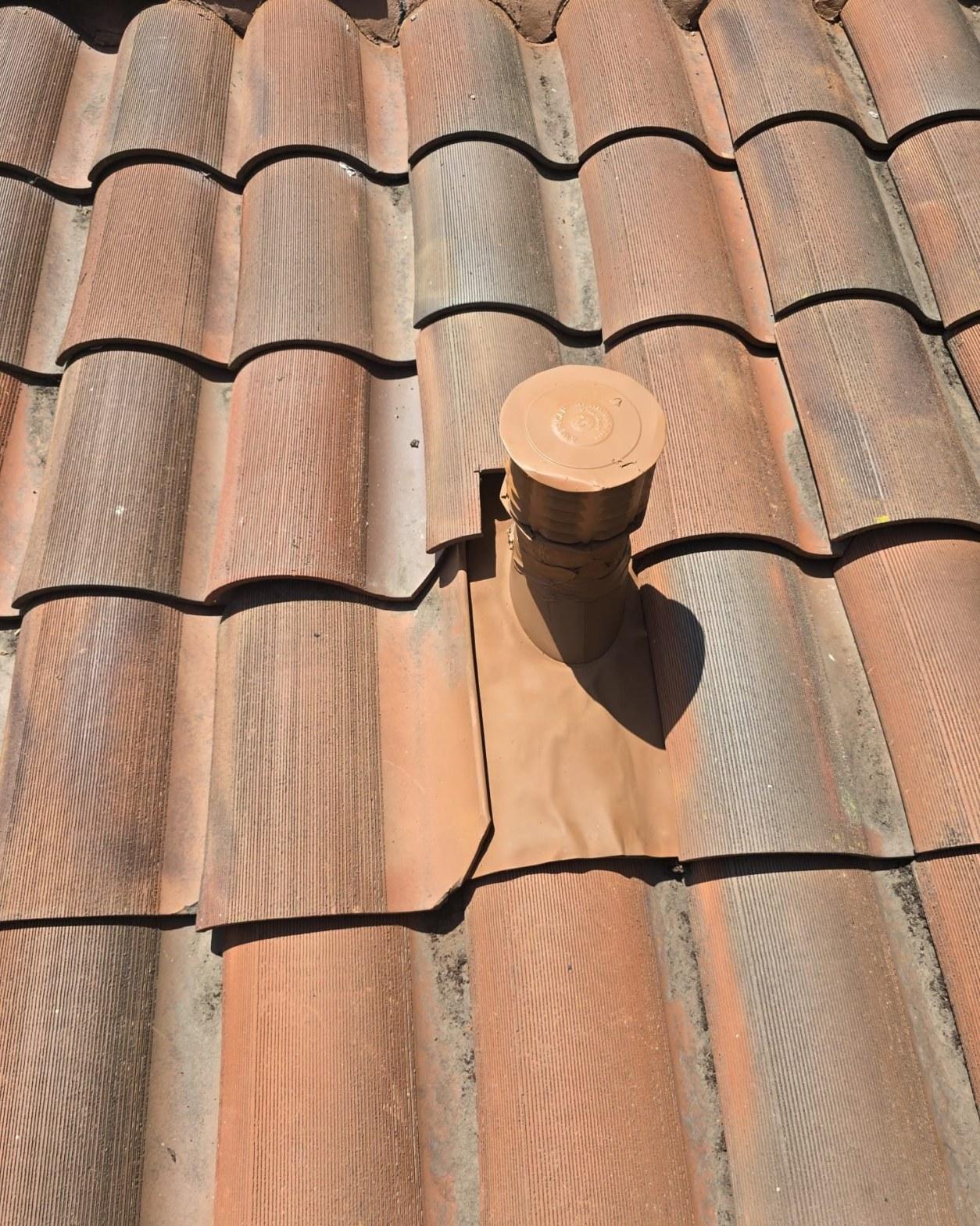
Once our team lifted the tiles and exposed the deck, the underlayment condition confirmed the worst: brittle, cracked felt with visible moisture staining and a pipe boot that had completely lost its rubber collar. The boot’s neoprene seal had shrunk and cracked, leaving a gap between the pipe and the flashing base where water could run directly onto the felt and down into the structure.
Pipe boot flashings are a frequent source of tile roof leaks in Southern California. The rubber collars on standard neoprene boots degrade faster in climates with intense UV exposure, and California’s Title 24 building energy standards require that penetrations be properly sealed to maintain the building envelope. A failed boot does not fix itself with caulk, and patching over deteriorated felt is not a code-compliant repair. Both components needed full replacement.
How Did We Make It Right?
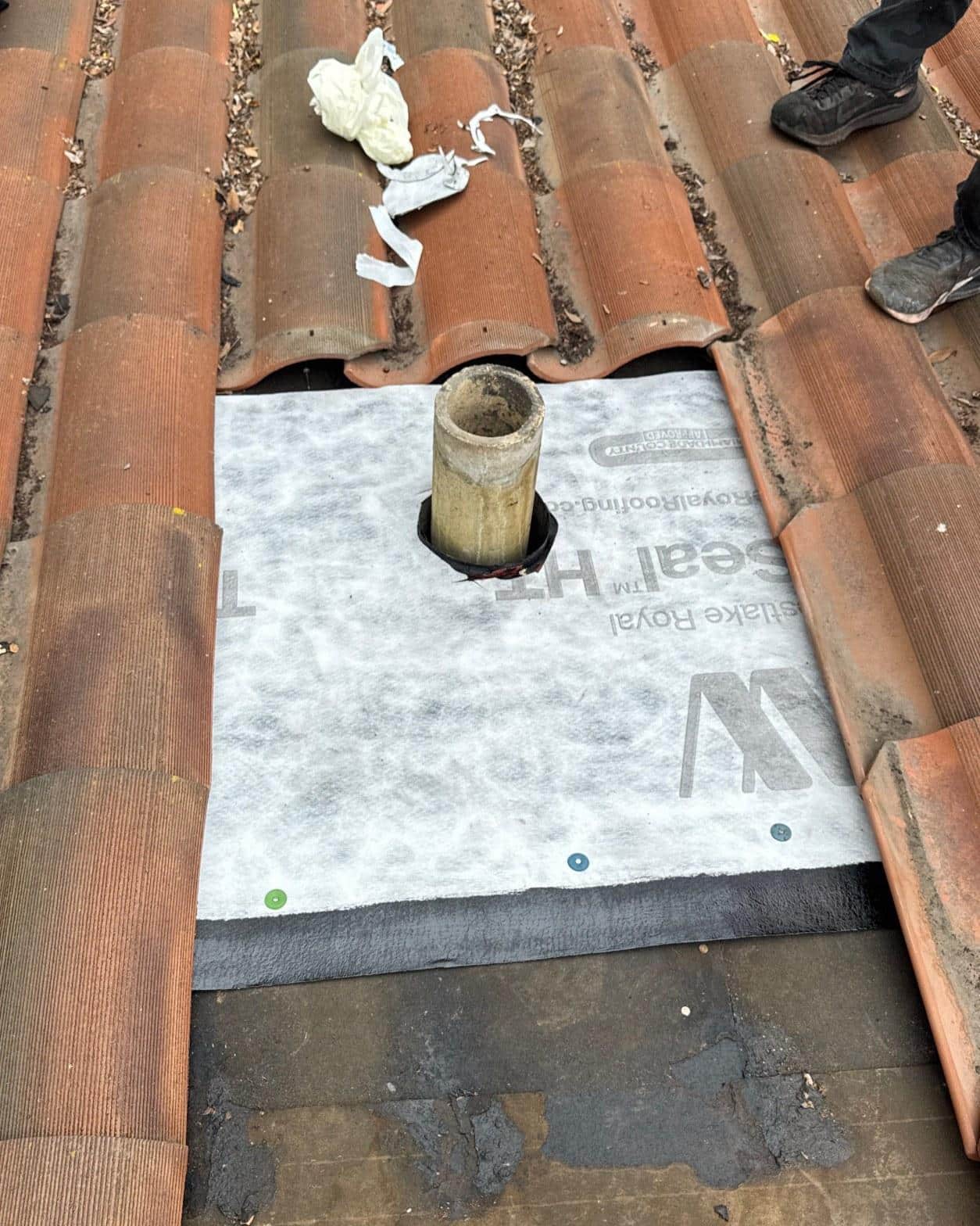
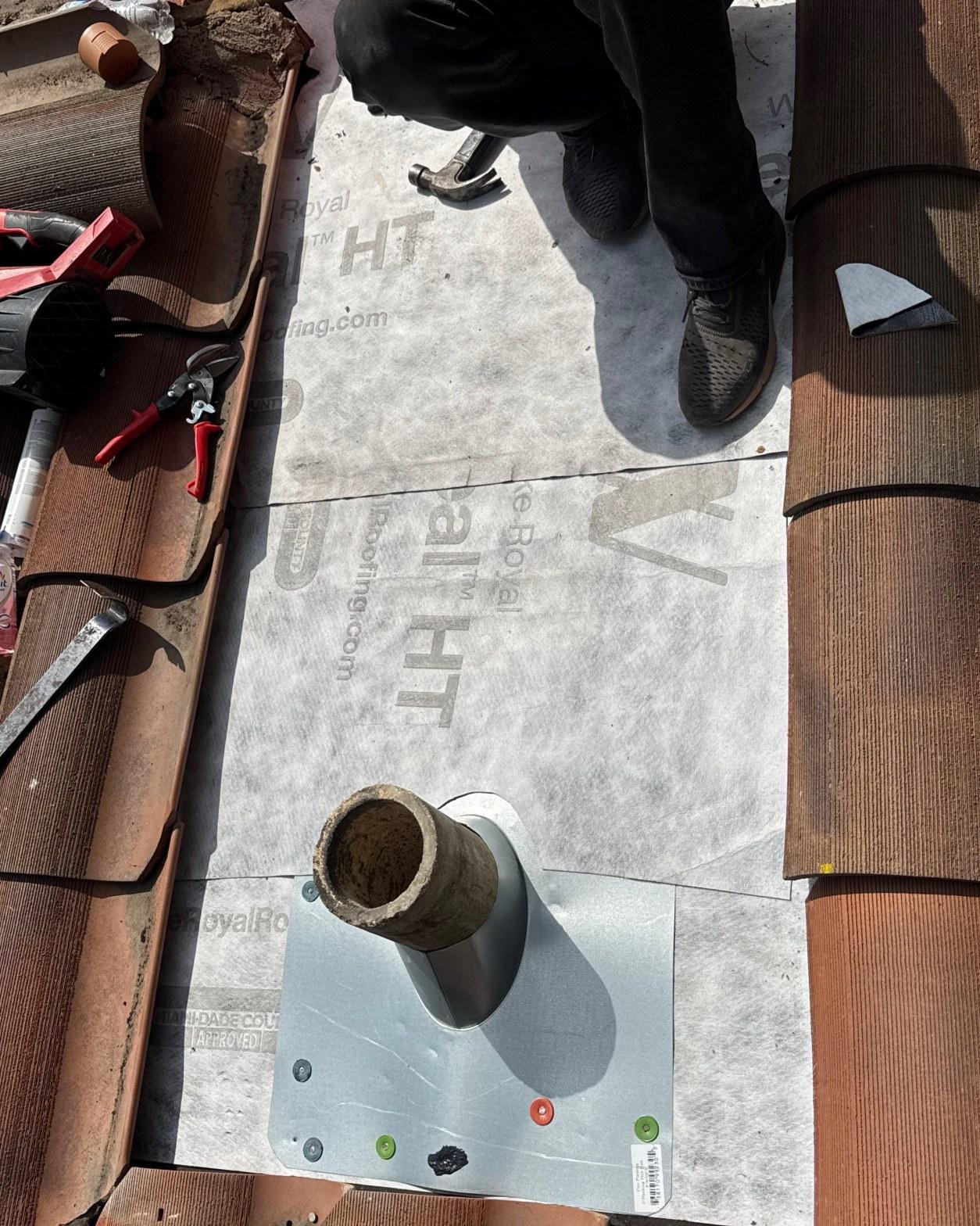
We replaced the underlayment in the affected section with Westlake Royal Seal HT, a high-temperature synthetic underlayment rated for use under tile, and installed a new pipe boot flashing with a fresh rubber collar properly sealed to the pipe. The Seal HT product is specifically engineered for the thermal cycling that clay tile roofs experience in Southern California climates, where summer roof-surface temperatures can exceed 150°F on exposed southern faces.
The process was methodical: tiles were lifted in rows, numbered for correct replacement, and stacked safely on the roof. The old felt was stripped and removed. New underlayment was laid, lapped correctly at the seams, and mechanically fastened. The new boot was seated, sealed, and integrated into the underlayment layer before any tile went back down. Tiles were reset in the same pattern and mortar joints inspected before our crew left the site.
The entire repair, from tile removal to final reset, was completed in one working day.
Get a Tile Roof Inspection Before the Next Rain Season
Clay tile roofs are an investment worth protecting. If your home has tile that is 20 or more years old, or if you have trees dropping debris onto the roof each fall, the underlayment beneath those tiles deserves a close look before another rainy season arrives. A repair at this stage costs a fraction of what full decking replacement runs once water has been getting in for multiple seasons.
Call Roof Replacement Inc at 930 W Stuhr Dr, San Gabriel, CA 91775, or request an inspection online. We serve homeowners throughout Los Angeles County and can typically schedule a roof inspection within 3 to 5 business days.