What Was the Condition of This Roof When We Arrived?
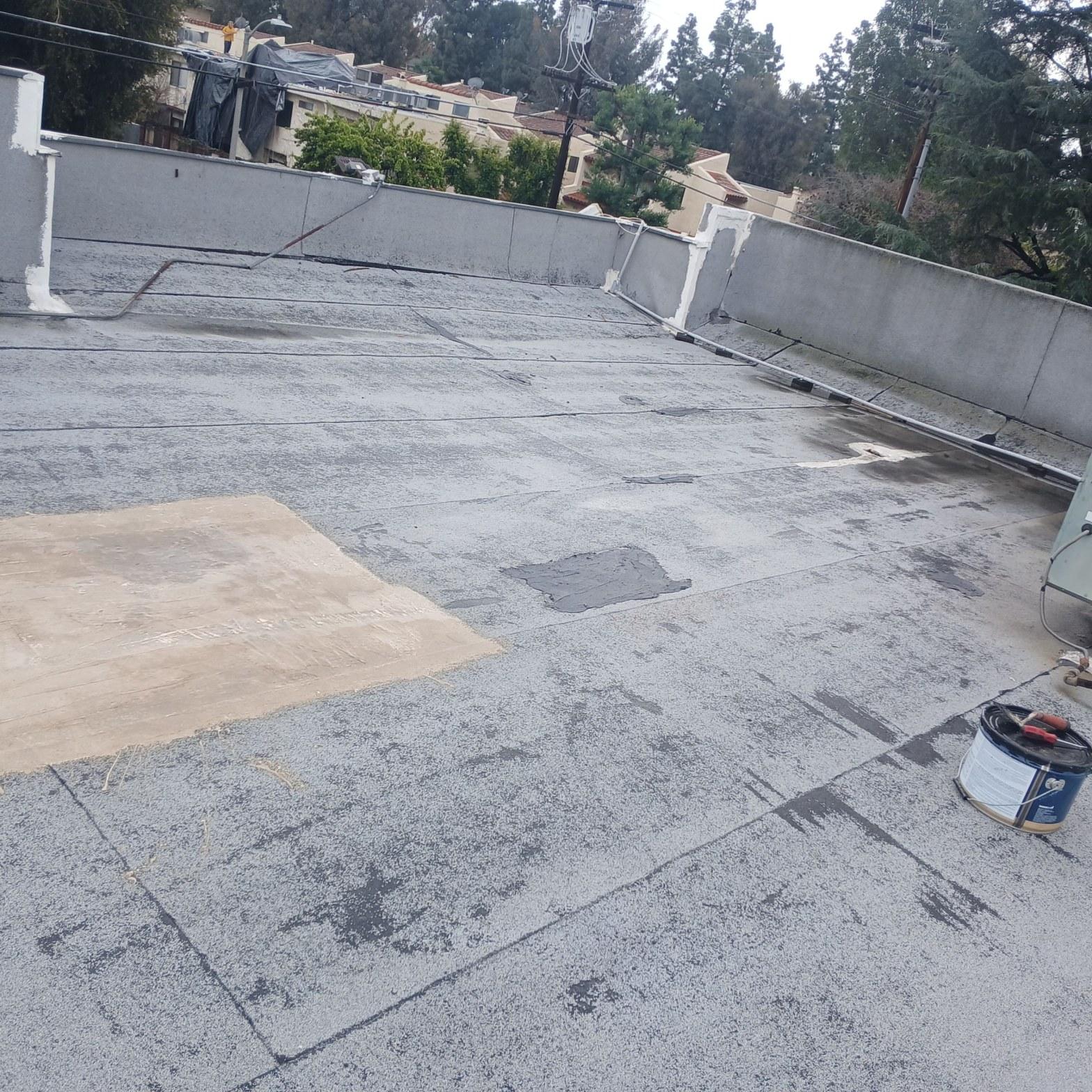
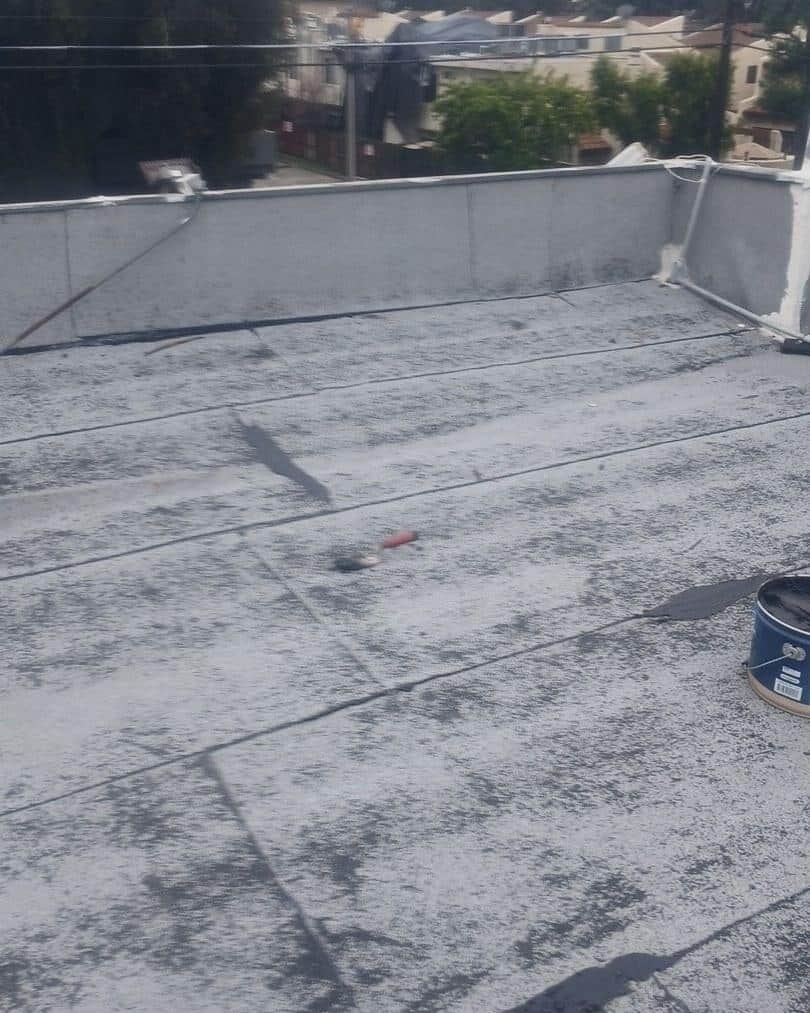
The torch down membrane at 8801 Willis Ave in Los Angeles was showing multiple failure points: open seams, surface granule loss across roughly 60–70% of the visible deck, and delaminated flashing at the parapet walls. The building owner had been tracking interior water intrusion and needed the leaks stopped before the next rain event. Southern California’s Los Angeles basin receives the bulk of its annual rainfall between November and March, leaving a narrow window for flat roof remediation work each fall.
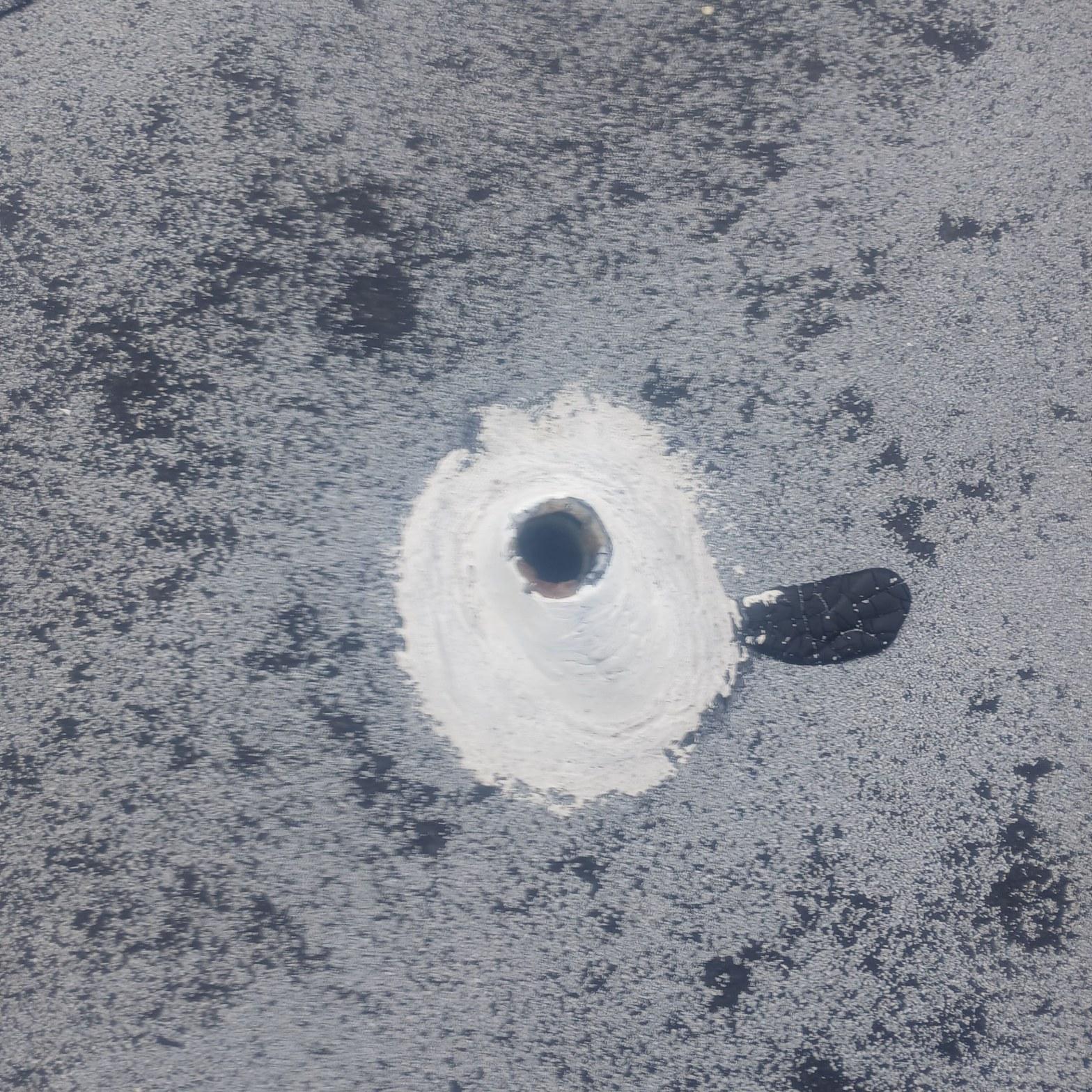
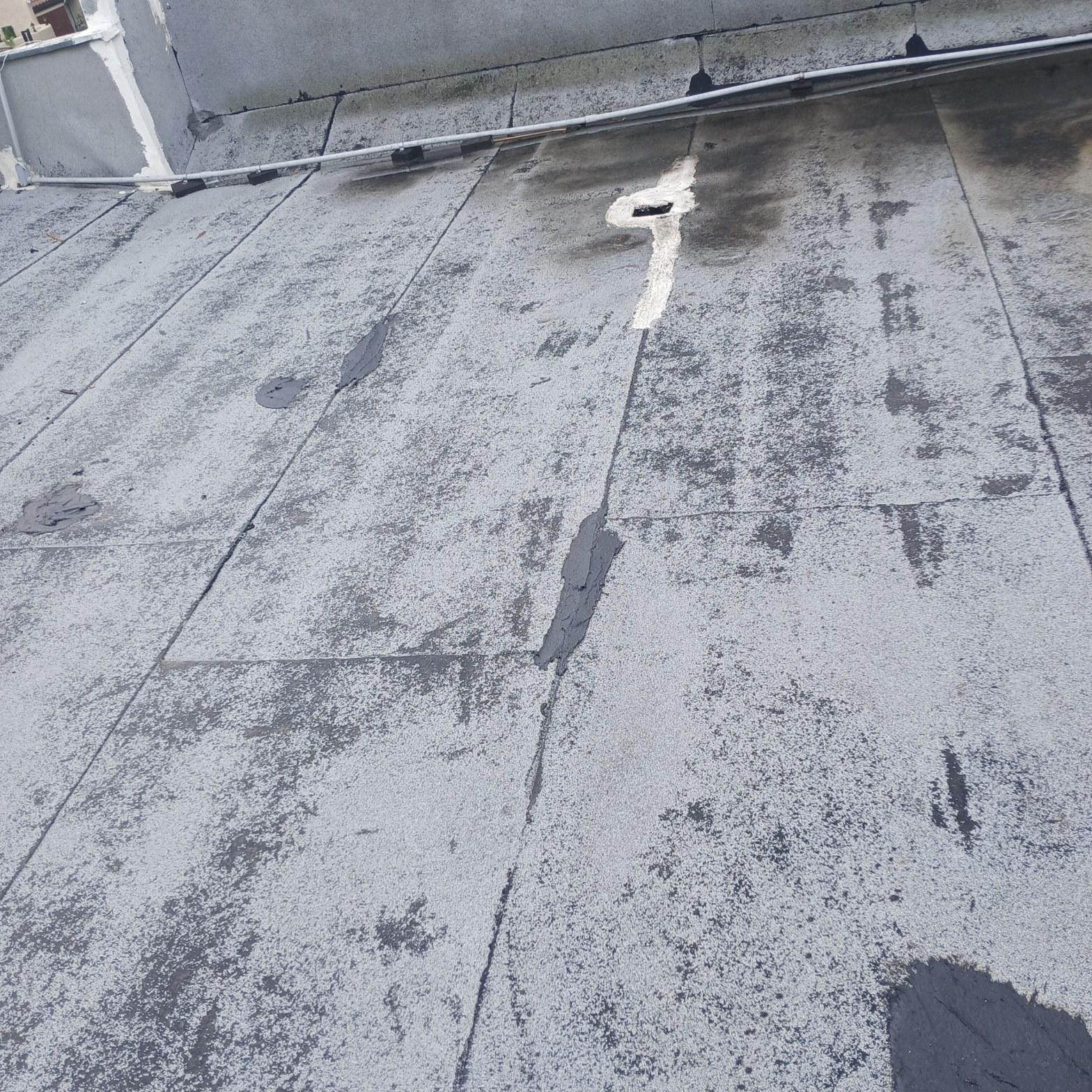
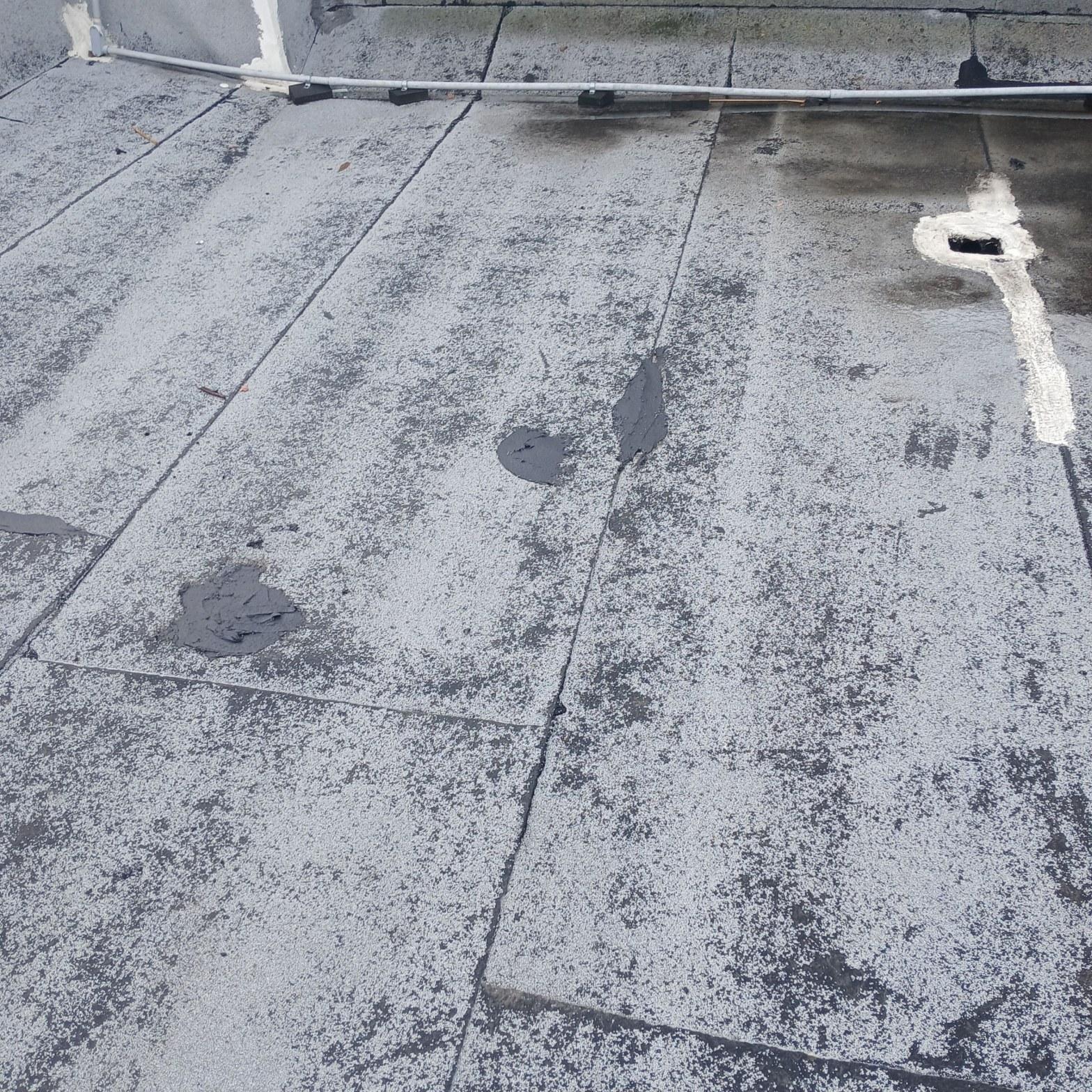
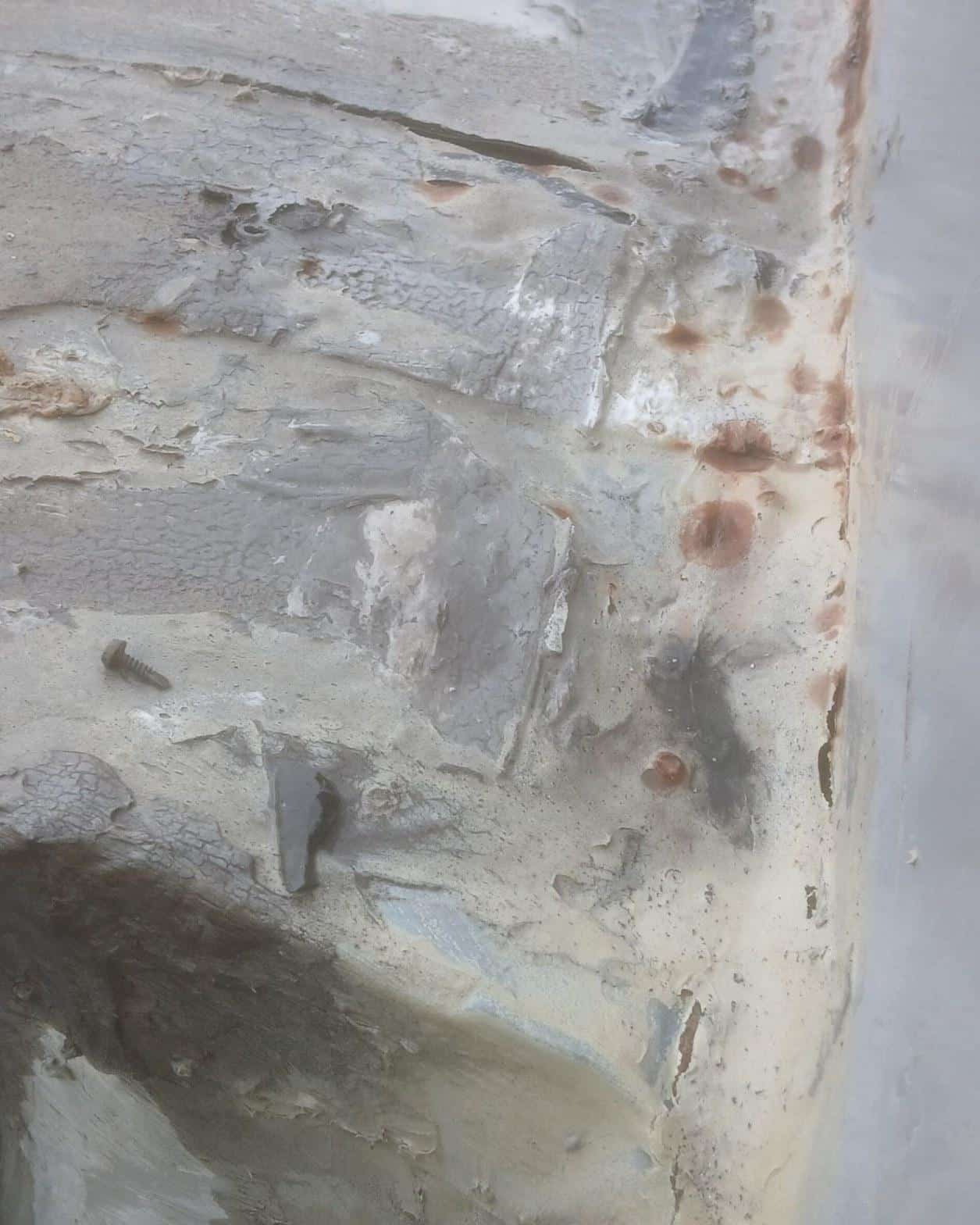
The membrane itself was an older torch-applied modified bitumen — a material common on low-slope residential and light commercial roofs built or re-roofed in the 1990s and early 2000s. After 20-plus years of UV exposure and California’s documented trend of intensifying heat cycles, the surface had oxidized significantly, with visible cracking at lap joints and around the roof drain area near the center of the field.
Project Gallery
How Did We Approach the Patch Repair?
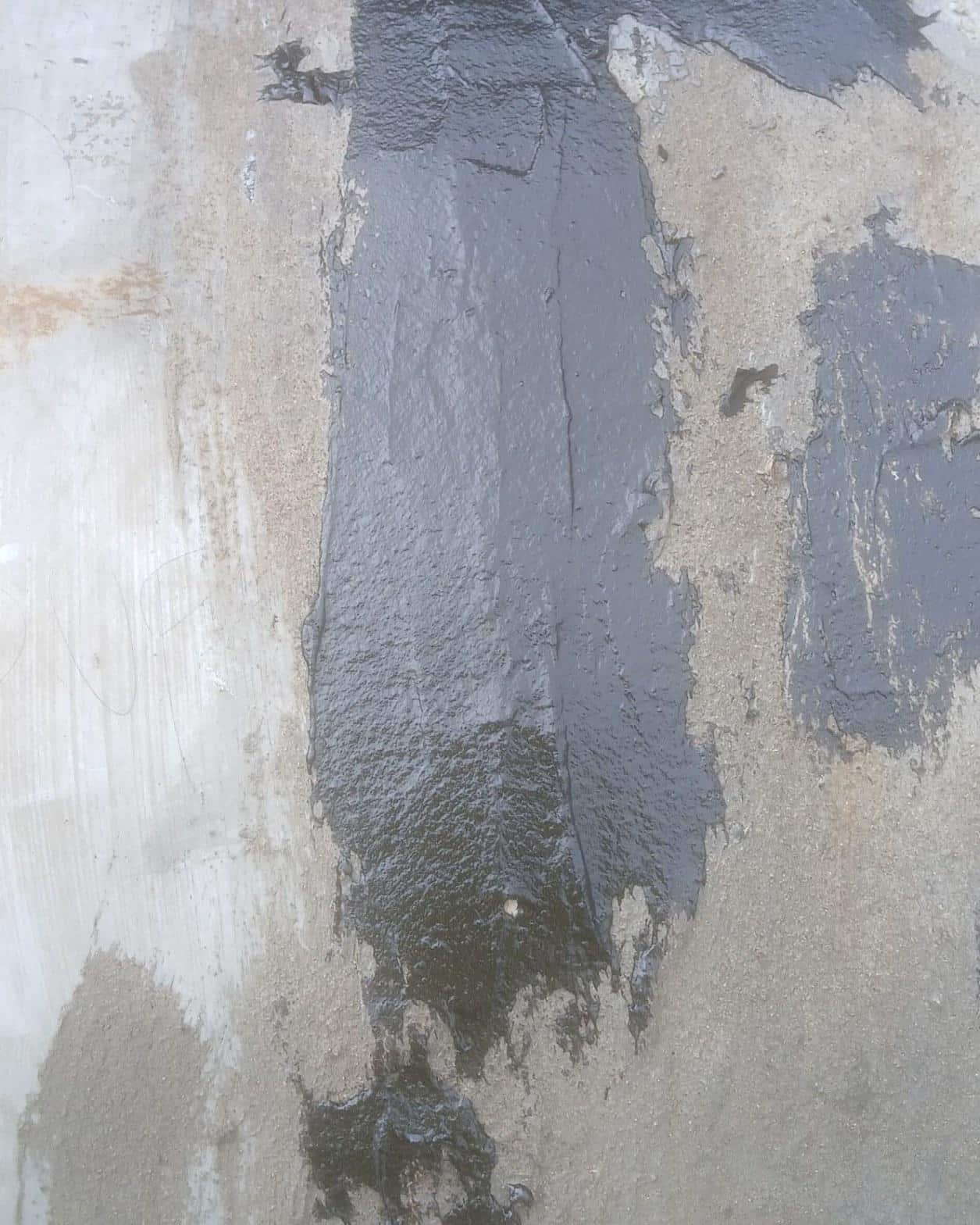
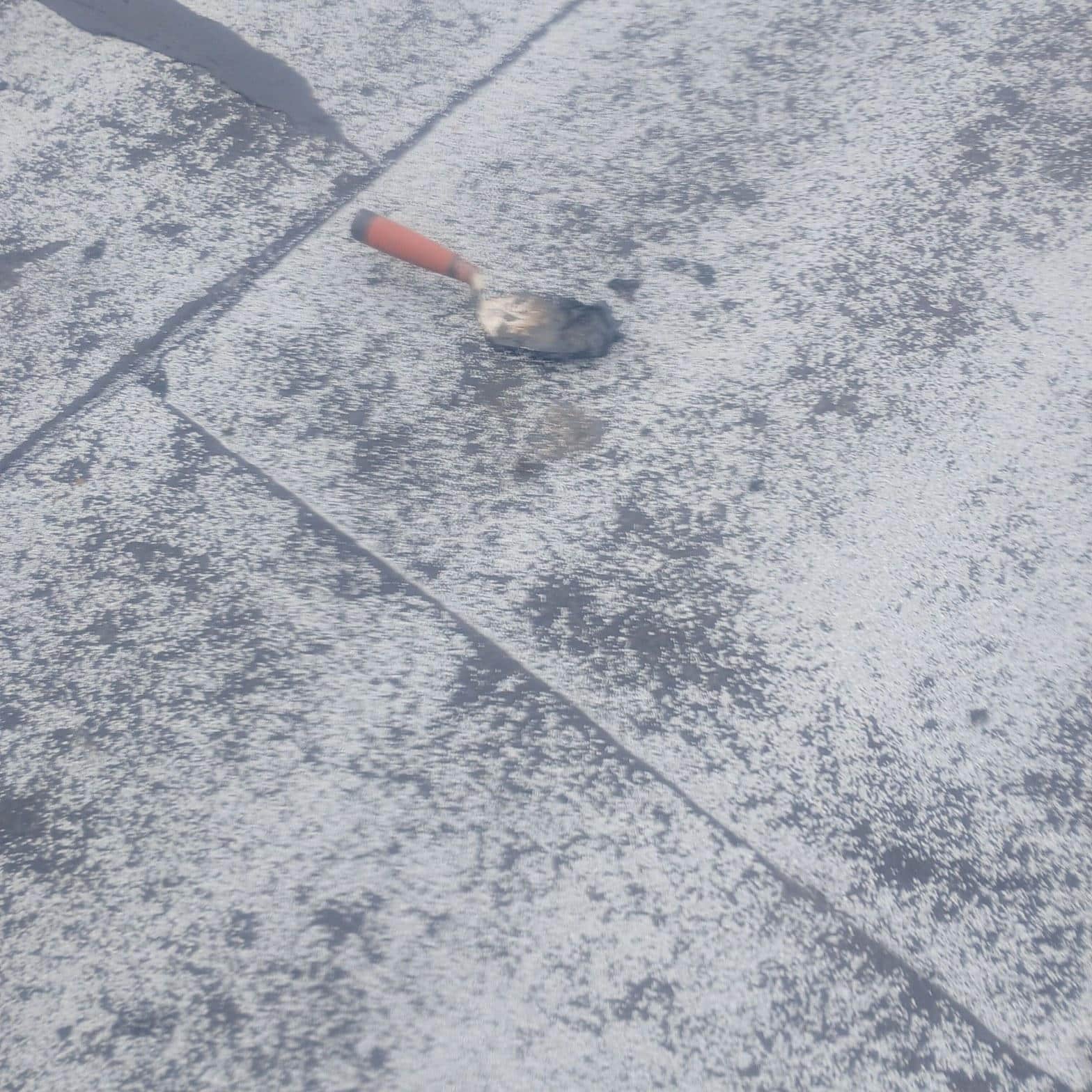
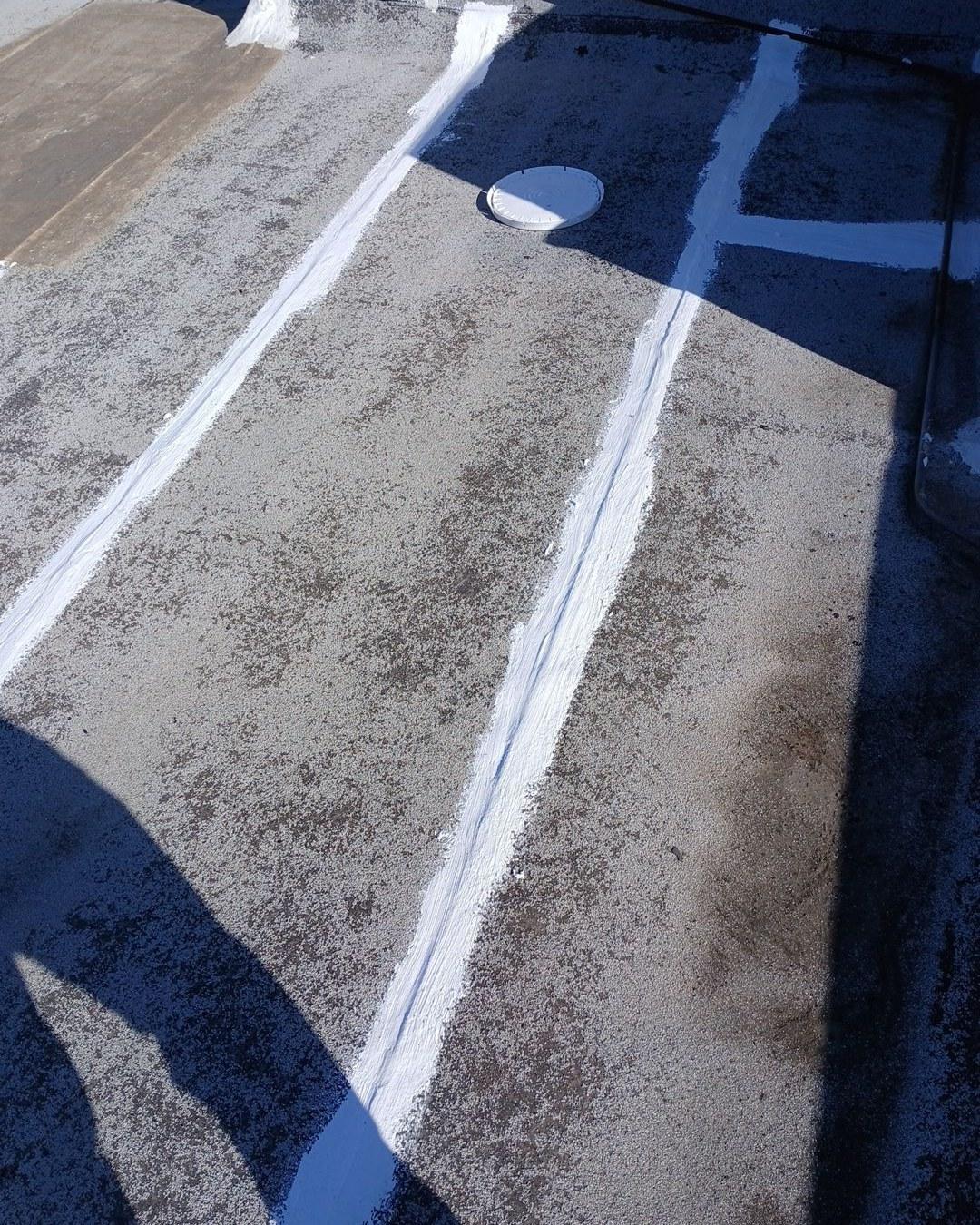
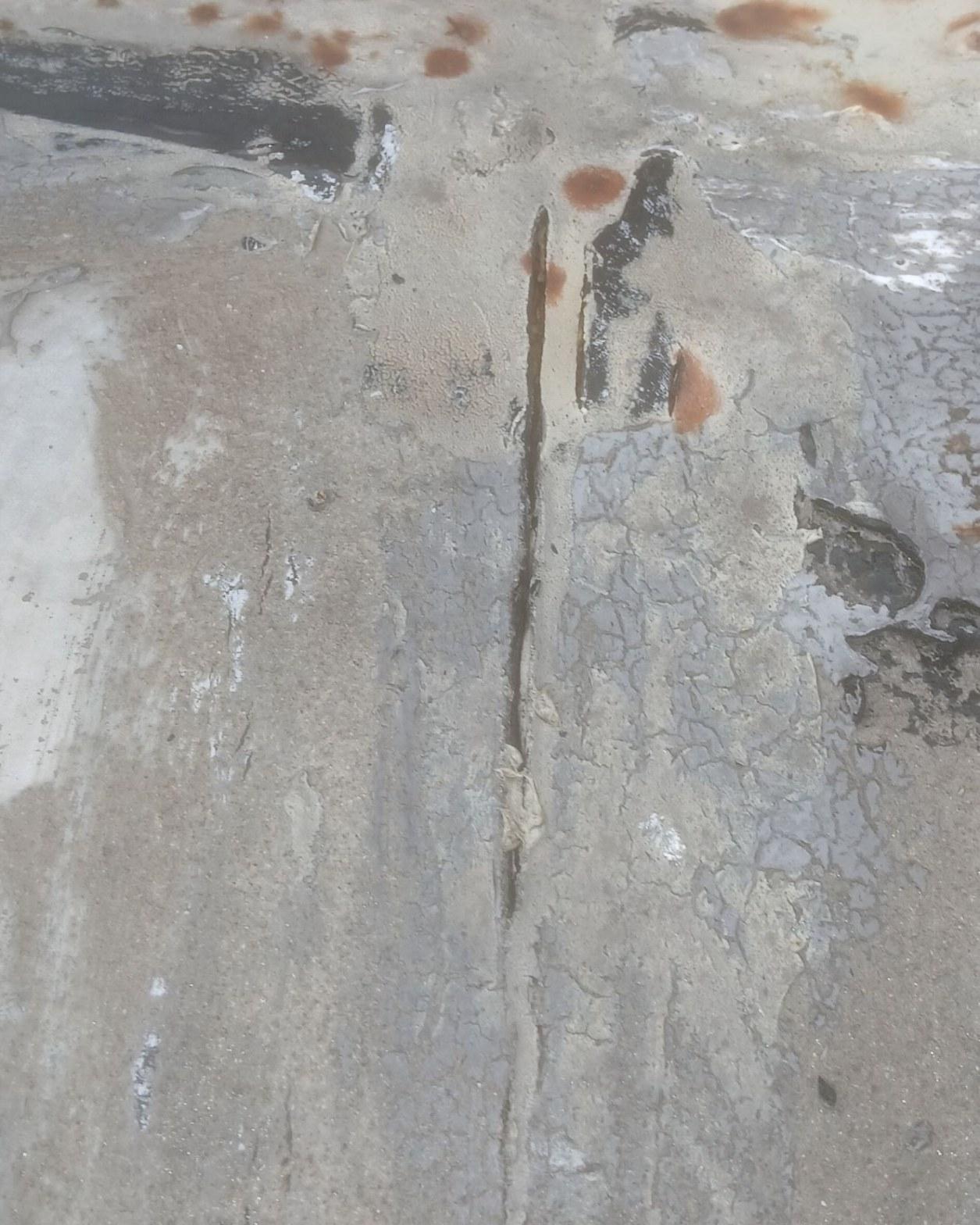
We mapped 4 discrete breach zones before opening any material: two field cracks in the mid-deck, one failed seam running approximately 8 feet along the parapet base, and a compromised drain collar. Each zone was wire-brushed clean, primed, and filled with fibered roof cement before receiving a reinforcing fabric layer and a finish coat of bituminous patch compound.
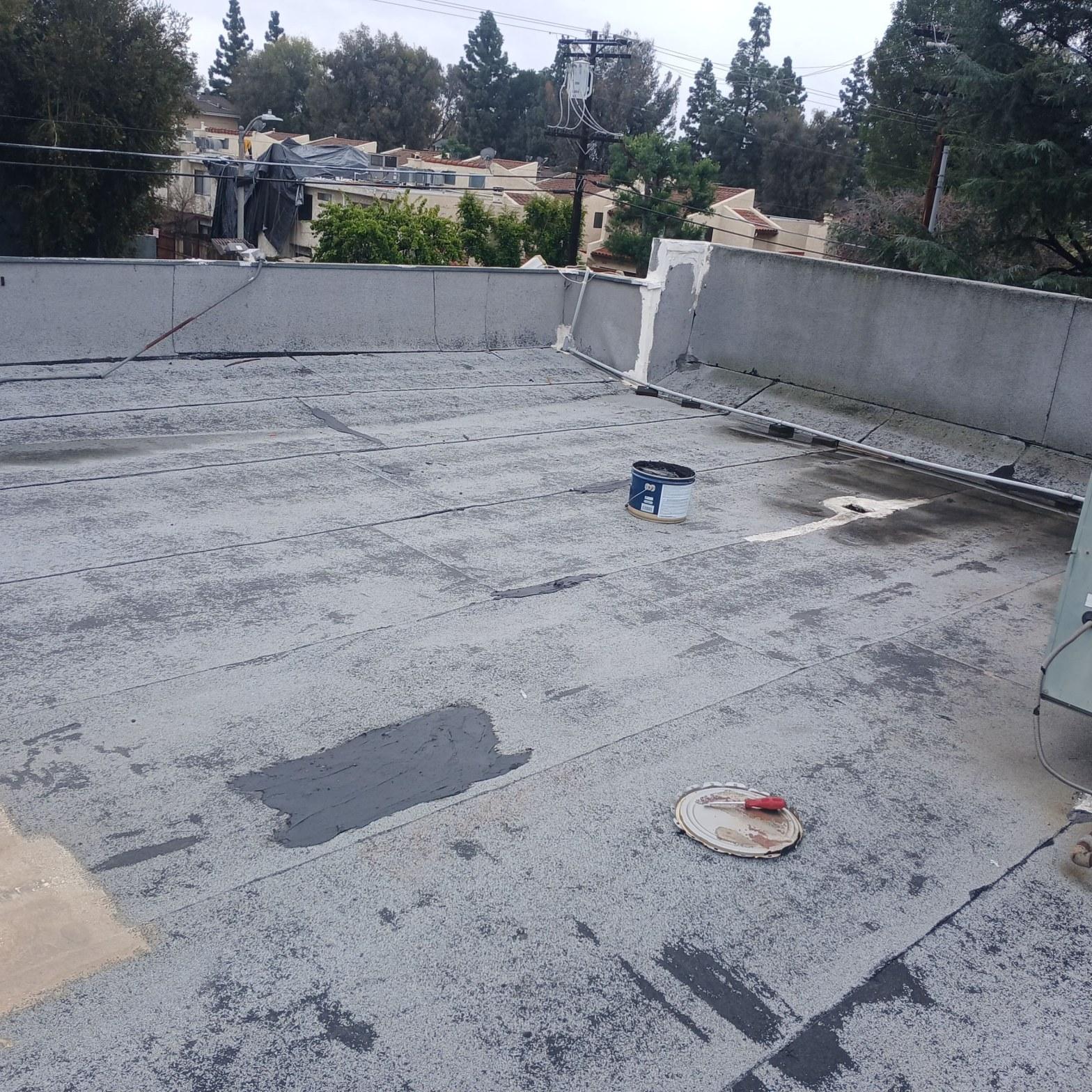
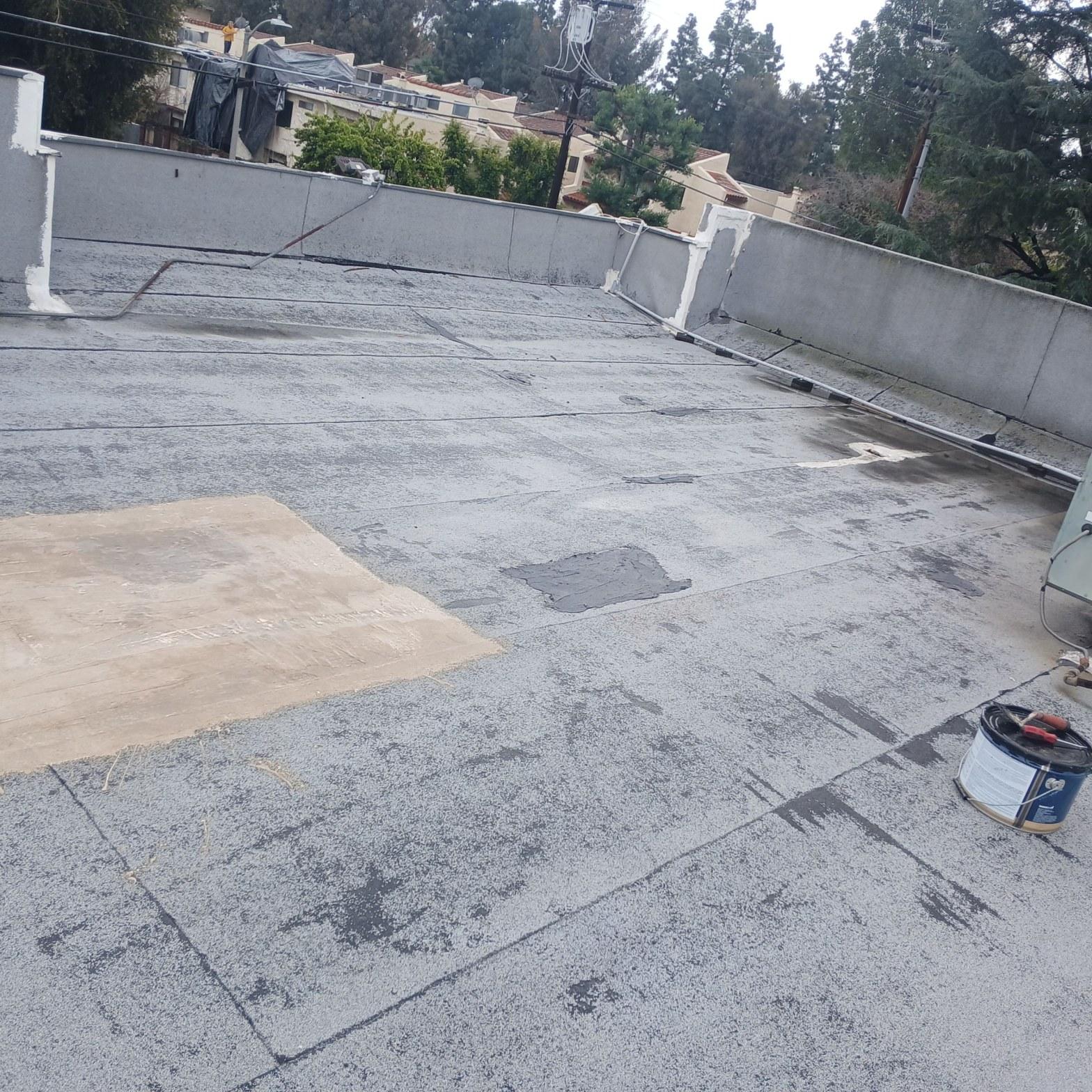
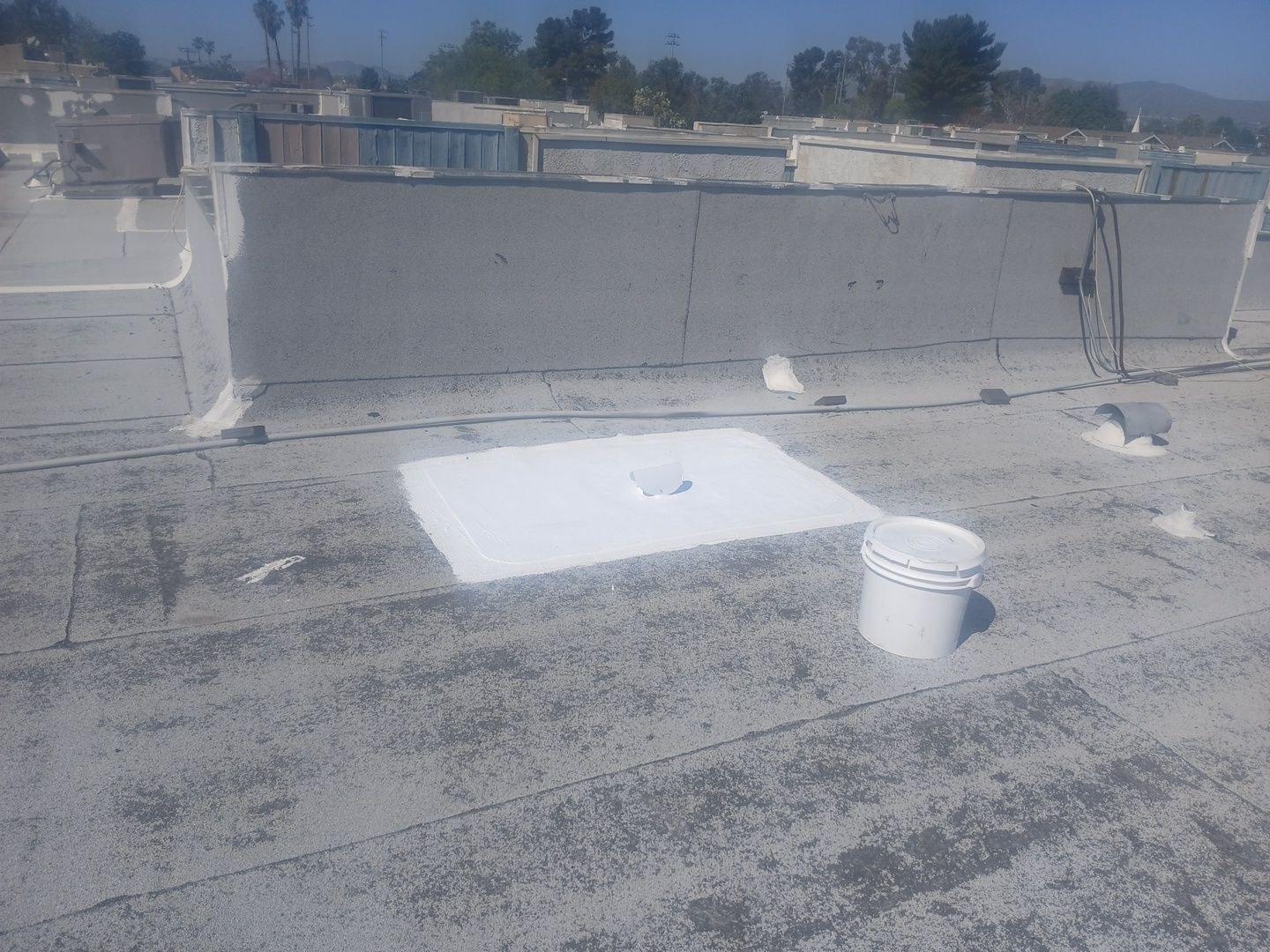
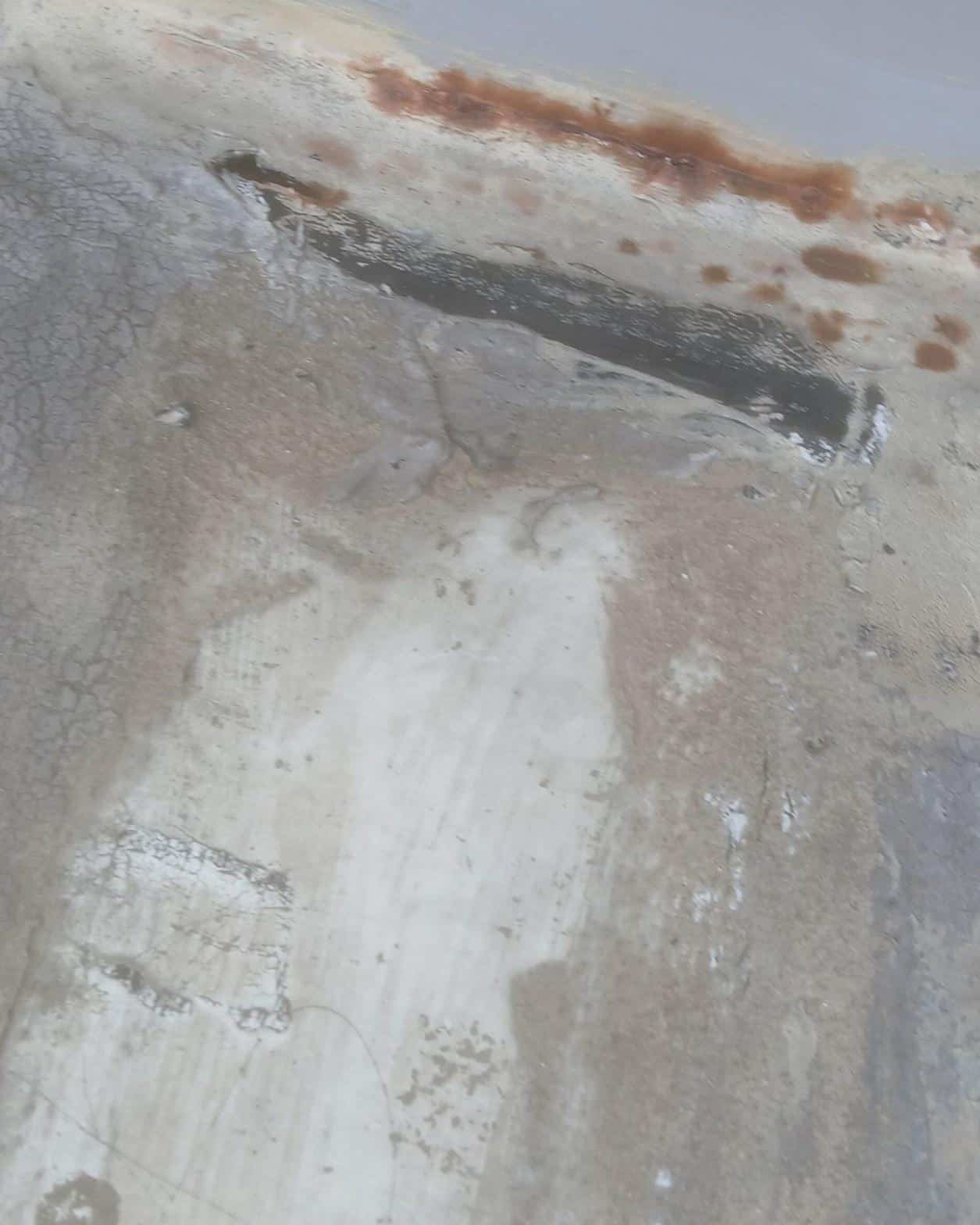
The dark, wet-looking patches visible in the photos reflect fresh compound that had not yet cured at the time the images were taken — this material typically reaches full adhesion within 24 to 48 hours under 65–85°F conditions, which is standard for Los Angeles in the shoulder seasons. A 5-gallon bucket of elastomeric sealant was staged on the deck for the perimeter and penetration work.
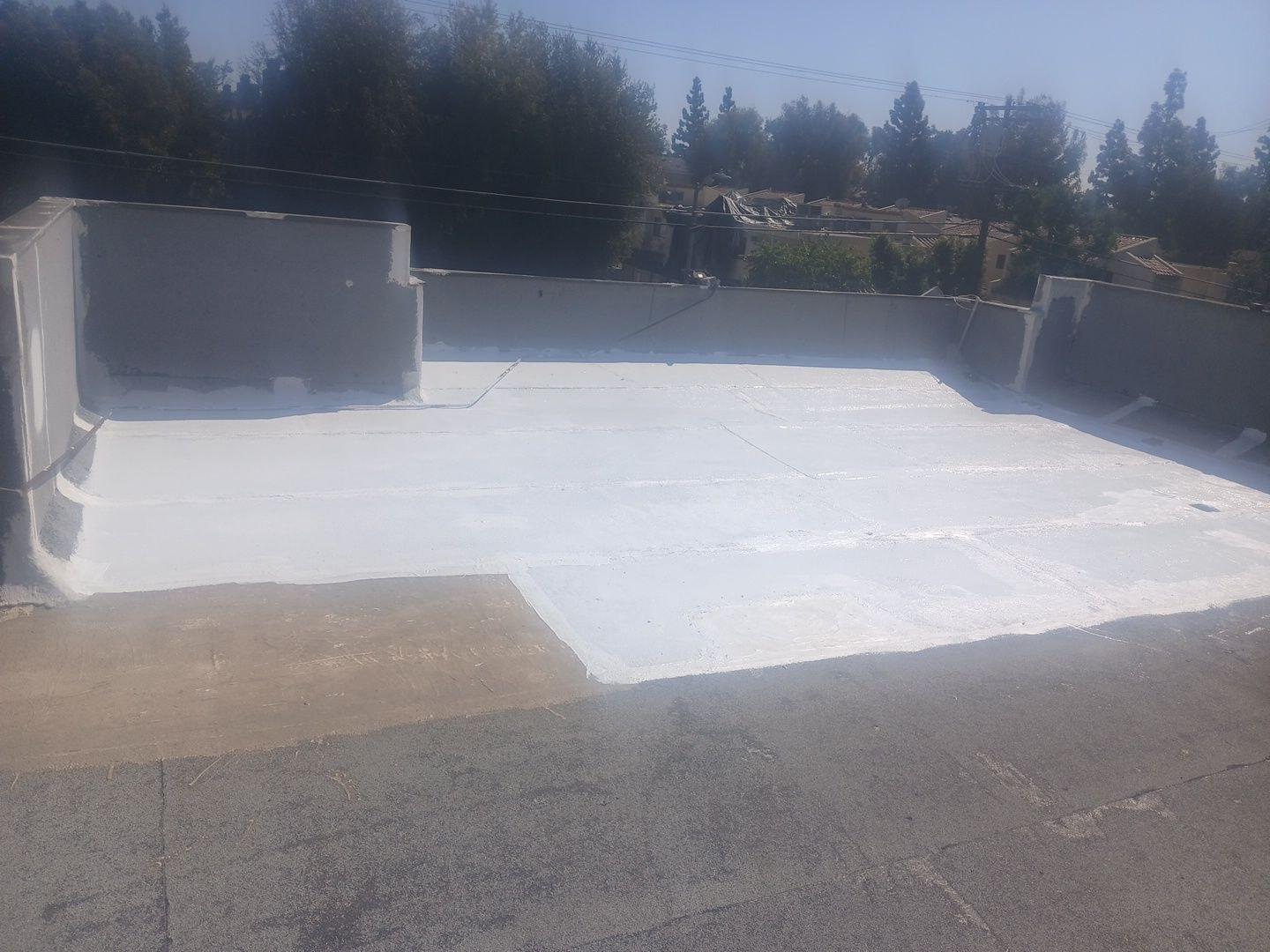
As shown above, one section of the deck also had a lifted or missing membrane section — visible as the exposed tan substrate in the upper-left quadrant of the roof field. That area was re-covered with a compatible torch-applied patch, bonded and sealed to the existing field membrane on all four edges.
Our crews handle roughly 15–20 torch down patch calls per month across the greater Los Angeles area, and delaminated substrate sections like this one almost always trace back to a failed drain or parapet cap that went unaddressed for more than one wet season.
What Did the HVAC Curb Repairs Involve?
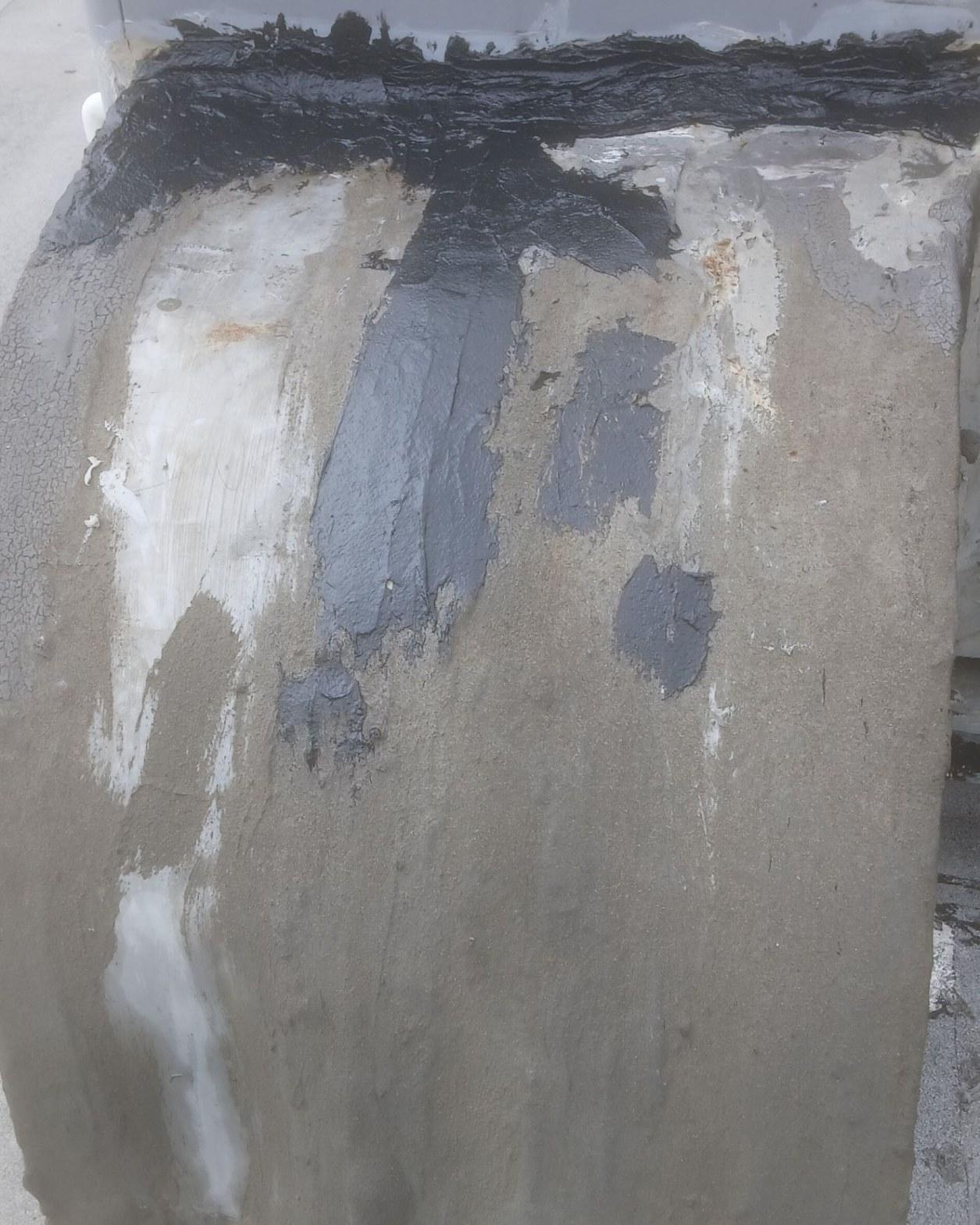
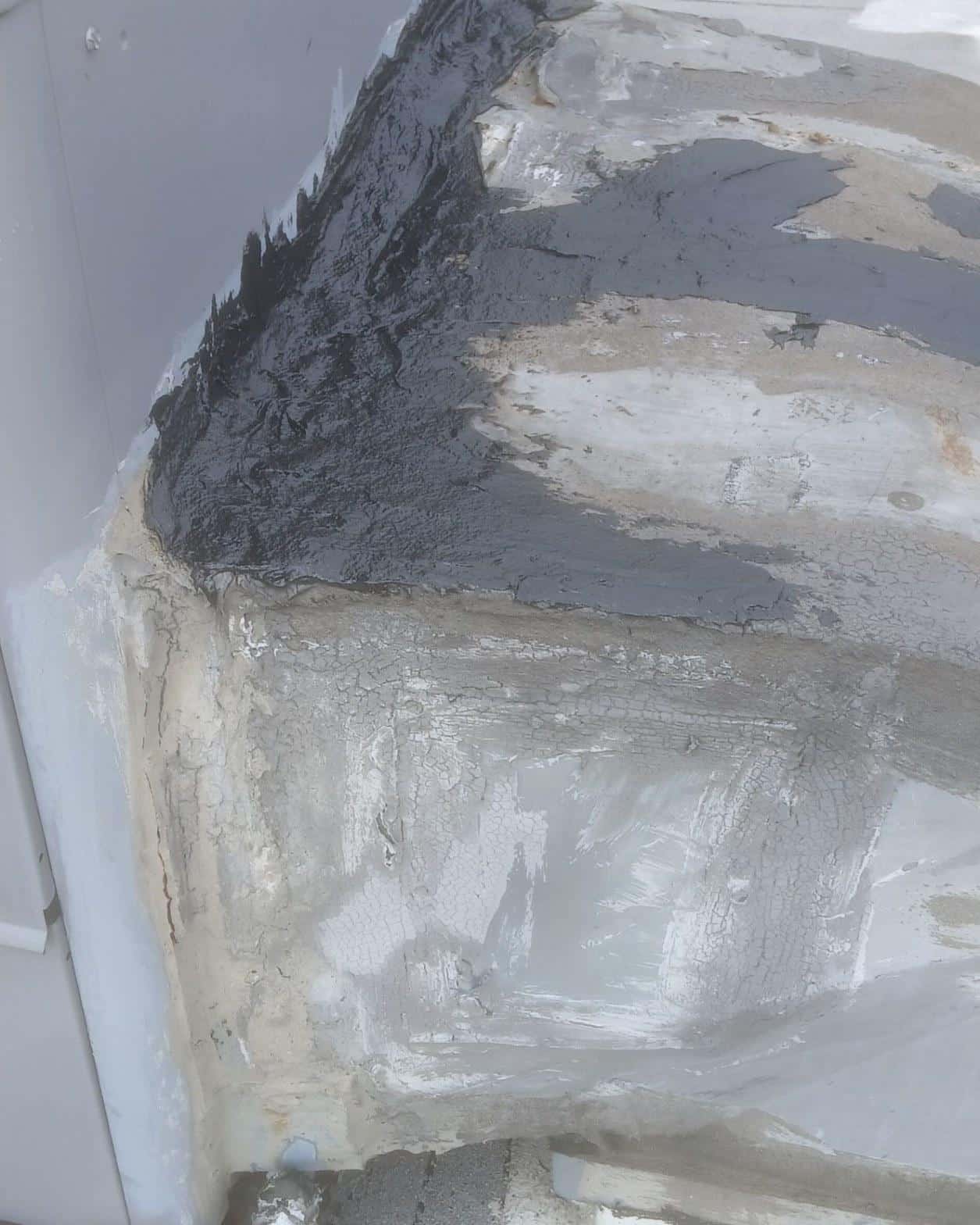
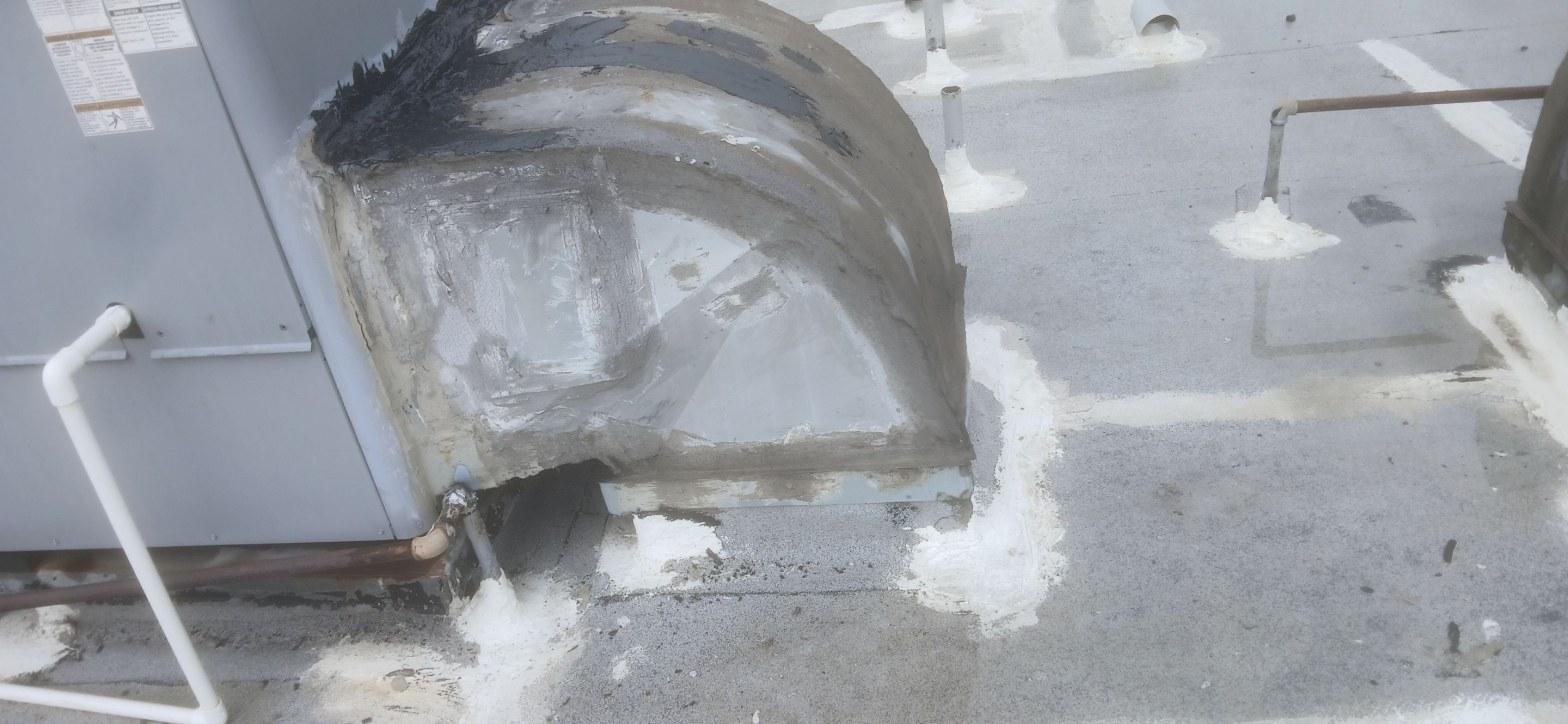
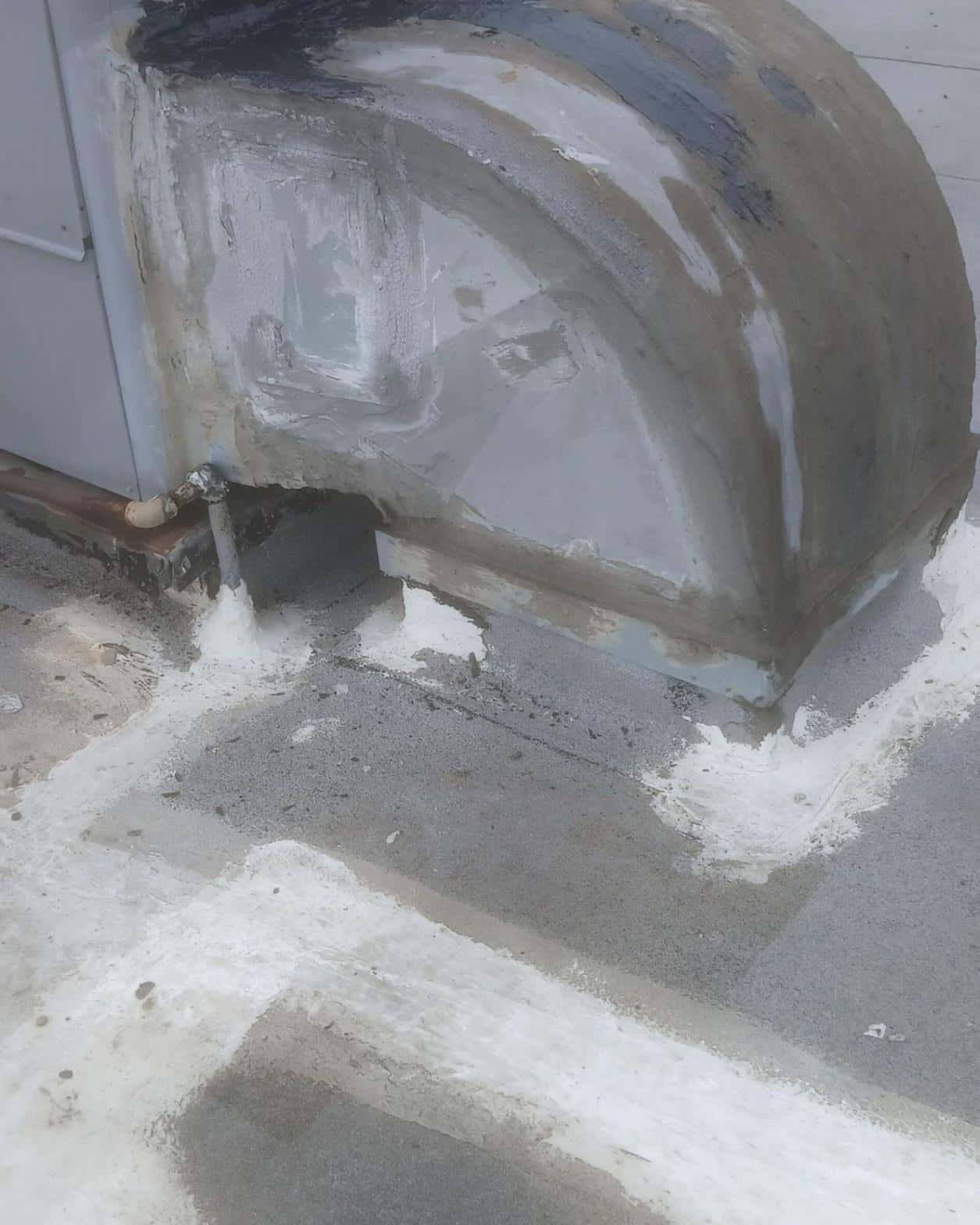
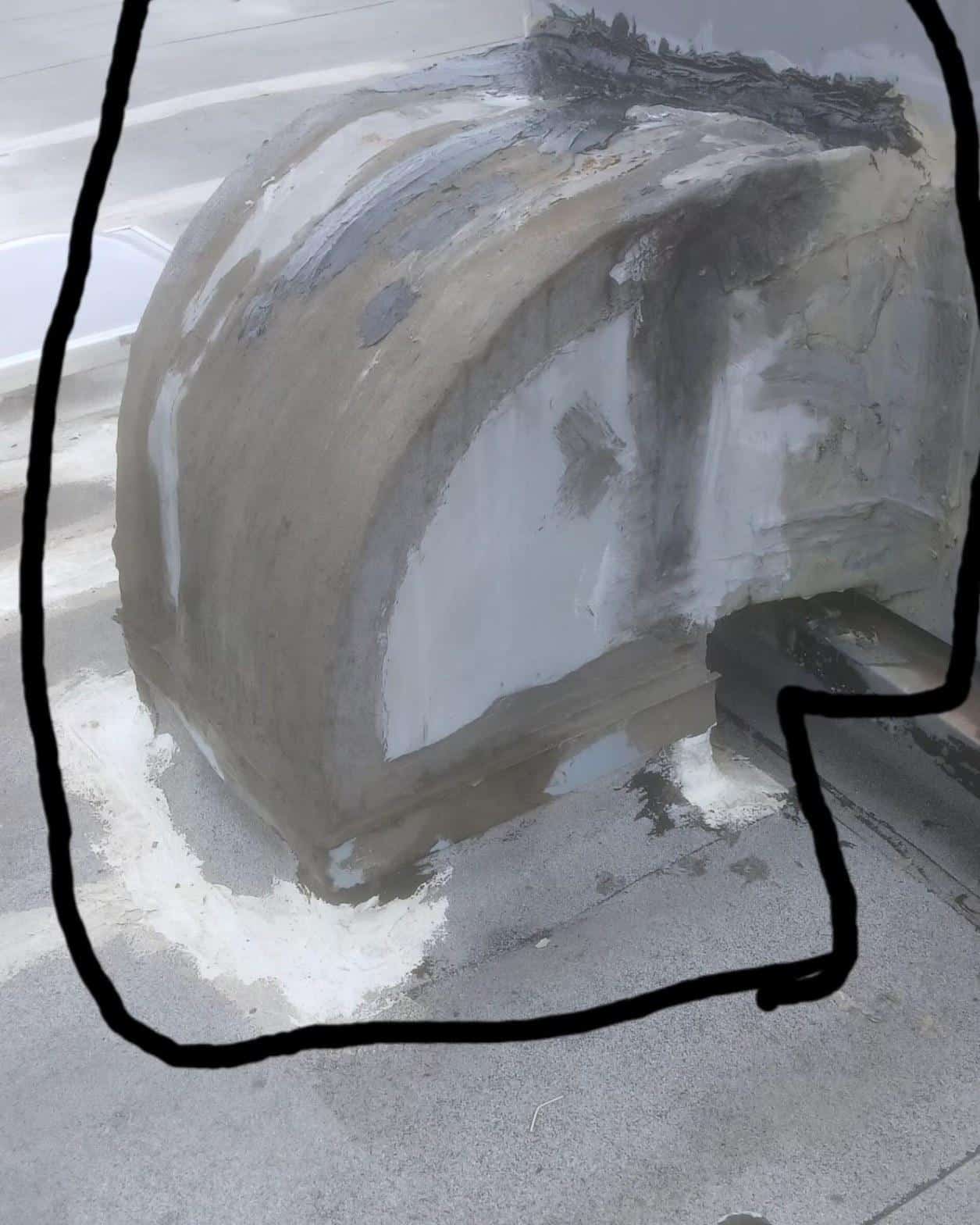
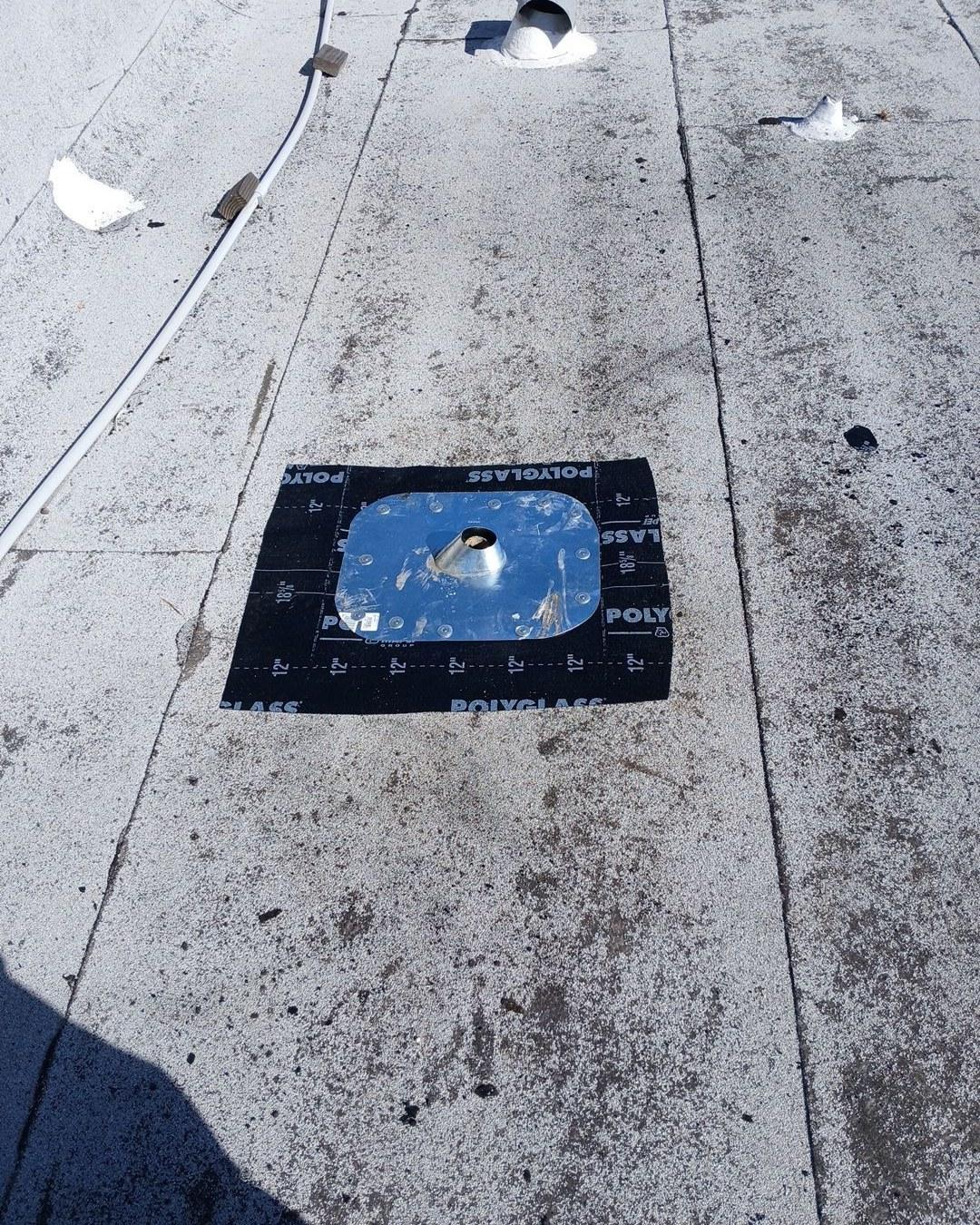
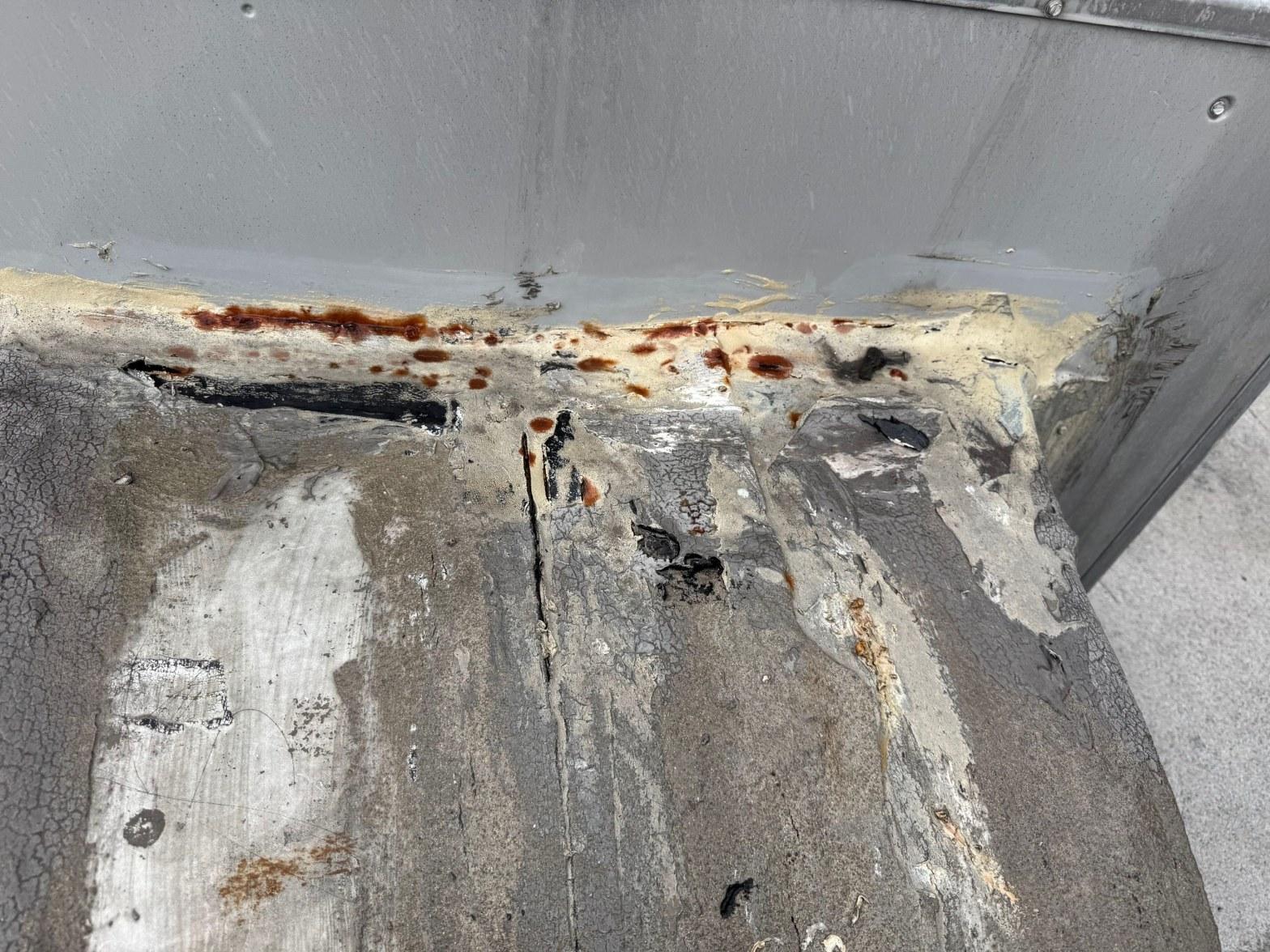
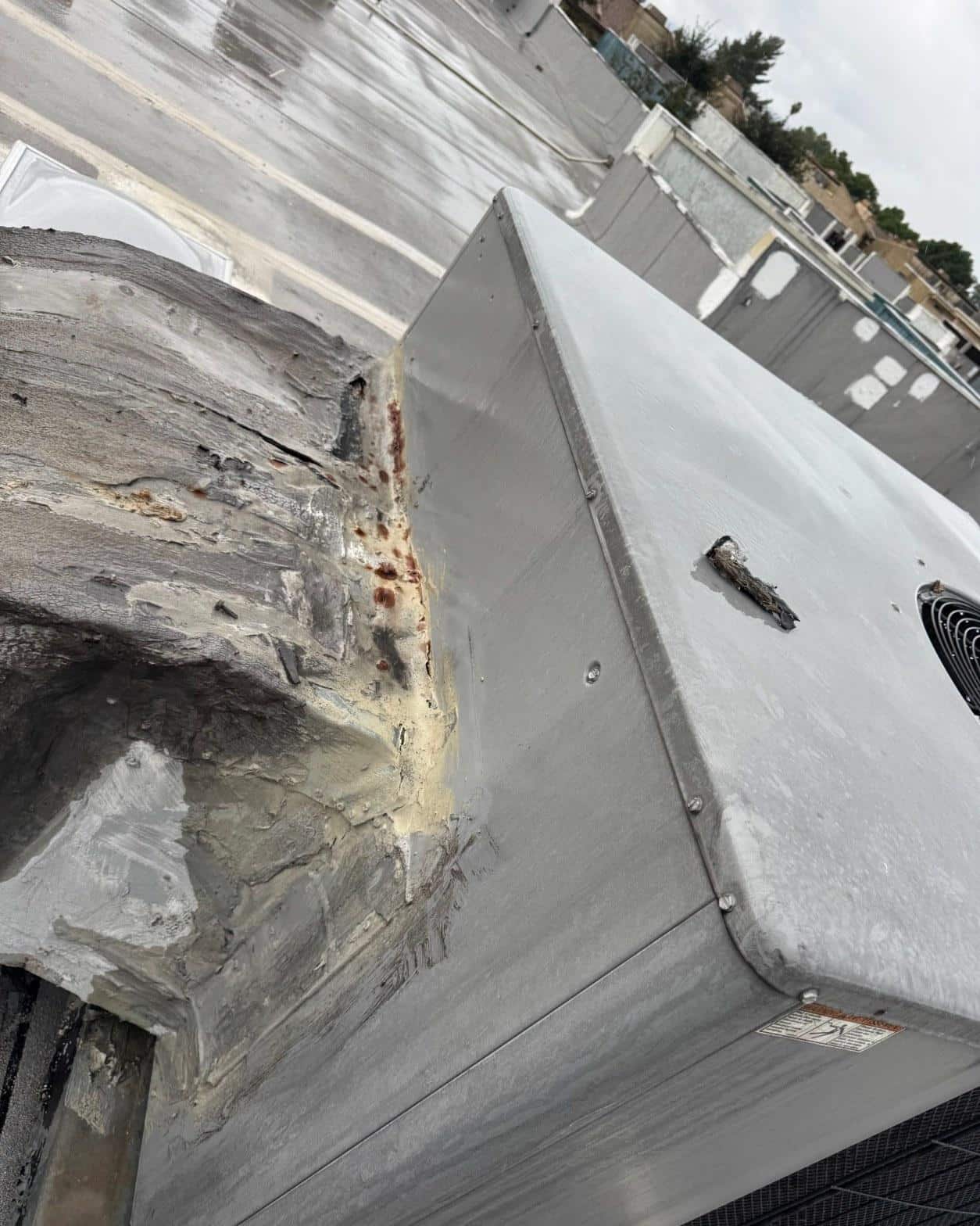
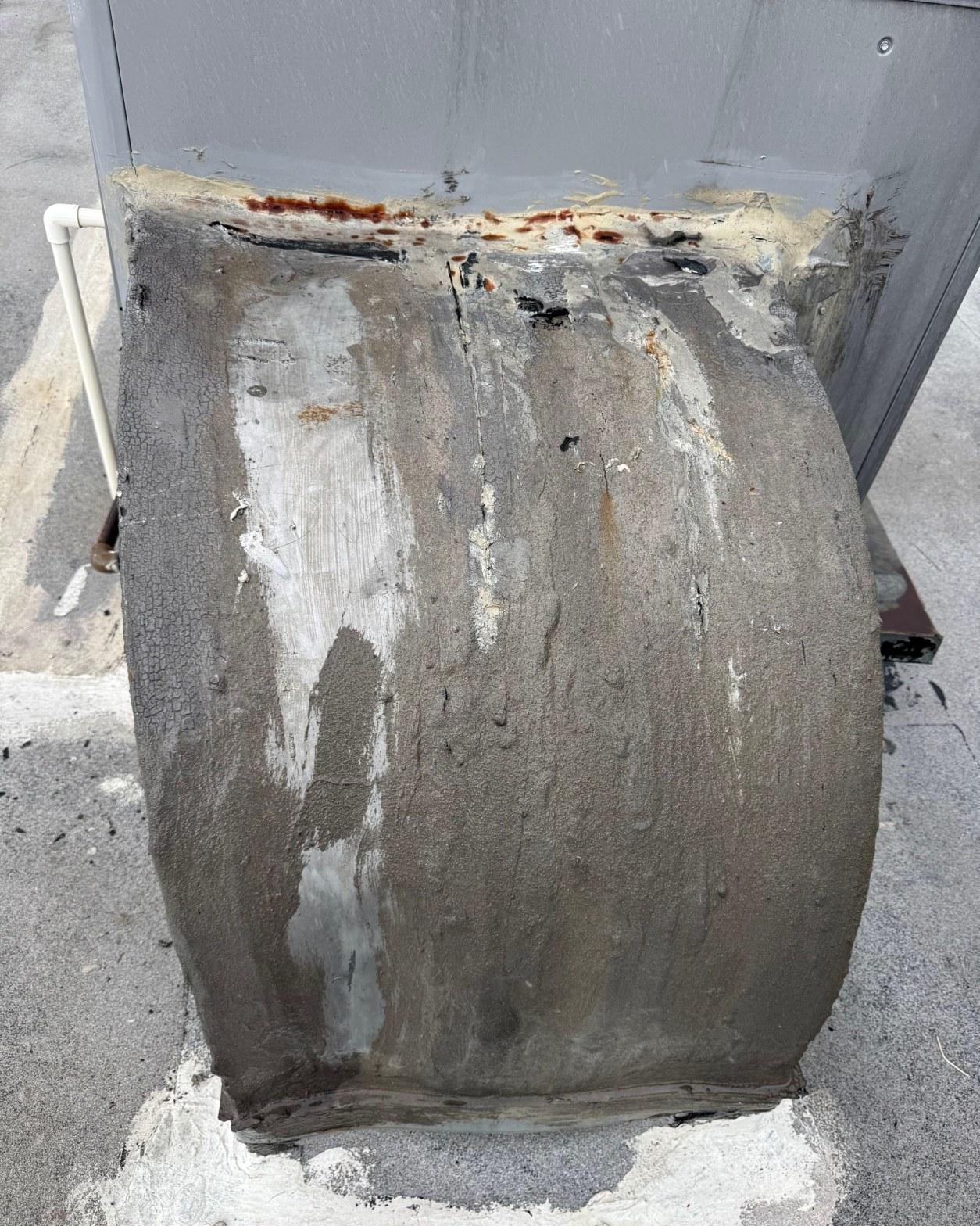
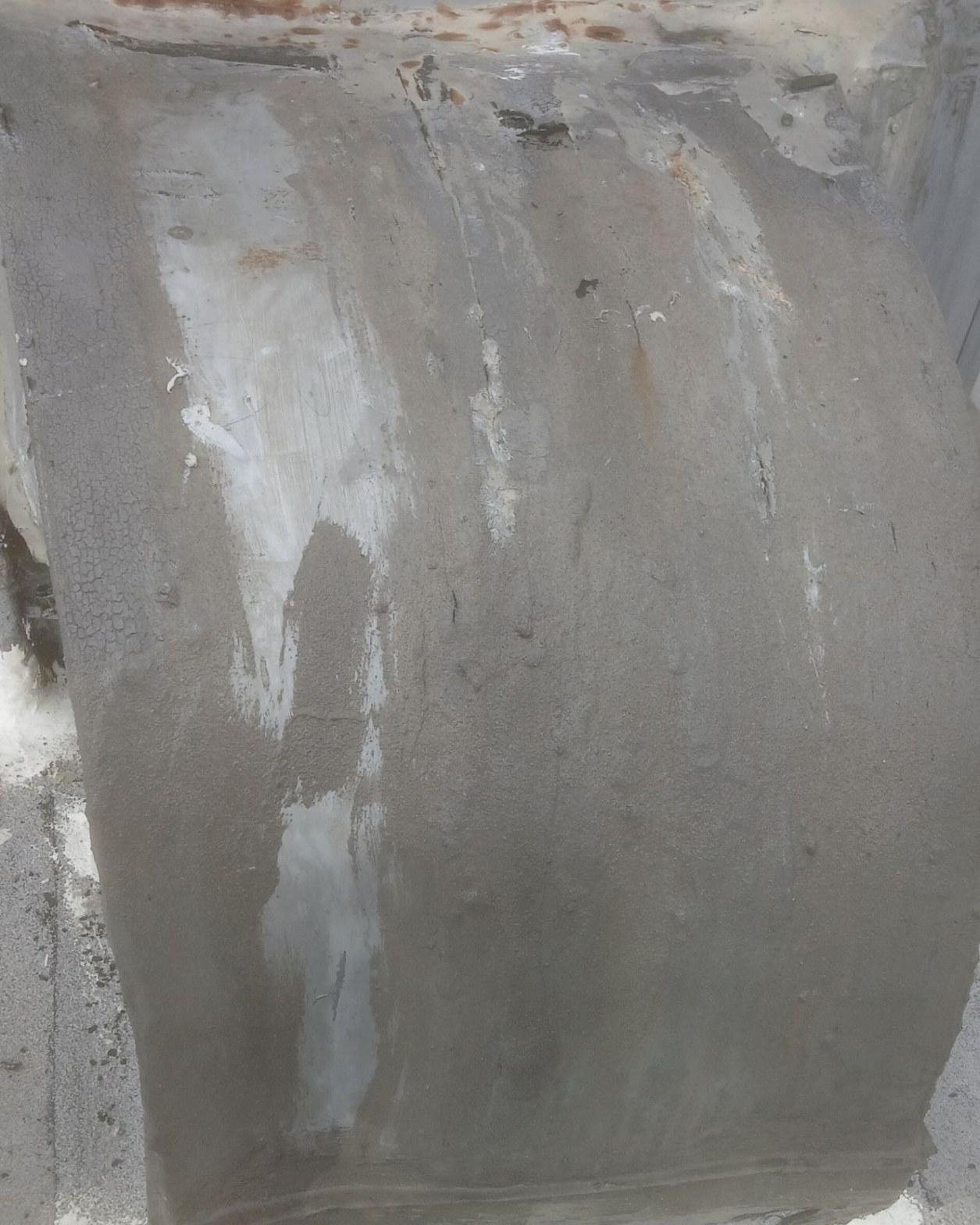
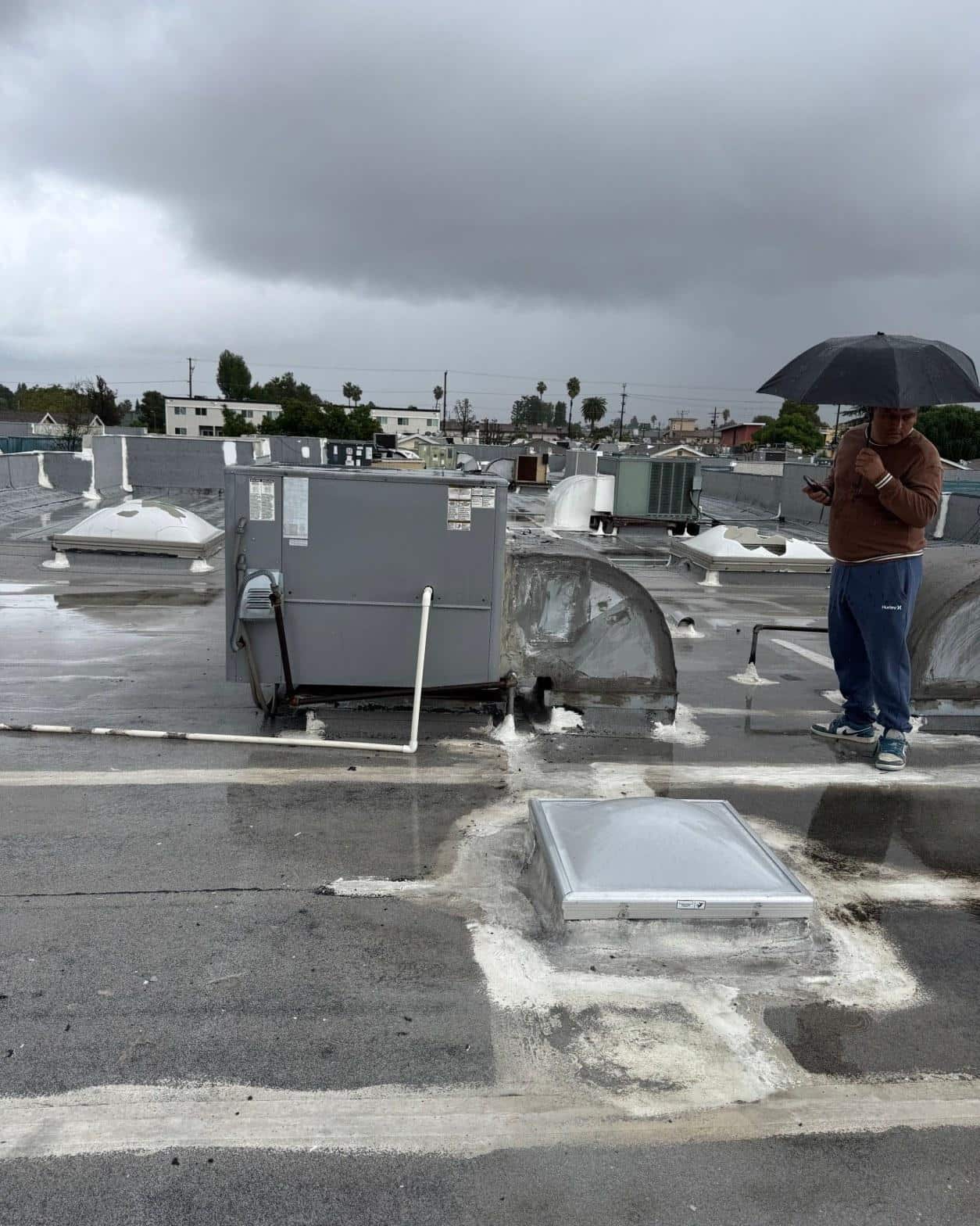
Two rooftop HVAC curbs had failing flashing boots — the most common secondary leak source on flat roofs with aging equipment. The curb housings had been previously patched with what appeared to be a fiber-reinforced elastomeric product, but the coating had cracked along the curved radius of the curb skirt and was no longer bonded to the metal base.
We ground back the failed coating, applied a fresh bed of compatible elastomeric sealant, and worked it into full contact with both the metal curb face and the surrounding membrane field — extending the seal at least 4 inches onto the roof surface on all sides. The base of each curb was also treated with white elastomeric to match the existing coating visible on the parapet walls, which helps reflect heat and slows future UV degradation.
In our experience, curb flashings on HVAC units older than 10 years account for more than 40% of the leak calls we receive on torch down roofs — the thermal cycling of the equipment causes the metal to expand and contract independently of the membrane, eventually breaking whatever seal was originally applied.
As of 2026, the California Contractors State License Board (CSLB) requires all roofing contractors performing this type of work to hold a valid C-39 Roofing license. Roof Replacement CA is Licensed by the California Contractors State License Board (CSLB) and carries all required insurance for work at occupied residential and commercial properties.
The Finished Result
All 4 breach zones were sealed, the delaminated substrate section was re-membered, and both HVAC curb flashings were re-coated and re-bonded — leaving the roof watertight ahead of the November–March rain window.
The owner can expect the patched areas to perform for 5 to 8 years under normal Southern California conditions, assuming the drains are kept clear and the parapet caps are re-inspected annually. A full torch down re-roof would be the longer-term solution for a membrane of this age, but targeted patch work is the right call when the substrate is sound and the budget favors phased investment.
Schedule Your Flat Roof Inspection
If your flat roof is showing cracked seams, granule loss, or water stains on interior ceilings, don’t wait for the rainy season to confirm the problem. Call Roof Replacement CA to book a roof inspection at your Los Angeles property. We provide written assessments with photos and a clear scope of work before any repair begins.


