What Did This Project Involve?
This job was a full foam roofing coating installation on a flat commercial roof in Los Angeles‘s Atwater Village neighborhood, at 4268 Perlita Ave. The property owner’s goal was straightforward: stop active moisture intrusion at aging penetrations, extend the life of an existing flat roof without a full tear-off, and bring the surface into compliance with California’s Title 24 building energy standards for cool roofing.
The roof had accumulated more than 15 pipe and conduit penetrations across its multiple sections — each one a potential leak point. Rather than patching individual failures, we treated the entire surface as a system.
Project Gallery
How Did We Handle All Those Penetrations?
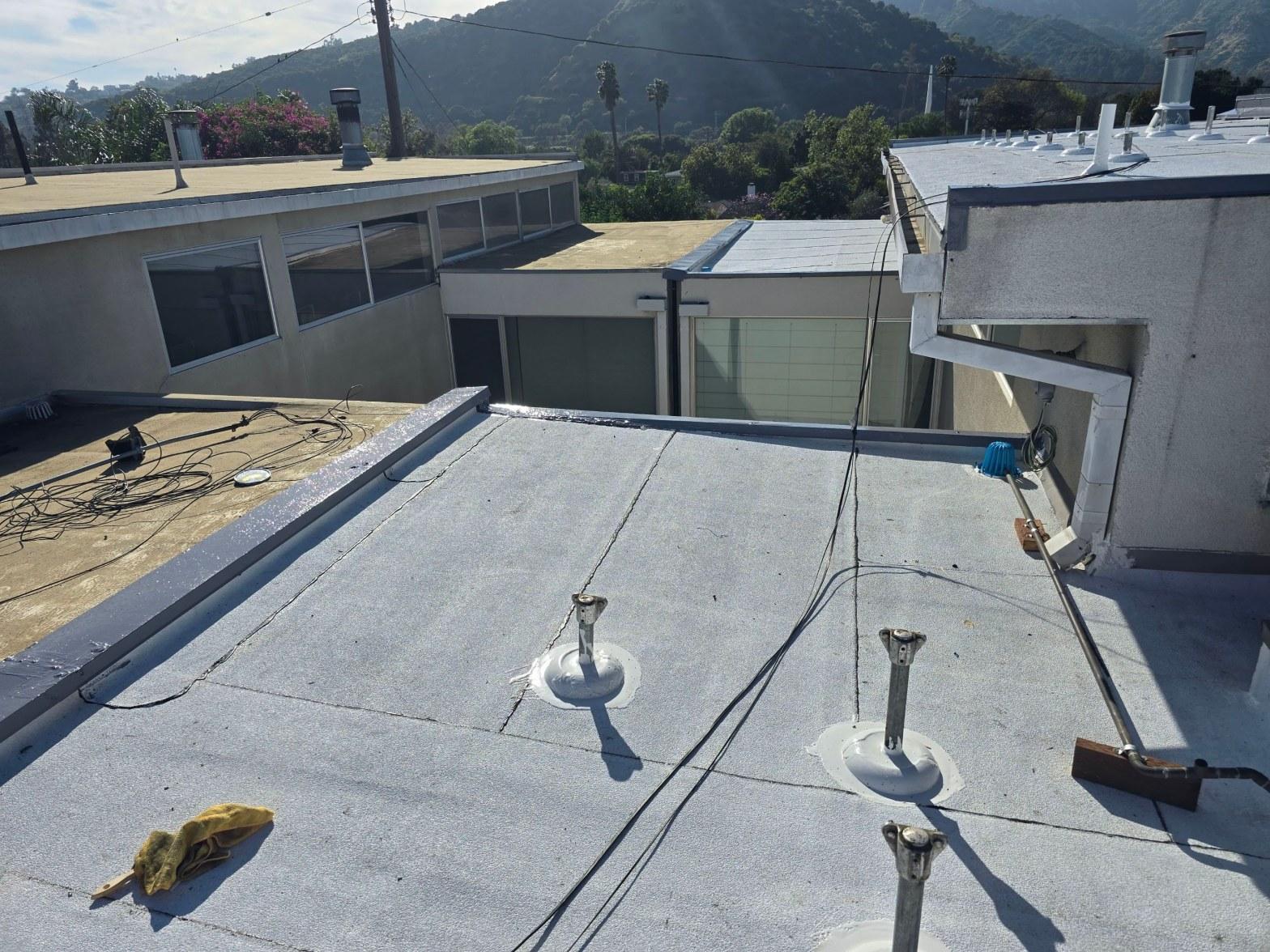
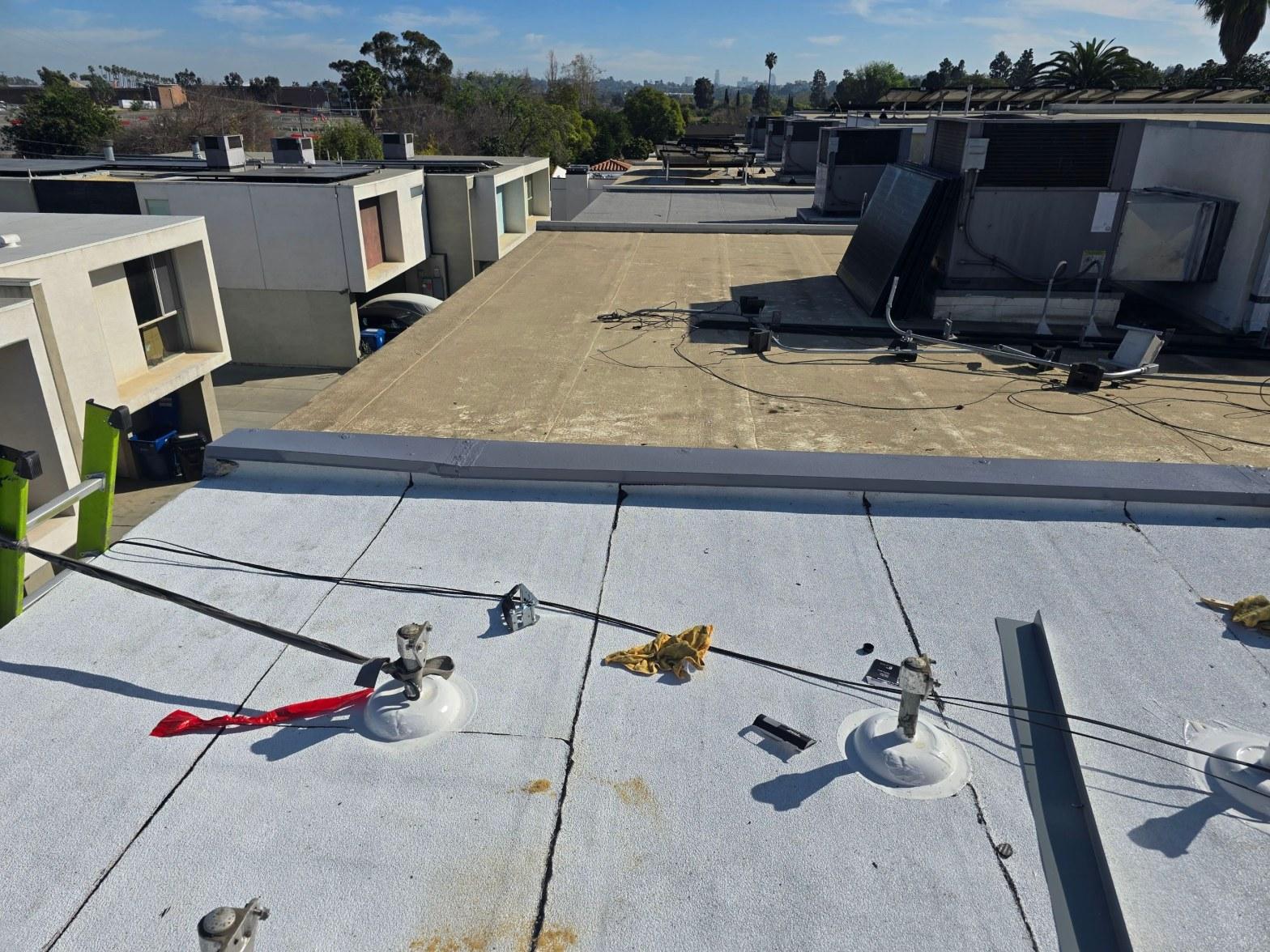
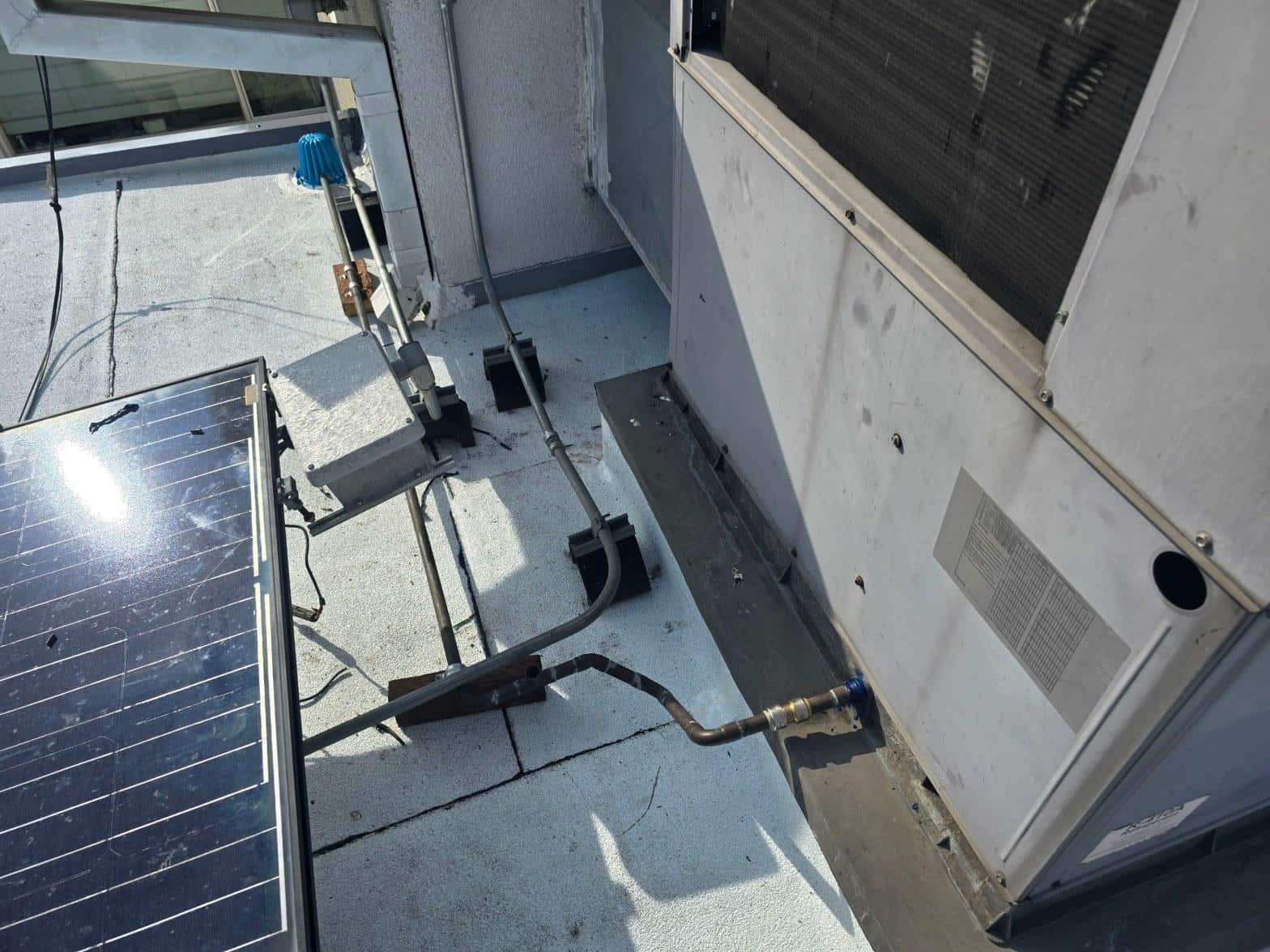
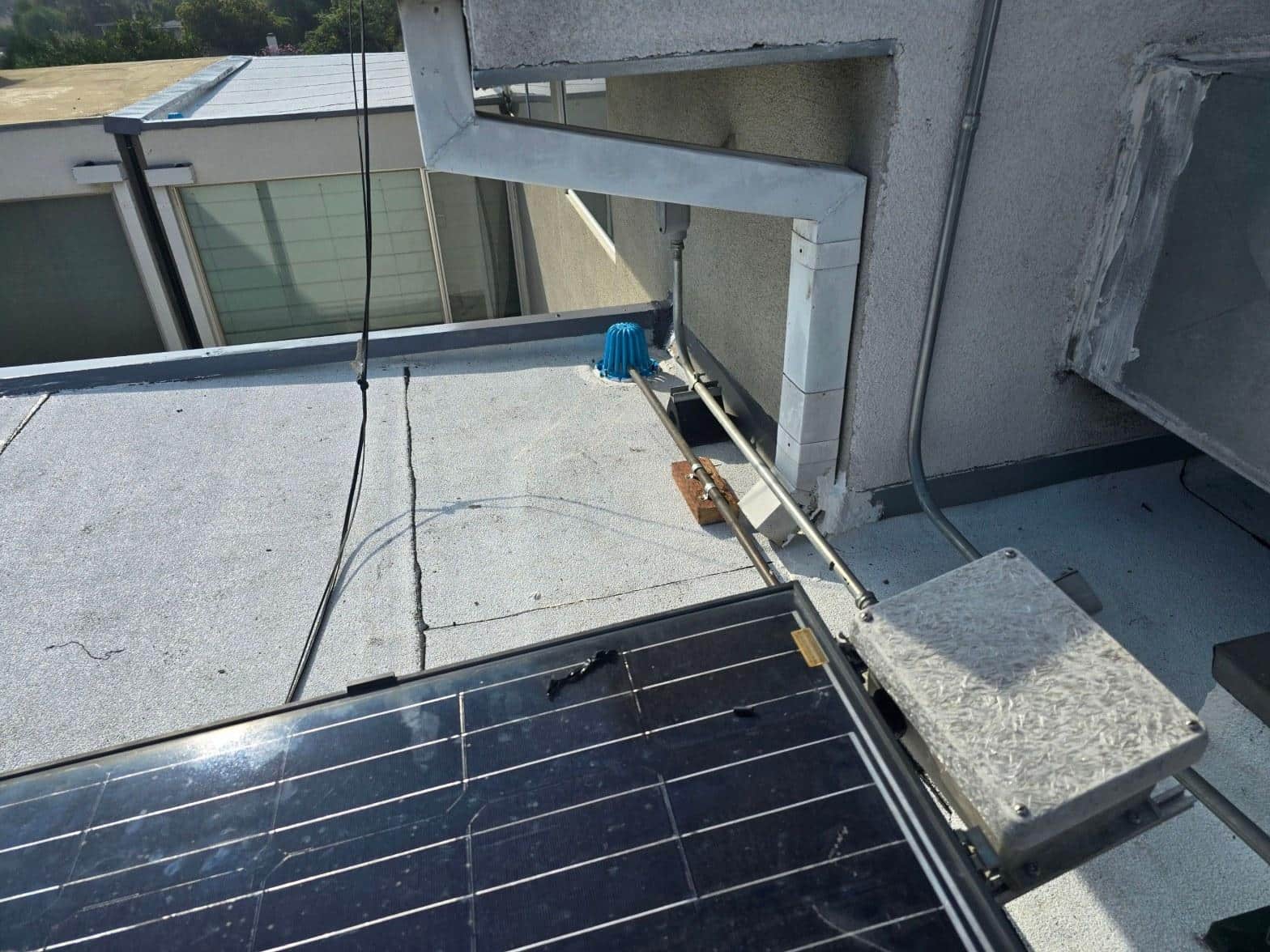
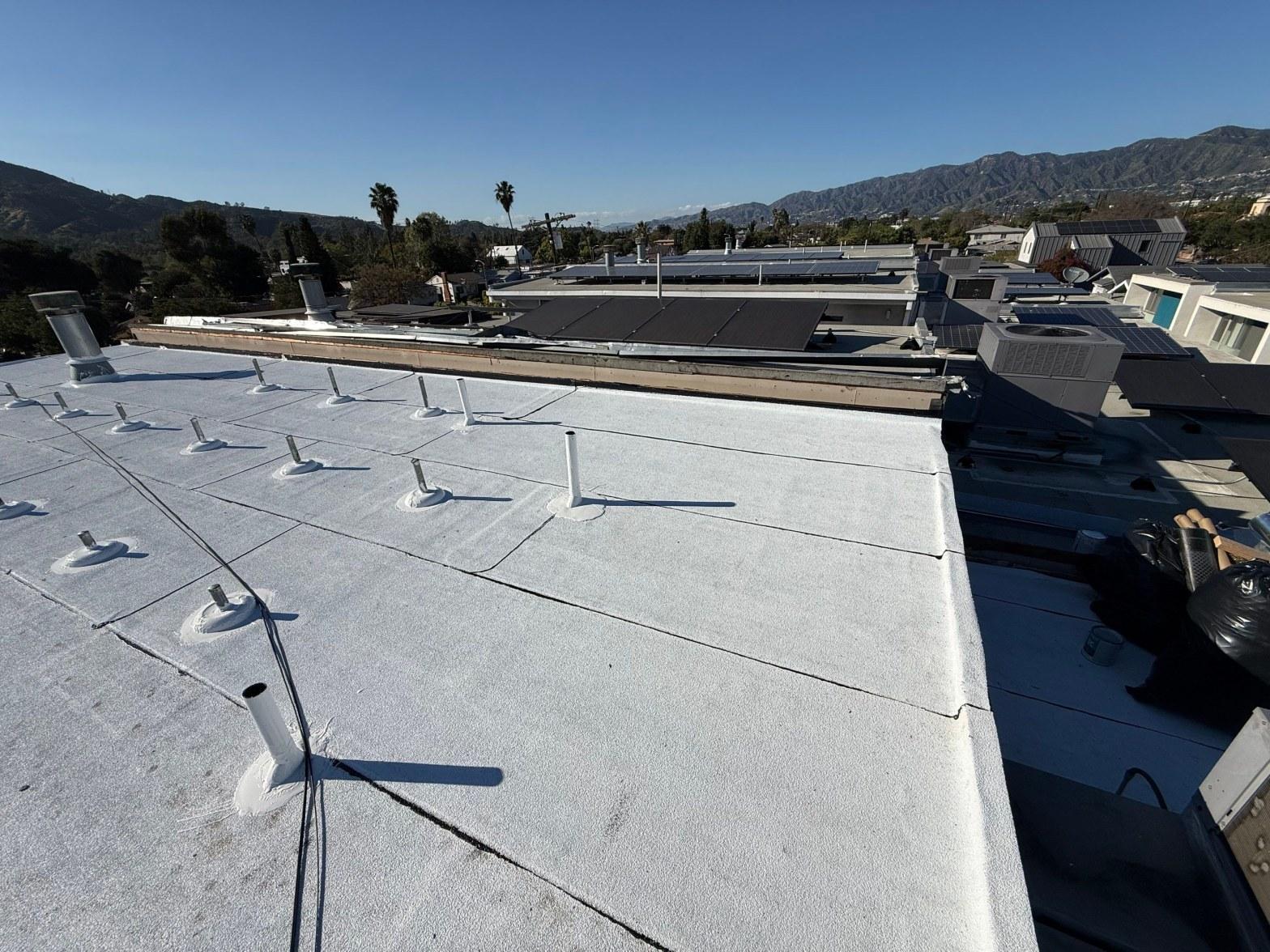
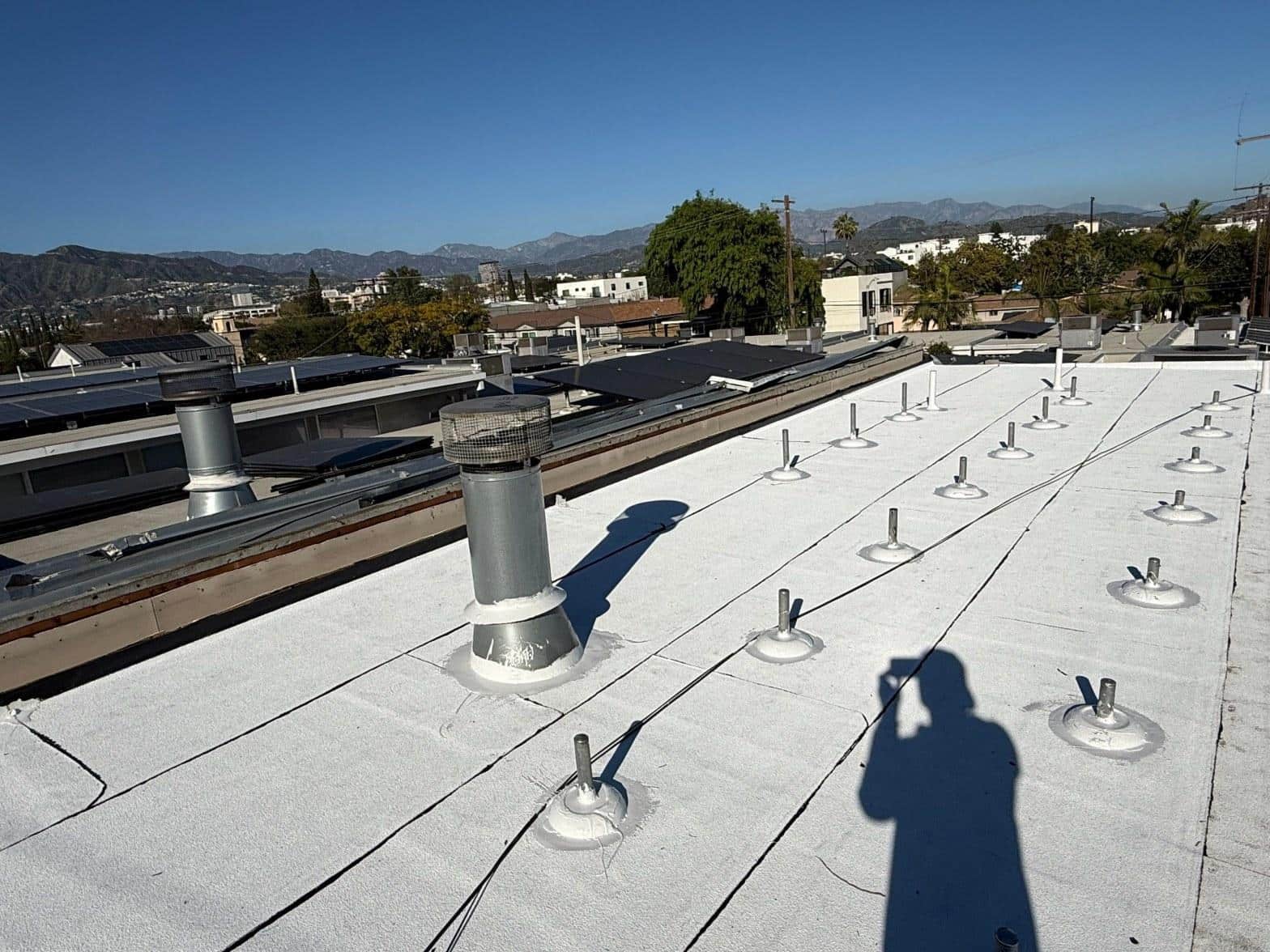
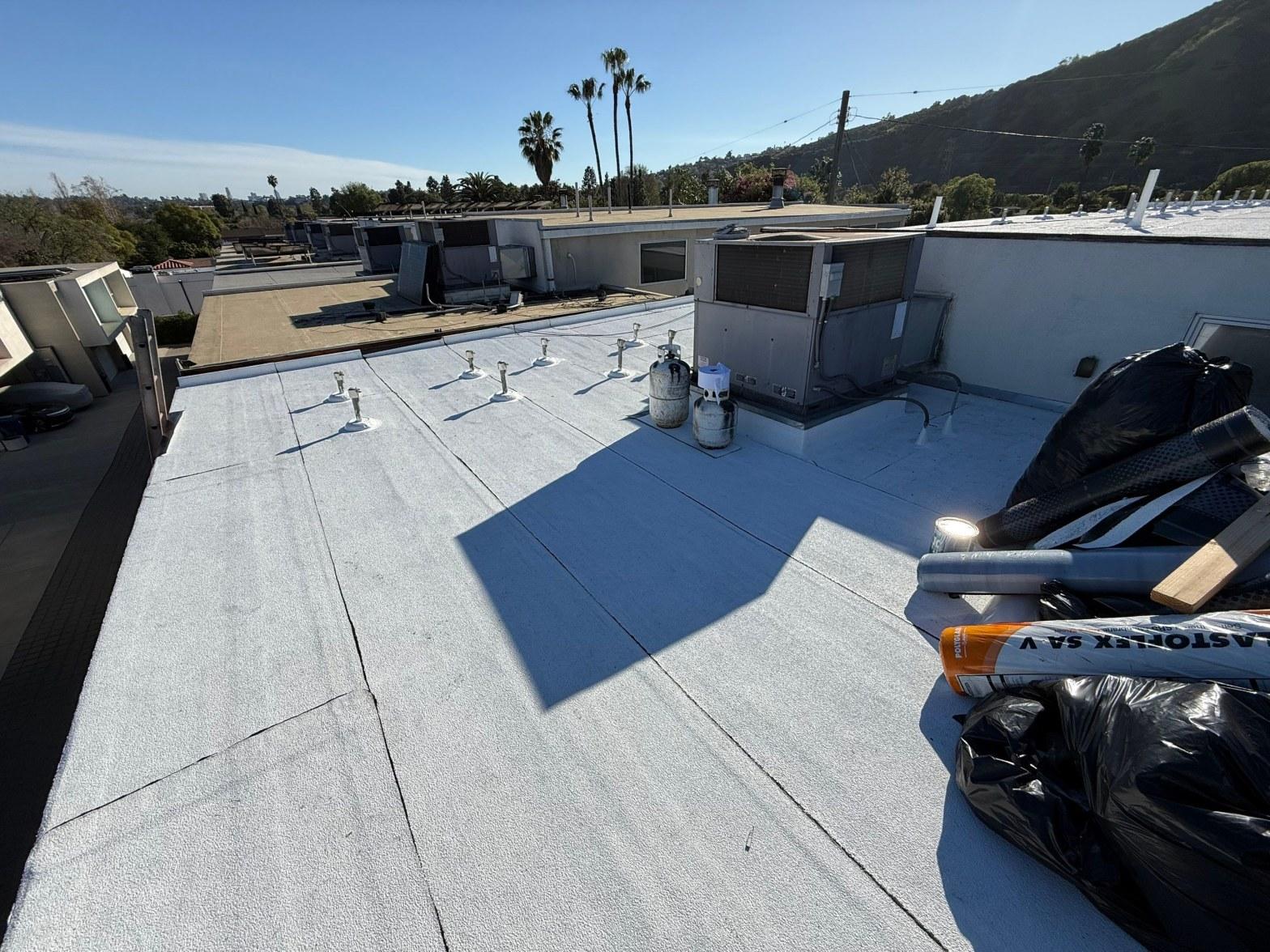
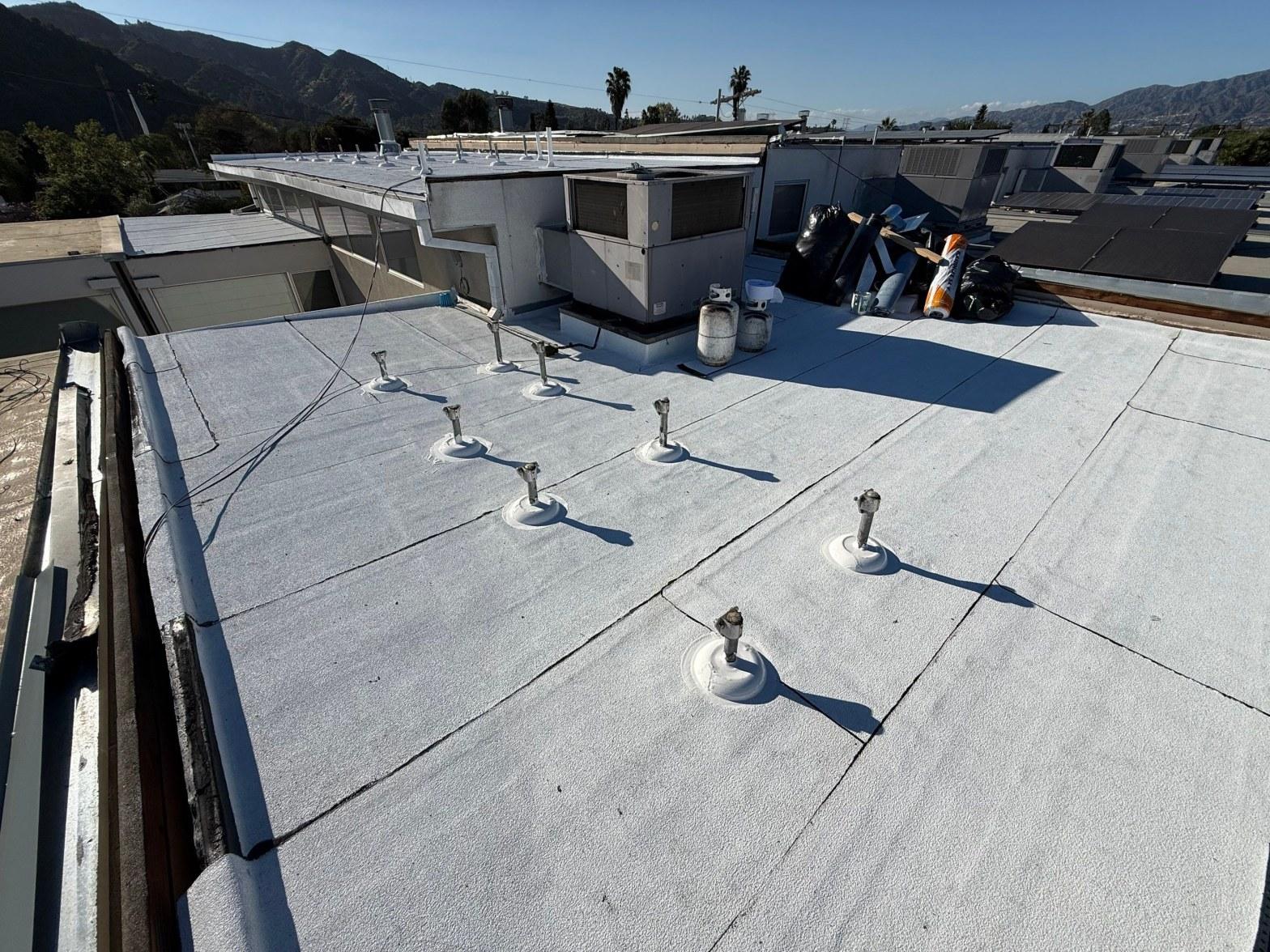
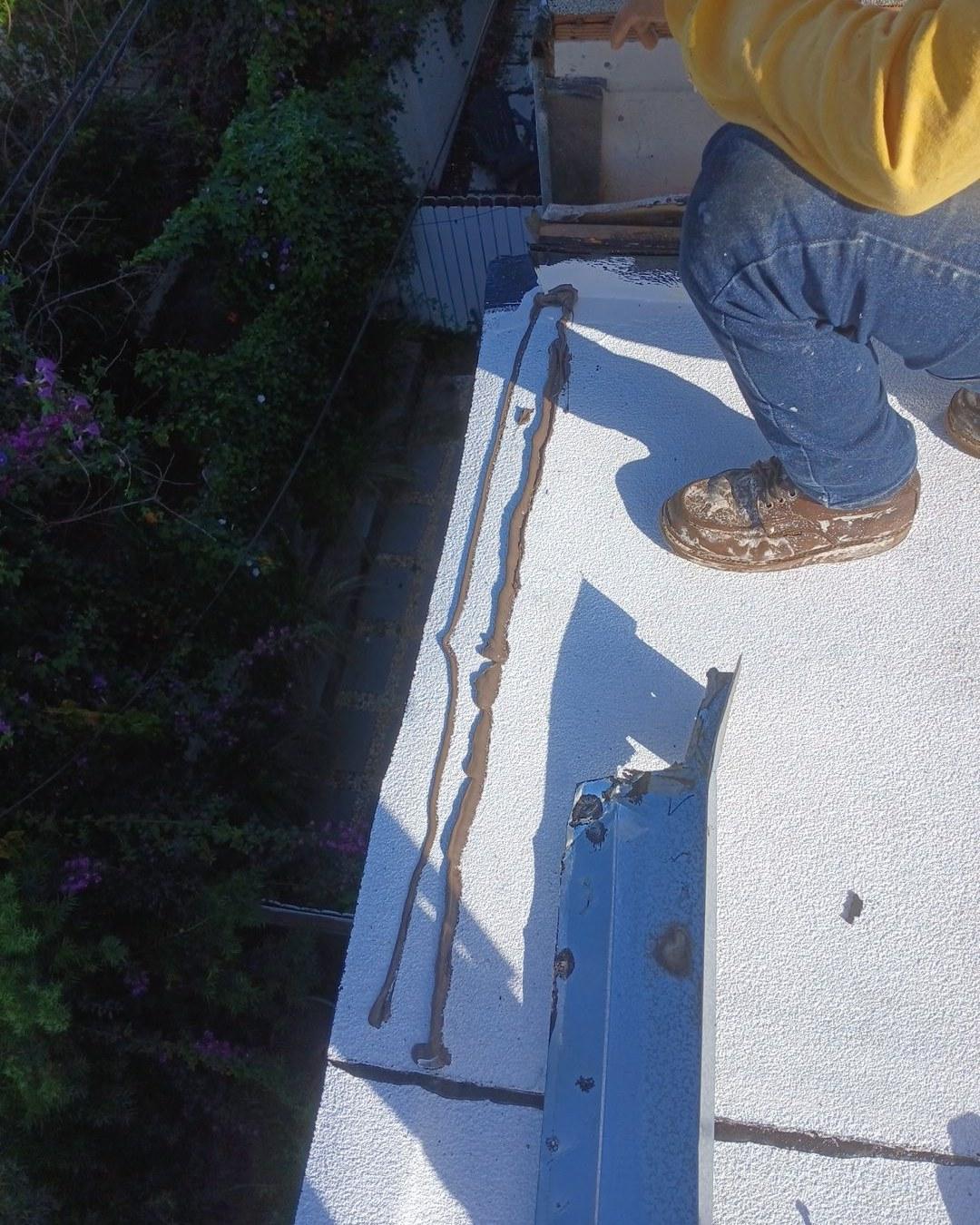
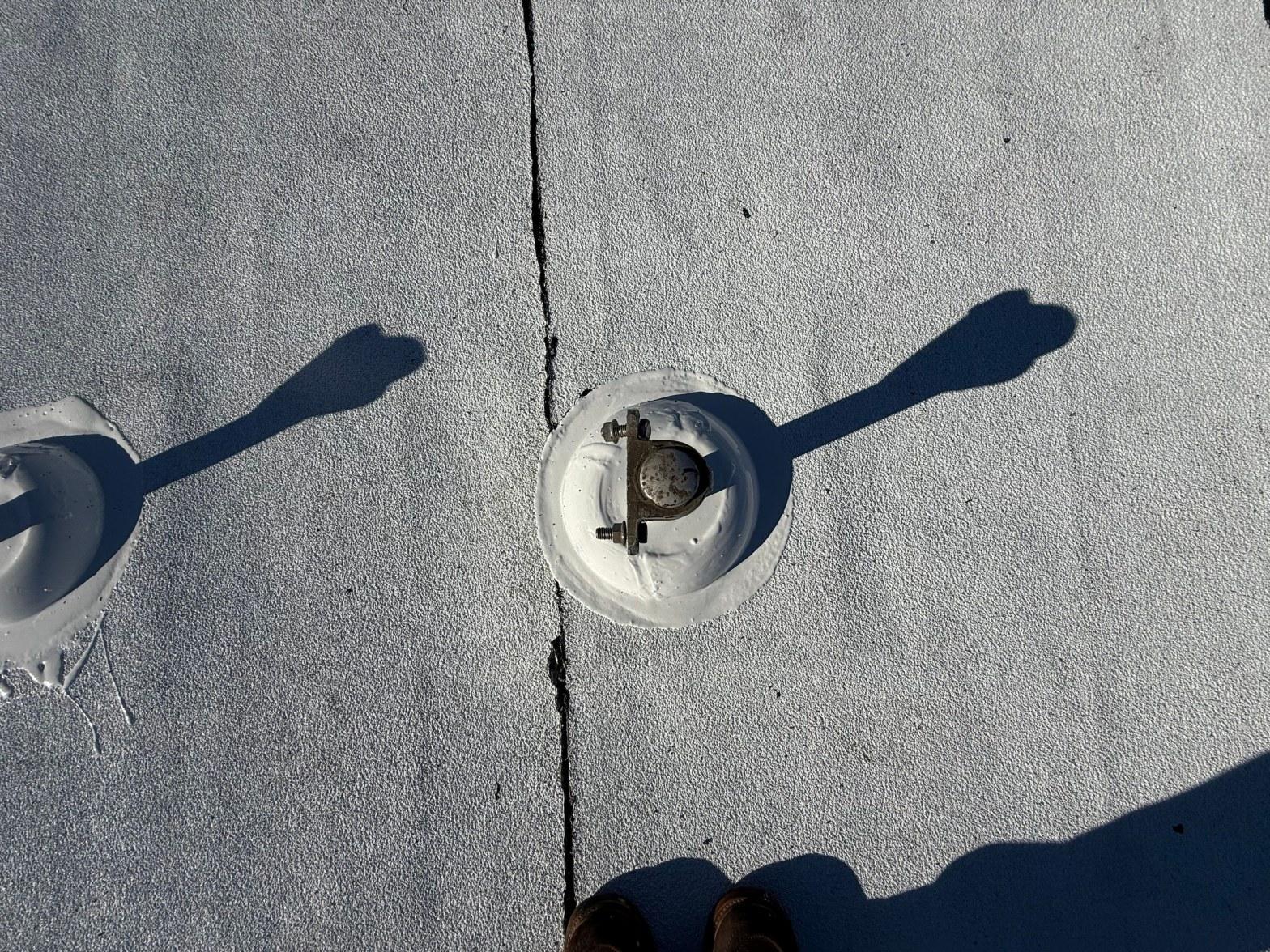
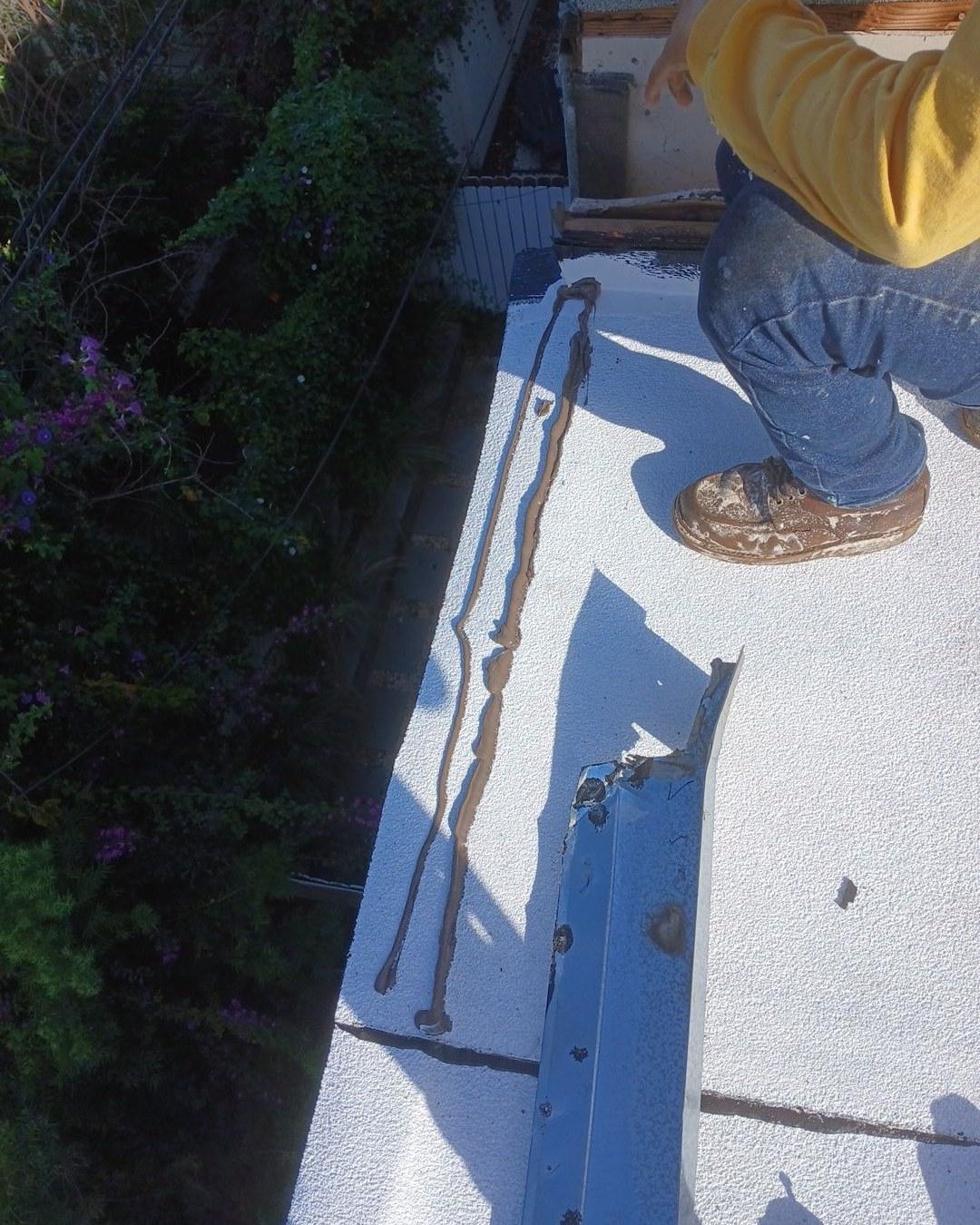
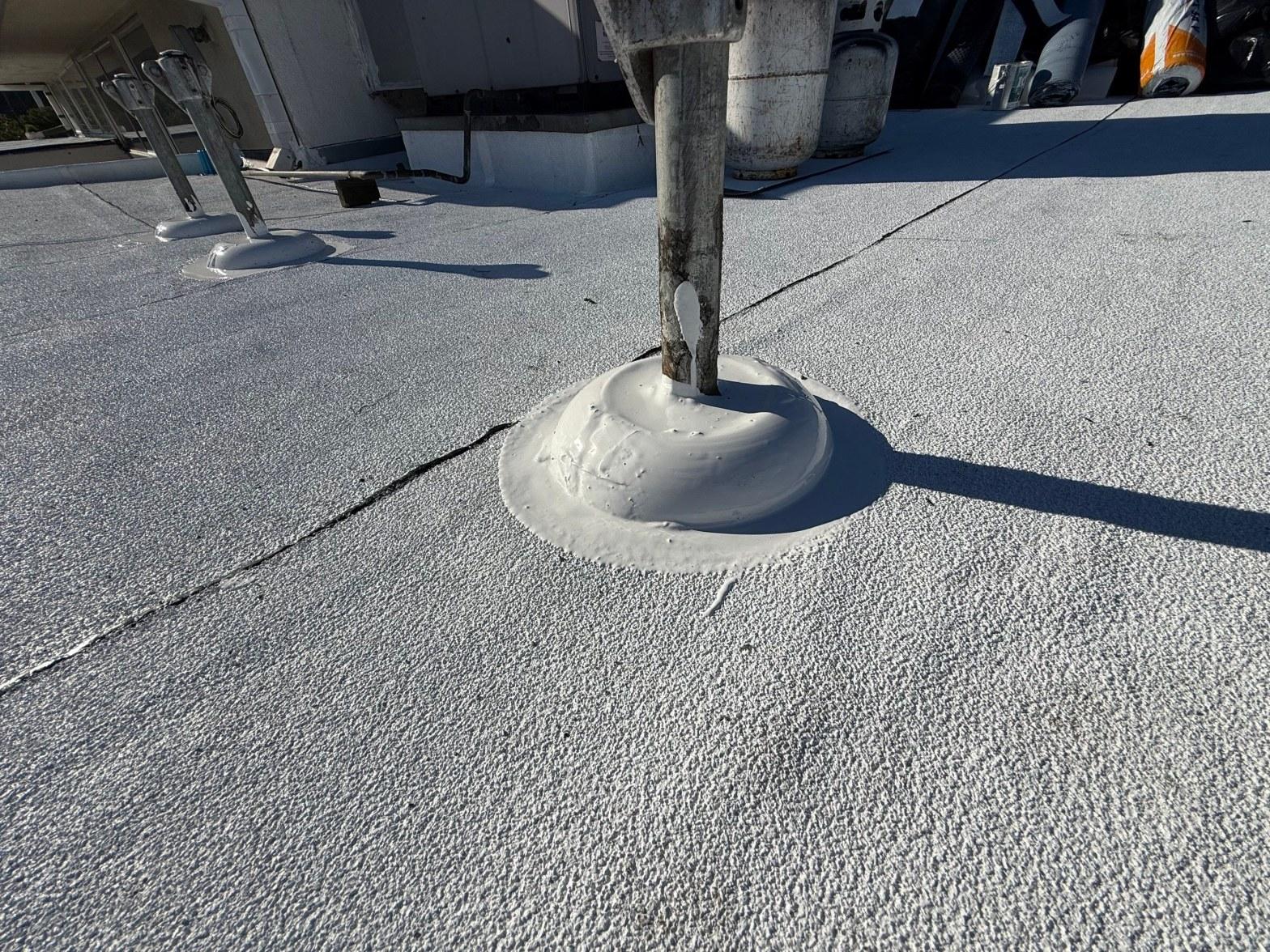
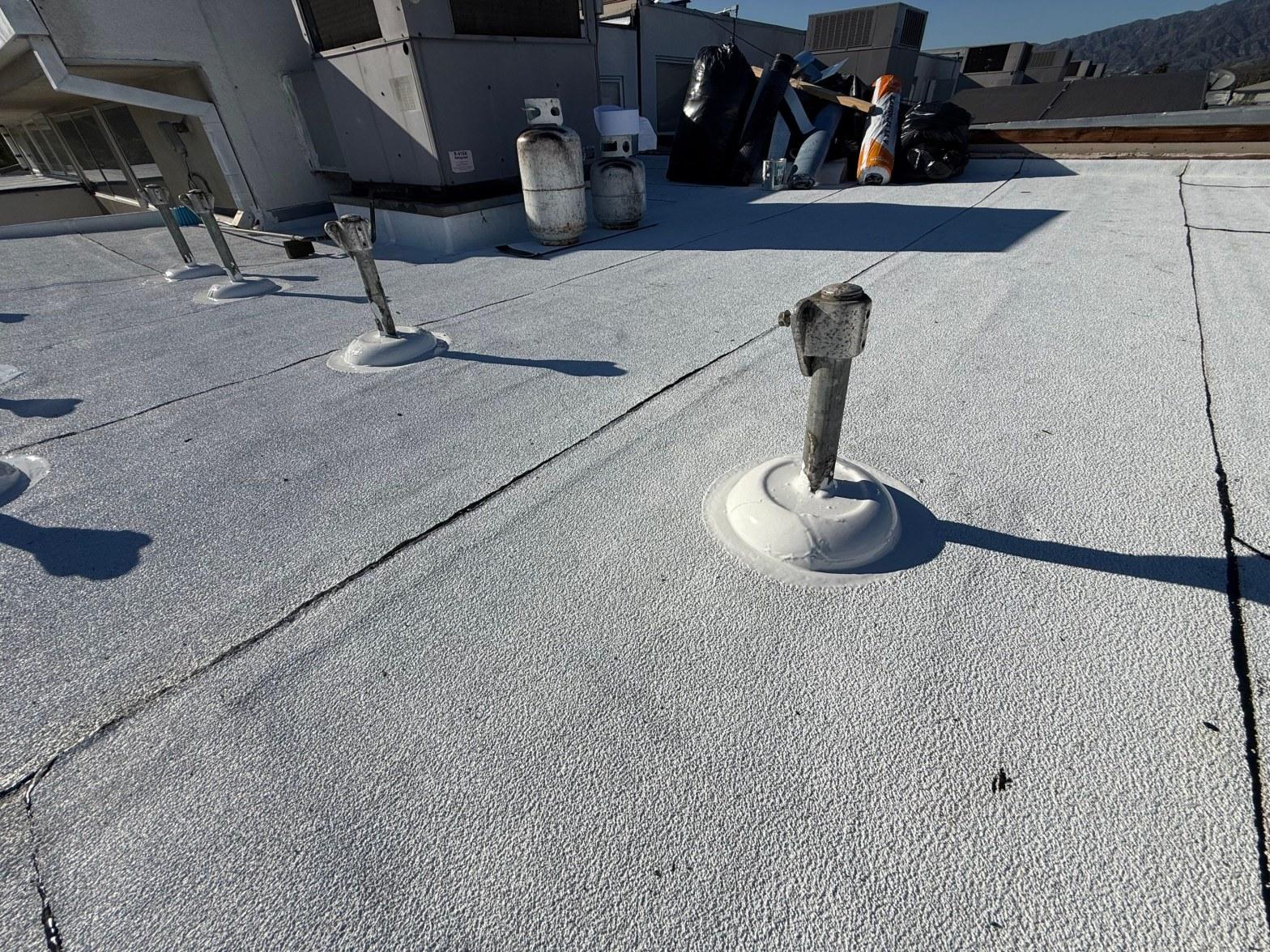
Every pipe and conduit penetration received individual mastic sealing before the foam coating was applied over the top, creating a continuous watertight collar. Working around that many penetrations on a single roof plane requires methodical sequencing: seal, let cure, then coat — not the other way around.
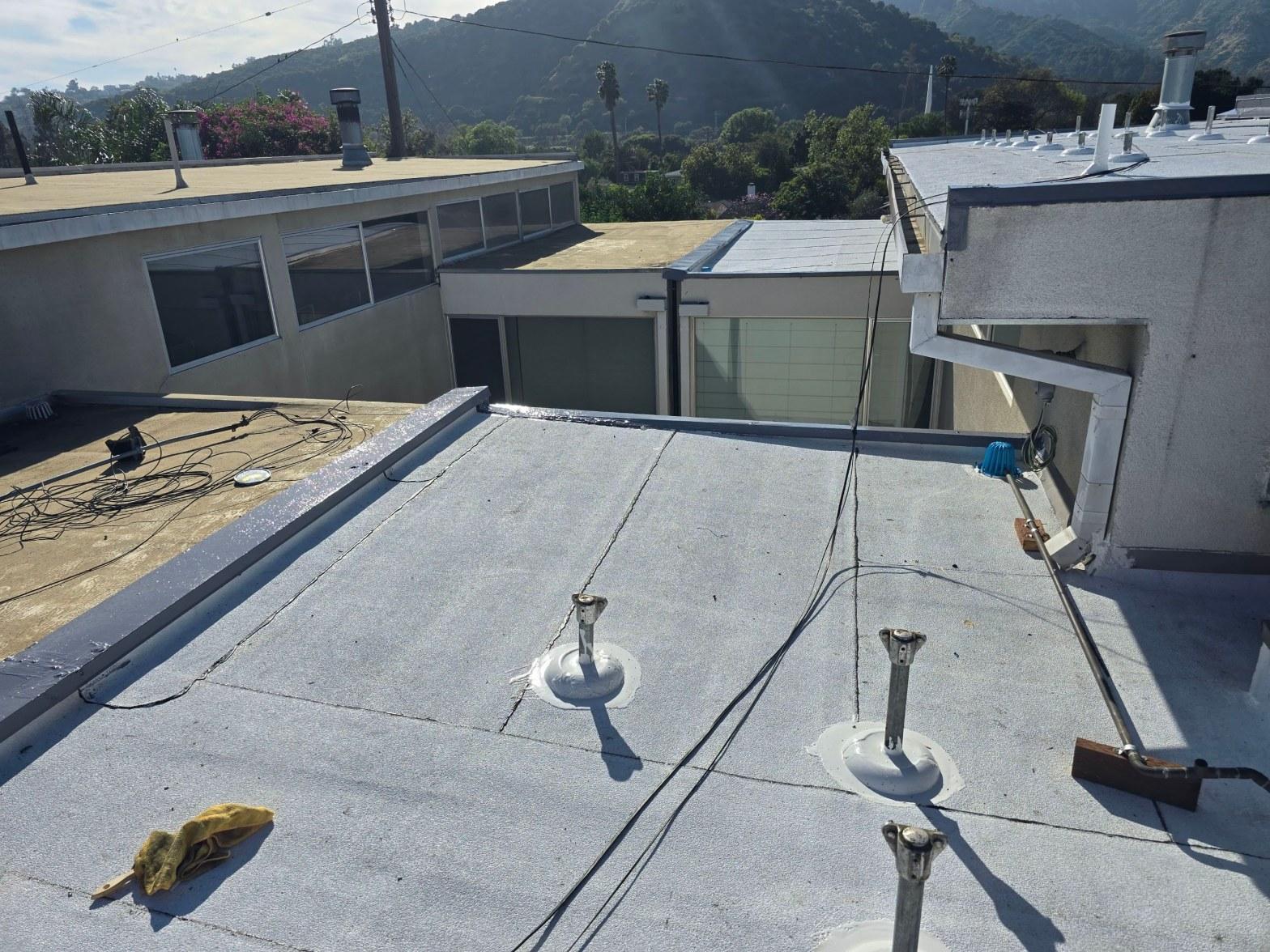
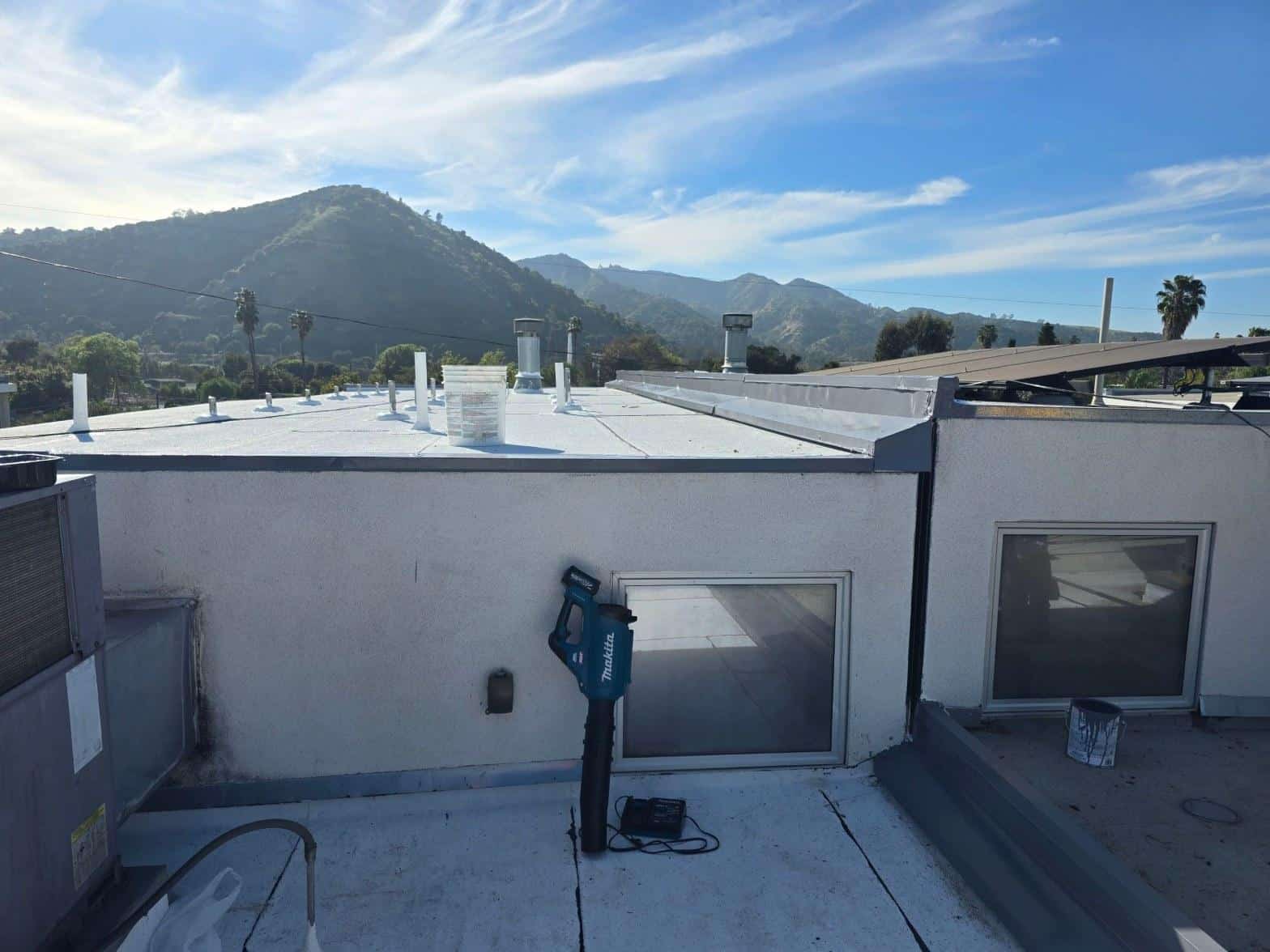
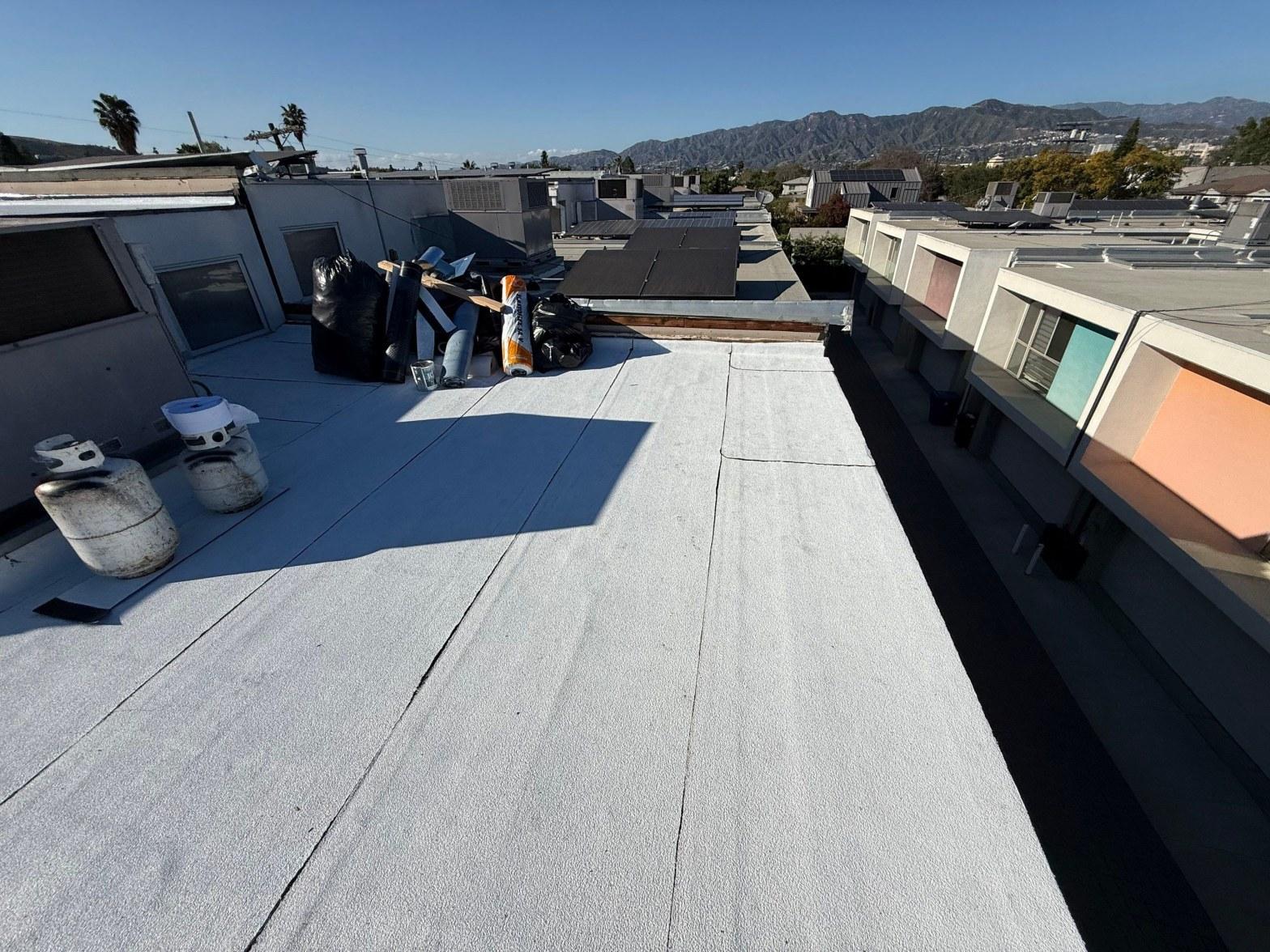
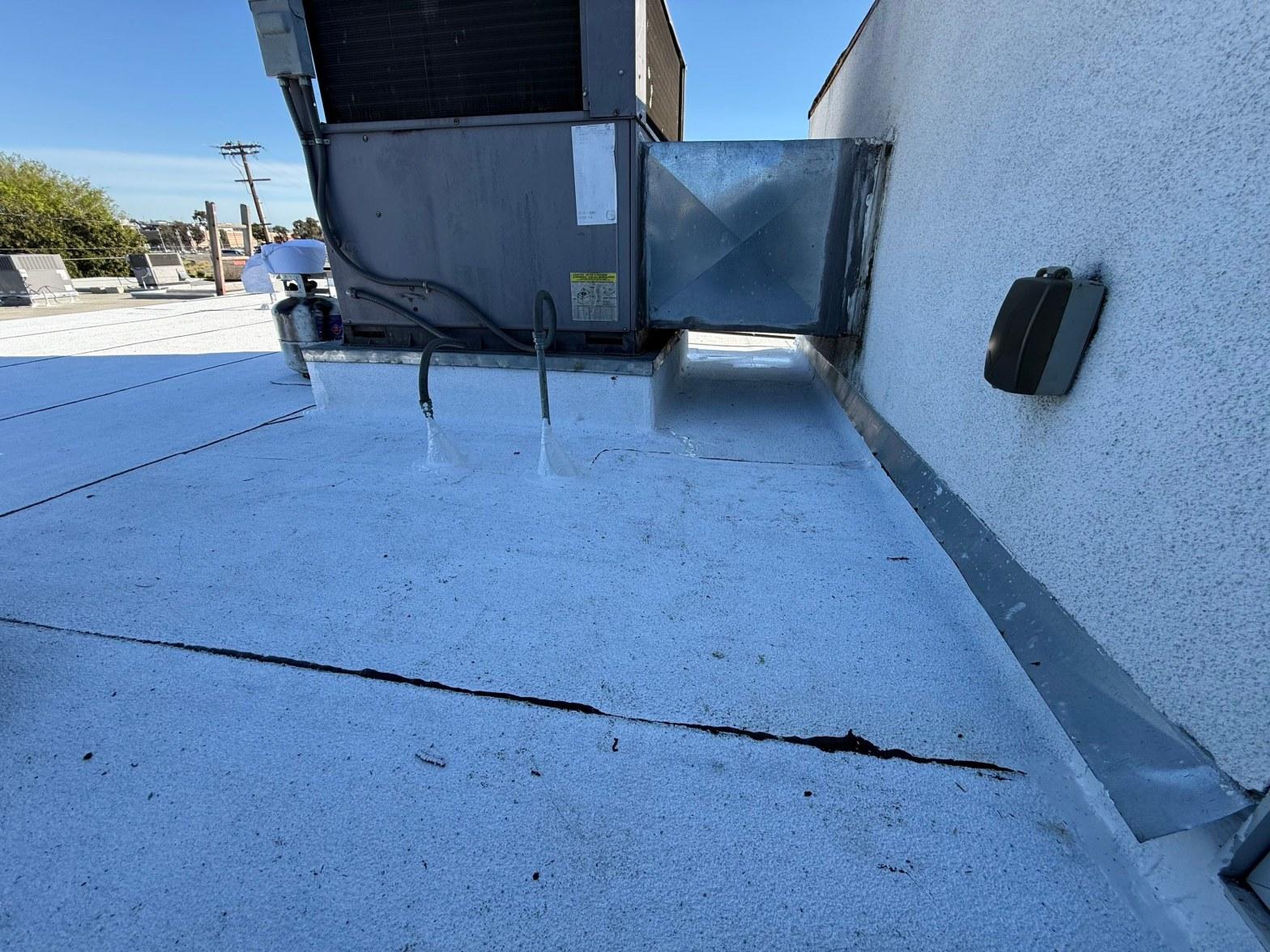
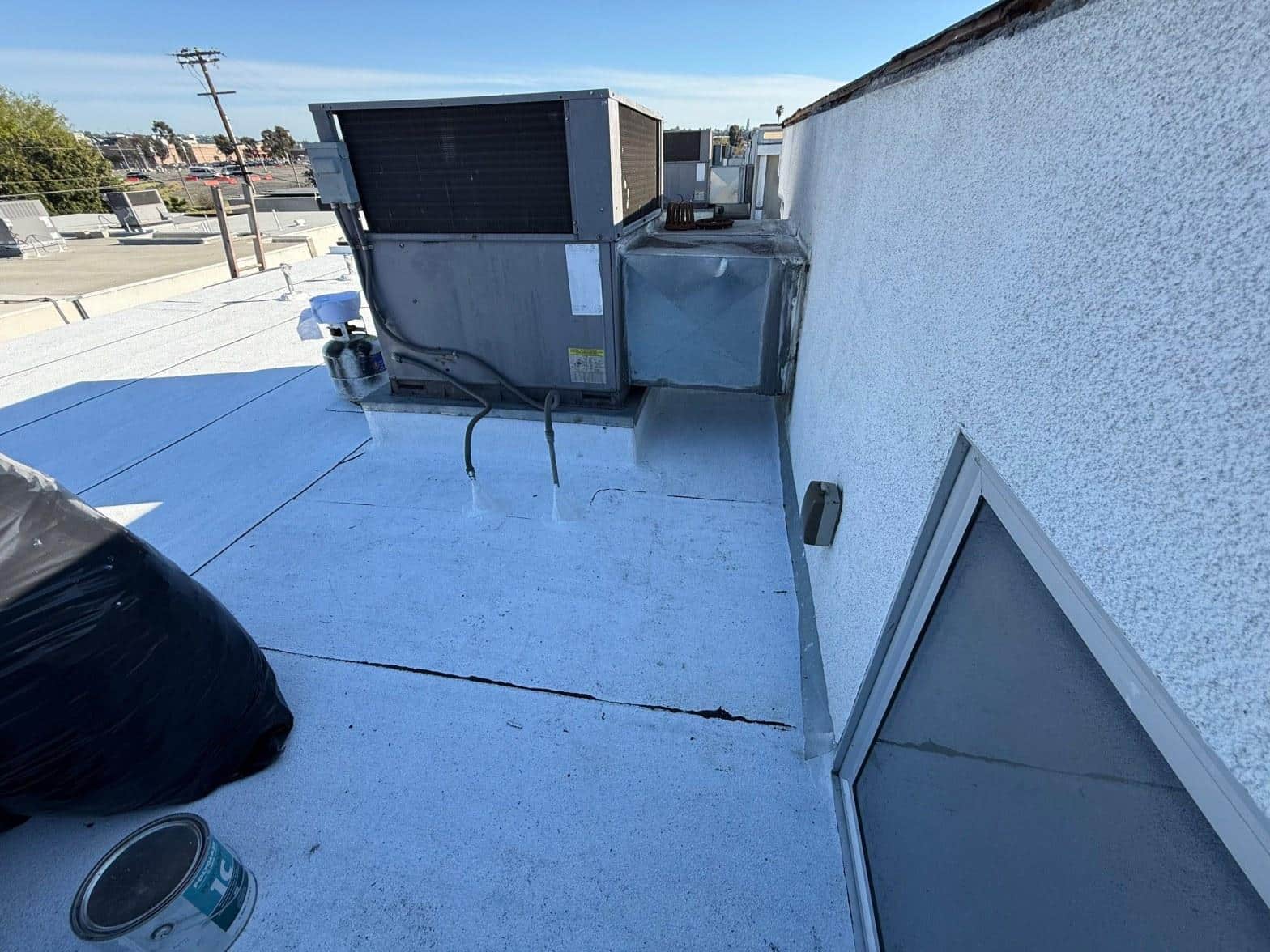
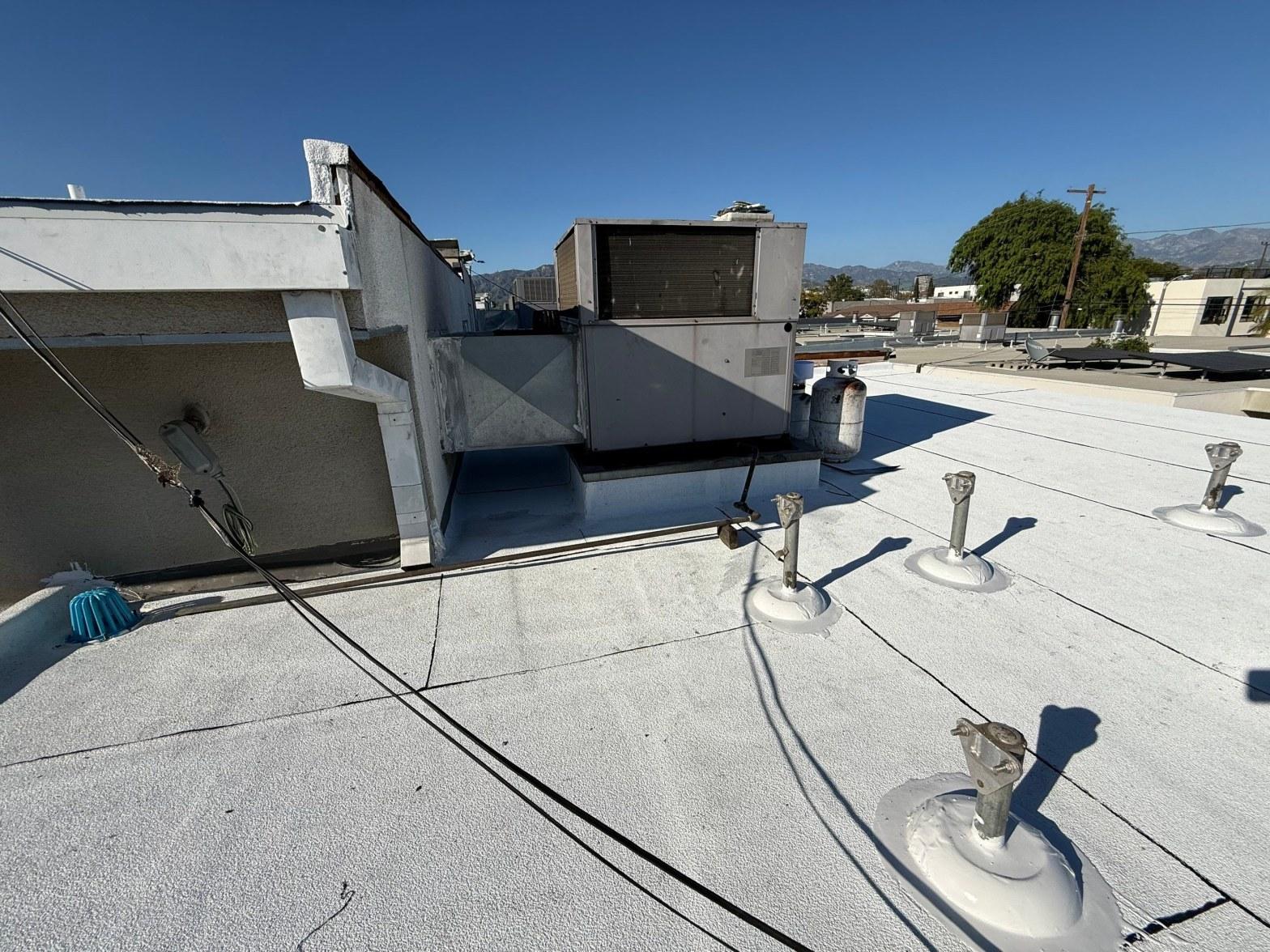
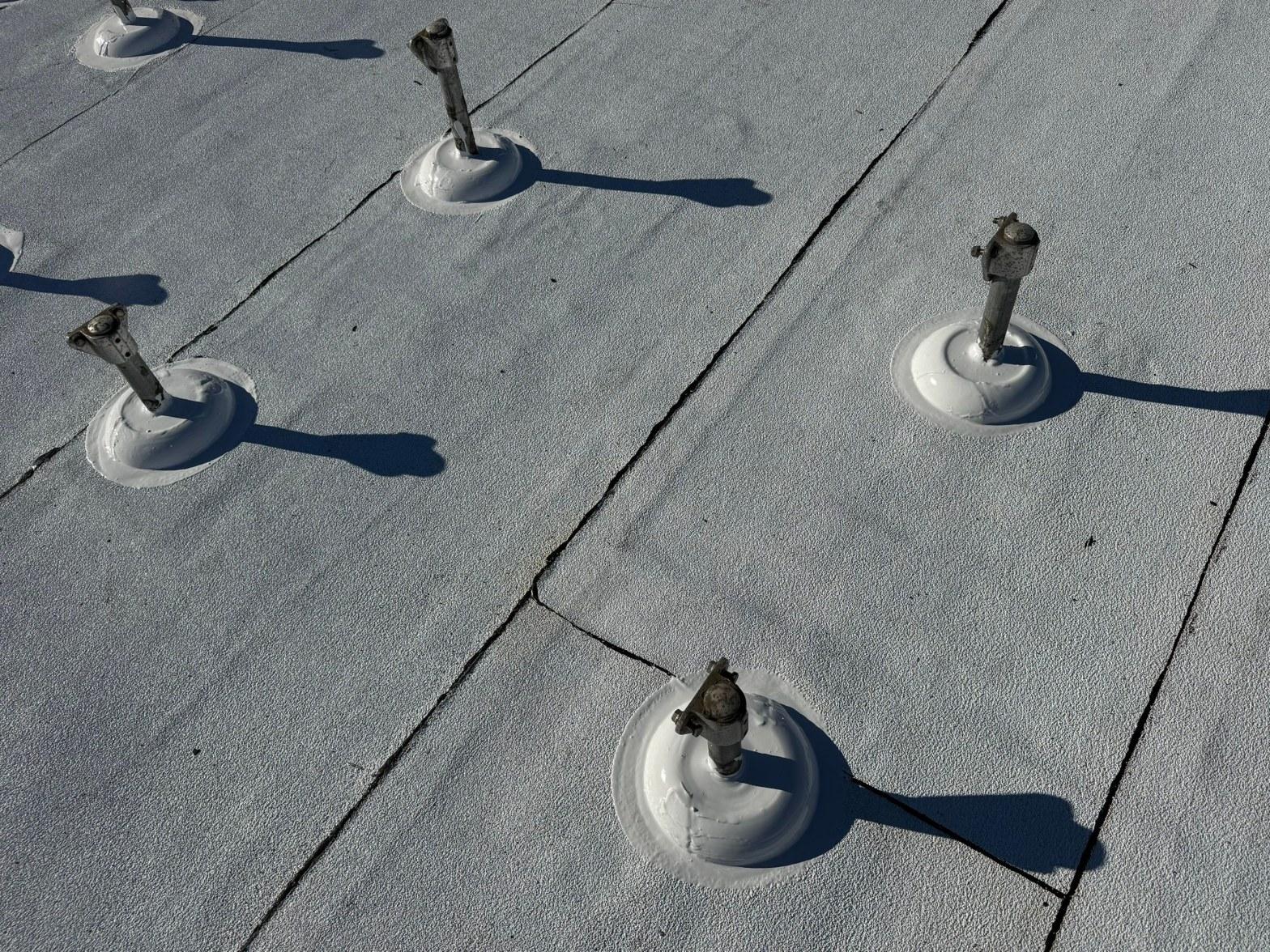
The photos show the result clearly. Each penetration now sits inside a raised foam dome that sheds water away from the pipe base rather than pooling around it. On a roof with this density of penetrations — roughly one every 8 to 10 linear feet across the main section — that detail work is what separates a coating job that lasts from one that fails in the first rainy season.
Across our foam coating projects on Los Angeles flat roofs, we see penetration failures account for more than 60% of recurring leak callbacks on roofs that were previously coated without proper base sealing.
What Condition Was the Roof In Before We Started?
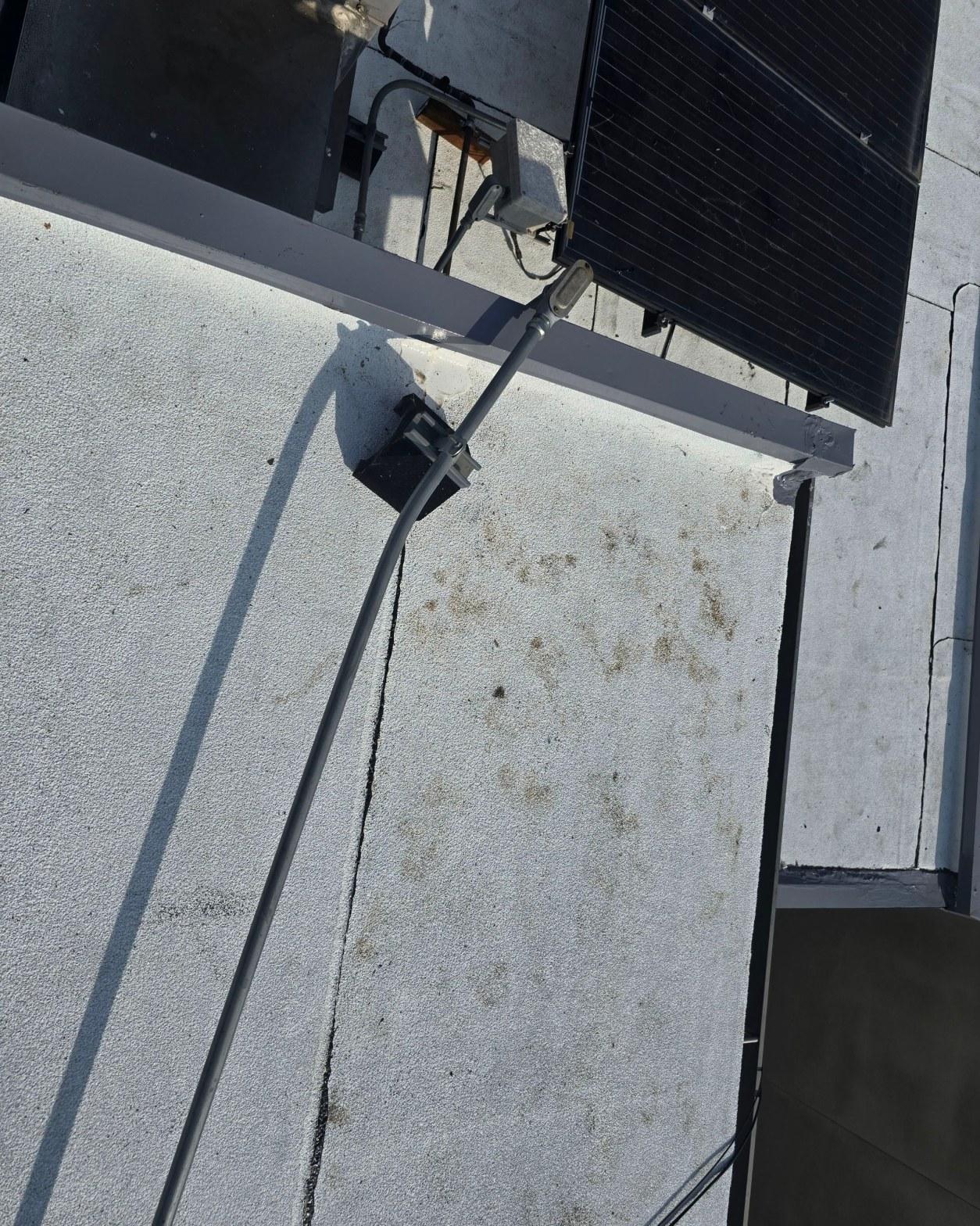
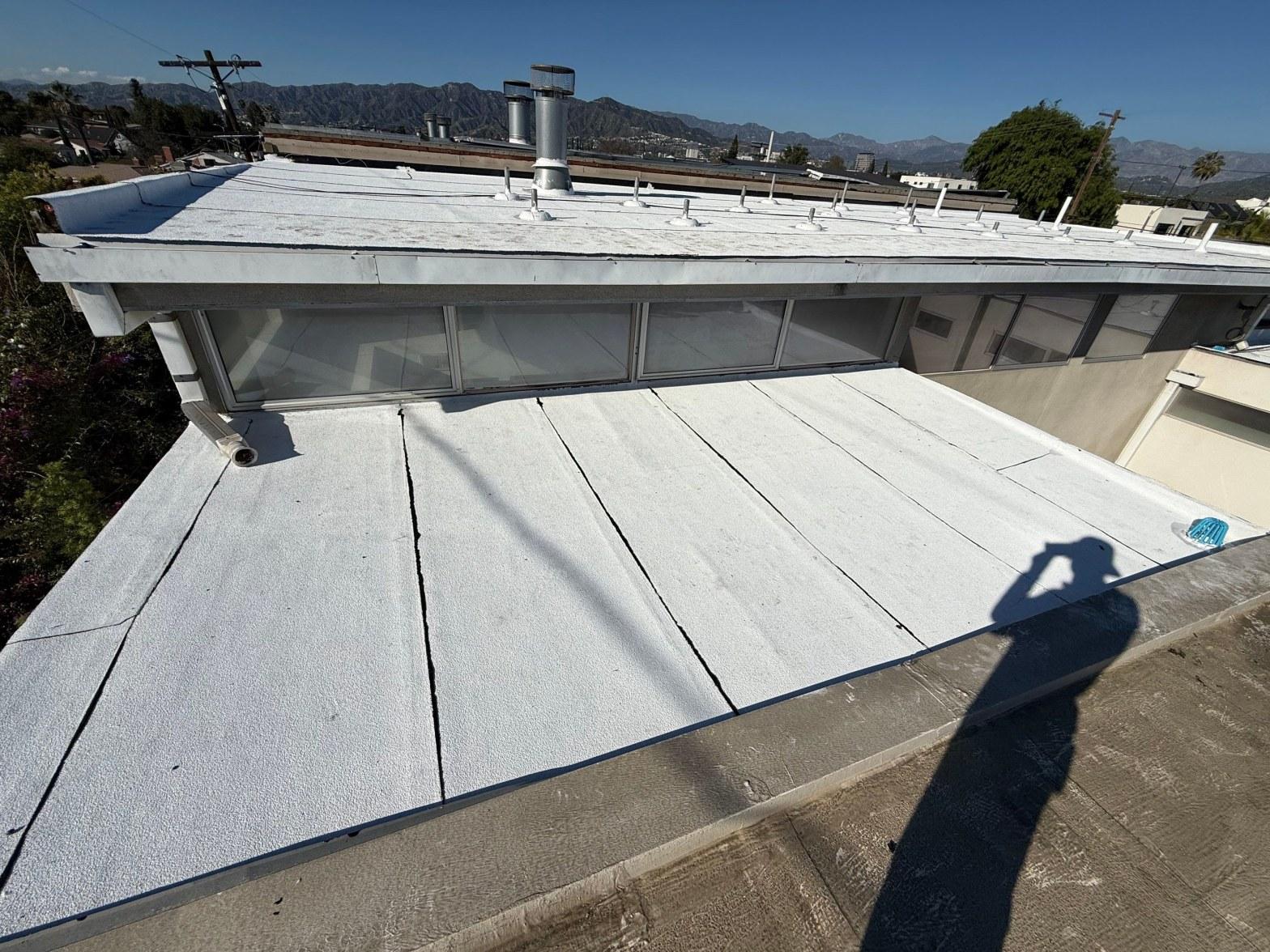
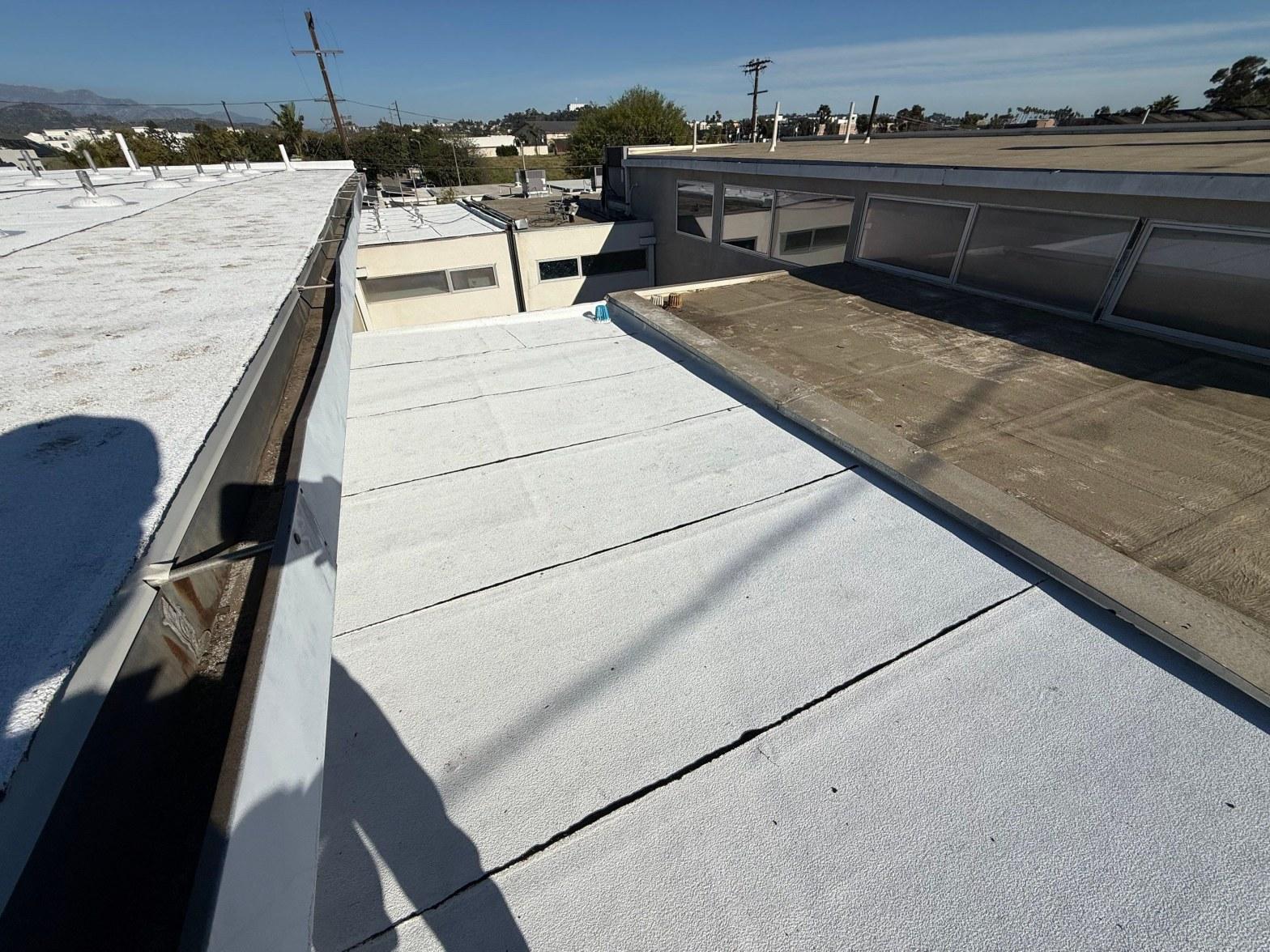
The existing roof membrane showed visible panel seam lines and surface cracking consistent with a torch-down or built-up system that had been in service for at least 10 to 15 years. Those seams are visible in the inline photo above — running in a grid pattern across the field of the roof — and represented the secondary leak risk after the penetrations.
Foam coating bridges those seams by bonding to the substrate as a continuous film rather than a lap-seamed sheet. As of 2026, California’s Title 24 cool roof requirements mandate a minimum solar reflectance of 0.63 and thermal emittance of 0.75 for low-slope commercial roofs — white foam coatings typically achieve solar reflectance values of 0.80 or higher, putting this roof comfortably above the threshold.
The skylight curbs visible in the inline photo also received coating up the vertical face, eliminating the gap where curb flashings commonly delaminate under Los Angeles’s temperature swings, which can range from 45°F winter nights to over 100°F summer days according to NWS Los Angeles.
Why Foam Coating Instead of a Full Replacement?
A foam coating restores waterproofing and improves energy performance at roughly 30 to 50% of the cost of a full membrane tear-off and replacement, provided the existing substrate is structurally sound. This roof qualified. The deck showed no soft spots, the existing membrane had not delaminated in the field, and the penetrations — while unsealed — had not yet caused subsurface saturation severe enough to compromise adhesion.
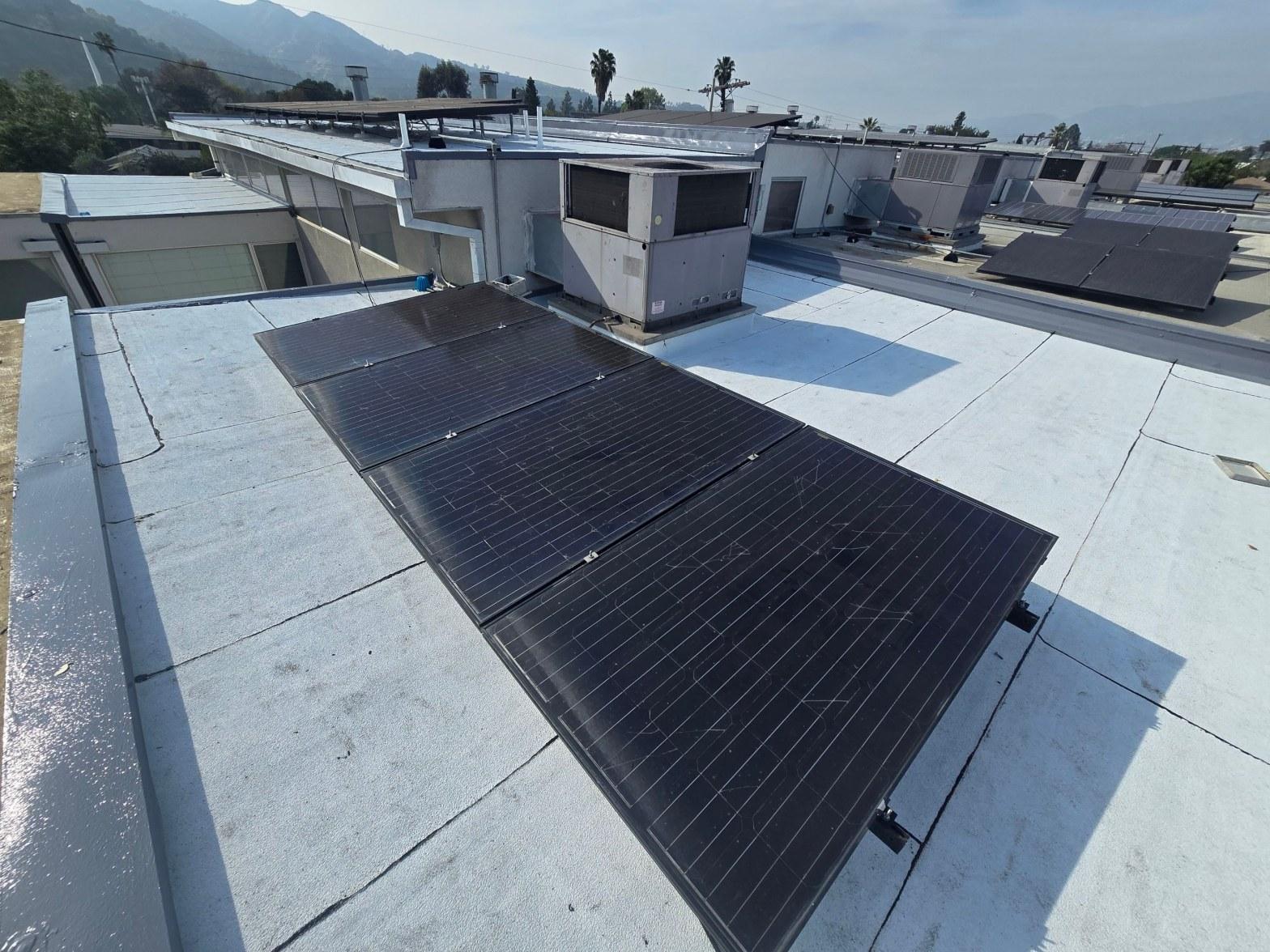
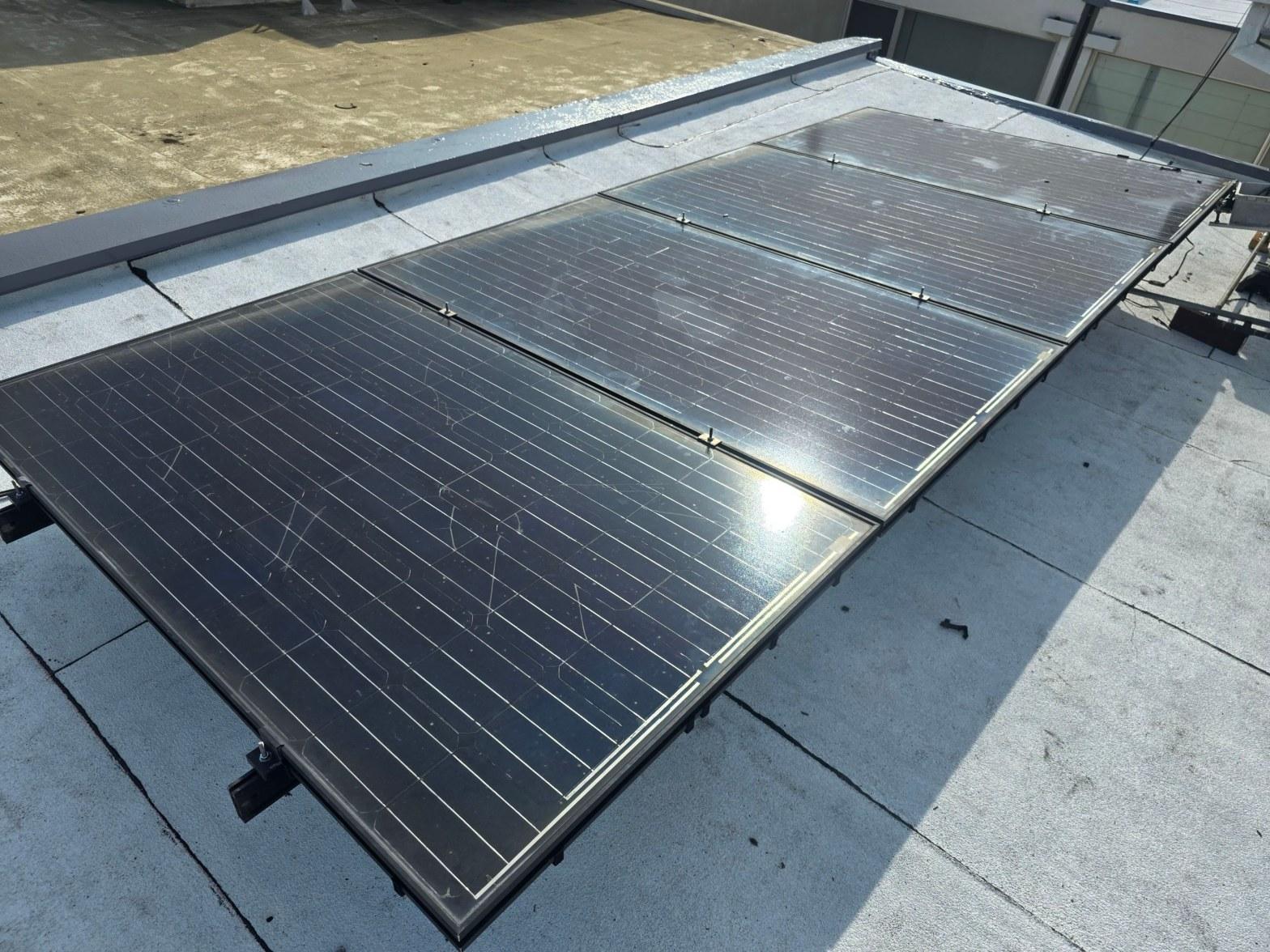
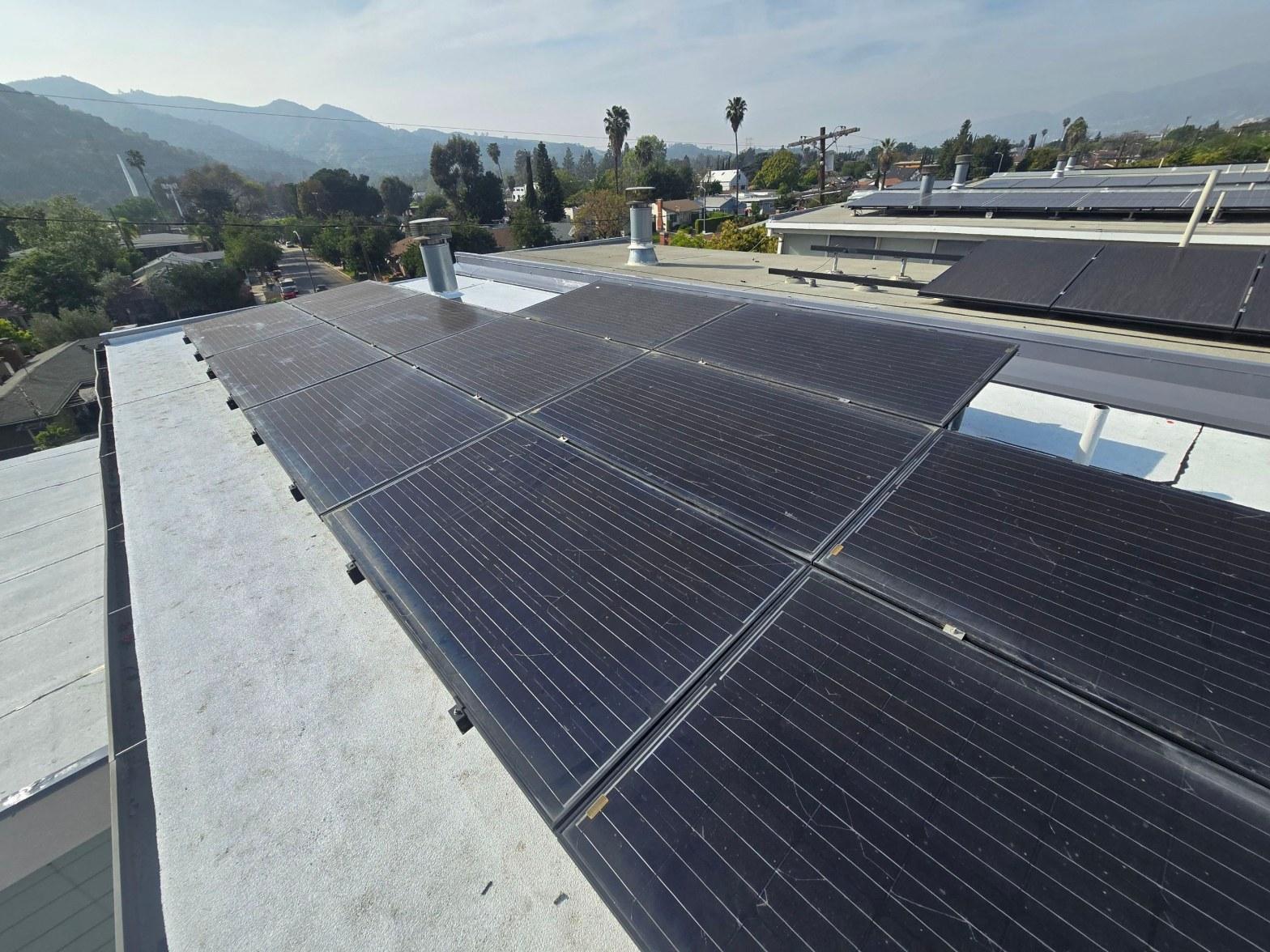
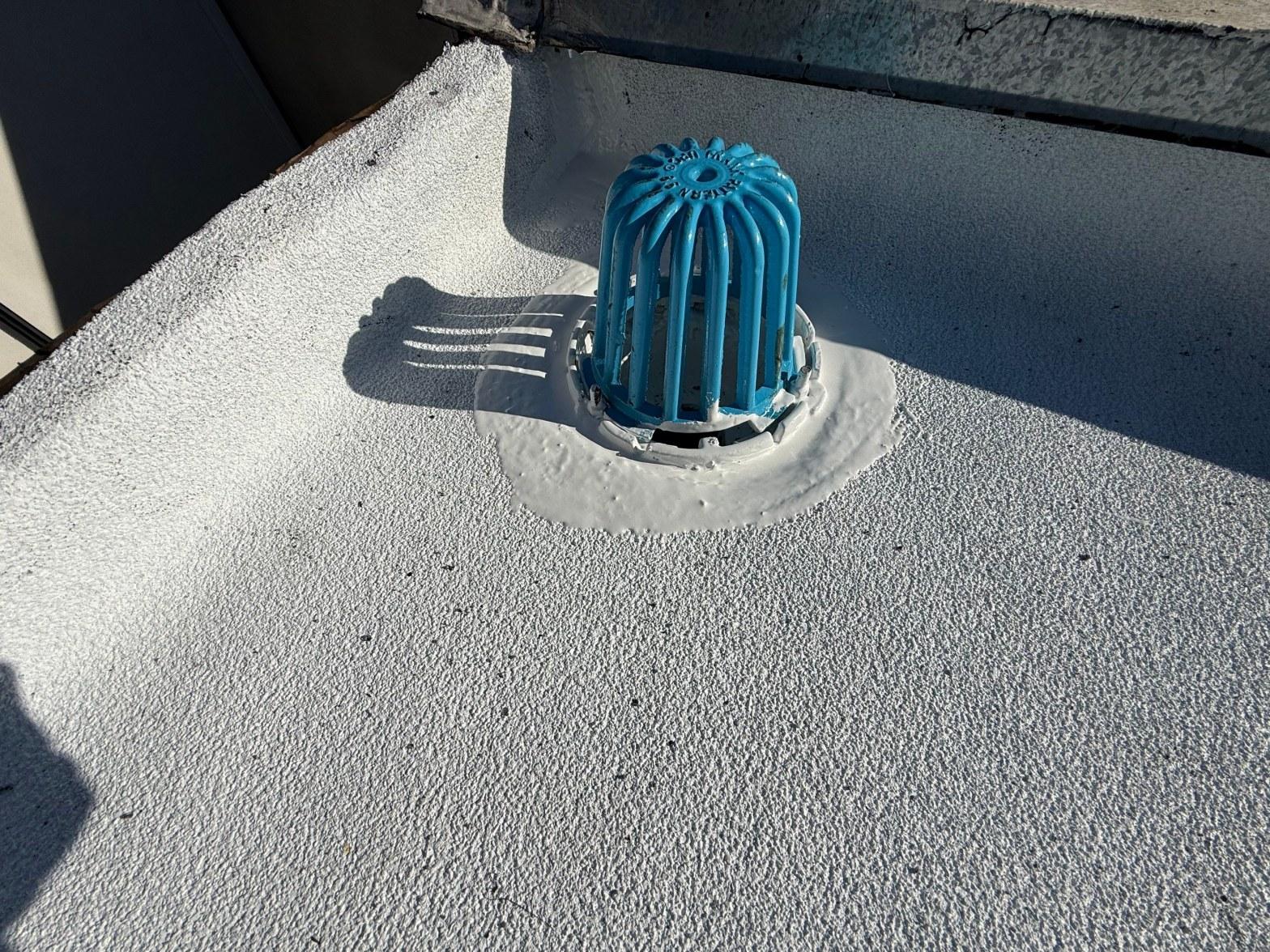
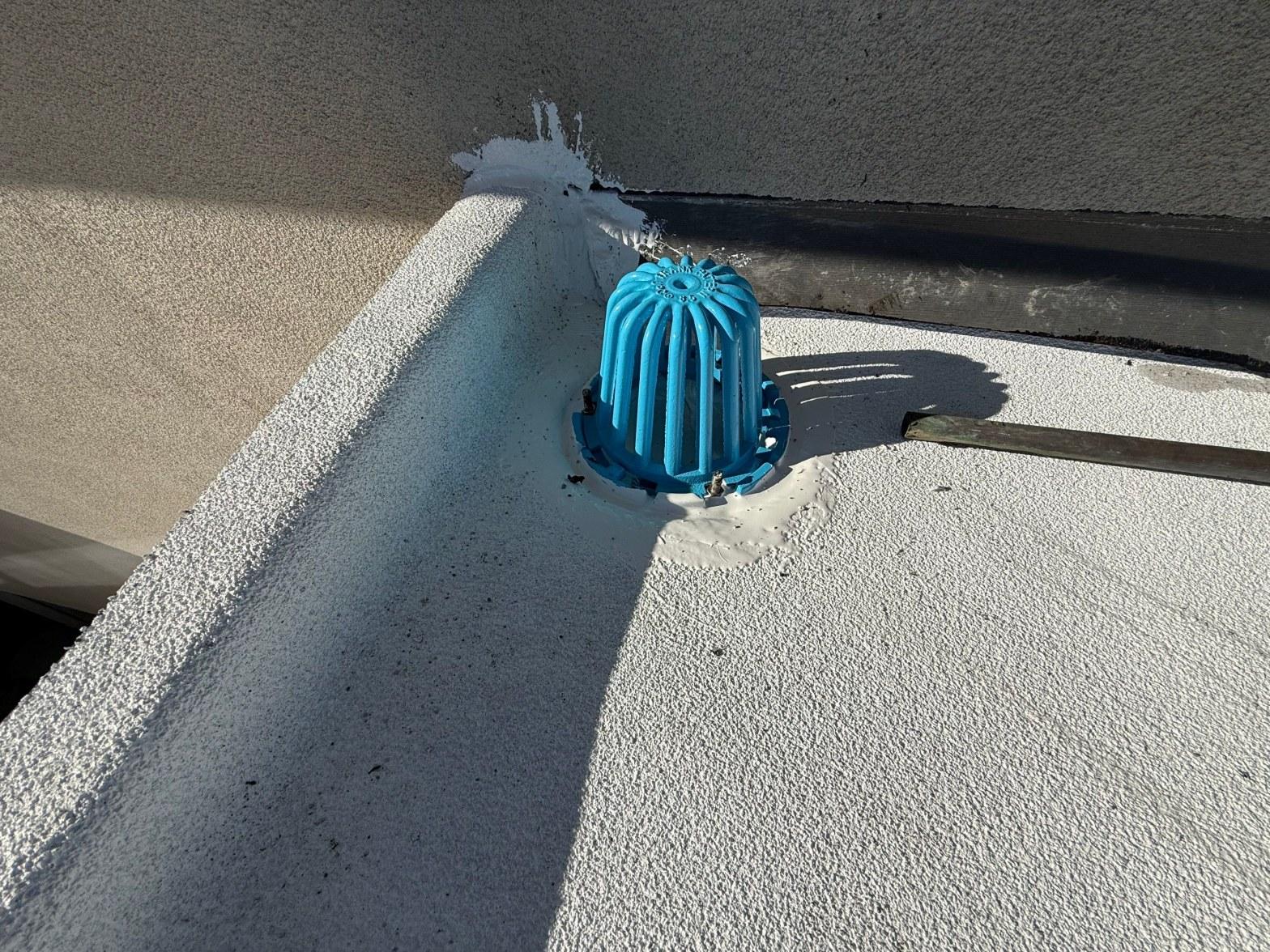
The finished surface you see in the photos is bright white, seamless from parapet to parapet, and fully encapsulates every penetration that previously represented an open risk. For a commercial property in a dense urban neighborhood, that also means reduced urban heat island contribution — a real secondary benefit in a city where rooftop temperatures regularly exceed air temperature by 40°F or more on summer afternoons.
Licensed by the California Contractors State License Board (CSLB), Roof Replacement Inc performs this type of coating work on commercial flat roofs throughout the Los Angeles basin.
Ready to Coat Your Flat Roof?
If your flat commercial or residential roof has aging penetrations, visible seam cracking, or a surface that’s simply past its reflective prime, foam coating is worth a direct conversation. Call Roof Replacement Inc for a roof assessment and written quote. We’ll tell you whether your substrate is a candidate for coating or whether a full replacement is the more cost-effective path — and we’ll back that recommendation with what we actually see on your roof, not a sales script.


