

What Did This Project Involve?
This was a full torch-down flat roof replacement on a residential property at 3696 Berry Dr, Los Angeles, CA 91604 — a home with a low-slope section adjoining a steeper asphalt shingle slope. The existing flat roof had reached the end of its serviceable life: the old skylight curb was sealed with degraded caulk, the membrane showed visible surface cracking and separation at the seams, and the transition flashing between the flat section and the shingle slope had lifted at multiple points.
The homeowner’s goal was a complete system replacement — not a patch job — that would deliver a clean, watertight surface and address the problematic skylight opening once and for all.
Project Gallery

What Did We Find When We Stripped the Old Roof?
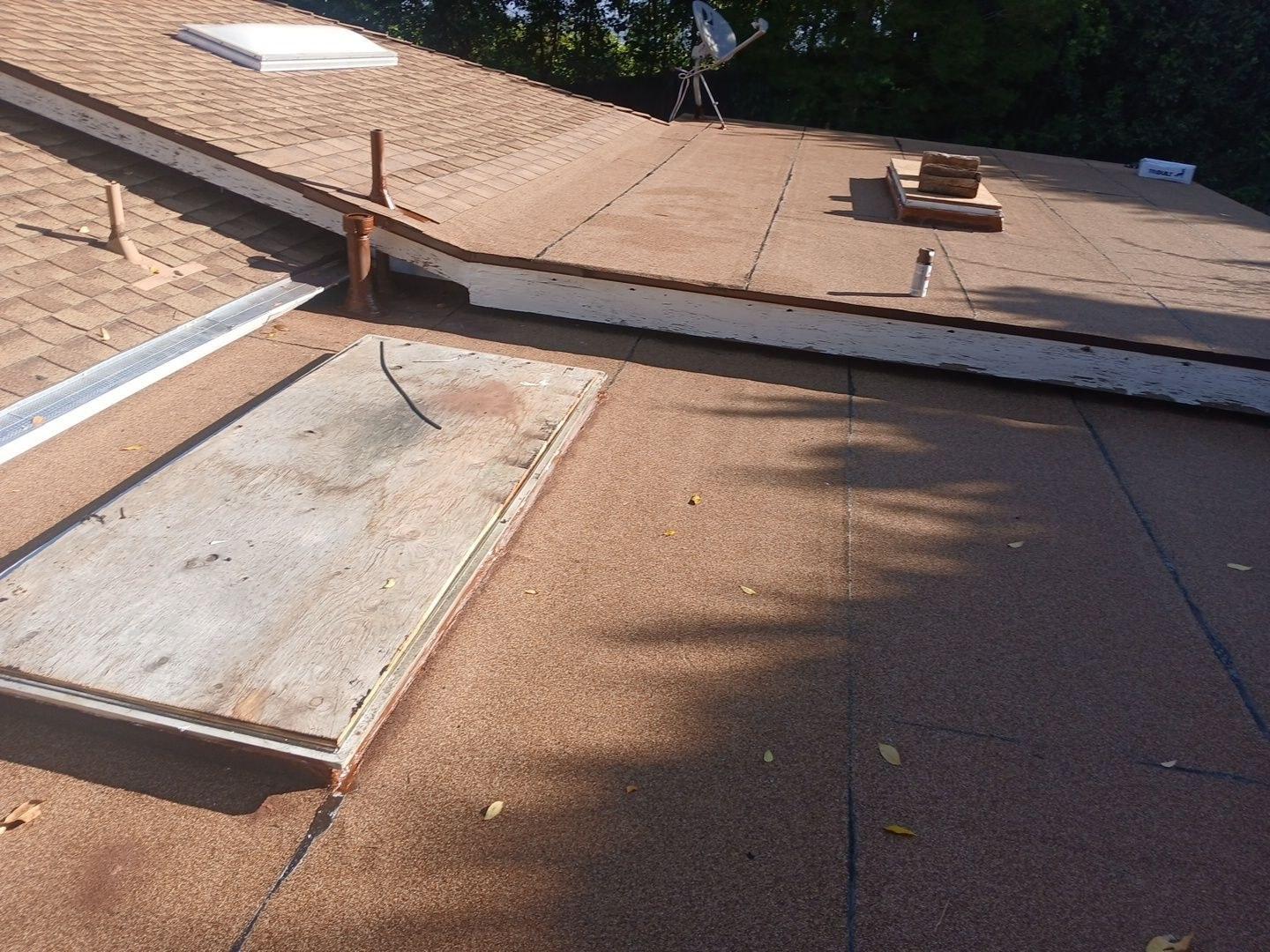
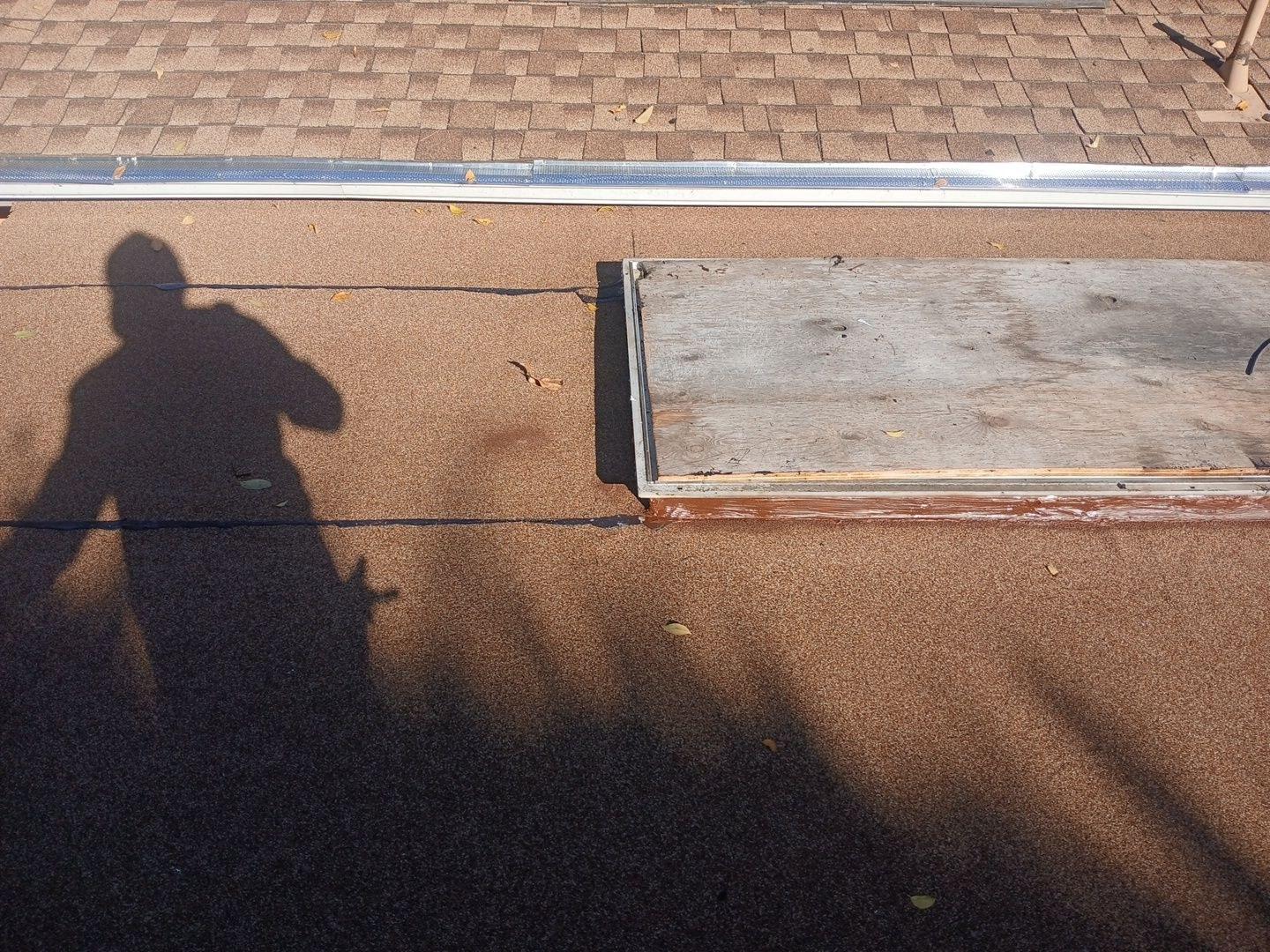
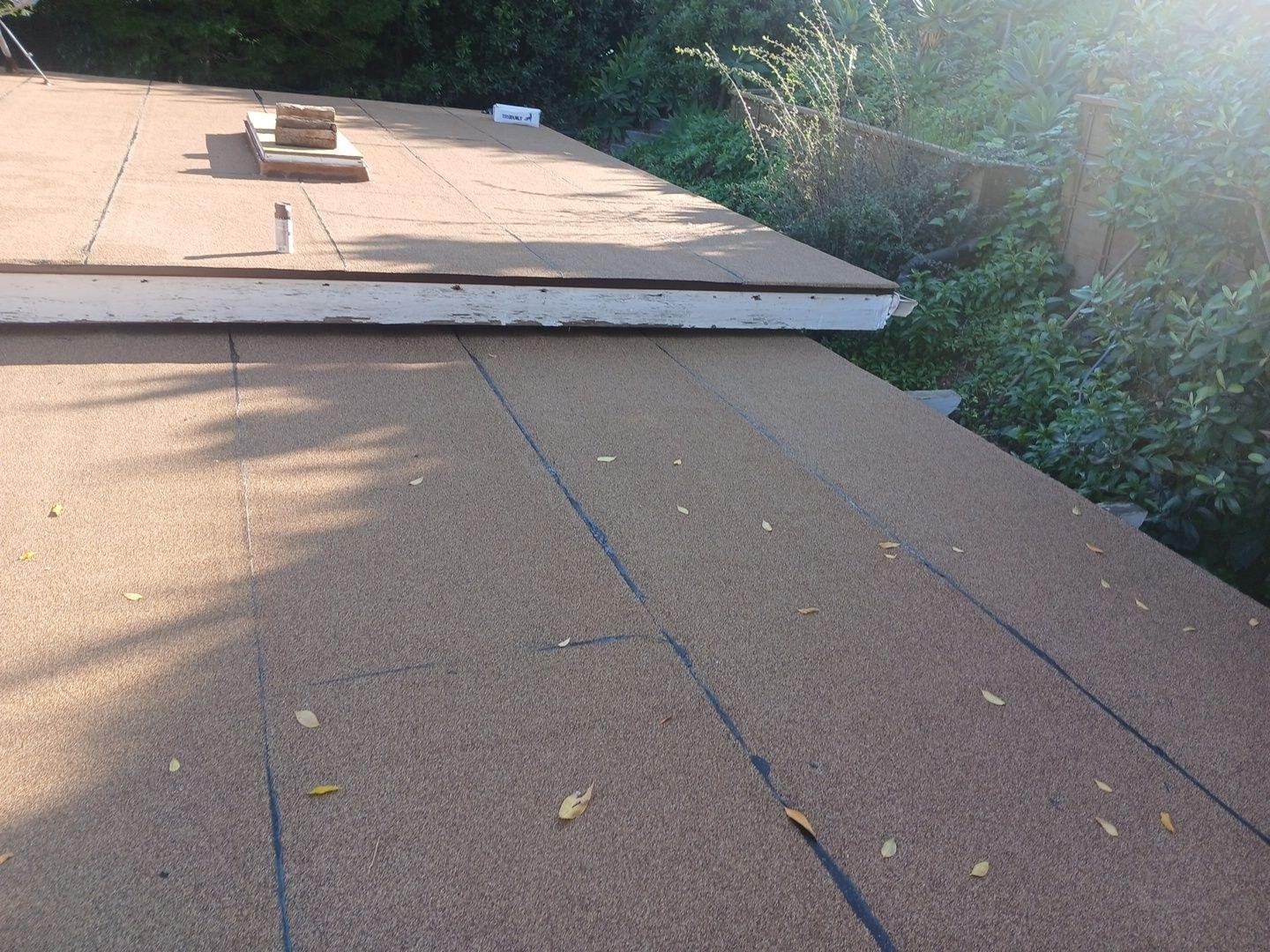
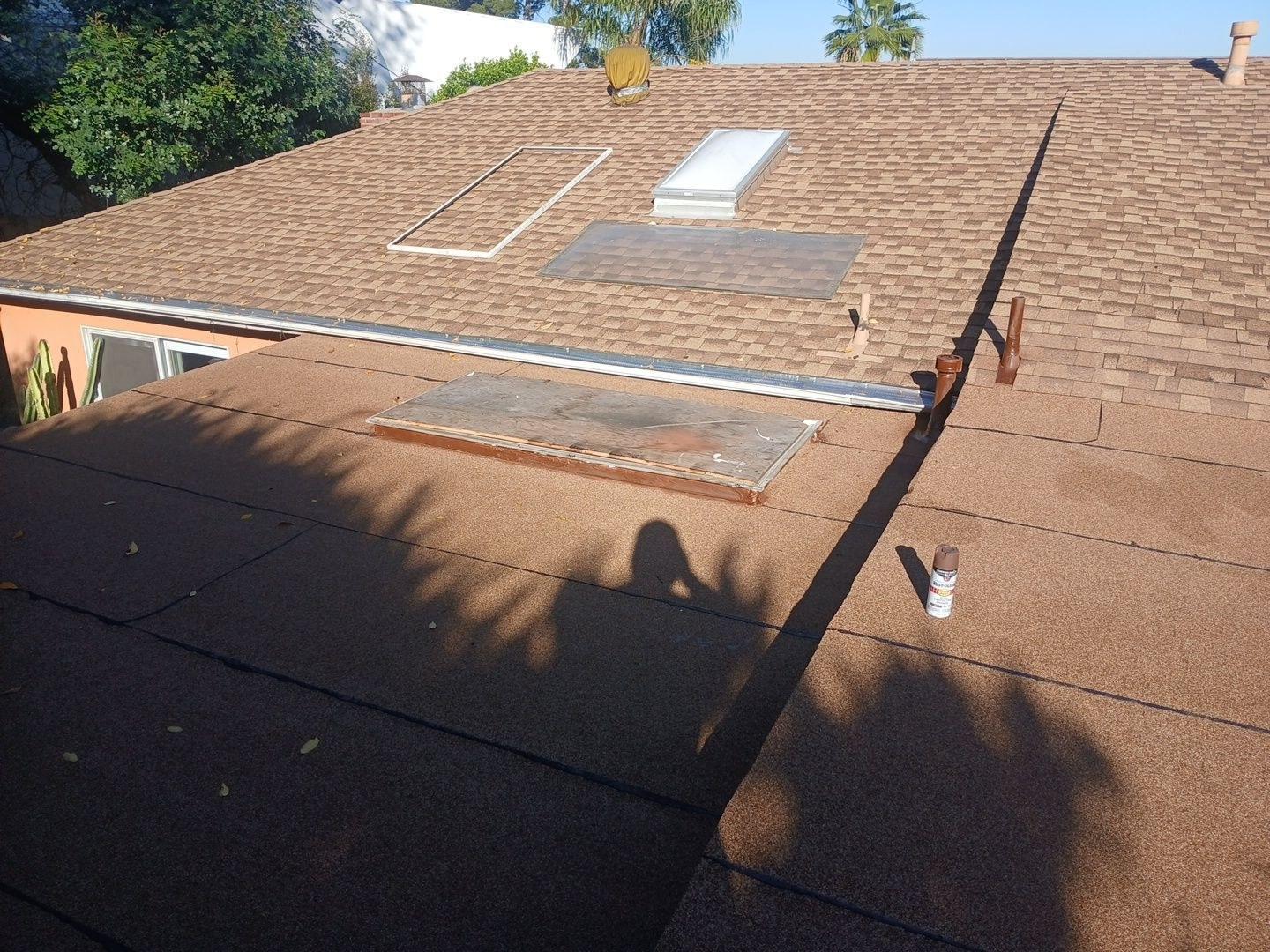
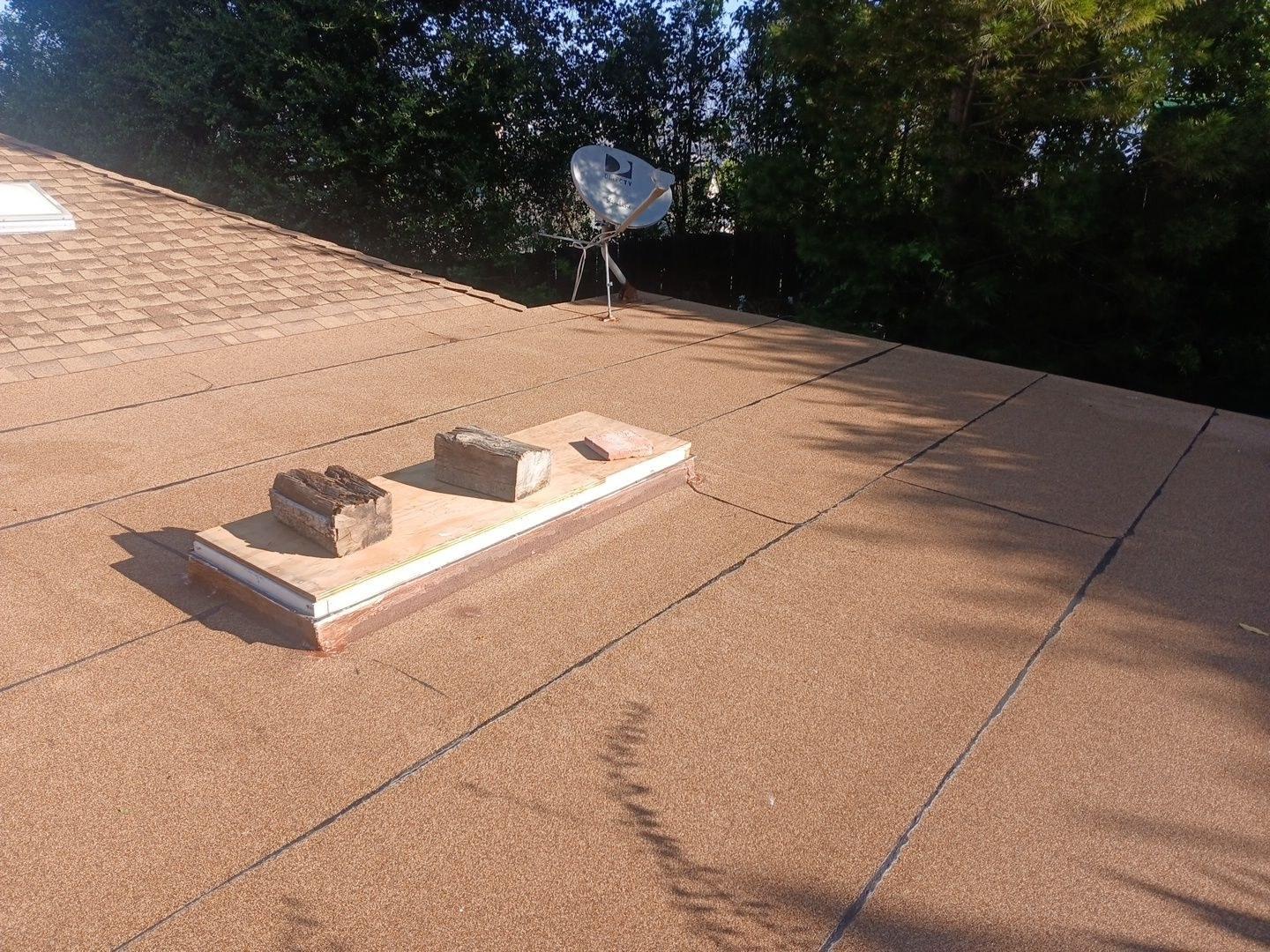
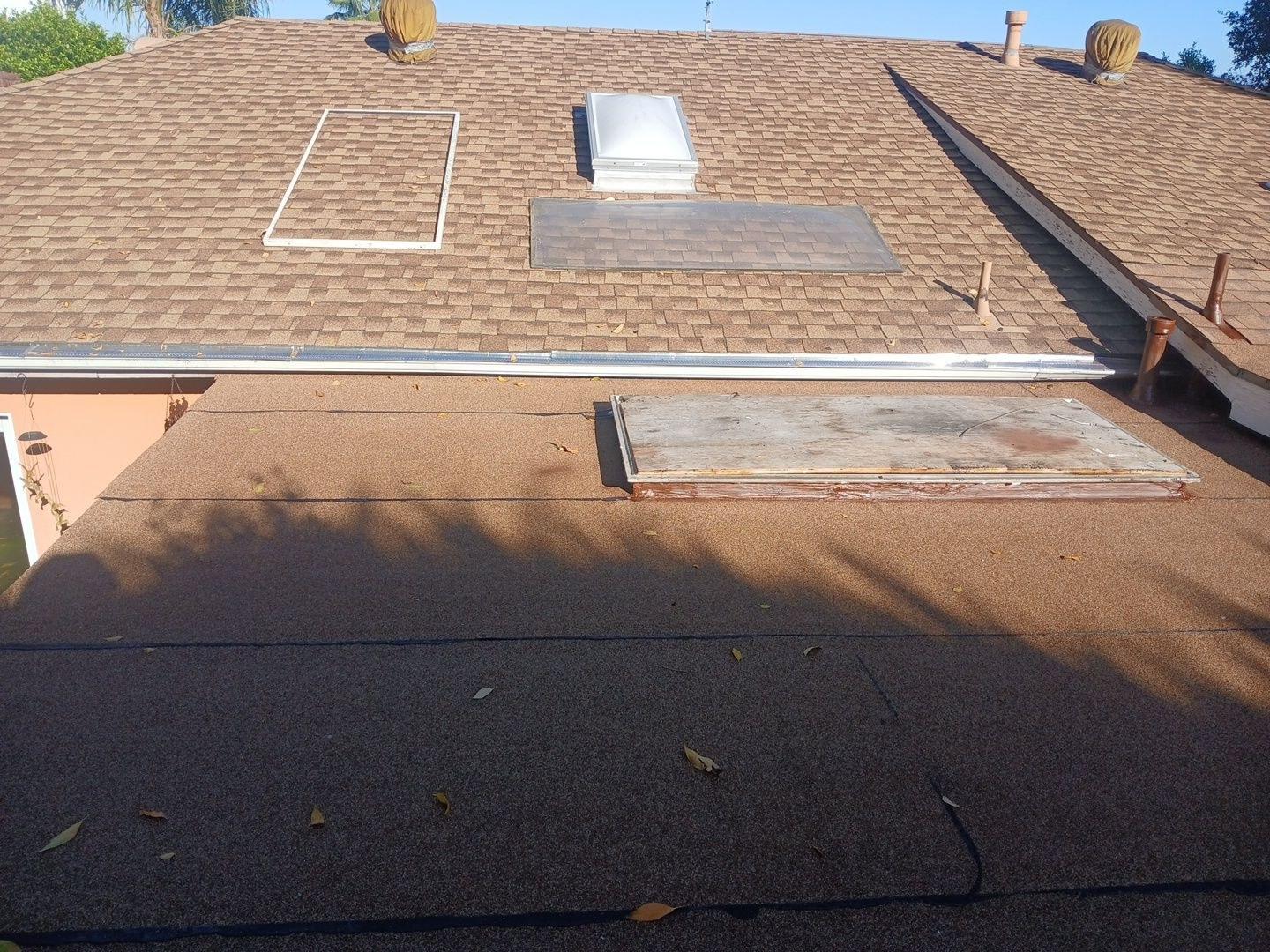
Beneath the surface, the existing flat roof showed classic signs of a membrane that had exceeded its 15–20 year lifespan: seam voids, dried-out bitumen, and a skylight curb with wood framing that had absorbed moisture over multiple seasons. The old skylight unit itself — visible in the before photos — was still mounted in a wooden curb frame with badly peeling paint and rust-stained flashing. Rather than reflash around a unit that old, we removed the skylight assembly and prepared the opening for a properly sealed cover plate with new aluminum perimeter flashing.
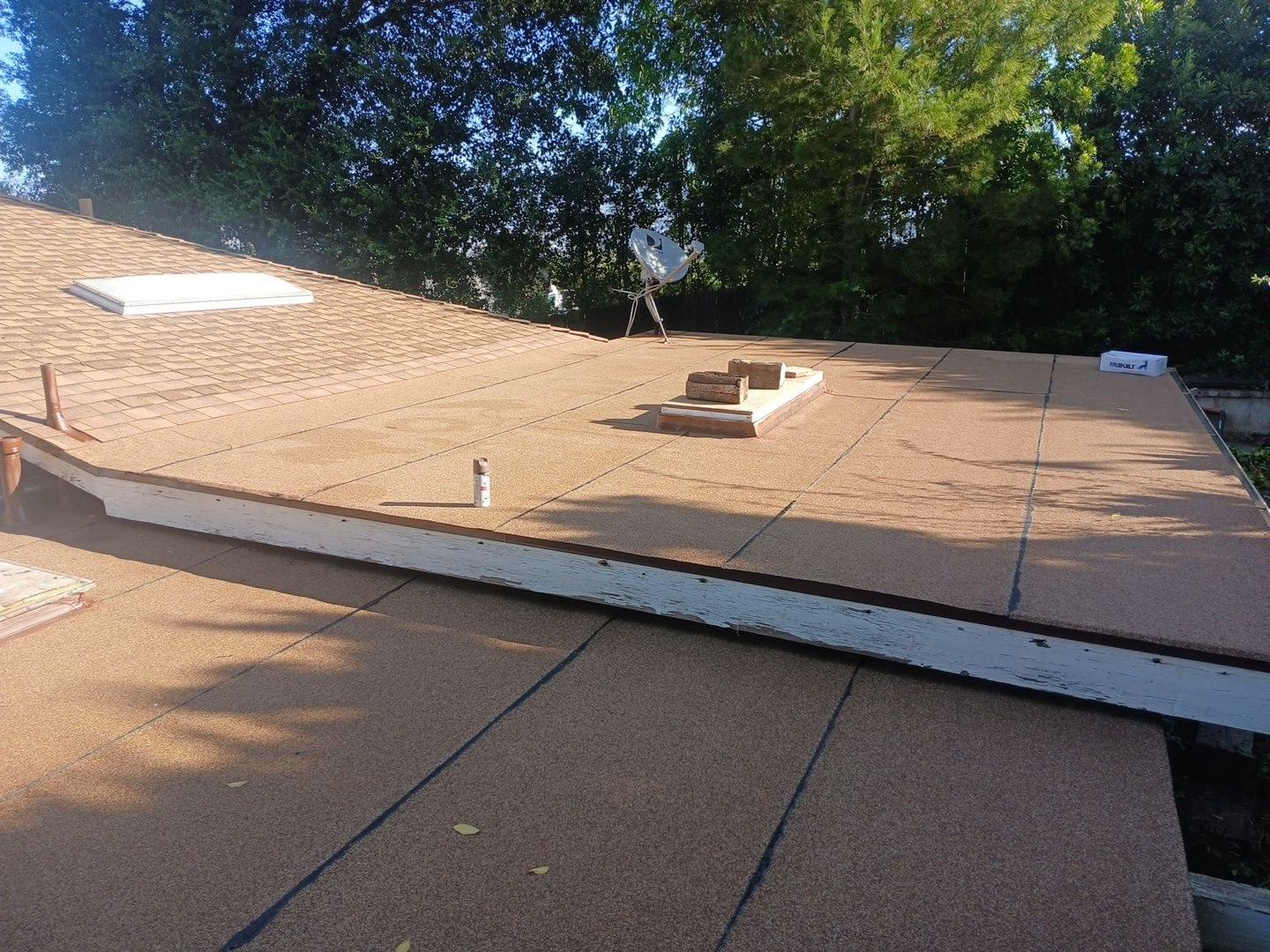
The transition zone where the flat deck meets the asphalt shingle slope is one of the most failure-prone areas on any mixed-pitch roof. Water running off the shingle slope can pond at the base of the step flashing, and if that flashing has lifted even slightly, water finds its way in fast. We replaced the full run of step flashing at that joint, bedding each piece in roofing mastic before laying it under the first course of shingles.
Our crews have replaced flat roof membranes on roughly 3 out of every 5 residential re-roof jobs we take in the Los Angeles basin — and in nearly every case, the skylight curb is where deferred maintenance shows up first. Moisture wicks into the wood framing long before a leak is visible on the ceiling below.
How Was the New Membrane Installed?
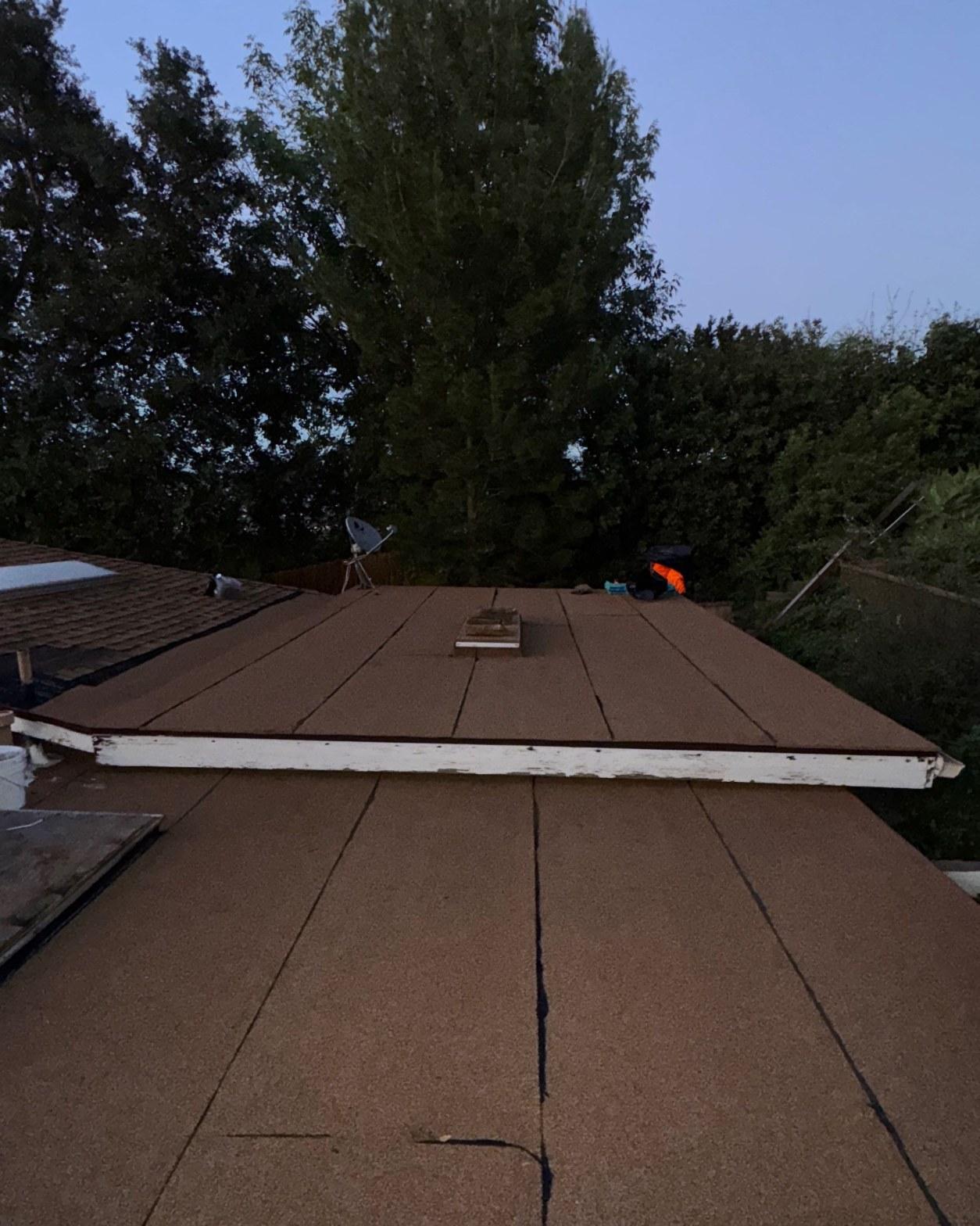
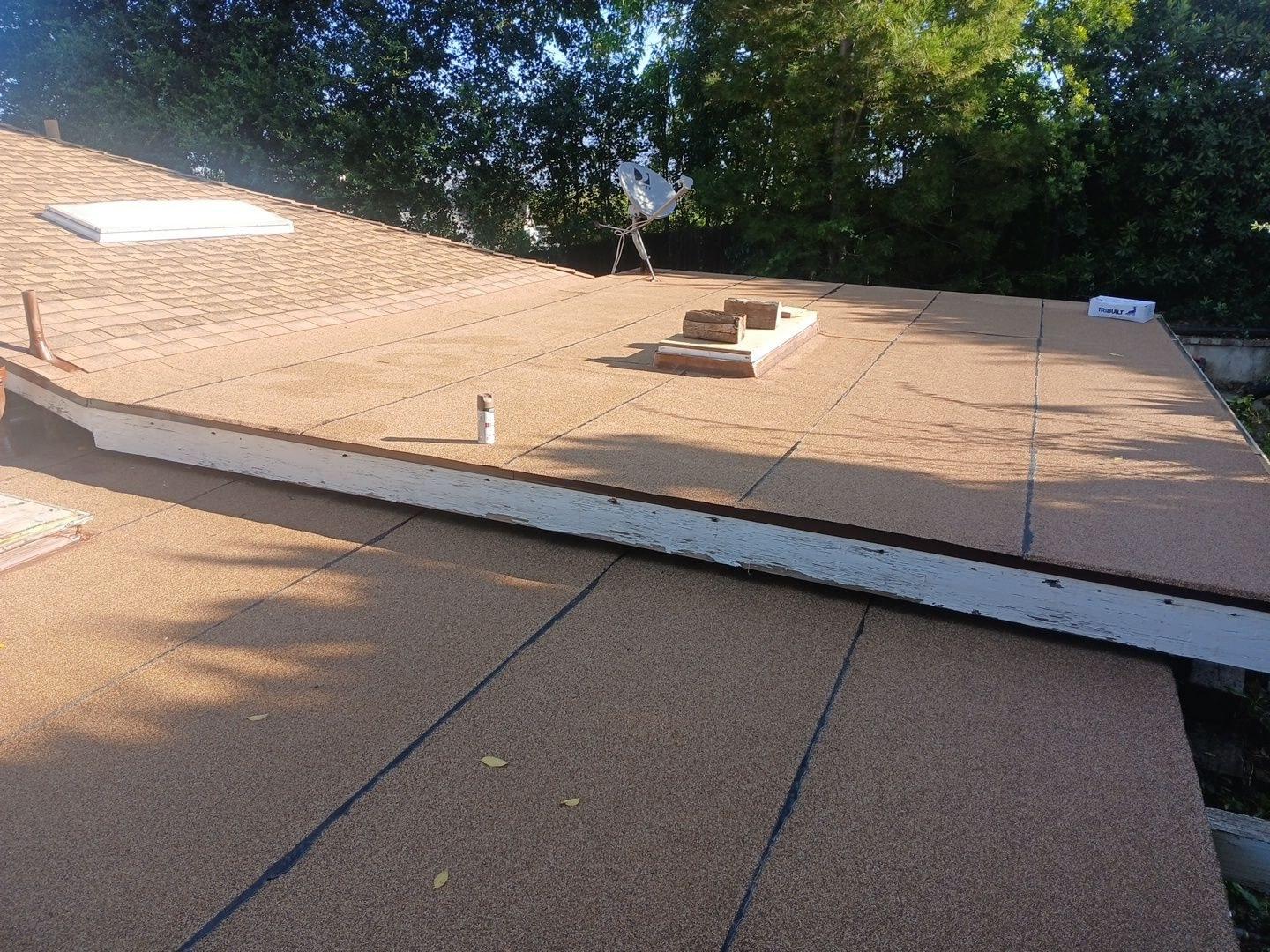
The replacement system uses a multi-layer torch-down modified bitumen membrane, starting with a base sheet of granulated felt underlayment mechanically fastened across the entire deck, followed by a cap sheet heat-fused at every seam and edge. As of 2026, torch-down modified bitumen remains the most widely specified flat-roof system for residential applications in Southern California, largely because it holds up well under the region’s sustained UV exposure and periodic heavy rain events — conditions well-documented by NOAA’s Los Angeles forecast office.
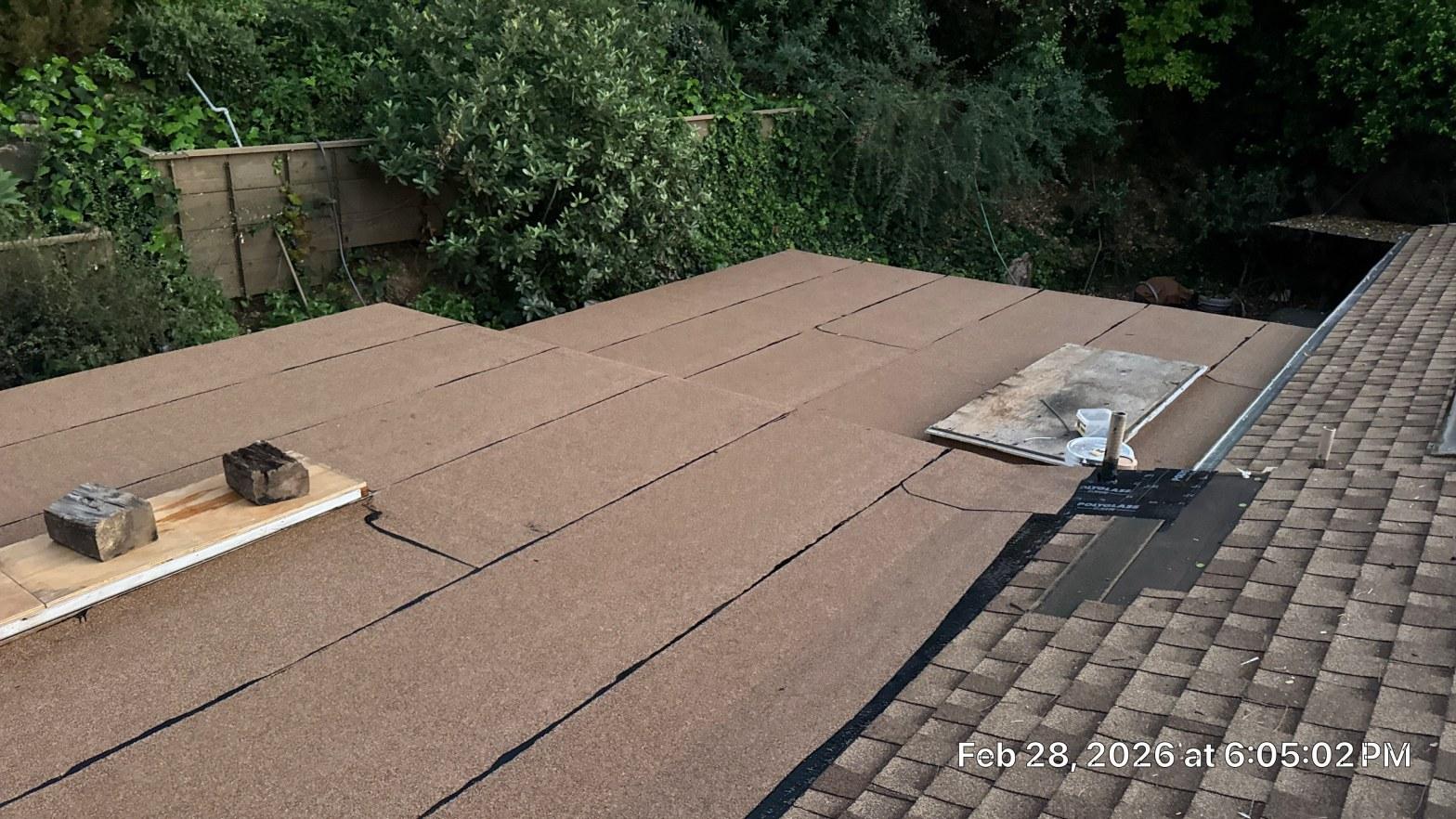
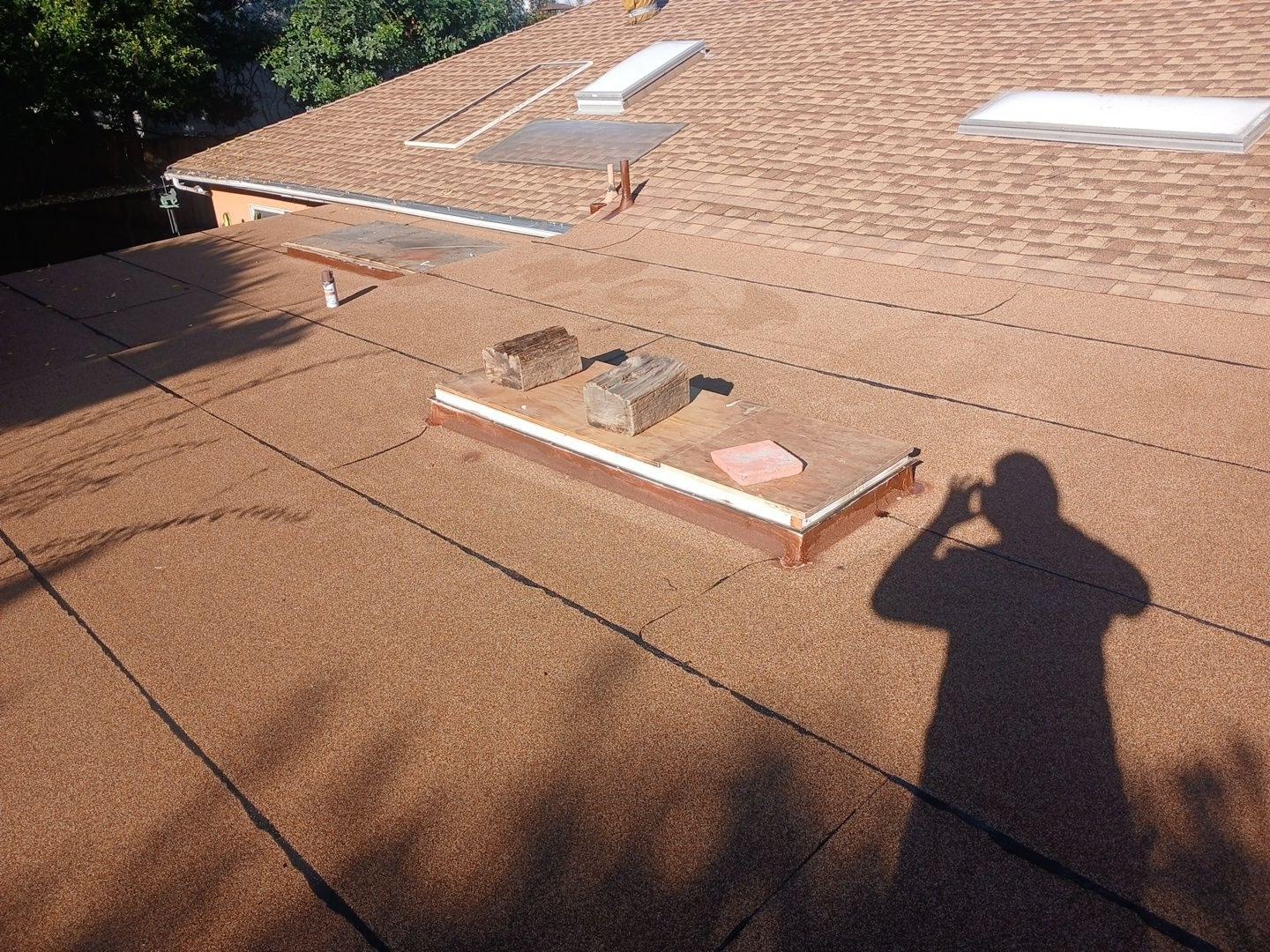
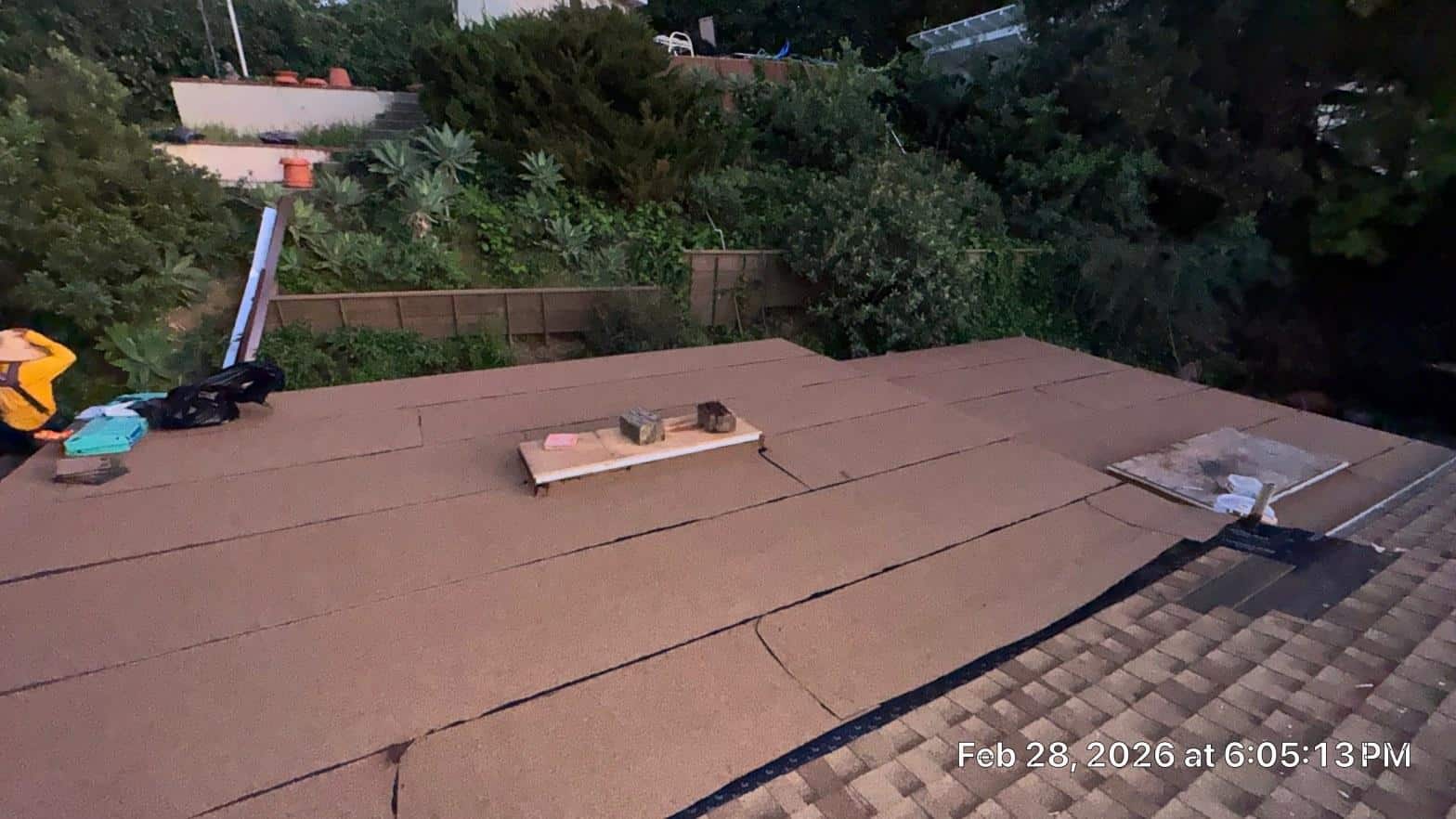
The photo above shows the deck fully covered in the brown granulated base-sheet underlayment — every seam overlapped by a minimum of 4 inches and the edges turned up at the parapet and step-flashing zones. Bricks visible in the photo were used as temporary weights to hold panel edges flat while the adhesive set before torching. The skylight rough opening at right has its new cover panel positioned and ready for final flashing.
The cap sheet was then torched over the base layer using an open-flame propane torch, flowing the modified bitumen into full contact at every overlap. Final seam width after torching measured a consistent 3 to 4 inches across the field — well above the NRCA-recommended minimum of 2 inches for low-slope modified bitumen applications.
How Long Did This Project Take?
The full tear-off, deck preparation, underlayment installation, torching, and flashing work was completed in approximately 2 days on-site. Flat roofs of this size — typically in the 400–700 square foot range for single-story residential additions and garage conversions common in Los Angeles County’s dense residential stock — can almost always be turned around within a standard 2-day window when the deck boards are sound and don’t require replacement.
Weather timing matters in LA too: torch-down work should not be performed when surface temperatures are expected to drop below 45°F within 24 hours of installation, as the bitumen needs adequate cure time. We scheduled this job during a dry stretch to give the new membrane a full 48-hour cure window before the next rain probability.
Ready to Replace Your Flat Roof?
If your flat or low-slope roof is showing seam separation, a deteriorating skylight curb, or lifted flashing at the transition to a pitched section, a full membrane replacement is almost always more cost-effective than repeated spot repairs. Licensed by the California Contractors State License Board (CSLB), Roof Replacement Inc handles torch-down replacements throughout the Los Angeles area.
Call us or submit a project inquiry to schedule a no-obligation roof assessment. We’ll tell you exactly what the deck looks like and what the replacement scope involves — before any work begins.