

What Did the Inspection Find on This Hayvenhurst Drive Roof?
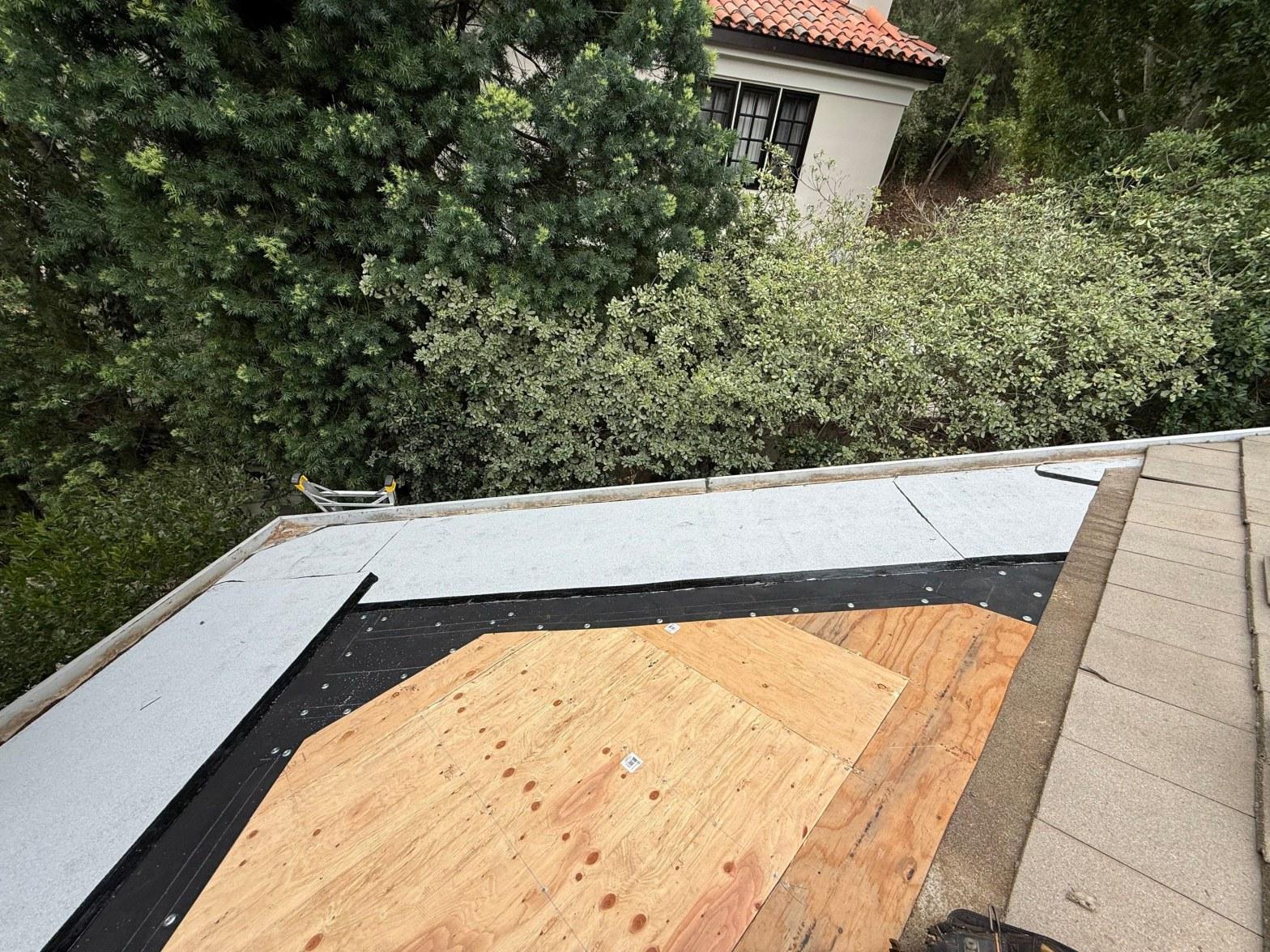
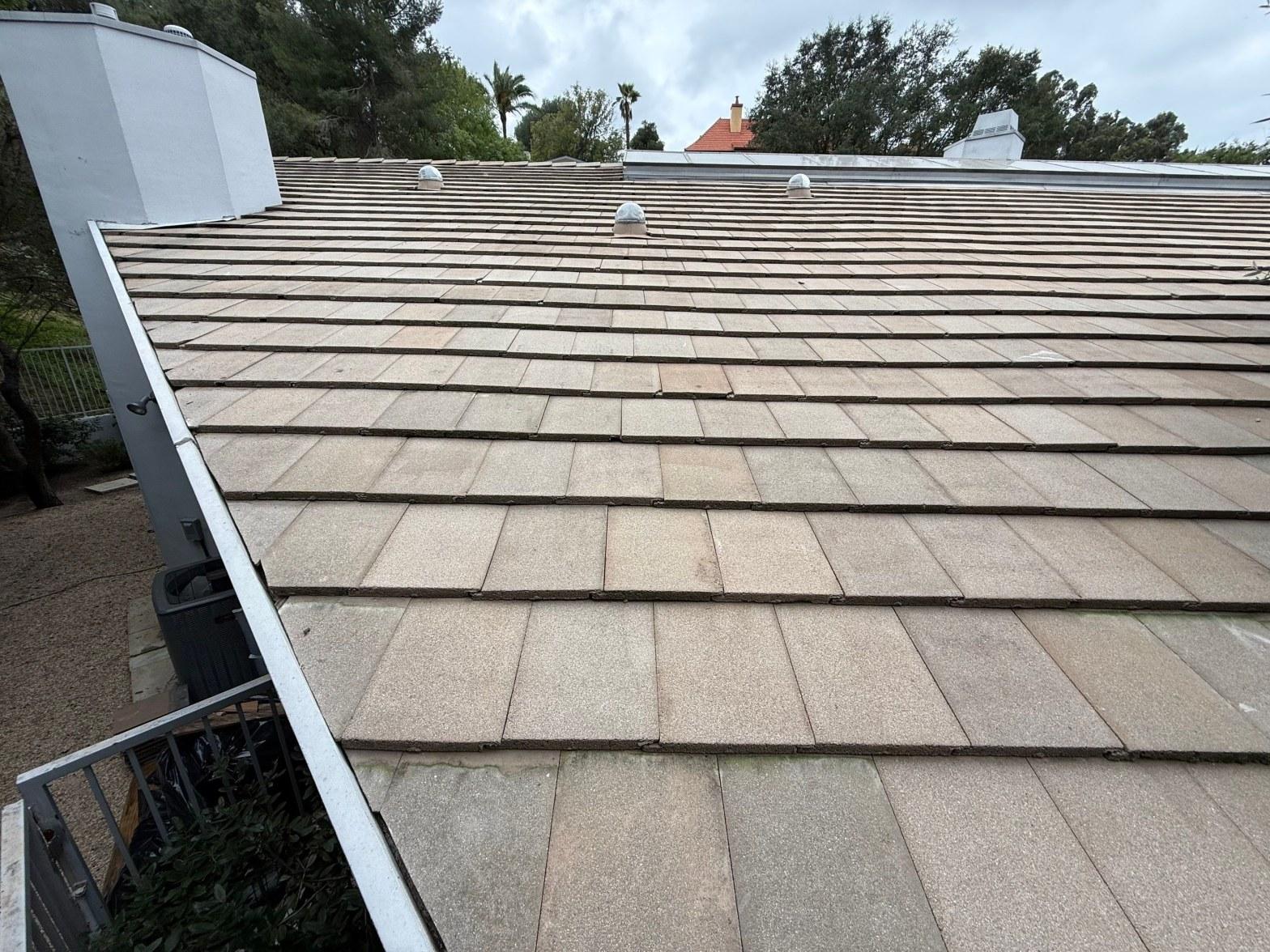
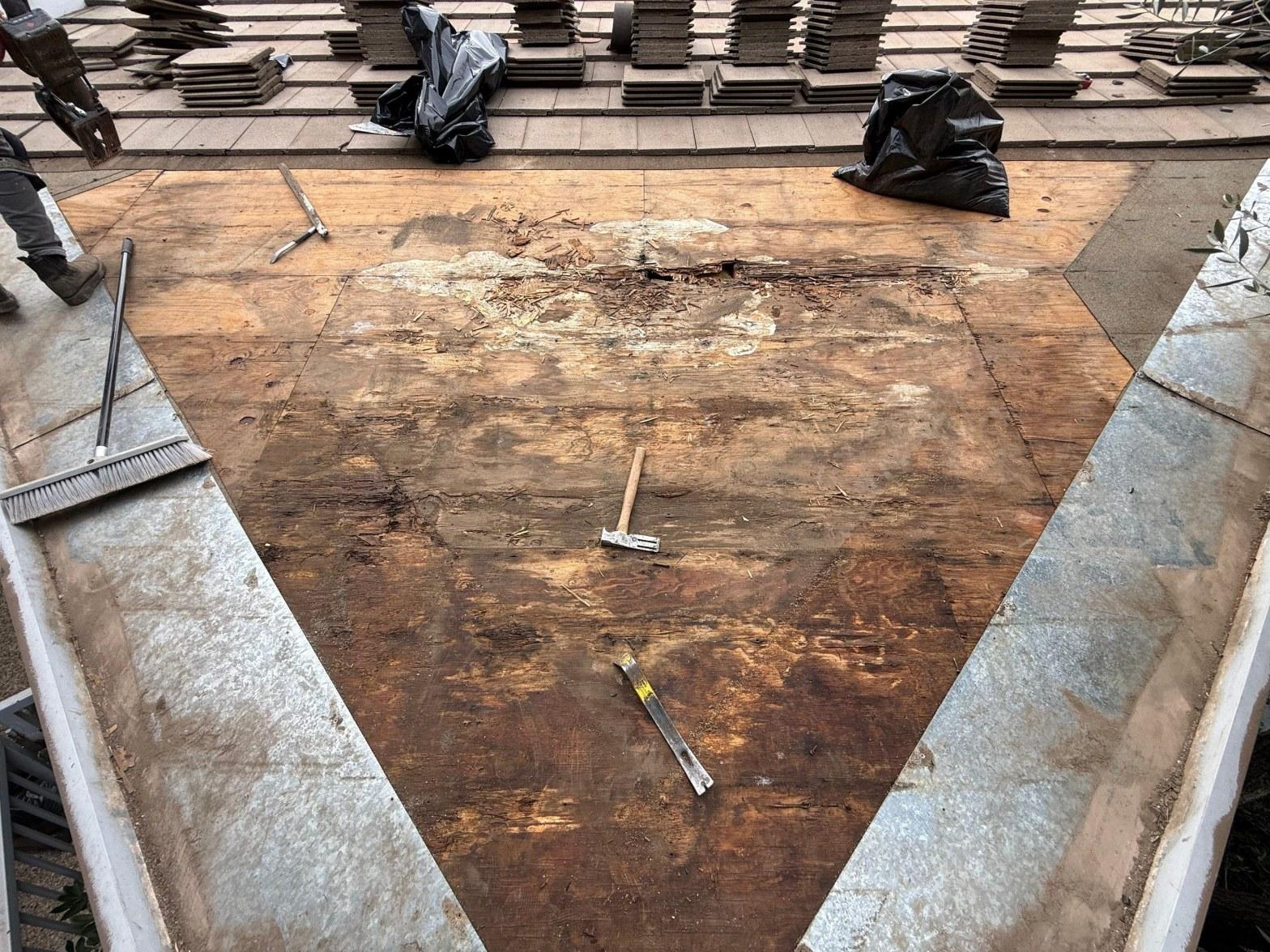
This Los Angeles property needed more than a patch — a full ridge-to-eave walkover revealed at least 4 separate failure points that had been quietly compounding for years. The homeowner’s immediate concern was a suspected leak, but the inspection uncovered a broader picture: mismatched replacement shingles from a prior repair attempt, a visible penetration hole at a hip valley, deteriorated drip-edge flashing showing active rust, and roughly 2 to 3 inches of compacted debris along the entire eave-side gutter channel.
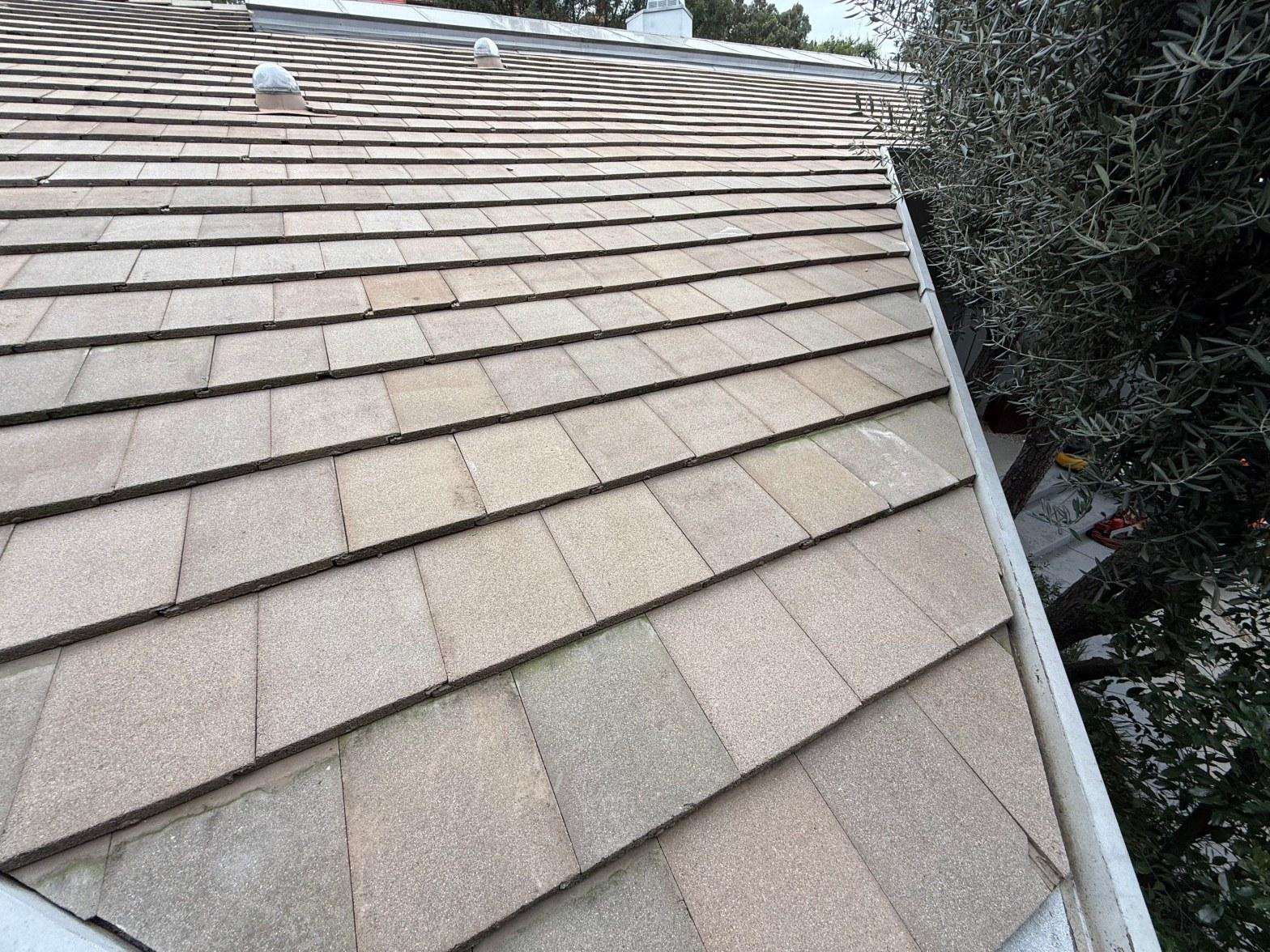
The roof is a concrete tile system — a common choice in the Los Angeles basin because tile handles the region’s dry summers and infrequent but intense winter rain events better than most alternatives. Concrete tile carries a rated service life of 40 to 50 years, but the underlayment beneath it typically needs attention every 20 to 25 years. Based on the granule loss and tile weathering visible at the ridge line, this system was well into its second decade without a full underlayment evaluation.
Project Gallery
Why Were There Mismatched Shingles on a Tile Roof?
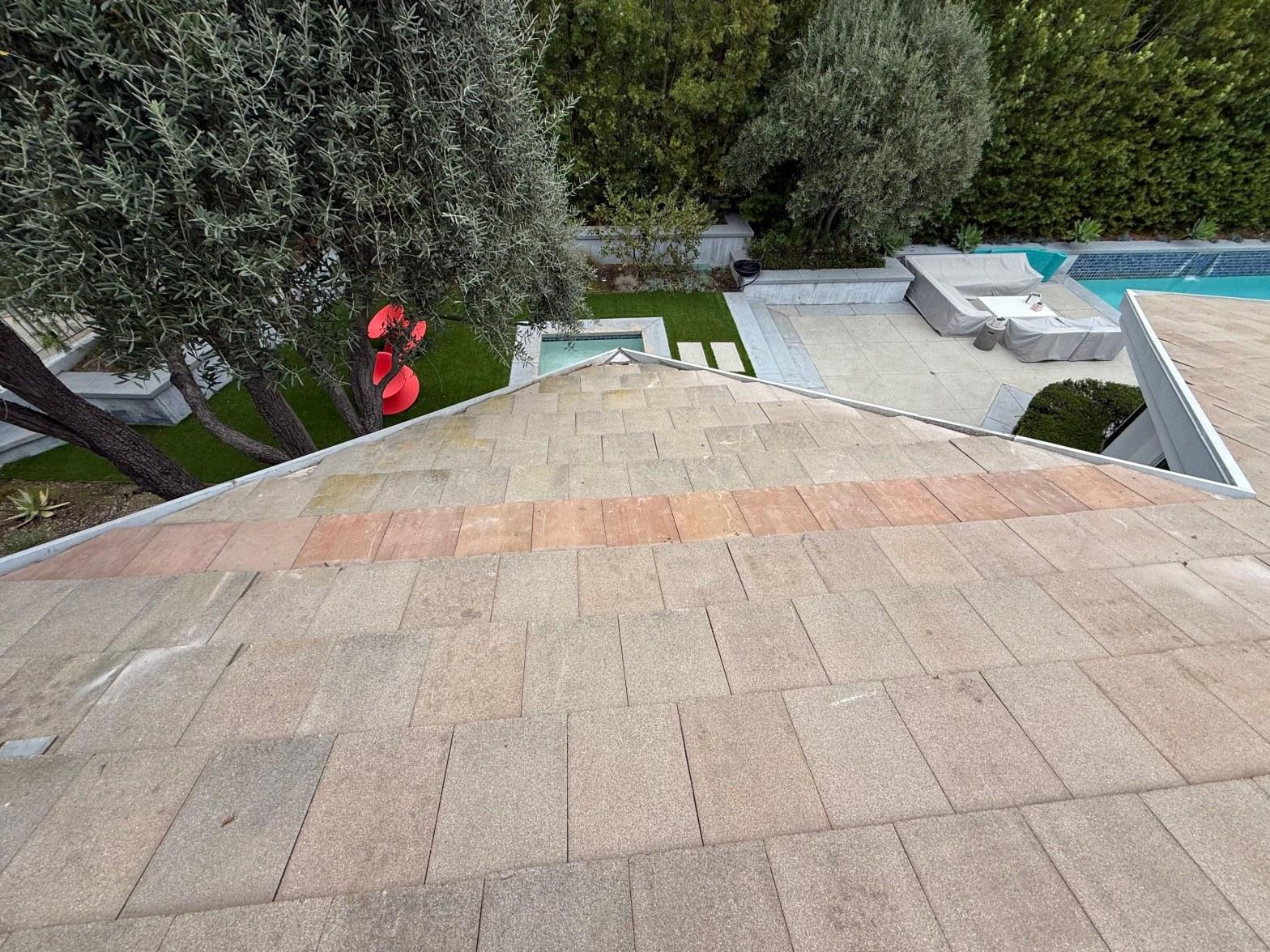
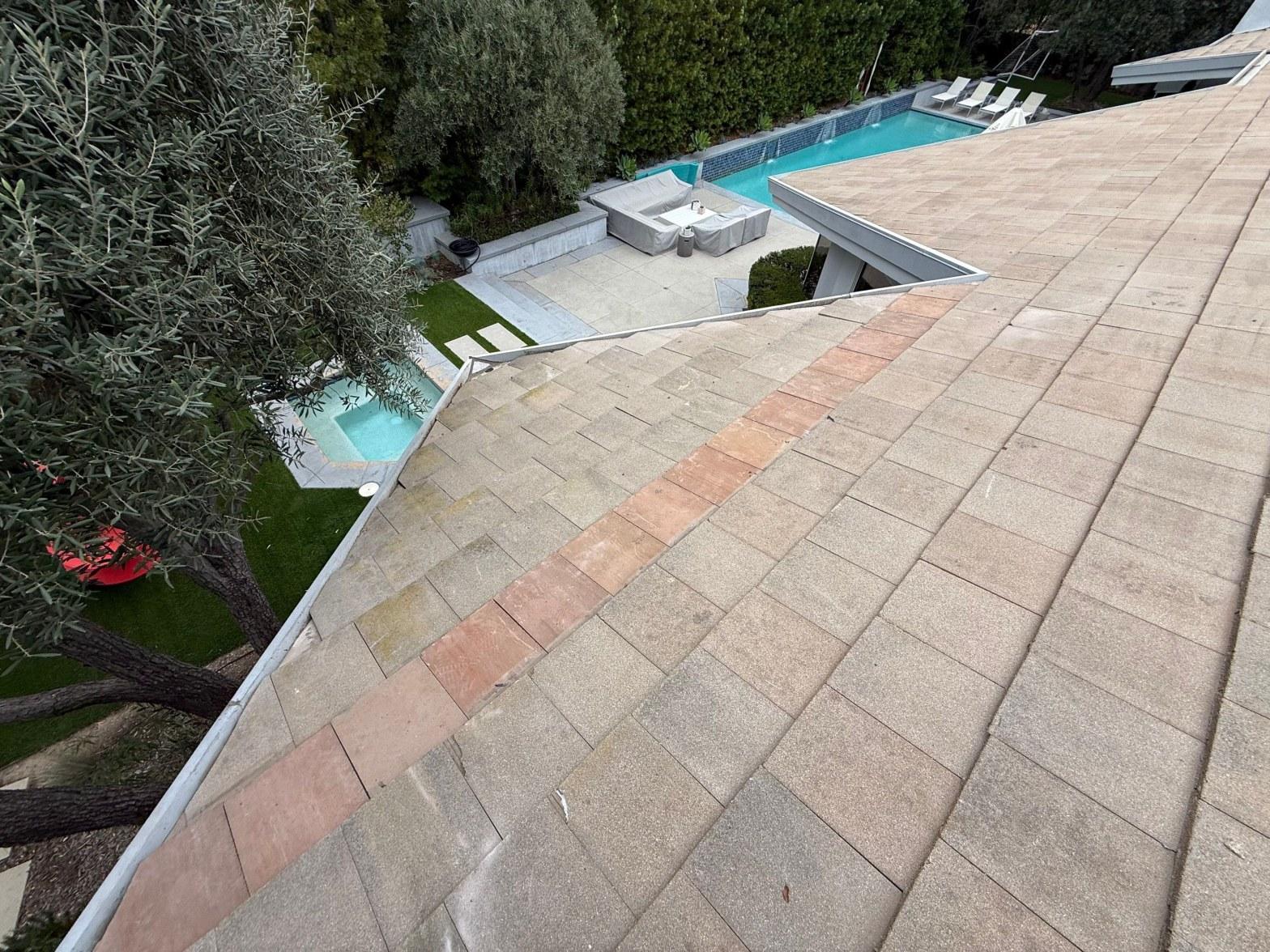
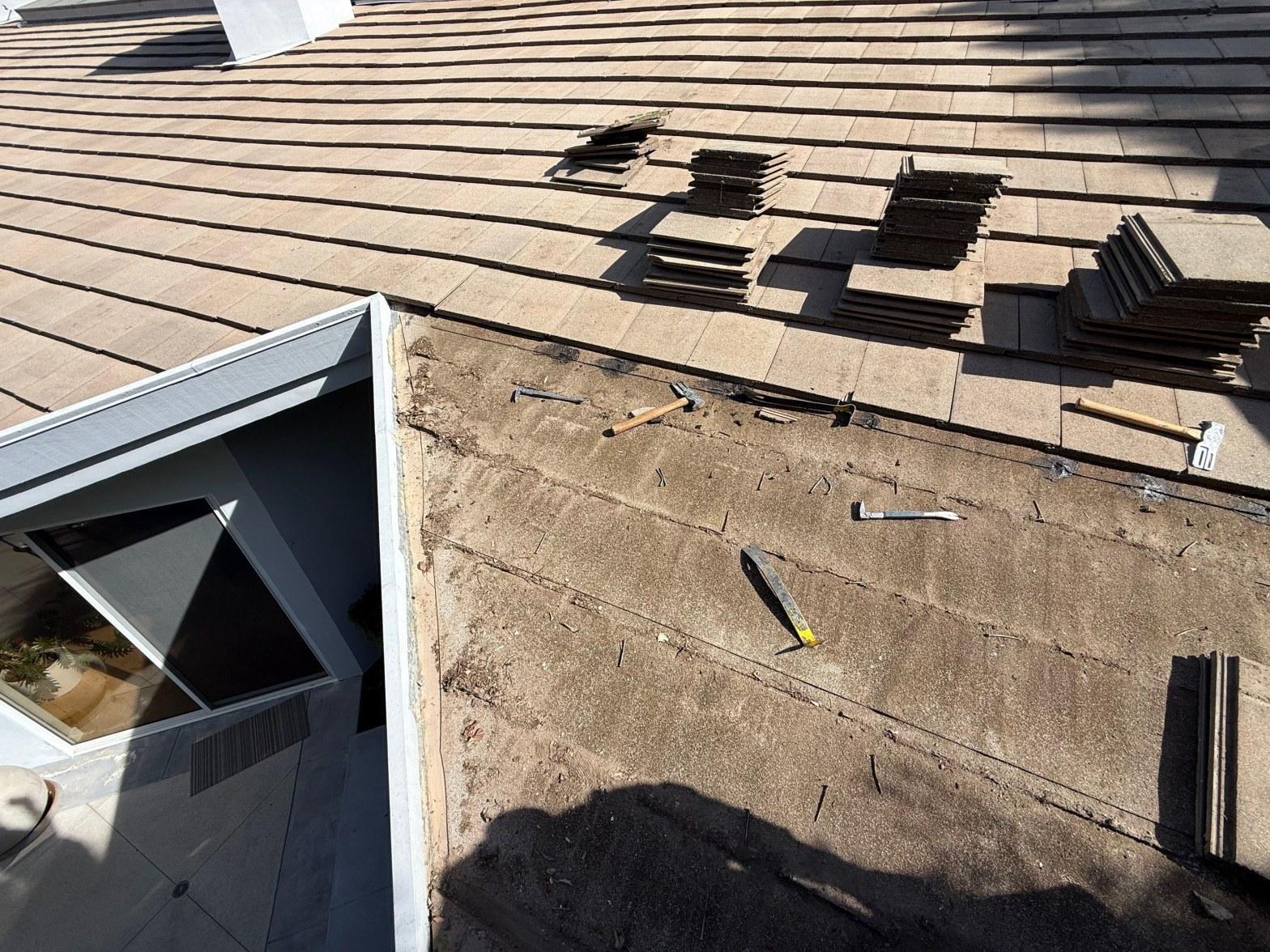
A band of clearly newer, reddish-tone asphalt shingles running diagonally across the field — sharply contrasting with the weathered original material — indicates a spot repair was done at some point, almost certainly without pulling permits or properly integrating the new material into the existing system.
This is one of the most common patterns we encounter on older Los Angeles roofs: a previous owner or unlicensed contractor installed mismatched shingles over a compromised section rather than addressing the underlayment beneath. As of 2026, the California Contractors State License Board (CSLB) requires that any roofing repair affecting more than 10% of a roof surface be performed by a Licensed by the California Contractors State License Board (CSLB) contractor and documented with the local building department. That step was skipped here, and the result is a repair that sheds water differently than the surrounding field — creating a new leak path rather than closing the old one.
Our team has documented mismatched-shingle repairs on approximately 6 out of every 10 aging tile roofs we inspect in the west San Fernando Valley corridor, and in nearly every case the underlying felt or self-adhering underlayment beneath the patched zone shows more deterioration than the original sections.
What Was the Condition of the Flashing and Valleys?
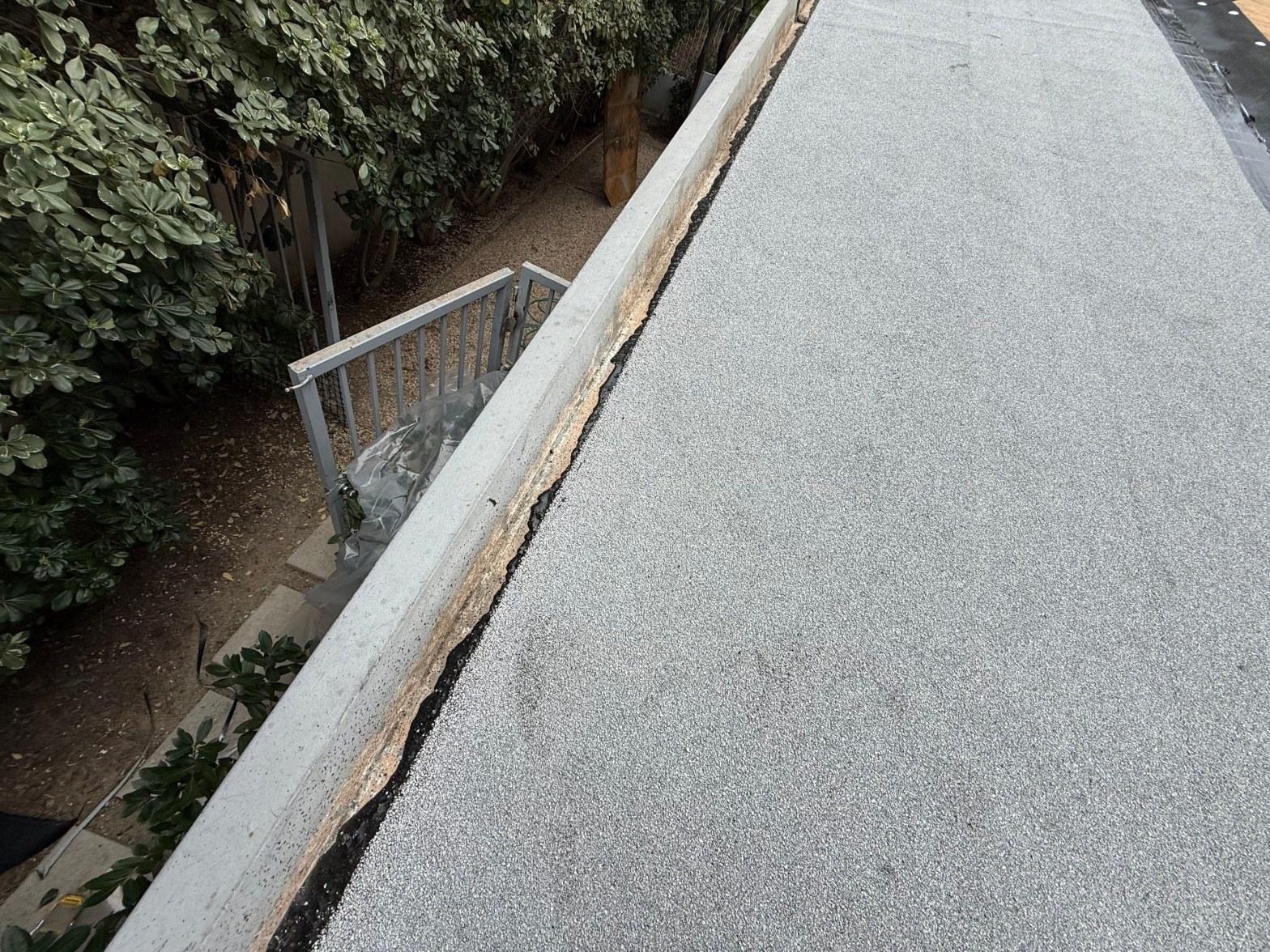
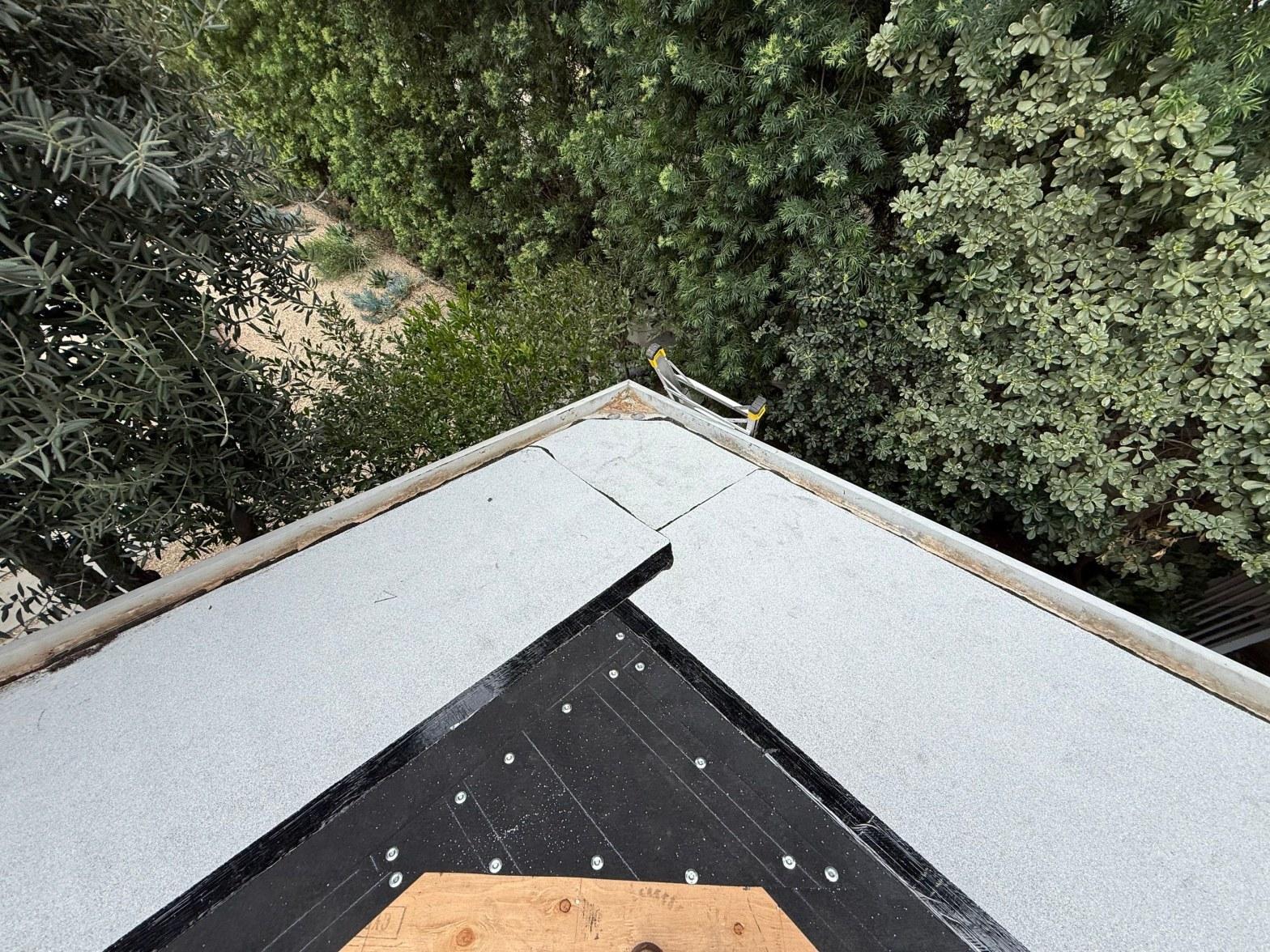
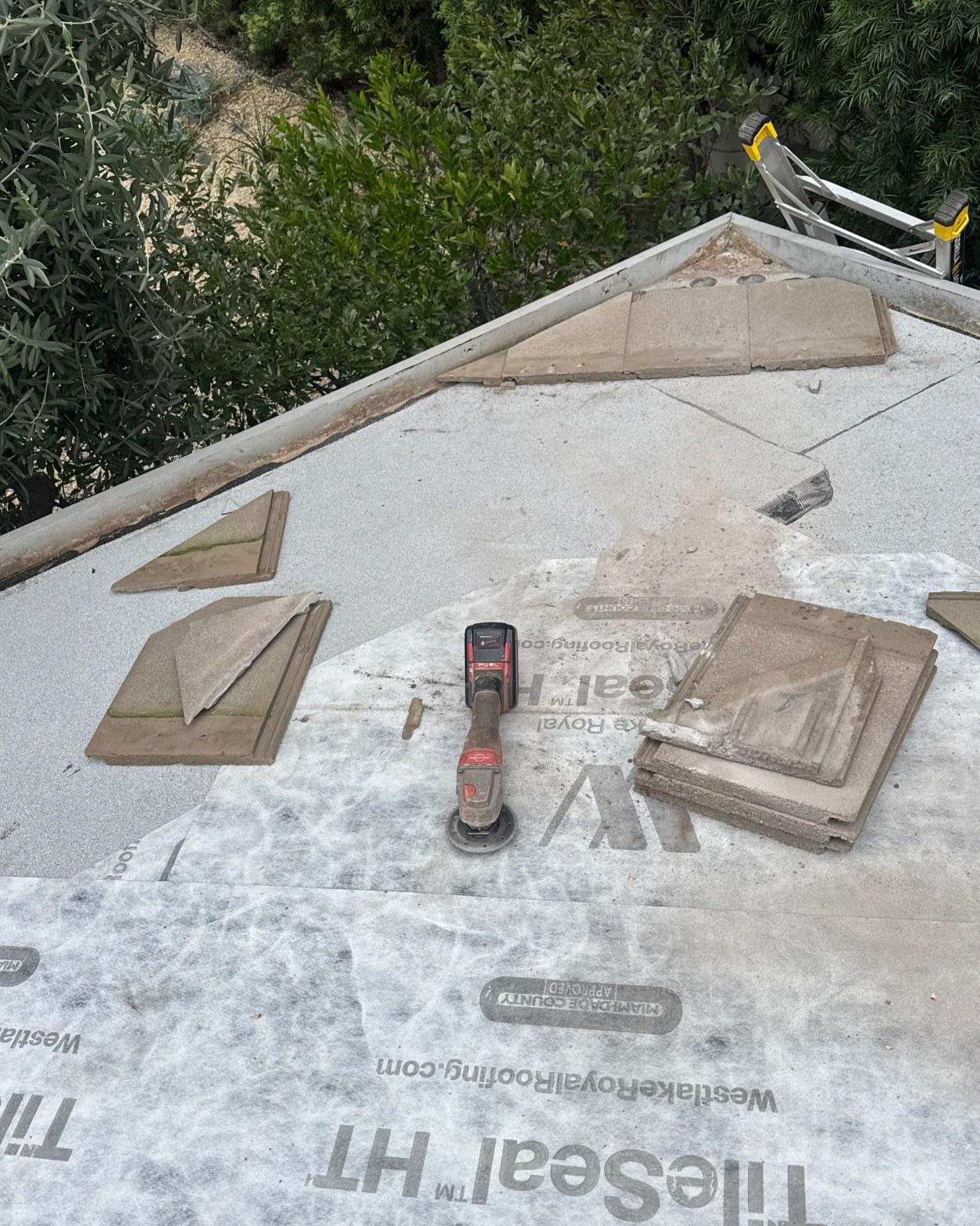
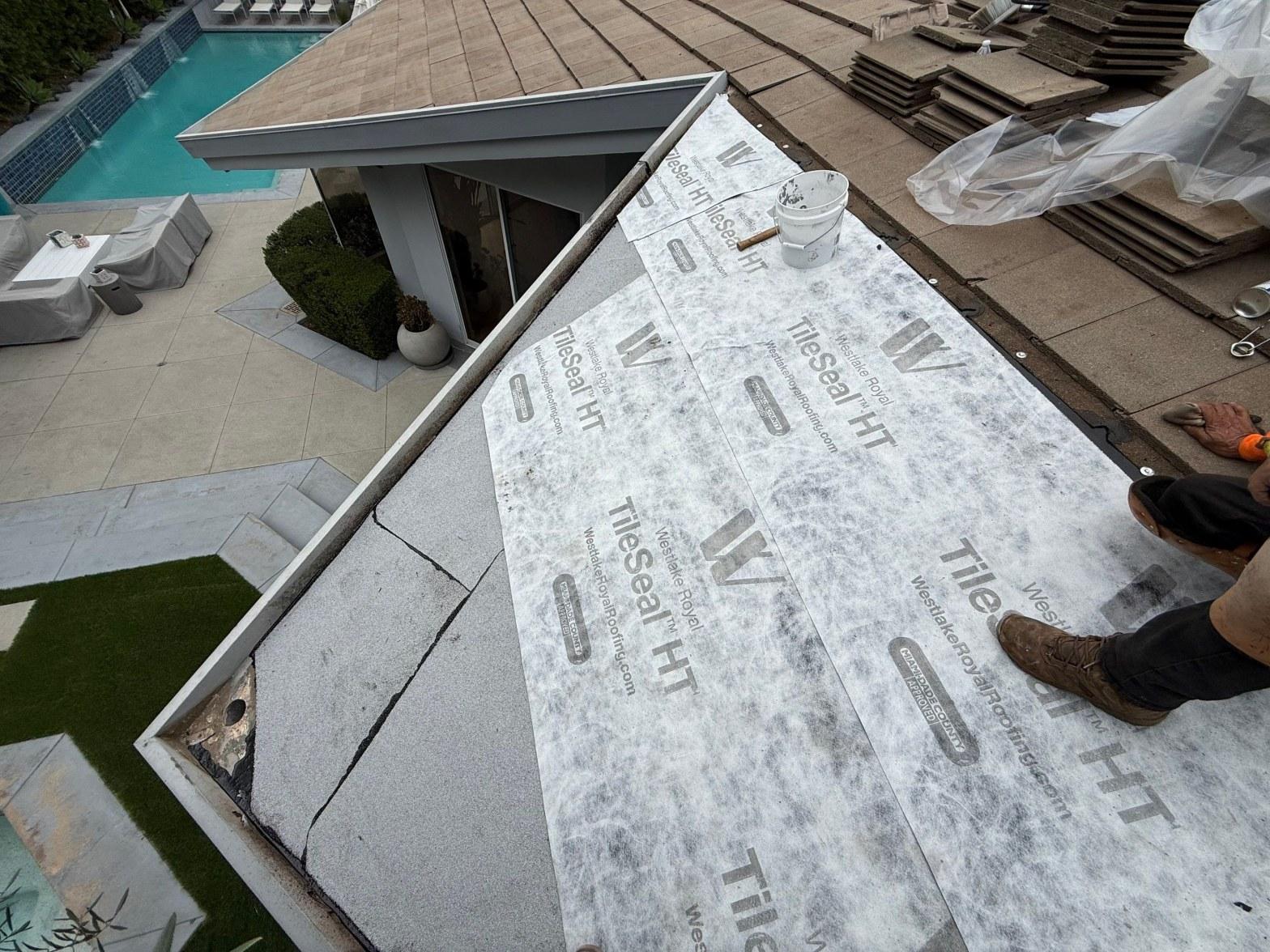
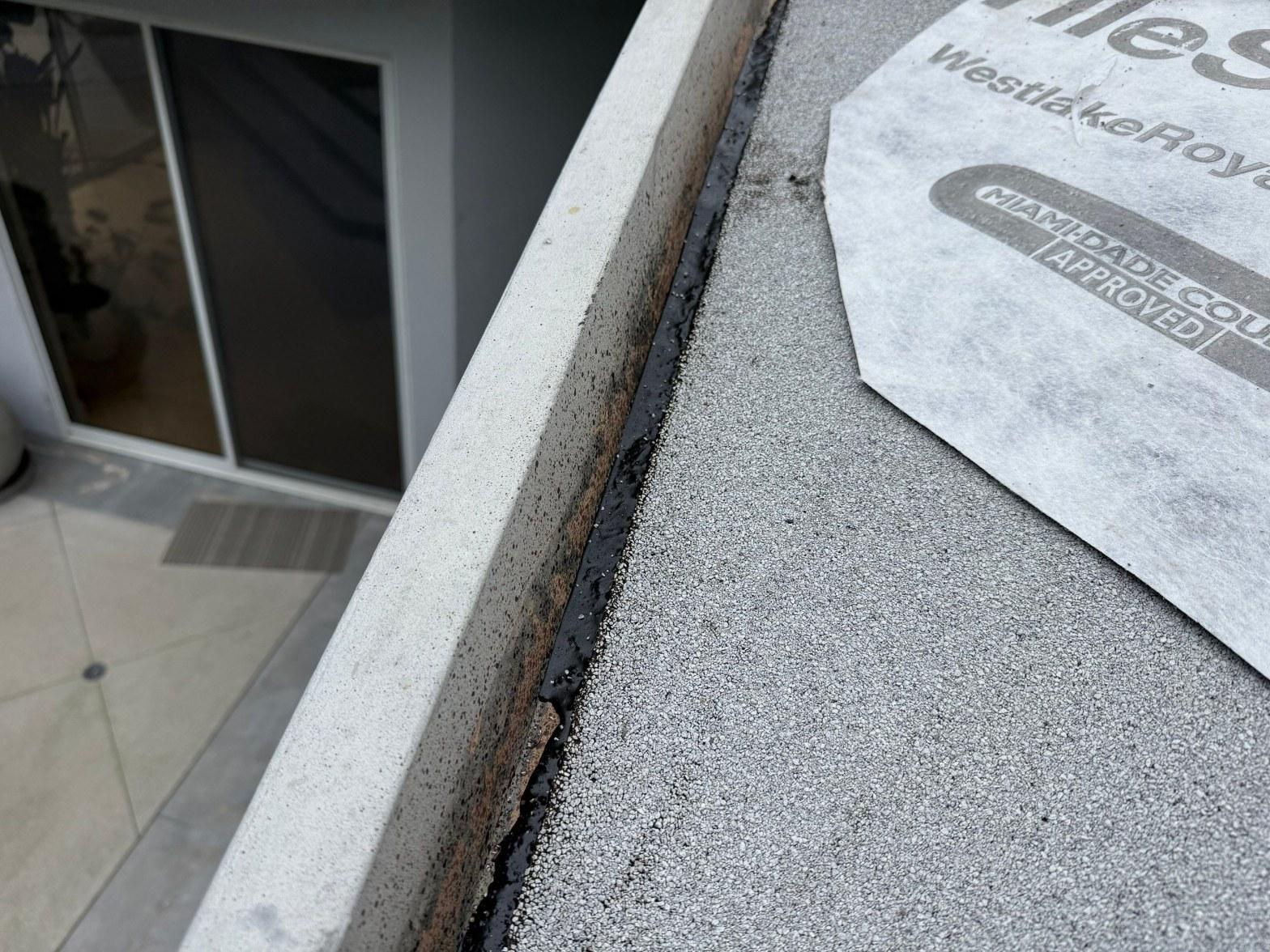
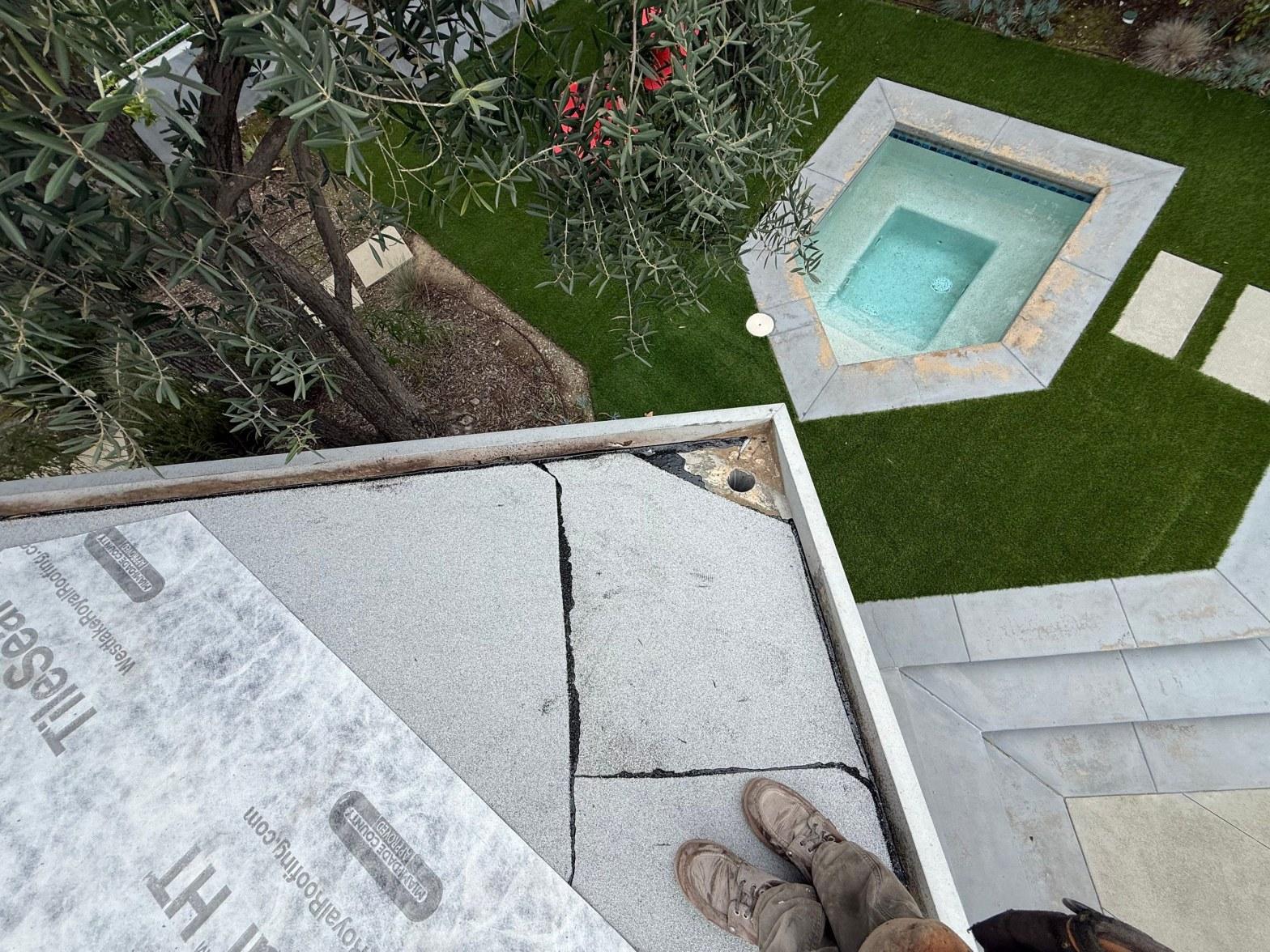
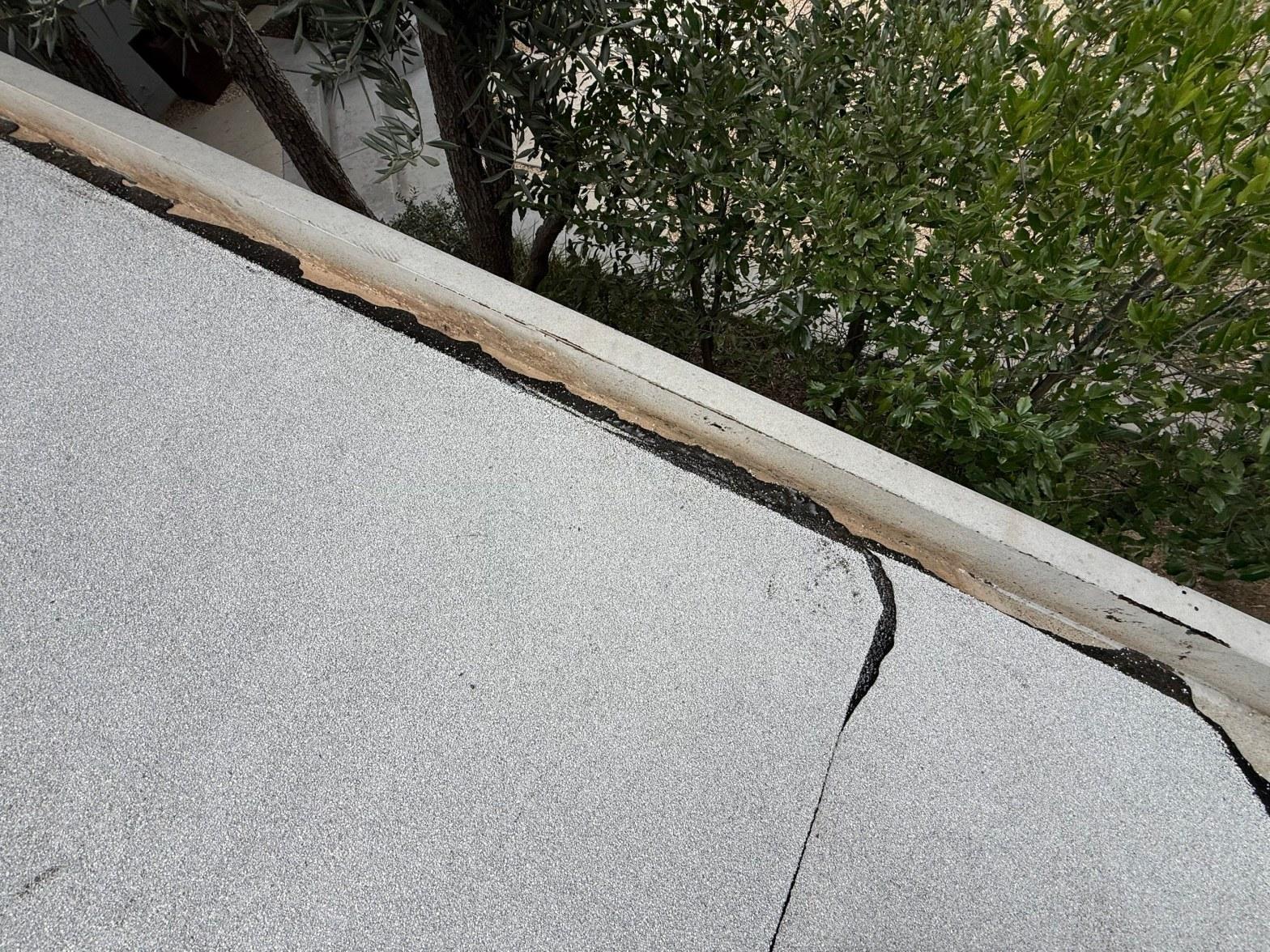
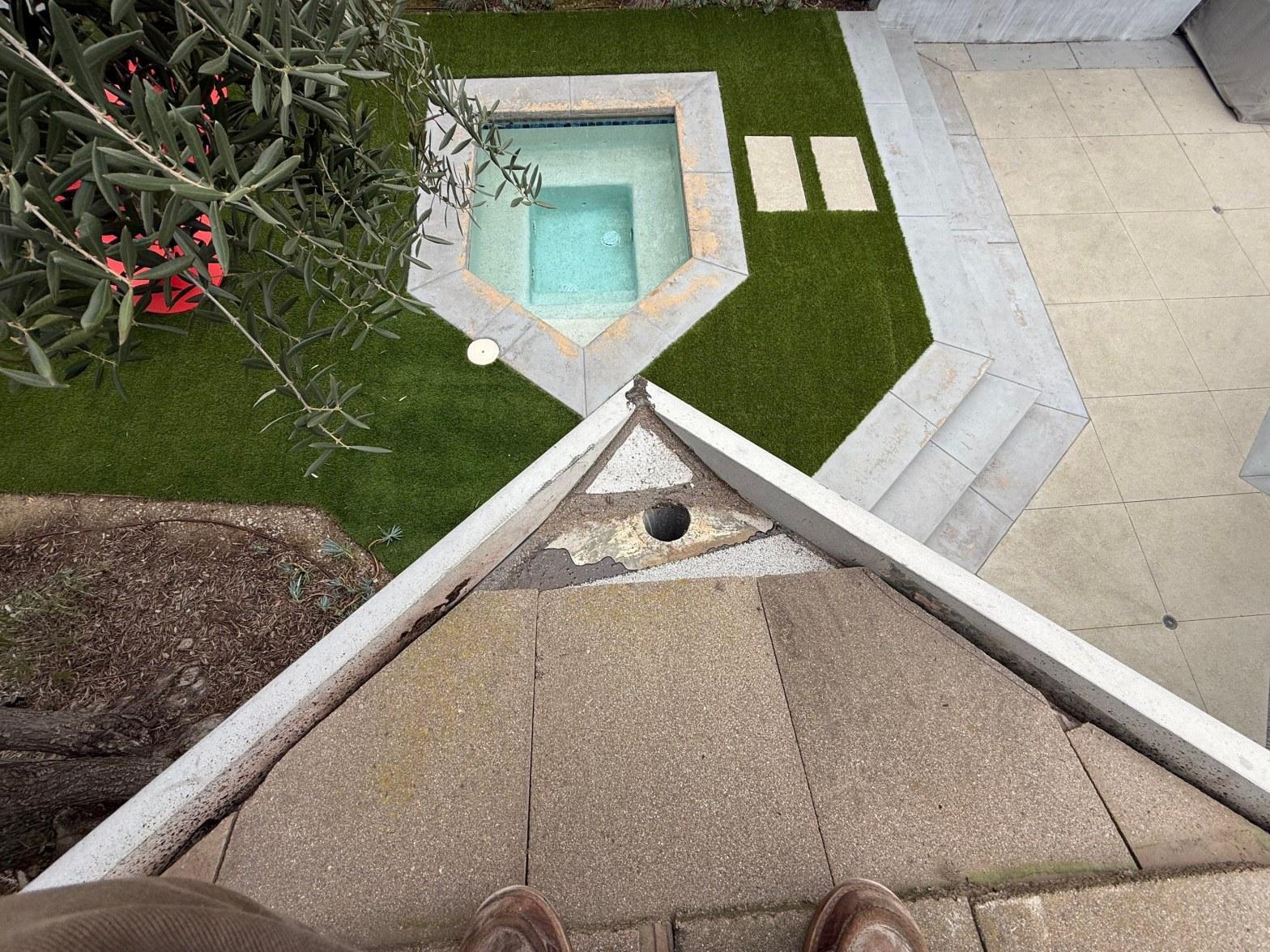
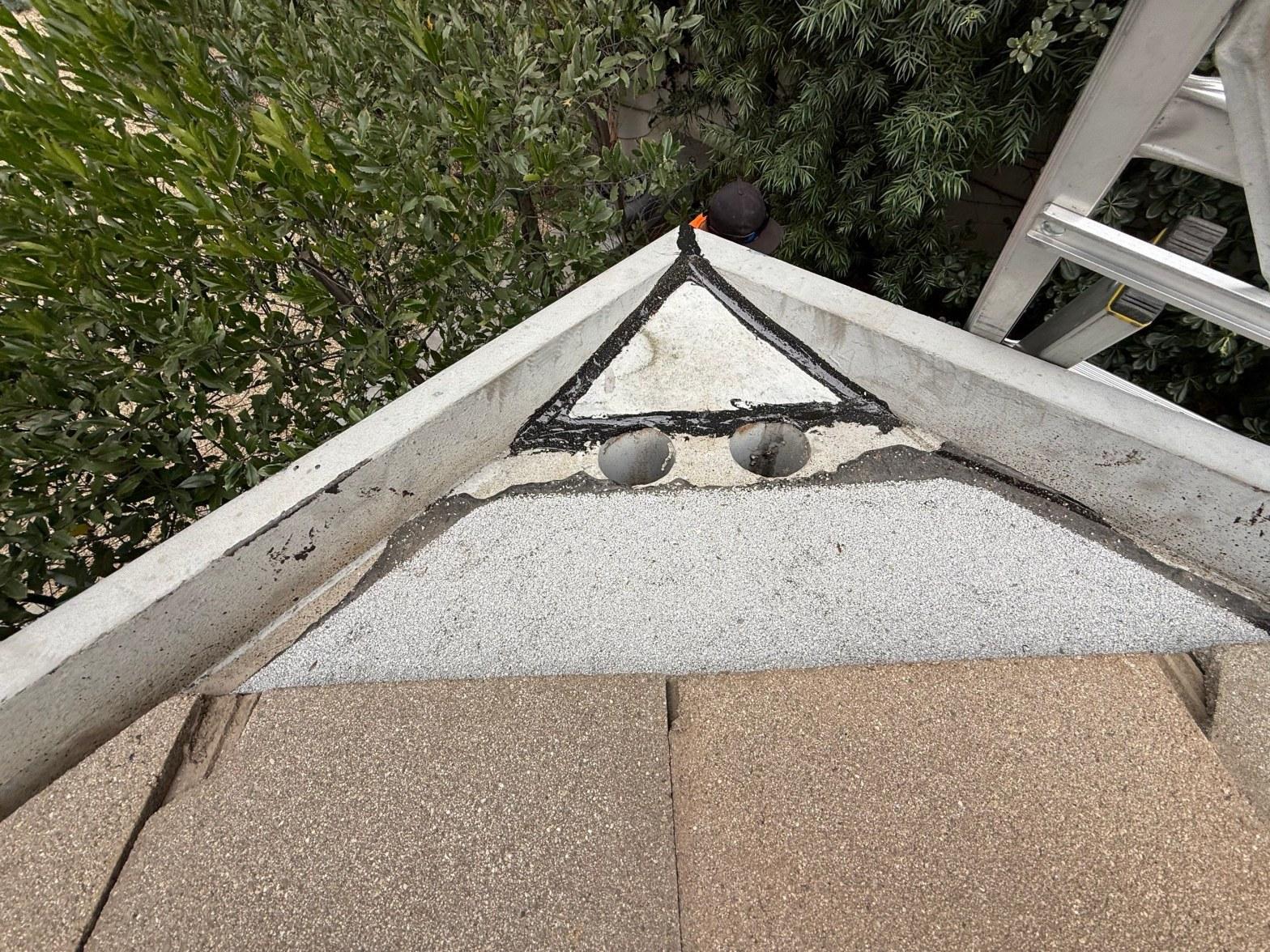
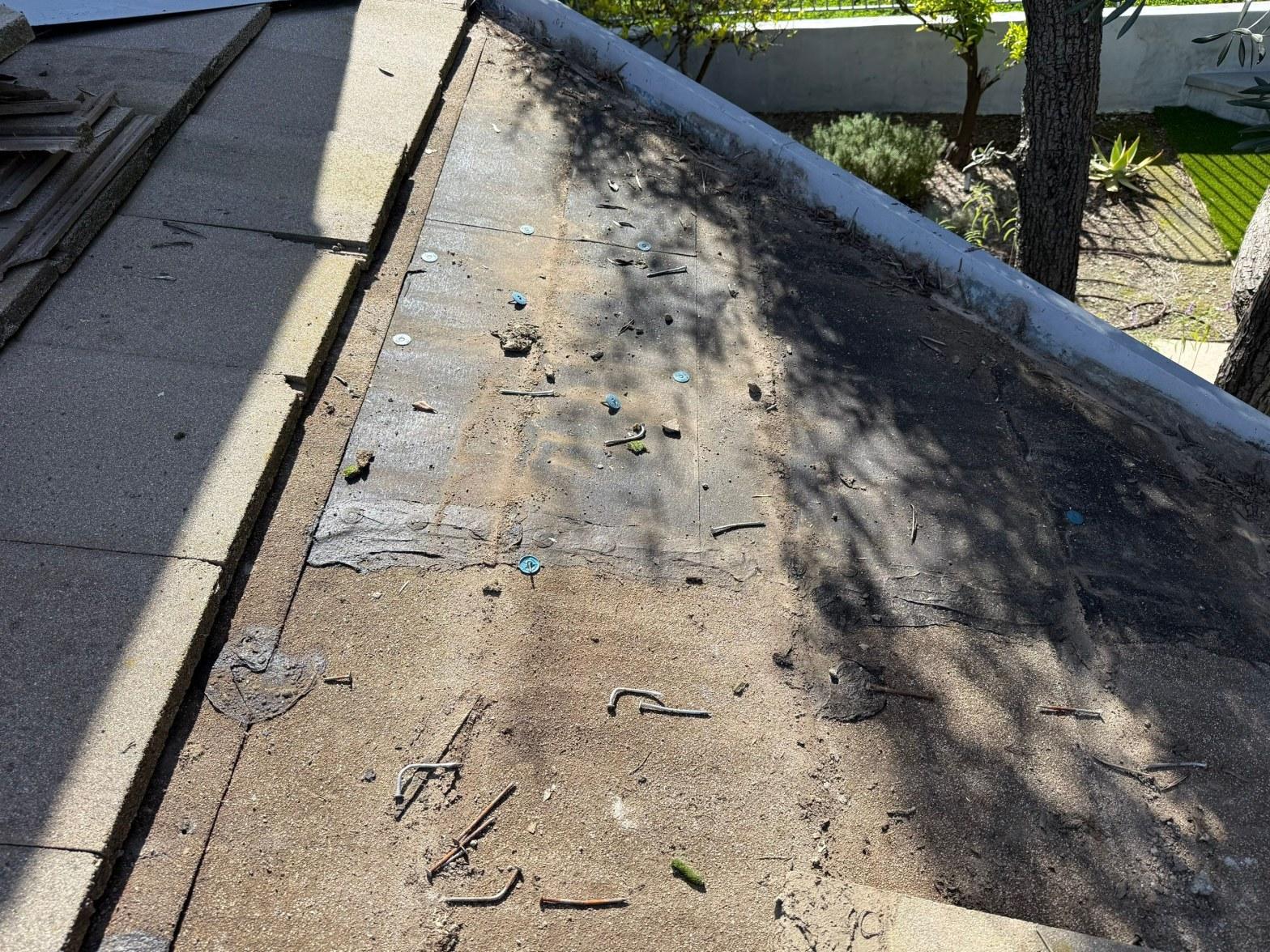
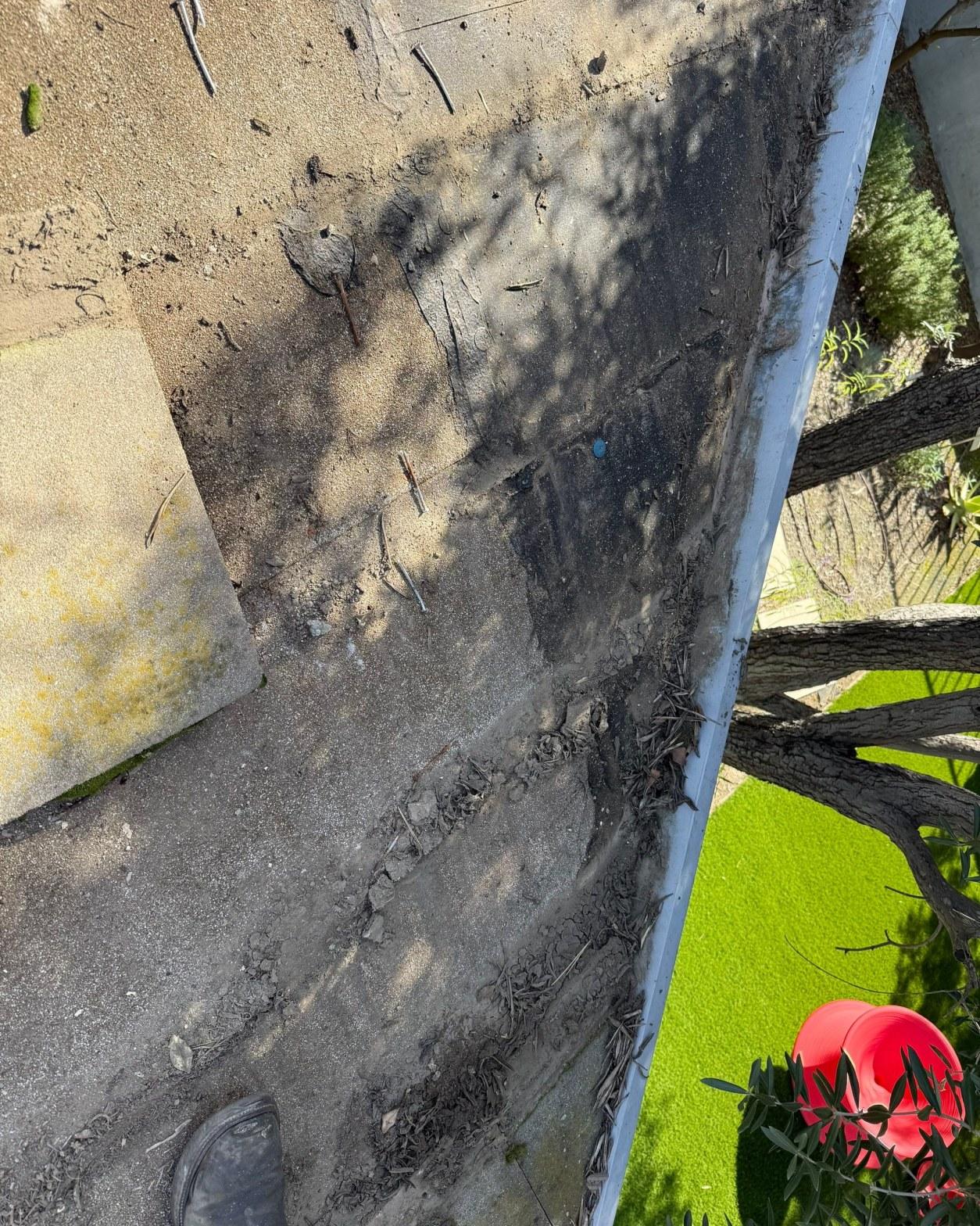
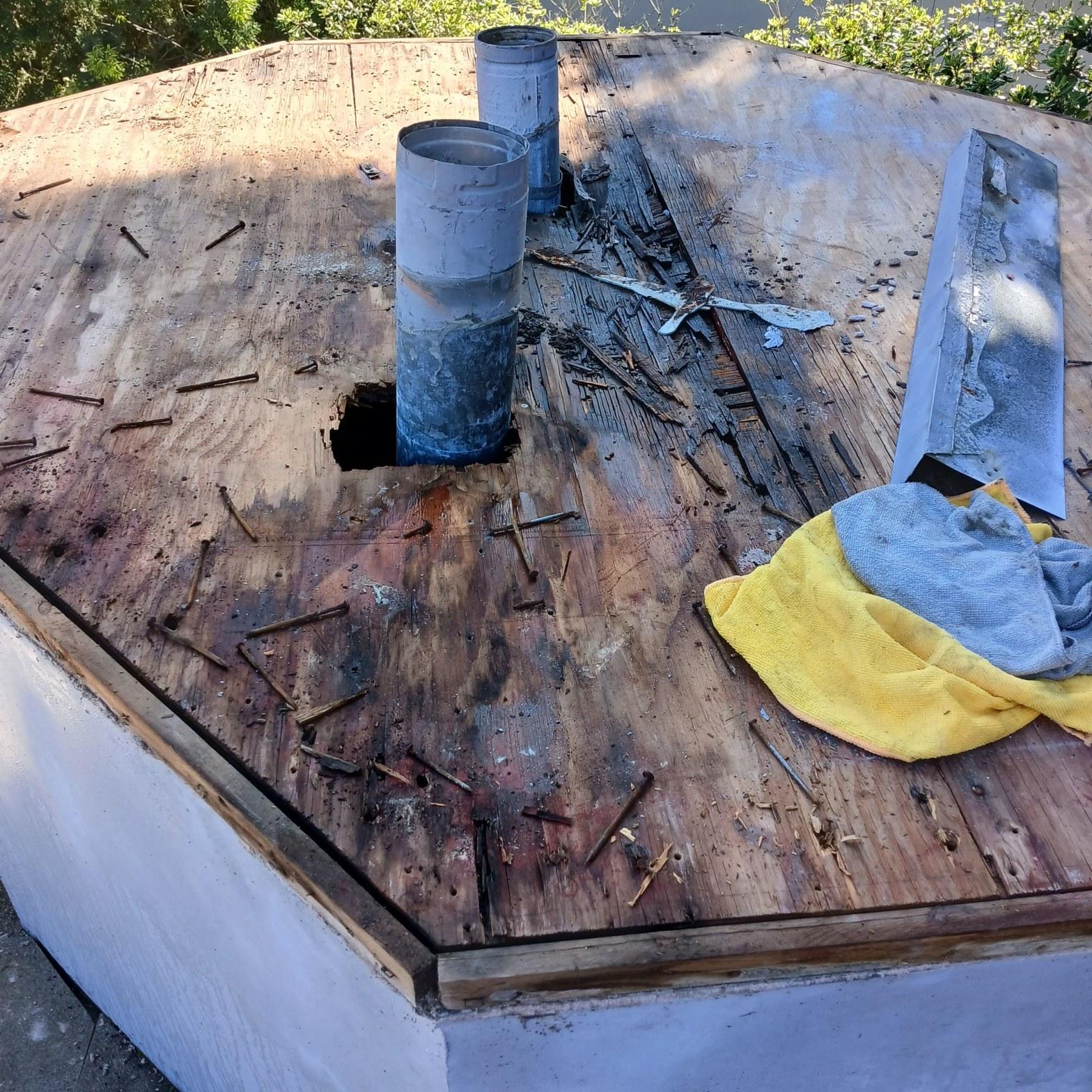
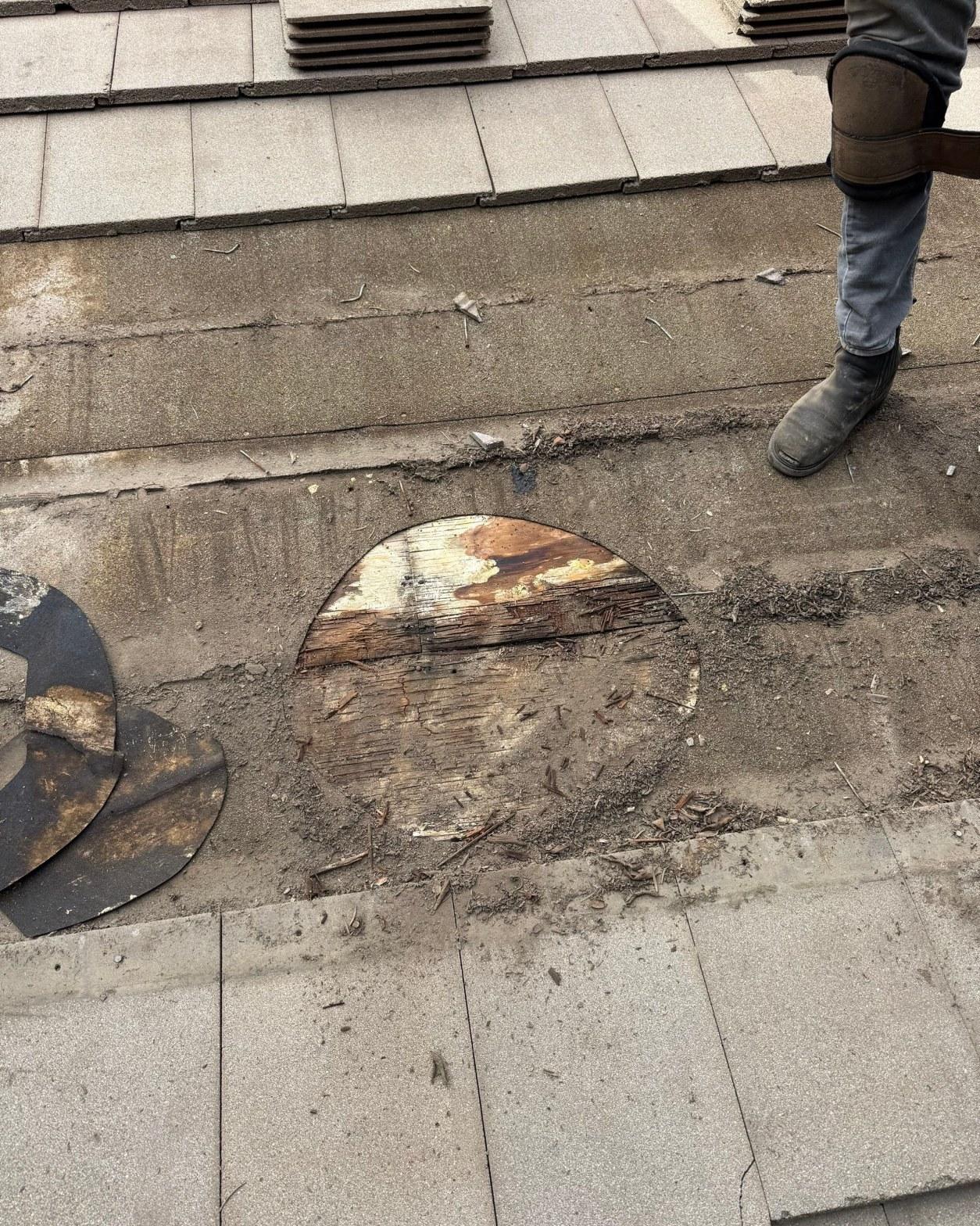
The drip-edge flashing along the eave perimeter had corroded through in multiple spots, and a hip valley showed a full circular penetration — an open hole to the roof deck with no active seal. This kind of valley failure typically develops when a pipe boot, vent, or mechanical fastener works loose over 10 to 15 years of thermal cycling and the flashing mortar beneath the tile cracks.
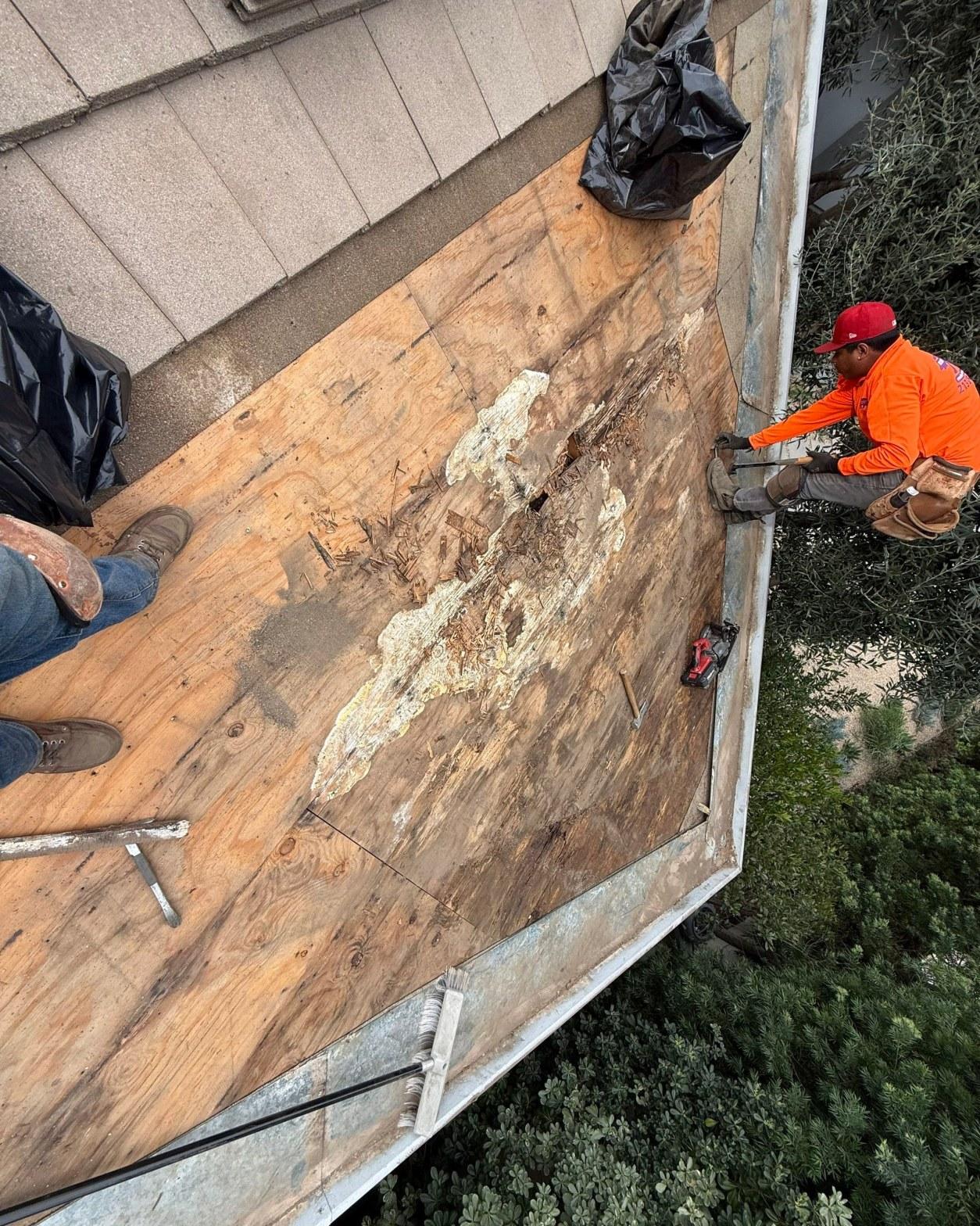
International Building Code section R903 requires that all roof drainage components — including valleys and drip edges — be maintained watertight. When a valley penetration is left open, even a moderate rain event can introduce enough water to saturate 4 to 6 feet of roof decking in a single storm. Given that Los Angeles received above-average rainfall during the 2023–24 season per NOAA records, the timing of this repair was critical.
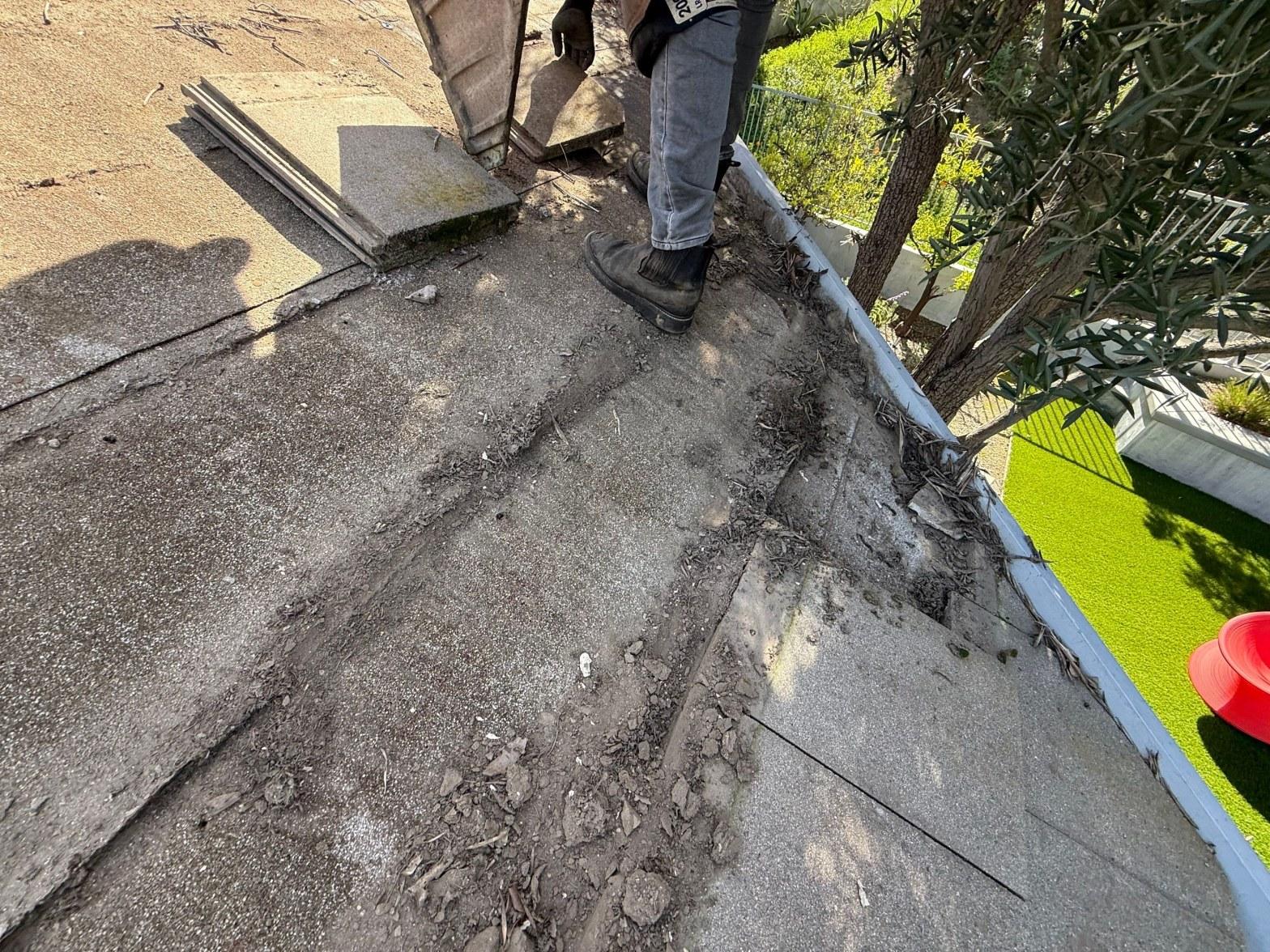
The gutter channel along the eave edge was packed with compacted leaf litter, broken tile granules, and what appeared to be 2 to 3 years of accumulated organic debris — enough mass to hold moisture against the fascia board continuously and accelerate the flashing corrosion already visible.
How Was the Repair Completed?
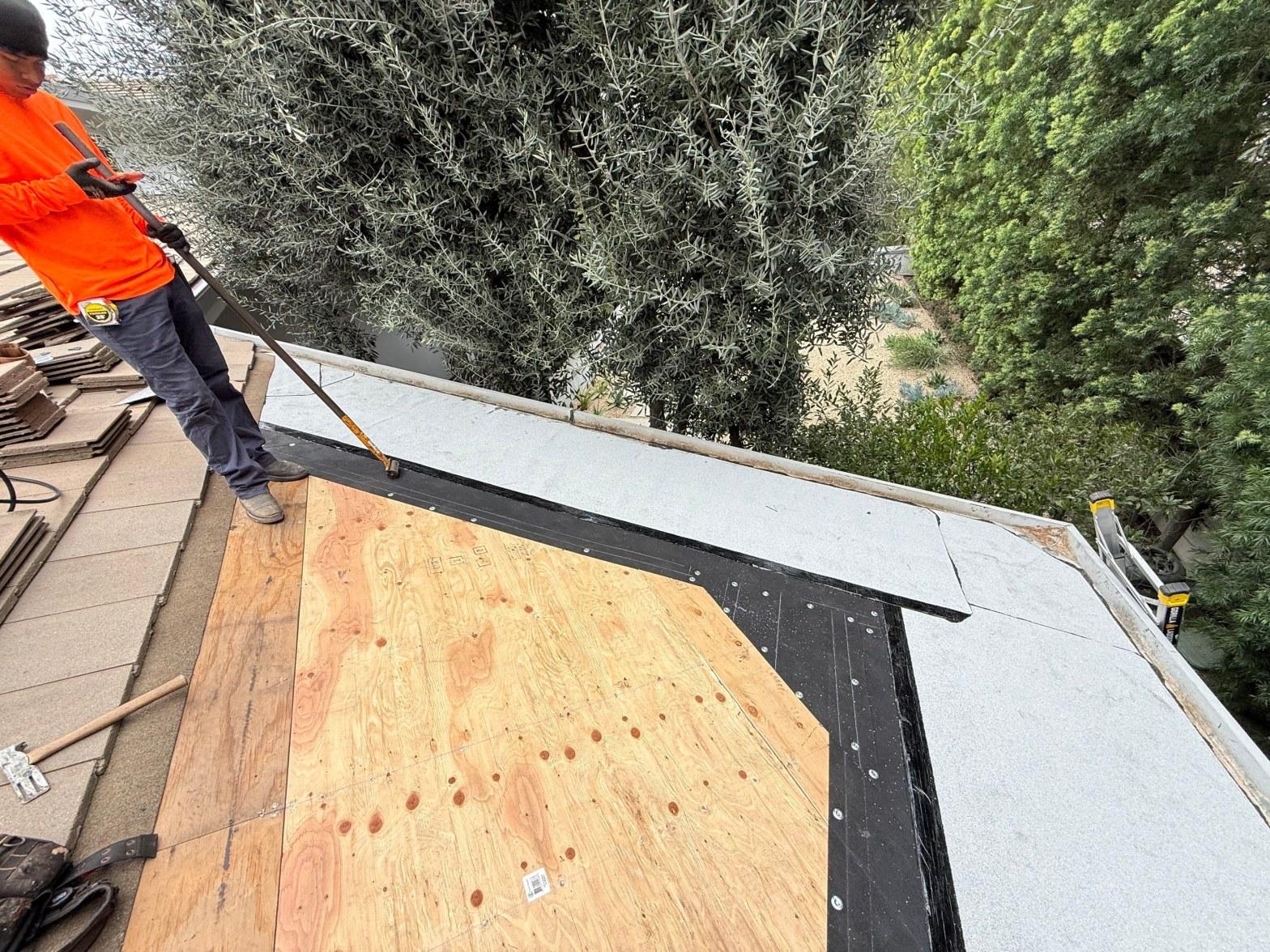
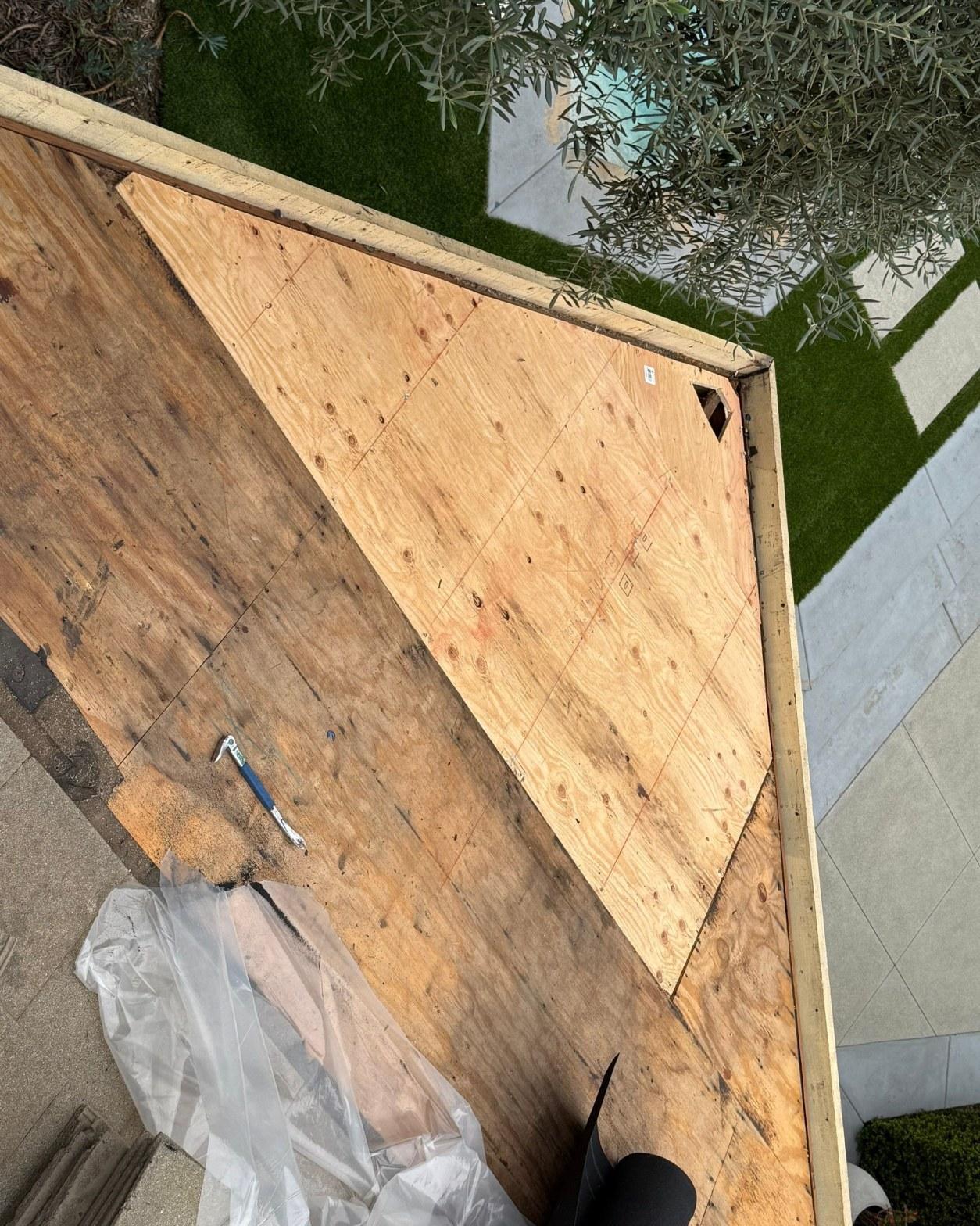
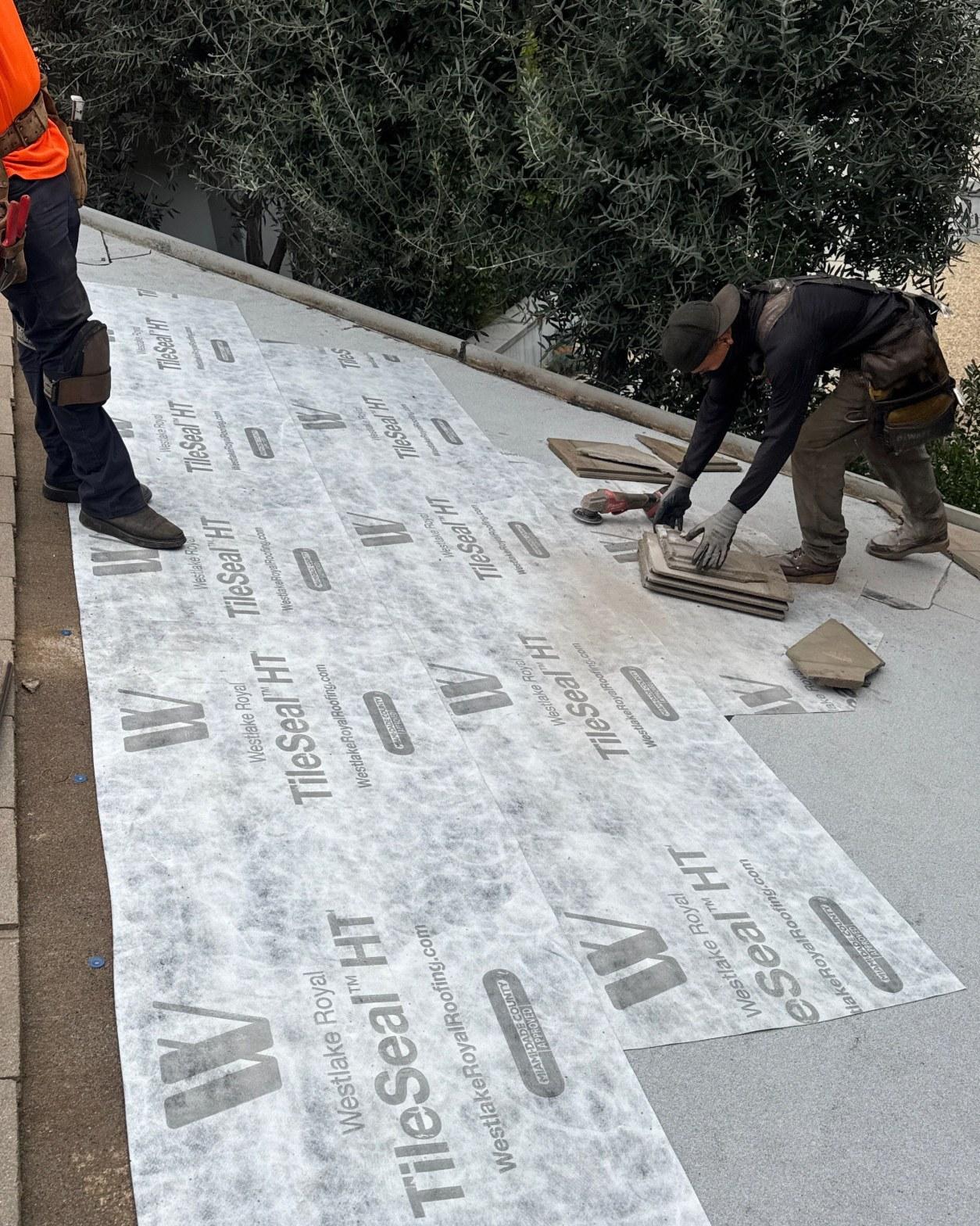
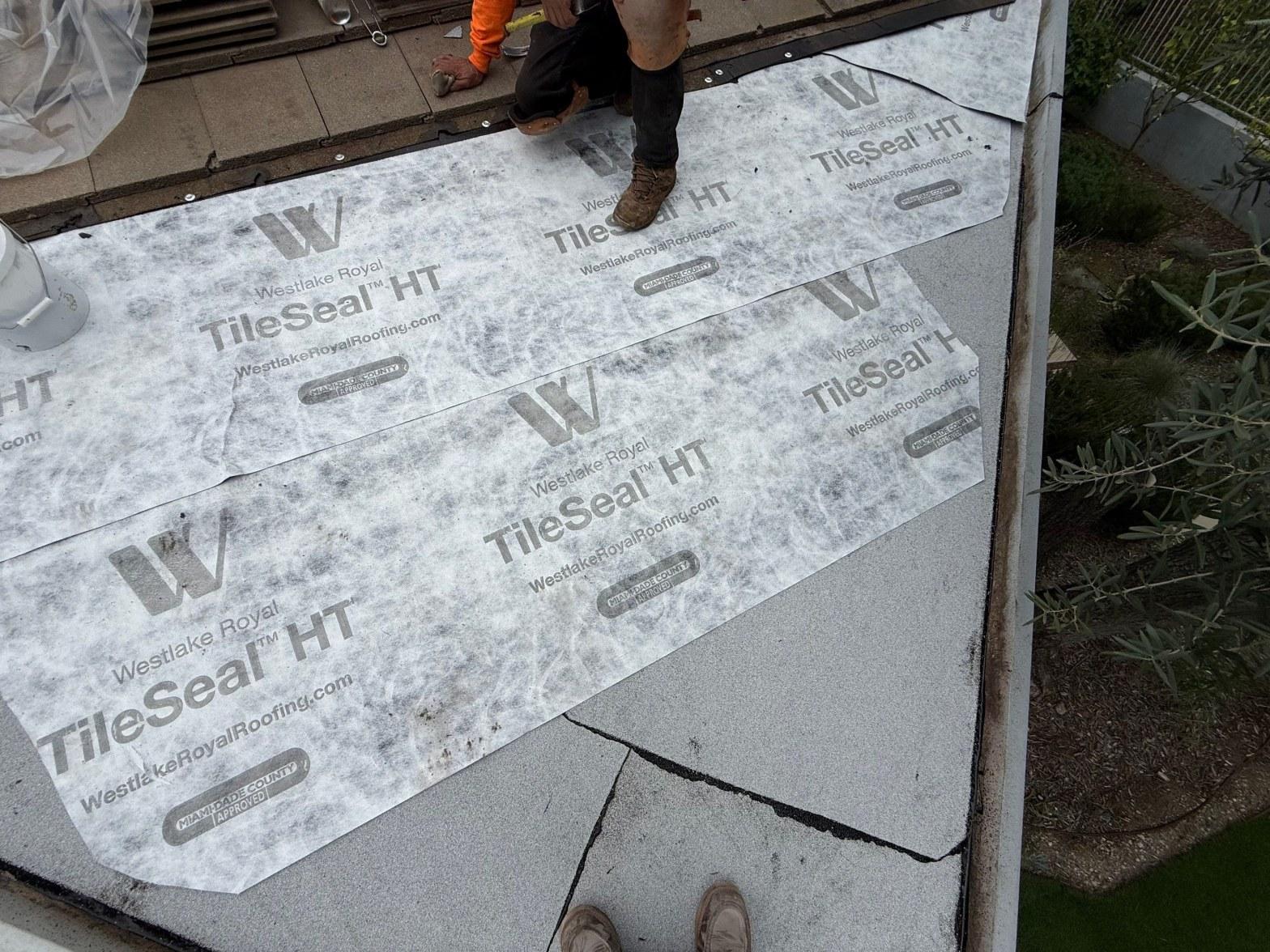
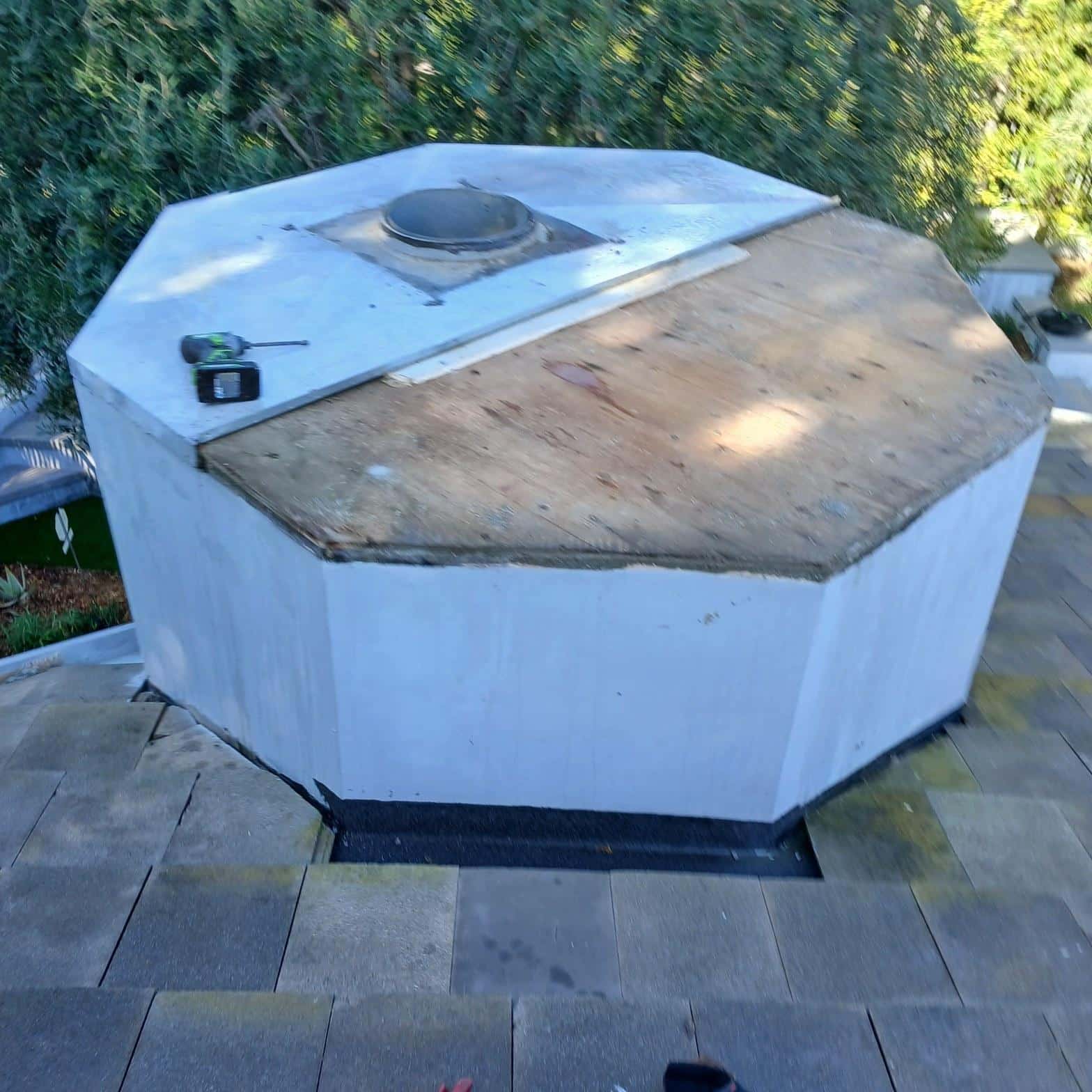
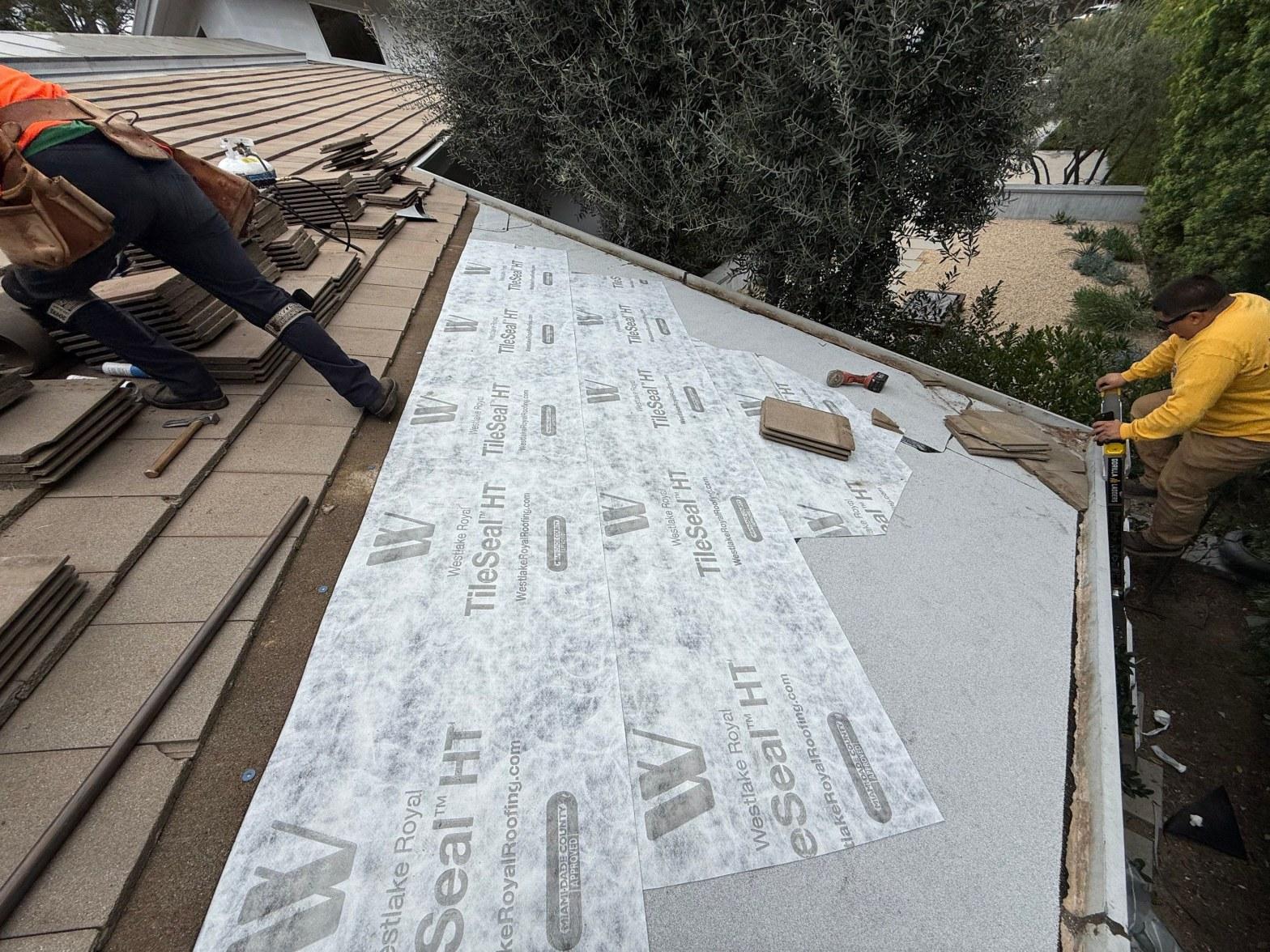
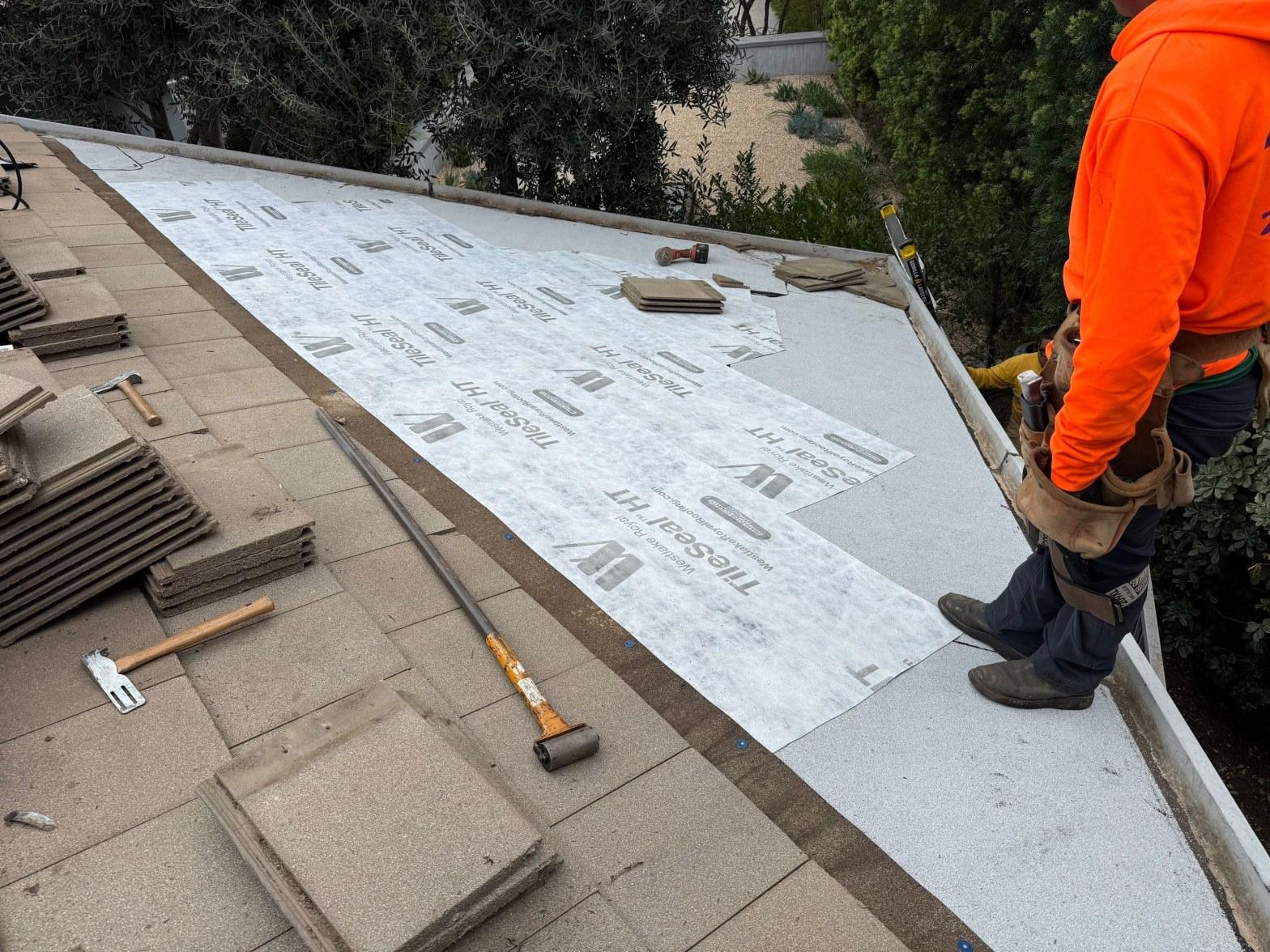
All work was completed in a single mobilization: flashing replacement along the deteriorated eave sections, a patched and sealed valley penetration, removal of the mismatched shingle band down to the deck, new underlayment installation beneath that zone, and full gutter clearing along the affected eave.
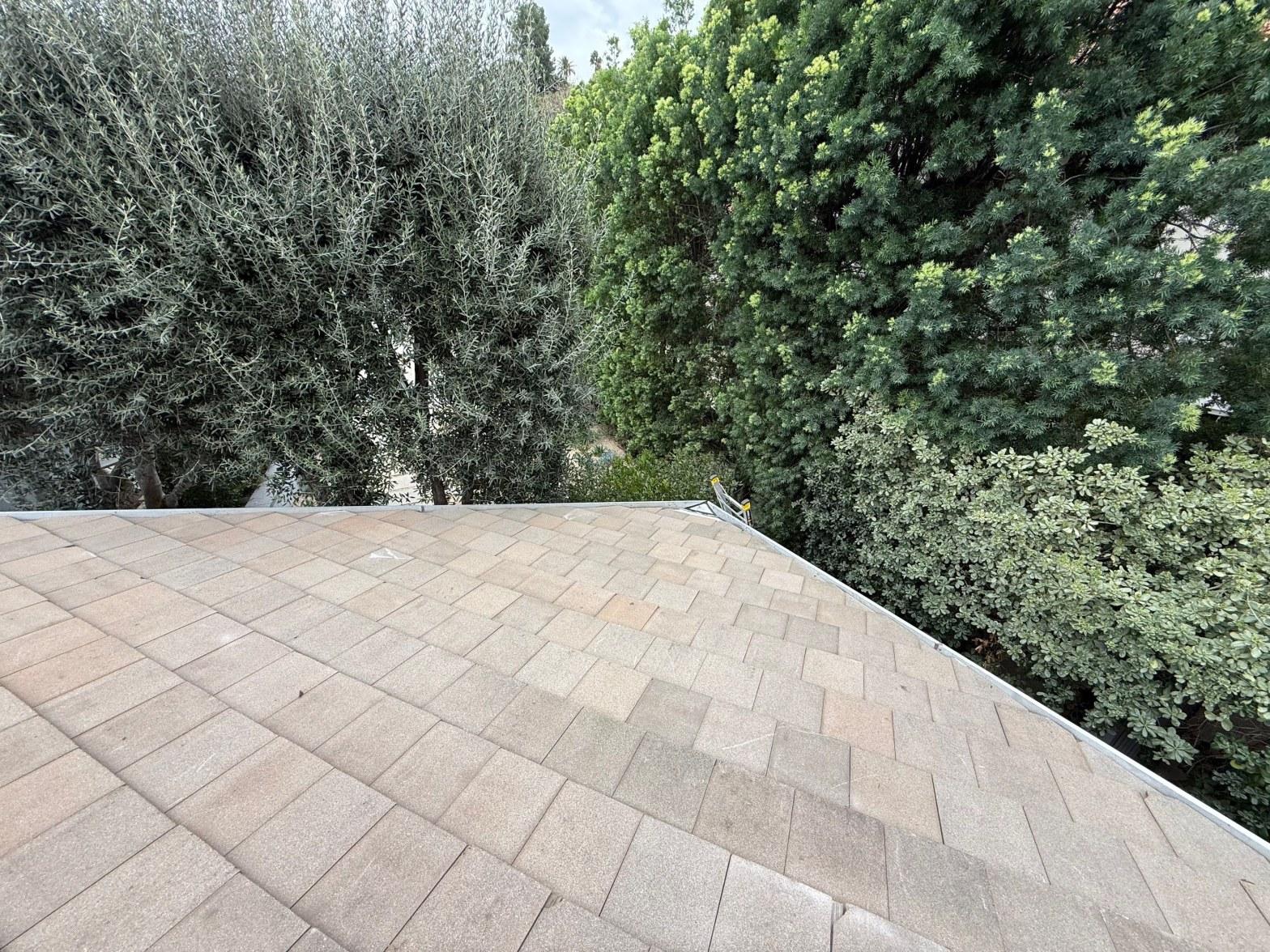
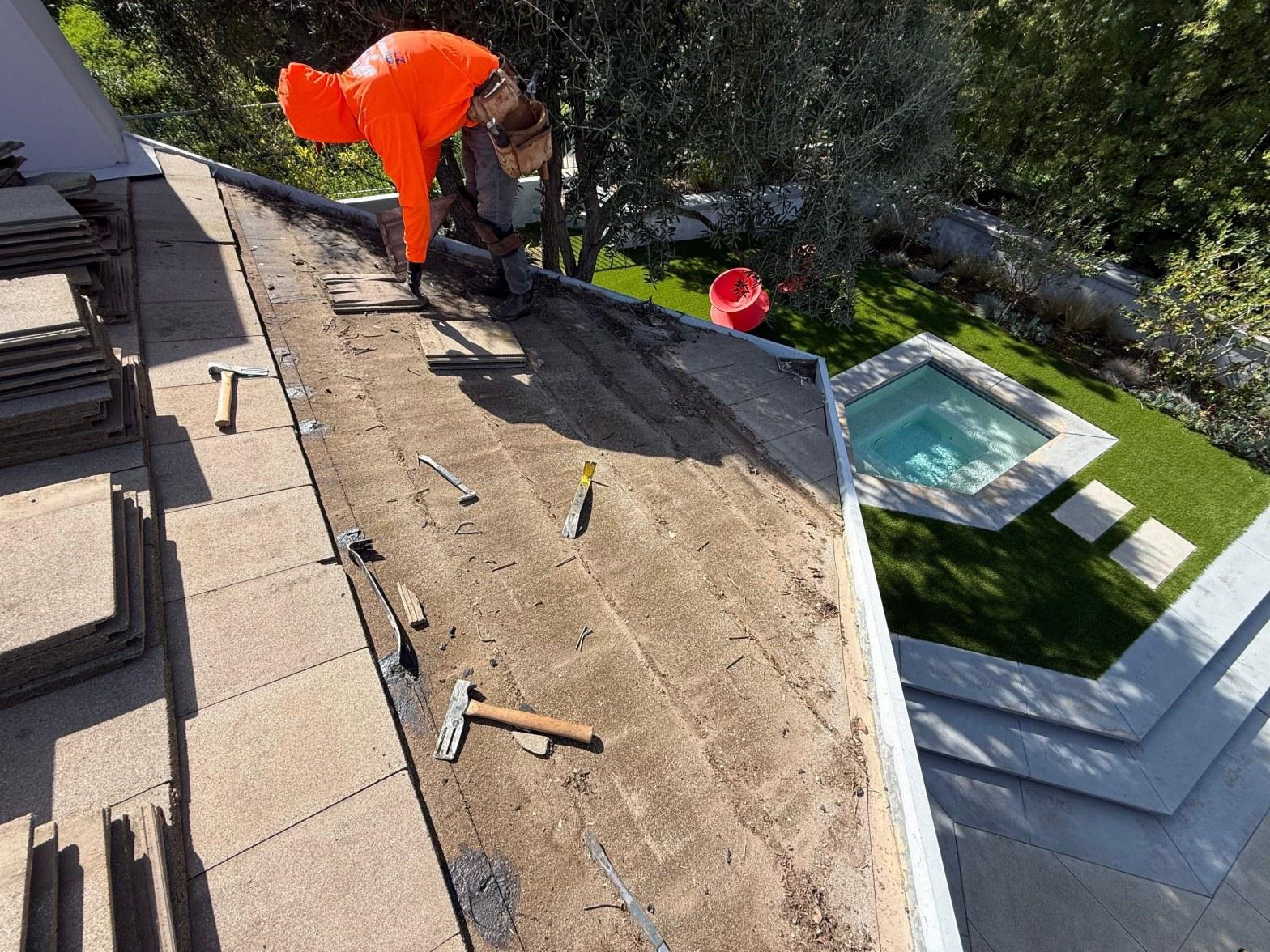
The ridge line was the staging point for the full roof walk — as visible in the inspection photos — giving the crew a clear sightline down every tile course to identify lifted, cracked, or displaced tiles before work began. Approximately 8 to 12 individual tiles were re-seated and re-mortared along the field during the repair pass. The completed sections were left flush with the surrounding tile plane, with no exposed fasteners and drip-edge lapped correctly over the gutter lip.
Schedule Your Roof Inspection in the Los Angeles Area
If your tile or shingle roof is more than 15 years old and hasn’t had a documented inspection, this project is a clear example of what deferred maintenance looks like — and what it costs to address it before water reaches the deck. Call Roof Replacement Inc to schedule a ridge-to-eave inspection for your Los Angeles property. We serve the 91436 ZIP code and surrounding communities with same-week availability most of the year.


