What Was the Goal on This Project?
The homeowner at 2816 Johnston St in Los Angeles, CA 90031 needed a complete flat roof replacement — the existing surface had reached the end of its serviceable life and was no longer providing reliable waterproofing. The goal was a clean tear-off and a new torch-down modified bitumen system that would seal all penetrations, reflect summer heat, and hold up to Southern California’s weather cycles for years to come.
Flat roofs in this part of Los Angeles take a beating. According to the National Weather Service Los Angeles office, summer temperatures in the LA basin regularly exceed 90°F, and UV exposure at low roof pitches degrades older built-up and single-ply membranes faster than on sloped surfaces. A torch-down modified bitumen system was the right call here: it bonds directly to the substrate, resists ponding water, and the white granulated surface qualifies as a cool roof under California’s Title 24 building energy standards.
Project Gallery
What Did We Find When We Stripped the Old Roof?
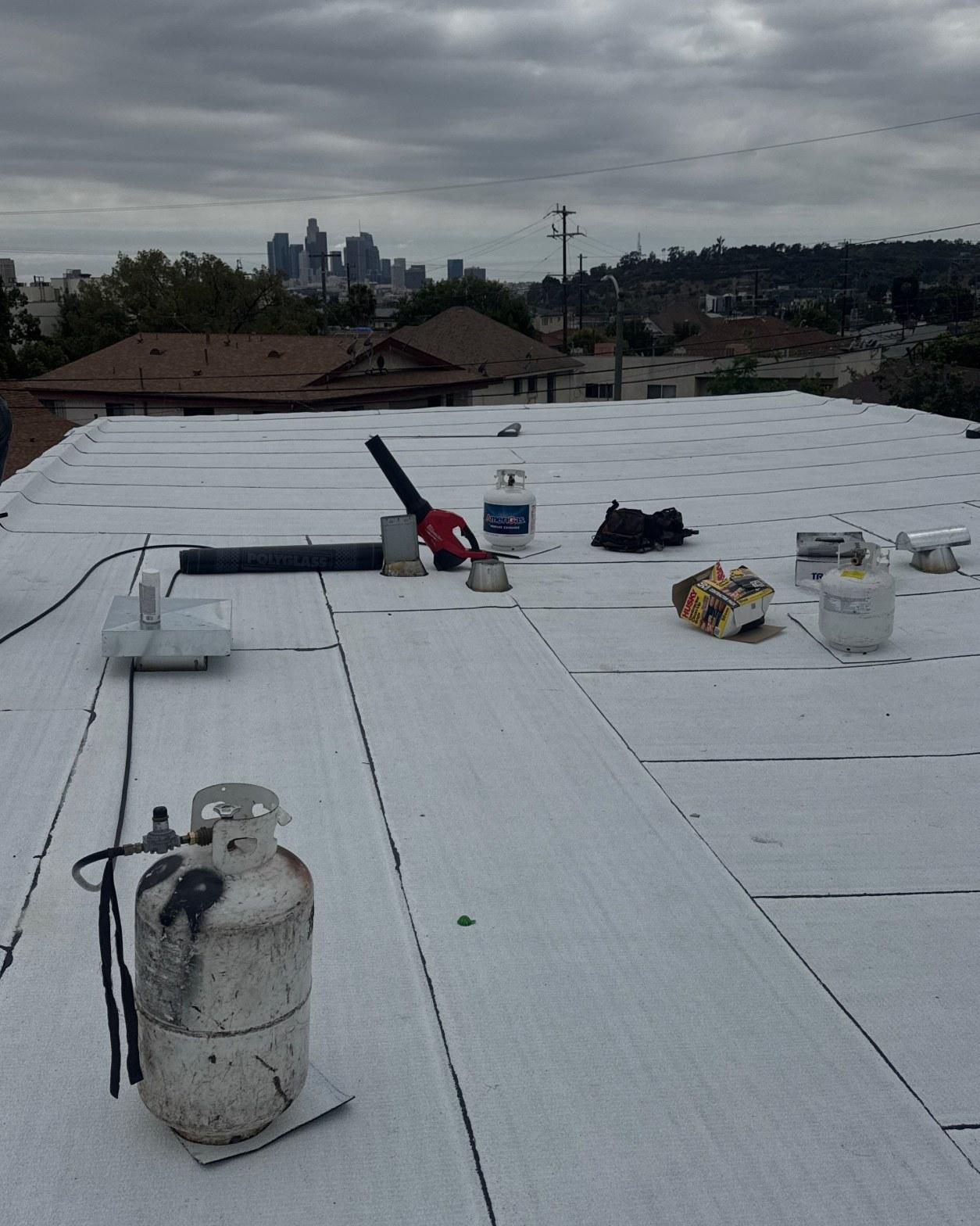
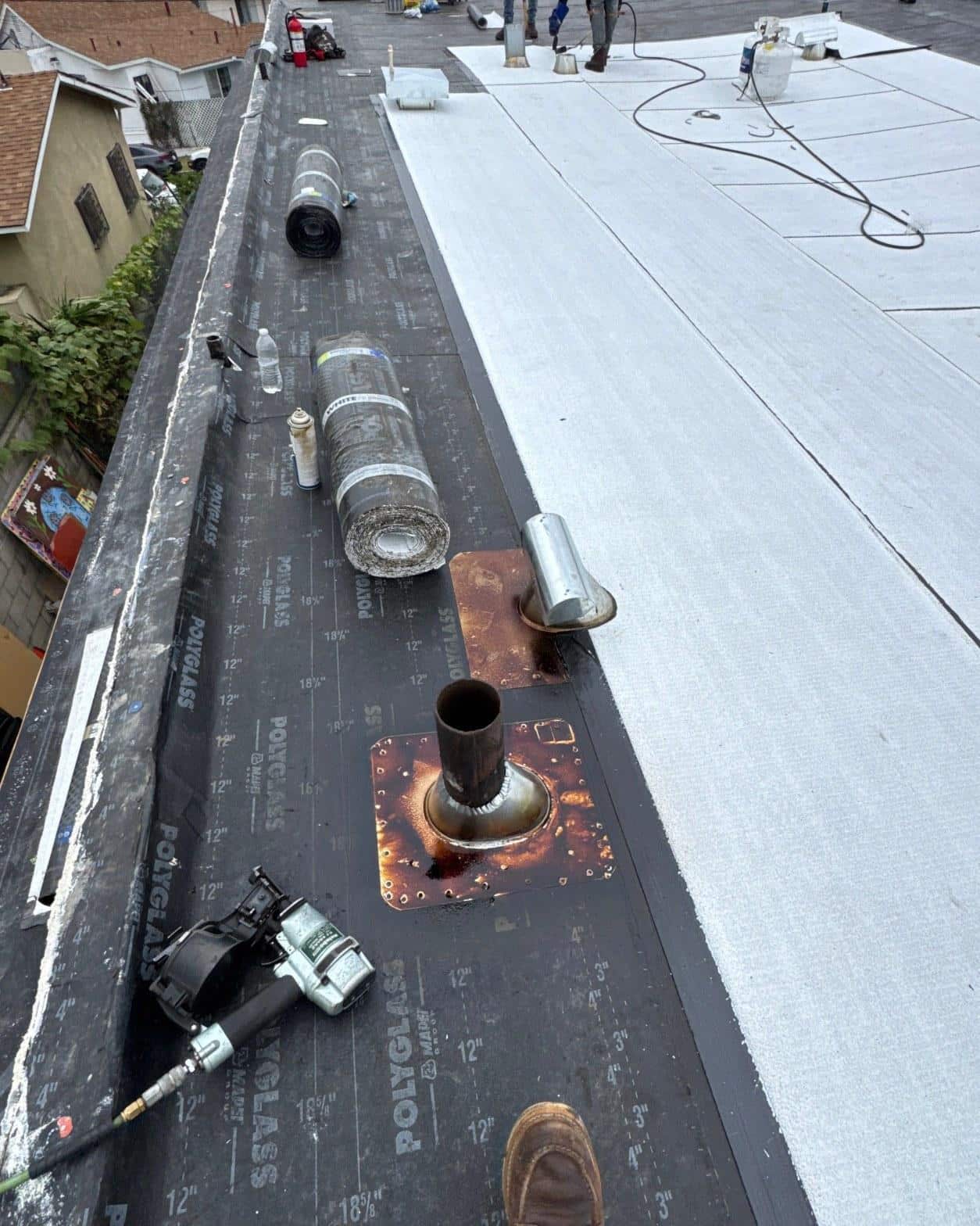
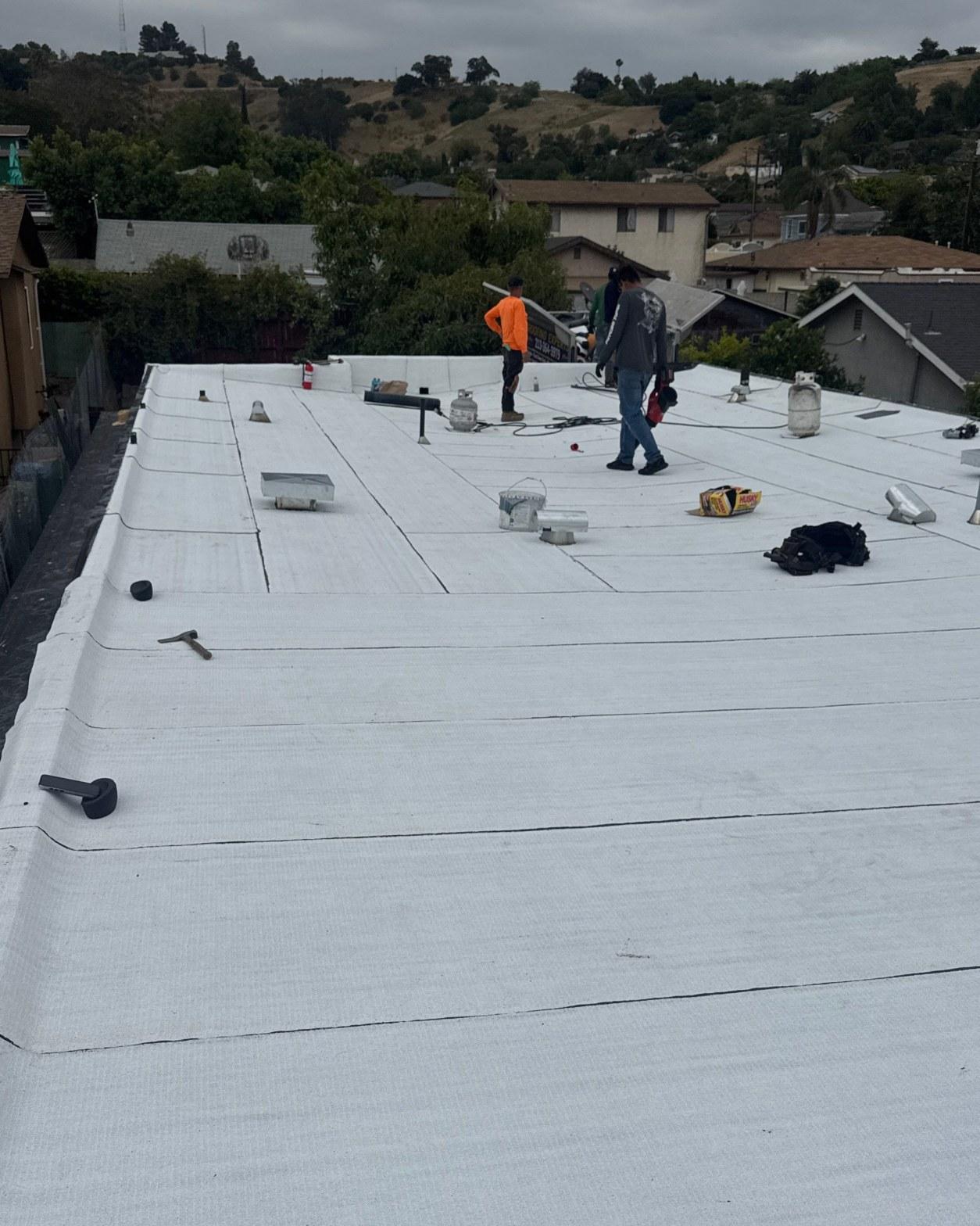
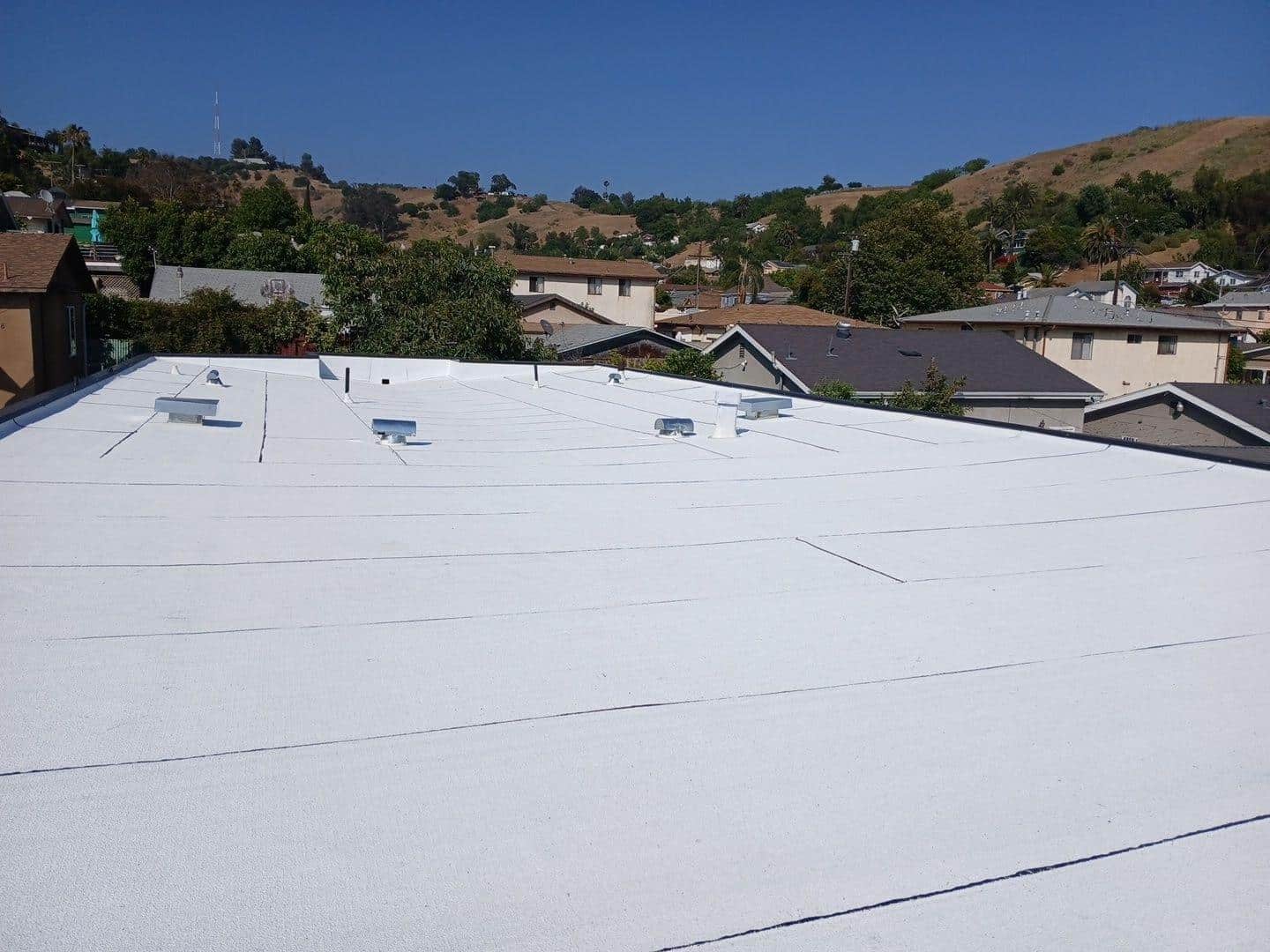
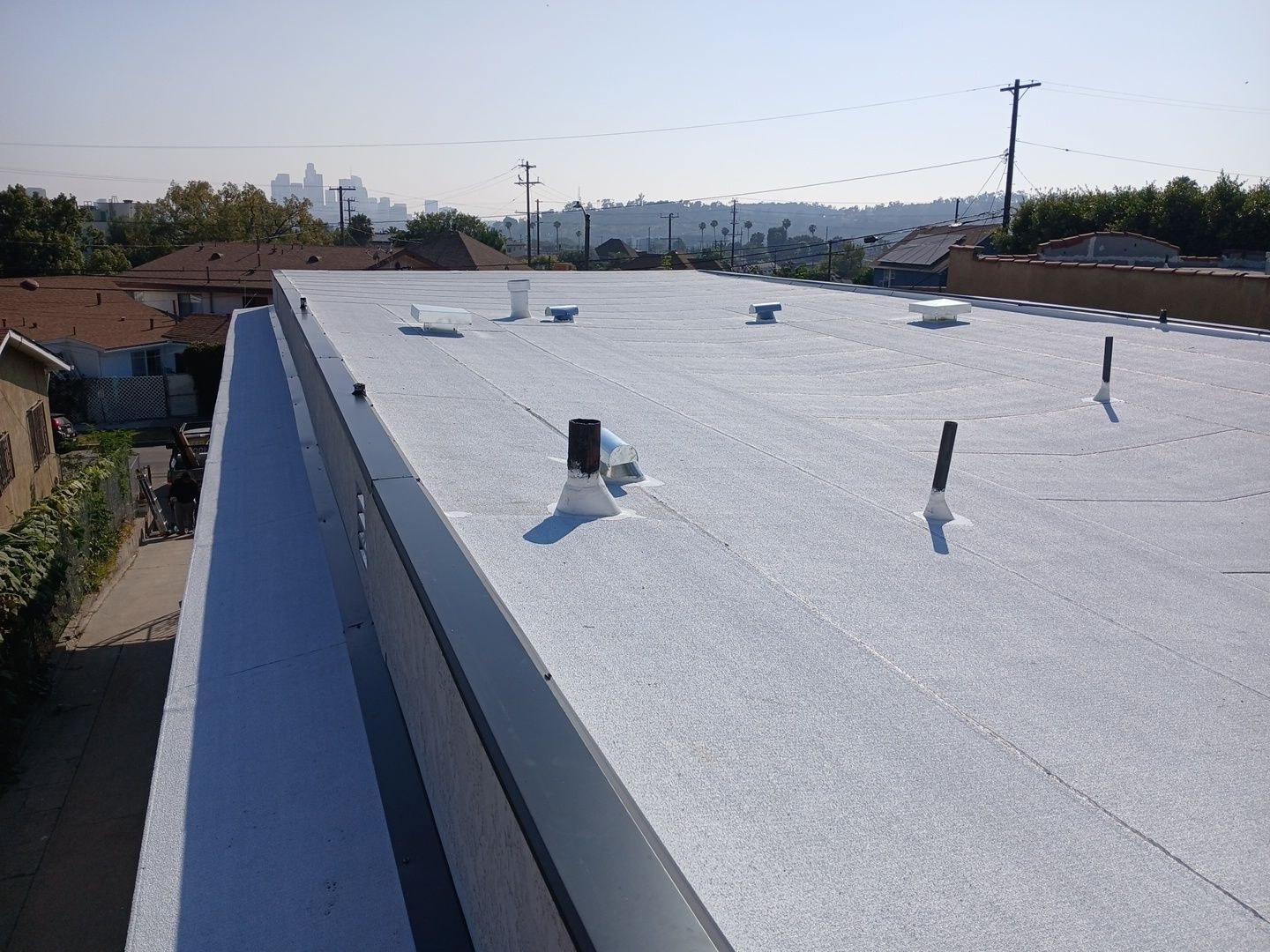
The tear-off revealed a base deck that needed thorough cleaning and preparation before any new material could go down. Penetrations — including at least 4 pipe boots and 2 vent stacks visible across the field — showed rust staining and degraded flashing collars that were no longer sealing correctly. Every one of those penetrations had to be addressed before the new membrane went on.
Our crews stripped the old surface, inspected the deck, and installed a Polyglass modified bitumen base sheet across the entire field first. The Polyglass base sheet provides dimensional stability and a clean, consistent substrate for the torch-applied cap layer. Nailing patterns were laid out to manufacturer specification — you can see the 12" and 18¼" spacing markings printed directly on the Polyglass sheet in the mid-project photos. Across our flat-roof projects in the Los Angeles 90031 ZIP code, we find degraded pipe boot flashing on roughly 8 out of 10 roofs that are more than 15 years old — this one was no exception, and replacing those boots before the cap sheet goes down is what separates a 5-year repair from a 20-year roof.
How Was the Cap Sheet Installed?
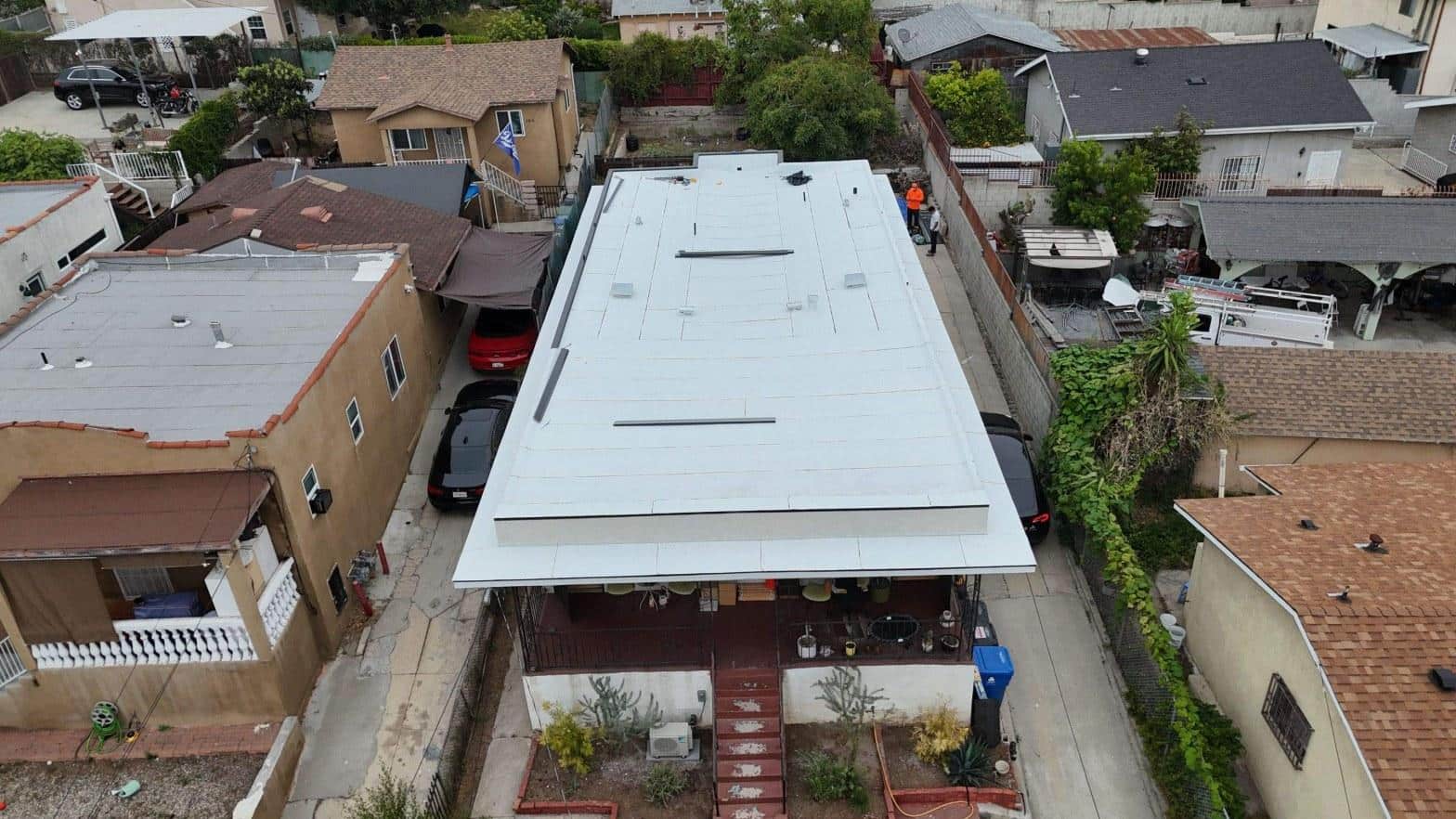
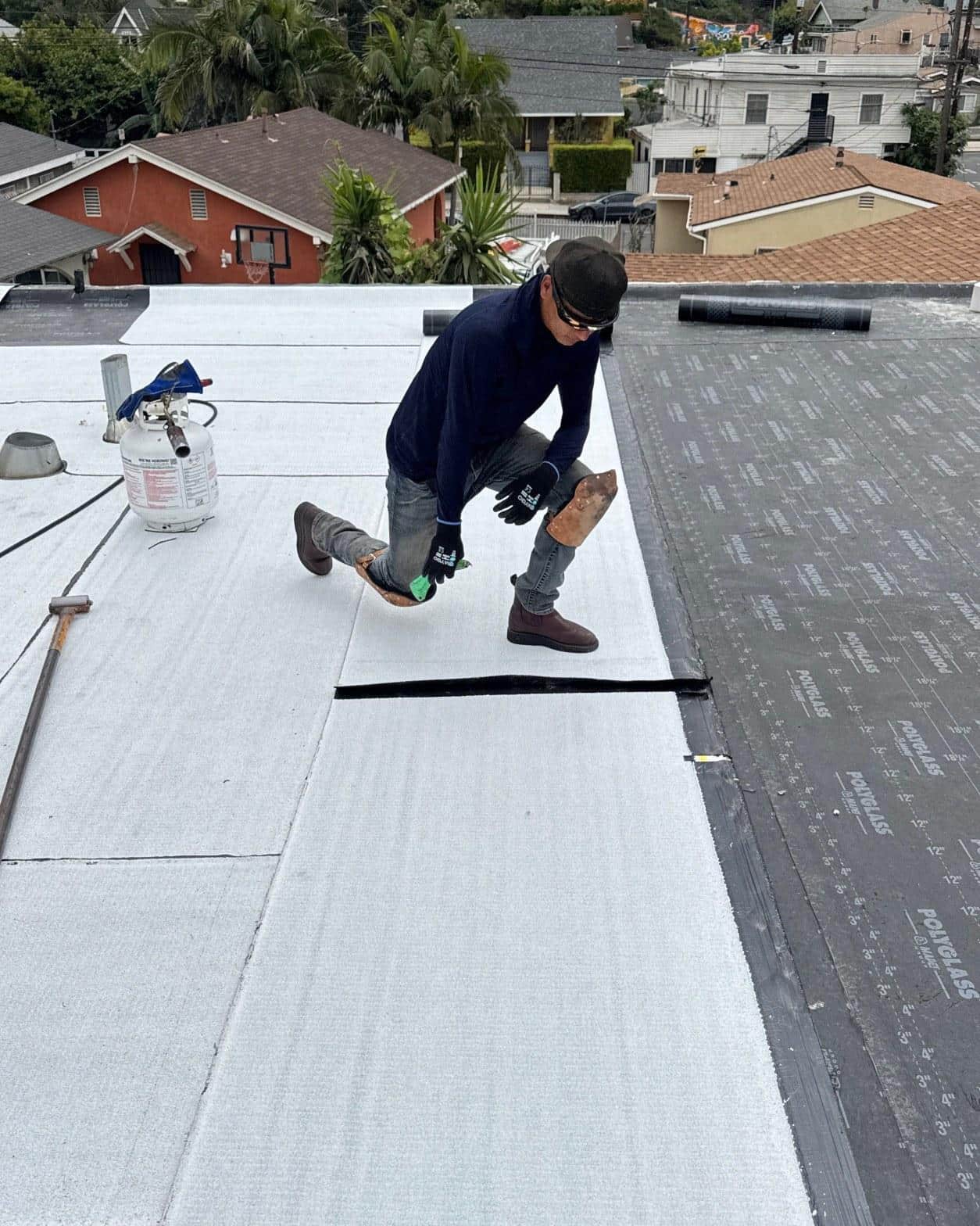
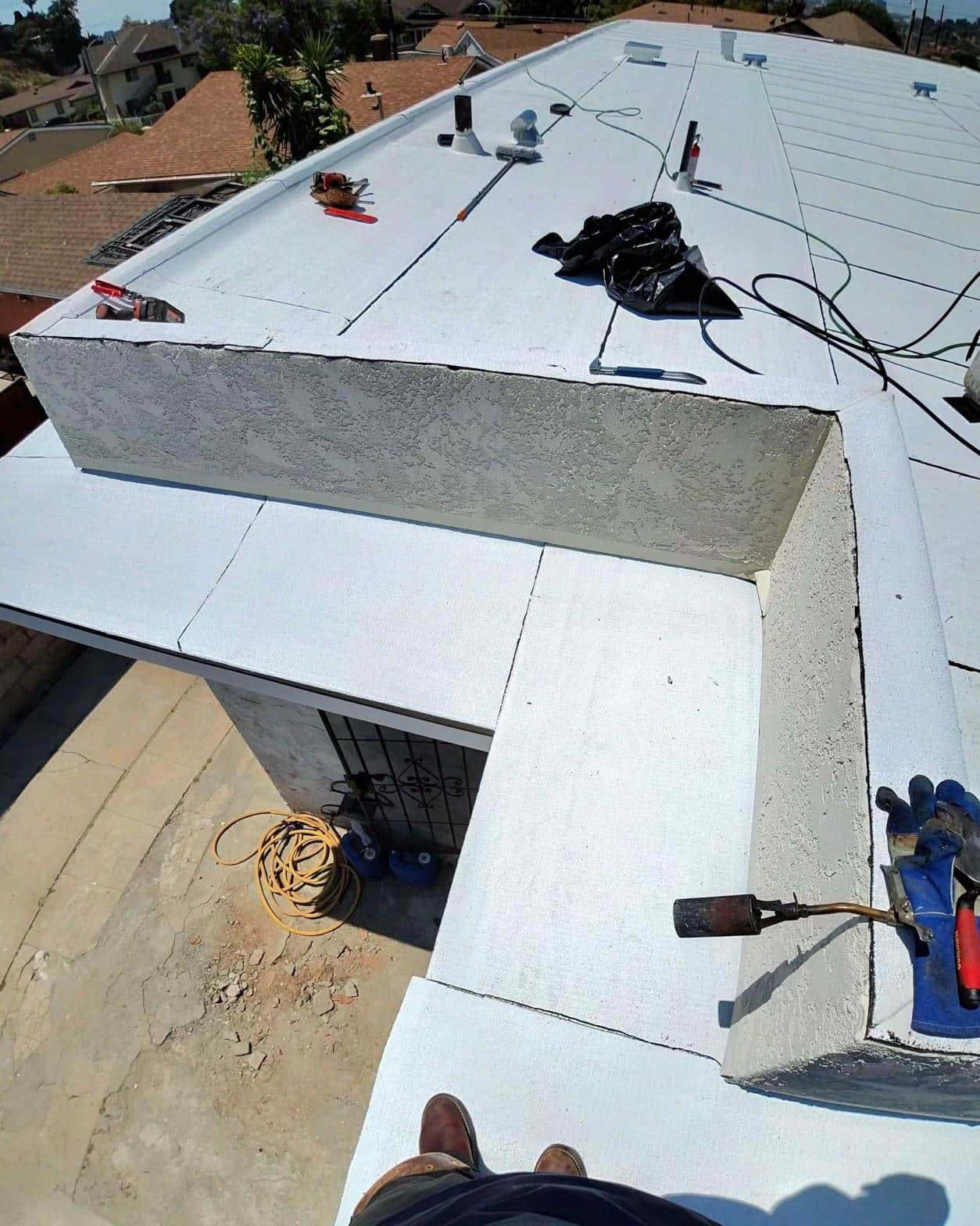
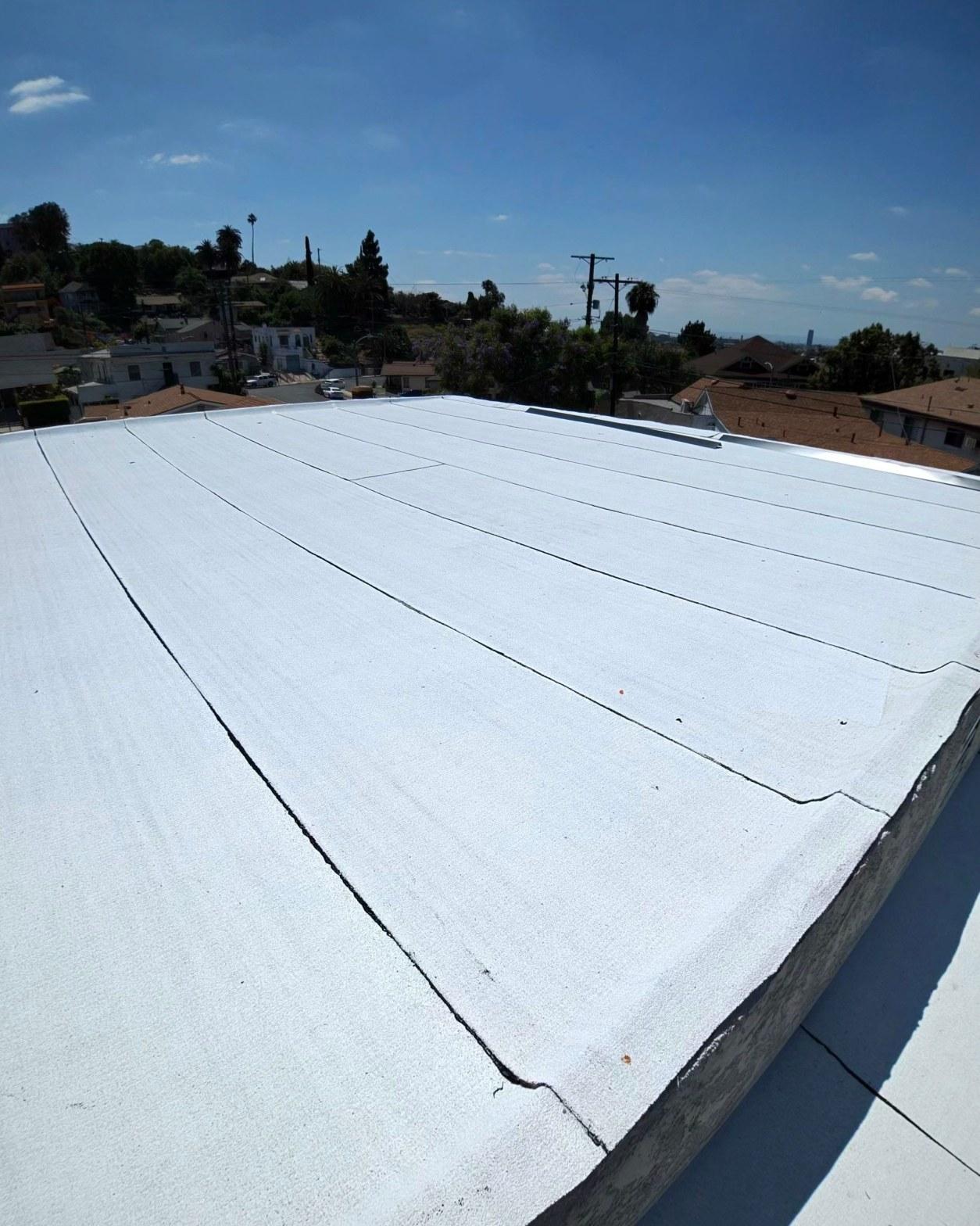
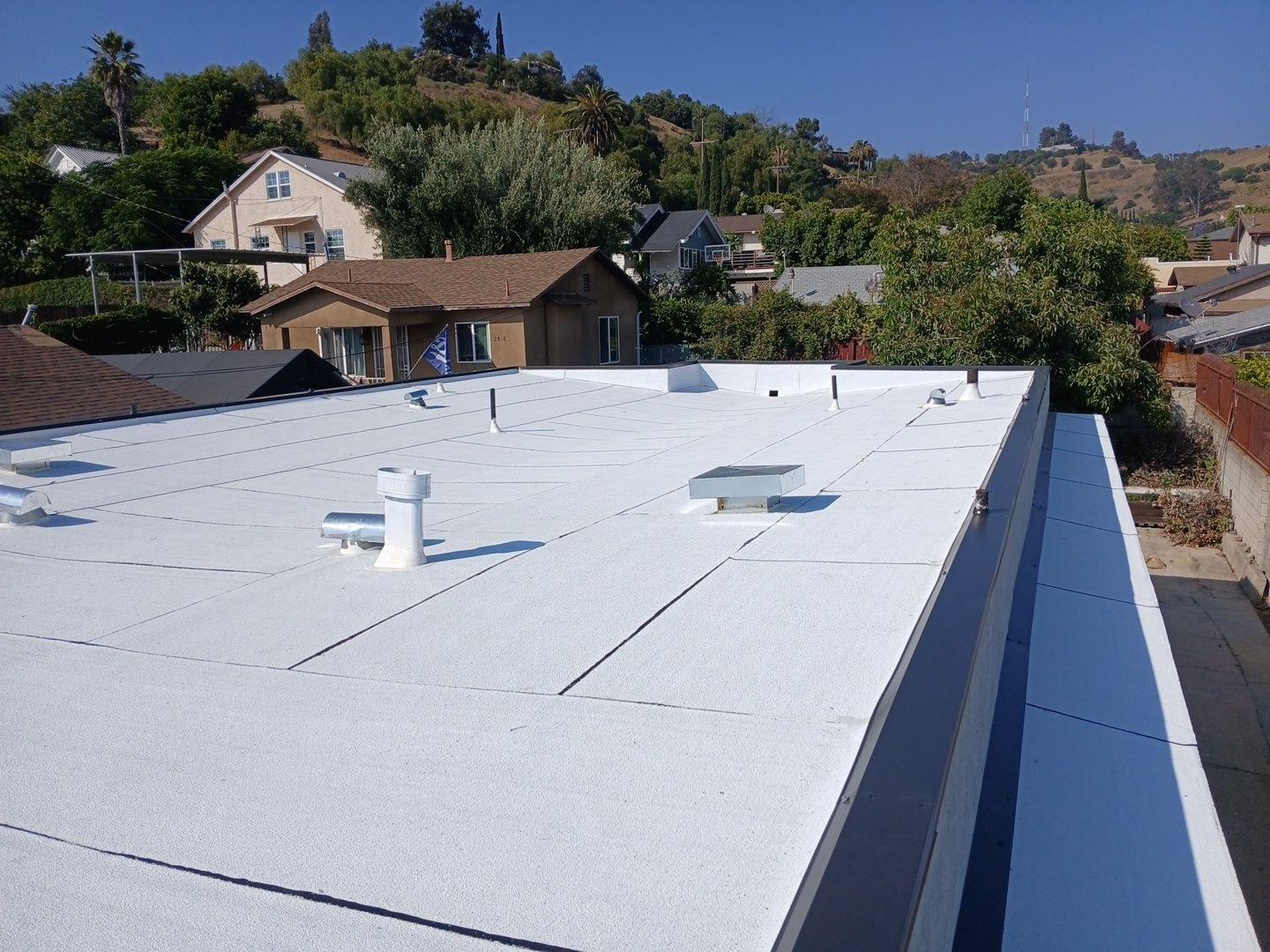
The cap sheet is a white granulated torch-down modified bitumen membrane, heat-fused to the base sheet using propane torches. The torching process melts the underside of the membrane and the top surface of the base sheet simultaneously, creating a continuous monolithic bond with no gaps, no fasteners through the waterproofing layer, and no seams that can lift in wind-driven rain.
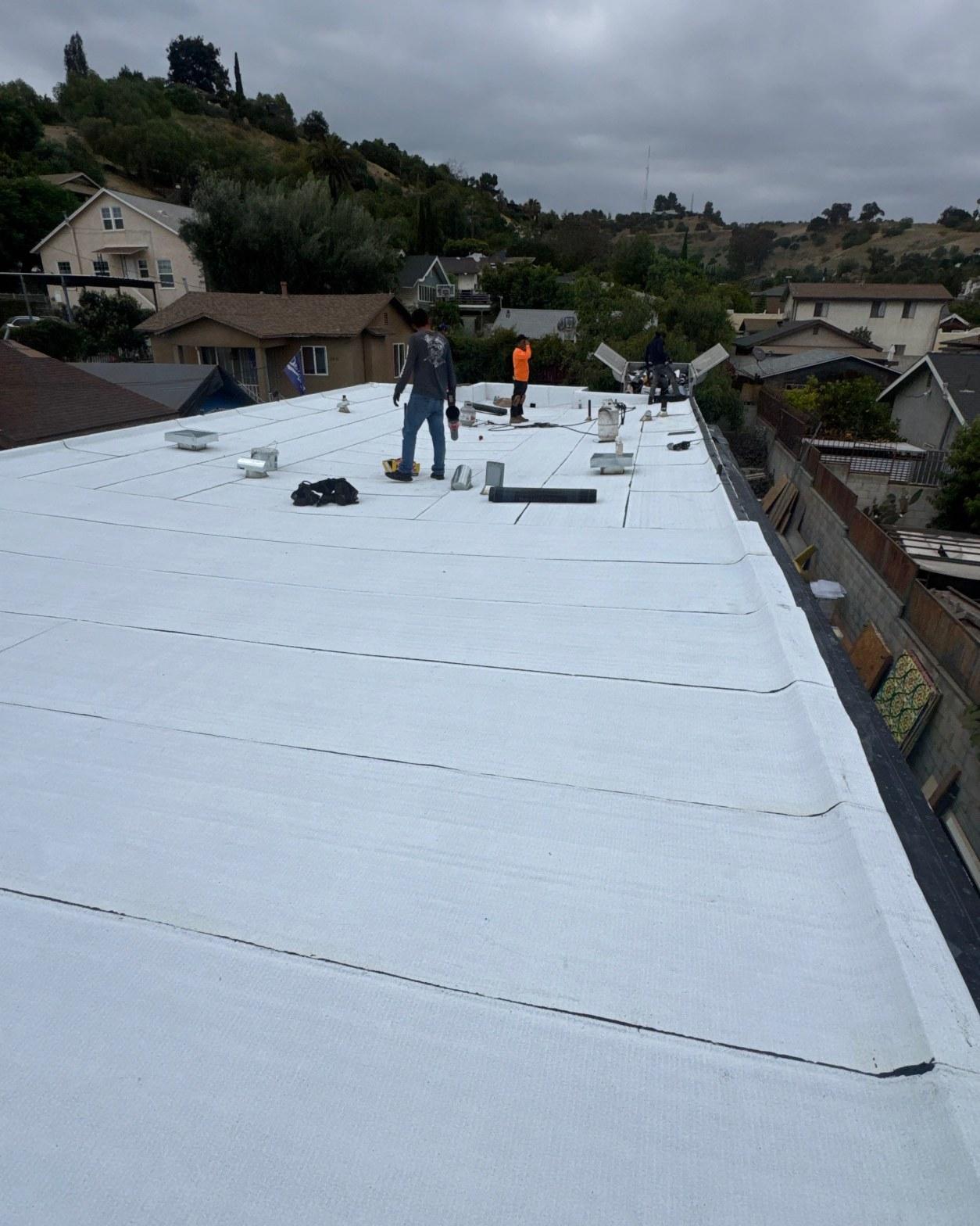
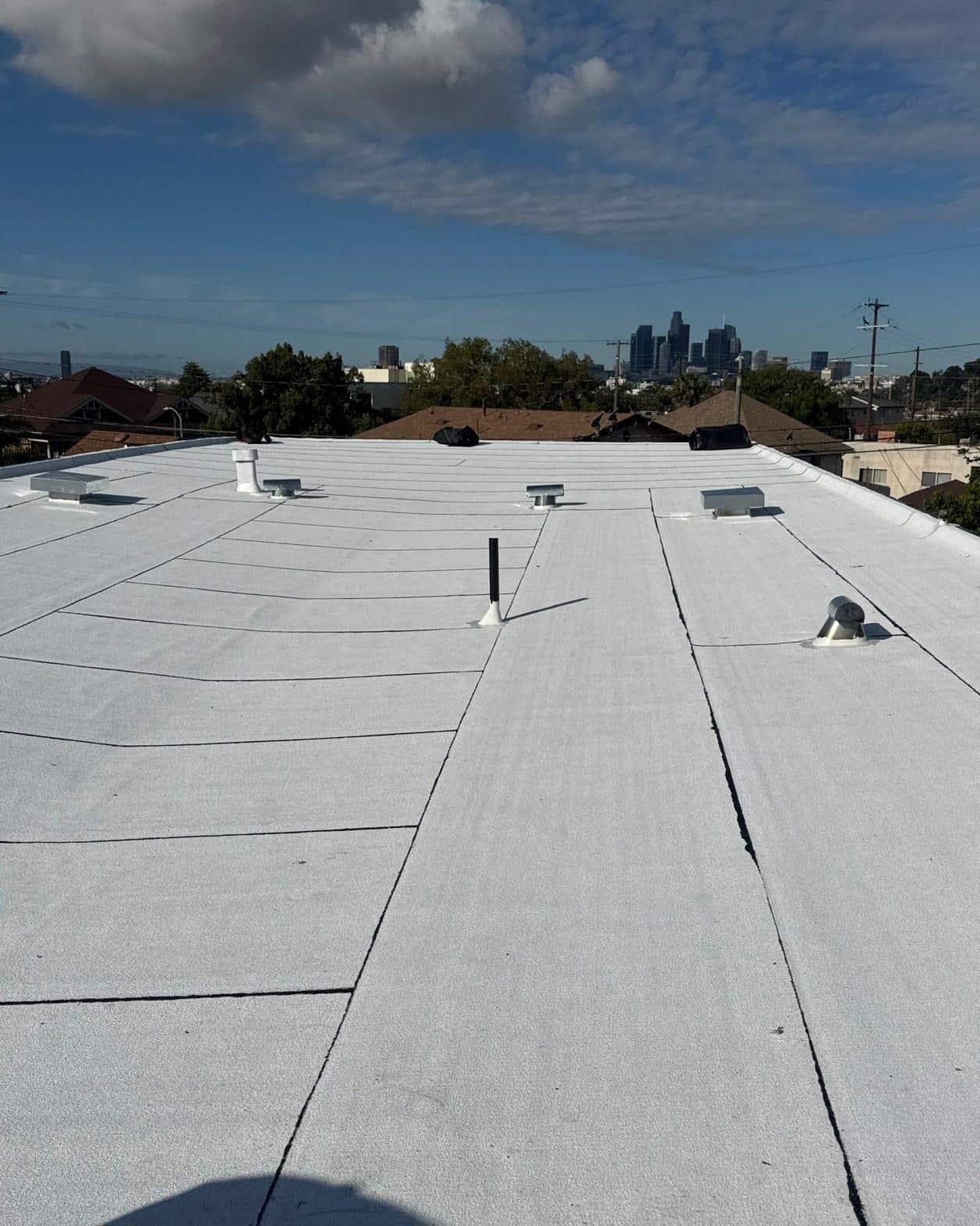
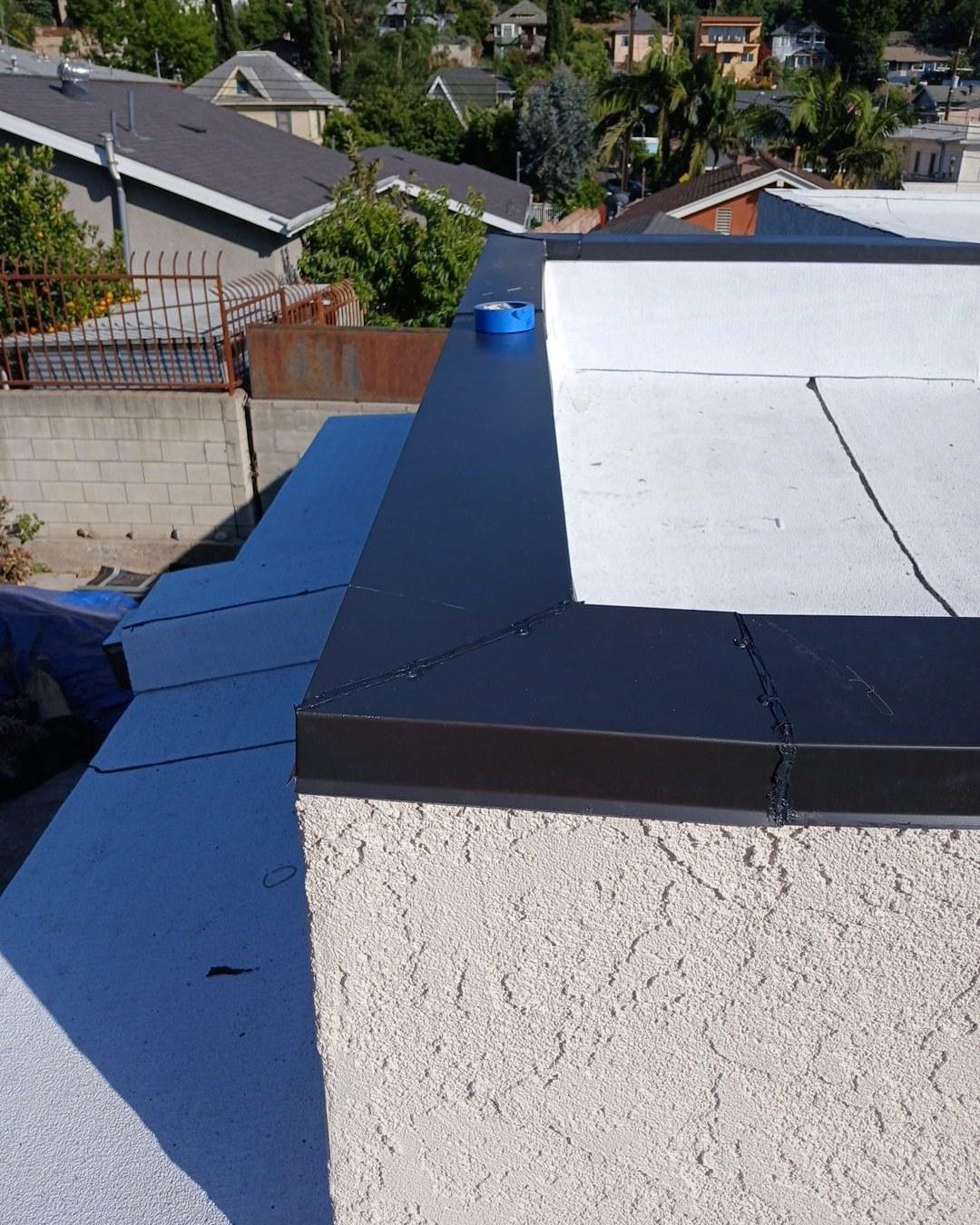
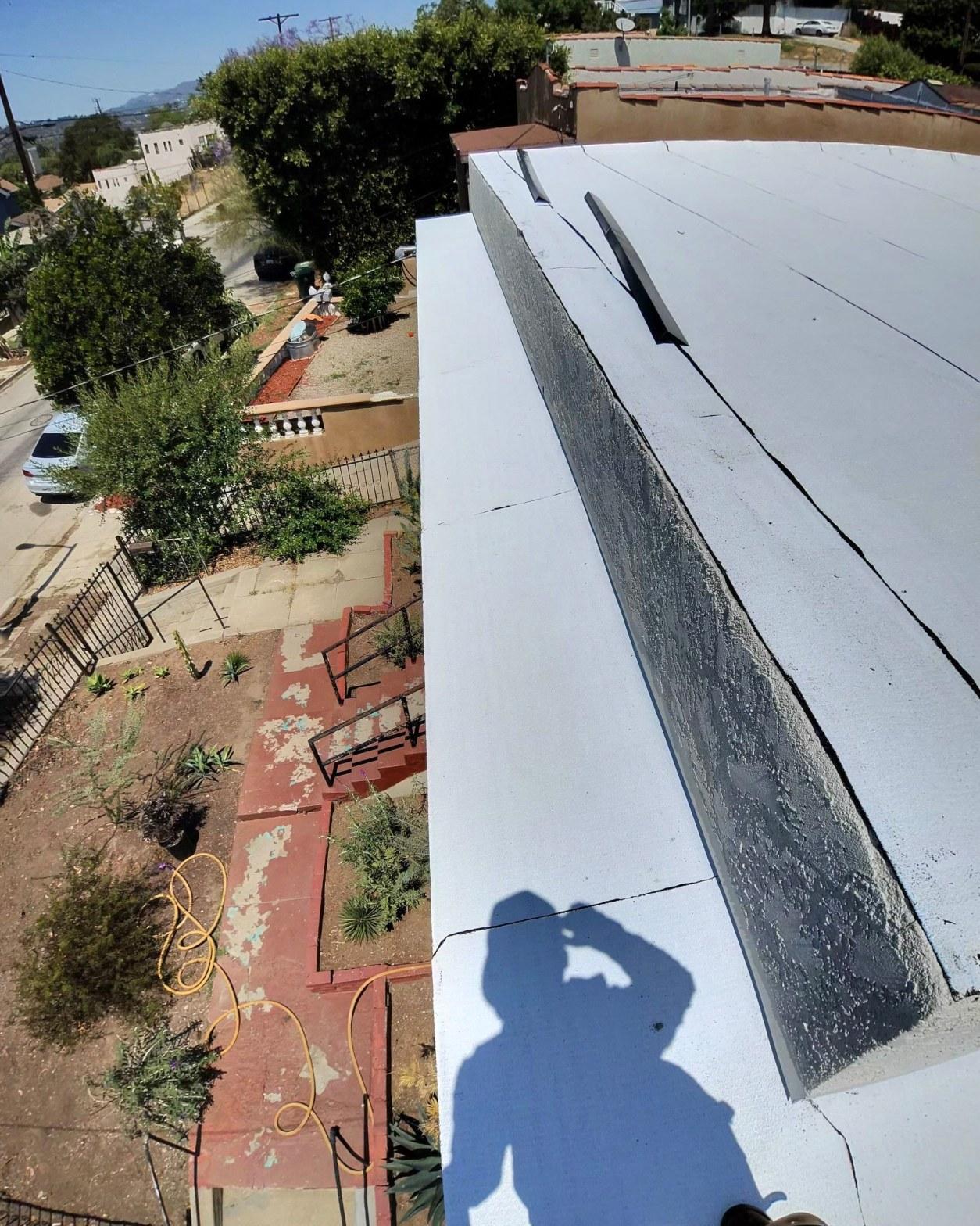
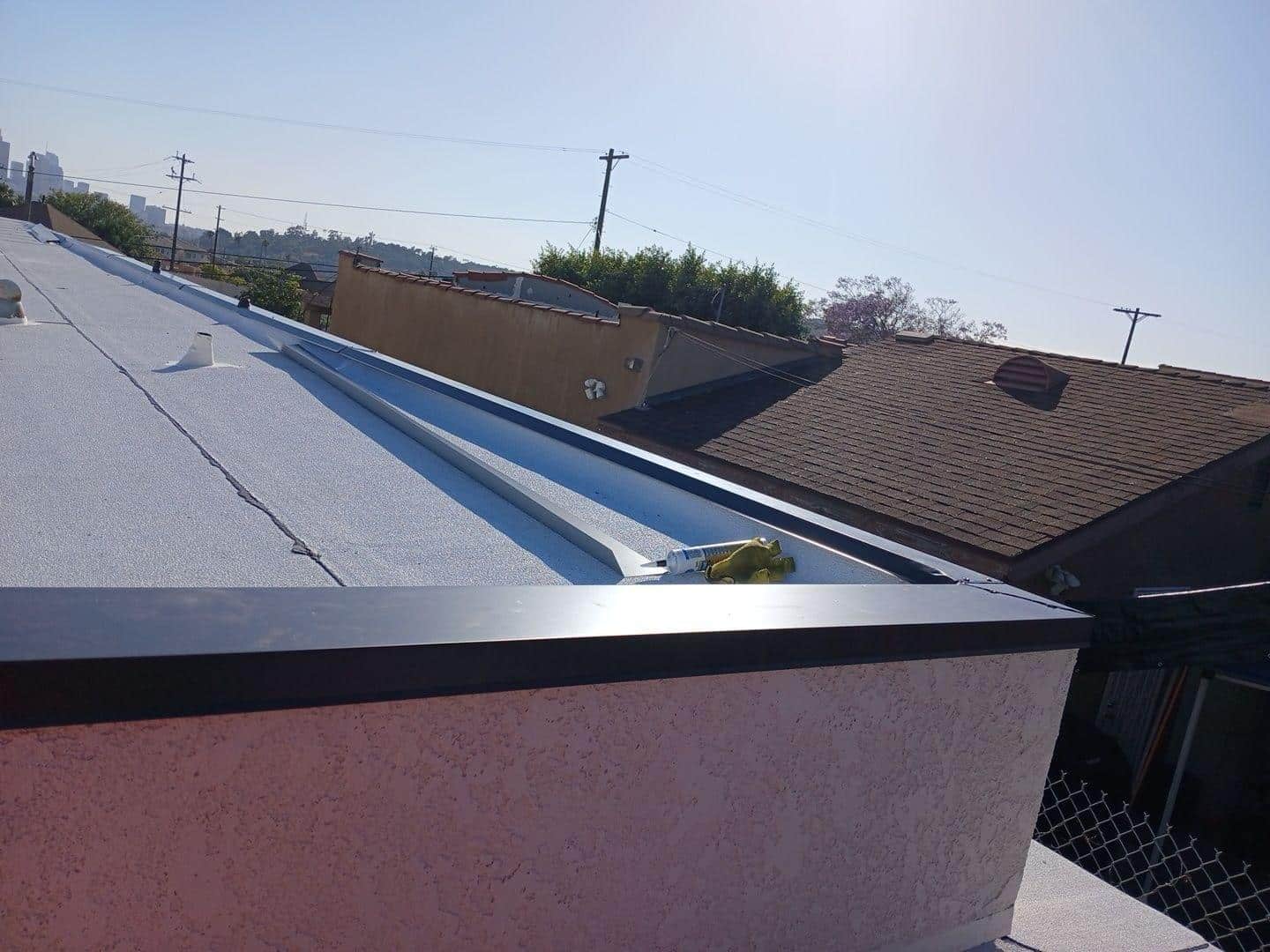
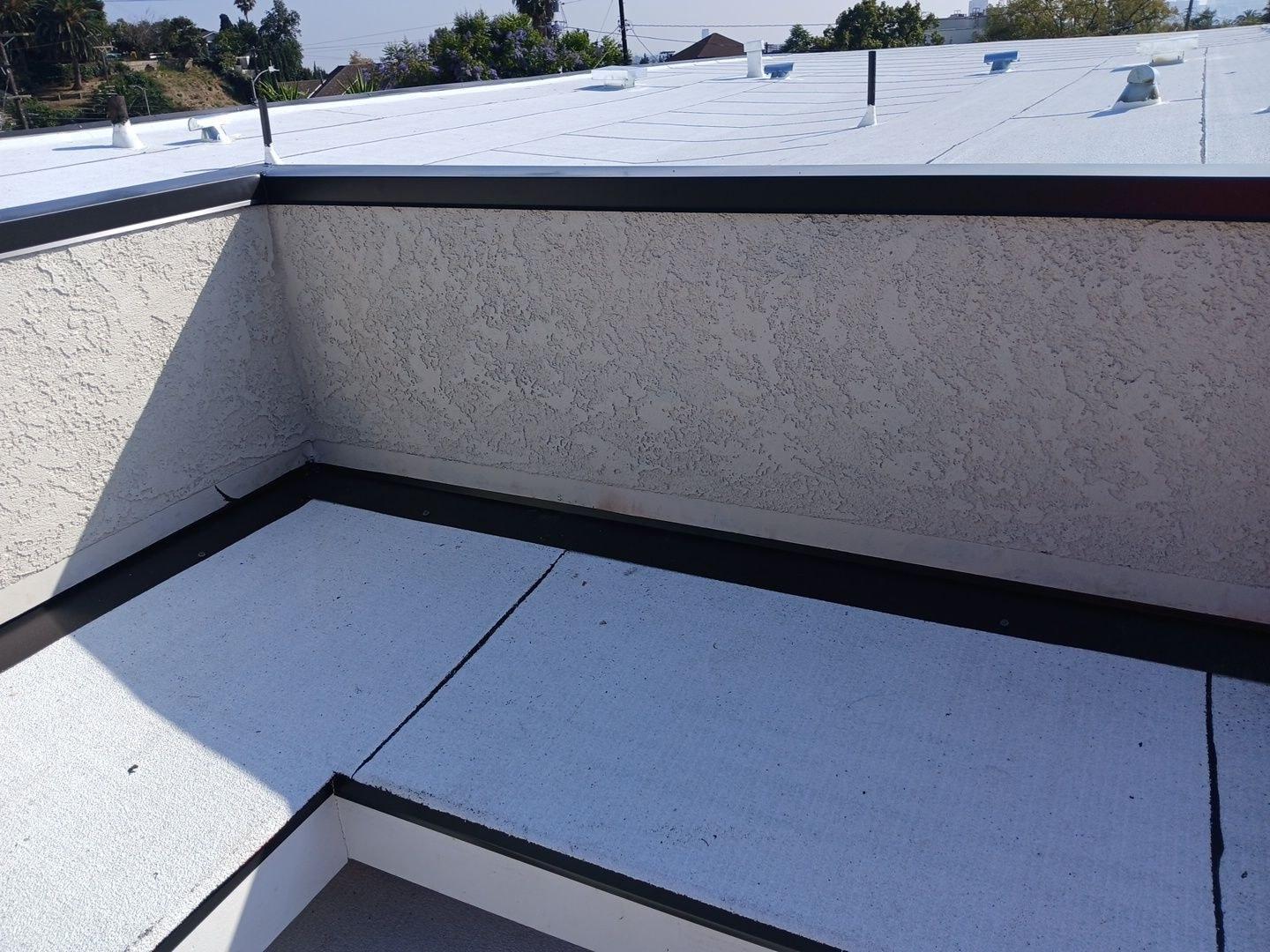
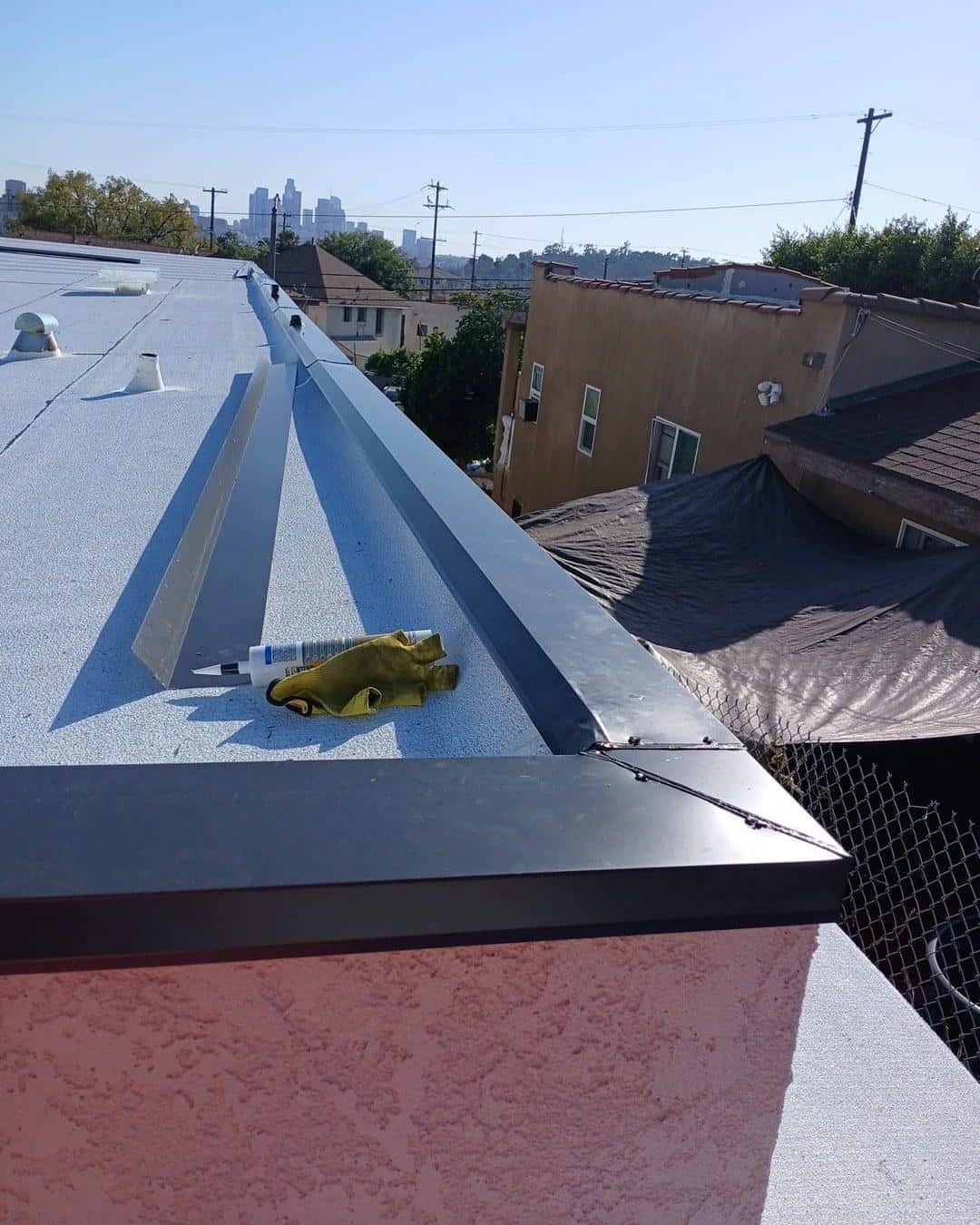
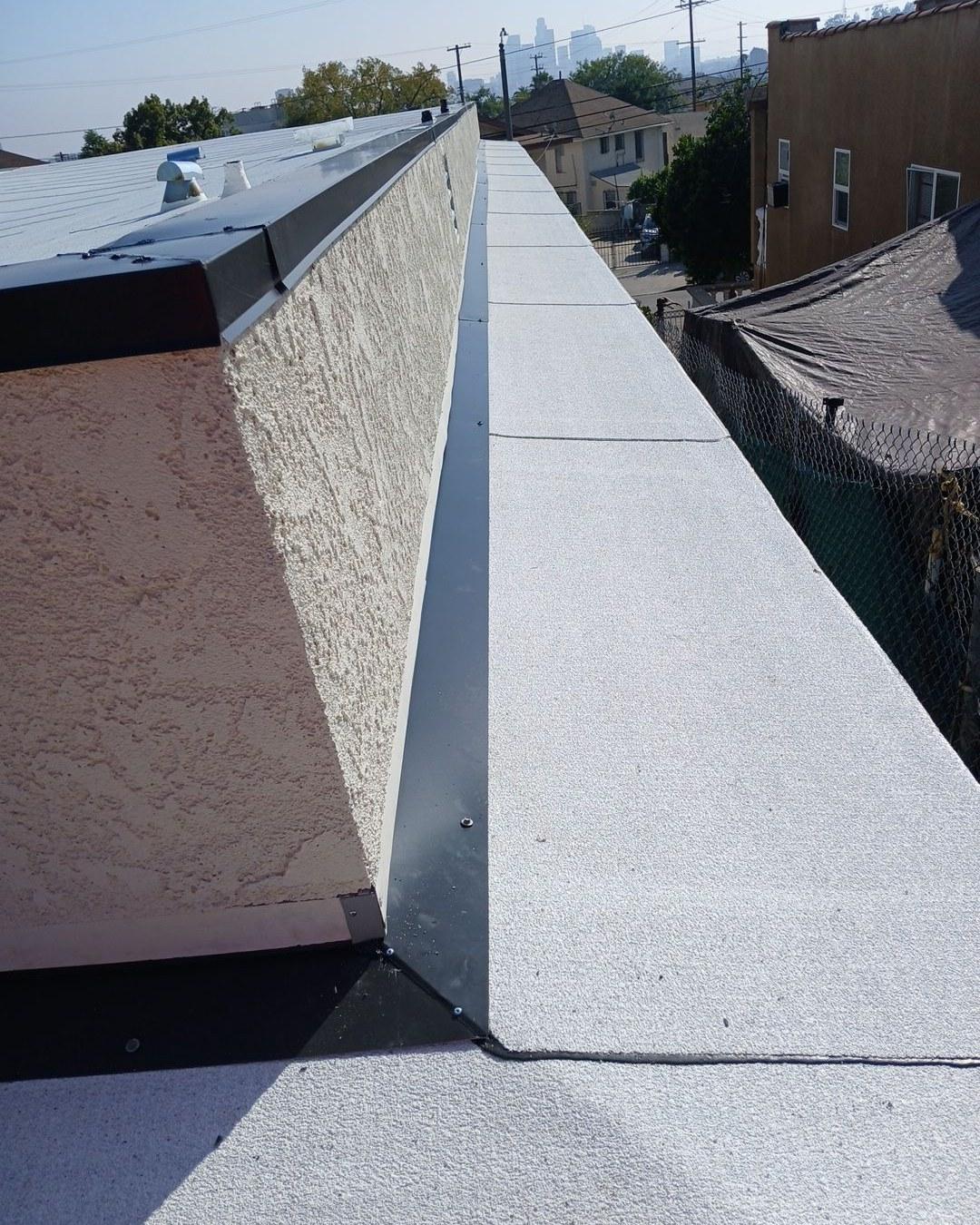
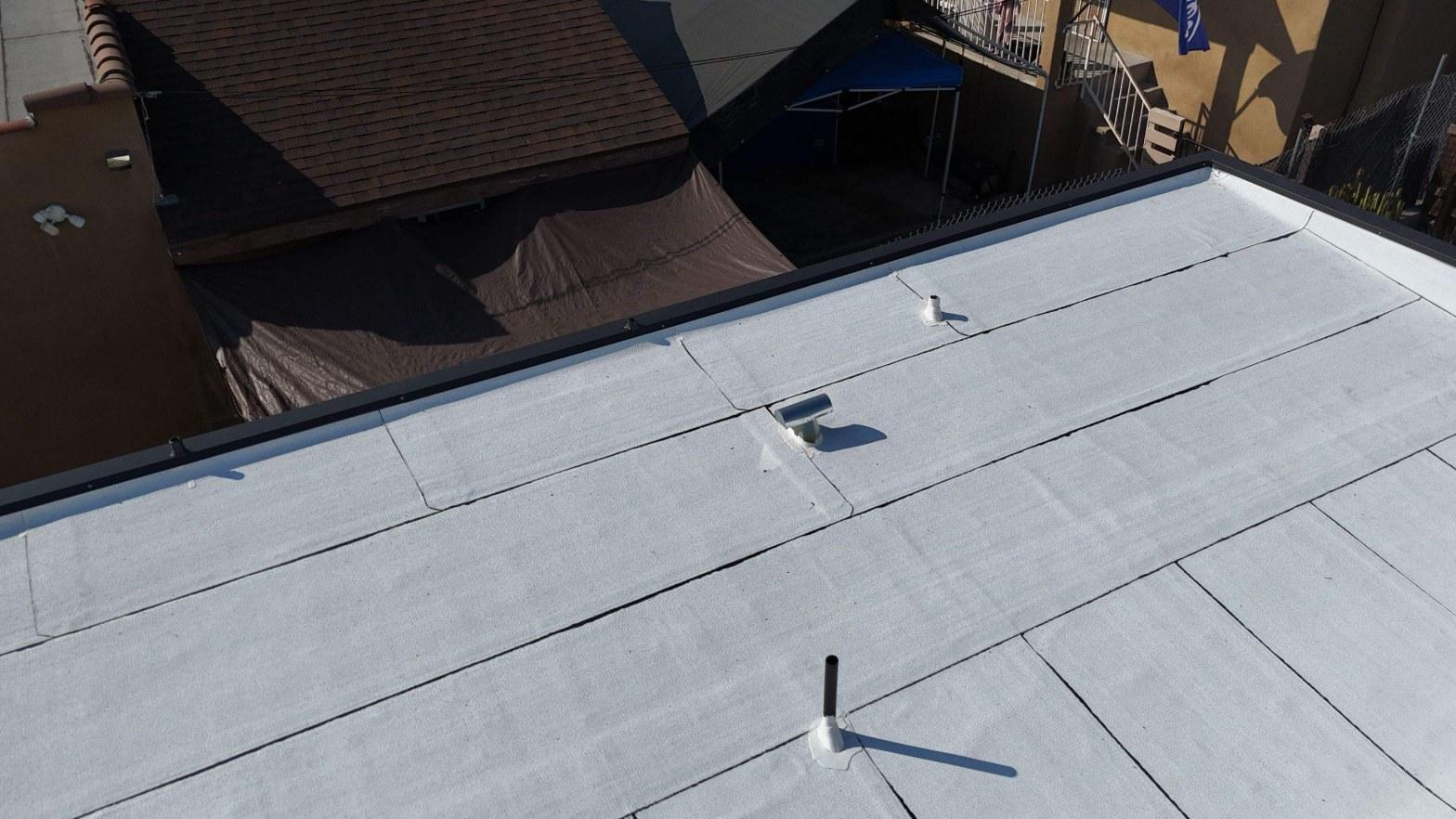
The crew worked in overlapping 3-foot-wide runs across the deck, maintaining consistent heat and roll speed to avoid burns or voids. Each lap seam was pressed and inspected. All 6-plus pipe penetrations were cut in, flashed with new metal boot collars, and sealed at the membrane edge. The parapet cap was wrapped and sealed along all 4 edges of the building. As of 2026, white granulated cap sheets like the one installed here reflect approximately 65–80% of solar radiation compared to less than 10% for a standard black modified bitumen surface — a meaningful energy benefit in a climate where cooling loads dominate most of the year.
The white membrane also makes the finished roof easy to inspect. Any future pooling, cracking, or foot-traffic damage shows up clearly against the light surface, which means the homeowner can catch small issues before they become interior leaks.
The Finished Roof
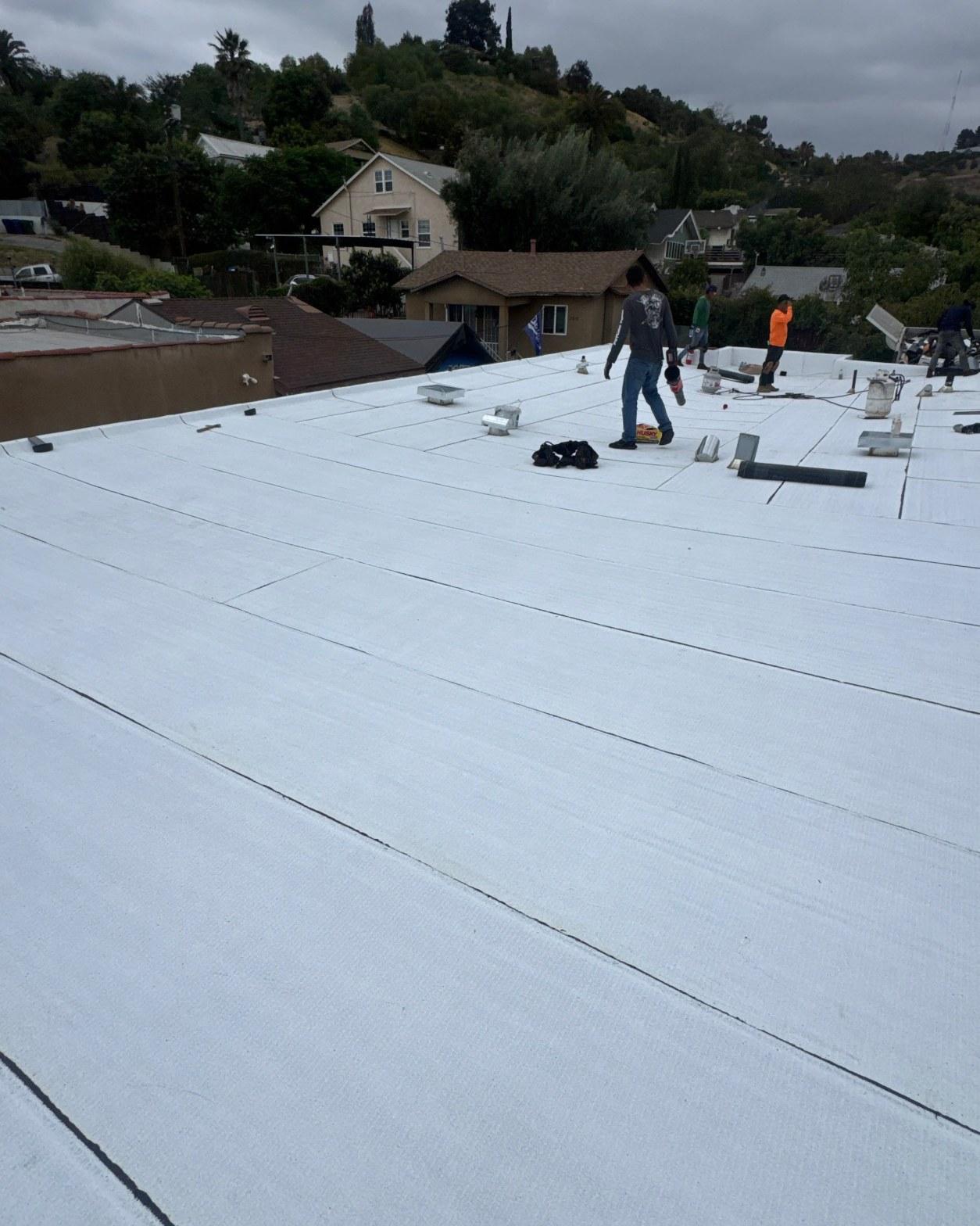
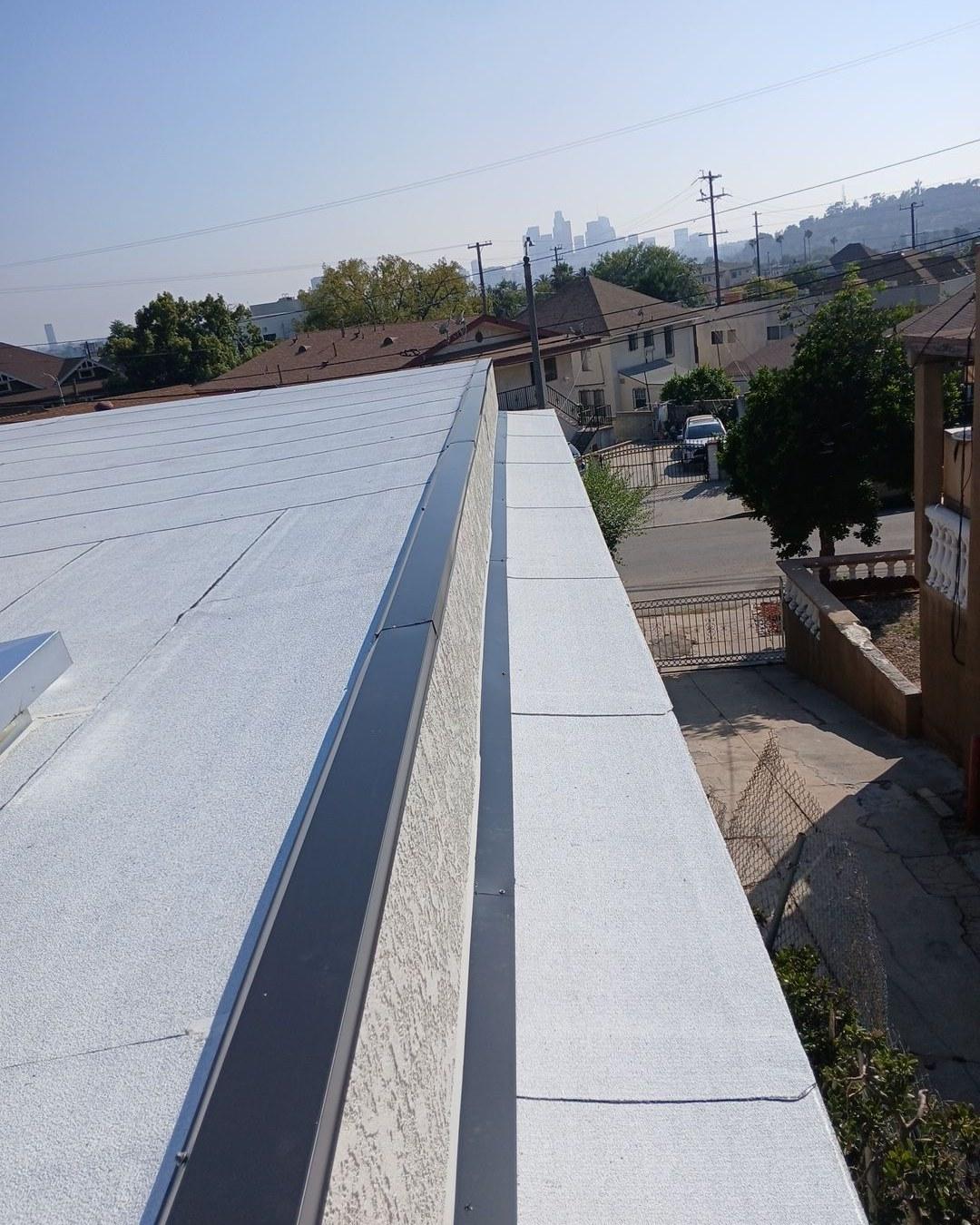
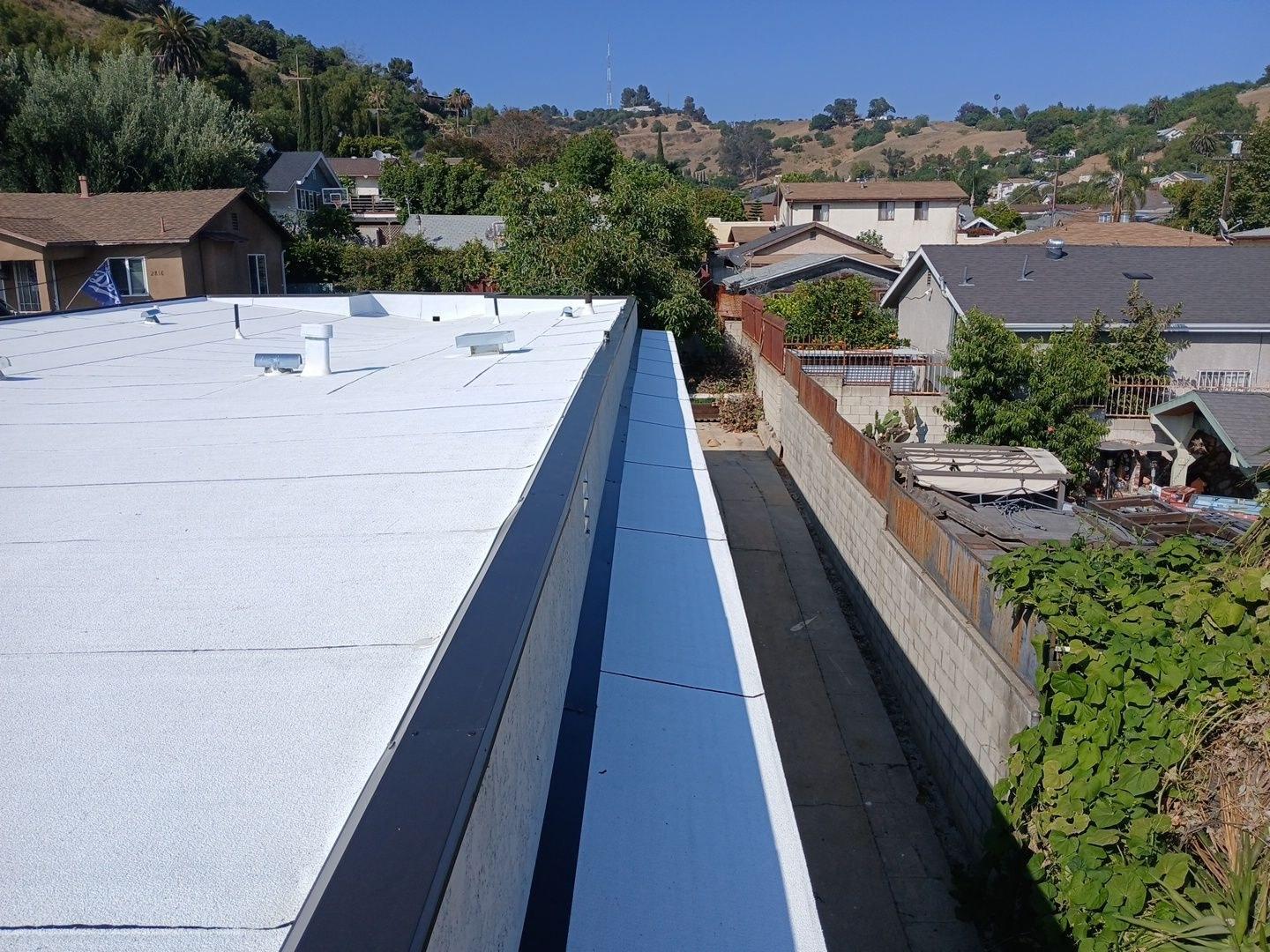
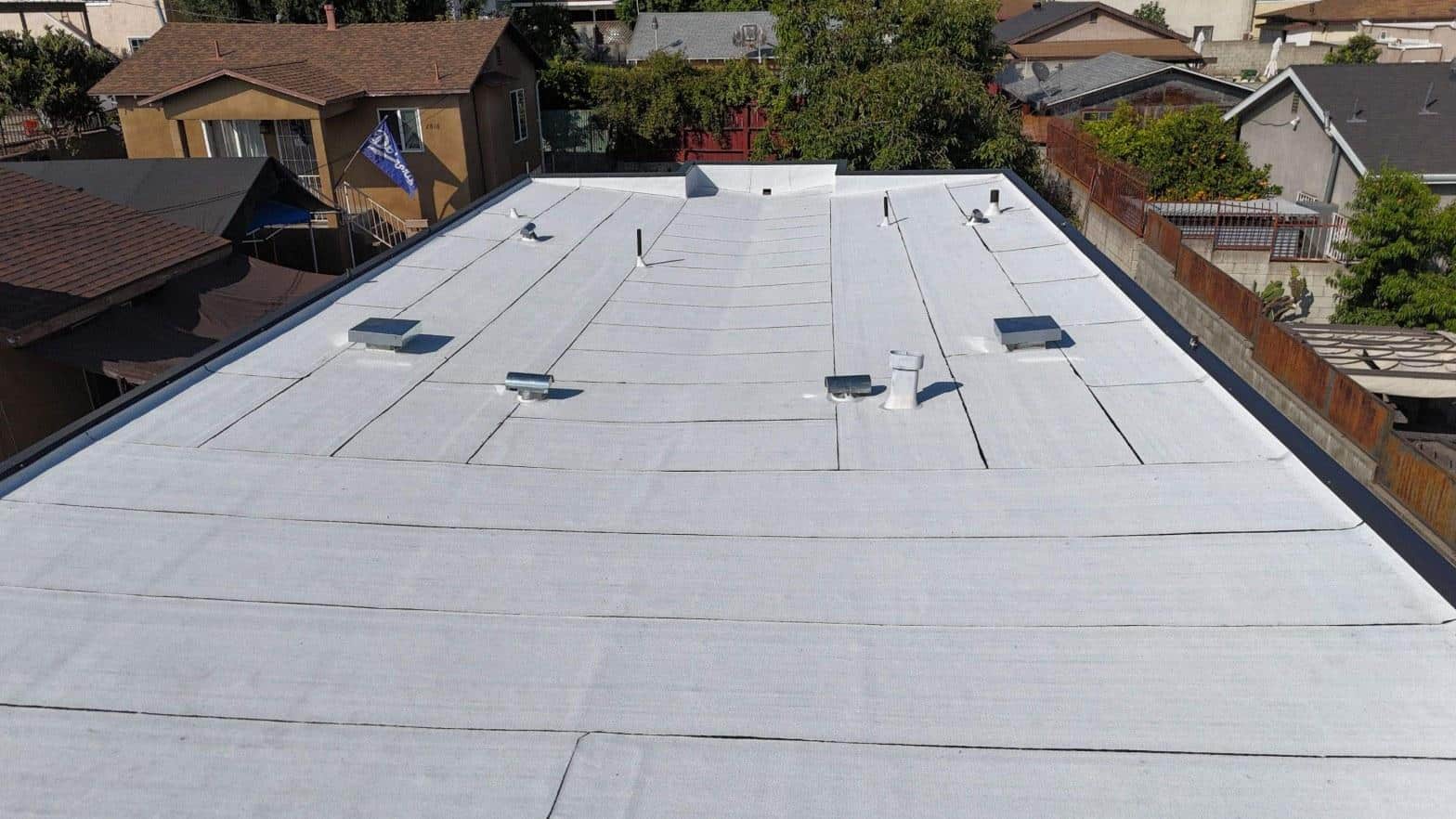
The completed installation is a clean, fully bonded white torch-down membrane roof covering the entire single-story building — all penetrations sealed, all laps fused, parapet edges wrapped. The aerial view confirms even coverage with no bubbling, no wrinkles, and consistent seam lines across the field.
This type of system, properly installed, carries an expected service life of 20–25 years under normal Southern California conditions. The California Contractors State License Board (CSLB) requires licensed contractors for this class of work — Roof Replacement Inc holds the appropriate C-39 roofing license for projects of this type.
Get a Quote on Your Flat Roof
If your flat or low-slope roof is showing signs of wear — blistering, ponding water, failed pipe boots, or visible cracks in the membrane — a torch-down replacement is worth evaluating before interior damage compounds the cost. Call Roof Replacement Inc to schedule an on-site assessment of your property. We work throughout the Los Angeles area and can typically provide a written quote within 1 business day of the site visit.


