Torch Down Roof Repair Project in Los Angeles, CA

At 5264 Los Adornos Way, Los Angeles, CA 90027, Roof Replacement Inc completed a torch down roof repair on a residential property featuring both flat and sloped roof sections. The work addressed visible cracking, open seams, deteriorated membrane surfaces, moisture intrusion staining, and failed flashing transitions across multiple roof planes. Upon completion, the flat roof sections were restored with fresh torch-applied modified bitumen membrane, and the transition zones between flat and pitched surfaces were properly sealed and integrated.

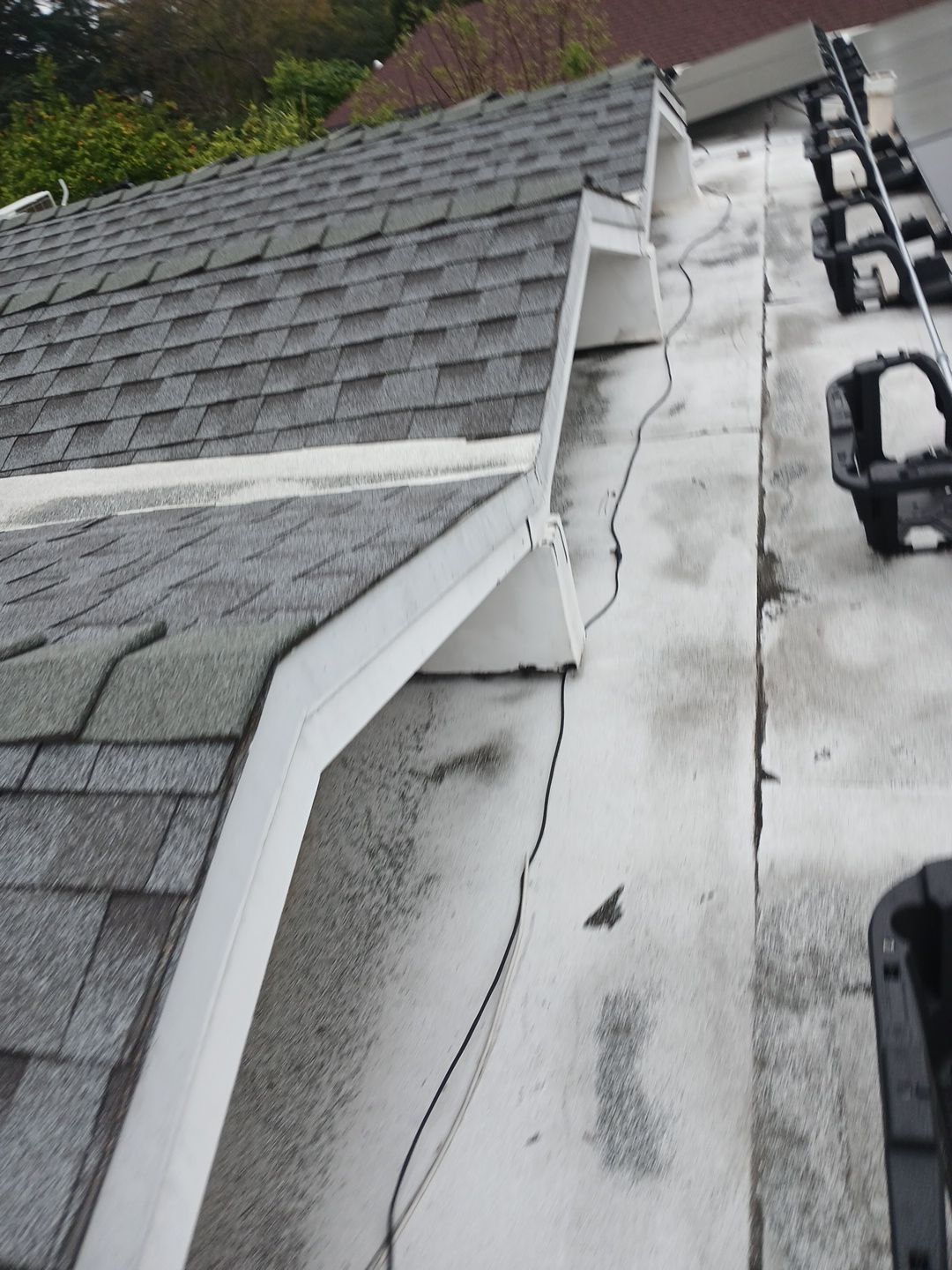
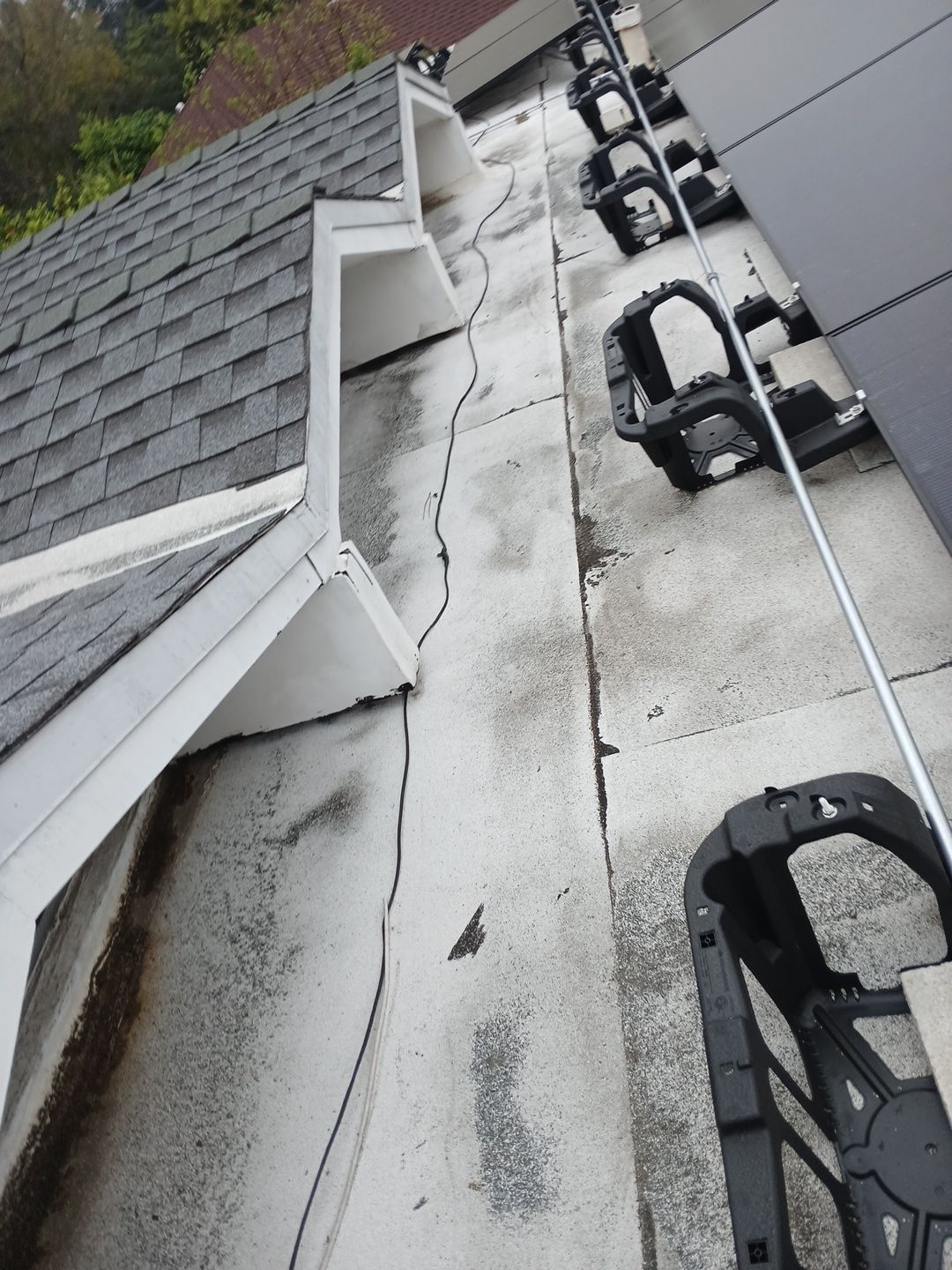
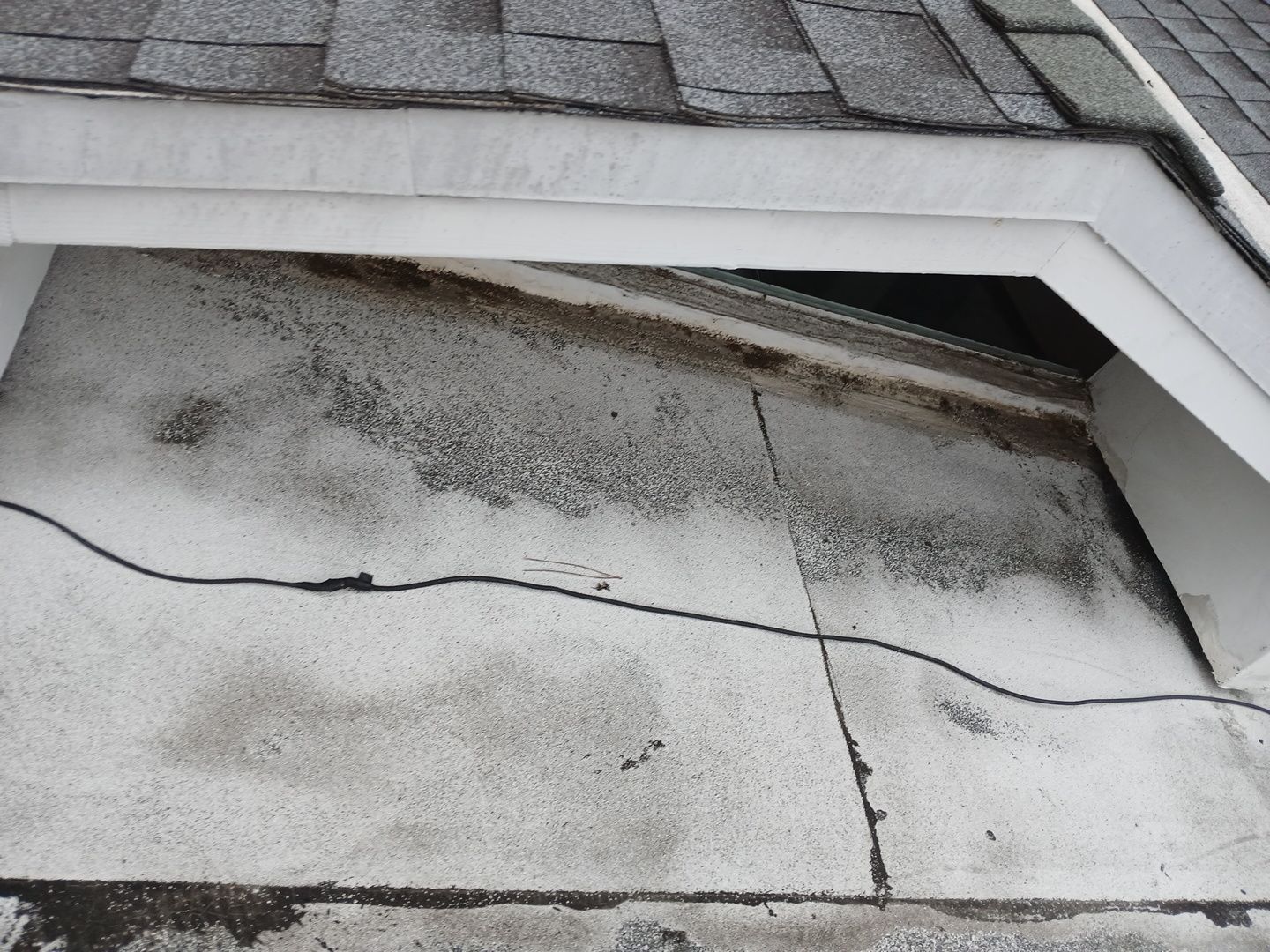
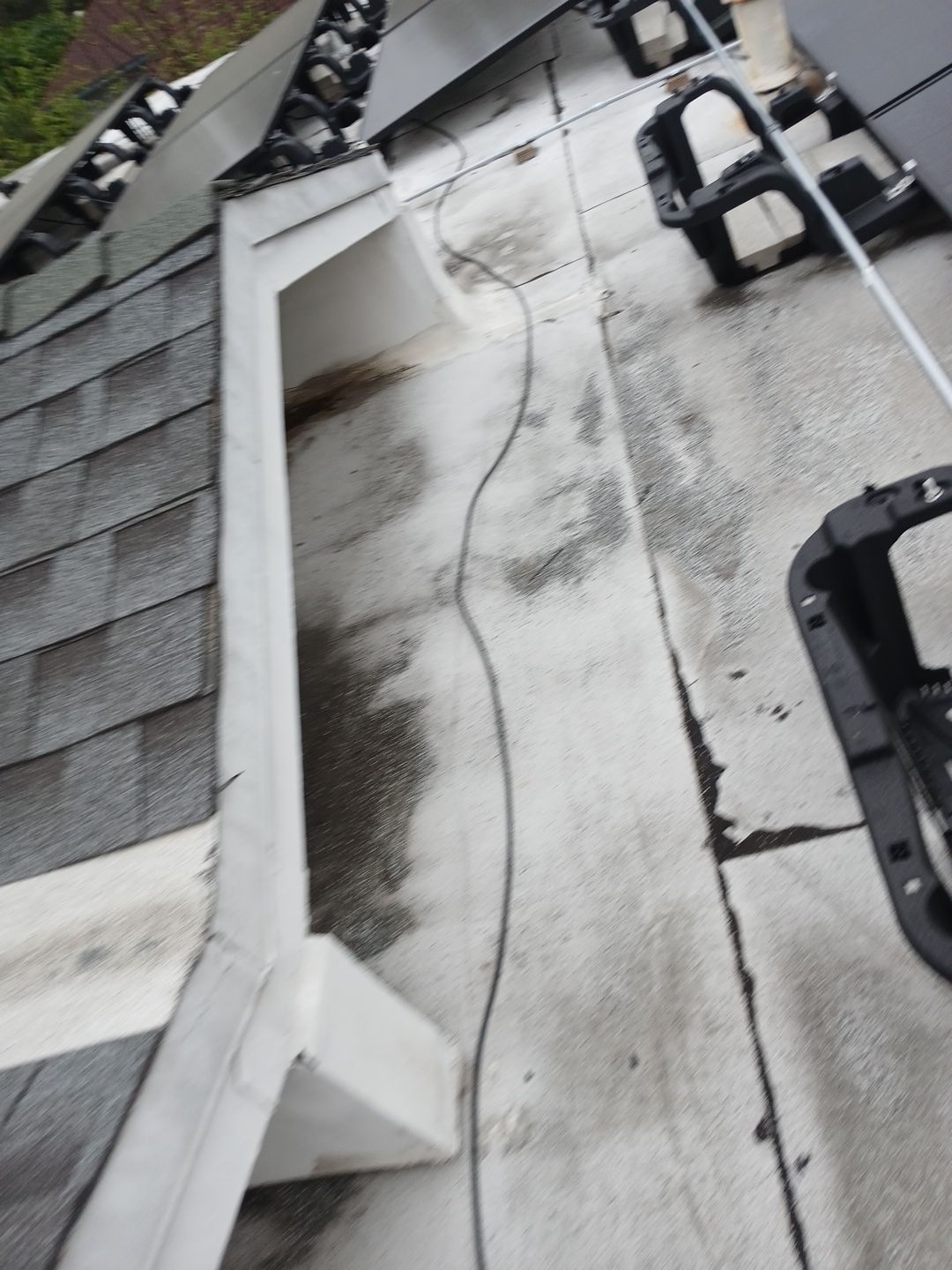
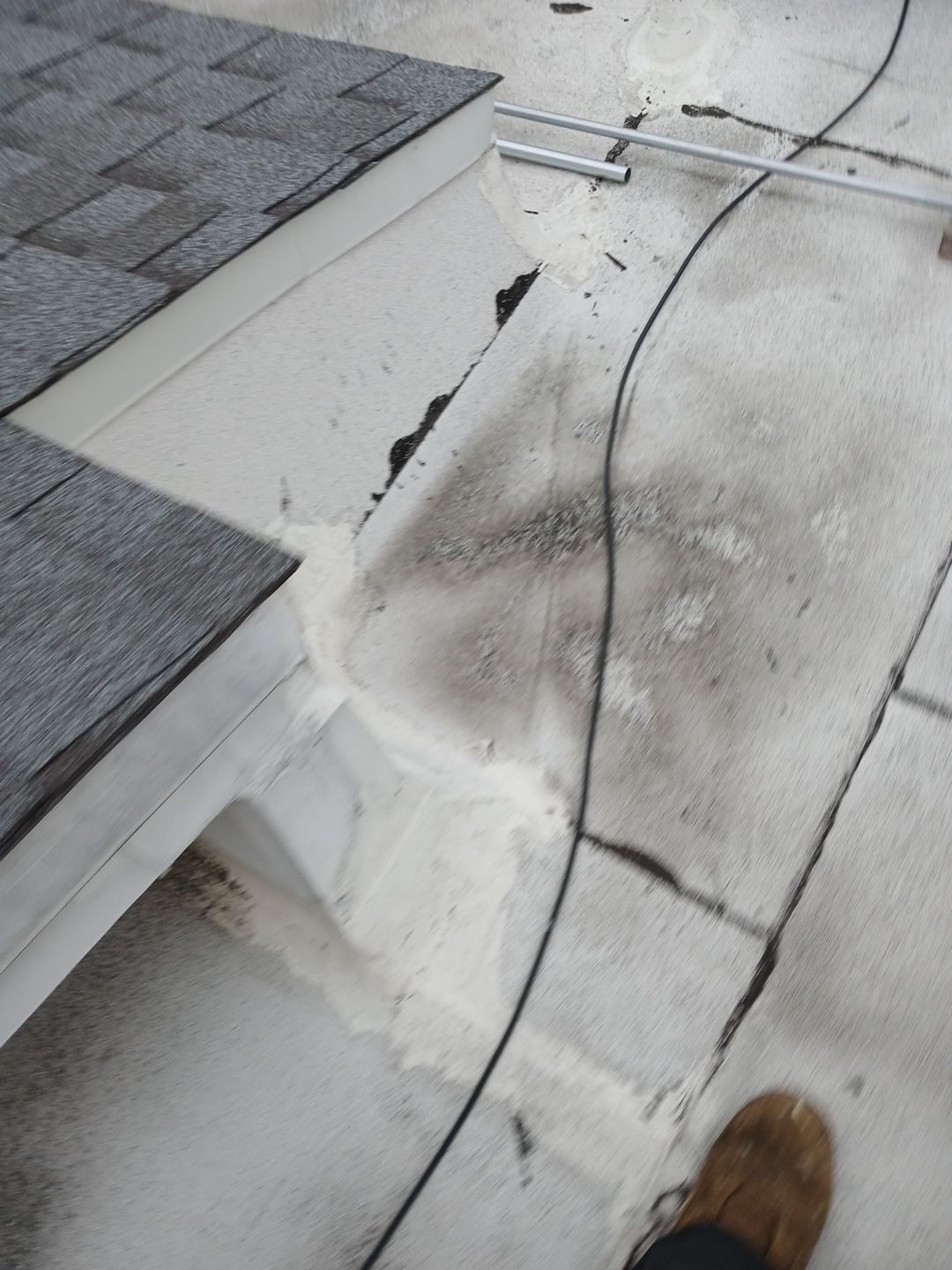
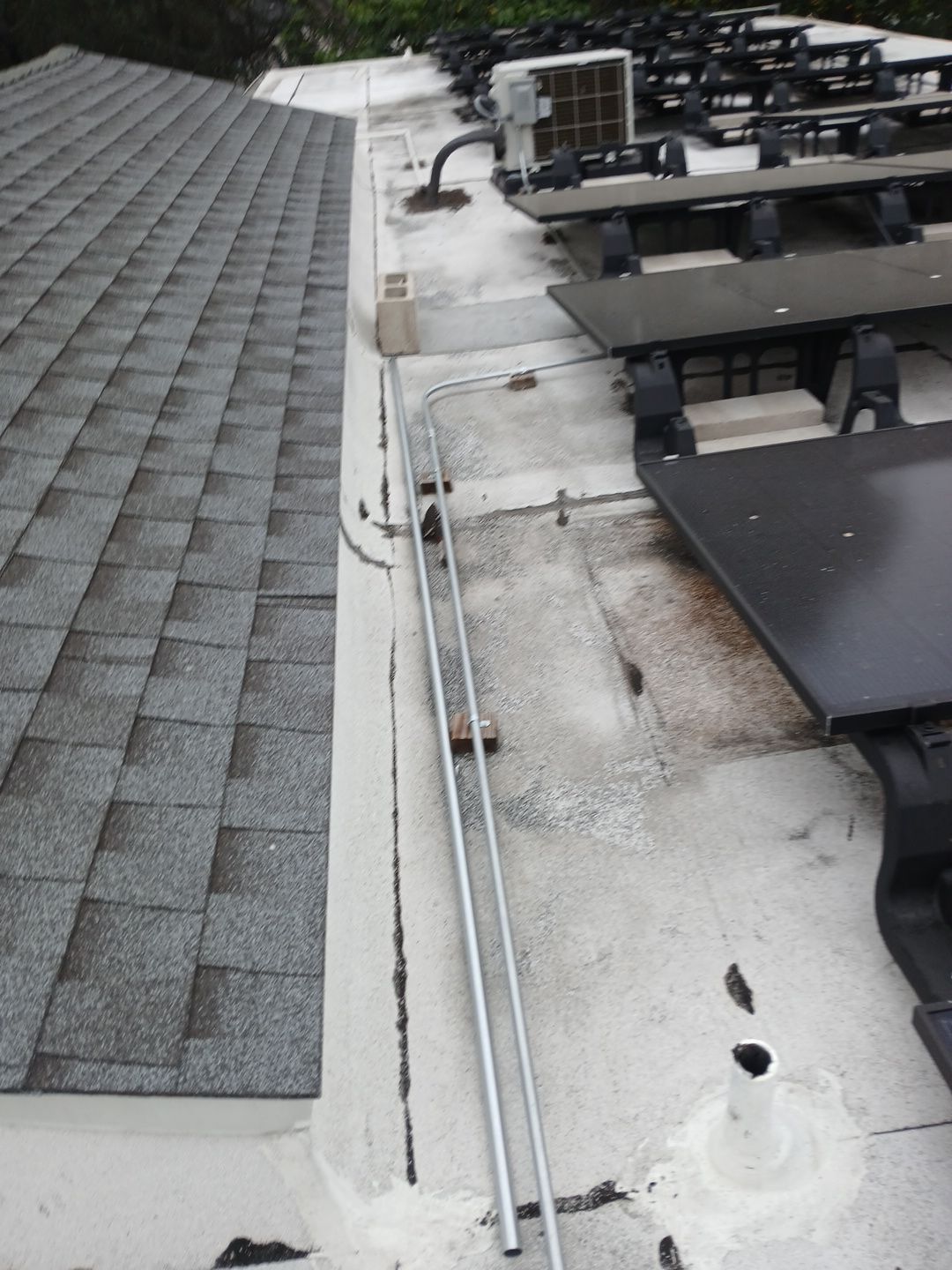
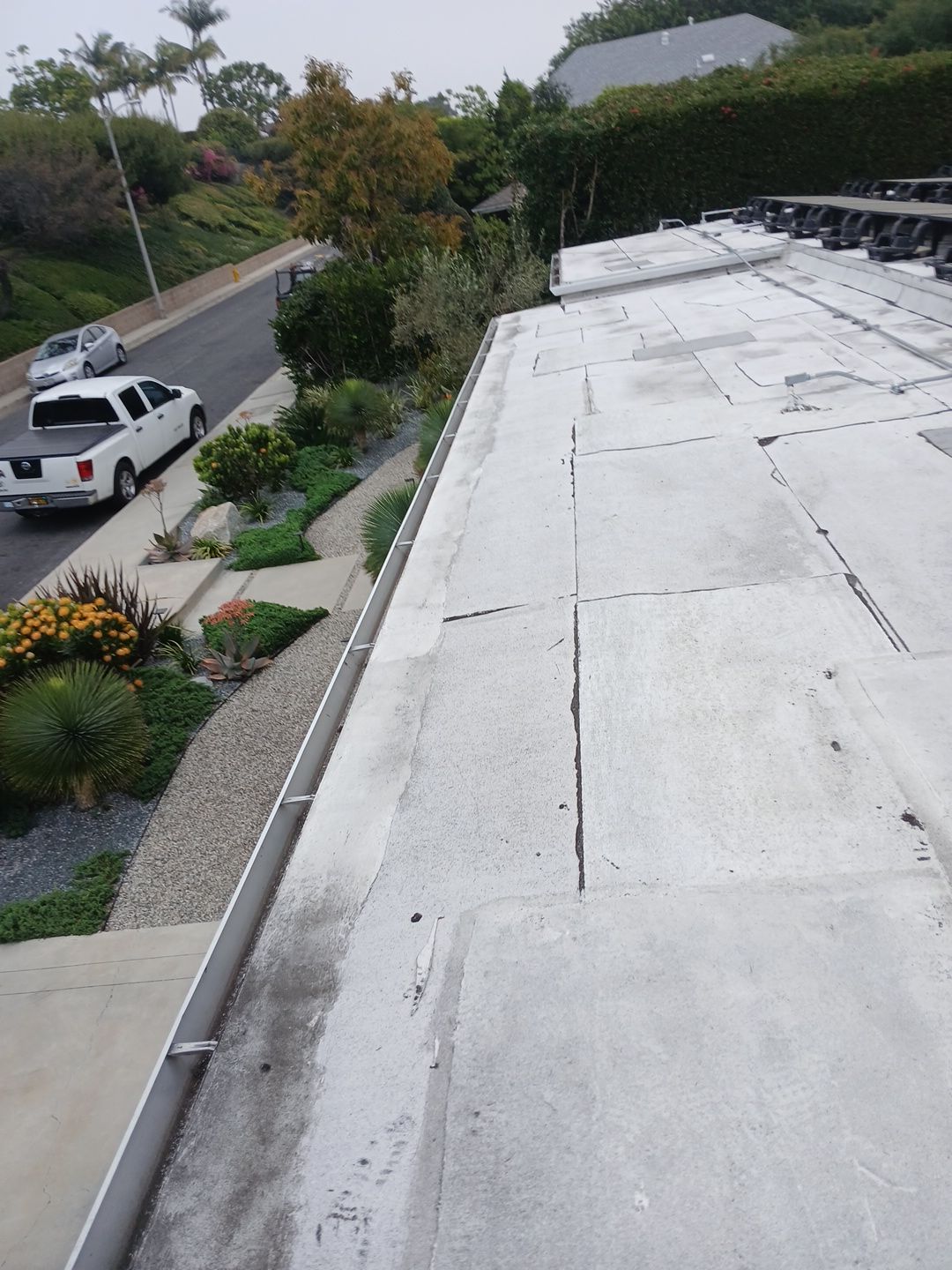
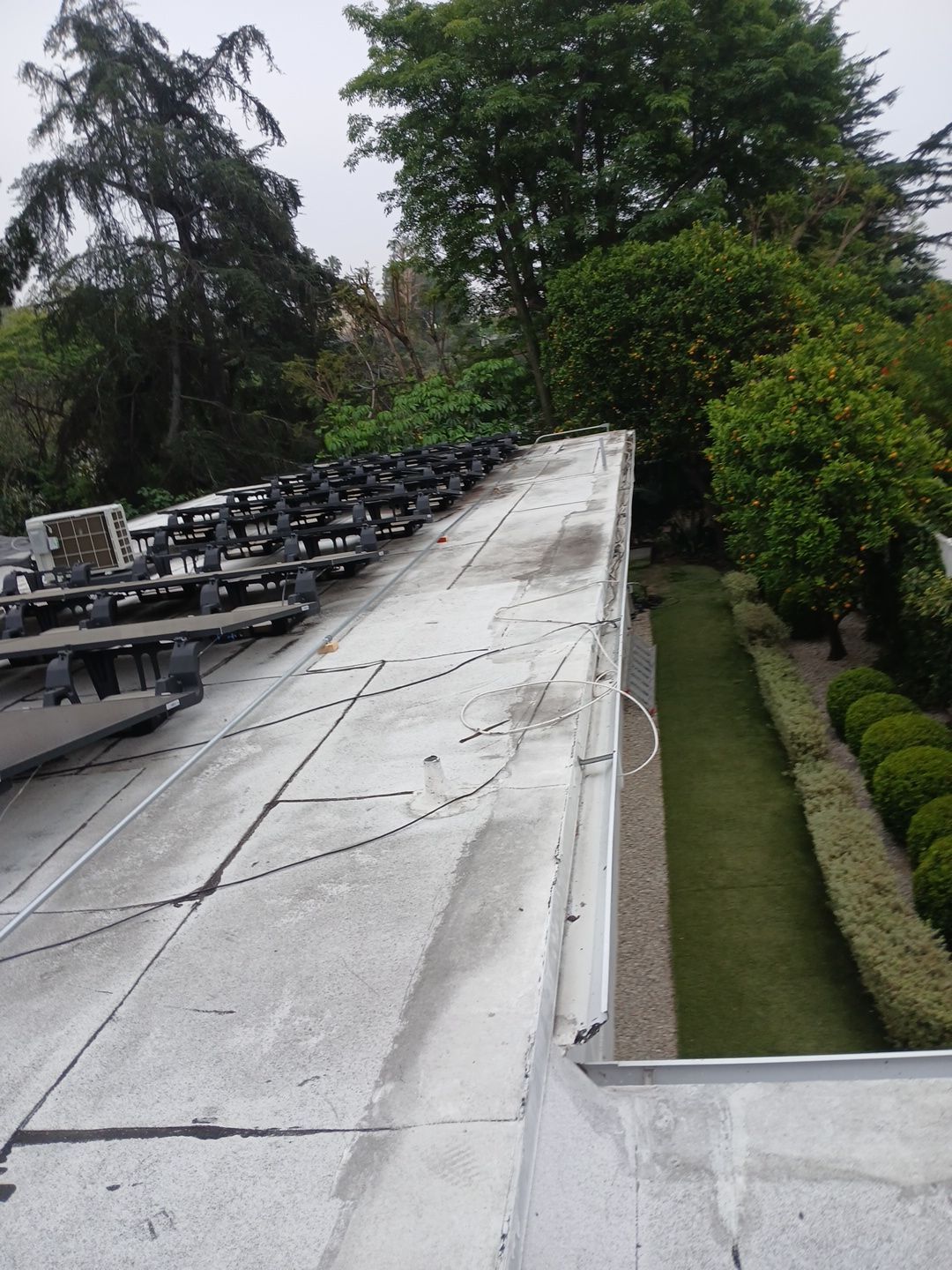
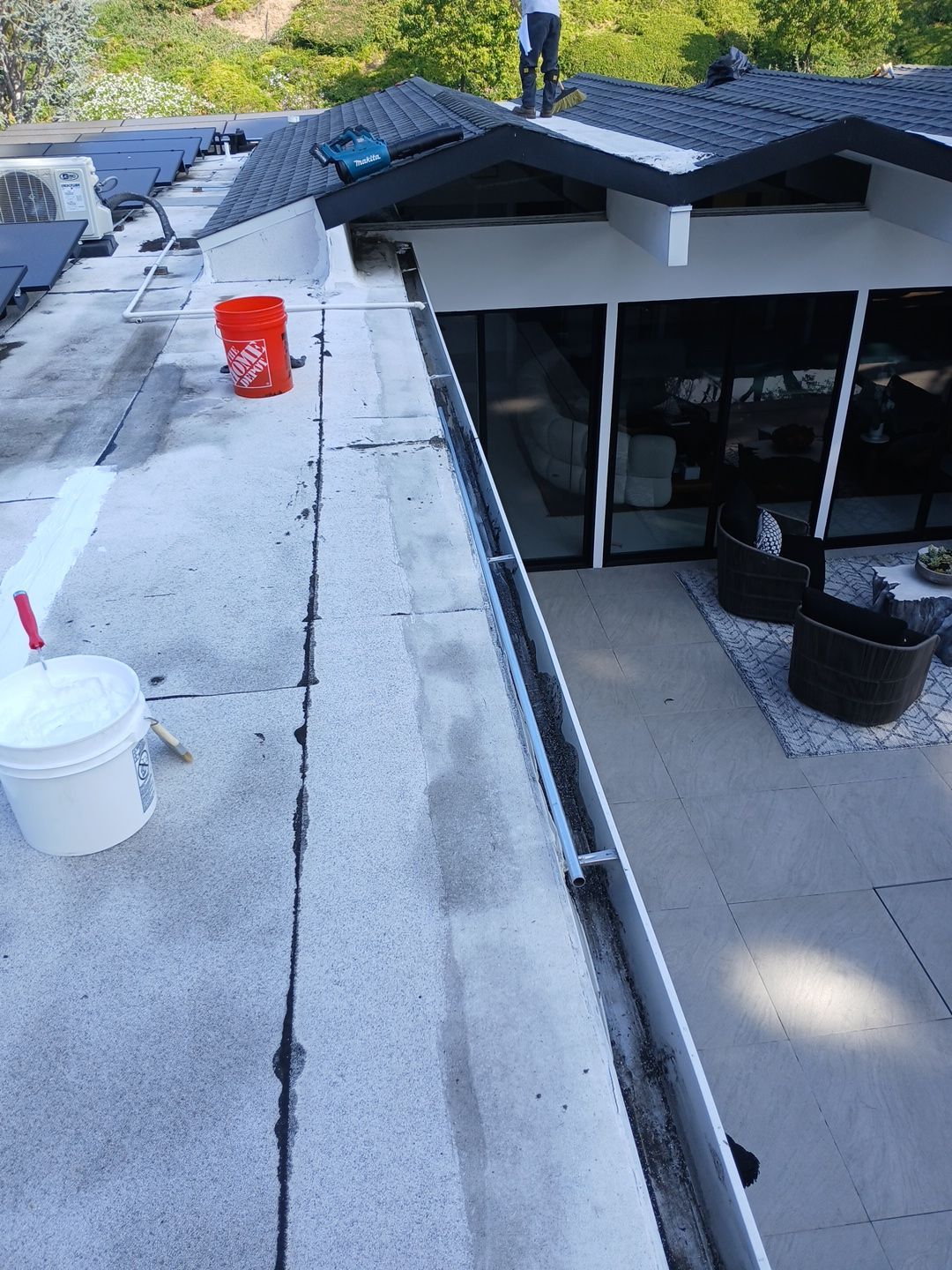
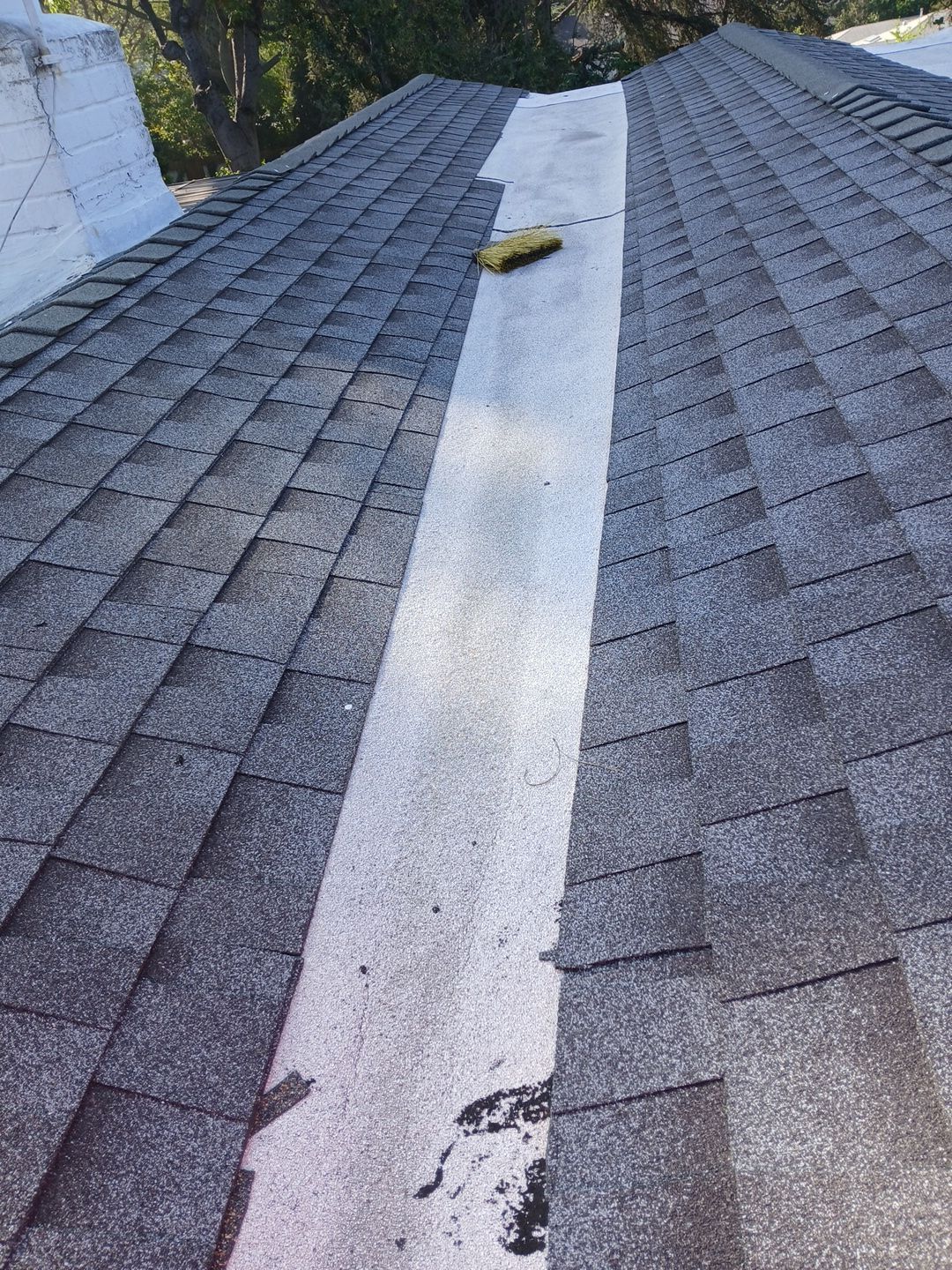
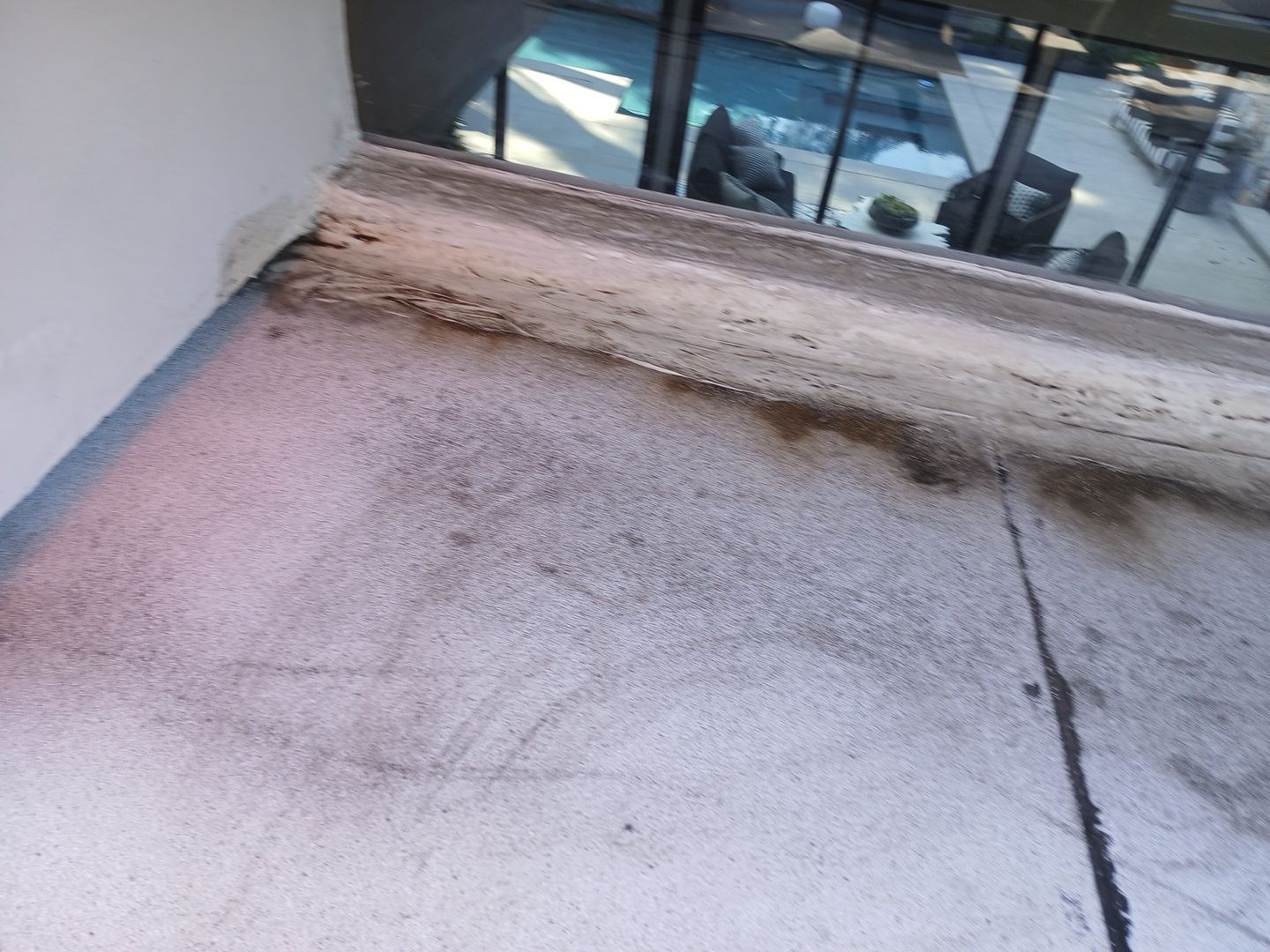
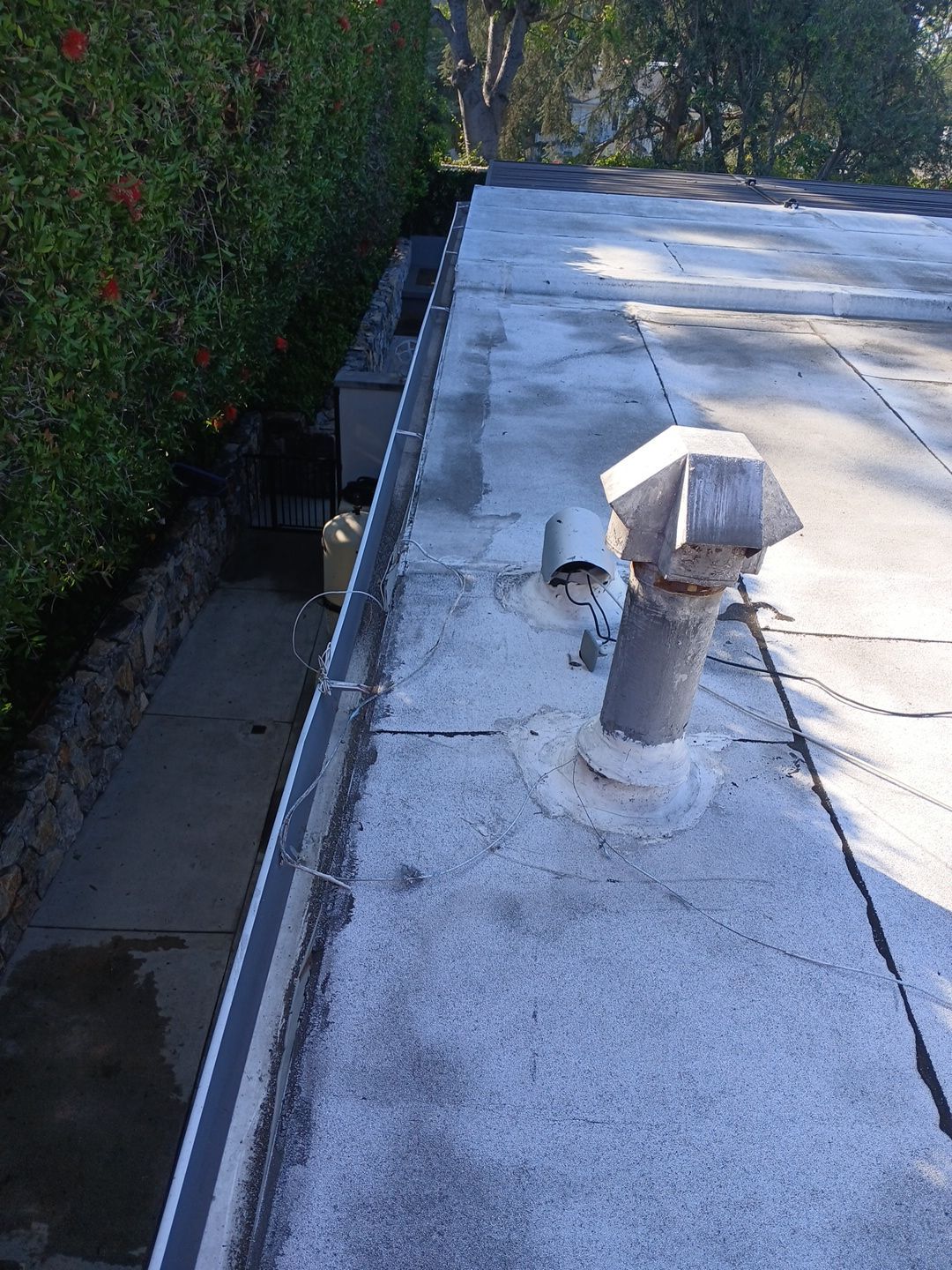
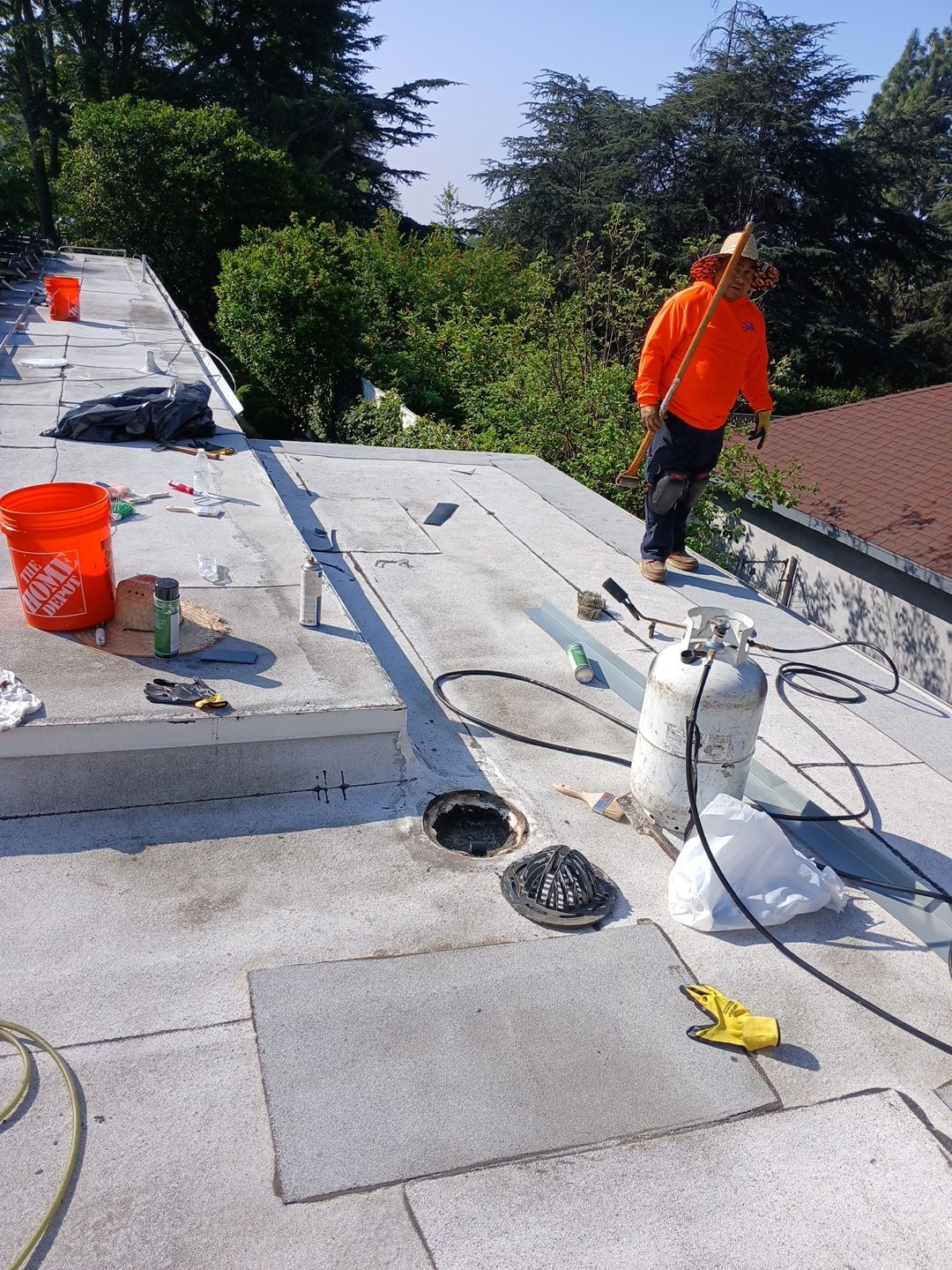
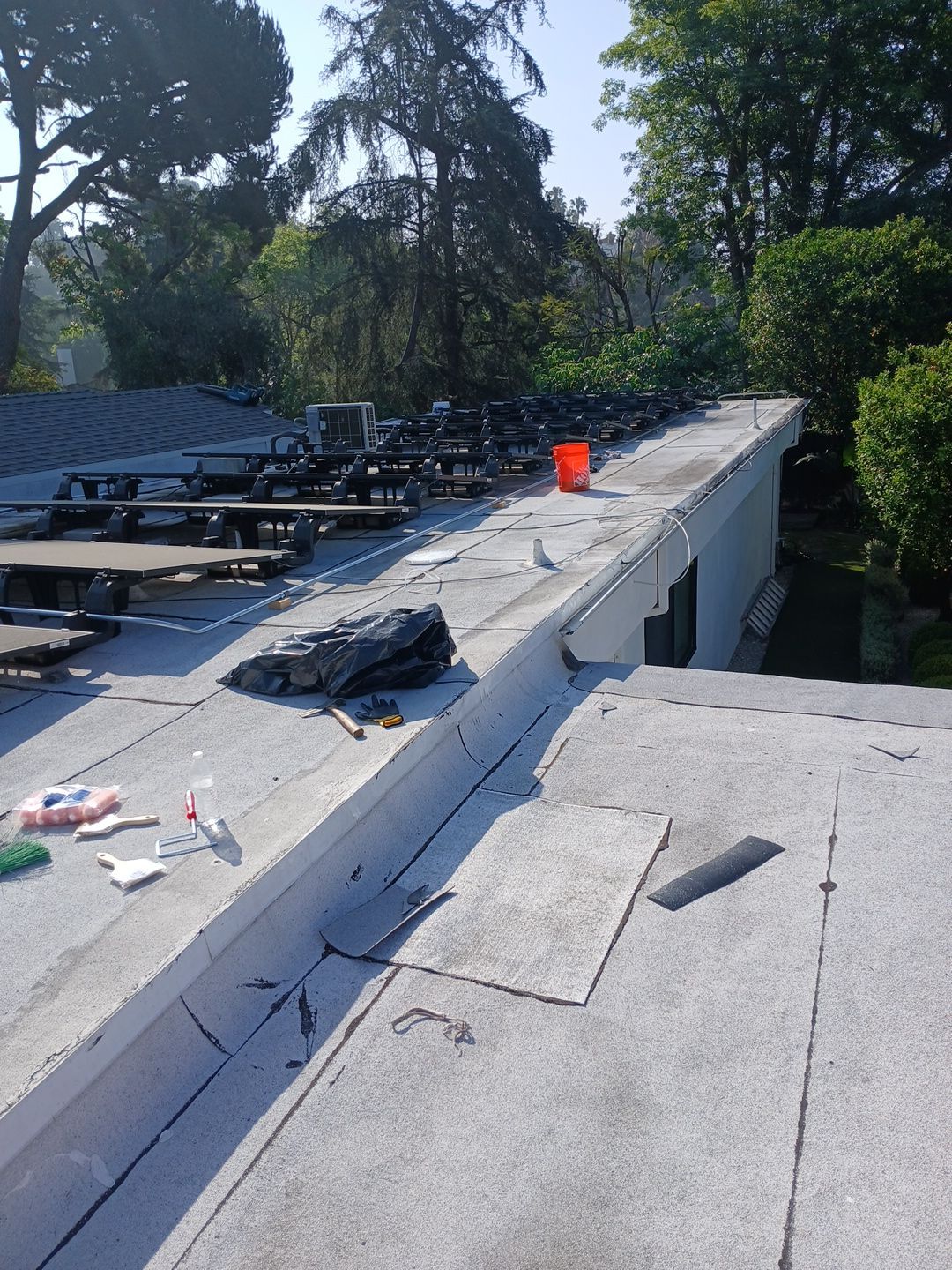
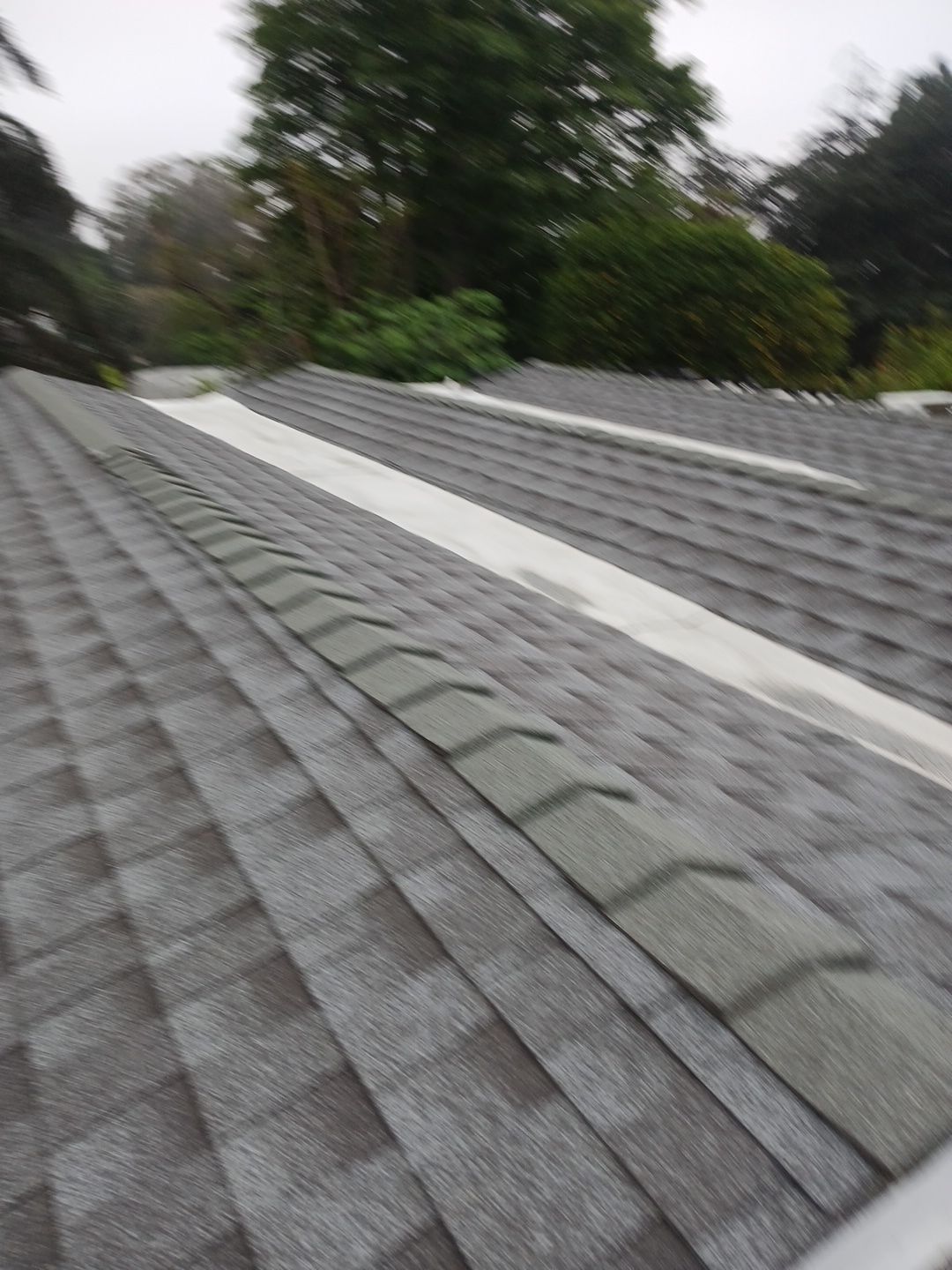
Photos from the site show significant cracking and open splits in the existing torch down membrane, dark moisture staining in low-lying areas, a deteriorated wood nailer along one parapet edge, failed sealant around roof penetrations including vent pipes and a drain assembly, and sections of the flat roof that had lost their granule surface coating. The sloped asphalt shingle sections adjacent to the flat areas also showed evidence of water tracking and past repairs at the valleys and ridge lines. These conditions indicated the existing membrane had reached the end of its serviceable life in the affected areas and required systematic repair before further water intrusion could damage the structure below.

Project Gallery
Surface Preparation and Crack Repair

Before any new material was applied, the crew cleaned the existing membrane surface using stiff-bristle brushes and a garden hose, removing loose granules, debris, and contamination from all work areas. Open cracks and seam separations in the existing torch down membrane were documented across multiple sections of the flat roof, with some splits wide enough to allow direct water entry. A roofing sealer was applied with a brush into the cracked areas as a preliminary step, and a wire brush tool visible in the photos was used to prepare edges and penetration collars. The deteriorated wood nailer along one parapet edge was also identified as a source of membrane pull-away and was addressed during this phase.

Torch-Applied Modified Bitumen Membrane Installation

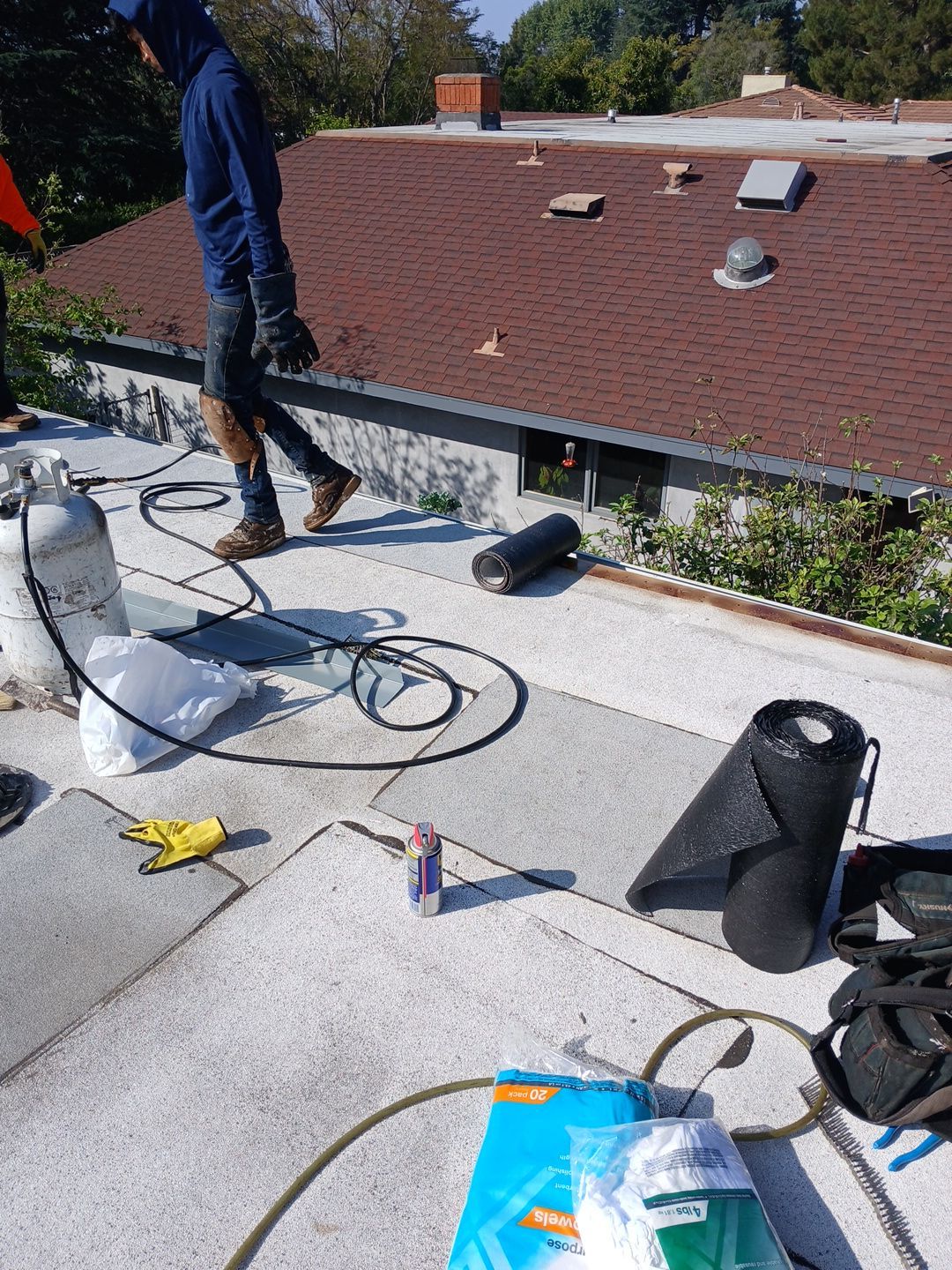
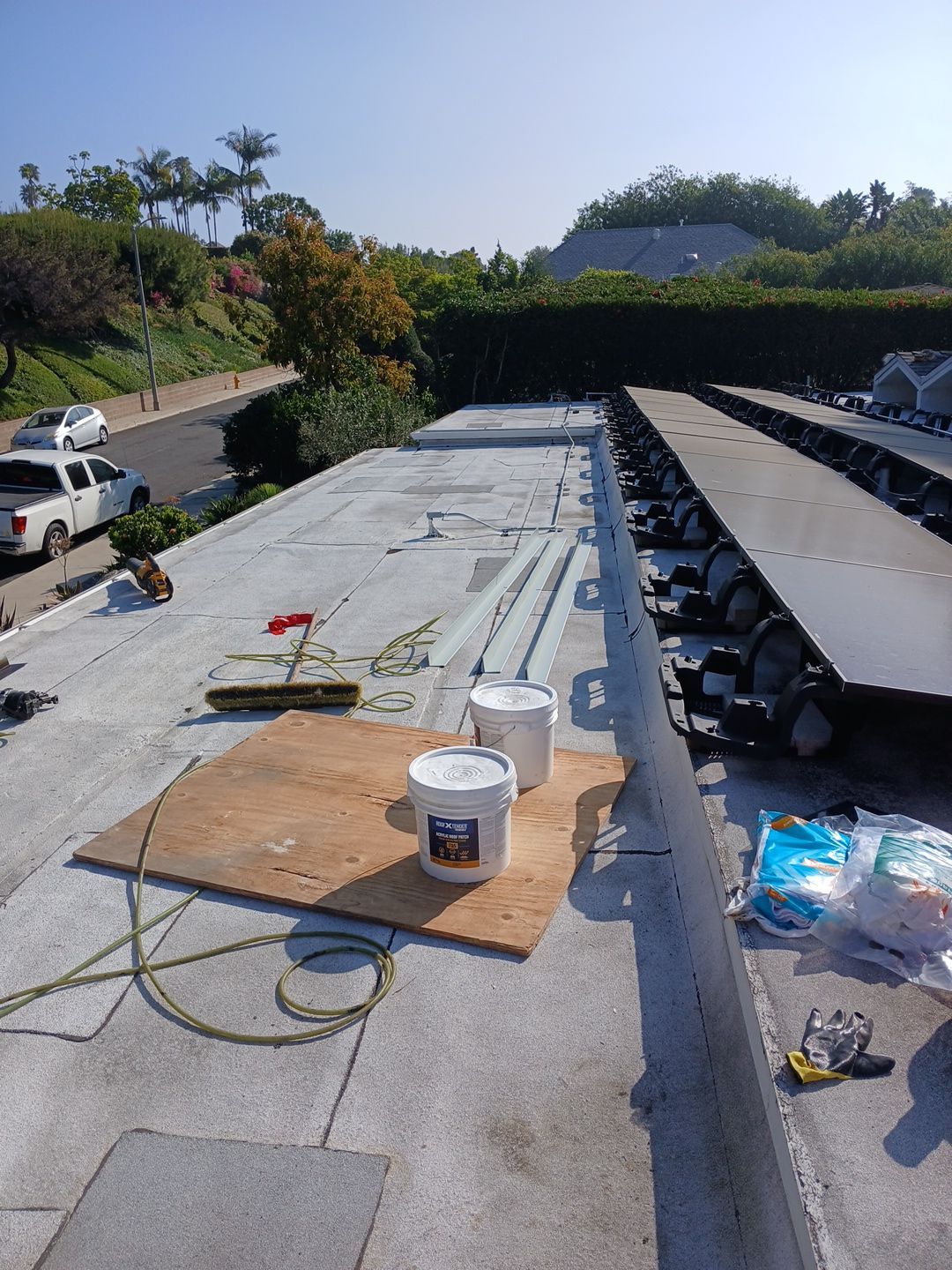
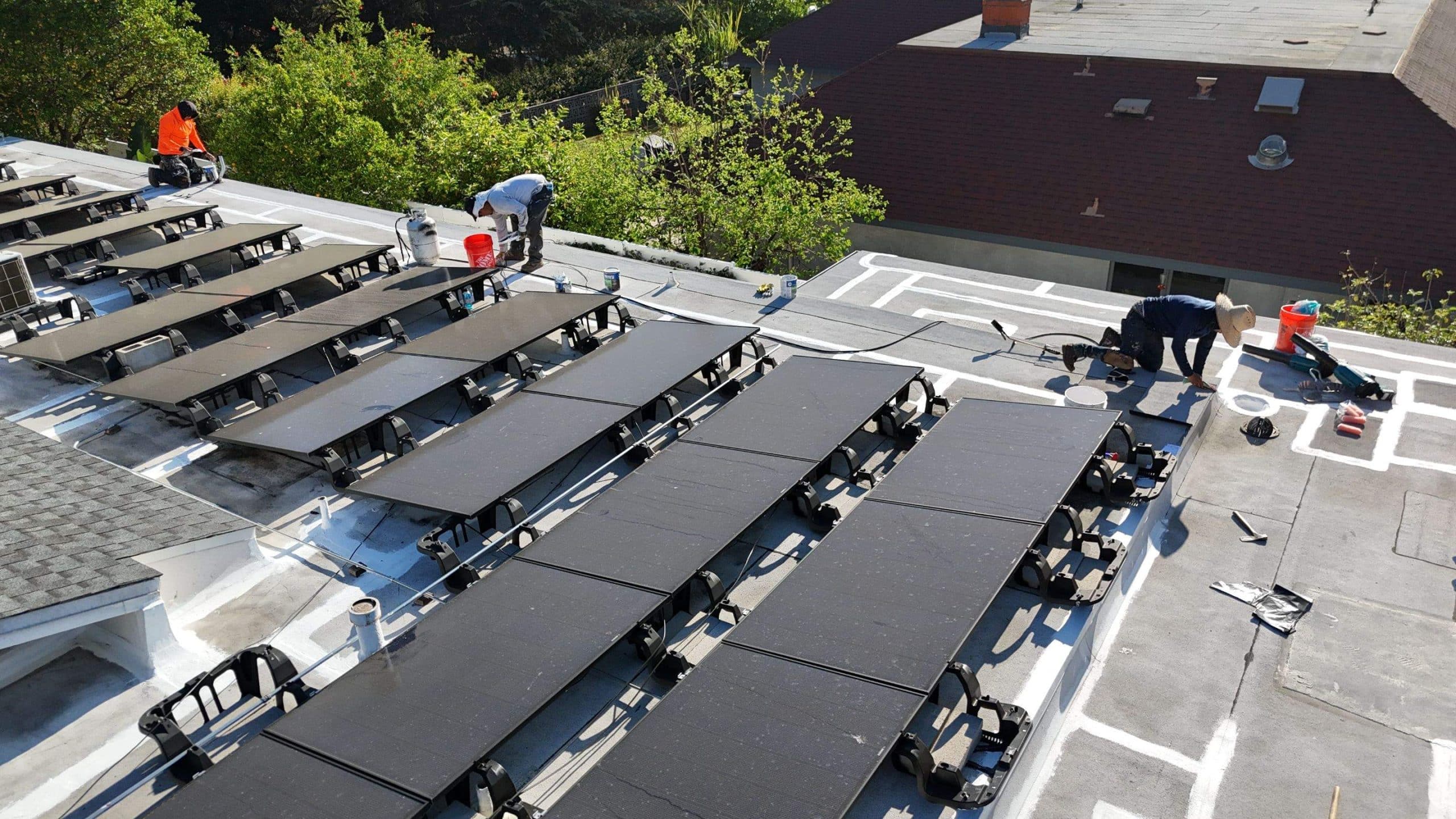
The repair work centered on torch-applied modified bitumen membrane, with rolls of the material visible staged on the roof surface alongside a propane tank and torch assembly. Workers heat-welded the new membrane sections into place, bonding them to the existing substrate and overlapping existing material at the edges to create a continuous waterproof layer. A white roof coating material — visible in buckets labeled with a roof coating product — was used to coat sections of the repaired flat roof surface, improving reflectivity and surface protection. The crew used a plywood board as a working pad to distribute weight and protect the freshly applied membrane while moving across the surface.

Penetration and Transition Flashing Work

Several roof penetrations required individual attention, including a metal vent cap and a drain assembly that showed deteriorated sealant and exposed base material around their collars. New membrane material was cut and torch-applied around these penetrations to restore a watertight seal at each one. At the transitions between the flat roof sections and the adjacent sloped asphalt shingle areas, the crew installed and sealed metal edge trim and ensured the membrane lapped properly under and over the adjoining materials. Sections of the shingle ridge and valley areas also received torch-applied strip patches to seal open joints where water had previously been tracking.

Final Coating and Solar Panel Area Integration

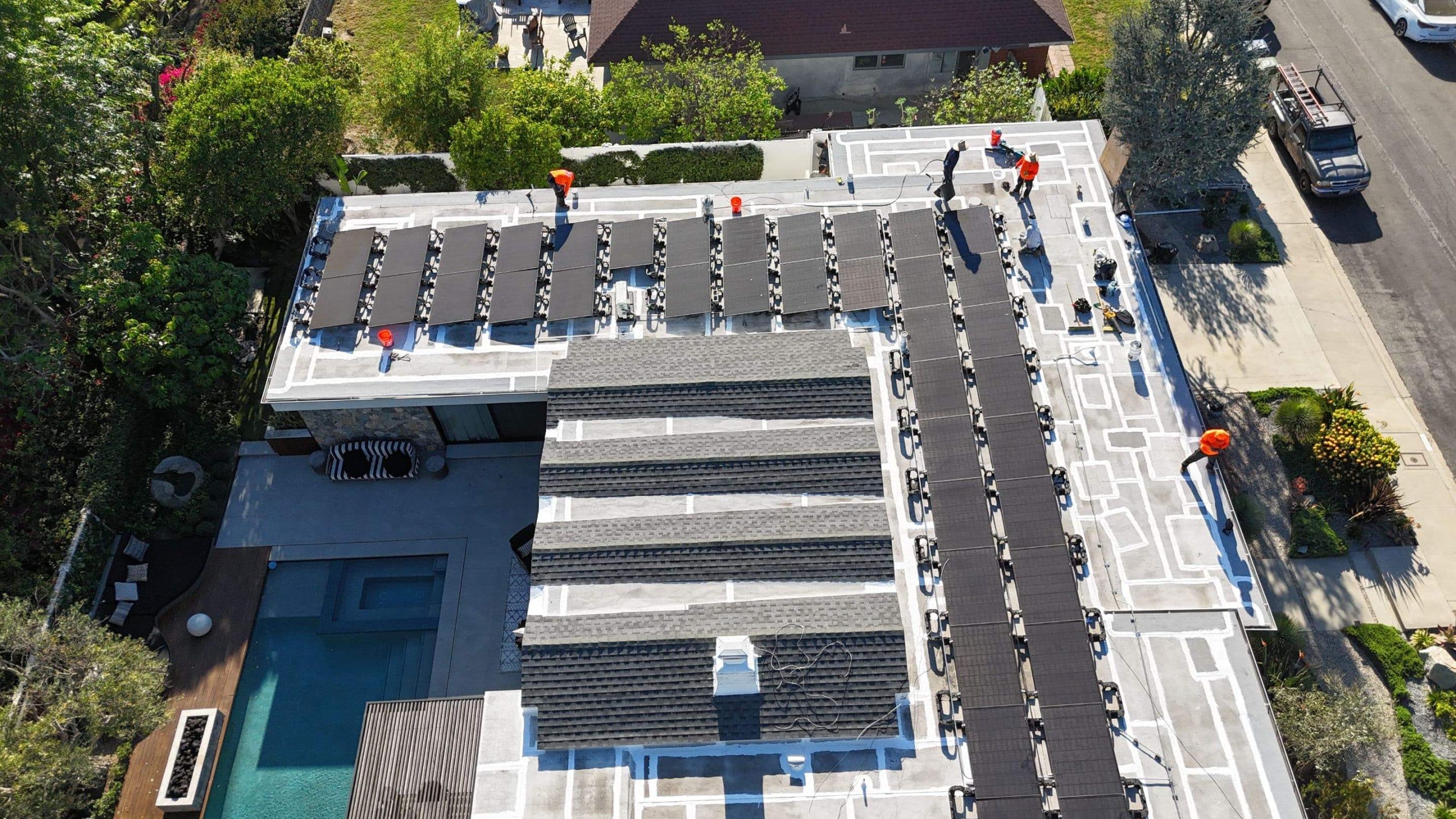
The property features a substantial solar panel array mounted on ballasted racking across the flat roof sections, and the repair work was coordinated around the existing panel layout. Workers applied white roof coating in a grid-like pattern across the unobstructed membrane areas, which is visible in the aerial photograph showing the layout of coated zones between racking rows. The final aerial image shows the full scope of the completed flat roof with coating applied, solar panels repositioned and secured in their racks, and crew members completing final detail work at the perimeter. The sloped shingle sections surrounding the flat areas were left intact with only the transition and valley repairs addressed.

Project Details

ScopeTorch down flat roof repair on a residential property, including crack sealing, new modified bitumen membrane sections, penetration re-flashing, white roof coating, and transition repairs at shingle interfaces.
ServiceTorch Down Roof Repair
Property TypeResidential
LocationLos Angeles, CA
CompletedMarch 15, 2026
Materials UsedTorch-applied modified bitumen membrane (repair sections and rolls), White reflective roof coating, Propane torch assembly for heat-welding, Metal edge trim and parapet cap flashing, Roofing sealant / brush-applied crack filler, Asphalt shingle strip patches at ridge and valley transitions

Roofing in Los Angeles, CA

Los Angeles experiences a Mediterranean climate with long dry summers, intense UV exposure, and periodic heavy winter rains that can quickly reveal any weakness in a flat roof membrane. Flat and low-slope roofs are common on mid-century modern and contemporary residential construction throughout the city, and torch down modified bitumen is a widely used system for these applications because it bonds directly to the substrate and handles ponding water better than many alternatives. The combination of seasonal drought, sun degradation, and concentrated winter rainfall means flat roof membranes in the Los Angeles area typically require inspection and maintenance on a regular cycle to prevent seam failures and crack-related leaks.

Our Service Area: Los Angeles, CA

Frequently Asked Questions

The answer depends on how much of the membrane is still structurally sound. If cracking, open seams, and surface granule loss are limited to specific zones rather than spread uniformly across the entire field, targeted repairs can restore watertight performance without replacing everything. A contractor will typically probe the membrane for soft or spongy areas that indicate trapped moisture in the substrate — if those are widespread, the economics often shift toward full replacement. On this project, the existing membrane still had sound sections, which made a repair-based approach practical. A proper inspection will tell you which category your roof falls into.
On flat or low-slope roofs, the most common early warning signs are water stains on interior ceilings directly after rain, visible cracks or bubbles in the membrane surface when you view it from a safe vantage point, and dark staining or biological growth on the roof surface that indicates standing water is not draining properly. Around penetrations — vents, pipes, drains, HVAC equipment — look for lifted or cracked sealant collars, which are frequent entry points for water. Catching these early, as this job illustrates, usually means a repair rather than a full tear-off.
Ballasted solar racking systems — like the type visible on this property — rest directly on the roof membrane and add concentrated load points, which can accelerate wear at contact spots over time. When roof repairs are needed on a panel-covered flat roof, the racking typically needs to be shifted section by section to give the roofing crew access to the membrane beneath. It adds complexity to the job and requires careful coordination so panels and wiring are not damaged during the process. Homeowners with solar should factor roof condition into their maintenance planning before issues develop under the array where they are harder to spot.
Torch down, or torch-applied modified bitumen, is a two- or three-layer roofing system where sheets of asphalt-modified polymer membrane are heat-welded to the substrate and to each other using an open-flame propane torch. The heat fuses the material into a continuous bonded layer rather than relying solely on adhesives or mechanical fasteners, which produces strong seam integrity. In Southern California, the material holds up reasonably well under UV exposure and handles the thermal cycling — hot dry summers, cooler wet winters — that causes lesser systems to crack or debond. The granule-surfaced cap sheet also provides some impact and abrasion resistance, which matters on roofs with foot traffic from maintenance workers.
In the City of Los Angeles, permit requirements depend on the scope of the work. Cosmetic repairs and patching of limited areas typically do not require a permit, but work that involves replacing a significant portion of the roof membrane or changes to the roof structure generally does. Your contractor should be familiar with current LADBS requirements and can advise you based on the specific scope of your project. Regardless of permit status, the work should be performed by a licensed California contractor, and it is worth confirming that license status before work begins.
That depends heavily on the condition of the substrate, the quality of the repair installation, and how well the roof is maintained afterward. A well-executed torch down repair that addresses all the active failure points — seams, penetrations, perimeter flashings — can restore meaningful service life to a roof that still has sound field membrane. However, a repair does not reset the clock on the entire system; sections of older membrane that were not replaced will continue to age. Annual inspections and prompt attention to new cracks or sealant failures are the most reliable way to extend the interval before full replacement becomes necessary.

Get a Flat Roof Inspection in Los Angeles

If your flat or low-slope roof is showing cracks, seam separations, or water stains after rain, Roof Replacement Inc serves homeowners throughout Los Angeles and the surrounding communities. Contact us to schedule an on-site inspection and get an honest assessment of what your roof actually needs.

Project Details

DATE

May 4, 2026

CLIENT
Work Done
CITY

What Our Clients Say

Roof Replacement Inc. provided outstanding service for our roofing repair. The roofing contractors were quick to respond and conducted a thorough inspection before starting the repairs. The roof repair was completed promptly, and the quality of the work was excellent. The team was professional and respectful, ensuring that the area was clean after the job was done. We are extremely satisfied with their service and will definitely use them again if needed. Highly recommend.

Ryland Bear CustomerRyland Bear

Researched for 2 years and chose because they had a Better Business Bureau A+ . That and they didn’t time pressure me at all, in fact , Adolpho graciously came back out when I asked if just coating it all over with Silicone would work . He explained everything without rushing or ever making me feel like I was taking up his time. As a single woman homeowner I appreciated that. He is a man of integrity and has gone above and beyond before during and now after the work has been done. I believe him when he says he’ll be there if there’s any other concerns . Highly recommend Adoloho and his team.

Smiling woman close-up, partial viewCorine Bohrer

We hired Roof Replacement for a complete roof replacement on our home,,, and they exceeded expectations. The local roofing companies we contacted couldn’t match their level of expertise and professionalism. The roofing services included a comprehensive assessment and a detailed plan for the replacement. The new roof is of high quality, and the roof replacement cost was very reasonable. The team was efficient and finished the project ahead of schedule. We highly recommend their services.

Brady Benedict CustomerBrady Benedict
Google Reviews for Roof Replacement Inc

What Our Clients Say