

Why Long Beach Homeowners Are Reassessing Roofing Costs in 2026
With property values in Long Beach averaging $820,000 and homeowners increasingly focused on long-term financial planning, the roofing material decision has become more strategic than ever. The conventional wisdom that asphalt shingles are “cheaper” overlooks the total cost picture over decades of ownership. As insurance rates climb, energy costs fluctuate, and sustainable building practices gain traction in coastal California communities, Long Beach homeowners in neighborhoods from Naples Island to Bixby Knolls are calculating the real numbers behind their roofing investments. This comprehensive analysis breaks down every cost factor—from initial installation through maintenance, energy savings, and eventual resale impact—so you can make a truly informed decision for your property.
📋 In This Guide
Initial Installation Cost Breakdown for Long Beach Homes
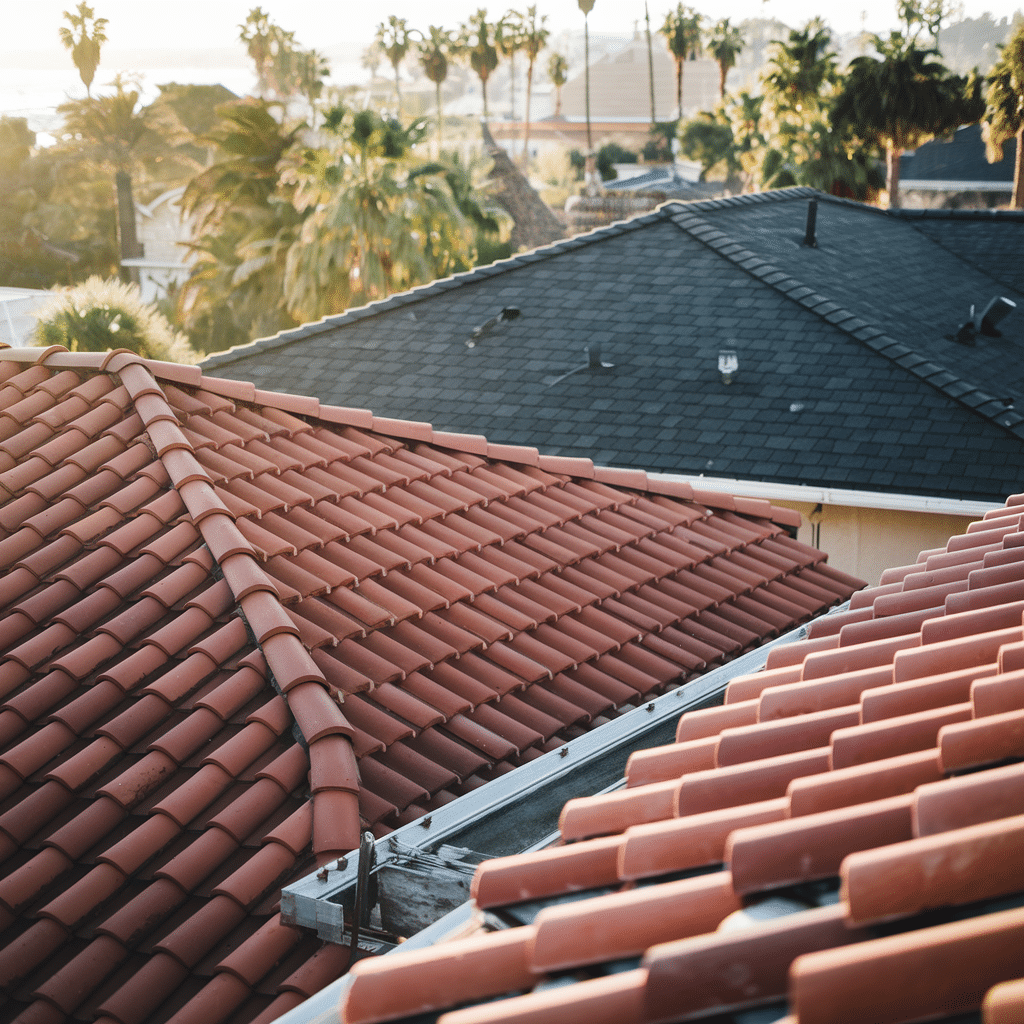
The upfront cost difference between tile and asphalt roofing represents the most visible expense, but understanding what drives these numbers helps contextualize the investment. For a standard 2,000-square-foot Long Beach home, asphalt shingle installation typically ranges from $8,000 to $12,000 ($4.00-$6.00 per square foot), while concrete tile installation runs $18,000 to $26,000 ($9.00-$13.00 per square foot). Clay tile pushes even higher at $22,000 to $32,000 ($11.00-$16.00 per square foot). These ranges reflect Long Beach’s competitive labor market and the logistical considerations of working in densely populated coastal neighborhoods where material delivery and disposal require careful coordination.
Material costs alone tell only part of the story. Tile roofing demands structural evaluation and often requires reinforcement to support the additional 850-950 pounds per square (compared to asphalt’s 200-250 pounds). For a typical Belmont Shore home built in the 1950s-70s, structural upgrades can add $3,000-$6,000 to the project. Labor intensity differs dramatically—tile installation requires specialized expertise and takes 5-7 days versus 2-3 days for asphalt, directly impacting labor costs. The underlayment systems also vary significantly: tile installations use premium synthetic underlayment and battens that add $1.50-$2.50 per square foot, while asphalt relies on standard felt or synthetic underlayment at $0.50-$1.00 per square foot.
Lifespan Value Analysis: Decades of Performance
The dramatic lifespan difference between these materials fundamentally alters the cost equation. Standard asphalt shingles in Long Beach’s coastal climate—with salt air exposure, intense UV radiation, and occasional Santa Ana wind events—typically last 15-20 years. Premium architectural shingles may reach 25 years with proper maintenance. Concrete tile, by contrast, delivers 40-50 years of service life, while clay tile can last 75-100 years. This longevity difference means a homeowner installing asphalt today will likely need two to three complete re-roofs during the lifespan of a single tile installation.
Consider the math for a 2,000-square-foot home over 50 years. An asphalt roof installed in 2026 at $10,000 requires replacement around 2044 (accounting for inflation at 3% annually, approximately $18,500) and again in 2062 (approximately $34,000). Total investment: $62,500. A concrete tile roof installed in 2026 at $22,000 requires no replacement during this period, saving $40,500 in avoided replacement costs. Even accounting for the higher initial investment, the tile roof delivers superior value by year 25-30. For homeowners planning to age in place or maintain multi-generational property ownership—increasingly common in established Long Beach neighborhoods—this timeline matters enormously.
Ongoing Maintenance Costs and Repair Economics
Maintenance expenses create an often-overlooked cost differential. Asphalt shingles require periodic inspection and repair—typically $300-$800 every 5-7 years for minor fixes like replacing wind-damaged shingles, resealing flashing, and addressing granule loss. Over a 20-year lifespan, expect to spend $1,500-$3,000 on maintenance beyond routine inspections. The material’s organic composition means it’s vulnerable to algae growth in Long Beach’s coastal humidity, potentially requiring cleaning treatments ($500-$800) or accelerated deterioration in shaded areas common around Downtown Long Beach’s tree-lined streets.
Tile roofing maintenance focuses on different concerns. Individual tiles crack from impact or thermal stress, requiring replacement at $150-$400 per repair visit. However, the underlayment typically outlasts asphalt’s entire lifespan, and the tiles themselves resist biological growth, UV degradation, and most weather damage. Annual inspections cost similar amounts ($150-$300), but major repairs occur less frequently. Over 30 years, tile maintenance typically totals $3,000-$5,000—higher annually than asphalt but spread across a much longer period. The critical advantage: tile rarely requires urgent repairs that become emergency expenses, while aging asphalt can develop sudden leaks requiring immediate attention. For Long Beach’s 41% owner-occupied homes where landlords manage rental properties remotely, this predictability carries significant value.
When repairs are needed, Roof Repair in Long Beach services differ in complexity and cost. Asphalt repairs typically address water intrusion and deteriorated sections, while tile repairs usually involve individual tile replacement without touching the underlying waterproofing. This difference affects both emergency service costs and the likelihood of secondary damage during repair work.
Energy Efficiency and Utility Cost Impact
Southern California’s cooling costs make roofing material energy performance a significant economic factor. Standard dark asphalt shingles absorb 70-90% of solar radiation, transferring heat into attic spaces and living areas. This heat gain forces HVAC systems to work harder during Long Beach’s warm months (typically May through October), when daytime temperatures regularly reach 75-85°F. A typical 2,000-square-foot Long Beach home with standard asphalt roofing might spend $1,200-$1,800 annually on cooling, with 20-30% of that cost attributable to roof heat gain.
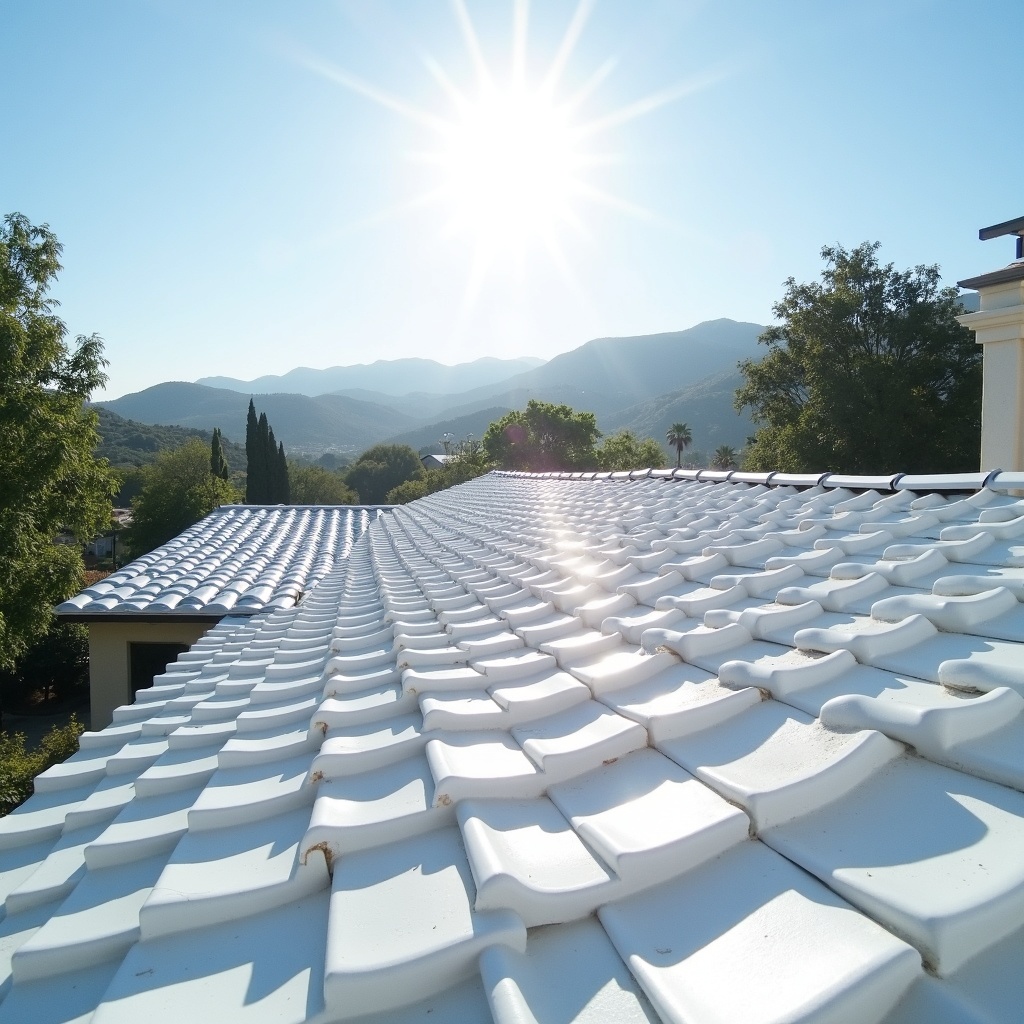
Tile roofing’s thermal mass and air gap beneath individual tiles creates natural ventilation that dramatically reduces heat transfer. Concrete tile typically reflects 25-40% of solar radiation, while specialized cool-colored tiles can reach 60-70% solar reflectance—approaching the performance of dedicated Cool Roofs systems. This translates to attic temperature reductions of 20-30°F compared to dark asphalt, cutting cooling costs by 15-25%. For the same 2,000-square-foot home, annual cooling costs might drop to $900-$1,350—a savings of $300-$450 per year.
Over 30 years, this energy advantage compounds significantly. At a conservative $350 annual savings, tile roofing delivers $10,500 in reduced utility costs. Factor in electricity rate increases (historically 4-5% annually in California), and the actual savings likely exceed $15,000-$18,000. These numbers assume moderate cooling use; homes in inland Long Beach areas like Bixby Knolls, where temperatures run 5-10 degrees warmer than coastal neighborhoods, see even greater savings. The energy efficiency also qualifies for various California energy incentives and may reduce HVAC system wear, extending equipment lifespan.
Insurance Premium Considerations and Risk Mitigation
Insurance costs increasingly reflect roofing material performance, particularly regarding fire resistance and wind uplift ratings. California’s insurance market volatility—with carriers reassessing coastal property risks—makes these distinctions more consequential. Tile roofing carries a Class A fire rating, the highest available, while standard asphalt shingles typically rate Class C (premium impact-resistant shingles may achieve Class A). In Long Beach, where wildfire smoke from inland fires occasionally affects air quality and fire risk remains a regional concern, this distinction matters to underwriters.
Many insurance carriers offer 5-15% premium reductions for tile roofing, though discounts vary by carrier and specific policy. For a Long Beach home valued at $820,000 with annual insurance premiums of $2,500-$3,500, a 10% tile roof discount saves $250-$350 annually. Over 30 years, this compounds to $7,500-$10,500 in savings (assuming premium inflation). Not all carriers offer these discounts consistently, and some require specific tile types or installation certifications, so homeowners should request detailed quotes comparing materials before committing.
Beyond premium discounts, tile roofing may reduce deductibles or improve claim outcomes. After wind events, tile roofs typically sustain damage to individual tiles rather than widespread failures common with aging asphalt. This localized damage often costs less to repair and may not trigger deductibles, avoiding the need to file claims that could impact future insurability—a growing concern in California’s hardening insurance market.
Resale Value and Aesthetic Premium in Long Beach Markets
Real estate value impact varies dramatically by Long Beach neighborhood character and target buyer demographics. In premium coastal areas like Naples Island and Belmont Heights, tile roofing is essentially expected—Mediterranean and Spanish Colonial architecture dominates, and tile complements these styles while signaling quality construction. Homes with asphalt roofing in these neighborhoods may face buyer skepticism or reduced offers, particularly if the roof appears dated. The aesthetic mismatch can subtract $10,000-$25,000 from offers, as buyers factor in immediate replacement costs and the visual discordance.
In neighborhoods with mixed architectural styles like Downtown Long Beach or East Long Beach, roofing material flexibility increases. Here, the value proposition shifts to practical considerations: a newer tile roof (under 10 years) adds approximately 1.5-2.5% to home value, while new asphalt adds 0.5-1.0%. For an $820,000 median-value Long Beach home, tile roofing could add $12,300-$20,500 versus $4,100-$8,200 for asphalt. These premiums reflect buyers’ recognition of remaining lifespan, reduced maintenance burden, and energy efficiency—tangible benefits worth paying for upfront.
The timing of sale matters significantly. Selling a home with a 5-year-old tile roof presents a 40+ year maintenance-free asset that buyers value highly. Selling with a 12-year-old asphalt roof creates buyer concern about replacement timing within their first decade of ownership, often triggering price negotiations or inspection repair demands. For Long Beach’s diverse population—where 59% are renters and property turnover varies by neighborhood—understanding how roofing impacts marketability helps homeowners time sales strategically or justify renovation investments. Expert Roofing services in Long Beach can provide market-specific guidance on how different materials perform during sales transactions in specific neighborhoods.
Total Cost of Ownership: Three Sample Scenarios
Let’s examine complete 30-year cost projections for three common Long Beach home sizes, accounting for installation, maintenance, energy, insurance, and replacement cycles. These scenarios assume moderate inflation (3% annually for materials, 4% for energy) and current 2026 pricing.
Scenario 1: 1,500 Square Foot Home (Typical Bixby Knolls Bungalow)
Asphalt Installation (2026): $7,500 | Maintenance (30 years): $2,200 | Energy Costs (30 years): $38,000 | Replacement (2044): $14,000 | Total: $61,700
Concrete Tile Installation (2026): $16,500 | Maintenance (30 years): $3,800 | Energy Costs (30 years): $28,500 | Replacement: $0 | Total: $48,800
Tile Advantage: $12,900 savings
Scenario 2: 2,000 Square Foot Home (Standard Belmont Shore Single-Family)
Asphalt Installation (2026): $10,000 | Maintenance (30 years): $2,800 | Energy Costs (30 years): $48,000 | Replacement (2044): $18,500 | Total: $79,300
Concrete Tile Installation (2026): $22,000 | Maintenance (30 years): $4,500 | Energy Costs (30 years): $36,000 | Replacement: $0 | Total: $62,500
Tile Advantage: $16,800 savings
Scenario 3: 2,500 Square Foot Home (Larger Naples Island Property)
Asphalt Installation (2026): $13,500 | Maintenance (30 years): $3,500 | Energy Costs (30 years): $58,000 | Replacement (2044): $25,000 | Total: $100,000
Clay Tile Installation (2026): $32,000 | Maintenance (30 years): $5,200 | Energy Costs (30 years): $43,500 | Replacement: $0 | Total: $80,700
Tile Advantage: $19,300 savings
These scenarios demonstrate that tile roofing’s higher upfront cost is typically recovered within 12-18 years through avoided replacement, lower energy costs, and reduced maintenance frequency. The analysis becomes even more favorable when extending timelines beyond 30 years—relevant for homeowners planning long-term ownership or generational property transfers increasingly common in Long Beach’s established neighborhoods.
Making the Right Choice for Your Long Beach Property
The tile versus asphalt decision ultimately depends on your financial timeline, property plans, and neighborhood context. Asphalt shingles make economic sense when planning to sell within 10-15 years, when structural reinforcement costs would be prohibitive, or when budget constraints make the higher upfront tile investment unfeasible. They offer reasonable performance at accessible pricing, and modern architectural shingles provide improved aesthetics and longer lifespans than basic three-tab options.
Tile roofing delivers superior long-term value when planning to own 15+ years, when property values justify premium materials (particularly in neighborhoods where tile is standard), or when energy efficiency and sustainability matter. The material excels in Long Beach’s climate—salt air doesn’t degrade tile, UV exposure doesn’t shorten lifespan, and coastal winds rarely damage properly installed tile systems. For homeowners viewing their roof as a multi-decade investment rather than a short-term expense, tile’s total cost of ownership advantages become compelling.
Financial considerations aside, aesthetic integration matters. Tile roofing suits Mediterranean, Spanish Colonial, Mission Revival, and many Contemporary architectural styles common throughout Long Beach’s diverse neighborhoods. Asphalt works well with Ranch, Craftsman, Traditional, and Cape Cod styles. Choosing materials that complement your home’s architecture protects resale value and neighborhood character—factors that carry weight in Long Beach’s established communities where HOAs and neighborhood identity influence property values.
Before making your final decision, consult with experienced professionals who understand both Long Beach’s specific building requirements and the nuances of different roofing systems. Structural assessments determine whether your home can support tile without reinforcement—a critical factor affecting cost projections. Energy modeling can calculate actual savings potential based on your home’s orientation, insulation, and cooling system efficiency. Insurance quotes comparing materials provide concrete premium differences rather than estimates. These data points transform the abstract cost comparison into personalized financial analysis specific to your property.
Roof Replacement Inc has helped Long Beach homeowners navigate these decisions since 1985, providing detailed cost comparisons, structural assessments, and installation expertise for both tile and asphalt systems. Our team understands the local building codes, neighborhood expectations, and long-term performance factors that influence roofing investments in coastal California. Whether you’re leaning toward tile’s durability or asphalt’s accessibility, we provide transparent pricing, realistic lifespan projections, and installation quality that maximizes your chosen material’s performance. Call us at (213) 364-3979 to schedule a comprehensive consultation that examines your specific property, calculates personalized cost projections, and helps you make the choice that best serves your financial goals and timeline.
Related Posts




What Our Clients Say

Roof Replacement Inc. offers professional, high-quality work, guaranteed (call for details); ensuring all clients projects meet all code and design requirements. We are dedicated to exceptional customer service and will strive to ensure you with the highest quality roofing services. Roof Replacement Inc. offers lifetime warranty (call for details) on all of our workmanship to ensure the quality of our work. With over four decades of experience and success within the roofing and construction industry, Roof Replacement Inc. has grown and developed in all areas of roofing construction, including roof inspections. As a leading residential and commercial roofing company in LA, we have hundreds of references from previous clients, so rest assured, that your roofing job will be done right the first time. Replacing an old roof can help add curb appeal and will increase the perceived value of your home. First impressions are vital when selling your home, especially when your roof takes up more than half of the exterior of your residence or business. Not only is the return of investment on a new roof attractive for potential buyers, but can be as beneficial as remodeling the kitchen or bathrooms within your residence.

