Why Does Everyone Think Ponding Water Is Normal on Flat Roofs?
One of the most dangerous misconceptions among property owners is that flat roofs are supposed to hold water. Many assume that because a roof is called “flat,” standing water is inevitable after rain. The truth? Ponding water on flat roofs in La Canada Flintridge is never normal and always signals a serious drainage problem that will shorten your roof’s lifespan by years or even decades. Professional roofing companies know that even “flat” roofs must maintain a minimum slope of 1/4 inch per foot to ensure proper drainage—anything less invites membrane deterioration, leaks, and structural damage that can cost tens of thousands to repair.
📋 In This Guide
La Canada Flintridge’s Mediterranean climate brings concentrated winter rainfall followed by months of intense UV exposure, creating the perfect storm for ponding-related roof failure. When water sits on your roof for more than 48 hours after precipitation stops, it begins breaking down roofing membranes, infiltrating seams, and adding weight that can cause structural settling. For homeowners in the Flintridge and Descanso Gardens areas with properties valued at over two million dollars, ignoring ponding water isn’t just a maintenance issue—it’s a threat to your most significant investment. This guide answers the critical questions about why water pools, how to measure the severity, and which permanent drainage solutions actually work for both residential and commercial flat roofs.
What Causes Water to Pool on Flat Roofs Instead of Draining Properly?
Understanding the root causes of ponding requires looking beyond surface symptoms to the underlying structural and design failures. The most common culprit is insufficient slope from initial construction or roof replacement. Many older homes in La Canada Flintridge were built when building codes were less stringent, and some contractors installed roofs with inadequate pitch. Even new construction can suffer from poor slope if the roofing contractor in La Canada Flintridge didn’t properly account for drainage paths during installation.
Structural settling represents another major cause. As buildings age, foundations shift, walls settle, and roof decking can sag between support beams. This settling creates low spots where water naturally collects. In La Canada Flintridge’s hilly terrain, homes built on sloped lots may experience uneven settling that exacerbates drainage problems. The weight of HVAC equipment, solar panel installations, or even repeated ponding itself can depress roof sections over time, creating self-perpetuating drainage issues.
Drain blockages and inadequate drainage systems also contribute significantly to ponding. Leaves from the area’s mature oak and sycamore trees, debris from nearby Angeles Crest Highway, and accumulated dirt can clog roof drains, scuppers, and gutters. Many flat roofs were originally designed with too few drains for the roof’s square footage, or drains positioned in locations that don’t align with natural water flow patterns. When you combine blocked drains with high-volume rainfall events, water has nowhere to go except to pool in low areas.
How Do You Determine If Ponding Water Is a Serious Problem Requiring Immediate Action?
The industry-standard test for problematic ponding is the 48-hour rule: if water remains on your roof 48 hours after rain stops, you have a drainage issue that requires professional intervention. This timeframe matters because roofing membranes are designed to handle temporary water exposure, but prolonged submersion accelerates deterioration exponentially. To conduct this test accurately, inspect your roof two full days after the last rainfall, noting any areas where standing water persists.
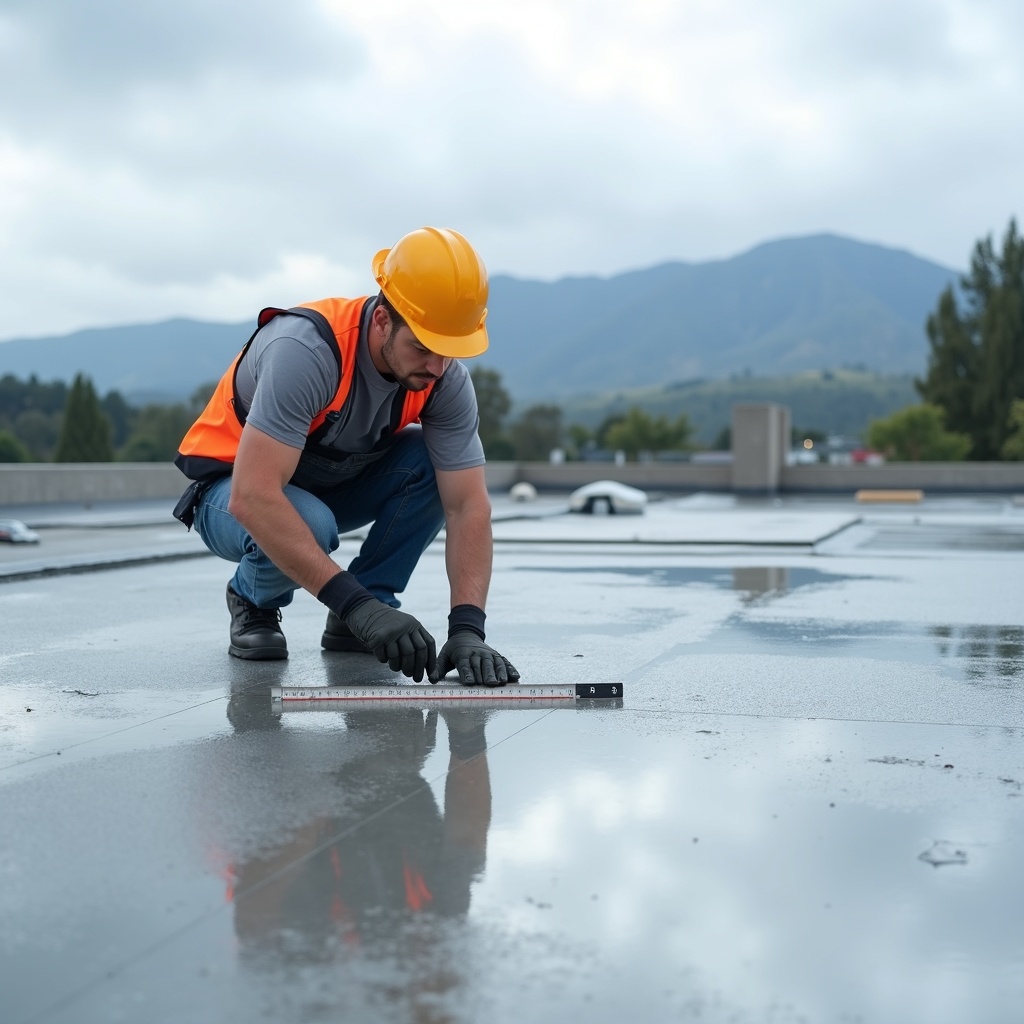
The depth of ponding matters as much as duration. Water deeper than one inch indicates severe drainage failure, while even shallow pooling (1/4 to 1/2 inch) that persists beyond 48 hours signals problems. Use a ruler or measuring tape to check water depth in multiple locations across ponded areas. Pay special attention to zones near roof penetrations, along parapet walls, and around HVAC equipment—these are common failure points where leaks first develop.
Visual inspection provides additional clues about ponding severity. Look for dark staining or discoloration on the roof membrane where water repeatedly collects—this indicates organic growth and membrane degradation. Check for “alligatoring” (a pattern of interconnected cracks resembling reptile skin), blistering, or areas where the membrane feels soft or spongy underfoot. These signs mean ponding has already caused damage and immediate action is required. Inside your property, inspect ceilings below flat roof sections for water stains, peeling paint, or musty odors that signal water infiltration. Given the high property values in the Sagebrush Area and throughout La Canada Flintridge, even minor interior water damage can impact home value significantly.
What Are the Permanent Drainage Solutions That Actually Fix Ponding Problems?
Tapered Insulation Systems for Slope Correction
Installing tapered insulation represents the most effective non-invasive solution for correcting inadequate slope. This system uses rigid insulation boards cut at varying thicknesses to create proper drainage planes across the roof surface. A qualified roofing contractor designs the taper layout by surveying your existing roof, identifying low spots, and calculating the insulation profile needed to direct water toward drains. The new insulation layer is installed over your existing roof deck, then covered with a fresh roofing membrane.
Tapered insulation solves drainage problems while simultaneously improving your roof’s energy performance—a critical consideration for La Canada Flintridge’s hot summer months when temperatures regularly exceed 90 degrees. The added R-value reduces cooling costs and extends membrane lifespan by minimizing thermal cycling. This solution works exceptionally well for residential flat roofs over attached garages, additions, or sections of homes with contemporary architecture.
Additional Drain Installation and Drain Relocation
Many ponding problems stem from too few drains or drains positioned in the wrong locations. Adding secondary drains in areas where water naturally collects provides immediate relief. Roofing services in La Canada Flintridge typically recommend one drain per 1,000 square feet of roof area as a baseline, with additional drains for complex roof geometries or areas prone to debris accumulation.
Drain installation involves cutting through the roof membrane and deck, installing drain hardware properly flashed and sealed, and connecting to new or existing downspout systems. For homes near Descanso Gardens or La Cañada Town Center where aesthetic considerations matter, contractors can use scuppers (side-wall drainage outlets) instead of roof-mounted drains to maintain clean roof lines while improving drainage capacity.
Cricket and Saddle Construction
Crickets are small sloped structures built behind roof penetrations, chimneys, or HVAC equipment to redirect water flow around obstacles. Many ponding issues develop in the valleys created when water approaches a large roof penetration and has no clear drainage path. Installing crickets eliminates these dead zones by channeling water to either side of the obstruction.
This solution is particularly important for La Canada Flintridge properties with multiple HVAC units, solar arrays, or other rooftop equipment. The cricket creates positive drainage where water would otherwise collect, preventing the concentrated deterioration that occurs around equipment platforms. Proper cricket design requires understanding water flow dynamics and coordinating with equipment placement—work best handled by experienced Roof Replacement Inc professionals.
Structural Slope Correction
When ponding results from significant structural settling or original construction with insufficient slope, the only permanent solution may be modifying the roof structure itself. This involves adding tapered framing members (sleepers) across the roof deck to create proper drainage planes, essentially rebuilding the roof substrate with correct slope built in.
Structural slope correction is the most invasive and expensive option, but it provides the most durable long-term solution. This approach makes sense for commercial properties, high-value residential flat roofs, or situations where multiple other solutions have failed. The work typically requires complete roof membrane removal, structural carpentry to install new framing, new decking installation, and finally a complete roofing system rebuild. While extensive, this solution can add decades to your roof’s expected lifespan.
What Are Realistic Expectations for Emergency Fixes Versus Long-Term Solutions?
When ponding water creates an active leak, emergency temporary measures can protect your property while you plan permanent repairs. Applying temporary roof patches or sealants around compromised areas stops immediate water intrusion but does nothing to address the underlying drainage problem. These fixes typically last only weeks or months before failure, making them unsuitable as long-term solutions.
Some property owners attempt to “fix” ponding by drilling small drainage holes through the roofing membrane—a dangerous practice that creates more problems than it solves. These holes allow water to infiltrate roof insulation and decking, causing rot, mold growth, and structural damage far more expensive than the original ponding issue. No reputable roofing company recommends this approach.
Installing temporary pumps or implementing manual water removal after each rain event represents another stopgap measure. While this prevents damage in the short term, it’s labor-intensive, requires constant vigilance, and doesn’t address why water pools in the first place. For La Canada Flintridge homeowners managing properties valued over two million dollars, the time cost and ongoing risk make temporary solutions economically irrational compared to permanent drainage correction.
The reality is that truly effective ponding solutions require either creating proper slope or improving drainage capacity—half measures simply delay inevitable failure. Working with an experienced roofing contractor who understands flat roof drainage engineering ensures you invest in solutions that actually solve the problem rather than just postponing it. Roofing companies in Pasadena and neighboring communities see this pattern repeatedly: property owners who choose temporary fixes end up spending more in cumulative repairs than they would have paid for a permanent solution implemented properly the first time.
When Is Complete Roof Replacement the Only Viable Option?
Several conditions indicate that drainage improvements alone won’t adequately address your flat roof problems and complete replacement is necessary. If your roofing membrane shows widespread deterioration with multiple leaks, extensive alligatoring, or soft spots throughout, the membrane has reached the end of its service life and can’t be salvaged through drainage improvements. Similarly, if water infiltration has compromised roof insulation or caused deck rot, these substrate issues must be addressed during complete tear-off and replacement.
Age plays a critical role in this decision. Most flat roofing systems last 15-25 years depending on material type and maintenance history. If your roof approaches or exceeds this age range while exhibiting ponding problems, replacement makes more financial sense than investing in drainage improvements for a roof near the end of its lifespan anyway. The replacement process allows contractors to correct drainage issues from the ground up—installing proper slope, optimal drain placement, and modern roofing membranes with improved UV resistance and durability.
For homes in La Canada Flintridge’s most prestigious neighborhoods, roof replacement offers an opportunity to upgrade to premium materials that enhance property value and curb appeal. Modern options include TPO (thermoplastic polyolefin), EPDM (ethylene propylene diene monomer), and modified bitumen systems with significantly better performance characteristics than older built-up roofing. These advanced membranes resist ponding damage more effectively while providing superior energy efficiency—important for maintaining comfortable temperatures in La Canada Flintridge’s summer heat without excessive cooling costs.
Complete replacement also makes sense when you’re planning other major property improvements. Coordinating roof work with HVAC upgrades, solar panel installation, or home additions ensures all systems integrate properly and contractors can address drainage design comprehensively rather than piecemeal. The investment protects your property for decades while eliminating the ongoing maintenance concerns and leak risks associated with aged roofs suffering from drainage problems.
How Do You Choose the Right Roofing Contractor for Flat Roof Drainage Correction?
Selecting a qualified roofing contractor for drainage work requires evaluating specific expertise beyond general roofing skills. Look for contractors with demonstrated experience in flat roof drainage engineering, not just membrane installation. Ask potential contractors how they assess drainage problems, what diagnostic tools they use, and which permanent solutions they recommend most frequently. Contractors who immediately suggest only temporary fixes or membrane patches without addressing drainage likely lack the technical expertise for lasting solutions.
Verify that any roofing contractor you consider holds proper California licensing (C-39 Roofing Contractor License), maintains comprehensive liability insurance, and carries workers’ compensation coverage. In La Canada Flintridge’s high-value housing market, inadequate insurance coverage exposes you to significant financial risk if accidents or property damage occur during roofing work. Request certificates of insurance directly from the contractor’s insurance carrier rather than relying on copies that might be outdated.
Experience with properties similar to yours matters significantly. A contractor specializing in commercial low-slope roofs may not understand the unique challenges of residential flat roofs on expensive homes where aesthetic considerations matter as much as function. Similarly, contractors experienced with La Canada Flintridge’s specific architecture, building styles, and local building department requirements will navigate permitting and inspections more smoothly than out-of-area firms unfamiliar with local practices.
References from recent projects provide invaluable insight into contractor reliability and work quality. Ask for contact information for three recent flat roof projects involving drainage correction—not just membrane replacements. Follow up with these references to ask specific questions about communication, project timeline accuracy, how the contractor handled unexpected issues, and whether drainage problems were actually resolved long-term. Be cautious of contractors unable or unwilling to provide verifiable recent references for drainage-specific work.
For expert diagnosis and permanent drainage solutions for your flat roof ponding problems in La Canada Flintridge, contact Roof Replacement Inc at (213) 364-3979. Our team has decades of experience solving complex drainage issues on both residential and commercial properties throughout the area, and we’ll provide honest assessment of your situation with solutions designed to protect your investment for the long term.
Related Posts



What Our Clients Say

Roof Replacement Inc. offers professional, high-quality work, guaranteed (call for details); ensuring all clients projects meet all code and design requirements. We are dedicated to exceptional customer service and will strive to ensure you with the highest quality roofing services. Roof Replacement Inc. offers lifetime warranty (call for details) on all of our workmanship to ensure the quality of our work. With over four decades of experience and success within the roofing and construction industry, Roof Replacement Inc. has grown and developed in all areas of roofing construction, including roof inspections. As a leading residential and commercial roofing company in LA, we have hundreds of references from previous clients, so rest assured, that your roofing job will be done right the first time. Replacing an old roof can help add curb appeal and will increase the perceived value of your home. First impressions are vital when selling your home, especially when your roof takes up more than half of the exterior of your residence or business. Not only is the return of investment on a new roof attractive for potential buyers, but can be as beneficial as remodeling the kitchen or bathrooms within your residence.

