- What Is A Flat Roof?
- Advantages Of Flat Roofs
- Types Of Flat Roof Materials
- Flat Roof Cost Breakdown
- How To Maintain The Roof?
- How Long Does A Flat Roof Last?
- FAQ
When it comes to choosing a roof, the flat roof often gets overshadowed by sloped ones. However, they are coming back, particularly for modern homes and commercial spaces. Whether you’re considering a sleek, minimalist design or seeking functional, energy-efficient solutions, these roofs have many benefits. From extra usable space to cost-effective installation, it’s a practical choice for many property owners.
In this guide, we’ll explore everything you need to know about low-slope roofs, different materials, costs, maintenance tips, and how to make the most of this roofing option.
Let’s dive in and discover why the low-slope roof is the best choice for you.
Key Takeaways
- Low-slope roofs have a slight pitch to allow water drainage and prevent pooling.
- They offer usable space for rooftop decks, gardens, or solar panels.
- These types of roofs are cost-effective to install and easier to maintain.
- Materials like EPDM, TPO, and PVC are popular choices.
- Regular maintenance, including inspections and debris removal, is crucial for maintaining longevity.
- Low-slope roofs can last 20-35 years, depending on the material and maintenance.
- Proper drainage is key to preventing leaks and water damage.
- Signs of needing a replacement include frequent leaks and damage to the membrane.
What Is A Flat Roof?
A flat roof or a low slope is not entirely flat. It typically has a pitch of less than 10 degrees. This slight slope is very important. It allows rainwater to move toward drains, scuppers, or gutters instead of pooling on the surface.
Without this design detail, water would accumulate and create pressure points on the roof that can lead to leaks, premature wear, or even structural damage. Unlike pitched roofs, which rely on overlapping shingles to shed water, low-slope roofs depend on continuous waterproof membranes. These membranes create a watertight seal for their entire surface.
They are widely used in commercial and industrial buildings. However, these roofs have become very popular in residential design, especially in regions like Southern California, where modern architecture and clean lines are in demand. For homes, this type of roof is often used for additions such as sunrooms, garages, and porches, but many contemporary homes now feature full low-slope roofing systems as part of their main design.
Low-slope roofs have become popular not only because of the aesthetic look, but also because they have practical advantages: they have usable space for solar panels, rooftop decks, or even garden installations. This makes them especially appealing and suitable for urban homeowners who want to maximize every square foot of their property.
A flat roof usually consists of three essential components.
- The roof deck– It is usually made of plywood or oriented strand board (OSB). It provides the structural foundation.
- Insulation layer– made of rigid foam boards. This component regulates indoor temperatures and improves energy efficiency.
- Waterproof membrane– This membrane can be made from materials such as EPDM rubber, TPO, PVC, modified bitumen, or built-up roofing systems. It creates a protective barrier against rain, UV rays, and other environmental factors that can harm the roof over time.
Low-slope roof design is also suitable for the climate challenges that property owners face in Southern California. As this region is exposed to intense sun, reflective materials like white TPO membranes can help reduce heat absorption and lower cooling costs.
These roofs are also practical for handling the occasional heavy rains. Commercial buildings often rely on low-slope roofs because they make it easier to install and maintain HVAC systems, ventilation units, and other mechanical equipment without interfering with interior operations.
Also, read:
Advantages Of Flat Roofs
Low-slope roofs have become very popular thanks to their sleek, modern appearance and practical benefits. While warehouses or industrial sites once used them, these types of roofs are now a smart and stylish option for residential projects as well.
Discovering the benefits of low-slope roofs helps property owners understand how they can use them to their advantage.
Cost-Effective Installation- Low-slope roofs cost less to install as they need fewer materials and take less time to build. Contractors don’t need to deal with steep slopes, which simplifies the labor process. This saves you money both during the installation time and for future repairs or upgrades.
Extra Space- One of the biggest advantages of these types of roofs is that you can use the space on top of the building. Homeowners can convert their roof into a rooftop deck, patio, or garden. Meanwhile, commercial property managers can use this area to place HVAC units, solar panels, or other equipment.
Energy Efficiency- Many materials for roofs, such as TPO and PVC, reflect heat. In hot Southern California climates, this reduces AC working time and lowers energy bills. Moreover, the open space on the roof is ideal for installing solar panels.
Ease of Access for Maintenance- these roofs are safer and easier to walk on. This makes inspections, cleanings, and small roof repairs easier to conduct. For commercial properties, this accessibility saves time and money on maintenance as crews can quickly reach equipment and roofing materials.
Types Of Flat Roofs
These roofs look simple, but their material choice determines how well they perform and how durable they are in different climates. The right option for you depends on the type of your property, your long-term goals, and whether energy efficiency and durability are your priorities. Here are the most common types of roof materials and what makes each of them unique.
EPDM Roofs (Ethylene Propylene Diene Monomer / Rubber Roof)- EPDM is a synthetic rubber membrane that has been used in low-slope roofing for decades. It is lightweight, flexible, and comes in large sheets. This reduces the chance of getting seams and leaks. Black EPDM is common, but white-coated versions are available to help reflect sunlight. EPDM is known for its reliability and long lifespan. It is mainly used on garages, sunrooms, and smaller residential roofs.
TPO Roofs (Thermoplastic Olefin)- TPO roofs have become one of the most popular choices in modern roofing, particularly for commercial applications. It is reflective, which makes it excellent for reducing cooling costs in hot climates like Southern California. TPO seams are heat-welded, creating a watertight seal that is less prone to leaks than adhesive-based systems. Because of its energy efficiency and strength, it is mainly used for flat-roof commercial buildings and larger residential homes.
PVC Roofs (Polyvinyl Chloride)- PVC is another single-ply membrane similar to TPO roofs, but it offers additional strength and resistance to chemicals, fire, and heavy foot traffic. This makes it a go-to choice for restaurants, industrial buildings, and residential areas that use rooftops.
Modified Bitumen Roofs- Modified bitumen is an asphalt-based material reinforced with fiberglass or polyester for added strength. It performs well in a wide range of climates and is suitable for both residential and commercial use. It is versatile in its installation methods, allowing for torch application, adhesives, or self-adhered sheets.
Built-Up Roofing (BUR / Tar and Gravel)- BUR is one of the oldest low-slope roof types. It is built from multiple layers of asphalt and reinforcing fabric topped with gravel. The gravel finish helps protect the roof against UV rays and physical wear. It has been used on commercial buildings and older properties. It is valued for its proven durability and ability to withstand various conditions if properly maintained.

Need help deciding? Contact us today for expert recommendations tailored to your specific roofing needs!
Get a quote!
How Much? Flat Roof Cost Breakdown
When planning a project, cost is one of the first concerns you face. While these roofs are often less expensive to install than complex pitched roofs, the actual price can be different depending on the materials, labor, and the current roof condition.
The biggest part of the flat roof cost is formed by the material that you have chosen. Each material has a different installation method, durability, and labor costs.
EPDM (Rubber Roofing): Usually has a lower price. It offers durability and flexibility. It is often chosen for garages, sunrooms, or smaller-scale projects.
TPO (Thermoplastic Olefin): Mid-range in price but known for energy efficiency thanks to its reflective white surface. They are mainly installed on flat-roof commercial buildings as well as homes in sunny climates.
PVC (Polyvinyl Chloride): A premium choice with higher upfront costs, but excellent longevity and resistance to chemicals, fire, and heavy foot traffic.
Modified Bitumen: Moderately priced, offering strong puncture resistance and flexibility. Installation methods (torch, adhesive, or self-adhered) influence total cost.
Built-Up Roofing (BUR): Labor-intensive due to multiple asphalt and fabric layers, often making it one of the costlier systems to install, though it’s proven and durable.
Low-slope roofing requires specialized crews who understand the roof’s structure. In high-cost markets such as those across Southern California, labor rates can add considerably to the flat roof cost.
Accessibility also affects pricing. This means that roofs with multiple levels, complex layouts, skylights, or HVAC units take longer to complete and have higher labor costs.
Other key cost factors include:
- Roof Tear-Off: Removing an old roof adds both time and fees.
- Roof Condition: Damaged decks or waterlogged insulation that need replacing will increase costs.
- Insulation Type and Thickness: Higher R-values improve energy efficiency, but they also increase the expense.
How To Maintain The Roof?
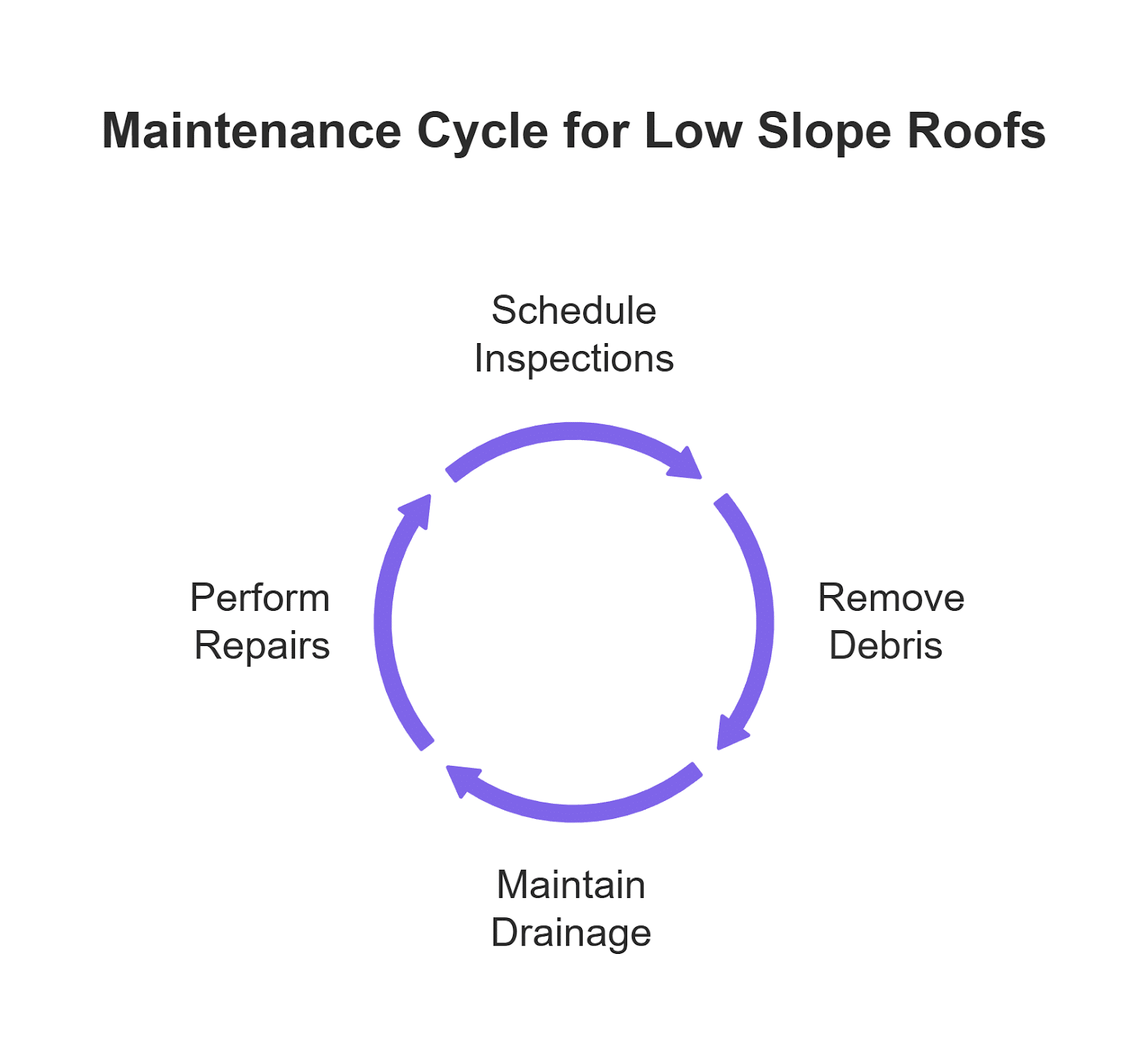
Low-slope roofs are durable, but their performance depends on consistent care and attention. Unlike pitched roofs, these types of roofs require proactive maintenance to keep them watertight and functioning properly. With the right maintenance, a low-slope roof can protect your home or commercial building for decades.
Regular Inspections- Schedule roof inspections at least twice a year, ideally in the spring and fall. During the inspections, look for ponding water, cracks, loose seams, damaged flashing, or punctures in the membrane. Also, conduct additional inspections after major storms, as wind and heavy rain can accelerate wear and tear.
Debris Removal – Low-slope roofs collect leaves, branches, and dirt. These can block drains and scuppers, and lead to standing water. Keeping the surface clear prevents leaks, mold growth, and structural weakening.
Drainage System Care- Ensure gutters, scuppers, and drains are always clear. Ponding water left for more than 48 hours can significantly reduce a roof’s lifespan. Also consider additional drains if water pooling is a recurring issue.
Minor Repairs and Protective Coatings – Over time, EPDM seams may loosen. TPO/PVC membranes can become brittle. Fixing small punctures or cracks prevents future widespread leaks. Consider applying reflective or protective coatings to reduce UV damage and extend the roof’s life.
How Long Does It Last?
The durability of these roofs mainly depends on the material used. Different roofing materials have different durability. However, factors such as climate, maintenance, and the quality of installation can influence how long a roof lasts. Choosing the right material is key to ensuring long-term performance.
- EPDM roofs: 25-35 years if kept properly.
- TPO roofs: 20-30 years. Extreme sun or hail can reduce the durability
- PVC: 25-35+ years.
- BUR/Modified Bitumen: 15-25 years.
Seasonal Considerations: In hot climates like Southern California, sun and heat can accelerate wear. To avoid this, you should schedule periodic inspections for UV damage or brittleness.
If your flat roof shows signs of significant damage (such as frequent leaks, cracking, or water pooling), it may be time to consider roof replacement. Roof Replacement Inc. specializes in high-quality roof installations and repairs, ensuring long-lasting protection for your home or business.
FAQ
How long does a low slope typically last?
The lifespan of a roof varies depending on the material used and the level of maintenance. Usually, EPDM roofs last 25-35 years, TPO roofs 20-30 years, and PVC roofs 25-35+ years. BUR roofs last 15-25 years.
Do low-slope roofs tend to have more leaks than sloped roofs?
These roofs are susceptible to leaks due to their minimal slope. This can cause water pooling if drainage systems are not properly maintained. However, with correct installation, quality materials, and regular maintenance, low-slope roofs become as reliable as sloped roofs. Ensuring proper drainage and addressing issues promptly are key to preventing leaks.
What maintenance does a flat roof require?
It is crucial to have regular inspections to check for ponding water, cracks, loose seams, damaged flashing, or punctures in the membrane. It’s also important to remove debris such as leaves and branches, which can block drains and scuppers. Additionally, applying reflective or protective coatings can help reduce UV damage and extend the roof’s life.
Can I install solar panels on a roof?
Yes, you can install solar panels on low-slope roofs. Their flat design simplifies maintenance and installation. However, you may need to consult with a professional team to ensure that the roof structure can support the additional weight.
What are the signs that my roof needs replacement?
Signs that your low-slope roof may need replacement include frequent, hard-to-repair leaks, membrane damage (such as cracking, blistering, or shrinking), and prolonged water pooling. A rise in heating or cooling costs due to poor insulation is also a red flag. If you notice any of these, it’s best to consult a roofing professional for an assessment.
What are the signs that my roof needs replacement?
Signs that your roof may need replacement are frequent, hard-to-repair leaks, membrane damage, and water pooling for an extended period. A rise in heating or cooling costs due to poor insulation is also a red flag.
Explore our full range of roofing services across Southern California.




What Our Clients Say











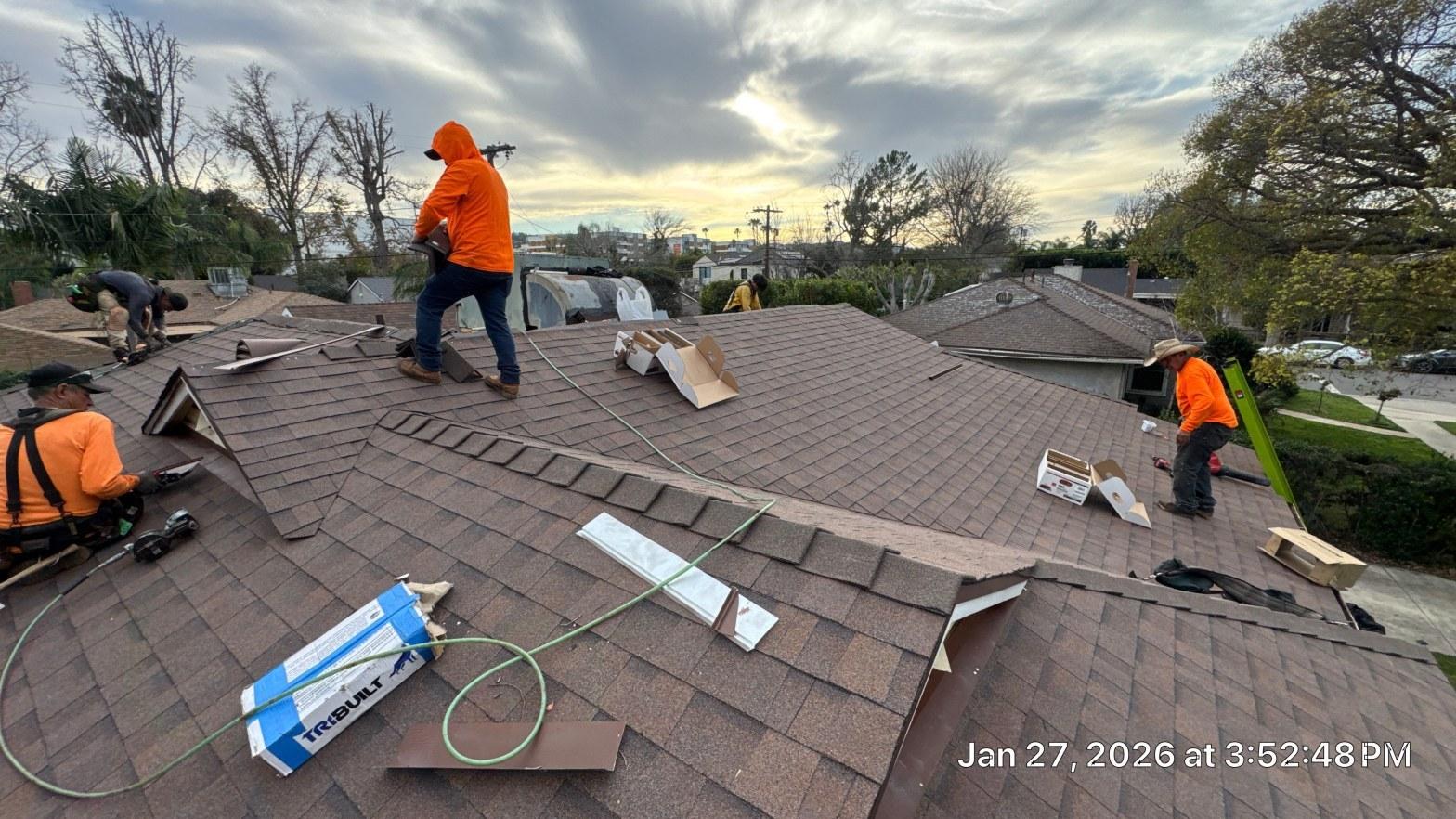
Roof Replacement Inc. offers professional, high-quality work, guaranteed (call for details); ensuring all clients projects meet all code and design requirements. We are dedicated to exceptional customer service and will strive to ensure you with the highest quality roofing services. Roof Replacement Inc. offers lifetime warranty (call for details) on all of our workmanship to ensure the quality of our work. With over 40 years of combined experience within the roofing and construction industry, Roof Replacement Inc. has grown and developed in all areas of roofing construction, including roof inspections. As a leading residential and commercial roofing company in LA, we have hundreds of references from previous clients, so rest assured, that your roofing job will be done right the first time. Replacing an old roof can help add curb appeal and will increase the perceived value of your home. First impressions are vital when selling your home, especially when your roof takes up more than half of the exterior of your residence or business. Not only is the return of investment on a new roof attractive for potential buyers, but can be as beneficial as remodeling the kitchen or bathrooms within your residence.

