

What Did This Beverly Hills Flat Roof Repair Actually Involve?
This project covered a complete torch-down modified bitumen membrane replacement across multiple flat roof sections at a residential property on N Roxbury Drive in Beverly Hills, CA 90210. The homeowner’s primary goal was to stop active water intrusion and bring the roof up to a watertight, long-lasting standard before the next rain season.
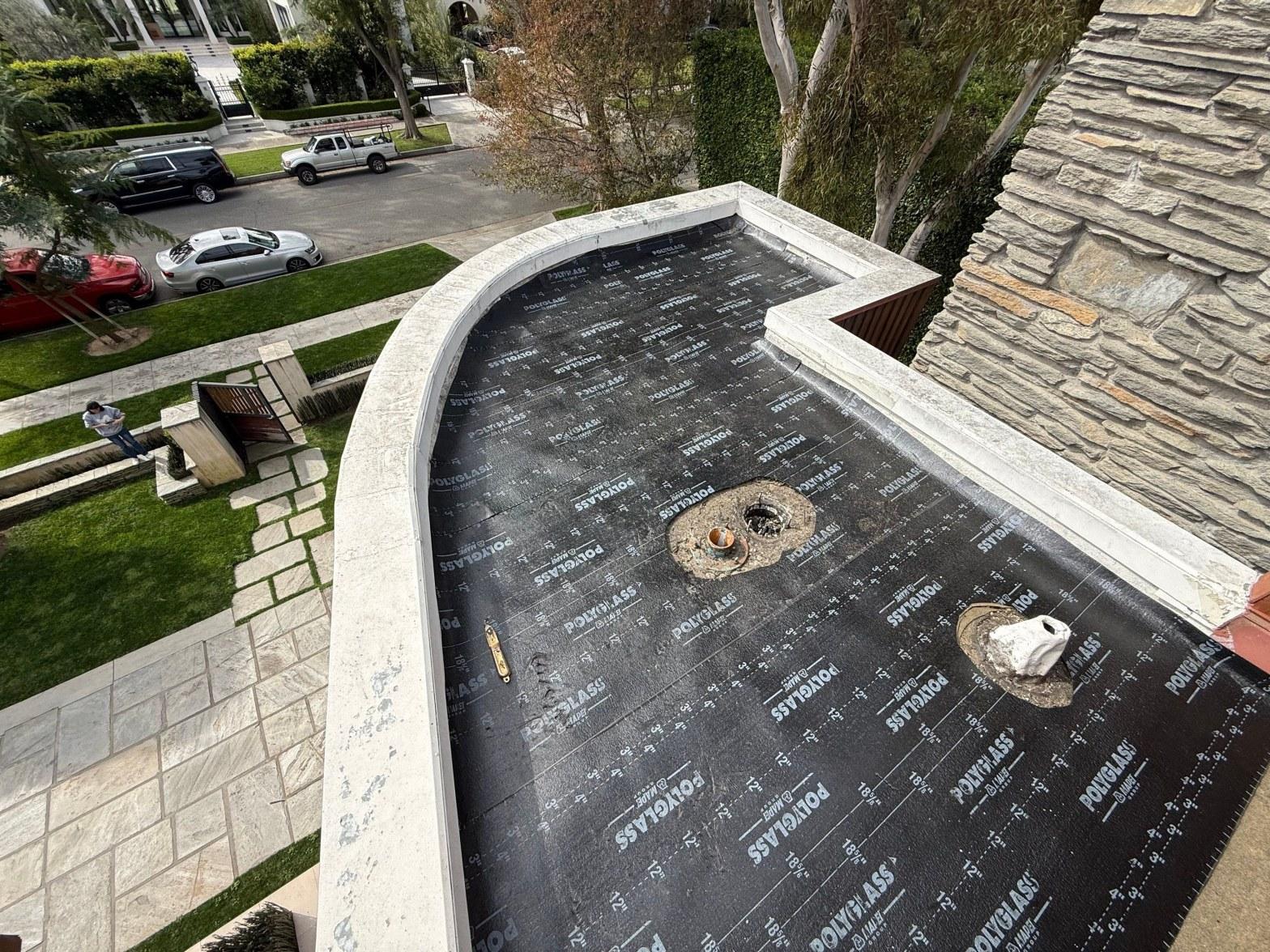
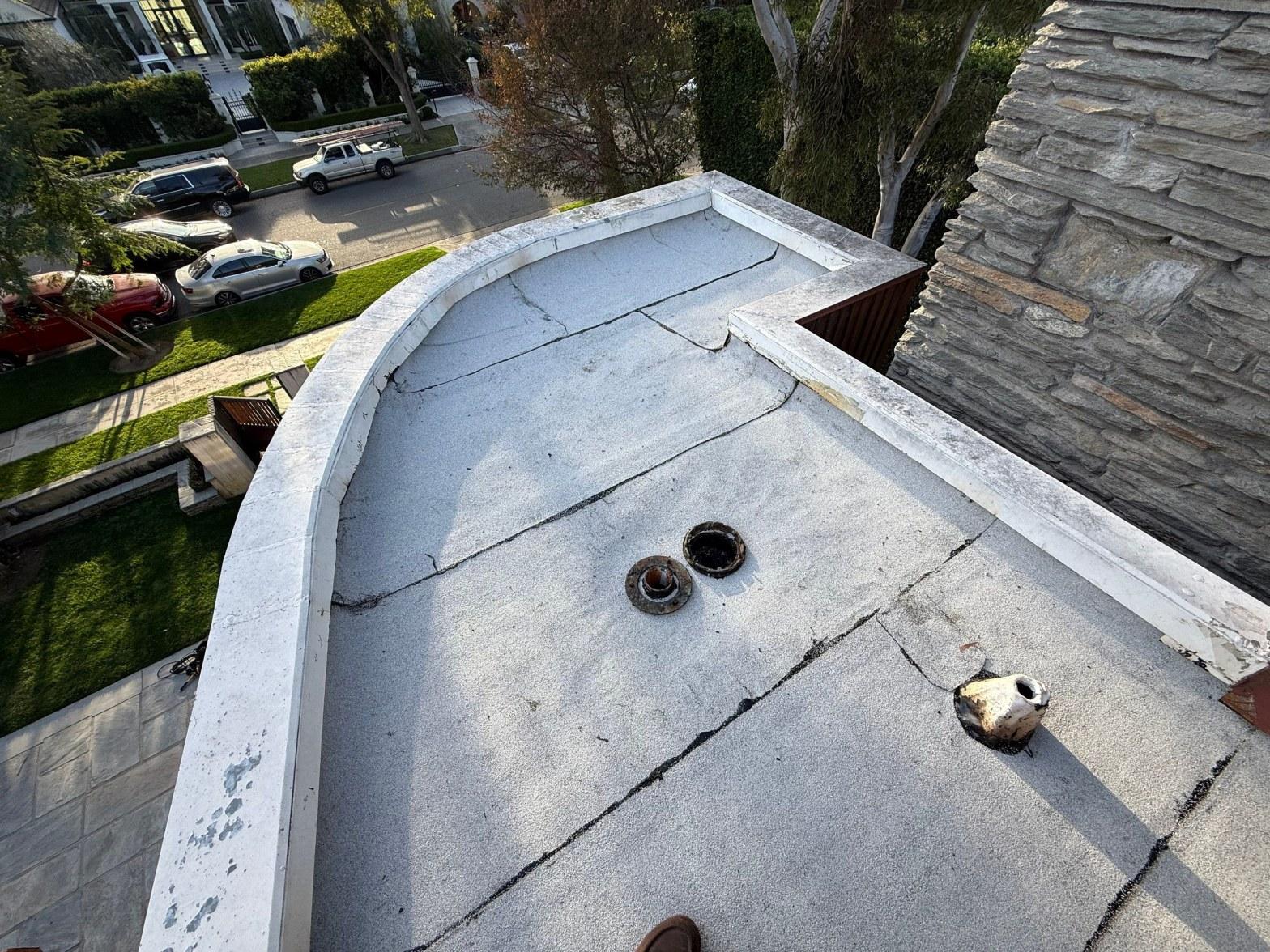
The property featured at least 3 distinct flat roof planes at varying elevations — a configuration common in mid-century Beverly Hills architecture. Each section had its own drainage points, and all of them showed the same pattern: aged, cracked membrane, deteriorated flashing at the parapets, and drain collars that had lost their seal. Left unaddressed, these failure points were allowing water to track below the membrane and into the structure.
Project Gallery
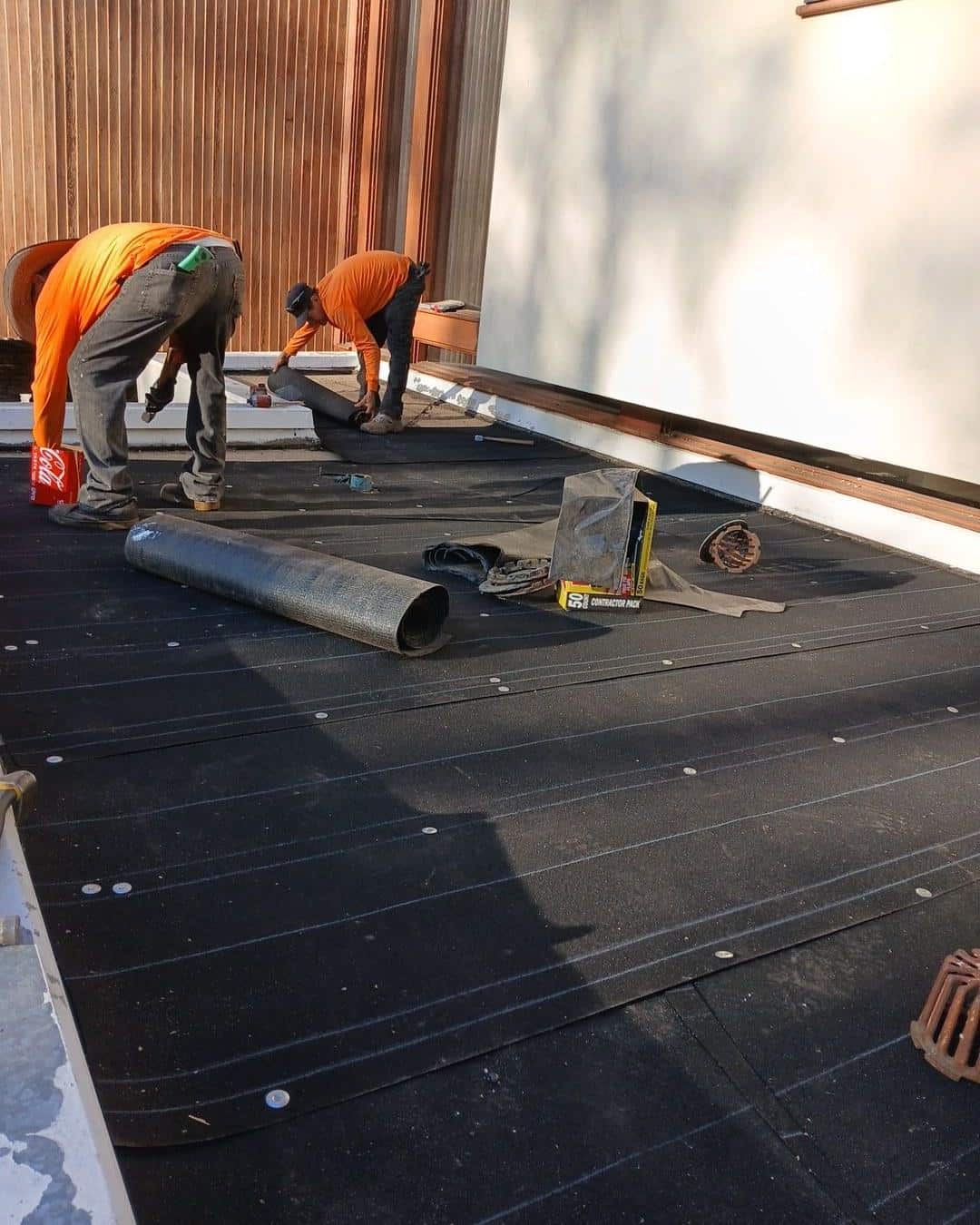
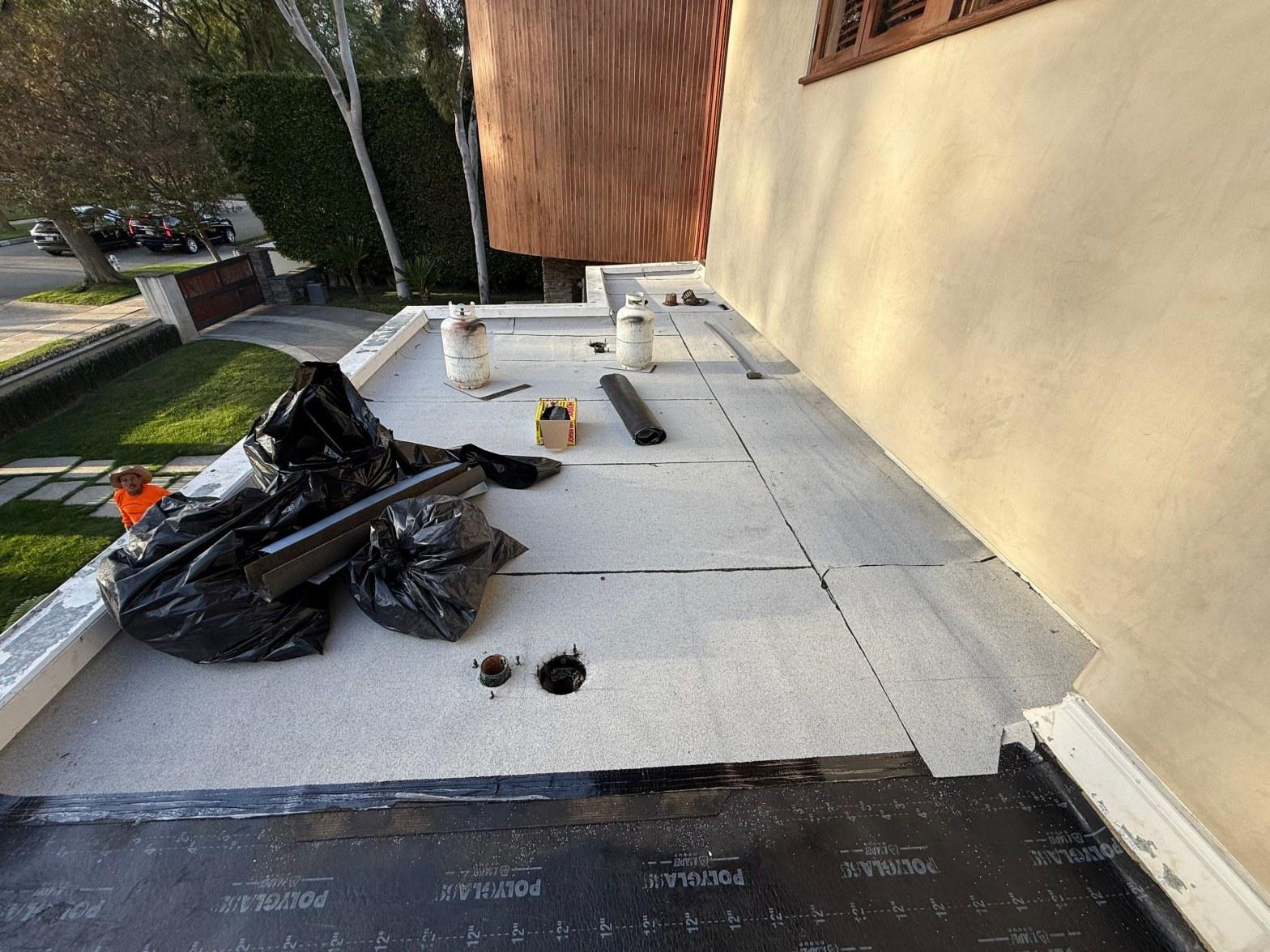
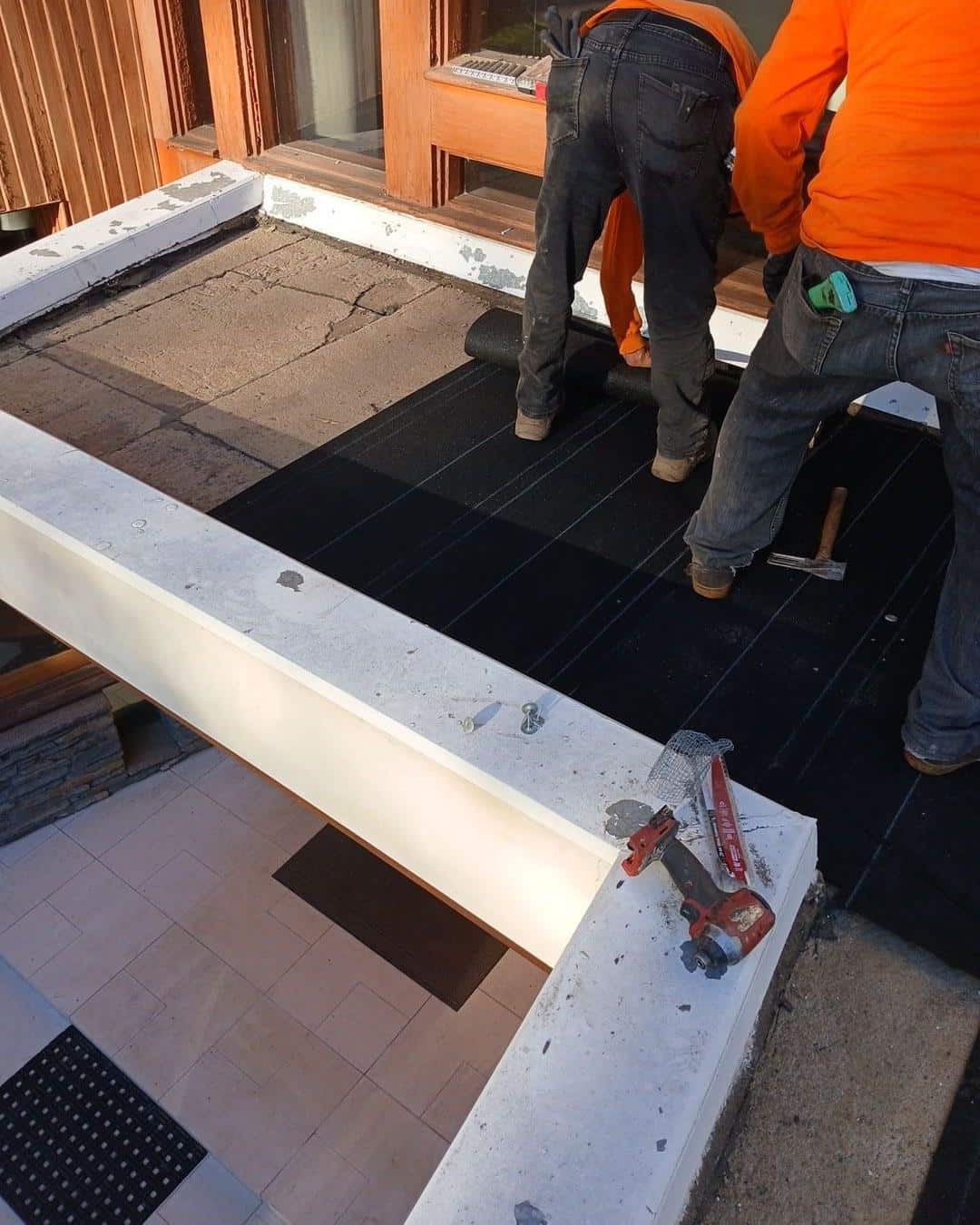
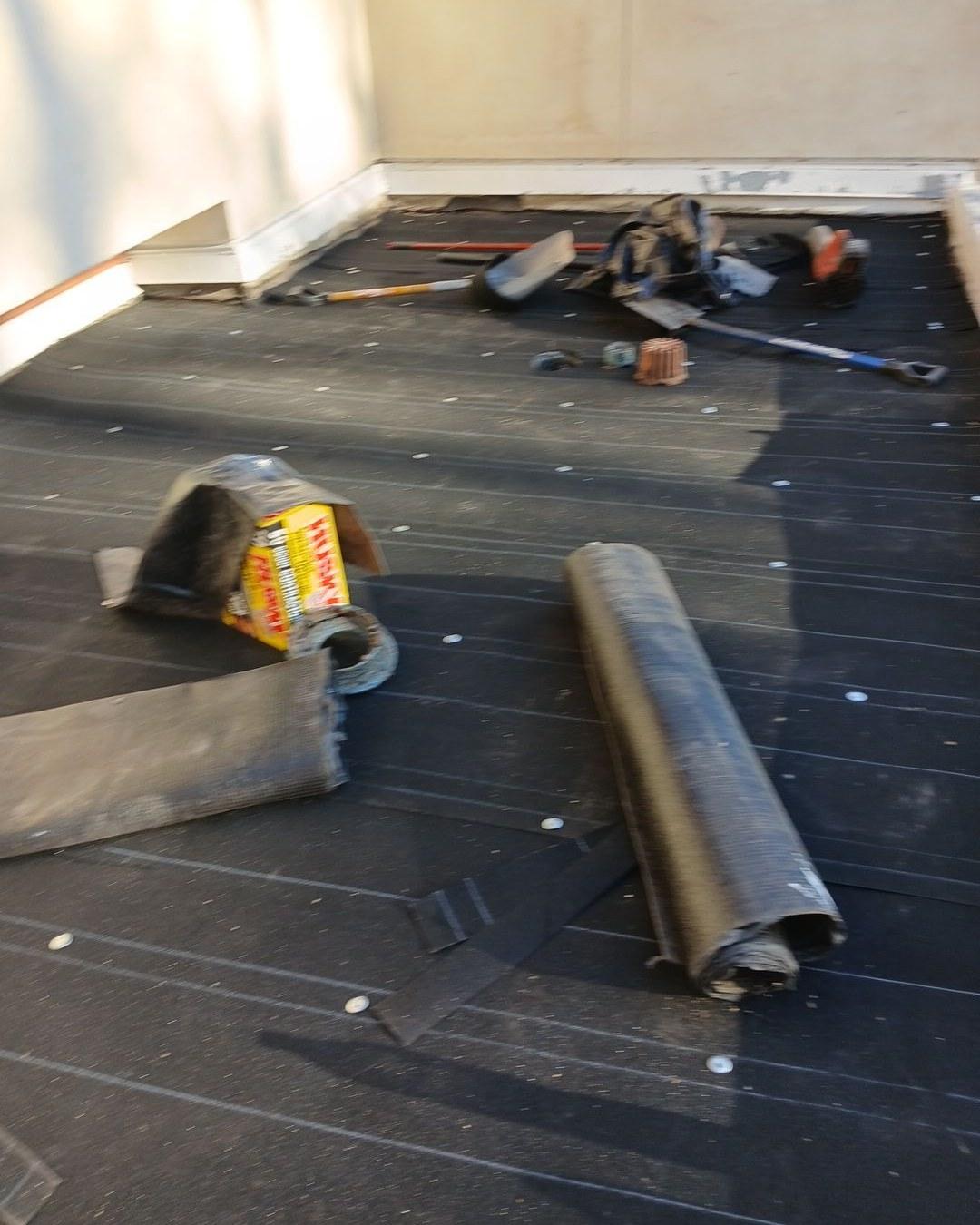
What Did We Find When We Stripped the Old Roof?
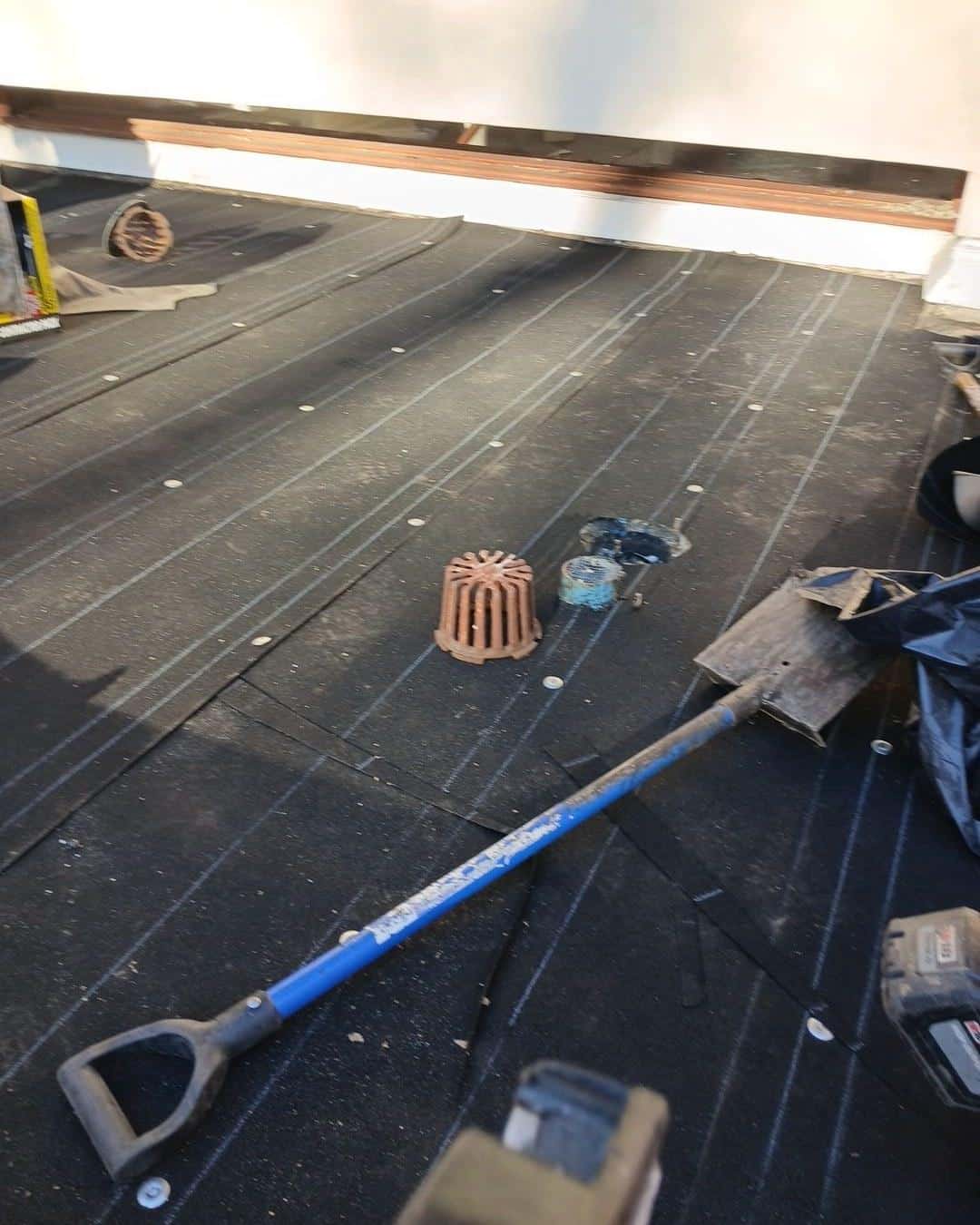
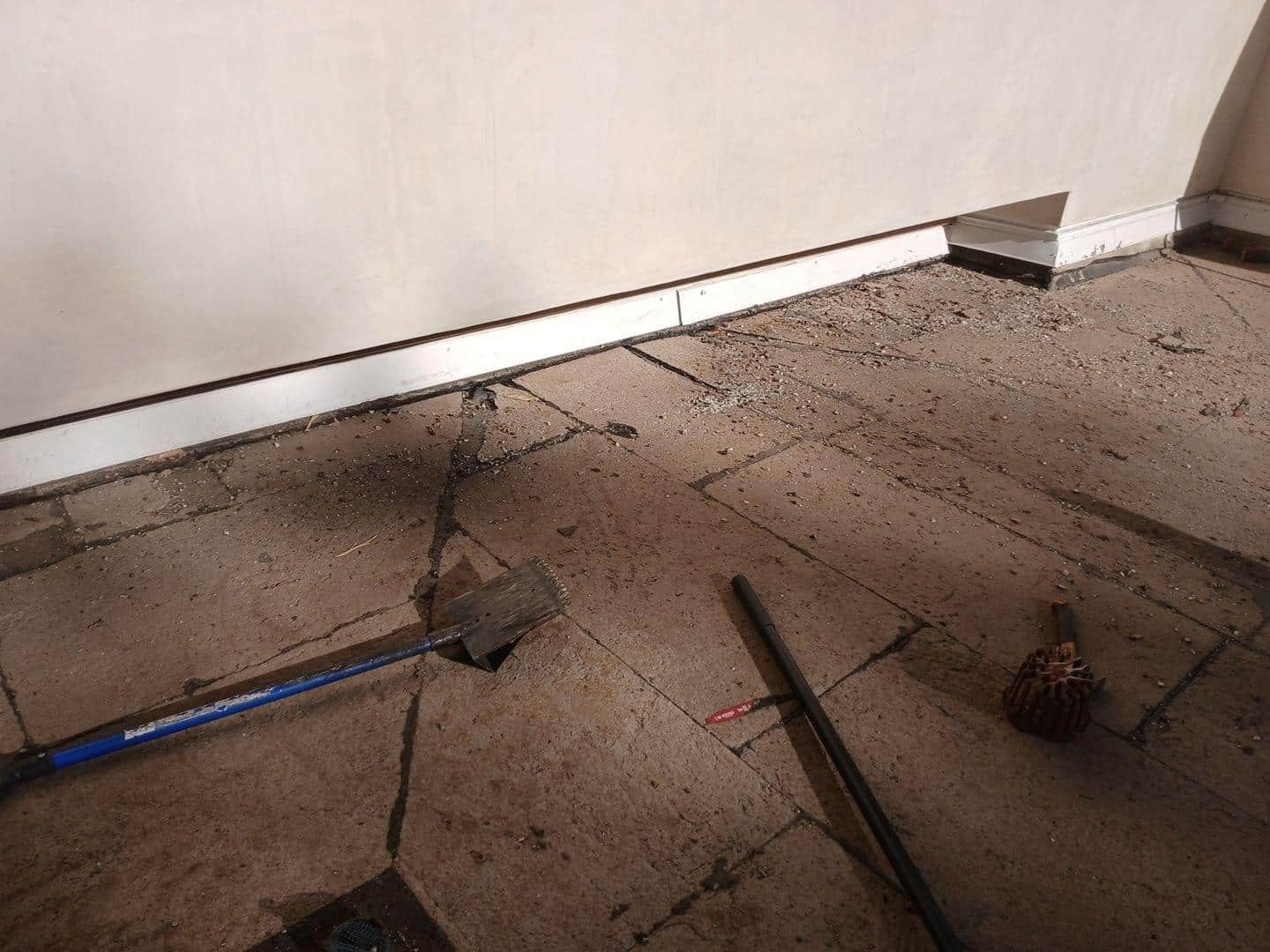
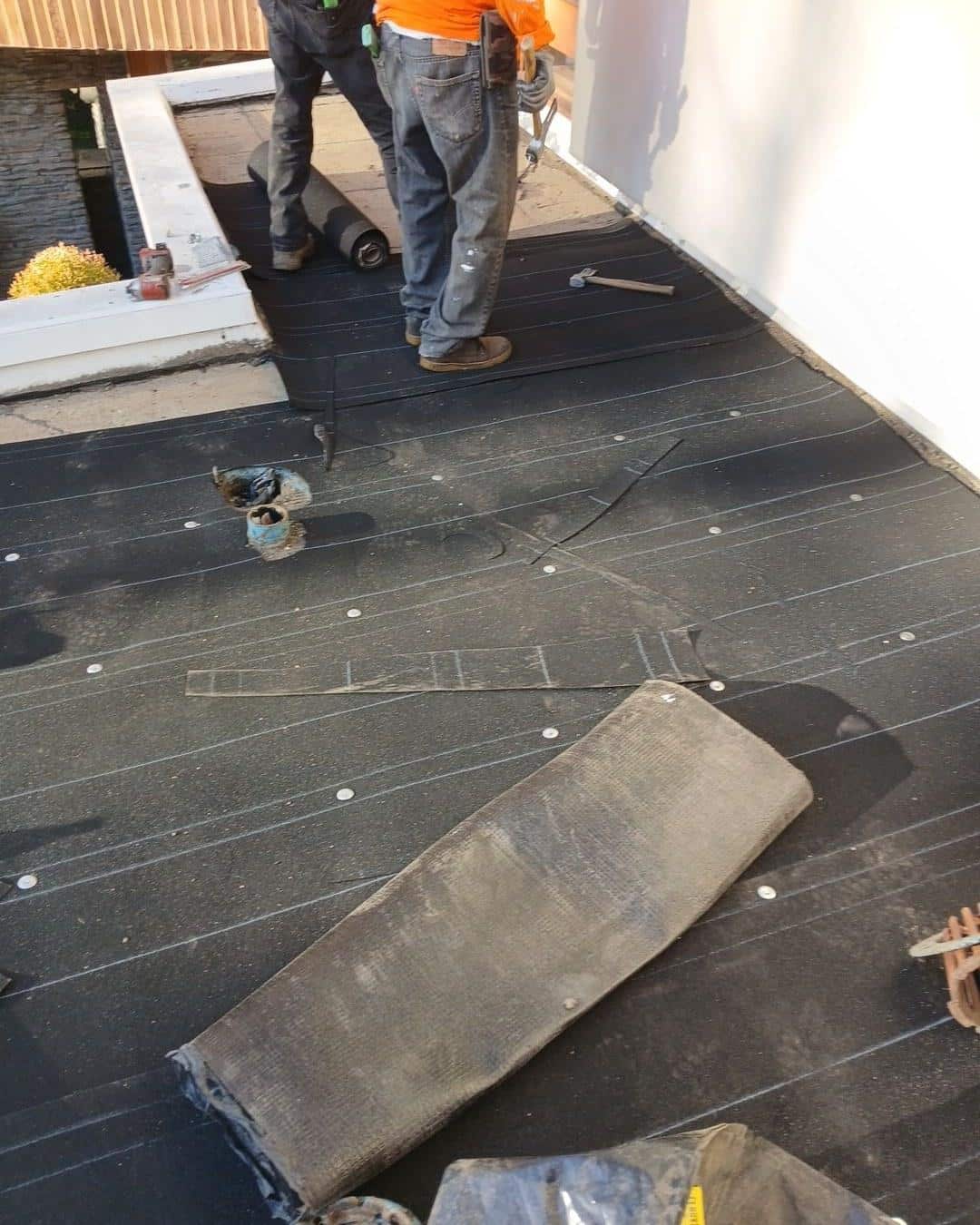
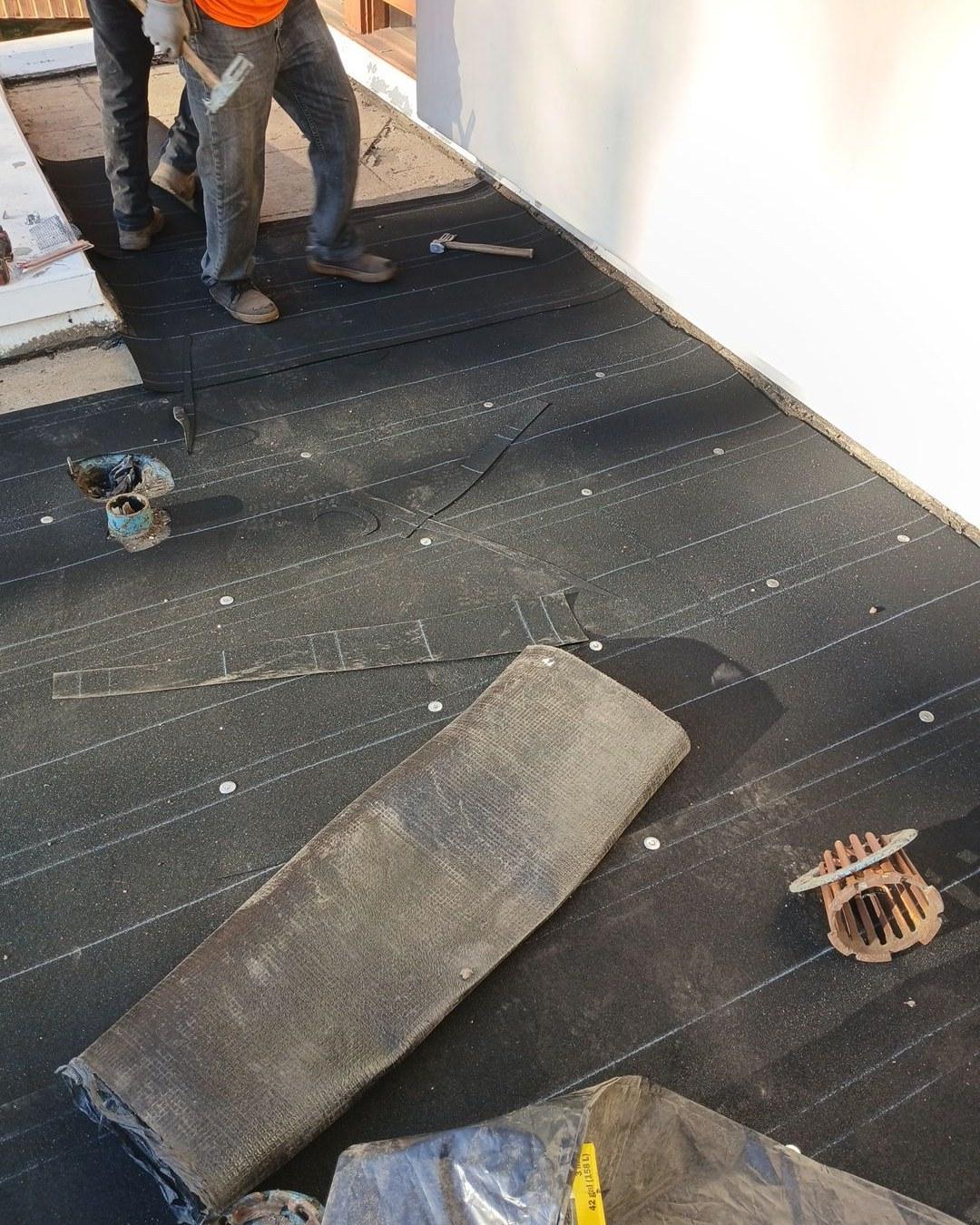
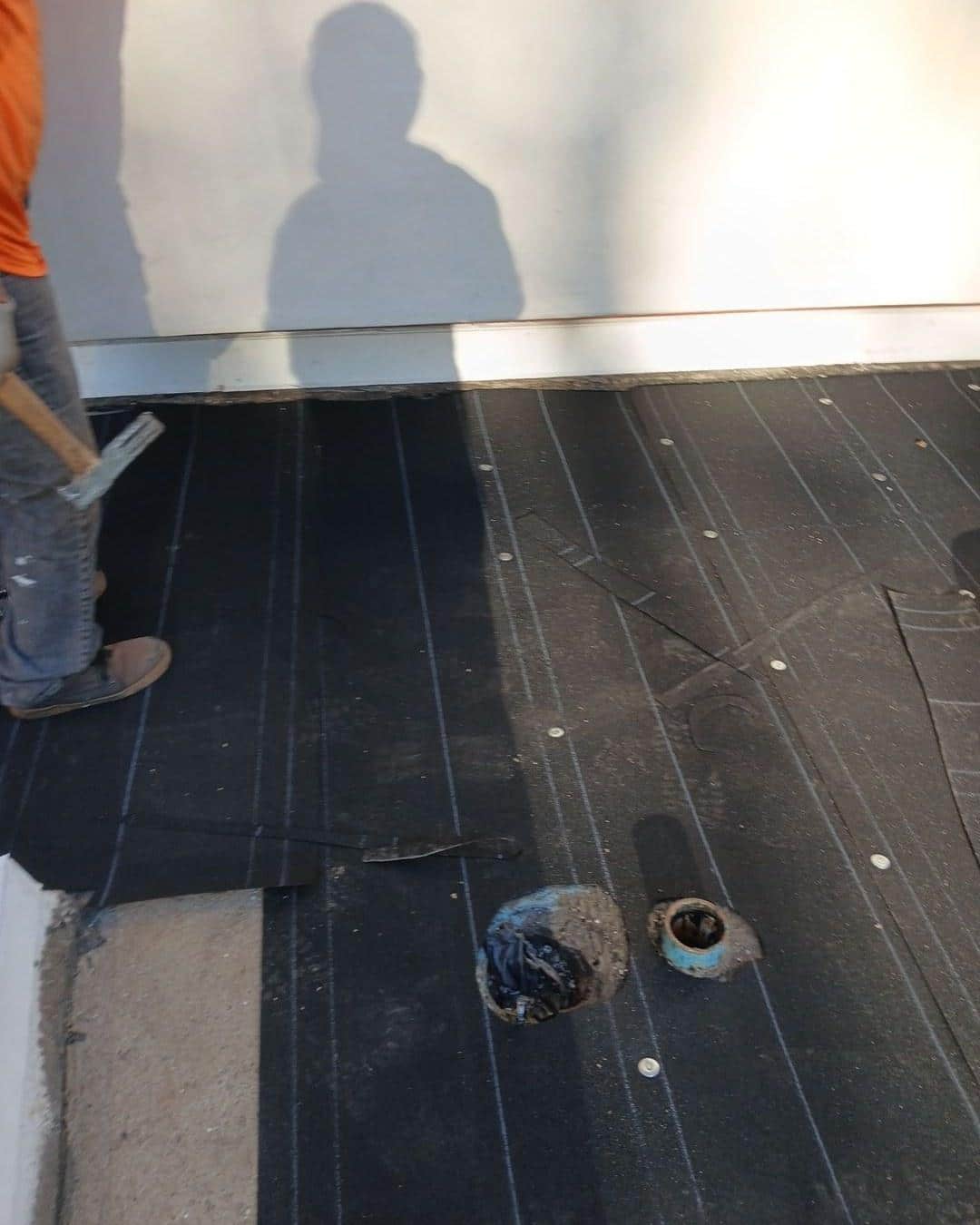
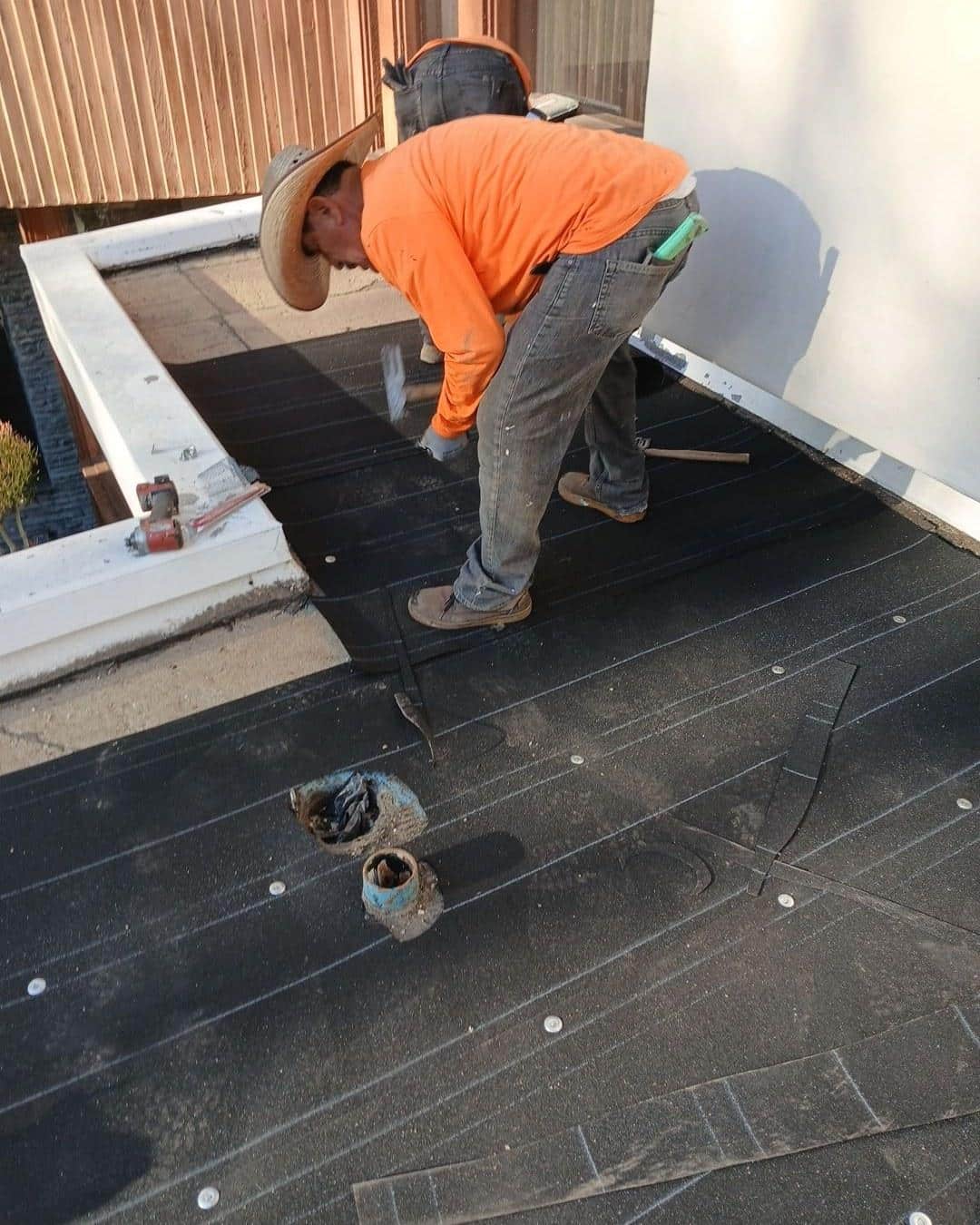
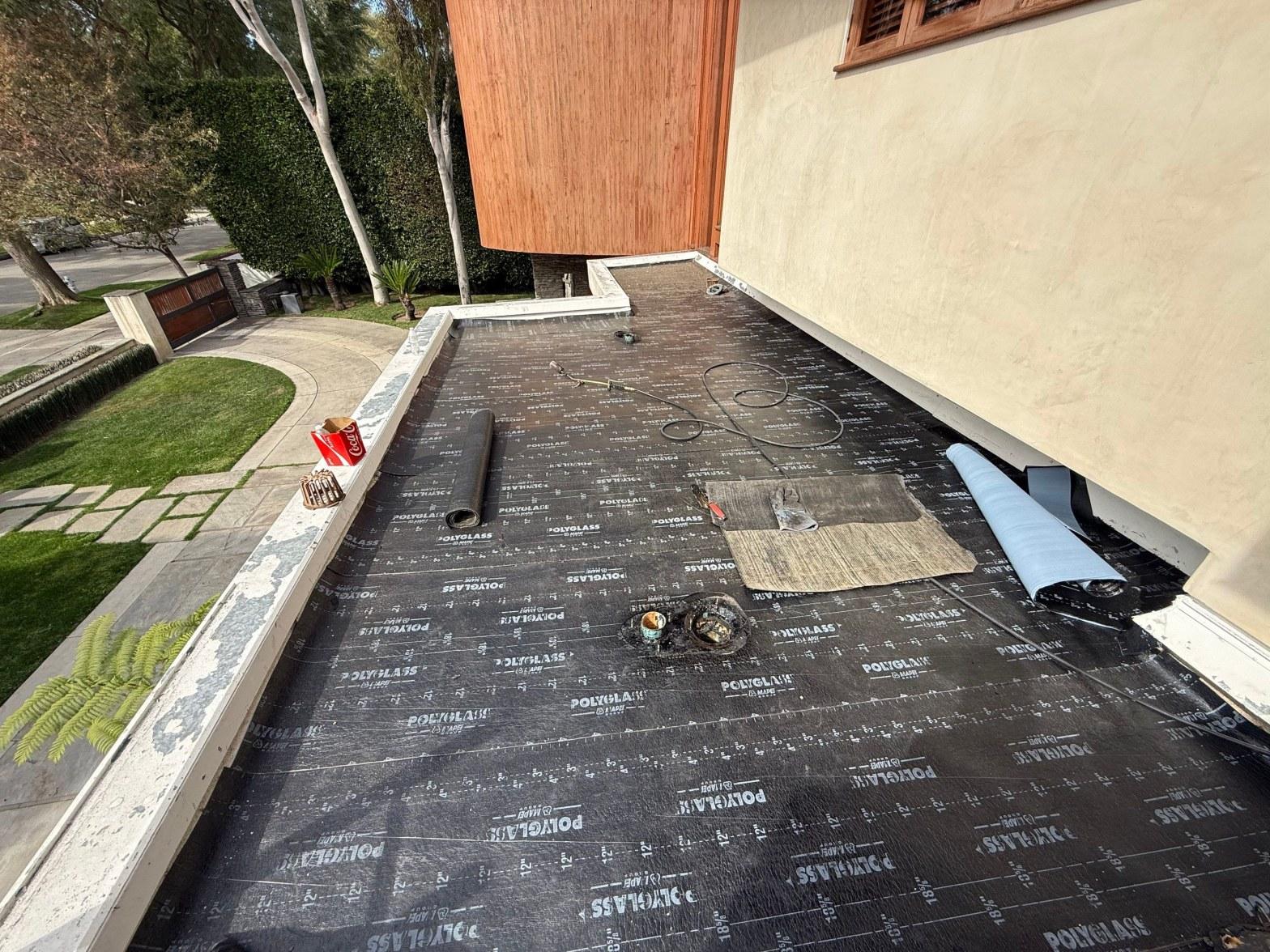
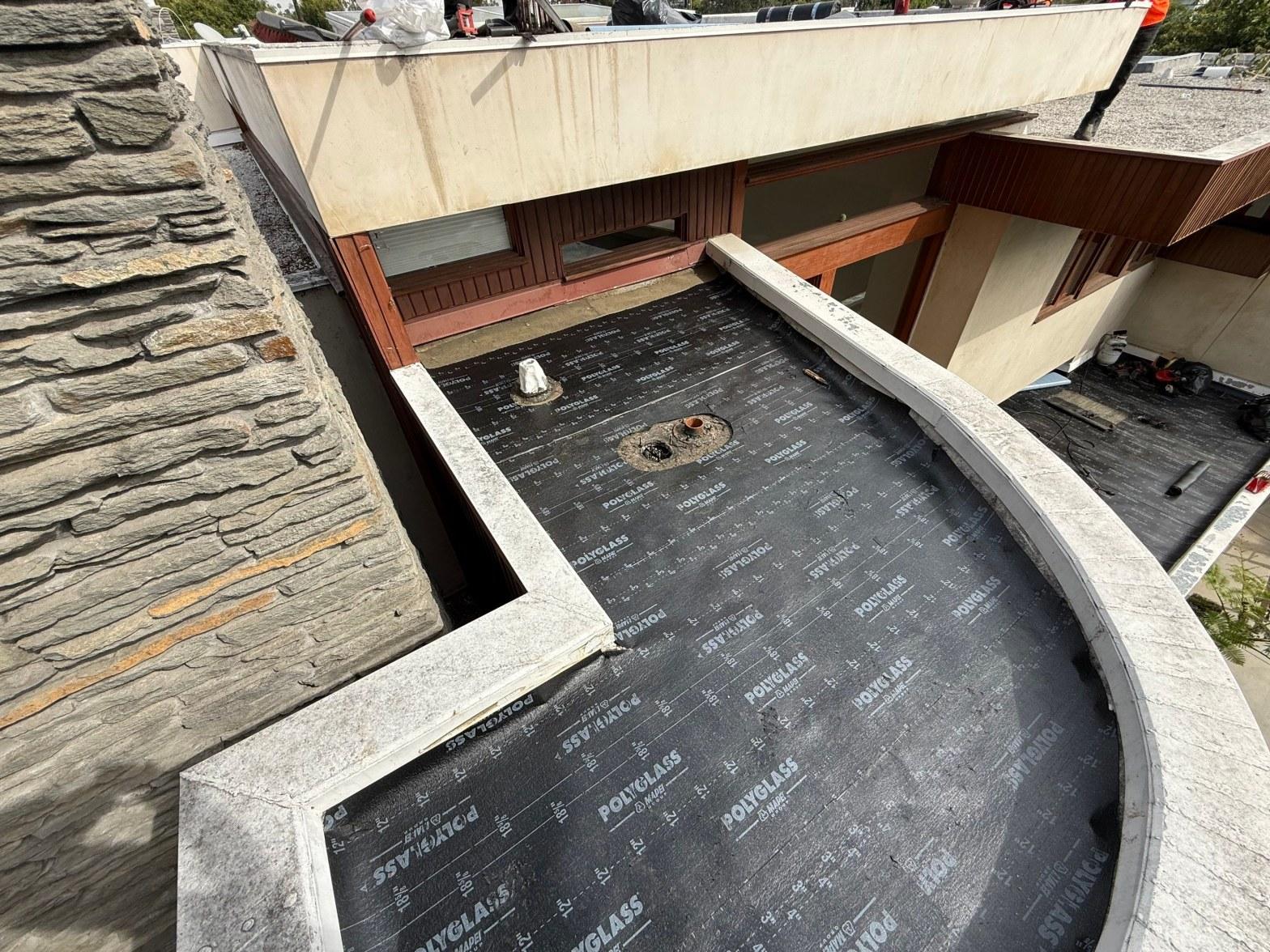
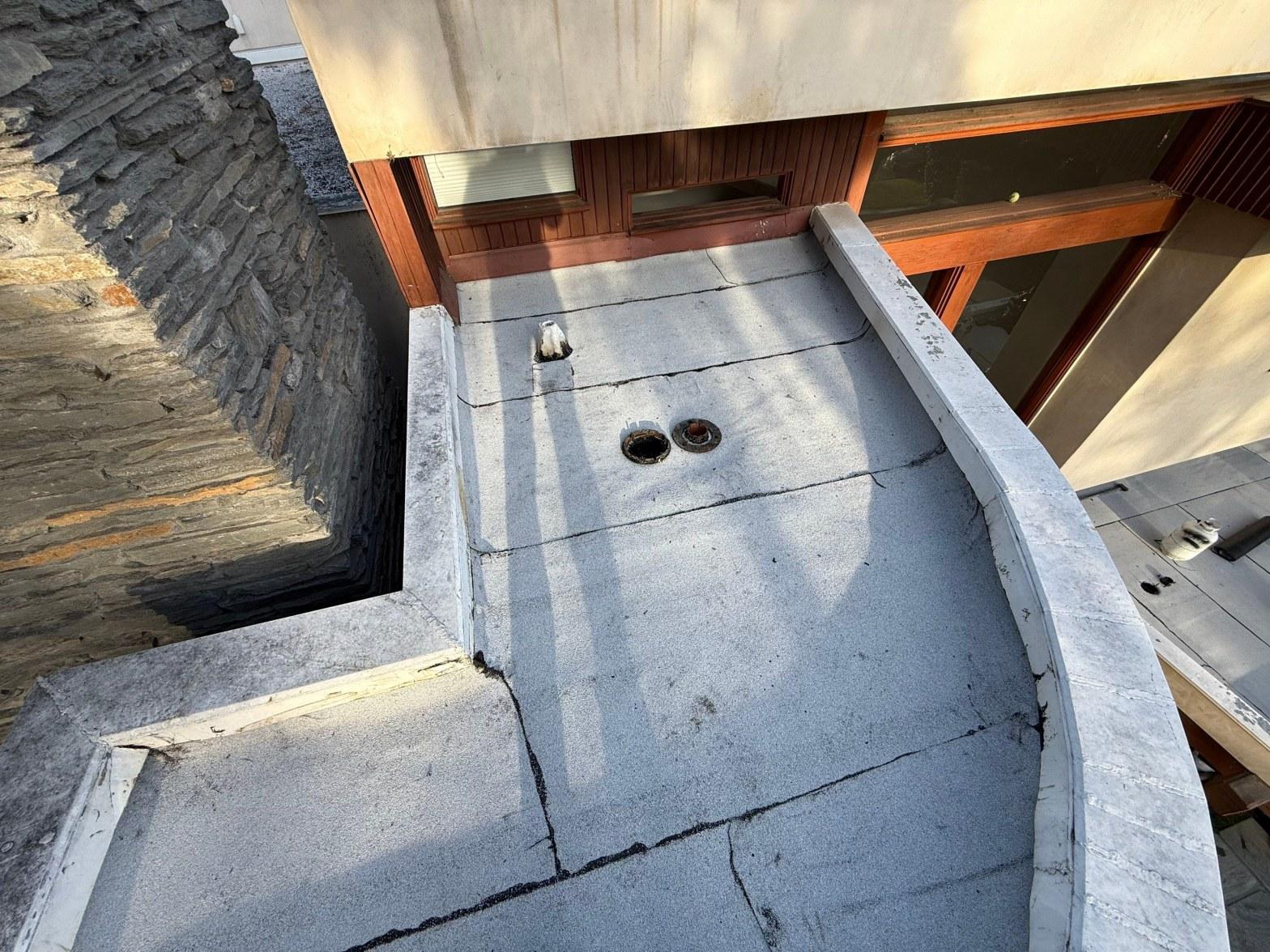
Under the worn surface layer, the existing torch-down membrane had extensive cracking along the field seams and at every penetration point — the two most common failure zones on a flat roof over 15 years old. The drain areas on the curved parapet section were particularly compromised: the original collar seals had completely separated, leaving open pathways for water around both drain bodies.
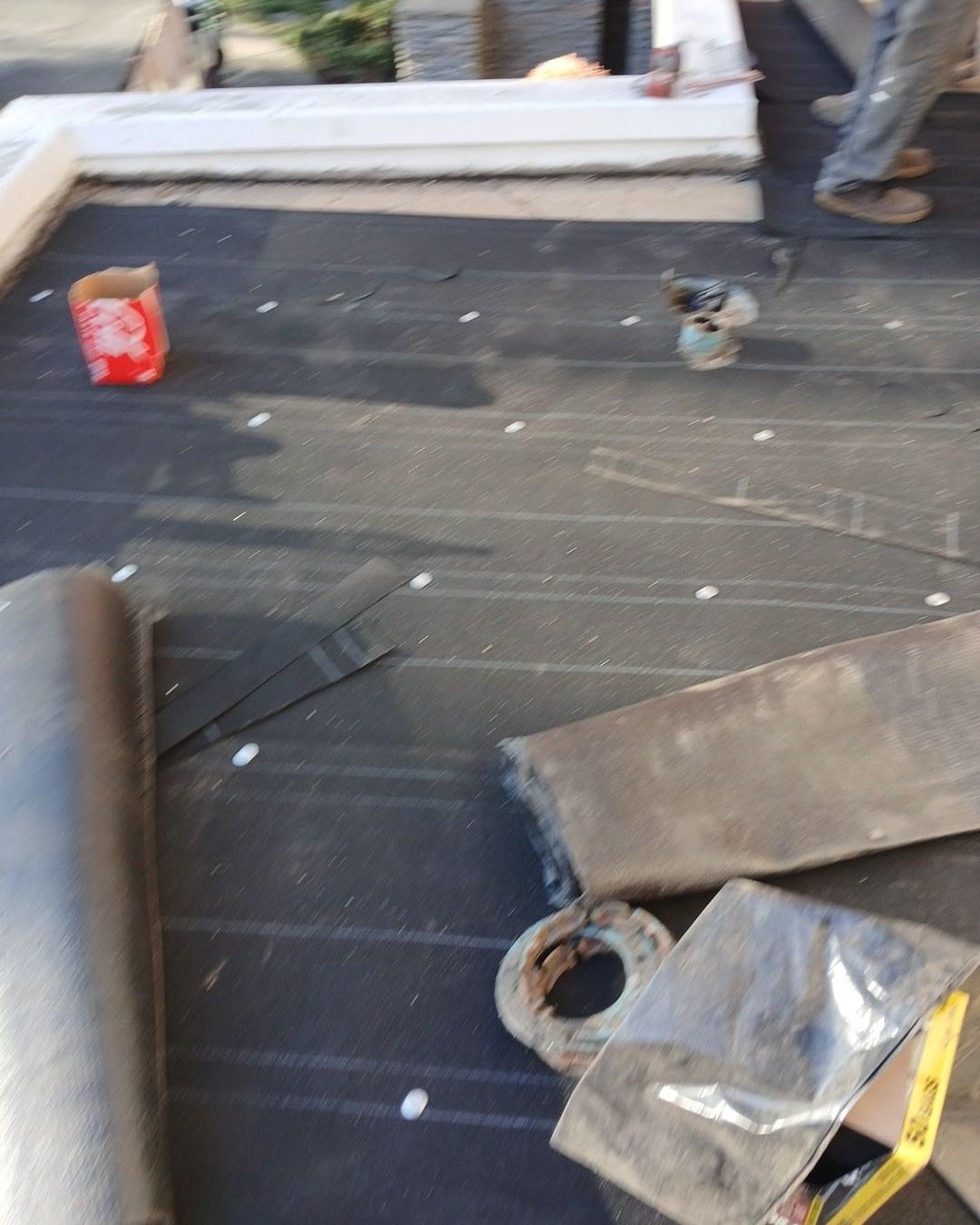
Our crews also found that the base sheet had begun to delaminate in multiple areas, which means moisture had already been working its way under the membrane before any visible interior damage appeared. On flat roofs in the Los Angeles basin, this kind of subsurface moisture migration is especially insidious — because the climate is dry most of the year, homeowners often don’t notice the slow accumulation until a heavy rain event forces the issue.
Across our torch-down projects in Beverly Hills and West Hollywood, we see subsurface delamination on roughly 70% of flat roofs that are 15 or more years past their last full membrane replacement — almost always starting at the drain collars and parapet corners first.
How We Rebuilt Each Roof Section
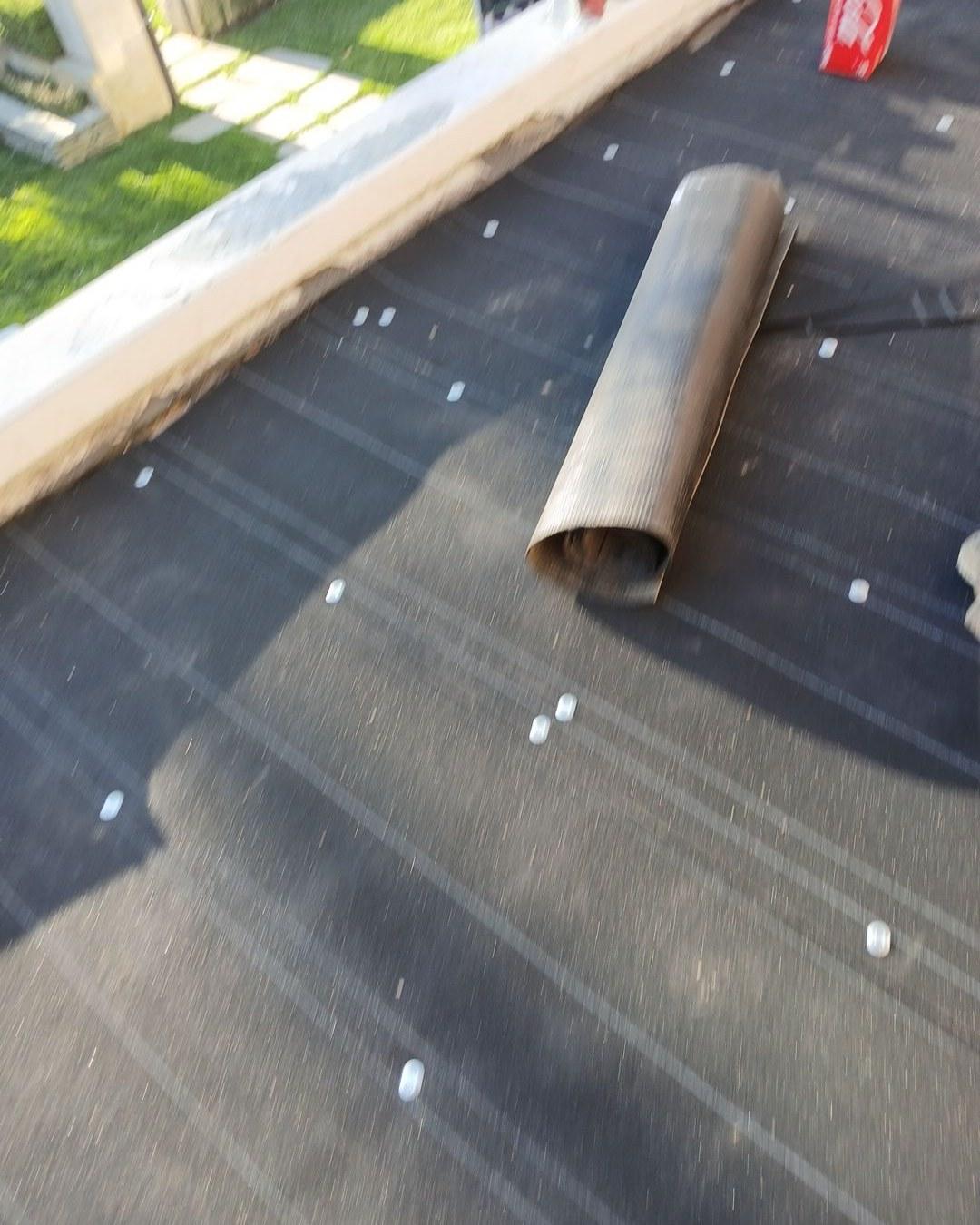
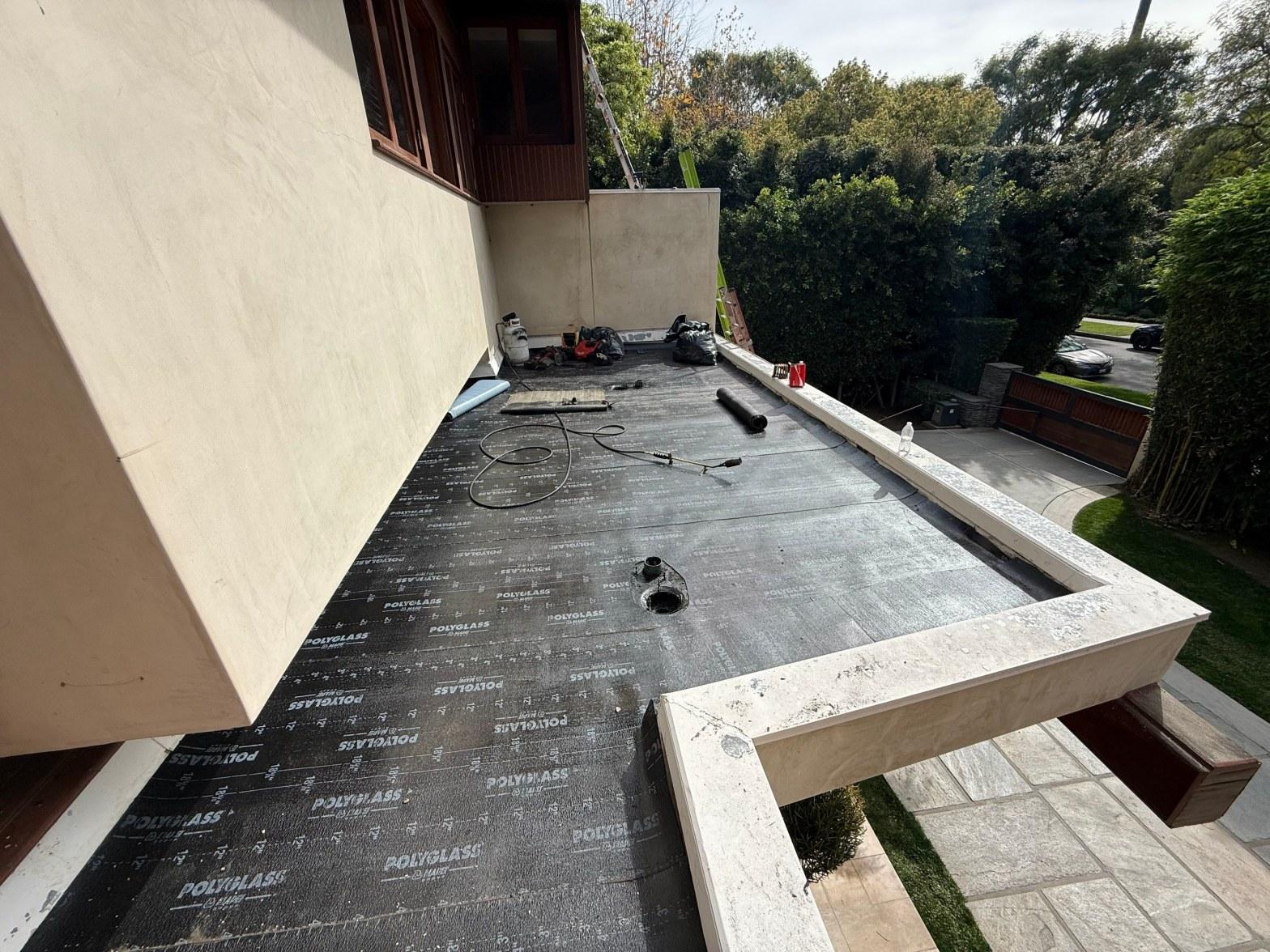
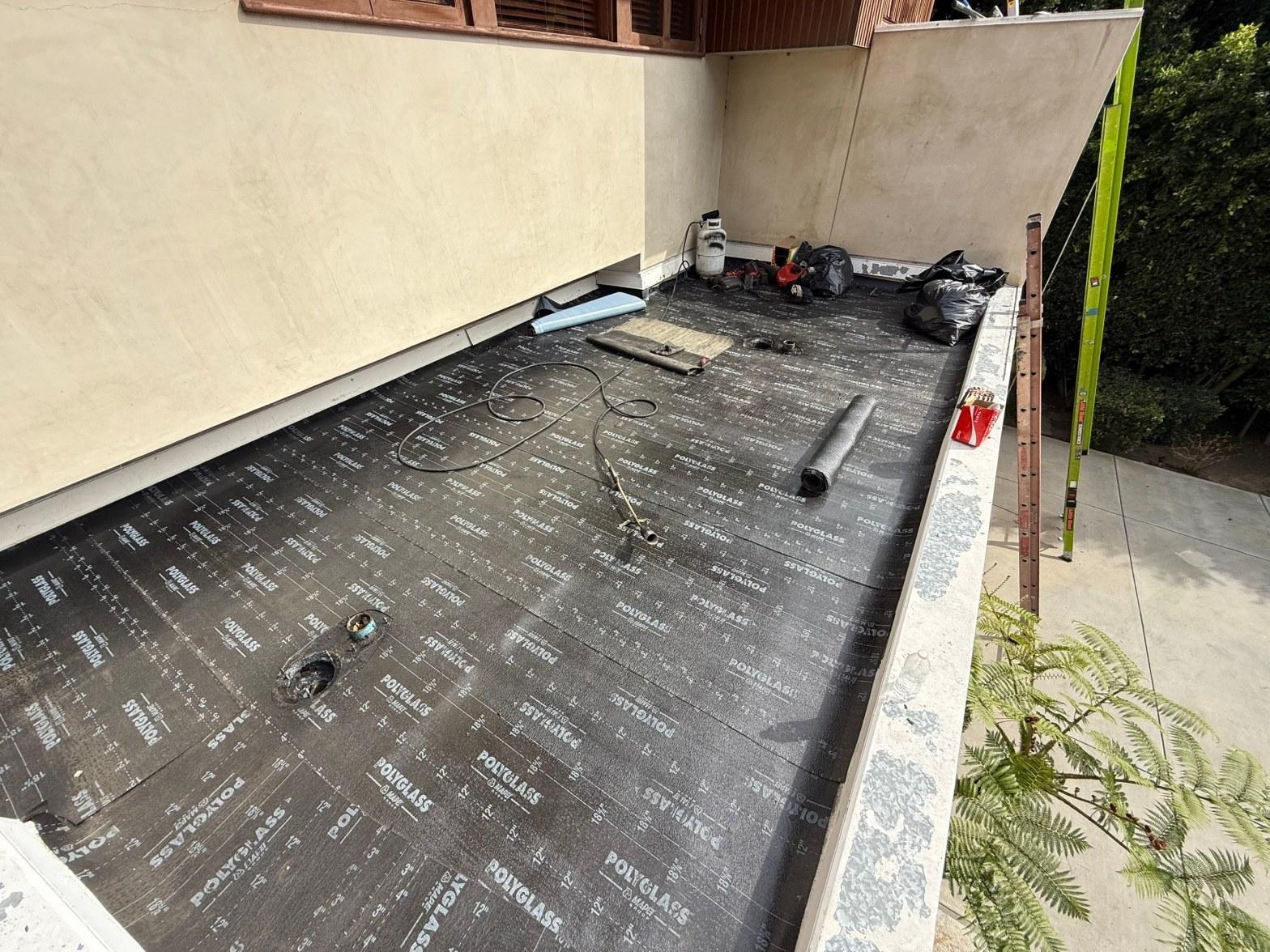
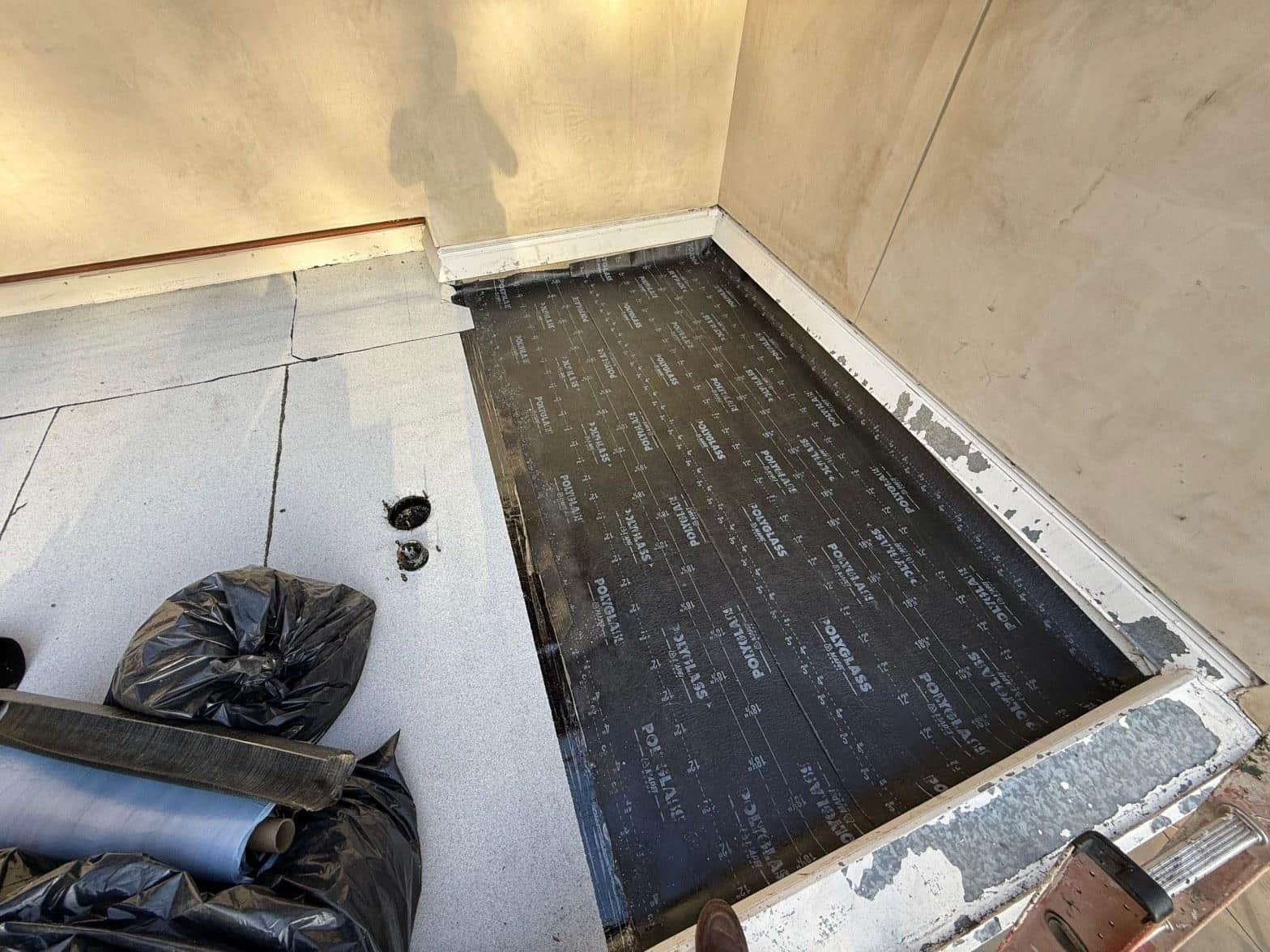
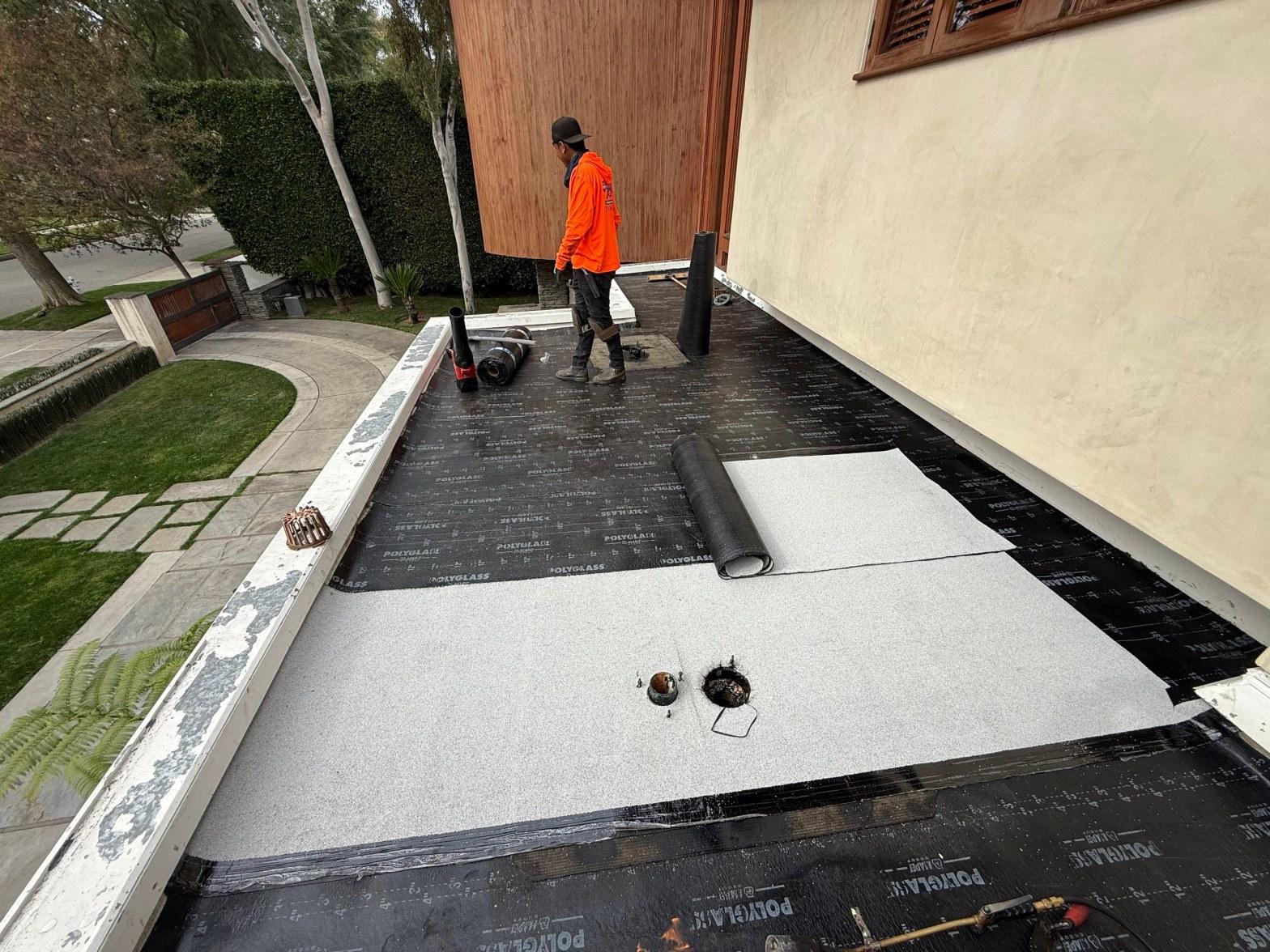
We installed a fresh torch-down modified bitumen membrane across all roof fields, mechanically fastening the base sheet before torching the cap sheet into place. Every seam received a full heat weld — no cold-applied adhesive shortcuts.
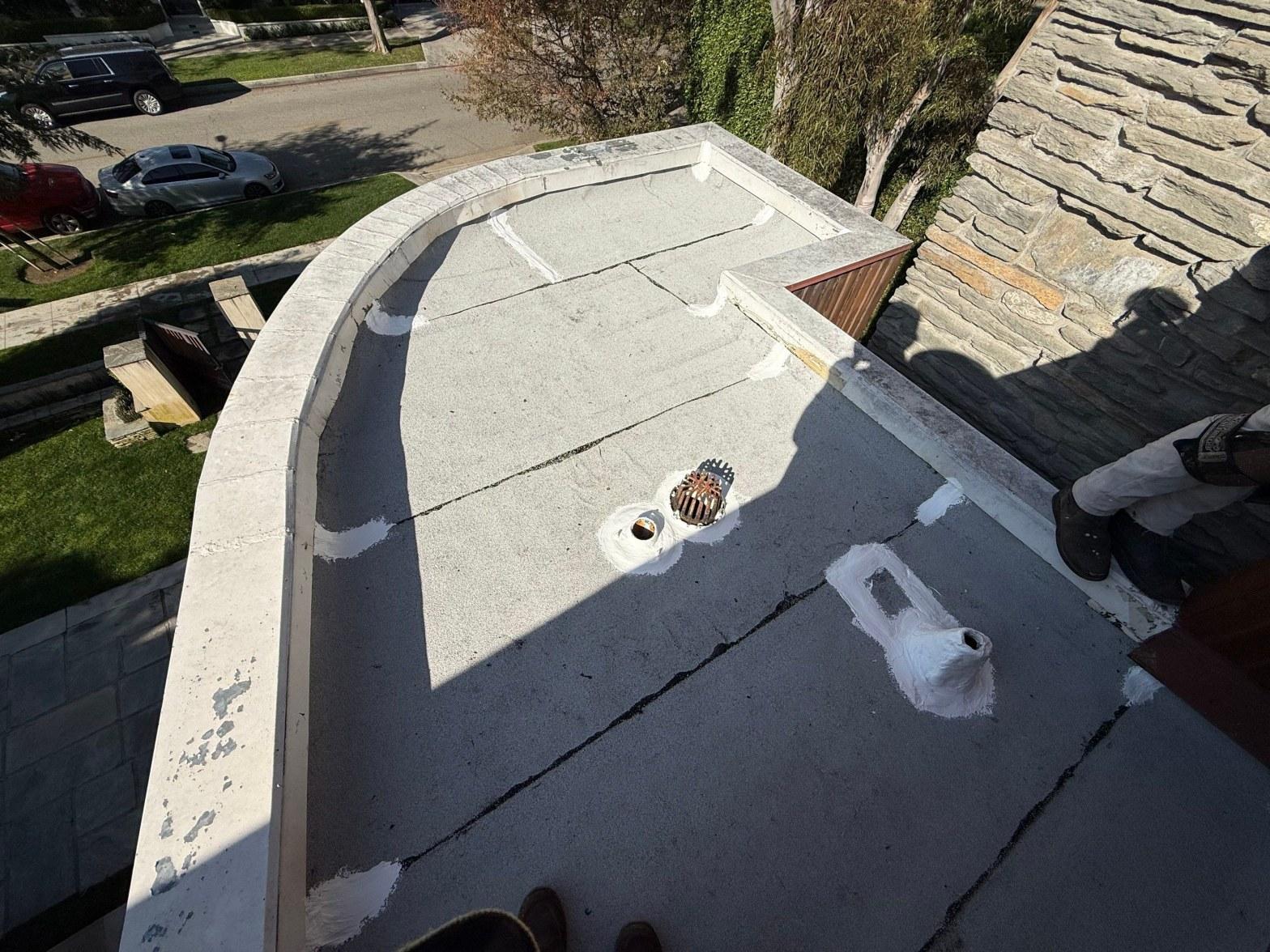
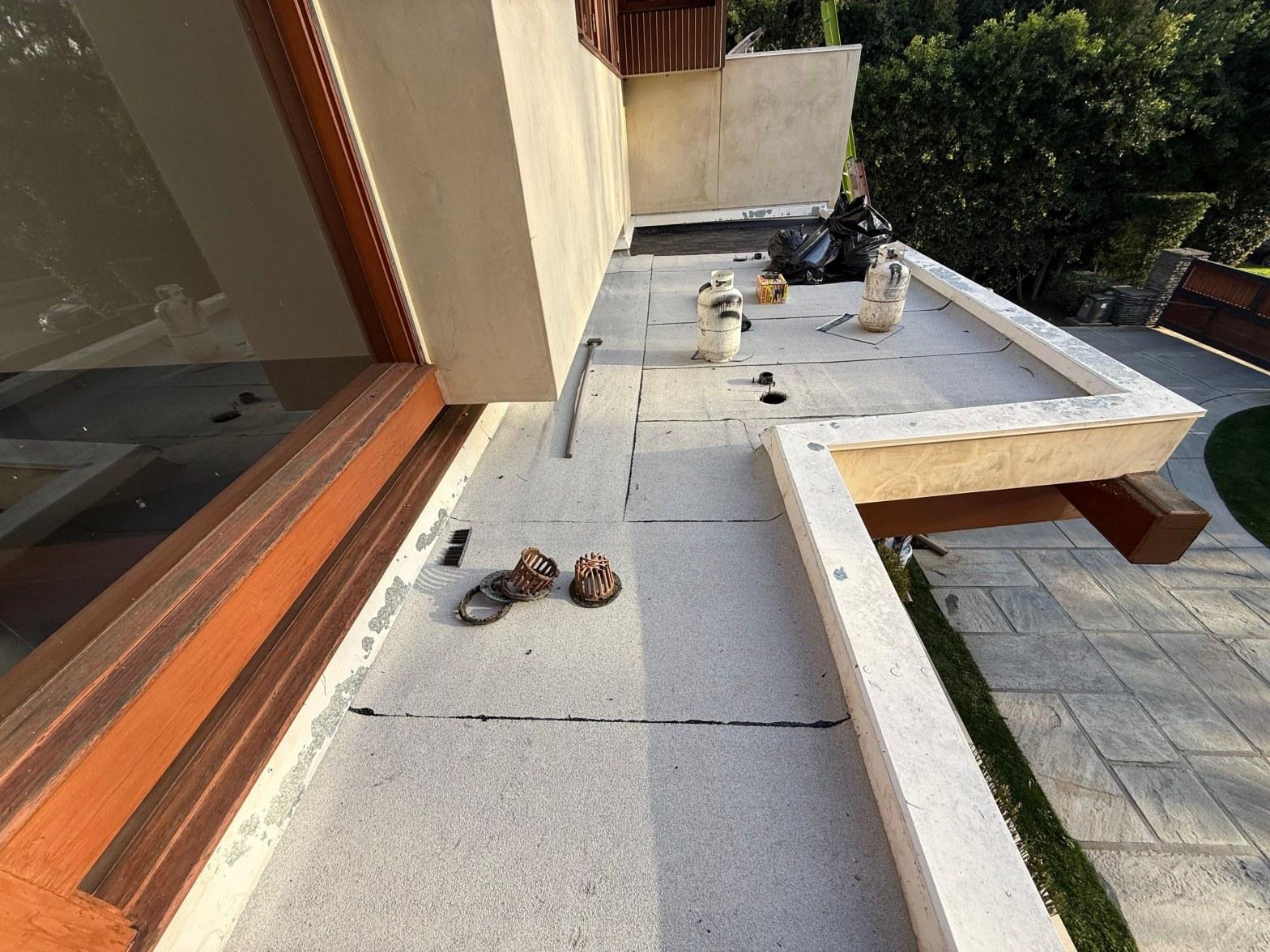
For the drain collars, we applied a heavy white elastomeric coating over the new membrane flange and existing drain hardware. This creates a secondary waterproof seal around each penetration and is visible in the finished photos as the bright white border around both drain bodies. Elastomeric coatings also meet California’s Title 24 building energy standards for cool roofing on low-slope assemblies when applied at the correct mil thickness — an added benefit on a sun-exposed Beverly Hills rooftop.
The parapet edges and curved coping sections were reflashed and sealed as part of the same scope. These transitions are where torch-down roofs most often fail prematurely, so we treat them as a critical detail rather than an afterthought.
The white coating around both drain collars is clearly visible here — applied generously enough to extend several inches beyond each drain ring, ensuring that any water pooling near the drain body is still encountering a fully sealed surface.
How Was the Skylight Installed on the Upper Roof?
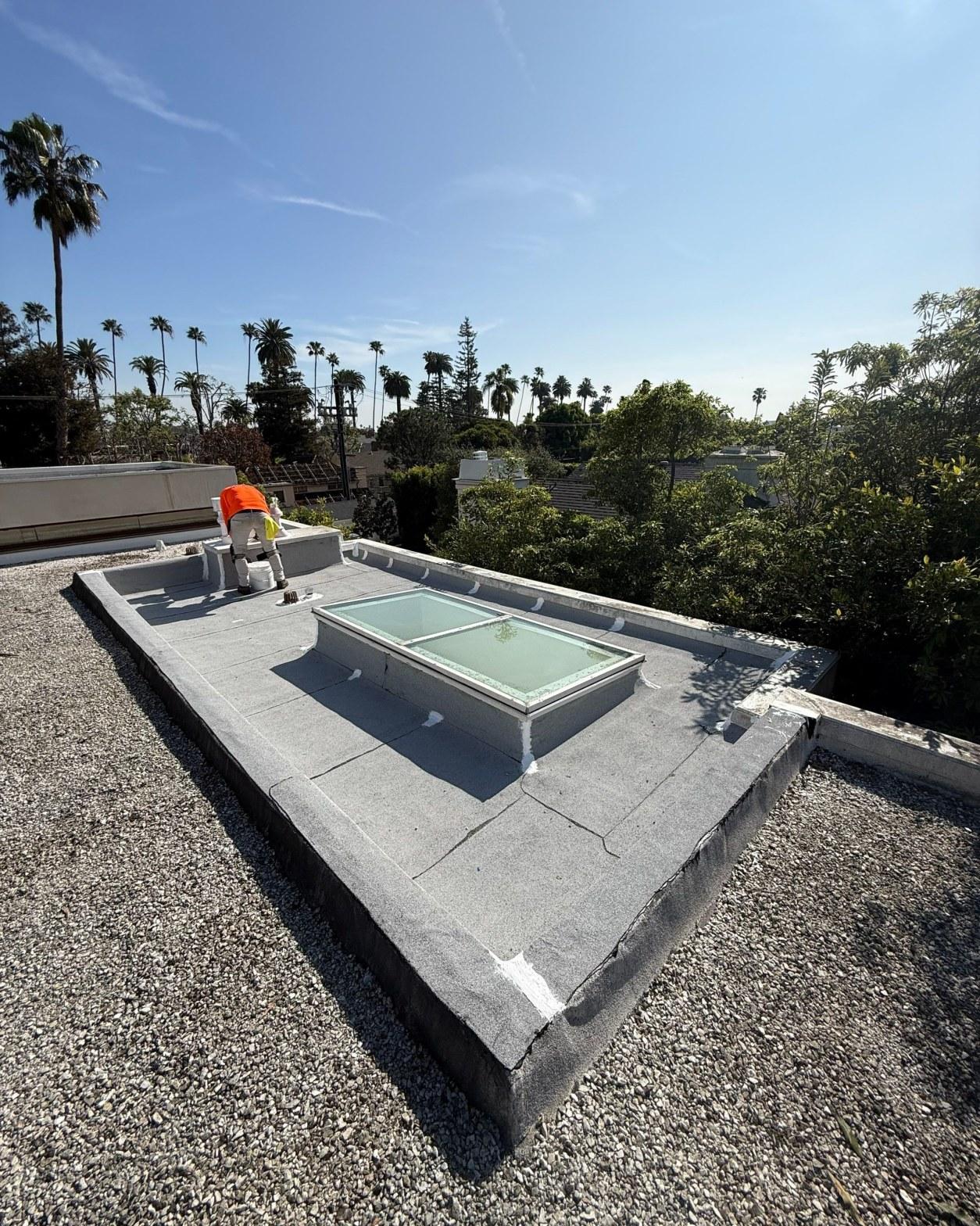
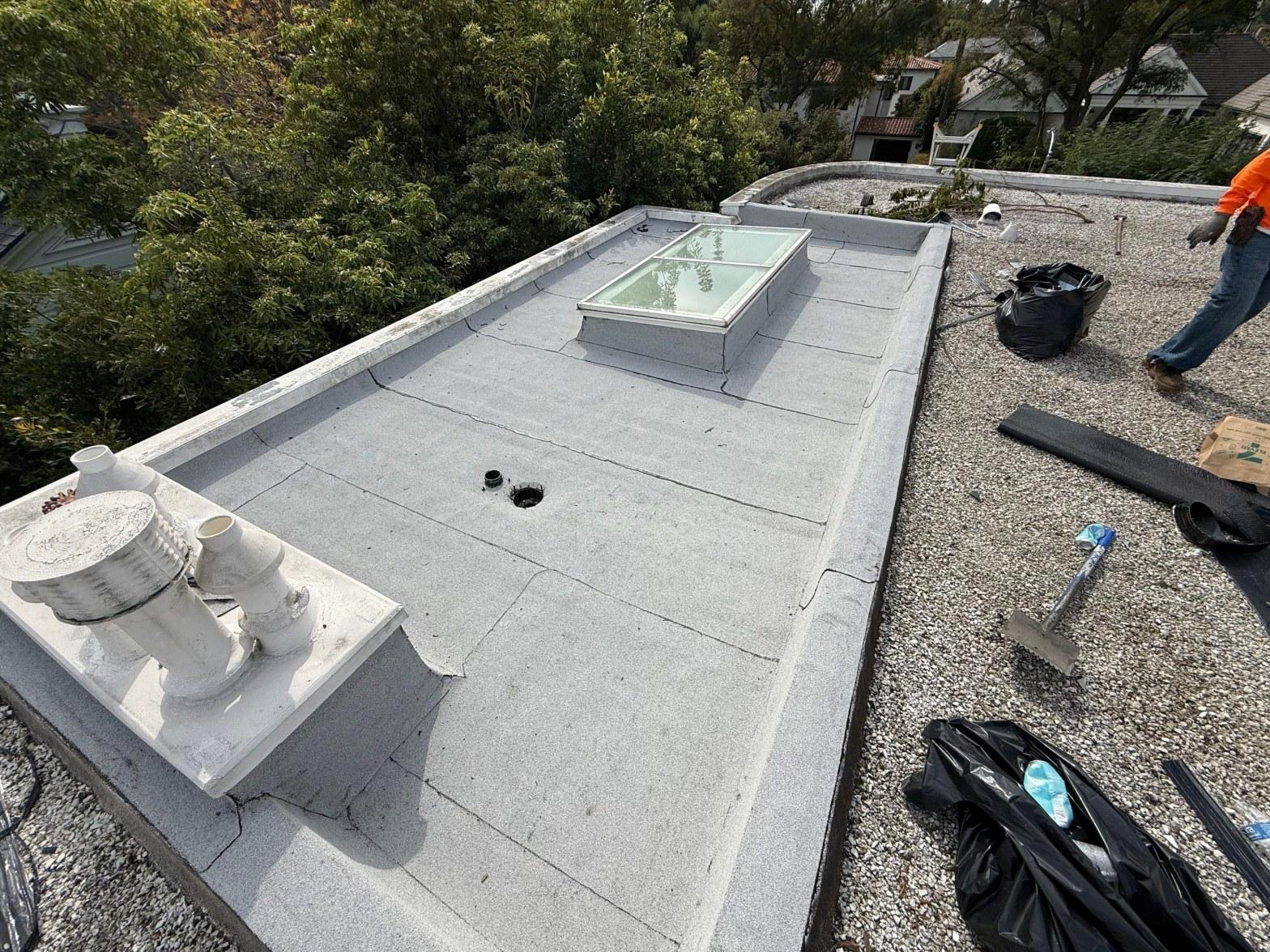
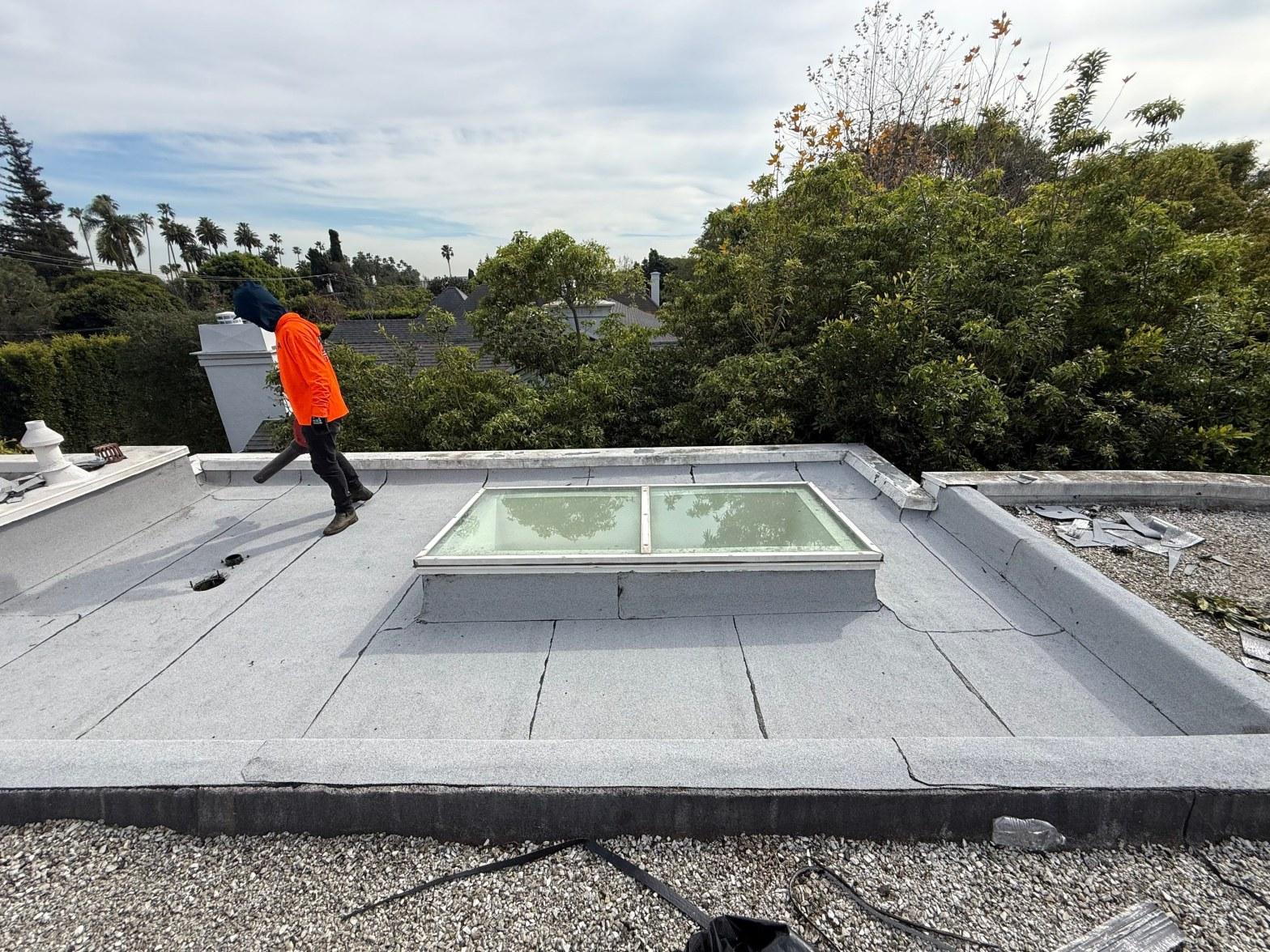
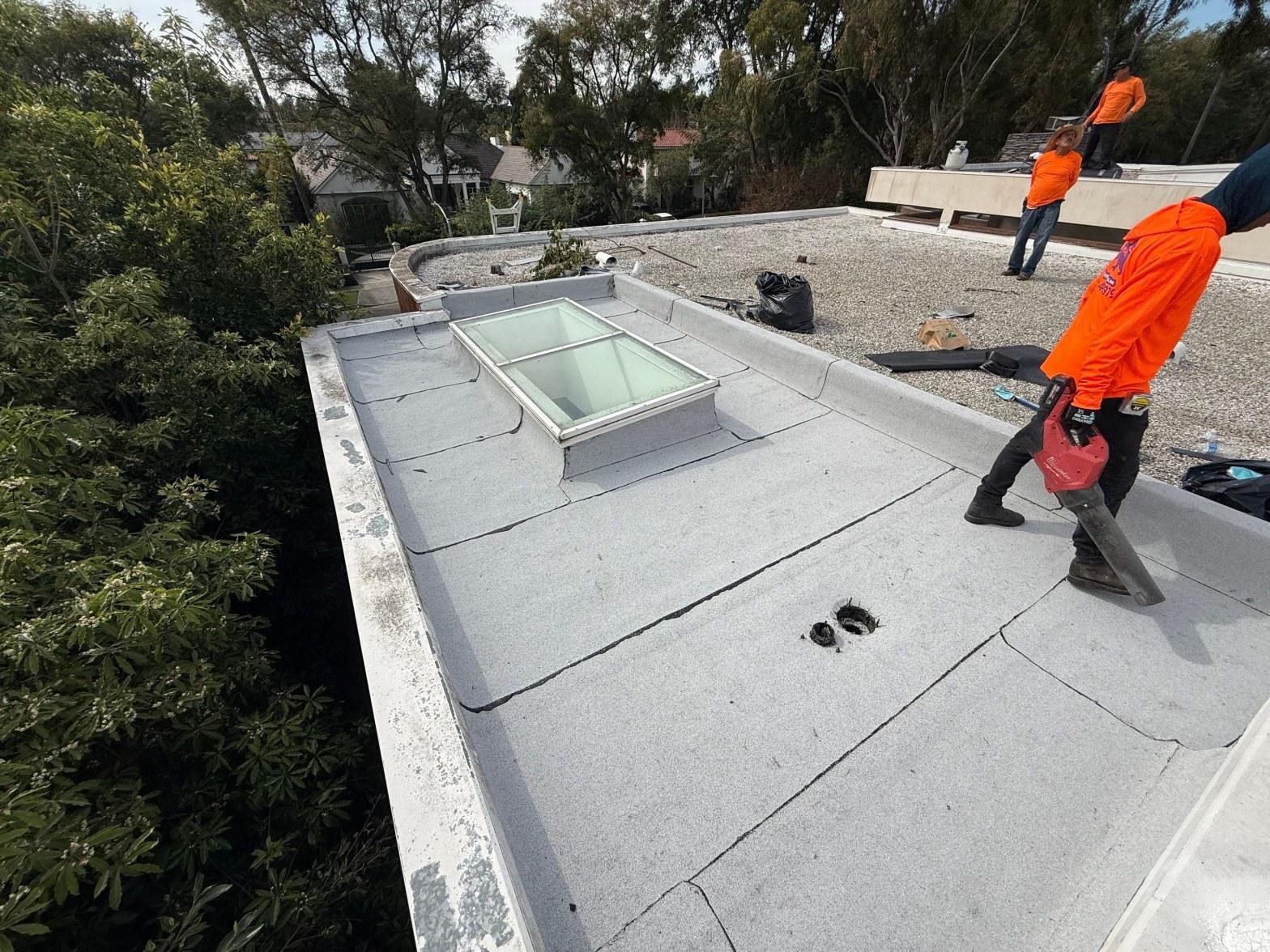
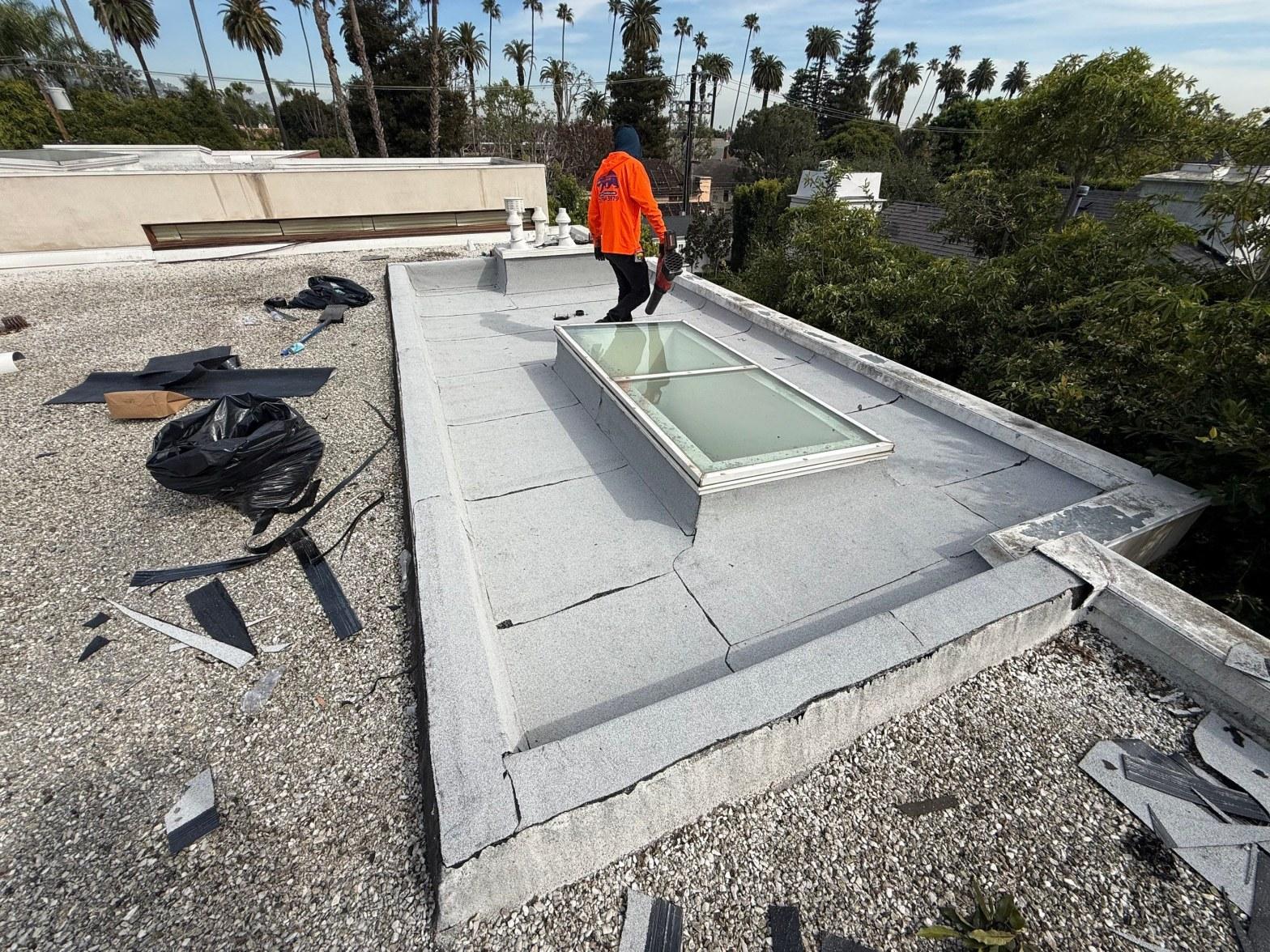
The new skylight unit was set into a pre-built raised curb on the upper gravel-ballasted roof plane, with the curb wrapped in fresh torch-down membrane before the unit was seated and fastened. The glazed unit is approximately 3 feet by 5 feet, framed in aluminum, and positioned to bring natural light into the interior below.
Raised curb installations like this one are the correct method for flat-roof skylights — the curb height (typically at least 4 inches above the finished roof surface, per standard installation practice) prevents water from backing up against the unit during heavy rainfall. The surrounding gravel ballast was reinstated around the curb perimeter after the membrane work was complete.
As of 2025, homeowners considering skylight additions to existing flat roofs should also be aware that certain tubular and fixed skylights may qualify under the ENERGY STAR federal tax credit program when they meet applicable efficiency ratings — worth confirming with your tax advisor before the project closes.
Project Outcome
The finished roof system across all three sections is now fully waterproofed: new torch-down membrane in the field, sealed drains, reflashed parapets, and a properly curbed skylight. The homeowner has a flat roof that is built to handle Southern California rain seasons without the chronic leak cycle that brought us to the job in the first place.
If your flat roof is showing similar signs — cracked membrane, failing drain seals, or an aging skylight that leaks at the curb — call Roof Replacement CA for a direct assessment. We work across Beverly Hills and the surrounding westside communities. Call us to schedule a roof inspection or request a written project estimate before any work begins.


