

Why Santa Clarita’s Housing Market Makes Roofing Economics More Complex in 2026
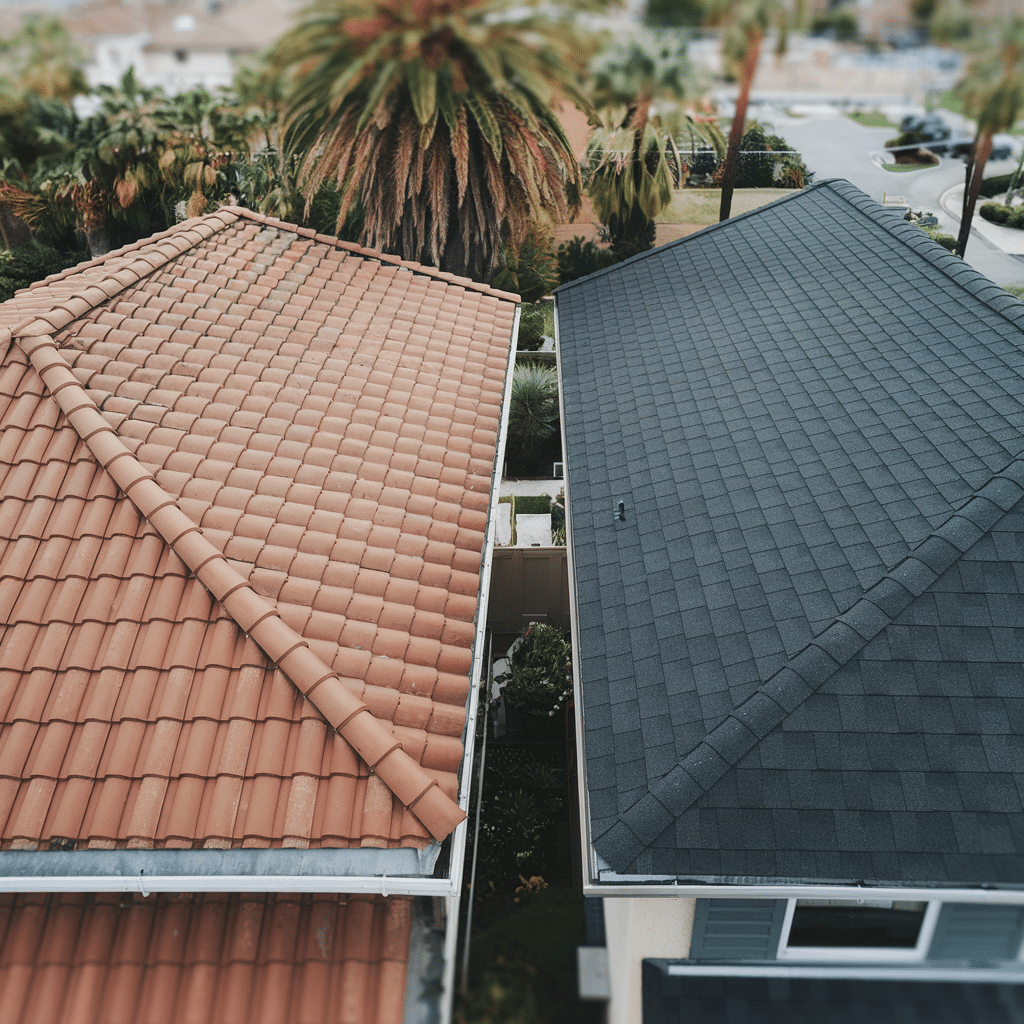
For Santa Clarita homeowners with properties averaging $850,000 in value, the roofing decision represents one of the most significant exterior investments you’ll make—but what actually determines whether you’ll spend $12,000 or $35,000 upfront, and more importantly, what those choices mean over the 25-year period you’ll live with that roof? The gap between tile and asphalt shingle pricing has widened substantially in 2026, with asphalt installations for a typical 2,000-square-foot Valencia home running $13,500-$18,000 versus $28,000-$42,000 for concrete tile. Yet focusing solely on installation figures misses the financial reality that unfolds over decades of ownership, maintenance cycles, energy consumption patterns, and eventual replacement timelines that fundamentally reshape these numbers.
📋 In This Guide
In neighborhoods from Canyon Country to Newhall, where household incomes average $110,000 and homeowners balance quality with practical value, understanding the total economic picture becomes essential. Santa Clarita’s specific climate conditions—temperature swings between winter lows and summer highs exceeding 95°F, occasional high winds from canyon corridors, and intense UV exposure—accelerate material degradation at rates that differ significantly between roofing types. When you factor in that 69% of Santa Clarita residents own their homes and many plan to stay long-term, the cost analysis extends well beyond the initial invoice to encompass replacement frequency, maintenance requirements, cooling expenses, insurance adjustments, and resale impact. If you’re evaluating options and need expert guidance tailored to your specific home and neighborhood, contact the team at Roof Replacement Inc at (213) 364-3979 for a detailed cost projection based on your actual roof dimensions and material preferences.
Installation Price Components: Understanding Where Your Money Goes
The material cost difference forms the foundation of the pricing gap. Standard three-tab asphalt shingles run $90-$120 per square (100 square feet) for materials alone in Santa Clarita, while architectural shingles—the more common choice—cost $140-$185 per square. Concrete tile materials range $250-$400 per square for flat profiles and $350-$550 for barrel or Spanish-style profiles that dominate many Saugus and Valencia neighborhoods. For a 2,000-square-foot home with a moderately complex roof requiring approximately 22 squares of material (accounting for waste and pitch), you’re looking at $3,080-$4,070 for architectural shingles versus $5,500-$12,100 for tile materials before a single installer arrives.
Labor costs widen this gap further. Asphalt shingle installation labor runs $3.50-$5.50 per square foot in Santa Clarita’s current market, translating to $7,700-$12,100 for that 2,200-square-foot roof area. Tile installation demands specialized skills, structural assessment, and significantly more time, pushing labor to $6.50-$10.00 per square foot—$14,300-$22,000 for the same project. The complexity multiplies with roof features common in Santa Clarita homes: multiple valleys, dormers, skylights, and the second-story configurations typical of newer developments add 15-25% to both material and labor estimates. Removal of existing roofing adds $1.50-$2.50 per square foot for asphalt versus $3.00-$4.50 for tile, and structural reinforcement—sometimes necessary for tile installations on homes originally built for lighter asphalt—can add $2,500-$8,000 to the project.
Additional components affect both materials but at different price points. Underlayment for asphalt installations costs $250-$450 in materials, while tile requires heavier-grade underlayment at $500-$900. Flashing, ridge caps, and ventilation components add $800-$1,400 for asphalt versus $1,200-$2,200 for tile. When you total these elements for typical Santa Clarita home sizes, a 1,500-square-foot roof might cost $11,000-$15,500 for quality asphalt shingles versus $23,000-$34,000 for concrete tile; a 2,000-square-foot roof runs $13,500-$18,500 for asphalt versus $28,000-$42,000 for tile; and larger 2,500-square-foot roofs range $16,500-$22,000 for asphalt versus $34,000-$51,000 for tile.
The Replacement Cycle Reality: When Your Second Roof Transforms the Math
Lifespan projections fundamentally alter cost-per-year calculations. Standard architectural asphalt shingles in Santa Clarita’s climate typically deliver 18-25 years of service, with premium options reaching 25-30 years under ideal conditions. The intense summer heat, UV exposure, and occasional wind events common in Canyon Country and surrounding areas tend to push performance toward the lower end of these ranges. Concrete tile, properly installed and maintained, regularly exceeds 40-50 years, with many installations lasting 60+ years. This longevity difference means a homeowner installing asphalt in 2026 will likely need complete replacement around 2046-2051, while tile installed today may still perform adequately in 2076.
Consider a 30-year ownership scenario. An asphalt roof costing $16,000 installed in 2026 requires replacement around 2048 at projected costs (accounting for 3% annual inflation) of approximately $38,800. Total roofing investment over 30 years: $54,800, or $1,827 annually. A tile roof costing $35,000 in 2026 likely needs no replacement during the same period. Annual cost: $1,167. The tile roof that seemed 119% more expensive initially becomes 36% less expensive when viewed across realistic ownership timelines. For Santa Clarita homeowners planning to age in place—increasingly common given the area’s family-oriented character and stable neighborhoods—this math becomes even more compelling.
The calculation shifts for shorter ownership periods. If you plan to sell within 10-12 years, the asphalt roof’s lower upfront cost makes financial sense, particularly if the installation is relatively new when you list the property. However, roof repair in Santa Clarita becomes more frequent with asphalt as it ages, potentially affecting resale appeal. A 15-year-old asphalt roof typically reduces buyer interest or triggers roof replacement negotiations, while a 15-year-old tile roof remains a selling point with decades of remaining life.
Maintenance Expenses and Repair Frequency Over Time
Ongoing maintenance costs create a steady financial current that flows differently for each material. Asphalt shingles require relatively minimal maintenance in early years—annual inspections ($150-$250), periodic debris removal, and addressing any wind-damaged or lifted shingles. Minor repairs average $350-$750 per incident, with most asphalt roofs requiring 2-4 repair interventions over their lifespan. As the roof ages beyond 15 years, granule loss accelerates, sealant strips weaken, and shingles become brittle, increasing both repair frequency and the likelihood that localized repairs prove inadequate.
Concrete tile maintenance follows a different pattern. While the tiles themselves rarely fail, underlayment deterioration, broken tiles from foot traffic or debris impact, and flashing issues require attention. Tile roof inspections run slightly higher at $200-$300 due to the specialized knowledge required. Individual tile replacement costs $8-$15 per tile plus labor, with typical maintenance addressing 5-10 broken tiles every 3-5 years—$250-$500 per maintenance cycle. The critical difference emerges around year 20-25 when many tile roofs require underlayment replacement (essentially a re-roof without replacing the tile itself) at $8,000-$14,000, still substantially less than complete asphalt replacement but a significant expense homeowners should anticipate.
Santa Clarita’s specific conditions influence these patterns. Wind events can lift asphalt shingles, particularly on exposed ridges and edges common in hillside neighborhoods. Summer heat causes accelerated sealant deterioration. For tile, the thermal mass that provides energy benefits also means tiles expand and contract more dramatically than the substrate, potentially creating stress points at fasteners. Homes near Six Flags Magic Mountain and similar areas with mature trees face additional debris impact and moss retention issues that affect both materials but require different remediation approaches.
Energy Performance and Monthly Utility Cost Implications
Your roof choice directly affects air conditioning expenses during Santa Clarita’s extended cooling season. Standard asphalt shingles absorb significant heat, with dark colors reaching surface temperatures of 150-170°F on summer afternoons. This heat transfers to attic spaces and living areas below, increasing cooling loads. Homeowners with traditional asphalt roofs in Valencia or Newhall commonly report attic temperatures exceeding 140°F during July and August, forcing HVAC systems to run longer cycles.
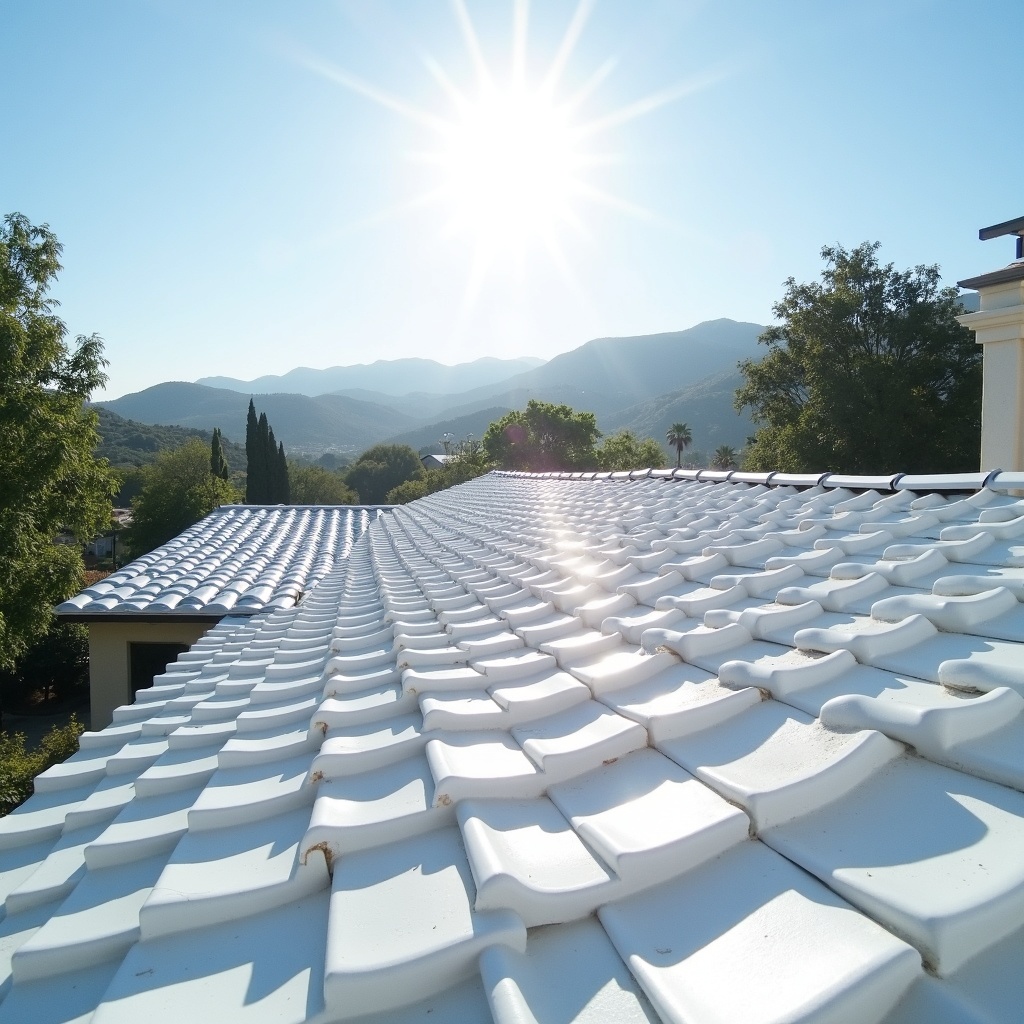
Concrete tile’s thermal mass and profile create natural ventilation channels that reduce heat transfer. Properly installed tile roofs maintain attic temperatures 15-25°F cooler than asphalt equivalents under identical conditions. For a typical 2,000-square-foot Santa Clarita home with $180-$240 monthly summer cooling costs, this translates to potential savings of $25-$45 monthly during the peak season (June through September), or $100-$180 annually. Over a 25-year period, this represents $2,500-$4,500 in avoided utility costs—not enough to offset the installation premium alone, but a meaningful component of total ownership economics.
Cool roof options complicate this comparison. Light-colored or reflective asphalt shingles narrow the energy performance gap considerably, offering many of tile’s thermal benefits at closer to asphalt’s price point. Cool asphalt shingles cost 10-20% more than standard options but can reduce cooling costs by similar percentages. For homeowners prioritizing energy efficiency without the structural requirements or budget for tile, Roof Replacement Inc offers cool roof consultations that account for your home’s specific orientation, insulation levels, and cooling system efficiency to project actual savings.
Insurance Premium Adjustments and Fire Safety Economics
Insurance cost differences between roofing materials rarely dominate the decision but contribute to long-term economics. Standard asphalt shingles typically receive no insurance discount or adjustment. Concrete tile’s Class A fire rating and impact resistance often qualify for homeowner insurance discounts of 5-15% in fire-prone regions, though specific discounts depend on your insurer, coverage levels, and proximity to wildland interface areas. For a Santa Clarita homeowner with $2,500 annual premiums, a 10% discount yields $250 annual savings, or $6,250 over 25 years—meaningful but not transformative.
The more significant insurance consideration involves claims frequency and roof age. Insurance companies increasingly scrutinize roof age when issuing or renewing policies. Many carriers now require inspection or impose coverage limitations for asphalt roofs exceeding 15-20 years, potentially refusing coverage or requiring replacement as a condition of policy renewal. Tile roofs rarely face these restrictions due to their extended lifespan. For homeowners in areas near Newhall where wildfire risk elevates insurance scrutiny, the tile roof’s inherent fire resistance provides underwriting benefits that extend beyond premium discounts to coverage availability itself.
Neighborhood Aesthetics and Property Value Considerations
Santa Clarita’s diverse neighborhoods exhibit distinct architectural preferences that influence roofing material choices and resale dynamics. Mediterranean, Spanish Colonial, and Mission-style homes prevalent in master-planned Valencia communities strongly favor tile roofs—installing asphalt on these architectural styles creates aesthetic mismatches that can reduce buyer appeal and property value. Conversely, contemporary and ranch-style homes in Canyon Country often feature architectural shingles without aesthetic penalty.
Real estate data suggests properly maintained tile roofs in appropriate architectural contexts add 1-3% to property values compared to similar homes with asphalt, translating to $8,500-$25,500 for an $850,000 home. However, this premium only materializes when the tile roof has substantial remaining life. An aging tile roof requiring near-term underlayment replacement becomes a negotiating liability similar to an aging asphalt roof. The key difference: tile roofs maintain their value premium for far longer periods.
Homeowners Association requirements in many Santa Clarita developments mandate specific roofing materials or colors to maintain neighborhood character. Valencia HOAs frequently specify tile roofs or restrict color palettes, effectively eliminating choice. Before committing to either material, verify your roofing services in Santa Clarita provider reviews applicable restrictions, as non-compliant installations may require costly correction.
Structural Requirements and Hidden Cost Factors
One frequently underestimated cost element involves structural adequacy. Concrete tile weighs 8-12 pounds per square foot versus 2-3 pounds for asphalt shingles. Homes built specifically for tile roofs incorporate appropriate structural support, but replacing asphalt with tile on homes not originally designed for the additional weight may require structural reinforcement. A structural engineer’s assessment costs $400-$800, and if reinforcement proves necessary, costs range from $2,500 for minor bracing to $8,000+ for comprehensive upgrades involving multiple roof sections.
This concern primarily affects homes built between 1970-1990 with original asphalt roofs, common in older Saugus neighborhoods. Most Santa Clarita homes constructed after 2000 in master-planned communities were built to accommodate either material, but verification before committing to tile prevents expensive surprises mid-project. The reverse scenario—converting from tile to asphalt—presents no structural concerns but may require additional sheathing or decking modifications where the existing structure accommodated tile battens rather than continuous decking.
Making the Decision: Total Cost of Ownership Scenarios
Synthesizing these factors into practical guidance requires examining your specific circumstances. For a Santa Clarita homeowner planning 25+ years of occupancy, the tile roof’s total cost of ownership typically proves 20-35% lower than asphalt despite the installation premium. The calculation looks like this for a 2,000-square-foot roof: Asphalt option—$16,000 initial installation + $38,000 replacement in year 23 + $2,500 maintenance/repairs + $500 insurance differential = $57,000 total. Tile option—$35,000 initial installation + $8,500 underlayment replacement in year 25 + $4,000 maintenance/repairs – $2,500 energy savings – $1,500 insurance savings = $43,500 total.
For homeowners planning 10-15 year occupancy, asphalt’s lower initial cost makes stronger financial sense unless architectural requirements demand tile. The asphalt scenario over 12 years: $16,000 installation + $800 maintenance = $16,800, or $1,400 annually. The tile scenario: $35,000 installation + $1,200 maintenance – $750 energy savings – $500 insurance savings = $34,950, or $2,913 annually. The tile roof adds resale value but typically not enough to offset the additional initial investment in this timeframe.
Budget-conscious homeowners can consider premium architectural asphalt shingles with extended warranties (30-50 year products) that cost 20-30% more than standard options but narrow the lifespan gap with tile. These products ($18,500-$22,000 installed for a 2,000-square-foot roof) offer a middle path—better longevity than standard asphalt without tile’s full investment. When you’re ready to move beyond generic comparisons to your home’s specific numbers, Roof Replacement Inc provides detailed cost projections accounting for your roof’s complexity, material preferences, and expected ownership duration. Reach out at (213) 364-3979 to schedule an assessment that translates these general frameworks into precise financial projections for your property.
Regional Cost Variables Specific to Santa Clarita
Local market conditions introduce additional variables. Santa Clarita’s residential construction activity influences contractor availability and pricing—high demand periods (typically March-June and September-October) can increase labor costs 10-15% compared to slower winter months. Material availability rarely poses issues for standard asphalt shingles, but specific tile colors, styles, or premium products may involve 4-8 week lead times that can complicate project timing.
Permit costs and inspection requirements remain consistent across Santa Clarita but add $300-$600 to any roof replacement project. These costs apply equally to both materials. Access considerations affect pricing—hillside properties in Canyon Country with limited access for material delivery or disposal dumpsters may incur additional charges of $500-$1,200. For neighbors in Granada Hills or Northridge researching similar projects, cost structures parallel Santa Clarita closely given the shared regional market dynamics.
The decision between tile and asphalt roofing ultimately balances upfront investment capacity, planned ownership duration, architectural appropriateness, and personal preferences for appearance and performance. Neither material represents a universally superior choice—the optimal selection depends entirely on your specific financial situation, home characteristics, and long-term plans. What remains consistent across scenarios: making informed decisions requires moving past installation costs alone to comprehensive total-ownership projections that account for your actual circumstances. With professional guidance from experienced contractors who understand Santa Clarita’s specific conditions and cost structures, you can develop confidence that your roofing investment aligns with both your immediate budget and long-term financial interests.
Related Posts





What Our Clients Say

Roof Replacement Inc. offers professional, high-quality work, guaranteed (call for details); ensuring all clients projects meet all code and design requirements. We are dedicated to exceptional customer service and will strive to ensure you with the highest quality roofing services. Roof Replacement Inc. offers lifetime warranty (call for details) on all of our workmanship to ensure the quality of our work. With over four decades of experience and success within the roofing and construction industry, Roof Replacement Inc. has grown and developed in all areas of roofing construction, including roof inspections. As a leading residential and commercial roofing company in LA, we have hundreds of references from previous clients, so rest assured, that your roofing job will be done right the first time. Replacing an old roof can help add curb appeal and will increase the perceived value of your home. First impressions are vital when selling your home, especially when your roof takes up more than half of the exterior of your residence or business. Not only is the return of investment on a new roof attractive for potential buyers, but can be as beneficial as remodeling the kitchen or bathrooms within your residence.

