Why This Homeowner Needed a Full Reroof
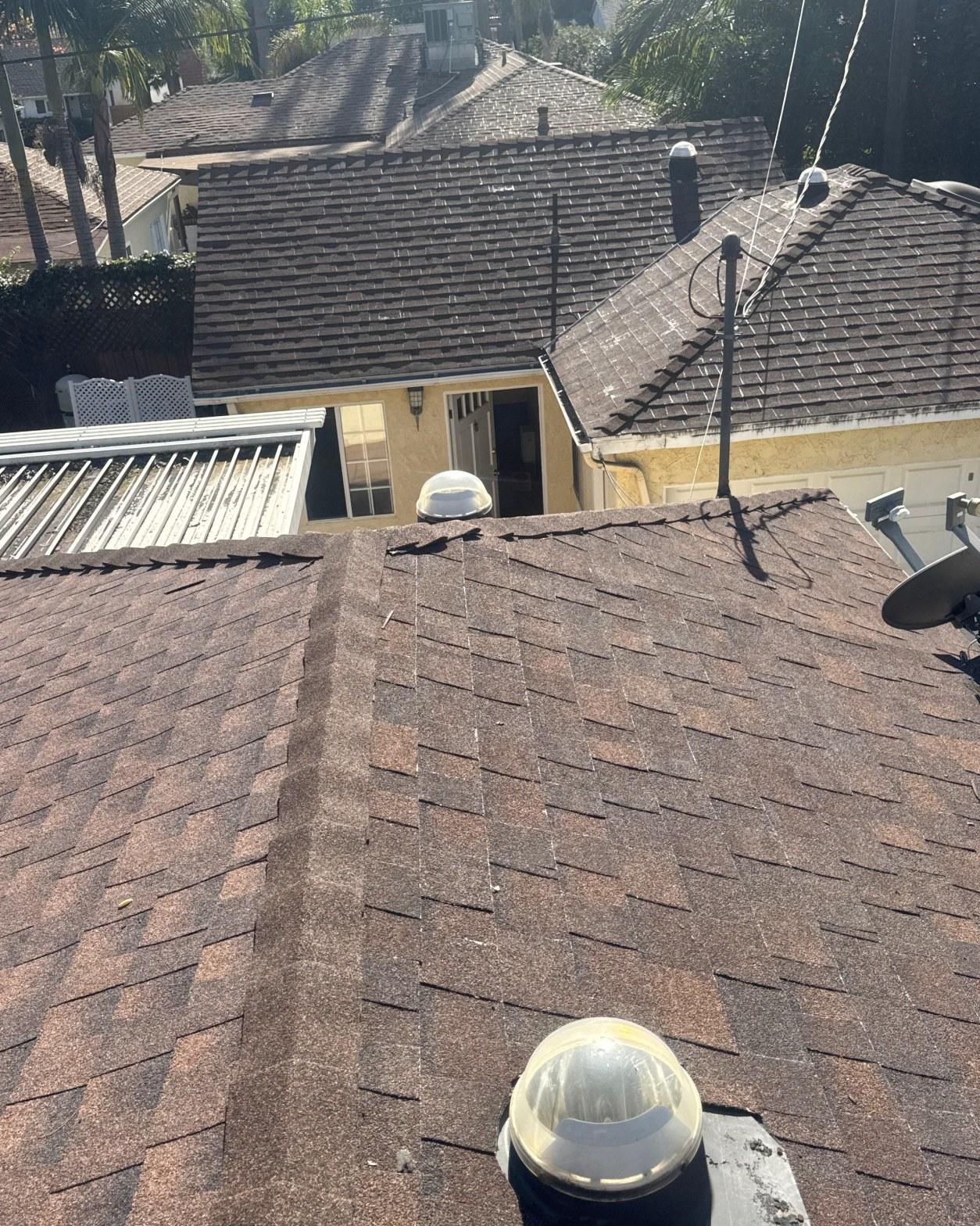
This project started the way many do in Los Angeles County, a leaking roof that had been patched one too many times. The homeowner at a single-family residence in the 91423 ZIP code reached out after seasonal rains exposed active leaks that spot repairs could no longer solve. An inspection confirmed what we suspected: the existing shingles had lost granule coverage across a significant portion of the field, the flashing around the chimney had separated, and a second, older layer of shingles was already present beneath the top layer, a common finding on homes built in this part of the San Fernando Valley before the 1990s.
Carrying two layers of shingles adds dead load to the roof structure and prevents a proper inspection of the decking beneath. The only responsible path forward was a complete tear-off reroof.
Project Gallery
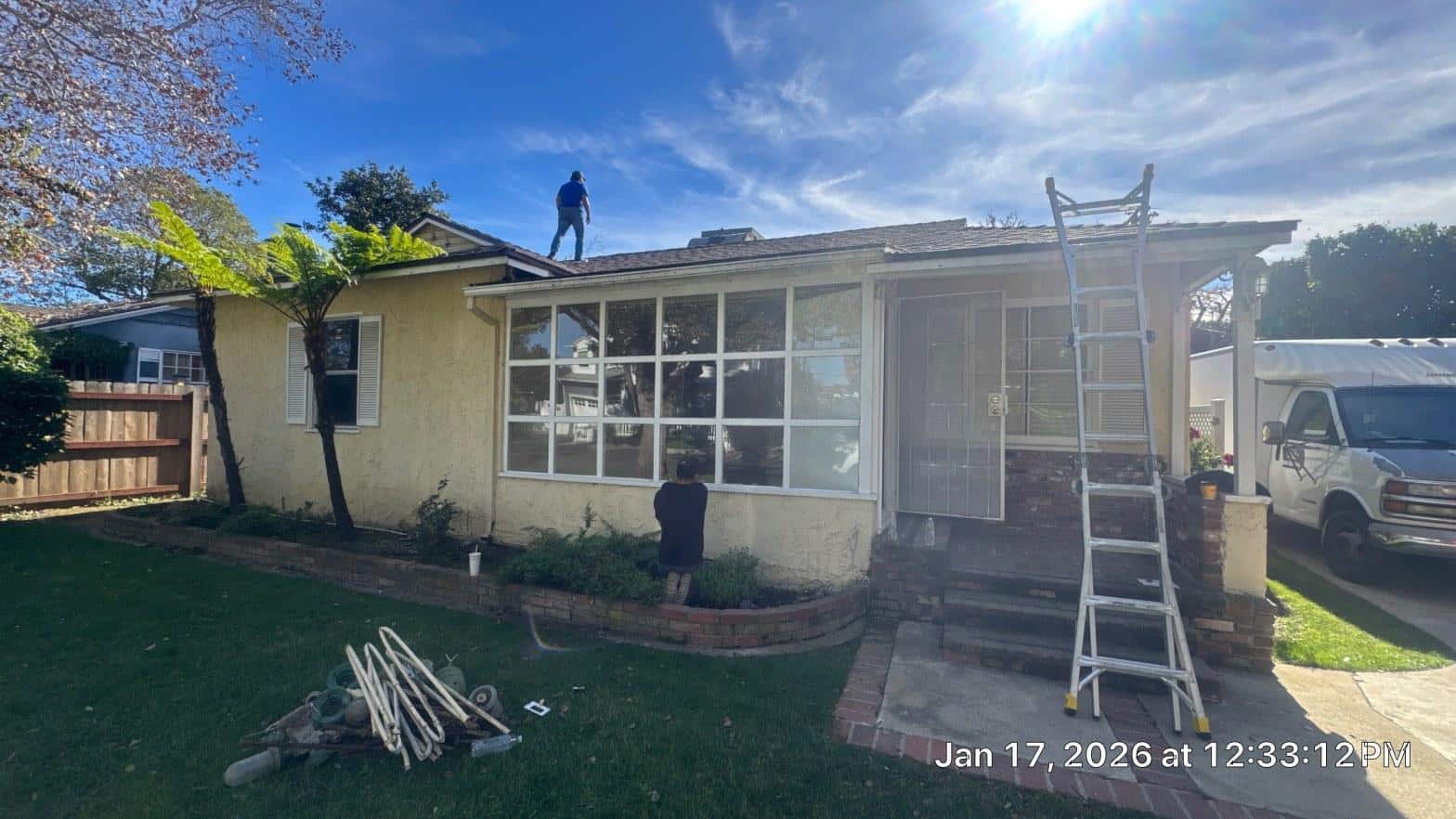
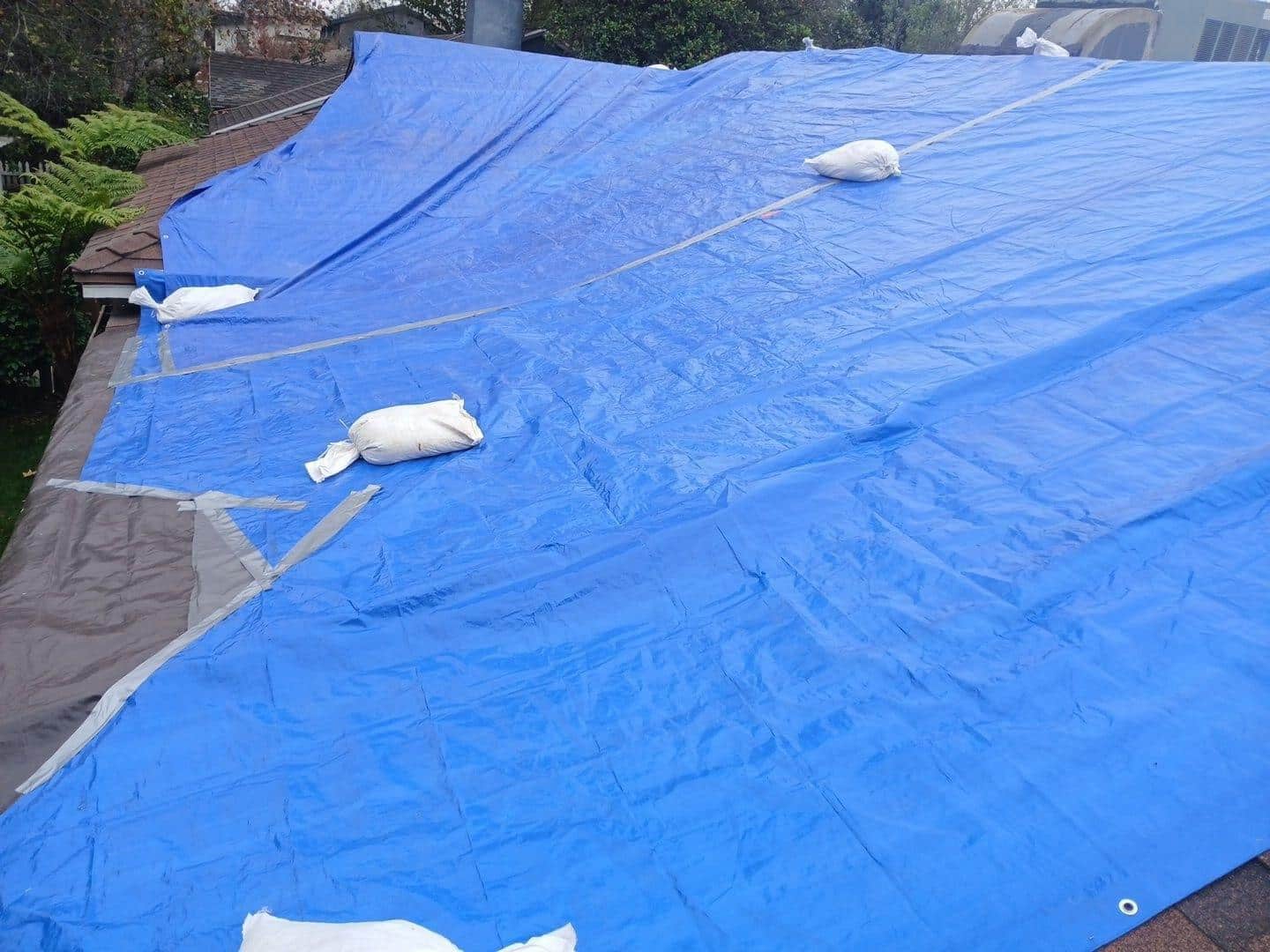
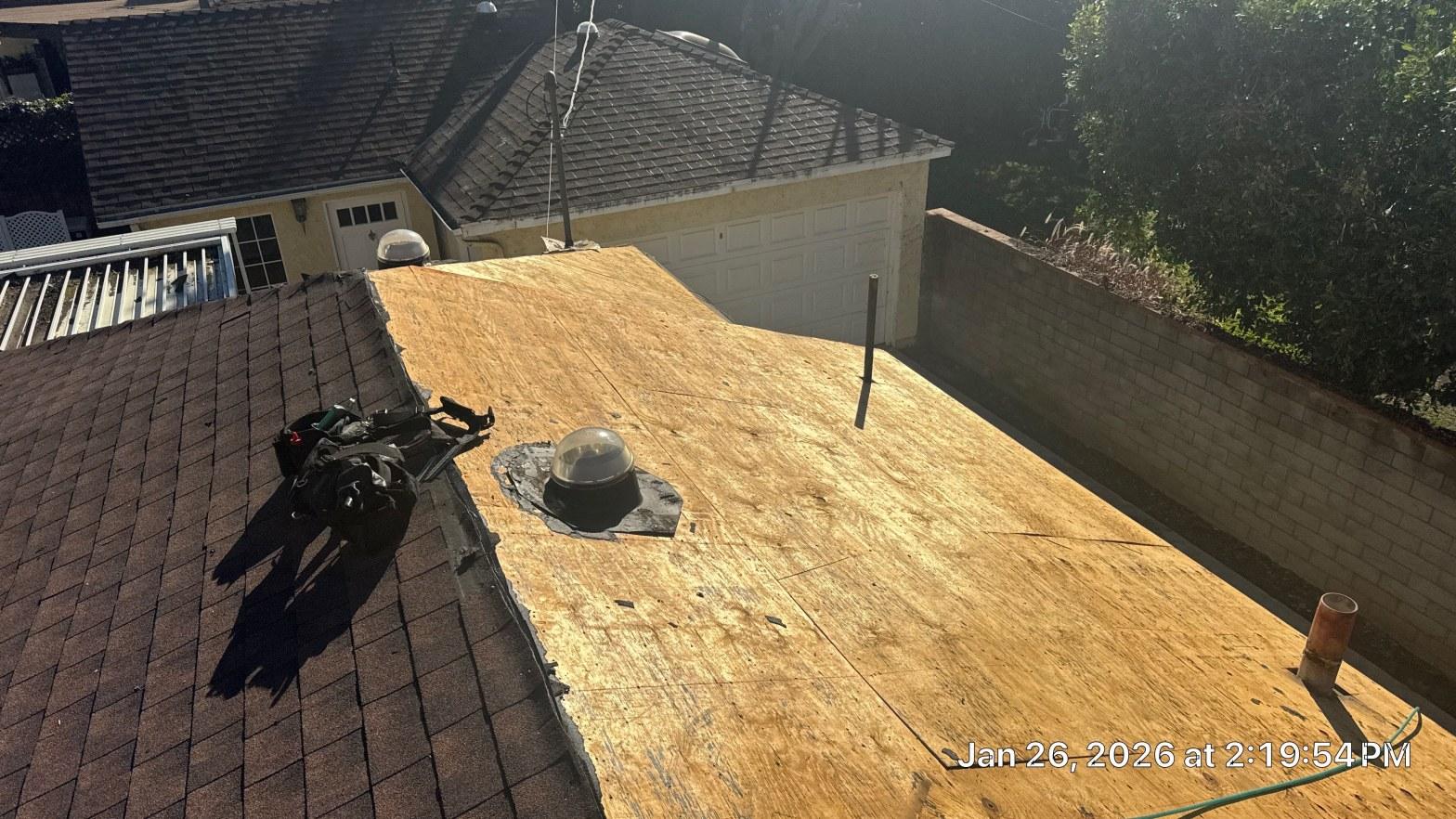
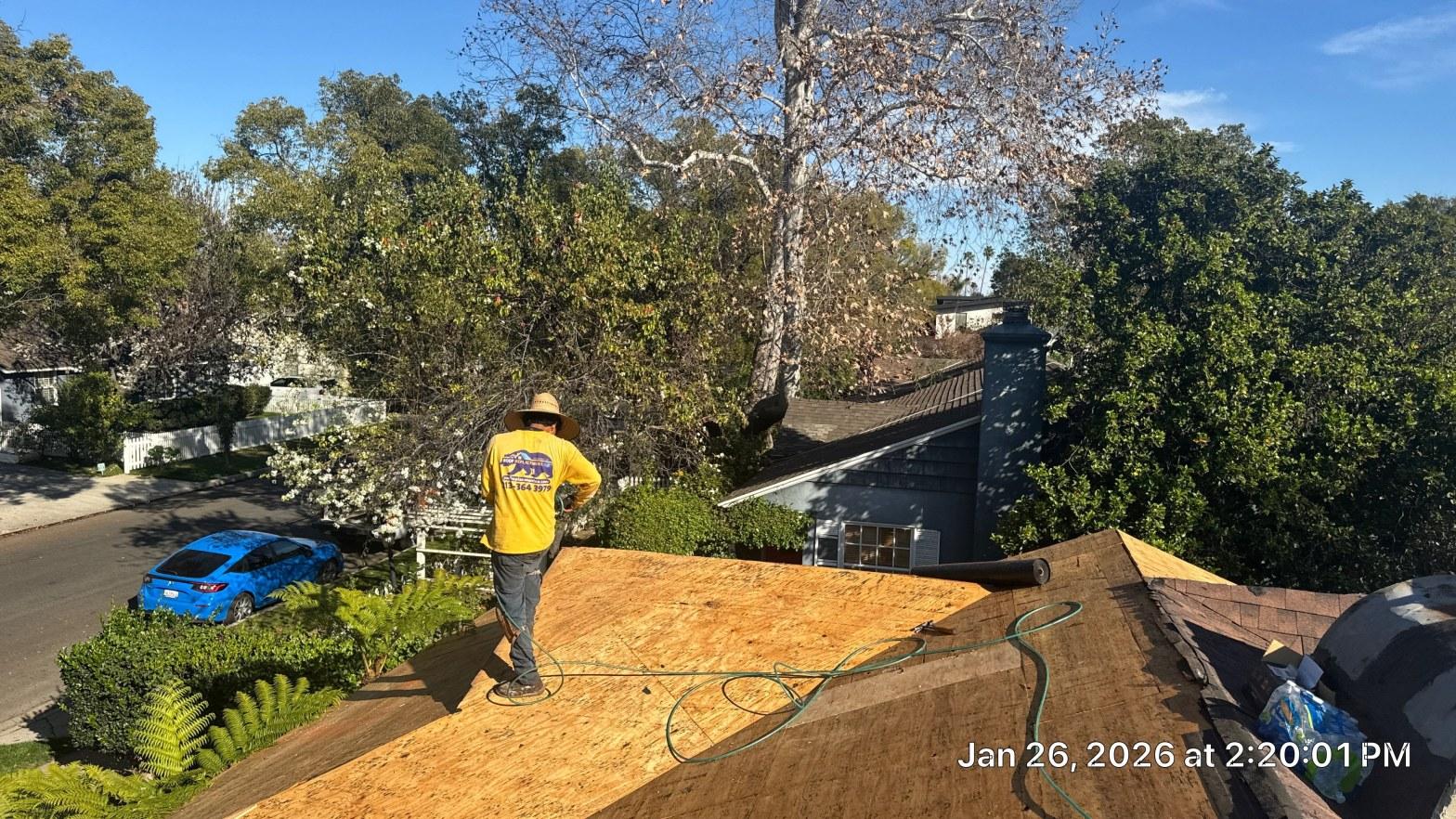
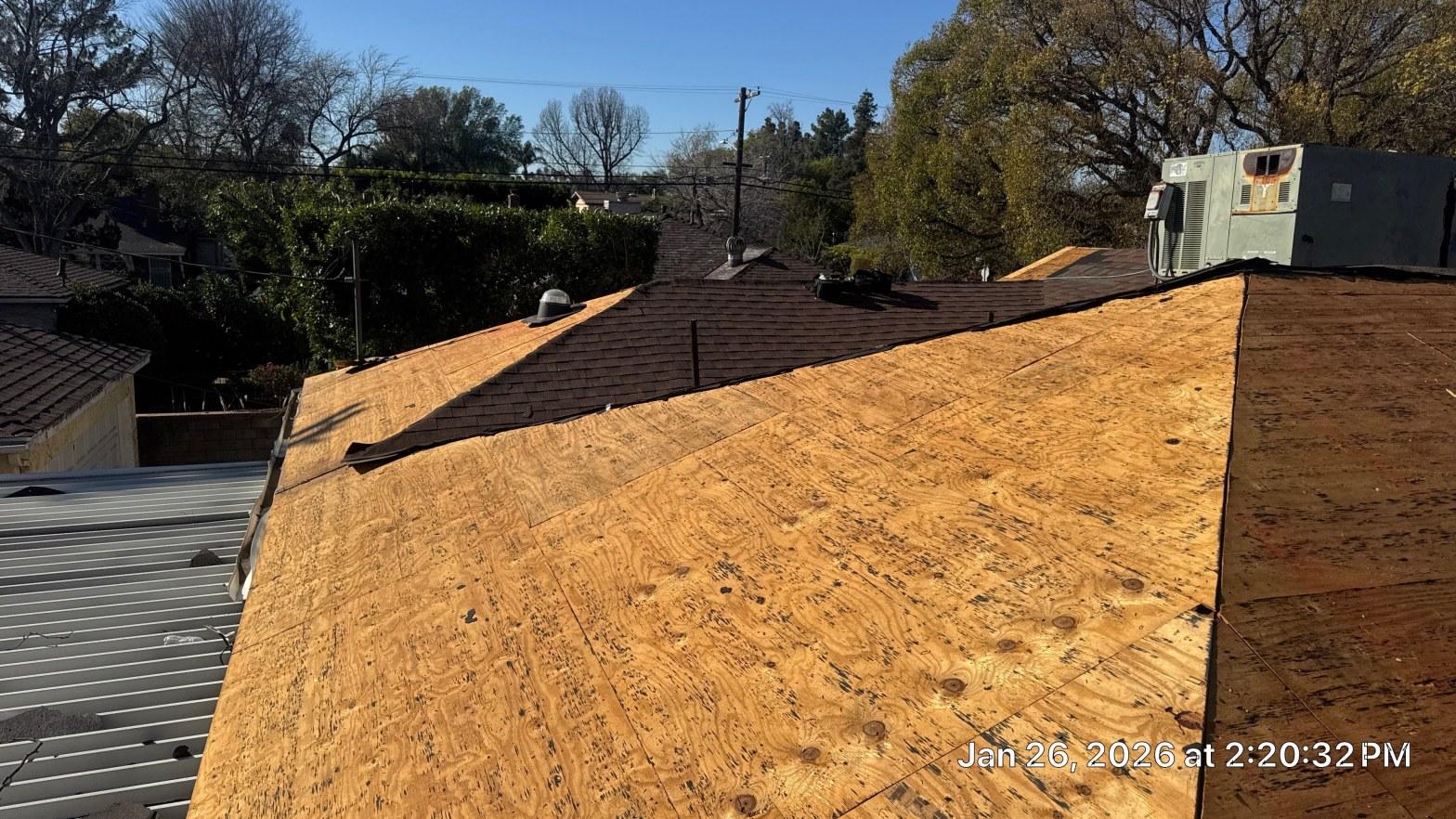
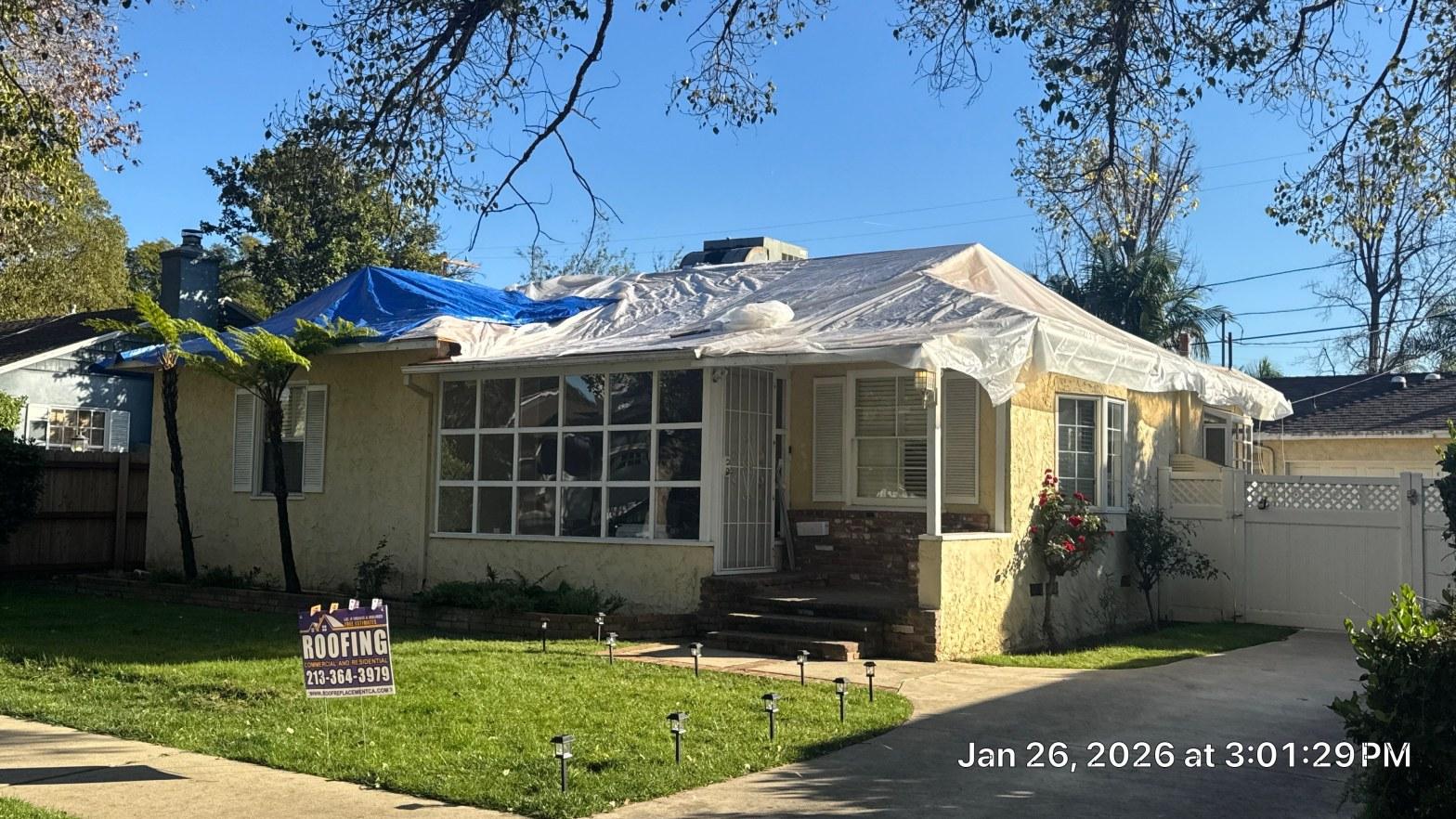
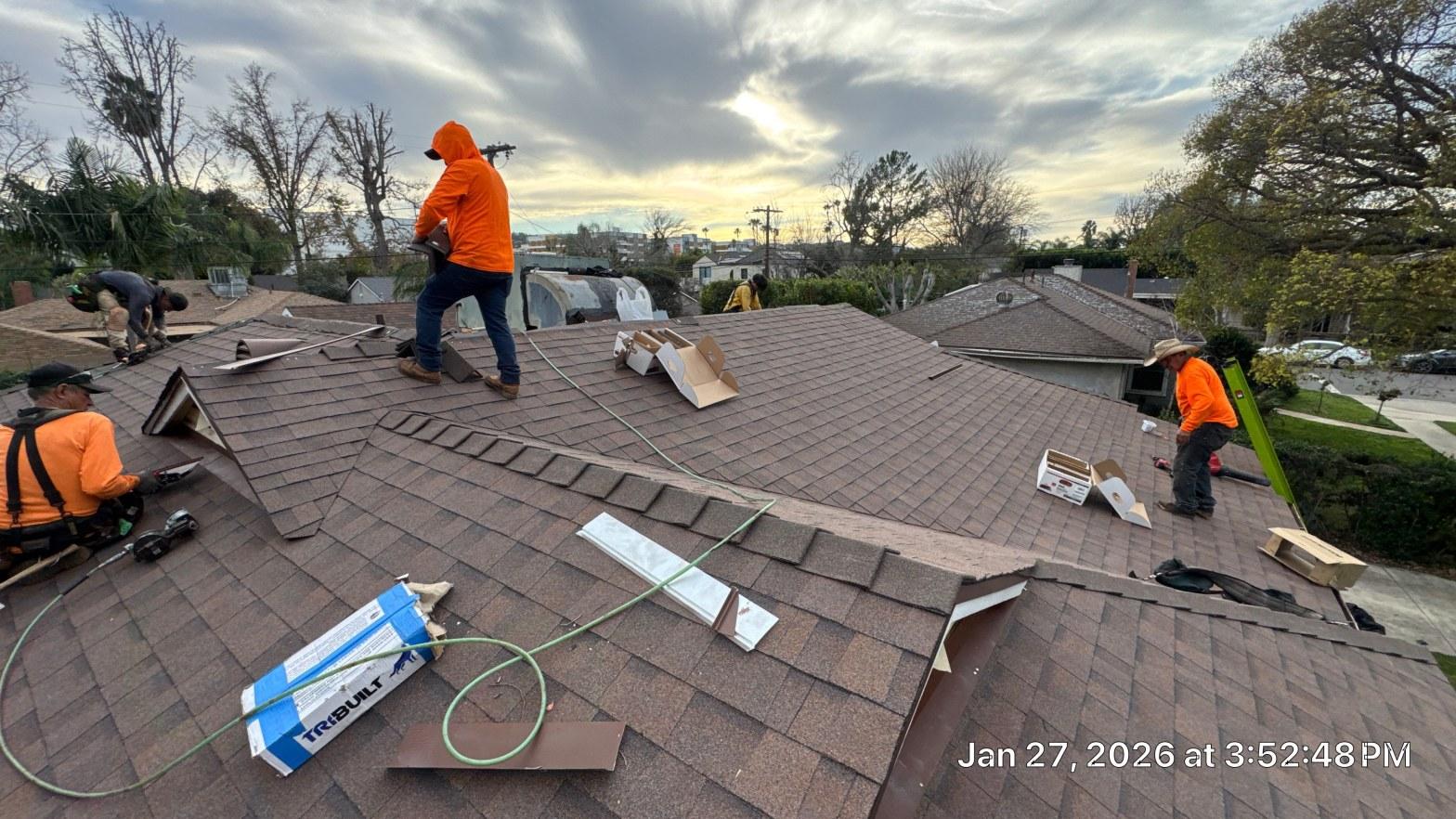
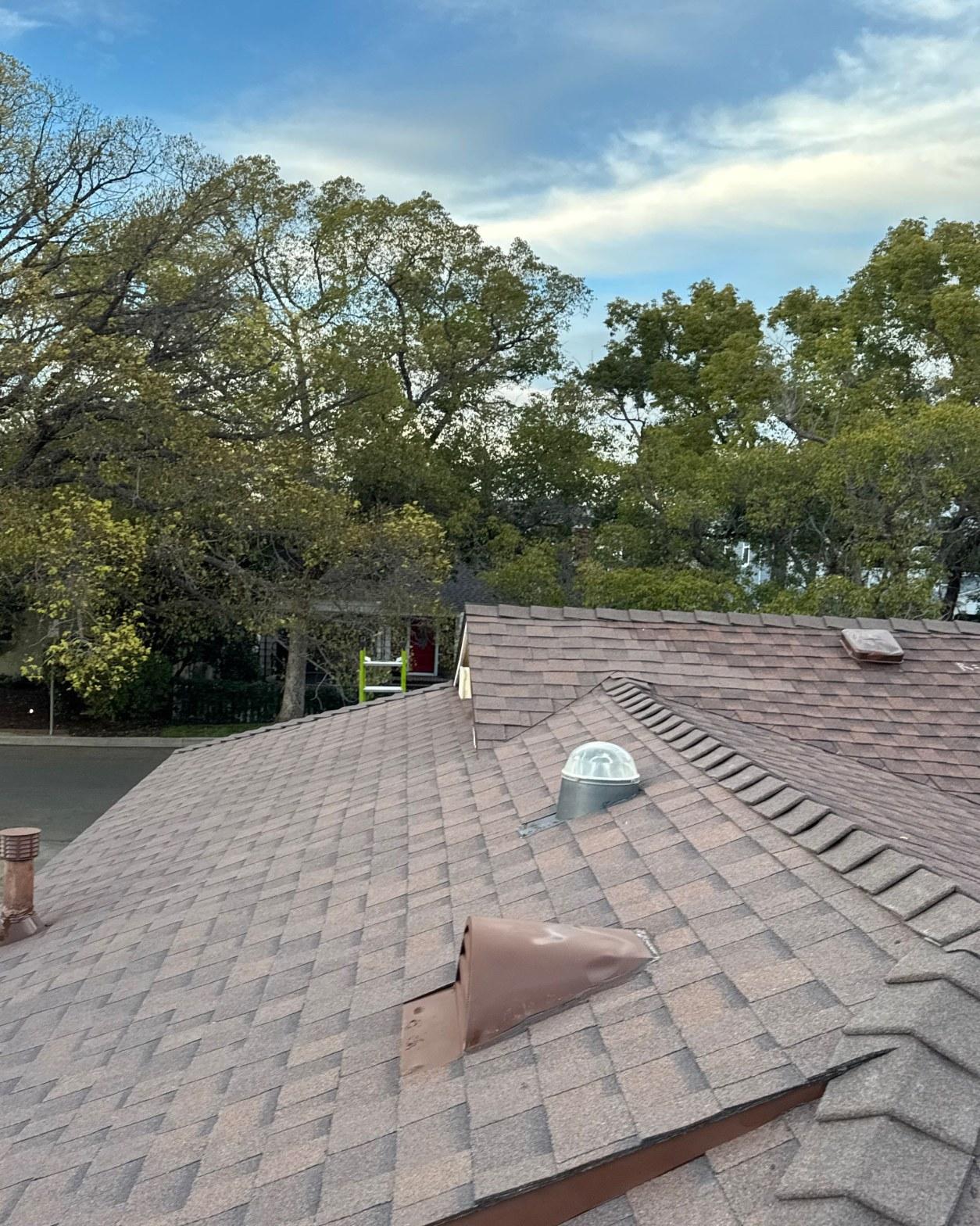
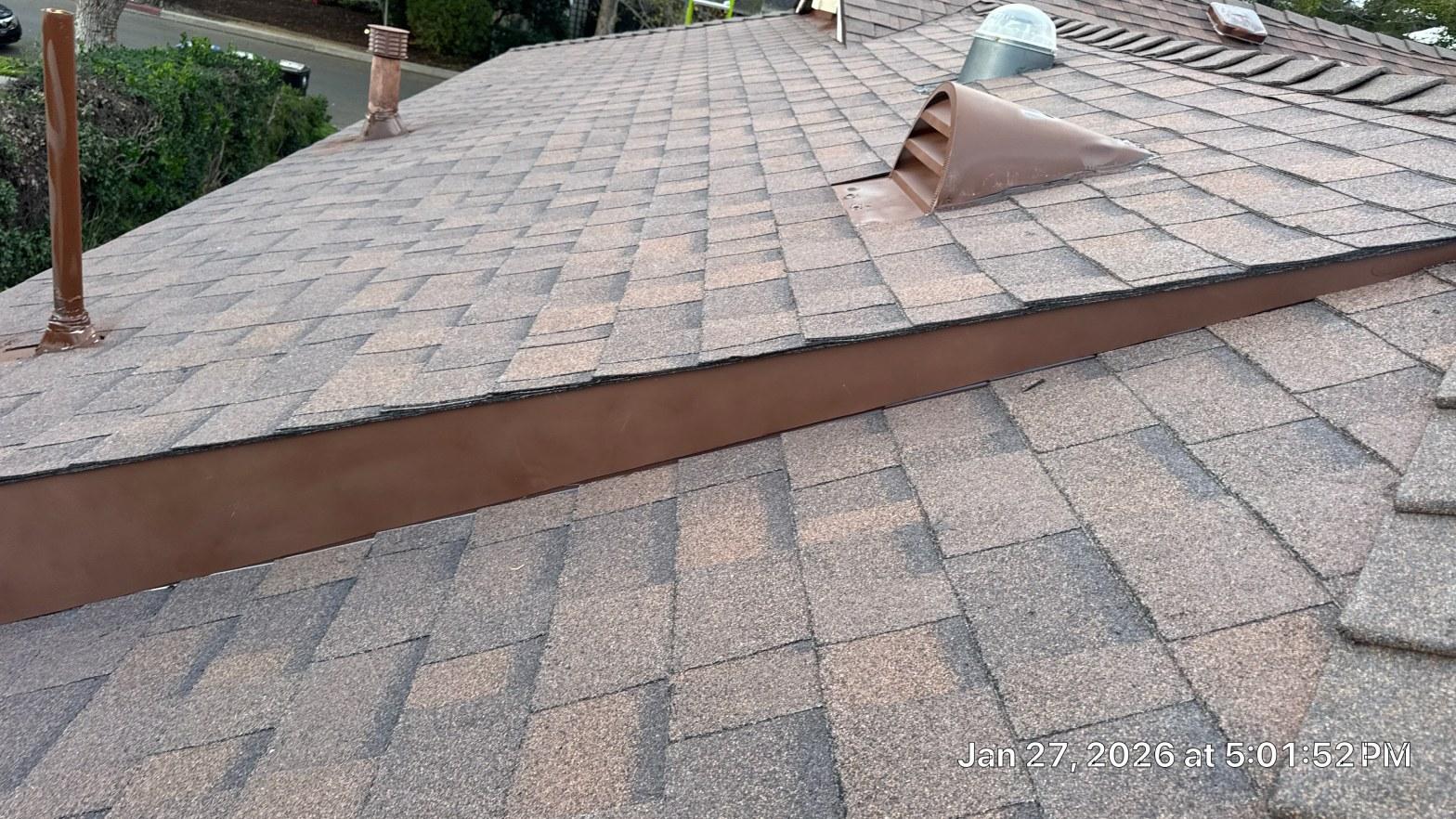
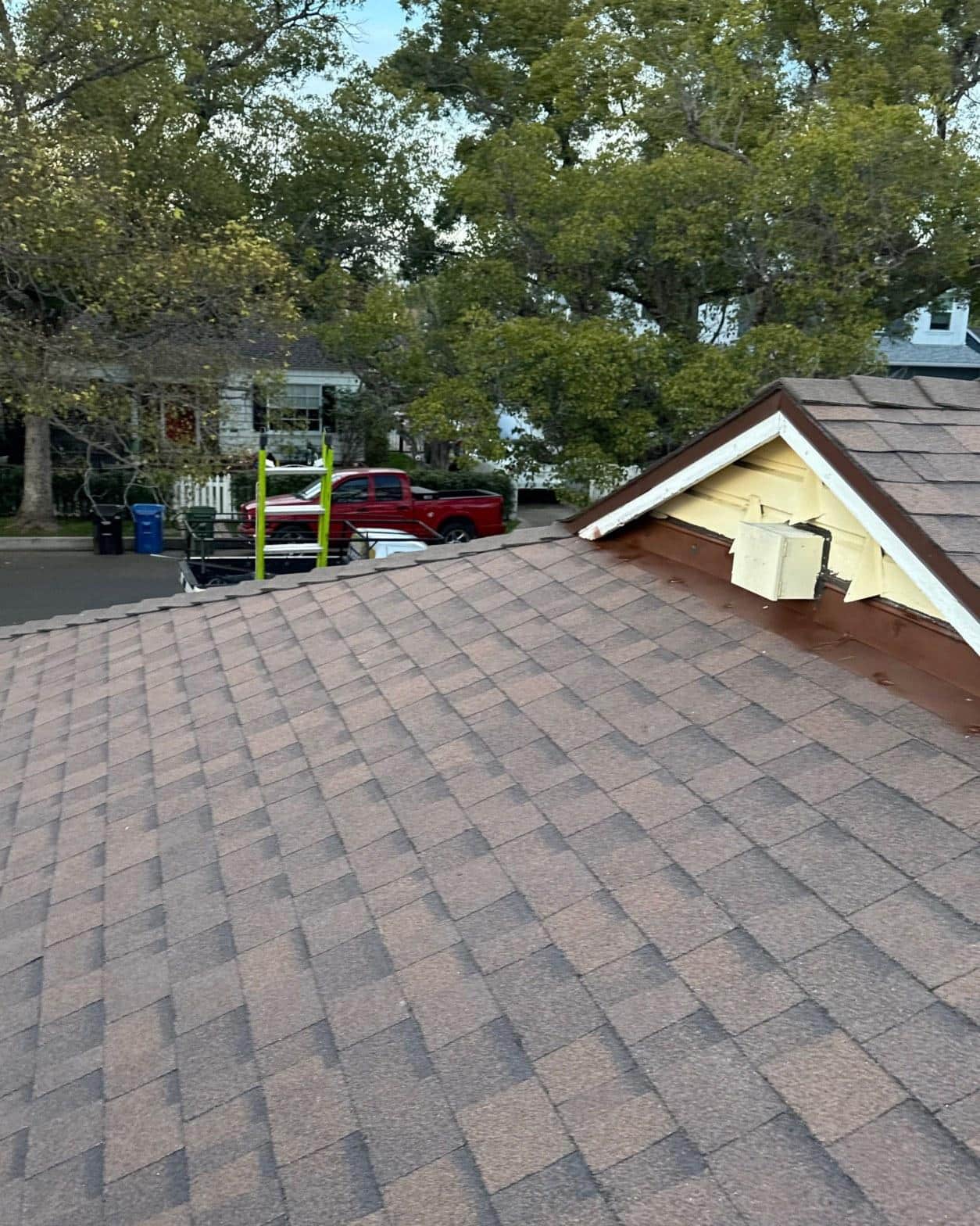
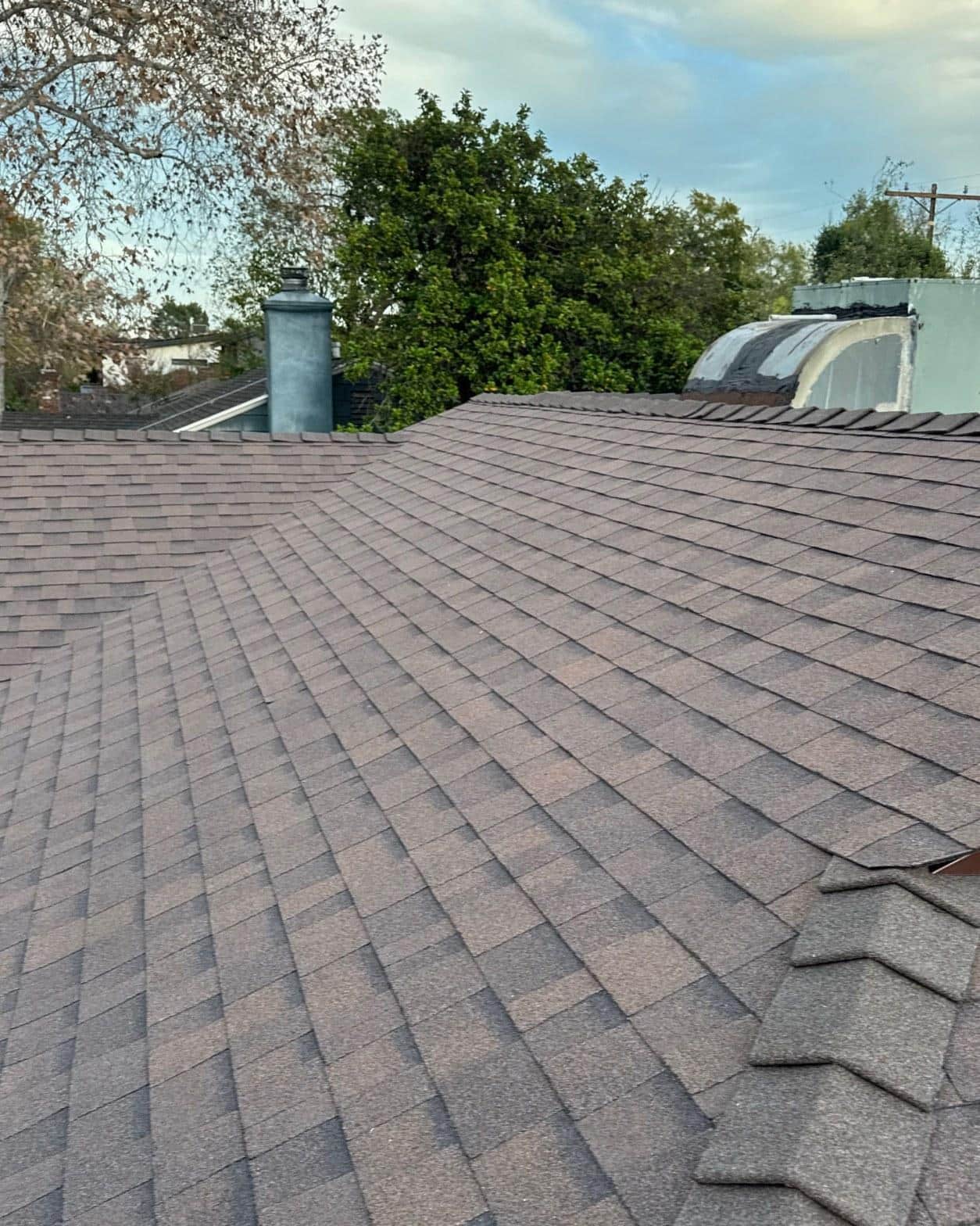
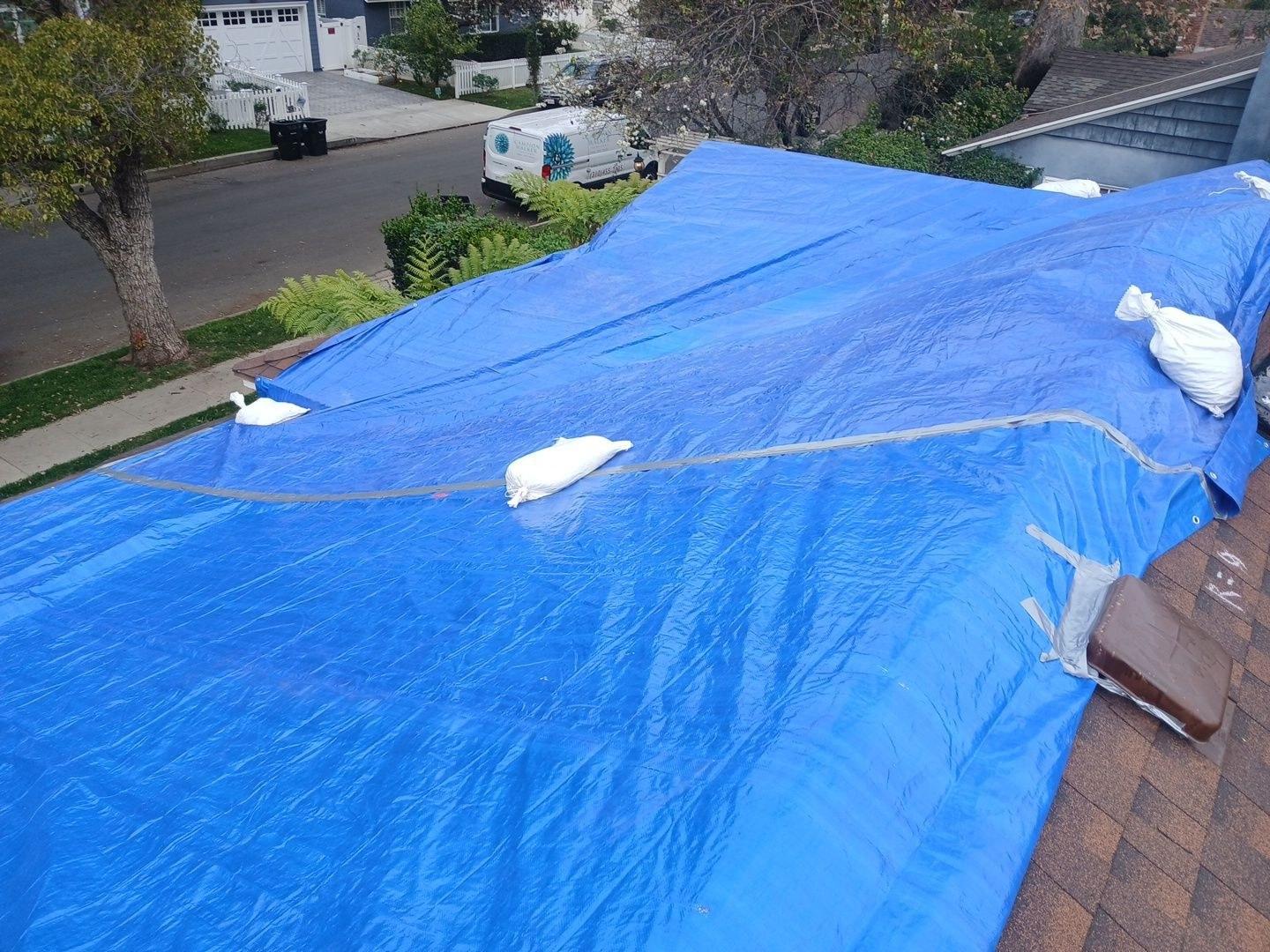
Before demolition began, our crew installed a blue polyethylene tarp weighted with sandbags across the full roof surface. This is standard practice when a multi-day project coincides with any chance of rain in the forecast, the tarp keeps the exposed decking dry between the tear-off phase and the underlayment installation. Los Angeles County averages roughly 15 inches of rainfall per year, and even a brief shower on bare OSB decking can introduce moisture problems that compromise the new roof’s performance from day one.
What Did We Find When We Stripped the Old Shingles?
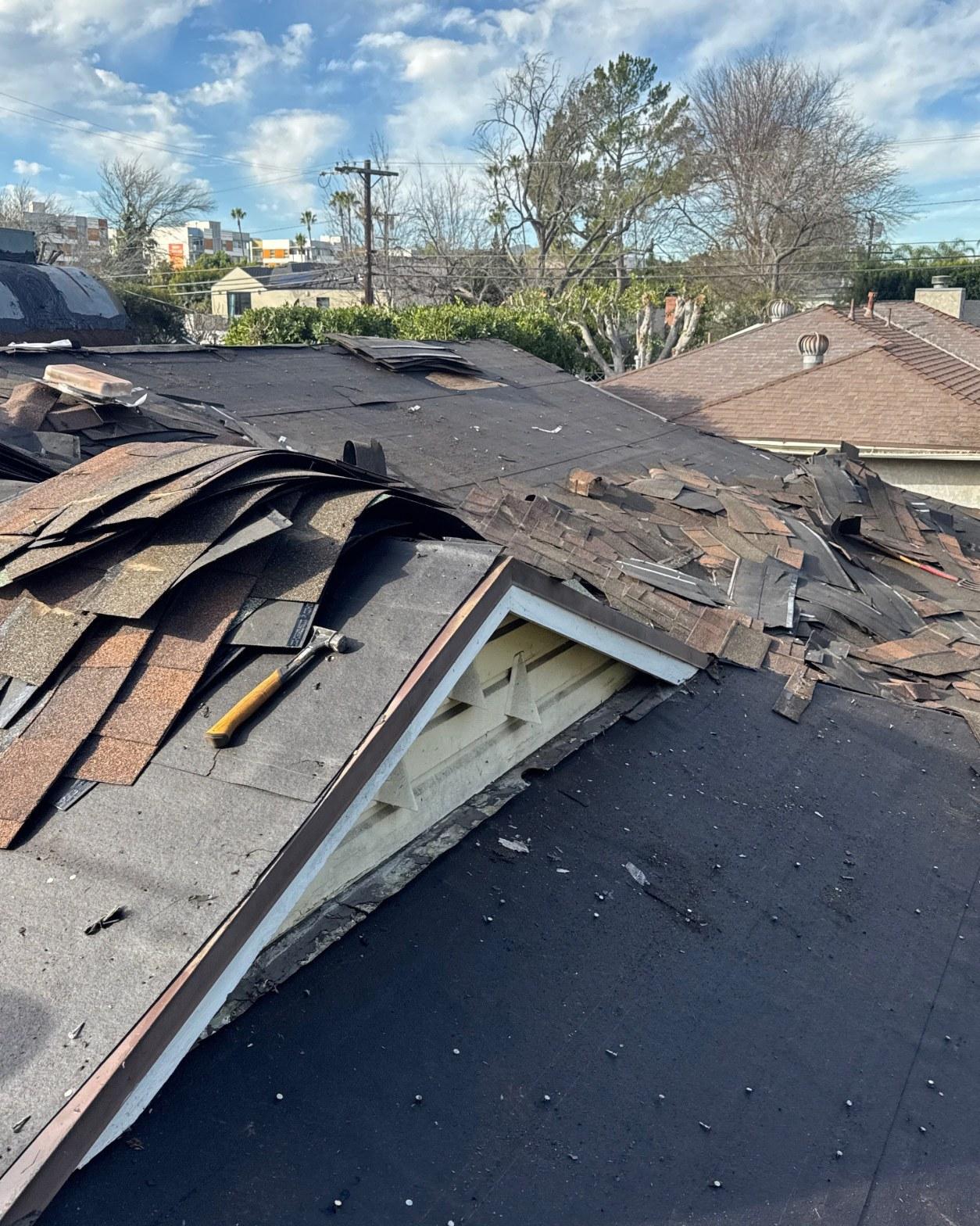
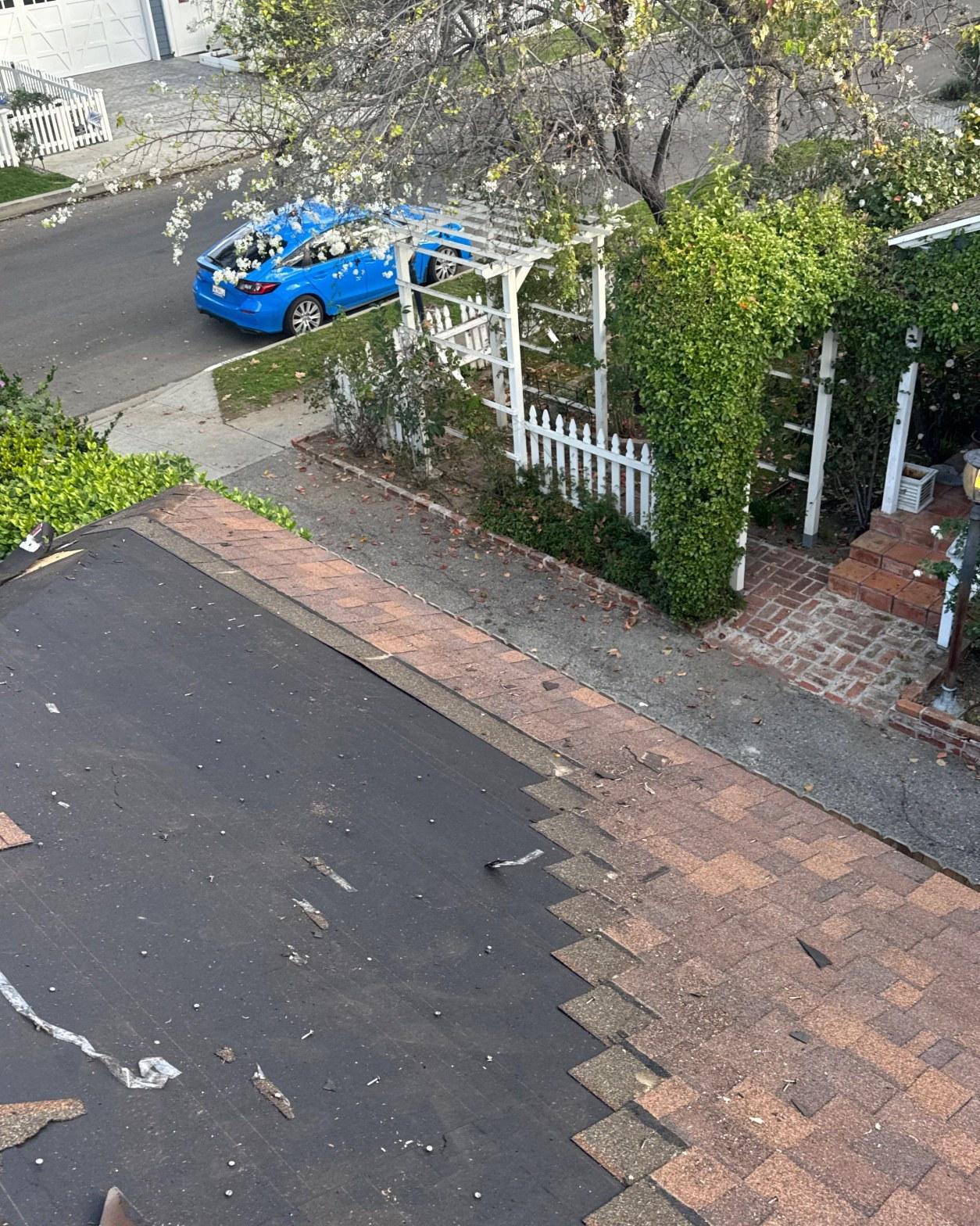
Stripping the old shingles revealed two full layers of aged three-tab asphalt material, along with deteriorated felt paper and several areas of soft decking near the valley intersections. Soft spots in roof decking, typically caused by years of slow moisture infiltration, must be cut out and replaced before any new roofing material goes down. Skipping that step transfers the problem under a brand-new roof, where it continues to rot unseen.
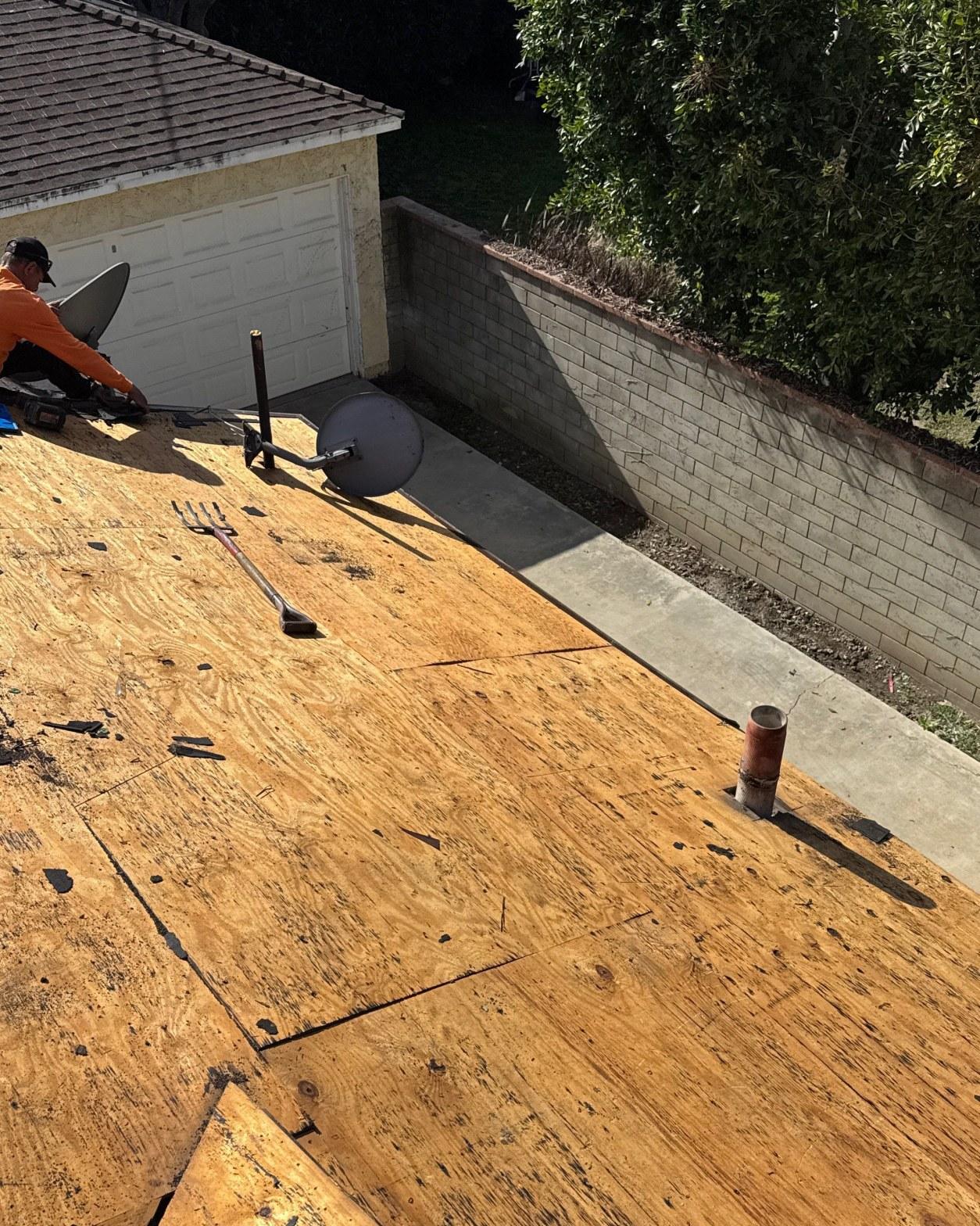
A second layer is common on homes of this age, and taking everything down to the decking is the only way to see what the old roofing has been hiding. Once the decking was clean and solid, we installed a full layer of synthetic underlayment before any shingles were set, giving the roof a proper weather barrier independent of the shingle layer above it.
Choosing the Right Shingle: Owens Corning Duration Cool Plus Prairie Wood
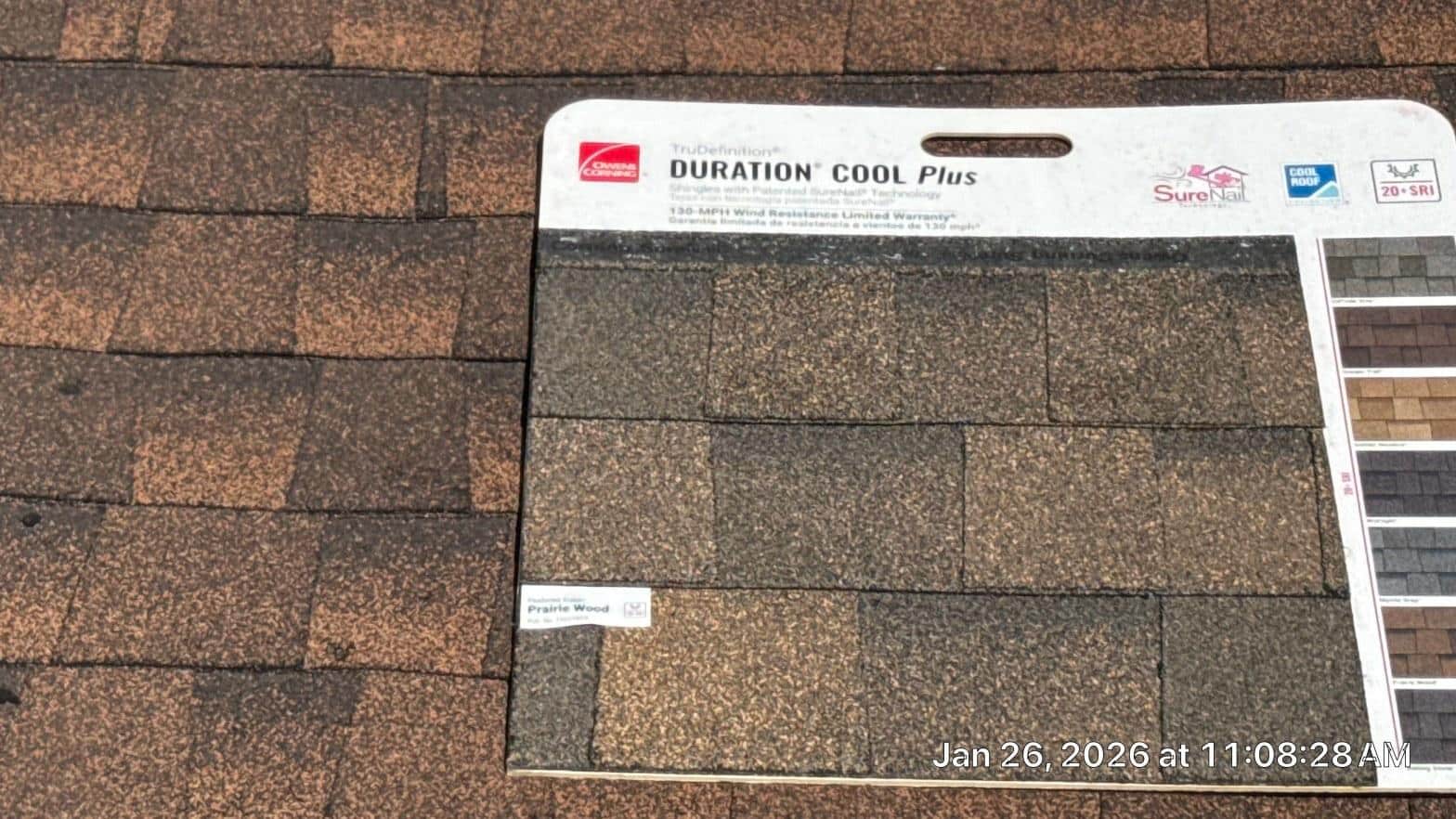
The homeowner selected Owens Corning TruDefinition Duration Cool Plus shingles in Prairie Wood, a laminated architectural shingle that carries both a 130-mph wind resistance limited warranty and a Cool Roof Rating Council certification with a Solar Reflectance Index (SRI) of 20 or higher.
That Cool Roof certification matters in California. As of 2026, California’s Title 24 building energy standards require re-roofing projects on low-slope and steep-slope surfaces to meet minimum solar reflectance thresholds in most climate zones. Duration Cool Plus satisfies that requirement, so this homeowner avoids any compliance headache at permit close-out.
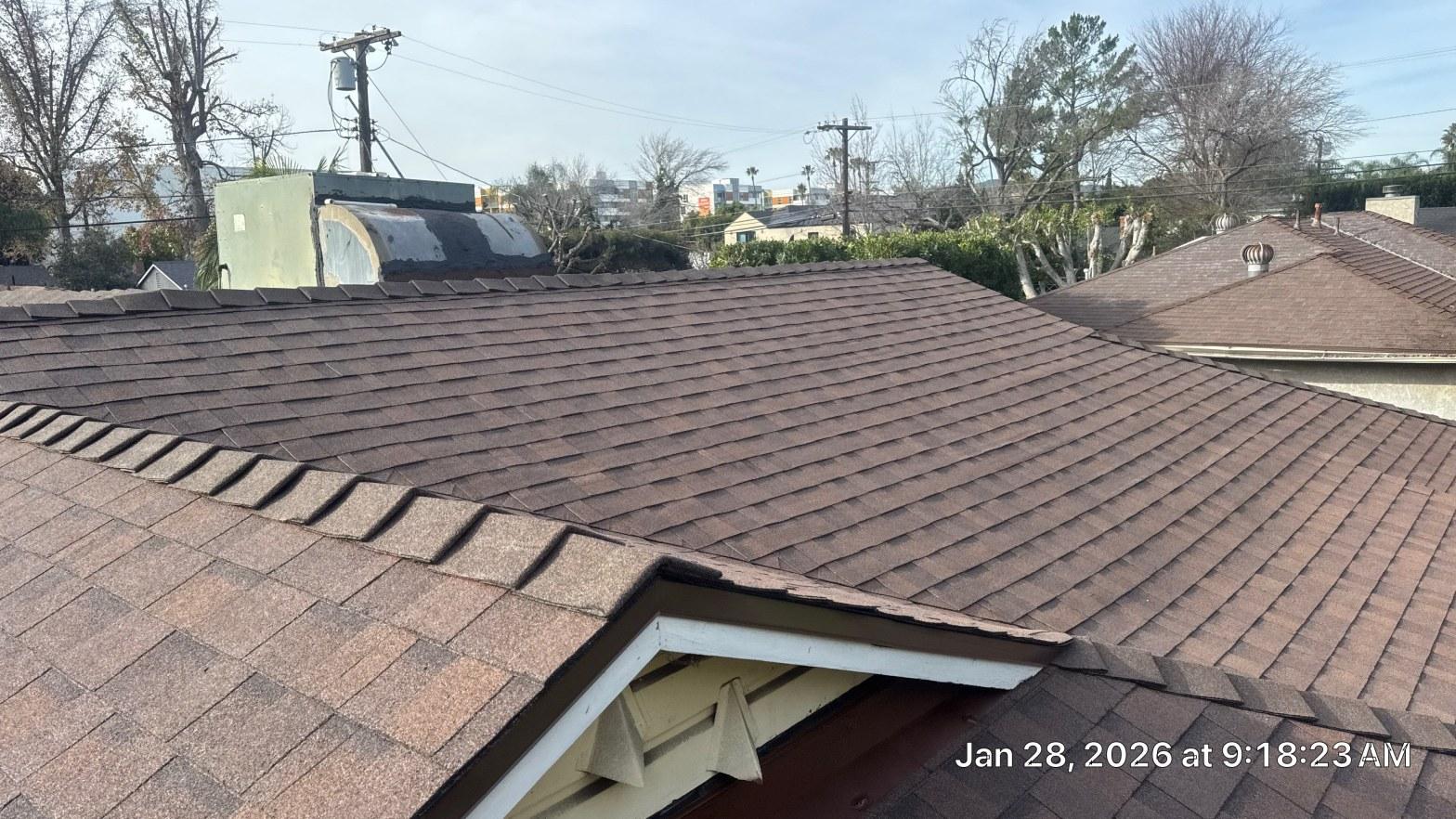
The Prairie Wood colorway was chosen specifically to complement the home’s warm-toned exterior while reading as a neutral from the street. Duration Cool Plus shingles use Owens Corning’s patented SureNail Technology, a reinforced fabric strip in the nail zone that provides a consistent fastening point across every shingle tab, which directly supports that 130-mph wind warranty. For a neighborhood where Santa Ana wind events regularly push sustained gusts above 50 mph, that engineering detail is not a marketing footnote.
As a point of reference, ENERGY STAR’s roofing product criteria list initial solar reflectance and thermal emittance as the two primary metrics for steep-slope cool roofing, Duration Cool Plus meets both thresholds, which may also support eligibility for applicable utility rebate programs in Southern California.
How the Installation Came Together
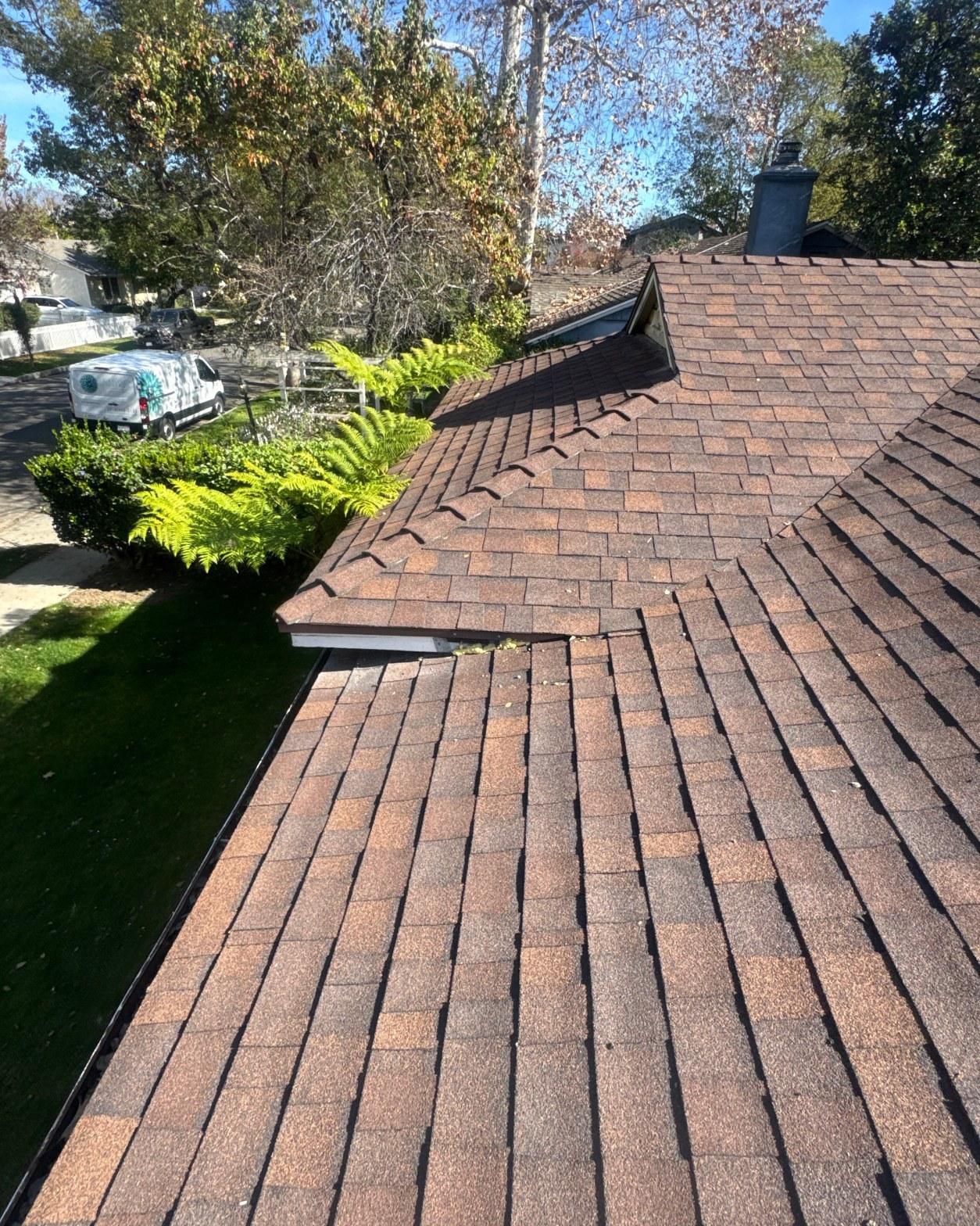
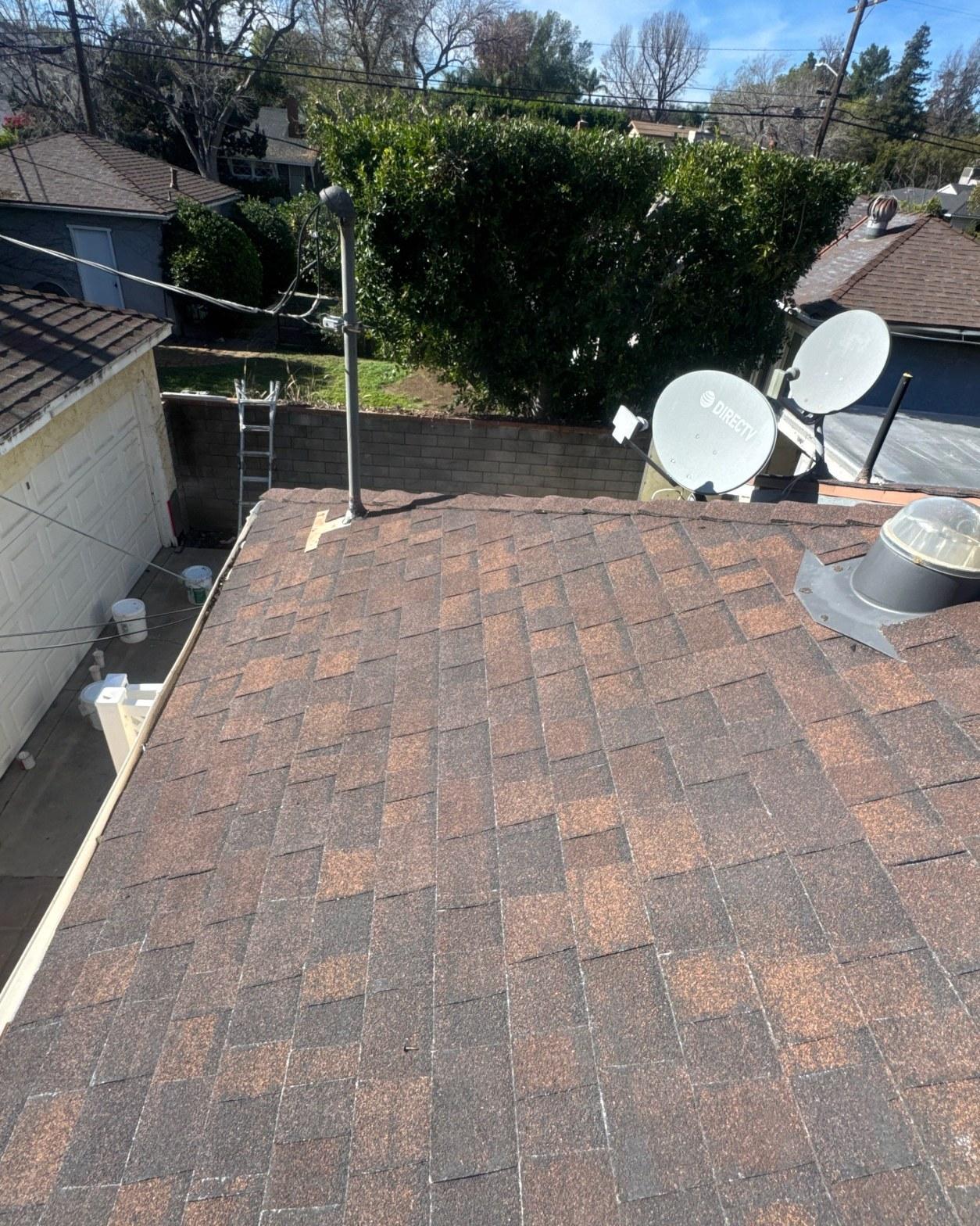
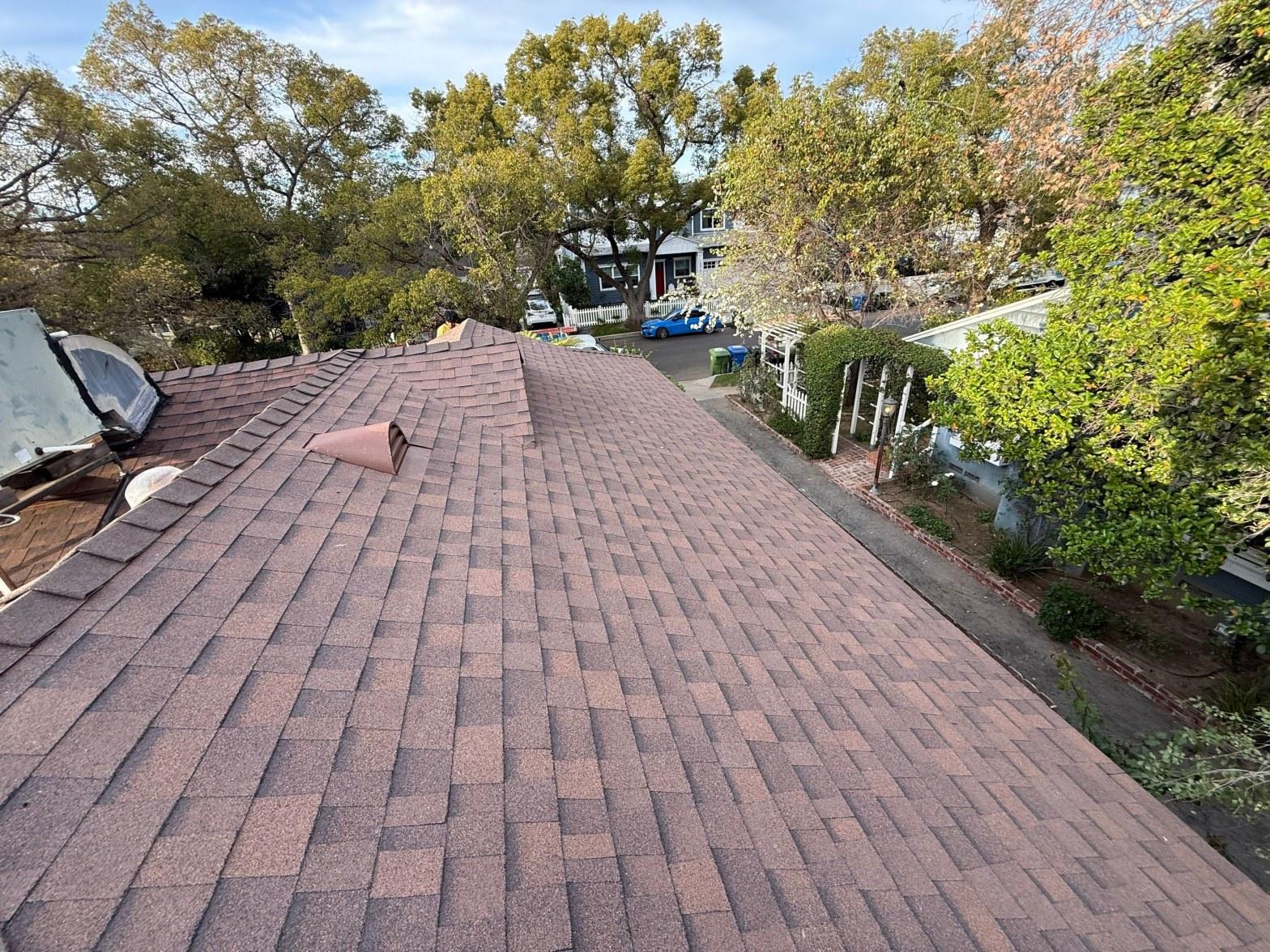
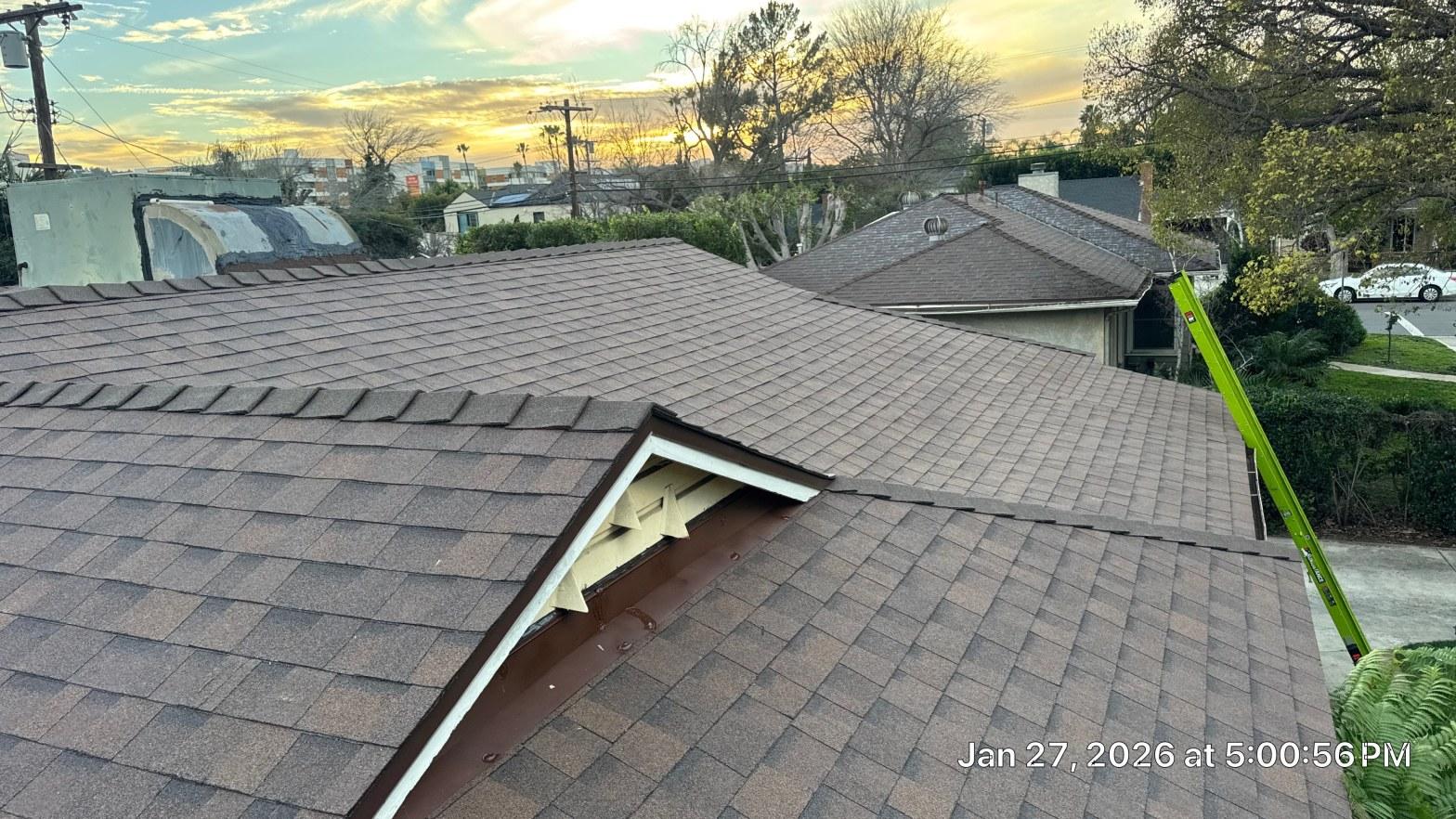
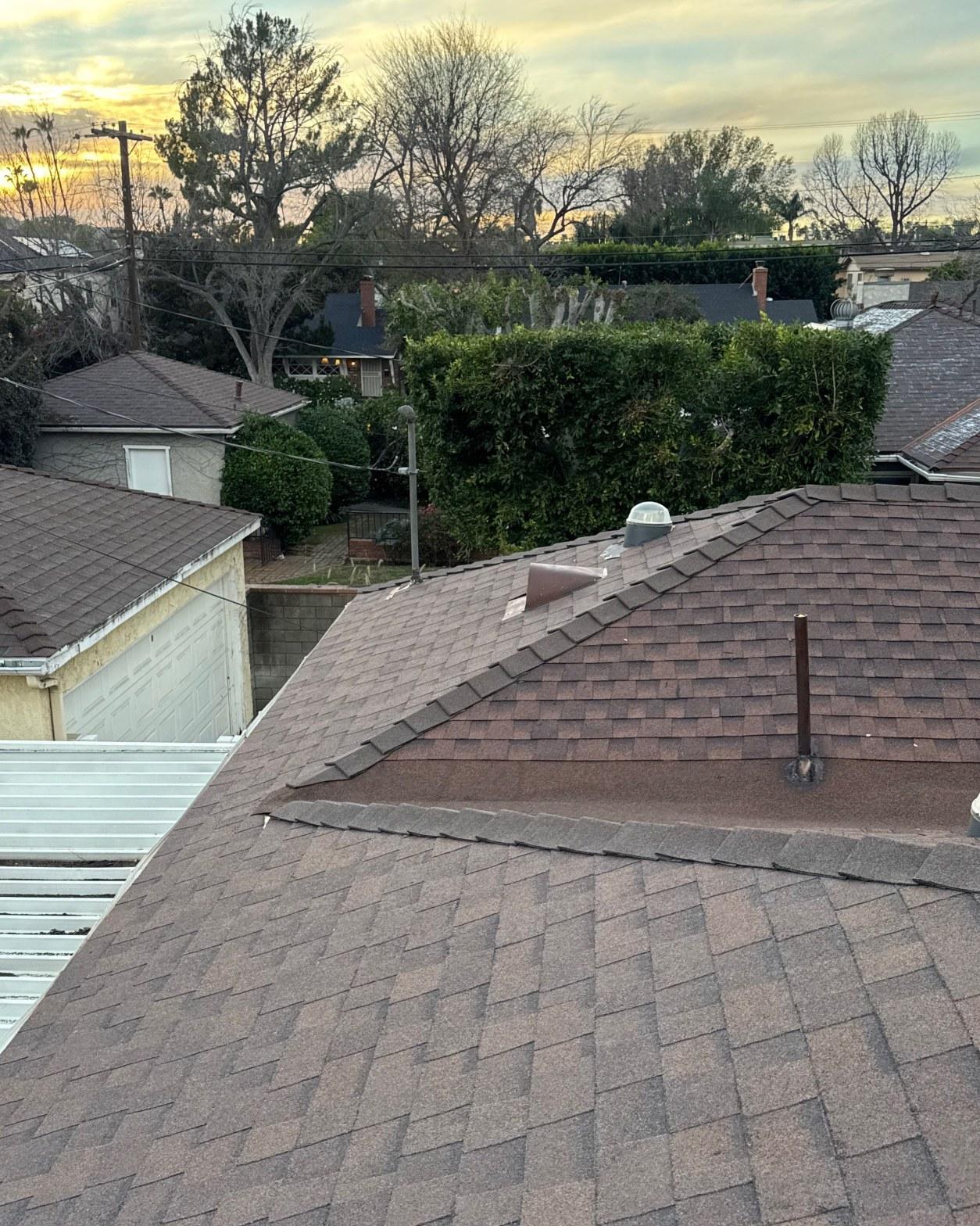
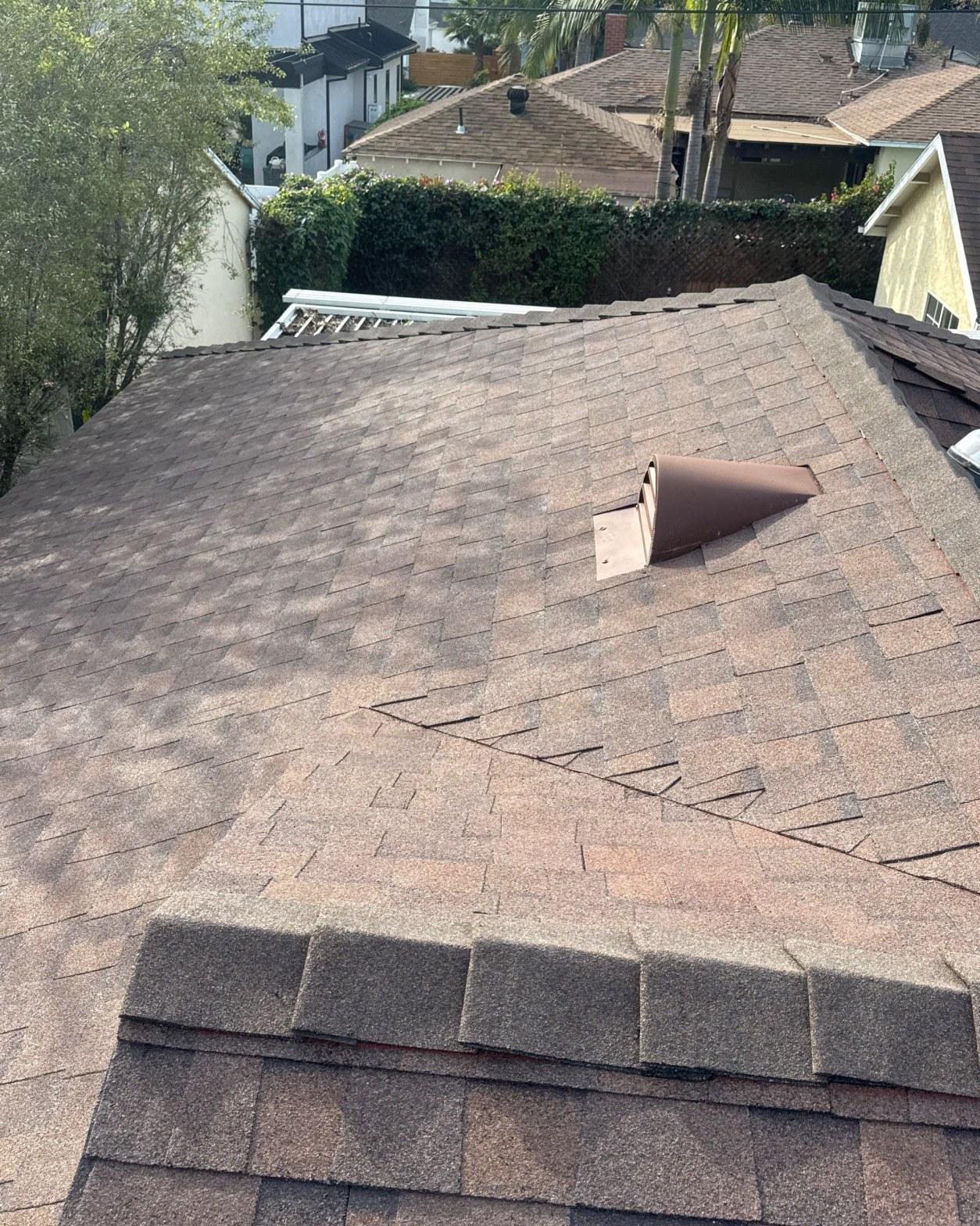
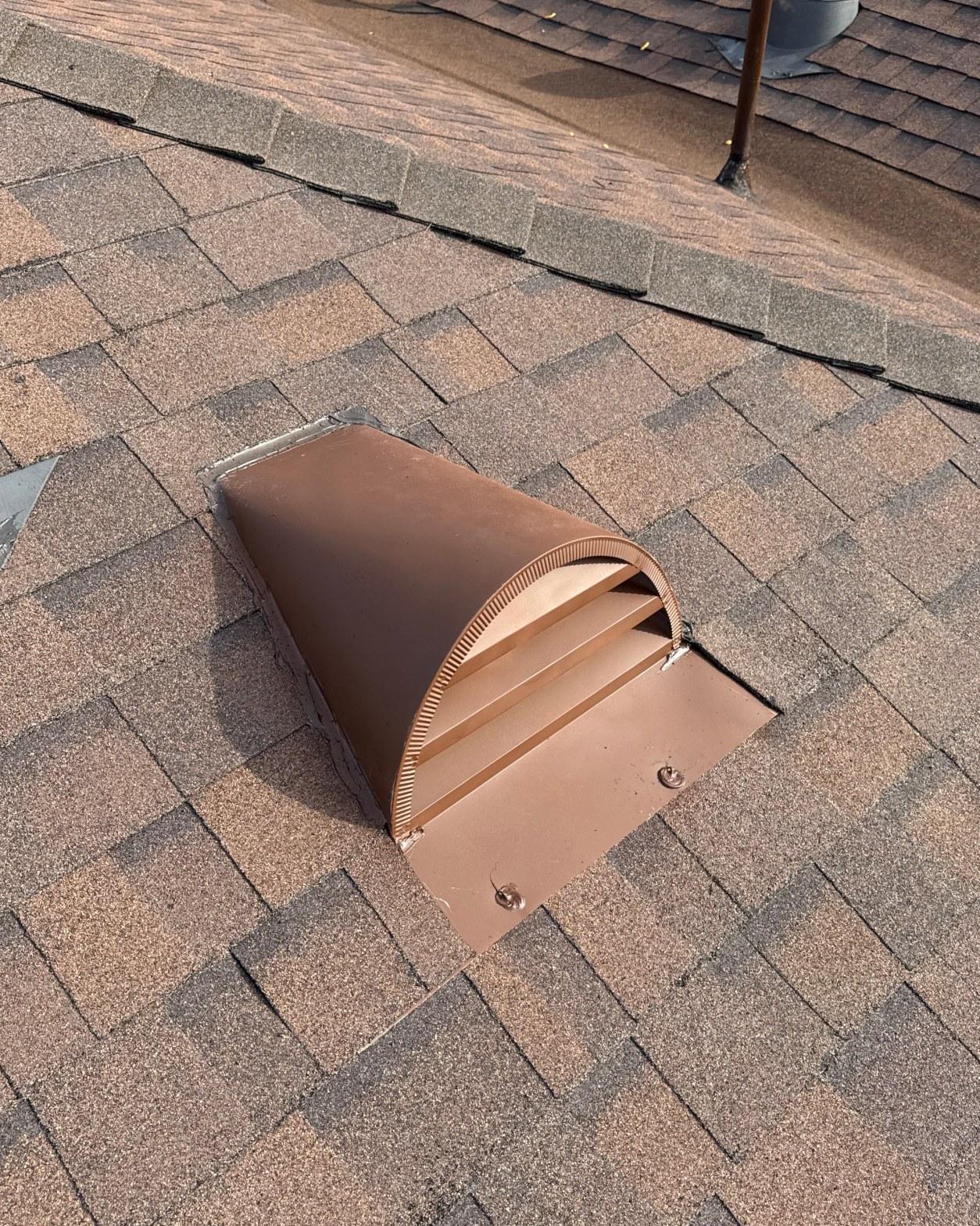
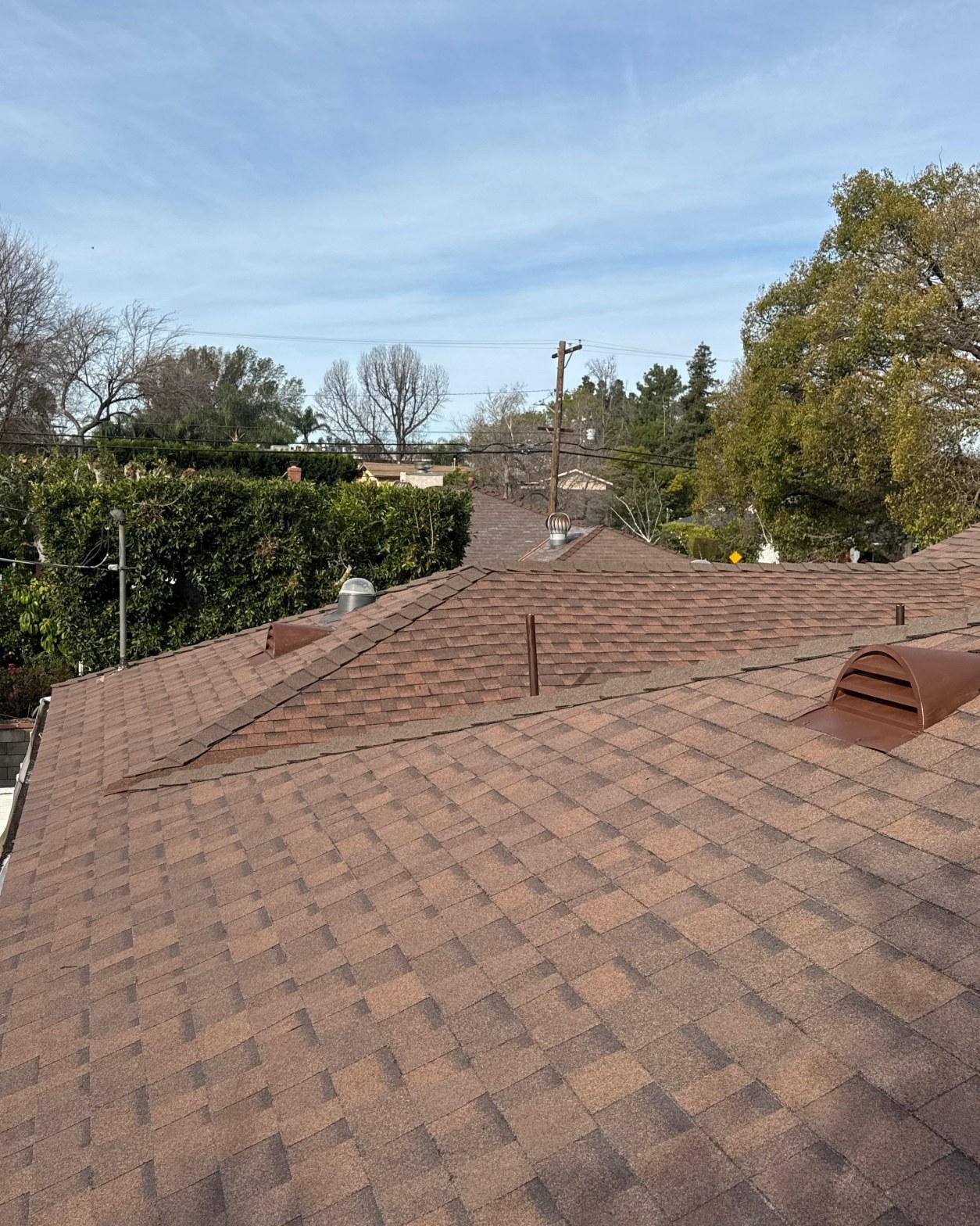
Two-person installation crews worked the field in parallel, with one team setting shingles from the eave up while a second team handled hip and ridge cap work. New drip edge flashing was installed along all eaves and rakes before any shingles were laid, and step flashing at the chimney was replaced in full, not caulked over, replaced. Updated brown-painted turtle-style exhaust vents were set flush into the field to maintain attic ventilation without interrupting the shingle pattern.
The finished roof presents clean, straight coursework across both main planes and the hip returns, with ridge cap shingles tight to the peak. According to the California Contractors State License Board (CSLB), homeowners should always verify that their roofing contractor holds a valid C-39 Roofing license before any work begins, Roof Replacement Inc is Licensed by the California Contractors State License Board (CSLB) and pulled the required permit for this project.
Ready for a Similar Project?
If your home has aging shingles, active leaks, or a two-layer roof that’s never been properly torn off, a full reroof with a product like Owens Corning Duration Cool Plus gives you a clean, warrantied, code-compliant result, not another temporary fix. Call Roof Replacement Inc or submit a project inquiry online to schedule a roof assessment. We serve the greater Los Angeles area and carry all required state licensing and liability coverage.