

California's climate is tough on tile roofs. This guide covers every seasonal maintenance task, warning sign, and professional service you need to protect your investment.
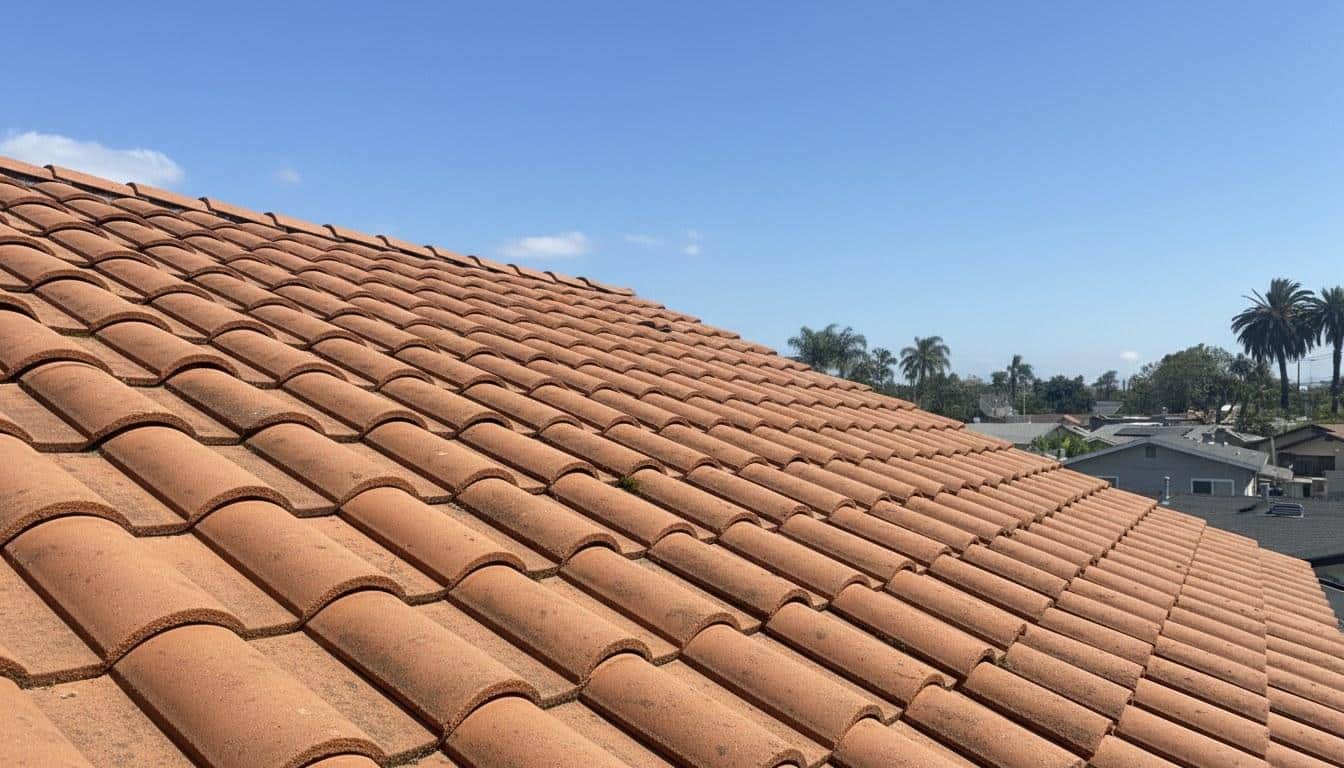
Tile roof maintenance in California is one of the most cost-effective things a homeowner can do to protect a major investment. Concrete and clay tile roofs can last 40 to 50 years — but only with consistent upkeep. Southern California’s heat, UV exposure, Santa Ana winds, and seasonal rain all work against your roof year-round.
Tile roofing is one of the most common roofing systems across Southern California, prized for its durability and curb appeal. But many homeowners assume tile is maintenance-free. It is not. The tiles themselves are tough, but the underlayment beneath them, the flashing, the mortar at ridges, and the gutters all need regular attention to keep the system working as designed.
Why Does Tile Roof Maintenance California Matter So Much?
California’s climate creates a unique combination of stressors that wear tile roofs faster than most homeowners expect. Daytime temperatures in inland Southern California regularly exceed 100°F in summer, and overnight lows can drop 30 to 40 degrees — those daily temperature swings cause tiles and mortar to expand and contract repeatedly, loosening the system over time.
UV radiation at California’s latitude is intense enough to degrade underlayment felt in as few as 15 to 20 years, even when tiles above it look fine. NOAA data confirms that Southern California averages more than 280 sunny days per year, meaning your underlayment is under near-constant UV stress whenever tiles shift or crack and expose it.
Santa Ana wind events — which can gust above 60 mph — lift cracked or improperly seated tiles and drive debris under them. When the rainy season follows, water infiltrates through those gaps. A single neglected cracked tile can allow enough moisture intrusion to rot the roof deck beneath it within one to two seasons.
Santa Ana wind events — which can gust above 60 mph — lift cracked or improperly seated tiles and drive debris under them, and when the rainy season follows, water infiltrates through those gaps.
Our crew replaces underlayment on roughly 1 in 4 tile roofs we inspect that are 20 or more years old — the tiles look intact from the street, but the felt beneath has dried out and cracked, leaving the deck unprotected.
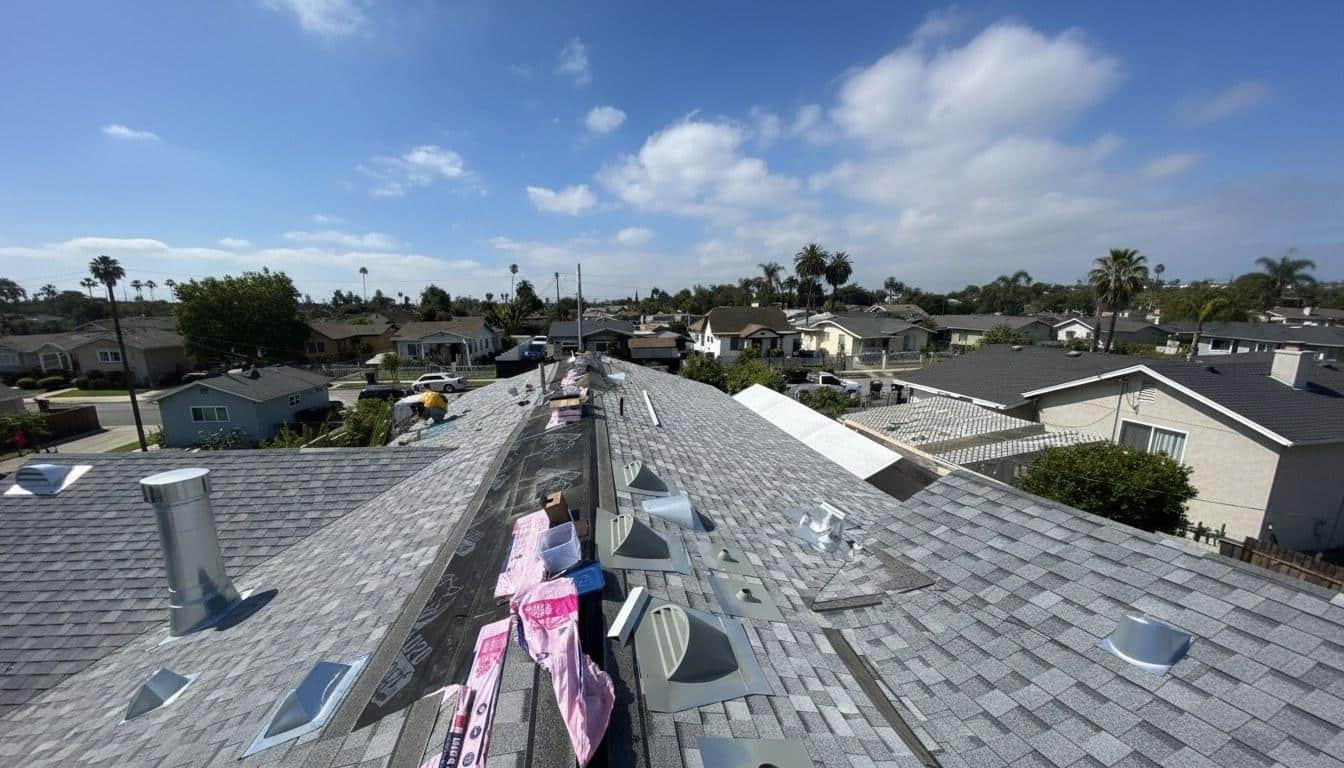
What Should You Do Each Season to Maintain a Tile Roof?
A tile roof needs attention in every season, not just after a storm. The tasks shift with California’s climate calendar — pre-fire-season prep in late spring, storm-readiness in fall, and damage assessment after winter rains.
Spring (March – May)
- Post-winter inspection: Walk the perimeter and look up at the roof plane for any tiles that shifted during winter rains. Binoculars work well if you prefer to stay off the roof.
- Clear debris from valleys: Leaves and organic matter that collected over winter trap moisture and accelerate mortar decay in valleys and around penetrations.
- Check gutters and downspouts: Clear any blockages so spring rains drain freely. Standing water in gutters wicks back under eave tiles.
- Inspect flashing: Look at chimney base flashing, pipe boots, and skylight curbs for rust, separation, or cracked sealant.
Summer (June – August)
- Trim overhanging branches: Branches that touch the roof abrade tile glaze and deposit debris. Keep them at least 3 feet clear of the surface.
- Check ridge and hip mortar: Heat cycles dry out mortar fastest in summer. Look for white powder (efflorescence) or visible cracks along ridge caps.
- Inspect attic ventilation: Poor attic airflow traps heat that bakes the underlayment from below. Confirm soffit and ridge vents are unobstructed.
Fall (September – November)
- Pre-rain gutter cleaning: Complete a full gutter cleanout before the first storm of the season, typically October or November in Southern California.
- Re-seat any loose tiles: Address any tiles that shifted during summer wind events before rain arrives.
- Check attic for daylight: On a sunny day, go into the attic and look for pinpoints of light — each one is a gap where water can enter.
Winter (December – February)
- Post-storm walkthrough: After any significant rain event, inspect the attic for moisture stains or drips within 24 hours of the storm ending.
- Clear standing water: Flat or low-slope tile sections can pond water if drains clog. Clear them promptly to prevent seam stress.
- Document damage for insurance: Photograph any storm-related damage before making temporary repairs, so the record is clear for any insurance claim.
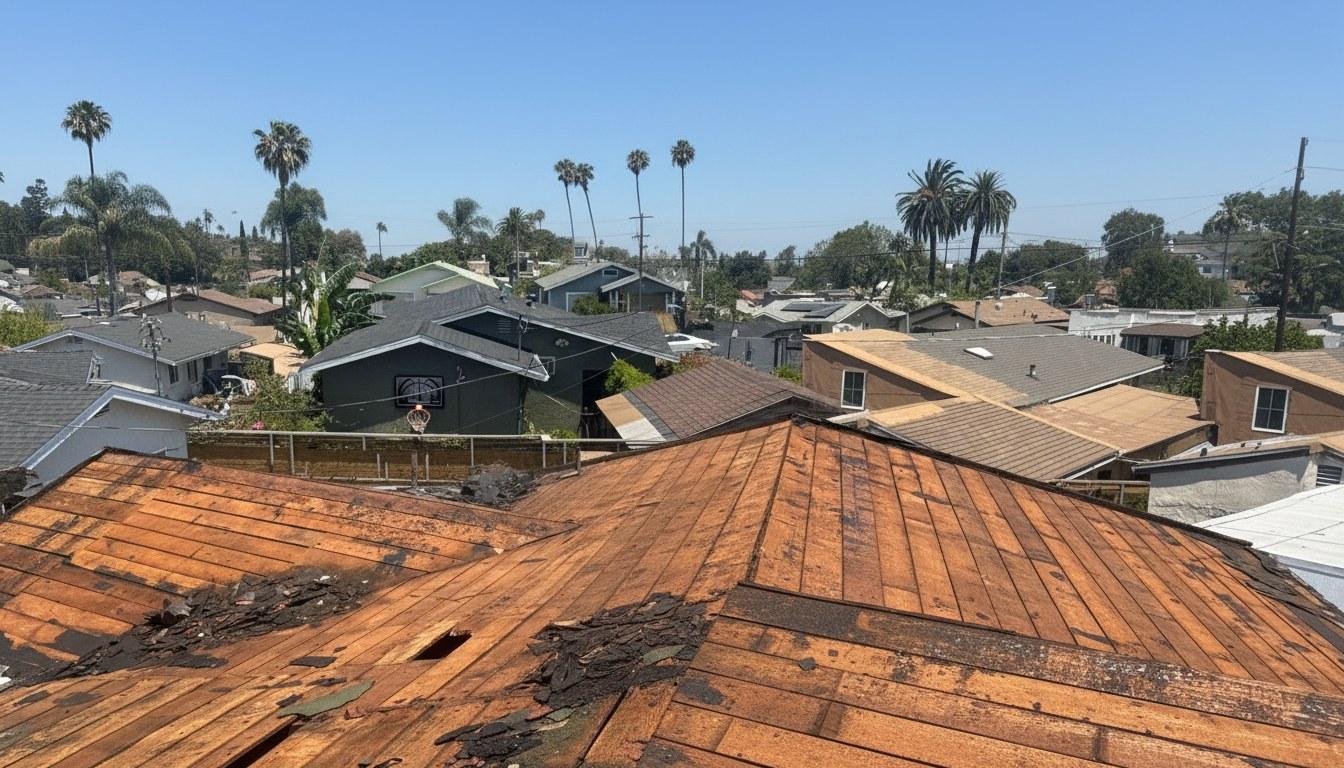
What Does a Professional Tile Roof Inspection Include?
A thorough professional tile roof inspection typically takes 60 to 90 minutes for an average single-story home and covers the tile field, underlayment condition, mortar, flashing, gutters, and attic space. The inspector should provide a written report with photos.
Here is what a qualified inspection covers:
- Tile-by-tile surface scan: The inspector walks the roof (using proper standoff tools to avoid cracking tiles) and checks for hairline cracks, chips, slipped tiles, and missing pieces.
- Underlayment assessment: Where tiles can be safely lifted, the technician checks the felt or synthetic underlayment for brittleness, tears, or moisture damage.
- Ridge and hip mortar: All mortar joints are probed for voids, crumbling, or separation. Repointing deteriorated mortar is one of the most common repairs on roofs over 15 years old.
- Flashing integrity: Every penetration — chimney, vents, pipes, skylights — is inspected for sealant failure and metal corrosion.
- Gutter and drainage check: Downspout flow, gutter slope, and end-cap condition are verified.
- Attic inspection: The technician checks for moisture staining, mold, insulation displacement, and ventilation adequacy from below the deck.
- Roof certification review: If you are buying or selling a home, a roof certification documents the system’s remaining useful life — typically a 2-year or 5-year certification depending on condition.
Across our service calls in Southern California, we find that roughly 60% of tile roofs over 25 years old need underlayment work — even when the tile surface looks good from the ground. The underlayment is the last line of defense before the deck, and it degrades silently.
Roughly 60% of tile roofs over 25 years old need underlayment work even when the tile surface looks good from the ground.
| Maintenance Task | Recommended Frequency | DIY or Pro? |
|---|---|---|
| Gutter cleaning and flush | 2x per year (spring and fall) | DIY or Pro |
| Debris clearing from valleys | 2x per year | DIY (ground level) / Pro (on-roof) |
| Visual tile inspection from ground | After every major wind or rain event | DIY |
| Full professional roof inspection | Every 12 to 18 months | Pro |
| Ridge and hip mortar repointing | Every 7 to 10 years (or as needed) | Pro |
| Flashing sealant renewal | Every 5 to 7 years | Pro |
| Underlayment replacement | Every 20 to 30 years (condition-based) | Pro |
| Attic ventilation check | Annually | DIY or Pro |
| Trim overhanging branches | Annually or as needed | DIY or Arborist |
| Roof certification inspection | At sale or every 5 years | Pro |
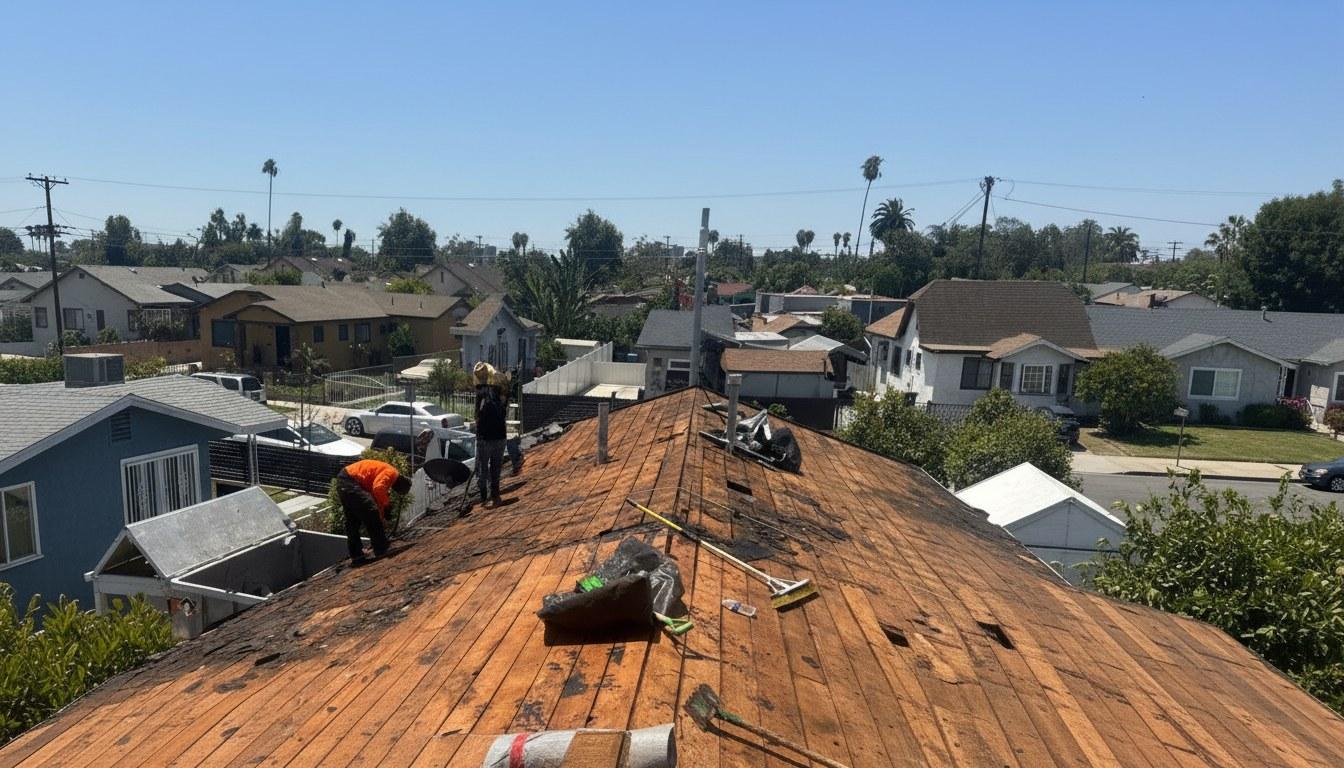
What Warning Signs Should You Watch for Between Services?
Most tile roof failures give clear warning signs weeks or months before a major leak develops. Catching these early keeps repair costs in the hundreds rather than the thousands.
- Water stains on interior ceilings: Yellow or brown rings on drywall directly below the roof are the clearest sign of active infiltration. Do not wait for a second stain to appear.
- Cracked or broken tiles: Even one cracked tile exposes the underlayment to UV and moisture. Cracked tiles are visible from the ground with binoculars on a clear day.
- Slipped or raised tiles: Tiles that have shifted out of alignment leave gaps where wind-driven rain can enter. This is especially common after Santa Ana wind events.
- White streaks or powder on tile surfaces: Efflorescence (mineral deposits leaching out of concrete tiles) signals moisture is moving through the tile body — often a sign the tile has absorbed more water than it should.
- Crumbling or missing ridge mortar: The mortar bed along ridge caps is the most exposed mortar on the roof. When it crumbles, ridge tiles can shift or blow off entirely.
- Moss or algae growth: Green or black biological growth retains moisture against the tile surface and accelerates surface degradation. It is most common on north-facing slopes with limited sun exposure.
- Granules or debris in gutters: While granule loss is more associated with asphalt shingles, tile debris or broken mortar fragments in gutters indicate active surface deterioration.
- Higher energy bills without a clear cause: A compromised attic seal from a failing roof can allow conditioned air to escape, raising cooling costs noticeably during summer months.
How Much Does Tile Roof Maintenance and Repair Cost in California?
Tile roof maintenance and repair costs in California vary widely based on scope, tile type, roof pitch, and access. Routine professional inspections typically range from $150 to $400 in this regional market. Individual tile replacements generally run $200 to $500 per tile when factoring in labor and material matching.
Larger scope work moves costs significantly higher. Ridge mortar repointing on a standard single-story home typically runs $800 to $2,500 depending on linear footage. Full underlayment replacement — the most substantial maintenance project a tile roof requires — generally ranges from $8,000 to $25,000 or more in the Southern California market, depending on roof size, tile type, and whether tiles can be reused. The U.S. Department of Energy notes that a well-maintained roof system also contributes to home energy efficiency, which is worth factoring into the long-term value calculation.
Key factors that move costs up or down include:
- Roof pitch: Steeper slopes require more safety equipment and take longer — costs rise noticeably above a 6:12 pitch.
- Tile type: Clay tile is more fragile to walk on than concrete tile, increasing labor time. Matching discontinued tile profiles can also add cost.
- Accessibility: Two-story homes, tight side yards, and landscaping that limits ladder placement all increase labor time.
- Scope of underlayment damage: Partial underlayment replacement costs less than a full tear-off and re-lay.
- Permit requirements: California’s Title 24 building energy standards may apply to re-roofing projects, and local jurisdictions vary on permit thresholds. Always confirm with your contractor before work begins.
For an accurate number on your specific roof, request a written quote before any work begins. Costs vary enough by project that a range without a site inspection is not reliable guidance.
How Do You Choose a Qualified Tile Roofing Contractor?
In California, any contractor performing roofing work for compensation must hold a valid C-39 Roofing license issued by the California Contractors State License Board (CSLB). Verifying this license takes under two minutes at the CSLB’s online lookup tool and protects you from uninsured or unlicensed operators.
You can verify any contractor’s license status directly at the CSLB website. Beyond the license, look for these qualifications when hiring for tile roof maintenance or repair:
- Tile-specific experience: Tile roofing requires different walking techniques, mortar skills, and underlayment knowledge than shingle work. Ask how many tile roofs the contractor services per year.
- Written, itemized estimate: A professional contractor provides a scope of work in writing before any money changes hands. Verbal estimates are a red flag.
- Proof of insurance: Request a certificate of liability insurance and workers’ compensation coverage. If a worker is injured on your property without coverage, you may be liable.
- Local references: Ask for references from homeowners in your county or region who had similar tile work performed within the last two years.
- Roof certification capability: If you need a roof certification for a real estate transaction, confirm the contractor can issue one and that it meets your lender or escrow requirements.
- No high-pressure tactics: Legitimate roofing contractors do not pressure homeowners into same-day decisions. Get at least two written estimates for any project over $1,000.
Searching for a roofer near you or a roofing company in Los Angeles County or surrounding areas? Prioritize contractors who specialize in residential roofing and can demonstrate tile-specific work history. Generic handyman services are not a substitute for a licensed C-39 contractor on tile work.
Schedule Your Tile Roof Maintenance Today
A tile roof that is inspected and maintained on schedule can realistically reach 40 to 50 years of service life. One that is ignored typically needs major structural repairs — or full replacement — within 20 to 25 years. The math strongly favors consistent maintenance.
A tile roof that is inspected and maintained on schedule can realistically reach 40 to 50 years of service life — one that is ignored typically needs major repairs within 20 to 25 years.
Roof Replacement Inc provides professional tile roof inspections, maintenance, repair, and roof certifications for homeowners across Southern California. Whether you need a routine inspection, ridge repointing, underlayment assessment, or help after a Santa Ana wind event, the team is ready to give you a clear, written picture of your roof’s condition — no pressure, no guesswork.
Call (213) 364-3979 to schedule your tile roof inspection or request a written quote. Licensed by the California Contractors State License Board (CSLB) and serving homeowners across Southern California.
Explore our full range of roofing services across Southern California.
Frequently Asked Questions
How often should I have my tile roof inspected in California?
Most roofing professionals recommend a professional tile roof inspection every 12 to 18 months in Southern California. The region's heat cycles, Santa Ana winds, and seasonal rains create enough wear that annual checks catch small problems before they become expensive repairs. After any major wind event or storm, a quick visual inspection from the ground is also a good idea.
Can I walk on my tile roof to inspect it myself?
Walking on a tile roof without proper training risks cracking tiles, which are expensive to replace and can expose the underlayment to moisture. For DIY checks, use binoculars from the ground or a ladder at the eave level to look across the roof plane. Leave any on-roof inspection or repair work to a licensed contractor who knows how to distribute weight safely on tile systems.
How do I know if my tile roof needs underlayment replacement?
Signs that underlayment may be failing include interior ceiling stains after rain, tiles that feel loose or rock when touched (by a pro), or a roof that is 20 or more years old and has never had underlayment work. The only reliable way to assess underlayment condition is a professional inspection where tiles are carefully lifted to examine the felt or synthetic layer beneath. Roof Replacement Inc can assess this during a standard inspection — call (213) 364-3979.
What is a roof certification and do I need one for a California home sale?
A roof certification is a written document from a licensed roofing contractor stating the roof's condition and estimated remaining useful life, typically covering a 2-year or 5-year period. Many California lenders and buyers require one during escrow. If your tile roof is older or shows visible wear, getting an inspection and any needed repairs done before listing can prevent last-minute deal delays.
How much does it cost to repair a cracked tile roof tile in California?
In the Southern California market, replacing one or a few individual tiles typically ranges from $200 to $500 per tile, depending on tile type, profile availability, and roof access. Matching discontinued tile profiles can push costs higher. Mortar repointing along ridge and hip lines generally runs $800 to $2,500 for a standard home. For an accurate number on your specific roof, request a written quote from a licensed C-39 roofing contractor before any work begins.
Related Articles




What Our Clients Say











Roof Replacement Inc. offers professional, high-quality work, guaranteed (call for details); ensuring all clients projects meet all code and design requirements. We are dedicated to exceptional customer service and will strive to ensure you with the highest quality roofing services. Roof Replacement Inc. offers lifetime warranty (call for details) on all of our workmanship to ensure the quality of our work. With over 40 years of combined experience within the roofing and construction industry, Roof Replacement Inc. has grown and developed in all areas of roofing construction, including roof inspections. As a leading residential and commercial roofing company in LA, we have hundreds of references from previous clients, so rest assured, that your roofing job will be done right the first time. Replacing an old roof can help add curb appeal and will increase the perceived value of your home. First impressions are vital when selling your home, especially when your roof takes up more than half of the exterior of your residence or business. Not only is the return of investment on a new roof attractive for potential buyers, but can be as beneficial as remodeling the kitchen or bathrooms within your residence.

