

A homeowner in the San Fernando Valley had reached the end of their roof’s service life. The shingles were shedding granules at an accelerating rate, the fascia boards at the eave edge had begun to rot, and at least three plumbing vent jacks were either cracked or sitting on failed seals. Rather than patch individual problem areas, the decision was made to do a complete tear-off and reroof, new shingles, rebuilt eave framing, fresh vent jacks, and properly integrated chimney flashing from the ridge down.
Roof Replacement Inc handled the full scope, and the photos below walk through what we found and how we addressed it.
Project Gallery
What Did the Eave Edge Look Like Before Work Started?
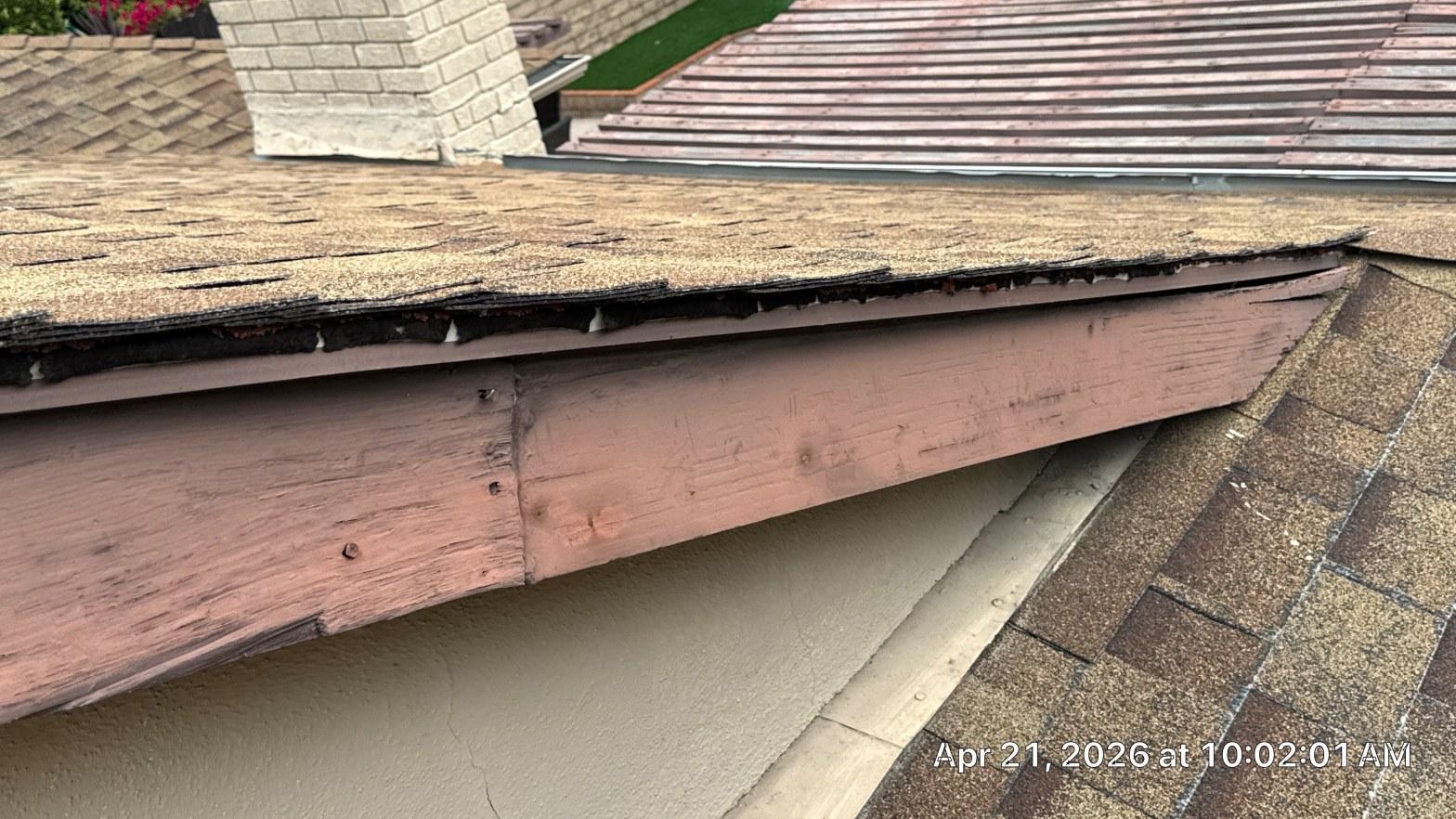
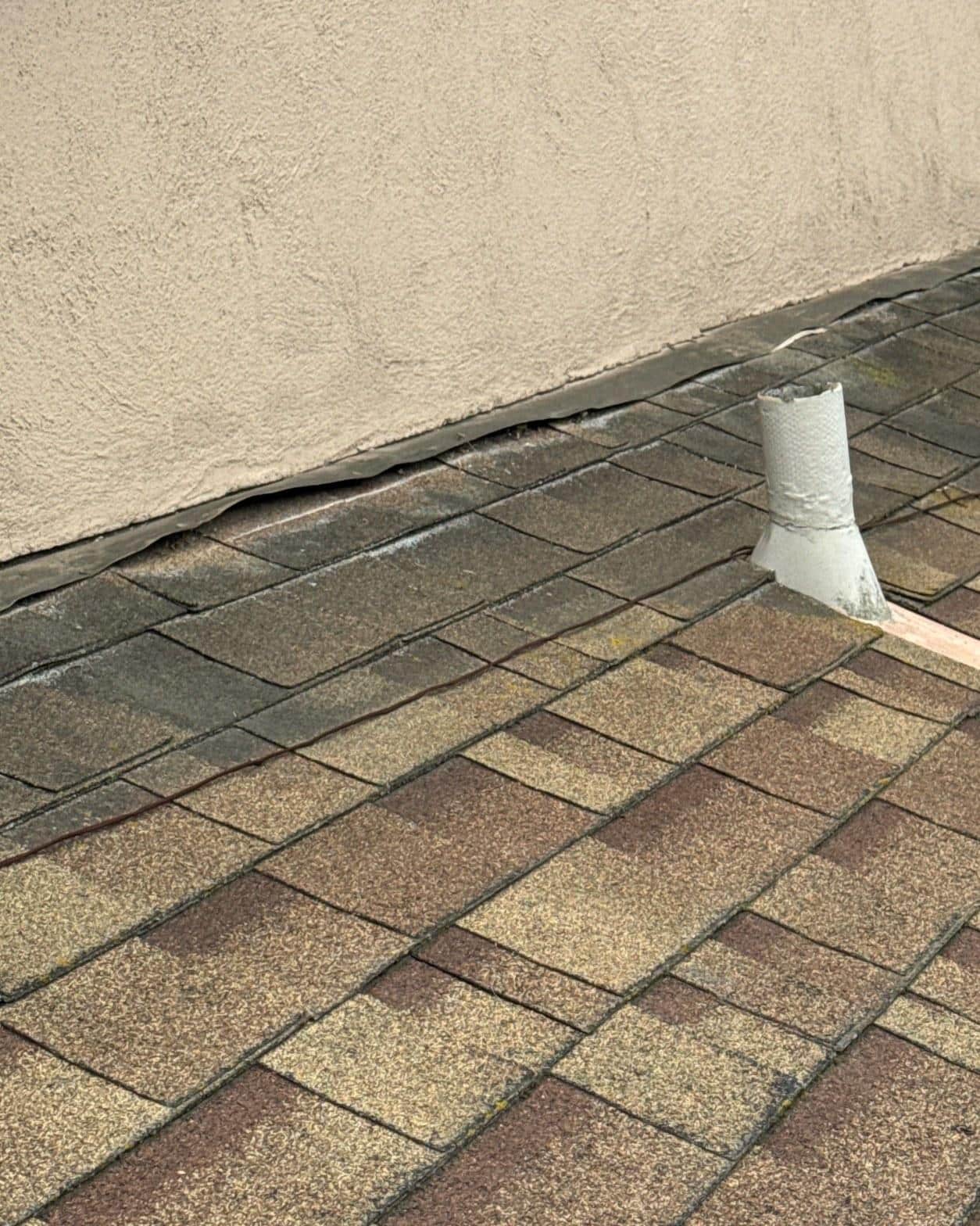
The fascia and eave framing at the lower edge of the roof had deteriorated to the point where the shingle termination was no longer supported. As the photo below shows, multiple shingle layers had curled away from the drip edge, exposing the raw wood decking beneath. The fascia board itself showed deep surface checking and discoloration consistent with years of moisture cycling.
When asphalt shingles lose their adhesive strip integrity, typically after 20 to 25 years of UV exposure in Southern California’s high-sun climate, the tab ends lift and curl rather than lying flat. Once that happens, wind-driven rain works its way under the shingles at the eave, which is exactly the pathway that rots fascia boards. On this job, we removed the deteriorated fascia entirely, replaced it with new dimensional lumber, and installed fresh metal drip edge before laying any underlayment.
What Does Severe Granule Loss Actually Look Like Up Close?
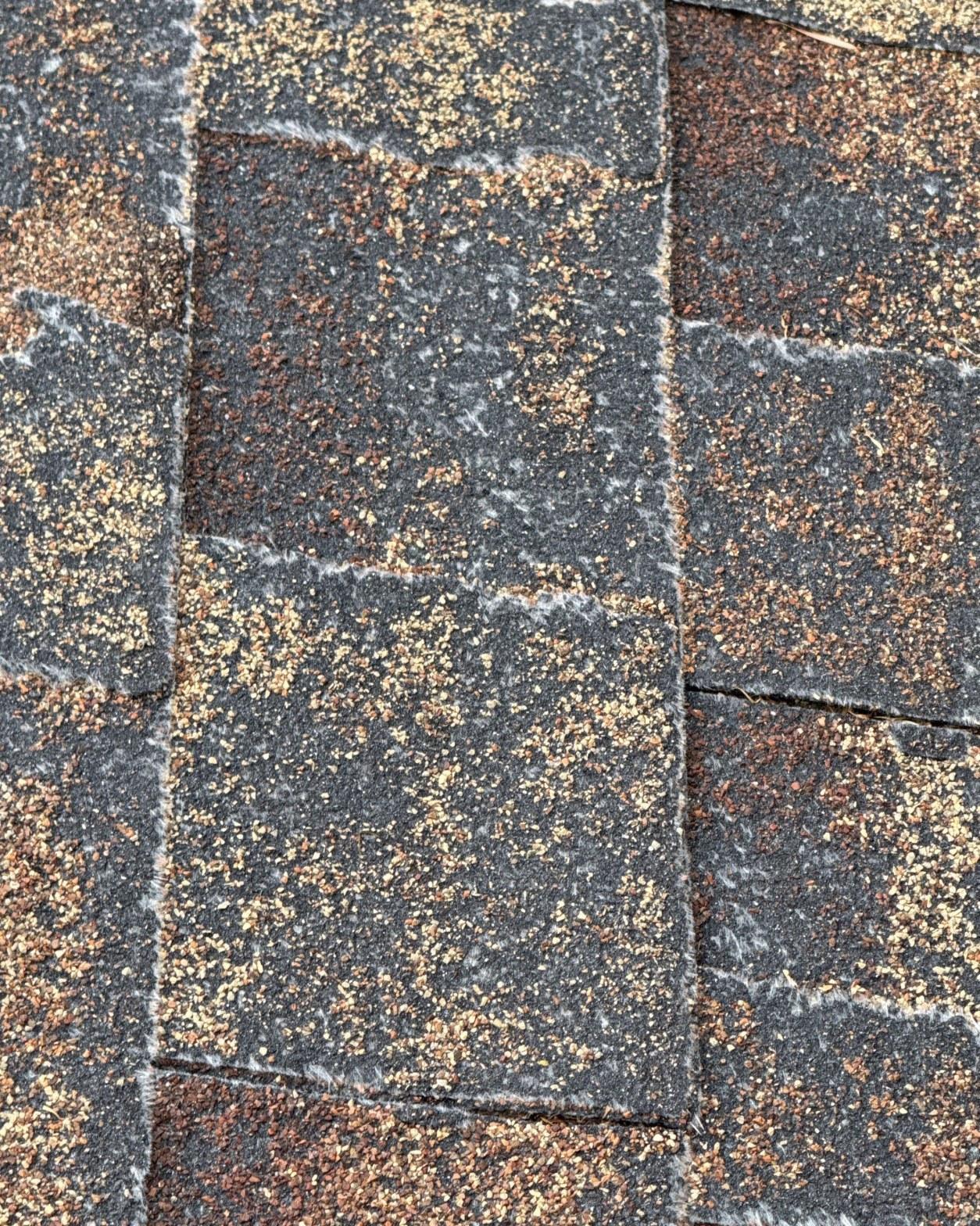
When granules wear off an asphalt shingle, the dark fiberglass mat below is exposed, and UV degradation accelerates sharply once that protective layer is gone. The close-up photo here shows shingles that have shed most of their surface aggregate, leaving the mat visible across large patches. White oxidation streaks run along the tab joints, a sign that the sealant strips had already failed.
Industry guidance from the Asphalt Roofing Manufacturers Association notes that once granule loss becomes widespread rather than isolated, the shingles can no longer reflect enough solar energy to stay within their designed temperature range. In Southern California, summer roof surface temperatures regularly exceed 150°F on dark shingles, which compounds the degradation cycle quickly. A roof showing this level of wear across the full field is past the point where spot repairs make economic sense, a full replacement protects the decking underneath and resets the performance clock.
On this project, our crew found that the decking beneath the worn field was structurally sound once the old shingles and felt were stripped away, so no sheathing replacement was needed before the new underlayment went down.
How Were the Vent Jacks Handled?
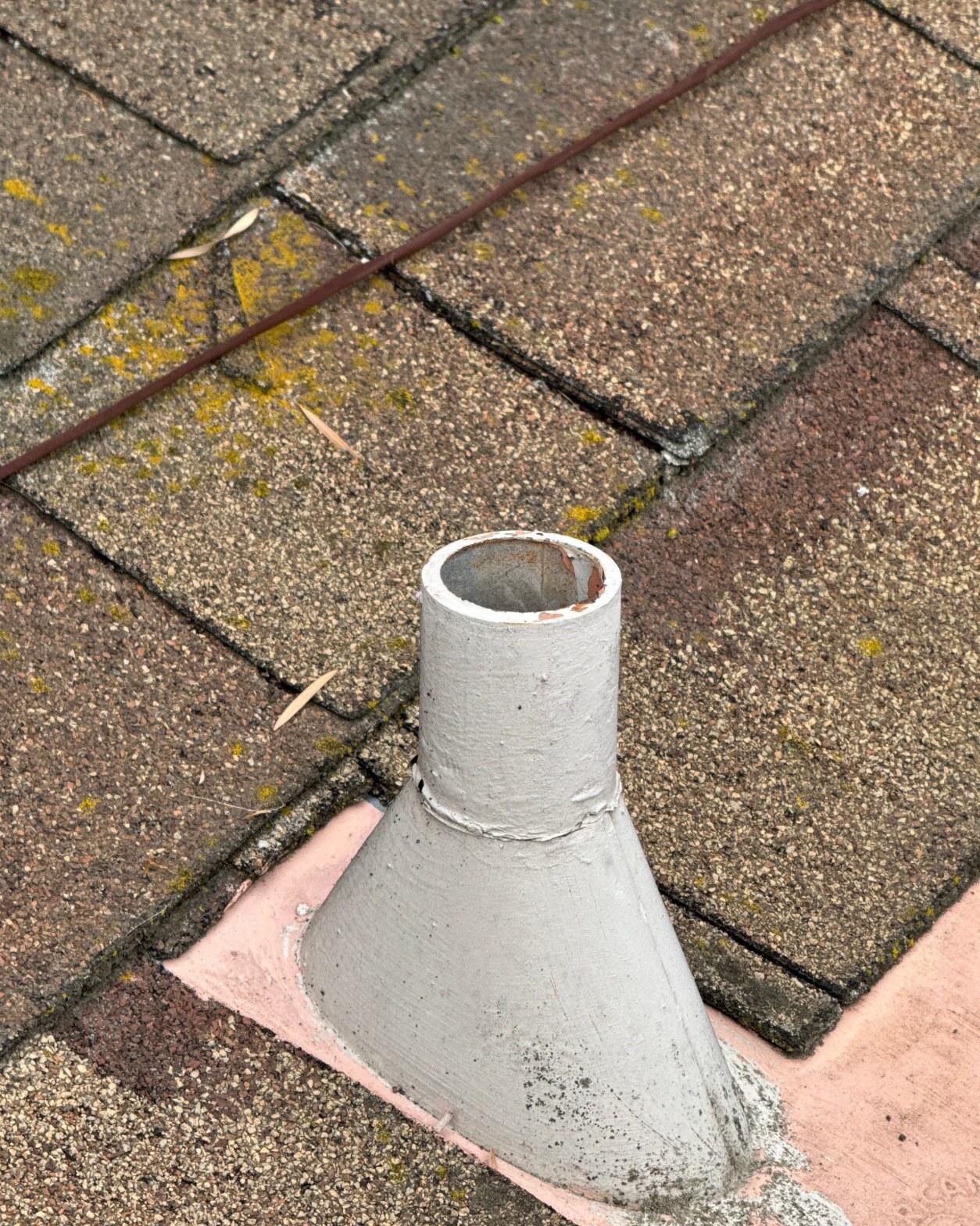
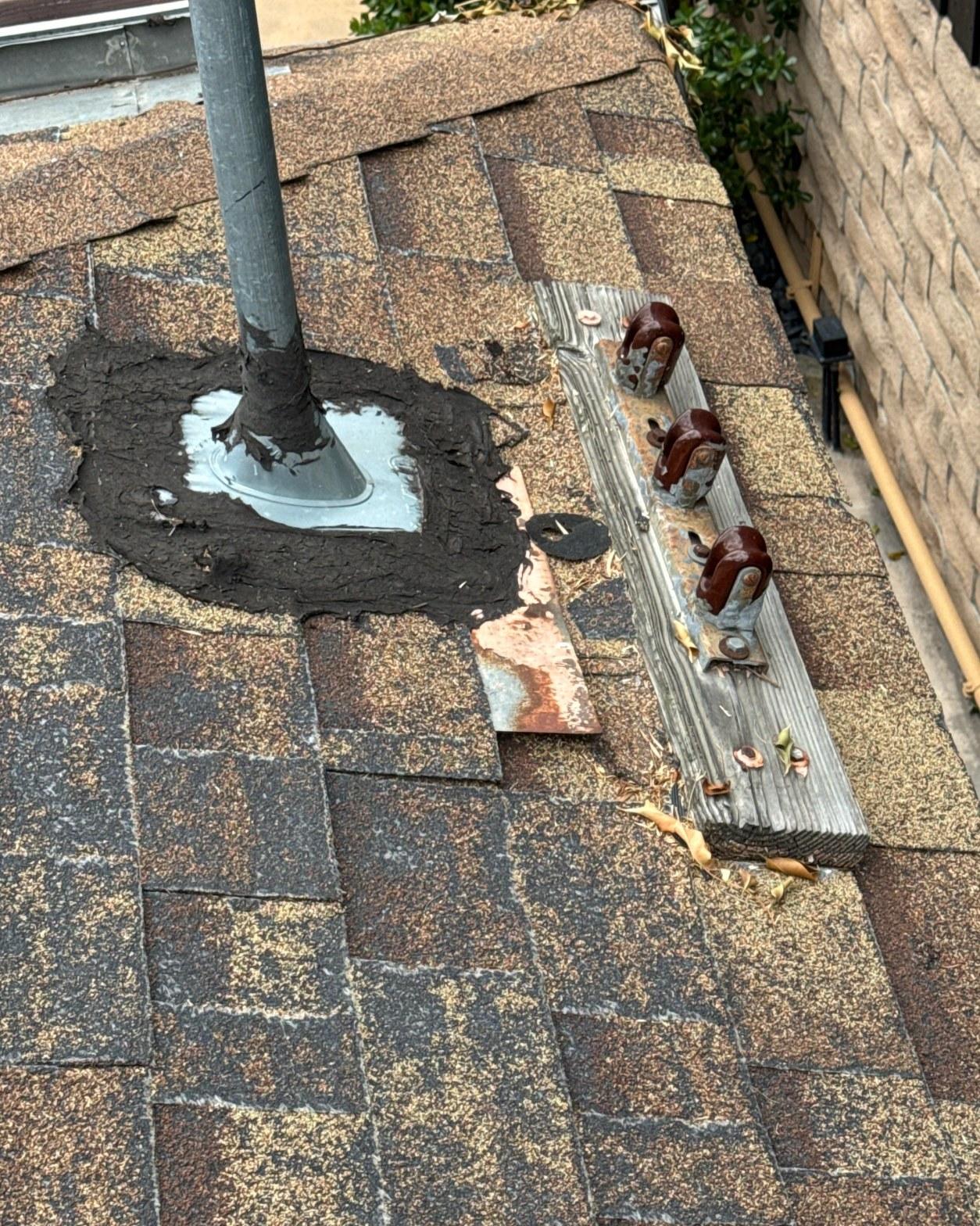
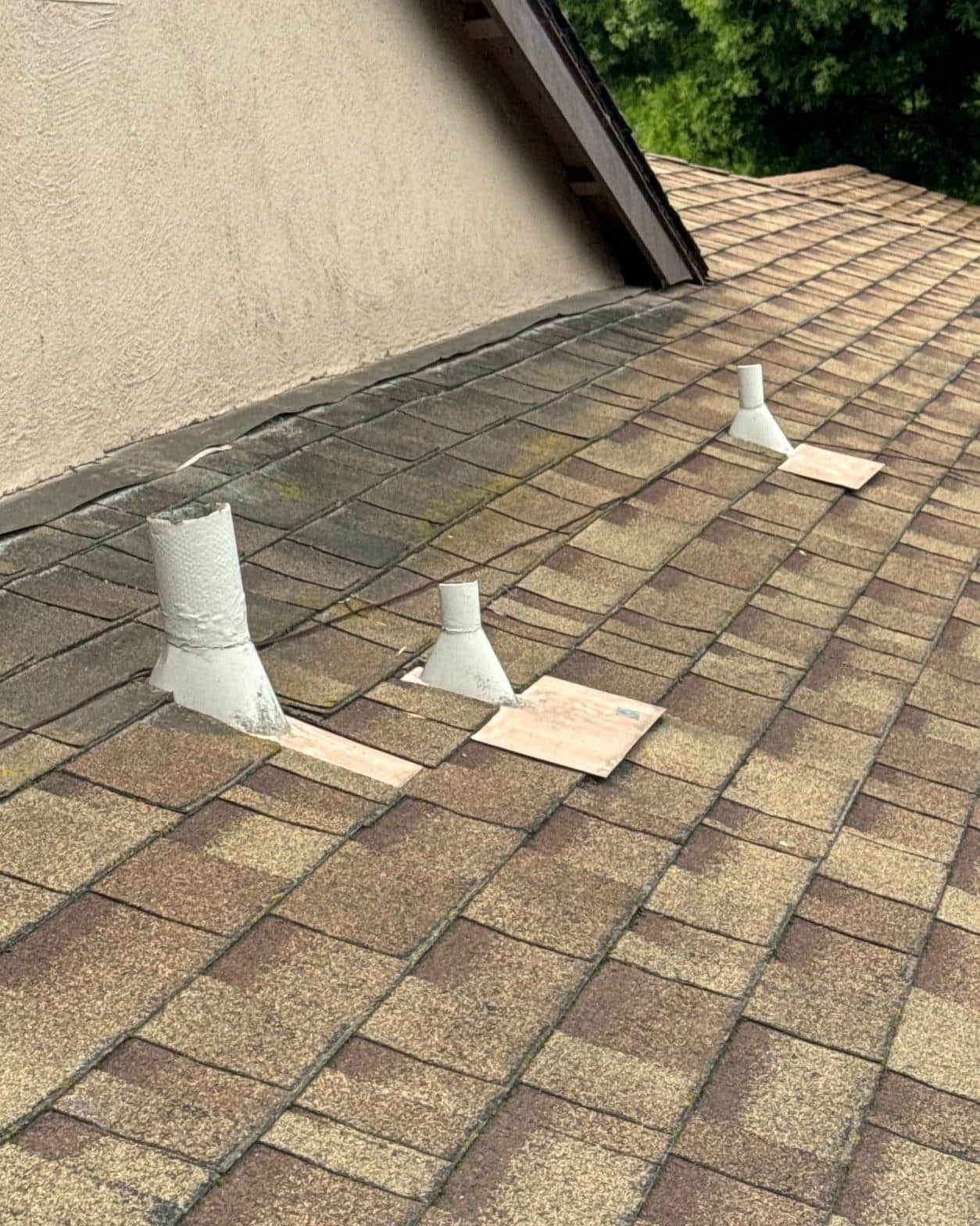
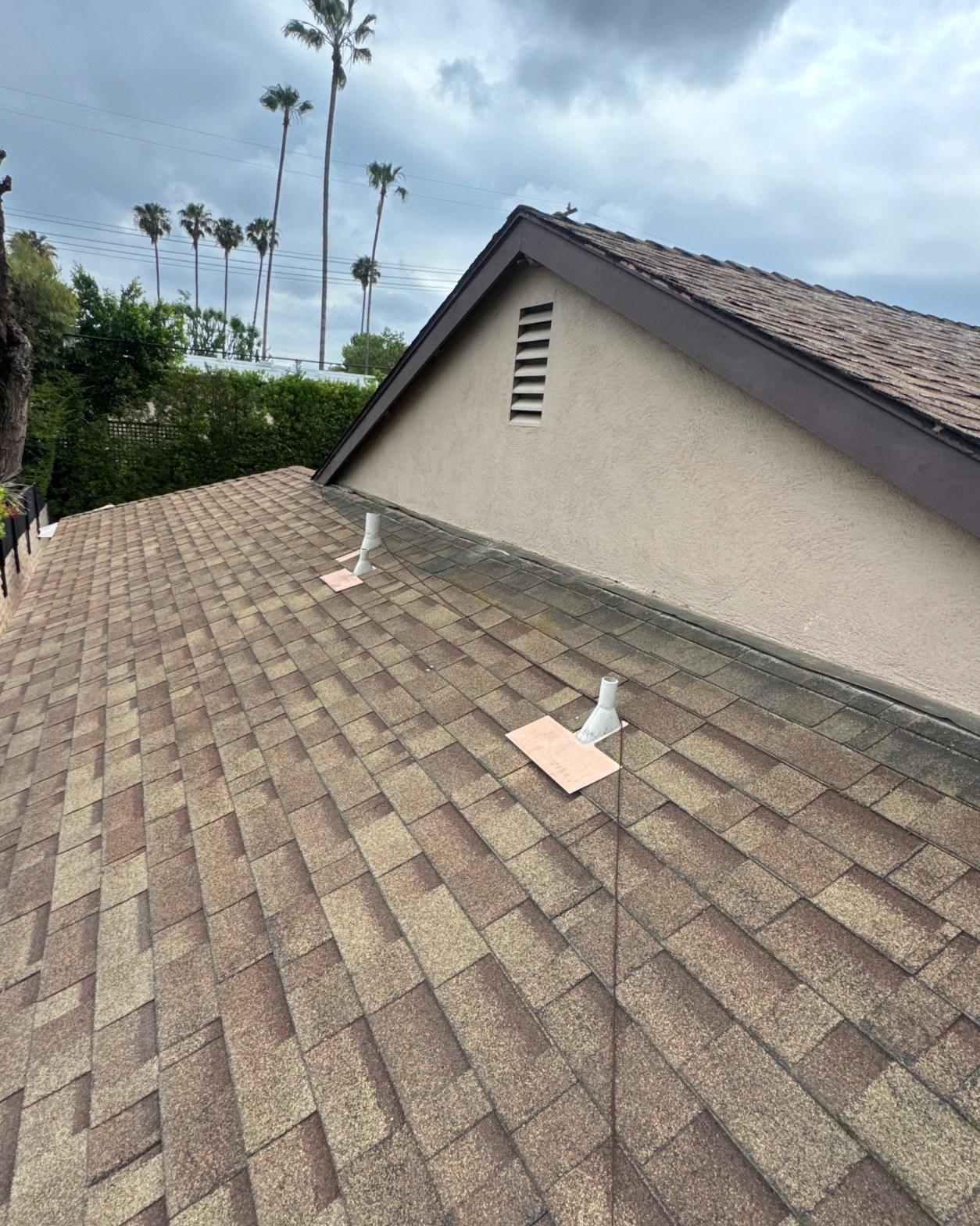
Every plumbing vent jack on this roof required removal, reseating, and re-integration with the new shingle courses. The photo shows one of the three vent boots in detail: the painted lead collar had cracked at the base where it meets the shingle field, and roofing cement had been applied at some point as a temporary fix, but the seal had broken down.
Vent jacks are among the most common leak sources on older shingle roofs because the rubber or lead boot ages at a different rate than the shingles around it. Licensed by the California Contractors State License Board (CSLB), Roof Replacement Inc pulled all three boots, cleared the old caulk and cement, and set new neoprene-collar vent jacks into the fresh shingle field with properly shingled-over flanges, no lap sealant as the primary defense, just correct integration.
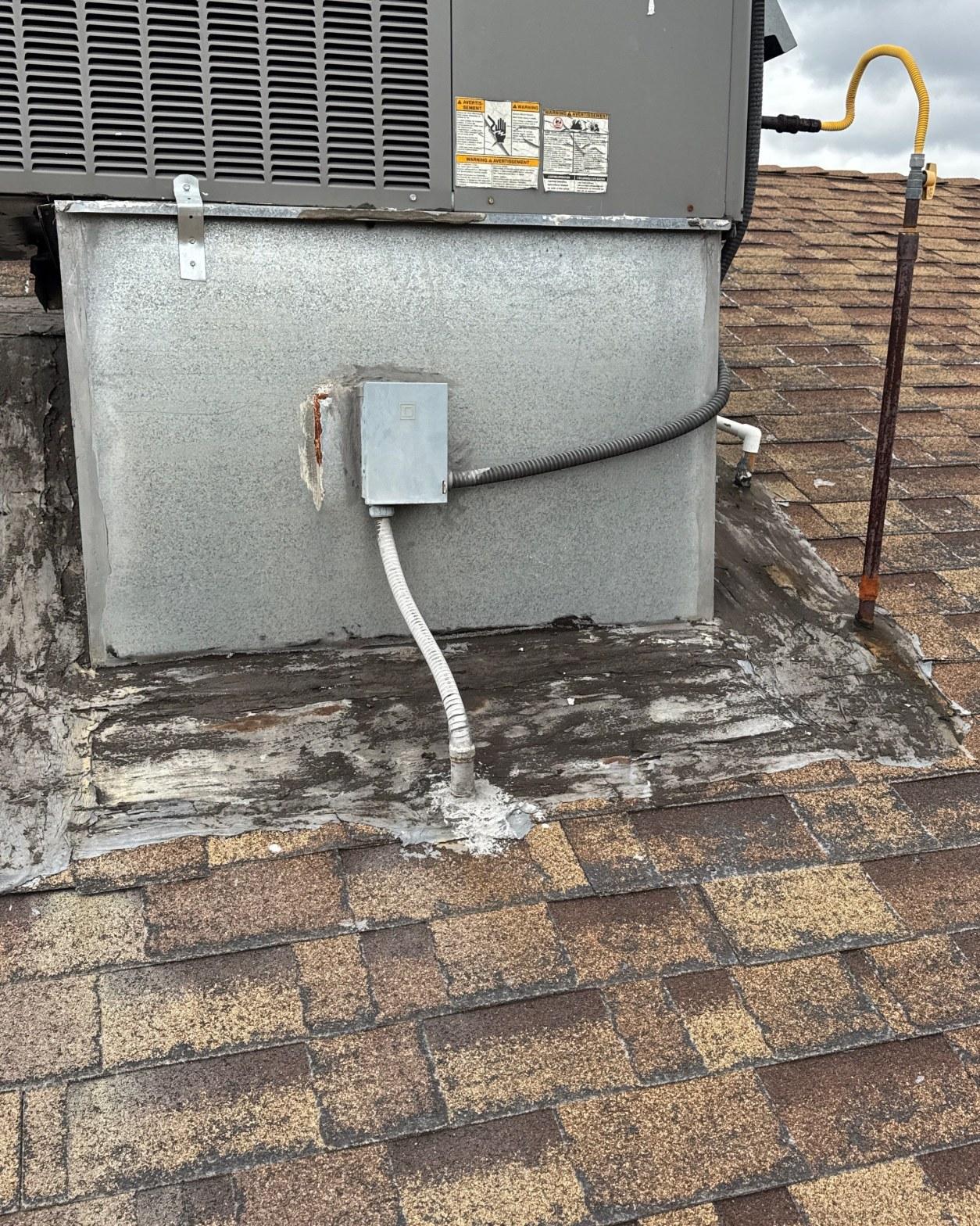
The gallery photos at the bottom of this post show the condition of the wall flashing along the parapet as well as the HVAC curb area, both of which received the same attention before final shingles were laid.
The Finished Roof
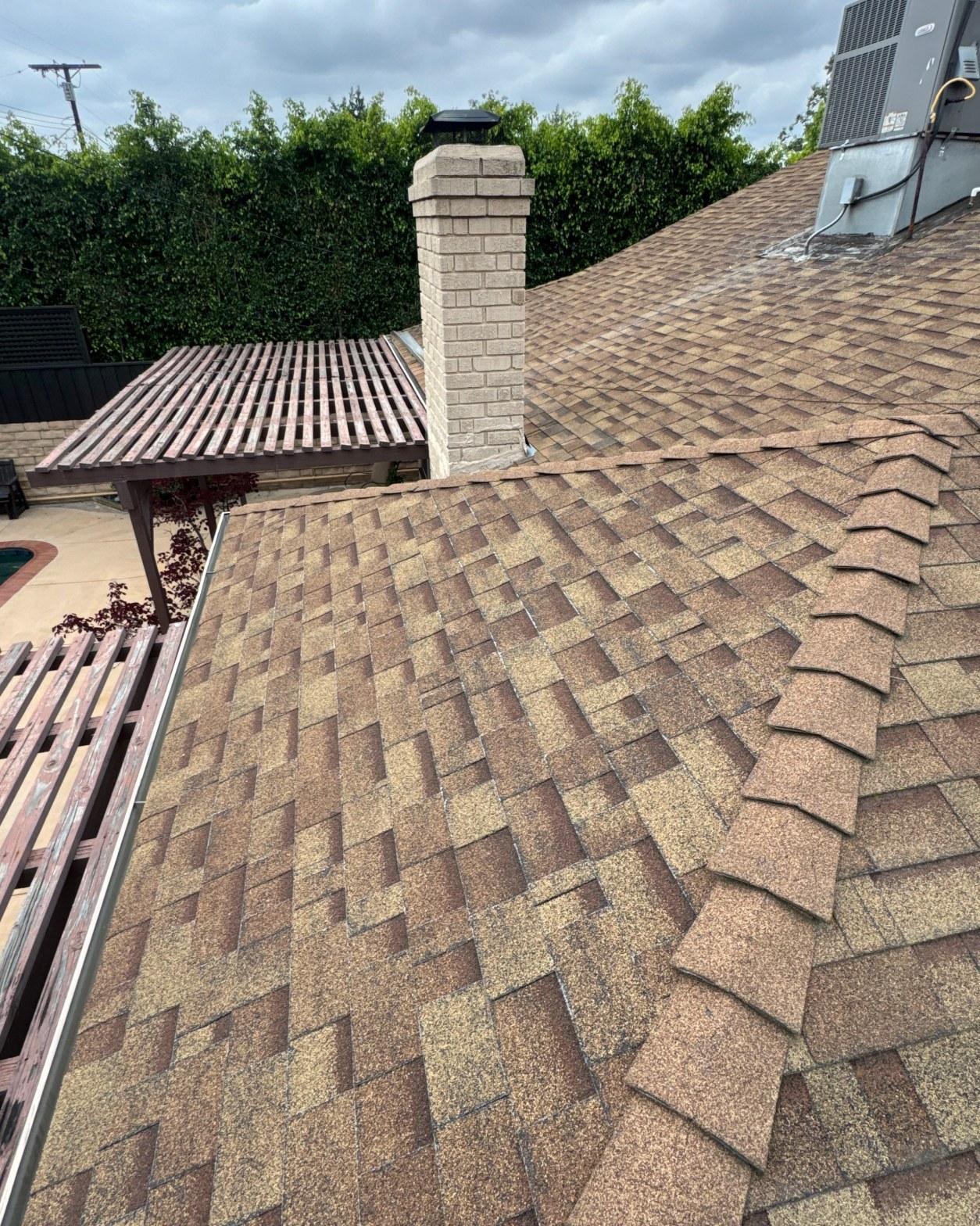
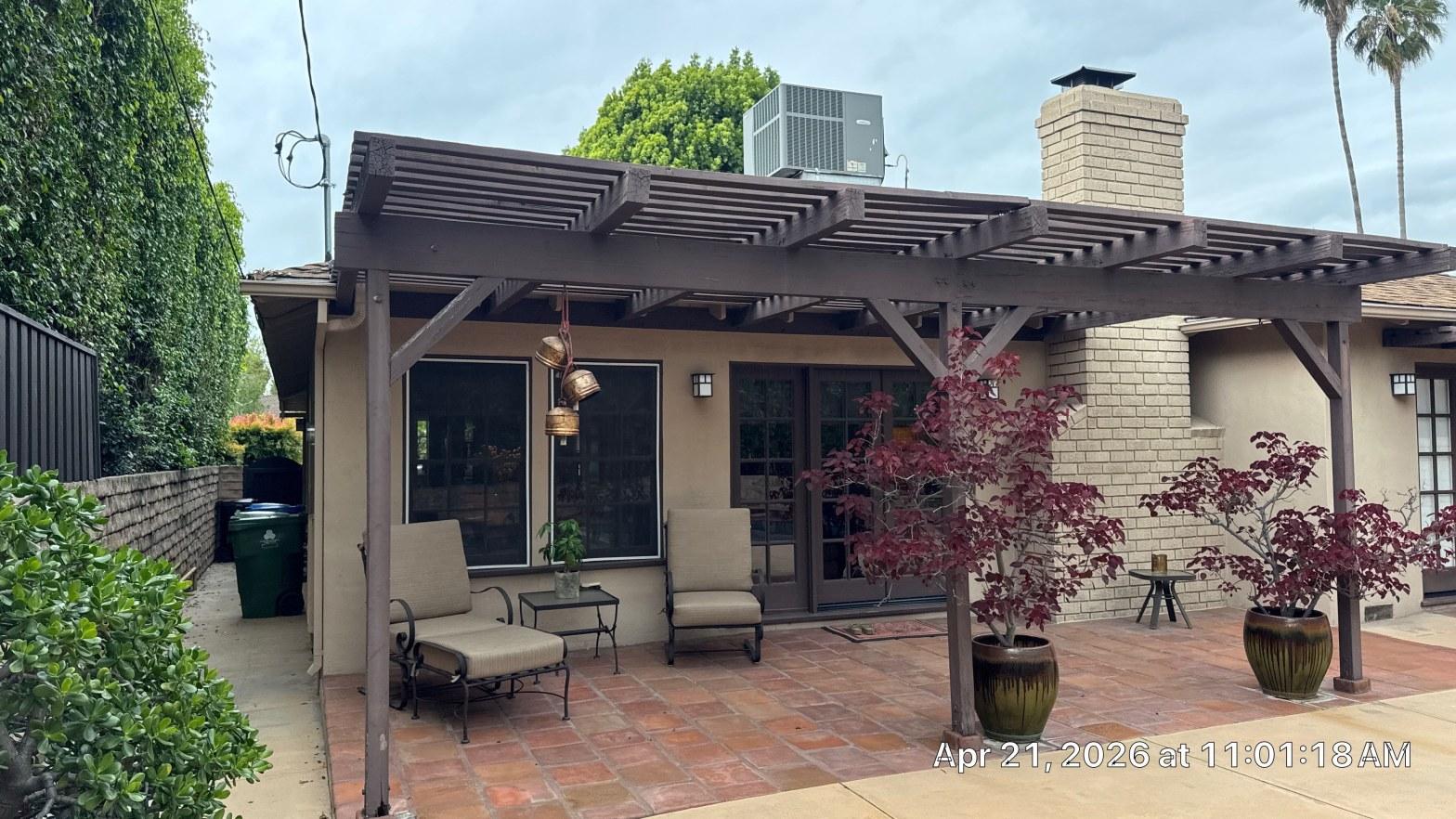
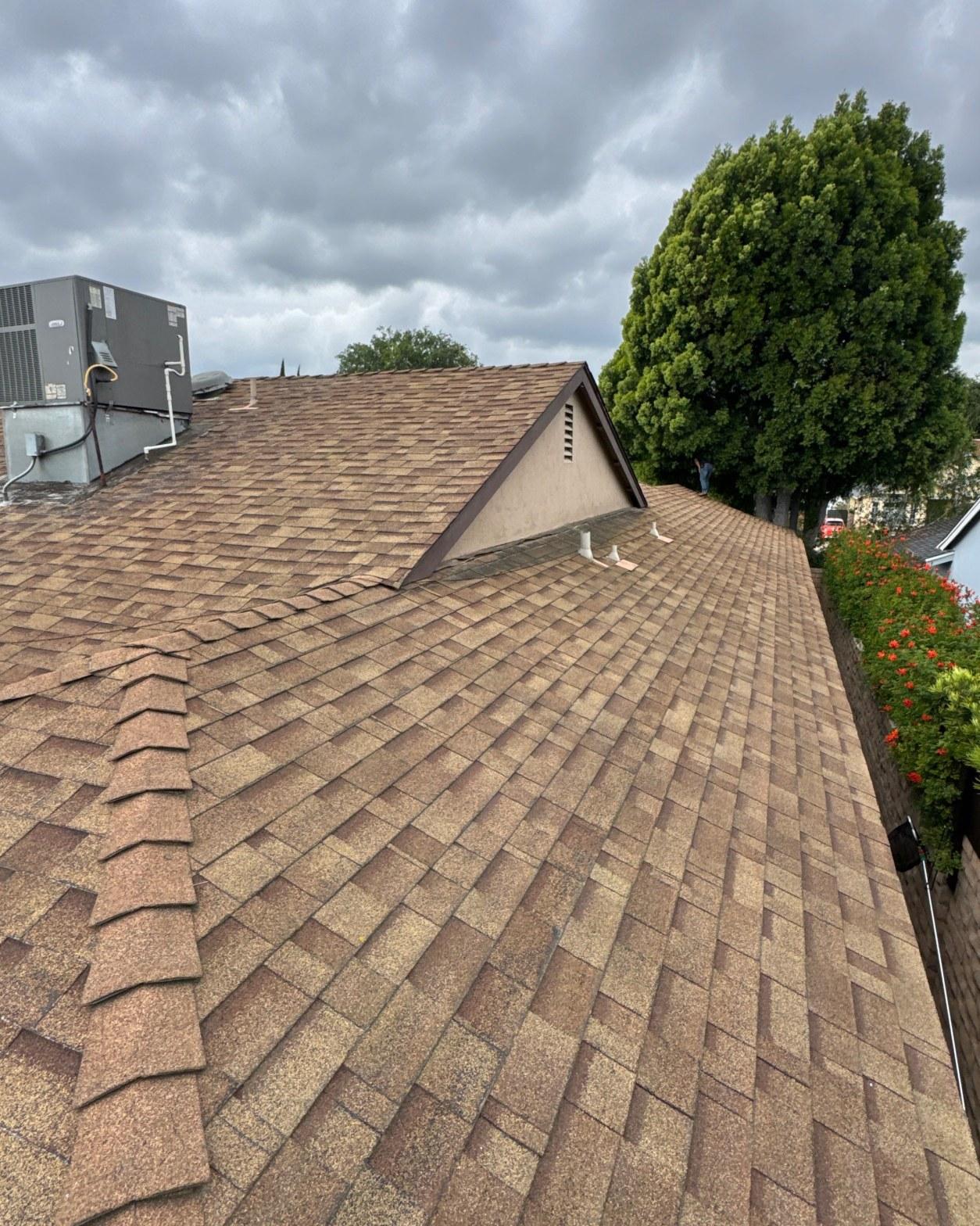
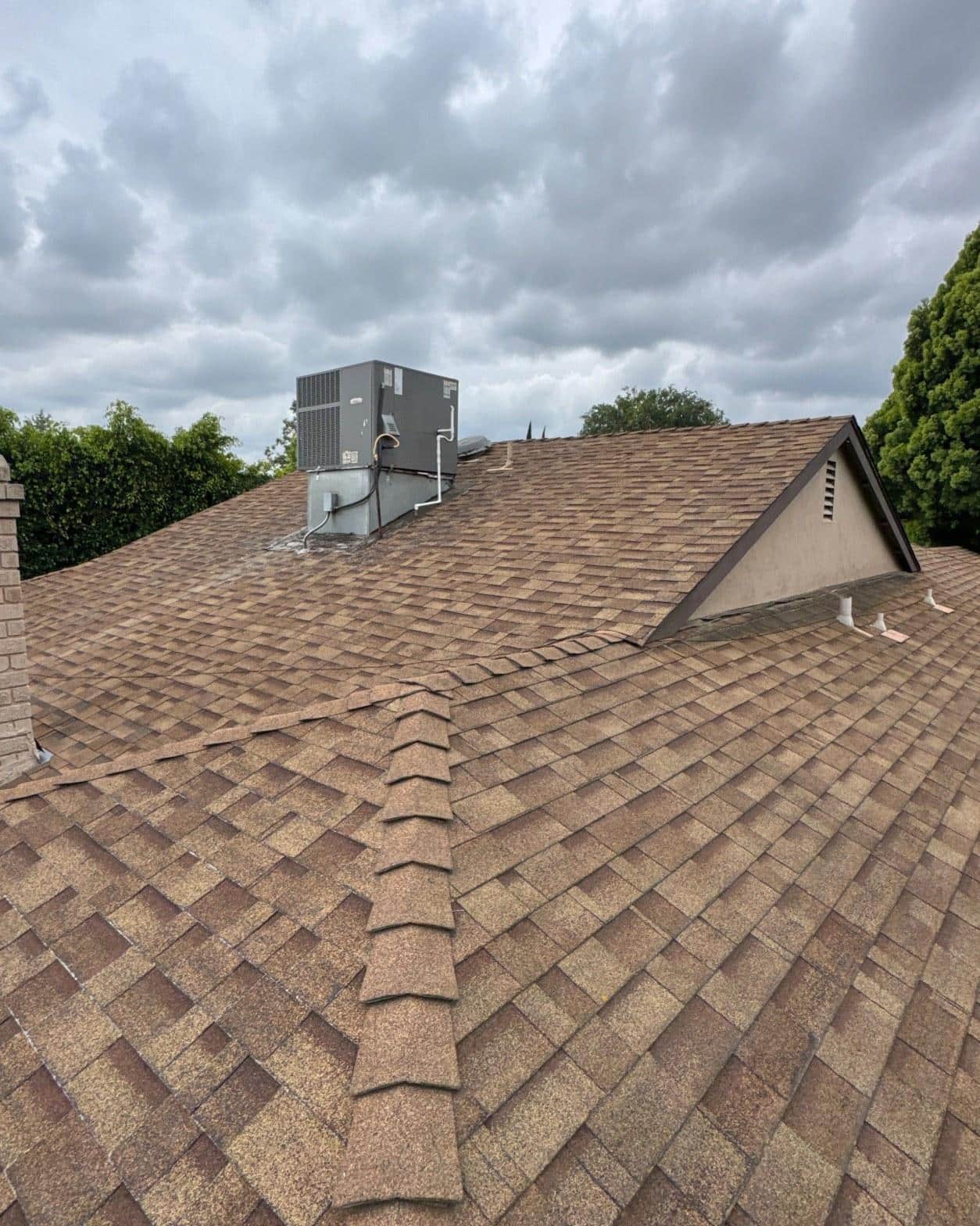
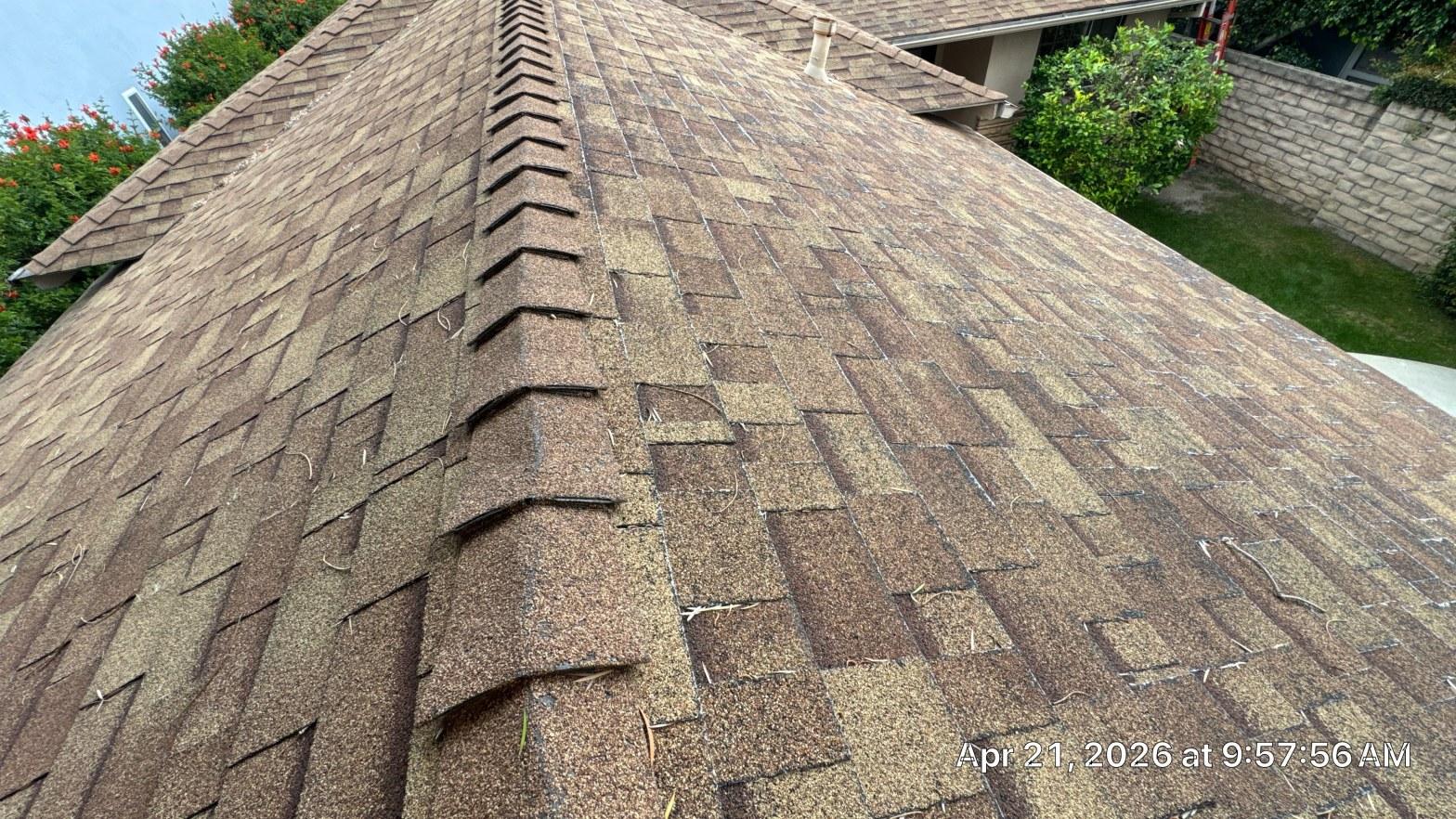
The completed reroof shows a full field of new architectural-laminate shingles in a warm sand-and-brown blend, running clean from ridge to eave with correctly staggered joints. The chimney, which had been surrounded by failing step flashing, is now properly counter-flashed, and the new drip edge carries water cleanly into the gutter rather than letting it wick behind the fascia.
Architectural (dimensional) laminate shingles carry a heavier per-square weight than three-tab products, typically 240 to 320 pounds per square, and their layered profile helps shed water more aggressively at the tab joints. As of 2026, most major shingle manufacturers offer products meeting California’s Title 24 building energy standards for cool roofs when specified in lighter colorways; the blend selected for this home reflects enough solar energy to fall within the moderate-performance tier without sacrificing the warm visual character the homeowner wanted.
The result is a roof that closes every leak pathway that had been building over the past two-plus decades: the eave edge is framed solid, the vent jacks are sealed correctly, the chimney flashing is mechanically sound, and the shingle field starts fresh with full granule coverage.
Get a Quote for Your Reroofing Project
If your shingles are shedding granules, your fascia feels soft at the corners, or you’ve had a roofer tell you that spot repairs are no longer keeping up, a full tear-off and reroof may be the straightforward path forward. Contact Roof Replacement Inc to schedule an inspection and written scope of work before any labor begins.


