

When a homeowner in the San Fernando Valley scheduled a roof inspection, the presenting concern was straightforward: the asphalt shingle roof beneath their rooftop solar array was aging and showing visible stress. What the inspection confirmed was a pattern of problems that made a full replacement the only responsible path forward. This case study walks through what we found, what we did, and why the sequencing of the work mattered.
What Did the Roof Inspection Reveal?
The inspection identified at least three separate failure points across the shingle surface, the chimney base, and a pipe boot penetration. Taken individually, any one of these could be repaired. Together, on a roof that was already supporting the added structural load of a solar array, they signaled that spot repairs would be short-lived.
Project Gallery
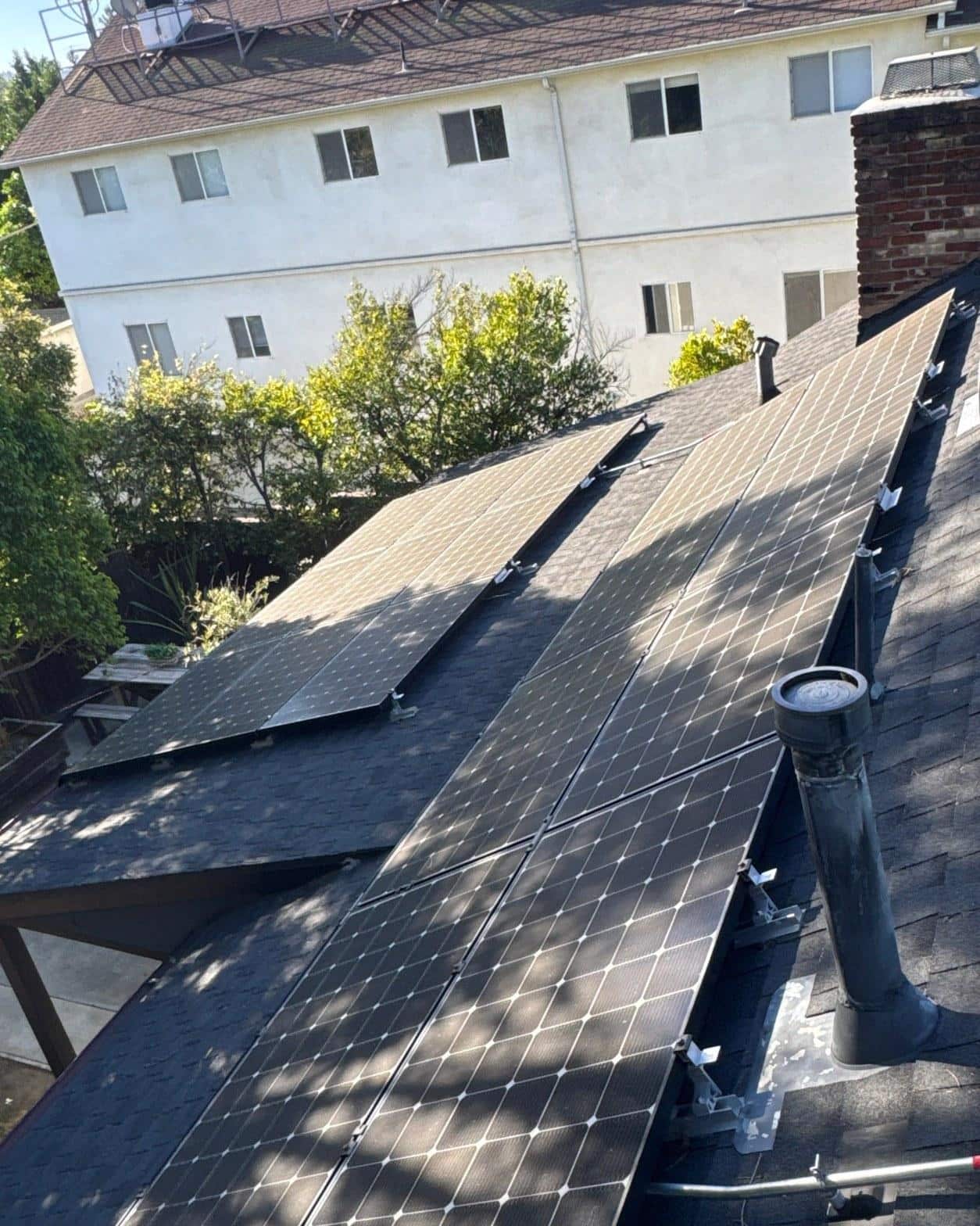
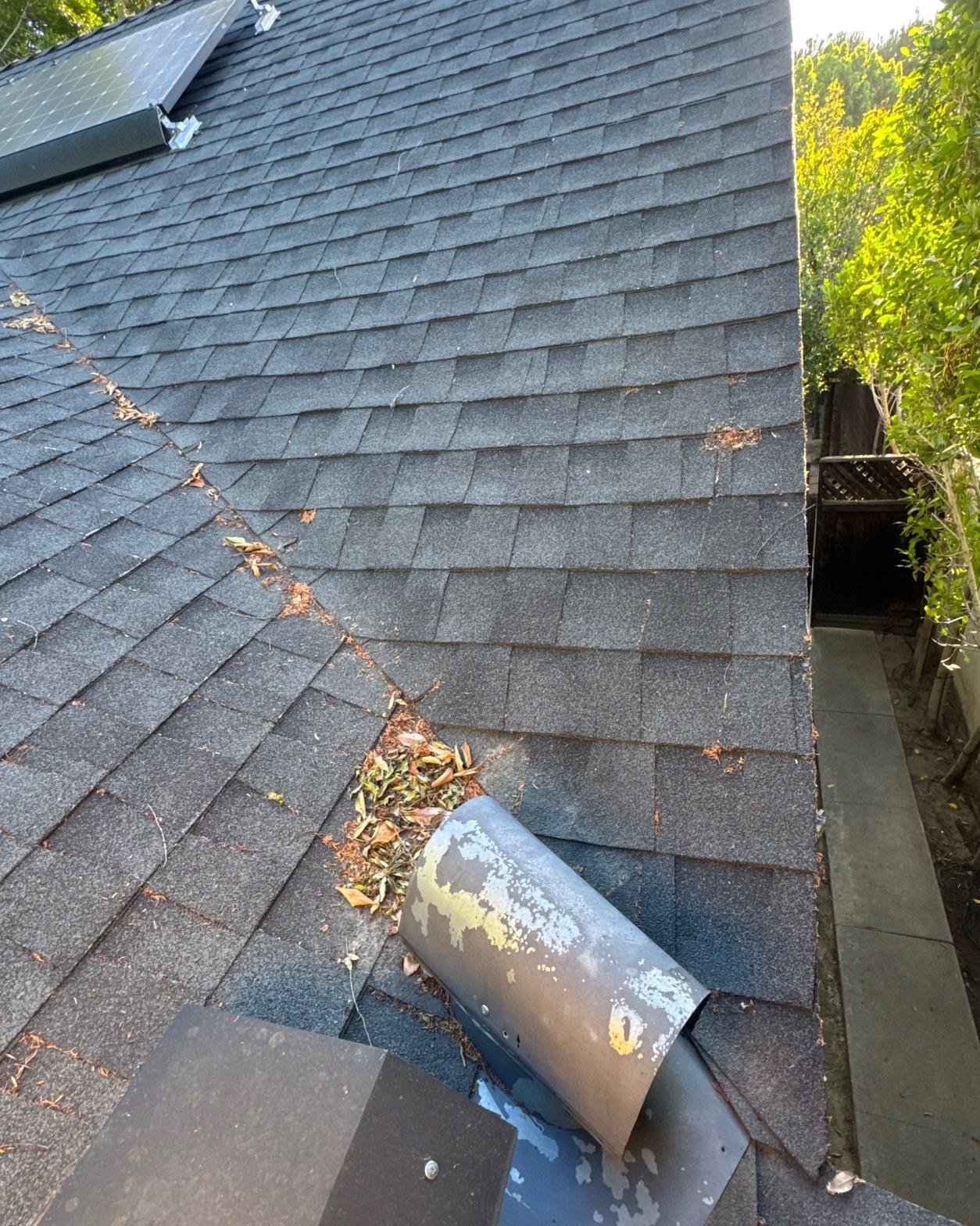
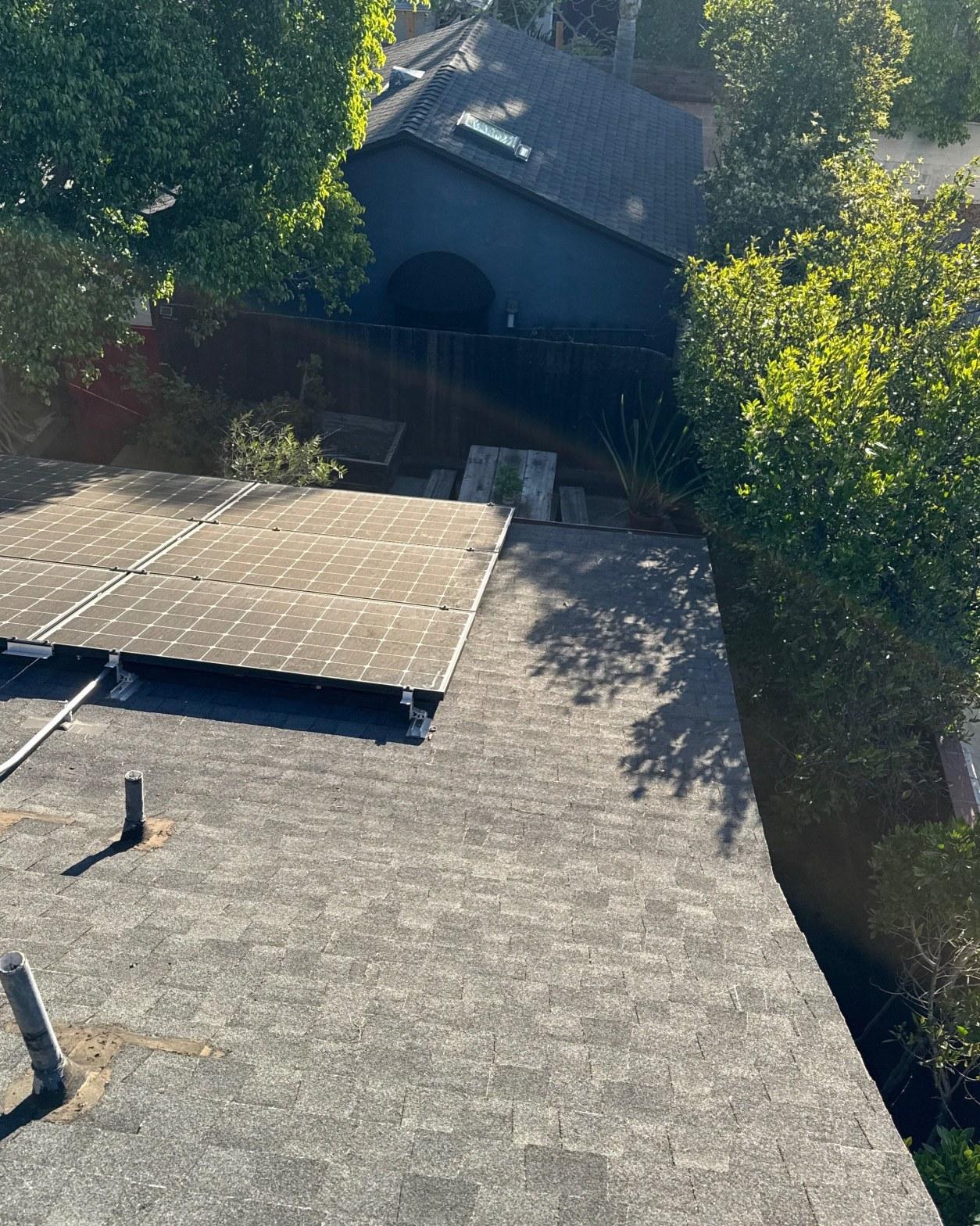
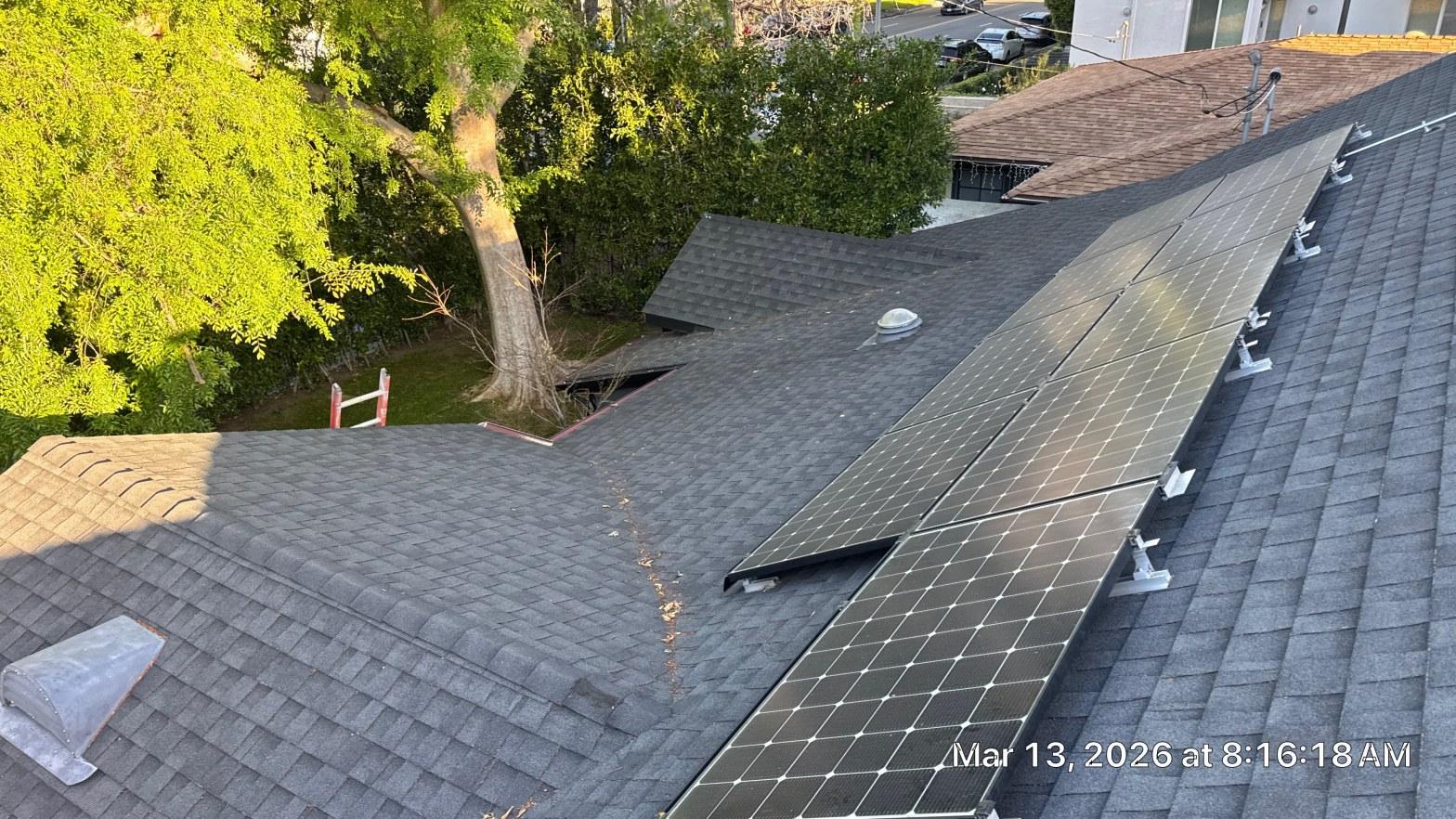
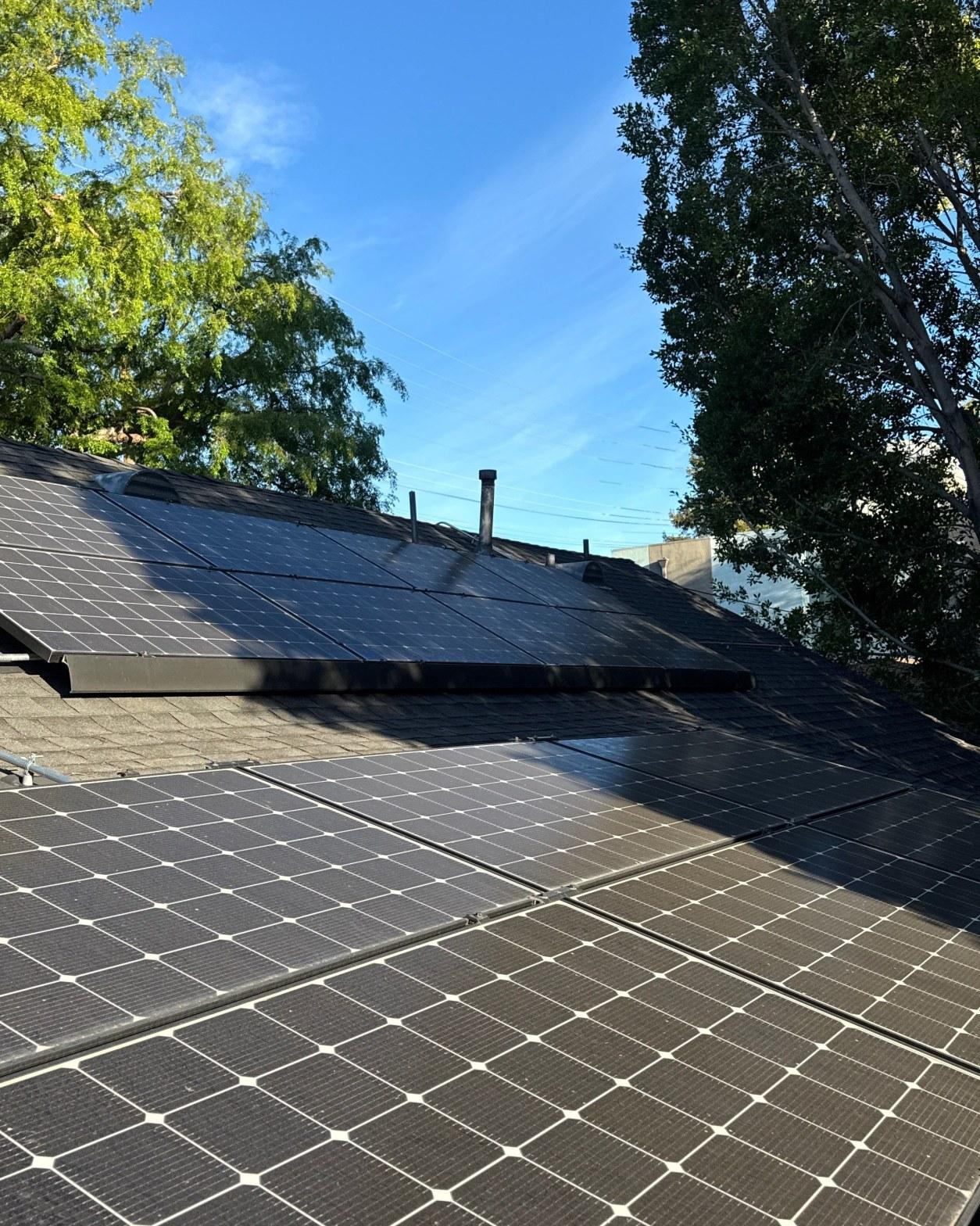
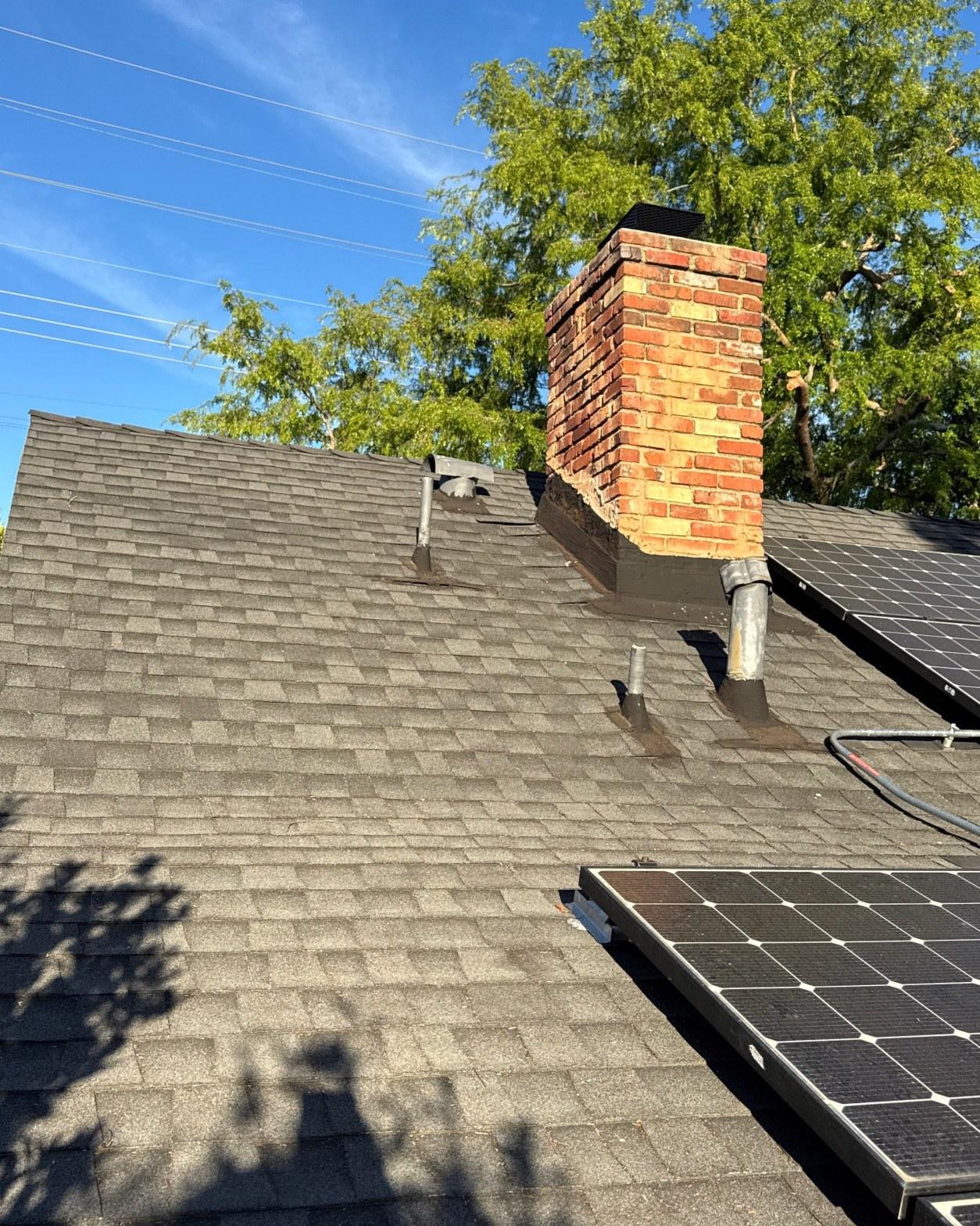
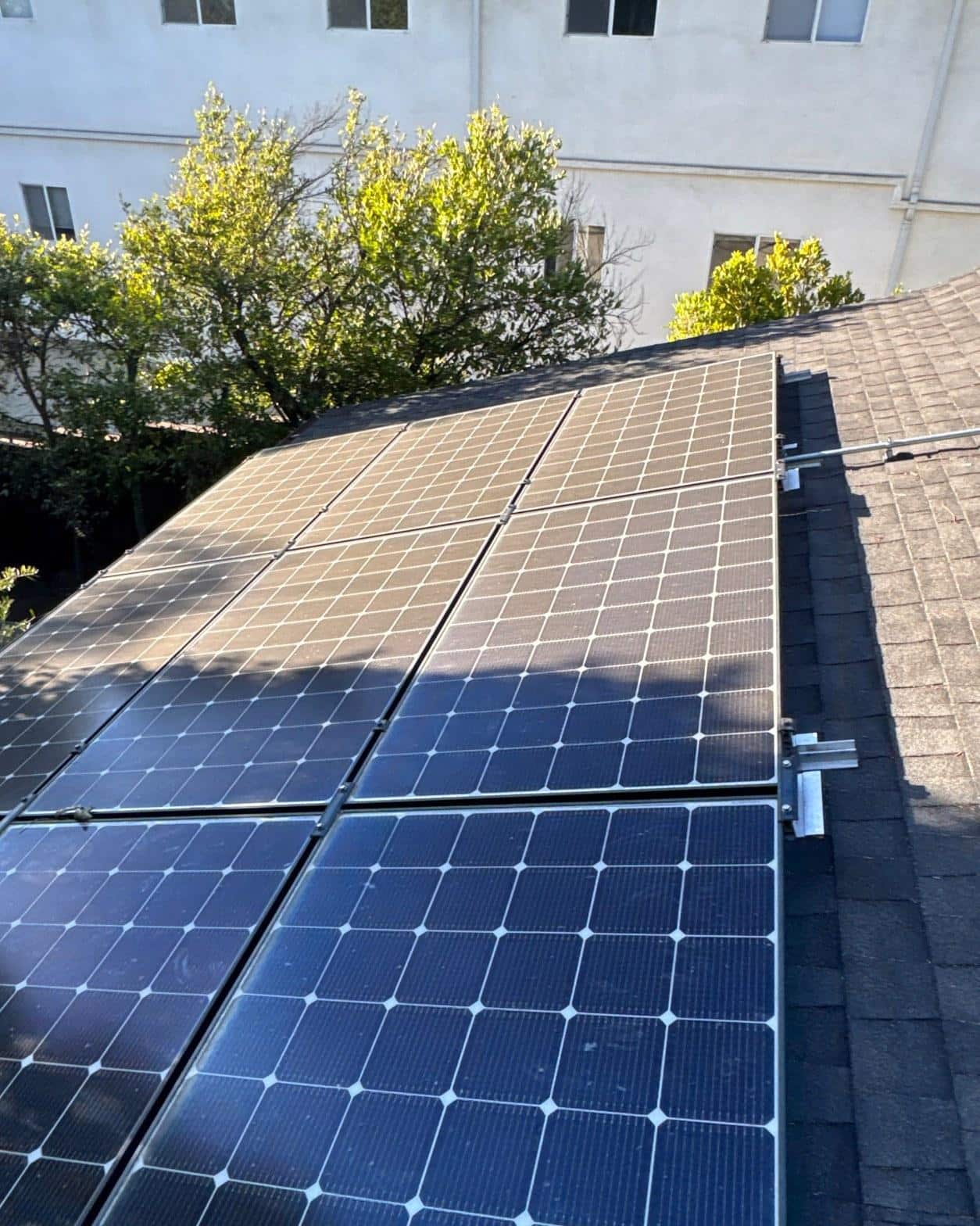
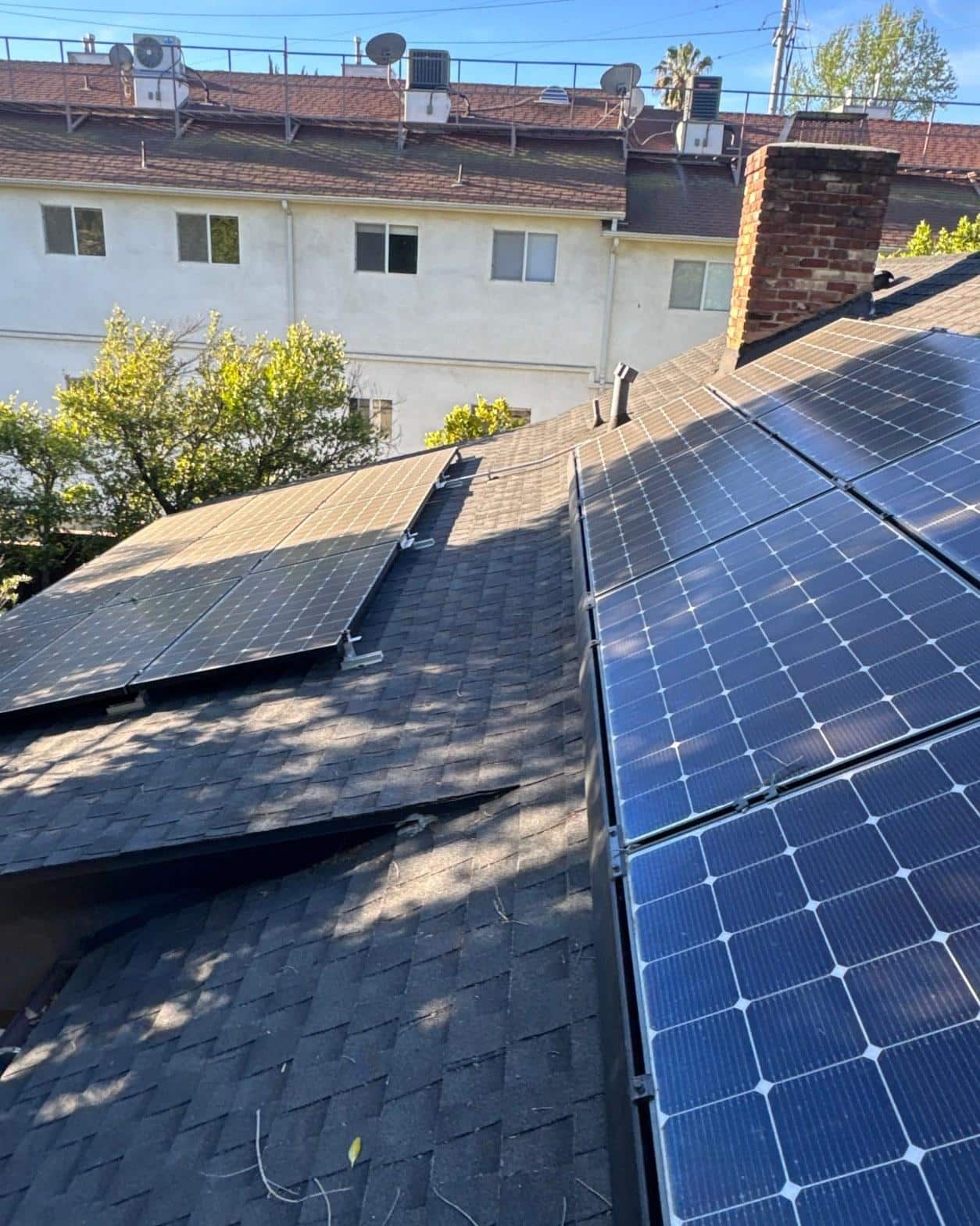
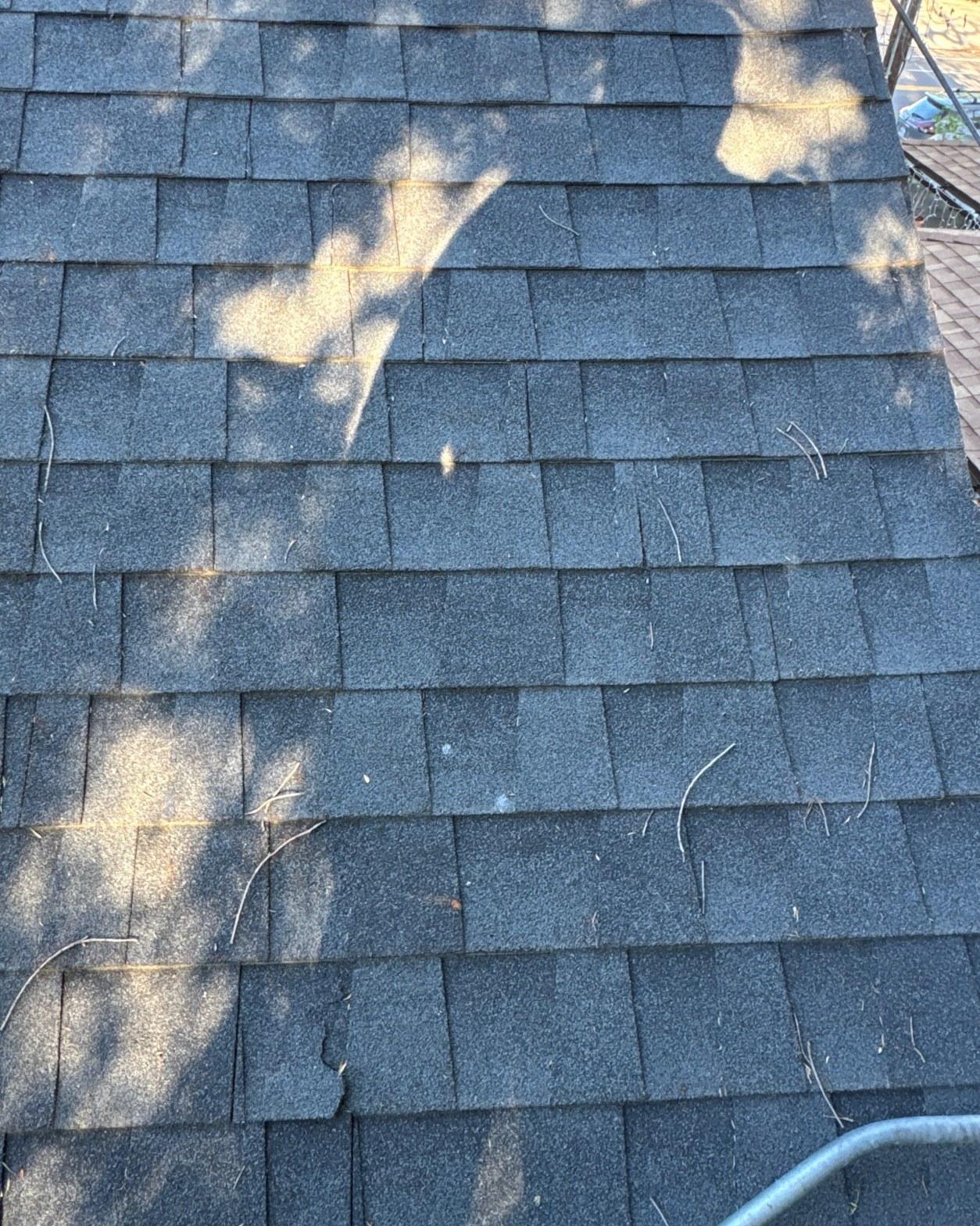
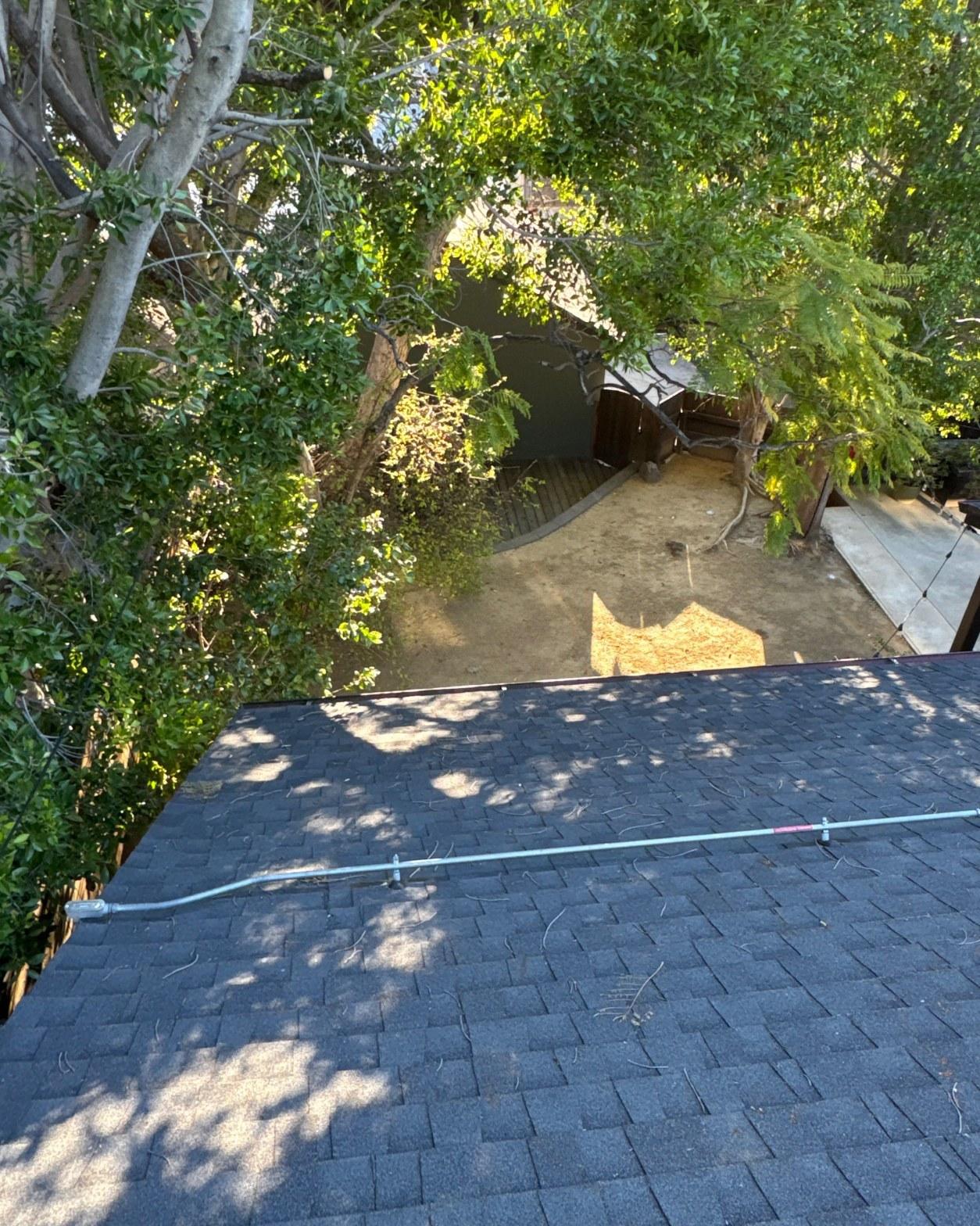
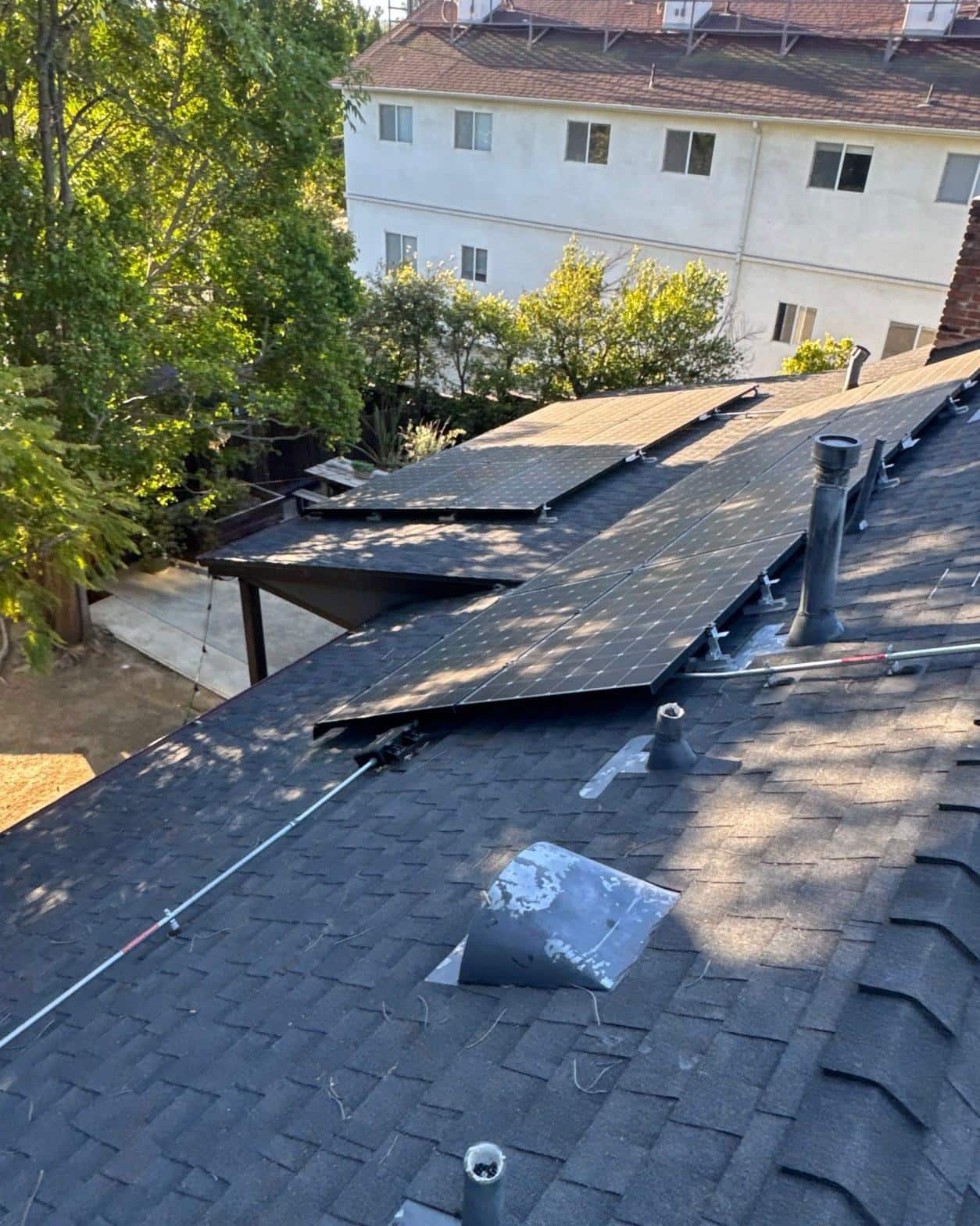
The property carries a multi-slope shingle roof typical of mid-century residential construction common throughout the San Fernando Valley. The rooftop solar array, installed on the steepest south-facing slope, had to be temporarily removed before any roofing work could begin. That step alone adds coordination time to a project, because the panel removal and reinstallation must be scheduled with a licensed solar contractor separately from the roofing trade.
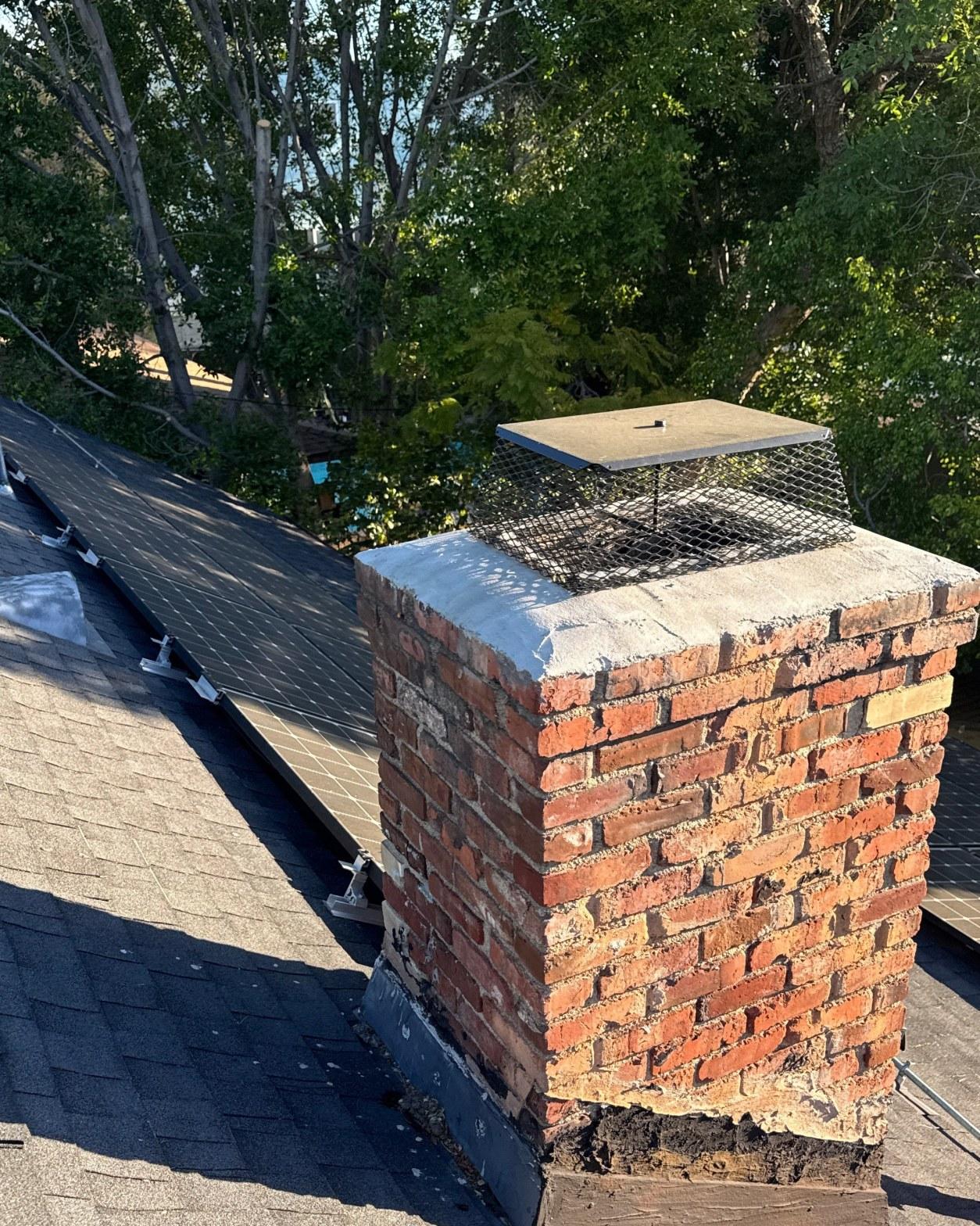
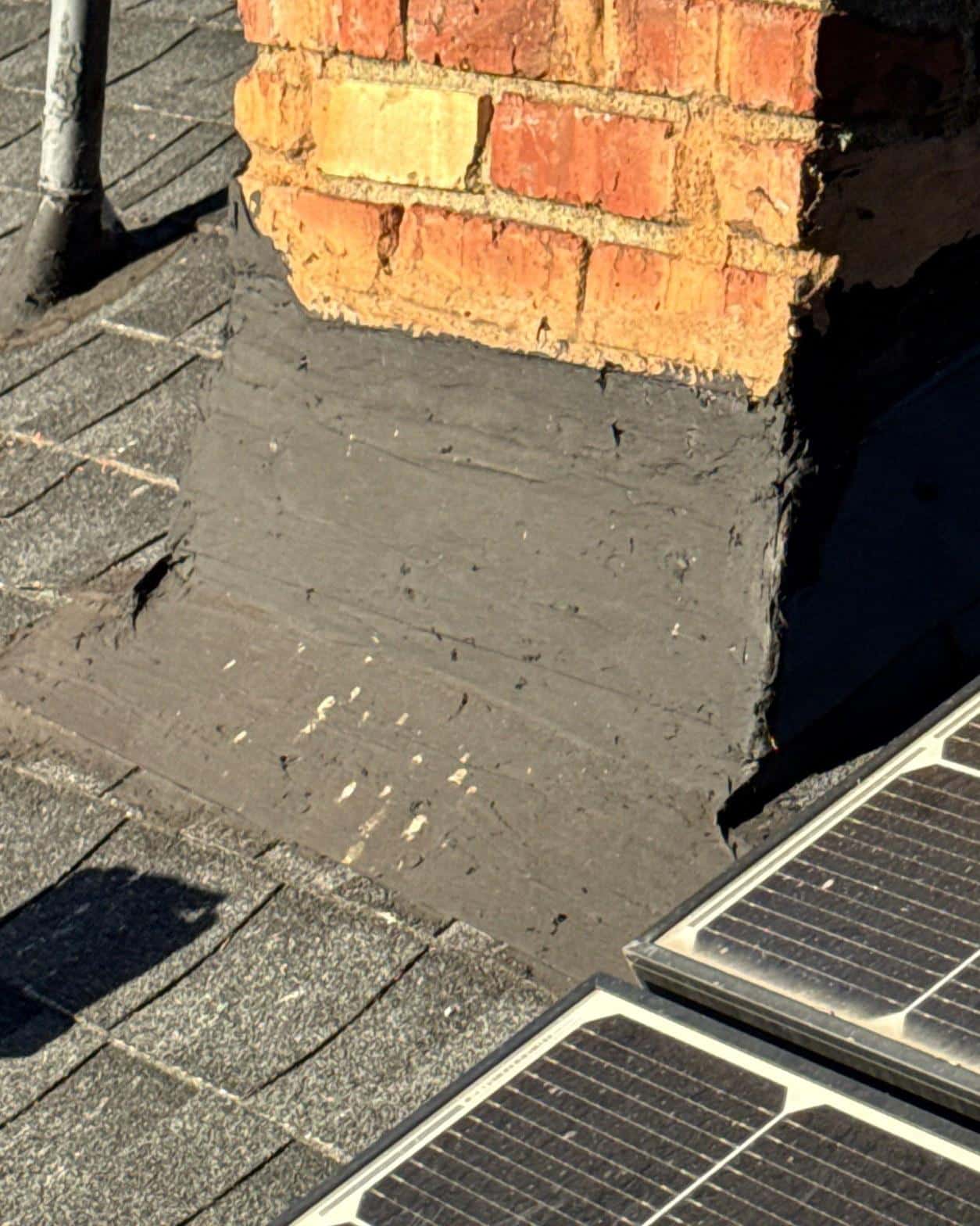
The brick chimney shown above illustrates the first concern. The mortar joints showed surface erosion consistent with years of weather cycling, and the base flashing where the chimney meets the shingle field had separated in at least one corner. A fitted metal chimney cap was already in place, which helps limit water intrusion from the top, but a cap alone cannot compensate for failed step or counter-flashing at the base. Chimney-related leaks account for a disproportionate share of interior water damage on older shingle roofs in Southern California, particularly on homes that experience the region’s infrequent but intense winter rain events. According to NOAA’s National Weather Service, the Sherman Oaks Basin averages roughly 15 inches of annual rainfall, most of it concentrated in 3 to 4 storm events between November and March. Those concentrated events are precisely when marginal flashing fails.
What Do Cracked Shingles Actually Mean for Your Roof?
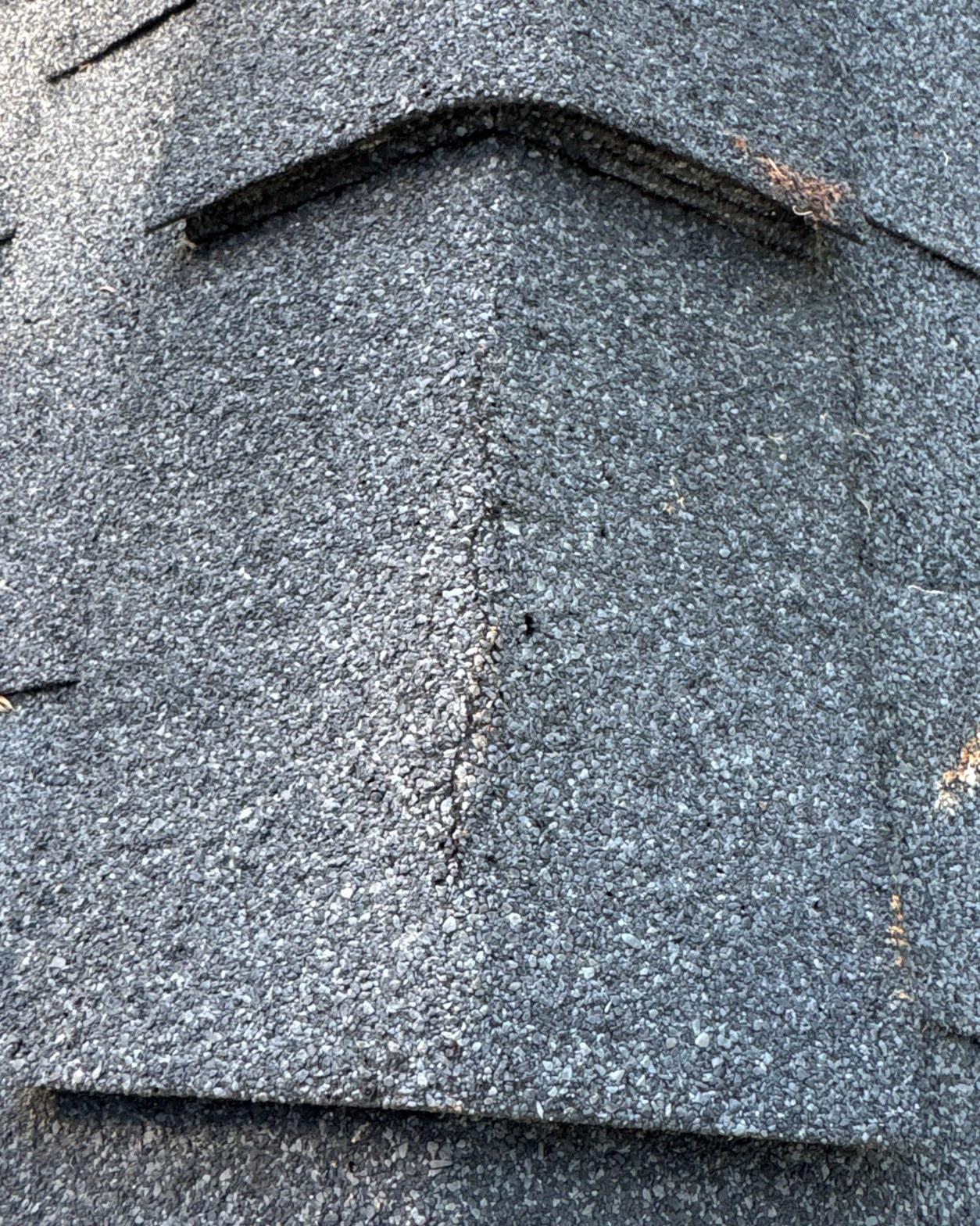
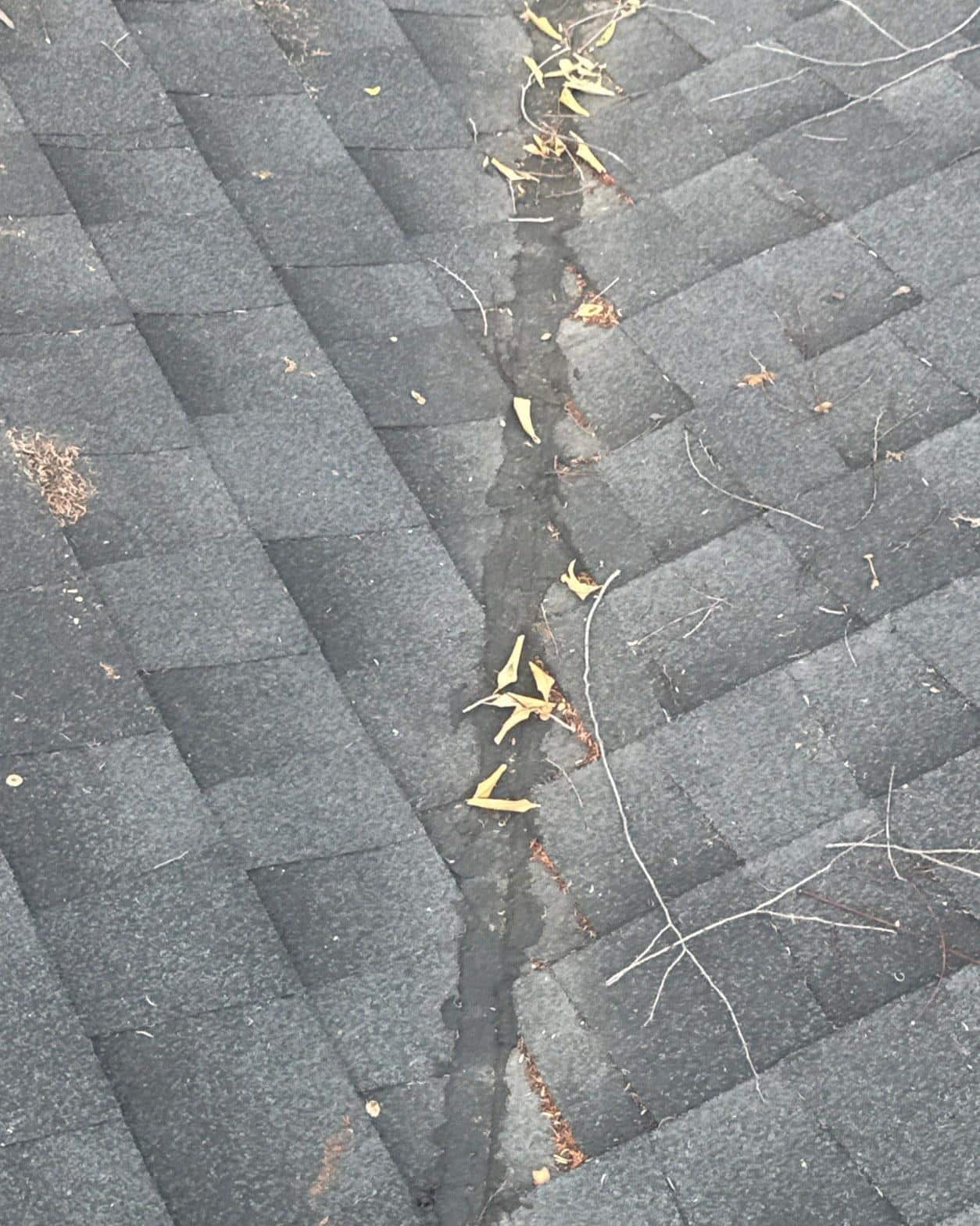
A cracked shingle is not just cosmetic damage; it is a broken weather barrier. The close-up photograph below shows a shingle that has split along its centerline in a pattern characteristic of thermal stress. Southern California rooftops regularly reach surface temperatures above 150°F on summer afternoons, and that daily expansion-and-contraction cycle, repeated over years, eventually causes the asphalt mat to crack through.
On this roof, the cracking appeared on shingles that had also begun to cup slightly at the edges, which is a sign that the fiberglass mat beneath the granule surface has reached the end of its useful life. Granule loss, visible as bare or thinned patches on the shingle surface, was also present in multiple locations. As of 2026, California’s Title 24 building energy standards encourage the use of cool-roof-rated shingles on residential reroofs in certain climate zones; the replacement shingles selected for this project carry a higher solar reflectance than the originals, which helps reduce attic heat gain and extends shingle life by reducing peak surface temperatures. The California Energy Commission publishes the approved product list for cool roofs under its Title 24 compliance program.
Our team, across shingle inspections in the San Fernando Valley, most consistently finds thermal cracking concentrated on south- and west-facing slopes, where solar exposure is highest and where, on this property, the panel array was already positioned.
How We Handled the Pipe Boot and Penetration Flashing
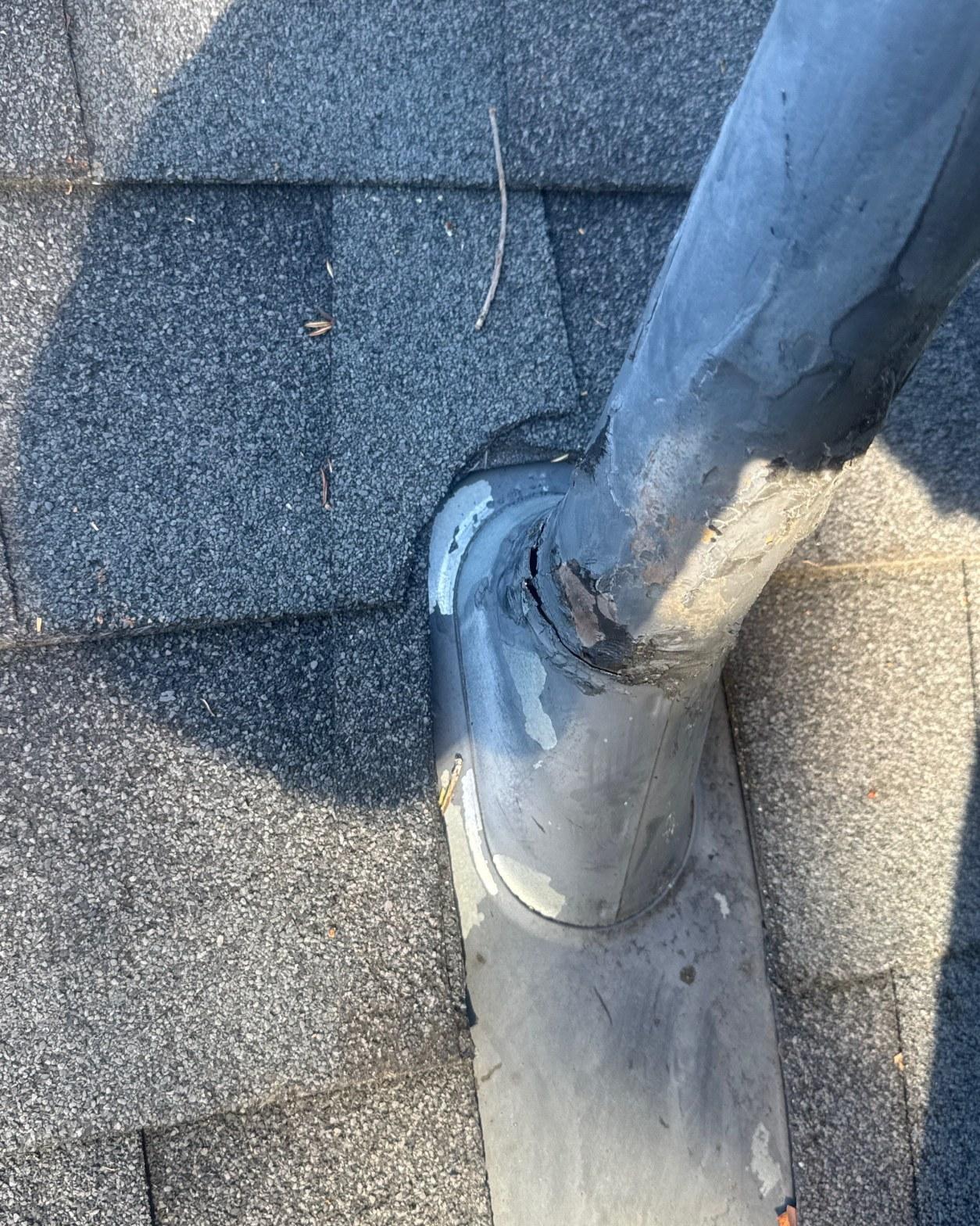
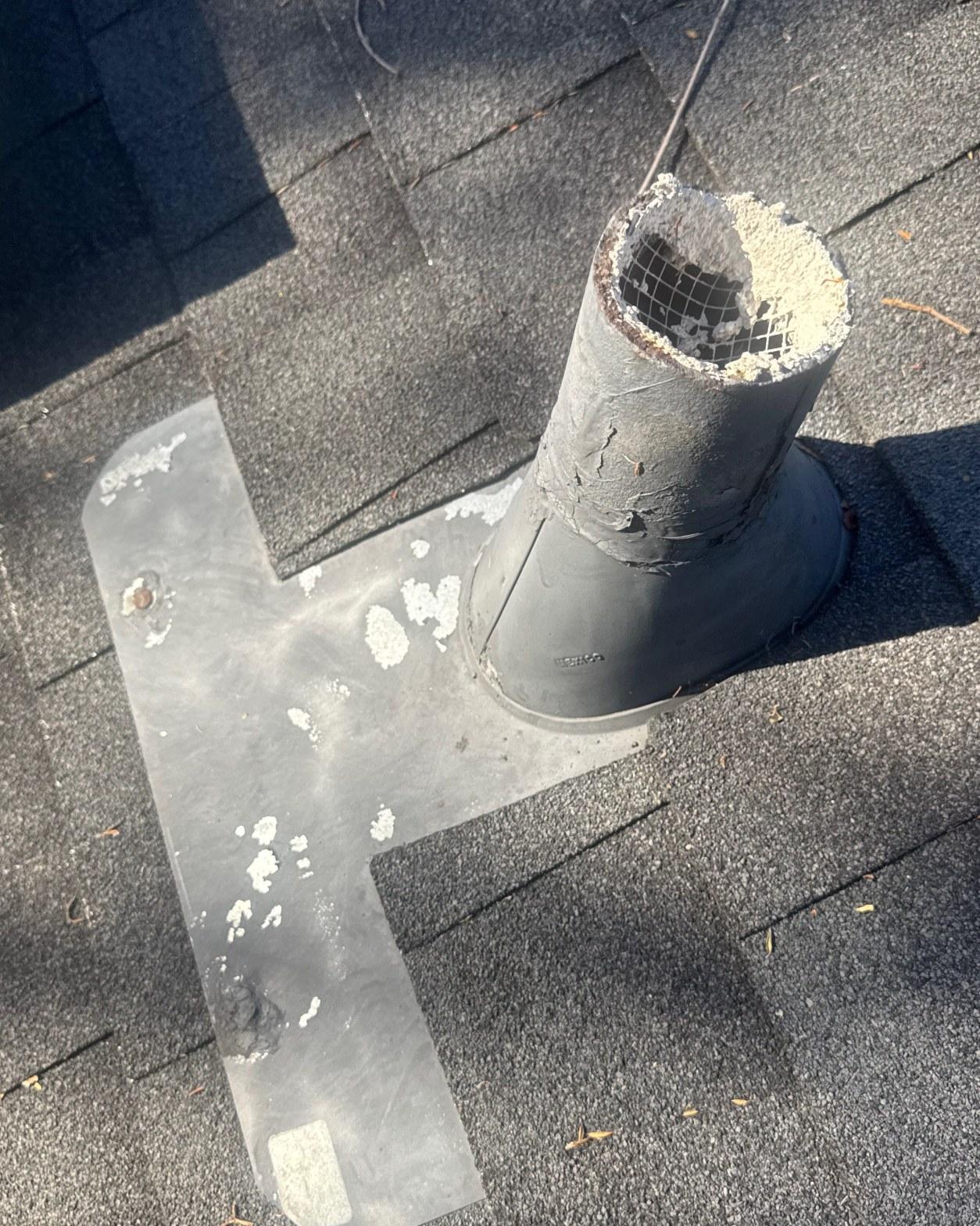
The rubber pipe boot serving one of the plumbing vent stacks had cracked through at its collar, leaving an open gap between the boot and the pipe. This is one of the most common entry points for water on an otherwise intact shingle roof, and it is frequently overlooked because the damage can be subtle until a heavy rain makes it obvious.
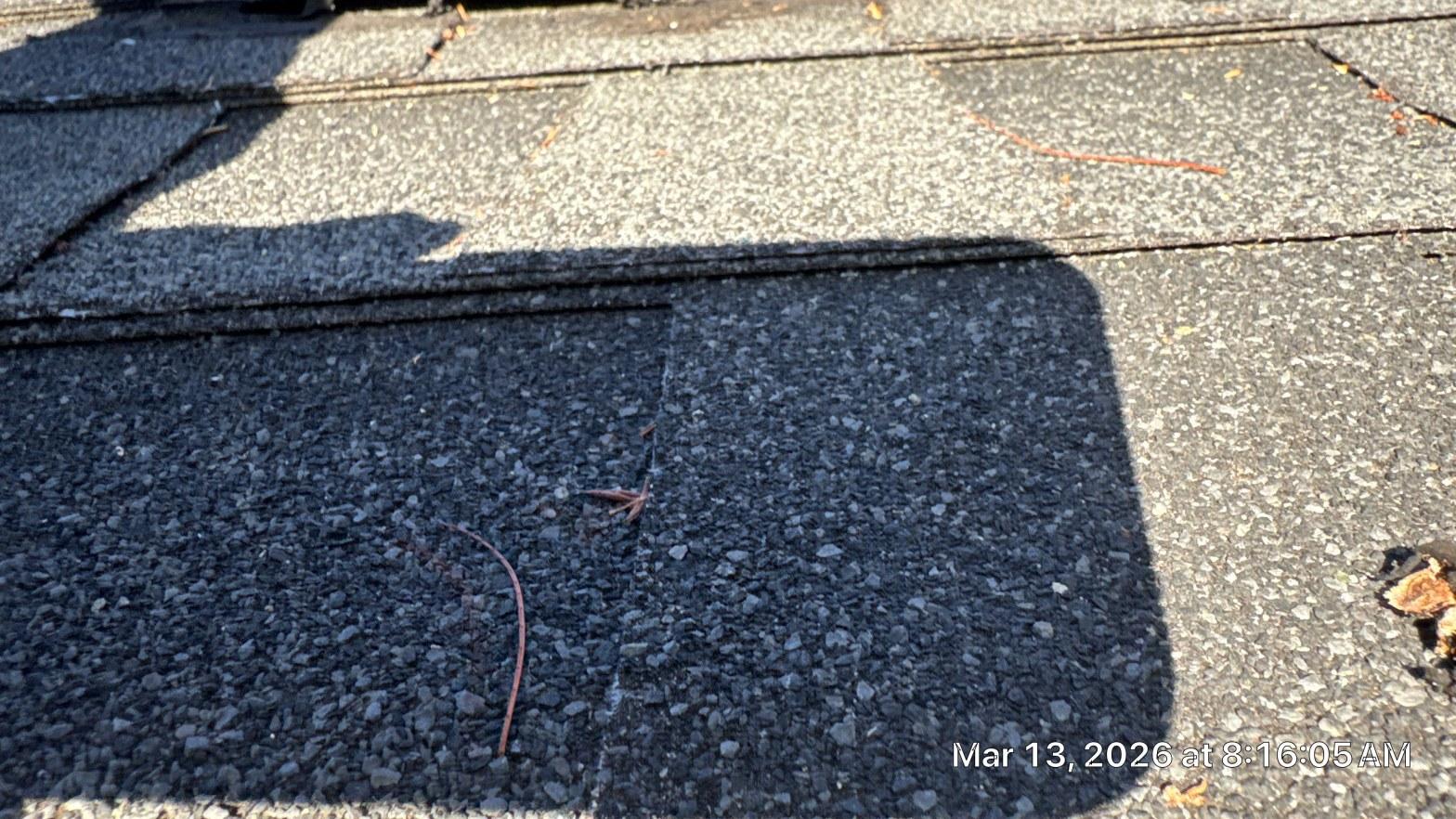
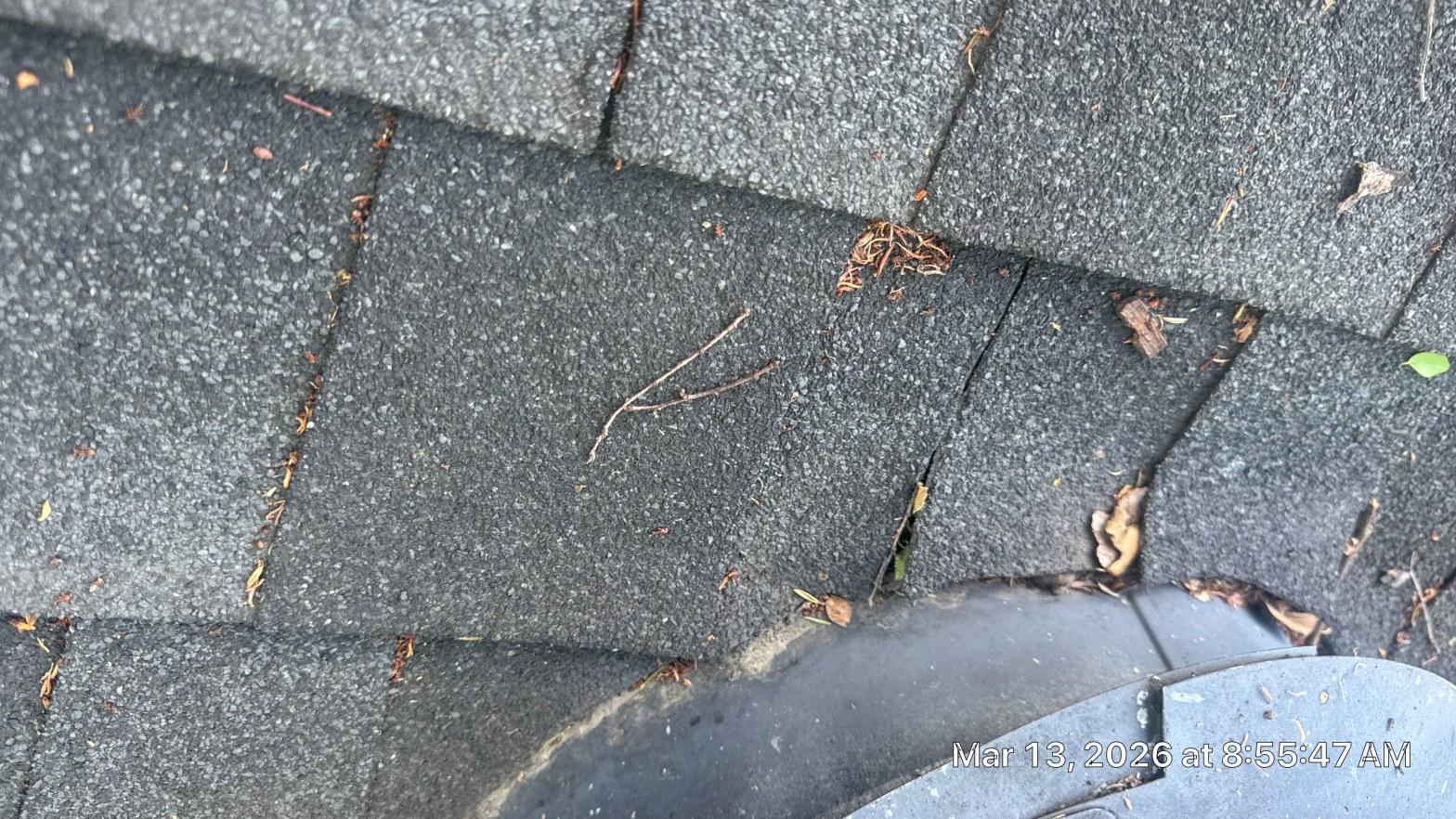
The photograph above shows the shingle field adjacent to the penetration, where granule displacement and slight darkening of the surrounding shingles indicated moisture had already been wicking under the surface. Before new shingles were laid, the old boot was cut out, the deck was inspected for soft spots, and a new rubber boot sized to the pipe diameter was set into the fresh underlayment layer. The surrounding shingles were then woven back in rather than simply overlapped, which is the correct method for maintaining a watertight seal at a penetration.
The image above shows the deteriorated boot in detail: the rubber collar has cracked and pulled away from the pipe, and the surrounding flange has lifted. At this stage of degradation, no sealant repair would hold through a full rain season. Replacement is the only durable solution.
The Solar Array Comes Back Down on a Sound Roof
With the shingle replacement, chimney flashing, and pipe boot work complete, the solar panels were reinstalled on a structurally sound and weather-tight deck. This sequencing matters: putting solar hardware back onto a failing roof is one of the more avoidable mistakes in home improvement, because a reroof after panels are installed costs significantly more, and the panel removal adds cost a second time.
Homeowners considering solar installation should have their roof inspected by a licensed roofing contractor before committing to panel placement. The federal Inflation Reduction Act federal tax credit, which as of 2026 covers 30 percent of qualified solar installation costs, does not cover a roof replacement performed in the same project window unless the roof work is directly necessary for the solar installation. Getting the roof right first keeps the project clean from both a cost and a permitting standpoint.
Roof Replacement Inc is Licensed by the California Contractors State License Board (CSLB). If your roof is showing any of the conditions documented here, contact us for an assessment before scheduling solar work or assuming a repair will be sufficient.


