

What Did This Roofing Project Involve?
This job was a complete tear-off and reroof of a multi-slope residential home in Southern California — new underlayment, new dimensional asphalt shingles, new vents, and new drip edge on every slope. The homeowner’s goal was straightforward: replace an aging roof before the next rainy season and get a system that would hold up for decades without constant maintenance.
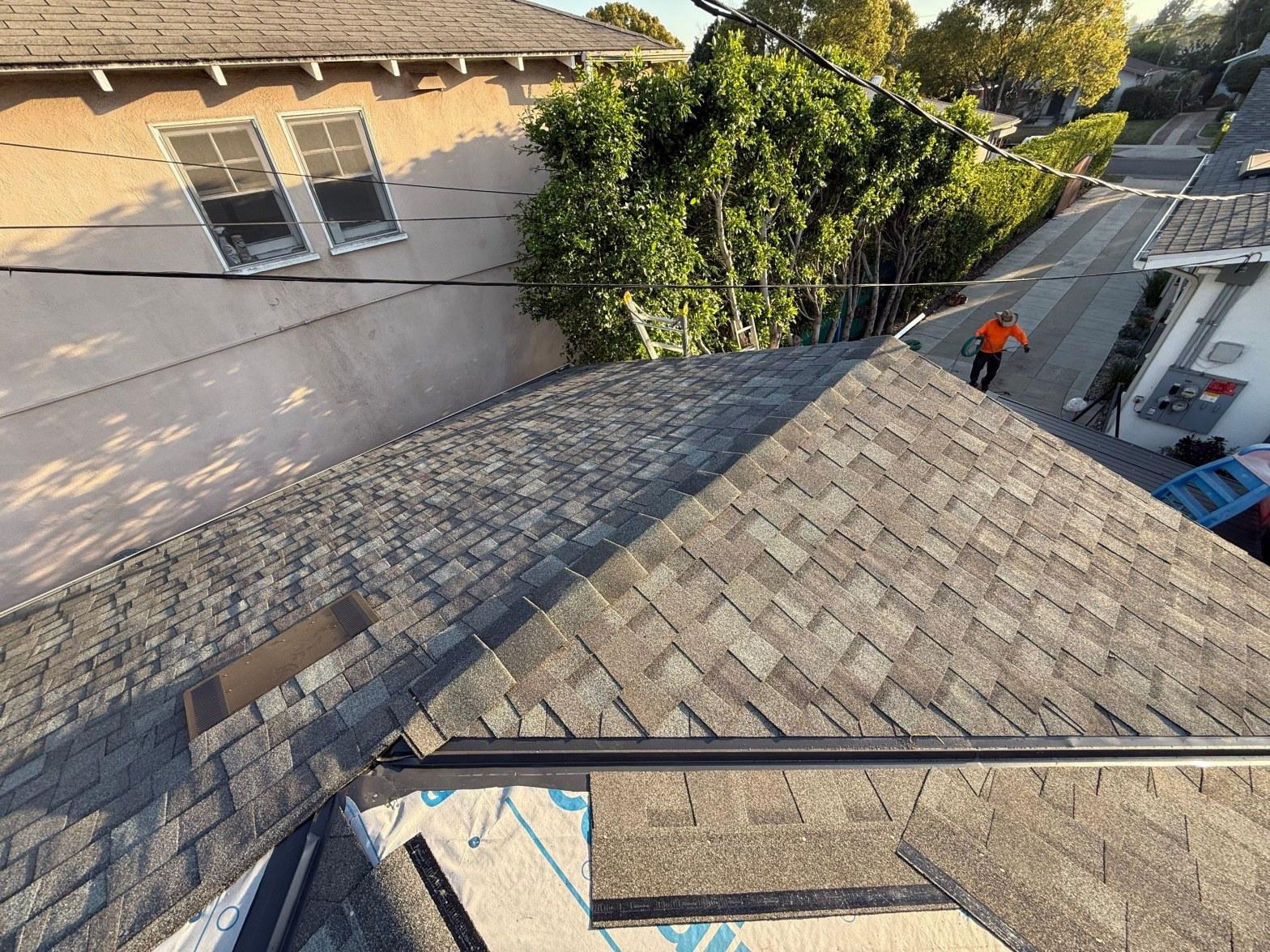
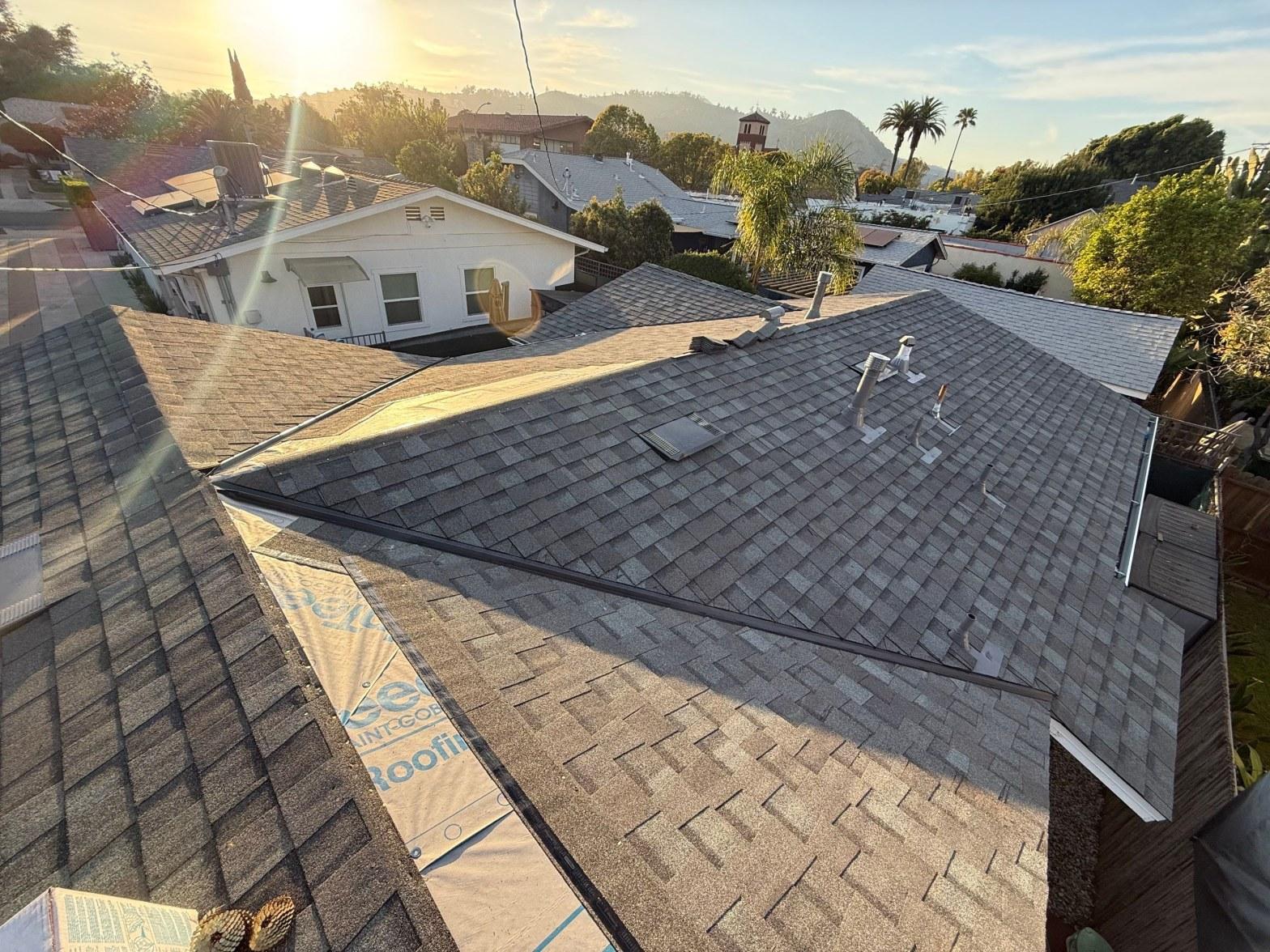
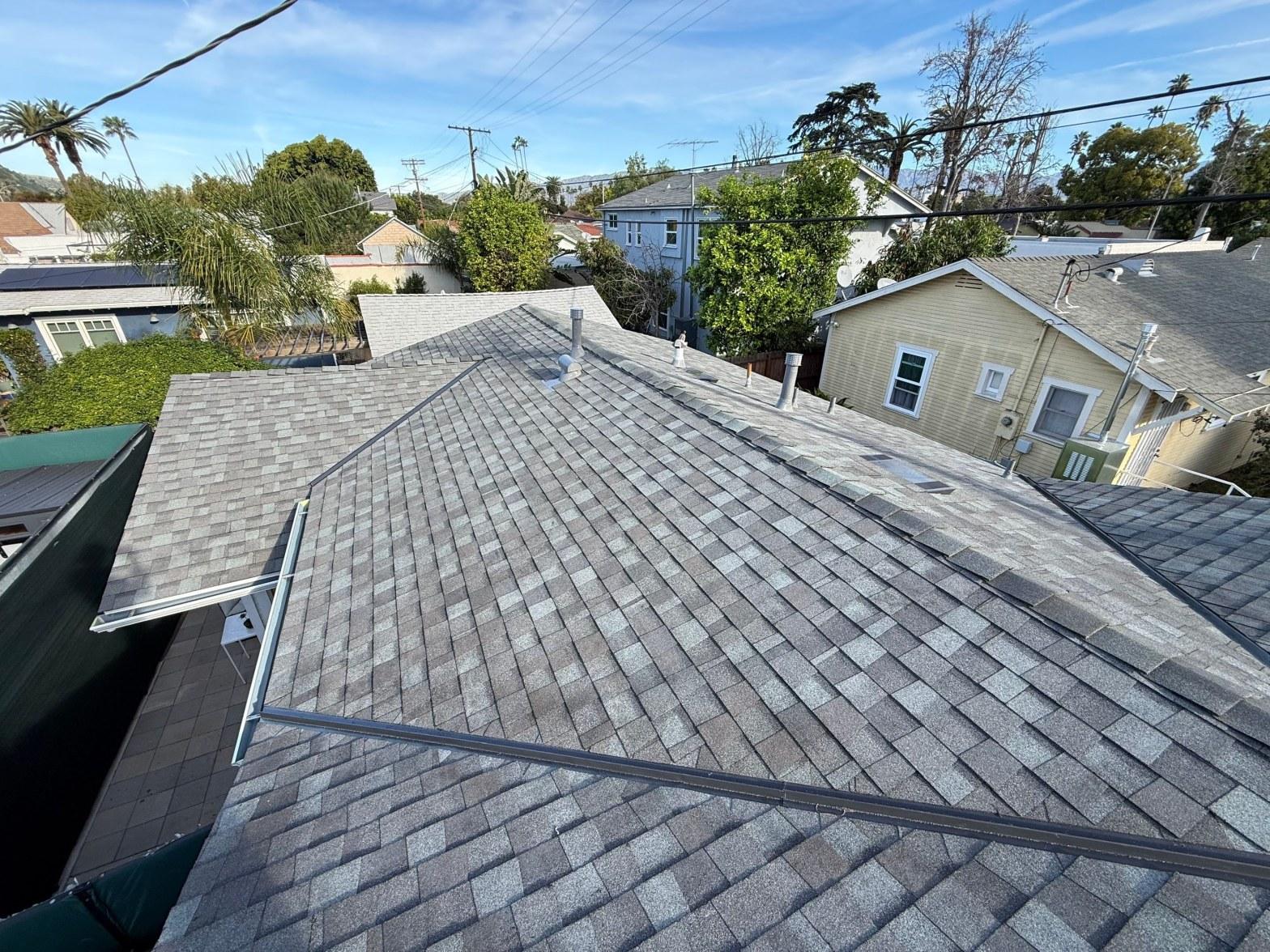
The house presented the kind of complexity that’s common in older Southern California neighborhoods — multiple intersecting roof planes, hip returns, and valleys that all have to be sequenced correctly during installation. Getting the shingle layout and lap directions right across those transitions is where sloppy work shows up years later as leaks.
Project Gallery
Why Does Underlayment Choice Matter on an Asphalt Shingle Roof?
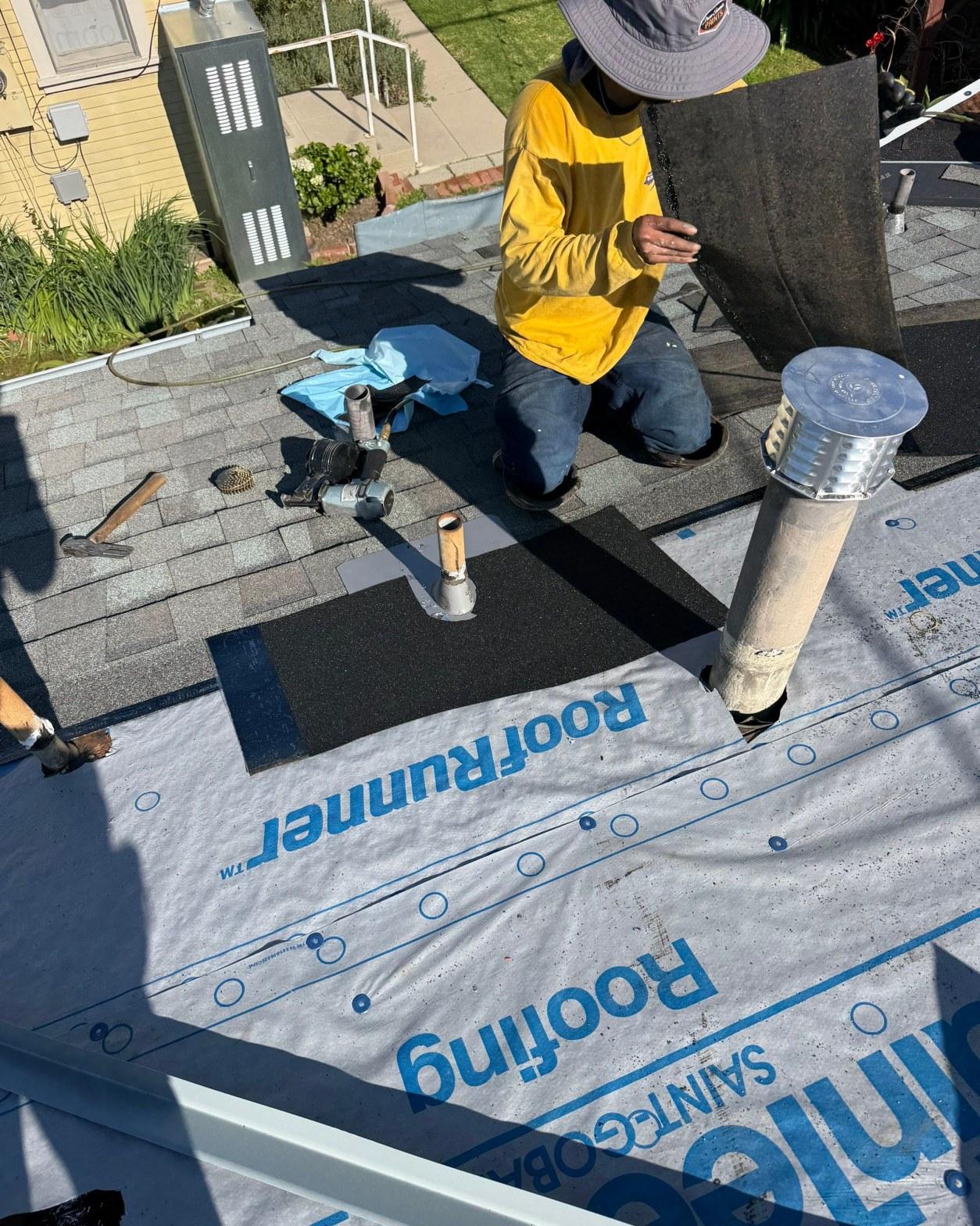
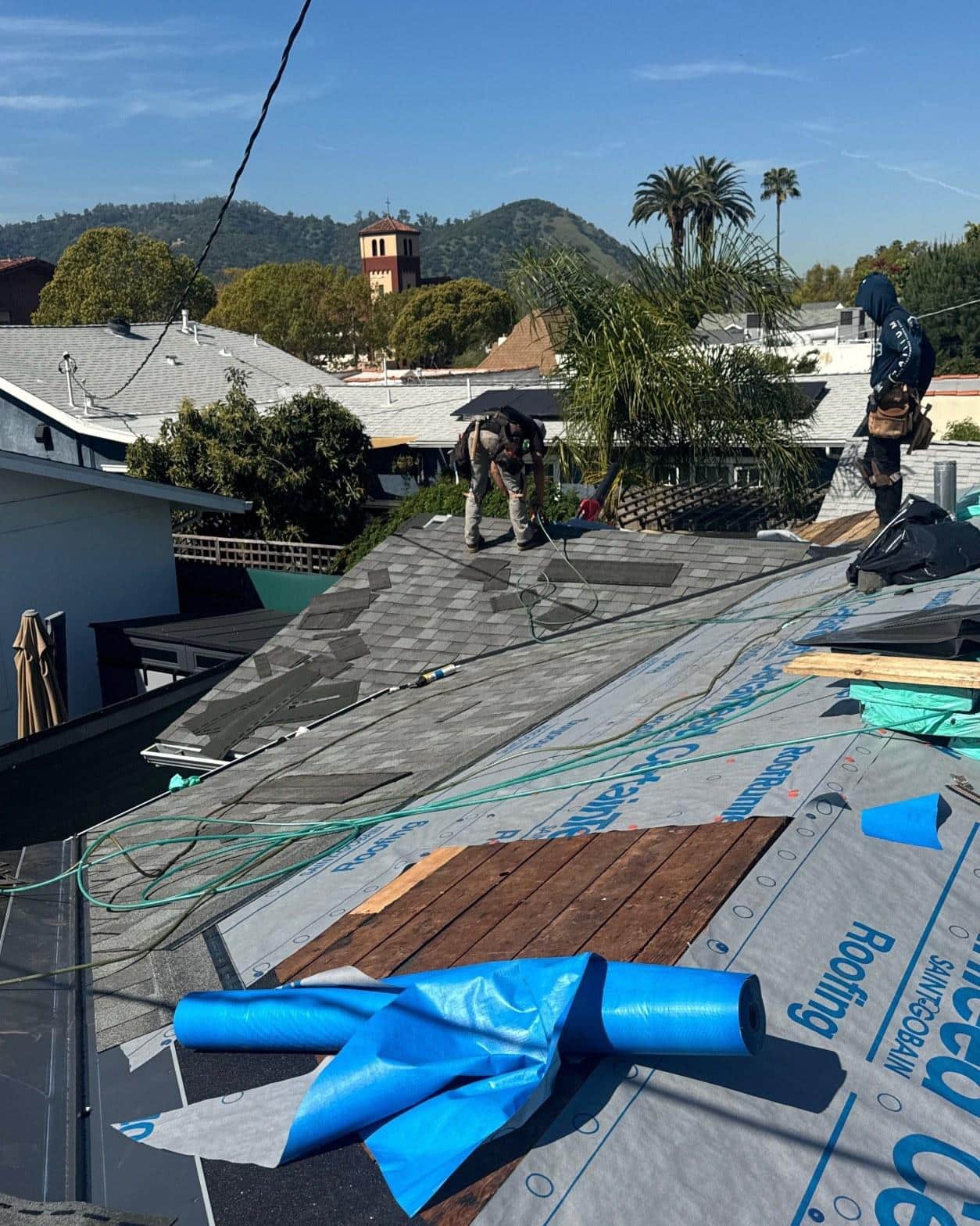
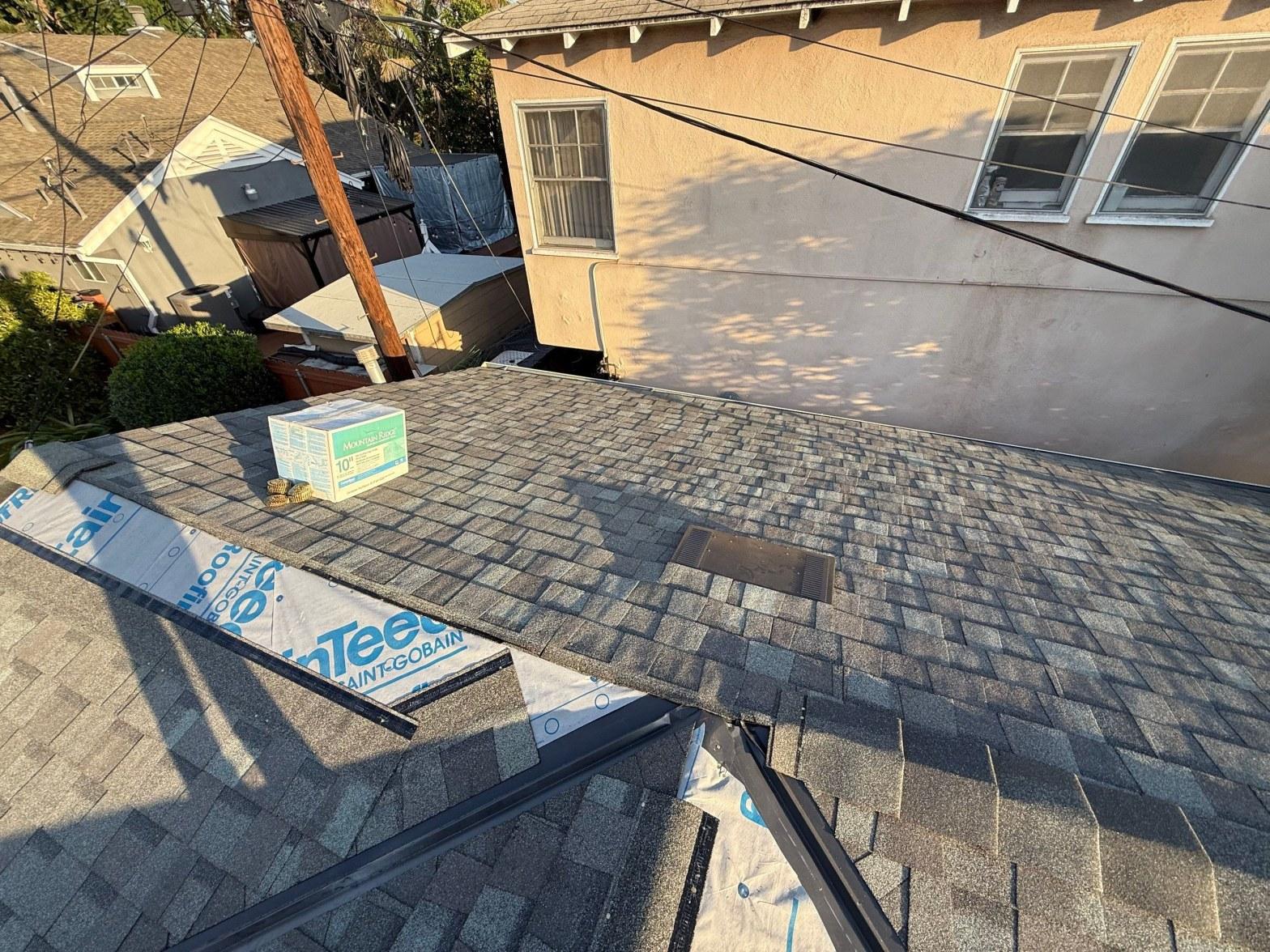
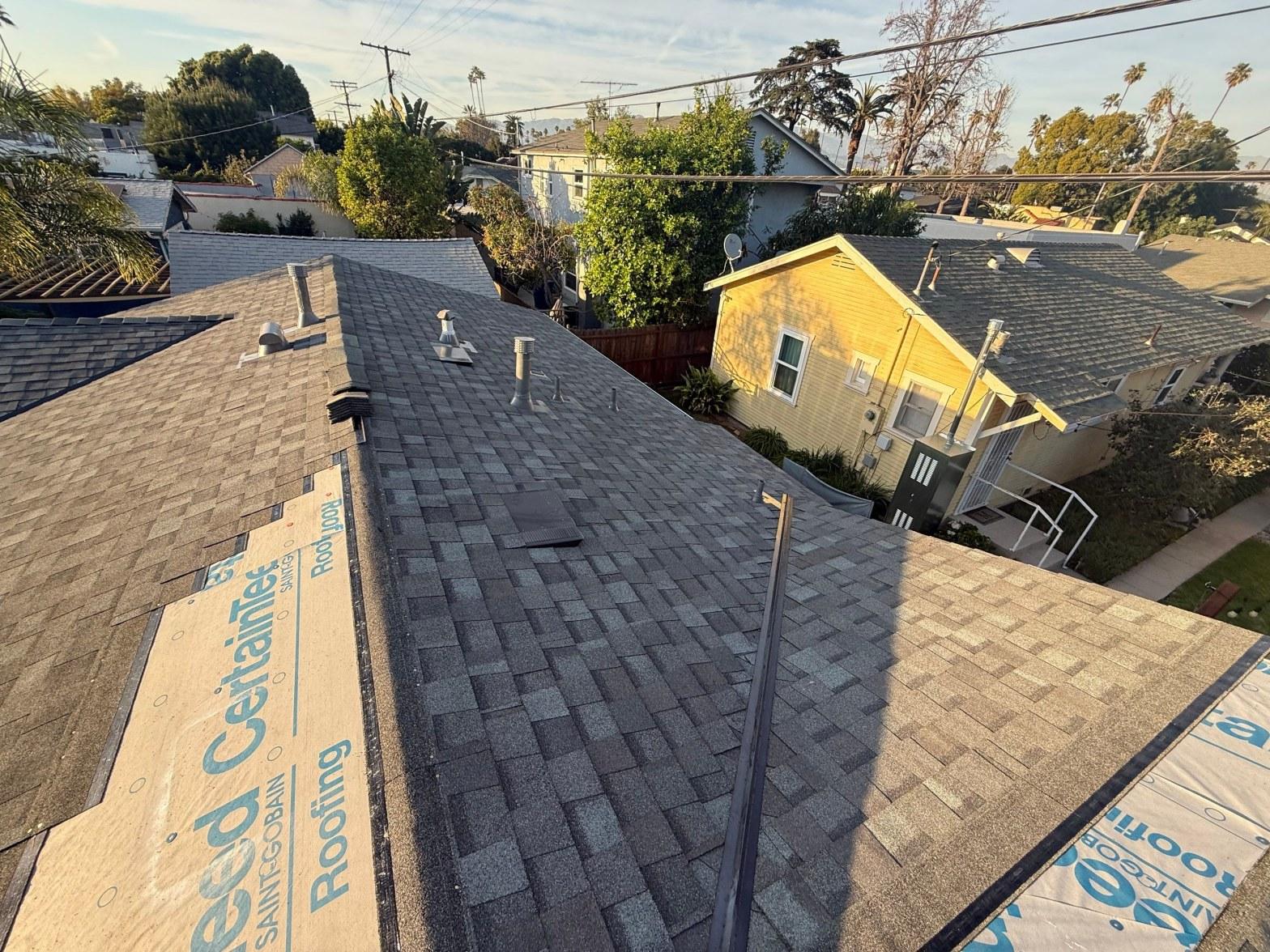
The underlayment is the last line of defense if water ever gets under a shingle — choosing a quality product here is not optional. For this project we specified CertainTeed’s synthetic roofing underlayment, which is significantly more tear-resistant than traditional #30 felt and stays flat under foot traffic during installation. That matters on a multi-slope job where the crew is on the roof for a full day before the first shingle goes down.
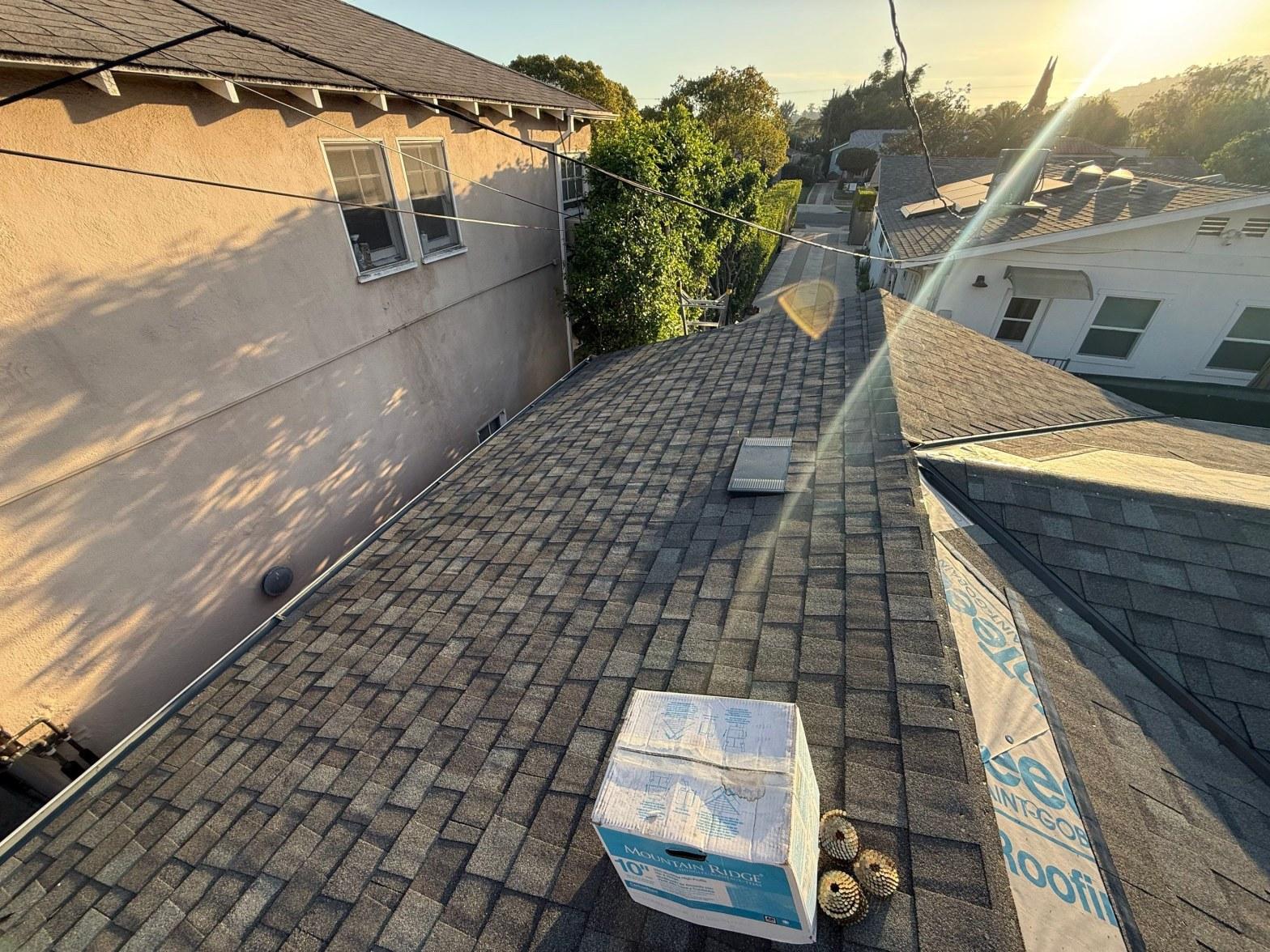
As of 2026, synthetic underlayments have largely replaced organic felt on California reroofs because felt can absorb moisture and buckle if the shingles take longer than expected to install — a real risk in a coastal or marine-layer climate. The CertainTeed product visible in the featured photo shows the underlayment still in good condition mid-installation, with shingle courses already completed on the adjacent slopes.
Our crews have tracked installation conditions across more than 60 Southern California reroofs in the past two years, and the most common underlayment failure we see on older roofs is delaminated felt that allowed wind-driven rain to wick into the deck — something synthetic products are specifically engineered to prevent.
How Were the Vents and Penetrations Handled?
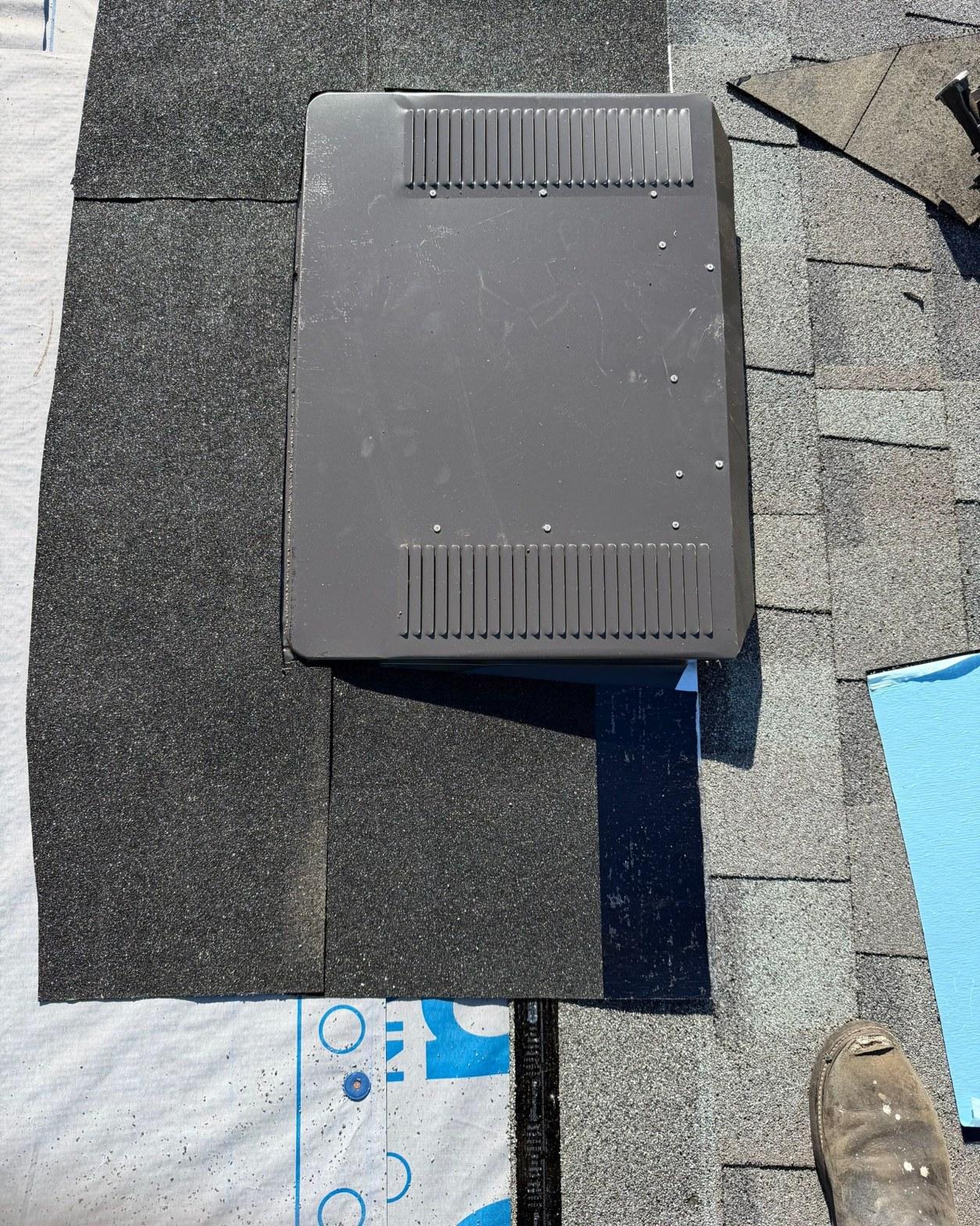
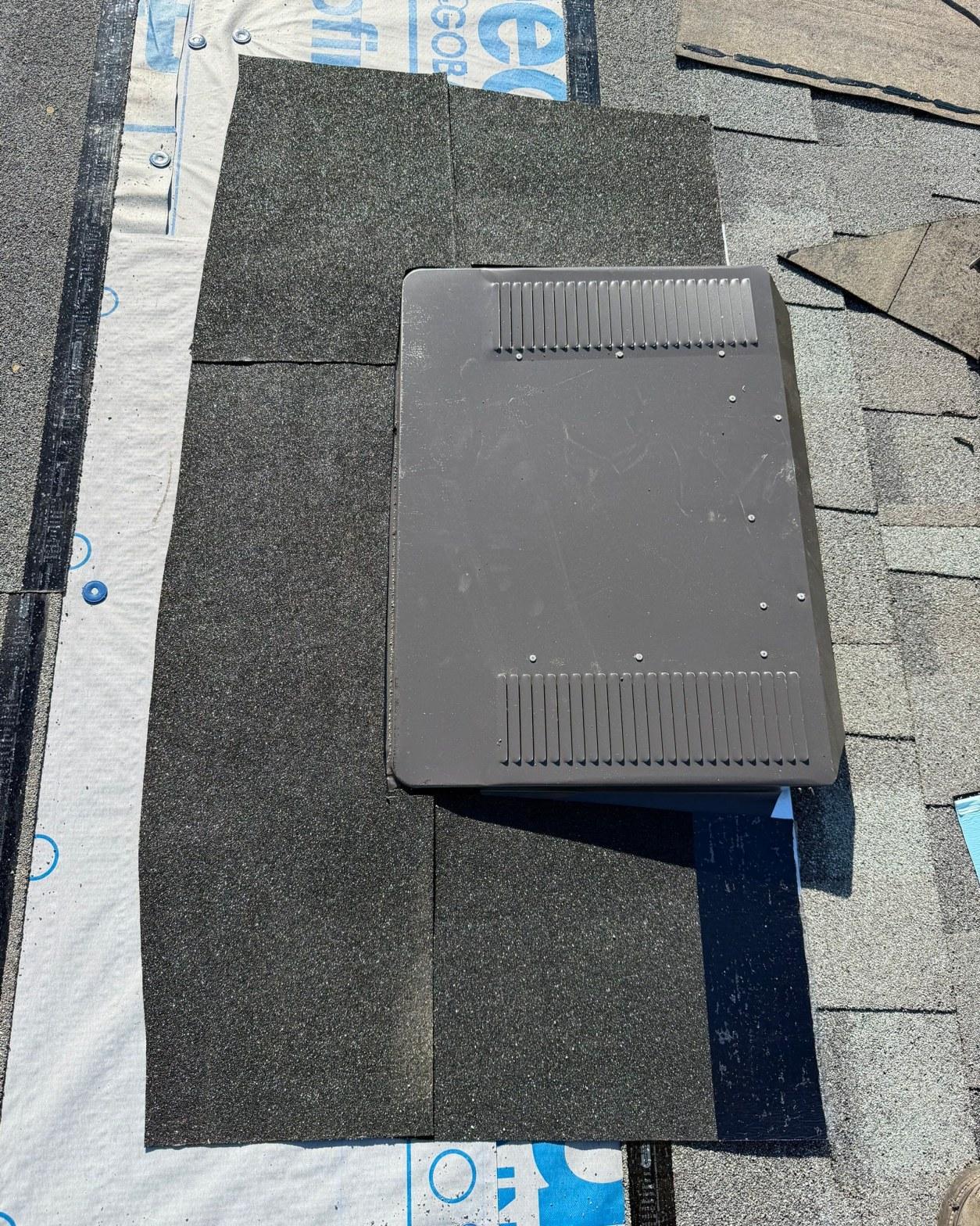
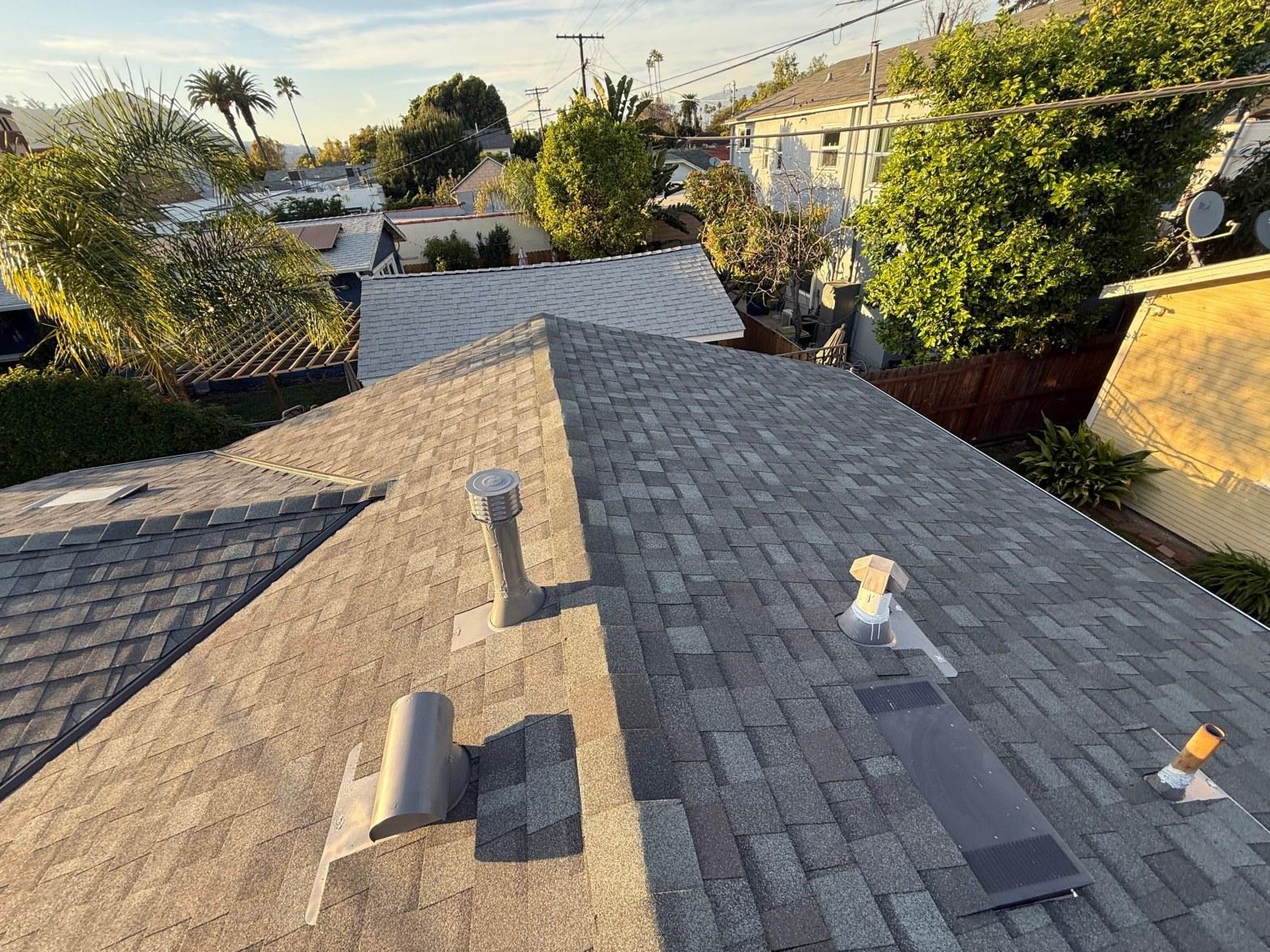
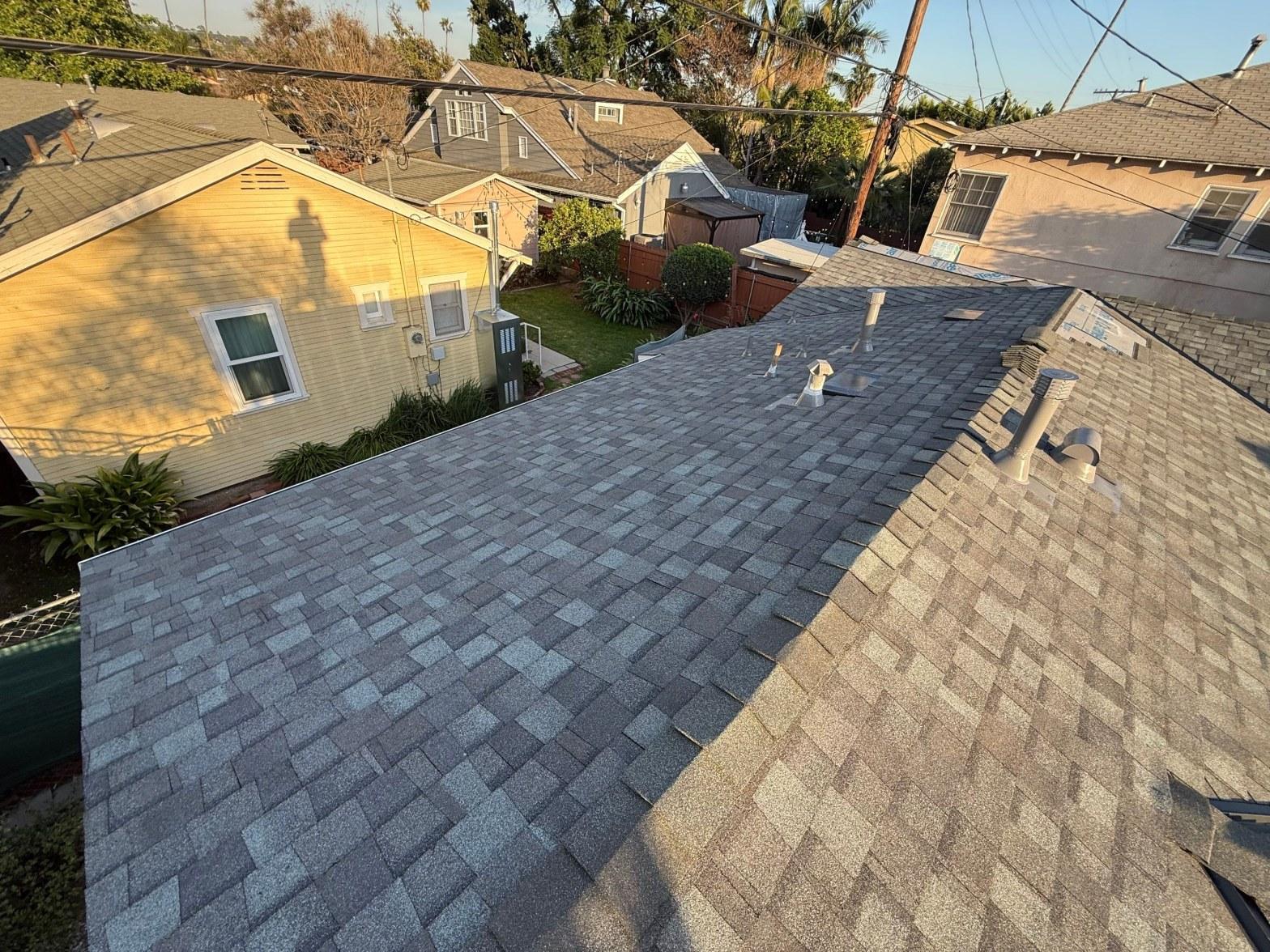
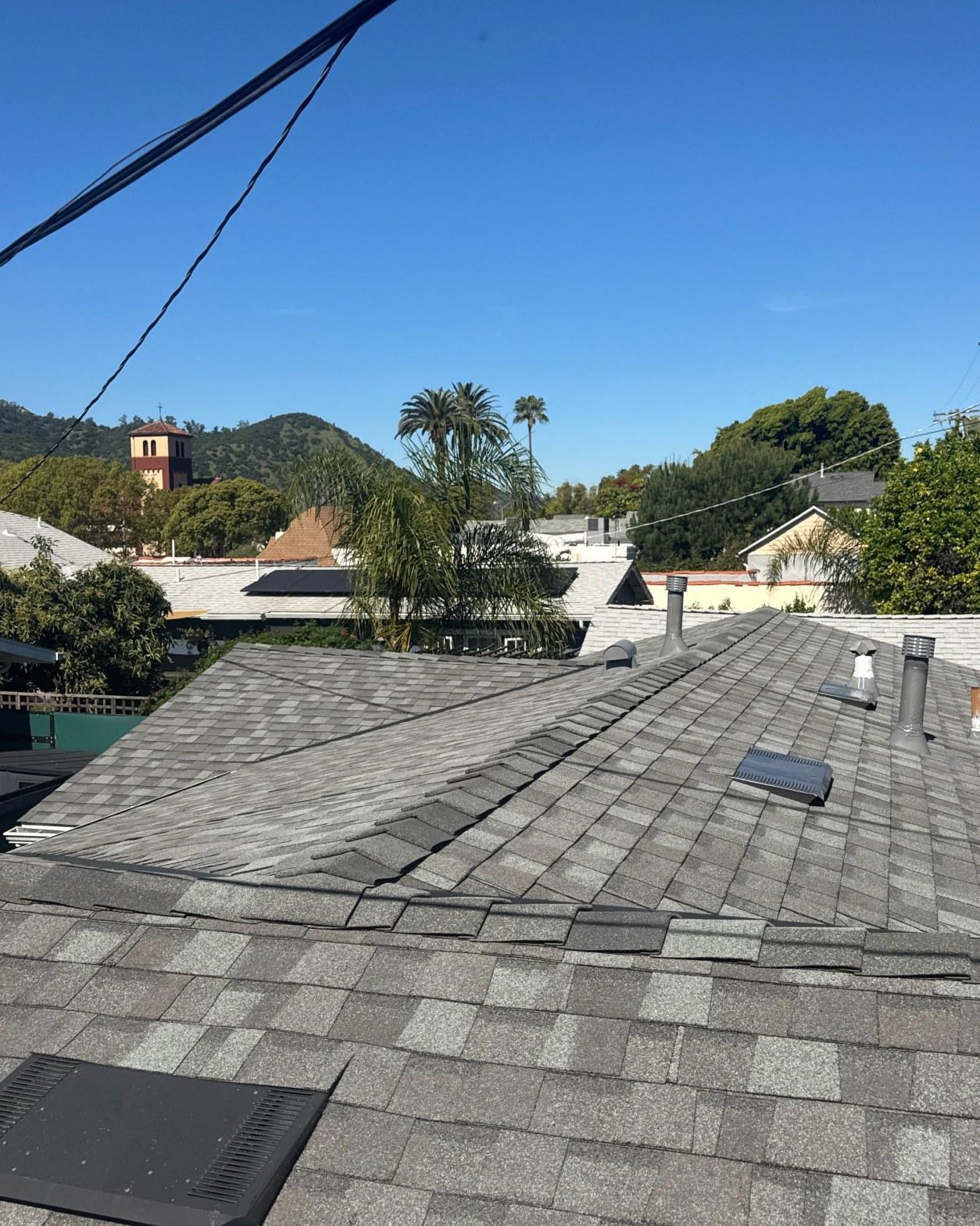
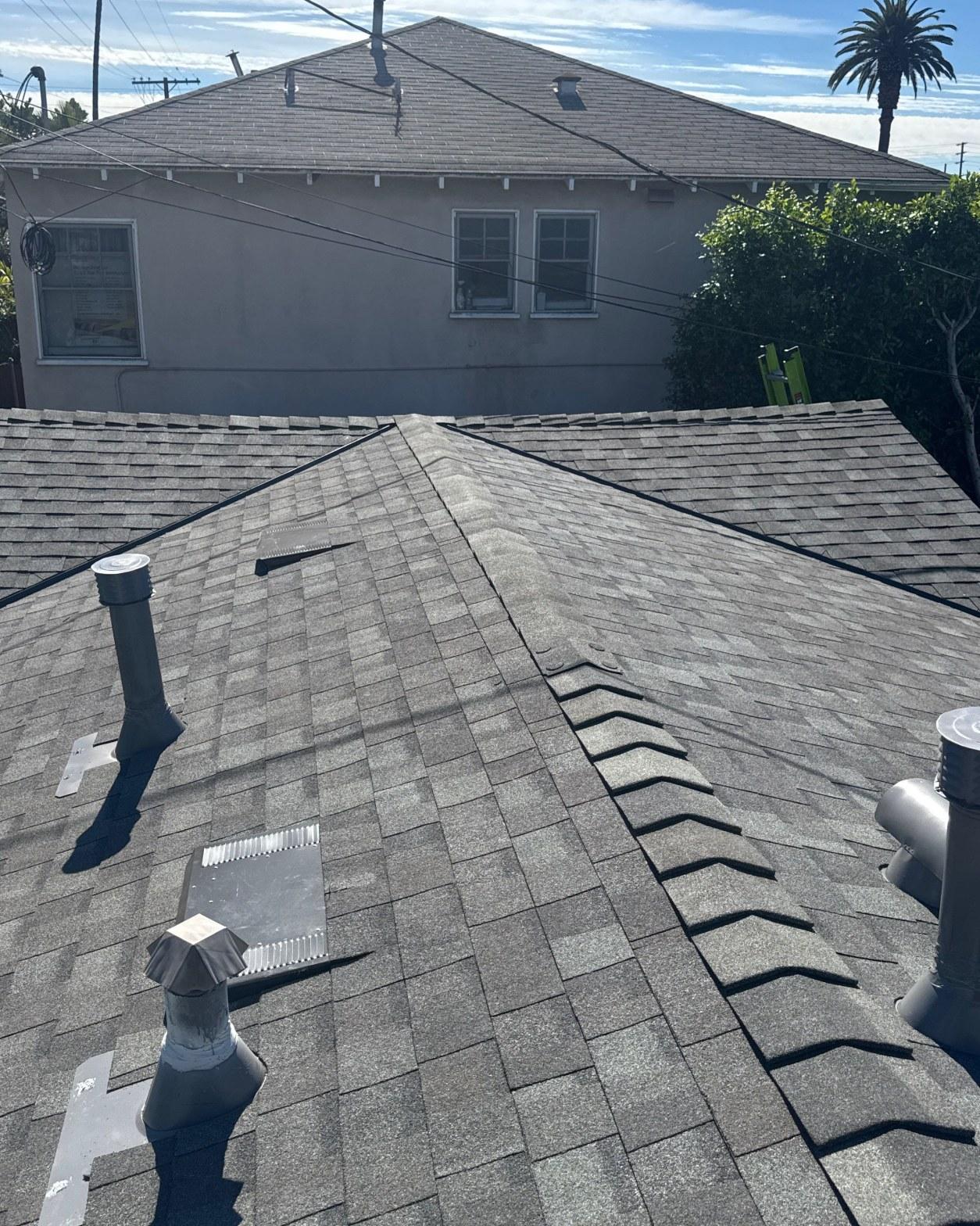
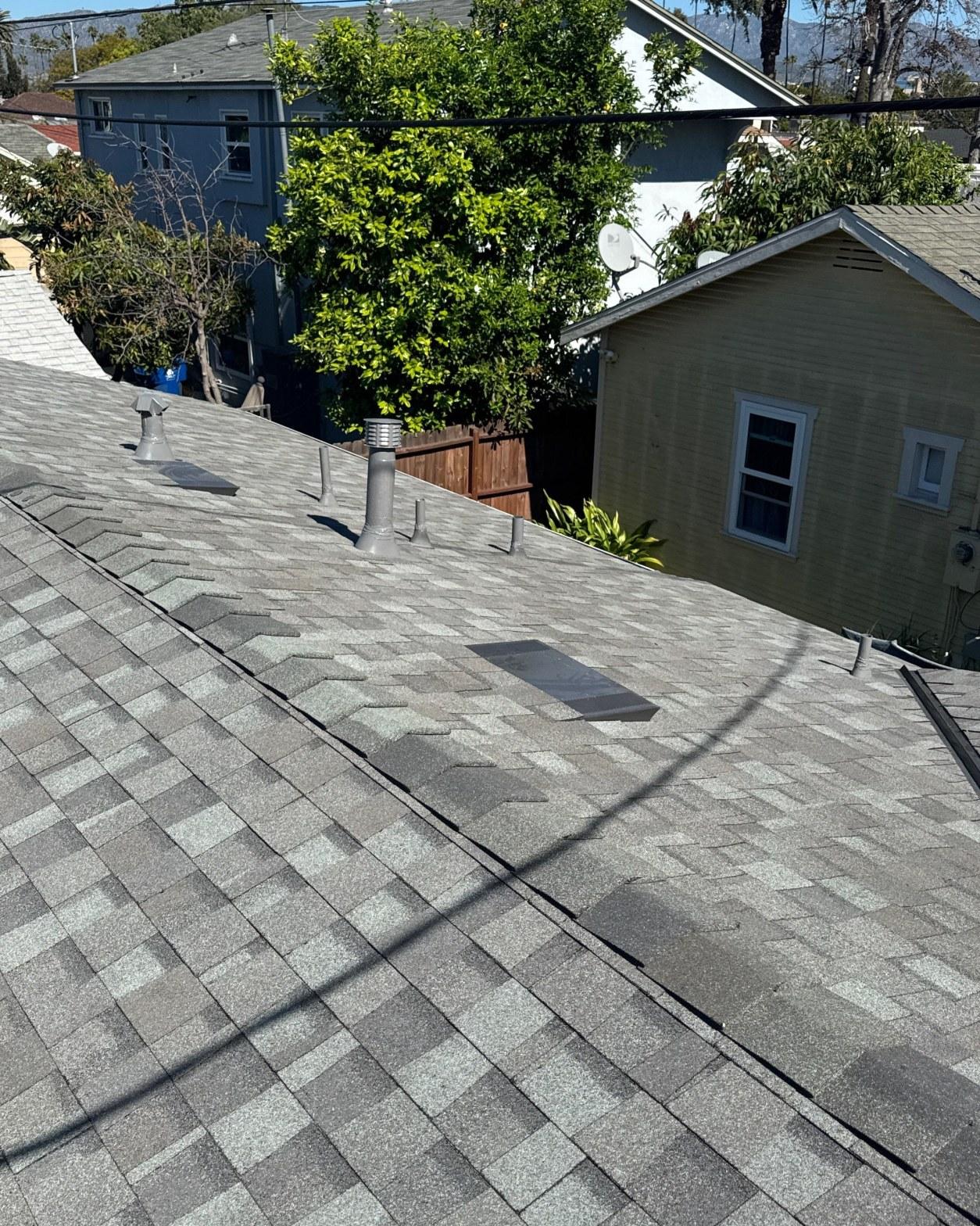
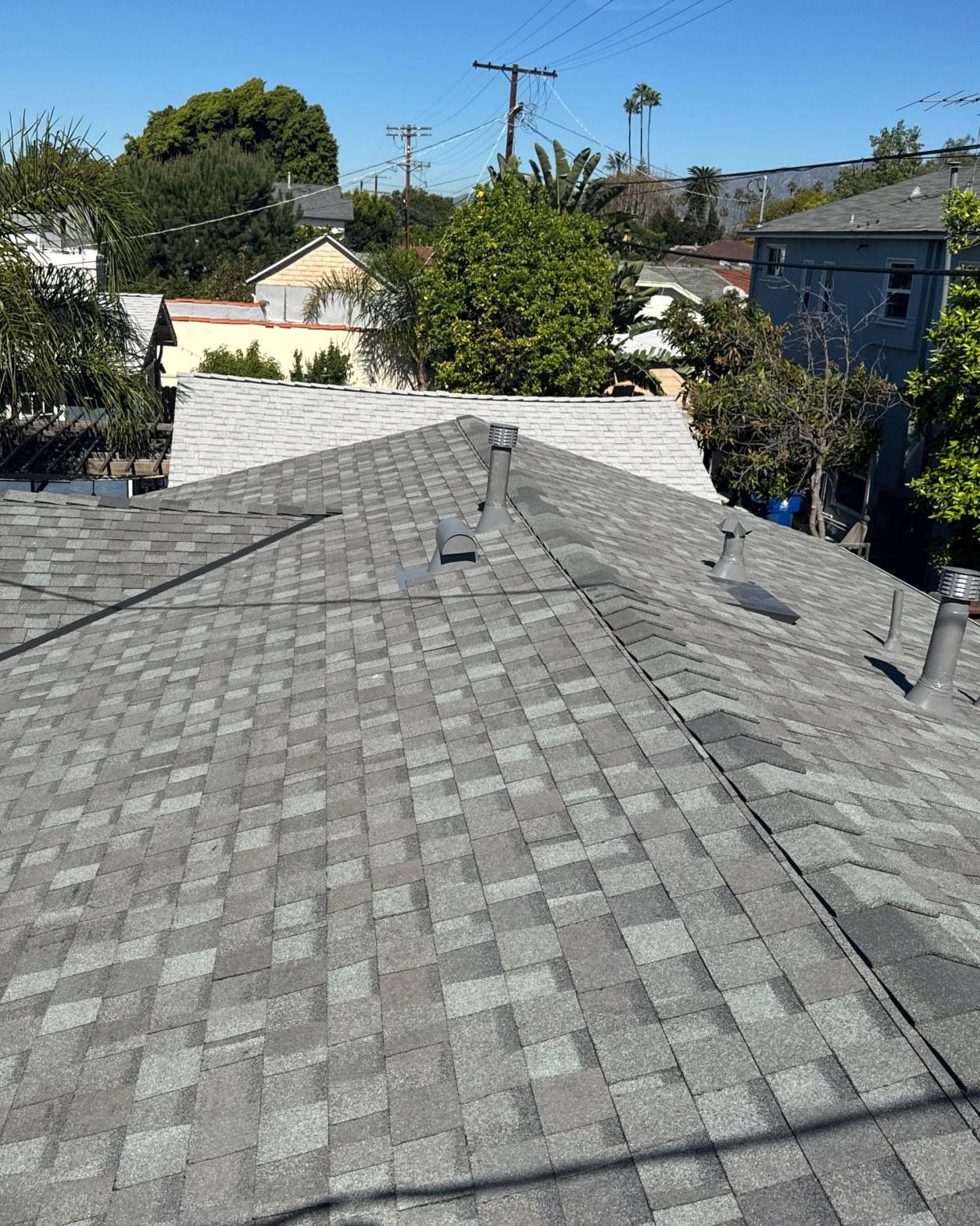
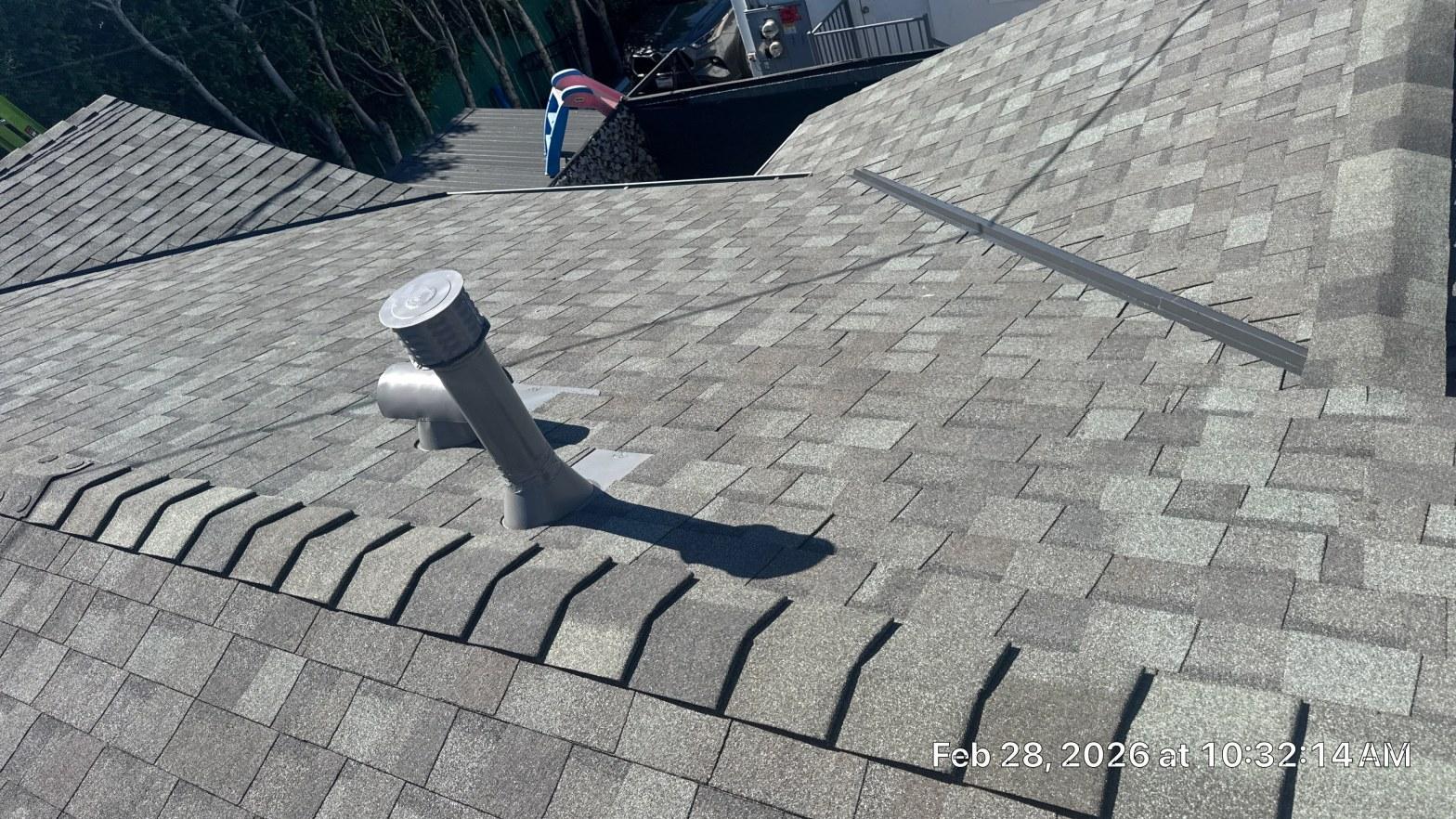
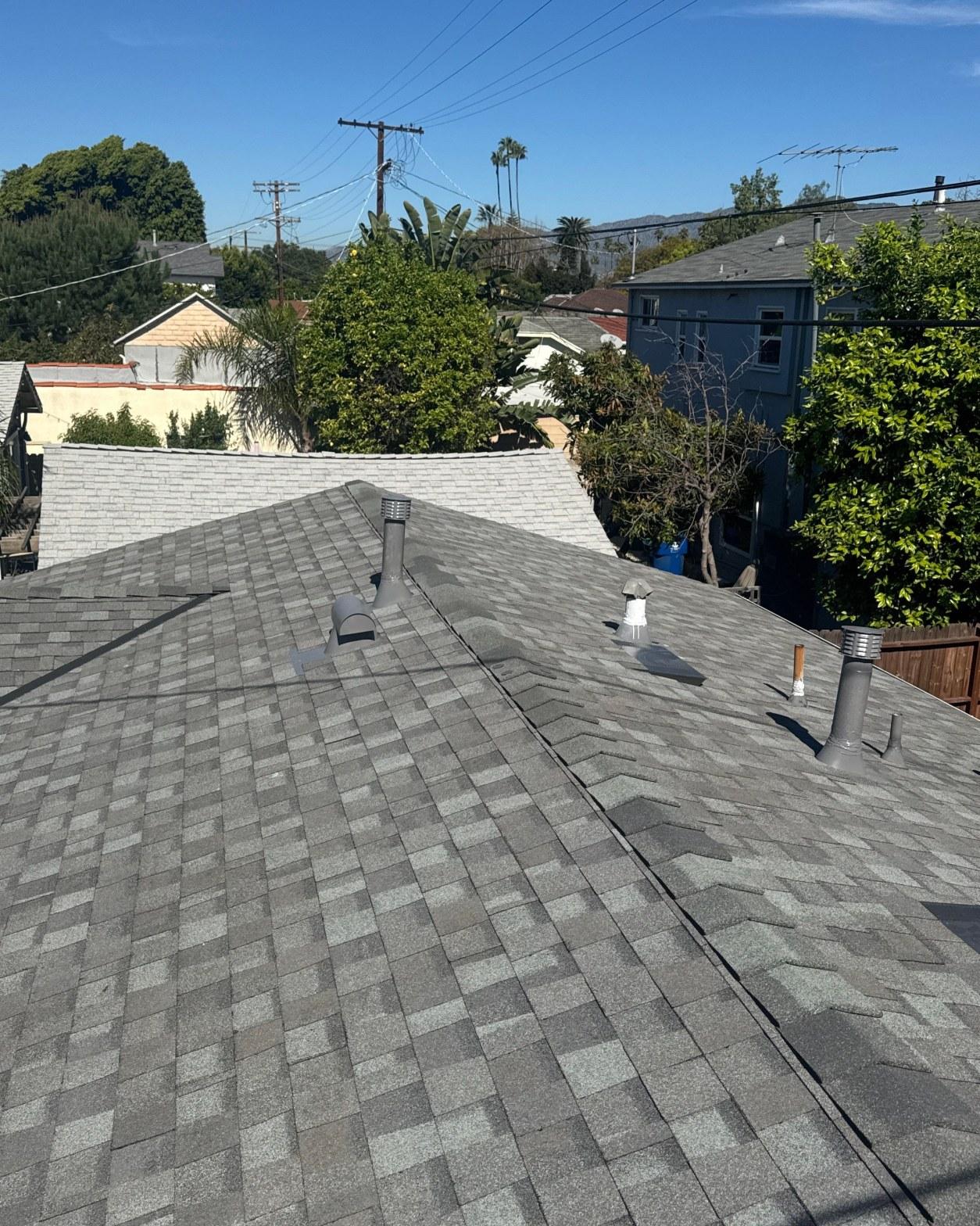
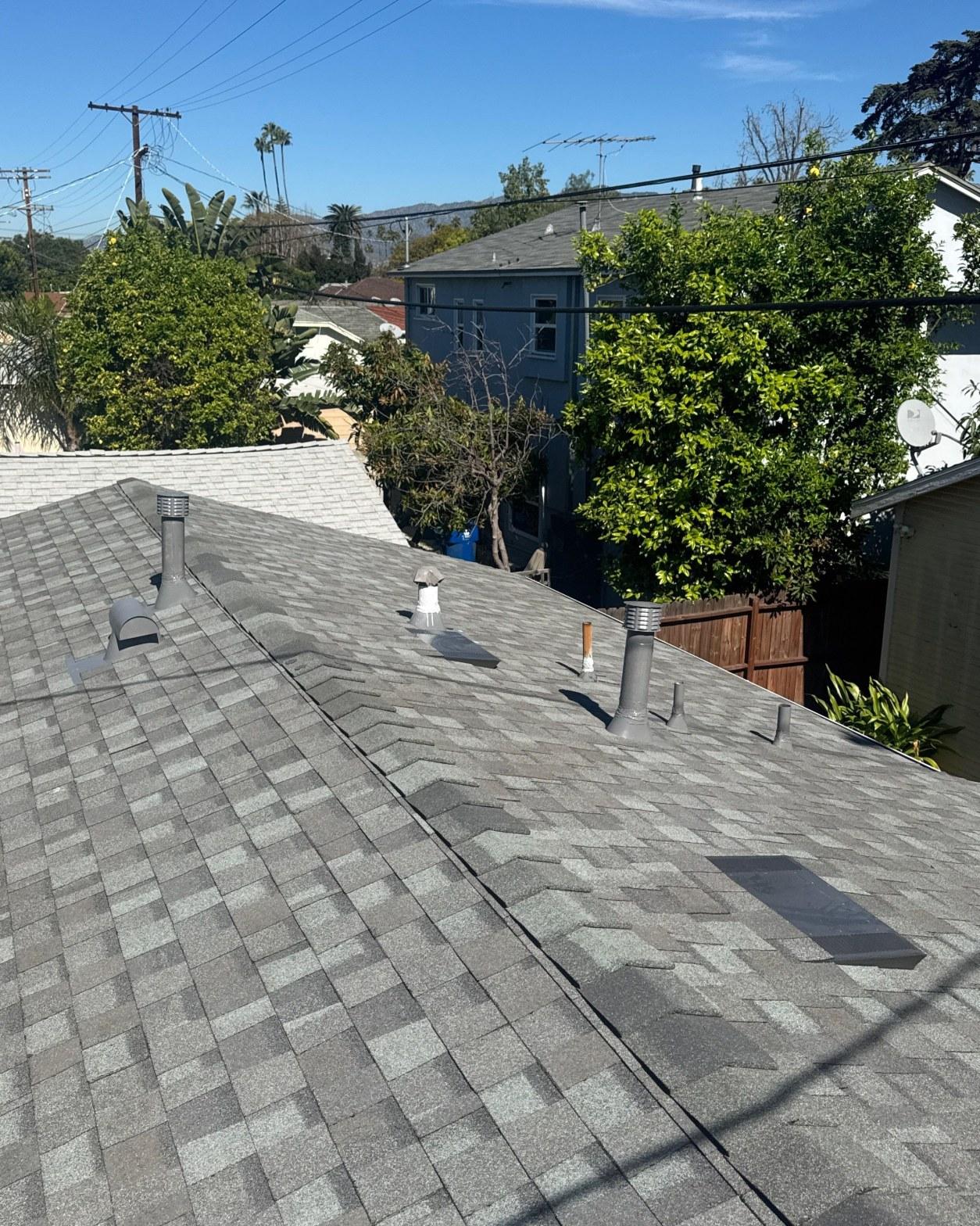
Every existing roof vent on this project was pulled and reset into the new shingle field, properly integrated with the underlayment and step-flashing rather than caulked over — which is how most vent leaks start. The photos show at least 3 low-profile exhaust vents reinstalled flush with the new shingle surface. Each vent cap sits above a fully lapped underlayment seam, so water running down the slope has nowhere to enter.
The gallery images show a close-up of one vent during the mid-installation stage — the CertainTeed underlayment laps cleanly around the base, with the surrounding shingles cut tight to the vent flange. This detail is easy to skip under time pressure, but it’s the difference between a 25-year roof and a 10-year callback.
According to California’s Title 24 building energy standards, attic ventilation must meet minimum net free area ratios — proper vent placement and count during a reroof is one of the few opportunities to bring an older home into compliance without a separate permit pull.
What Did the Finished Roof Look Like?
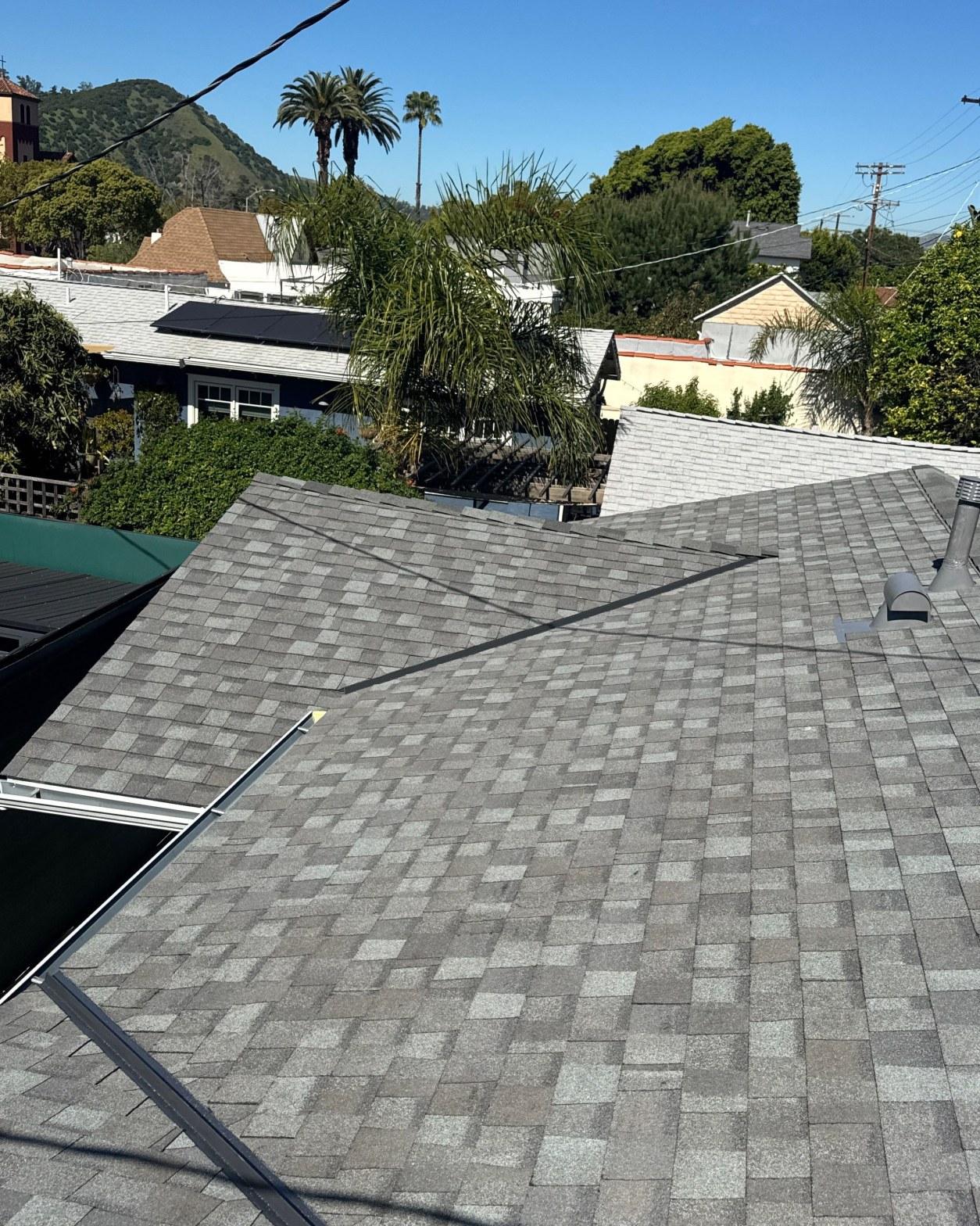
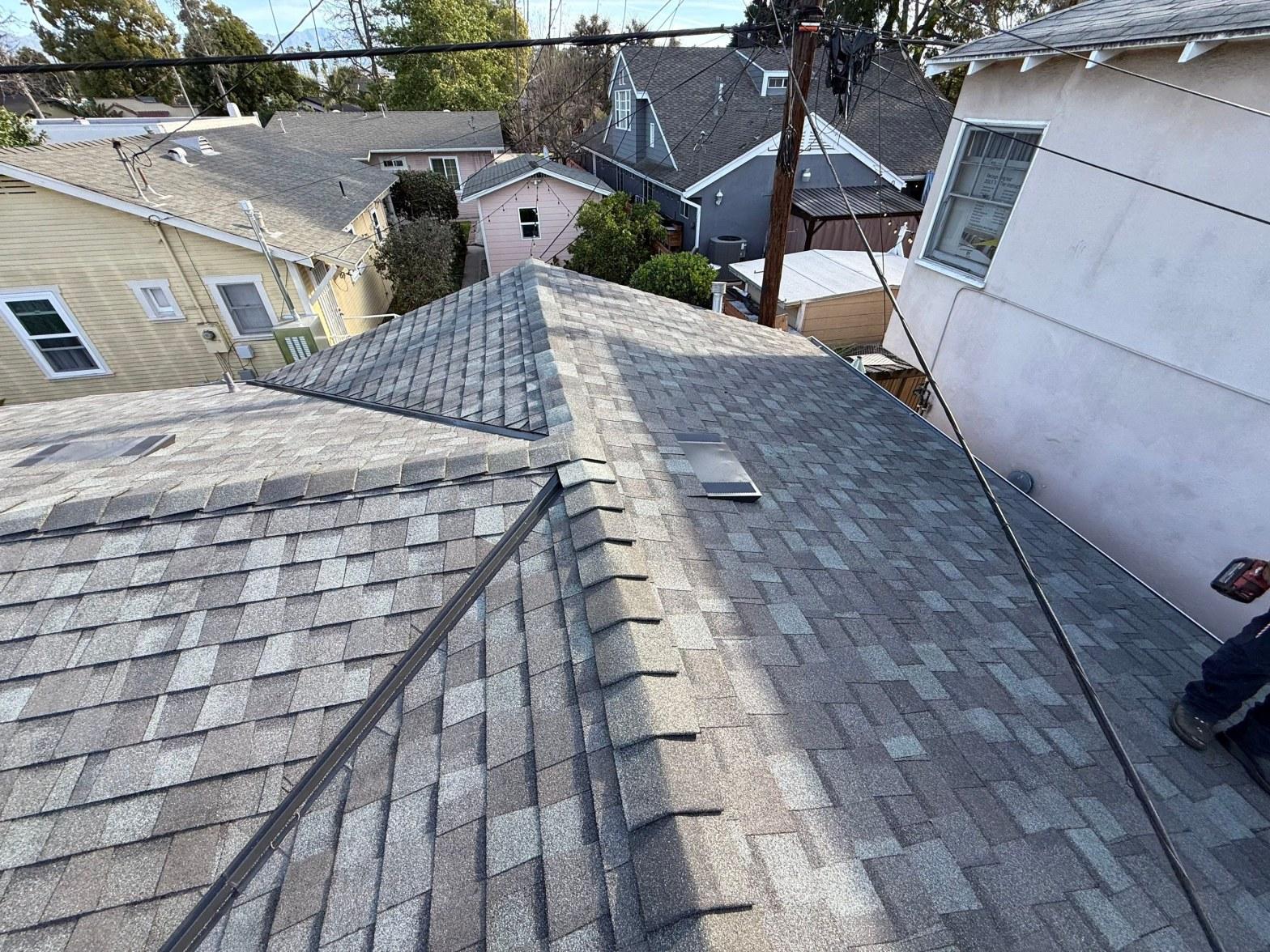
By the time the crew walked the completed slopes for final inspection, every plane showed consistent shingle alignment, tight hip and ridge returns, and clean metal drip edge at all eaves. The dimensional shingles used on this project carry a multi-decade manufacturer warranty — as of 2026, most major-brand architectural shingles are rated for 30 years or more under normal Southern California UV and temperature conditions, where NOAA data shows coastal areas averaging fewer than 15 inches of annual rainfall but high cumulative UV exposure that degrades lower-grade shingles faster.
The hip intersections — visible clearly in the aerial-angle gallery shots — show consistent 5-inch exposure maintained through the transition, which is the standard exposure for most 3-tab and architectural shingles per CertainTeed’s installation guidelines. Getting that consistency across a compound hip requires cutting each course individually rather than running straight courses and trimming at the hip — slower, but the only way to get a clean result.
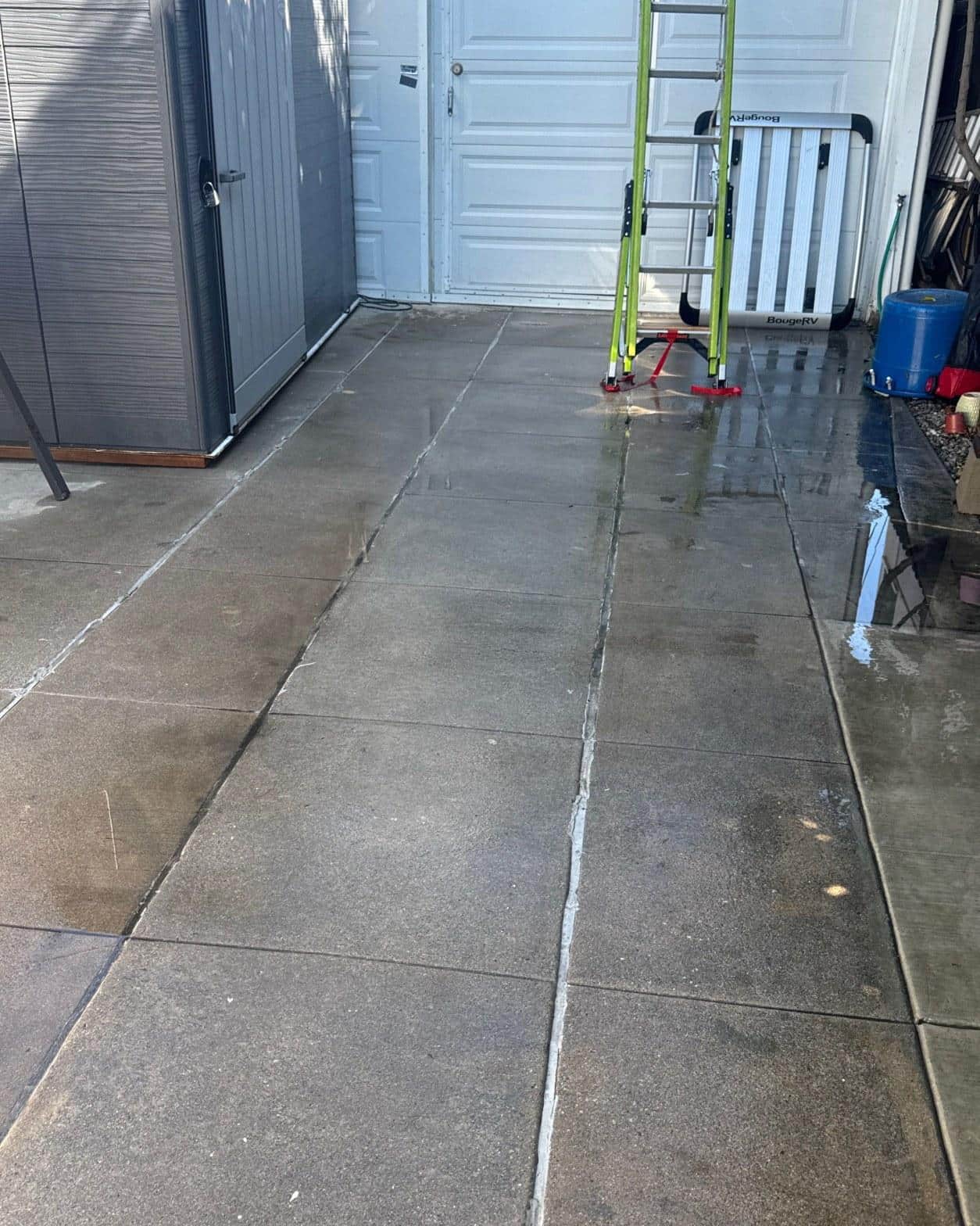
We also documented cleanup at street level before leaving — the concrete driveway and side access area visible in the gallery were cleared of all nail debris and shingle scraps the same day, which is standard practice on every job we complete.
Get a Quote on Your Southern California Reroof
If your roof is showing its age — granule loss in the gutters, soft spots on the deck, or shingles that are curling at the tabs — a full replacement like this one is almost always more cost-effective than continued patching. Roof Replacement CA is Licensed by the California Contractors State License Board (CSLB) and works across Southern California residential properties.
Schedule your free roof inspection and written estimate today. Call us directly or submit your address through our contact form and we’ll get eyes on your roof within 48 hours.









