

What Did This Malibu Roof Replacement Project Involve?
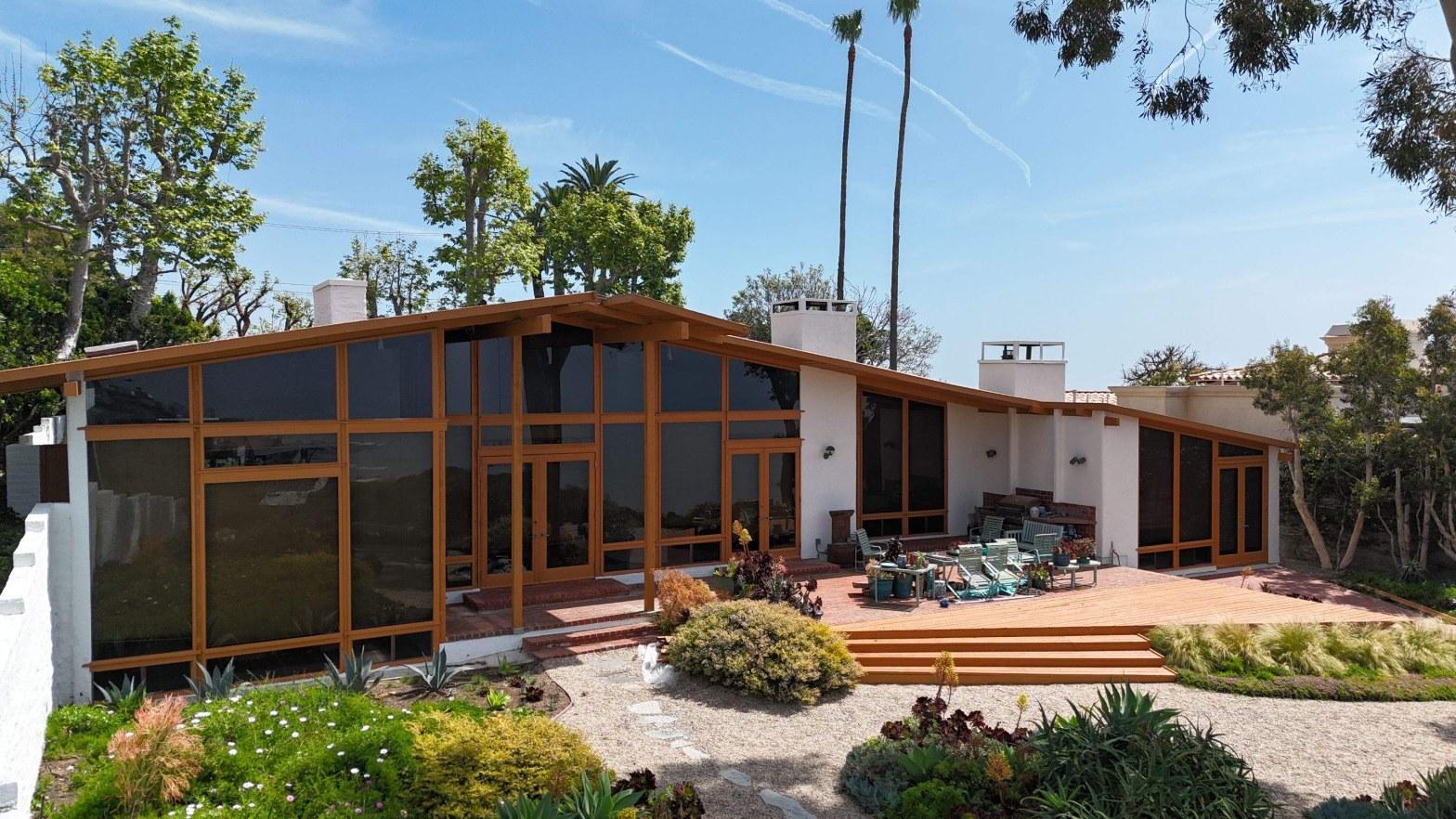
This project was a full shingle reroof on a mid-century modern single-family home at 3909 Sierks Way in Malibu, CA 90265 — one of the more architecturally distinctive properties we’ve worked on along this coastal stretch. The homeowner’s goal was straightforward: replace an aging asphalt shingle roof that had accumulated years of wear, address failing penetration flashings, and do it without disrupting the home’s clean-lined, wood-framed glass facade.
The house spans multiple roof sections at a low pitch — a common configuration in mid-century design that trades dramatic slope for horizontal flow. That geometry creates specific roofing challenges: water moves slowly, debris sits longer, and penetrations like pipe boots take on outsized importance. The home also sits close to the Pacific, and coastal salt-air exposure documented by NOAA accelerates granule loss and adhesive degradation on asphalt shingles faster than inland installations.
Project Gallery
What Condition Was the Old Roof In?
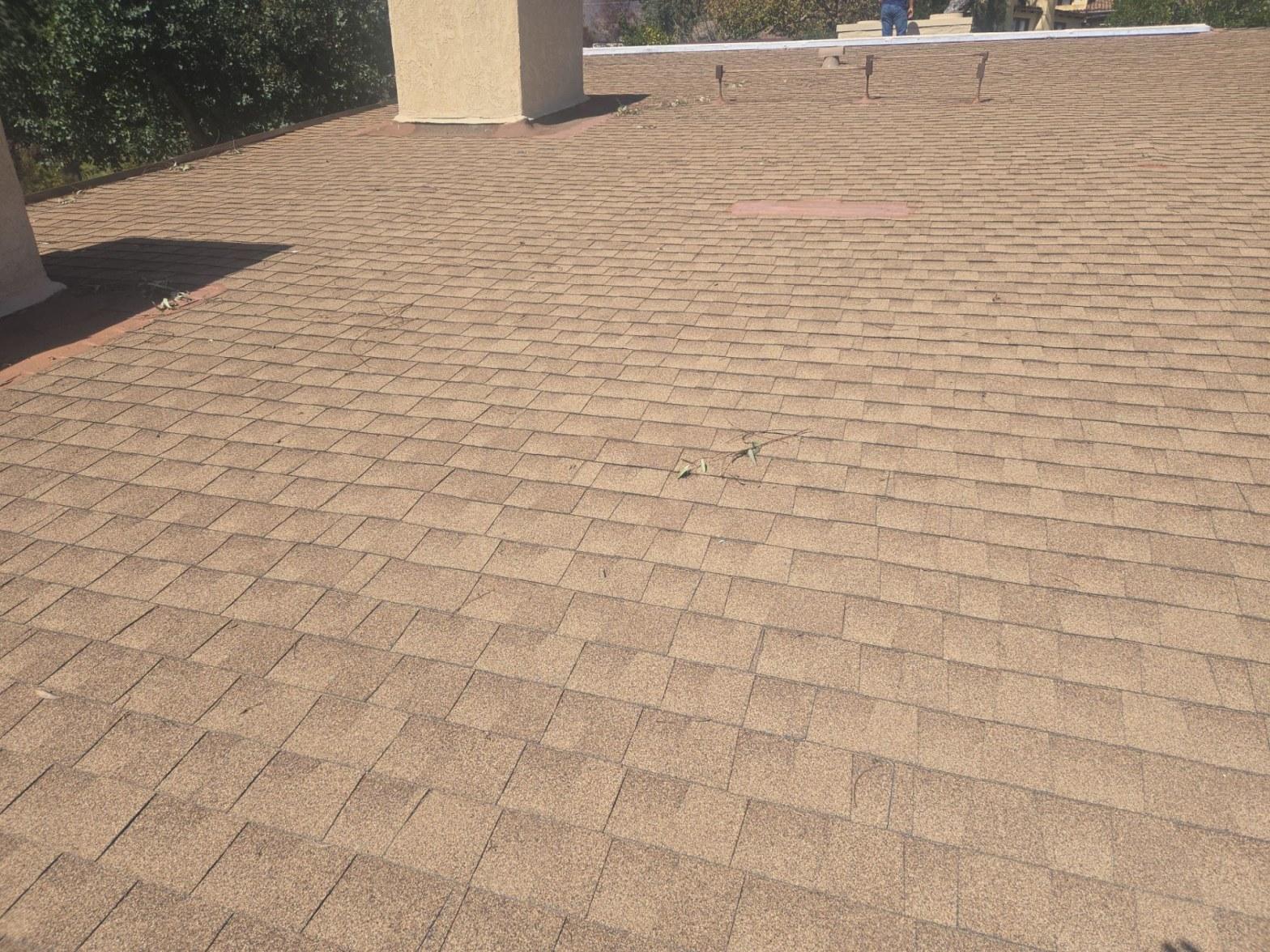
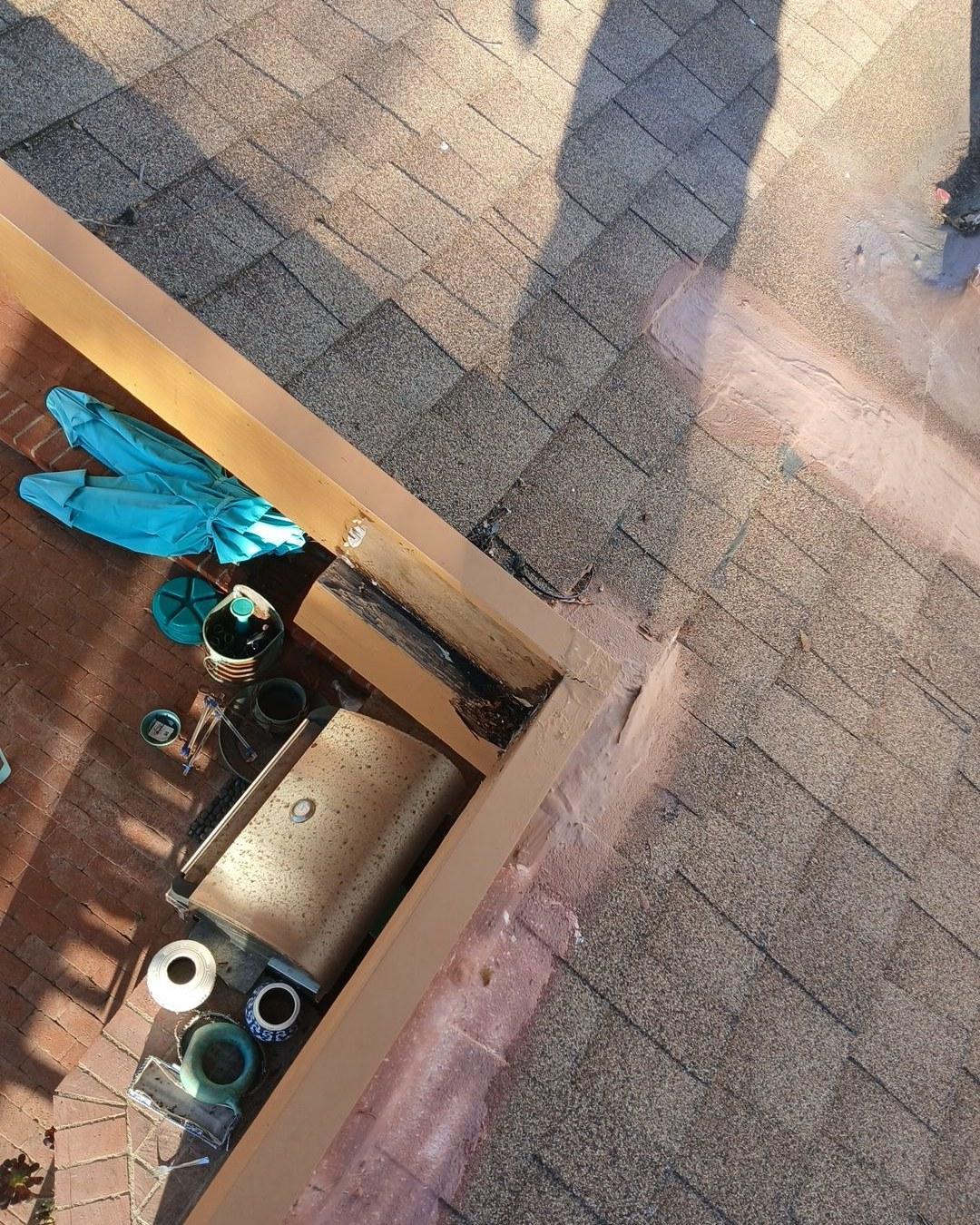
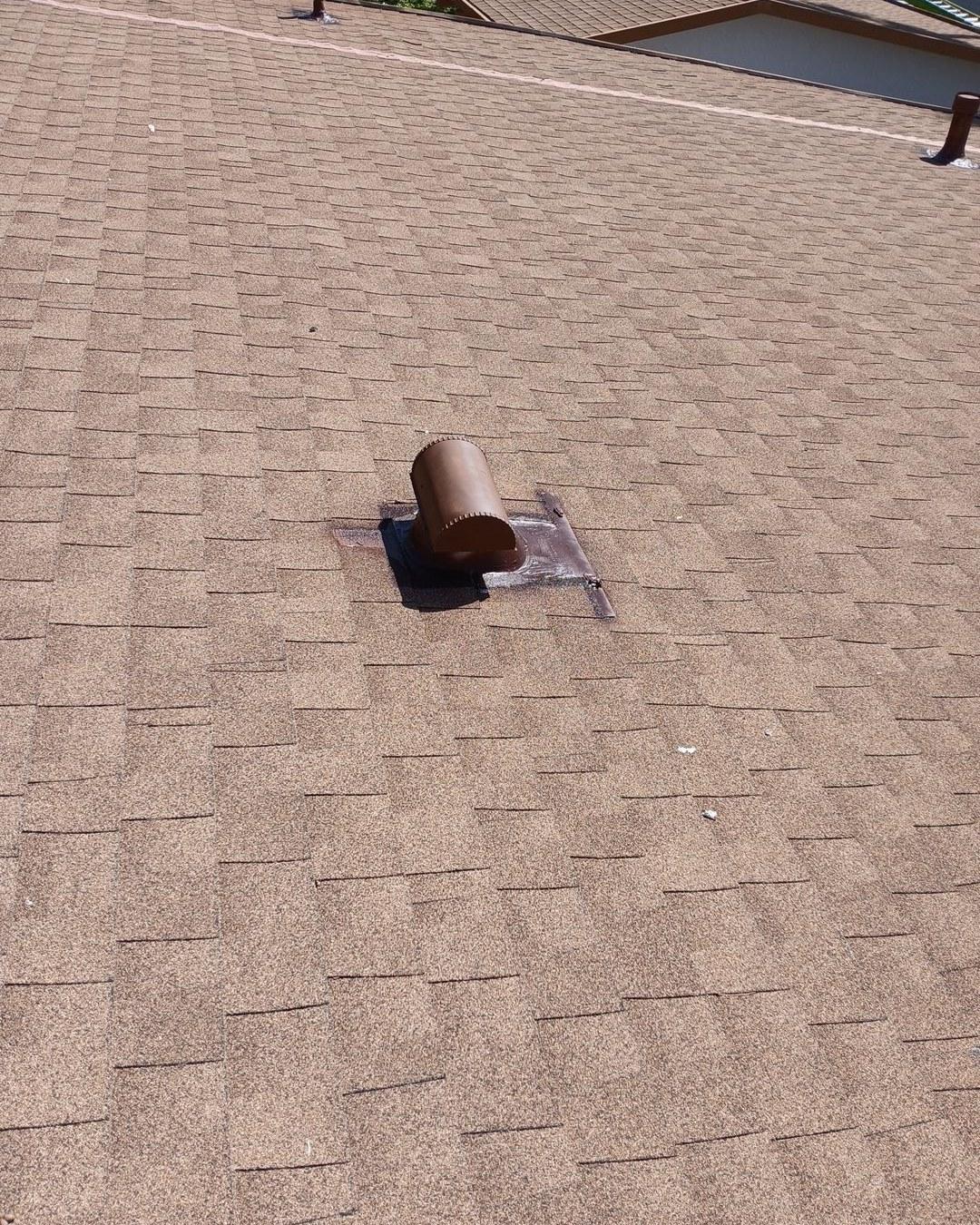
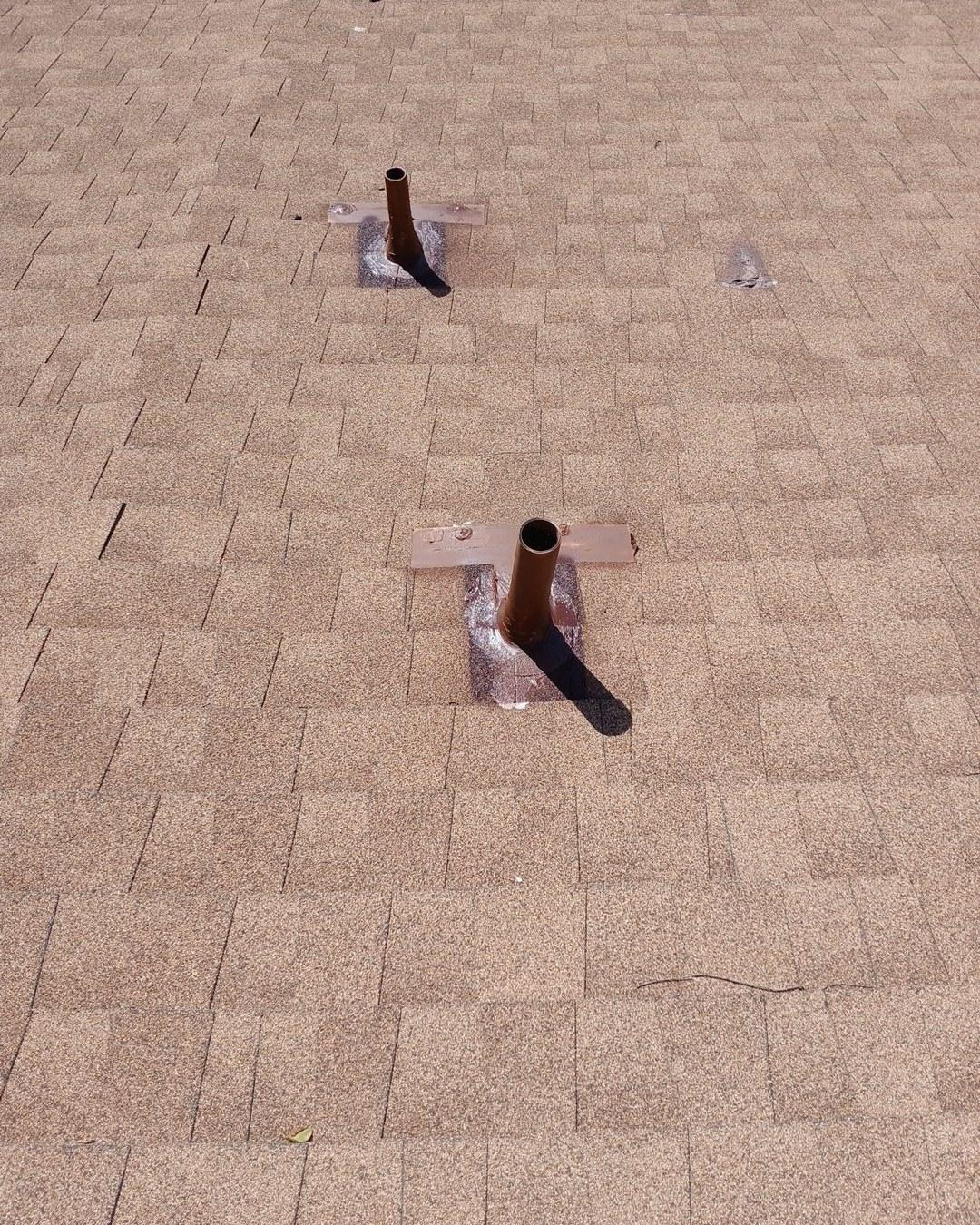
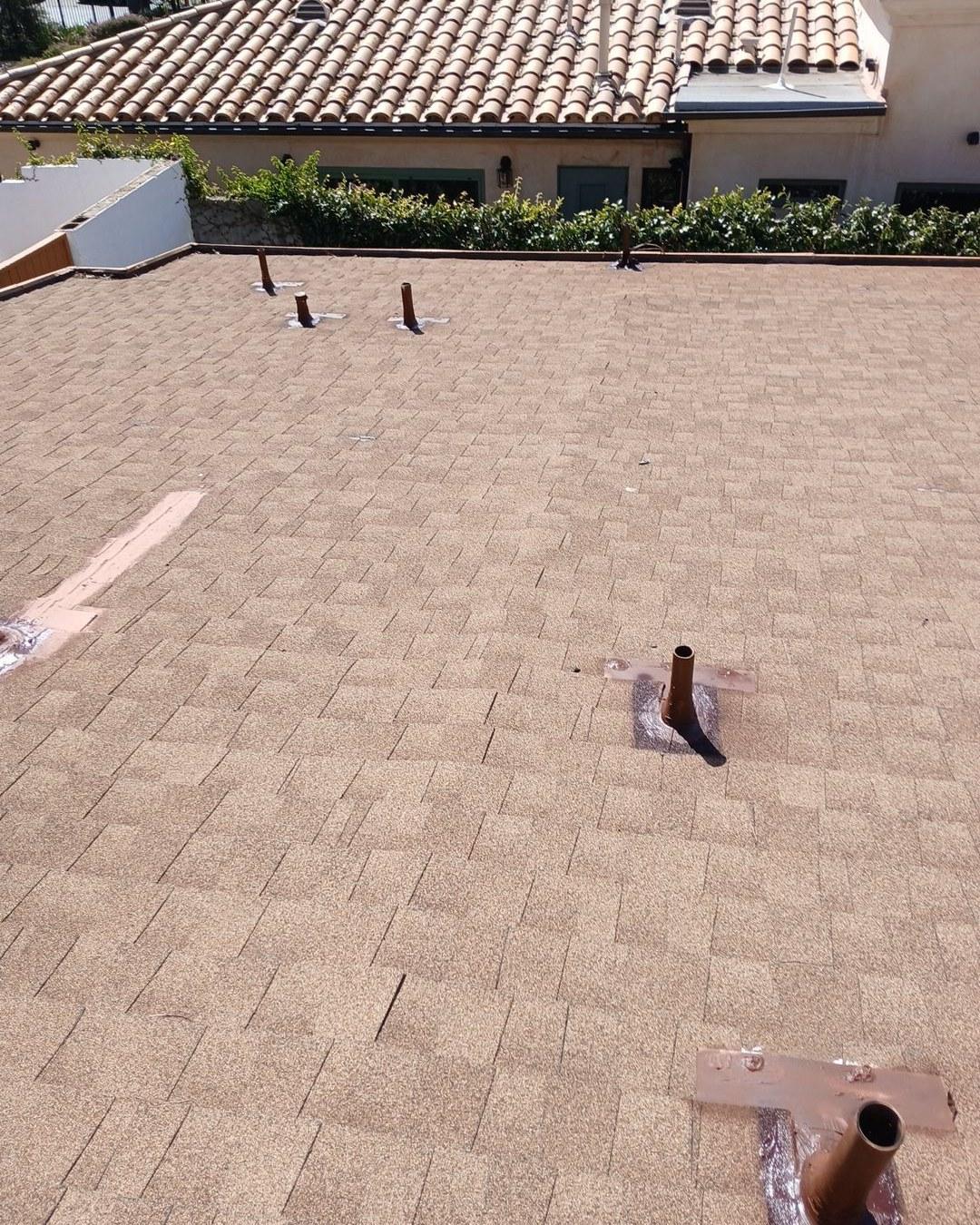
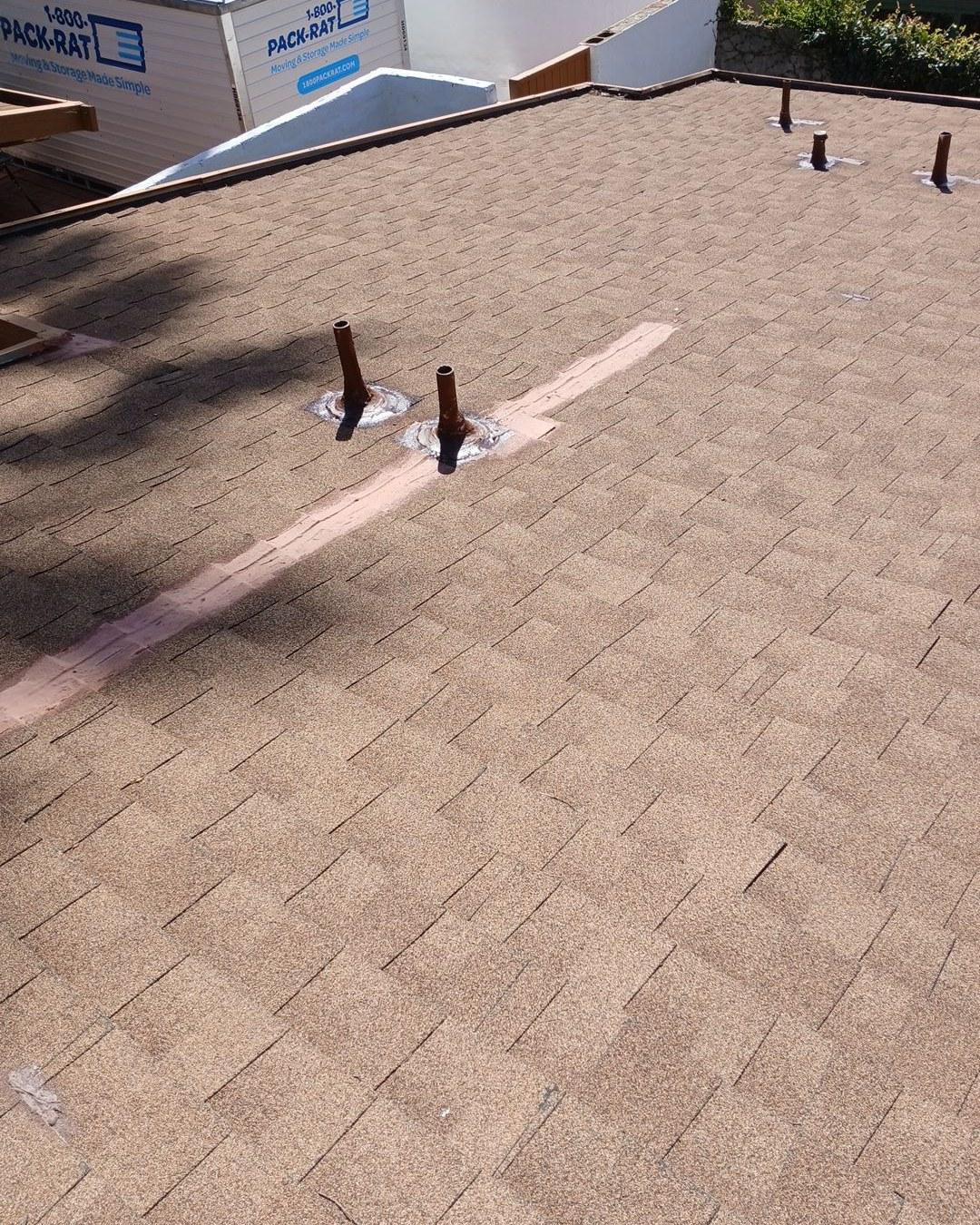
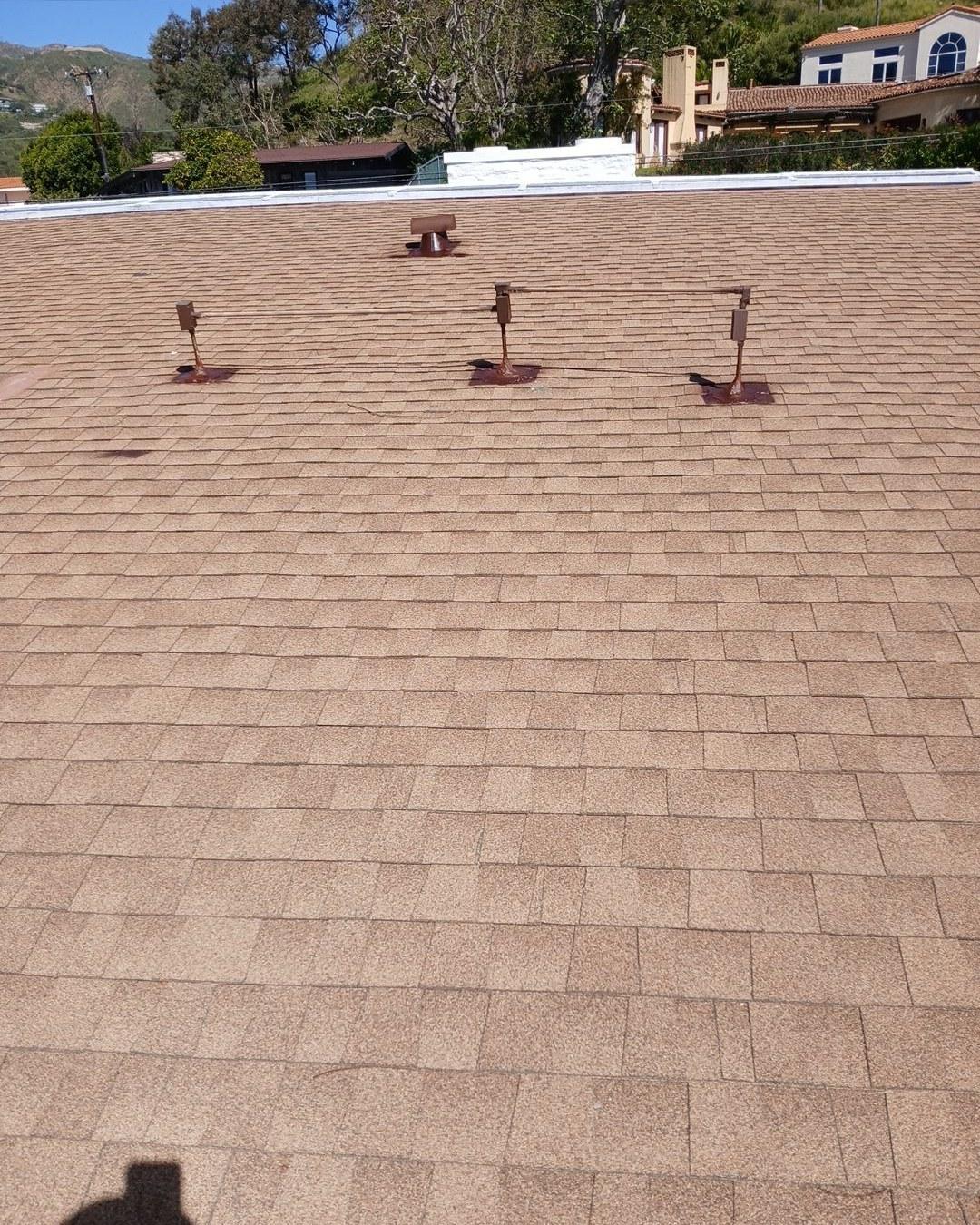
The existing roof showed the classic late-stage wear pattern for asphalt shingles in a coastal California climate: granule loss concentrated around penetrations, exposed pipe boots with cracked rubber collars, and organic debris collecting in the low-slope valleys.
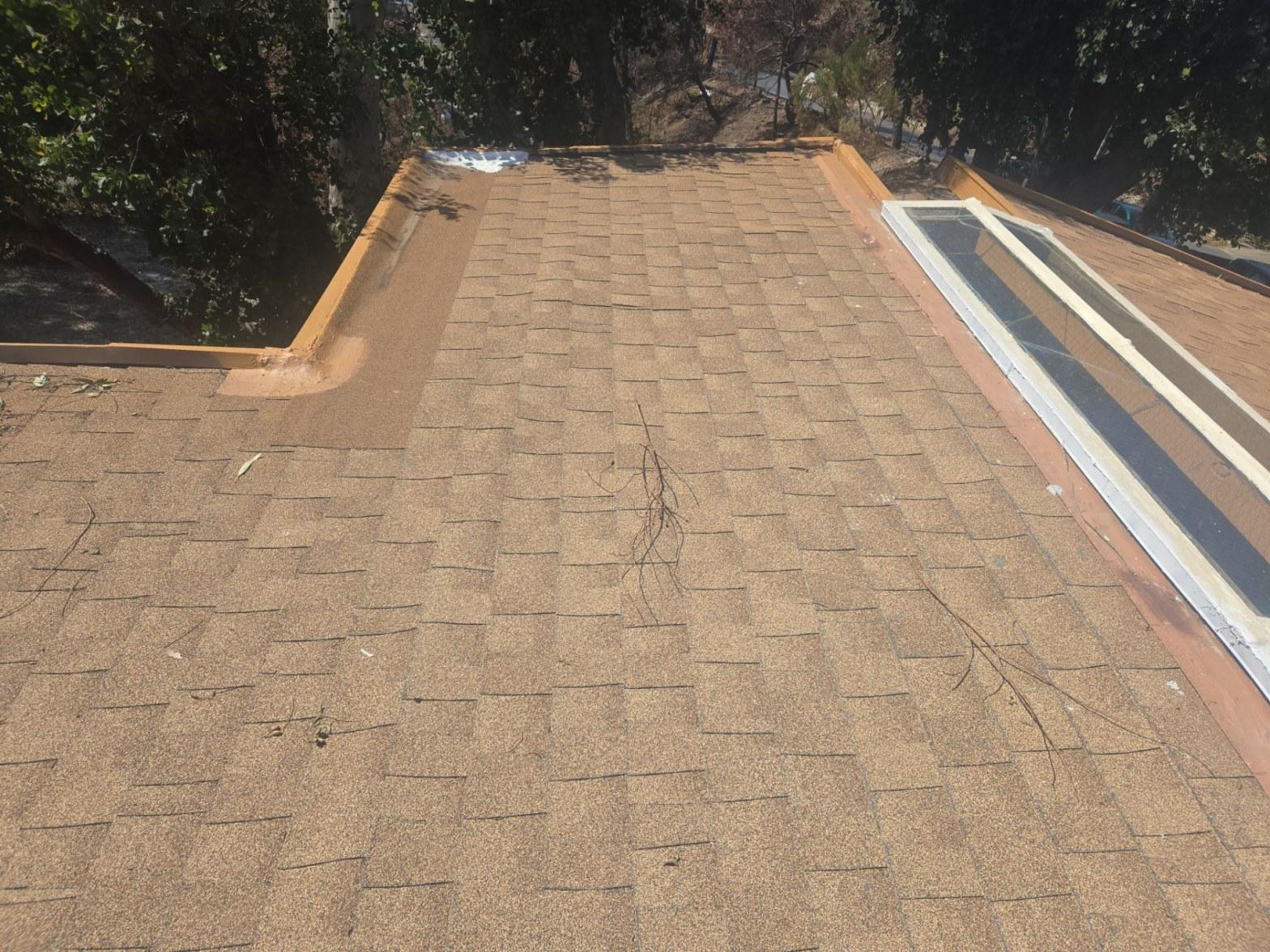
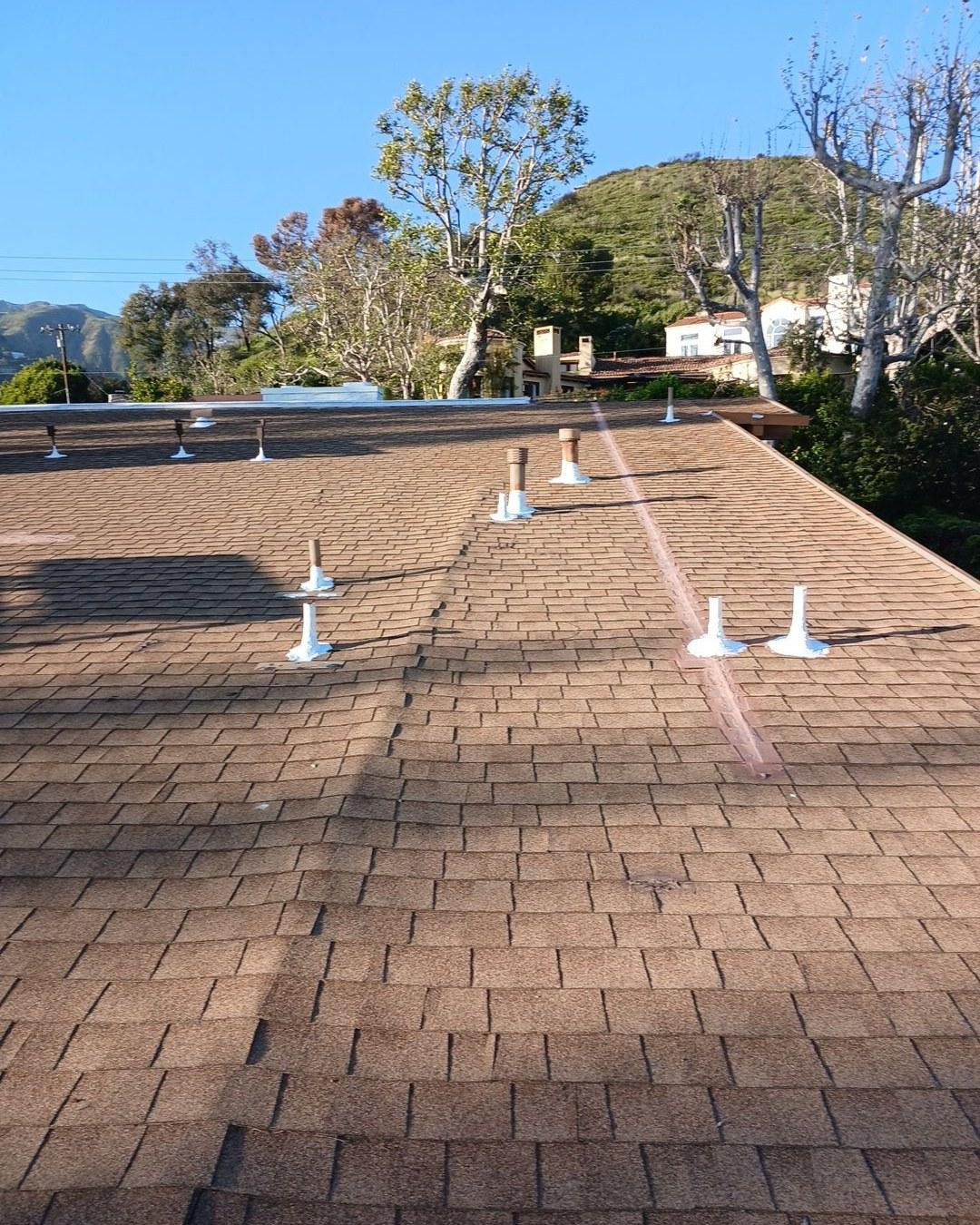
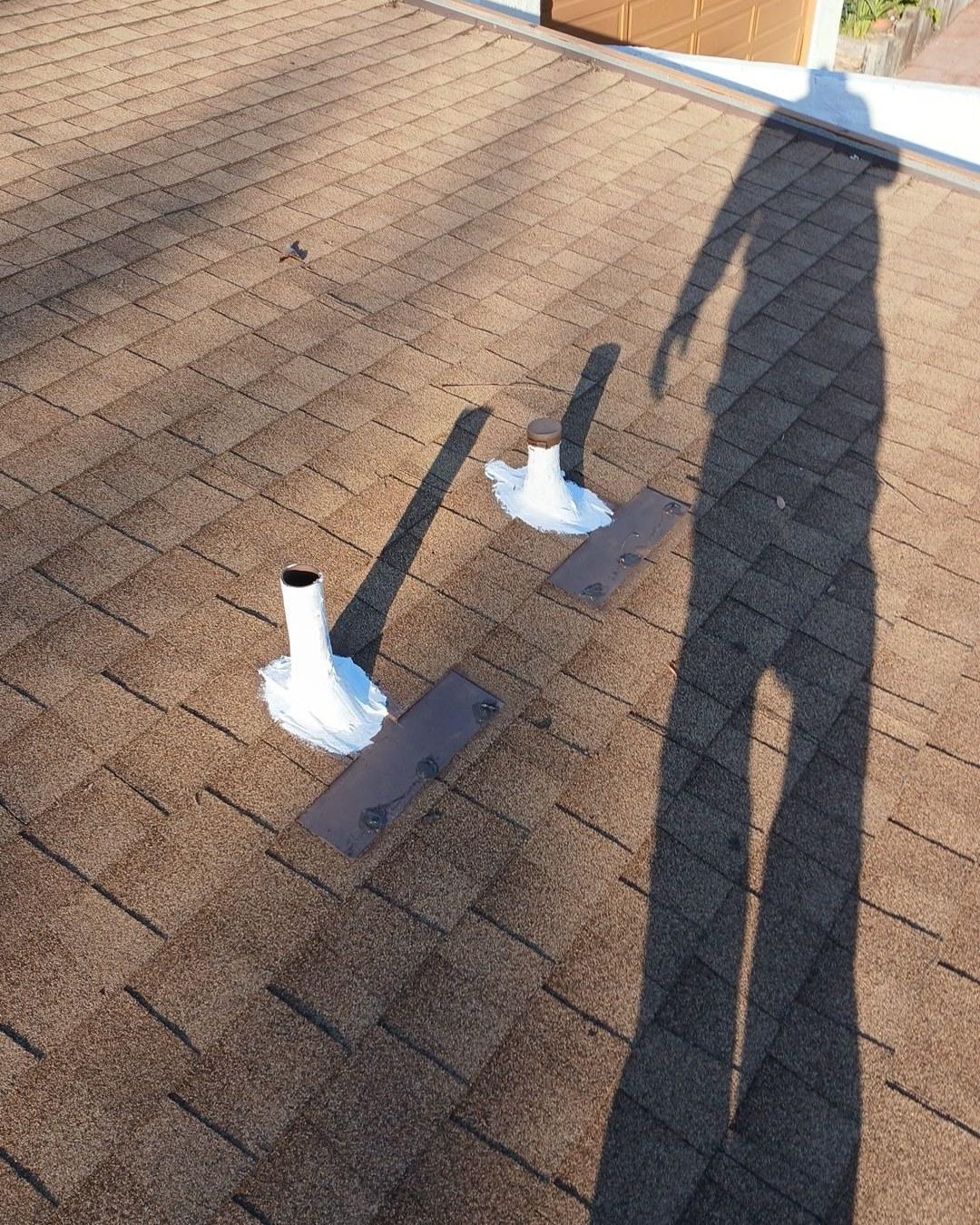
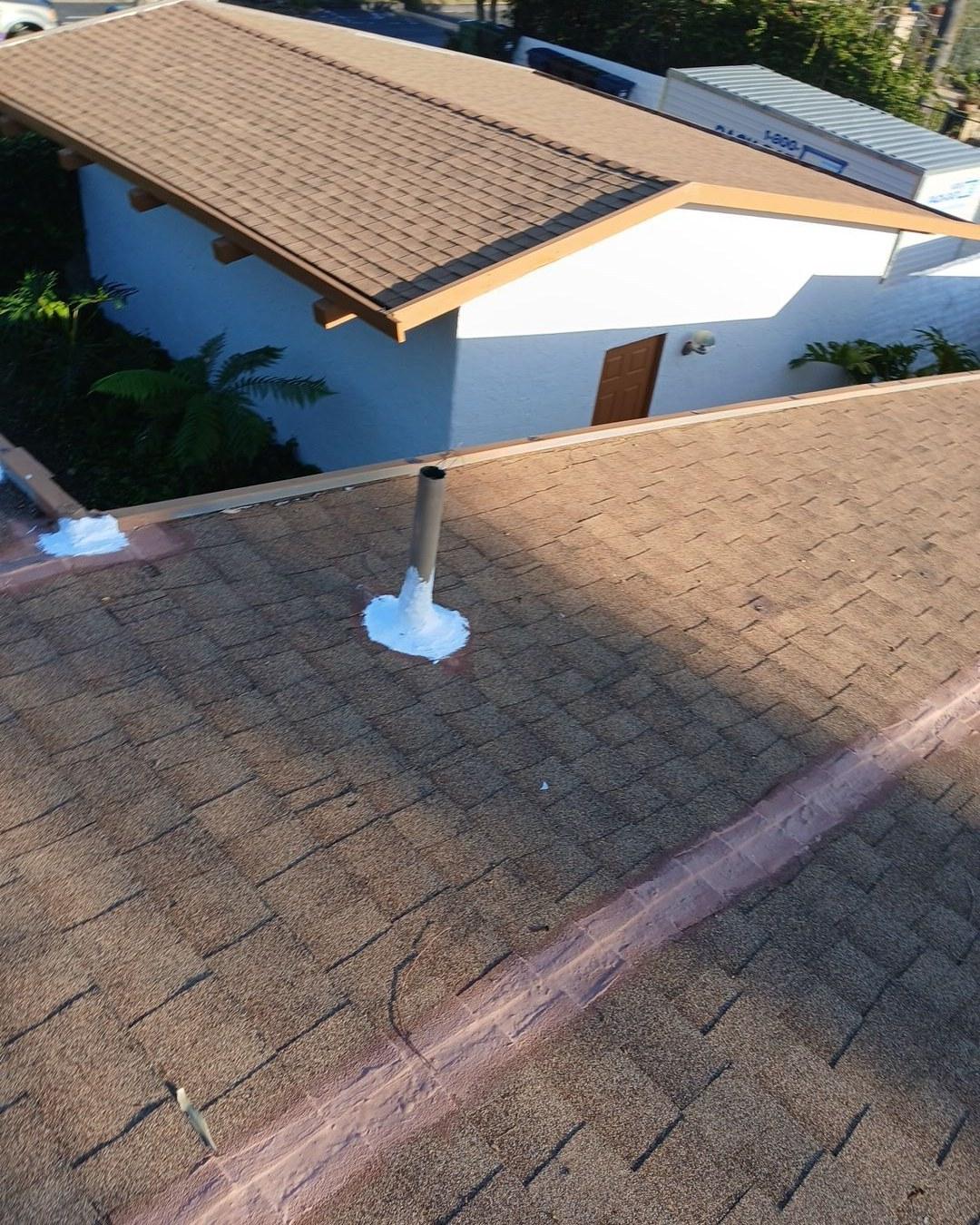
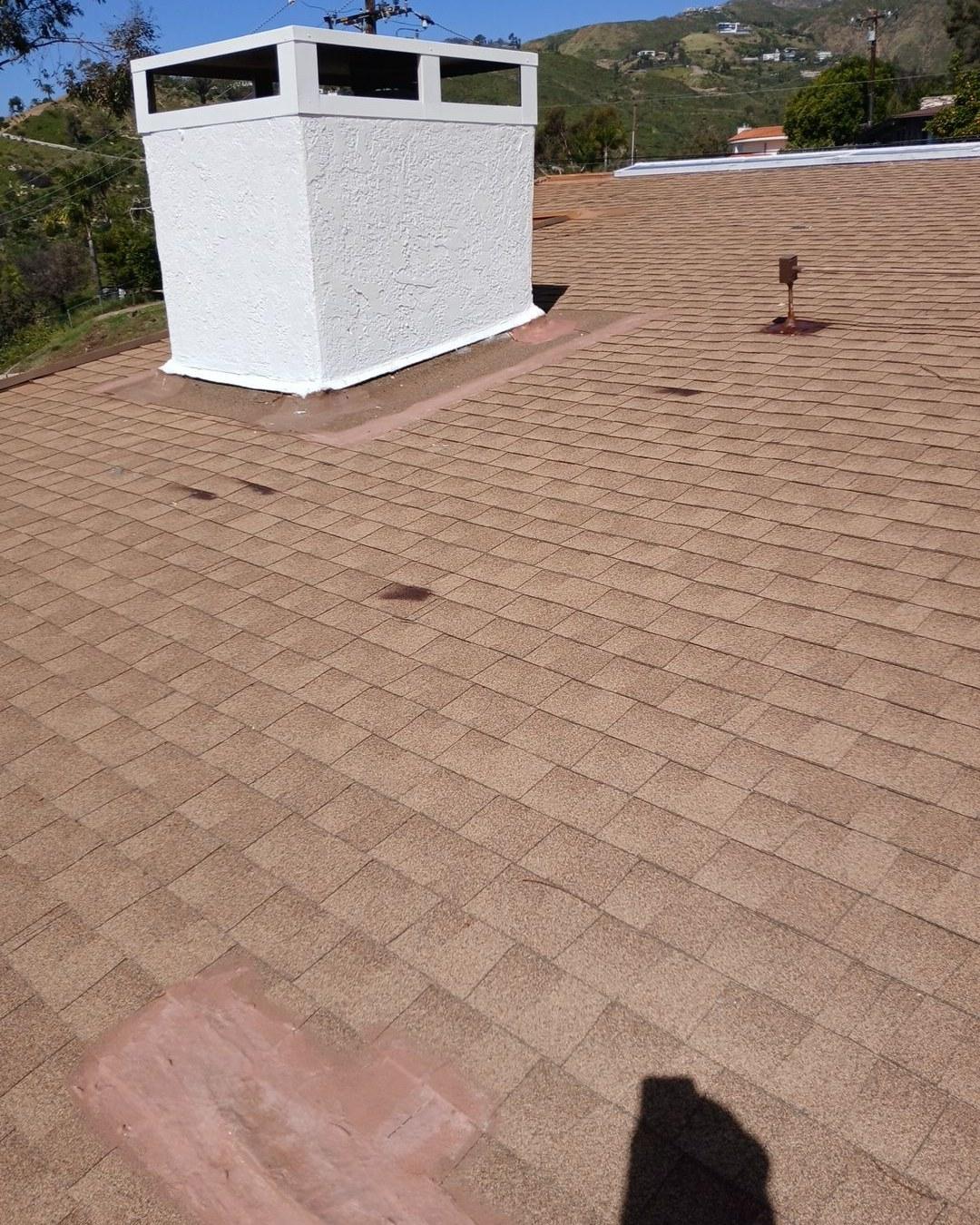
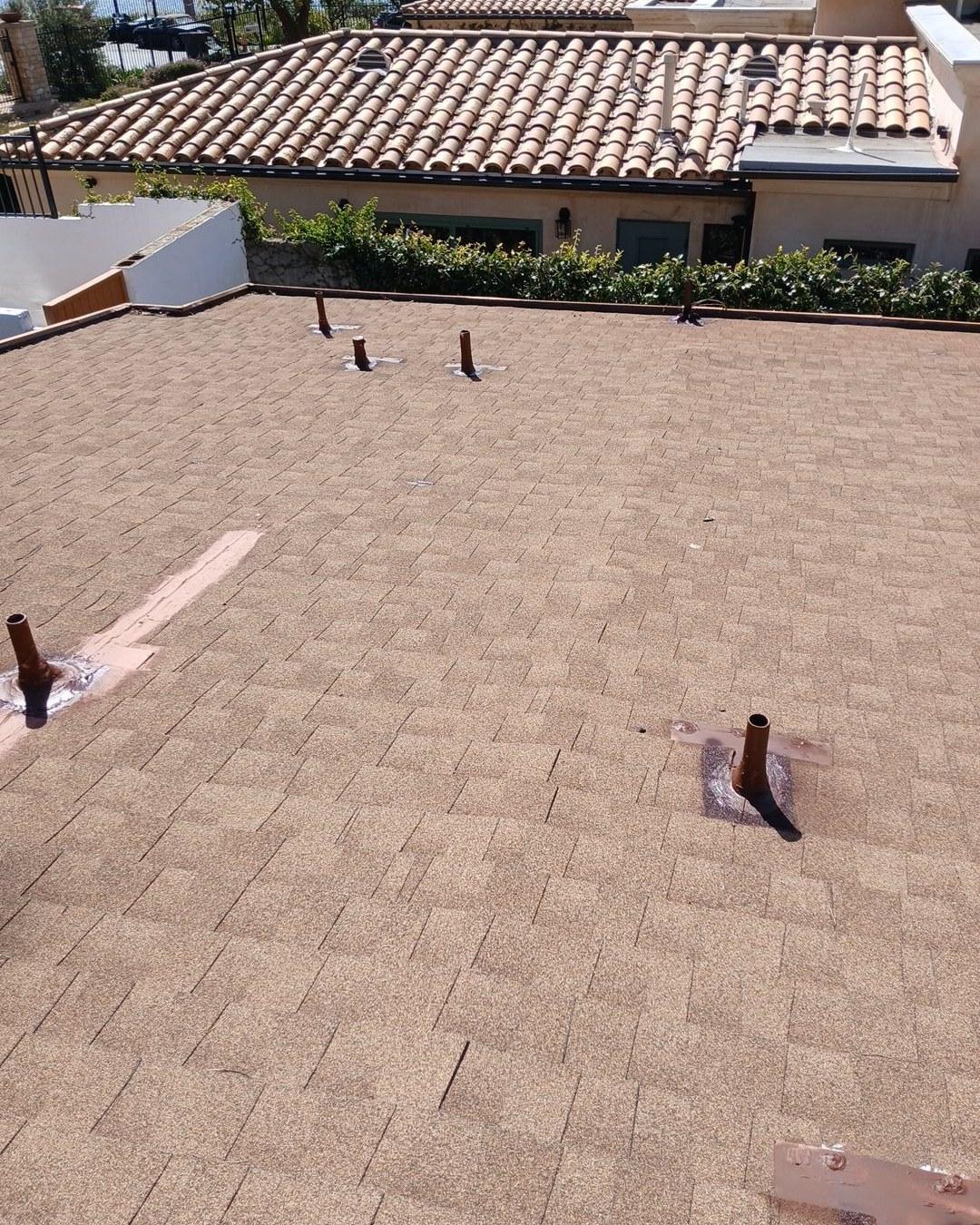
As visible in the close-up roof photo, several pipe boots were standing fully exposed with no protective cap flashing — a condition that allows water to wick directly into the penetration sleeve during rain events. Twigs and organic material had settled across the field of the roof, trapping moisture against the shingle surface. Patch marks were visible in at least 3 locations, indicating prior spot repairs that had bought time but not solved the underlying age issue.
Across our coastal Malibu projects, we find that pipe boot rubber fails in under 10 years when exposed to direct UV and salt air — compared to a 15–20 year lifespan on shaded inland roofs. That failure pattern was consistent with what we saw here.
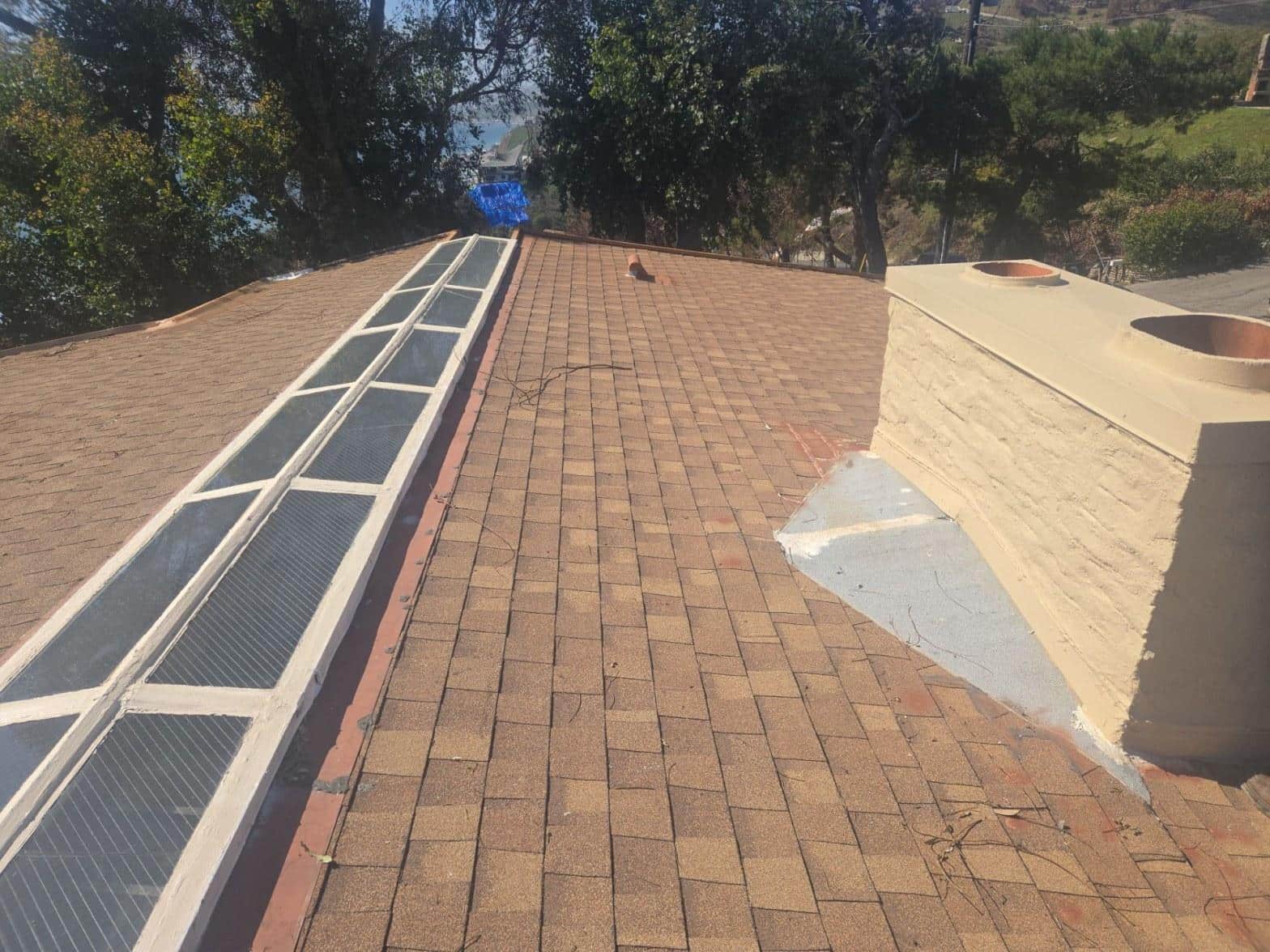
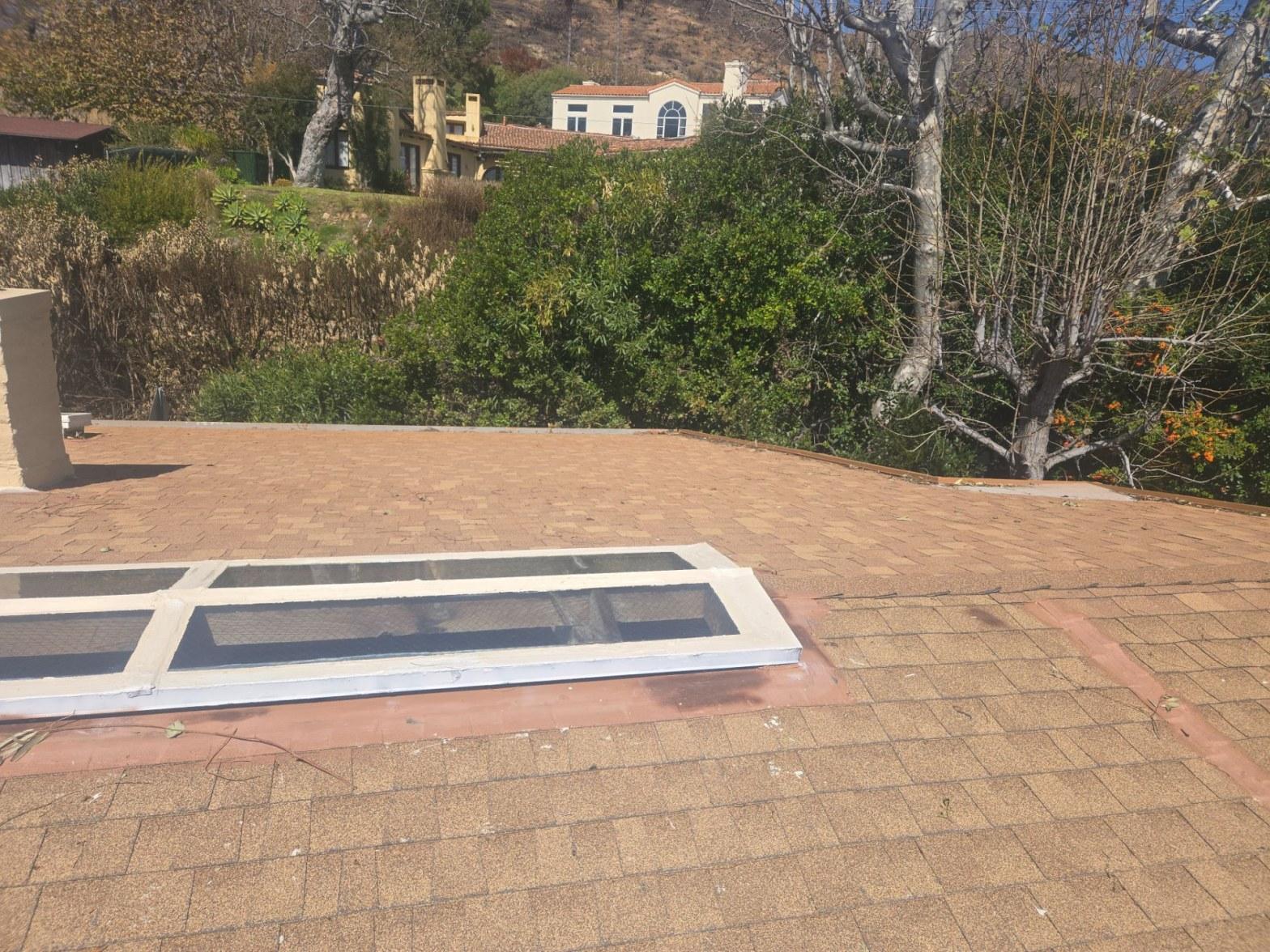
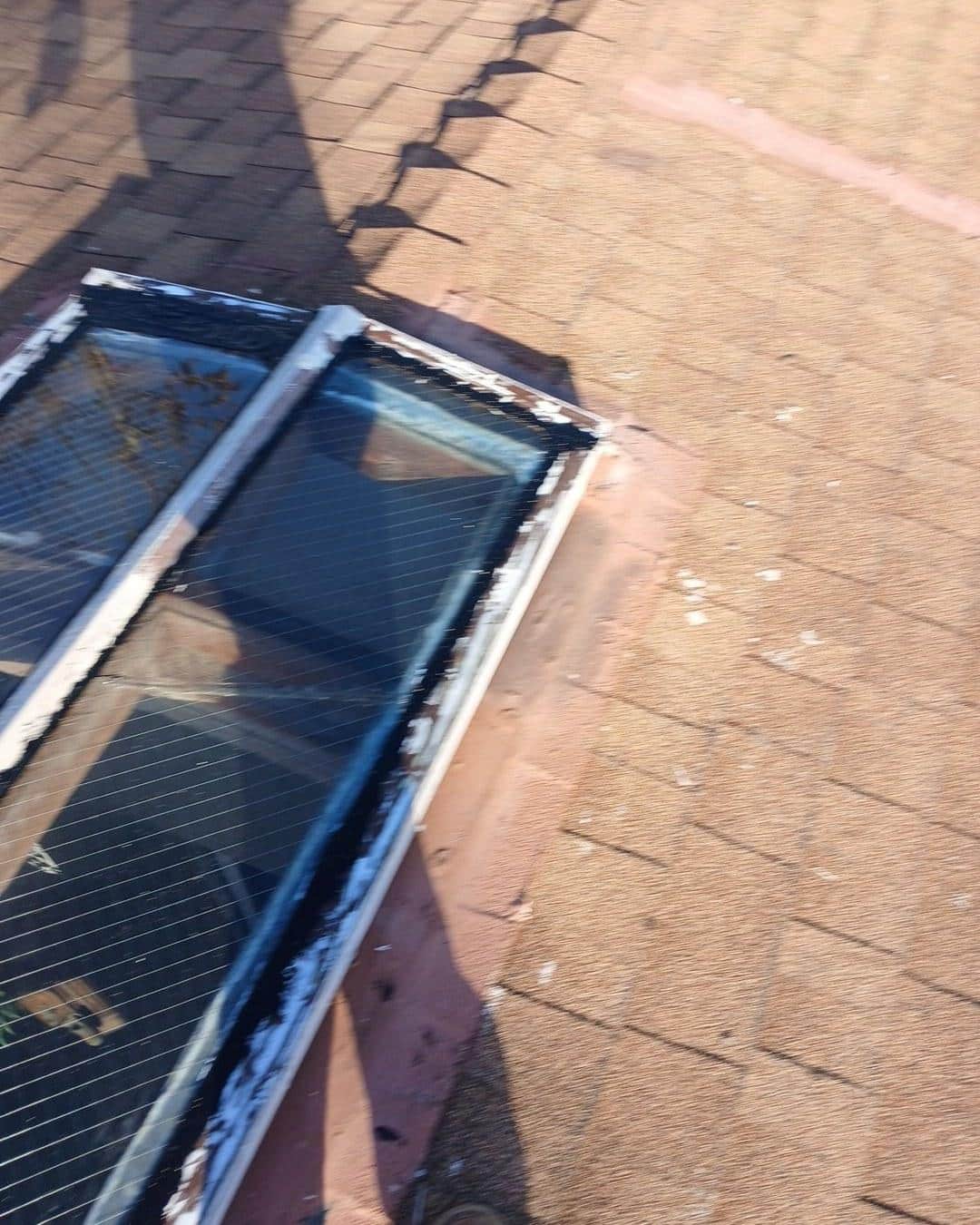
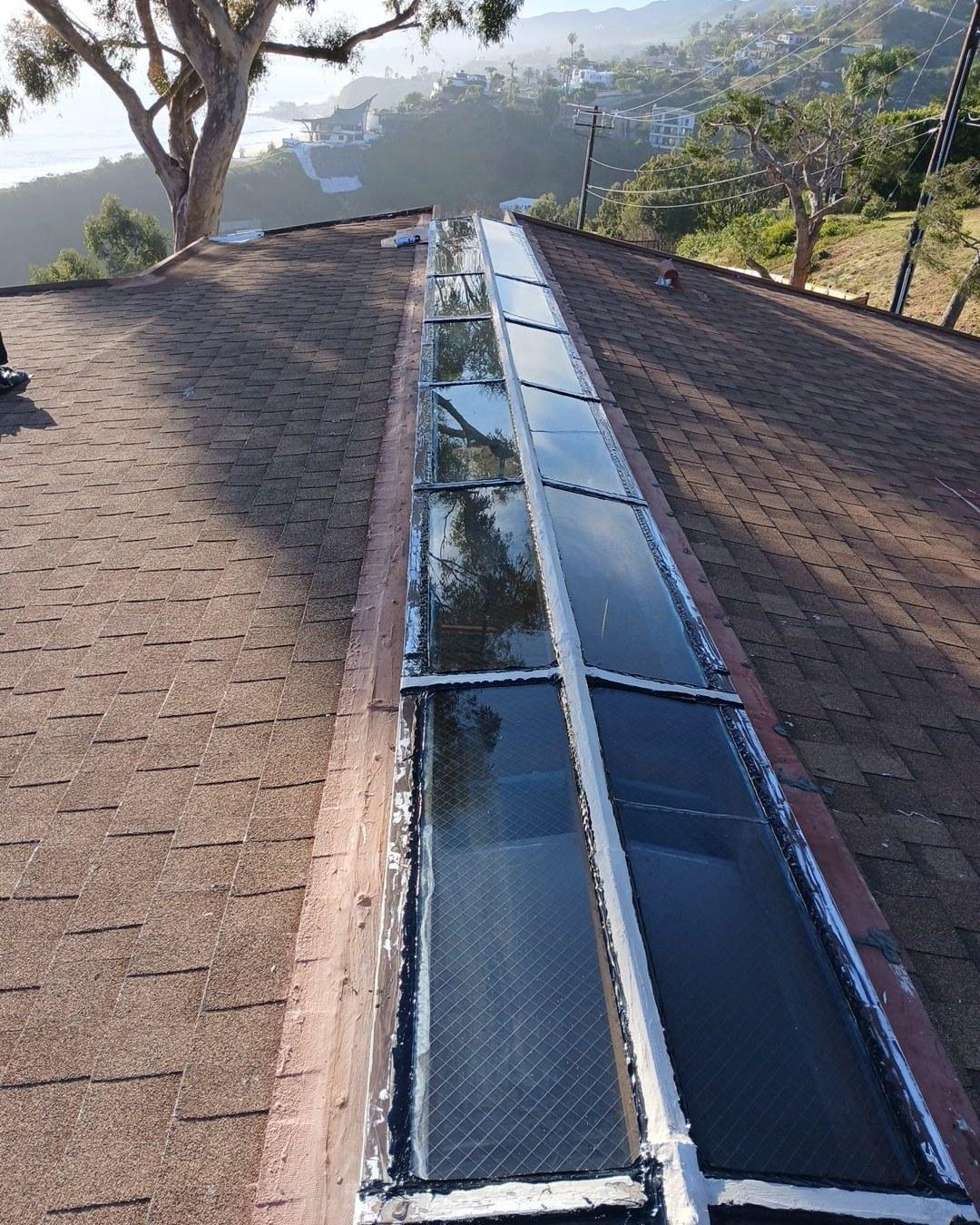
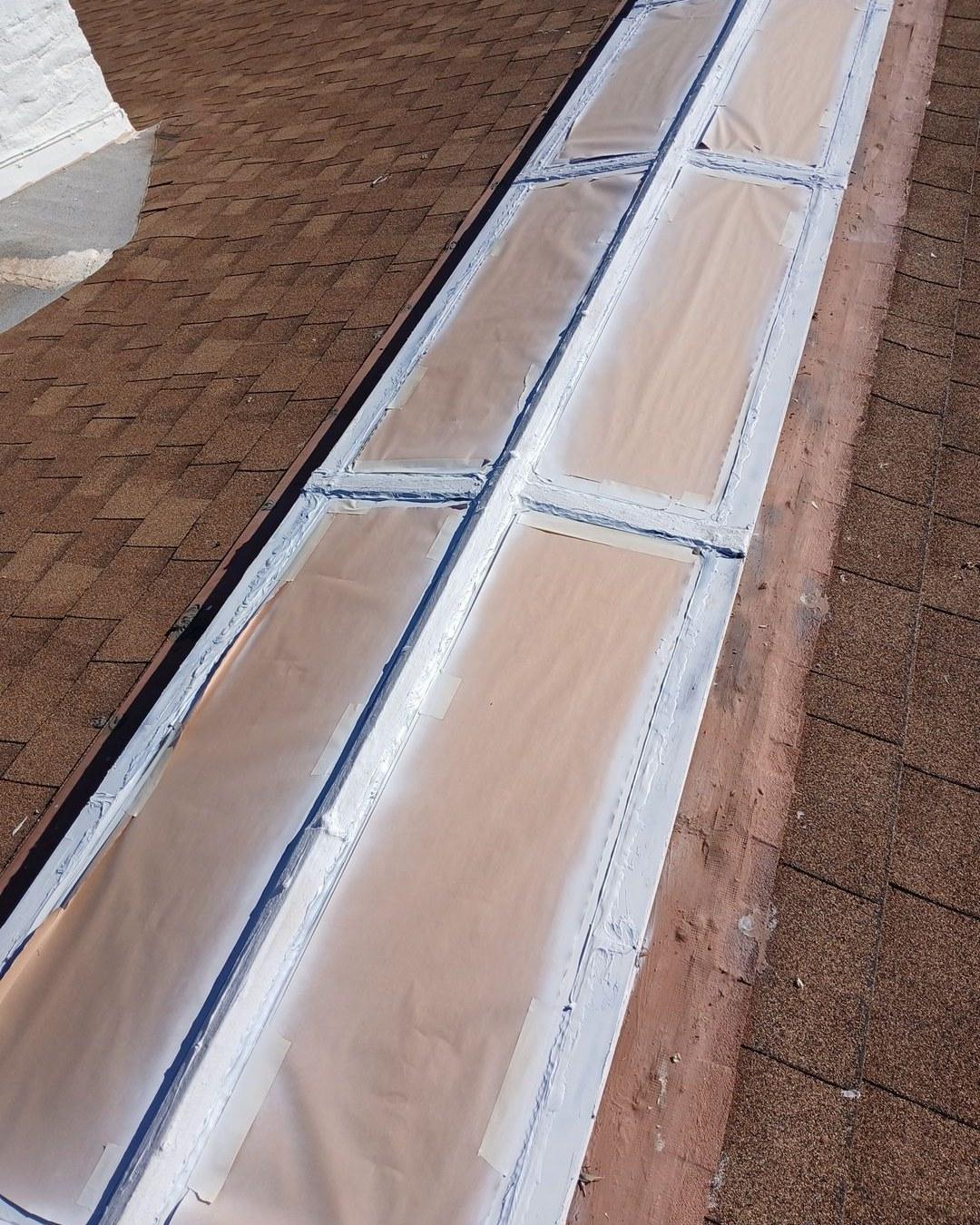
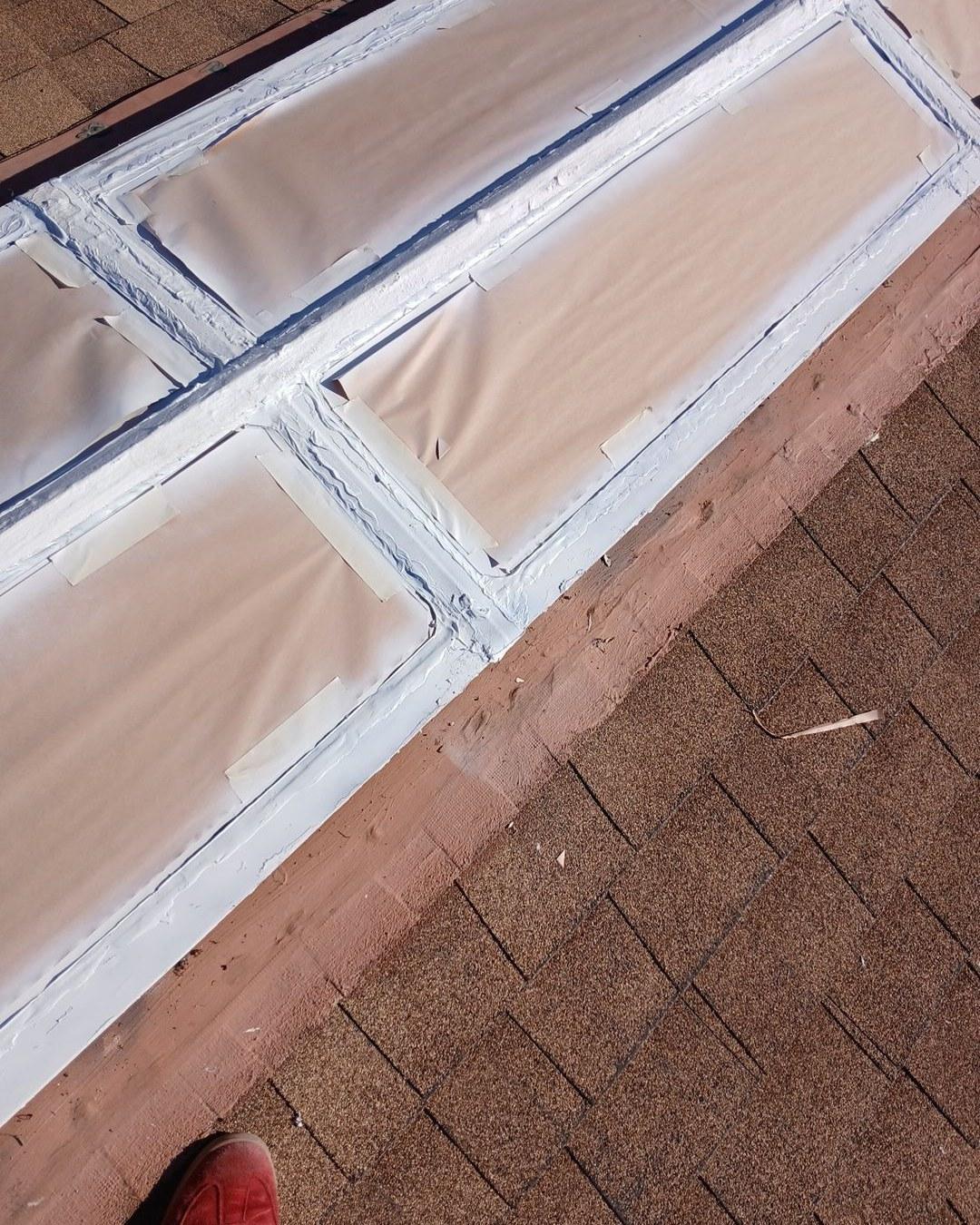
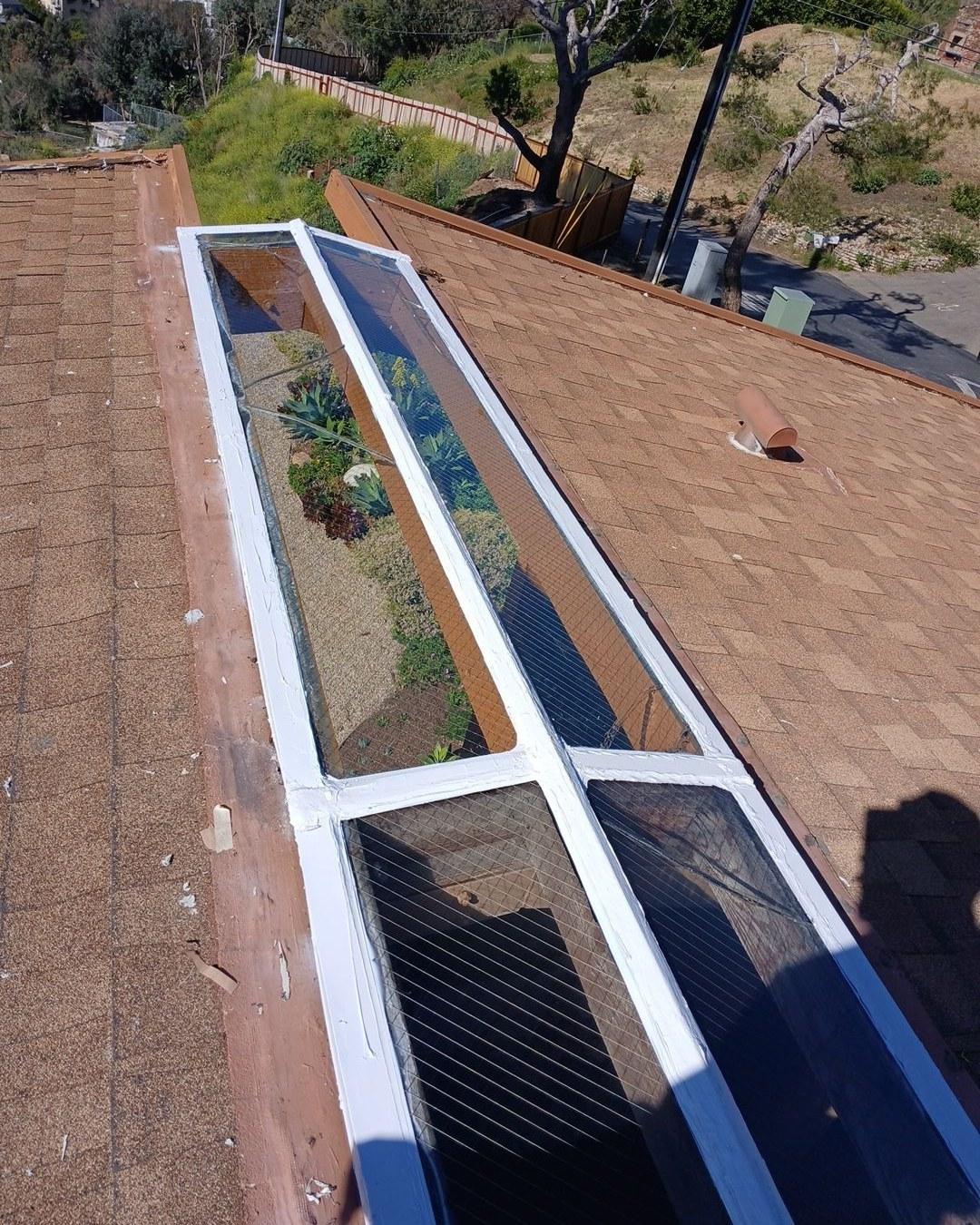
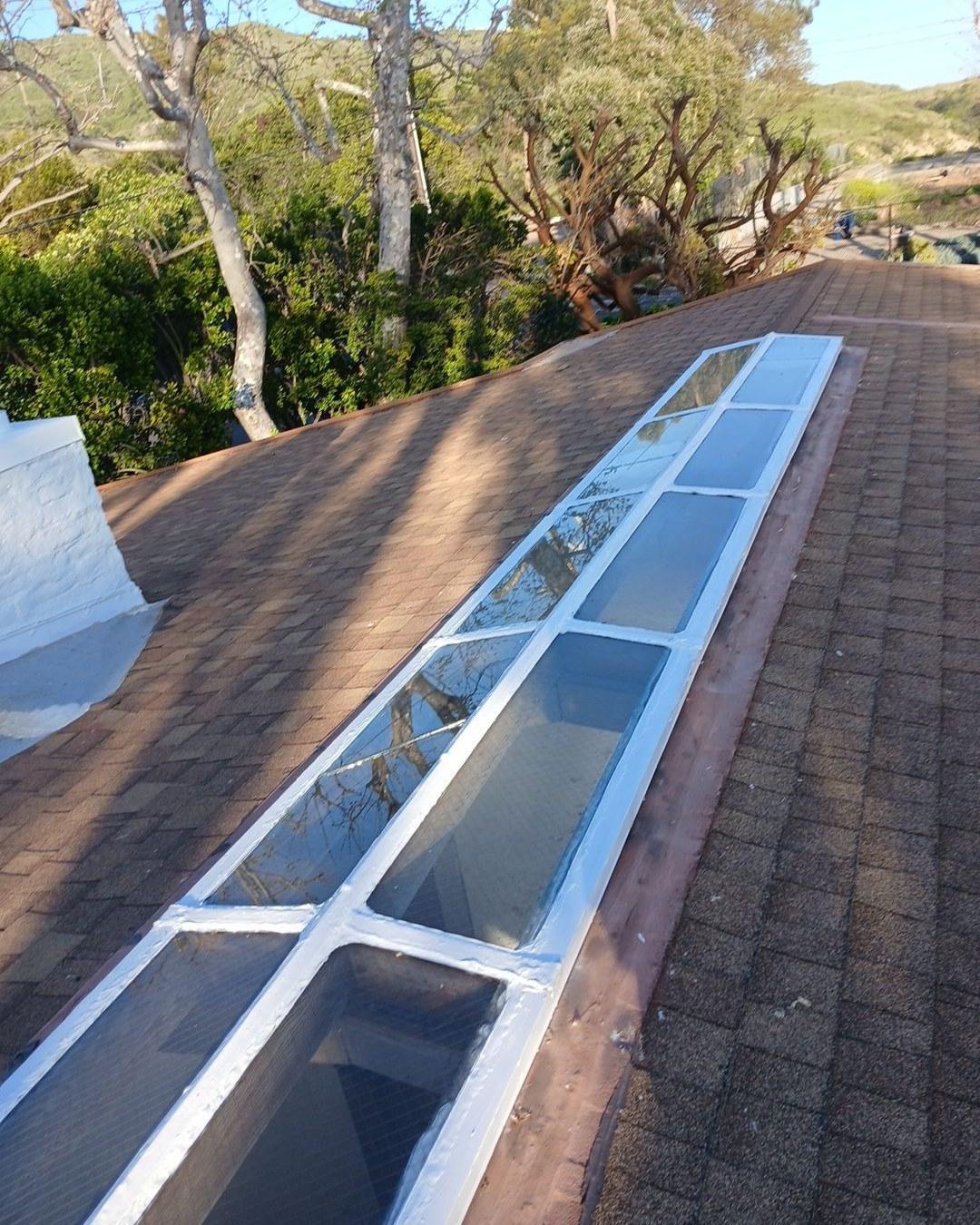
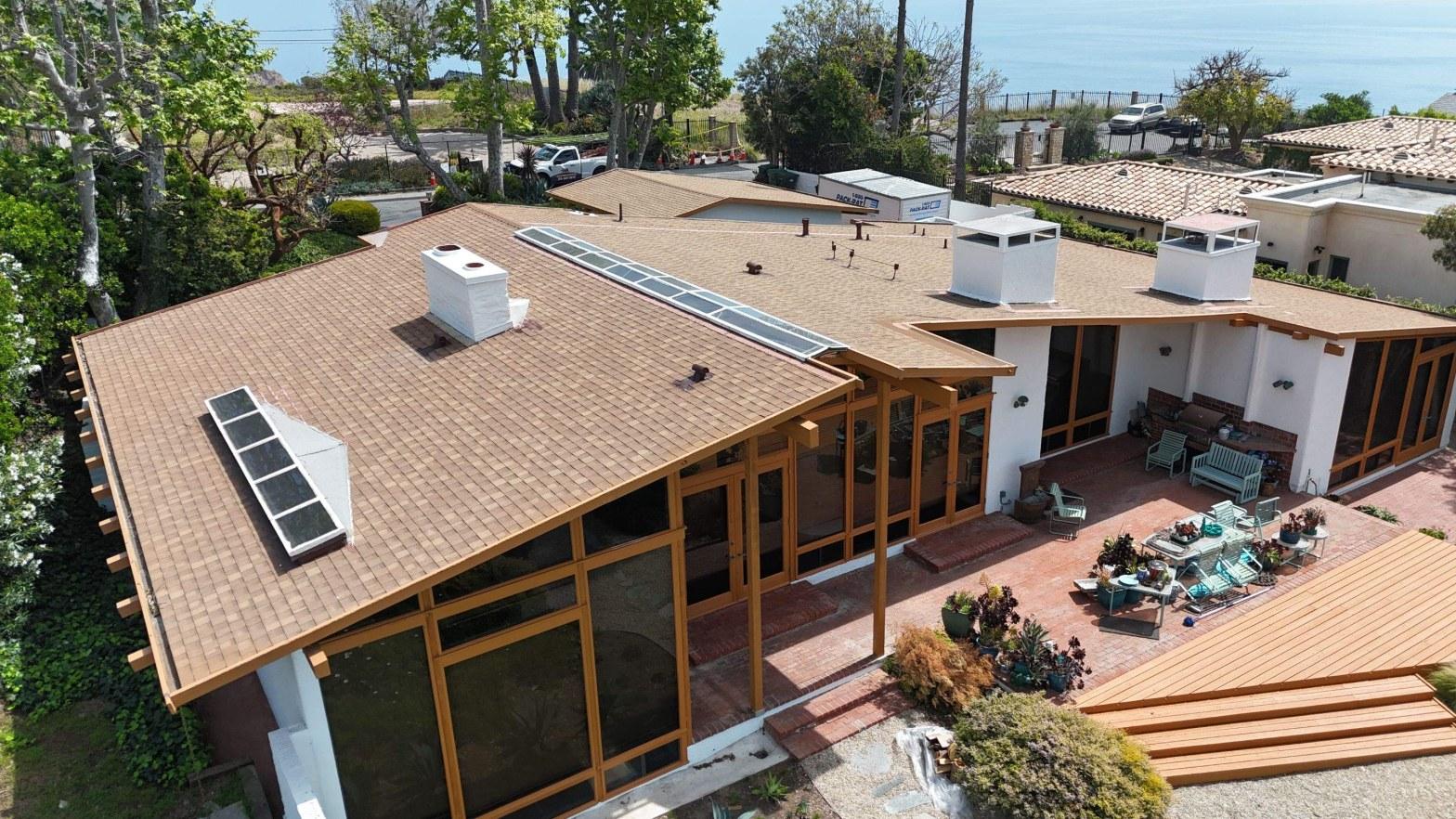
The roof also incorporated 2 skylight assemblies and small solar panel arrays integrated into the shingle plane — both requiring careful flashing work during the reroof to maintain weathertight seals without damaging the existing glazing or panel wiring.
How Did We Approach a Low-Slope Multi-Section Roof Like This?
Low-pitch roofs under 4:12 require modified installation techniques to meet California’s Title 24 building energy standards and manufacturer warranty requirements — specifically, a sealed underlayment layer beneath the shingles to compensate for slower water runoff. On this project, that meant a full peel-and-stick underlayment across the lower-pitch sections before any shingle was laid.
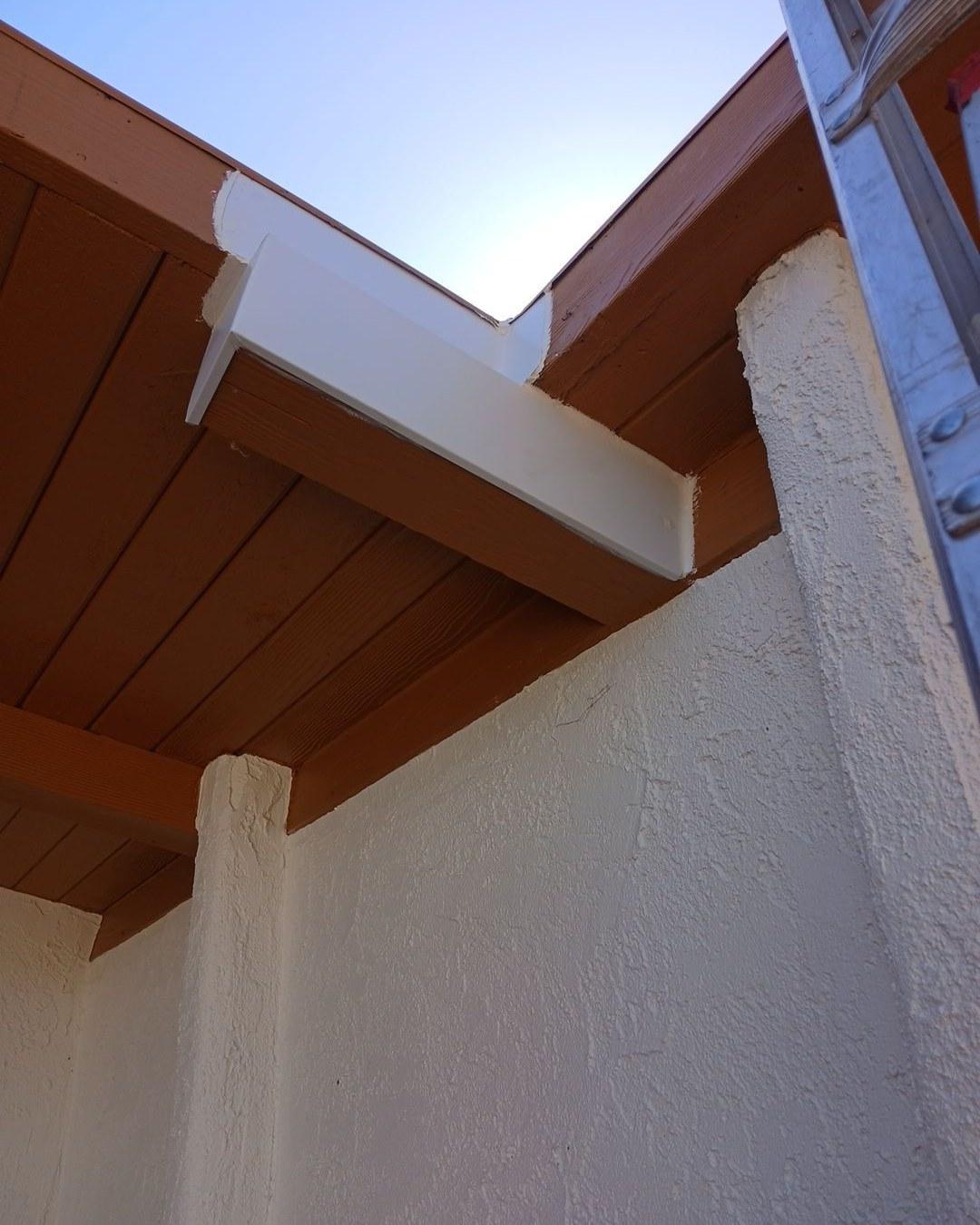
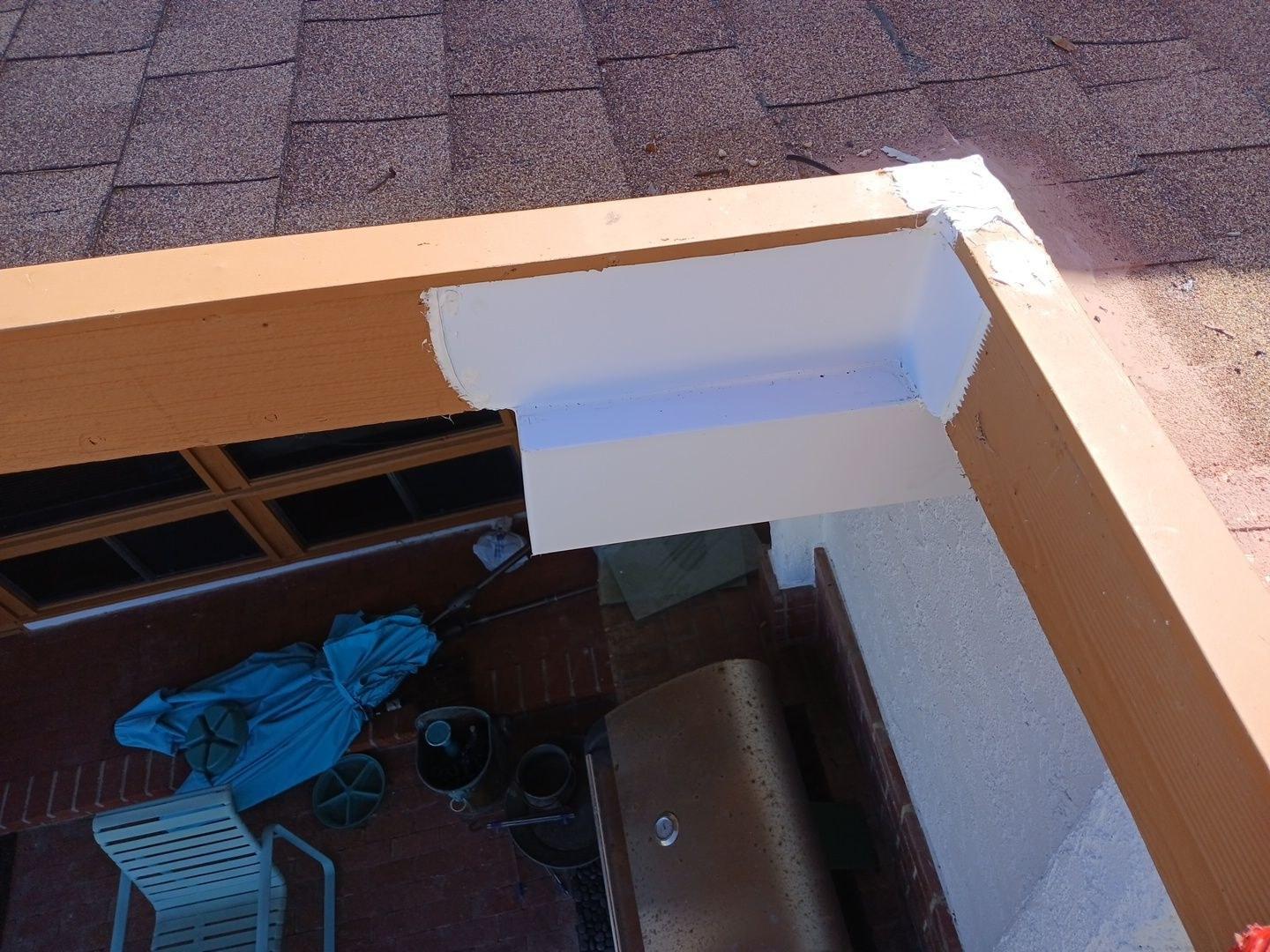
The multi-section layout — visible in the aerial gallery shots — shows at least 4 distinct roof planes meeting at interior valleys and ridges. Each transition was re-flashed during installation. The two existing chimney masses, both finished in white stucco, were reflashed at the base with step flashing and counterflashing to eliminate the gap that had opened between the old cladding and the shingle field.
We installed matching tan asphalt shingles to maintain the home’s warm, neutral palette — a deliberate choice given how much of the roofline is visible from the landscaped front approach. ENERGY STAR-rated cool roof shingles in this color range can reflect a meaningful portion of solar gain, which matters on a house with this much south-facing glass exposure.
The skylight curb flashings were reseated with new aluminum step flashing and sealed with a compatible roof-grade sealant. All pipe boots received new EPDM rubber collars sized to the existing pipe diameters.
How Long Did the Project Take, and What’s the Outcome?
A reroof of this scope — multiple sections, integrated skylights, solar panel work-arounds, and full flashing replacement — typically runs 3 to 5 working days on a property this size. The finished roof restores a continuous, watertight shingle plane across all sections and brings the penetration flashings back to serviceable condition.
For homeowners evaluating a project like this, the California Contractors State License Board (CSLB) recommends verifying that any roofing contractor is Licensed by the California Contractors State License Board (CSLB) before work begins — a basic protection that’s easy to overlook during a competitive bid process.
The home now presents the same clean architectural profile it was designed with, but with a roof system built to handle another 20–25 years of coastal California exposure.
Get a Roof Replacement Quote for Your Malibu Home
If your home has an aging shingle roof — especially a low-slope or multi-section layout common in mid-century construction — schedule a roof assessment before the next rain season. Call Roof Replacement Inc directly or submit your project details online for a written estimate. We serve Malibu and surrounding coastal communities throughout Los Angeles County.