
- What Is An Ice Dam And Why It Forms
- Warning Signs: How To Spot Ice Dams Early
- What Happens If You Ignore Ice Dams
- Preventing Ice Dams Before They Form
- Safe Ice Dam Removal: What To Do If One Forms
- Long-Term Roof Protection Strategies
- FAQs
When icicles start to sparkle along your eaves, they might look beautiful, but to your roof, they can mean trouble. What you’re seeing could be the start of an ice dam roof problem. Ice dams form when melting snow on roof refreezes near the edges, trapping water and forcing it under your shingles. The result brings leaks, damaged ceilings, and costly repairs.
In this guide, you’ll learn how to spot early warning signs, prevent ice dams before they form, and safely remove them.
With a little knowledge and regular care, you can protect your roof and keep your home dry, comfortable, and worry-free all winter long.
Key Takeaways
- Ice dam problems start when melting snow refreezes near the roof’s edge, blocking drainage.
- Early warning signs include large icicles, uneven snow melting, and ceiling water stains.
- Proper attic insulation, air sealing, and ventilation are the best long-term prevention methods.
- Never use hammers or rock salt to remove ice dams—these can damage your roof.
- Use roof rakes, calcium chloride socks, or professional steam removal for safe ice clearing.
- Regular gutter cleaning and fall roof inspections help prevent ice buildup.
- Upgrading with ice and water shields, roof snow guards, or cool roof systems adds extra protection.
- Professional roofers can remove existing ice dams safely and fix underlying ventilation or insulation issues.
What Is An Ice Dam And Why Does it form
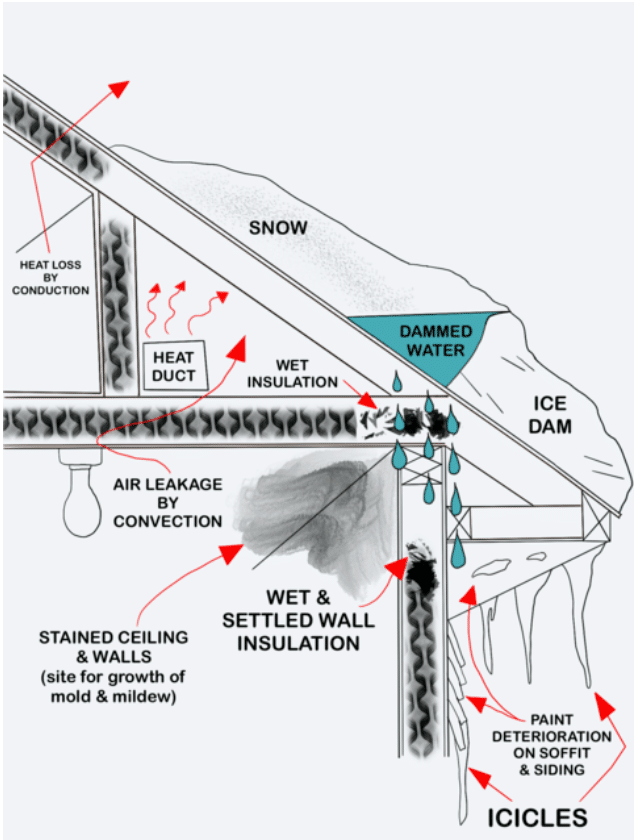
An ice dam is a ridge of ice that is formed along the edge of your roof and stops melting snow from draining properly. When that water has nowhere to go, it can seep under shingles and into your home.
Here’s how it happens: warm air from inside your house escapes into the attic, heating the roof and melting the snow. As the water runs down to the colder eaves, it freezes again. Over time, that frozen edge becomes a solid wall of ice: an ice dam roof that traps more water every time the temperature changes.
Imagine a frozen gutter acting like a barrier, forcing water back under your shingles instead of letting it flow off the roof.
Ice dams aren’t just a winter inconvenience, they’re a sign that your home is losing heat and your attic ventilation isn’t working properly. Fixing that imbalance is the key to stopping them for good.
Source: Extension
Warning Signs: How To Spot Ice Dams Early
Catching an ice dam problem early can save you from costly repairs later. There are a few clear signs to watch for outside and inside your home.
Outside, look for large, heavy icicles hanging from the edges of your roof or gutters. Uneven snow patterns are another clue. If the upper roof looks bare but there’s thick snow on the roof near the eaves, heat is escaping from the attic and causing melting. You might also notice water dripping down your siding or dark stains forming beneath the gutters.
Inside, warning signs include water stains on ceilings or walls close to the roofline, peeling paint, bubbling plaster, or a musty smell in the attic. You may even find damp insulation, which means water is already seeping through.
You need to act fast, early signs mean you can prevent interior leaks before the spring thaw. Fixing minor issues now can stop larger problems from developing once temperatures rise.
What Happens If You Ignore Ice Dams
Ignoring an ice dam roof problem can turn a small issue into serious damage. When water backs up under shingles, it leaks into the attic and walls, soaking insulation and drywall. Over time, that moisture can lead to mold, stains, and poor indoor air quality.
The weight of frozen ice can also pull gutters away from the roof and cause shingles to lift or crack. Even the roof deck underneath can start to rot. What begins as a few icicles or a minor leak can quickly weaken your home’s structure.
A small ceiling stain today can become a full roof replacement tomorrow. Fortunately, preventing ice dams is much easier and less expensive than fixing water damage after it happens.
Don’t wait for leaks to spread. Schedule a professional roof inspection today and make sure your home is ready for winter.
Get a quote
Preventing Ice Dams Before They Form
Stopping an ice dam problem starts long before the snow falls. A few smart home improvements can make a big difference in keeping your roof cold, your attic dry, and your home protected all winter.
Seal Air Leaks
The biggest reason ice dams form on the roof is warm air escaping into the attic. That heat melts the snow, which refreezes at the edges. To stop it, seal any openings where warm air leaks through.
Check common trouble spots like attic hatches, recessed lights, plumbing vents, chimneys, and HVAC ducts. Use caulk or spray foam for small gaps, weatherstripping around attic doors, and fire-rated sealant near flues.
PRO TIP: A home energy audit or infrared scan can help you find hidden leaks so you can fix them before they create roof problems.
Insulate the Attic
Good insulation keeps the attic cool and your roof temperature consistent, which helps prevent melting and refreezing. In colder climates, aim for an insulation rating between R-38 and R-49.
Fiberglass batts and blown-in cellulose are common and affordable. For the best long-term results, closed-cell spray foam is a strong choice; it seals air leaks, resists moisture, and delivers a higher R-value per inch.
If you’re not sure how well your attic is insulated, schedule a professional inspection to identify thin or uneven areas that may need an upgrade.
Ensure Proper Ventilation
Even with good insulation, your attic needs ventilation to balance temperatures and reduce humidity. A well-ventilated roof stays cooler and drier, helping prevent snowmelt and extending the life of your shingles.
Use a mix of soffit vents (for air intake) and ridge or gable vents (for exhaust) to keep air circulating evenly. As a rule of thumb, you need about 1 square foot of ventilation per 300 square feet of attic space. Balanced ventilation also helps prevent mold and keeps your home more energy efficient year-round.
Maintain Roof and Gutters
Clean gutters and downspouts before winter to ensure water drains freely. Clogged gutters trap melting snow, causing ice buildup along the eaves.
While cleaning, inspect shingles, flashing, and valleys for cracks or wear. If your roof is more than 10 years old, schedule a professional inspection to catch minor problems before they grow.
Manage Snow Load
After a big storm, use a long-handled roof rake to clear snow on roof, especially the first few feet near the eaves where ice dam problems usually start. Never climb onto an icy roof; it’s unsafe and can damage shingles.
For larger or steep roofs, hire a professional snow removal service. You can also install snow guards or heat cables near the eaves to help prevent heavy buildup and ice formation.
Also, read:
- Finding The Right Roofing Contractors In California
- Roof Types: Choosing The Best Material For Your Home
- Flat Roof Guide: Types, Costs, And Maintenance
Safe Ice Dam Removal: What To Do If One Forms
Even with the best prevention, an ice dam can still form after heavy snow or sudden temperature swings. If you notice one forming, act carefully, as safety and proper technique are key.
What Not To Do: When you see thick ice dams, it’s tempting to break them up, but that can make things worse.
- Don’t chip or hammer the ice. You can accidentally crack shingles and cause leaks.
- Don’t use rock salt or harsh de-icers, they corrode gutters, flashing, and roofing materials.
- Never climb onto an icy roof or ladder.
PRO TIP: One slip can cost far more than a professional visit. Always keep safety first.
Short-Term Emergency Fixes: If water is already backing up, there are a few safe ways to reduce the damage until help arrives.
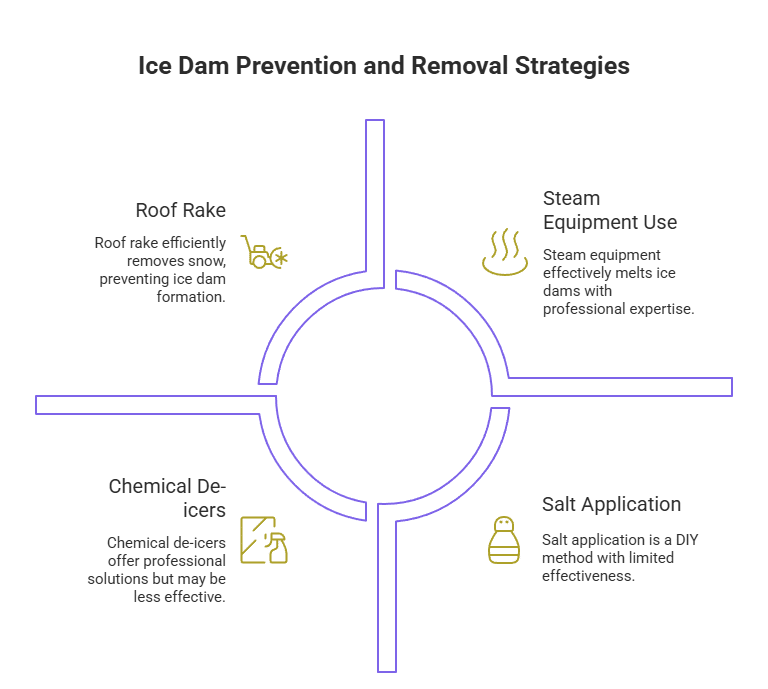
- Fill nylon stockings or tube socks with calcium chloride (not salt) and lay them across the ice dam. This slowly melts channels in the ice, allowing trapped water to drain.
- Aim a fan through an attic hatch to blow cold air on leaking spots. This helps refreeze the water temporarily and stop active dripping.
- Use a long-handled roof rake to remove snow from the ground, clearing about three to four feet above the eaves.
These steps offer temporary relief, but they don’t solve the root cause of an ice dam roof.
Professional Removal Methods: For a lasting solution, call a qualified roofing or ice removal professional. They use specialized tools and techniques that are safe for your roof.
- Snow and debris clearing: They remove built-up snow and ice to relieve excess weight and prevent re-freezing.
- Follow-up inspection: After removal, many experts check insulation, ventilation, and flashing to stop future ice dams.
Long-Term Roof Protection Strategies
Preventing ice dams on the roof means thinking long-term. These upgrades and habits help protect your home through every winter:
- Install ice and water shield membranes under shingles to block leaks and prevent trapped meltwater from reaching the roof deck.
- Upgrade older roofs with high-performance underlayments like Polyguard Deckguard HT, built to withstand extreme temperatures and resist water damage.
- Reinforce vulnerable areas such as eaves, valleys, and overhangs with waterproof barriers for extra defense where ice commonly forms.
- Schedule regular maintenance: Inspect your roof twice a year, before winter and after the spring thaw. Check for loose shingles, damaged flashing, and clogged gutters after storms.
- Consider optional upgrades: Energy-efficient or cool roof coatings reflect heat and minimize melting. Use snow guards to control heavy snow slides and protect gutters.
Ice dams may start small, but they can lead to serious roof damage if left unchecked. With the right prevention, air sealing, insulation, and timely snow management, you can protect your home from costly repairs and stress all winter long.
At Roof Replacement Inc., we specialize in roof inspection, roof repair, roof replacement, and cool roof installations built to withstand Southern California’s heat and winter rains. Whether you need a new roof, help with ice dam prevention, or long-term protection, our licensed experts deliver quality craftsmanship backed by decades of experience and a lifetime workmanship guarantee.
Don’t wait for leaks or damage to appear. Keep your roof ready for every season.
Get a quote
FAQs
Can I install roof snow guards to stop ice dams altogether?
Snow guards help manage large sheets of snow sliding off your roof, but they don’t prevent the root cause of ice dams on the roof, which is heat loss and improper drainage. Use snow guards in addition to insulation, ventilation, and drainage improvements for best results.
Do homeowners’ insurance policies typically cover damage from an ice dam roof?
Some policies may cover water damage resulting from an ice dam roof, but many exclude damage from lack of maintenance or slow leaks. Always check your policy and take proactive steps (insulation, ventilation, clearing snow on the roof) to reduce risk and support any potential claim.
How fast can an ice dam form after heavy snow?
An ice dam can begin forming within 24 hours of significant snowfall, especially if warm attic air is pushing upward and melting the snow. Once water starts freezing at the eaves, it builds quickly and can cause damage before you realize it.
I have a metal roof, do I still need to worry about ice dams on roof?
Yes. Even metal roofs can form ice dams if warm air escapes into the attic and snow accumulates. The smooth surface may cause snow to slide, but underneath, melt/refreeze cycles and trapped water can still threaten the roof. Metal roofs often benefit from enhanced drainage and roof snow guards to manage heavier snow.
Are heat cables a reliable long-term solution for ice dam roof issues?
Heat cables can be effective as a mitigation tool, but they are not a substitute for fixing attic heat loss and drainage problems. Used alone, they add energy costs and may provide a false sense of security. The best strategy combines sealing, insulation, ventilation, and then cables or snow guards if needed.
Related Posts


What Our Clients Say

Roof Replacement Inc. offers professional, high-quality work, guaranteed (call for details); ensuring all clients projects meet all code and design requirements. We are dedicated to exceptional customer service and will strive to ensure you with the highest quality roofing services. Roof Replacement Inc. offers lifetime warranty (call for details) on all of our workmanship to ensure the quality of our work. With over four decades of experience and success within the roofing and construction industry, Roof Replacement Inc. has grown and developed in all areas of roofing construction, including roof inspections. As a leading residential and commercial roofing company in LA, we have hundreds of references from previous clients, so rest assured, that your roofing job will be done right the first time. Replacing an old roof can help add curb appeal and will increase the perceived value of your home. First impressions are vital when selling your home, especially when your roof takes up more than half of the exterior of your residence or business. Not only is the return of investment on a new roof attractive for potential buyers, but can be as beneficial as remodeling the kitchen or bathrooms within your residence.


