Which Flat Roof System Saves Burbank Commercial Properties More Money: TPO or EPDM?
Property managers and building owners throughout Burbank ask this question when facing flat roof replacement decisions. The answer depends on far more than initial installation costs. When you factor in Burbank’s intense summer heat, energy consumption patterns in the Media District and Rancho neighborhoods, and the 20-30 year lifespan of these systems, the total cost of ownership reveals which membrane delivers better value. TPO (thermoplastic polyolefin) installation typically runs $4-8 per square foot, while EPDM (ethylene propylene diene monomer rubber) costs $3.50-7 per square foot—but those baseline numbers tell only part of the story for commercial properties in Burbank’s 91501-91506 zip codes.
📋 In This Guide
With median home values exceeding $1 million and a business community that demands reliable infrastructure, choosing the right flat roofing system impacts property performance and operating costs for decades. This comprehensive cost breakdown examines both systems through the lens of Burbank’s specific climate conditions, helping you make an investment decision backed by real-world performance data rather than installer sales pitches.
Understanding the Base Installation Cost Difference Between TPO and EPDM
For a typical 7,500 square foot commercial flat roof common in Burbank’s industrial areas near the Media District, material and installation costs break down into distinct categories. EPDM’s lower entry price point—starting around $3.50 per square foot for 45-mil thickness material—initially appears more budget-friendly for cost-conscious property owners in this middle-income market where household incomes average $87,000. However, professional installation by a qualified roofing contractor in Burbank requires more than just membrane cost.
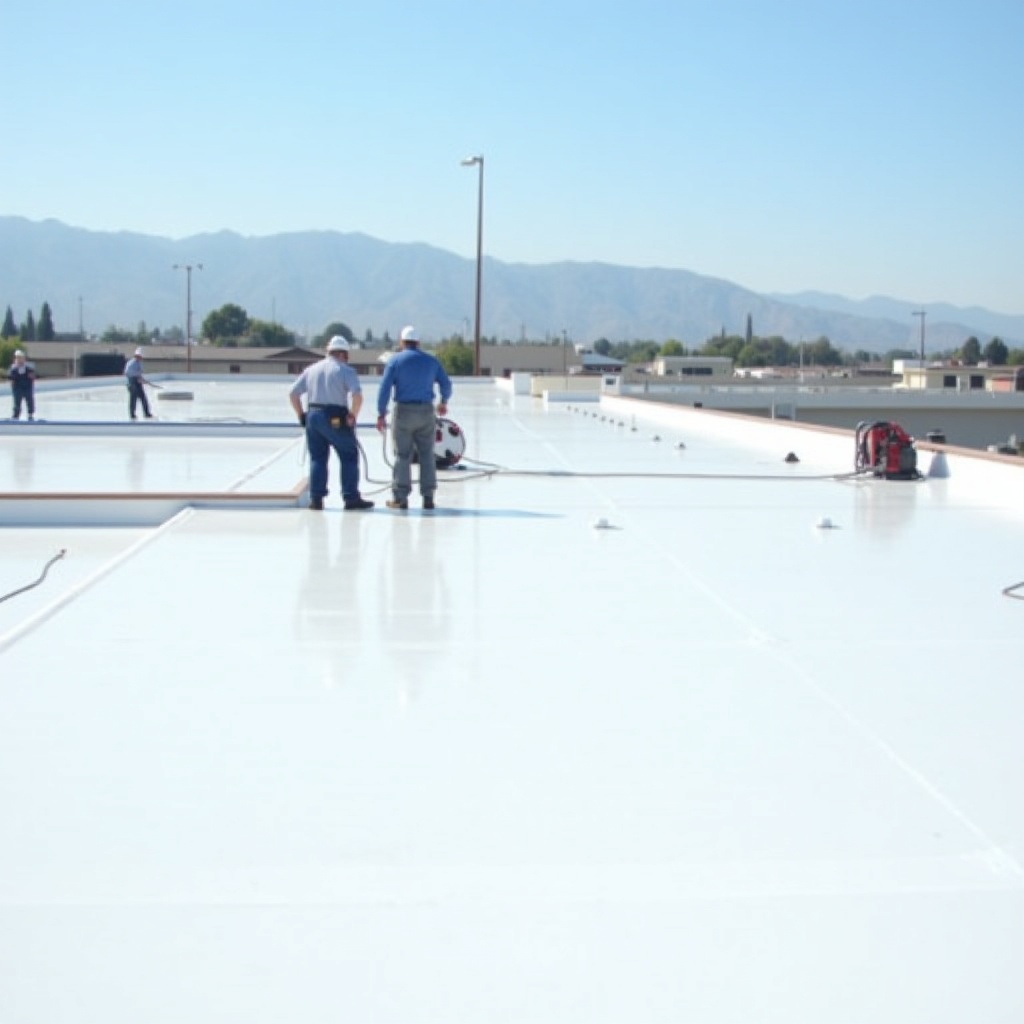
Labor expenses typically add $2-3.50 per square foot regardless of membrane type, though TPO’s heat-welded seams require specialized equipment that some contractors charge premium rates to operate. Substrate preparation, edge flashing, penetration details around HVAC units, and tear-off of existing roofing material add another $1.50-3 per square foot to total project costs. When you calculate a complete 7,500 square foot installation, EPDM systems generally range from $41,000-67,000, while TPO installations run $48,000-75,000 before accounting for specific building conditions or warranty upgrades.
The gap narrows considerably when you specify white TPO for its reflective properties versus black EPDM, which absorbs heat. White EPDM exists but costs nearly the same as TPO while offering inferior seam strength. Geographic factors matter significantly—Burbank’s competitive contractor market and proximity to material suppliers in Glendale and North Hollywood helps keep costs below those in more remote California markets. When evaluating quotes from roofing companies, verify whether tear-off, disposal, permits, and warranty registration are included in the per-square-foot price or billed separately.
Material Thickness and Quality Tiers
EPDM comes in 45-mil, 60-mil, and 90-mil thicknesses, with thicker membranes costing $0.50-1.25 more per square foot but offering better puncture resistance for roofs with frequent maintenance traffic. TPO ranges from 45-mil to 80-mil, with most commercial installations using 60-mil material as the practical middle ground between cost and durability. The roofing contractor you select should recommend thickness based on your building’s specific conditions—roofs with heavy HVAC equipment or regular maintenance access justify thicker membranes despite higher upfront costs.
Attachment Method Cost Variables
Fully-adhered systems cost $0.75-1.50 more per square foot than mechanically-attached installations but eliminate wind uplift concerns in Burbank’s occasional Santa Ana wind events. Ballasted systems using river rock cost less for installation but require structural capacity verification and create long-term maintenance complications. Most commercial properties in Burbank’s established neighborhoods opt for mechanically-attached TPO or fully-adhered EPDM to balance cost with performance.
Energy Performance: How Reflectivity Impacts Long-Term Operating Costs
Burbank’s summer temperatures regularly exceed 95°F from June through September, with rooftop surface temperatures on black EPDM membranes reaching 160-180°F during peak afternoon hours. White TPO reflects 70-80% of solar radiation, keeping surface temperatures 50-60°F cooler than black EPDM under identical conditions. For commercial buildings with rooftop HVAC units or inadequate attic insulation, this temperature differential translates directly to cooling costs.
A 7,500 square foot commercial building in Downtown Burbank with standard insulation and a black EPDM roof might spend $380-520 monthly on summer cooling. The same building with white TPO could reduce those costs by 15-25%, saving $60-130 per month during the five-month peak cooling season. Over a 25-year membrane lifespan, those savings accumulate to $18,000-39,000—potentially exceeding the initial cost premium for TPO installation. Property managers operating multiple buildings should factor these utility savings into total cost of ownership calculations rather than focusing exclusively on installation price.
California’s Title 24 energy code increasingly favors reflective roofing materials for commercial structures, with cool roof requirements becoming more stringent in recent updates. While both white TPO and white EPDM meet current standards, TPO’s superior seam strength and welded construction make it the preferred choice among energy-conscious commercial property owners. Buildings pursuing LEED certification or seeking utility rebates for energy efficiency improvements gain additional value from TPO’s documented performance advantages.
Lifespan and Warranty Comparison: Durability Over Decades
EPDM’s proven track record extends back to the 1960s, with some original installations still performing adequately after 50+ years. However, realistic service life expectations for modern EPDM range from 22-30 years when properly maintained. TPO technology, refined significantly since problematic early formulations in the 1990s, now demonstrates 20-30 year performance with third-generation formulations showing improved UV resistance and seam durability.
Manufacturer warranties typically span 10-30 years depending on membrane thickness and installation quality. A 60-mil EPDM system might carry a 20-year material warranty, while premium 80-mil TPO installations qualify for 30-year coverage. These warranties cover material defects but exclude installation errors—verifying that your roofing contractor maintains manufacturer certification and offers separate workmanship guarantees protects your investment beyond material coverage periods.
Burbank’s climate poses specific challenges that affect membrane longevity. Intense UV exposure accelerates both EPDM and TPO degradation, though EPDM’s rubber composition shows more pronounced chalking and surface degradation over time. TPO’s thermoplastic nature allows heat-welded seams that create bonds stronger than the membrane itself, while EPDM relies on tape or liquid adhesive seams that remain the weakest point in the system. Seam failure causes the majority of flat roof leaks—TPO’s welded construction provides meaningful advantages in long-term reliability for Burbank commercial properties.
Maintenance Requirements and Repair Costs for Each System
Both membrane types require semi-annual inspections and periodic maintenance to achieve their full service life potential. EPDM’s rubber composition makes it more susceptible to punctures from foot traffic, dropped tools, or debris impacts, but repairs are straightforward—patches bond effectively using specialized EPDM adhesive and cost $150-350 for typical damage. TPO puncture repairs run slightly higher at $200-450 due to heat-welding requirements, but the membrane’s tougher composition reduces puncture frequency in the first place.
Seam inspection represents the most critical maintenance task for both systems. EPDM tape seams may separate over time, particularly on roofs installed 10+ years ago using older adhesive technology. Re-sealing failing EPDM seams costs $3-6 per linear foot, with a typical 7,500 square foot roof containing 300-500 linear feet of seams requiring attention. TPO’s welded seams rarely fail unless installation was defective, making long-term maintenance costs potentially lower despite higher repair rates when work is needed.
Property owners should budget $400-700 annually for professional flat roof maintenance regardless of membrane type. This covers two inspections, minor repairs, drain cleaning, and documentation that preserves warranty coverage. Roof repair in Burbank from qualified professionals prevents minor issues from escalating into $5,000-15,000 re-roofing emergencies. Buildings with significant rooftop equipment or regular maintenance access should schedule quarterly inspections to catch membrane damage before it allows water infiltration.
| Maintenance Factor | EPDM System | TPO System |
|---|---|---|
| Puncture Resistance | Lower (softer material) | Higher (reinforced) |
| Seam Failure Risk | Moderate to High (adhesive) | Low (heat-welded) |
| Repair Cost (typical) | $150-350 per incident | $200-450 per incident |
| Inspection Frequency | Semi-annual minimum | Semi-annual minimum |
| Cleaning Requirements | Gentle (avoid petroleum) | Standard commercial |
| Annual Maintenance Budget | $400-700 | $400-700 |
Which System Performs Better in Burbank’s Specific Climate Conditions
Southern California’s unique climate—intense sun exposure, minimal rainfall, occasional windstorms, and minimal freeze-thaw cycling—creates an environment where both membrane types function well but TPO holds distinct advantages. Burbank receives approximately 280 sunny days annually with UV radiation levels that degrade rubber membranes faster than in cloudier climates. EPDM’s chalking and surface deterioration become visible after 12-15 years in this environment, though the membrane continues providing waterproofing protection.
TPO’s reflective surface remains more stable under UV exposure, maintaining its white appearance and thermal performance longer than white EPDM alternatives. The temperature differential matters significantly for buildings housing temperature-sensitive operations or those with inadequate insulation—common in Burbank’s older commercial building stock in the Magnolia Park and Downtown districts. Property owners managing facilities with high cooling loads or sensitive equipment should weight this performance advantage heavily in their decision process.
Wind resistance becomes critical during Santa Ana wind events when gusts exceed 50-60 mph. Both membrane types perform adequately when properly installed using appropriate attachment density, but TPO’s welded seams eliminate the peel-back risk inherent in EPDM’s adhesive seam construction. Buildings in elevated locations or with significant rooftop equipment that creates wind turbulence should specify fully-adhered TPO or increase mechanical fastener density in EPDM installations to prevent blow-off damage.
Burbank’s minimal rainfall—just 15-18 inches annually—means ponding water concerns apply primarily to roofs with inadequate drainage rather than being membrane-specific issues. Both EPDM and TPO tolerate standing water without degradation, though chronic ponding indicates structural problems that require professional assessment regardless of membrane type.
Industry Trends: Why TPO Continues Gaining Commercial Market Share
National roofing industry data shows TPO capturing 40-45% of commercial flat roof installations as of 2026, up from less than 10% in the early 2000s. This growth comes primarily at EPDM’s expense, though rubber membrane systems still represent 25-30% of new installations based on their proven performance and lower initial cost. Several factors drive this trend that Burbank commercial property owners should understand when making 20-30 year investment decisions.
Energy code evolution increasingly favors reflective roofing materials as California pursues aggressive carbon reduction goals. While white EPDM technically complies, TPO’s manufacturing process allows more consistent color throughout the membrane thickness, maintaining reflectivity better after surface wear. Utility companies and energy efficiency programs recognize this advantage, offering rebates and incentives that favor TPO installations for commercial properties seeking to reduce operating costs.
Insurance companies have begun differentiating premium rates based on roofing material performance characteristics. TPO’s superior wind uplift ratings and lower historical claim rates for leak-related damage translate to potential insurance savings—property managers should inquire whether their carrier offers preferred rates for specific membrane types. Buildings in Burbank’s 91501 and 91506 zip codes with multiple commercial properties might realize meaningful insurance cost reductions by standardizing on TPO across their portfolio.
Contractor availability represents another practical consideration. Younger roofing professionals increasingly train exclusively on TPO installation rather than learning both membrane systems, potentially making EPDM repairs more challenging in future decades as the experienced contractor base retires. Working with an established roofing contractor like Roof Replacement Inc that maintains expertise in both systems ensures proper installation regardless of which membrane you select and access to qualified repair services throughout the system’s lifespan.
Real-World Cost Analysis: 5,000 and 10,000 Square Foot Commercial Buildings
Examining two common building sizes in Burbank’s commercial landscape reveals how membrane choice impacts total investment and return on investment over time. A 5,000 square foot light industrial building in the Rancho District represents the smaller end of commercial flat roof applications, while a 10,000 square foot retail or office building in Downtown Burbank illustrates larger-scale decision-making.
5,000 Square Foot Building Cost Breakdown
For a straightforward flat roof replacement without significant structural issues, EPDM installation runs $17,500-35,000 depending on membrane thickness, attachment method, and warranty level. The same building using 60-mil white TPO would cost $20,000-40,000 for comparable specifications. Over 25 years of operation, the EPDM building might spend $47,500-65,000 on cooling costs attributable to the roof, while the TPO building spends $38,000-52,000—an energy savings differential of $9,500-13,000 that partially offsets TPO’s installation premium.
Maintenance and repair costs over 25 years add another dimension. The EPDM roof might require $12,000-18,000 in maintenance, repairs, and seam resealing over its lifespan, while the TPO roof requires $10,000-15,000 for similar activities. Total cost of ownership for EPDM reaches $77,000-118,000 versus $68,000-107,000 for TPO when you combine installation, energy, and maintenance expenses. Property owners planning to hold the building long-term gain meaningful value from TPO’s total cost advantages.
10,000 Square Foot Building Cost Analysis
Larger buildings amplify both installation costs and operating expense differentials. EPDM installation costs $35,000-70,000 depending on specifications, while comparable TPO runs $40,000-80,000. Energy costs over 25 years reach $95,000-130,000 for EPDM versus $76,000-104,000 for TPO—a substantial $19,000-26,000 advantage for the reflective membrane that compounds annually with electricity rate increases.
Maintenance and repair expenses scale with building size but not proportionally—a 10,000 square foot roof requires $18,000-28,000 in lifetime maintenance for EPDM versus $15,000-23,000 for TPO. Total 25-year ownership costs reach $148,000-228,000 for EPDM compared to $131,000-207,000 for TPO. This $17,000-21,000 lifetime advantage makes TPO the clear value leader for larger commercial buildings despite higher upfront costs.
| Cost Category | EPDM (10,000 sq ft) | TPO (10,000 sq ft) |
|---|---|---|
| Installation Cost | $35,000-70,000 | $40,000-80,000 |
| 25-Year Energy Costs | $95,000-130,000 | $76,000-104,000 |
| 25-Year Maintenance | $18,000-28,000 | $15,000-23,000 |
| Total 25-Year Cost | $148,000-228,000 | $131,000-207,000 |
| Lifetime Savings | — | $17,000-21,000 |
Making the Right Decision for Your Burbank Commercial Property
The choice between TPO and EPDM depends on multiple factors beyond initial installation cost. Property owners planning to hold buildings long-term—ten years or more—should weight total cost of ownership heavily, favoring TPO’s energy savings and lower maintenance requirements despite higher upfront investment. Those planning to sell within 5-7 years might prioritize minimizing immediate capital expenditure, making EPDM’s lower installation cost more attractive even though it transfers higher operating costs to the next owner.
Buildings with high cooling loads, inadequate insulation, or heat-sensitive operations gain the most from TPO’s reflective properties. Facilities in Burbank’s Hillside neighborhoods with expansive roof area relative to building volume see amplified energy savings that justify TPO’s premium. Conversely, warehouse buildings with minimal climate control or structures with excellent insulation realize less benefit from membrane reflectivity differences.
Financing considerations matter significantly in the decision process. Property owners with cash reserves might prefer paying TPO’s higher installation cost to maximize long-term value, while those constrained by capital availability could opt for EPDM to preserve liquidity even though total ownership costs run higher. Some roofing companies offer financing programs that spread costs over 5-10 years, potentially making TPO accessible to more property owners when monthly payments remain comparable to EPDM despite higher total financing amounts.
Roof Replacement Inc has installed both membrane types across hundreds of Burbank commercial properties since 1985, providing the expertise to recommend the system that makes sense for your specific building conditions, budget parameters, and ownership timeline. Our team evaluates structural capacity, drainage adequacy, existing roof condition, and your operational priorities to deliver installation quality that maximizes whichever membrane you select. Call (213) 364-3979 to schedule a comprehensive roof assessment that goes beyond surface-level quotes to analyze total cost of ownership for your property.
We serve commercial property owners throughout Burbank’s 91501, 91502, 91504, 91505, and 91506 zip codes, as well as neighboring communities in Glendale, North Hollywood, and Studio City. Our local presence means we understand Burbank’s building codes, permit requirements, and climate-specific performance factors that influence membrane selection and installation specifications. Contact our team today for a detailed proposal that breaks down installation costs, projected energy savings, maintenance requirements, and warranty coverage—giving you the information needed to make a confident 20-30 year roofing investment decision.
Related Posts


What Our Clients Say

Roof Replacement Inc. offers professional, high-quality work, guaranteed (call for details); ensuring all clients projects meet all code and design requirements. We are dedicated to exceptional customer service and will strive to ensure you with the highest quality roofing services. Roof Replacement Inc. offers lifetime warranty (call for details) on all of our workmanship to ensure the quality of our work. With over four decades of experience and success within the roofing and construction industry, Roof Replacement Inc. has grown and developed in all areas of roofing construction, including roof inspections. As a leading residential and commercial roofing company in LA, we have hundreds of references from previous clients, so rest assured, that your roofing job will be done right the first time. Replacing an old roof can help add curb appeal and will increase the perceived value of your home. First impressions are vital when selling your home, especially when your roof takes up more than half of the exterior of your residence or business. Not only is the return of investment on a new roof attractive for potential buyers, but can be as beneficial as remodeling the kitchen or bathrooms within your residence.

