

What Did This Burbank Rooftop AC Project Involve?
A Burbank homeowner on Lima Street needed their existing rooftop HVAC equipment moved and replaced with a new Carrier package unit — all in a single day. The job combined two trades at once: roofing and mechanical. The roof penetrations had to be recut, new curbs had to be set and flashed, and the Carrier unit had to be landed, leveled, and connected before the crew came down.
Rooftop package units are common in Southern California precisely because they consolidate heating, cooling, and air handling into one cabinet, freeing up interior space. On a residential shingled roof like this one, the installation demands are higher than on a flat commercial deck — the curb has to account for the pitch, and every flashing point is a potential leak if it isn’t done right.
Project Gallery
How Did We Prepare the Roof Deck and Curbing?
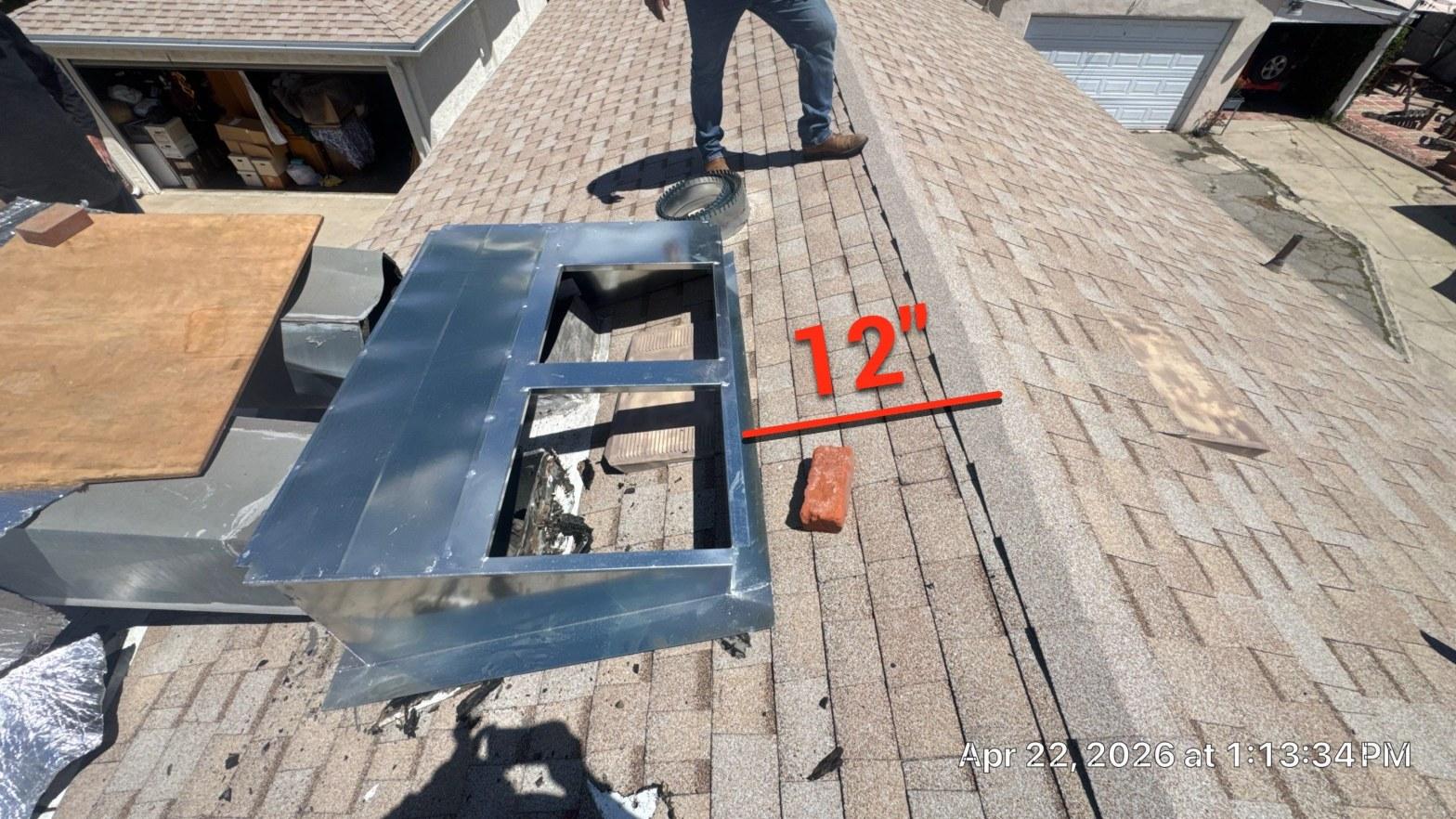
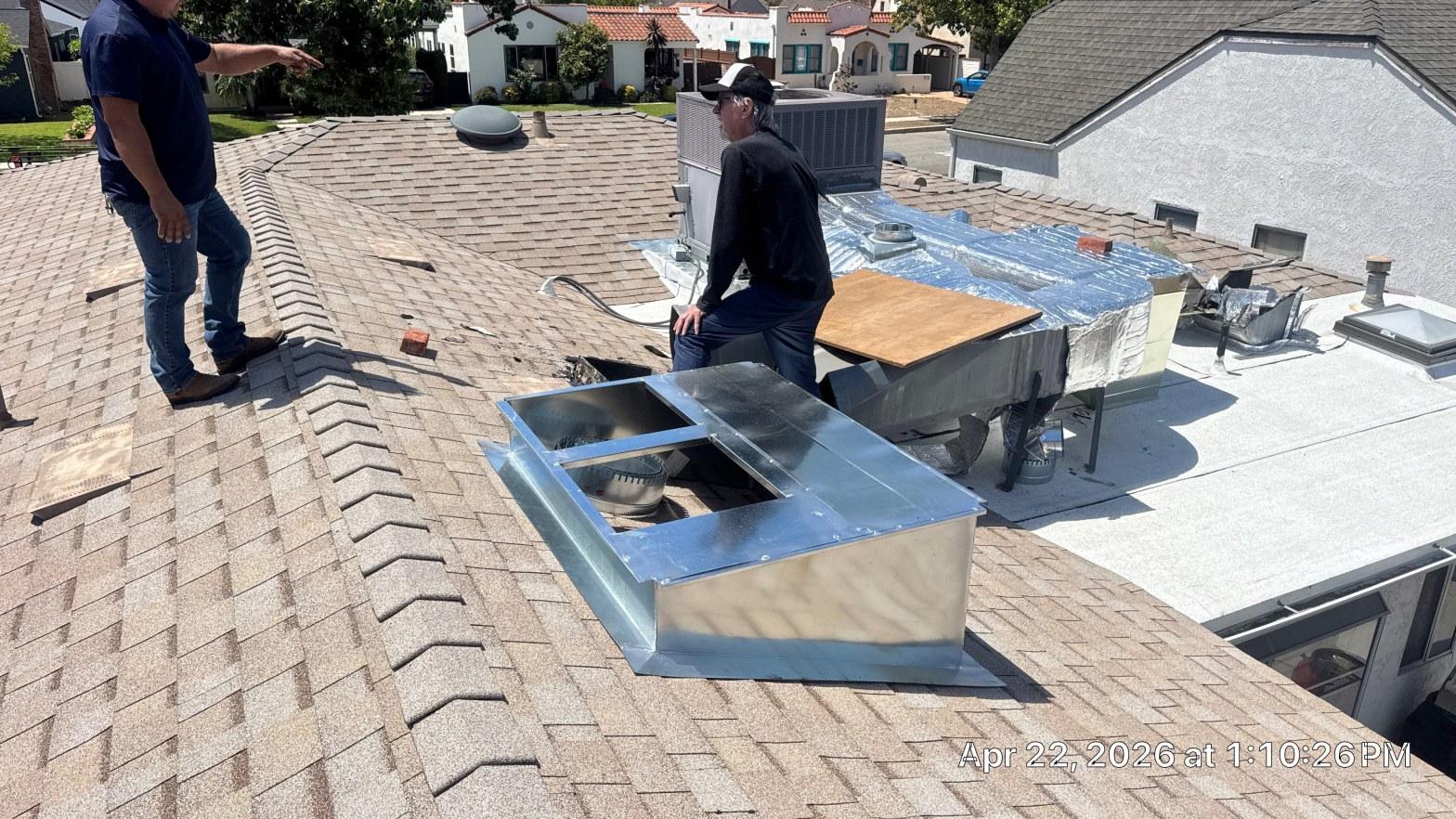
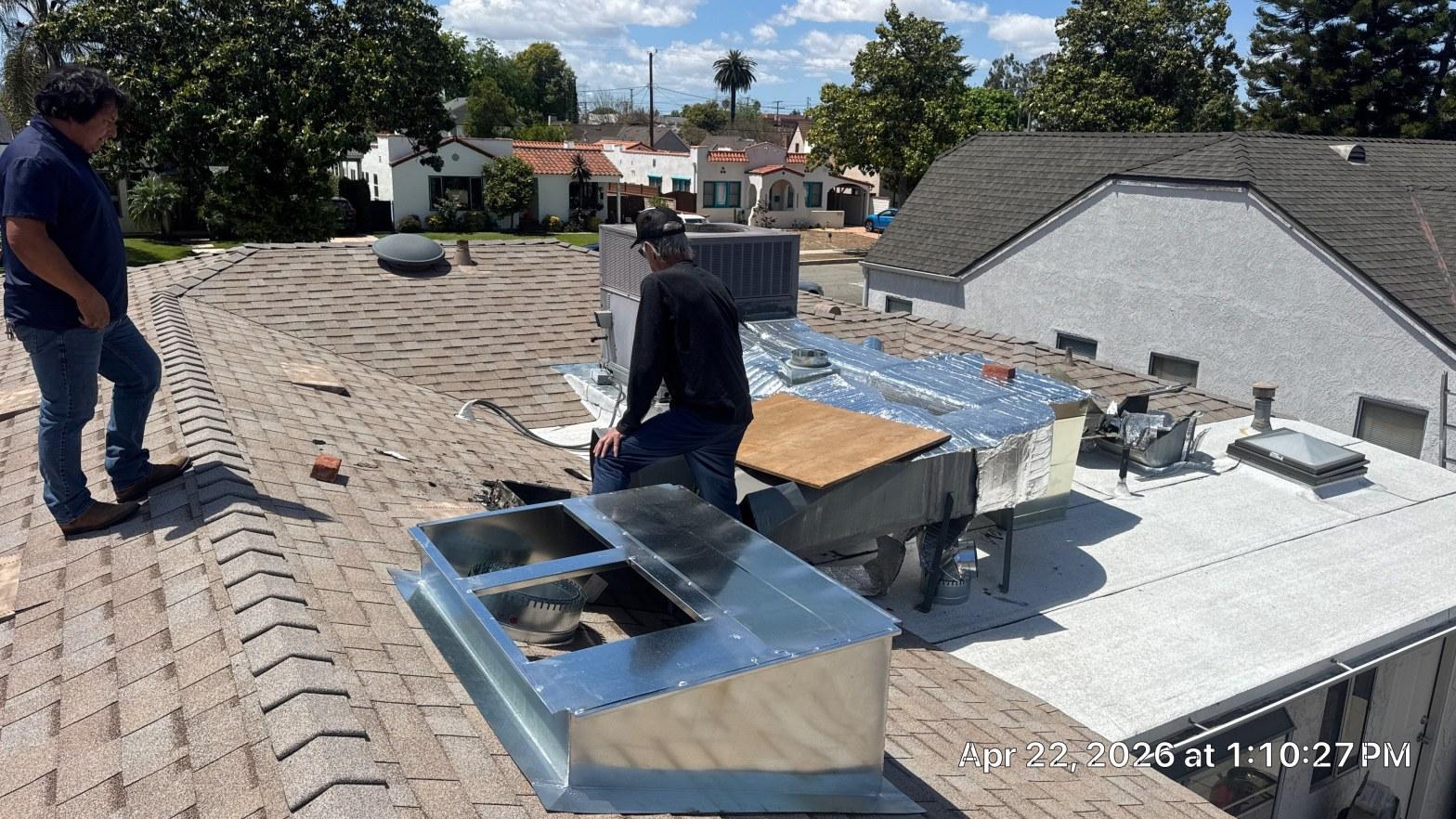
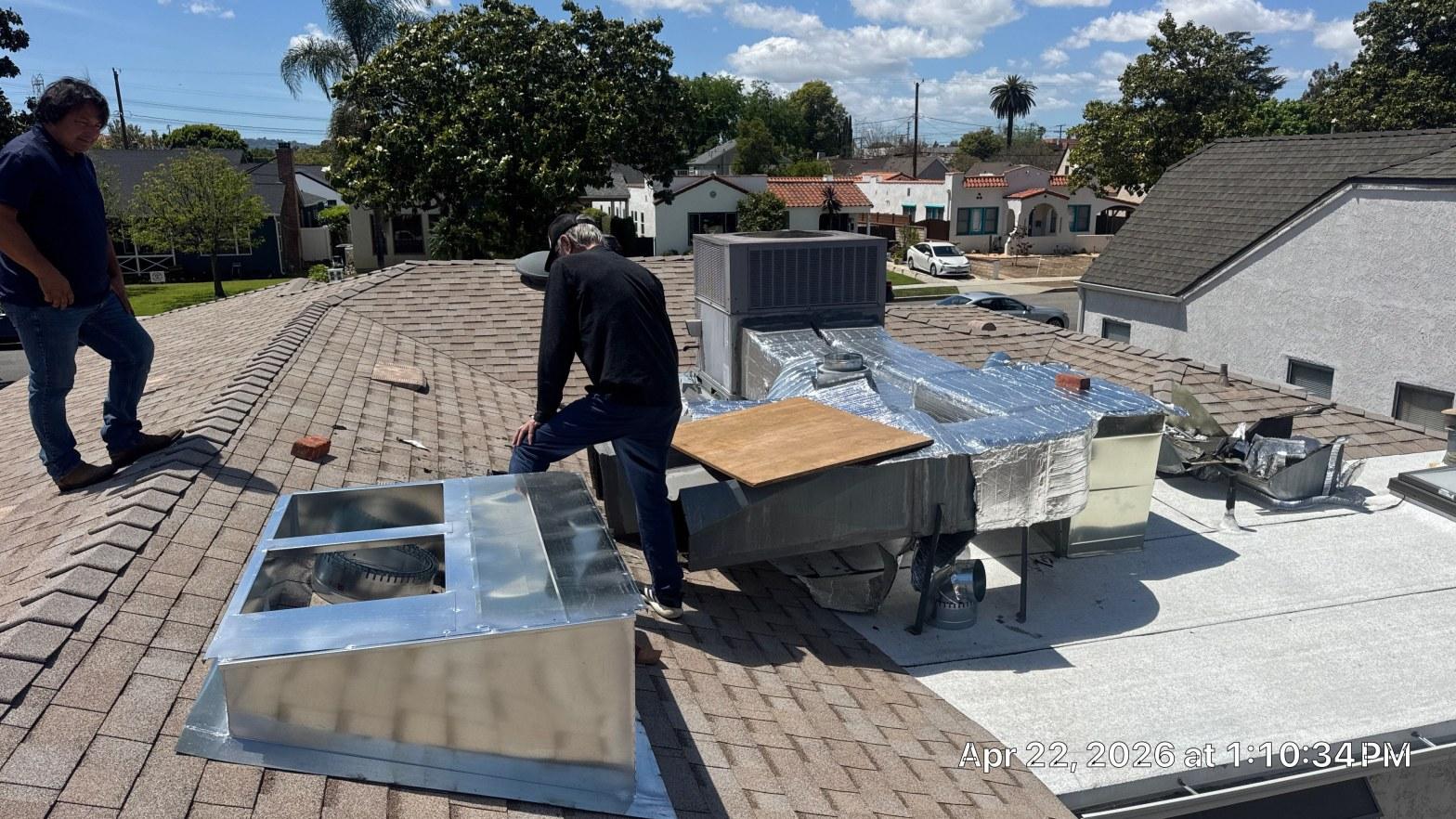
The foundation of any rooftop unit install is the curb — get that wrong and you’ll fight leaks and vibration for the life of the system. Before the Carrier unit was ever lifted onto the roof, our crew fabricated and positioned galvanized steel roof curbs sized to match the unit’s supply and return openings. Visible in the installation sequence, you can see the curb box fully formed with interior baffles separating the supply and return air streams — a detail that matters for airflow balance on a package unit serving a single-zone residential system.
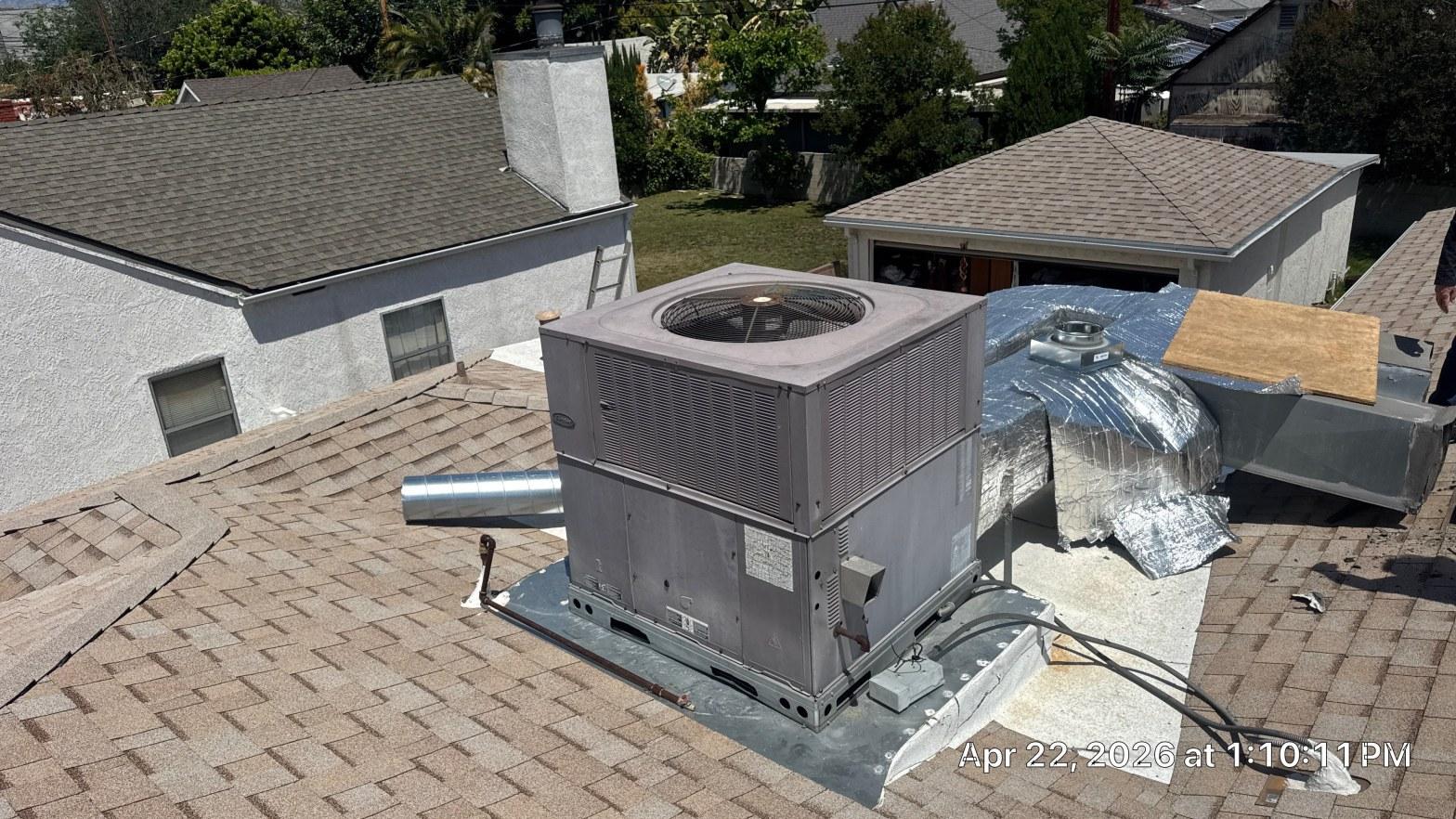
The existing penetrations from the previous equipment were cleaned up, the deck was inspected, and fresh underlayment was laid around the curb perimeter before the unit was set. A white membrane patch — visible under the unit’s base rail — provides an additional weatherproof layer between the galvanized curb flanges and the shingle surface.
Our crew replaces or rebuilds roof curbs on roughly 8 out of 10 rooftop unit swaps we do in the Burbank and greater San Fernando Valley area, because original curbs from units installed 15 or more years ago are typically corroded, out of square, or sized for a discontinued unit footprint.
How Was the Ductwork Connected to the New Unit?
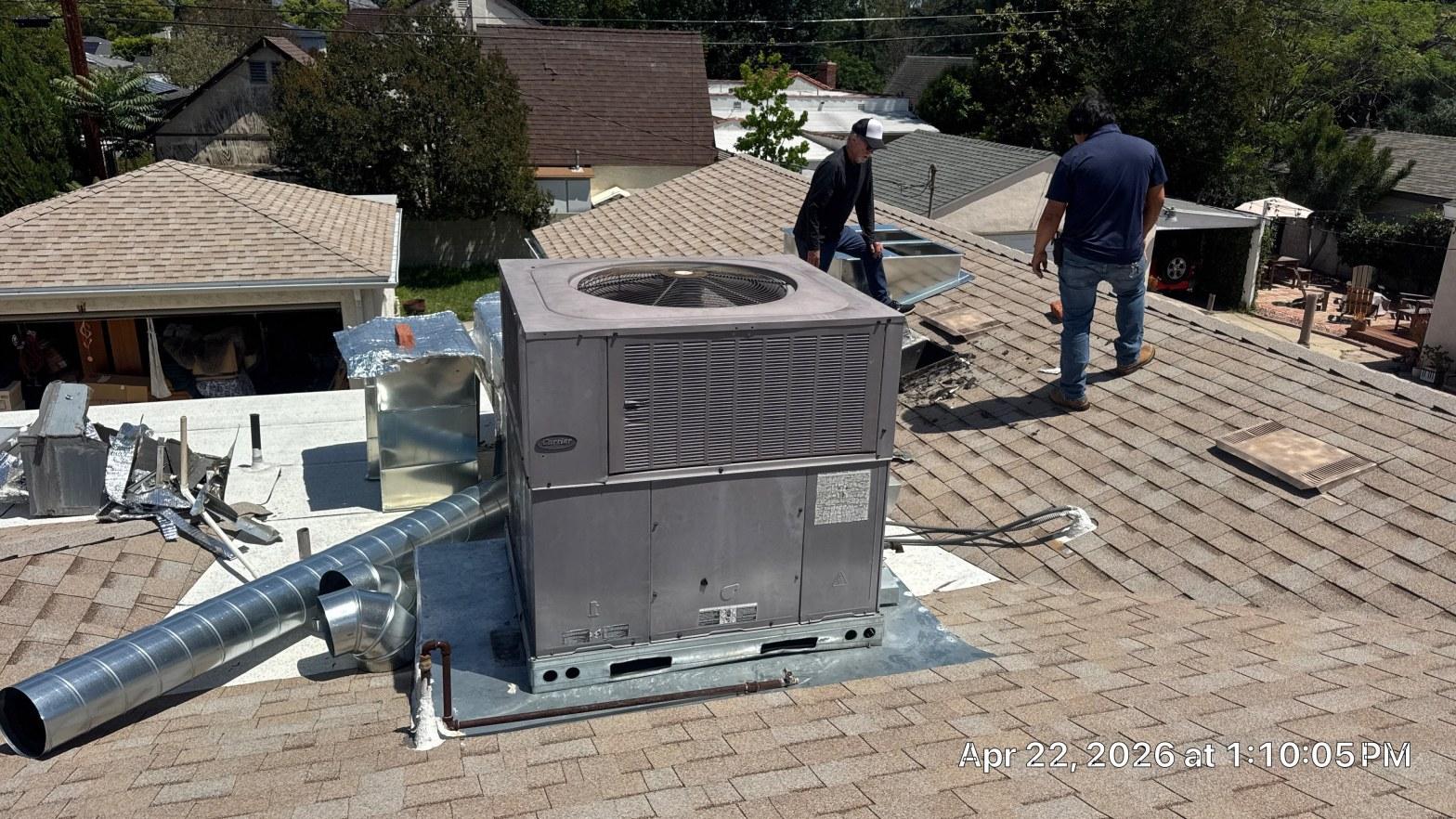
The supply duct transition on this project used large-diameter round galvanized spiral pipe — approximately 14 to 16 inches across — running from the unit’s bottom discharge port down through the roof deck into the attic distribution system. Galvanized spiral duct at that diameter is stiff enough to self-support over a short vertical run, which simplified the roof-side connection.
On the mechanical side, foil-faced duct insulation was wrapped tightly around every sheet metal component exposed on the roof surface. In Burbank, summer afternoon temperatures regularly exceed 95°F, and uninsulated metal ductwork on a south-facing roof slope can lose 10–15% of cooling capacity to heat gain before conditioned air reaches the first register. Wrapping that transition section is not optional — it’s a direct efficiency measure.
As of 2026, California’s Title 24 building energy standards require duct insulation to meet a minimum R-6 value for new installations, which the foil-faced wrap used here satisfies. See the California Energy Commission’s Title 24 documentation for the current requirements.
What Does the Finished Installation Look Like?
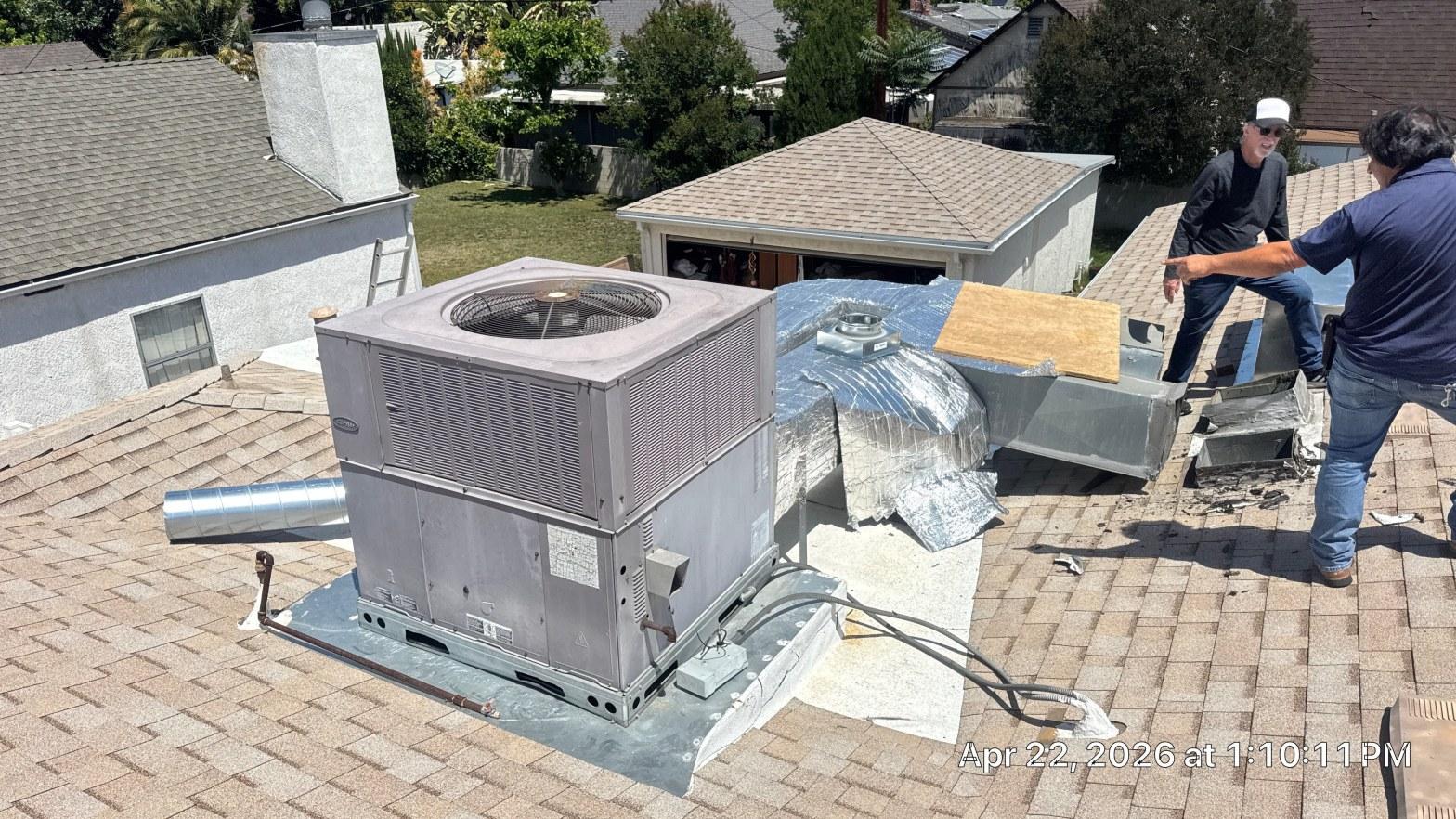
The Carrier unit sits level on its new curb, with the condenser fan on top exhausting heat vertically — the correct orientation for a rooftop package unit on a residential pitched roof. Flexible electrical conduit runs from the unit’s control panel down to the disconnect and power supply. The gas supply line — visible as a copper stub at the unit’s base — connects to the furnace section inside the cabinet, confirming this is a combination gas heat / electric cool package unit.
All flashing transitions between the curb flanges and the surrounding shingles were sealed and dressed before the crew left the roof. The galvanized components will oxidize to a weathered gray over the first 2–3 seasons, which is normal for exposed steel in a Southern California climate. The unit itself carries Carrier’s standard limited warranty, and the installation is documented for permit and inspection purposes.
Licensed by the California Contractors State License Board (CSLB), Roof Replacement CA handles both the roofing and mechanical coordination on projects like this — which is why homeowners call us specifically when their roofer and their HVAC contractor can’t agree on who owns the curb flashing.
Ready to Relocate or Replace Your Rooftop AC Unit?
If your rooftop package unit is overdue for replacement, leaking at the curb, or needs to be repositioned on the roof, schedule a site visit with our crew. We cover Burbank and the surrounding San Fernando Valley communities. Call us directly or submit a project inquiry online to get a written scope and price before any work begins.


