What Was Wrong With This Flat Roof?
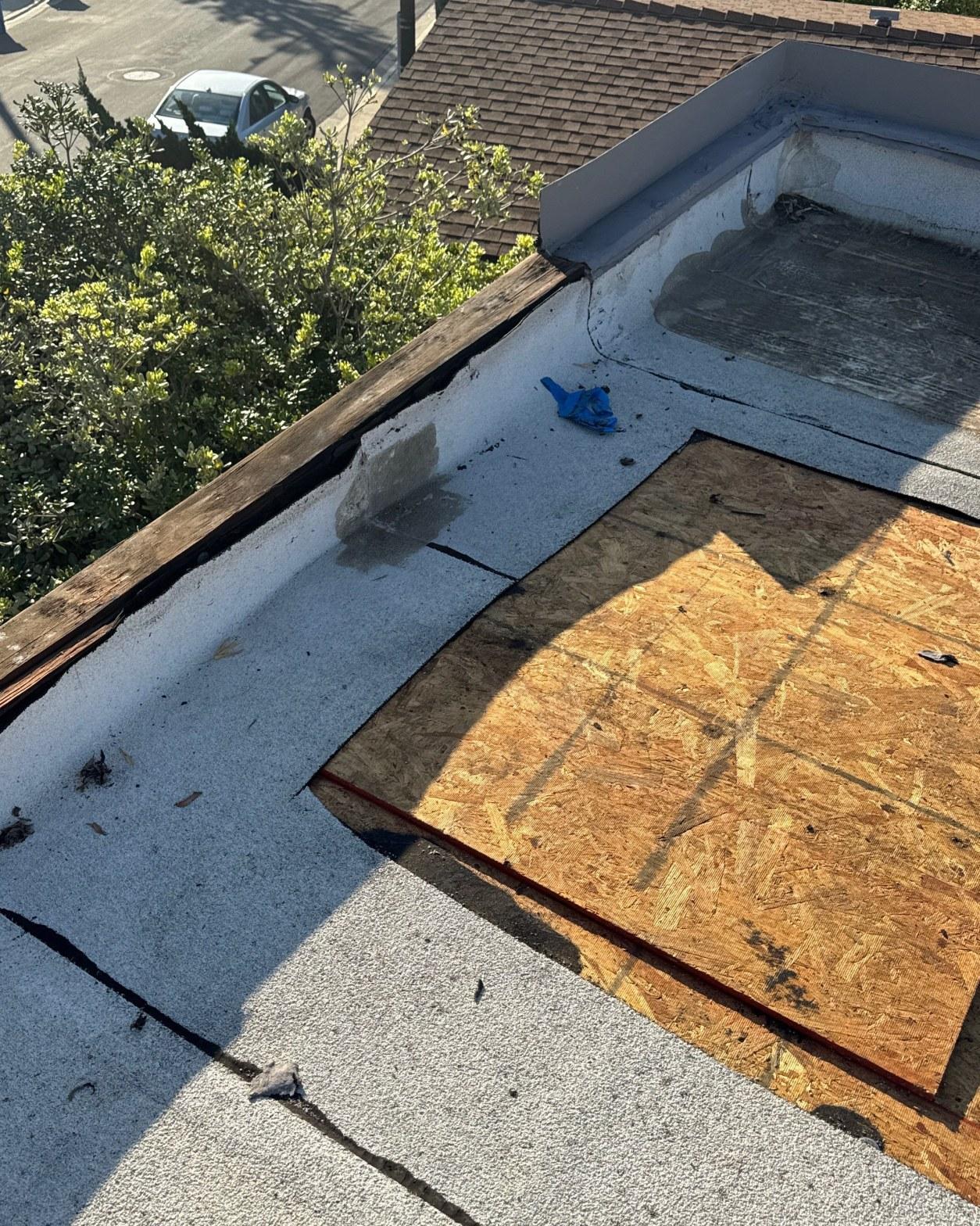
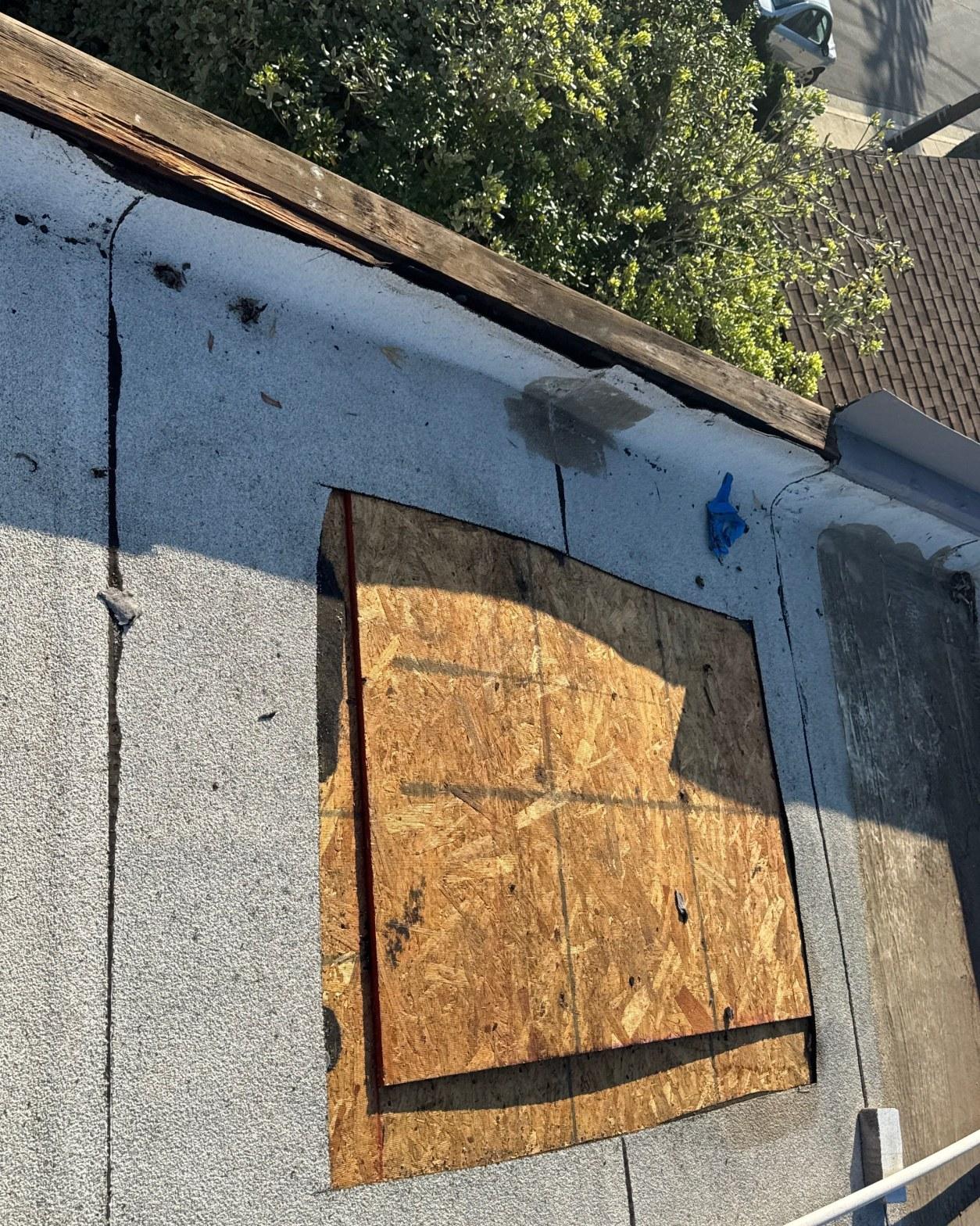
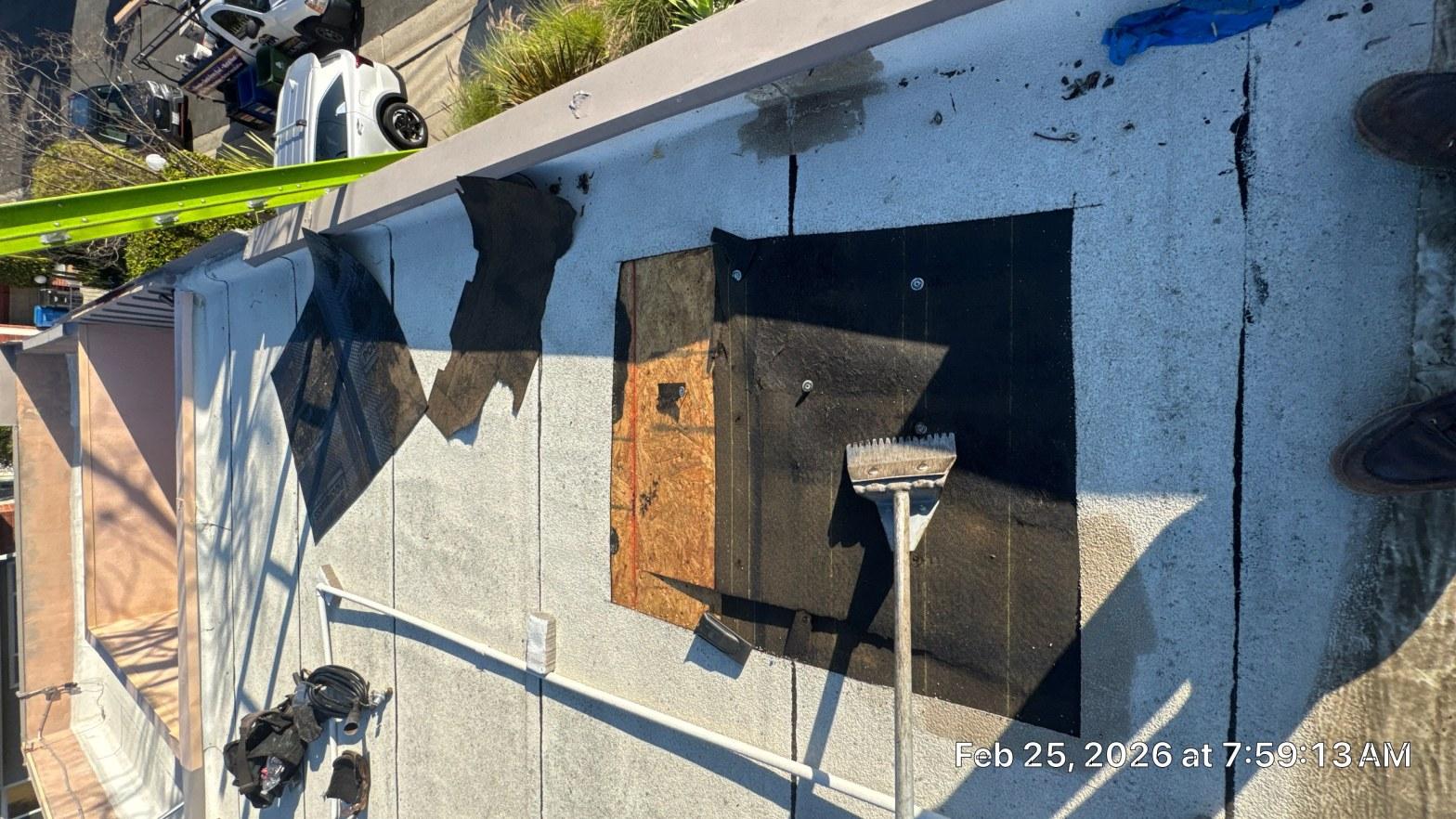
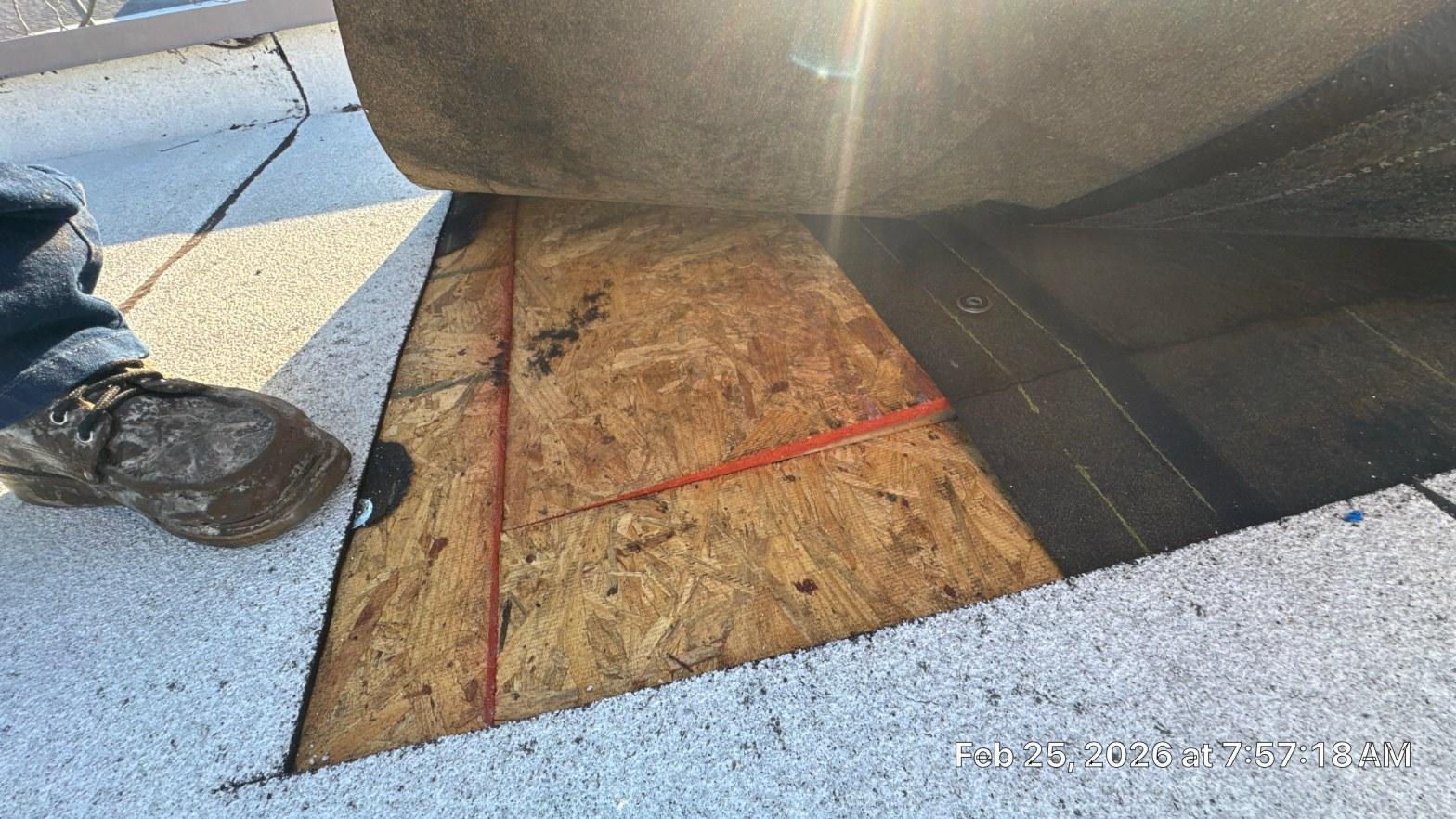
The existing torch down membrane on this Los Angeles flat roof had failed completely, allowing water to saturate the OSB decking underneath for long enough that multiple panels had rotted through. The fascia board along the roof edge was similarly deteriorated — dark, soft, and structurally compromised.
The homeowner near 915 Fortune Way in the 90042 ZIP code first noticed interior water staining, which is typically the last warning sign, not the first. By the time we got on the roof, we found at least 3 distinct sections of decking that needed full replacement rather than spot patching. Attempting to torch a new membrane over saturated or rotted OSB is a code violation under California’s 2022 Building Code and would guarantee another failure within 1–2 seasons.
Project Gallery
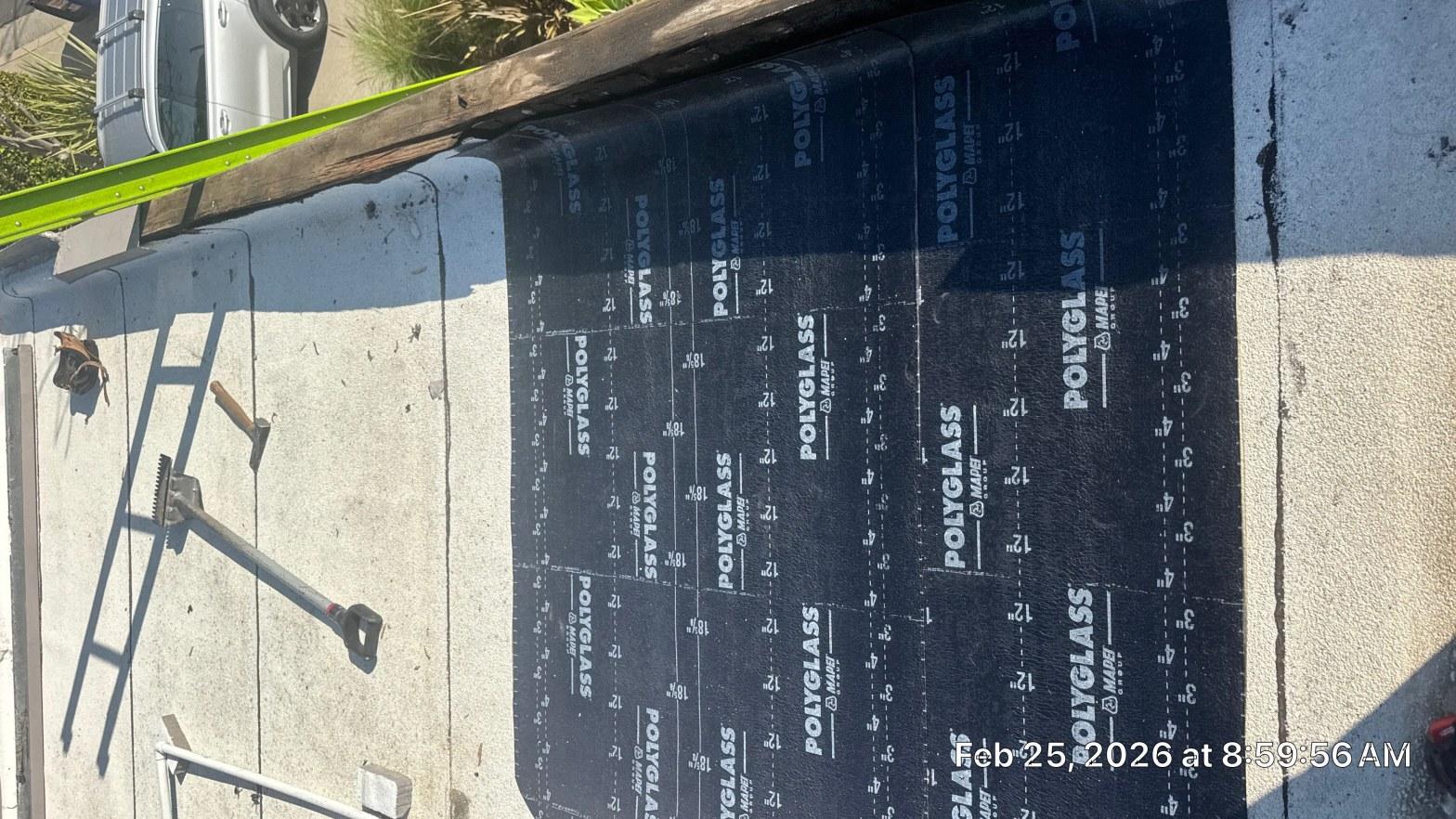
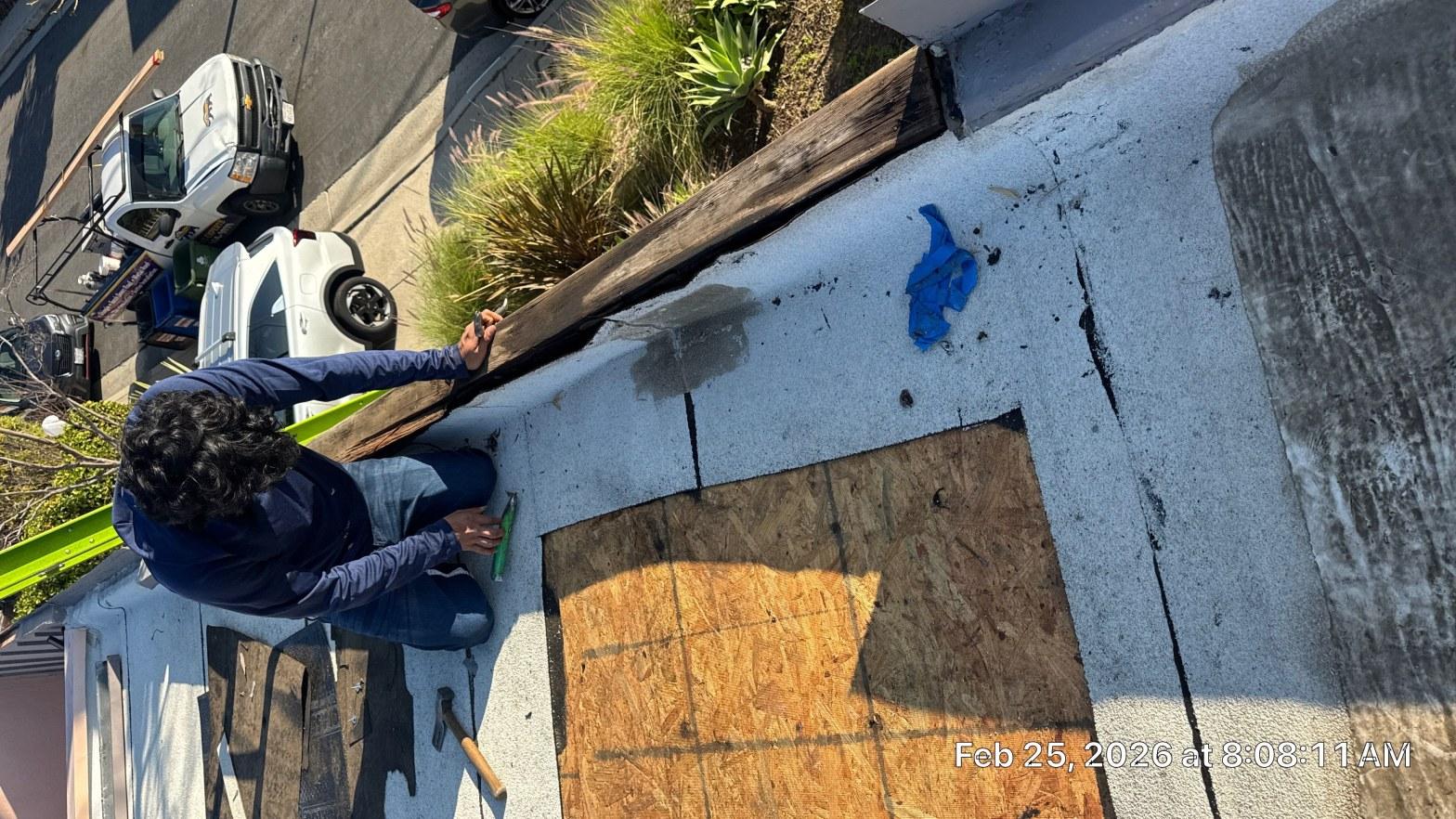
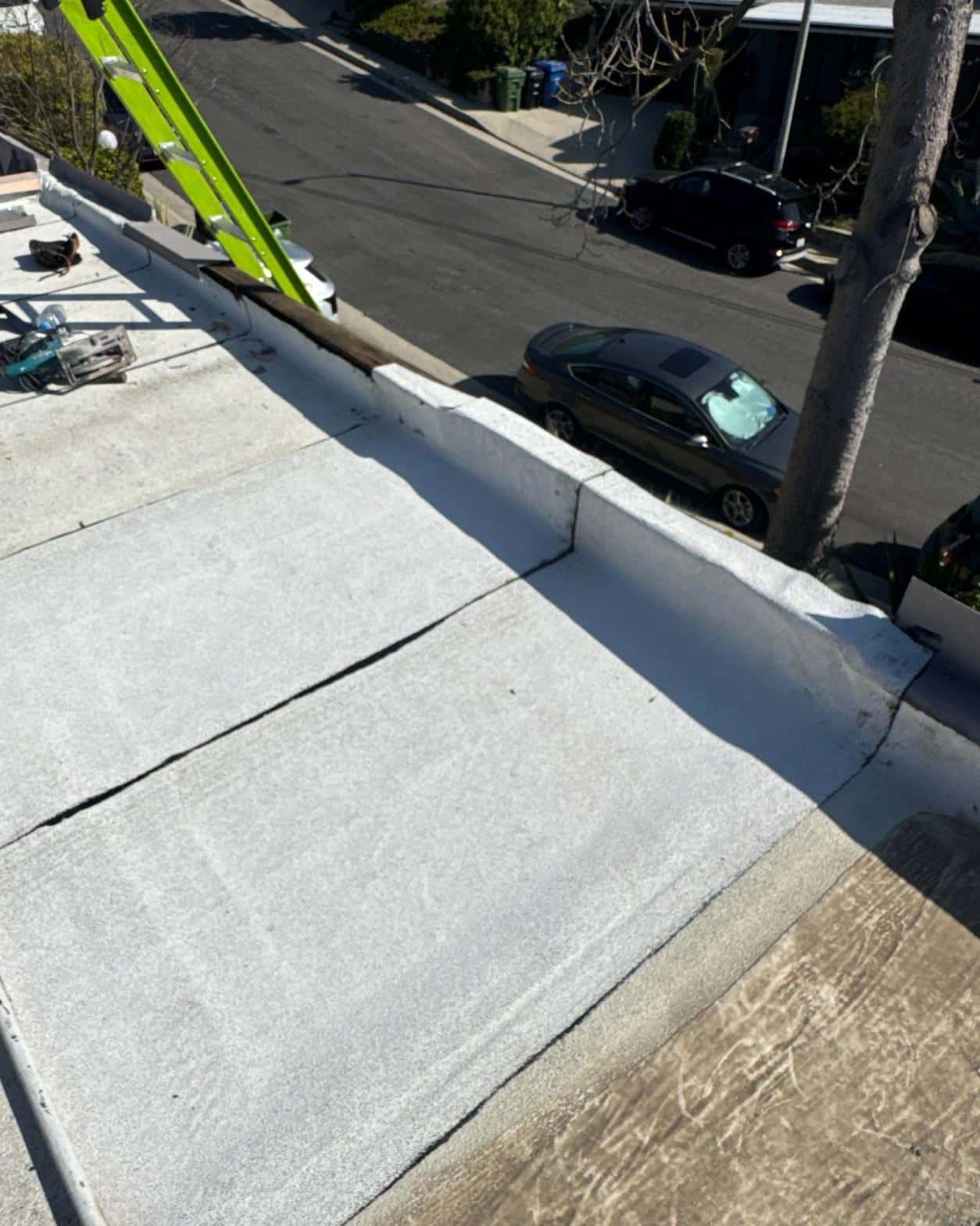
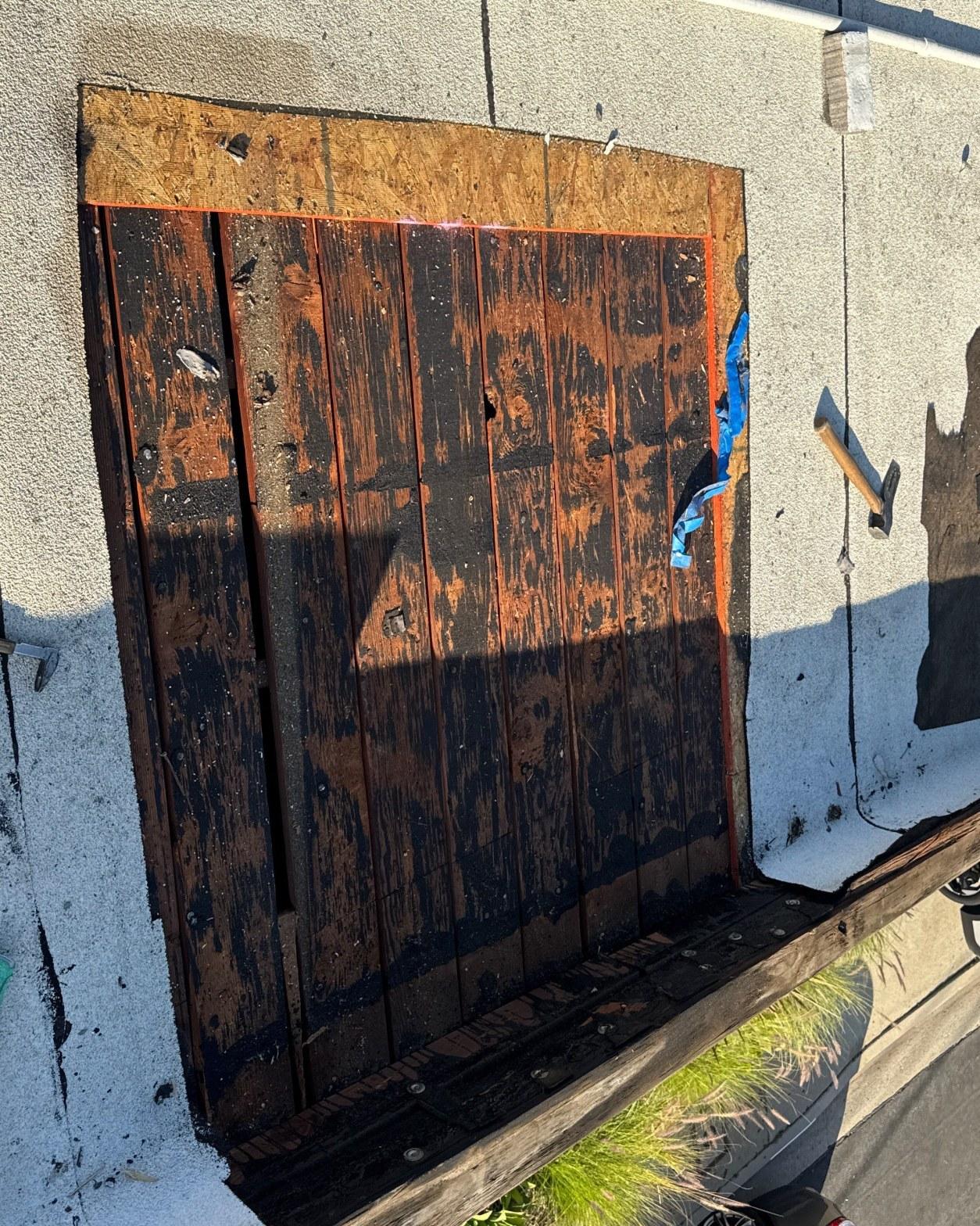
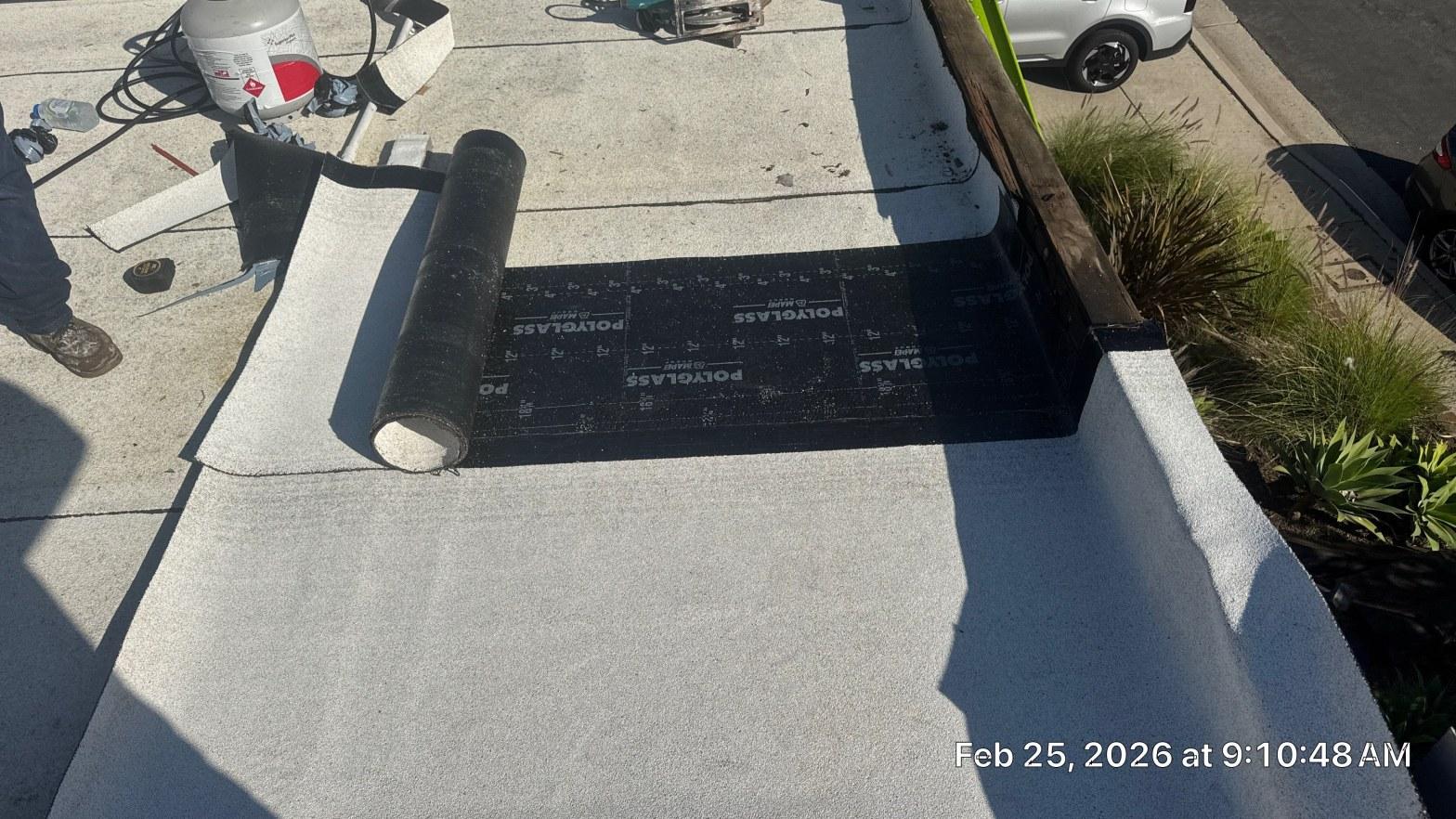
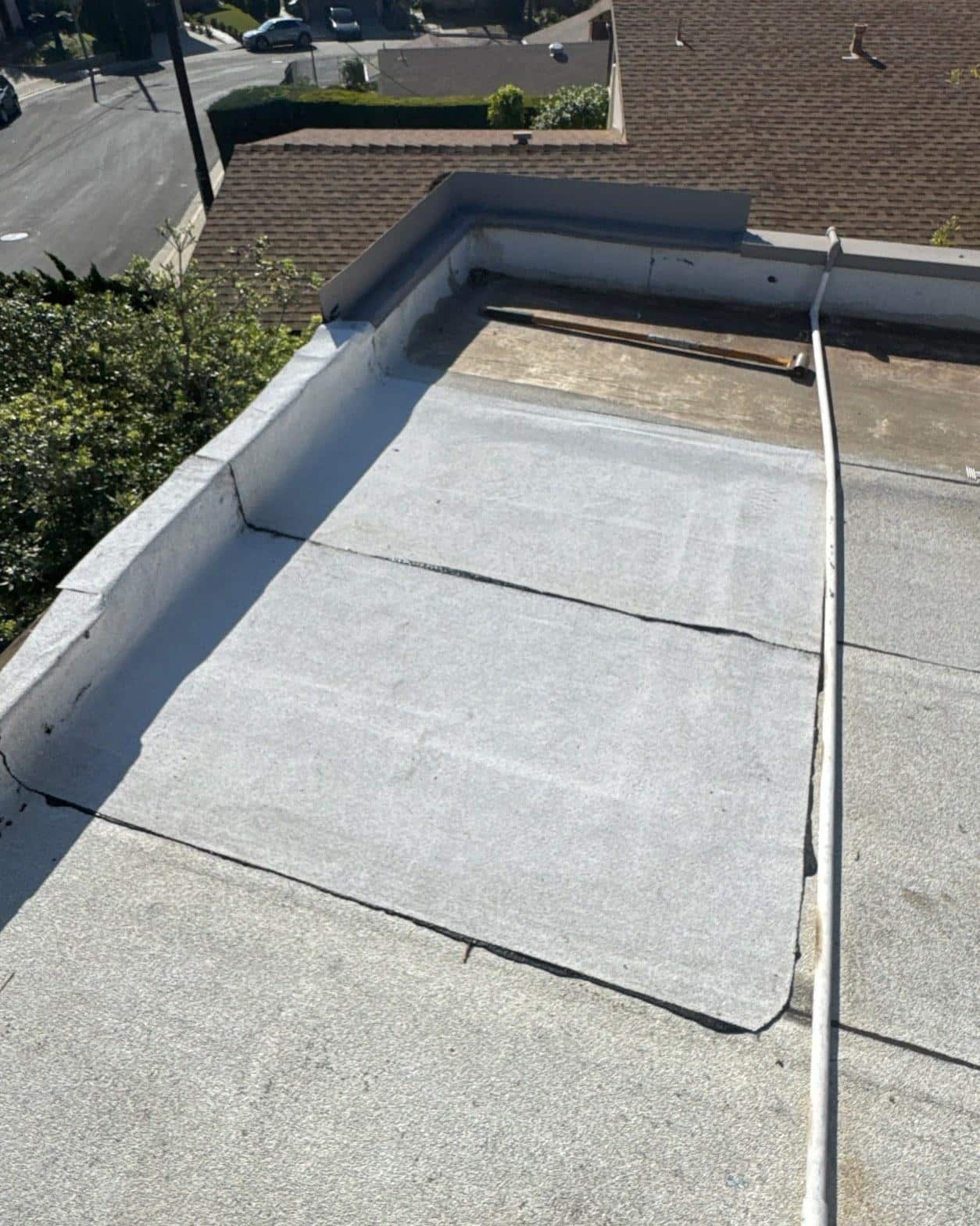
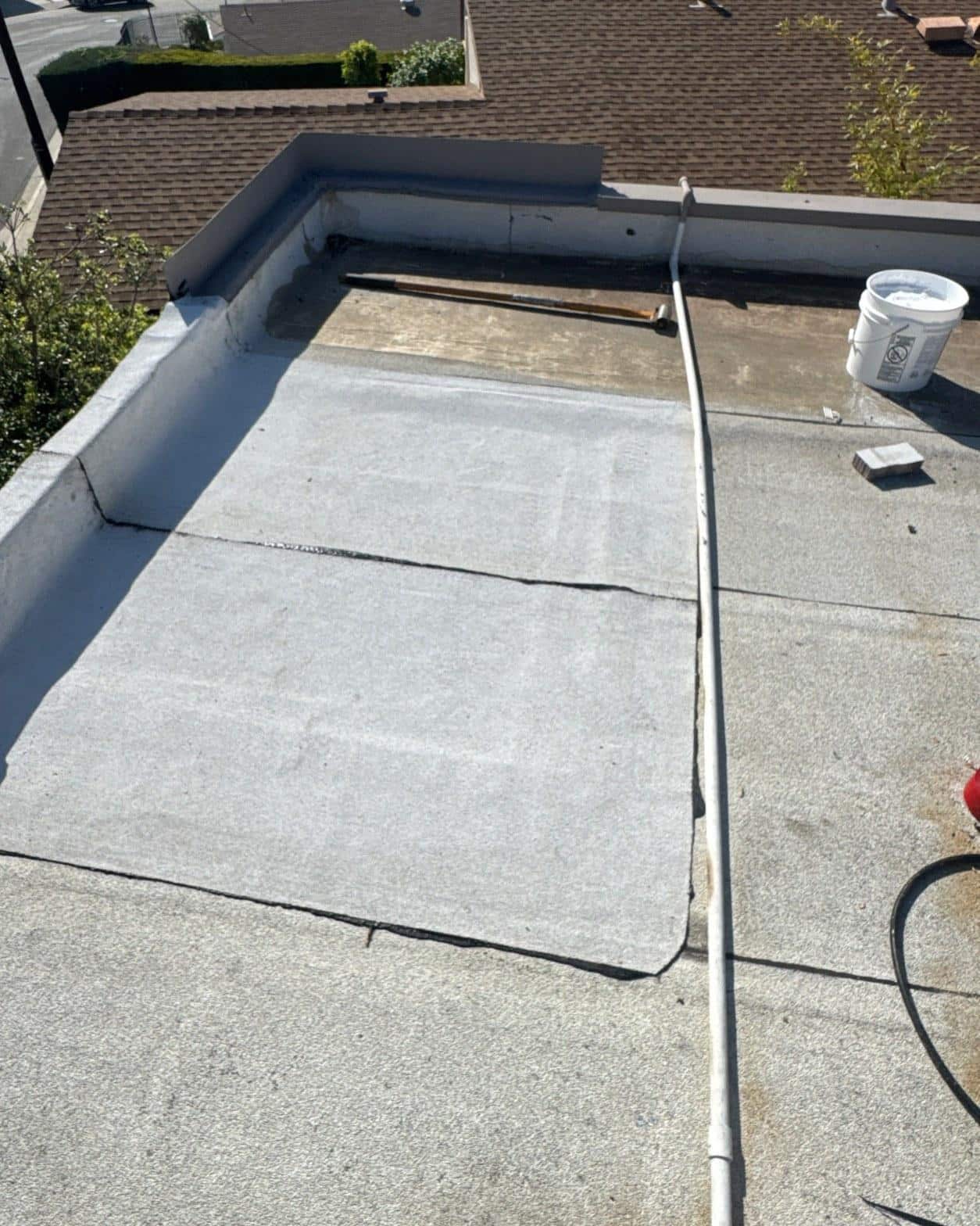
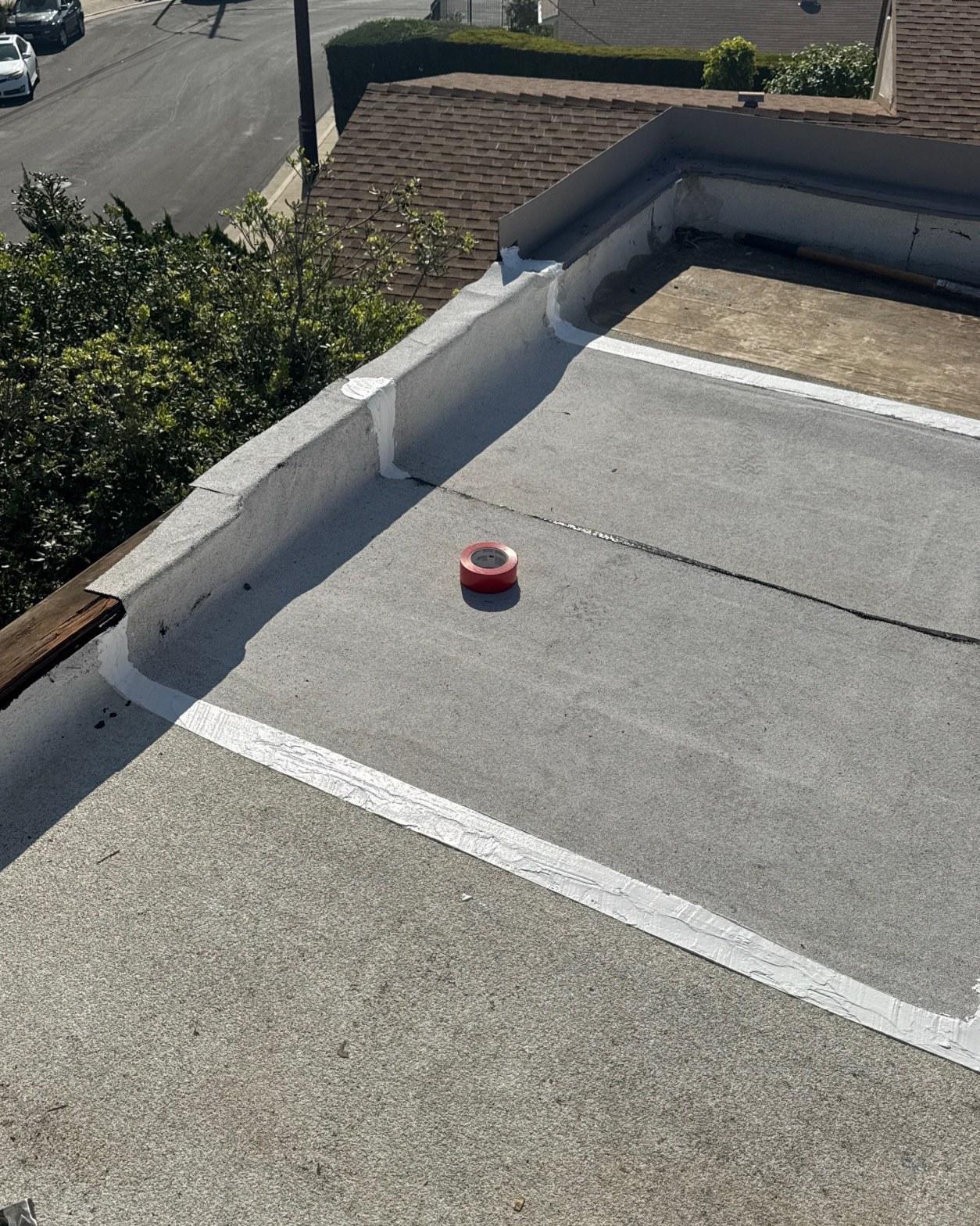
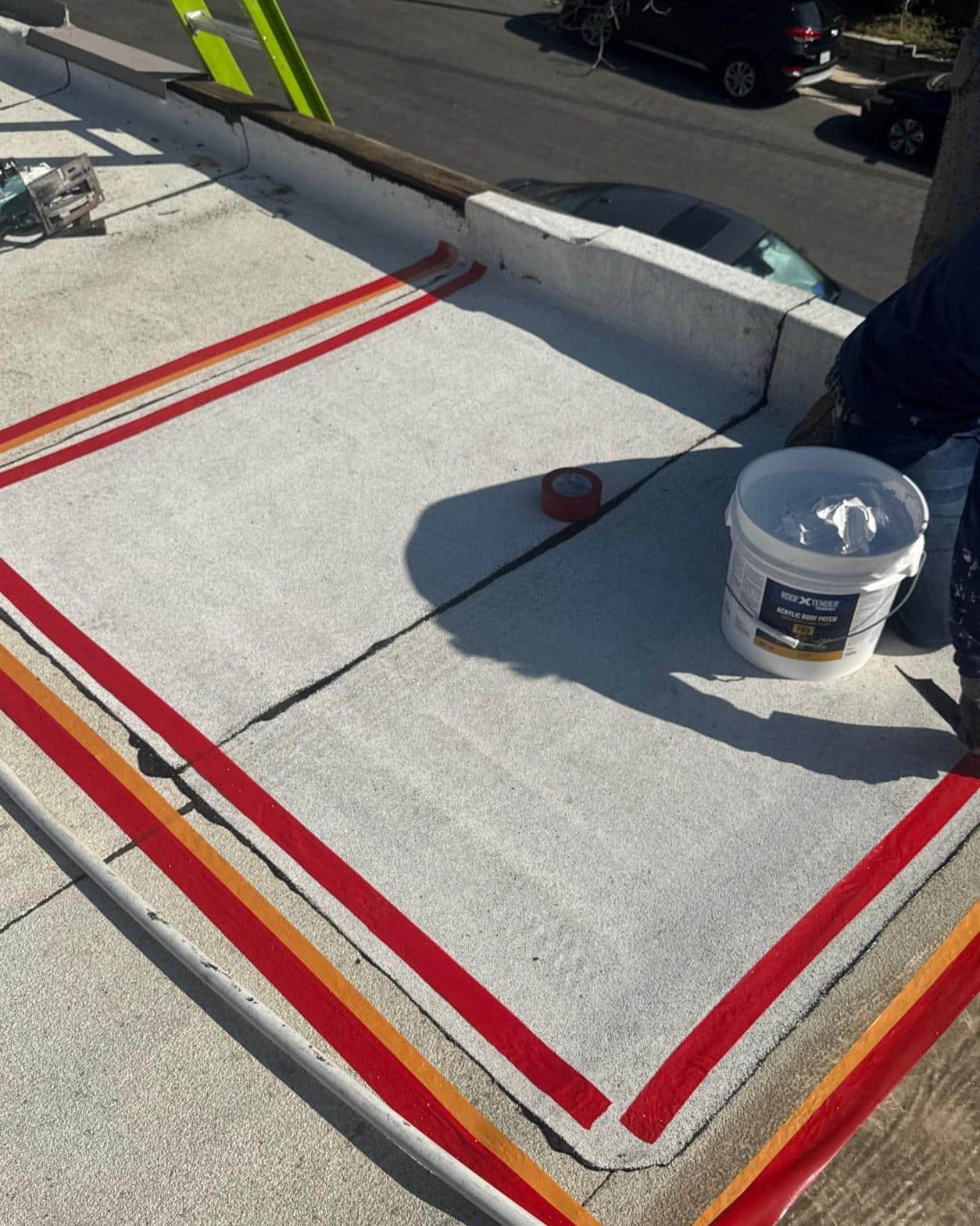
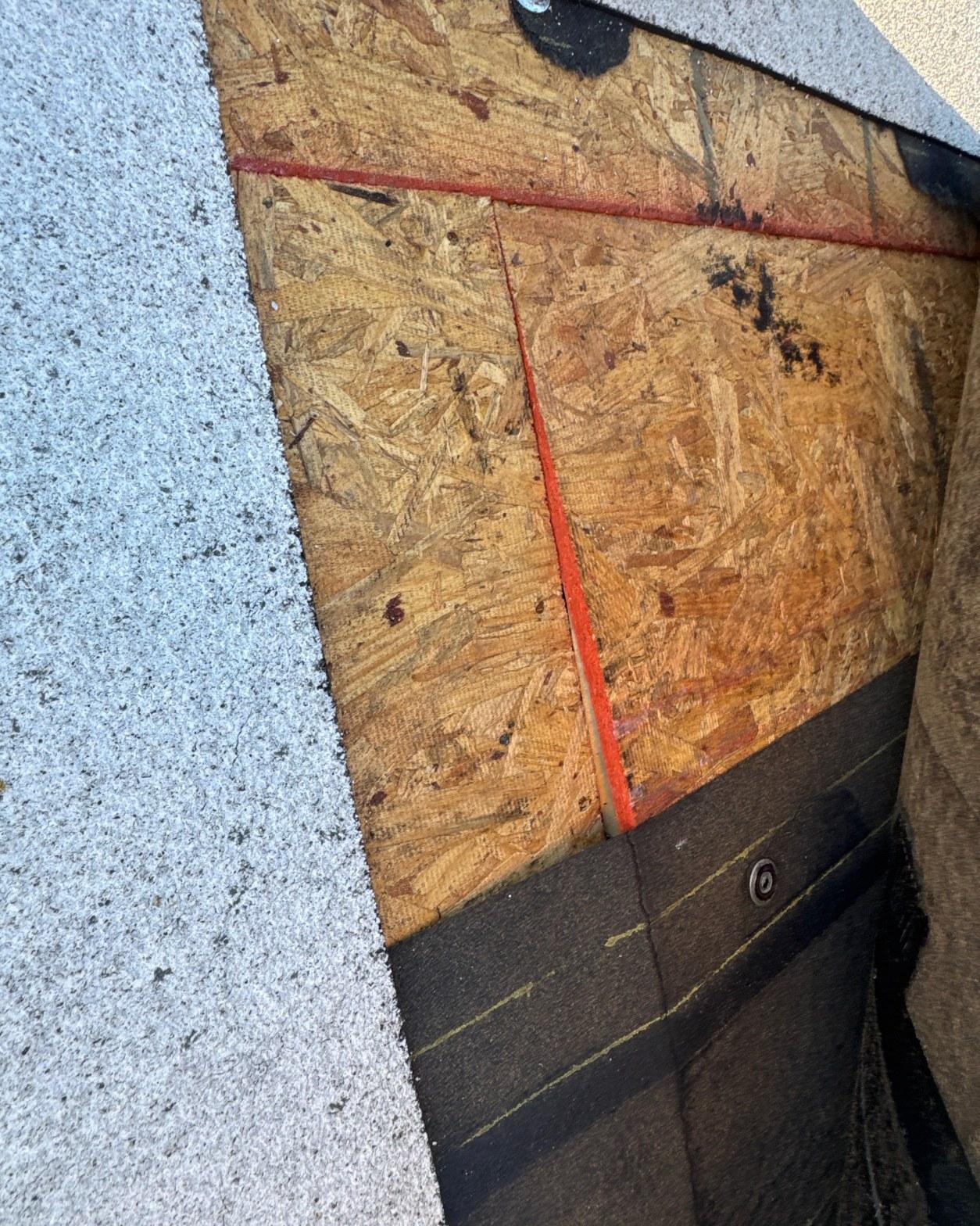
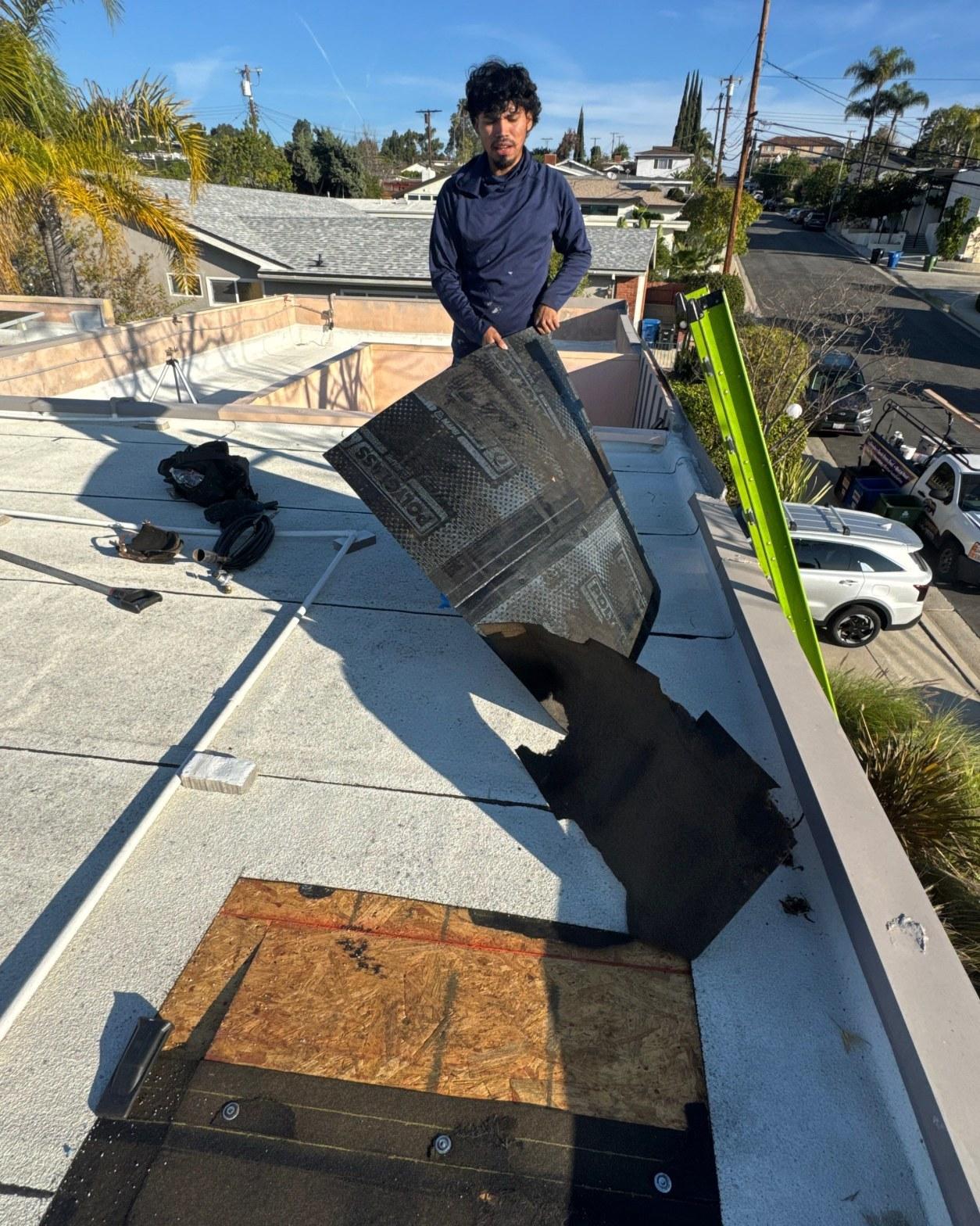
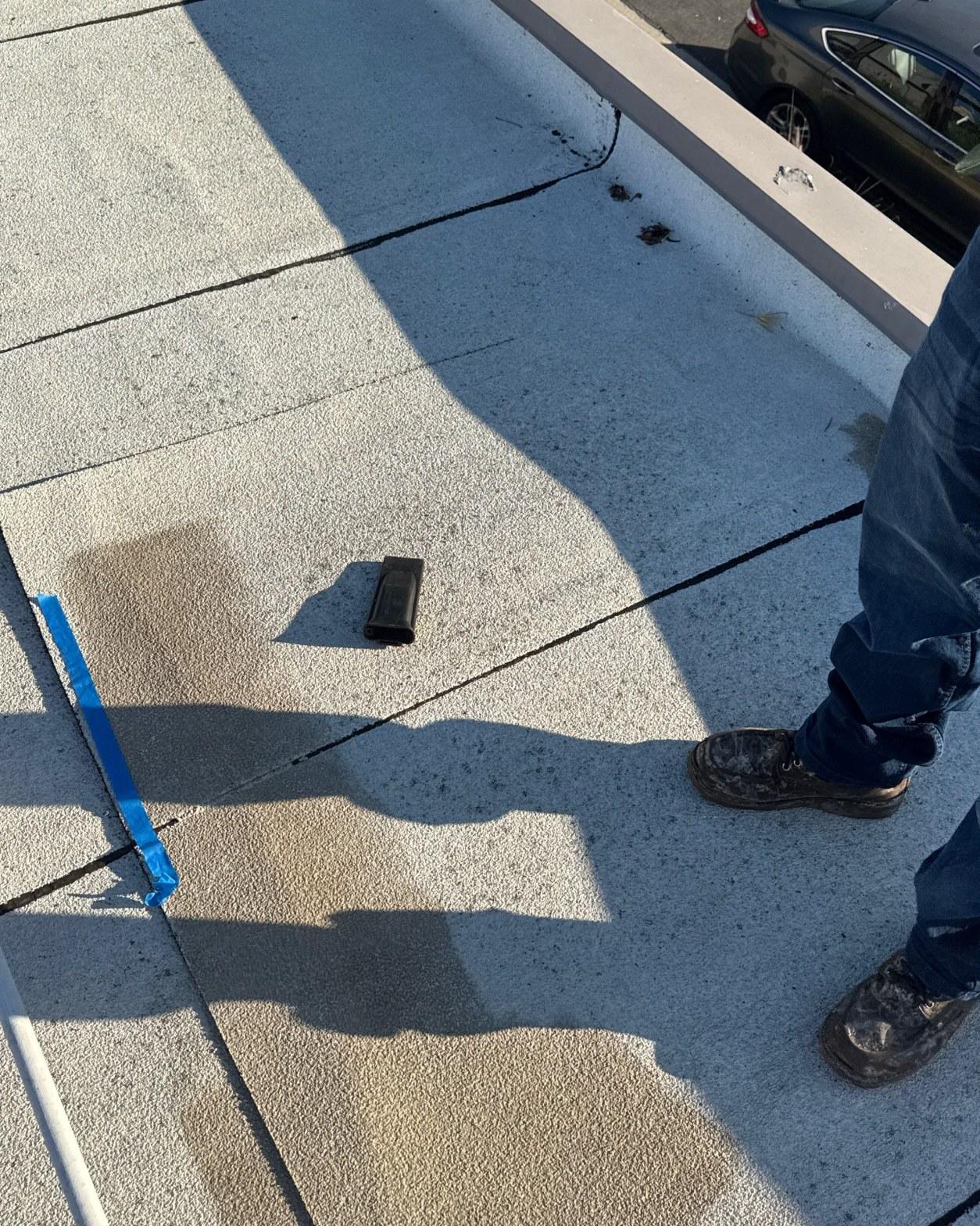
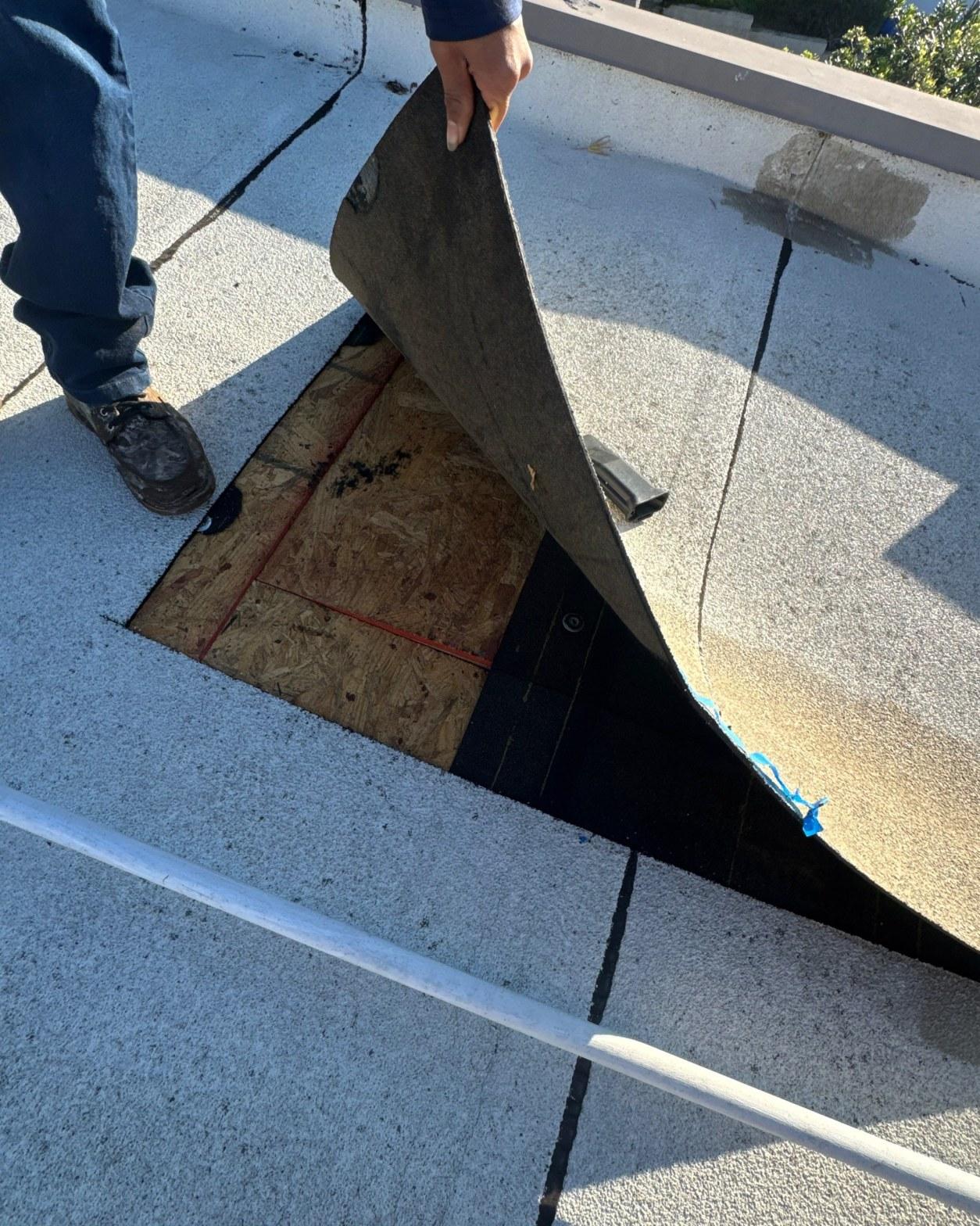
Our crew documented the site starting at 7:57 AM on February 25, 2026, working through the morning to complete the structural repairs before membrane work began.
How Did We Remove the Damaged Decking?
Removing the old torch down membrane and rotted OSB required hand tools and careful work along the parapet wall to avoid damaging the stucco cap — a step that adds roughly 45–60 minutes to any flat roof repair job but prevents costly exterior wall repairs later.
One crew member worked the roof edge, carefully prying up the deteriorated fascia board — visible in the gallery as a long, blackened plank — while a second roofer pulled back the existing modified bitumen sheets from the field of the roof. The old membrane had completely delaminated from the decking in several spots, a sign the original installation had likely gone without maintenance for well over 10 years.
Across our flat roof repair calls in the greater Los Angeles area, we see this pattern consistently: roughly 7 out of 10 torch down repairs that involve full decking replacement also involve at least one rotted fascia or barge board that the homeowner didn’t know about until we opened the roof.
With the debris cleared, the crew cleaned the parapet ledge and confirmed that the structural framing beneath was still sound — only the sheathing and surface components needed to go.
Installing New OSB Decking and Underlayment
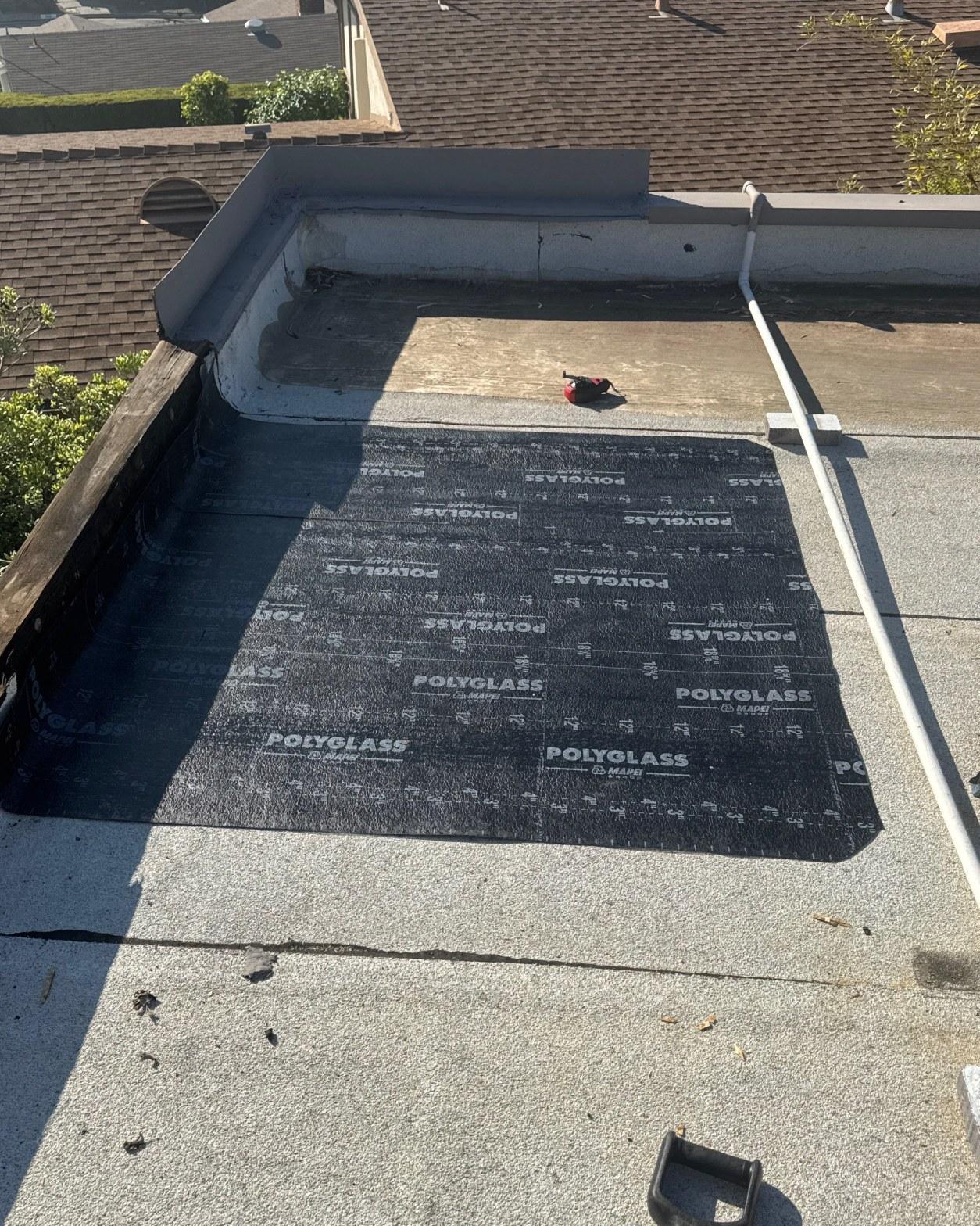
We installed new ⅝-inch OSB panels over the cleaned framing, then rolled out a layer of modified bitumen underlayment before any torch work began — a two-layer approach that adds a critical moisture buffer and is required by California’s Title 24 building energy standards for low-slope assemblies.
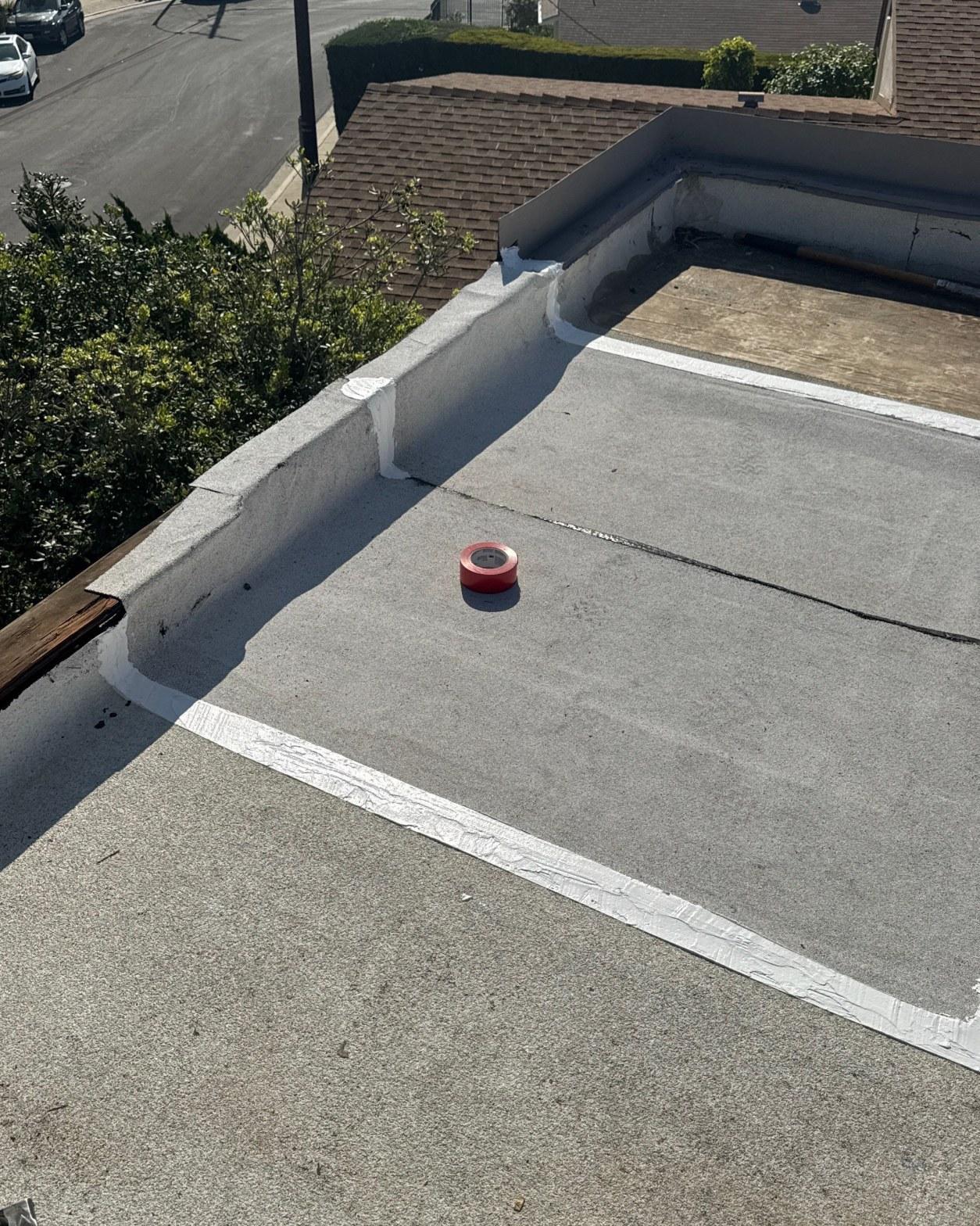
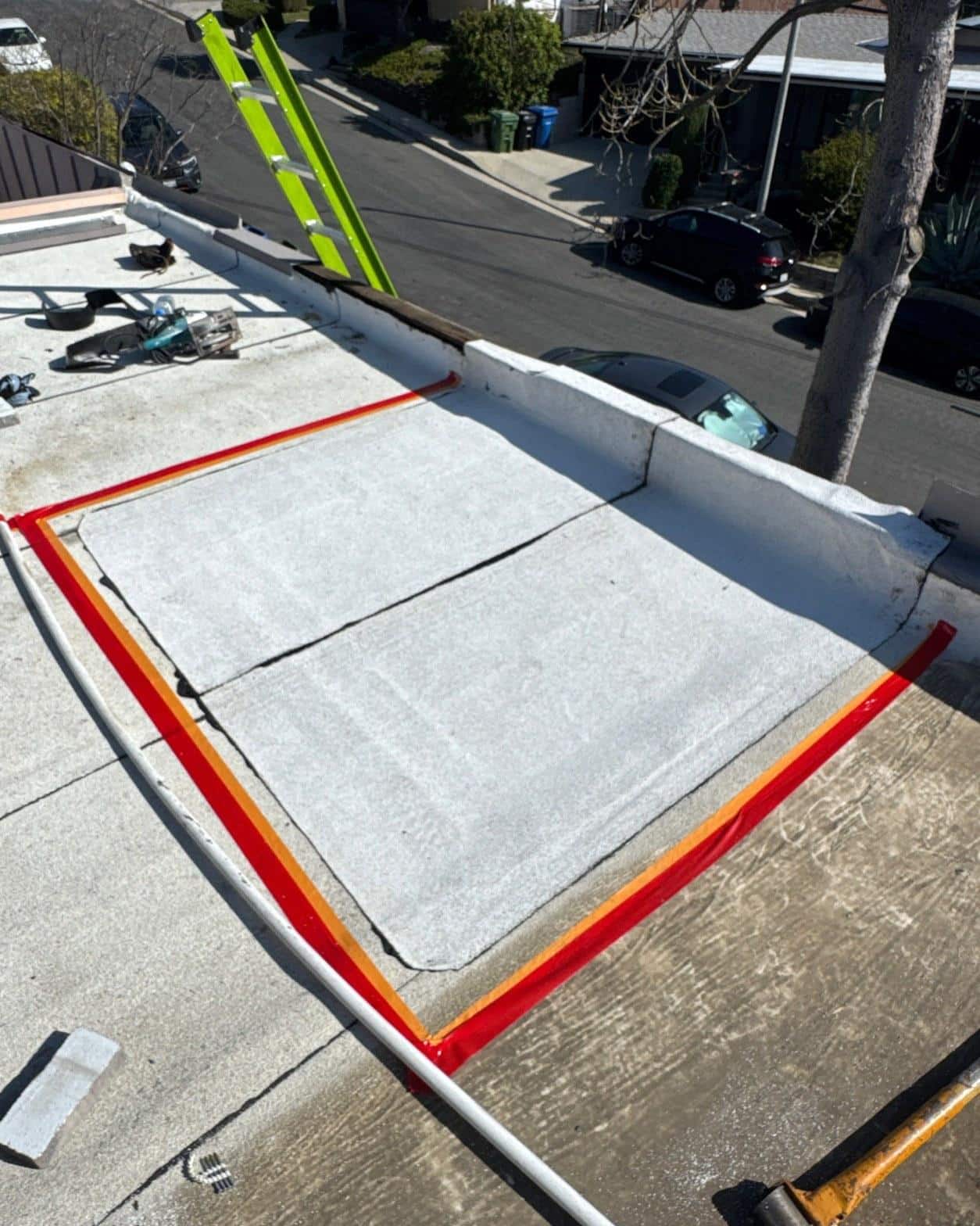
The OSB panels were cut to fit the repair area and fastened with ring-shank nails at 6-inch spacing along panel edges and 12-inch spacing in the field, per IRC Table R803.2.4 nailing requirements. You can see the red expansion-gap tape marking the panel seams in the featured photo — those lines ensure the panels have the 1/8-inch gap required to allow for thermal movement without buckling, which matters especially during Los Angeles summers when rooftop temperatures can exceed 150°F on a dark membrane surface.
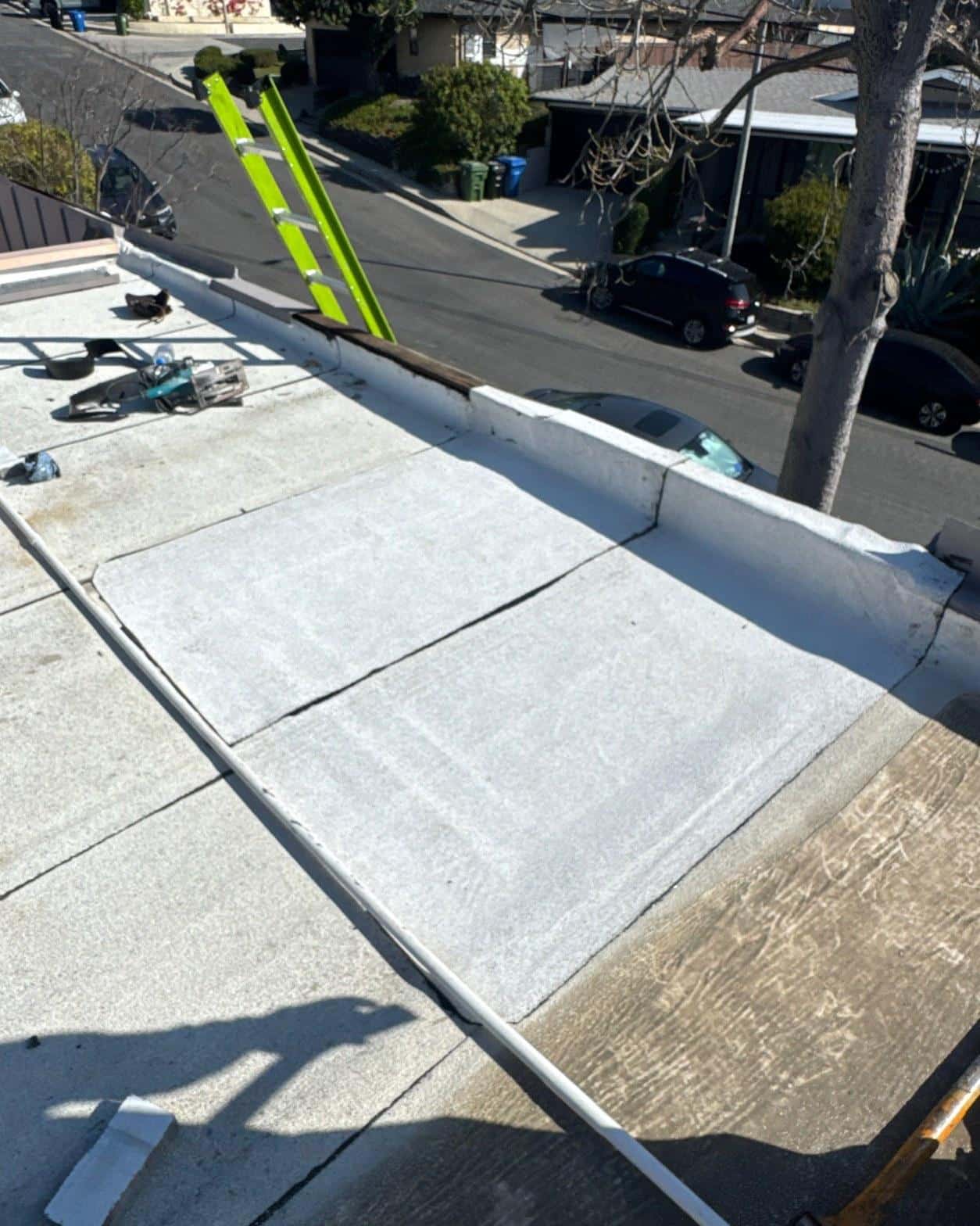
The underlayment roll visible on the finished flat section of the roof was used to pre-seal the field before torching began. California’s Title 24 building energy standards require that low-slope re-roofing meet minimum cool-roof reflectance values as of the 2022 update, and proper underlayment installation is part of the inspectable assembly.
What Did the Finished Repair Look Like?
By mid-morning on February 25, 2026, the new OSB decking was down, the underlayment was laid and lapped correctly over the parapet edge, and the crew was ready to begin torching the finish membrane — completing a repair that restored full structural integrity to a roof section that had been open to water intrusion for at least one full rainy season.
The parapet walls received a fresh coat of elastomeric sealant along the cap, which you can see in bright white in several of the gallery photos. That step alone prevents one of the most common reinfiltration points on Los Angeles flat roofs: water wicking down the inside face of the parapet and behind the membrane edge.
The total repair area covered approximately 4 OSB panels — roughly 128 square feet of new decking — plus the fascia board replacement along the street-facing edge. The work was completed within a single 8-hour workday, which kept the homeowner’s property secured and weathertight the same day we started.
Schedule Your Flat Roof Repair
If your flat or low-slope roof is showing water stains, bubbling membrane, or soft spots when you walk it, those are signs the decking may already be compromised. Get a written inspection and repair estimate before the next rain event turns a 128-square-foot repair into a full reroof.
Call Roof Replacement Inc or submit a project inquiry online. We serve Los Angeles and surrounding communities, and most repair assessments can be scheduled within 2–3 business days.