
Tile Roof Repair Project in South Pasadena, CA

At 509 Fair Oaks Ave, South Pasadena, CA 91030, Roof Replacement Inc completed a comprehensive tile roof repair on a multi-unit residential building featuring the Spanish Colonial Revival architecture common throughout the area. The scope included removing and resetting aged clay mission tiles across multiple roof planes, installing new synthetic underlayment, fabricating and fitting new metal flashing at several decorative chimneys and parapets, and repairing deteriorated wood decking at the eave edges. The finished roof preserves the building’s historic character while providing a properly waterproofed substrate beneath the original tile.

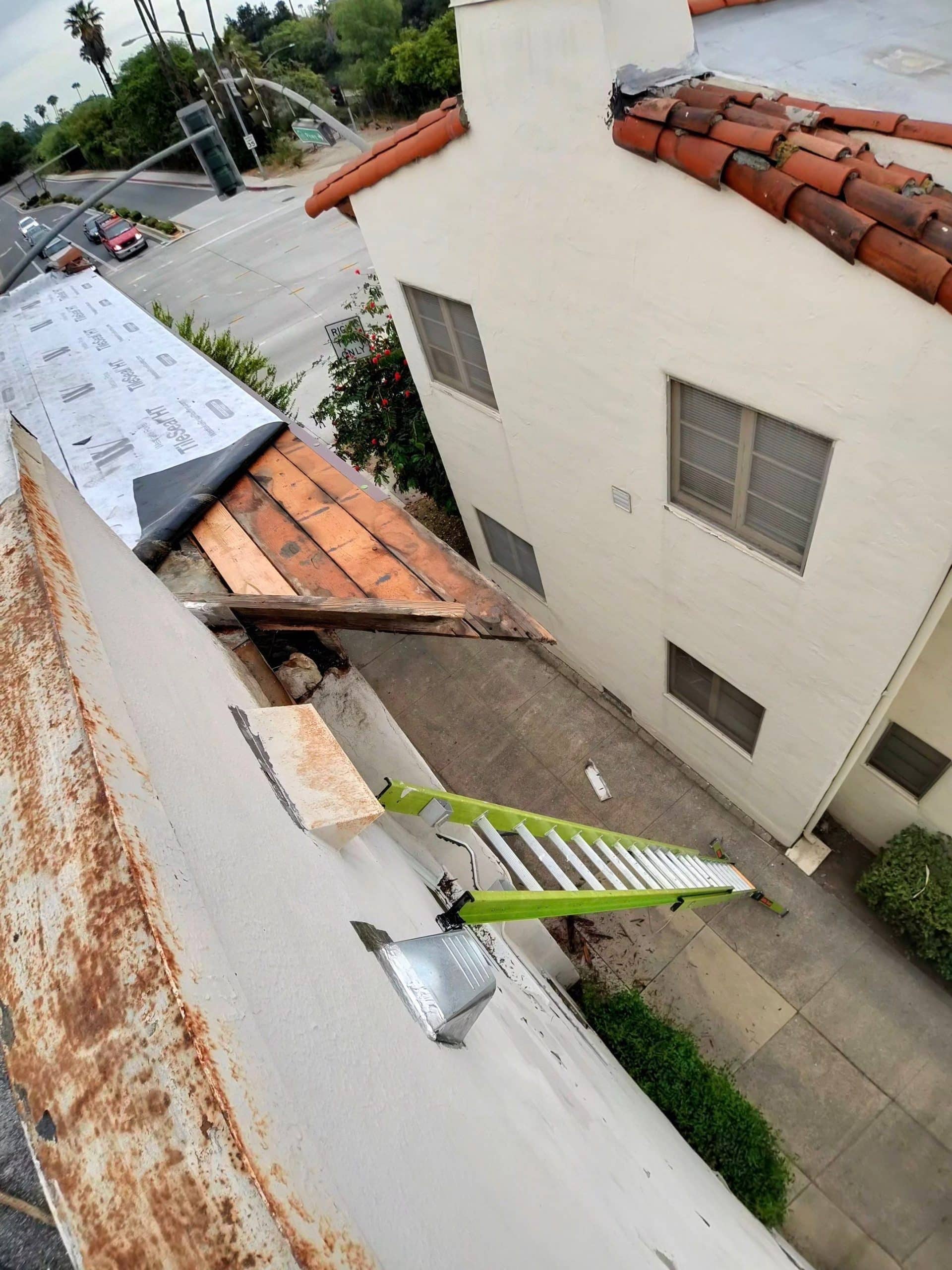
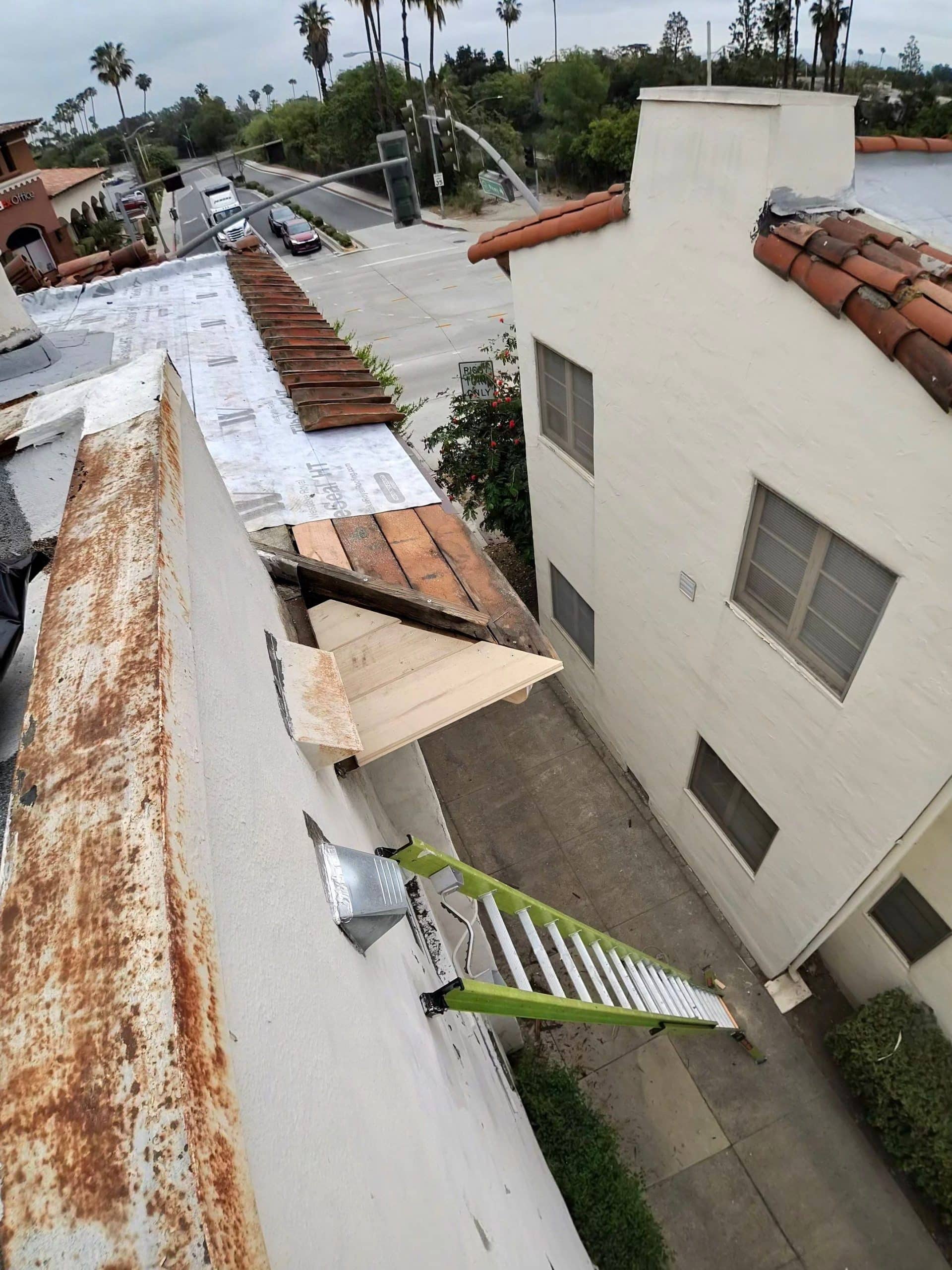
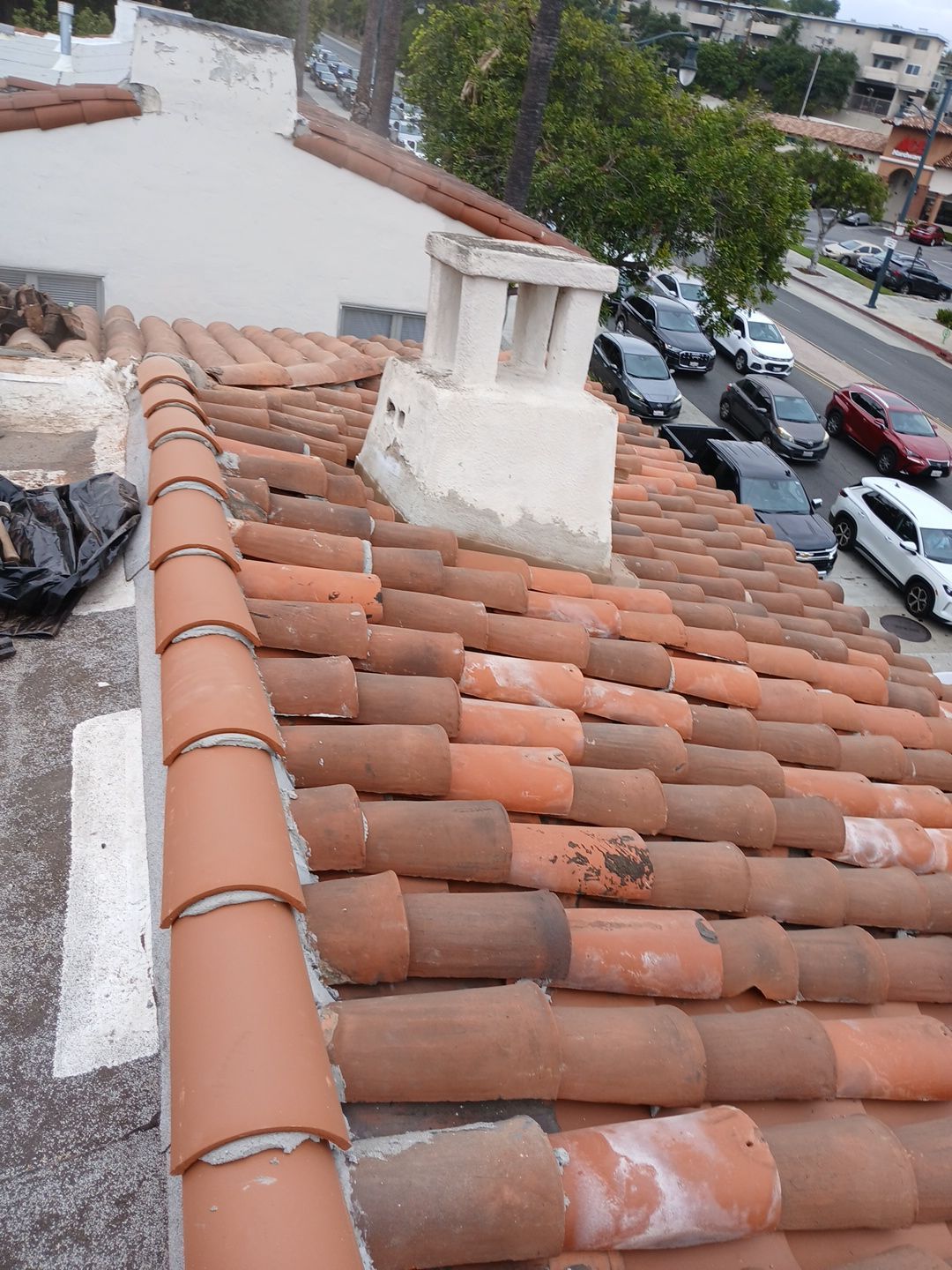
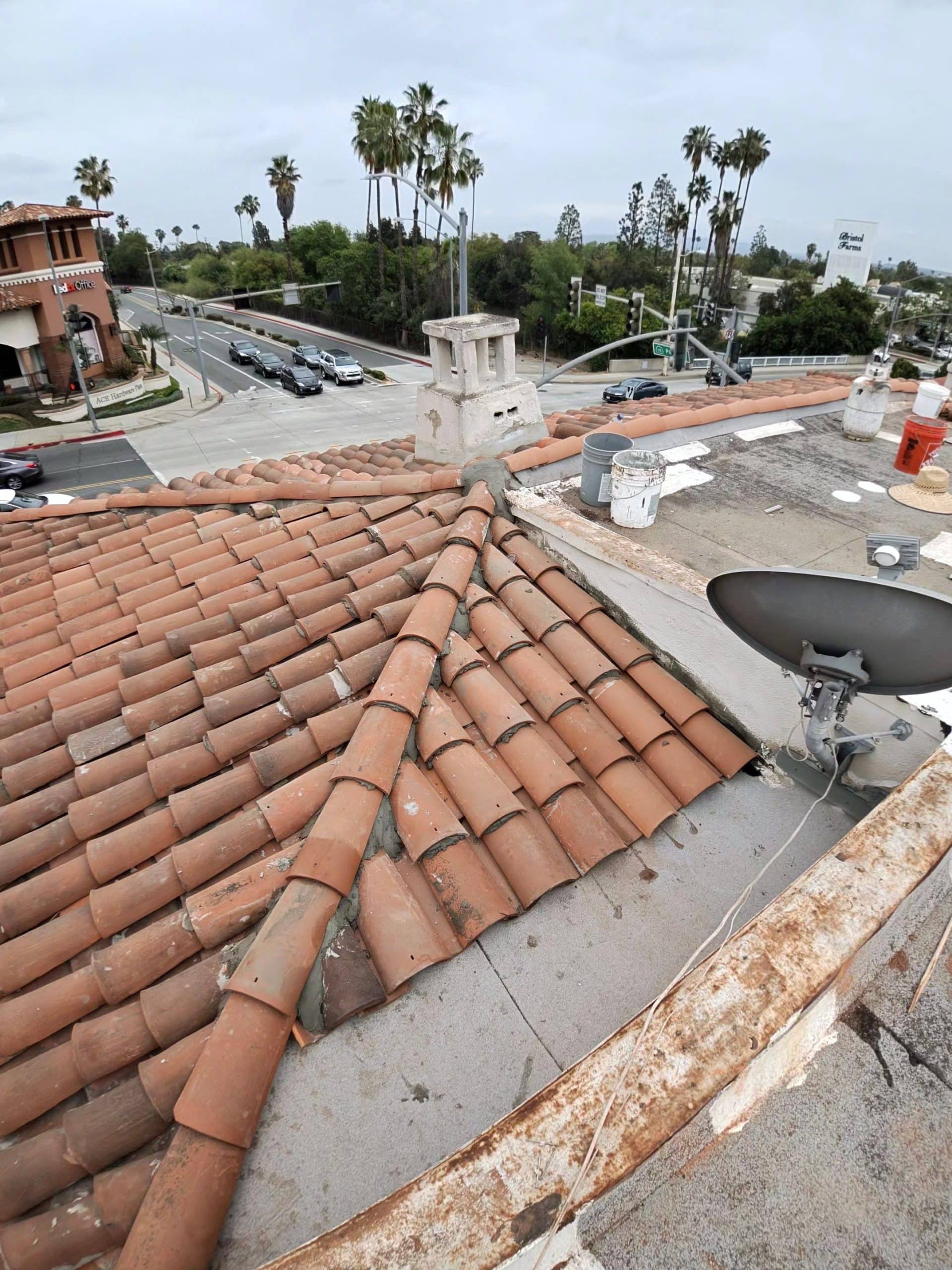
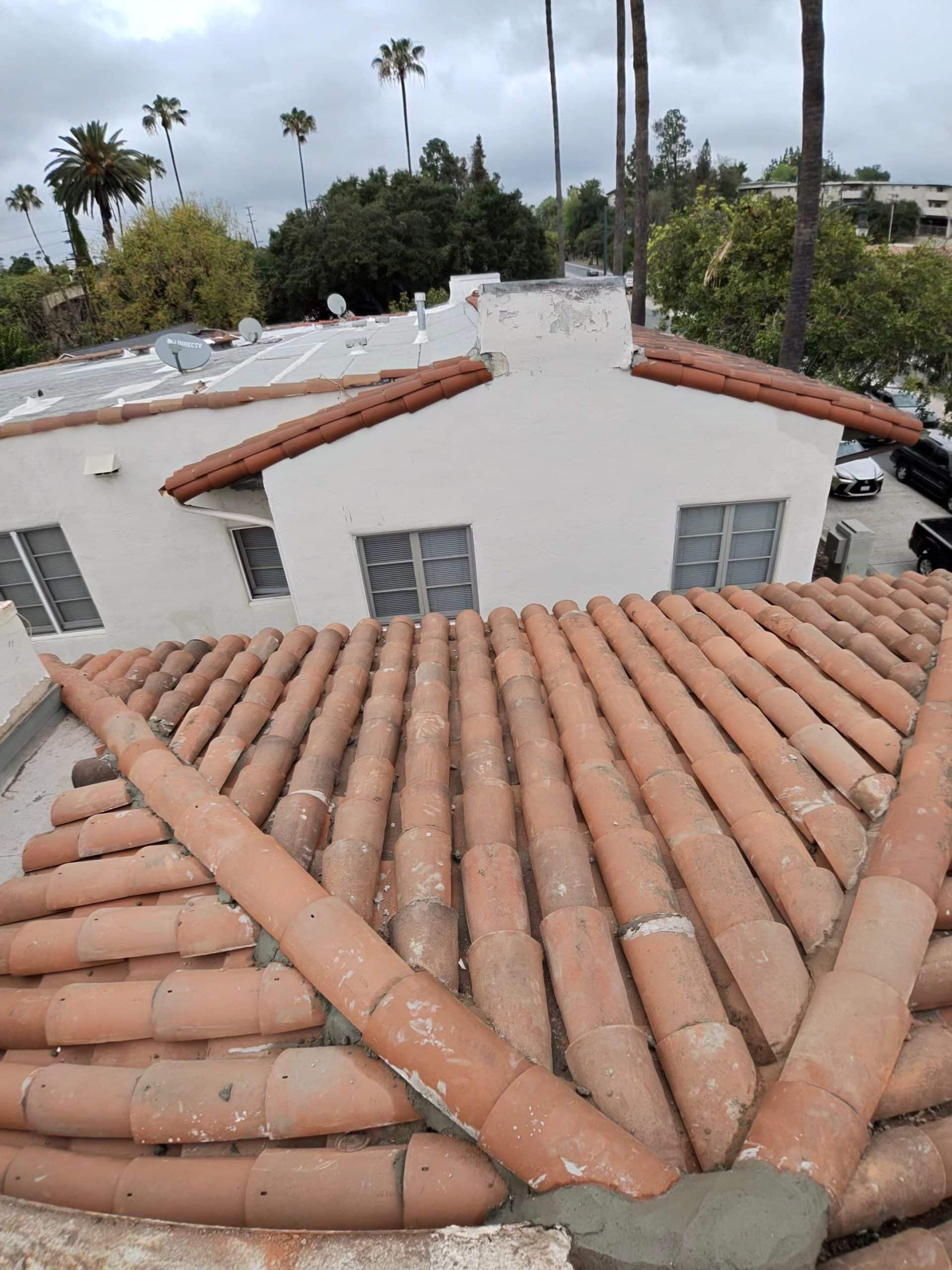
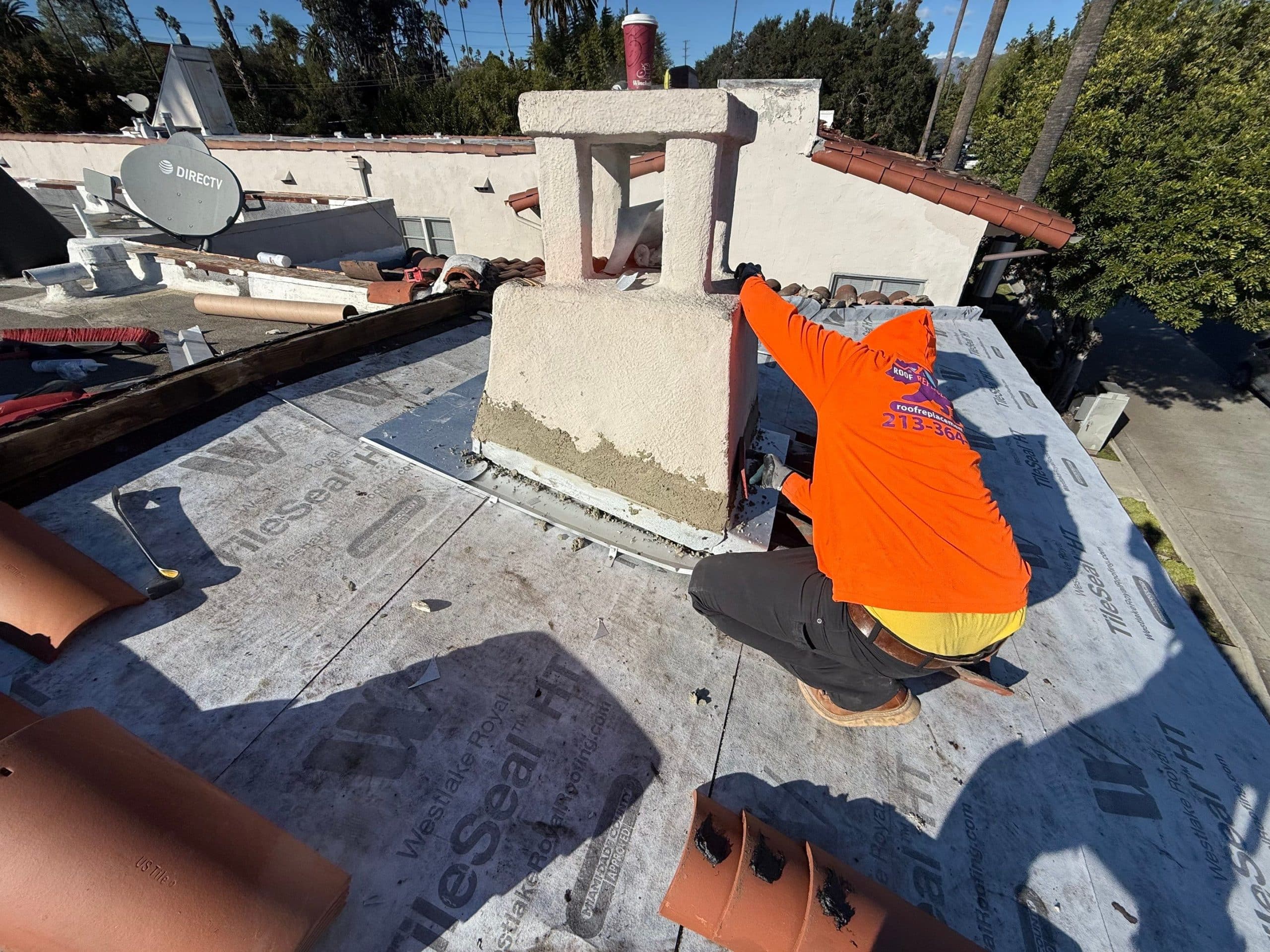
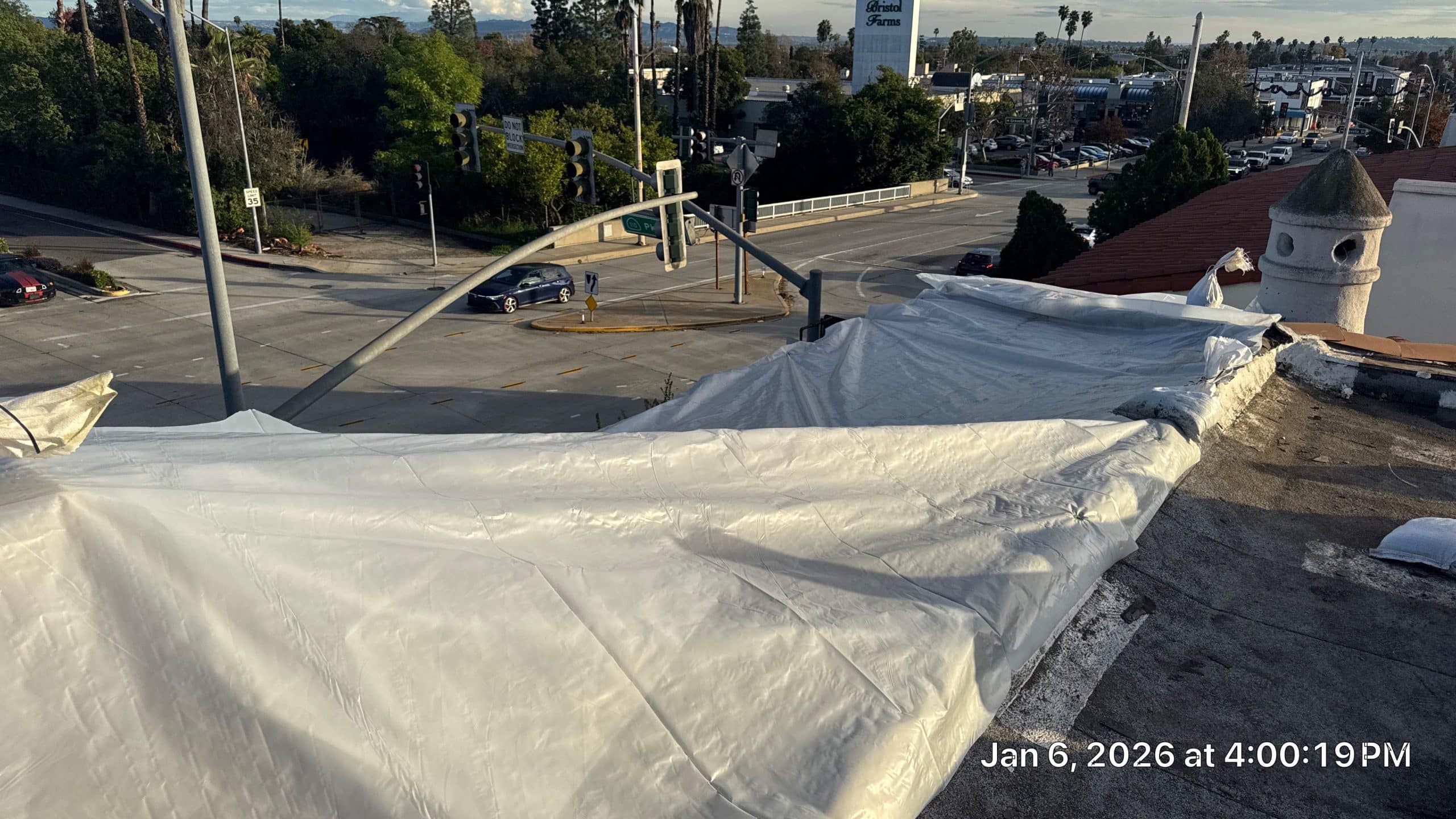
The photos show a roof that had reached the end of its underlayment’s serviceable life. The existing felt beneath the tiles had dried out and cracked, old tar-based flashing around the ornamental chimney stacks had failed, the parapet-to-roof transitions showed rust-stained metal and spalled stucco, and several sections of the wood deck boards at the eave overhangs had rotted through entirely. These conditions are consistent with a roof that had not received a full re-underlayment since original construction and had been patched incrementally over the years.

Project Gallery
Tile Removal and Deck Assessment

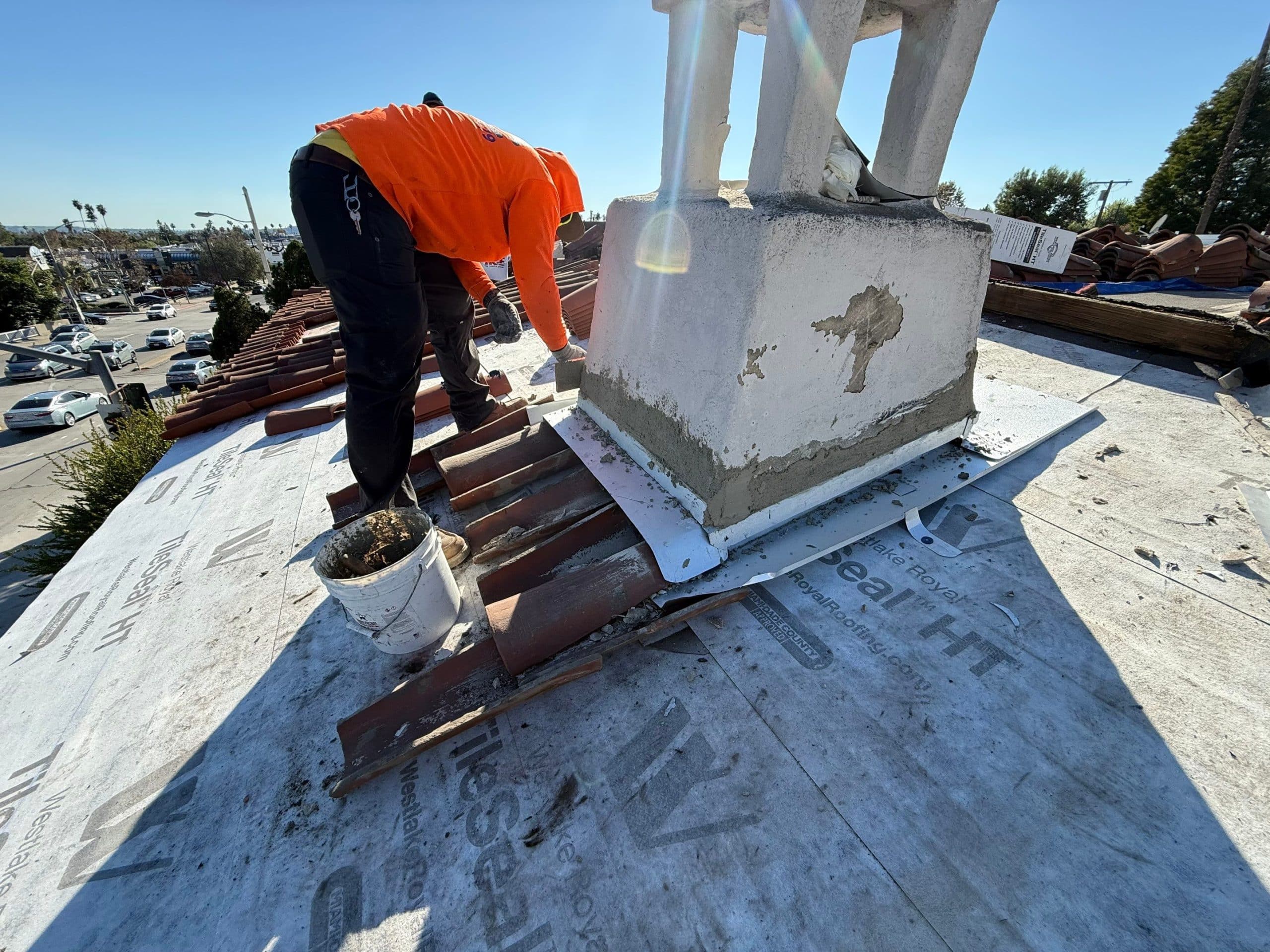
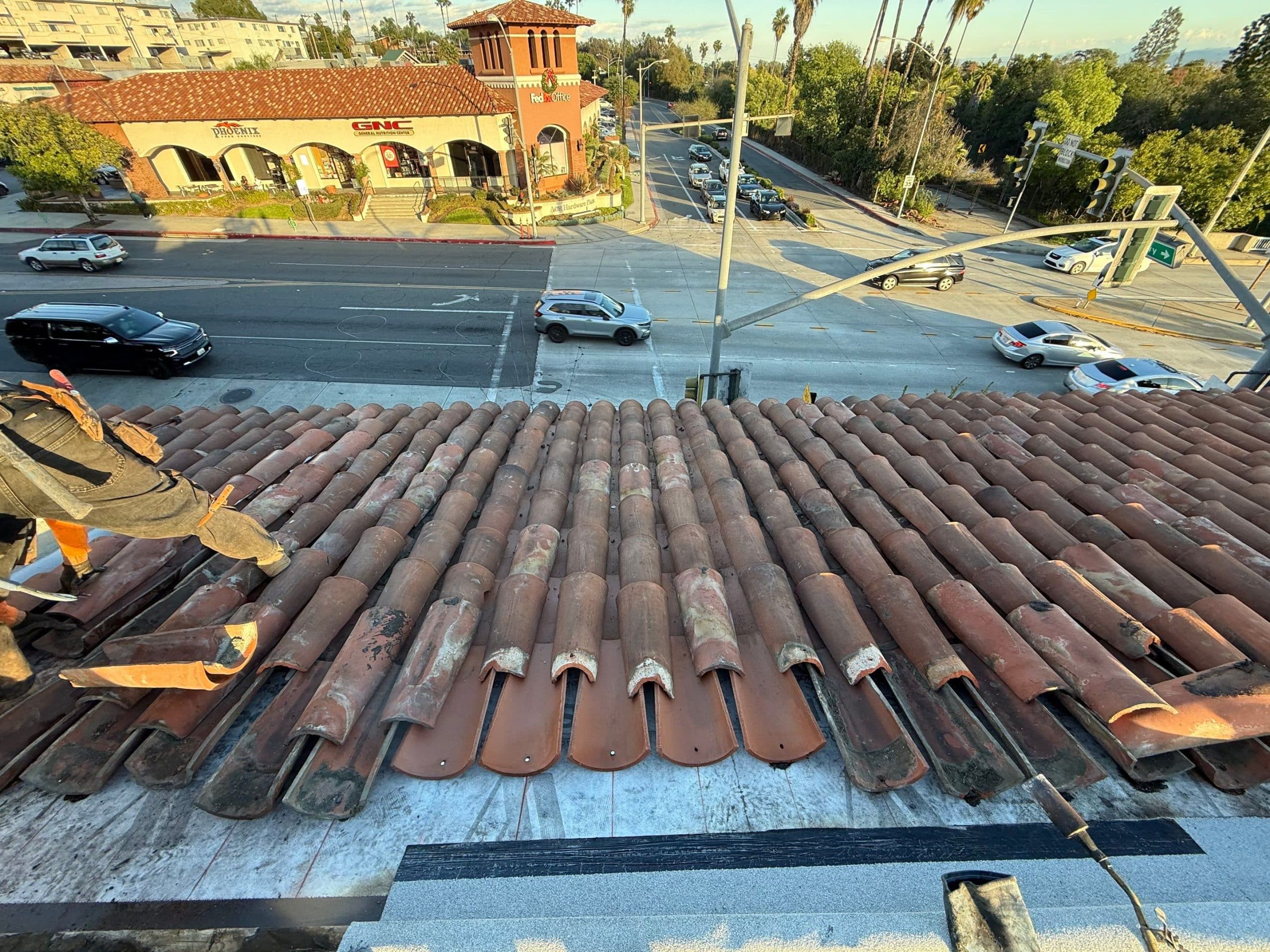
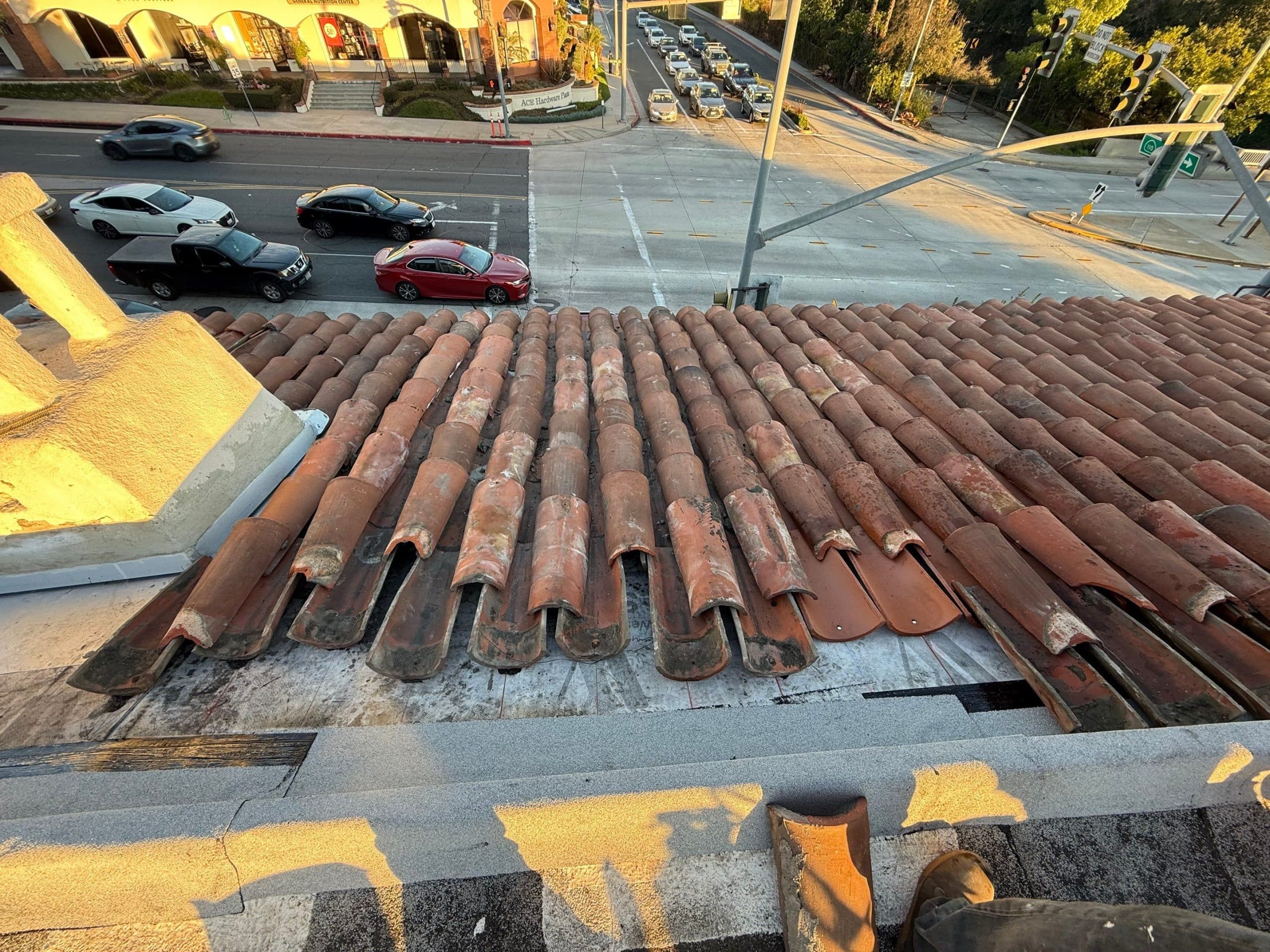
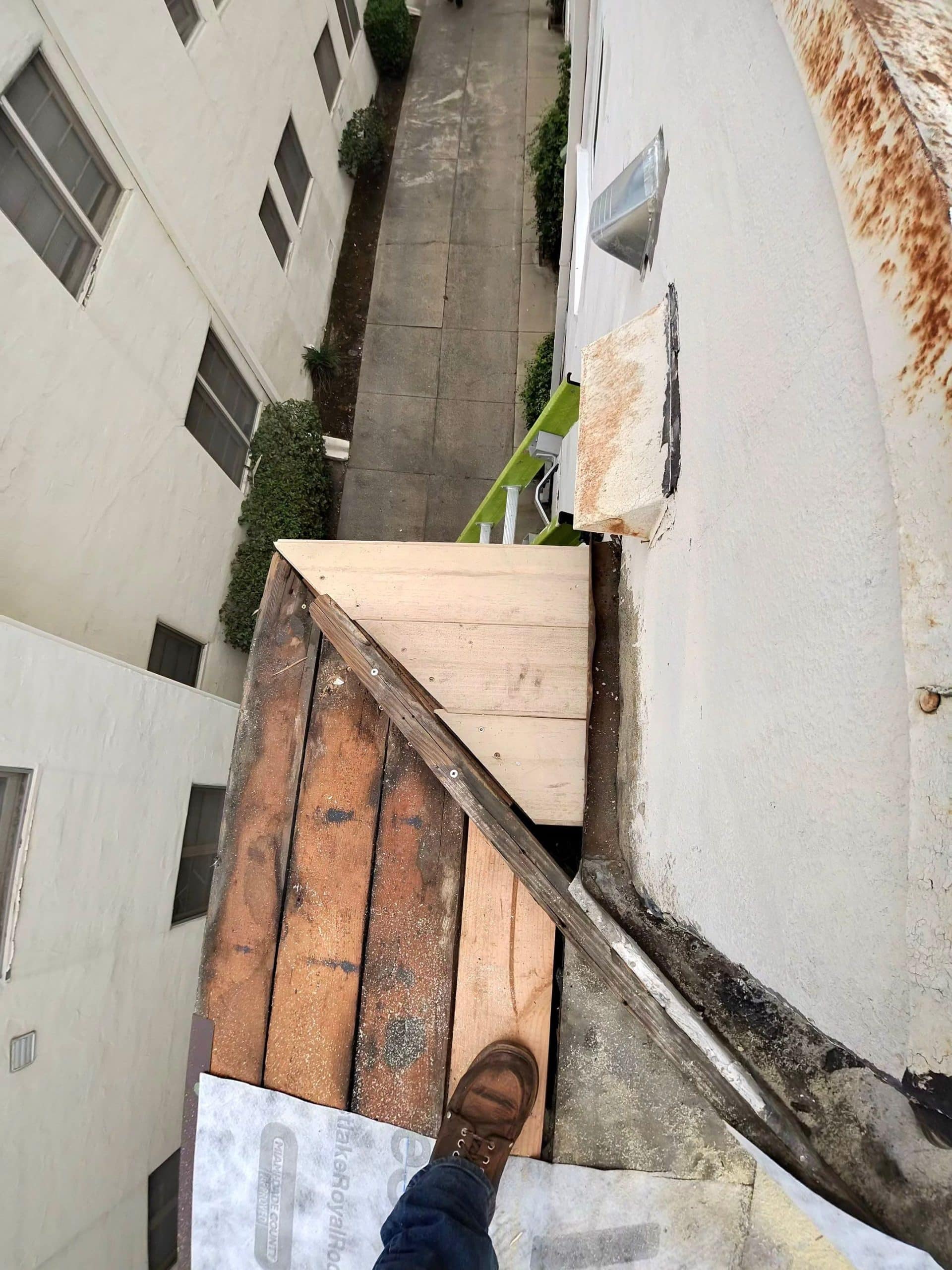
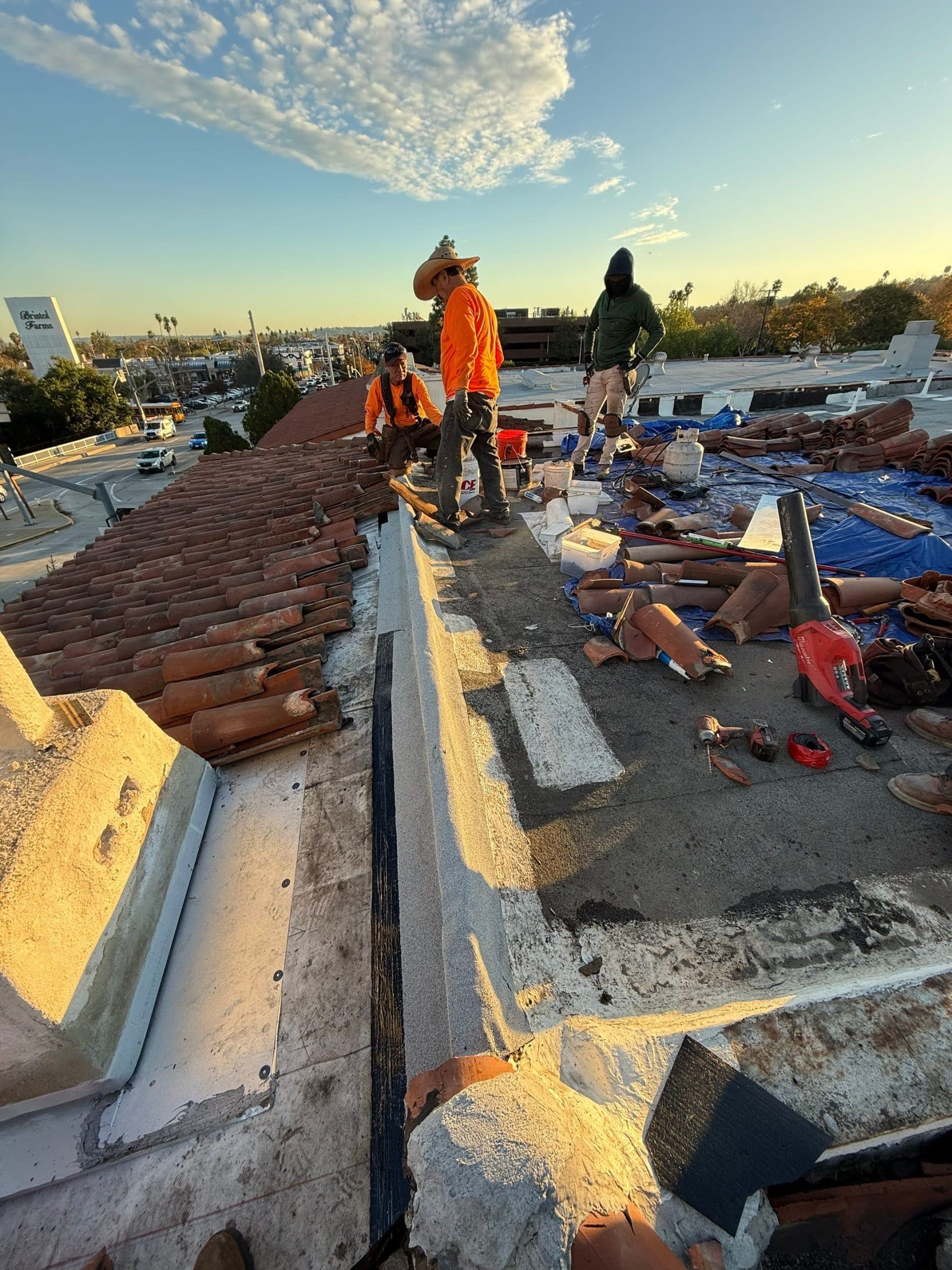
The crew carefully removed the existing clay mission tiles section by section, stacking salvageable tiles on the roof for reuse. Once the tiles were off, the underlying deck boards were inspected across all slopes. At the eave overhangs — particularly along the building’s alley-facing side — sections of the original board sheathing were found to be visibly rotted and structurally compromised. New plywood panels were cut and fastened over the affected areas before any new underlayment was applied, restoring a sound nailing surface for the tile reset.

Synthetic Underlayment Installation

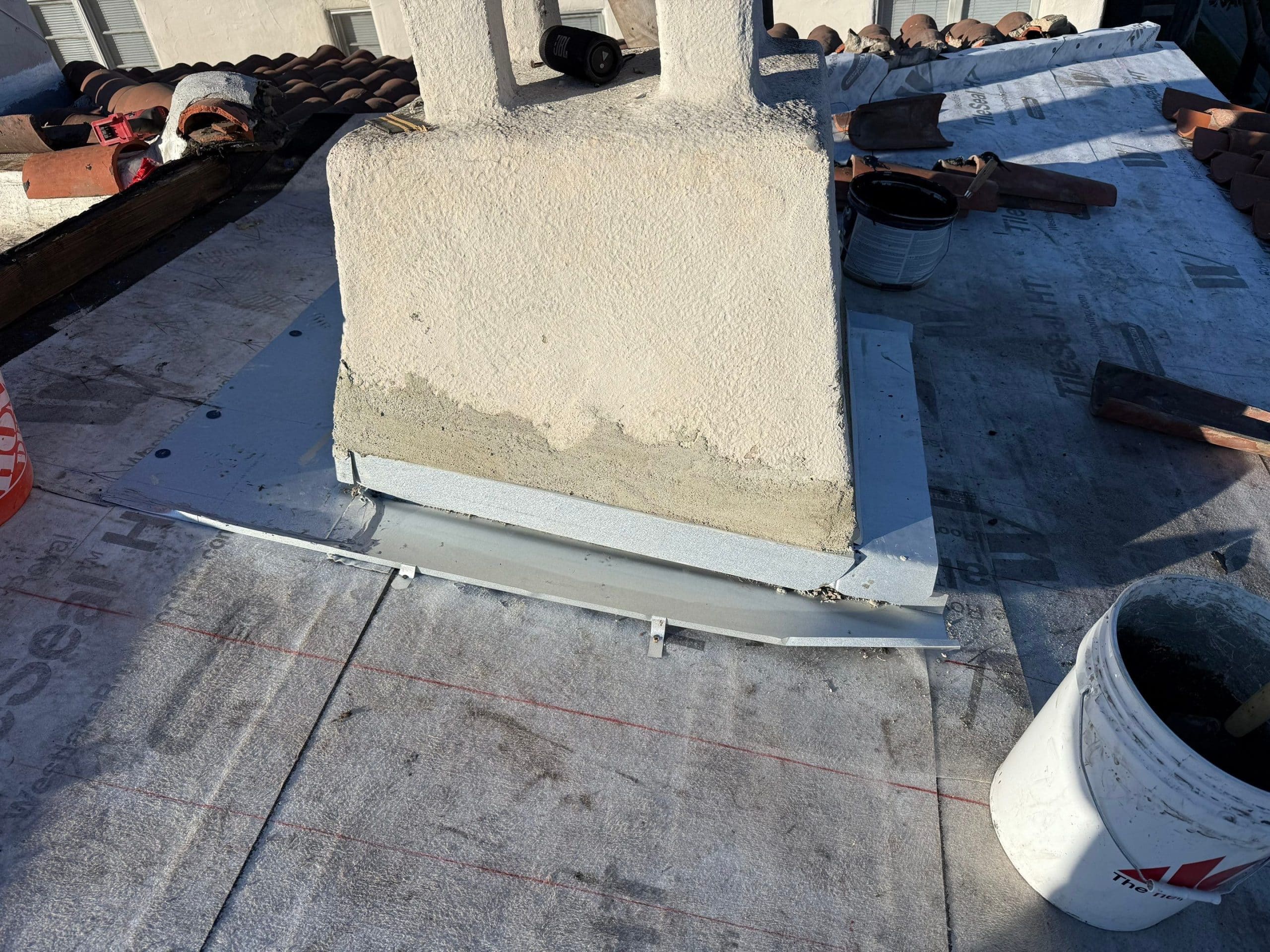
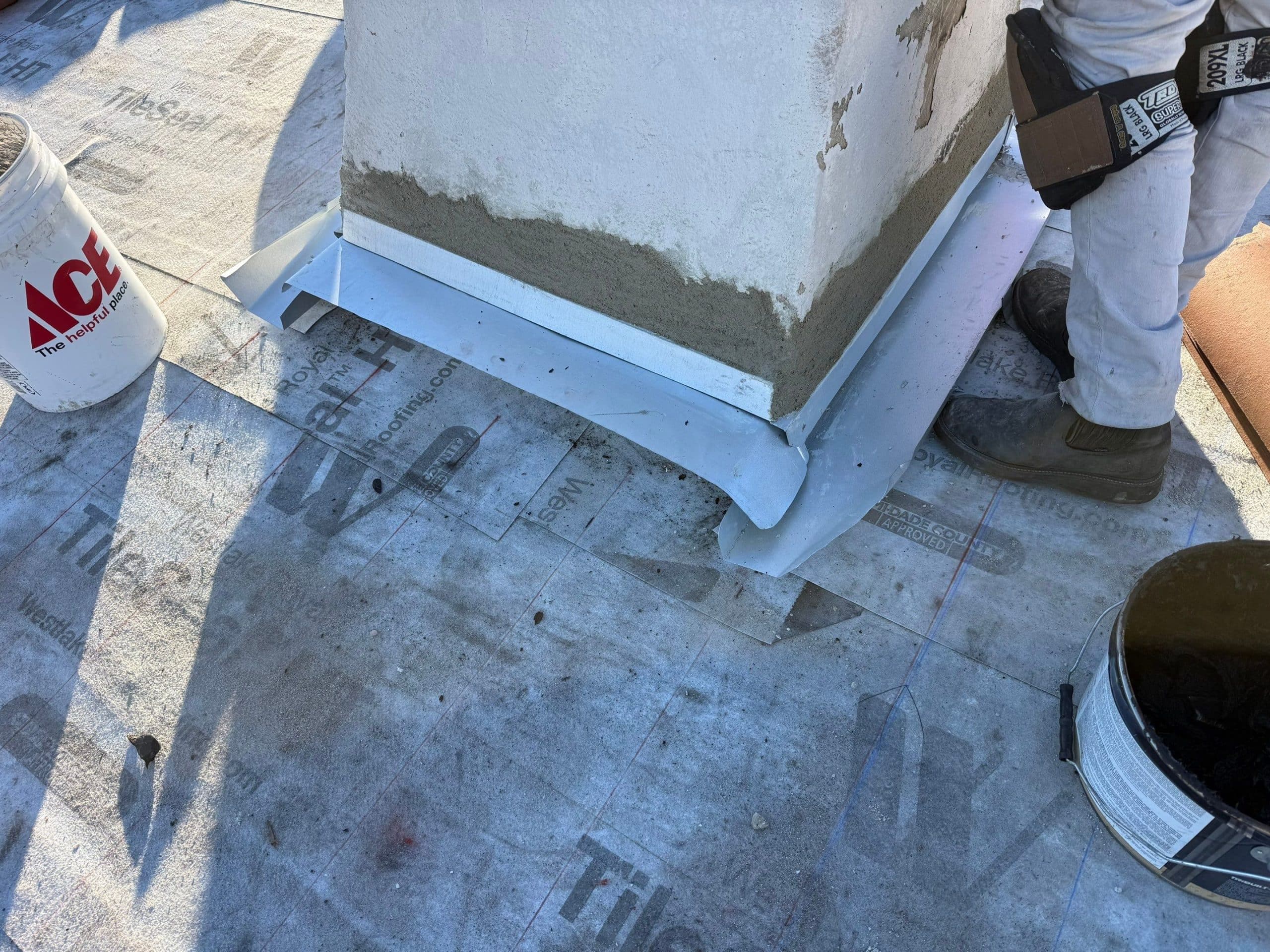
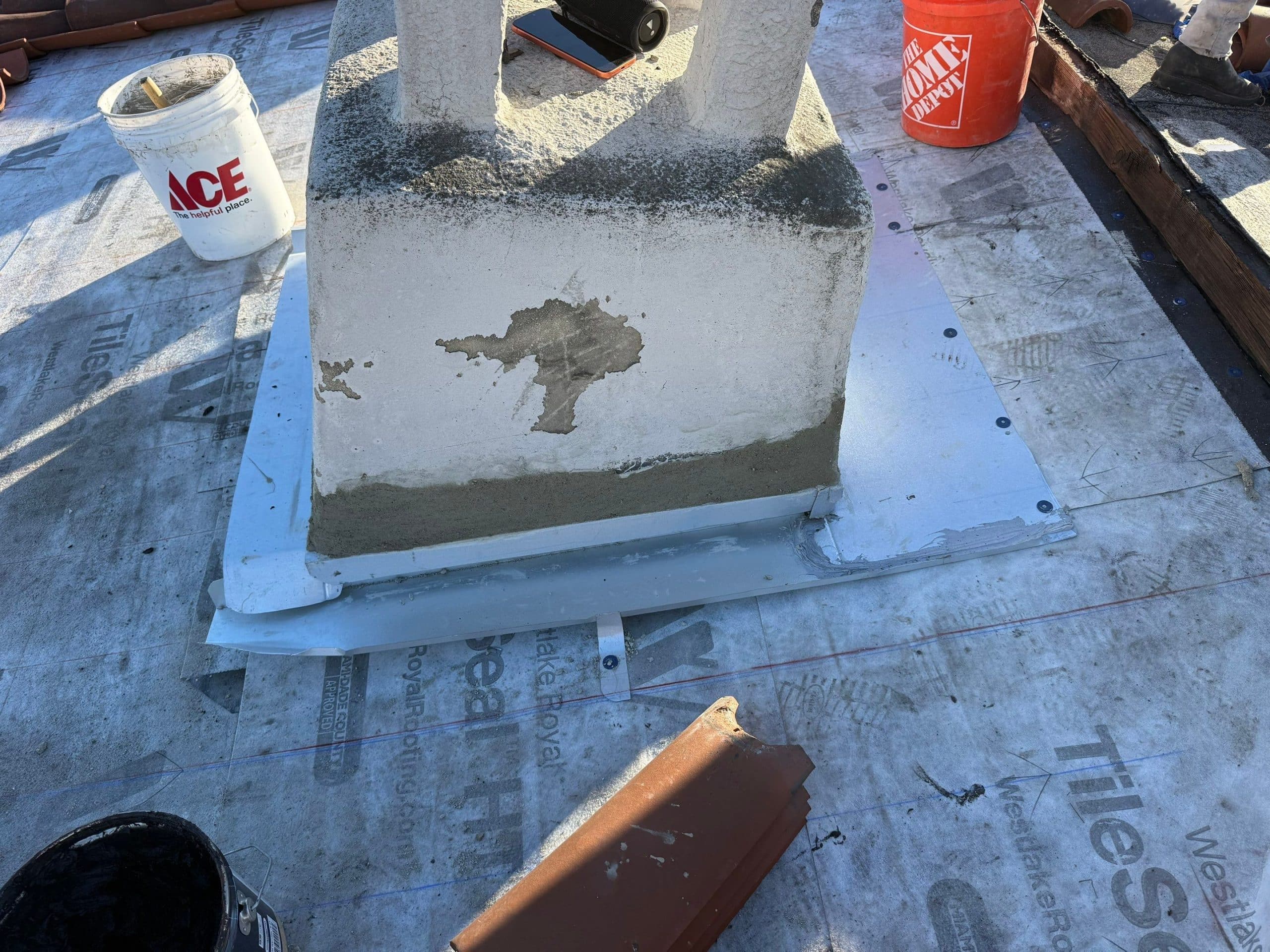
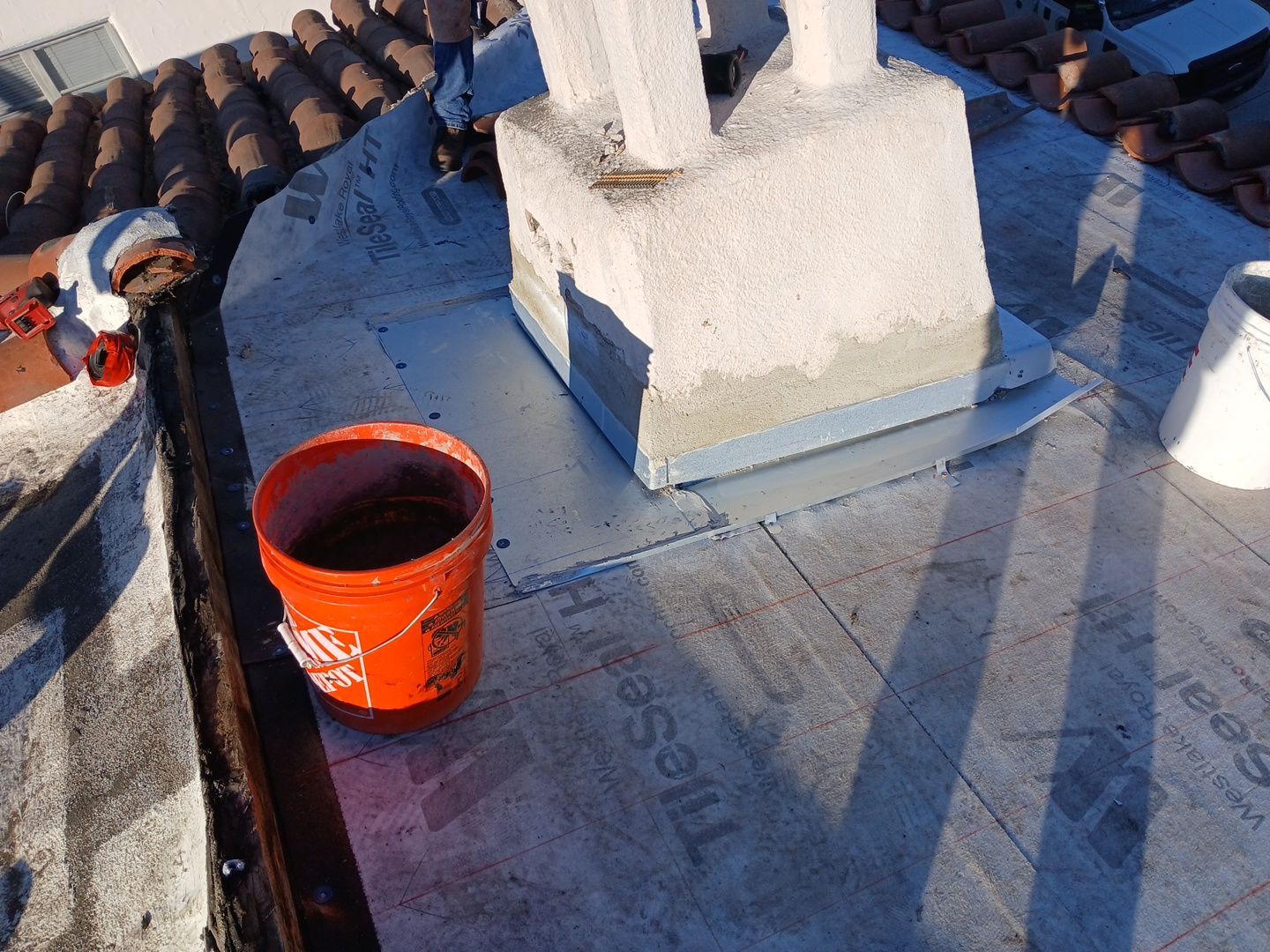
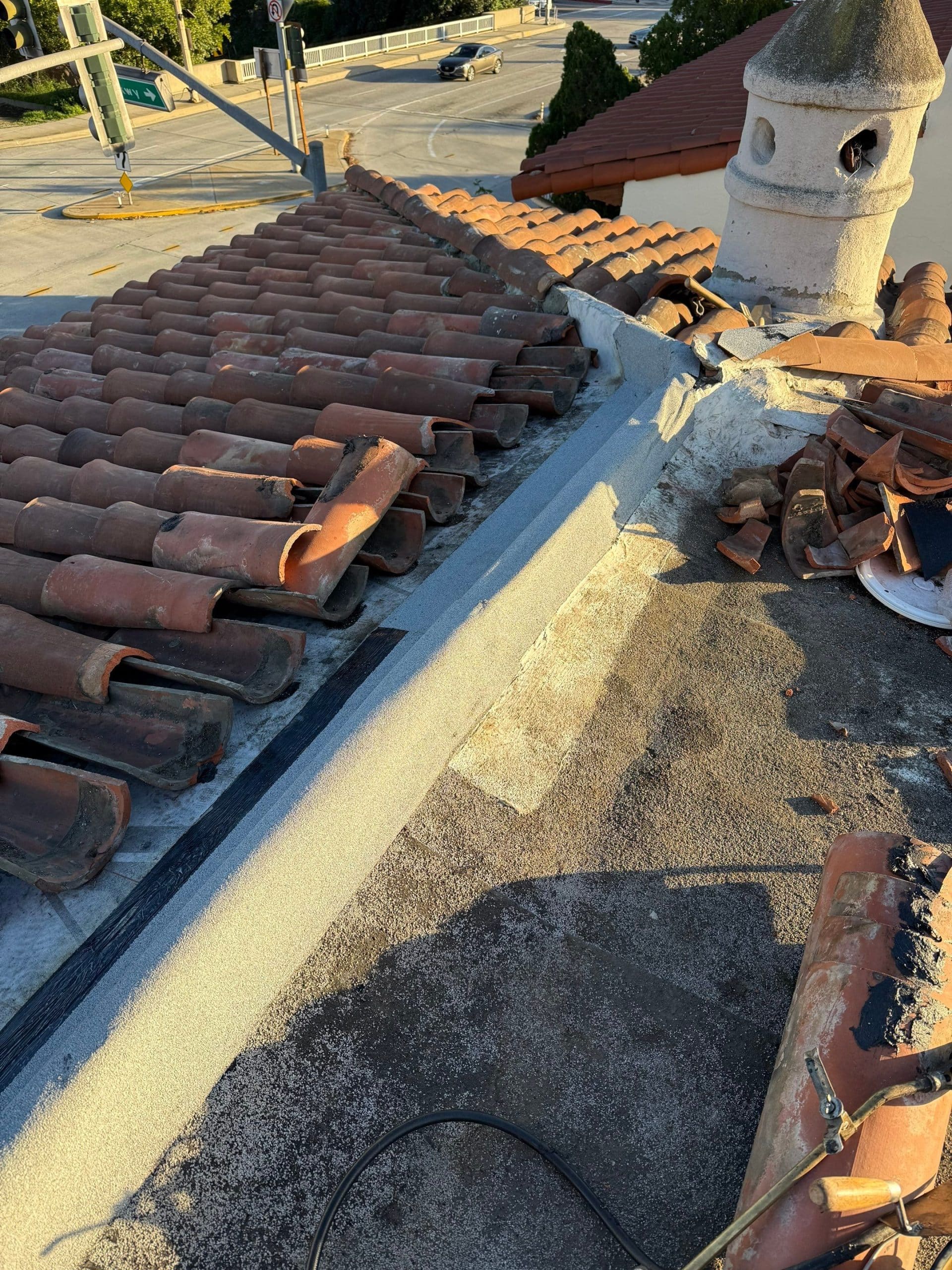
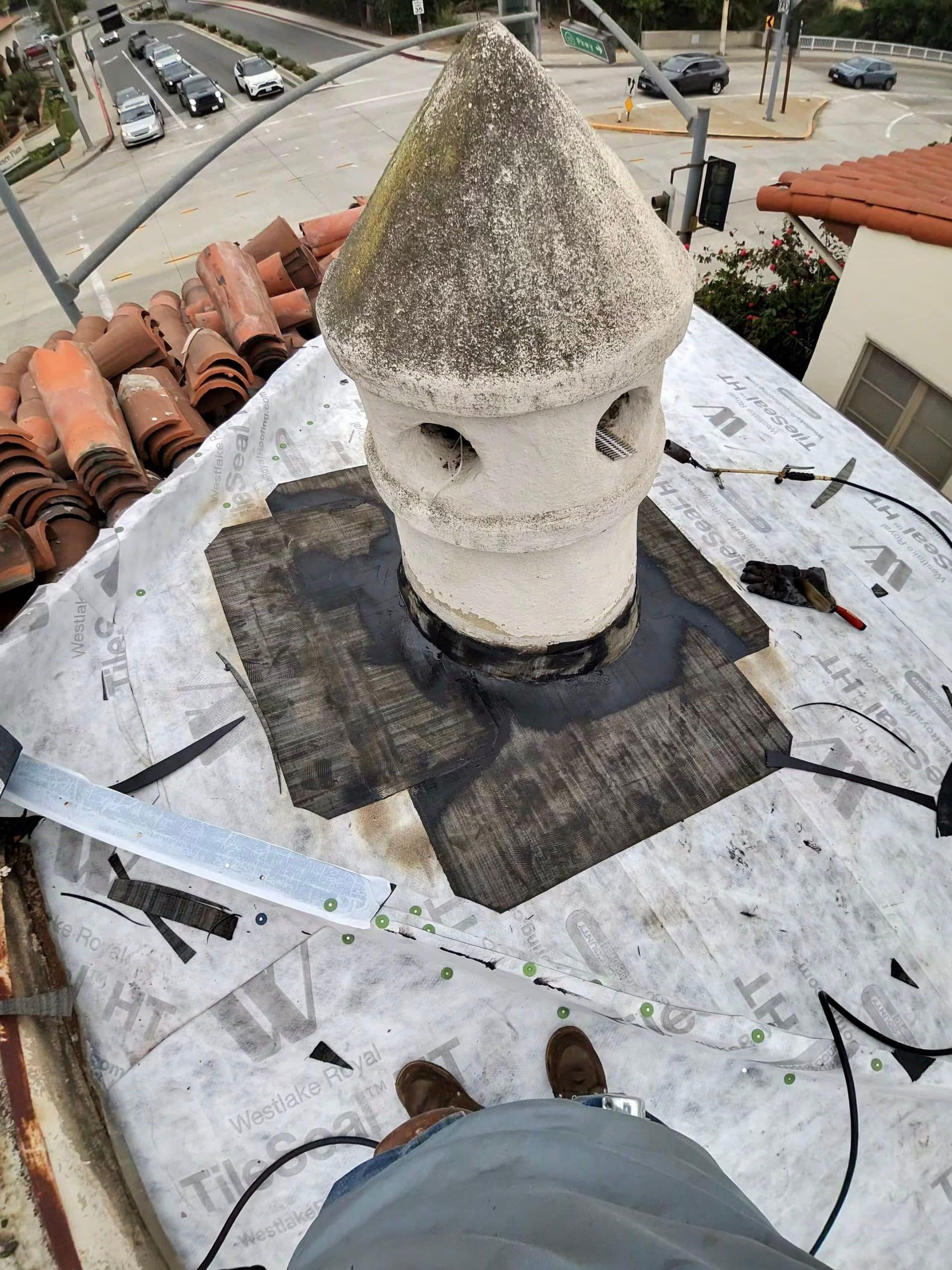
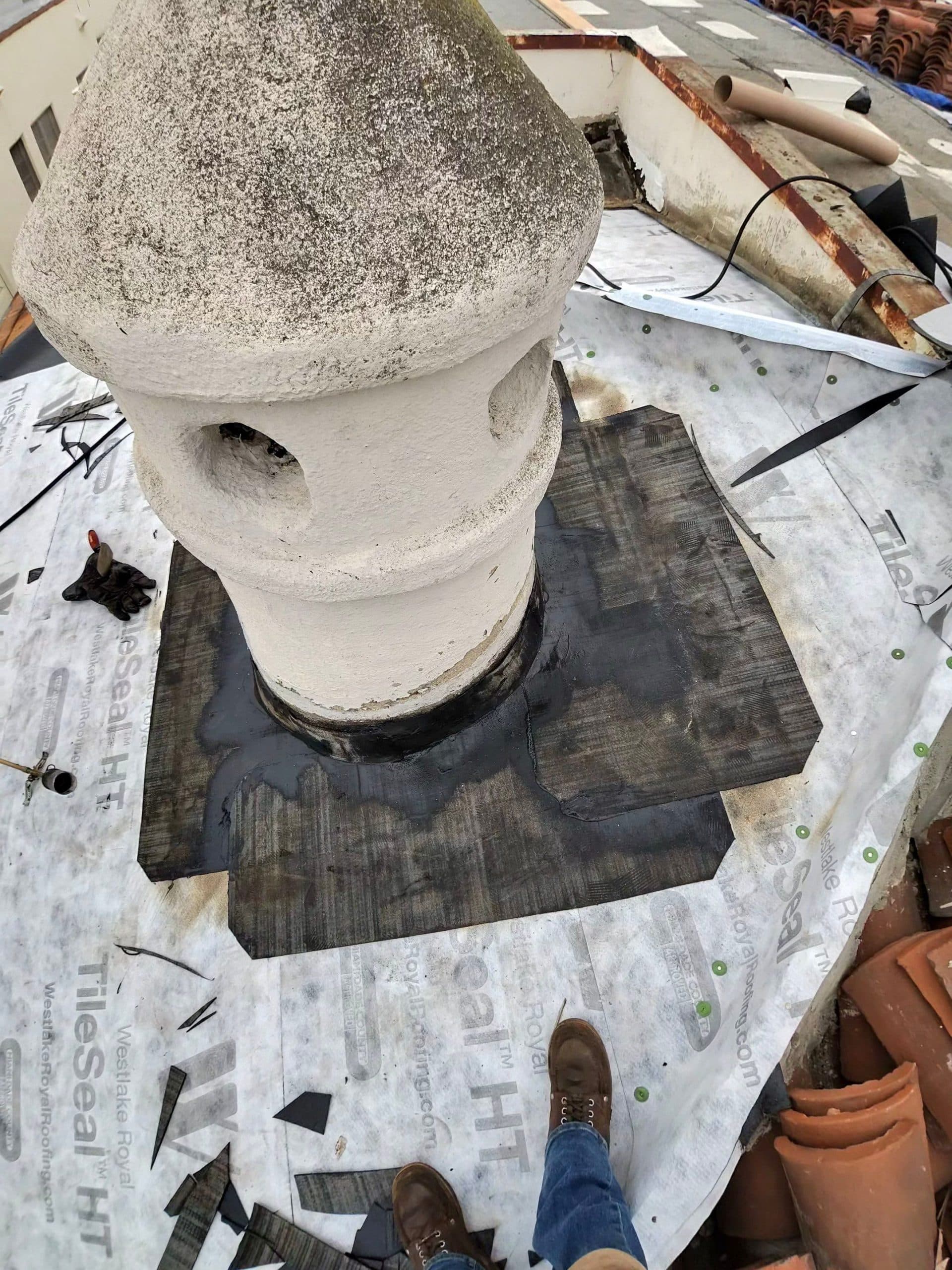
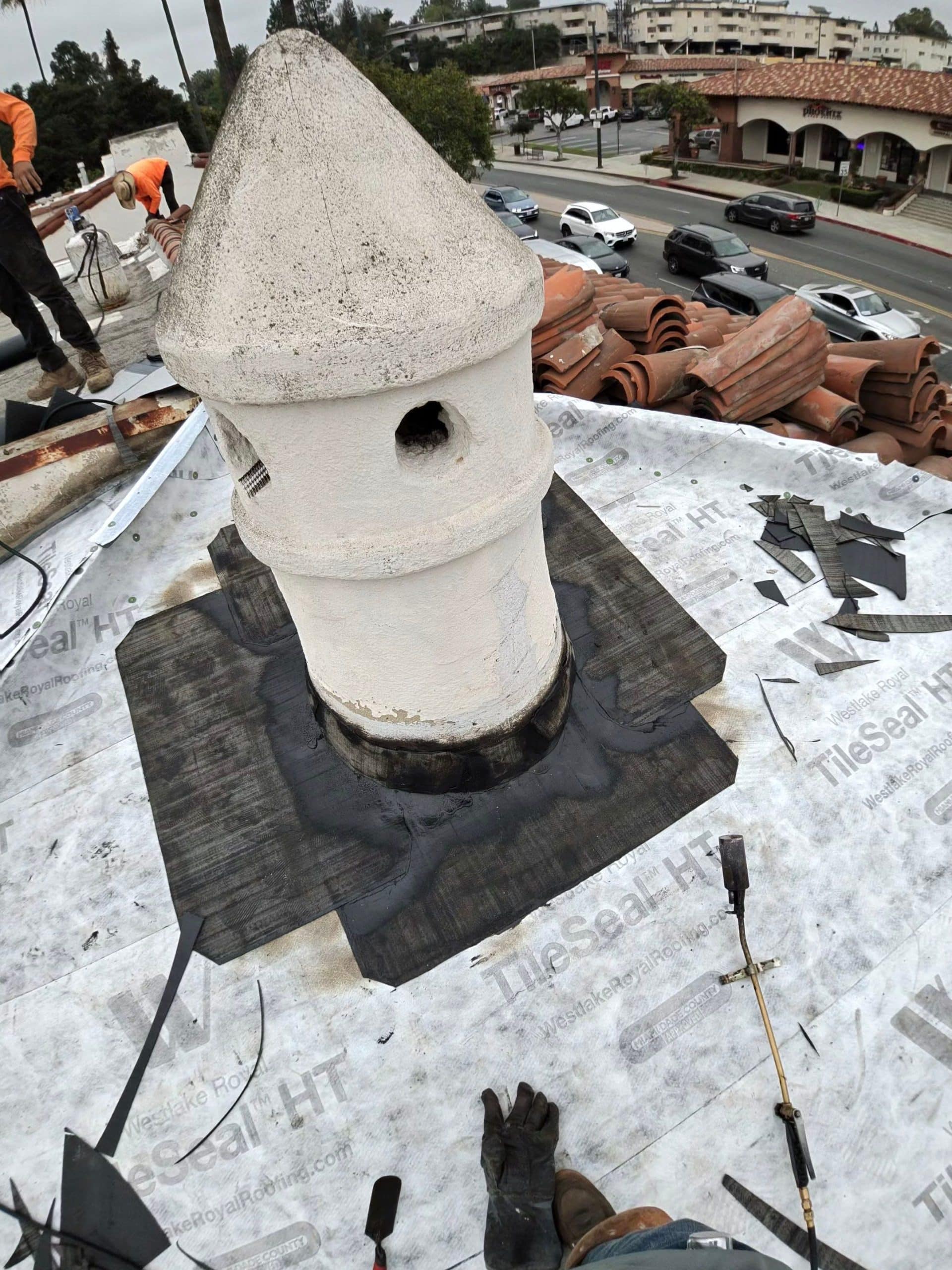
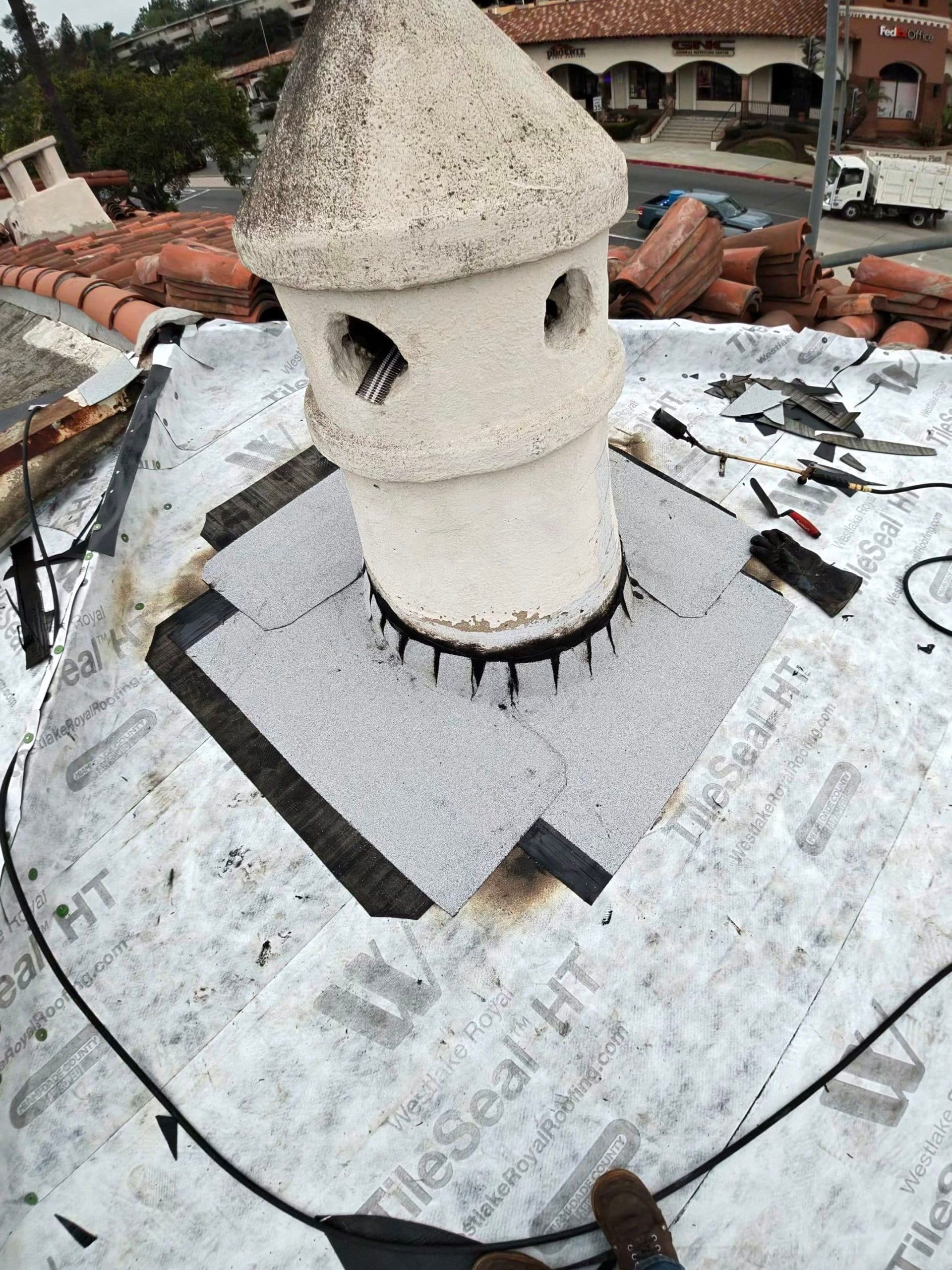
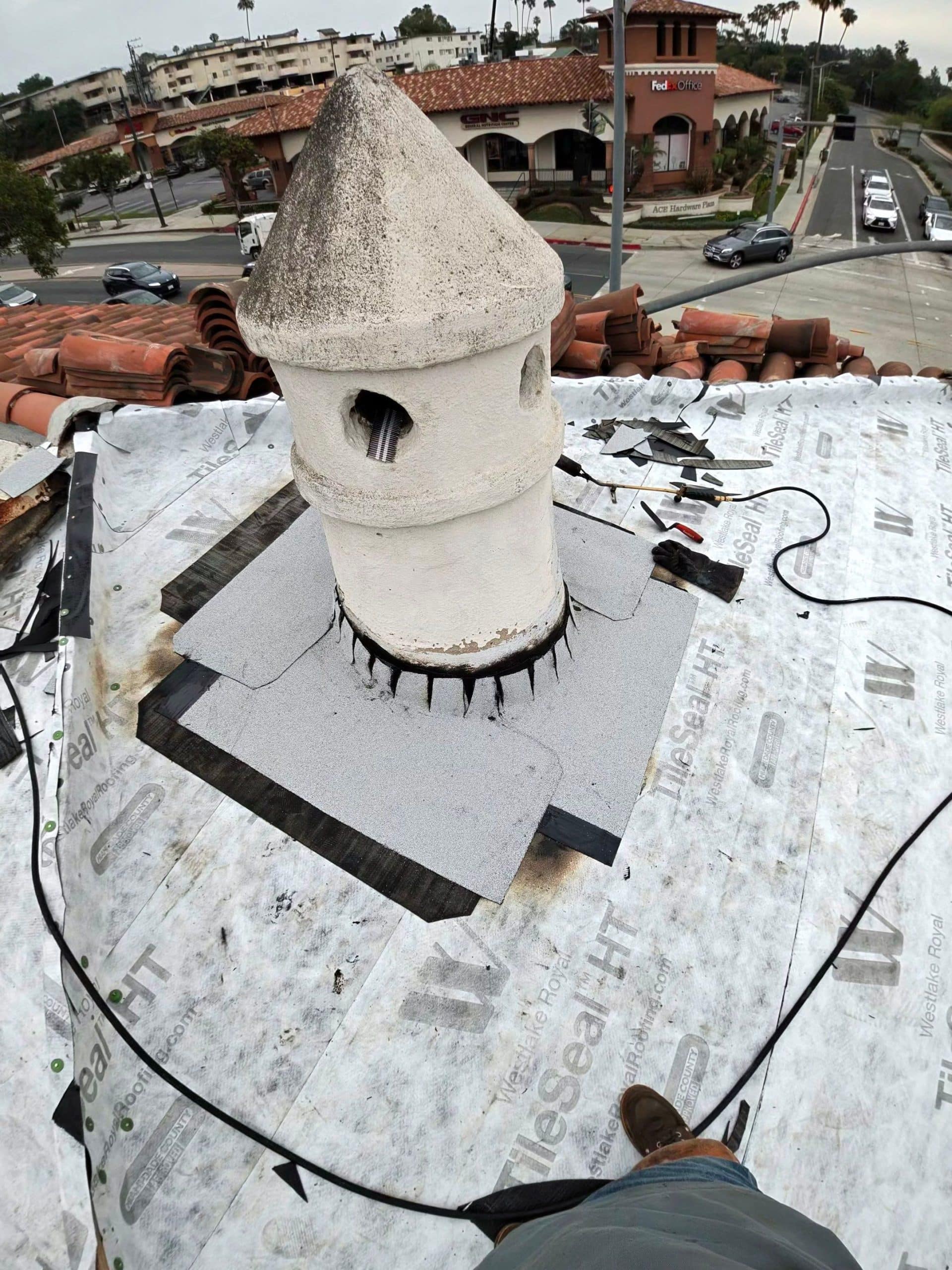
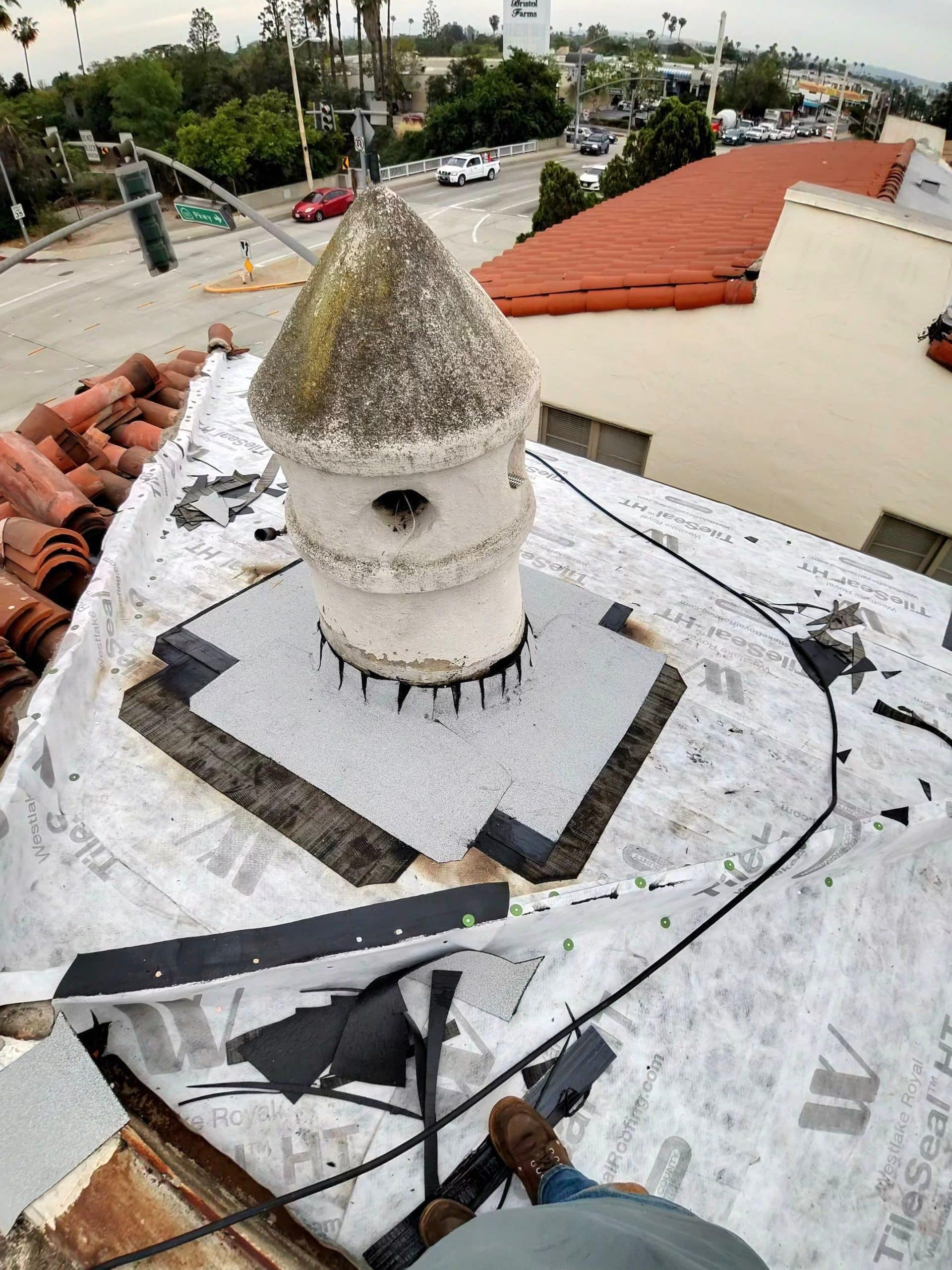
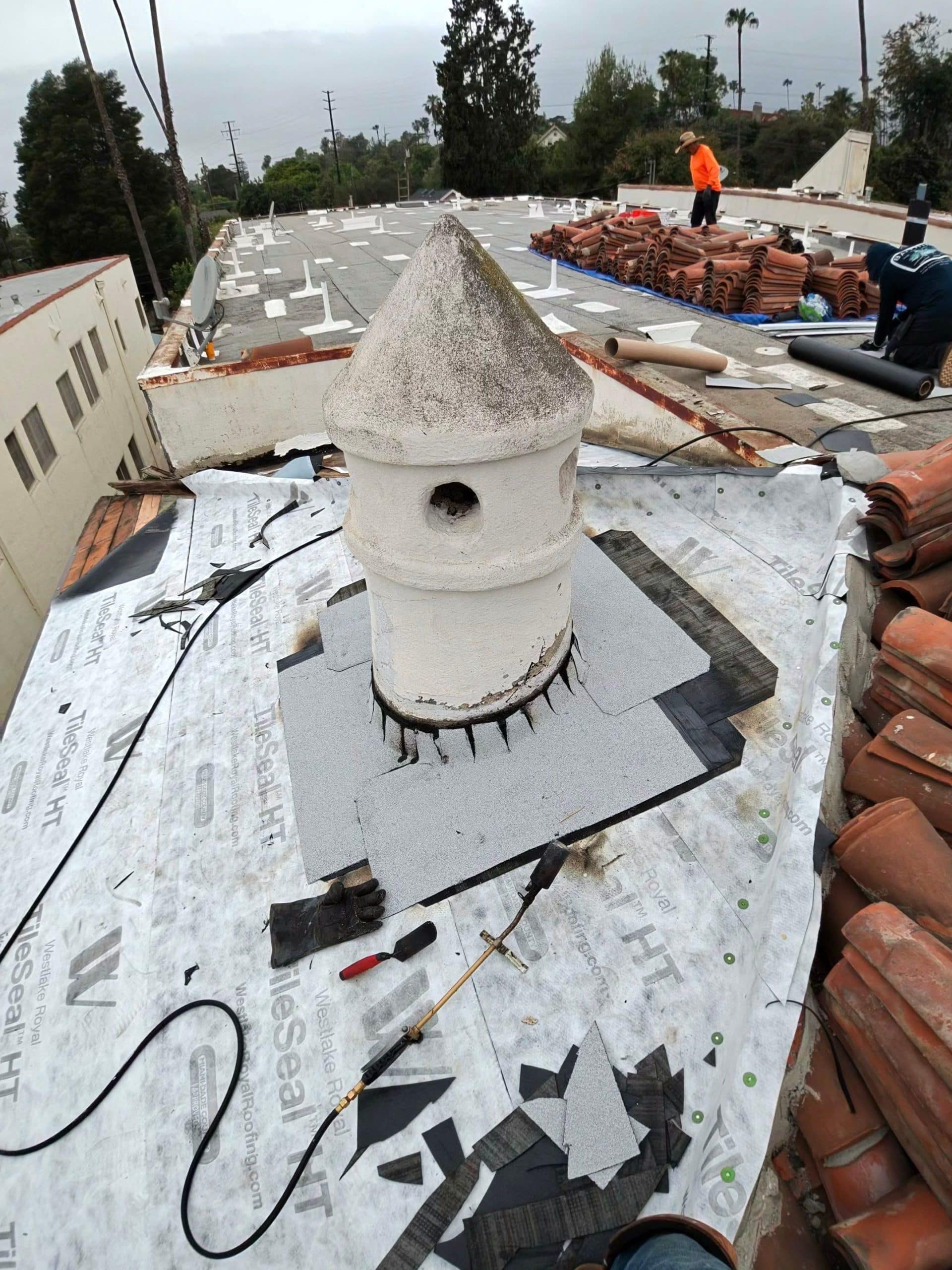
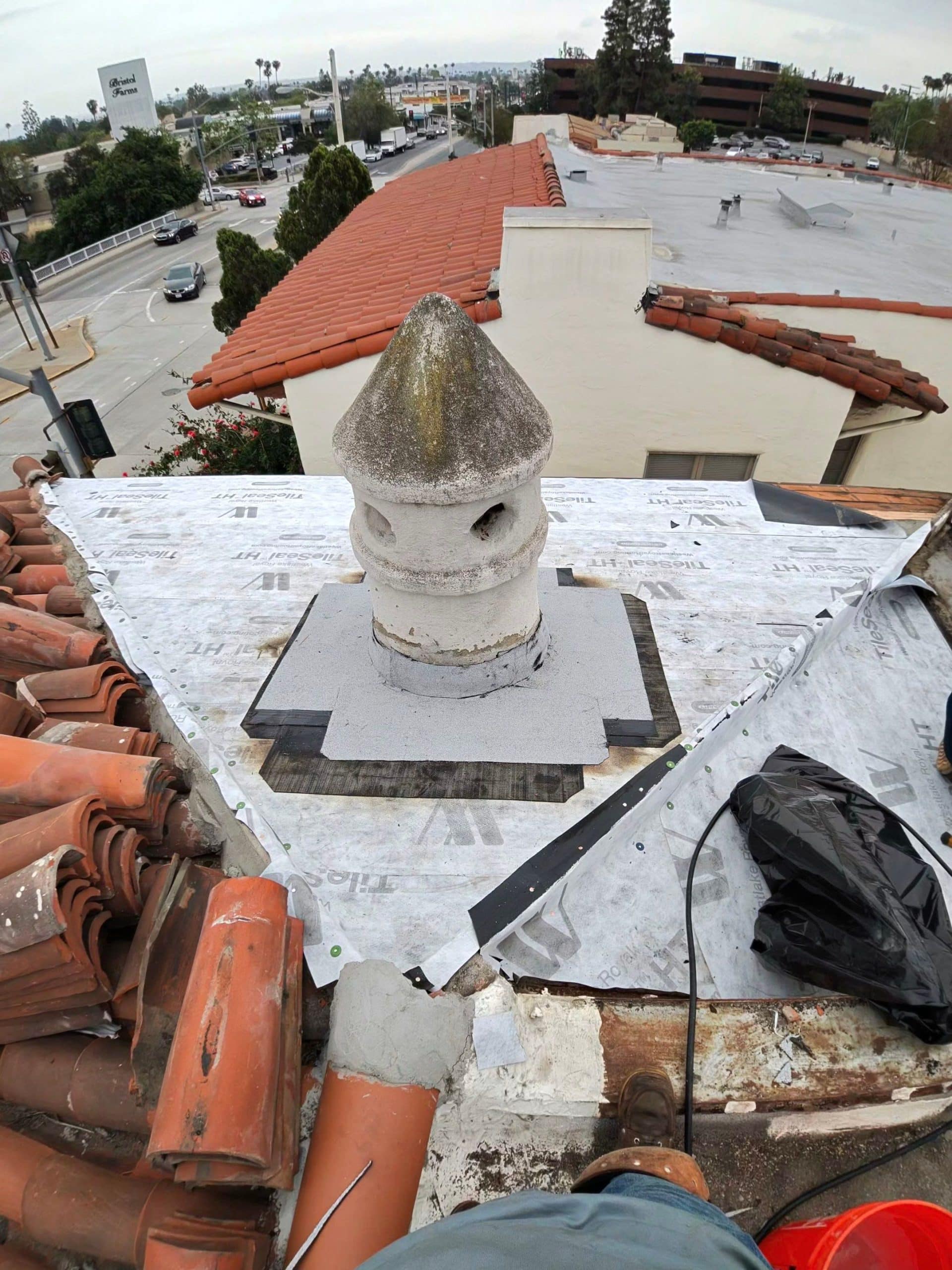
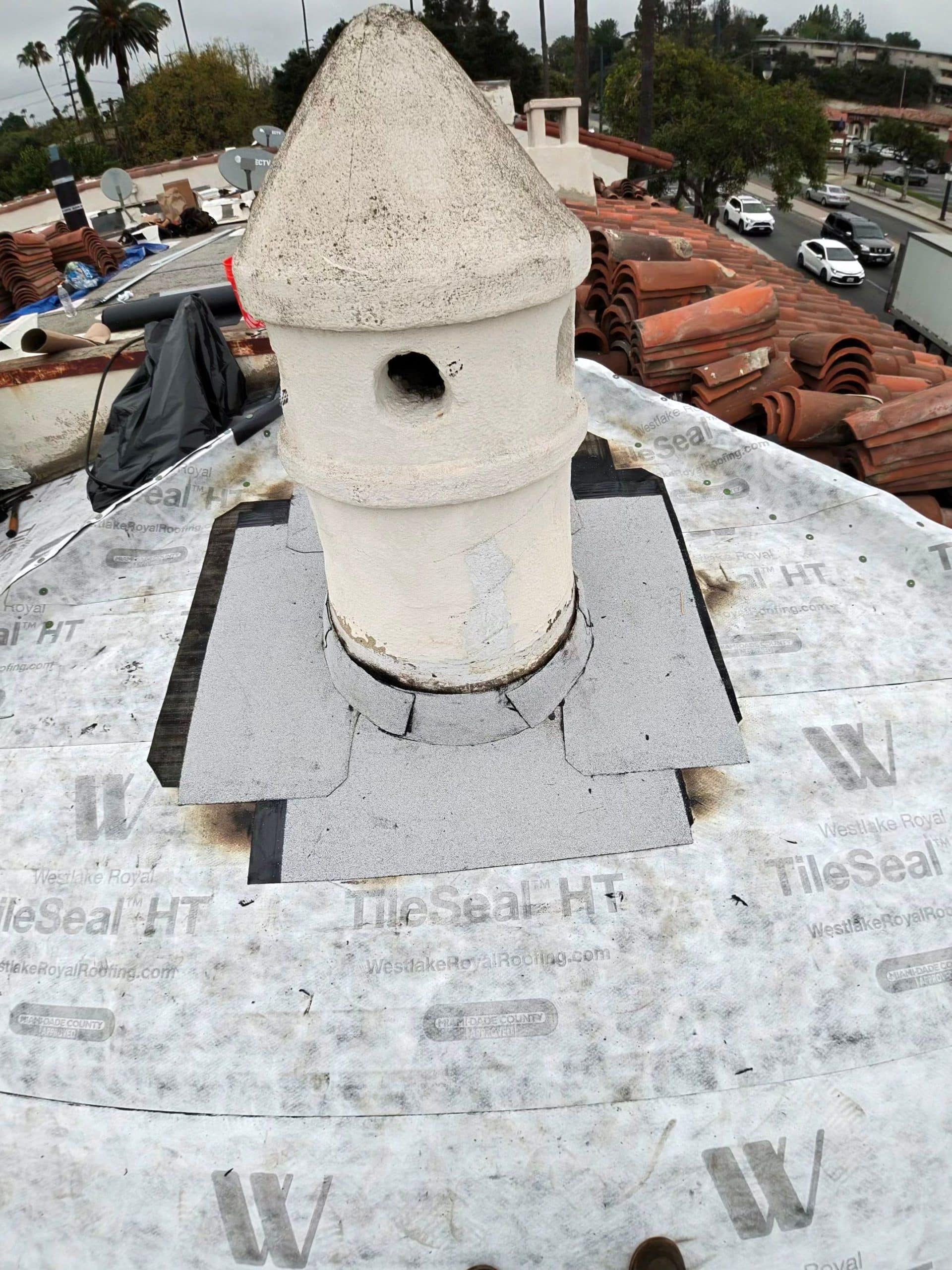
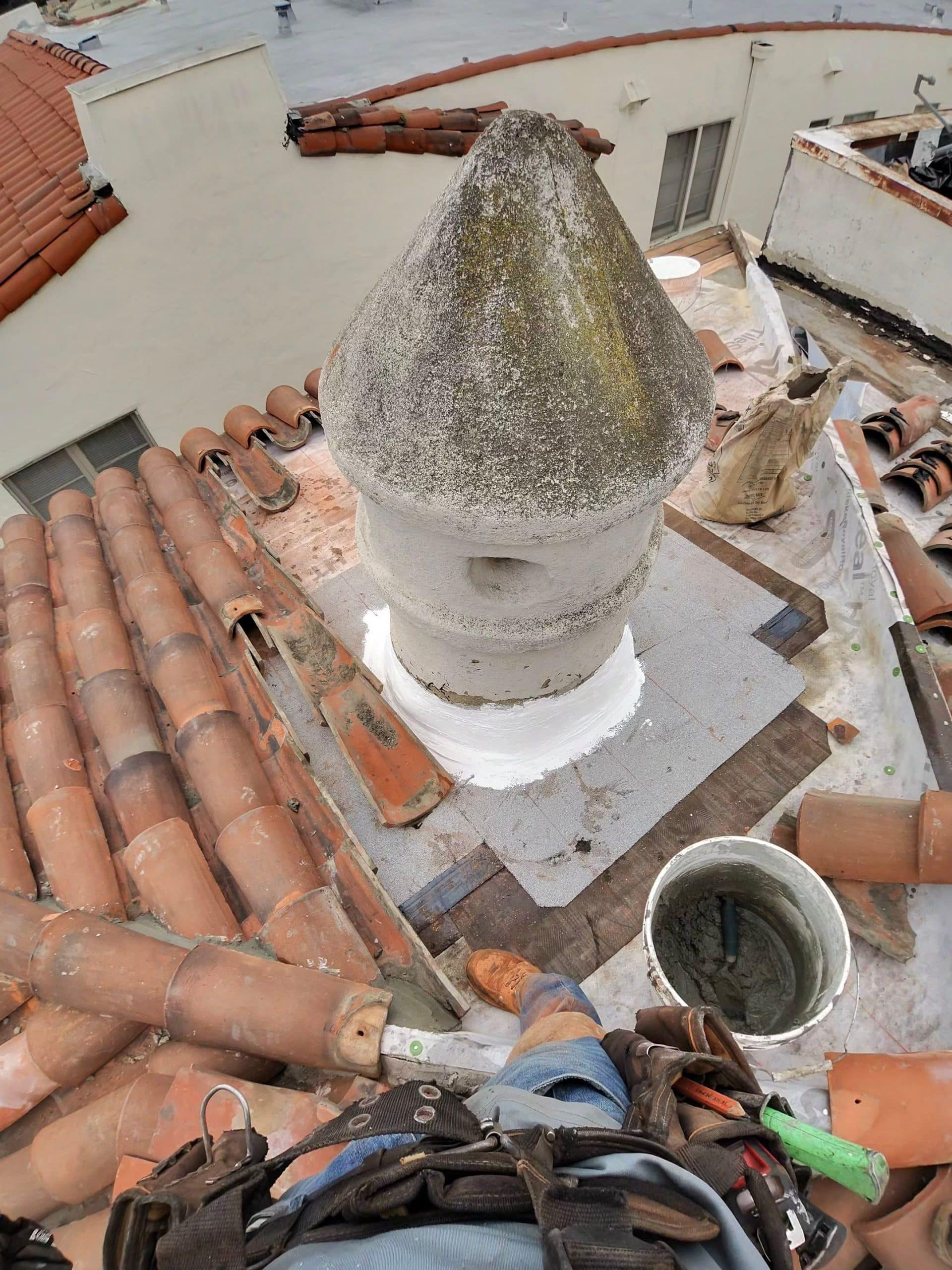
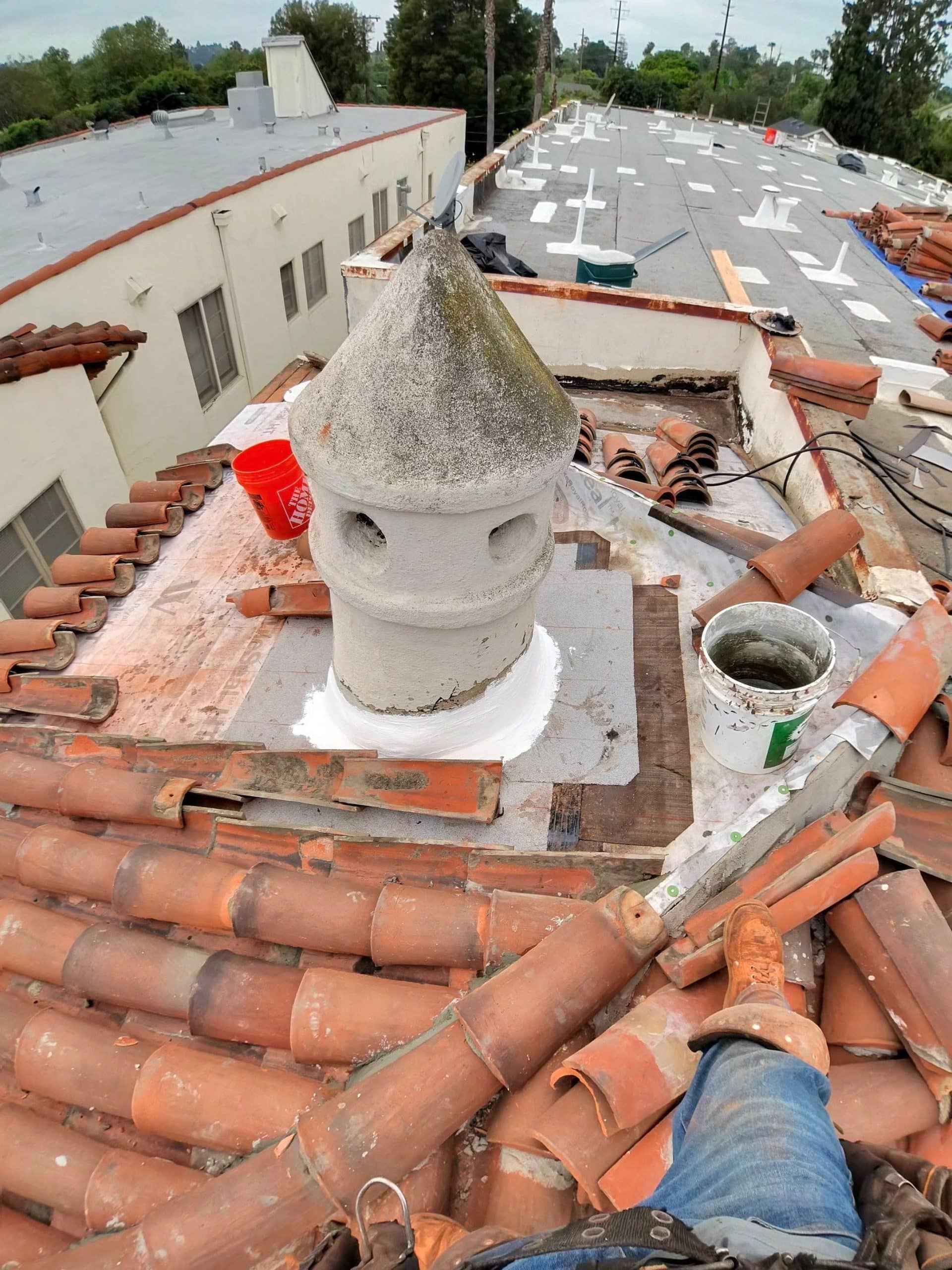
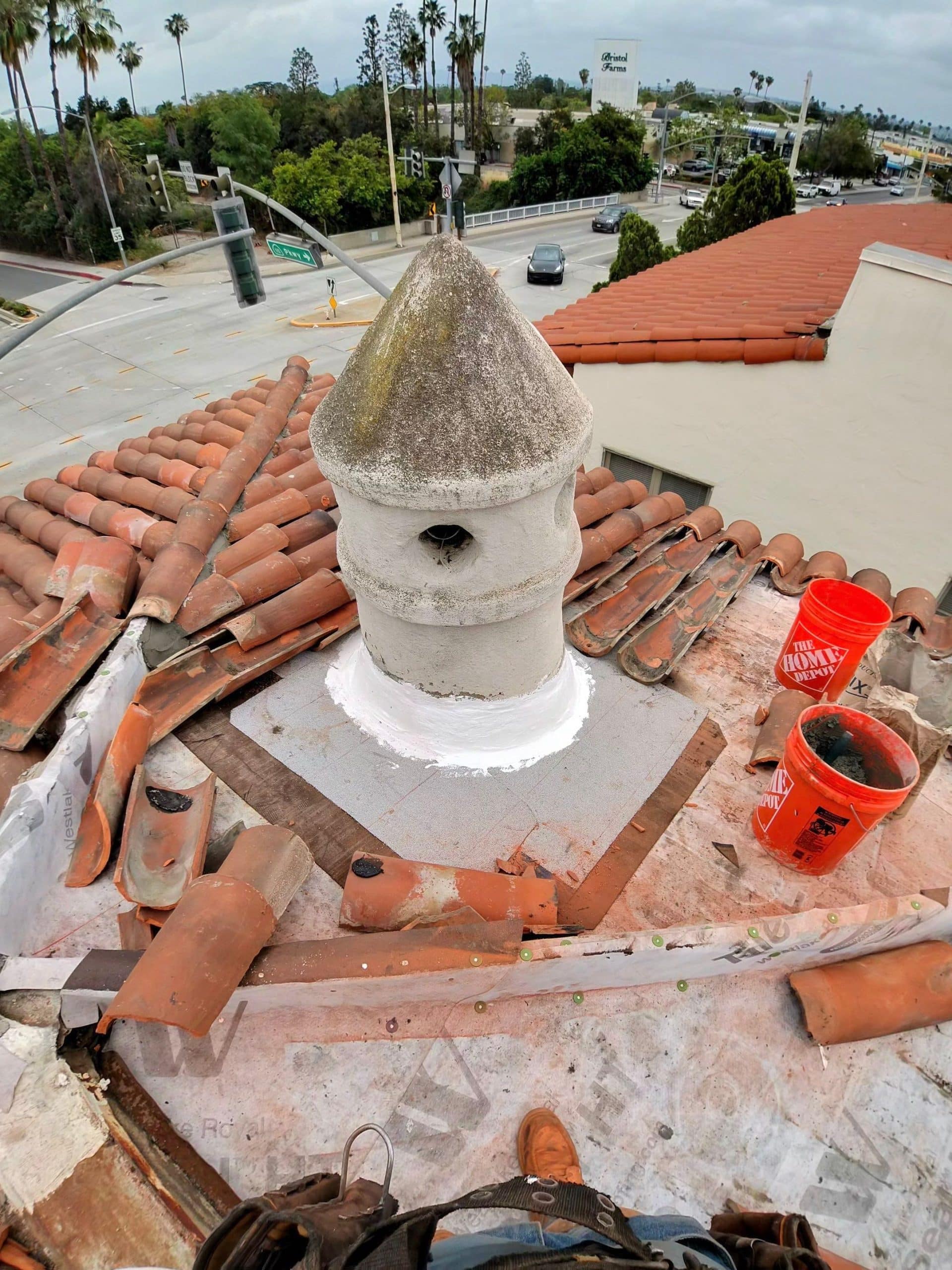
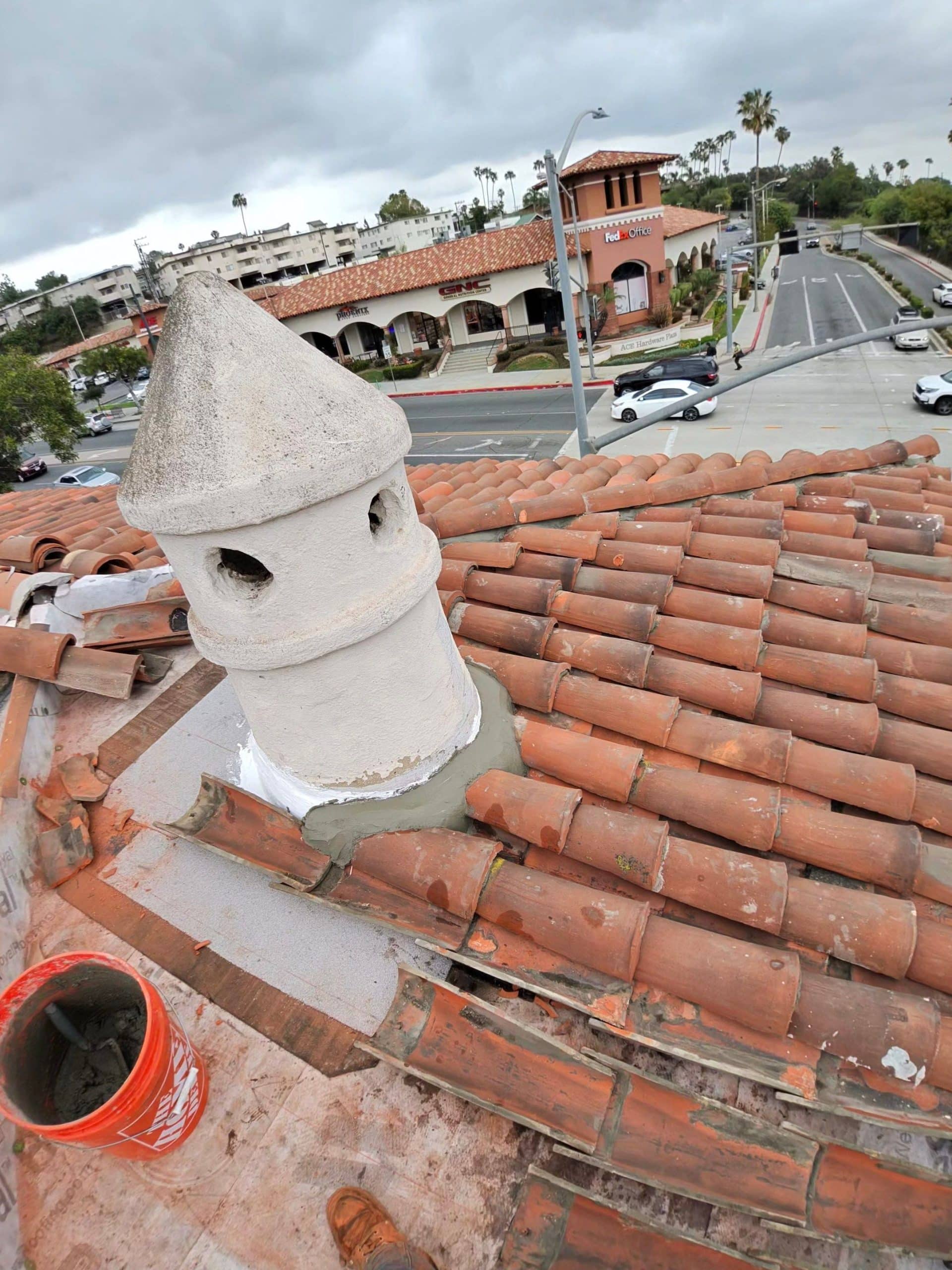
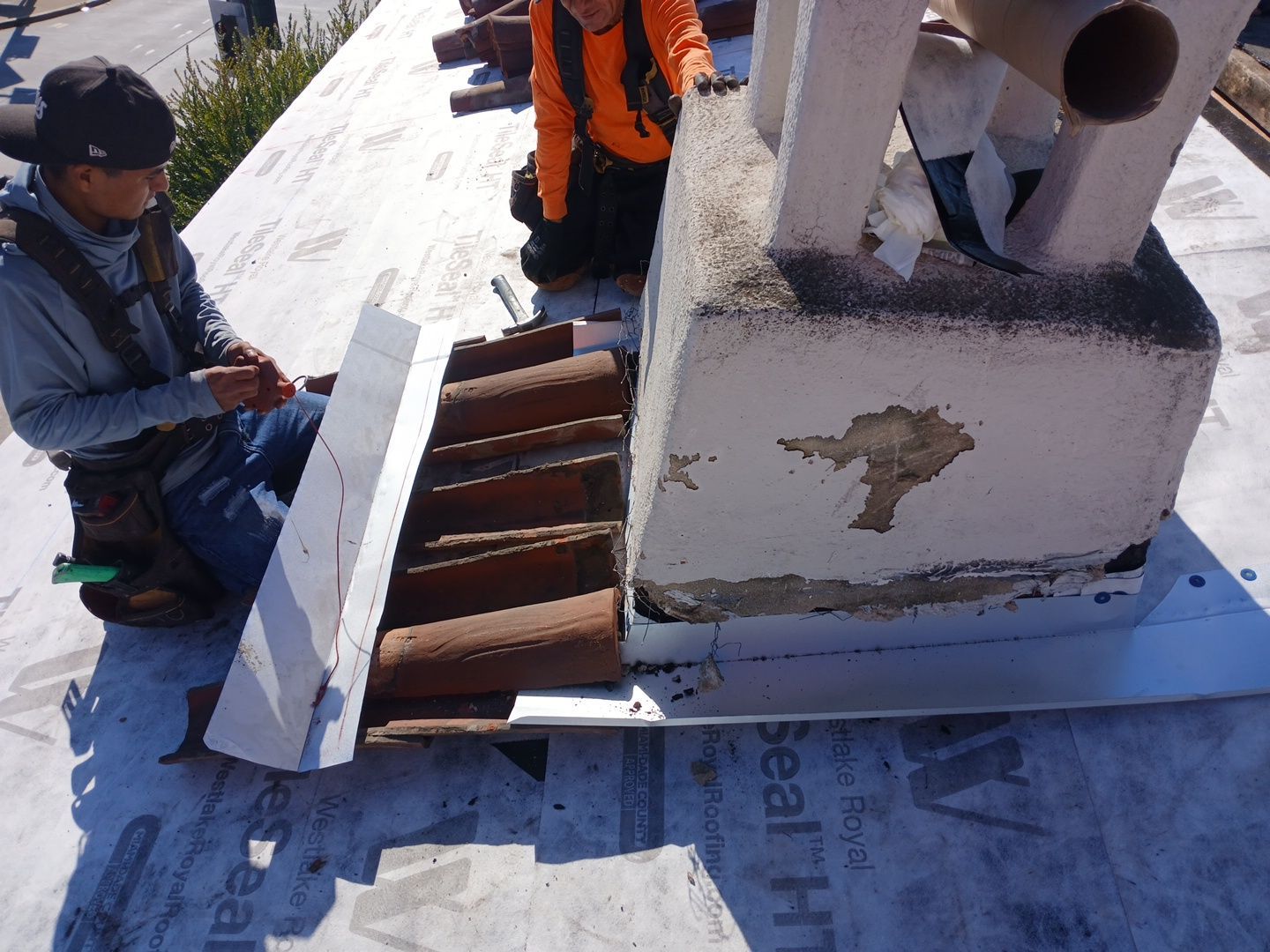
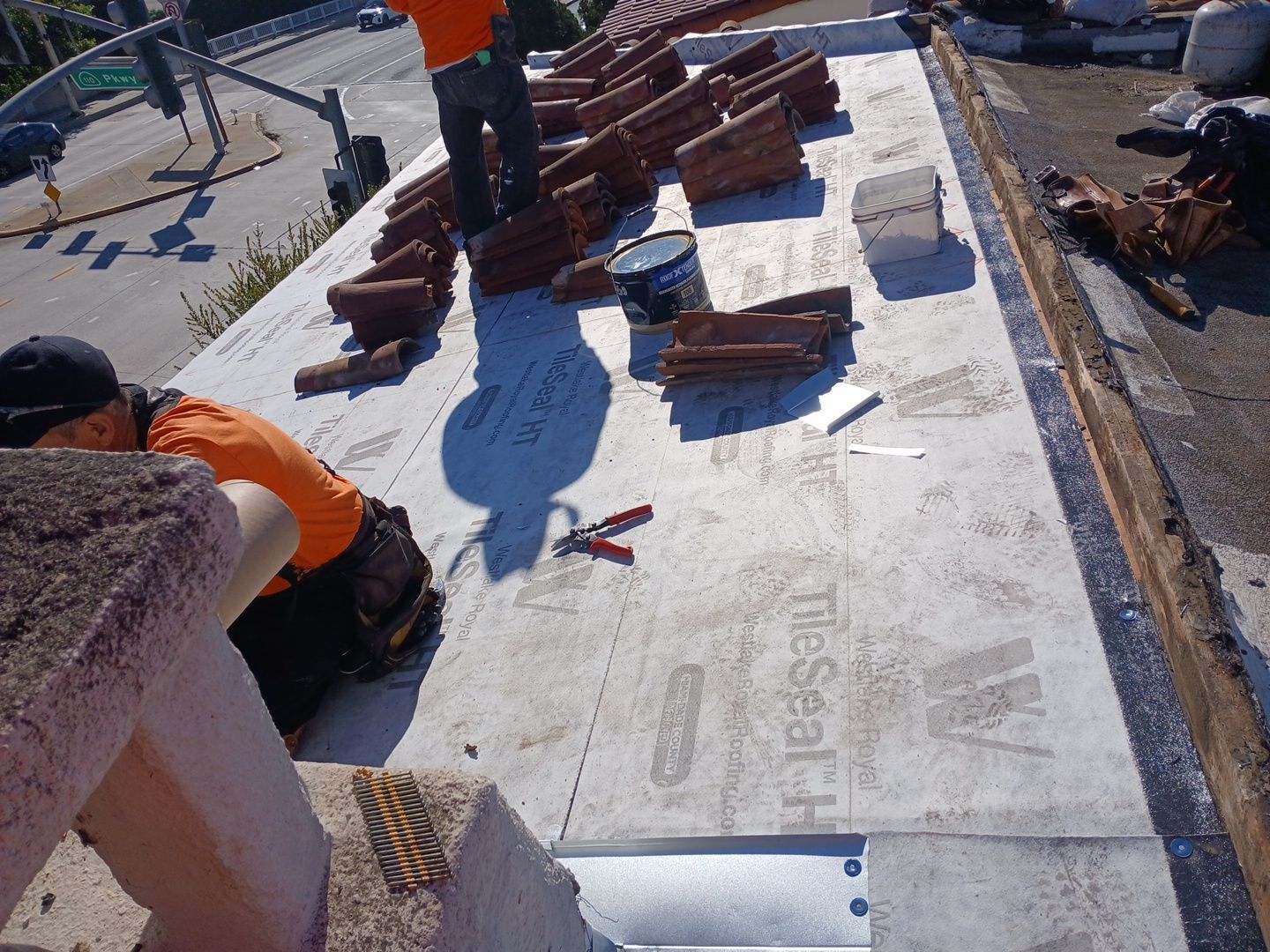
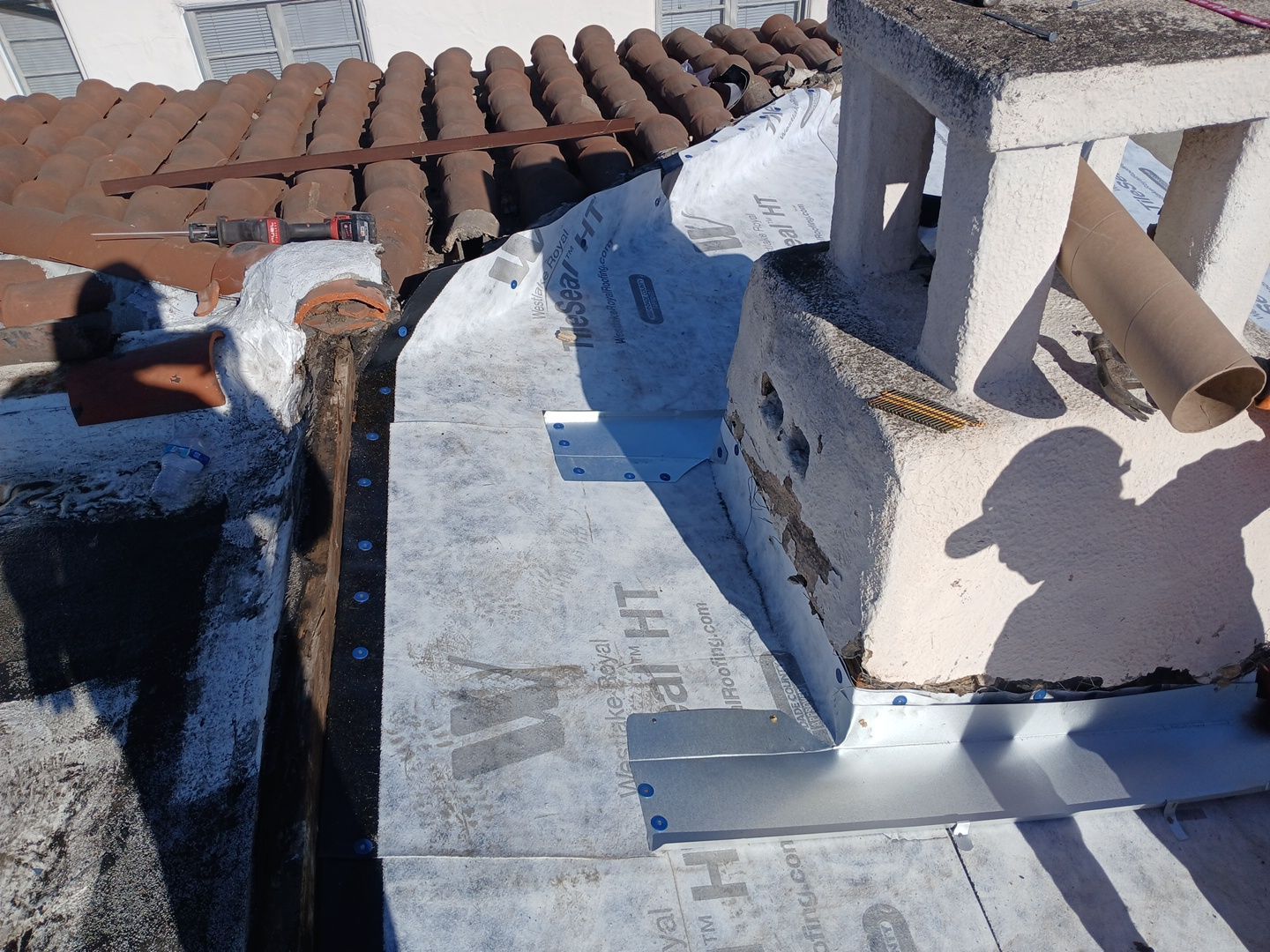
With a clean deck, the team installed rolls of synthetic underlayment — visible in the photos as Westlake Royal TileSeal HT — across all roof planes. The material was lapped and fastened with cap fasteners per the manufacturer’s layout lines printed on the sheet face. Around each of the building’s ornamental chimney bases and at the hip and valley transitions, additional strips of self-adhering modified bitumen underlayment were torched or peeled and stuck into place to create redundant waterproofing at the highest-risk penetration zones.

Chimney Flashing and Penetration Waterproofing

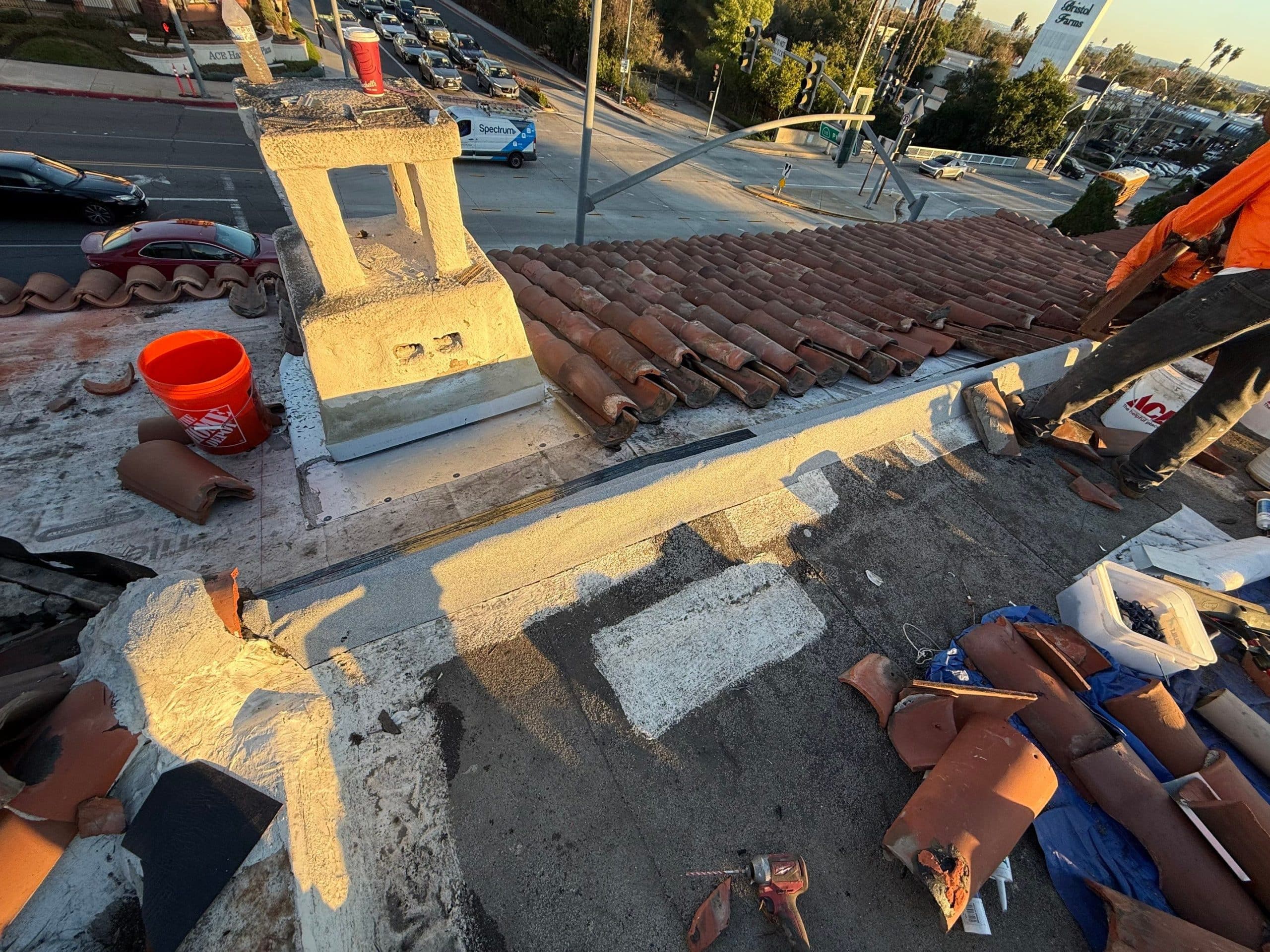
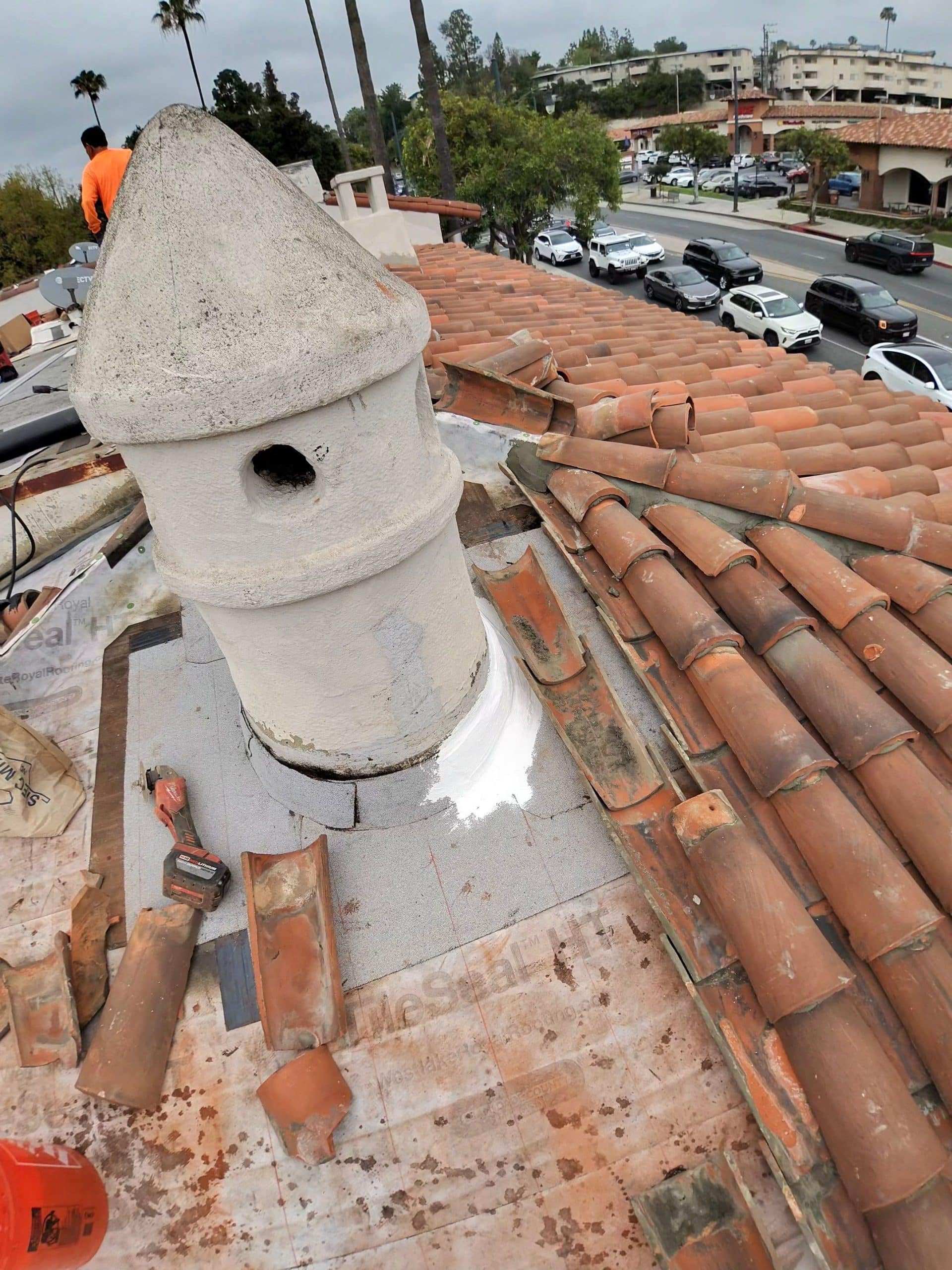
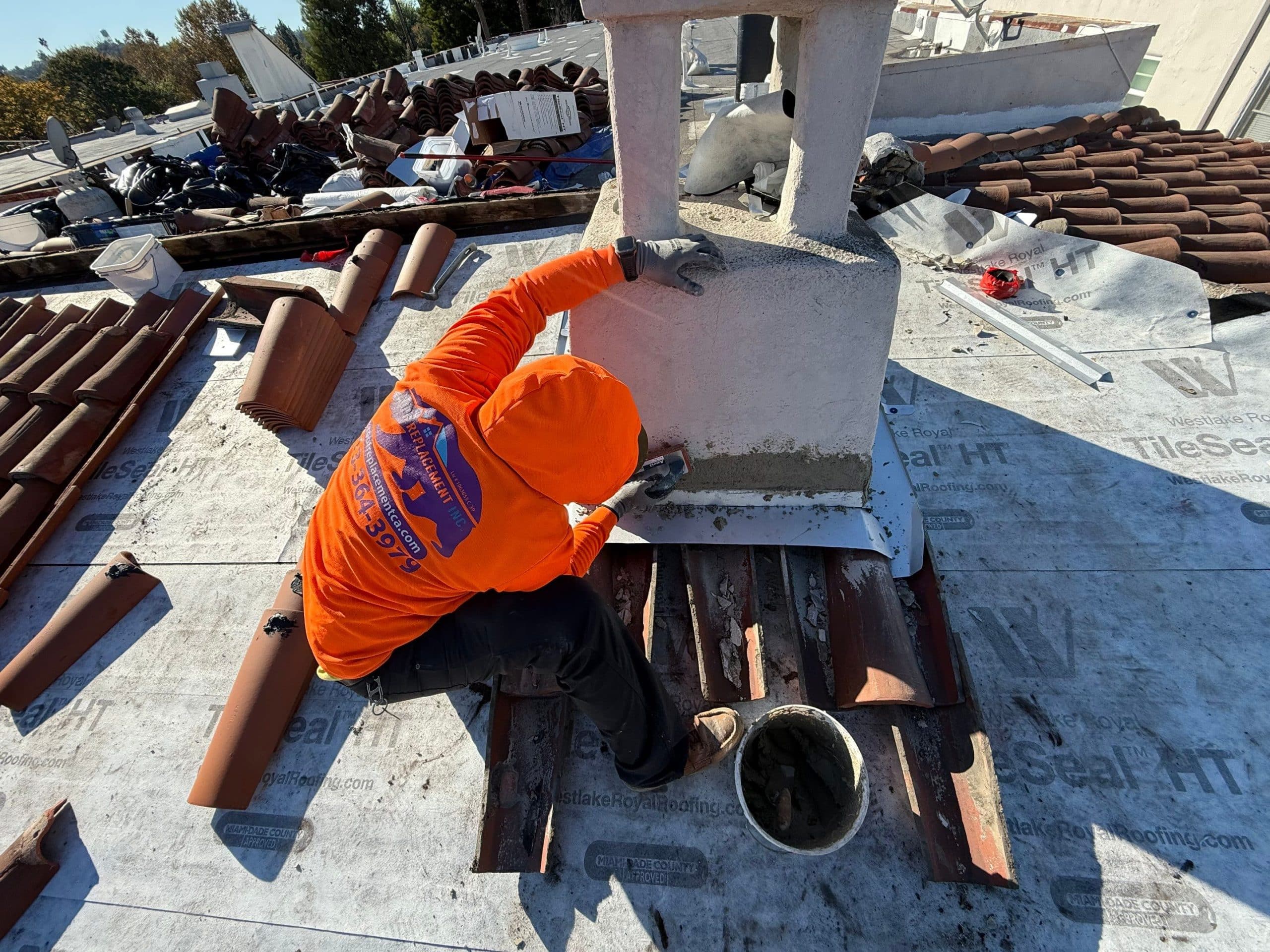
Each of the building’s distinctive white-stucco chimney stacks — including the cylindrical turret-style vents and the rectangular column chimneys — received new sheet metal base flashing fabricated and bent on site. The flashing collars were set into fresh mortar at the chimney bases, lapped over the underlayment, and mechanically fastened. For the round chimney stacks, the crew applied a torched modified bitumen sheet in a step-cut pattern around the curved base to conform to the irregular geometry, then pressed the new metal collar over it. Fresh mortar was tooled into the joint between the flashing and the stucco to seal the transition.

Tile Reset and Mortar Work

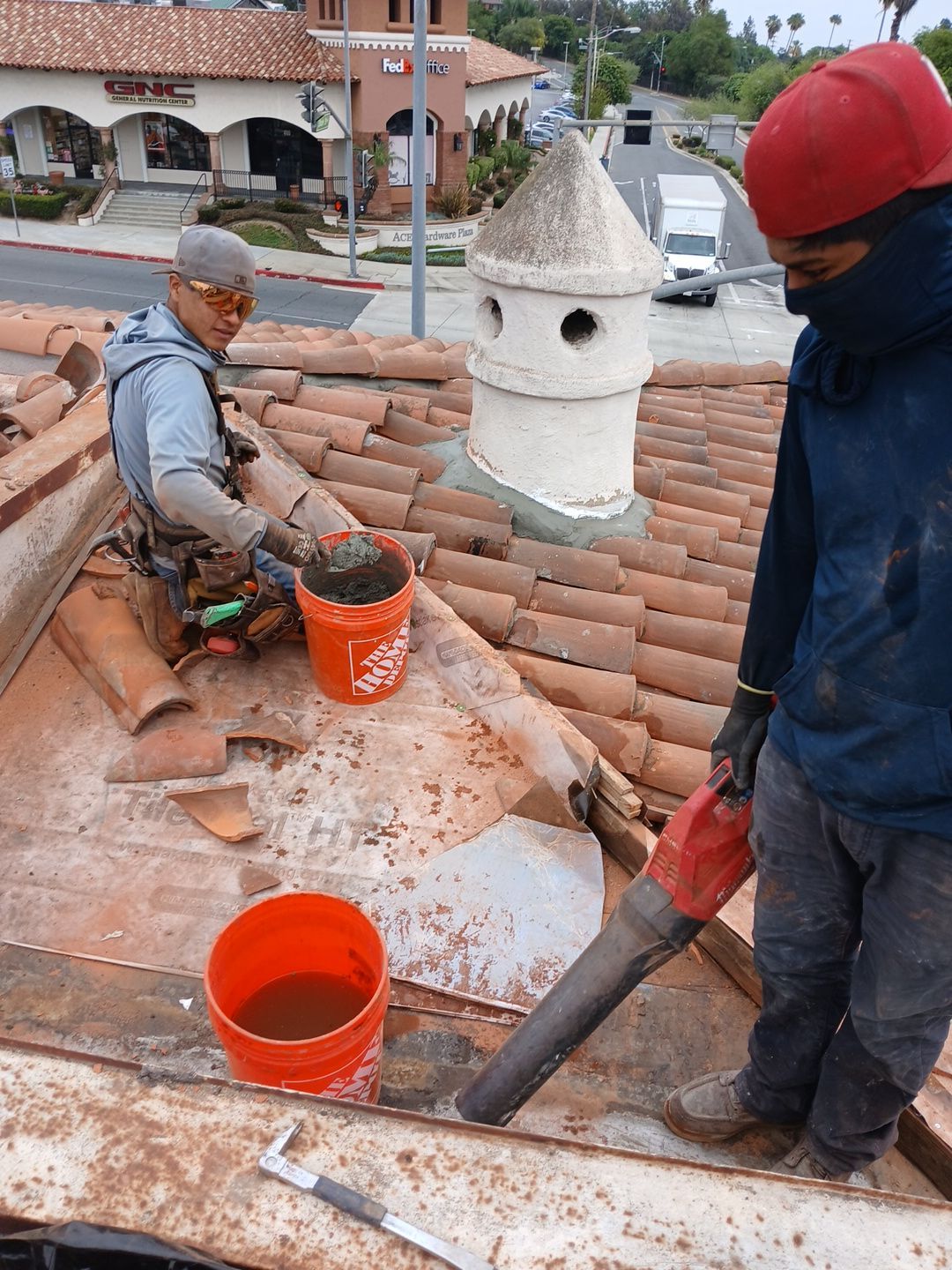
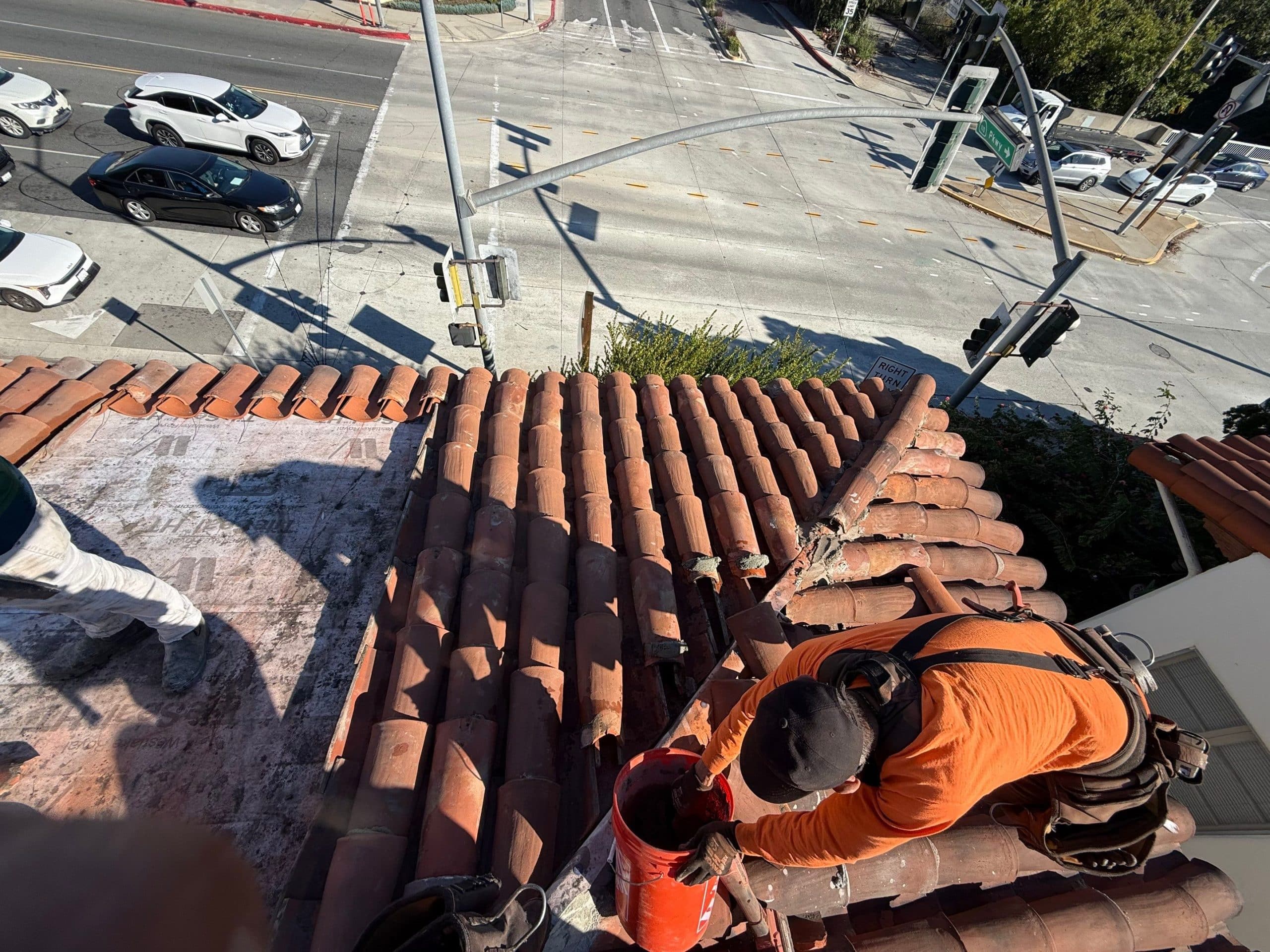
Salvaged clay mission tiles were sorted and reset over the new underlayment using a mortar-set approach at the ridges, hips, and eave courses. Workers can be seen in the photos hand-placing tiles and troweling fresh mortar from Home Depot buckets, bedding each course and pressing the rake and ridge cap tiles into position. Where tiles had cracked or broken during removal, pieces were culled. The parapet cap tiles at the building’s stepped parapets were similarly re-bedded in mortar, and the metal counter-flashing at the parapet-to-tile interfaces was dressed back into place over the new base flashing.

Project Details

ScopeTile roof repair on a multi-unit residential building: tile removal, rotted deck repair, full synthetic underlayment replacement, new metal chimney flashing, and tile reset with mortar.
ServiceTile Roof Repair
Property TypeResidential
LocationSouth Pasadena, CA
CompletedMarch 31, 2026
Materials UsedSalvaged clay mission roof tiles (reused), Westlake Royal TileSeal HT synthetic underlayment, Modified bitumen self-adhering and torch-applied underlayment (penetration flashing), Fabricated sheet metal chimney base flashing and counter-flashing, Portland cement mortar (ridge, hip, and chimney bedding), Plywood sheathing panels (deck repair)

Roofing in South Pasadena, CA

South Pasadena sits in the San Gabriel Valley foothills where roofs face intense UV exposure, hot dry summers, and periodic Santa Ana wind events that can lift undertorqued tiles and drive wind-driven rain under improperly lapped underlayment. The area also carries a moderate wildfire ember risk given its proximity to the Angeles National Forest, making the fire-resistance rating of underlayment a practical consideration for local homeowners. Spanish Colonial and Mission Revival buildings are extremely common in South Pasadena, meaning clay and concrete mission tile roofs are the regional norm and require specialized re-bedding and flashing techniques that differ significantly from shingle roofing.

Our Service Area: South Pasadena, CA

Frequently Asked Questions

The tiles themselves often last many decades, but the underlayment beneath them typically has a shorter service life. If the underlayment has dried out, cracked, or is letting moisture through even though most of your tiles look intact from the street, a repair that involves lifting and resetting the tiles while replacing only the underlayment may be entirely appropriate. A thorough inspection — including looking at the deck boards for rot and the flashing for rust or separation — will tell you whether the structure under the tile is sound enough to justify a repair versus a full tear-off. In a case like 509 Fair Oaks, the tiles were salvageable but the underlayment and flashing had both failed.
In many cases, original clay mission tiles can be carefully removed, sorted for cracks, and reset over new underlayment. This is often the preferred approach on older South Pasadena buildings where the existing tile has a weathered patina that would be hard to match with new production tiles. Breakage during removal does occur, so it is realistic to expect some tile loss, and your contractor should assess whether enough undamaged tiles exist before committing to a reuse strategy. If too many are damaged, compatible replacement tiles can often be sourced, though color and texture matching aged originals is not always perfect.
On buildings of this era, chimney flashing was often set in mortar alone without a separate mechanical attachment or a lapped metal collar, and that mortar joint is the first thing to crack as the building moves seasonally. Additionally, the original sheet metal used in older installations was often uncoated steel or light-gauge galvanized material that corrodes over decades, especially where mortar holds moisture against it. Santa Ana wind cycles that heat and then cool the roof rapidly accelerate both the cracking of mortar joints and the expansion-contraction fatigue on the metal itself. Replacing the flashing with properly lapped and mechanically fastened collars, bedded in fresh mortar, addresses all of those failure points.
Permit requirements in South Pasadena depend on the extent of the work. Re-roofing projects that involve replacing the underlayment over a certain percentage of the roof area generally require a permit from the City of South Pasadena Building and Safety Division, and work on properties that may be in a historic or design-review overlay may have additional requirements related to material matching. It is always the homeowner’s or contractor’s responsibility to confirm permit requirements with the city before work begins. Pulling the appropriate permit also means the work will be subject to inspection, which protects you as the property owner.
The San Gabriel Valley’s combination of strong UV, low humidity in summer, and occasional heavy rain events in winter is hard on any roofing system. The clay tile itself is highly UV-resistant and handles thermal cycling well, but the underlayment and mortar beneath it are the vulnerable components. High-temperature-rated synthetic underlayments like the TileSeal HT product visible on this job are specifically engineered for the elevated deck temperatures common on Southern California roofs, which can exceed 150°F on a south-facing slope in summer. Using the appropriate underlayment type for the climate is one of the most important decisions in a tile repair project.
From the ground, look for tiles that have slipped out of alignment, are visibly cracked, or are missing entirely — these are the most obvious signs. Inside the building, water stains on ceilings near exterior walls or near chimneys are a strong indicator of flashing or underlayment failure even when the tile surface looks intact. On the roof itself, if you can safely access it, look for mortar that has crumbled away from the ridge or hip caps, stucco that is spalling or separating from chimney bases, and any area where the roof meets a parapet wall where the counter-flashing has lifted or rusted. Those transition zones — exactly the areas addressed on this South Pasadena project — are almost always where water entry begins.

Need a Tile Roof Inspection in South Pasadena?

If your clay tile roof is showing signs of underlayment failure, cracked mortar at the ridges, or water intrusion around chimneys or parapets, Roof Replacement Inc is available to inspect the roof and walk you through what repair or re-roofing would involve. We serve South Pasadena and the surrounding San Gabriel Valley communities and are experienced with the Spanish Colonial and Mission Revival tile roofs common throughout the area.

Project Details

DATE

May 8, 2026

CLIENT
Work Done
CITY

What Our Clients Say

Roof Replacement Inc. provided outstanding service for our roofing repair. The roofing contractors were quick to respond and conducted a thorough inspection before starting the repairs. The roof repair was completed promptly, and the quality of the work was excellent. The team was professional and respectful, ensuring that the area was clean after the job was done. We are extremely satisfied with their service and will definitely use them again if needed. Highly recommend.

Ryland Bear CustomerRyland Bear

Researched for 2 years and chose because they had a Better Business Bureau A+ . That and they didn’t time pressure me at all, in fact , Adolpho graciously came back out when I asked if just coating it all over with Silicone would work . He explained everything without rushing or ever making me feel like I was taking up his time. As a single woman homeowner I appreciated that. He is a man of integrity and has gone above and beyond before during and now after the work has been done. I believe him when he says he’ll be there if there’s any other concerns . Highly recommend Adoloho and his team.

Smiling woman close-up, partial viewCorine Bohrer

We hired Roof Replacement for a complete roof replacement on our home,,, and they exceeded expectations. The local roofing companies we contacted couldn’t match their level of expertise and professionalism. The roofing services included a comprehensive assessment and a detailed plan for the replacement. The new roof is of high quality, and the roof replacement cost was very reasonable. The team was efficient and finished the project ahead of schedule. We highly recommend their services.
Brady Benedict CustomerBrady Benedict
Google Reviews for Roof Replacement Inc

What Our Clients Say