Torch Down Roof Replacement in Los Angeles, CA
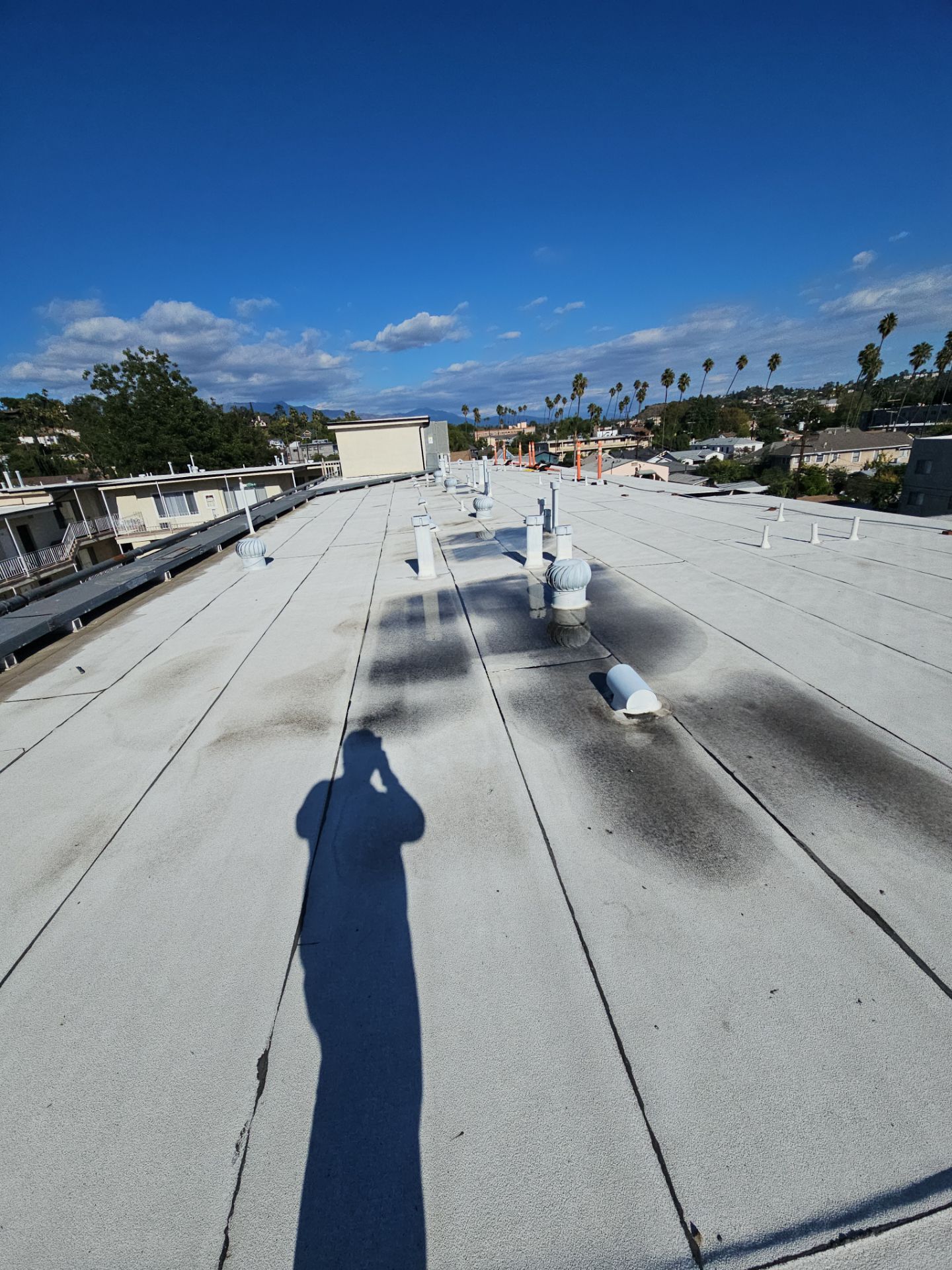
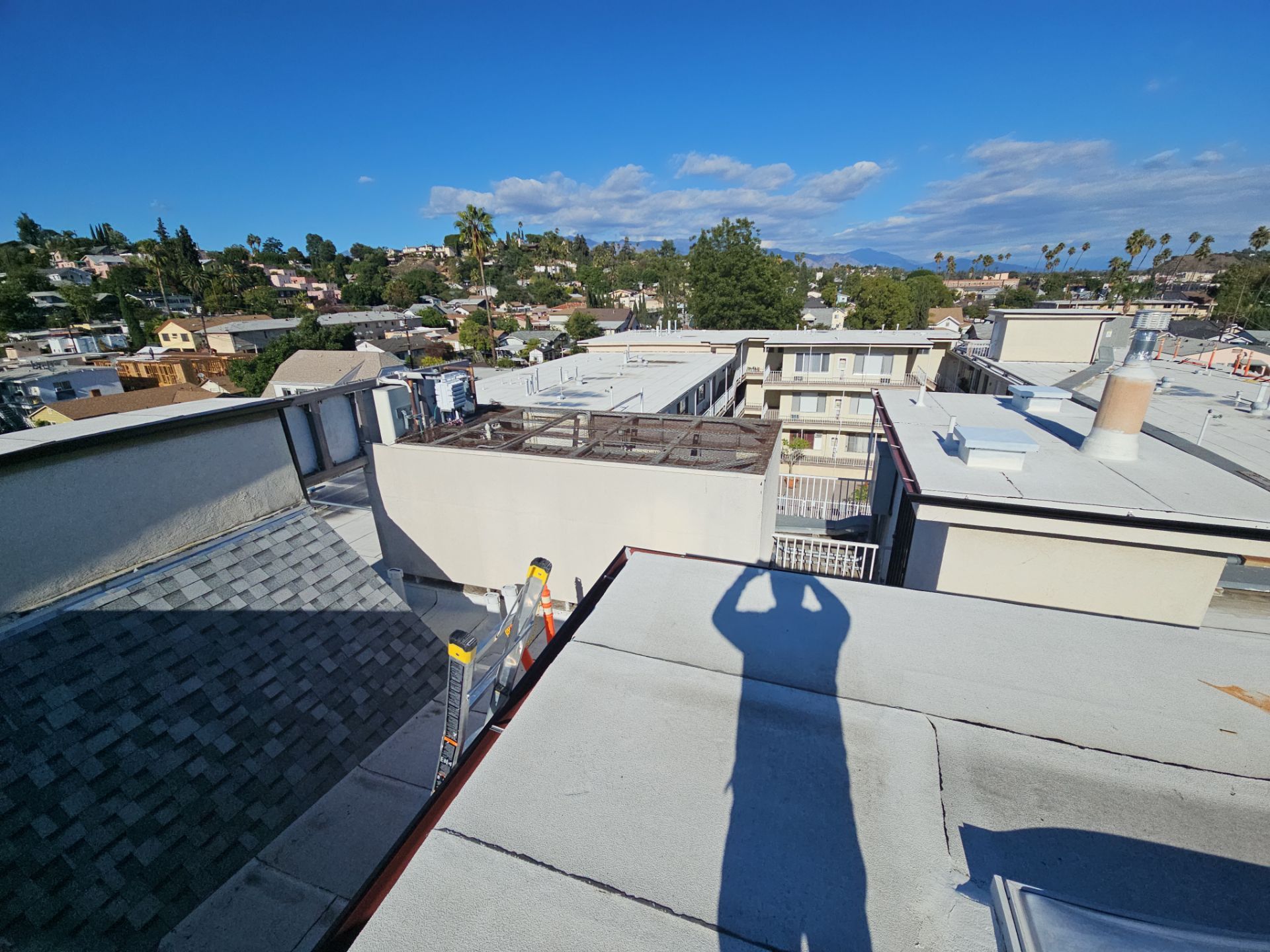
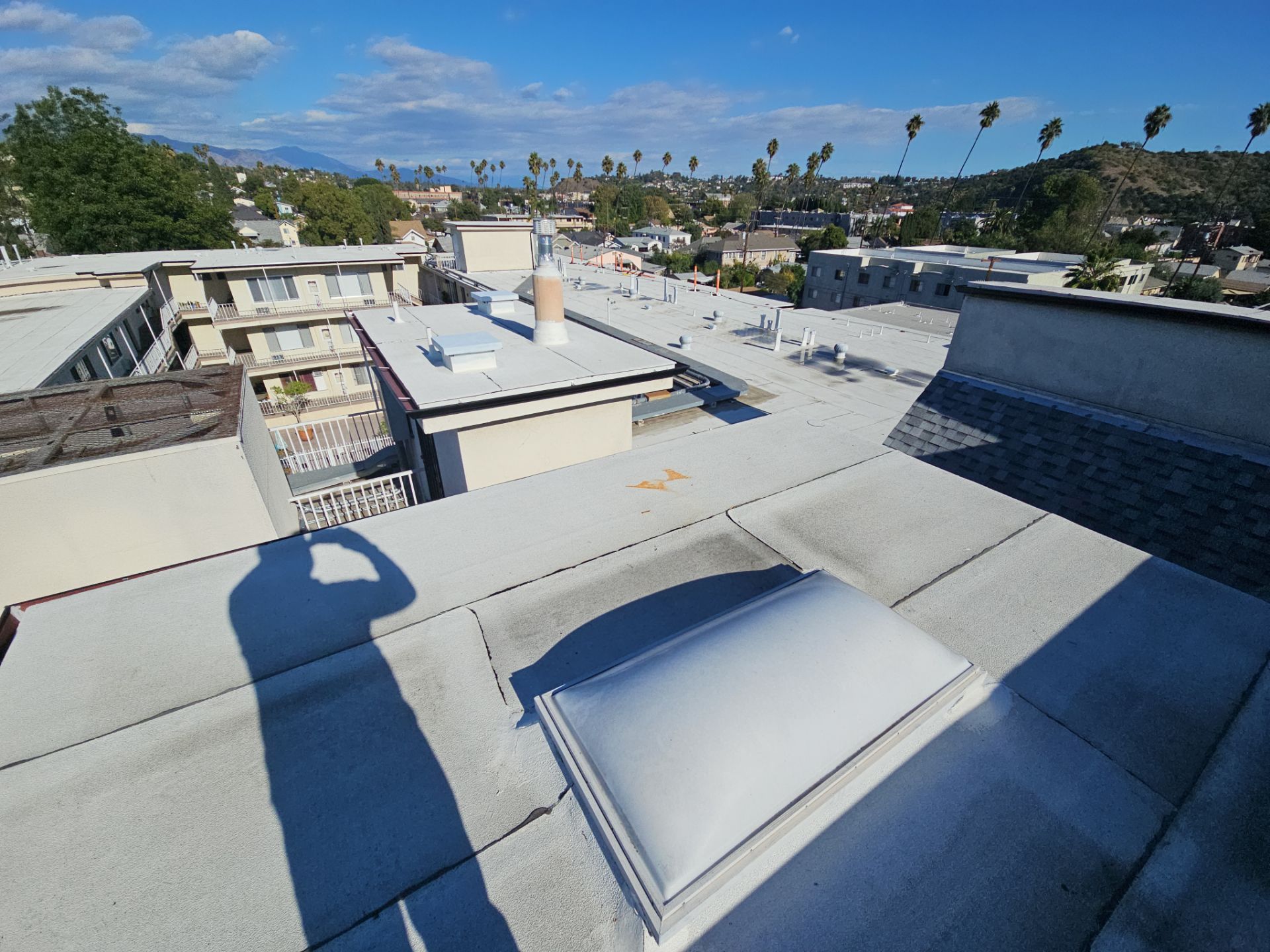
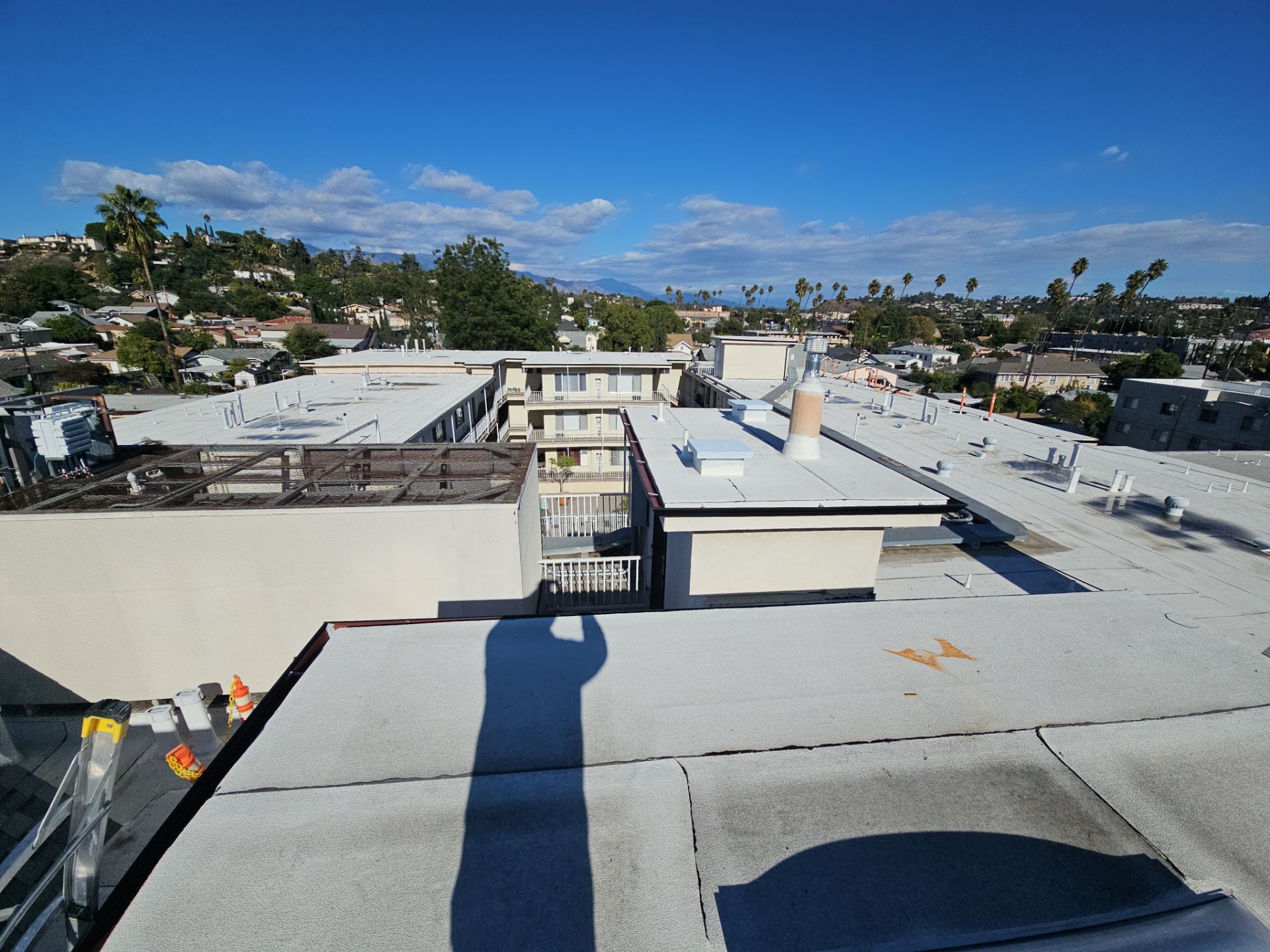
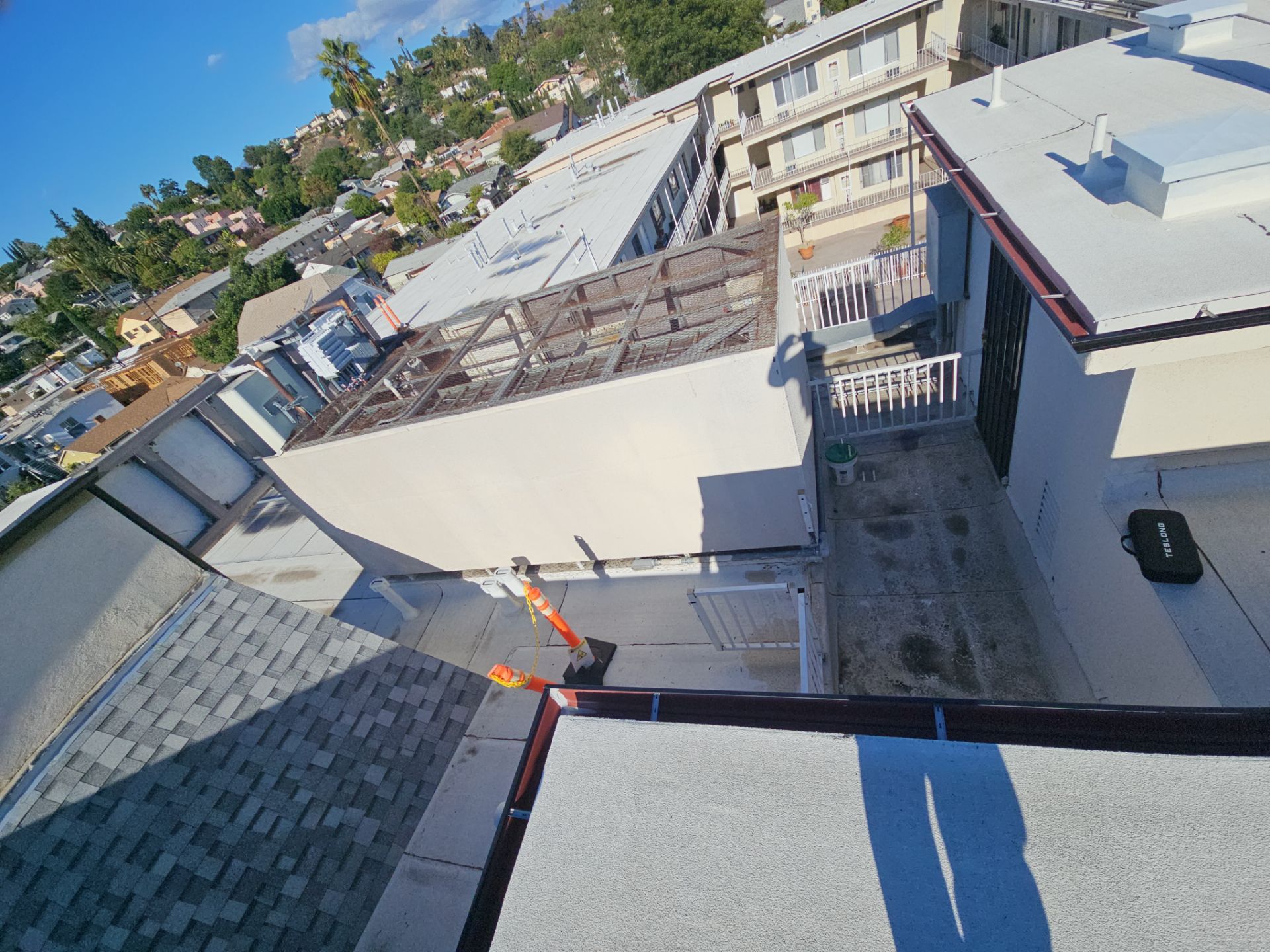
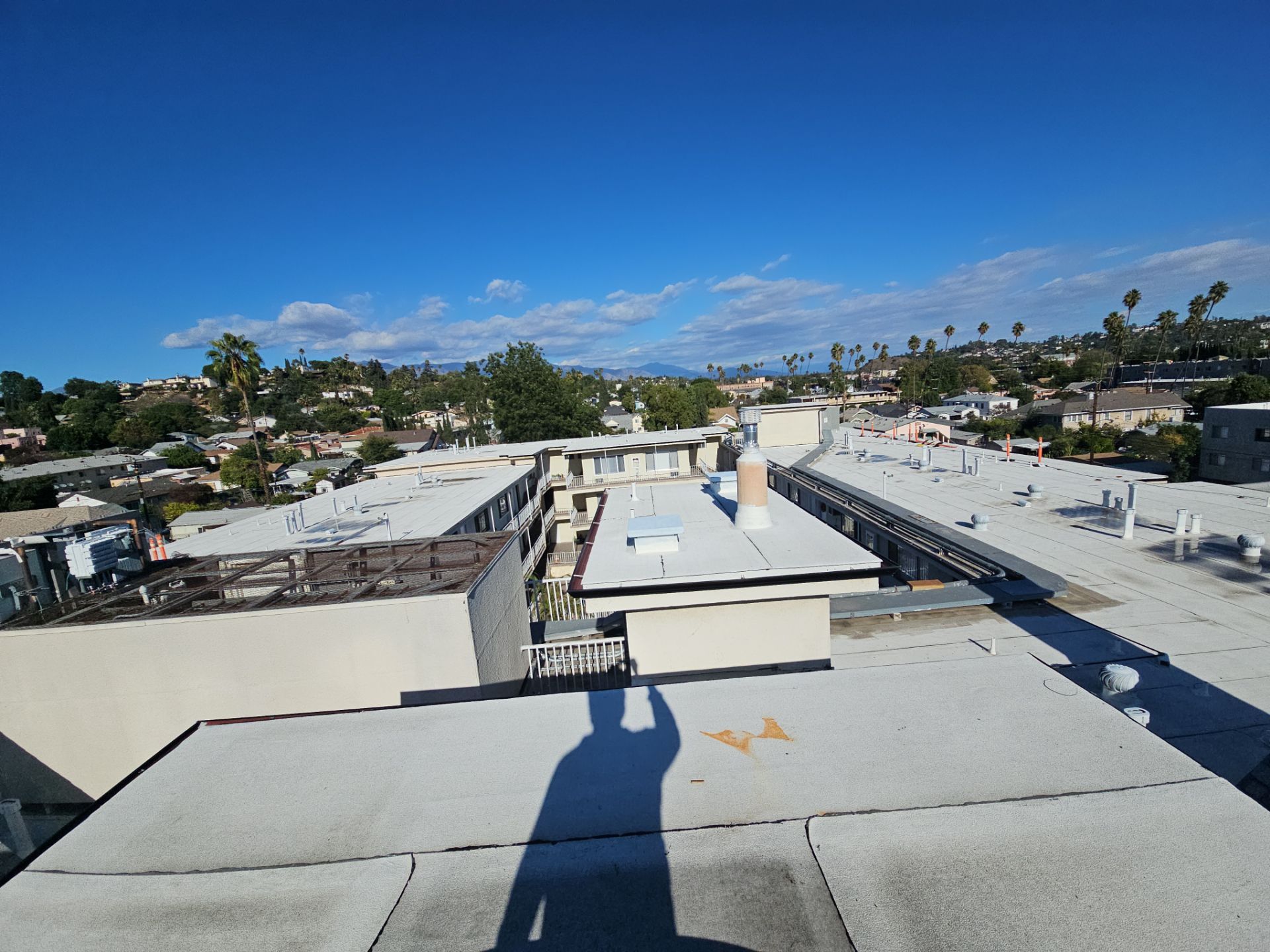
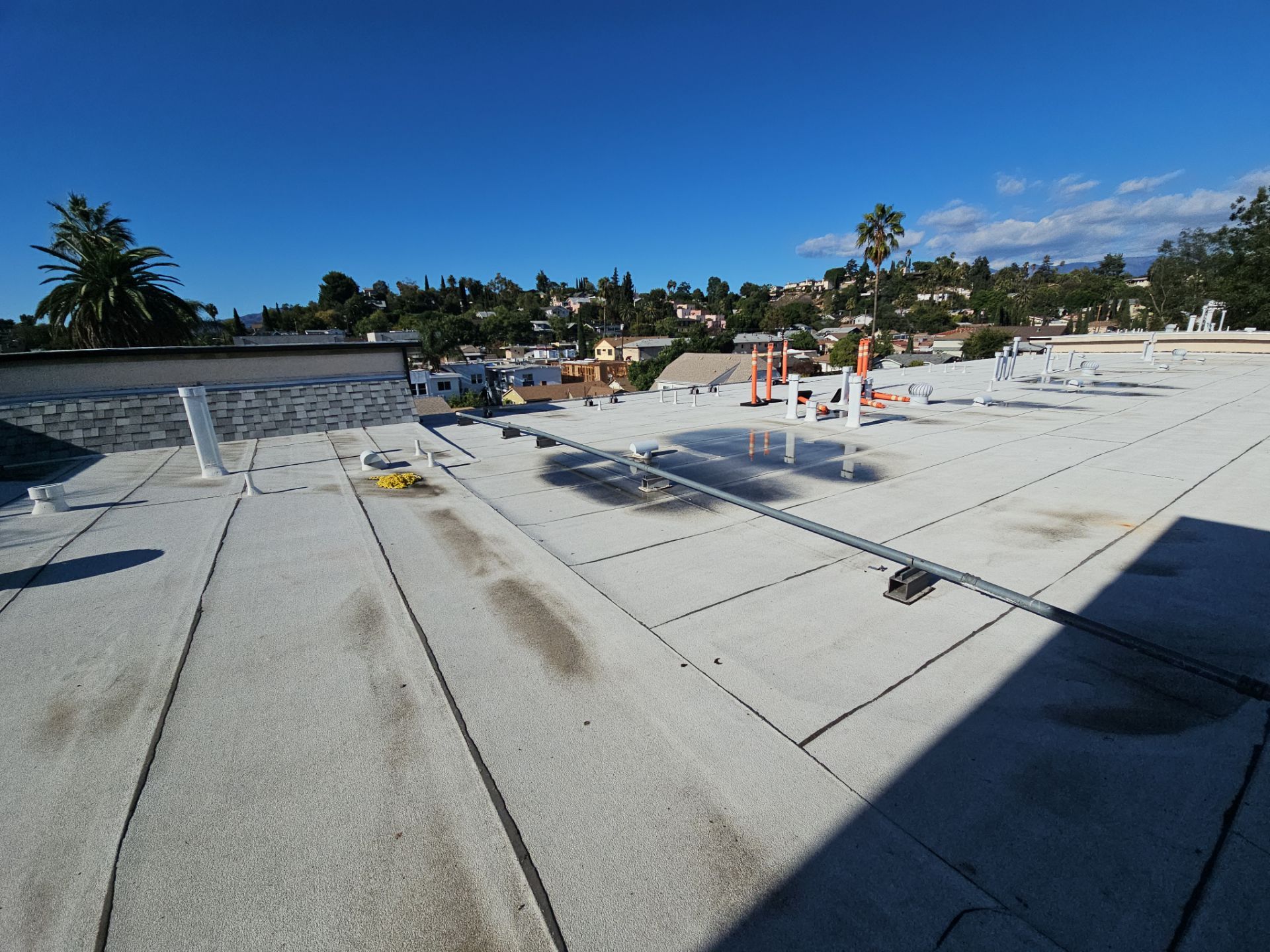
At 407 N Avenue 50, Los Angeles, CA 90042, Roof Replacement Inc completed a full torch down roof replacement on a multi-level residential property. The project addressed a large flat roof system as well as an adjoining lower-slope section finished with architectural asphalt shingles. From the photos, the completed roofing surface shows a white-coated modified bitumen cap sheet installed across the main flat sections, with all penetrations, vents, and parapet walls properly integrated into the finished system.
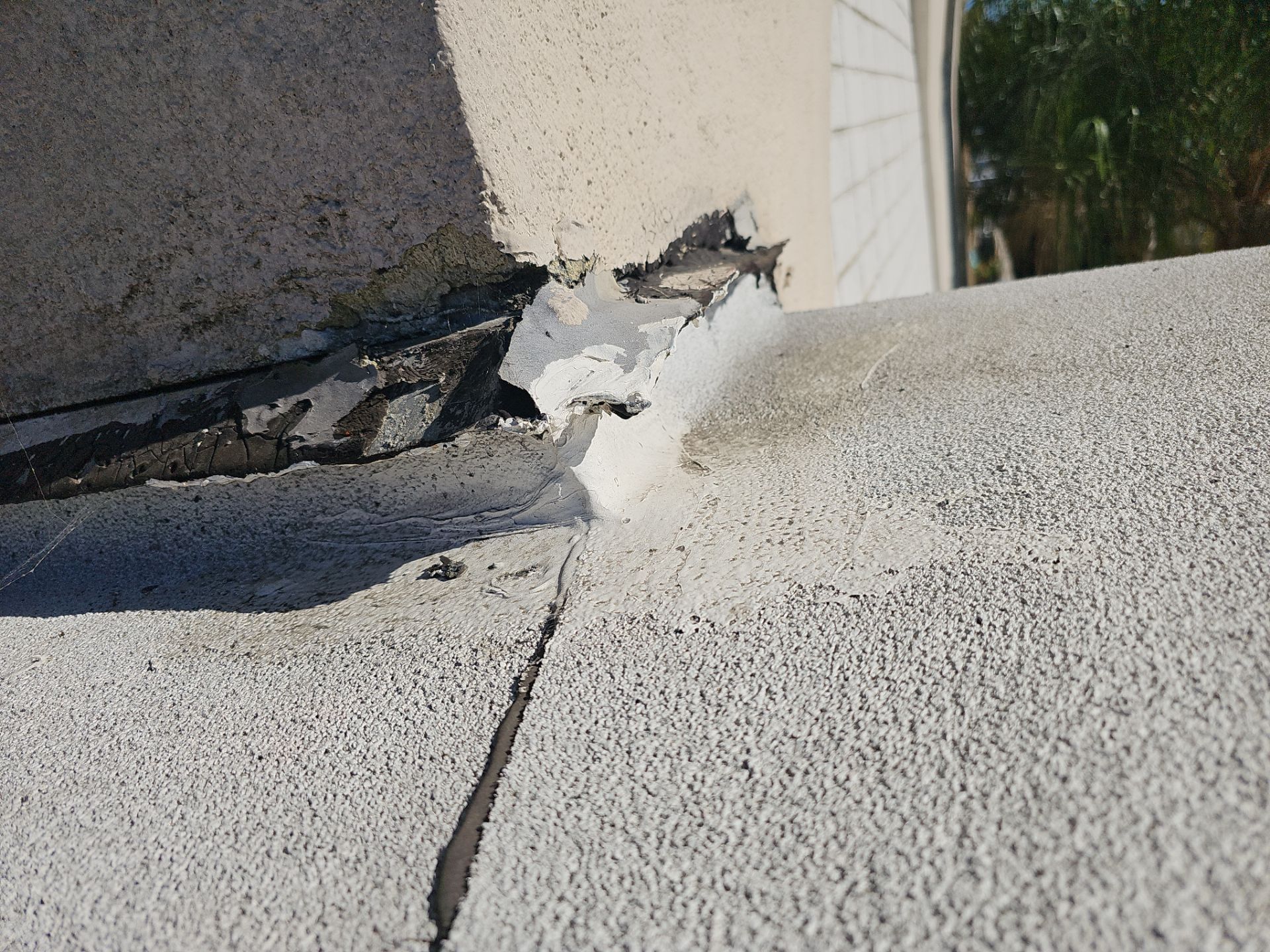
The pre-existing roof showed visible signs of failure that likely prompted the replacement: close-up photos reveal severely deteriorated flashing at the parapet base, with the old membrane peeling, cracking, and pulling away from the wall. Standing water staining and dark ponding marks on the field of the roof indicate drainage issues had developed over time. A lower enclosed section of the building retained an aging asphalt shingle roof that was also addressed as part of the scope.
Project Gallery
Existing Conditions and Scope of Damage
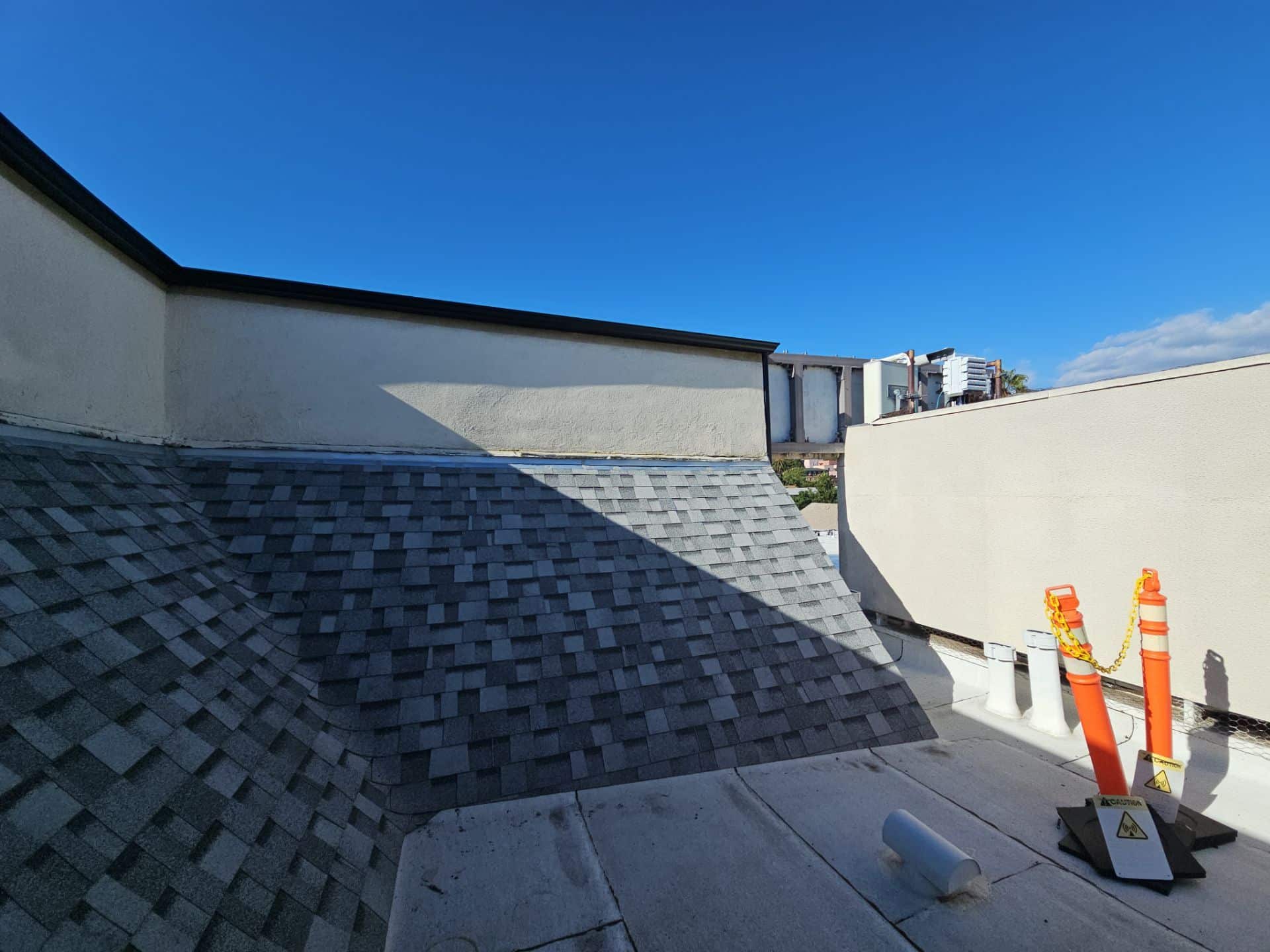
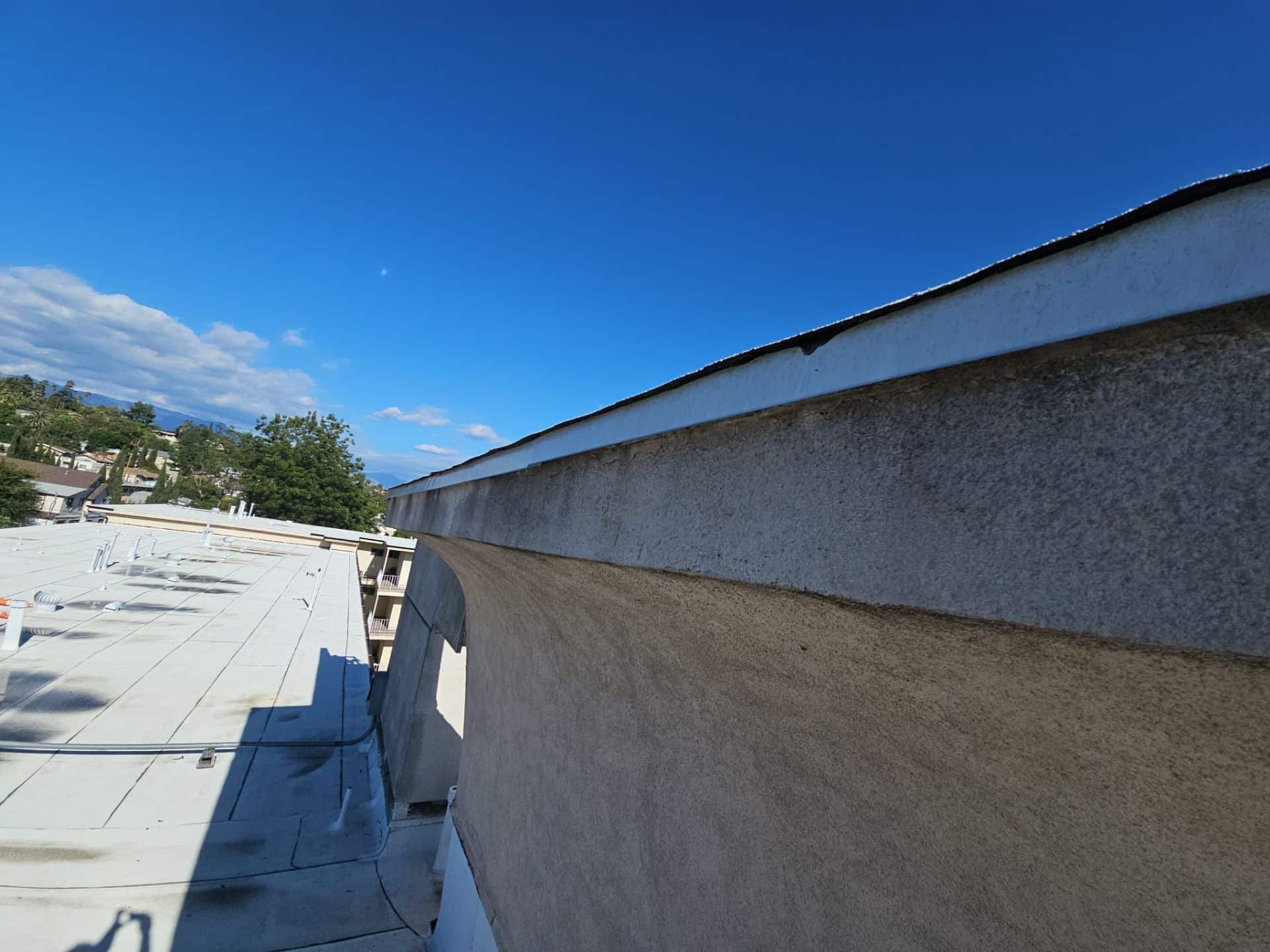
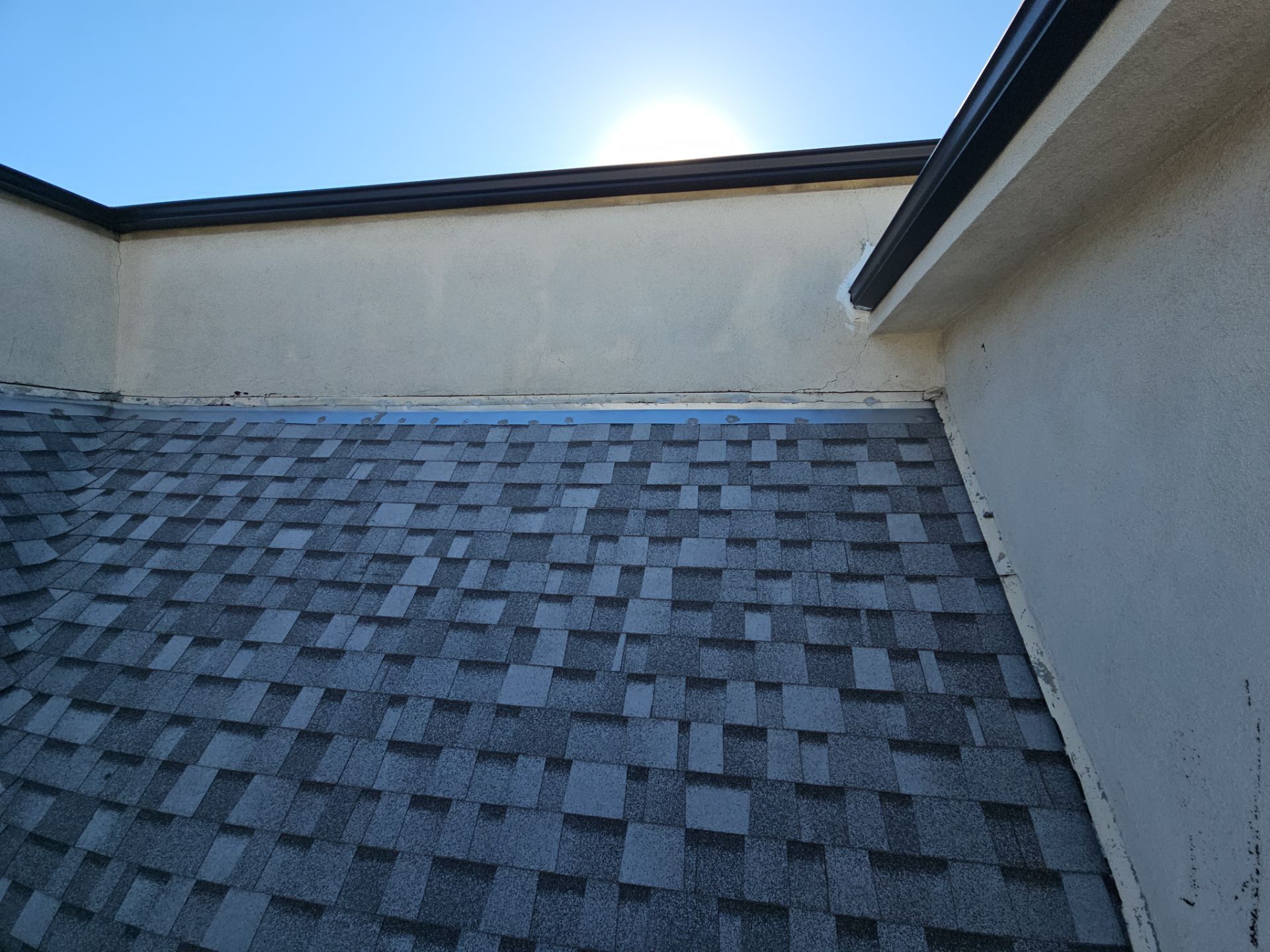
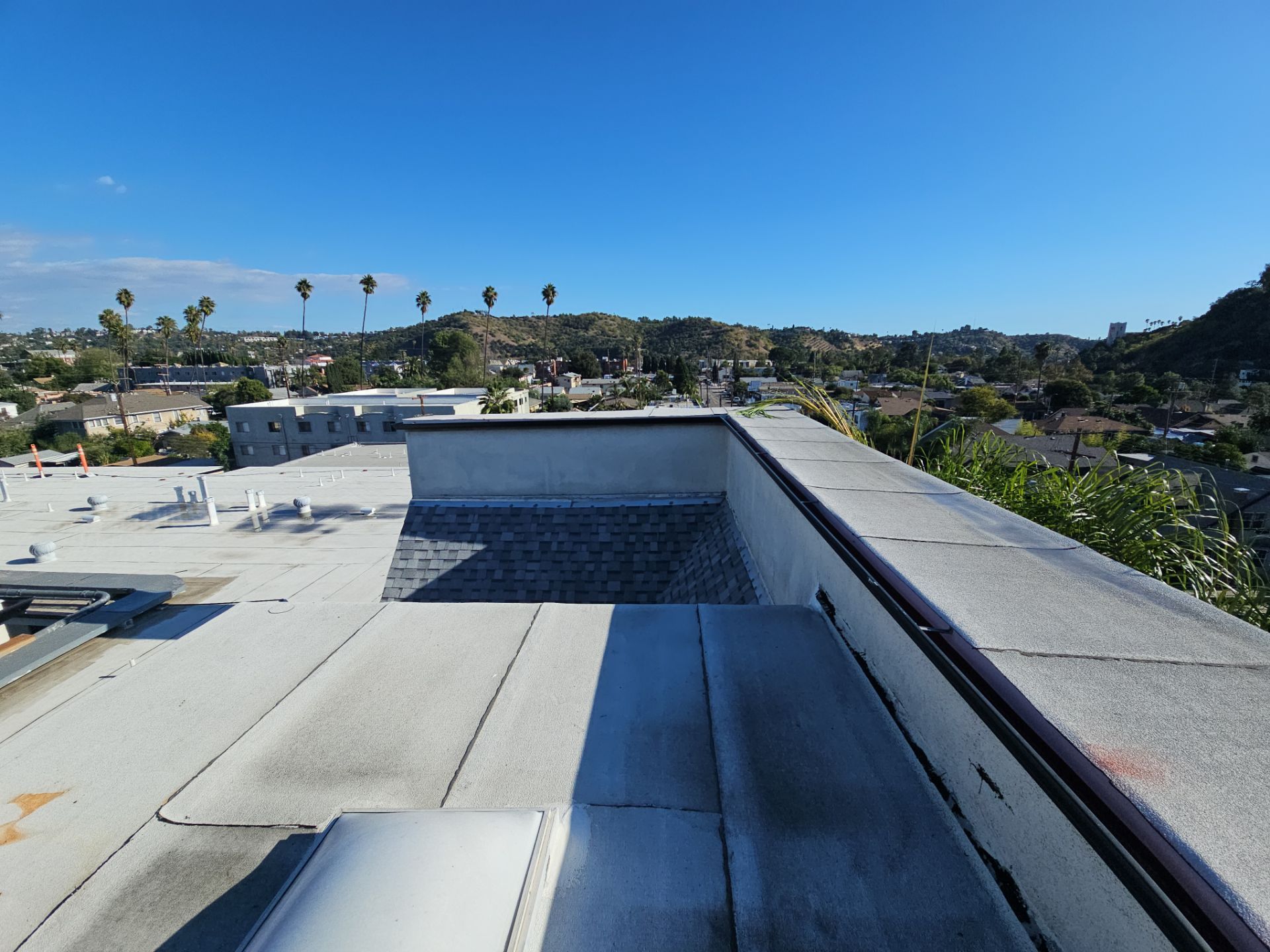
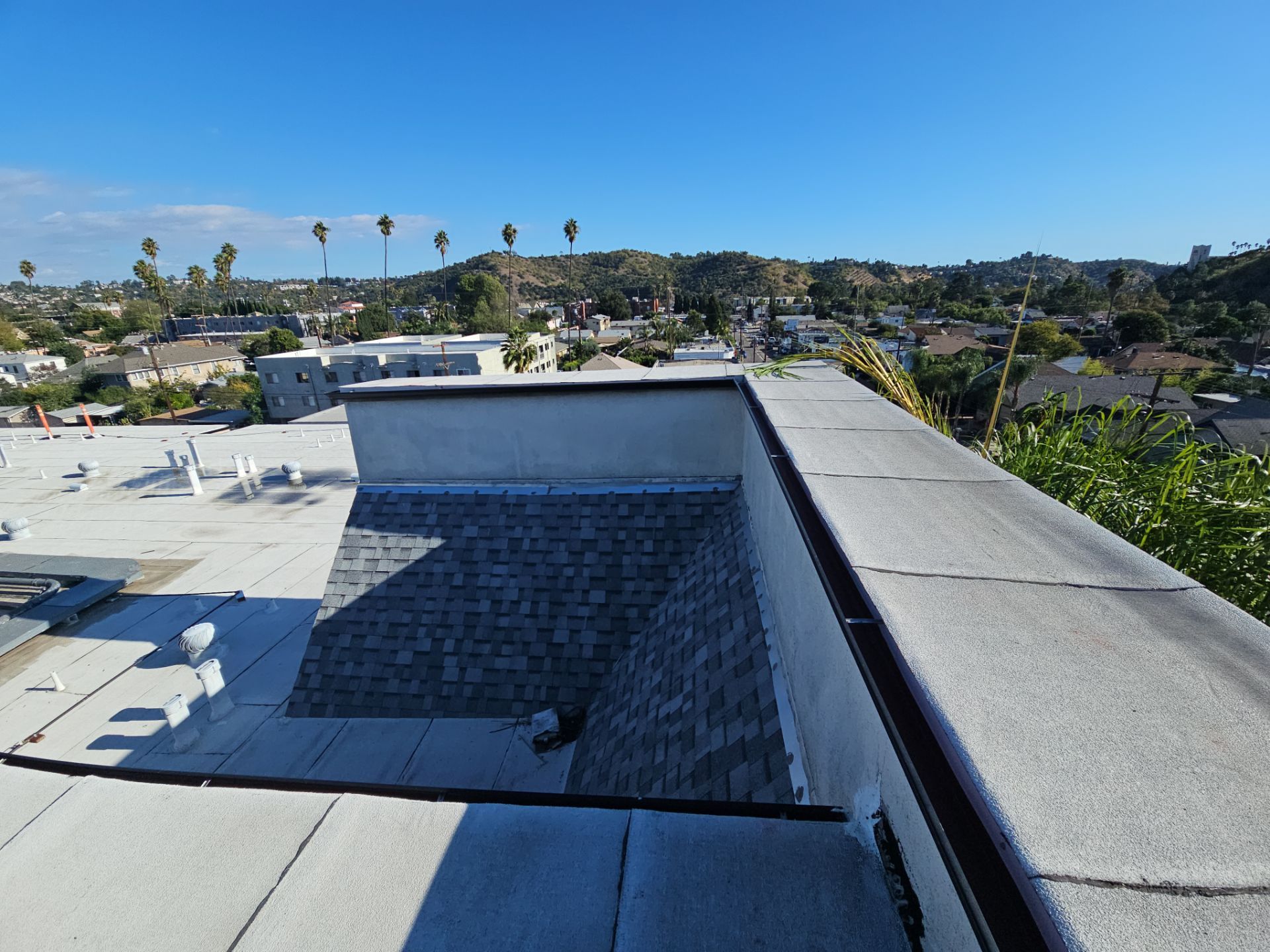
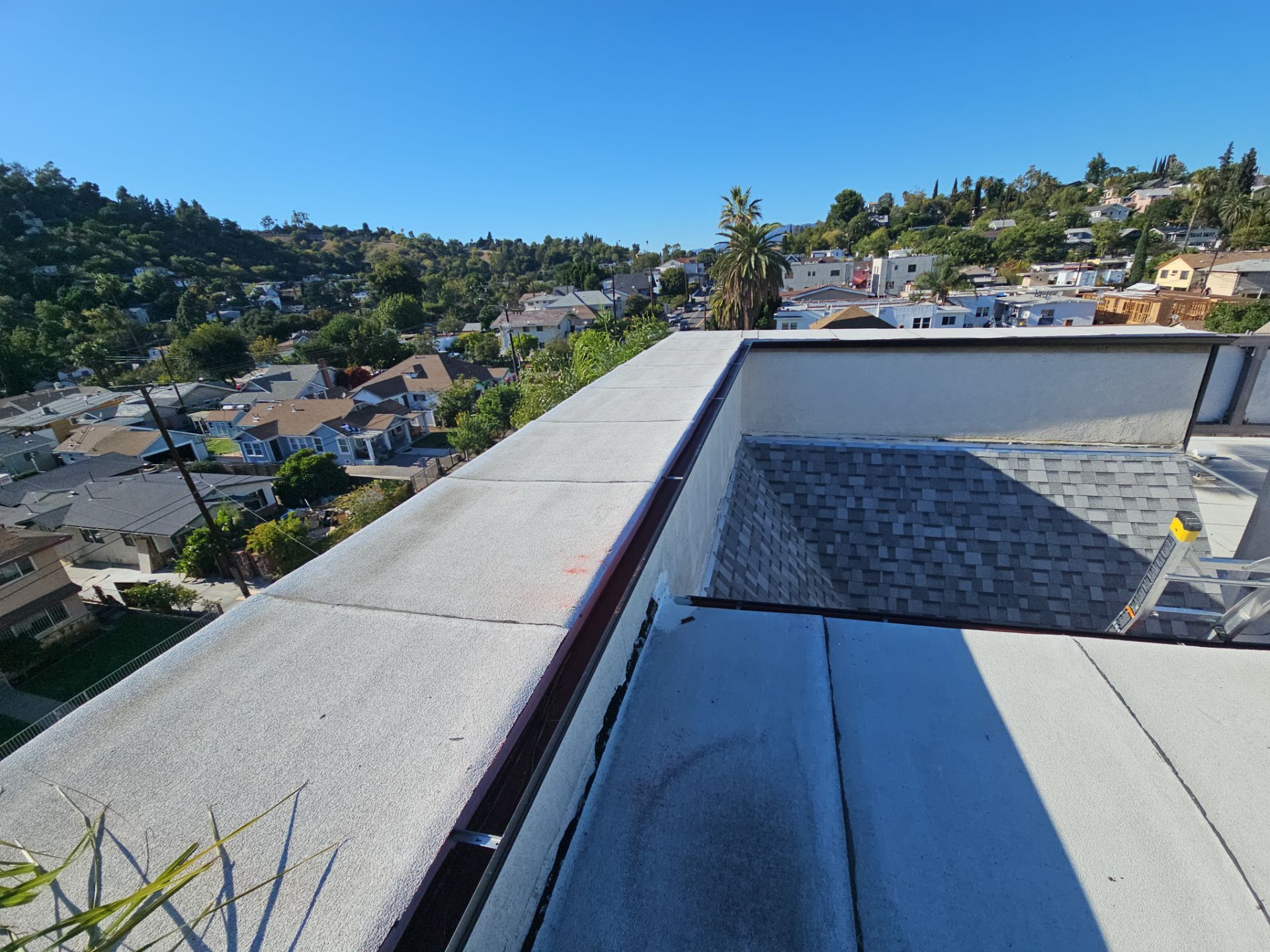
Photos taken prior to or during work capture the condition that triggered this replacement. At the parapet-to-roof transition, the old membrane flashing had fully delaminated — layers of modified bitumen and old mastic are visibly peeling, exposing the substrate beneath. Ponding stain patterns around multiple vent penetrations on the flat field suggest water had been sitting for extended periods. The lower mansard-style section of the building, finished in gray architectural asphalt shingles, showed the shingles terminating against stucco parapets with compromised flashing at the top edge, visible as a gap between the cap flashing and the wall.
Flat Roof Installation — Torch Down Modified Bitumen System
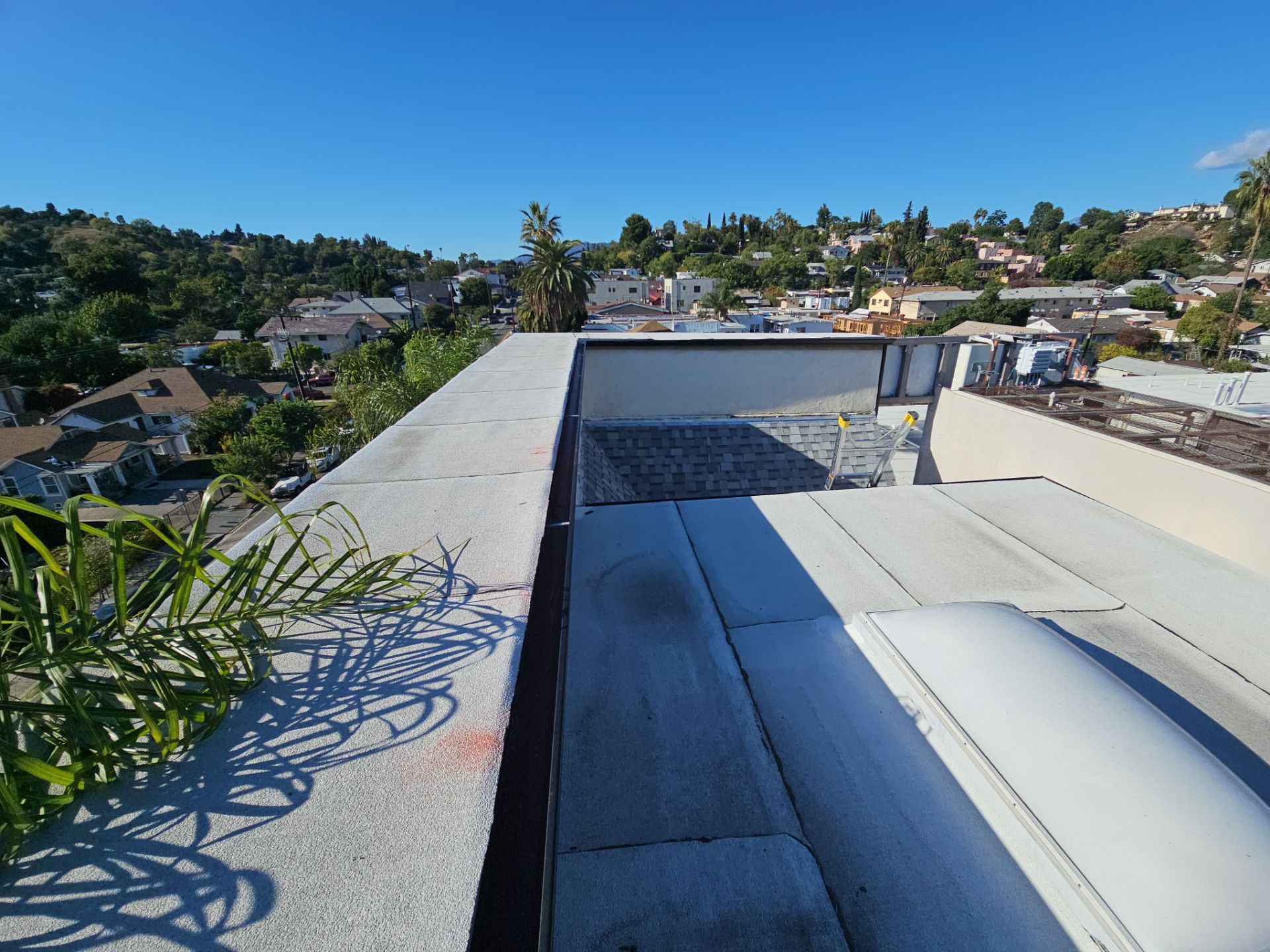
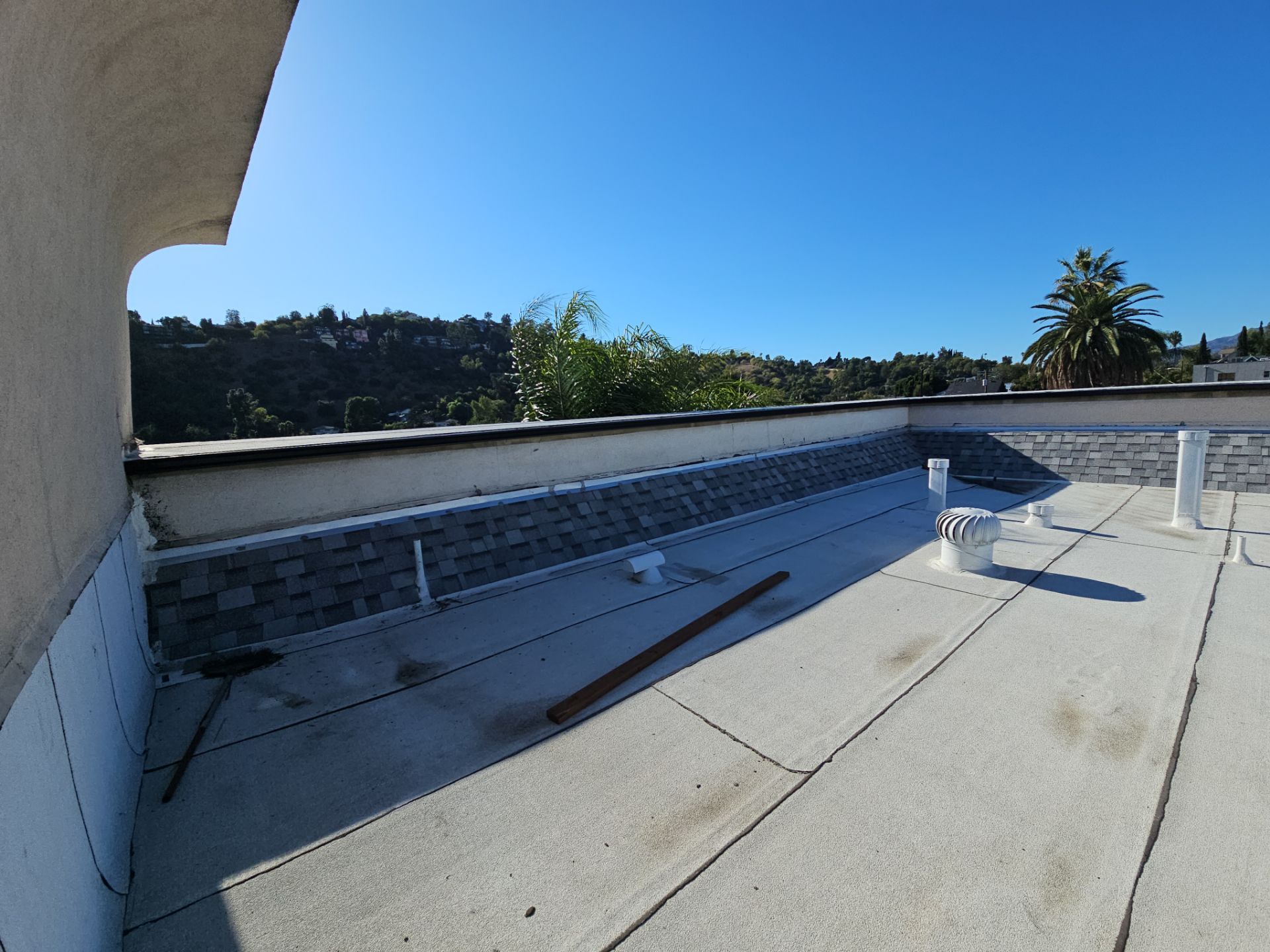
The primary flat roof sections were re-roofed with a torch-applied modified bitumen system. The completed surface shows a granulated white cap sheet laid in consistent parallel runs across the field, with panel seams running perpendicular to the slope direction — a standard torch down installation pattern. New vent pipes, plumbing stacks, and turbine vents were integrated into the new membrane, with the field membrane wrapped and sealed at each penetration curb. A metal conduit run visible in one section was accommodated within the new roofing plane.
Parapet, Flashing, and Edge Termination Work
All parapet walls received new cap flashing, visible as a dark metal cap strip running the full perimeter of the roof edge. The membrane is terminated and dressed up against the interior face of each parapet, consistent with standard torch down practice. On the lower mansard section, new gray architectural asphalt shingles were installed and brought up to the stucco parapet walls, with new metal step or apron flashing at the wall junction. The enclosed courtyard-facing parapet walls show a clean, consistent flashing line at the top edge in the completed photos.
Walkway Decks and Surrounding Areas
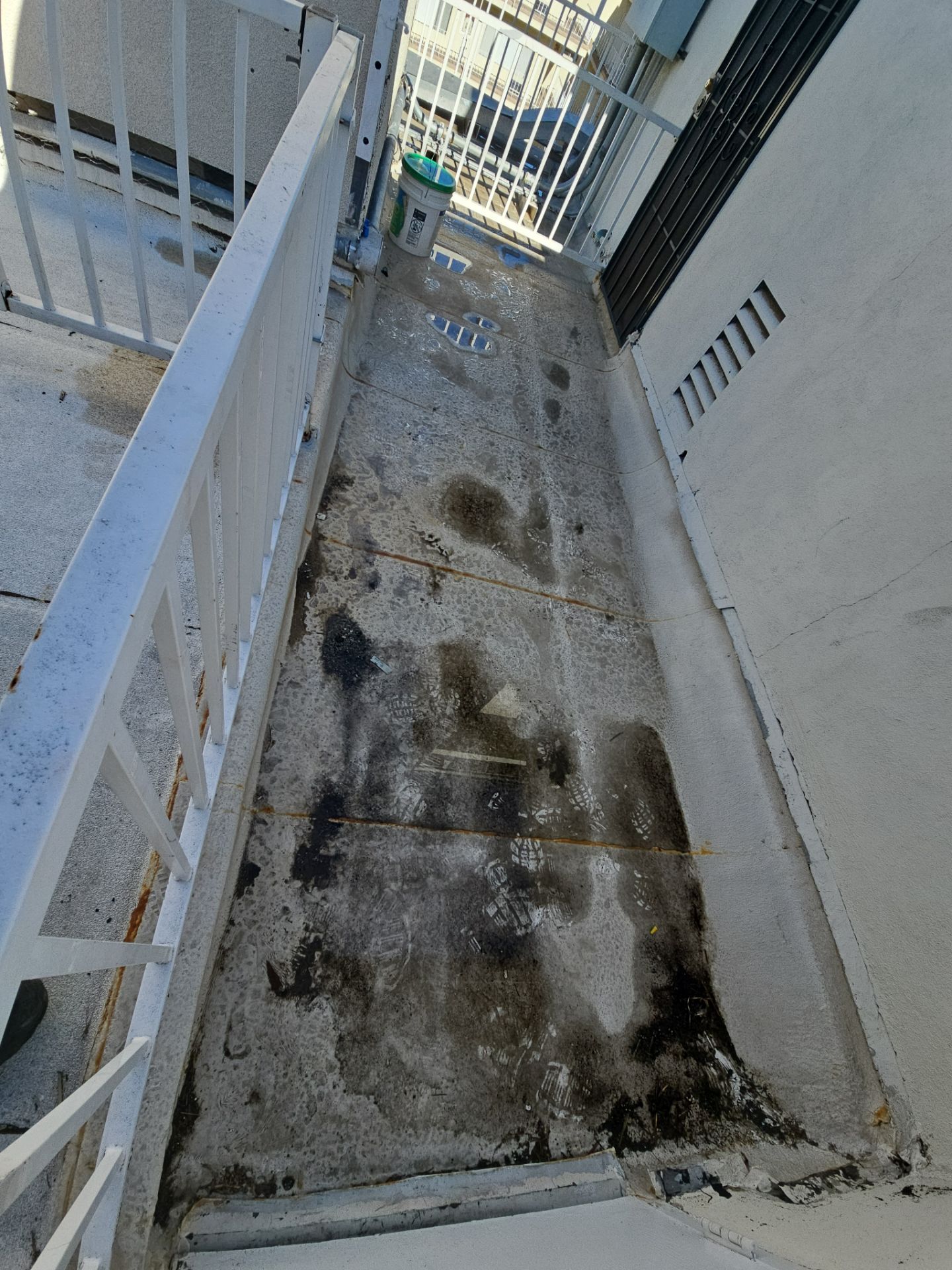
One photo documents a second-floor exterior walkway deck showing a heavily soiled and degraded condition — significant black staining, rust streaking, and debris accumulation are visible on the existing deck surface. This area appears to have been flagged or documented as part of the inspection scope. Orange caution cones and barrier chains visible in several photos indicate that active safety precautions were in place around the work zones during the project, consistent with standard roofing safety practice on occupied multi-unit residential properties.
Project Details
Roofing in Los Angeles, CA
Los Angeles sits in a semi-arid Mediterranean climate where roofs endure intense UV exposure for the majority of the year, accelerating the oxidation and granule loss that ages asphalt and bitumen materials faster than in cooler regions. Flat and low-slope roofs in the LA basin are particularly vulnerable to ponding water during the concentrated winter rain season, especially when drainage is compromised — a condition clearly visible in this property’s pre-replacement photos. The region’s occasional Santa Ana wind events and seismic activity also stress flashing connections and membrane terminations over time, making periodic inspection and timely replacement critical for property owners.
Our Service Area: Los Angeles, CA
Frequently Asked Questions
Get a Roof Inspection in Los Angeles
If your flat or low-slope roof is showing staining, flashing separation, or membrane deterioration, Roof Replacement Inc serves residential properties throughout Los Angeles and the surrounding communities. Reach out to schedule an on-site inspection and get an honest assessment of what your roof actually needs.
Project Details
DATE
May 6, 2026


