- What Is A Commercial Roof Coating?
- Benefits Of Commercial Roof Coatings
- Types Of Roof Coatings For Commercial Buildings
- Application Process and Best Practices
- Maintenance Tips For Longevity
- When To Coat vs. Replace
- FAQs
Imagine adding 10, 15, or 20 extra years to your commercial building roof without a costly tear-off. That’s the power of a roof coating commercial system.
A properly installed roof coating can significantly extend the lifespan of your roof.
Acting as a seamless, watertight shield, coatings also defend against UV rays, rain, and daily wear, while improving energy efficiency and reducing long-term maintenance costs. They’re one of the smartest investments that you can make as a commercial property owner..
In this guide, we’ll cover everything you need to know: what commercial roof coatings are, the different types available,
In this article, we’ll cover everything you need to know about how commercial roof coatings work, their types, the benefits you can expect, and how to decide whether coating or replacement is right for your building.
Key Takeaways
- Roof coating commercial systems add 10–25 years to roof life without costly tear-offs.
- They cut energy bills by reflecting heat and reducing HVAC strain.
- Options like acrylic coating and silicone roof coating suit different climates and needs.
- Proper inspection, application, and licensed installation ensure long-term performance.
- Routine cleaning and annual inspections keep coatings effective for decades.
- Choose a coating for minor wear; replace if structural damage is severe.
What Is A Commercial Roof Coating?
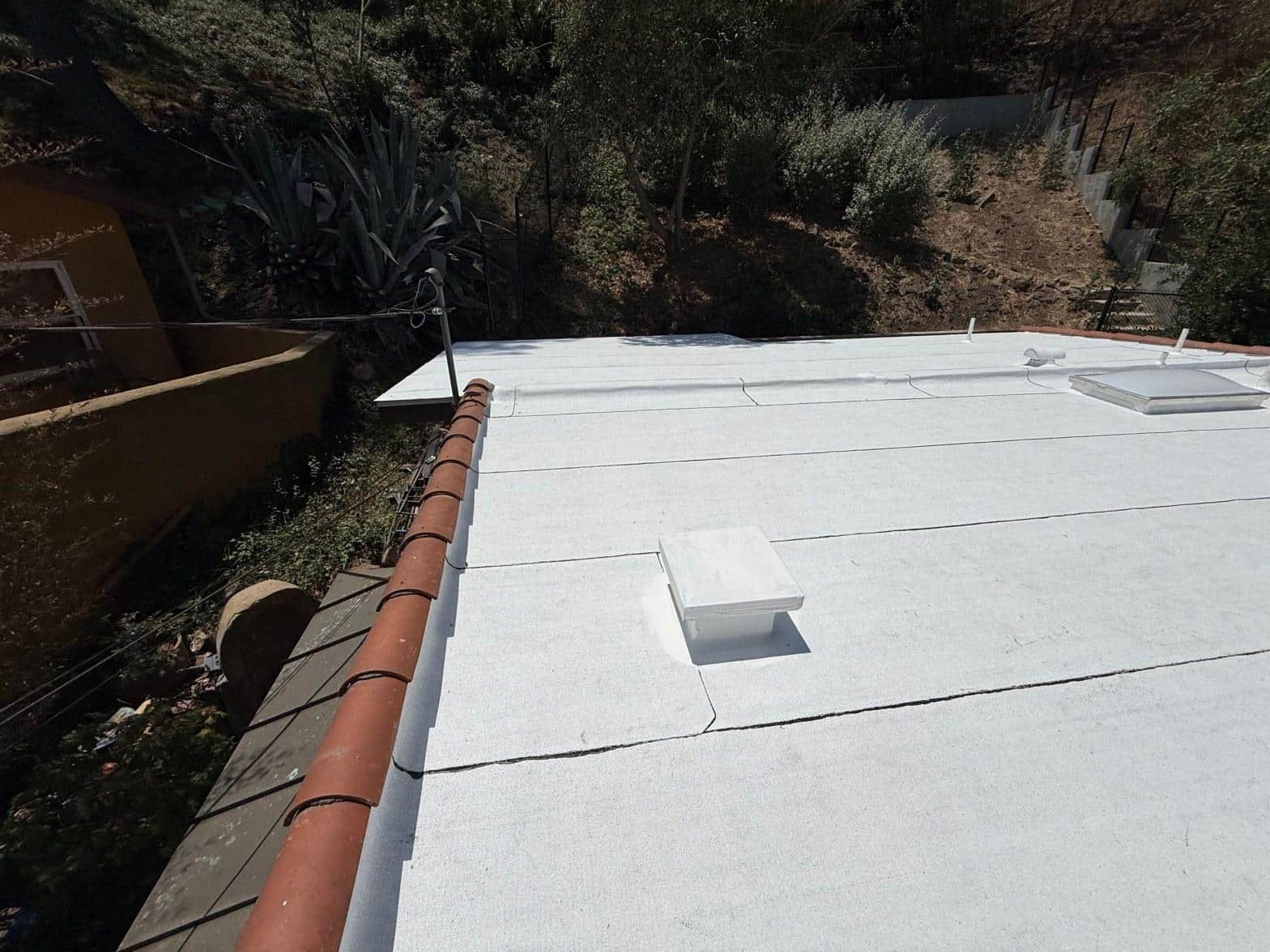
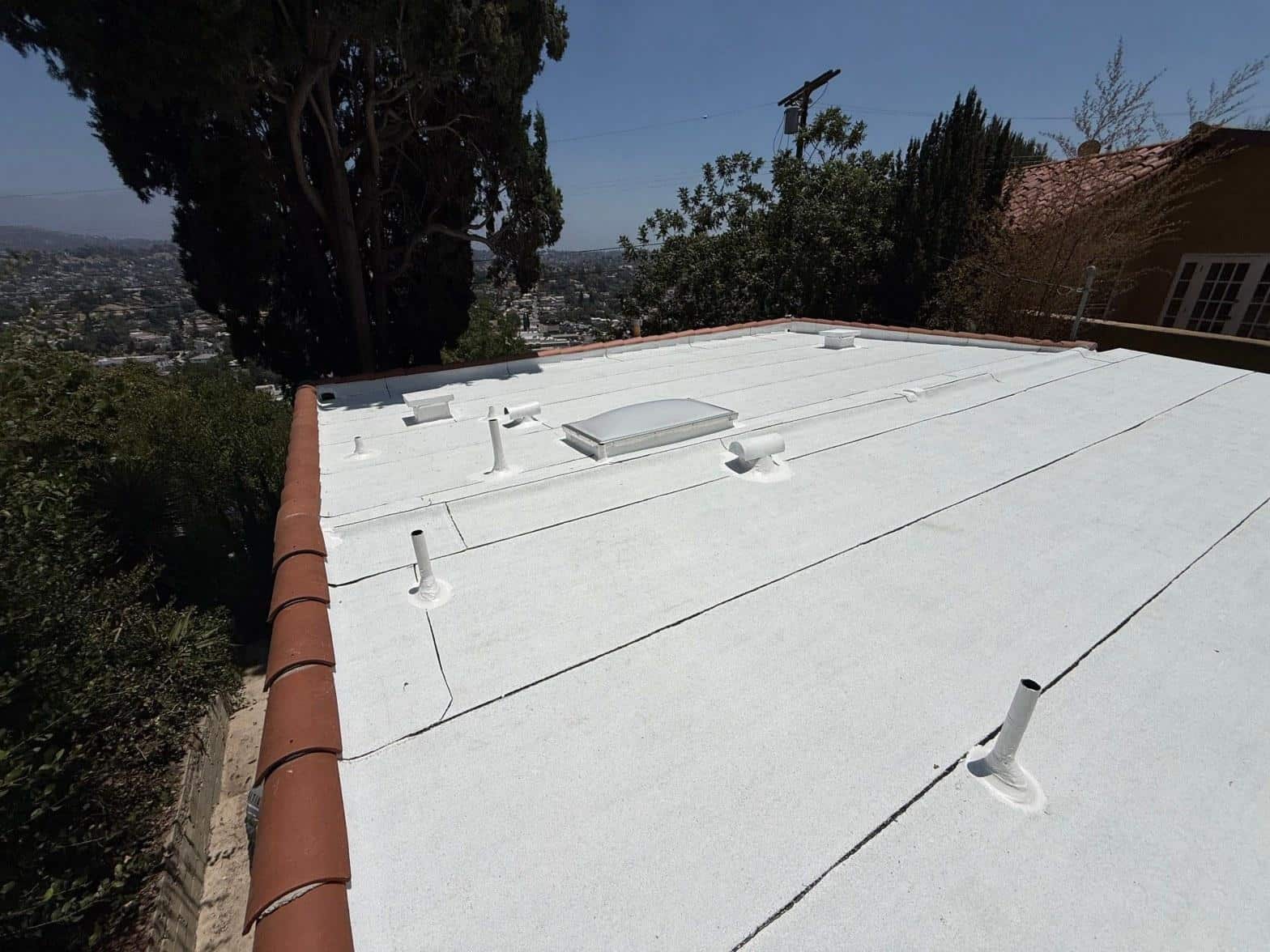
A commercial roof coating is a specialized liquid-applied membrane designed to protect and preserve an existing roof. Unlike traditional roofing materials that require full removal and replacement, coatings are applied directly over the existing surface. When the liquid cures, it creates a seamless, watertight barrier that bonds to the roof and shields it from heat and freezing. This protective layer isn’t only waterproof. A quality roof coating delivers multiple long-term benefits.
- UV and Weather Resistance are essential aspects of commercial roofs. In sunny regions like Southern California, commercial roofs face constant UV exposure, which breaks down materials over time. Coatings act like sunscreen for the roofs, preventing premature deterioration.
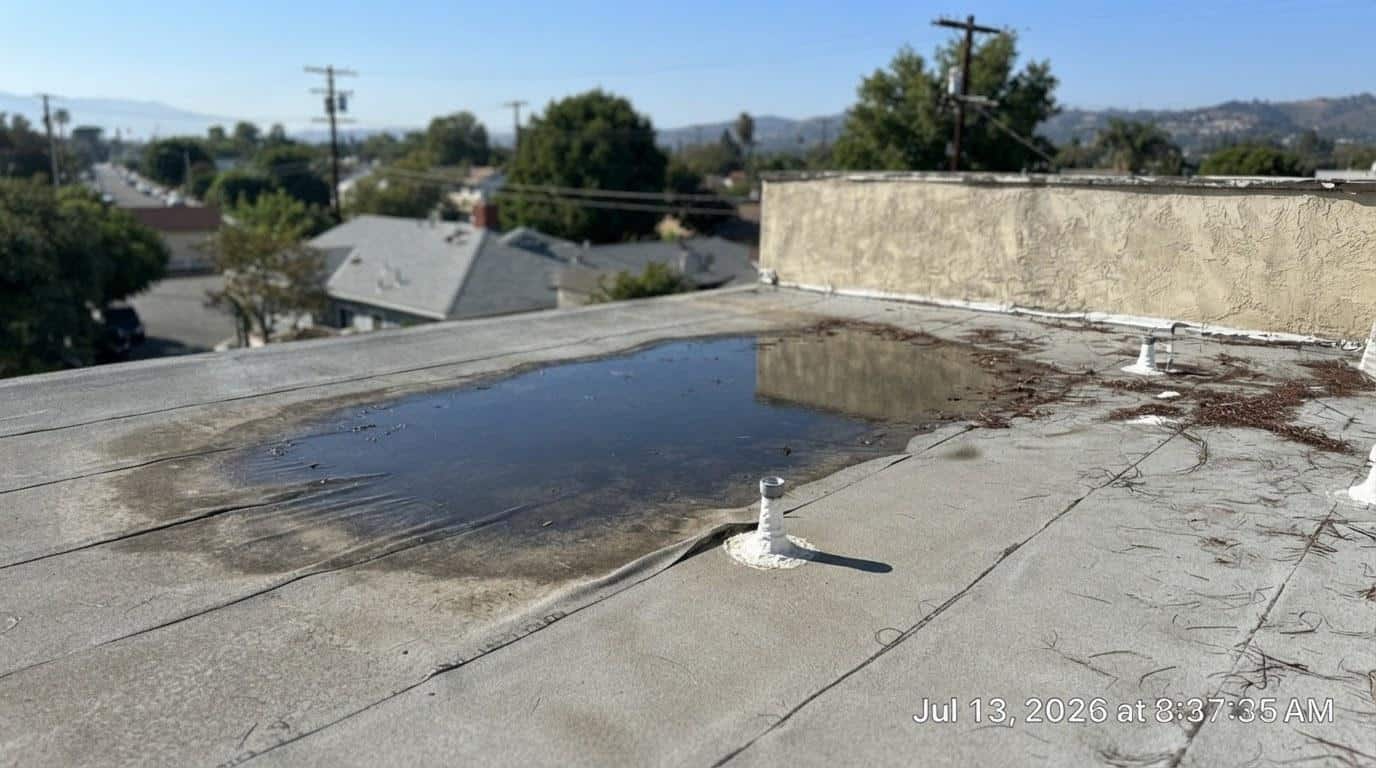
- Water Protection is also important for commercial roofs. Many coatings are engineered to resist ponding water, which is a common issue on flat or low-slope roofs. By preventing moisture infiltration, coatings safeguard insulation, interior spaces, and the structural deck.
- Energy Efficiency is another important quality. Reflective coatings significantly reduce heat absorption, keeping roof temperatures up to 50°F cooler. This translates into lower cooling costs and less strain on HVAC systems.
- Extended Service Life is the next important aspect of commercial roofs. With proper application and maintenance, roof coatings can add 10–25 years to the lifespan of the existing roof.
It’s important to understand that roof coatings are not a long-term cure. They are designed to preserve and protect a structurally sound roof that is showing early signs of wear, such as small cracks, weathering, or minor leaks.
If the current roof has saturated insulation, widespread membrane failure, or severe structural damage, a coating won’t help and only delay the inevitable. In those cases, roof replacement is the most reliable investment.
Benefits OF Commercial Roof Coatings
Commercial roof coatings have a range of advantages. From lowering costs today to protecting your building for decades to come, a commercial roof coating is a strategic investment. Here are the key benefits you need to know before making a decision.
Cost Savings
One of the biggest advantages of choosing a roof coating commercial system is the cost. Full roof replacements are very expensive, and you will also need to disturb the business for this. Meanwhile, roof coatings are cheaper and require fewer materials, less labor, and minimal tear-off. This is a solution that often costs less than a full roof replacement.
Extended Lifespan
Think of roof coatings as a shield that reinforces the roof that you already have. A properly applied coating protects against UV rays, rain, wind uplift, hail impact, and even everyday foot traffic from maintenance crews. This extends your roof’s life by 10 to 25 years, depending on the coating type and the condition of the substrate.
Energy Efficiency
In climates like Southern California, energy efficiency is a necessity. Reflective systems, such as an acrylic coating or silicone roof coating, act like a mirror, reflecting sunlight instead of absorbing it. This reduces roof surface temperatures by 50°F, directly lowering AC demands. As a result, HVAC systems last longer, and electricity bills shrink.
Sustainability
Sustainability is no longer optional for many commercial property owners. Roof coatings have multiple ways to support green buildings. First, they reduce landfill waste. By avoiding full tear-offs, coatings eliminate tons of debris that would otherwise end up in landfills.
Second is eco-friendly formulations. Many modern coatings are low-VOC and solvent-free, which makes them safer for both the environment and workers. Next is the reduction of the urban heat island. By reflecting sunlight, coatings lower surrounding temperatures, contributing to healthier, cooler communities.
Financial Advantages
Beyond the upfront cost savings, coatings may also provide tax advantages. This allows you to reduce the entire cost in the same year, rather than spreading it over decades. When you add up the tax benefits, utility savings, and avoided replacement costs, coatings become even more affordable.
Also, read:
- Understanding Different Commercial Roofing Materials
- Green Roofing Solutions: Eco-Friendly Options
- Cool Roof Technology: Energy Efficiency And Savings
Factors To Consider Before Choosing A Coating
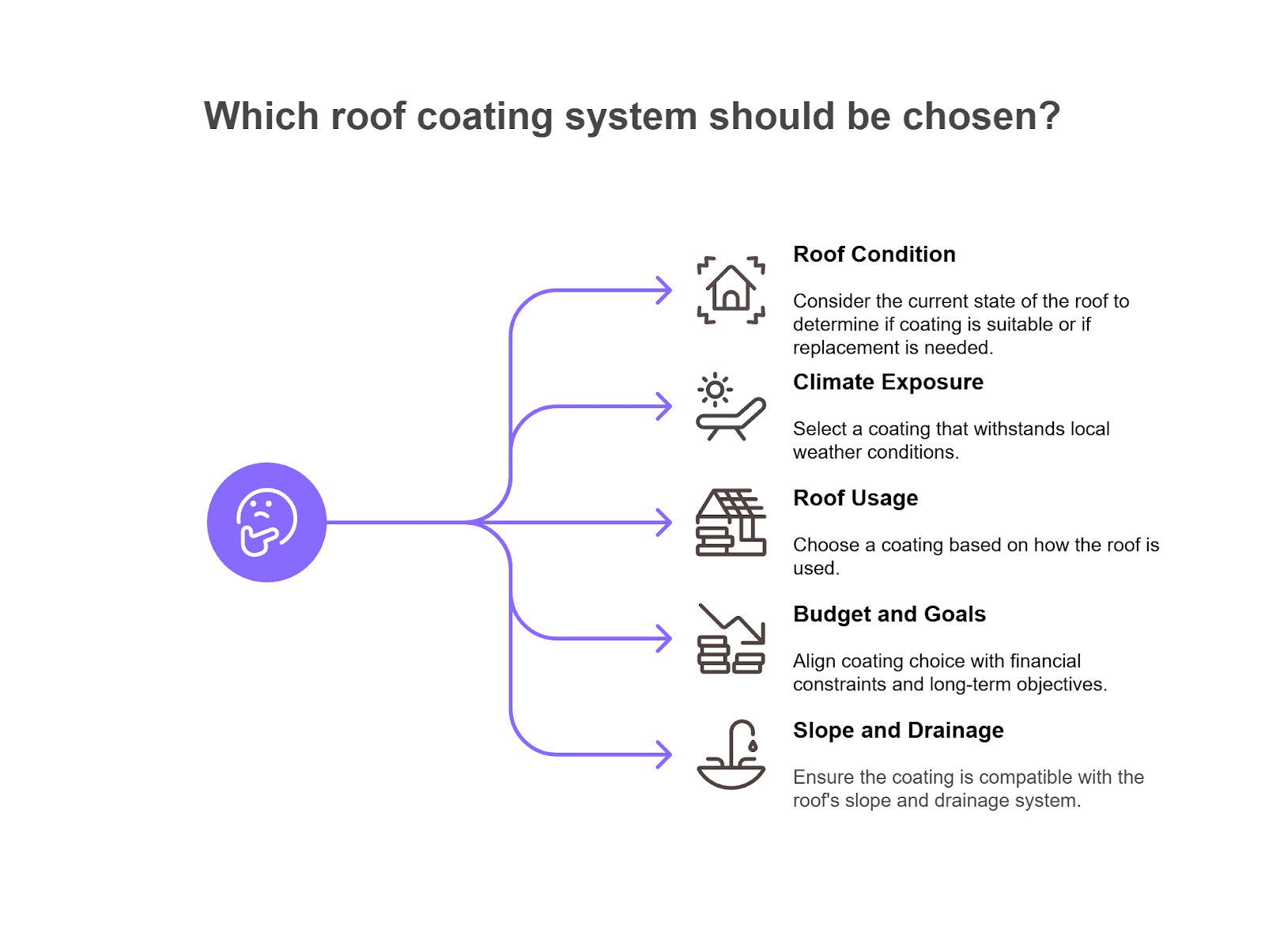
Not every commercial roof coating will work for every building. The right choice depends on the condition of the roof, the climate it’s exposed to, how the roof is used, and your long-term investment goals.
- Roof Condition: Coatings are best for roofs with minor wear, small cracks, or light ponding. If there’s extensive damage or saturated insulation, replacement is a better option.
- Climate and Weather Exposure: In hot areas, acrylic coatings reflect sunlight to reduce cooling costs. Silicone is ideal for wet climates due to its water resistance. For harsh conditions like hail or high winds, consider impact-resistant polyurethane or elastomeric coatings.
- Use of the Roof: Roofs with light use can benefit from acrylic or silicone coatings. High-traffic or heavy-equipment areas require durable coatings like polyurethane, while roofs exposed to chemicals need coatings with chemical resistance.
- Budget and Long-Term Goals: Acrylic is a cost-effective short-term solution, extending roof life for 10–15 years. For longer-term protection, silicone, polyurethane, or hybrid coatings offer 20+ years of durability.
Flat roofs are prone to ponding, making silicone coatings a better choice. Sloped roofs perform well with acrylic. Ensure proper drainage before applying any coating for optimal performance.
Types Of Roof Coatings For Commercial Buildings
Choosing the right roof coating commercial system means understanding the strengths and limitations of each type. The right match depends on the building’s climate, roof structure, and usage demands. Below, we’ll break down the most widely used coatings and when each one is most suitable.
Acrylic Roof Coatings
An acrylic coating is often the most cost-effective option. It has been widely used in hot and dry climates. As a water-based product, acrylic is easy to apply, it cures into a reflective finish, and delivers excellent UV protection. These properties help reduce rooftop heat absorption, which in turn lowers interior cooling costs. This makes it a major advantage for sun-heavy regions like Southern California.
However, acrylic systems have limitations. As they are water-based, they are less suitable for roofs with poor drainage or environments where ponding water is common. Extended exposure to standing water can cause breakdown. These coatings also require warm, dry weather during installation, because cold or wet conditions can interfere with curing. However, acrylic remains one of the most popular options thanks to its low upfront cost and strong energy performance.
Silicone Roof Coatings
For flat or low-slope roofs that experience frequent rainfall or standing water, a silicone coating is typically the best choice. Made from silicone polymers, these coatings form a durable, waterproof membrane that resists ponding water better than nearly any other product. Silicone is also highly UV stable, reflecting up to 90% of harmful rays and protecting roofs from long-term sun damage. This combination makes silicone one of the most versatile and long-lasting coating types on the market.
The drawback of this coating is that it tends to attract dirt and dust, which can dull its reflectivity over time. Thus, it requires regular maintenance, such as light washing, to keep its energy-saving performance. Additionally, silicone can become slippery when it is wet, so contractors often recommend adding grit or sand to create a safer walking surface.
Polyurethane Roof Coatings
If durability is your top priority, polyurethane coating is what you need. These coatings are renowned for their exceptional abrasion resistance and toughness, making them an ideal choice for commercial roofs that frequently experience foot traffic, rooftop equipment, hail, or chemical exposure. Polyurethane systems are typically applied in two layers: a strong base coat for adhesion and impact resistance, and a UV-stable aliphatic topcoat that resists color fading and maintains reflectivity.
Although polyurethane coatings are highly effective, they are also quite complex. They are solvent-based, which means they emit strong odors during the installation process. The application of this coating includes multiple steps, which increases labor costs. Still, if you want to get maximum durability and flexibility, polyurethane is often worth the investment.
Asphalt Rubber Membrane And EPDM Coatings
For more economical projects, asphalt-based rubber membranes or EPDM (ethylene propylene diene monomer) coatings can be used to provide immediate waterproofing. EPDM is a synthetic rubber and is known for its flexibility and weather resistance. It is suitable for flat roof repairs or overlays. On the other hand, asphalt rubber membranes are fluid-applied, forming a seamless protective layer against water infiltration and UV damage.
These systems are valued for their affordability and quick installation. However, asphalt materials are heavy, they absorb heat, and can become brittle over time. Although they are cost-effective in the short term, they may not deliver the same long-term performance as more advanced coatings.
Specialty Systems (Advanced Options)
In addition to traditional coatings, several special coatings are available for projects with unique requirements:
PMMA and PUMA are fast-curing resin systems. It is great for rooftop gardens, paver systems, or projects that require exceptional load-bearing strength. They cure within minutes and offer strong waterproofing, even in cold conditions.
Fluoropolymer and SEBS are high-performance coatings that provide exceptional chemical resistance, UV protection, and durability in harsh environments.
STPE/Hybrid Polymers are next-generation, low-VOC products that combine strength, flexibility, and eco-friendly formulations, making them a popular choice for owners with sustainability goals.
Application Process And Best Practices
Even the highest-quality commercial roof coating system will fail if it isn’t installed correctly. A good application is what separates a long-lasting protective membrane from a short-lived patch job. The process involves several key steps, each of which is essential in ensuring the coating performs as intended.
- Inspection and Preparation: Before coating, a professional inspects the roof for cracks, leaks, and loose seams. Minor issues are repaired, while major structural problems may require replacement. The roof is then cleaned to remove dirt, debris, and growth.
- Application: Coatings are applied using sprayers, rollers, or brushes, depending on the area and detail work required. Multiple layers are applied to meet the manufacturer’s specifications for thickness.
- Curing: Coatings need time to cure, with curing times varying by material. Acrylic coatings take hours to days, while silicone is faster. Advanced systems like PMMA can cure in 20-30 minutes.
- Professional Expertise: An experienced contractor ensures the coating is applied to manufacturer standards, guaranteeing performance.
Ready to protect your building with expert installation? Contact trusted and licensed roof contractors in LA to get a free roof inspection.
Maintenance Tips For Longevity
A commercial roof coating is designed to add decades to your roof’s life, but like any building investment, performance depends on proper upkeep. Routine maintenance ensures that the coating continues to protect the roof, maintain energy efficiency, and deliver the maximum return on investment.
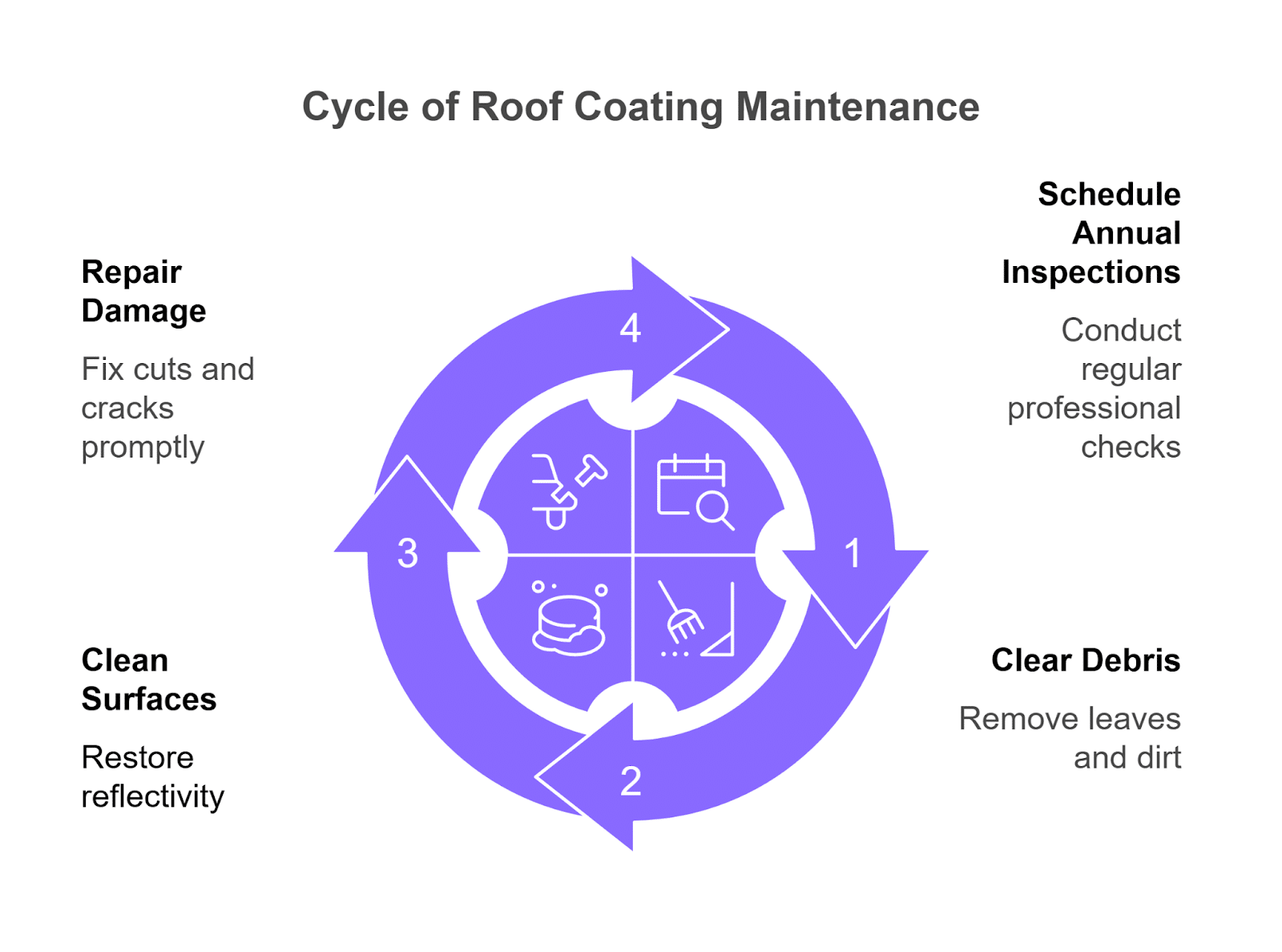
Schedule Annual Inspections
An annual inspection by a professional roofer is one of the simplest and most important maintenance practices. During these inspections, contractors can identify issues such as small punctures, seam weaknesses, or areas where coating has worn down. It’s especially important to schedule inspections after major storms, high winds, or hail, as hidden damage is more likely to occur after these events. Catching problems early prevents small issues from turning into costly repairs.
Keep The Roof Clear of Debris
Leaves, branches, and dirt that accumulate on a roof can block drainage systems, creating areas of ponding water. Over time, standing water accelerates wear and increases the risk of leaks. Regularly clearing the roof, paying close attention to the areas around drains, scuppers, and gutters, ensures proper water flow. This is an essential step to maintain flat or low-slope roofs.
Clean Surfaces To Maintain Reflectivity
Many coatings, such as an acrylic coating or silicone roof coating, reflect UV rays and reduce heat absorption. However, dirt buildup can reduce reflectivity and compromise energy savings. Periodic cleaning restores the coating’s reflective properties. This improves cooling efficiency and helps maintain a clean building.
Repair Damage Promptly
Even the toughest roofing systems can suffer damage when being exposed to steeping. Small cuts, punctures, or cracks should be repaired quickly to avoid future roof replacement. Delaying repairs can allow water to worsen the situation and shorten the coating’s life.
Long-Term Performance
When you are consistent with cleaning and timely repairs, a commercial roof coating can easily last 15-25 years or more. A small investment in routine maintenance will prevent the need for a full roof replacement. Think of coating as a protective layer of the building that reduces operational costs and sustains property value for decades.
When To Coat vs. Replace
One of the most common questions that you may ask is whether a commercial coating will be enough to restore the roof, or if you need a full replacement. The answer depends on age, condition, and performance goals. Understanding these differences helps avoid wasting money on a short-term fix or overinvesting in a replacement when a coating would suffice.
When To Coat
Coatings are most effective when the existing roof is still structurally sound, but it begins to show signs of wear. If the roof is under 20 years old, has no saturated insulation, and the membrane remains intact, a coating can add another 10-20 years of life. Coatings are used to correct early issues, such as minor cracking, surface wear, or isolated leaks. In this case, coating a roof means avoiding a disruptive tear-off, extending the roof’s lifespan, and improving energy performance.
When To Replace
If the roof has widespread membrane damage, waterlogged insulation, or structural issues such as sagging or delamination, replacement is the best option. Applying a coating over a failing system only masks problems temporarily and may even trap moisture, leading to more severe damage. Roofs around 20-30 years old often fall into this category. While replacement is a larger investment, it ensures long-term reliability and prevents ongoing repair costs.
Hybrid Approach
For roofs that aren’t new but not yet fully deteriorated, a hybrid approach can be the best. Contractors may recommend targeted spot repairs on weak areas, replacing damaged sections, and then applying a coating across the entire roof. This method strengthens the existing roof and applies a protective layer. It’s often the most cost-effective strategy for mid-life roofs that still have structural viability but need some repairs to last longer.
Making The Right Choice
After a thorough inspection by a qualified professional who assesses your roof’s condition, you can make a decision. A reputable contractor will guide you to a solution that offers lasting value.
With nearly 20 years of trusted service, Roof Replacement Inc. has restored and protected hundreds of roofs across Southern California. We understand how to design roofs that endure the region’s intense sun, seasonal rains, and daily stress.
We approach each project with care, starting with a detailed inspection, providing transparent recommendations, and delivering workmanship with warranties. Protect your investment and contact us today to schedule your free inspection and see how we can extend your roof’s life.
Our Roofing Services
- New Roofs – High-quality installations for lasting protection and curb appeal.
- Cool Roofs – Energy-efficient roofs that lower energy costs and keep your home cool.
- Roof Removal and Replacement – Safe removal of old roofing and installation of a durable new roof.
- Roof Repair – Expert repairs to extend roof life and prevent further damage.
FAQs
How do I know if my roof is a strong candidate for a roof coating commercial solution?
A good candidate will have a roof that is still structurally sound, meaning there is no widespread membrane failure or saturated insulation. If the roof shows mainly surface wear, minor cracking, or localized leaks, a properly applied roof coating commercial system may restore performance and delay replacement.
Can I mix coating types, such as applying a silicone roof coating over an acrylic base?
Mixing incompatible coatings is risky and can lead to adhesion failure or delamination. Some elastomeric roof coating systems are designed to be compatible as topcoats, but always confirm manufacturer compatibility before layering different materials.
Will a coated roof reduce my insurance premiums?
While not guaranteed, many insurers view well-maintained and properly coated roofs more favorably because they reduce the likelihood of leaks and structural damage.
How do I know when it’s time to recoat my roof?
Signs that recoating is needed include fading reflectivity, slight surface cracks, minor blisters, or loss of elastic behavior. If you initially used an acrylic roof coating or silicone roof coating, monitor their performance periodically. A qualified roofing professional can measure thickness and wear to recommend recoating before significant damage occurs.
Does adding a coating affect the building’s HVAC system or internal humidity?
In most cases, a commercial roof coating system helps improve HVAC performance by lowering the roof surface temperature and reducing heat transfer. However, coatings are designed to be breathable; they allow vapor transmission to prevent trapping moisture in the substrate. Always choose one compatible with your roof assembly’s design.
Explore our full range of roofing services across Southern California.




What Our Clients Say








Roof Replacement Inc. offers professional, high-quality work, guaranteed (call for details); ensuring all clients projects meet all code and design requirements. We are dedicated to exceptional customer service and will strive to ensure you with the highest quality roofing services. Roof Replacement Inc. offers lifetime warranty (call for details) on all of our workmanship to ensure the quality of our work. With over 40 years of combined experience within the roofing and construction industry, Roof Replacement Inc. has grown and developed in all areas of roofing construction, including roof inspections. As a leading residential and commercial roofing company in LA, we have hundreds of references from previous clients, so rest assured, that your roofing job will be done right the first time. Replacing an old roof can help add curb appeal and will increase the perceived value of your home. First impressions are vital when selling your home, especially when your roof takes up more than half of the exterior of your residence or business. Not only is the return of investment on a new roof attractive for potential buyers, but can be as beneficial as remodeling the kitchen or bathrooms within your residence.

